Business RadioX ®

  • Home
  • Business RadioX ® Communities
    • Southeast
      • Alabama
        • Birmingham
      • Florida
        • Orlando
        • Pensacola
        • South Florida
        • Tampa
        • Tallahassee
      • Georgia
        • Atlanta
        • Cherokee
        • Forsyth
        • Greater Perimeter
        • Gwinnett
        • North Fulton
        • North Georgia
        • Northeast Georgia
        • Rome
        • Savannah
      • Louisiana
        • New Orleans
      • North Carolina
        • Charlotte
        • Raleigh
      • Tennessee
        • Chattanooga
        • Nashville
      • Virginia
        • Richmond
    • South Central
      • Arkansas
        • Northwest Arkansas
    • Midwest
      • Illinois
        • Chicago
      • Michigan
        • Detroit
      • Minnesota
        • Minneapolis St. Paul
      • Missouri
        • St. Louis
      • Ohio
        • Cleveland
        • Columbus
        • Dayton
    • Southwest
      • Arizona
        • Phoenix
        • Tucson
        • Valley
      • Texas
        • Austin
        • Dallas
        • Houston
    • West
      • California
        • Bay Area
        • LA
        • Pasadena
      • Colorado
        • Denver
      • Hawaii
        • Oahu
  • FAQs
  • About Us
    • Our Mission
    • Our Audience
    • Why It Works
    • What People Are Saying
    • BRX in the News
  • Resources
    • BRX Pro Tips
    • B2B Marketing: The 4Rs
    • High Velocity Selling Habits
    • Why Most B2B Media Strategies Fail
    • 9 Reasons To Sponsor A Business RadioX ® Show
  • Partner With Us
  • Veteran Business RadioX ®

Desiree Colonna from InkWell Designers®

September 15, 2021 by Kelly Payton

Desiree Colonna
Cherokee Business Radio
Desiree Colonna from InkWell Designers®
Loading
00:00 /
RSS Feed
Share
Link
Embed

Download file

Desiree Colonna

This Episode was brought to you by
The Innovation SpotAlma Coffee


DesireeDesiree Colonna, CEO of InkWell Designers®

Desiree Colonna is InkWell Designers®’ CEO and owner. She is an Atlanta calligraphy, hand engraving, painting and embossing artist who has represented both digital and calligraphy artists for over 20 years. Desiree is a Certified One Stroke™️Decorative Painting Instructor.

She has been an entrepreneur for over 20 years and own two companies in Atlanta. Desiree started her web design company, Bella Web Design, Inc. in 1998 and Inkwell Designers in 2016. She learned calligraphy as a child, then put it away for a few decades. She took it up again after a personal tragedy hit my family a few years ago as therapy. Desiree found it helped her in ways she never understood until now.

She never dreamed it would take her this far and they’re expanding and growing their client list and projects every year. She’s known as the Fastest Engraver in the South.

InkWell DesignersConnect with Desiree on LinkedIn and Follow InkWell Designers® on LinkedIn and Facebook


This transcript is machine transcribed by Sonix


TRANSCRIPT

Speaker1: Broadcasting live from the Business RadioX Studios in Woodstock, Georgia. It’s time for Cherokee Business Radio. Now here’s your host.

Speaker2: Welcome to Cherokee Business RadioX Stone Payton here with you this morning. And today’s episode is brought to you, in part by Alma Coffey, sustainably grown, veteran owned and direct trade, which of course means from seed to cup, there are no middlemen. Please go check them out at my alma coffee dot com and go visit their Roastery Cafe at thirty four forty eight Holly Springs Parkway in Canton. As for Harry or the brains of the outfit Letitia and tell them that St. S.U. today is going to be a lot of fun going, please join me in welcoming back to the Business RadioX microphone in our broadcast today with inkwell designers. Miss Desiree Colonna, How are you?

Speaker3: I’m great St. It feels good to be in front of a microphone again with you.

Speaker2: It’s just it’s like old home week. It’s it just feels natural. It feels right. We’re getting a chance to to visit. But it’s been a while since you and I have seen each other. Yeah. What are you up to? What are you out there trying to do for folks these days?

Speaker3: Well, Inkwell Designers is a company that I started in two thousand and six, and it just 2016. I’m sorry, and basically what we’re doing is we started out in calligraphy and I was doing that just to have some fun with it and a little art therapy, as they say. And then it grew. From there, people started to ask for embossing and we started embossing, leather goods and Bibles. And then all around us, the Christian stores started to go under. So we now are one of the only ones in the entire U.S. that still stamped Bibles, believe it or not. And from there, we bought a laser and we bought it. We started with a glow forge and now we have an epilog, which is a real high end laser. And then we have a UV printer. So basically stone, what I say is if it doesn’t move, we can print on it.

Speaker2: What fun. And the way that you and I got reconnected, oddly enough, is that one of your team members and at the Woodstock Business Club? Yeah, which I have thoroughly enjoyed being a part of. What a marvelous group. Just a great group of people who genuinely want to help each other. One of the team members, but she has another special designation in your life too, right?

Speaker3: Yeah, my daughter Emily Scales.

Speaker2: Yes, shout out to miss Ellie.

Speaker3: Yeah, she’s she’s manning the stores they say today. So she is working and making some things for a client today, so she couldn’t be with us.

Speaker2: So when I saw her, when I met her, she was she was wearing a hat. And I don’t know what the what, what is it? Is it in Boston embroidered or whatever? But it had it was a it had a it was it was more edgy. Yeah, some of the promotional has. For those of you who have been in the studio and we’ve been here in this studio for almost six months now, I think a little over five months it’s becoming the hat studio. I have hats hanging in the studio from local businesses Reformation Pie Bar, Dentistry of Old Town, Alpha Omega, who’s also one of our host clients and sponsors Little River Outdoors. So, so, but all of those are more traditional, I guess I would say. Ah, except my most recent hat from Alpha and Omega. Yeah, you guys did down there edge. Edgier, they have a different look, Tom, what is that process?

Speaker3: So basically what we do is we cut their logo out with the laser on what’s called leatherette. It’s not leather, but we can do leather, but this is leatherette. So then we take the leather out and we print it with the UV printer. So it gives it a very different look that you’re not going to find anywhere else. It’s it’s not leather, it’s not engraved, it’s printed on in full color, all the colors. There’s no three two color, three color, it’s any color you want. So and we can do that on tumblers, metal glass, you name it. So there’s there’s a lot that we can do with that.

Speaker2: So when a small business, medium sized business, I guess large businesses do this as well. But when a lot of businesses thinking about personalizing customizing items like this, it can be overwhelming for for what my perspective is, work because there’s just so many options. Is a part of your work helping a guy like me just think through what is going to be the best expression of the brand for what you do? Is there a consultation aspect to this kind of to your work?

Speaker3: Absolutely. And basically, we need to look first at who the company works with, what is the age group? You know, what kind of items would be helpful for them? I don’t like to just give everybody a Tumblr. I mean, we probably all have about 10 to 15 tumblers in our. Kitchen, you know, from some kind of conference or business meeting or something. So what we do is look at who your clients are and what kind of items would be helpful for them. The hats are something that are for alpha and omega. It’s perfect. You know, they like to wear the has to, you know, basically when they’re working.

Speaker2: Sure.

Speaker3: Sure, we can do T-shirts as well. We just look at what would be useful for that particular client and whether it’s a pen or a journal. I mean, there’s there’s all kinds of things out there that we just found recently a fan that you can literally plug into your phone and the fan works. And we we were in Las Vegas this week, and I bet you it was nice. Yeah, we really needed those. And that brings up a whole nother part of our business, which is our events. And we we were really, really busy. I was doing poly three to four events a month before the pandemic hit. Yeah, but things are starting

Speaker2: To come back a little bit.

Speaker3: Yeah, yeah, they are. And at events and we still actually during the pandemic, we still worked. I have another thing that I do is called hand engraving and we hand engraved wine and liquor bottles, local wine. I’ll give them a quick shout out there. They’re overrun by Cumberland Mall, OK? And we engrave liquor and wine bottles for them will be completely covered up during the holidays. Engraving wine bottles for people to bring to parties or give us gifts so we can put, you know, Merry Christmas or Happy Hanukkah all hand engraved and I’m the only one who does that in this area.

Speaker2: Wow, what a unique and custom gift. So is it? Yeah. Is it in the glass? Is it on? It’s on the latest in the glass?

Speaker3: Yeah, it’s in the glass and it’s using a dental drill. Believe it or not, that’s used for dentures. Wow. Actually engraved deeply into the glass, and it’s a very unique. I had to go to Texas to learn how to do this. So.

Speaker2: Well, speaking of learning how to do this skill set? Yeah. Background Let’s talk a little bit about your about your backstory because it’s it’s pretty deep and involve you. Have you have picked up some skills that are that are not very many people have them, right?

Speaker3: Yeah, yeah. Well, as you know, I used to own Bello web design. I still do. I still have a few clients that are with me on the web design side. We host their sites. We don’t take on any more clients for Bella, but basically I went from designing for the computer and visual, you know where you can’t touch it to designing for things that I can touch. So, you know, a a tumbler or a mug or something that. So now it’s so cool to be able to design on the computer and put it on something that I can touch, you know, and say here and give as a gift. So my skills from the web design world really came in handy with Photoshop and Illustrator in learning how to use all of these machines. That’s the key. And I tell my daughter this all the time. Once you master illustrator or photoshop, the world is your oyster.

Speaker2: So OK, so the background and I was aware of that before going back to Bella Bella when? Yeah, but as you think through your through your back story, how do you think you you landed here? Are you just the type of person that is that is maybe a little better than most and always has your antenna up for a new way to serve? Or it was a pure luck or well,

Speaker3: Believe it or not, it was one of my Bella Webdesign clients who suggested that, as you know, I lost my husband about seven eight years ago and I was going through a mourning period, and one of my clients who was a lawyer, told me, Hey, you should really learn this hand engraving on liquor bottles and wine bottles. I’m doing really well at it and I do it every weekend. I’m thinking, here’s a high powered lawyer in Houston, Texas, and he’s engraving on the weekend for the PGA and American Express, and I thought there must be some money in there and there is. So basically, I went to the same teacher that David went to and learn how to do this, and it just has taken off. My clients include Hermes in New York, Saks Fifth Avenue, American Express. I’ve traveled all the way around the world, Lisbon, Portugal, we’ve we’ve been there and Las Vegas, L.A. to New York, all and everything in between. So people love the engraving. And then we added the embossing of like luggage tags so we can put all my luggage tags, key fobs. We’ve got an event in Alpharetta this weekend. Well, we’re going to put monograms on key fobs, and yeah, we have just I don’t know, you know, Stone, it’s like this. If somebody asked you, how do you get, how did you get into radio? How do I get into radio? And you go it just kind of, yeah,

Speaker2: I’m not sure you want to do it my way.

Speaker3: Yeah, right? You know, and thank goodness that one of my clients saw that I was doing. I was just doing calligraphy for fun and he he saw what I was doing and that, well, this would be something new for you to try. And then from there, I’ve had my clients go, Well, can you stamp jewelry? Sure, I can learn that. Or can you sublimate? Sublimate is putting a design on something that’s coated with polyester. For instance, if you have a Business RadioX mug in here, which I’m sure you do somewhere that’s probably been sublimated, which

Speaker2: Actually we have a bit of a supply chain problem right now. Yes. And I don’t know. Maybe I need to talk with you about that after we get off air. But no, the last two or three people that have come through here have said, I owe you. Yeah, a talk show mug, right? It’s kind of a Business RadioX thing, right? You mentioned, but I couldn’t remember. So that’s sublimate. That’s a whole lot.

Speaker3: That’s another process that I know. Yeah, I just kind of picked these things up. And the beauty is my clients have actually, you know, encouraged me to learn these things like, we’re doing a jewelry stamping. I’ve never done that before. We’re doing this in October for one of my event planners. Event planners are one of our main clients. And so they find us and you know, Hey, could you learn this? Sure, I can learn that, and I did. So now, you know, we’ve got an Etsy shop, and of course, we’re going to offer jewelry stamping. You know, in the Etsy shop, we do resin. We can make a cutting board that looks like an ocean is laying right on top of it. Oh, wow. I mean, there’s we do all kinds of stuff. You know what stone? It’s it’s good and it’s bad to have a very curious mind because it can get me in trouble.

Speaker2: Well, it sounds like you and your team you work hard to to say yes if you can.

Speaker3: Yeah, absolutely. You know, back in the old days in Hollywood, you know. They always had the actresses who could dance and they could sing, and they had all kinds of skills, well, when they first started out, they said yes to all of these things and then, you know, the studio heads would teach. They’d send them to school and teach them what they needed to know. So, right, that’s kind of like what we are. We’re, you know, we say yes to a lot of different things we say no to. It’s not everything. There’s one thing I will not do. Do you want to guess what that is?

Speaker2: I hesitate to guess, but I’m anxious to know the answer. Ok.

Speaker3: I’m allergic to needles. I don’t like needles, so I don’t embroider. That’s the only thing that we won’t talk about that. Yeah, I won’t embroider. I just don’t like.

Speaker2: So this is so this leatherette thing, and it’s it’s it’s way cool because I have it on my on my offer to make a hat, right? Can that be put on a shirt since you don’t embroider?

Speaker3: Yes, sir. Can jeans, backpacks, shirts, you name it. It’s ironed on.

Speaker2: I love that idea because here in the radio business, you know, we’re a little bit cash and you and I’m known as the hat guy around town, right? I’ve been here like four or four and a half months, actually here in town, we’ve run the studio for a closer to six. I know every bartender in town and I’m the head guy. Well, there you go.

Speaker3: Well, now I got to get you a Business RadioX hat.

Speaker2: Well, I think maybe and or I really like the like the Columbia shirts or the little loose fitting. You know, I’ve I’ve got a little prosperity show and nowadays, but I’m thinking one of these things like on the yeah, something like that on the chest of a shirt or something. Absolutely. That is really cool. So at these events, are you actually creating stuff live or do you just kind of showing it off a little bit and taking orders? Or how does that work at the end?

Speaker3: We are creating lives, so we just stand out or we just embossed 700 luggage tags. Holy moly. Over two days for purchasing power here in Atlanta, we traveled to Las Vegas and went to the Las Vegas Convention Center. That was a lot of fun and just sat and stamp luggage tags for people. And you know, the best part of that is seeing their face when when people see their name or their initials on something, they get so excited. And that is the magic of that. And we had a line all day long for eight hours at our booth. And the next day when we walked in, there was a line of people waiting because they had seen the luggage tags that other people had the day before. That’s the magic of doing live embossing at events or live engraving. So, yes, people absolutely love it.

Speaker2: So this kind of thing, does that mean that you can afford to and in some cases choose to do things in smaller quantities than maybe more traditional larger shops like maybe an iPhone or a mega Business RadioX doesn’t have to get a thousand hats.

Speaker3: We have no minimums, no minimums. Yeah. I’ve never believed in that. You know, to me, it’s the same work to to do one hand as it is to do 50. And I think that getting in the door and doing that one item for somebody always leads to more. But yeah, so it no minimums.

Speaker2: That is cool. Ok, so you work with Emily? That must be interesting. Maybe it has its challenges, but I bet there’s some real rewards. Tell me if you don’t mind, share with us what it’s like to work with a family member in the business. How how is the how’s that been for you?

Speaker3: Well, it’s been fine. You know, she’s a surprisingly, we’ve been getting along very, very well. You know, mother daughter, she’s 23, so she’s got a mind of her own. But but she, you know, I got to give her credit. We were gone this week and she had a project that she had to finish and she came in on you. Yes, we are days off our Sundays in Mondays because we like to be open on Saturdays because people like to pick things up on Saturday or drop things off, right? So she came in on a Monday yesterday to finish some dog bandanas for a company called Sit Me and said that we work for. And she, you know, she gave up an hour of her day off to to do that. So you know what? Kudos to

Speaker2: Her. Amen. I mean, at twenty three, yeah, I thought a lot about Stone, right? I can remember I had a lot more answers at 23 than I did. I’ll pull the questions now. But boy, I had it figured out at twenty three. So, yeah, absolutely. Kudos to her. So how does the whole sales and marketing thing work for a firm like yours? Do you do you need to go out and do you choose to go out and and try to spread the word as it were? Or are you at a point in your work now where it really comes more

Speaker3: More to you? You know, that’s a really, really great question. The events, we are pretty established because before the pandemic we were doing, we were working with all the top people, the top marketing, top event planners and I did not have my office. I just bought my office in October last year.

Speaker2: Congratulations.

Speaker3: You. It’s right off of Town Link Parkway. Oh, wow. I’m a member of Cherokee Connect.

Speaker2: And yeah, I’ve recently gotten on there and I see people kind of ask questions. Do you know a good this year?

Speaker3: So realtor posted that office and I bought it the same day. Wow. Because I knew it was going to go. It wasn’t a really great spot. So it’s it’s right off of Town Lake. So now our focus is growing the local market, OK? And to do that, Emily’s been going to the Woodstock Business Group, which has been wonderful, the business.

Speaker2: I’m not surprised. This certainly has been for me.

Speaker3: Yeah, yeah. Great. Great group were members of the Cherokee Chamber of Commerce, you know, so we’re building that local presence, that local following and it’s it’s going very, very well. But social media is our friend. Instagram, Facebook. Are two huge platforms for us.

Speaker2: So part of the reason I ask is I am having an absolute ball. My youngest Kelly, I’ve mentioned to you before we went on the air and some of our listeners know when we broke Kelly’s plate when she moved to Chattanooga, that’s what my dad would say, that we broke her plate. She always has a pillow and a plate is our house, right? She’s a freelance graphic designer. She has quite a bit of work. She’s actually did some of the work over here at the new at the Stoute, at the bear market. Again, I’m pretty. I’m in good with the beer, but all the bars are on sale and you’re going to get a note tomorrow or the next day telling you what a great job you did on today’s show with a link to was published and the person who’s going to send you that notice, Kelly. Oh, so she’s doing, you know, she does a little bit of behind the scenes and I have so thoroughly enjoyed it and we have a standing call on Mondays and we’ll catch up. What are we doing for our clients? What are some of the things that we need to look into? I have really enjoyed watching her flourish. And it sounds like much like you describe Emily. Yeah, she’s so much more mature. So, so much more on her work ethic. Her ethos is so far beyond stone, right? Twenty three stone now, but certainly a stone. A territory, so. So I’m enjoying that. That’s going. That tremendously is well, it’s so much fun now. Do you find yourself not only working with enterprises, businesses, small businessmen, middle, mid-sized, large, but what causes non-profits? Do you ever get a chance to work with us?

Speaker3: Yeah, we were very particular about who we work with, but yes, we are able to give back to the community community in that way, for sure. Using, you know, tools. And I mean, we’ve been asked to do science for races and tumblers for certain events. So yeah, we we like to do that.

Speaker2: But even even in cases where maybe they write a check like anyone else, they they yeah, nonprofits need to need this type of thing, right?

Speaker3: Do. Yes. Yes, absolutely.

Speaker2: So and just because you’re a nonprofit, well, I learned this a long time ago. We did quite a bit of work with Kaiser Permanente. Yeah, nonprofit. I mean, just because they’re a nonprofit doesn’t mean they don’t make a profit, right? And sometimes x number of dollars invested in your services, even if it’s at full rack rate. Right? That’s the return on that investment for them is is is, well, justified. So I mean, I think it’s great if you find a way to contribute as well. But and there’s plenty of opportunity, and rightly so, I think, to for people with nonprofits, not for profits, to be customers.

Speaker3: Oh, absolutely.

Speaker2: And it does strike me as a segment that needs to work right. I mean, all of us.

Speaker3: So, you know, let’s go back and talk about that supply chain. Remember, we were talking about that. Yes. Yes, that’s a big issue. That is actually going to be a big issue for promotional companies during this holiday season. And they’re seeing that the holiday sales are going to probably go down about 50 percent this year. Yeah, because you know, you can’t get mugs, you can’t get shirts. I mean, to find a white T-shirt right now is incredibly hard. So I guess my message to your folks out there who are listening is get your if you have holiday gifts or promo gifts that you want to give to your clients during the holidays. Now, right now is the time to get it because I’m telling you in a month or two. All of those items will be gone. It’s crazy.

Speaker2: Yeah, that’s good advice.

Speaker3: They don’t have enough people who can empty the, you know, the trucks. That’s what’s happening.

Speaker2: There’s nobody knows what’s the labor thing. Or least that’s a big province.

Speaker3: Absolutely. I’ll be darned. Yeah. They don’t have enough truckers to move the materials from point A to point B either. Yeah, so it’s

Speaker2: I’m not the only one suffering from this or not.

Speaker3: No, no.

Speaker2: Well, we’ll be Holly and I will be a client of Business RadioX will certainly be a client. But I can tell you this idea of engraving the wine bottles because I like the super unique stuff. And I just that’s not something that most people are going to receive, right? And I mean, I’ve got there’s a whole list of people that would just be thrilled. And maybe I can. You know, we can work with you and Emily and think through what would be creative to engrave on there.

Speaker3: Right, right. Well, you know, and people at this point in time for the holidays, they will have us do cases of wine for their clients, law firms. That’s really big for them. Bourbon, we did. For a bunch of UK players, we did some $700 bottles of bourbon. Oh my. Yeah, so

Speaker2: I like my bourbon, but I can honestly say I do not have a $700 bottle anywhere.

Speaker3: Yeah, yeah. So you know, and we’ve got a laser so we can also put a logo on and then do the hand engraving underneath the logo. We’ve done that many times so we can marry both the laser in the hand engraving.

Speaker2: So what fun? Yeah. I mean, people are going to remember that.

Speaker3: Oh yeah, absolutely, absolutely.

Speaker2: Even if you buy stone level bourbon

Speaker3: Lanterns, come on. You like

Speaker2: I do. I love blend. It’s hard to find what blend. It’s Blanton’s. It’s a little bit like having a ball. Yeah, you’re really ought to have a friend with Blanton’s. Yeah, yeah. Having a friend with a boat is a great idea. Exactly.

Speaker3: You can’t even find Blanton’s. I tried to find some this week, and you can’t find it anywhere.

Speaker2: Yeah, sometimes you got to ask behind the counter and then and it’s better if they see you come in every so often and buy other stuff. And then, yeah, yeah, that’s my excuse for going to the liquor store every Saturday.

Speaker3: It’s funny, but yeah, the hand engraving is is big, especially around the holidays, and will be very busy doing that. Last year we did Kroger, we did every Kroger in this area. We want engraved wine for Kroger and oh, fun. Yeah. So we’ve we’ve engraved for Whole Foods and Kroger, and so you might see us out there. You’ll definitely see as a local wine, and they’re opening a store in Johns Creek in October. Oh, really? A second store?

Speaker2: All right. Well, we’re going to continue to follow this story. I look forward to getting to know you and you and your company better as this story unfolds. What do you need more of right now and how can how can we help?

Speaker3: You know, basically, it’s just getting our name out to the local market. I’d love to have some of the wineries and, you know, experience our hand engraving on site. I think it would be perfect for the wineries or, you know, we’ve worked a little bit with Reformation Brewery. We’ve done engraving there. But, you know, as far as just getting our the name out and I want to sell more of these hats, I think these hats are really the

Speaker2: Hats or the hats are way

Speaker3: Cool. And did you see the nametags at all that we did? We can laser cut your logo out of a nametag and create a nametag with that shape. I mean, it’s pretty amazing.

Speaker2: I don’t think I’ve seen them.

Speaker3: Yeah, yeah. We did it for Laurie at Alpha and Omega, and we did it for Dr. Farenheit, actually.

Speaker2: Oh, really? Yeah. And I know Dr. Farenheit and I know Laura Layer Nurse Celsius, maybe, right? Exactly. And I’ve gotten to know Lori Kennedy through Woodstock business. Could you talk about just some fine people?

Speaker3: Yeah, they are. They’ve been great. Oh yeah. And we’ve done work with Josh Bagby. He’s the one behind cherry care.

Speaker2: If he can act, I met him. We need to get him in the studio.

Speaker3: You do. Yeah, definitely.

Speaker2: Speaking of in the studio, in just a moment before we wrap up, I want to make sure that we get your contact info and make it super easy for people to reach out and have a conversation about how you might help them utilize some of these tools to help them go to market more effective, more more effectively. So I had a really great question, and it’s just totally, oh, I know it was. It wasn’t a question. It was an idea. Ok, know what struck me while you were talking. If you’re up for it, as comfortable as you are behind the microphone and as much fun as you and I have had in the past doing this kind of thing. If you’re up for it, what might be fun? Why don’t you come in the studio some time with one or two of your delighted clients will spotlight their business, so we’ll talk about them. But maybe we’ll also talk about the relationship and how you guys work together and design a real promotional strategy. Yeah, that might be a fun, like special episode.

Speaker3: That would be great. I’m sure you know one of them would be more than happy to to accommodate. I think that would

Speaker2: Be fun and it’d be good for them and great programing for us, of course, any. Time to have you in there, but I think maybe you would also give our listeners that much more of a of some insight on on how you help a company not just do the thing but create a strategy that helps them reach the objective.

Speaker3: Exactly, exactly. So we would love that.

Speaker2: Ok, so we’re going to make that happen now. Let’s make sure that it’s super easy for our listeners to get in touch with you, whatever you think is appropriate. Linkedin website email phone number key to your diary, whatever you want

Speaker3: 580 to 300 now I’m kidding. I wish we had a jingle like that.

Speaker2: That’s what you need is, you

Speaker3: Know, it’s it’s WW w dot inkwell designers dot com. So that’s our website, or you can find us at eight three three four six five nine three one one, which is eight three three Inkwell I n k weo. I actually got that

Speaker2: So very nicely done. Cool. Desiree Colonna with inkwell designers. It has been an absolute delight having you in the studio today. Thank you so much for joining us. Quite sincere about this other idea will make that happen as well. But thanks for having me. Yeah, it’s my pleasure. All right, this is Stone Payton for our guest today, Desiree Colonna with the inkwell designers and everyone here at the Business RadioX family saying, we’ll see you next time on Cherokee Business Radio.

Tagged With: InkWell Designers

Zahir Ladhani from Velocity Strategic Consulting

September 13, 2021 by Kelly Payton

Zahir Ladhani
Cherokee Business Radio
Zahir Ladhani from Velocity Strategic Consulting
Loading
00:00 /
RSS Feed
Share
Link
Embed

Download file

Zahir Ladhani

This Episode was brought to you by
The Innovation SpotAlma Coffee


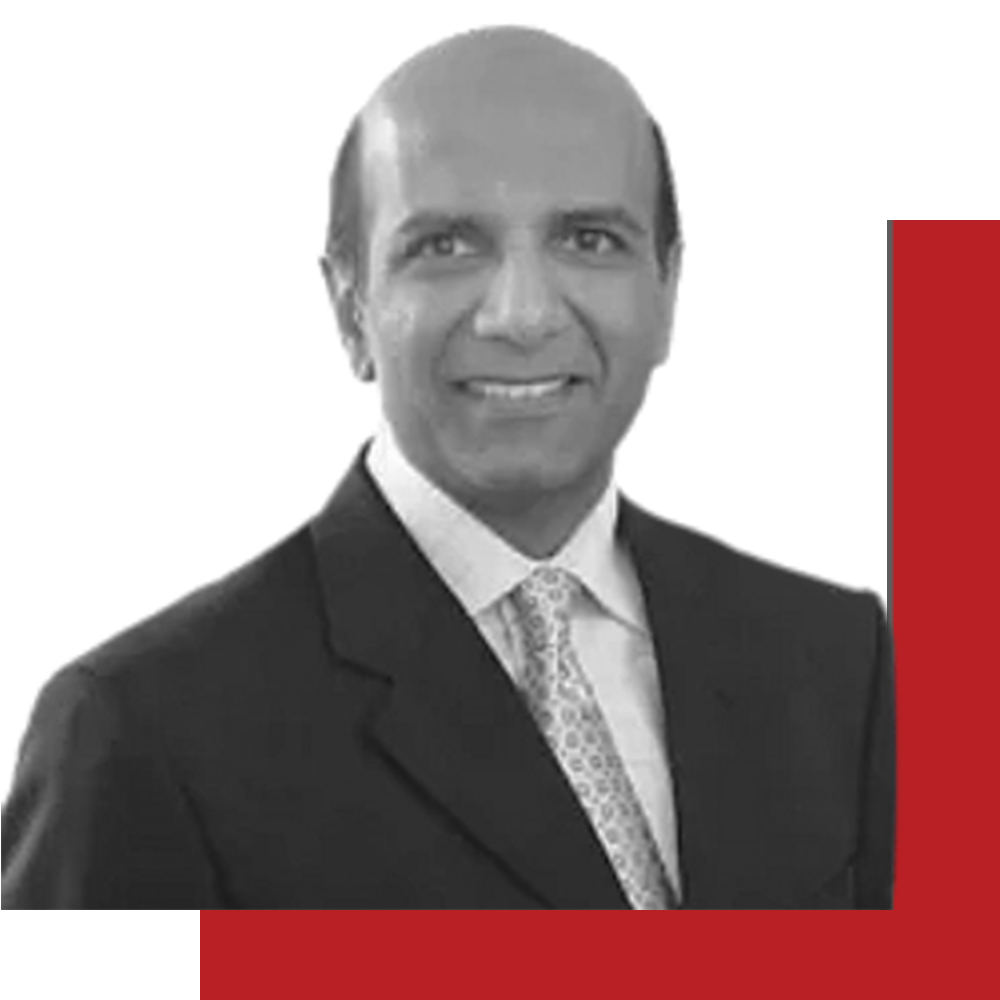
Zahir LadhaniZahir Ladhani, Managing Partner of Velocity Strategic Consulting

Zahir Ladhani brings more than 30 years of ‘in the trenches’ experience with SaaS, Consumer, Human Capital, Pharmaceutical and Management Consulting industries. A talented communicator and proven leader who has grown businesses and product lines, and was a key member of the executive leadership team in the sale of a company to a Fortune 100 company.

Zahir works with senior executives and leadership teams to scale up businesses by improving their discipline around people, strategy, execution, and accountability for sustainable growth. He has worked with numerous clients in easing the complexity that growth often brings, allowing leaders to focus more time on building their businesses, by leveraging transformative tools, processes and principles.

He holds a Bachelor’s degree in Mathematics and Accounting from University of Waterloo in Canada and Masters of Arts in International Relations from Fletcher School of Law and Diplomacy at Tufts University in Boston, Massachusetts.

Velocity Strategic ConsultingConnect with Zahir on LinkedIn and Sign up for Scaling Up Business Growth Workshop


This transcript is machine transcribed by Sonix


TRANSCRIPT

Speaker1: [00:00:07] Broadcasting live from the Business RadioX Studios in Woodstock, Georgia. It’s time for Cherokee Business Radio. Now here’s your host.

Speaker2: [00:00:23] Welcome to this very special Friday edition of Cherokee Business RadioX Stone Payton here with you this afternoon and today’s episode is brought to you, in part by Alma Coffey, sustainably grown, veteran owned and direct trade, which of course means from seed to cup, there are no middlemen. Please go check them out at my alma coffee and go visit their Roastery Cafe at thirty four point forty eight Holly Springs Parkway in Canton. As for Harry or the brains of the outfit Letitia and tell them that stone, since you, you guys are in for a real treat this afternoon, please join me in welcoming to the broadcast managing partner, author, speaker all around. Great guy. He is with Velocity Strategic Consulting Mr. Zahir Ladhani. Good afternoon,

Speaker3: [00:01:14] Sir. Good afternoon, Stone. How are you?

Speaker2: [00:01:16] I am marvelous man. And you know, most of my listeners are well aware that I will typically invest a Friday afternoon in beer and barbecue and not usually on air. But what a delight to have you come in the studio today to talk about your work and some upcoming events to help share some of this work with other folks? Let’s start there, if we could. Mission purpose What are you really out there trying to do for folks?

Speaker3: [00:01:44] So stone, you know, here in the United States, there are over 28 million companies.

Speaker2: [00:01:52] And that’s a big number I didn’t realize. Yes. And no.

Speaker3: [00:01:55] Yeah, and wouldn’t you know it? Ninety six percent of those 28 million companies are less than a million dollars. Wow. So lots of companies start, but very few scale. And of those 28 million companies, only 17000 of them make it over $50 million, so companies go through valleys of death. And so what I do in my partner does is we help companies scale, we help them through those valleys of debts or not going to those valleys of death and figure out how they can scale and meet the purpose of what their organization is there for. So it’s a lot of young entrepreneurs or entrepreneurs who are trying to make a go of it. And how do we grow their businesses? That’s what we do.

Speaker2: [00:02:39] So is there a timing aspect of this? Are there signals that that we get as entrepreneurs that tell us it’s time to scale, or at least consider the decision of whether we’re going to pull the trigger on some scaling activities or hit the brakes for a little while?

Speaker3: [00:02:54] So look through. That’s a great question. If you think about what a company goes through when an entrepreneur starts off its friends and family or they’re trying to make a go of it. And in the end, the entrepreneur, he or she does everything, and then they hire the first person and then they hire the second person. As soon as they get to three or four, the stuff in his or her head has to now be transmitted to four or five people. And then you get to about seven hundred thousand a million dollars and now you’re doing everything. And what got you there to a million or two won’t get you to five or 10. Because the way you do, things have to change. You or you or I as as a CEO of that organization, can’t do everything, and we’ve got to start to bring in people to do the right things. And so my view in the companies I work with are if they’ve hit the million and got to $2 million. It’s time to think. But then it doesn’t mean if you’re at 15. It’s not time to think about scaling because at every stage you need to go continuing. We’ve got clients who’ve been with us for three, four or five years into the coaching organizations because it’s always a matter of moving. And so that’s what it is all about.

Speaker2: [00:04:08] Well, that certainly speaks well to your work. Do you ever find someone seeks you out and they think that it’s time and they think that they’re interested in scaling? And you talk to him for a little bit and you think, Yeah, but not yet. Do you ever do you ever consult some to just hit the brakes a little bit and maybe swing back around next year or next quarter or anything like that? Of course,

Speaker3: [00:04:29] Yeah. Happens all the time, and more often than not, it’s because. The CEO, she or he is not ready, they’re not ready to learn, and it’s not a matter of they do what I say because my job is not to be a consultant and tell them what to do. My job is to coach them and teach them how to fish and teach them how to grow so they can do this on their own. And if we see that the CEO is not a learner, then we quickly run away. And so that’s the biggest thing we look for is are they willing to learn because there’s two things not only learn from a coach, but are they willing to learn from the people that are around them? Have they brought in the right people? So invariably people will bring me in to say, help me with my strategy and we’ll go. Of course, absolutely. But when we go in, we start to ask the questions. And invariably it’s another two things that are the issue before strategy comes into place. One is do they have the right people in the right places in their organization? And second, do they execute well? Does the organization do what they say they will do? Or do they just all run around and go after the shiny new toy all the time?

Speaker2: [00:05:41] So that sounds awfully familiar. You striking some chords over here say here. No, I think many of us can fall into that trap, right? Doesn’t mean we can’t recover, but it’s good to have someone with your perspective and your objectivity to lean in and say, Hey, Stone, are you chasing a shiny object? Is this really where you want to go?

Speaker3: [00:06:00] Exactly. And we all do this as human beings, right? Right, right? And when when we grow up in life, we’re always running after the next big thing. And invariably that’s what CEOs do, and they run after the next big thing versus they have an amazing business. How do they clamp down and evolve that business to the amazing big thing while watching the environment they’re working under?

Speaker2: [00:06:21] Well, you clearly have insight, perspective, specialized knowledge around these topic areas, but I’m getting the distinct sense that you also have. I don’t know if that’s the right word methodology, discipline, structure, rigor. You’ve got framework around this process that that makes it replicable as well. Yes, you have. You have a methodology, I guess, for this.

Speaker3: [00:06:42] Yes, absolutely. So, OK, we use methodologies from authors like Verne Harnish, who’s written the book Scaling Up,

Speaker2: [00:06:49] And it’s made a little bit of money in his

Speaker3: [00:06:51] Time. He’s done as I understand it, exactly.

Speaker2: [00:06:54] He has more than Tom,

Speaker3: [00:06:56] And Byrne is the one who actually started entrepreneurial organization around the world with berthing of the Giants at MIT. And so he’s built this organization, who I’m part of, and Vern was one of our coaches when my company was scaling or the company I was with was scaling. And then there is strategy books or systems that bring everything together, called metagenomics from Shannon Sasko. And so we bring in different methodologies to help the company. So it’s not a cookie cutter, it’s a matter of coaching. It’s if you think of a of of any sport, be it baseball or football or tennis, you’ve got the coach who’s watching from the outside who’s inspiring and giving thoughts and ideas for the players to wear to move so we don’t go in the field and play with them. We’re different from the consultants. We will help them get to their level in their peak performance, which is telling them what to do. We’ll coach them through to be there. So we use tools. We’ll start. First of all, when we start, we will start and develop a three year plan, what we call a gutted out plan. We’ll gut out an 80 percent right three year plan for the organization. We’ll spend two days with the leadership team, get them into a room and we’ll come out with this three year plan that is not only three years, but the next year. So one year and the next quarter, aha. So now everybody leaving that room will have specific priorities for the quarter. The metrics for the quarter and a we’ll embed some communications with them. We will then run through that quarter while they start to iterate that three year plan. And within that time frame, we’ll start to work on their people. We’ll start to see. Do we have the right people in the organization doing the right things, doing them right? Invariably, the question if I were to ask the CEO and we ask this question, would you enthusiastically rehire everyone has the leadership team? And guess what? The answer

Speaker2: [00:08:54] Is? No, exactly right.

Speaker3: [00:08:57] And so let’s go to work and we don’t mean let’s fire the person, right? It’s OK. So how do we coach them? What do we need from them? And how do we coach them? And if they’re coachable, if not, then we’ll work on it. But the biggest thing is who you have, not what you’re doing. If you get the right people around you, then magic happens because then even if COVID happens, you’ve got people who are thinking and iterating, and a well gelled leadership team is the best thing one person can have in front of them, right? And so that’s what we start to do, and that’s how we work. So we’ll work through processes of having the the what we. While the Functional Accountability Charter, or so we go away from the traditional org structures to what are the functional function chart and what are their accountabilities, what is marketing’s key metric for the quarter? What is sales key metric? What is operations key metric for the quarter? Then everybody’s humming and we’re watching that scoreboard. You know, you never play a sport without a scoreboard, right? Most companies don’t have a scoreboard. You go in and say, what are your metrics for the quarter and everybody will give you four different metrics? Well, how can you play the U.S. Open’s going on these days, right? And last night were some fantastic matchups. How can you play a game without a scoreboard? It’s in business, is a game. So, so those are the types of things we will start working with in an organization and putting a scoreboard develop their functional matrix. Then what are the processes they need to put into place? And then we start to develop a strategy.

Speaker2: [00:10:28] So do you find yourself in your practice, gravitating to certain industries, certain types of businesses, certain types of business owners? Or are you in a lot of a lot of different sectors

Speaker3: [00:10:40] In terms of business sectors where a wide variety? So we’ve got clients who are in the technology business, software business, HPC business. We have an amazing business here in the northwest of Atlanta, who was doubled their business since we started working with them. We have a glass where or drink, where business. We have a fast food franchise, a film company. Those are all different types of clients. Okay, but where it goes to stone is what you were saying is the type of CEO is key. If the CEO wants to learn, have the right people around them is what we’re looking for. We’re looking for a learner. That’s the biggest thing we’ve actually walked away from clients after working with them and said, Don’t pay us. We’re leaving because you’re just not willing to learn from your people around you or us. And so those are the things we’ll run away fast from.

Speaker2: [00:11:32] Well, good for you, and I commend you for that because that’s tough to do. It is for small business small businesses to walk away from from money like that, an opportunity like that. But in the long haul, it almost always serves your past, doesn’t it?

Speaker3: [00:11:45] Exactly. And then it depends on what your purpose is as a business, right? And that’s one of the key things we teach business is. You need to have a purpose of why you are in business. Yes, money is one thing, but most entrepreneurs are in business for something more than money. Oh yeah. Right. And we have to take that out and then use that to inspire the rest of the organization. Money doesn’t inspire people. It does for a few days, but not longer than that. We can see the big talent need right now in the country we’re facing, right? And everybody’s raising their wages. You can raise wages, but that’s not going to inspire people as much. Yes, people will come for money. We all want more money. But there’s something more that has to inspire. So you’ve got to have a purpose if you look at Disney. Like what’s Disney’s purpose? It’s happiness, right? Right? If you look at Starbucks before the pandemic, they were creating a third place away from home, away from work. There was this place we could go, we could sit, we could use our laptop and we be in a different place to do whatever we wanted, right? And that’s a different purpose. With with Google wanted a computer or Atari, Microsoft wanted a computer in every desk when they first started. So what is our purpose? Why do we exist in the company we work with? Their purpose is to give comfort. Isn’t that a beautiful purpose that has? You’re a technician. Yes, you’re waking up every day saying, I’m giving comfort to my clients. But more than that, I’m also getting comfort from my family because I’m working in a business that’s a family owned business who doesn’t want to be a $100 million business. They’re comfortable being in a mid-sized, small to medium sized business that we’re going to have a place where it’s not only numbers, it’s doing do it for our clients and we’re doing good for our employees. That’s the type of mentality we hope try and bring into the organization. So culture becomes a big thing.

Speaker2: [00:13:36] So I got to know what’s the back story here? How did did you arrive? How did you land in doing what is clearly what you are on this planet to do? I can see it in your eyes. I know our listeners can hear it in your voice, but tell us a little bit about the path that got you here.

Speaker3: [00:13:53] Well, Stone, I’ve been very fortunate. I’ve been very, very fortunate that people have come into my life who have guided me. Tom knows this, but I came to North America as a refugee out of Uganda, o mine in East Africa and at the age of 10, went through middle school high school and was fortunate enough. My parents and my brothers, everybody worked hard to put me through school and then got into a pharmaceutical company and I was lucky to have leaders I worked with. Is Clark, Chris Seton, Rudy and Mark Mallon, Dr. IBU, Dr. Faisal. Many, many other people who came into my life, who led me and whose coattails I hung onto through whom I learned right. And they they led me to a place I’ve been through from a finance career to head of marketing, launching the largest pharmaceutical product in the U.S. to a head of sales for AstraZeneca in the U.S.. To then going to a technology company and being fortunate to be one of the leaders being on the stock exchange to ring the bell. And so as all of these experiences came through and I finished my career at and I don’t want to say finished because I want to say, what’s the next career? Yeah.

Speaker3: [00:15:10] And I only had an undergrad degree and someone said to me, it’s necessary to have a masters these days. So at the age of 54, I went and got a Masters degree from Tufts University. Fifty four and I graduated with a master’s in international relations. I have a degree in mathematics and then I went a degree in international relations and I said, I’ve got all of this. And through these experiences, I was fortunate enough to be to learn how to talk, how to give a speech, how to how to teach. And I thought I can use and how do I impact as many people as I can. And so my mission is to inspire me to impact as many people as I can to be able to get the journey and be as fortunate that I have not that I’ve made millions. But I think the Lord has been very, very kind to me and I think there is enough in this world for this.

Speaker2: [00:16:02] Well, I do too, and I think it’s clearly reflected and you are you are living into that mission, no doubt. So one expression of this work, and there are many, apparently, but one expression of this work is a book and it’s entitled Scaling up. Is that

Speaker3: [00:16:16] Right? Yes. So we’re in a Harnish, wrote the book called Scaling Up All Right, and his first book was called The Rockefeller Habits, and he comes from John D. Rockefeller. What were the habits John D. Rockefeller used to build his business and Vern has taken from that learnings from as many business books as possible to develop a book called Scaling Up, which looks at people strategy, execution and cash for key things businesses need to grow and raise. And Warren was one of our coaches when we grew our company and were at the stock exchange, etc. So he he was an inspiration through it and through that. We’ve been using the work on scaling up, and then we wanted more work on strategy, so we hooked up with Shannon Sasko, who’s written the book Three Hag Metagenomics, and she’s just come out with the book Metagenomics. And so I use that also into delving into people’s strategy. And the biggest thing about that book is strategy is not about competing to be the best. Strategy is about finding a unique value proposition that your customer is willing to pay for. So you’re not trying to just be the best radio station or the best innovation spot, you’re trying to be a unique value prop for your clients. That’s different than anybody else that people are willing to pay at a premium because at the end you’re in business to make money with the purpose. And so we bring those tools together, right? And that’s what we do.

Speaker2: [00:17:41] Well, one of the things that I was immediately enamored with and attracted to when I went and poked around a little bit on the on the website is that you did include in this and in these four things. One of them is cash. Yes. So to speak to that a little bit because as a small business person, I’m the number two guy in our network and I am the guy in this little studio the way we’re set up and I’m constantly watching cash flow. And I did have a mentor chair with me years ago. As a small business, you just want you don’t run out of cash, you can’t run out of cash. That’s true, right?

Speaker3: [00:18:15] Absolutely. So when businesses go initially, when you run a business, it’s all about revenue, revenue, revenue and we say revenue is vanity. Right. But cash is king. And you saw what happened during the pandemic. Right. People run out of cash. And it was great the government came through and has helped quite a bit of people, right? And we know no disrespect to the banks or the lending institutions, they’ll give you money when you don’t need it.

Speaker2: [00:18:44] Yeah, that’s the other thing that mentor taught me.

Speaker3: [00:18:49] And so your goal is, how do you stay ahead of cash and cash is what you need to look after? So we do this exercise in cash, which we call the power of one where we look at if you made a one percent difference in your price or in your cost of goods sold or in your operating expenses or in your accounts receivable or in your accounts payable, what could that difference be? And we do an exercise and we take their their their financials and we show the leadership team what a big difference and you can make in your cash and just to the power of one. And invariably it’s great for salespeople because when you give a one percent discount on anything, it goes straight to your bottom line. Right, right. In the amount of volume you need is more not one percent more volume, you probably need three acts of volume to make up the one percent down, right? I’m sitting with us. He knows this financials very well and I’m sure you teach that in the class.

Speaker2: [00:19:46] So for those of you listening to us, we have Tom Devaney in here, who is not only a very well-respected professor at Kennesaw State University, and he and Zaheer have had an opportunity to do some neat work together. He and his wife run the innovation spot here, where we broadcast live multiple times during the week, and we did not dictate this to here and I. Tom actually asked not to have a microphone, but he is in the room with us, so we keep looking to him for reassurance. And now we’re getting into math stuff. So everybody’s looking to Tom. I’m sorry, I interrupted you, but go ahead. Yeah.

Speaker3: [00:20:18] So we do these exercises on on power of one. And then so you find how in our leadership team can do small incremental changes. Yeah, but make magnificent, huge difference in their cash flow. And it’s it’s important to know on that. And I’ll give you an example if you look at Costco. Most of their profit. Is not from the prices they charge us on the goods they sell us. Most of Costco’s profit is from the membership fees.

Speaker2: [00:20:50] Really? Yeah. A Costco. I’m there three days a week. I love Costco. It’s a great place to send them an invoice. Sponsoring this episode? No, we we love Costco.

Speaker3: [00:20:59] Yeah, but let me give you another example of an ingenuous way of of making cash. You know, a lot of us have Starbucks on on our app. Yeah, yeah. And we have prepaid cards. Costco have over a billions of dollars of our money before they’ve given us any coffee. You add up those three, four, five, 10, 15 dollars gift cards or whatever. We prepaid on our apps and add them up across the world. It’s billions of dollars

Speaker2: [00:21:27] And they’re always ahead, right? The fulfillment never does exist. And I don’t I probably have some gift cards in my drawer that I have that I don’t ever spend to. There’s probably that.

Speaker3: [00:21:37] Exactly right. And so you’ve got to start. Businesses need to think about not the traditional pricing models. You’ve got to think of different types of pricing models. And I’m not saying you can go as far as that, but there’s different ways you need to think about it. I’ll give you another example. Look at recently, Panera Bread has started a coffee subscription, huh? They offer you an unlimited coffee for eight point ninety nine a month. And one would think, wow, well, if you look at a Panera Bread and you go sit in there, you’ll usually see business people having their meetings. They buy one cup of coffee and they get their free refills. But if they get that, they’ve got this recurring revenue and they build their recurring revenue model. And it’s a predictable business,

Speaker2: [00:22:18] And those people will have more meetings there and maybe buy a sandwich and a soup, right?

Speaker3: [00:22:22] There you go. There you

Speaker2: [00:22:23] Go. See there. I’m coachable, Tom.

Speaker3: [00:22:26] And so so if I were to just finish what we try and do with our methodologies, we want to do three things. We want to make the business be predictable. Number two, if you can predict and be ahead of your employees ahead of the market by a week, two weeks a year, six months, you can delegate and you delegate with intent. And if you can delegate with intent and you can predict you can make it repeatable. Now you’ve got the machinery running of a scaling business that’s predictable, deliverable and repeatable. Now you’re humming. That’s what we try and do.

Speaker2: [00:23:01] So my sense of this is that a book is a marvelous augmentation to the conversation. A marvelous resource, maybe a great catalyst to get someone like me and my business partner Lee to thinking about things. And or if we’re in a consulting relationship and or if we have attended some, some education in the form of a workshop or a series of of of interactions like that, that a book could be great supplemental material. But but maybe for most of us, not enough. Is that accurate? And so another very real and very practical expression of your work you’re doing, you’re doing the the consulting engagements as you described, but you have ongoing workshops and in fact, you’ve got one coming before too long right here at the innovation spot.

Speaker3: [00:23:50] Yes, exactly. Yes, yes. And so we’ve partnered with Tom and Laurie at the innovation spot here in Woodstock to say, let’s take four hours and have the businesses and the CEOs or their leadership teams come. And our goal is for them to walk away learning these tools so they can go self-employment. So we will give them each a book and we will spend four hours going through each of these four decisions that I talked about people strategy, execution and cash. And we will actually make it a workshop where we’ll talk about the tools, the theory and have them work through so that when they leave this workshop, they can go implement on their own. And we’ll also in addition to to that, give them an hour more when they go live on a one on one that they can get a free consulting one on one. And the goal is for us. I understand these tools. Read the book and then get somebody to speak with them so they can go implement and we’ve done this almost every quarter. We do that and it was fantastic that Tom and Laurie wanted to bring this to Woodstock, and we’re doing this with you here in Woodstock.

Speaker2: [00:24:55] It sounds marvelous and in my dad’s language pattern as I hear you’re doing the Lord’s work, man. No, you’re doing great work and it must. And I don’t mean to suggest for one minute that your work doesn’t have its own set of challenges, but it must be incredibly rewarding work.

Speaker3: [00:25:13] It’s fantastic. Like, I call my wife when I finish and she gets tired of it, but I’m like, Oh, like because so when you when I get a call and we embed tools in the client’s offices that I can see and what they’re doing, and I look through it, obviously every week and you see a business grow and you see they’re more important in the business growing if you see their employees are happy. Yeah. And the team is happy and it’s humming. That gives you fulfillment because, you know, it’s one thing to grow businesses. But if to have people happy and enjoying it, it makes this a great place and better world that we’re in. And like, we’re all have our problems, right? So you have the people on it go. Then they make themselves better husbands or better wives or better parents, etc. So it’s fantastic.

Speaker2: [00:25:58] Amen. Ok, so how do we get tied in to this, this upcoming workshop dates? Yes, all that kind of stuff. Let’s make sure our listeners know that.

Speaker3: [00:26:06] Yeah, yeah. So on October to 14 Thursday, OK, we’re holding this workshop here at the innovation spot in Woodstock. The best way to sign up is go on to Eventbrite, and Eventbrite has a scaling up workshop on there or call the innovation spot here in Woodstock or call me at six one zero four five three eight four six one and we’ll get you signed up. It’s a nominal fee to sign up. In fact, it’s cheaper to bring three people than bring one person. And because we want the leadership teams to show up, oh, that’s because one, it’s it’s OK for one person to learn. But if your leadership team three people learn it, the easier it is for you to go implement yourself. So we’ve made it not 3x. We’ve actually made it one and a half x of the individual ticket so you can go sign up for yourself in the leadership team’s fantastic.

Speaker2: [00:26:52] Ok, so in the event that someone is listening to this six months from now, a year from now, well beyond this specific workshop, I want to make sure that they have a way to reach out and talk with you or someone on your team, and I want to make sure that they know where they can go access some of the material, maybe by the book, so let’s leave them with those coordinates as well.

Speaker3: [00:27:12] Sure. So it’s Zahir Oladunni Velocity Strategic Consulting. Best way for me to get me there through the website or go on my LinkedIn at Zahir Oladunni and would be happy to help you. Or, you know, if you call the innovation spot, we’re good friends. They’ll be able to find me, but it’ll work out that way too.

Speaker2: [00:27:30] Well, I hear it has been an absolute delight having you in the studio this afternoon. I hope you’ll come back. I hope you’ll keep us updated on your work. We’d love to continue to follow this story. Congratulations on the momentum. Not just that you’ve created for you and your organization, but the what the ripple effect, the impact that you’ve clearly had on so many other businesses. Keep up the good work, and I’m quite sincere. We’d love to have you come back. Sometimes what might be fun? I’ll plant a seed with you. It might be interesting because I know you have local clients. I know I realize you probably have clients all over the world. It might be fun to have you and a delighted client join us and we’ll talk about their business, but maybe also talk about this process in the relationship. If you’re up for that, we’d love to do that soon.

Speaker3: [00:28:16] Sure. No, I’m happy to do that. I think they would love to do that. They’re in this area. They’re part of this year listening network. So I think they would enjoy that. Well, talk to them. And maybe after October’s workshop, we finish. We can do that.

Speaker2: [00:28:26] Oh, that’d be fun. Well, thanks again for joining us, man.

Speaker3: [00:28:29] My pleasure. It’s been an honor.

Speaker2: [00:28:31] All right. This is Stone Payton for everyone here at the Business RadioX family saying, we’ll see you next time on Cherokee Business Radio.

Tagged With: Velocity Strategic Consulting

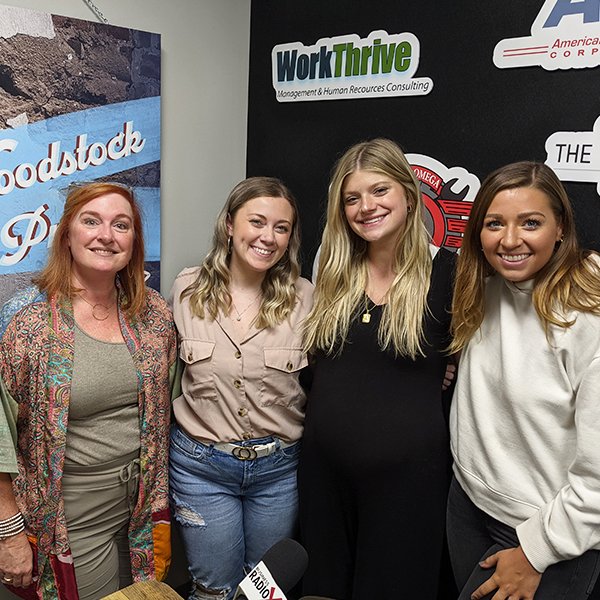
Abby Richmond from First Baptist Church Woodstock, Allie Kennedy from Momentum Church, and Brielle Underwood from The Factory

September 9, 2021 by Kelly Payton

Women In Business
Women In Business
Abby Richmond from First Baptist Church Woodstock, Allie Kennedy from Momentum Church, and Brielle Underwood from The Factory
Loading
00:00 /
RSS Feed
Share
Link
Embed

Download file

This Episode was brought to you by
Alpha and Omega

Abby Richmond, First Baptist Church Woodstock

Abby RichmondFirst Baptist Church Woodstock


Allie Kennedy, Momentum Church

Allie KennedyMomentum Church


Brielle Underwood, The Factory

Brielle UnderwoodThe Factory


This transcript is machine transcribed by Sonix


TRANSCRIPT

Speaker1: [00:00:08] Broadcasting live from the Business RadioX Studios in Woodstock, Georgia. Welcome to women in business where we celebrate

Speaker2: [00:00:18] Influential women making a difference

Speaker1: [00:00:20] In our community.

Speaker3: [00:00:22] Now here’s your host. Hello, Laurie Kennedy here, and I’m your host today for women in business, powered by Business RadioX Stone Payton, our producer is also in the studio with us today. We are grateful to have you tuned in with us and today we are interviewing a group of young worship leaders that I just happen to know and love. We are going to be speaking with Brian Underwood and we are going to be speaking with Ali Kennedy, and we are going to be speaking with Abby Richardson.

Speaker2: [00:00:56] Richmond Close, Richmond. Ok.

Speaker3: [00:00:59] She will just start with this because she’s always been Abby Honigstein to me, and I just I’m too old to remember new things. So tell us what is new in your life about this marriage thing? Like, how does this change your life?

Speaker2: [00:01:13] Oh, like just about everything. Yeah, so got married in March to the best man in the world, Graham Richmond. He was our bass player at church, and I thought he was way too cute and talented to not marry me. So I said, All right, it’s time, man. So we got married in March. He’s just incredible. But yeah, it changed my last name from Lowenstein, which is like quite the mouthful to Richmond, and everyone knows how to spell. I keep trying to spell it on the phone and people cut me off and I’m like, OK, you got it. You got it. You’re good.

Speaker3: [00:01:38] Yeah, I never knew how to say your name. Yeah, no wonder it was like Cohen’s Steen and jerks. Like, No, I should I tell you what he said? He was like, No, it’s like Frankenstein. Oh, I

Speaker1: [00:01:47] Got it all the time. Yeah, yeah, I’m not complaining. I remember.

Speaker2: [00:01:53] I love it. No, I appreciate it. My dad is. My dad doesn’t even know my new last name. So you’re good. You’re good to go.

Speaker3: [00:01:58] Oh, thank you. Thank you. I’m glad you love me. I’m glad we’ve we’ve known each other a long time forever. How did we meet?

Speaker2: [00:02:05] Ok, so church. We grew up, but we and I knew you. You were like Lori Kennedy, incredible worship leader or ministry lady. So I knew who you were. But when I was what, probably 16 or 17, I got to go with you to Romania on a mission trip. And so that’s like about the best way to get to know someone so just fell in love with you there and had the privilege to go back one more time. But I don’t think you were with us that time, but I wasn’t. But just, I mean, just your influence on me has been incredible. And then you introduced me to Ali as well, who’s become one of my closest friends. So really a gift?

Speaker3: [00:02:35] Ali Well, how do we know each other?

Speaker1: [00:02:37] I’m your daughter in law. Oh, I was just like the obligation person to come on today.

Speaker3: [00:02:42] So well, what changes are getting ready to happen in your life?

Speaker1: [00:02:45] Well, I’m about 25 days out from having my second child. Whoa, whoa, whoa. Second girl. Yes, super excited. We’ve got a one and a half year old already, so pray for us, please. Thank you. Yeah, big stuff. Big stuff.

Speaker3: [00:02:59] That’s awesome. Well, Brielle, I don’t know you very well yet, but I want to get to know you tell us about yourself.

Speaker4: [00:03:06] Well, I just turned twenty five. I had a birthday this past weekend, so that’s exciting. I guess I am working full time and finance. I just bought a house a few months ago.

Speaker3: [00:03:20] Congratulations.

Speaker4: [00:03:21] Yes, thank you.

Speaker3: [00:03:22] That’s awesome. Well, how did you get started singing?

Speaker4: [00:03:26] Wow. Well, I’ve been singing for literally ever like since I was a kid. Love to sing. I started getting involved, leading worship when I was, I guess my first time was probably a middle school is when I like started leading worship, getting involved in church with music. And then ever since then, I’ve just been leading a church with youth groups and now I’m at the factory. And so I lead on Sunday mornings there and love it.

Speaker3: [00:03:53] Ok. Awesome. And do you play any instruments?

Speaker4: [00:03:56] I can play keys, but I’m not very good at it. So yeah, I don’t like I’m not a professional, any instrument. But yeah, I can sit in my room and like play keys and sing a little bit.

Speaker3: [00:04:07] Do you write at all?

Speaker4: [00:04:08] I don’t. I’ve tried and I have written a couple of things and I think I’m proud of, but I’ve tried.

Speaker3: [00:04:15] Well, we’re going to write a jingle after this is over, right? I got to

Speaker1: [00:04:18] Leave. I got to go get a quick meeting after this. Sorry. No, I’m here for it. You know that? Well, how did you get started? Oh gosh. My my whole family saying, like my grandma was an opera singer and both my siblings on my dad’s side sang. And so when I was born, they were just like, Does she sing? And I started singing. But I got started in worship. Other than my dad being a pastor for my whole life, I didn’t really do much worship music until I was probably 18 or 19. And now I get to lead at our church, which, you know, Momentum Church on Sundays. So it’s pretty awesome.

Speaker3: [00:04:54] Yeah. Ok, that was Ali. And now, Abby, how about you?

Speaker2: [00:04:57] Yeah. So my whole family is not interested in music, so I didn’t really come from it, but I just realized I like to sing and was interested in it. So I kind of started playing around with some instruments and starting to sing. I’m not good at any of them. Like spoiler, it’s not good, but picked up a ukulele when I was in middle school and thought it was just the coolest thing. And so seeing a little bit at church kind of got to be known as like a musician. And right about the time I was starting high school, my another spoiler, my. Us now came to Woodstock, and he just wanted to get students involved, so I got sort of leading worship when I was 14 and really that’s where my love and just desire to do music just kind of developed. So I’ve been doing that since I was 14.

Speaker3: [00:05:41] And what church do you?

Speaker2: [00:05:43] Oh, I’m at First Baptist Church, Woodstock.

Speaker3: [00:05:45] Ok, awesome. Well, all those are amazing churches in Woodstock, Momentum and First Baptist and the factory, and we are just grateful that you guys are here today. What? Tell me a little about in any of you can speak up. Just tell us who you are when you speak up, because there’s so many similar voices

Speaker2: [00:06:02] As I go lower if you want

Speaker1: [00:06:05] Picking up.

Speaker3: [00:06:06] Yeah, that reminds me of what we were going to sing. Y’all are going to sing. Oh yeah, so let’s do that real quick. Ok? All right, you ready? All right. You want me to count down? Yeah, sure. Please. One two.

Speaker1: [00:06:25] No, don’t count. Don’t count on us. I’ll just start us all day.

Speaker2: [00:06:28] Ok, that’s doing it, girls.

Speaker1: [00:06:31] Amazing Grace. How sweet the sound. Let’s see. Guys like me, I once was lost, but now. Oh, I am found was blind, but now.

[00:07:09] I see. I lost a

Speaker1: [00:07:16] Little too high. I was like on my notes are like, No,

Speaker2: [00:07:22] This is live on air. This is real life.

Speaker3: [00:07:24] Well, it sounded great. What did you think, Stone? I thought it was fantastic. Thanks.

Speaker1: [00:07:29] The name we started laughing about half truths, though it is

Speaker2: [00:07:34] Behind the scenes. I love it.

Speaker3: [00:07:36] So funny. Let’s start with you, Ali. What is your most memorable moment on stage?

Speaker1: [00:07:42] Oh gosh, I could go like a funnier I could go a serious. I guess it just depends.

Speaker3: [00:07:48] Funny.

Speaker1: [00:07:49] Oh, I thought I thought you’d big serious. Well, I don’t think that was on stage, but that was a pretty funny moment that we just had in the in the room. As far as far as more serious ones go, I actually I got saved singing on stage, singing worship, music, which is pretty interesting. I recently have like kind of divulged into that because I got saved when I was eight, got saved again when I was 14. Kind of like rededicated my life. But when I got involved at momentum, one of our old worship leaders, like asked me to start worshiping there, and I was like, No, he was like, please. And I was like, OK, so I was actually, I was in the position of leading worship before I even like knew the gravity of what that meant for me. And so I don’t know if it was one specific moment or if it was just over the course of months, but God just started doing a work in my life through that. And now I look back and I can see a very clear distinction between me before that time and me after that time. And I give that to being able to worship on stage.

Speaker2: [00:08:49] So awesome.

Speaker3: [00:08:49] That’s awesome. I do feel like there are different times for those of you who were raised in the church, I do feel like there are different. You have a different understanding of who God is to you. At age eight than you do at 16. So it’s perfectly normal to have another encounter. Yeah, because you you are much more able to understand

Speaker1: [00:09:10] Things and you see you see those like those big stories people have where they’re like, Oh, I was a prisoner and I had just everything was changed for me. And like, So your whole life, you’re like, looking for that big aha moment, especially if you grow up in the church. But it just ends up kind of being something that after time you’re like, Oh, wow, I can definitely see where that changed for me. Like, maybe I didn’t not believe and then start believing, but it still was like a big moment, you know?

Speaker3: [00:09:35] Right, right, right. Yeah. What about you, Breel? Most memorable moment on stage?

Speaker4: [00:09:41] My most memorable moment. The first the first thought that comes to mind is a few years ago, I had gone through like a really tough season in life, and I had cling to these two worship songs that I just literally listened to on repeat for days and days and days months. And about six months after what I had gone through, I got to lead those songs at church. And to me, that was just a really special moment because I was bringing what what was personal and my personal time with God to be able to share with my church and the congregation and get to lead those songs. So that was a really cool moment. And I just remember like. Even God in that moment, just saying, look at where I’ve brought you from and what I’ve brought you through and how I’ve been faithful even through the struggles of life. And so it was just a really cool moment to be able to share that.

Speaker2: [00:10:35] That’s awesome.

Speaker3: [00:10:36] What were those songs?

Speaker4: [00:10:38] Yeah, the two songs. So it’s yes, I will buy elevation worship and then Psalm. Twenty three. I’m not alone, and I can’t remember who does that song, but those were like my staple songs for months and months and months, and I still like to this day. We’ll just like, sit in my car crying, listening to those songs because they’re so good. Yeah, so it was a really cool moment.

Speaker3: [00:11:00] That’s awesome. Thank you for sharing. What about you, Miss Abbey?

Speaker2: [00:11:03] Yeah. So I’ve had the privilege for the past few years to be involved with a women’s conference called Favored Women’s Conference, and it’s awesome. And I love leading worship for like a normal congregation, but I think we all would agree. Like just singing for women, there’s just like a tenderness and a sweetness. But this last September we had one and these honestly, these past few years for me have really been such gifts. And just like honestly, I would really consider these like just mountaintop years of just kind of feeling like the culmination of years I’ve poured into Woodstock and kind of getting to be in this role. And also just, you know, obviously like meeting my husband. And I just remember this moment on one of the mornings. It was one of our last mornings it was all the ladies are there, they’re they’re engaged and they’re we’re all emotional, right? Because we just are. We’re crying and you know, right? And I mean, I’m on stage with just all of my closest friends leading worship. And then to my right is my was my fiance at the time, and it was just it’s just such a sweet moment, like you said, just to kind of like take in the Lord’s faithfulness to you. And so that one’s pretty much stuck on my head is a really, really sweet moment for me.

Speaker3: [00:12:09] Oh, that’s awesome. I would love to talk about mentorship for a minute. Cool. Just both in reference to, well, I’d like and just say your name when you answer, but answer in any order you want. But I want to know. Whether you how you feel mentorship applies, like how is it important to you and do you feel like it’s important to both do it with others as well as have it done with you? And then who are your mentors? And are you working on that from both both angles where you’re mentoring others and they’re mentoring you? I know that was a big mouthful. Sorry. So.

Speaker2: [00:12:46] This is Abby, I can start. So this is something big on my heart, so I am on staff at First Baptist Woodstock as our student worship coordinator, and I really I started fresh out of college and kind of as a surprise. And so as I’ve kind of walked it, it’s just developed for me. And as I’ve grown in my role, I’ve kind of realized, honestly, I’m probably like the only worship pastor in the world who like, does not really like music that much like, I don’t love music, I don’t have to write. But I mean, I truly love God’s word and I love I love pastoring and I love mentorship. And so it took me a few years to kind of get into that. But now that I have what I’m so grateful for about the stage and about leading worship is that it? Honestly, it almost like gains trust with people, which is such a gift. So it gains trust with me, with these young girls that are sitting with us or just in our congregation. And so that’s been a huge gift to really try to steward that. So mentorship is pretty much the biggest part of my role in my opinion at our church.

Speaker2: [00:13:45] I mean, this morning I had coffee with a girl, but I have a few that I really tried to consistently meet with. I probably have three girls that I have like a weekly thing with. But then any of our worship leaders I try to meet with on at least a monthly basis, just be involved and know about their life. And I think the sweet thing about that is it’s just so spirit inspired. It’s so personal, and it’s it’s just really such a gift to have gotten to grow up and worship waiting and then help develop other people and see, you know, just these budding desires to be a worship leader like, you know, even just putting walks at the ward, like starting to hear God’s spirit or starting to like it, love his word. It’s just so cool to see, and I’m grateful to get to foster that. And I’ve I’ve I’ve actually prayed for a woman to mentor me for a long time and didn’t really feel like God gave me one person. Just kind of even like Missouri, just like helped highlight for me different people who had really poured into me, but recently, kind of like by happenstance, this lady that I’ve known for a long time with a church named Karen has really started to consistent like she pretty much has pursued me for years to, like, be in some sort of discipleship with her.

Speaker2: [00:14:49] And so we try to meet once every few weeks, and she’s just awesome. She’s like pretty much the queen of discipleship, I think is her title like I would call it. I just feel like I literally officially know, but just has such an incredible love for God’s word, incredible love for people, and is just so real and genuine. So I really try to, especially as I’m growing in discipleship others. It’s awesome and I’m grateful for it, but it’s also heavy. I mean, it’s people’s real stuff that’s going on right and real questions and real burdens, especially with these girls that are 16 17. And, you know, I’m just barely about to be twenty five and I’m like, Do I know, like, can I do I have the authority to speak into this? Like, do I know? So I really lean on God’s spirit. But Karen’s also such a resource for me to know how to love what other people. Well, so that’s my answer.

Speaker1: [00:15:36] That’s good. I want to pay you back off that a little bit because I’ve had the privilege of getting to sing and lead at First Baptist with Abbey, partly because of all the connections Lori introducing us and all of that. And you know this, obviously, but you’ve been a big mentor to me and a lot of ways. She really just she does a really good job of making people feel important and just being so generous with the privilege of getting to sing there. Like, I think as girls, we can all say like it, coming from a performance based background and feel like a worship background. It’s been very different, but it’s very easy to feel threatened by other women, especially other women worshipers, because you, like, want to be the one that gets chosen to sing that song, you know? But Abbey has done such a good job just cultivating like a team atmosphere there, and that’s something that I’m able to then take back to my church and try to cultivate as well, which I think is really awesome. And with that, I feel like I am just kind of entering a season of looking for more opportunities to disciple and not be disciple, because I did mention I was performing before I was worshiping, and it’s very different. So I’ve been blessed to have people like Laurie, a girl. Hannah Johnson at our church is sticking out to me right now who’s just they just have that heart for worship and they kind of have taught me what that means and how to use that as a tool and how it’s how powerful it is and how much it can, you know, Trump the enemy and all of that stuff. So I’m excited. I feel like I’m starting to get to a point where I can pour into others more than I could before because I actually have the knowledge to back it up, which is really nice.

Speaker4: [00:17:09] So, yeah, and I agree with Ali. I think I’m also kind of in a season of life where I’ve always had a heart and a passion to pour into younger women. And so I think. That’s something that I I’ve done before, and I kind of took a break from that just being in college and but now I’m always looking for opportunities and, you know, praying for God to put people into my life that I can pour into and just build a relationship with. And I think at my church, like, we have a leadership team. So I would consider a lot of those, like some of my mentors that I look up to. And then my best friend, Nicole, she’s she’s amazing. And I literally prayed for a friend like her for years and like, God bless me. She’s my roommate. She’s great. She also leads worship, and so she’s like a really big impact on my life and just keeping me accountable and walking through life together, like just doing every day together. And so I’m very thankful for her and just getting to have a relationship with someone who can connect on all aspects of life with me. And I think that’s really awesome to have people that you know, you can pour into and then also learn from and, you know, grow with. So that’s where I’m at.

Speaker3: [00:18:27] That’s awesome. I I know we kind of touched on this a little bit, but being on stage puts you in front of people where they look up to you, especially, I mean, all people of all ages. But but specifically, younger girls are looking up to you and are looking to you, and that’s pretty heavy. How do you use that influence in the community?

Speaker4: [00:18:54] I can start, I think for me, I yell, Yes, this is Breo I, I always keep in mind that, you know, I want to be the same person on stage and off stage. I don’t want to be one person at church and then one person at home. And my goal is just to like in everything I do everywhere I go. I just want to be a white and I just want to glorify God in my actions, my words and ultimately, and I was telling you this a little bit last week, I think Laurie is that my goal is just to love people. And I know, especially with things that have gone on in the last couple of years in this world, like there’s been a lot of division and I just want to be someone that can be a light and be show Christ through my love and through my actions and how I am with people. So I just try to keep that in mind, no matter what I’m doing, where I am is that I do have influence, whether I want to or not. And I just want to show Christ in everything I do and bring glory to him. And, you know, keep that in mind in my daily walk in life.

Speaker2: [00:20:02] Yeah. This is Abby. But I totally agree with that. I think it’s been especially interesting to me in the past few years with social media. Just it’s it’s always like easy for people to maybe misinterpret things you do in life, but social media, it’s like it’s almost hard to like, get your point across in the right way. And it’s just like really balancing that. I’m so grateful for the influence that I have and that the stage does give me that trust with people. It does give me that influence over people’s lives. But I mean, it makes you be cautious about what you post, what you say, which I mean and things. It seems like innocuous or things that like wouldn’t matter, but it’s just always worth it to make sure what you’re posting is or what you’re posting or what you’re doing. What you’re saying publicly is uplifting and, like you said, lines up with my values and I’m walking that somehow with someone girls that I mentor where they’ll post something. And it’s just it’s what everyone else is doing. And it’s just the song that was playing in the background or whatever and really encouraging them with like, what a gift it is, where we’re on stage in God’s house. I mean, that’s a huge deal. Our platform problems a huge deal. And so making sure all that we’re doing leaves no questions in people’s minds. It leaves no reason to like, wonder or like, you know, just always is clear and always uplifting to other people I love.

Speaker1: [00:21:15] This is Ali. I was last to go, but I still felt like I need to say it. No, it’s it’s so true. I think it’s also it’s accountability. A lot to something I’ve in developing my relationship with Christ. I find that it’s like if I’m not going to worship at home, I shouldn’t be worshiping on the stage. So getting into that kind of cycle of obedience and really making sure that the genuinely is there and that I am who I am on stage and off stage, that’s the biggest thing. I think that is the most important thing to me because my least favorite thing growing up in churches is, you know, kind of loving a pastor, loving something that a pastor said. And then the pastor’s walking off stage and you’re like, Oh, they’re not like, you talk to them and you’re like, That’s not the same spirit that I saw on that stage. Like, something has changed just in the moment that you walk down those steps. So I think trying to find the balance of being genuine on stage and genuine offstage and, you know, not deflecting things and not being afraid to have those like tough conversations because you find yourself getting approached by people a lot with really heavy stuff. Yeah. And it’s like, why does that happen to me? But you know, you’re you’re leaving church and somebody is like, Hey, so-and-so just died, can you pray for me? And you’re like, Whoa, you know, like, that’s that’s tough, but you have to be you have to be genuine. You have to be willing to take that time and, you know, pray with them and be open to speaking life. If you feel led and all of that, you

Speaker2: [00:22:37] Know, I this is Abby again. I love what you just said. I say that a lot to girls that I disciple who that are some of our worship leaders is just like, honestly, the worship leading moment is the tip of the iceberg. If you think about it, right? That’s the that’s the tip of the iceberg of the week that you spent in the word or walking with the Lord or praying with people or in community, because then you get on stage and it’s got to just be the overflow, right? And I honestly think for a long time, I’m grateful that I started young leading worship. But also, I can think back to honestly years that I had improper motivations or like getting up there and thinking of times that I was like, I want to be really spiritual right now. So I’ll say this thing. And and it is just so much richer to be in a season where I get on stage with something to say and something to sing and something to worship about. Because I spent my time in the world this week, I spent this time with the Lord. This week I’m I’m full and I’m overflowing on stage, and I think that can be a misconception, you know, and sometimes something we miss.

Speaker1: [00:23:34] Yeah.

Speaker4: [00:23:35] For me, this is Breo, but I I notice a difference when I’m up on stage leading worship, and I haven’t spent time with God that week because I’m like, I’m I feel like I’m giving out of an empty tank. And so I always try to be intentional during my weeks, whether that’s through having. My own personal worship or doing my devotional or whatever it is, because I want to be able to to actually have something to give on a Sunday morning, and I always try to keep in mind, like when I’m up there, it’s not about me. I like my prayer. Almost every week is God. I pray that you will increase and I will decrease because I don’t want people to see me up on stage. I want them to see God through me and allow him to use me in those moments.

Speaker1: [00:24:24] Totally. That’s real that this is Ali. Again, that’s something that I’m in a season of, too. Like just I’ve said it many times, but coming from performing to worshiping like it completely changes the motivation about what you’re doing. And my biggest fear, just as a worshiper, is to be in a place where I feel like it’s about me. And the enemy recently has been heavily using that on me and trying to be like, It is about you, you’re doing this for you, blah blah blah. All that stuff, fun stuff in your head all the time. But I think it’s so it’s so much easier to fight the enemy. When you are read up and you’ve got the word in your heart and you’ve got those prayers down, you’ve already kind of prepped for that. And then you find yourself there just being like, You are so small, you know, and God is so big and this is this is silly. Get out of my head, you know, write seriously.

Speaker2: [00:25:10] And I think it’s zabi again. And like you were saying, all that you said was very sweet, but thinking about that like team atmosphere that we want to have at a church, right? Like the quickest way to walk that is for me to be selfish, for me, to be focused on me and for beautiful, talented Ali Canada to come in with her incredible voice. And I’m like, I’m going to, I’m going to fight you. Don’t sing my songs, you know, like that.

Speaker1: [00:25:29] You just get

Speaker2: [00:25:30] That. I mean, honestly, that’s the spirit that we can get into. Sometimes right is just like, I do want to shine. I want to I want you to hear me. I want this like attention. I want this moment. And it’s so from the enemy. Like, if you think about the fruit of that, like it’s just straight up from the enemy. But being able to walk in with the spirit of just all about Jesus and connect and all about even beyond that just others and end the people that are near you and worshiping with you. It just it robs you of any sort of like, you know, selfishness in that so, so important. And in fact, so much

Speaker3: [00:26:01] So each of you are individuals with not only your individual gifts, but the individual way that you. Show them to the world, how does your individuality show up in your worship? I know that’s kind of a hard question. So like. The uniqueness that you are. Versus somebody else singing that same song, like, what do you do that’s different than someone else, like, for example, we run an automotive shop, and so I get asked all the time what makes you different than someone else? And I say, Well, we, you know, have quality and integrity and honesty, and we try to treat our employees and our customers like family. Yeah.

Speaker2: [00:26:47] I would say that I have quality in tech, what else did you say? I’m just getting

Speaker1: [00:26:50] Quality.

Speaker3: [00:26:51] Ok. No, no, no, no. Here was honesty. I have honesty,

Speaker2: [00:26:59] Integrity, integrity and quality. And I treat my employees. I’m just I’m just kidding. You know, honestly, what came to mind when you said that I like, I kind of said, I’m coming to terms with, I’m not your worship pastor who knows what the number system is, and I don’t. I can play about five chords on the guitar. And so I’m not musically like there, and I really had to come to terms with being, you know, wanting to be more pastoral and real and loving God’s word. And I’m like, Where did you put me in this position to do music? But I love your words. So how does that work? But really, I think for me, maybe this doesn’t apply to just exactly singing songs, but I really tried to be like, you know, the word like, no, the scripture behind the songs. So I feel or even things connecting to it, I always try to really have that in my heart because that’s what I love. It’s what I love. It’s what I feel like words gifted me with. And so especially in our environs where I’m more free, I try to be like, Read up. And I think that is something different about kind of how I approach worship. And also, I am. I don’t know if you can like, read this on this. I’m like lighthearted and goofy and awkward, and I mess up words and I’m like, I’m pretty silly and I’m but I think I’m pretty comfortable in my skin. And I think that can when that plays some benefit because it makes other people more comfortable in their skin. And I think approaching leading worship like that is good, too. I’m definitely not your most polished worship leader. I cry through about half of every song that we do.

Speaker1: [00:28:25] If you’re laughing, it’s like very true. I cry all the time

Speaker2: [00:28:28] When we sing. So I’m really trying to knowing that that’s how I approach life, it’s how I approach conversations. It’s how I also try to approach leading worship in that way for me to and I think I’ve definitely been come to known as to come to be known as the crier at our church and the. But, you know, just in that way, just trying to be authentic and be myself.

Speaker4: [00:28:47] Yeah. Going off of what Abby said, I think I try to be very intentional. This is real. When when I’m on stage because I don’t want to get up there and just be singing a song, I want to whatever the songs are that we’re doing that week, I want to find how that can connect to me so that I’m able to deliver and really be up there worshiping myself. Like, I’m not just up there singing and leading like, I want to be up there also worshiping. And so I try to be mindful of that. Every week when we have songs is like, I’m going to spend time with these songs and connecting to them and finding the purpose that they have in my life and what they mean to me. And I’m also I’m very I’m a very quiet person. So when it comes to talking, I’m not good at that. So I try to use, you know, God, let God use me in those moments. And sometimes I’m like, They’re terrified. You know, still, to this day, I’ll get nervous sometimes, but I just have to remember, like, God is using me and it’s not about me, it’s not about me. And so just having that reminder, I think that can bring a little more authentic ness. Is that a

Speaker3: [00:29:59] Word authenticity,

Speaker4: [00:30:01] Authenticity to my worship because I don’t want it to be about me. I don’t want it to be just me up there singing, so I try to keep that in mind.

Speaker1: [00:30:10] That’s good. This is Ali. I feel like I’m still really learning about what makes me unique as a person. I feel like that, especially when I was just beginning the journey of learning how to worship like it was almost like every time I got up on that stage, I could feel God telling me a little bit more about who he was, an intern who I am. And so I think through that, I’ve been able to kind of build my confidence as not only just a worshiper, but as a woman. And I think that I found just power in the declaration of worship. And I feel like that that when when things are shining the most for me is when there’s a song that is just absolutely like reminding me it’s repetitive and it’s just saying, you know, like, God is good. God is good things like that that I can just continue to just like pound in. And that’s that’s when I get personally the most excited and the most giddy and jumpy and all of those good things. I don’t really jump right now, but I used to jump a little bit of a hop. I kind of we’re currently early, but I used to jump.

Speaker3: [00:31:14] I figured that was going to be your most embarrassing moment on stage. You know myself at the revival.

Speaker1: [00:31:19] Yeah. I’m just

Speaker3: [00:31:20] Saying, if you did, I didn’t say, you did say you

Speaker1: [00:31:23] Did. Yeah, I’m joking about it. I was like, I’m not going to tell anyone. And then I got off stage and I was like, Guys, I beat myself on the radio show and you said, Guys, I feed myself. Listen, we’re on the air. I don’t know. You know, people are hearing this. You haven’t carried a child. You haven’t carried your second child. You can’t say anything about like 15 pounds on your bladder at all times and your jump. And I wear black pants a lot right now.

Speaker3: [00:31:50] They have these things called depends.

Speaker2: [00:31:52] I know. Please.

Speaker1: [00:31:54] Wow. So. We’re actually going to have to go pick. Really? Yeah. In Prep.

Speaker3: [00:32:04] And so as iron sharpens, I will make it serious again, right? I was given an iron sharpens iron. How do you find like minded people to spend time with? That’s cool.

Speaker1: [00:32:15] Good question. This is Ali. I can take this one. Do it. I really can. Man, I think prayer has been the biggest thing for me. Just like wanting so badly, like to have people around me that I can do life with. And that like what you were talking about with your friend Nicole, like that are just ironed for you and that want the same things that you want. And it’s just been so sweet to see how God has just like delivered people through connection. I think that’s the biggest thing. Like the more the more involved I’ve gotten with people in my church, the more people I’ve met. That’s how I got to meet Abby. That’s how I know my best friend, All-Bran. Just people like that that you can really just do life with. I think that just prayer and like diligently asking God like, I need people in my life like this. I need somebody like this in my life. I’ve seen God just like, give me the fruit of that in so many ways. And it’s just crazy, because sometimes you don’t even notice it until you’re in it. And then you’re like, Oh my gosh, that’s exactly what I prayed for. Wow, you know?

Speaker3: [00:33:10] Yeah, they say, you’re like the five people that you spend the most time with. And so I want to make sure that I’m being very careful about who those people are.

Speaker2: [00:33:20] Holly, I would say this is Abby, something you said. Ali really struck a chord with me, but I think it’s true. God loves community. I mean, it’s his heart. And one thing I’ve really learned recently, Steph, that’s God’s heart. He’s just, I mean, he’s our friend with it and so we can ask him for stuff. But you said you said sometimes you don’t even notice it until you’re in it. And I think for me, I’ve grown up at First Baptist Woodstock since I was two pretty much been my community. And honestly, like, you know, different people have come and gone and moved away and friends. And I think every season I’m like, Well, you know, there’s just it’s the same people here, but asking God to give me eyes to see there’s people that I like grew up, you know, near barely knew. And now there’s some of our closest friends like me and my husband or I have an intern right now who’s awesome. But she was one of my students, like when I first started my job, and now she’s one of my closest friends and awesome to see the fruit of what the words I’ve done in her life and in our friendship. And it’s just sweet how much she wants to help us, you know, with that to find the right people.

Speaker1: [00:34:21] He’s even this is Ali again, are just following up. He’s even like taking friends in my life, like my best friend Alex. She has. I’ve known her since middle school, but we weren’t really friends until high school and we literally became friends because all of our friends graduated and we just had each other and we were like, Well, we have nothing in common. Let’s just be friends. It’s fine and it’s just crazy because now she’s one of my only friends that I’ve known my whole life. That’s in the exact same walk of life that I’m in. Like, we go to the same church. We’re both married young like she wants kids, probably more than I wanted kids. And it’s just it’s just so cool how God can shape people that you didn’t think would be like that into that for you, especially if you’re diligent and prayer on it.

Speaker4: [00:34:58] But yeah, I think for me, I’m going a season of life where it actually is harder for me to meet people because I’m not in school anymore. I mean, I have my church, but I don’t really do a lot other than like work and I have the friends I have. So I think for me, even just saying yes to things like this, because this is totally out of my comfort zone, but we’re building connections and like I’ve known about you each other since, like middle school, but I haven’t seen each other in years. And so you were

Speaker2: [00:35:25] Getting coffee next week, I decided I just, you

Speaker4: [00:35:27] Know, so like even just like meeting you guys and like getting to catch up. And I think things like this are really awesome to just like sometimes you just have to step out of your comfort zone to meet people and do things like this, to build relationships and be intentional and follow up with people. So I think for me, I’m just in a season of my life where I am really just praying that God will bring more of those people into my life because I have my core group. But I’m always looking to build relationships with people and connect with people. Awesome.

Speaker3: [00:35:58] Yeah. So I I know that God works every day and every single one of our lives, but I think that we have to look for it in order to see it or find it, which I’m not always amazing at, but I do know that. So I try. What is God doing in your life right now?

Speaker2: [00:36:20] Is this cool? Okay, I’ll start here. This is Abby. I was saying this to Ali on her couch last week. I this has been a really sweet season for me. I I honestly, we go through different seasons here in the words voice and not and struggling. But right now I really do feel like he’s like speaking like a little too much. Like, I’m like, I want to say, mean thing to my husband. And he’s like, Don’t? And I’m like, Oh, let

Speaker1: [00:36:44] Me go like

Speaker2: [00:36:45] I really am feeling. His spirit on my heart, and I’m I’m so grateful for that my journal right now is full of I was thinking about this to state. I went to the word and I got this. And so right now I’m really trying to listen to his voice, but it’s and I think I’m growing in that, which is really cool. But a lot of times I’ll hear him say a word or give me a picture and I’m like, That’s it. That’s what you’re saying right now. I’ll go for it. We’ll talk later once I’ve gotten to the destination. And that is not what walking with God is. It’s walking hand and hand with him, hand in hand with him and in step with him and listening to his voice and hearing him say stuff and asking him about it, saying When now how much? How would you like me to like, you know, it’s walking in step with him and being faithful when he pulls you the directions right now? I mean, I’m recently married, so as awesome. But you know, it’s like the season.

Speaker2: [00:37:38] I’m dreaming about the future, right? So my husband and I are like, When’s kids am I? Am I going to stay here at my job? Are you going to stay at your job or are we going to do this? Or are we going to do this? Do you want to move to California or Greece? Or, you know, we’re doing all the commerce, all the dreaming and all the conversations, and it’s cool to walk that with the word, but I think I’m quick to hear a word and say, All right, this is what he’s saying. Let’s do it. As you know, take this step, but it’s really cool to get to just walk with the Lord and hear him excite parts of my heart, speak dreams over my future, but not give me the timeline. So I just get to kind of walk with him with it all in front of him, right? So that’s kind of where I’m at right now, just learning to actually listen to what he’s saying and just walk in step with him. Yeah, I

Speaker4: [00:38:18] Like what you said about, you know, God doesn’t always give us a timeline. I feel like right now I’m in a season of just kind of a waiting period. And it’s been there’s moments from like, God, where’s my husband? Because I’m, you know, I’m single right now, and I feel like a lot of people around me are getting married or getting engaged or having kids, and it’s easy to feel like I’m falling behind. But through this season of Just Waiting, God has been very faithful, and he constantly is reminding me like, look at where I’ve brought you from and look at what I’ve brought you through and look at how good I’ve been through all seasons of your life. And so I think, you know, God, we don’t always know his timeline, but I know that his plan for me and his purpose for my life is good. And I just have to remember that, you know, things don’t always happen the way I want them to. And just keeping in mind that, like, I wouldn’t want them to happen my way anyway because my plan is not as good as God’s plan for my life is. So that’s just something I’m like constantly being reminded of is that, you know, I may be in a different season right now, but God is still good and he’s still faithful. And even on days where I just want to like Cry and I’m like, Why God? Why? Like, he’s he’s good and he has a purpose for me. And so I just have to use this time in my life to still bring glory to God. And maybe there’s someone that I can encourage through a waiting period as well.

Speaker1: [00:39:55] I think that’s cool. This is Ali. I feel like that that’s so real to everybody like that. One of the biggest parts of my testimony is the God’s really overcome a lot of anxiousness in my life. Like I used to say, I have anxiety now. I say I get anxious because there’s totally a difference in the power of the tongue and what you say. But in that literally as soon as I started like getting tools from the Lord to be able to walk out like healthy thoughts and healthy amounts of stress, he was like, OK, you’re going to get married, you’re going to have two kids, you’re going to buy a house and you’re going. And I was like, OK, I hate change. I hate it. But I feel like I’m just a season of just constant adjustment all the time and I’m tired. But it’s been just the sweetest of things and the things that people are like wanting for and wishing for, and I wouldn’t change anything. But I think the biggest thing that I’m in, right, the second is just being able to look back and I know I can feel the faith that I have that although, you know, this change is coming rapidly, you know, it’s going to be OK in the end.

Speaker1: [00:40:57] And I’ve seen I’ve seen God’s faithfulness before. So to actually be able to sit back and rely on that and not not have that anxiousness like my body literally like wants to be anxious so bad about it. And then I’m like, Oh, wait, like, no, I already like, we’ve gone through this before, but it is. It’s I know, I know where I start, I know where I end, but it’s like the period in between. That’s hard for me because I want to just be angry or I just want to be, you know, I want to be angry or I want to be amazing. And and it’s hard to just like know that it’s kind of up and down in between, like while you’re walking to that point and while you’re getting there. But like really just being able to like, sit in the sweetness of God and be like, OK, yeah, no, just one day at a time. Like, I know where I’m going. Just get me there, you know?

Speaker2: [00:41:39] Right, right. Oh, good.

Speaker3: [00:41:41] So if you’ve made like a big mistake on stage. What would that look like and how would you recover?

Speaker1: [00:41:50] I already told my Laurie. No, I’m sorry.

Speaker3: [00:41:53] Well, you didn’t have a puddle on the floor or anything.

Speaker1: [00:41:56] No one ever needed to know. But I have to tell everyone everything. You know, I feel the.

Speaker2: [00:42:02] Man, I would say for me, I am forgetful and I say the wrong thing, and I’m clumsy as all get out and I drop stuff in a break stuff and I’m not a good guitar player. So the chances of me getting out of a service unscathed with all the right chords, all the right words and not falling from one way or the other. That’s a pretty tough, but for me, I’m grateful. Like I said earlier, I think my my giftedness is my comfortability, so most of my venues that I’m in has just they just know they just come to expect, let me do it, they let me roll off and let me sing the wrong words. Mess up, fall down, whatever. Let me do it. But I mean, I think I took it and come down with it. I’ve never fallen. I have never fallen flat. I have tripped major before.

Speaker3: [00:42:49] Do you like just go to your knees and pretend like you’re worshiping,

Speaker1: [00:42:53] Falling out and spirits? So I swear to God this is Ali. I think the hardest thing for me in those moments is like, I deflect to joking when I’m uncomfortable and it’s very, very hard for me to recover from any major faux pas on the stage in a way that I can like bring it back to being spirit minded, like I want to kind of be like, you know, and this my stuff. I’ve never said that, but I’m thinking of this time when we had second service and our drummer and our bass, no, our drummer and our lead guitarist decided to go to copper coin and between the services, and they weren’t back in time for the second service. No. Yes. And like, nobody knew until it was too late and I was just standing on stage and everybody was just kind of looking around and I was like, anyone seen our drummer like we were on stage with no anyone and we just kind of stood there for a bit. And then our worship pastor in all his glory actually came up and he drummed so he can do everything. The first song and a half was him, and then they had like a switch. Yeah, but see, in that moment, it’s like, it’s really it’s hard to be like, OK, no, we’re here to worship. Like, That’s funny, and I want to laugh about that the whole rest of the service. But I can’t keep making jokes about it because, no, it’s OK.

Speaker4: [00:44:05] We love that. Yeah, there’s definitely this is yeah, there’s definitely been multiple times where I’ll come in at the wrong time or sing the wrong note or forget the words or whatever. But I think it’s just, you know, you just keep going and just give yourself grace because it’s hard in those moments for me not to get in my head and be like, Oh, I just messed up the whole song or whatever. So thankfully, I haven’t had any major embarrassing thing happen. Knock on wood.

Speaker1: [00:44:32] Let’s hope this Sunday it’s happening.

Speaker3: [00:44:34] No, no, no. I didn’t. I didn’t call that in determining of the tone.

Speaker4: [00:44:39] Yeah, you just I mean, especially when you’re up there, you know, live in person, like you just got to keep rolling with it. And so it’s just, you know, you keep going, you

Speaker1: [00:44:48] Just keep going and hope nobody notices like,

Speaker3: [00:44:51] You know and the other people don’t.

Speaker2: [00:44:53] Yeah, a lot of times

Speaker4: [00:44:54] People don’t know. So like little things that you may be like, Oh my God, that was such a big, you

Speaker1: [00:44:59] Know, like just because I would notice if I was in the audience doesn’t mean that other people? Right?

Speaker3: [00:45:04] Yeah, totally. I think the average person doesn’t notice most of the things that don’t happen the way they’re supposed to on stage.

Speaker1: [00:45:12] I always ask, Grant, this is Ali. I always ask Grant after. I’m like, Oh, like, did you hear when like, I went, like, blah blah blah or something, you know? And he’s like, what? No, like, I know. And he’s like my gauge. Like, if he noticed like it was probably really bad. Like, if didn’t and we’re probably cool.

Speaker4: [00:45:24] We’re probably a lot harder on ourselves than other people are on us. Like people don’t notice, but it’s hard not to like, beat yourself up sometimes about things that you do on stage. So it’s just like a reminder of like, it’s OK. Yeah, like, it’s not about me.

Speaker3: [00:45:40] Yeah, yeah. There’s a balance between being a perfectionist, but yet still being diligent and in preparation.

Speaker2: [00:45:46] Totally, totally. And that’s where, again, it’s like the fruit on stage of what you’ve done throughout the week, not only spiritually but also in preparation. And I know when I haven’t learned a guitar song

Speaker1: [00:45:58] Before the night, like, I’m sorry, Abby’s talking about how she’s bad at guitar. I actually kind of play the guitar and Abby plays,

Speaker2: [00:46:04] No, I like like she will in the mix like they really

Speaker1: [00:46:08] Do, and I just pretend like I can’t play. But I had my

Speaker2: [00:46:12] Guitar came to the wrong key for like a good half of a song. Oh my god, I turn it down and they turn it down. So nobody cared. That’s what I’m saying, right?

Speaker1: [00:46:19] Like, we love the intuitive production team. I know

Speaker3: [00:46:23] They see my

Speaker1: [00:46:23] At the wrong spot. They’re like, Let’s cut it off. Let’s just cut it off. She’s that to everyone.

Speaker2: [00:46:29] It’s good time.

Speaker3: [00:46:30] All right. Last thoughts. Oh, starting with Gabriel,

Speaker4: [00:46:34] Last thoughts about

Speaker3: [00:46:35] What just we’re getting ready to end anything you want to say. Any any message you want to give those who are listening?

Speaker4: [00:46:43] I’m I’m just thankful to be here. Enviable to be a part of this, I think it’s been awesome, even just getting to know Ali and Abby and Lori a little bit better. I guess my parting thoughts would be, you know, whatever season of life you’re in right now. Just trust God and you know things. Walking with God in life is so much better than walking alone. And so, you know, no matter what’s going on in anyone’s life right now or in the world, just cling to God and trust him and put your faith in God because things will always work out in the end how they’re supposed to.

Speaker1: [00:47:19] I love it. Ali, this is Ali Ali. I’m sorry. Are you sure? Yes, I’m 90 percent sure. Well, first off, it has been just a joy to get to know YouTube real seriously. Like not to be weird, but like, let’s all hang out because this was fun. What are you doing after this? Like, what are we? You guys want to go to my house. It’s like eight minutes from here. We can know. But really, it’s been a joy to get to know you today and to get to talk to my ladies as well. And I think basically what Burrell said, she pretty much summed it up. I feel like that was kind of like a very we all kind of are in that same spot in a lot of different ways. But if you’re listening to this and you want to know more about Jesus or you want to just talk about seasons and different things like, I don’t know if our social media stuff is up, but we are all in to listen. So just let us know. And if you also want to come to any of our churches, you can do that too. Shameless plug. I know it’s like

Speaker2: [00:48:17] All all one body, right? Yeah.

Speaker1: [00:48:18] Oh, baby,

Speaker2: [00:48:21] Hey, this is Abby. I’ll give my closing thoughts too seriously. Have loved talking to you so sweet to just hear how the Lord is working in y’all’s life, y’all. Churches and ministries. It’s such a gift. My encouragement would be just cultivate your connection with God’s spirit, cultivate learning how to learn, learning, how to hear from him and hear his voice. I think in whatever field you’re in, if it’s pretty much got anything to do with people at all, which most things do. Hearing God’s voice is so good because he is wise. He knows everyone, everyone’s heart where they’re at. He sees the future. He knows what we can’t see. And so listening to his voice and, like braille said, just trusting in him and what he says is such a gift. And it makes all the difference. So thank you so much for having me. I don’t know if

Speaker3: [00:49:10] I totally had so much fun doing this, and I want to get to know you better 3L as well. And I I want to like, you know, why I want to hang out with you guys. You’re so full of life and so much fun. And I just I’ve just greatly enjoyed it. Thank you guys for being here today.

Speaker2: [00:49:27] Same time next week, please.

Speaker3: [00:49:29] Yes, thank you. Thank you for joining us today on women in business powered by Business RadioX. Until next time, this is Lori Kennedy reminding you to keep learning and growing.

Tagged With: First Baptist Church Woodstock, Momentum Church, The Factory

Jack Tuszynski from Family Life Publications, Gemma Beylouny from Rejoice Maids, and Ricardo Berris from Purpusly

September 7, 2021 by Kelly Payton

Cherokee Business Radio
Jack Tuszynski from Family Life Publications, Gemma Beylouny from Rejoice Maids, and Ricardo Berris from Purpusly
Loading
00:00 /
RSS Feed
Share
Link
Embed

Download file

This Episode was brought to you by

The Innovation SpotAlma Coffee


Jack Tuszynski Jack Tuszynski, Publisher at Family Life Publications

Jack has always been a photographer, working throughout metro Atlanta and North Georgia and has always called Canton home. Known by many as “PhotoJack,” he has more than 35 years’ experience in the newspaper and magazine publishing industry, including photography, editorial, public relations, graphic design and distribution. Family Life Publications is Jack’s first venture as a magazine publisher.

As a native central Cherokee, community is important and Family Life Publications began and exist today as one way to give back to the community. Other ways in which he serves the area is by being active on several community boards including: Boys & Girls Club – Cherokee, Canton Main Street, NextStep Ministries and the Hickory Flat Volunteer Association in addition to being an active volunteer firefighter, member of the CCFES Special Operations Dive Team and volunteering at Rising Hills Church.

Elsewhere, you may find him traveling, cruising on his motorcycle or enjoying time well spent with his loyal dog Riley, our CEO (canine executive officer). In June last year he married another Cherokee County native, Vicky Garrison who is mother to two really cool teenagers that keep the family jumping between travel baseball and equestrian events.

Family Life MagazinesConnect with Jack on LinkedIn and Follow Family Life Magazines on Twitter, Instagram, and Facebook.


Gemma BeylounyGemma Beylouny, Rejoice Maids

Our goal is to provide a reliable service. It’s all about quality of life and finding a happy balance between work, friends and family. Having said that, we are thankful to our community for giving us the opportunity to serve.

Rejoice MaidsConnect with Gemma on LinkedIn


Ricardo BerrisRicardo Berris, Founder of Purpusly

Serial Entrepreneur, Investor and Woodstock Resident. 20 years experience in entrepreneurship, software development, digital marketing and business development.

PurpuslyConnect with Ricardo on LinkedIn


This transcript is machine transcribed by Sonix


TRANSCRIPT

Speaker1: [00:00:07] Broadcasting live from the Business RadioX Studios in Woodstock, Georgia. It’s time for Cherokee Business Radio. Now here’s your host.

Speaker2: [00:00:23] Welcome to Cherokee Business RadioX Stone Payton here with you this morning, and today’s episode is brought to you, in part by Alma Coffey, sustainably grown, veteran owned and direct trade, which of course means from seed to cup, there are no middlemen. Please go check them out at my alma coffee dot com and go visit their Roastery Cafe at 34 48. Holly Springs Parkway in Canton. As for Harry or the brains of the outfit Letitia? And please tell them that St. sent you. You guys are in for such a treat this morning. We’ve got a studio full first up on Cherokee Business Radio this morning. Please join me in welcoming to the broadcast with Family Life Magazine’s Mr. Jack Tuszynski. How are you, man? Good, sir.

Speaker3: [00:01:13] Good to see you this morning.

Speaker2: [00:01:14] Well, I have really been looking forward to this conversation. I see you most Thursday mornings over at Woodstock Business Club. You always have a glint in your eye, a smile on your face. Life must be good and you must really enjoy your work.

Speaker3: [00:01:31] Well, I do. I do. I love this community. I grew up in Cherokee County, and I married a Cherokee County girl June before last. And I’ve always loved the community and we just look forward to giving up, giving back to that, learning about people, learning their stories.

Speaker2: [00:01:44] Sounds like a Hallmark Channel then, I guess. So tell us mission purpose. What are you and your team really out there trying to do for folks now?

Speaker3: [00:01:55] We just want to produce a fun family magazine. We want to, like, give people an idea of what’s going on in their community so they can go out there with their families and embrace community relationships. You know, just build, build community out there. We want to, you know, help businesses grow because stronger families are, you know, come from stronger businesses and strong communities. So it’s just one step at a time for us pebbles to pathways, so to speak.

Speaker2: [00:02:23] I like it. So it’s magazines. We intentionally I made sure that I use the plural of that. So you have you have more than one speak to that for a moment, the market you cover?

Speaker3: [00:02:34] We do. We are right now. We do have a magazine. We have three back in April and we had to do some restructuring. So now we have the two magazines that we’re concentrating fully on Cherokee County with our Canton and Woodstock publications. Mm-hmm. Those are their 30000 in print each month. Oh my. Every issue.

Speaker2: [00:02:54] Slightly fewer than that listening right now. To be candid, I think over time regarding those in our world and when we do digital radio, a lot of it is consumed on demand, right? Not so much. So a few. Not quite that many live listeners right now. So that’s impressive. Throw that. Wow.

Speaker3: [00:03:14] Well, I’m not going to say they’re are reading it. The first day they get in the mailbox either hits a monthly, so it’s it’s around for a little while, you know, just like you go recording and it stays, but you’re reaching

Speaker2: [00:03:23] A lot of

Speaker3: [00:03:23] Folks who on here. Yes, sir. Yeah, it’s direct mail. Twenty eight thousand six hundred and eleven of those in Woodstock go straight to homes and businesses straight to the address leads.

Speaker2: [00:03:32] So very

Speaker3: [00:03:32] Nice. It’s a lot of fun to get it out there.

Speaker2: [00:03:34] I’ll bet it is. So what do you find the most the most rewarding about the work at this point?

Speaker3: [00:03:42] Really, it is about getting the message out there. We’re a good news magazine. We we partner with a lot of organizations within the community, and we’re able to spread their word and spread their mission. So it’s really just nice to sit back and help people succeed at whatever their mission is is basically what our mission is.

Speaker2: [00:04:04] So what is the structure of the magazine? You’ve got some, you have some stories you have. There’s an opportunity to to sponsor or advertise. You can run ads, right? Tell us about the structure of the magazine.

Speaker3: [00:04:16] We are advertiser supported. Okay. Obviously, thanks to the Postal Service, they keep us on our toes. So what are those so we saw the ads, the money we make from the advertising sales people that we partner with, we call them workers. That goes to produce this publication, which we distribute out to the community.

Speaker2: [00:04:38] Yeah, because it lands in my mail. I’ve been living here since April. Good, and I love everything about it. As any listener of this series knows. I mean, I am just this is utopia for me. I love being here. I love everything about it. But yeah, we’re getting. We get it in our in our box.

Speaker3: [00:04:52] Great. Yeah, good. And you read it?

Speaker2: [00:04:54] Hope. Yes, absolutely, I do.

Speaker3: [00:04:57] But yeah, the community, our community calendar that helps gather people in there. We’ve got a great staff. I’ve got Stephanie Bolton, our Tiffany Tiffany, who’s been with me for year since the start. We’re going to be nine years old this coming July. Oh, wow.

Speaker2: [00:05:12] And you brought that to get this thing figured out. Yeah, eventually. Eventually, just this thing might work.

Speaker3: [00:05:19] So Tiffany Corn and we got Julie Singer, Julie Clifford, singer. Ah, Julie Singer, Clifford. Sorry, she’s a newlywed as well. She’s our editor. She’s kind of the brains she makes, you know, makes my work, puts my words together, makes me come out, you know, like, I know what I’m doing. And and then my wife, Vicki is joining the team as well. She helps with the books and keeps me working.

Speaker2: [00:05:40] It’s you guys can’t seem. Those of you are listed on the radio and not seen the video version of this. But Jack is is smiling, almost almost smirking.

Speaker3: [00:05:51] He gets me on my toes.

Speaker2: [00:05:53] All right. So if I’m a business and I am and I would like to to advertise, I want to become one of your partners. What does that process look like? Is it a is it a consultation? Is it? Fill out a form and check this box and send a tag or somewhere in between?

Speaker3: [00:06:09] There is an order to that. Yes. Initially, I like to sit down and speak with people and find out what they who they want to reach. I like to find out about them what they do. And if I’m if I’m a good fit for them, I have. I’ve told people on occasion that, you know, this is not your advertising medium and you probably want to look somewhere else, you know? Well, you know, I don’t want to sell, you know? I’m trying to think of a I’m typically pretty good with these, but I’m on the radio as I’m on the spot and I can’t figure it out.

Speaker2: [00:06:38] But if it’s not a good fit, you’re not. You’re not going to jump. And I’m sure people have come over time to really trust that level of integrity.

Speaker3: [00:06:45] There’s no good deal for bad advertising.

Speaker2: [00:06:48] I mean, somebody write that down. That’s going to be like this. That’s at the top of the notes for this session.

Speaker3: [00:06:54] There’s just not a good deal for bad advertising. I think everybody should advertise in one way or another, but it needs to fit you and your medium. You know, here’s what I’ve seen written down. This is not an original, but having a business without advertising is like blinking in the dark. You know you’re doing it with nobody else does. So we just want to be a good fit for our clients, and then we will have the consultation. We’ll find out, you know, do they want something quirky and fun? Do they want something kind of stoic and straight on clean lines and that kind of thing? I’m more of the quirky and fun kind of person. That’s why I never

Speaker2: [00:07:28] Would have guessed, would you guys? Right?

Speaker3: [00:07:33] That’s why I kind of like, you know, we have some bright colors. You know, we have a good color scheme. My art department gets that feeling across, well, right? So, you know, I’ve told them in the past, if it’s square curve it, because that’s because we kind of want to we want to meet everyone’s needs. But then again, we want to get the right message across for the advertisers, too. So, you know, we had some people say, Oh, I smile too big on that and I like, Well, you’re a dentist, you probably should smile on that. Yeah, really, you know, so we try to keep it obvious as to how we can best help them. Once those ads are designed, we get advertiser approval on that. Our team lays it out, you know, in the magazines, we we don’t just kind of throw everything together. We start early in the month. Right now we are already in October. We’re planning the act. Actually, we’ve been in October for a week now. Aha. So my calendar is kind of crazy. Doesn’t mean I get my Christmas shopping done early. It means my calendar is kind of crazy. So once our team gets all that laid out, we typically go to print about a week and a half before where we’re mailed out because it does take a while to print 60000 magazines.

Speaker2: [00:08:38] I’ll bet it does so. So what are without the benefit of your counsel in this in this consultation kind of phase? What are some of the mistakes or pre misconceptions that that a layperson like me in that field might have? What are there some things that we should just try to avoid and some traps that somebody like like me that doesn’t know that much about that advertising is mistakes.

Speaker3: [00:09:07] Well, some of the big mistakes people make when they’re starting a business is not having an advertising budget that needs to be online about their line item. And everyone’s marketing plan is it’s a cohesive advertising campaign planned out. And depending on what you want to do with your business or your service or your organization, you need to have that. You need a plan, the plan. Follow the plan, you plan the work, follow the work right. And because you can. There are some businesses that will benefit from, you know, just a big cover blast. Bam, you know, it’s a cover ad. You know, big spread. There are other businesses that need more of a drip campaign. It could be quarter page ads for a year or a half page ads for a year. If you’re in the service industry, you may consider a column package which would allow you to write for the publication as well, basically as like sponsored columns.

Speaker2: [00:09:58] Now see that I can get my arms wrapped around because I’ve seen through the benefit of this work the credibility that comes along with, like hosting a show. I bet it’s very similar. If you’re right, if you’re writing an article of it, that’s a real credibility builder because people get to see you really do know what you’re talking about, at least in this one little area, right?

Speaker3: [00:10:17] And they get to read it and write, and there is power in print.

Speaker2: [00:10:20] Yeah. Oh yeah, so. Absolutely. Ok, I got a note. Let’s back up a little bit. Tell us a little bit about the back story, man. How in the world did you? Did you land here?

Speaker3: [00:10:31] Well, I did grow up in Cherokee County my first few years. My my dad is to take me to school over in Dunwoody. And he dropped me off on his way into work for for, you know, my grandfather’s company. My grandmother would pick me up and take me back to their place, and I would sit around and read magazines because, you know, back then, there were three channels on TV. Not much going on. That’s right. And so I basically spent my afternoons waiting on my dad to get off work reading time life in National Geographic magazines. Oh, my grandparents traveled a lot, so they took me around a lot of different places, you know, cross-country trips on trains, you know, ski trips, you know, trips to out West Colorado and that type of thing. And I just always kind of fell in love with photography and the and the imagery around that. 14. I got a camera. I got on the yearbook. Staff got hired off of the yearbook staff by the yearbook company and was able to build a portfolio. Basically, here’s a couple dozen rolls of film. Go shoot it. I guess that would be the 80s equivalent of digital. And from there, I went to work for the Tribune. Turkey Tribune worked there for seven years, kind of doing community magazine photography, did a stint with television while we’re doing my own photography business. Photo Jack Dot net on the side and

Speaker2: [00:11:53] Got your brand or two you had. Photo Jack. I like it. Or did the way I figure that one out now.

Speaker3: [00:11:59] Photo Jack’s been around the tree wife. Ok? Yeah, that’s that’s 92 93. When photo Jack came came about. I’ll tell you that story later. But and then after the television stand and everything and building photography sign and doing the community magazines, it kind of got with digital kind of get in the slump on the photography end of things because as you know, and digital really kicked off in 2010, everybody was doing it and then everybody else phone in their pocket with a camera on it. Right? Yeah. So that kind of phased out and then really just some alone time with my dog on the couch trying to get my life together through it up to God and on a prayer said, You know, show me something I need, show me something. And a few weeks after that, one thing or a few months after that, one thing led to another and I was able to hire an unemployed magazine staff and we went to work and we started publishing what’s going to be the largest distributed magazines in Cherokee County.

Speaker2: [00:13:01] Now the process you just described, you really don’t take that lightly. You really are kind of fired up about your faith, faith. Your faith is a big part of your your life and I and I’m operating under the impression that it has a real impact on your business and the way you conduct your your business. Is that accurate? And if so, do you mind speaking to that? Absolutely.

Speaker3: [00:13:21] Yeah. Life’s not always been a bed of roses. I went to, you know, even though I went to school in Dunwoody, I grew up in a trailer on a farm and afternoon I rode in hickory flat. We didn’t. We didn’t have it easy. We grow vegetables and, you know, we we plucked our chickens and, you know, the whole nine yards. Right? You know, I had Ted Turner. Son was in my first and second grade class. And here, you know, I am going home to, you know, picking beans and cotton, okra. So but I did I didn’t enjoy, you know, growing up with a with a simple, simple country boy lifestyle, you know, has some challenges, you know, in my dumber years, which I think most of us may have run into some issues in our 20s and possibly 30s. And it was it was fate that, you know, kind of turned me around and kind of showed me the light, so to speak. And, you know, kind of get my life back together and on the right track.

Speaker2: [00:14:16] So I suspect your world, your business, the the business landscape for you has changed as much for you as they have for for anyone with the advent of all of these digital platforms and digital tools. Is that the case? And it’s so a little insight into how you’ve chosen to to adapt to it?

Speaker3: [00:14:38] Well, we started not the magazines. I mean, we were kind of the weirdos in 2013 and 2014, dropping dropping QR codes on our ads and then our in our publications and linking videos and things like that. It didn’t stick, you know, with what’s happened in the past two years. People are now, you know, looking back at keywords for a source of information because all you know, you have your restaurants at the menus and things like that, all the

Speaker2: [00:15:04] Hands sort of see me try to drink fish when it was at see me going into a bar more likely or a bar restaurant. And I have to ask for the menu like, please, I won’t hold you responsible. Just wipe off a menu and bring it to me.

Speaker3: [00:15:18] Yeah, my wife had to show me how to read a QR on my phone. I couldn’t. I didn’t know how to do it. So, yeah, so unfortunately, that’s kind of come back into it now. We do have digital subscribers of the publication. Oh, really? Yeah, OK. A little over 6000 we send out each month. Wow. And our digital magazines are linked. The The Advertiser Partner Ads display ads are linked directly to. So if you tap on their ad on our digital page, it takes you to their web site. Nice. So we’ve always wanted to incorporate it. We’re doing that more. So now we’ve got some software in line that does are, you know, services or subscriptions out for us because easy when you got a couple of dozen and you can just drop them out there, you know, we’ve put some things in play that kind of help everything work for everybody.

Speaker2: [00:16:06] So you’ve really embraced the the good of it and tried to incorporate it into your world and you’ve kind of taken a both end approach as opposed to either or

Speaker3: [00:16:16] If you can’t beat them, join them. So, so yeah, we’ve always gone hand in hand with that. We like that cohesive aspect of digital and print because it works. You know, we’ve had it. Several our customers have dropped out trying to do digital and then this work. If people are looking for it right and they’re seeing it, they don’t have to look for it, they turn a page, there’s the ad.. So that’s how we’re engaging people, you know, through just the mental aspect and the psychology of print and reading something that’s not not a, you know, fleeting, fleeting pixels on a screen. And there’s no timer within a within a magazine and saying, Oh no, you’ve been looking at the magazine for four hours like you get, you know, there’s screen time on your phone. It tells you how bad you’ve been, right? So just going that route, too.

Speaker2: [00:17:08] But there’s something to be said to. I think for an integrated approach, there doesn’t have to be one specific answer. And if you can blend the two and bring all of that to your clients, now, you’re in a position to give to provide genuine return on investment as opposed to

Speaker3: [00:17:24] Right because you want to hit everyone. I mean, some people, you know, younger folks, your 2020 35 40 crowd, they may lean more toward the, you know, the convenience of digital because they’re out there. They’re they’re still at their work in it, and they need something that they can, you know, I’m not going to say, sit at a traffic light and read, but the first thing like go over convenience, you know, when they’re, you know, at the doctor’s office waiting, they have their phone there. But they also have the opportunity to take a take a rest from that screen and look at something in print. Yeah. So it’s definitely something that can work together, and that’s what we try to do.

Speaker2: [00:17:56] Well, clearly not my arena, but my instincts are for Business RadioX, for Cherokee Business RadioX think I want, I want both. I like the idea of easy access and there’s a there’s a crowd that might access the digital version of what I might do with you, but I really like the idea of that red x popping on the page right and a picture of people in my studio enjoying themselves. I mean, I think that could work really well together,

Speaker3: [00:18:21] Well inside the magazine and stole my number and email. If you would like to reach out and get a media guide and I’ve got some contracts already printed out, we can talk after the show.

Speaker2: [00:18:30] Very nice. Actually, it is that time I could have this conversation forever because I one of the things that I enjoy about this work is we so often have bright, passionate, well-informed folks who have a great deal of domain specific expertize. And so to have a conversation with someone like you that really understands how to leverage print to produce. I mean, I could have this conversation all day long. However, we do have two other guests and I’m interested in visiting with them before we wrap. Please do share with us whatever you think is appropriate in terms of points of contact, email address, website, LinkedIn, whatever works.

Speaker3: [00:19:07] Ok, well, we’re family life publications is the company name. Our website is family life publications. Dot com. I’m Jack and my email is Jack at FamilyLife Publications dot com. You can reach out to me there, or you can give us a call on the phone. Seven seven zero two one three seven zero nine five if I’m not there. You know Vicki or someone will be the answer the phone. If not, please leave a message and I’ll get back to you.

Speaker2: [00:19:31] I believe it. Well, thanks so much for coming in and visiting with us now.

Speaker3: [00:19:34] Yes, sir. Stone, thanks for the invite. Appreciate it, sir.

Speaker2: [00:19:37] Can you hang out with us while we were there other guests?

Speaker3: [00:19:39] I’d love to want to find out about them, too.

Speaker2: [00:19:41] All right. Next up on Cherokee Business Radio, we have with us with rejoice made’s, miss general ballooning. How are you?

Speaker4: [00:19:51] I am absolutely

Speaker2: [00:19:53] Perfect. So did you learn anything in that last segment?

Speaker4: [00:19:56] Yes, I love what he said. Always advertise when you’re new in business. That is what I learned from the very beginning. Always advertise. And I do.

Speaker2: [00:20:09] So your business? Rejoice, maids, I could make a couple of guesses and maybe get close, but let’s don’t take the gamble. Tell us what you do and why.

Speaker4: [00:20:18] Well, I can say I clean houses, but not anymore. I have employees that do clean houses. We are here in Joki County. This is our home. Started here over 10 years ago. And what we do is to help not just homeowners, you know, with their single senior citizen, senior living people that needs a lot of help in their homes. We take care of a lot of home is that the homeowners have children like that. So pretty much helping anyone needs housecleaning.

Speaker2: [00:20:57] So why the house cleaning business? You strike me as someone who may be evaluated several opportunities and then chose this in lieu of something else. What drove you to this business?

Speaker4: [00:21:09] Well, it started us just for, let’s say, a side hustle so I can go to school. I was going to cancel, but then I saw the opportunity. I tried different other avenues. But this this is the road that is much more something that I can relate. I’m a woman, not just I’m not going to say, just being a woman. But it’s closer to me because I think know my family and I see there’s a needs in this community. So I chose this part and I love it. I still love it. I’m very excited. Each time my team would go to a home that, hey, the home order will send us a feedback and say, thank you so much. We we really, really love going home to a clean house. We love that we have somebody that when we wake up in the morning, we know they’re coming. Let’s get up because our home is going to smell good today. I love that.

Speaker2: [00:22:06] So when you first started, the business did some things surprise. You did some things that just hit you that you never expected?

Speaker4: [00:22:16] Yeah, there’s a lot of surprises. Actually, there’s plenty of surprises in this business. I came from the Philippines and not really in the background where where we have a maid or over there, when you are rich, you have maids. You know, in in-house maids that don’t go home, they take care of you 24 hours, some days all night. Yeah. Even for average middle class over here, middle class, or even while all people, they don’t have maids unless you have jet vessel, I guess, right? You have your own or Bill Gates, but no, here you must be limited, even if you’re a rich person. I guess unless you have unlimited amount of money, then you have an in-home

Speaker2: [00:23:00] Housekeeper, right?

Speaker4: [00:23:01] So here there’s an opportunity because, you know, and also in America, I point out that People Lab’s privacy

Speaker2: [00:23:11] Are

Speaker4: [00:23:11] Privacy. So two hours, four hours max is that’s what they want you to hang around their home schooling their home. Yeah, most of the people that want you out. Oh, it’s interesting. I love their privacy. So yeah, that’s one of the things that I learn. And it’s really, really I like. It’s really interesting.

Speaker2: [00:23:29] So now that you’ve grown the business to the point that you have, yeah, I’m operating under the impression that a big part of your job is to generate really continued good results. But but with and through other people. Right? So the the the recruiting, the training, the ongoing development, can you talk to that a little bit? What how how is that done?

Speaker4: [00:23:53] It’s like a roller coaster ride. Like any other business right now, we are experiencing not end having not enough employees. Mm-hmm. We’re in that stage, but because we’ve been around a long time. We actually have loyalists. I call them loyalists, my my teams that I’ve been around me since way back 10 years ago. They’re still with me. These are the one that you will see all the time, you know, familiar faces. We have a lot of homes that we serve where the senior people, seniors are living, and they want familiar people, familiar faces, familiarity. So we have those. And but since we are growing, I tell you what the fun. Then it really brought us dollar like 40 percent business and then boom, it went up skyrocketing. And we need like 10 20 people like 10 and days ago. We just can’t find them.

Speaker2: [00:24:46] I think I struck a chord here, guys. So you’ve got the business. You need the people.

Speaker4: [00:24:52] You know why? Because like Jack said, Advertise, advertise, it’s a power of marketing power, privatizing you. I always emphasized I’m a small, tiny business, but I always believe in, you know, marketing advertising.

Speaker2: [00:25:07] So you learned early on that’s just a discipline. You got to put that in there, just like the light bill. Absolute, that’s not a that’s not one of those things that you do one day when you have enough leftover money.

Speaker4: [00:25:17] I never pinch pennies when it comes to advertising. Nope, I’m always there. Top of mind. And I just I also, you know what? Also, I learned now over 10 years in business, I get excited when I do creative things for my business with digital social media now. Heck, I make my own videos. I’m having fun.

Speaker2: [00:25:42] Well, I can tell. And you make it fun for everyone, for everyone around you. So what are the if you don’t mind if we’re not trying too closely? What are the near-term plans in next 12 to 18 months? Are you looking to continue to scale to grow if you can, if you can fill those posts, if you can fill those positions?

Speaker4: [00:26:02] Yes. Yes, of course. Yes, absolutely. We would like to have our franchise at our office up north where you know they need us. There’s a need. There’s a lot of OK today I want to be a housecleaner. I’ll pick up a back here and I’ll pick up a rag. I’m a house cleaner now. There’s a lot of those youth beach. You’ll pay less money, you pay, you know, but but then you realize when something break in your home, they disappear. They are the dog got. Huh. They’re gone. You know, or want they get hurt, they or you’re in trouble because you have to pay for the hospitalization liability liability. Oh my gosh, if you’re hiring a professional like us, right, you’re covered.

Speaker2: [00:26:47] So. So you mentioned the word franchise, which makes me think of how important it is or or must be in a lot of businesses. And I think theirs is one of them to kind of bottle what you do to to have consistent processes, repeatable processes and transferable tools and so that it’s so it can be passed through the organization. Is that

Speaker4: [00:27:14] Literally? Yes, yes. We are building our system in the very beginning of the business. I, well, you don’t know anything right when you’re just starting and then you learn. You learn. I’m still learning. My thing that I learned is build your business as if you’re going to sell it tomorrow.

Speaker2: [00:27:32] Somebody write that down.

Speaker4: [00:27:35] You know, cause you never know. That’s great advice. I have a friend in the business. She her her business went all to two, two and a half million dollars and she died at 56. But she just bumped the dead, right? Guess what? Her business, the two and a half million dollar business, went under the drain out. So always, like I always tell my husband, my poor husband said, You know, I can die tomorrow. Better. Make sure we’ve got to get something before you announce to the public at Jebba billion is dead. Sell the business.

Speaker2: [00:28:06] There’s another pro tip. That’s right. First, it’s

Speaker4: [00:28:10] Funny. I build a business. I have a system. Do it, sell it.

Speaker2: [00:28:15] Oh my, gracious. So you are so enthusiastic and it is contagious. I mean, you just you bring a level of energy to the room. That’s that’s incredible. Where do if and when your batteries run low? Where do you find your inspiration? How do you recharge?

Speaker4: [00:28:36] I have a day where I would just sit all day and watch Eddie show all day, all day. My husband knows what I mean that would. I would just sit there all day. But then the next day I have this. I call myself, me, myself and I. I will say, Get your USB started to get it off. So I have this three person in my head, what? I don’t need somebody to come to me and talk to me because I have that already. And just just by having that, I’m blessed. I thank God every day that I always have this energy, that I always have this fighting mode in my gut. That’s different when you have that in your gut. You don’t need anyone. I mean, you need coach, of course, to help you sometimes, right? But then once you have that in your gut, it doesn’t matter how old you are. I’m 49 and I’m still excited. I have more to offer. I’m just learning. I’m just I’m just starting to grow.

Speaker2: [00:29:36] It’s cool. You are excited and you’re in your exciting. So before we wrap, let’s get a little real time consulting here for the benefit of everyone here in the room and for our listeners, some inputs and insight from you. If we’re looking at engaging a cleaning service, I think many people may be like me. I don’t even know what questions to ask if they show up, and they got a cool looking decals on the side of their car. I’m thinking, OK, I’m sure they could do it. There probably are some things to look for. Some questions to ask, some things to make sure are in place when you’re thinking about engaging a top notch cleaning service.

Speaker4: [00:30:13] Yes, sure. Yes, of course. First, you got to know their experience longevity in the community because like I said, anyone can pick up a vacuum, can pick up a broom and say, I’m a professional house cleaners. Second, you got to know that they’re there. Ok, everybody can say I have a liability insurance license that cost you 20 bucks. Do you have worker’s comp? Most of the most of the people out there, I’m not I’m not being mean or bad to anyone. That is something that’s going to wash your money. So if you ask them that, that is something they don’t provide because most advertising was a license and wondered which cost you 20 bucks? Well, that’s the big difference. When you are a professional housecleaner, you make sure your employees are covered. So when you go to everyone’s homes in your community, if anything happened to them inside your home, the homeowners cover.

Speaker2: [00:31:09] Wow, I’m glad I asked. Well, kind of. You’re scaring the hell out of me, OK? Between cleanings, because sometimes it might be every week, but sometimes it might be every couple of weeks or whatever. Are there some do’s and don’ts for the homeowner? Like between just some things that that we should do or not do in between cleans them, I help keep everything on track.

Speaker4: [00:31:35] Yeah. Like for if you’re a homeowner that that like to keep up with your house at least every other week. If even if, like the professional house cleaners like us goes through your house every other week, at least in between, you know, pick up things in your floor so that you don’t trip, you don’t get into an accident. You know, like like we sometimes our kids or my husband take all these socks and just leave it everywhere. Pick it up you to avoid accident or if their scrum and you have a little kids and eating it enough so you don’t have ants running around your house. Like if you’re if you’re trying to like, make sure that your home is maintained, you know, then have a regular cleanup professional cleaner that will help you so you can do your other things. It’s it’s it costs you money. But if you count how many times you go to Starbucks, multiply that as opposed to having someone come in and clean your home for you. It’s a big difference.

Speaker2: [00:32:36] Well, I know I’ve become a believer in wind possible. Stay in your lane. But my time is best spent recruiting people to run studios or hanging out with guys like you and having conversations like this on the air, then it would be spent. Now it does make all the sense in the world. To me, though, if if you, if you and if your team is coming tomorrow, let’s my wife, Holly and I, let’s get the dirty clothes off the floor because we don’t want your team doing stuff I can do. I even I can do that. And then they can spend the time staying in their lane

Speaker4: [00:33:09] As they’re doing. Absolutely. The thing is, a lot of people don’t realize that if you make us pick up things for you, then it will give you less time cleaning your home. So like I said in between in between before before the cleaning arrives, at least pick up things, especially if there’s something that’s going to embarrass you.

Speaker2: [00:33:31] Oh my gracious. Hmm. All right. If our listeners and I’m sure they do after listening to this, we’d like to reach out and have a conversation with you or someone on your team. What’s the best way for them to do that?

Speaker4: [00:33:45] While you can email us service at Rejoice Made’s or you can call us six seven eight nine zero five three four seven six. Tammy Mills Our Angelika will be happy to chat with you for any questions about cleaning. I’m Gemma, the house cleaning expert with Rejoice Maids.

Speaker2: [00:34:04] I feel like she’s answered that question before. Very nicely done. What a breath of fresh air to have you on the show. Thank you so much for joining us. You got to come back sometime. I didn’t even ask and when we will cover in another segment, any designs, or maybe you already do some commercial work as well, commercial cleaning work as well?

Speaker4: [00:34:25] Yes, we do. We do church, a lot of churches and people.

Speaker2: [00:34:31] Well, we talked about Jack’s faith. You know, there’s your inroad right there, God jack those people of faith. So you did commercial in the churches and that kind of thing. So don’t be a stranger. Come back in and keep us updated. Ok, maybe we’ll have like a reunion show, just the three of us. We’re having a good enough time, right? Ok, so this next gentleman, one of the things that a professional host would do before you ever go on airs, make sure that he properly pronounces everyone’s last name. I know just enough to know I’m probably would butcher this last name. I would. It’s easy enough on paper, but I would probably say it wrong, so I’ll let him do that part. But please join me in welcoming to the show with the purposely and a lot of other stuff and a lot of other irons in the fire too. And maybe we’ll learn about that. Please welcome Ricardo to the broadcast. How are you doing, man?

Speaker5: [00:35:20] It’s good to be here. Thank you. How are you?

Speaker2: [00:35:22] I’m doing well. I’m going to give you a chance to practice pronouncing your last name. Okay.

Speaker5: [00:35:27] Well, so it’s funny because some people say Barry’s right, because that’s the obvious thing to say. But but my last name actually has I. And I am so you say very

Speaker2: [00:35:39] How

Speaker5: [00:35:40] Because the eye changes how you pronounce it. And I have a Spanish background, so you usually roll the R’s, they say. Omar, nobody. So that’s usually the again.

Speaker2: [00:35:52] Welcome to the show, Ricardo. Very sorry. That’s my best shot at that. It’s good. Thank you. Ok, so purposely. Yeah, mission purpose. Walk us through that man.

Speaker5: [00:36:04] Well, thank you. Well, so purposely. Was born at about three a.m. on the morning of this, probably September 20 and 19 somewhere there. Oh, because we had a problem. So I’m a serial entrepreneur and so always after business opportunities and after a way to make a difference. And after ways to transform people’s lives. I believe I am an agent of transformation. And so when I was 20 years old, I started my first business and I had a problem. And the problem was, you know, I was labeled as a math god and did very well at math, and people even paid me to do math for them when I was in high school. But my brother had a very opposite problem, and that was what he hated the subject. And so that was for me a challenge. And, you know, everyone looked to me and say, Well, what can we do about it? And I said, Well, you know, it’s funny enough because he’s not the only one with the problem or hundreds of other boys and kids that suffer from just just struggle with mathematics. And so I said, Well, I’m going to do something. So I went to the first floor of a building that I was interning next door to. And you know, I remember the landlord said, Well, little kid, do you know what you’re actually doing because this is real? Like, I just need my lease every month.

Speaker5: [00:37:25] I said, Well, yeah, I’ll figure that part out. These people just need some help. Is it a place to help them? And so that was my entryway into the business of transformation that my brother is married now. He’s got his own business, and he was able to. We were able to help him lower that barrier challenges. He’s got an unknown hundreds of other kids who’s now whether it’s professional chef or they have their own business, whatever the case might be. And so that that’s really how I started my entrepreneurial career. And fast forward into around 2017, I’ve been traveling around the world and meeting a lot of different businesses, and people just know my background just knows that because I’m in software development and I also do digital marketing, I’m in business. And so people have always sort of asked me questions specific to those kinds of space. And one of the things I wanted to do as I was traveling, I remember, particularly in South America, people would ask, You know, how can you help me? I’ve got a physical product. How can you help me to broadcast it to the world? And so I wanted to do something about that.

Speaker5: [00:38:27] So I created this platform for products that were made in the Americas. I call it pulled out at the time. So just dedicated for products that were made in the Americas because a big part of the conversation I’d have with entrepreneurs is that, well, you know, these products that are coming from other parts of the world, they come to the Americas, and they’re either not, as you know, it’s not enough quality on them or whatever the case is. And there is a huge challenge that these small business faces. So I started to and we’re kind of working through building just sort of a cultural platform on the web that would appreciate, you know, products that came from different parts of the region. And so just went through testing it and realizing that people cared more about what impact and the purpose behind it product than they were where it came from. And so even if a product came from China or it came from Brazil, they cared more about, you know, what does this product do for a local family or what does this product do for the environment in which it came from? Is how is it giving back? And we see that we see those statistics sort of started climbing, you know, about 10 or so years ago, people were just very interested in ensuring that they’re spending their dollar towards something that’s impactful.

Speaker5: [00:39:51] And so I decided to stop the platform and started looking at how can we incorporate this because this is really meaningful. It was something that we wanted to do, but it wasn’t a priority. And so I got up at three a.m. the morning. It was thinking and purposely it was the thing that came to my mind, so purposely. So I went on. The internet was looking for purposely. As always, the first thing you do got an idea. You go, look for it. And so I couldn’t find it, and I said, Well, OK, there’s the shot. And so I incorrectly spell. I spelt purposely, incorrectly on purpose and so purposely as pupu SL. Why? And so I was able to take that was all that was the name that was. Available like no one else in the world, use that name, right? But, you know, purpose purposely like, you know, everyone spells it the common way the dictionary has its. And so hopefully we’ll probably get purposely in dictionaries sometime in the future. But that’s how that’s how it really got started.

Speaker2: [00:40:53] All right. So walk us through this kind of if I or my cousin or someone has a product or service that has the kind of impact that that is consistent with what you’re describing. Walk us through the process. Do we petitioned to be part of your platform? Yeah. Walk us through that.

Speaker5: [00:41:11] So, OK. So it’s purposely, so purposely is a multi-channel commerce platform. That’s the big word. And so it is a community which we normally sort of label as omni channel. So there are parts of it online there, parts of it offline. And so but it is dedicated for purpose to purpose driven products. So you may have heard the term, you know, digital nomads, digitally borne products, meaning products that are born in digital era, they only know digital and it’s kind of like that for purpose driven products. They’re intertwined in the mission, in their vision. These creators want to make an impact from day one. They want to make a difference in their environment, in the society and in the economy. So we talking about things, for example, like clean energy, like climate change. We’re talking about things like ocean energy or ocean protection, wildlife protection, woman empowerment, poverty. And there are a list of, you know, not worthy causes, as would go would call them that we all as a world where we’re heading towards healing. I love this. This documentary by David David Automat. I think his name is, am I not mistaken? But he does this call our planet? It’s a very popular Netflix. I spend a lot of my time watching that.

Speaker5: [00:42:38] I love the guy who’s got a beautiful, you know, way of just talking about the world, and he realized that our world, if we don’t change the way we live, if we don’t begin to ask ourselves and do that, introspection on a daily basis will be destroyed in the future. So we have to do something about it or environment is is getting destroyed and, you know, or society, cetera so purposely really wants to work with any brand that this is this a physical product now that you’re making a physical part as a creator, but you have inside your vision, your mission, want to make a difference, want to make an impact. So it’s not. It’s impact, it’s purpose over profit. And so we basically for invitation, you come into our community, we help you to showcase your products. We help you to get exposure for your product through or distribution channels, which is we’ve got a we’ve got an online marketplace ourselves, and the online marketplace essentially just displays you as a creator, showcase your work. Tell your story. We actually call it telling your story and showing your story doing because there is no such thing as story doing, which is the next level up of storytelling.

Speaker2: [00:43:56] Do you see the pearls that we pick up in this show? Exactly. There’s at least two, right? Sell your business before you said before you tell anybody that your spouse died and never do story. I love his story.

Speaker5: [00:44:10] A story doing an ad on purpose. We we’re hoping to capture stories of the creators because this is your idea. This is your your purpose. This is what you want to do to change the world. And we all have to chipping at some point to do that. And so we we will help to showcase those products for you, showcase you and your business on our platform. We also have a VIP box VIP boxes, essentially for the little tribe that comes from what we call a conscious consumption space. So as a conscious consumer who would be interested in that kind of product, that is purpose driven. The idea is that there is a small tribe of people who would be interested in discovering what is out there in the world. And so we do the traveling, we do the scouting, we go to Brazil, we go to Asia, we go all over the world and we’ll bring these to you in a box every month and introduce you to purpose, introduce you to people who are making a difference, a real difference in their own world. And so whether that’s locally or internationally, we believe that we have the ability to make an impact globally.

Speaker5: [00:45:22] And so that’s our focus. And the final channel that we use is the this is sort of the offline space, which is the pop up was, we call it, a pop up shop network. And pre-COVID we did test this and we realized that this actually does work. Because we go into communities. We invite folks to come on down physically, connect with the brands, physically meet the creators if they’re there, hear their stories, see their story in motion and engage and that spurs, you know, we have their samples, they’re sampling, you have the ability to purchase products. And there’s something about making a purchase with a difference in mind is something about spending your dollar and knowing that this is actually going to provide at least one lunch for the daughter of a farmer who works on a coffee farm, who has to then work on these coffee beans to then process it. Fair trade, cetera. Fair wage. Get it to your table. You enjoy the best part.

Speaker2: [00:46:26] You enjoy the best part, right?

Speaker5: [00:46:28] Which is, do you want a coffee? Let’s go brew a coffee in the morning. But as you’re spending your money here, you realizing we want you to, we want you to remember and reminisce on the fact that what you do with spending on that coffee. It impacts whether it’s five bucks lunches for a little girl somewhere out there who goes to school every day doesn’t miss a day because she misses a day, it becomes a challenge for her. And so that’s kind of the impact that we want to we want to create, but purposely is a big beast. And so the idea, you know, is to do that pop up shop. So we introduce real time in real time in physical, in-person, and we can’t do much of it now, but we still have it as part of our plan to introduce these products to you and allow you to meet these folks. And so we have something, though, for nonprofits, because nonprofits, we consider them as champions and they on a daily basis advocate for a lot of the things that we’re talking about now. You know, they want change and they want to make a difference in business.

Speaker2: [00:47:32] The Cherokee Business RadioX was a nonprofit in February. Oh, awesome. No, no. We didn’t make a profit in February. I don’t think that’s what you meant. Well, well,

Speaker5: [00:47:43] Yeah, you know,

Speaker2: [00:47:44] That’s not what you’re talking about, what I’m talking about,

Speaker5: [00:47:47] But I suppose it’s not for

Speaker2: [00:47:49] Profit,

Speaker5: [00:47:50] So you cannot make a profit on a given month, but that doesn’t make you a nonprofit. But it’s a not for profit charity organization, I suppose. And one of the things that you’ll see in the next couple of decades is that every company is going to now want to integrate this philanthropic component in their business model, and we see what some of the bigger guys are doing that they’re on purpose dedicating all of their wealth or more than half of it, you know, to give it away to charity. And it’s like, Oh, well, you spent all this time making all this money and then you’re going to give it back. And it’s not a bad idea, either. But the little guys like us, we can do the same thing and we can practice those sort of those sort of things. And so for nonprofits, we have what we call a causal and the causal showcases who you are as a nonprofit. What you have been working on and how we can sort of visualize your story as a nonprofit, the impact that you’ve been making.

Speaker2: [00:48:47] Oh, I love it.

Speaker5: [00:48:47] So if you’re in Cherokee County and you’re helping women, empowering women, you know, we will visualize that to just show because people love to see numbers in motion, you know, people love to see data and we’re using data to be able to sort of help to visualize that. So that’s really sort of what purposely is. I mean, there’s a lot of moving parts to purposely and we’re slow start. We’re just 20 months old, but what we’re building is amazing and I love it.

Speaker2: [00:49:16] Well, it’s certainly an inspiring story and clearly noble work I will share with you from my perspective, one tremendous value in the infrastructure that you continue to create. My wife and I really appreciate and from time to time will take great pride in buying that fair trade, coffee or anything along those lines. And it’s kind of like, I treat it a lot like my gym life, right? Like, I’ll go work out for a couple of weeks diligently and then I don’t for a couple of months. But with this, this instead of like swinging in and swinging out of that world, I think with infrastructure like this, it may help more people like me and Holly not just become engaged, but stay engaged. Are you seeing some of that happen?

Speaker5: [00:50:09] No, absolutely. I mean, you know, there are millions and millions of products that you can find today online. I mean, this is the world’s not short of products or ideas. It happens every single day, but there are very few weather platforms or online communities that fosters impact and purpose. I mean, this is this is our DNA. Like we, we gave birth to a purpose driven so infrastructure and environment. That we want to be able to build a community, so naturally, I believe that we’re all going to live our lives every day, naturally seeking for that impact, like what can I do to make a difference? I mean. And you know, the information is so widespread that everybody knows now that, you know, flood in Germany happened for the first time in this year, killing a couple, a couple of scores of people, I think fire burning 300000 acres in the West. Like, we share these stories, right? We just saw what happened with Hurricane Ida, this people coming on the air saying, I’ve been here for 20 years and it never happened and never seen this. So there’s so many extreme stuff that we’re seeing happening. And you ask, you know, why is this happening? You know, the truth is that it is a it’s the effect of things that we’ve done as a cause and effect kind of situation. So we’re seeing now where people are asking themselves internally, what can we do? What can I do to make a difference? And we’re saying, well, what you eat, what you consume, what you wear, let’s start asking about the impact that they’re making because I think that’s where it actually starts. And we can we can make this space a better place for you and for me by starting with me. You know,

Speaker2: [00:51:53] I wonder, would you ever get to the point where maybe my product could be purposely certified or something, you know, like, like get the stamp? Oh, absolutely. Hit the purple piece. Stand for what? I don’t know. Absolutely.

Speaker5: [00:52:05] I think it’s a beautiful idea where we’re basically, again, we’re building a community, so we want to be able to recognize those people, right? I mean, we think it should be a way of life and we think it would be a way of life. Right. And you see, what happens today is that there are over six to seven percent of consumers already asking their place. You know, like what? What was this going to do for my environment?

Speaker2: [00:52:29] So that’s my kid and her boyfriend. They are 24 seven. That’s that’s how they are. And Holly and I are that way when we hang out with them, right? And then we we drop off. But no, there is that tribe, Matt and Kelly. That’s them. I guarantee you. Yeah.

Speaker5: [00:52:44] And that’s a life. And you know, you can expect in the next 15, 20 years, this is just going to be a normal way of life. It’s just what we are going to do. And so this is is something that we want to make it easy for people who are caught because we call these guys conscious consumers. They’re consciously thinking about these different things and these different components, these impact. And we realize that it’s not all about, you know, just making money or spending money. It’s about like, what good can it do if I let it go, you know, because they always say money is a currency right and a currency is constantly moving. And if we can get it to move in certain places to make certain impact, it will make you. It will make you feel a lot much better and make your life feel like you’re living on purpose because we all are here for a reason. We all are here for a season. We all are here for a purpose, right? And that’s really what we’re trying to build in what we’re doing.

Speaker2: [00:53:43] Wow. Yes, that is inspiring. And we’re going to continue to follow your story, man. Please don’t be a stranger. You got to come back. You got to come back and talk about in my group. Oh yeah. And I understand you have your own, your own show. Is it is it centered around the purposely work or the in my group work or is a little bit overlap the show?

Speaker5: [00:54:01] No, not so. You know, as a serial entrepreneur, so am I group as pretty much sort of an umbrella organization that does a lot of other things right across software and and digital marketing. We’re out there in South America, in Colombia. We’ve got a Spanish speaking team out there and we’re also out in the Caribbean. We’re also out in India because we have a team out there as well. And we’ve got some guys out in Sweden, in Europe. So so we have a podcast. But the podcast is really about technology tools to really help small businesses to grow. So we, because we work on a daily basis with non-tech savvy entrepreneurs, say,

Speaker2: [00:54:37] Imagine where you might find some of those. Yeah, maybe in this room, it’s

Speaker5: [00:54:44] Like, it’s like, it’s like, maybe it’s like probably present day farmers. You know, they have a farm, but they’ve never been in the farm but reaps and it does all kinds of stuff for them. And so in today’s world, there are lots of tech non-tech savvy entrepreneurs who are just doing business and they don’t want to get their hands dirty in the weeds of tech and in the weeds of digital stuff, right? And so we do that for them. So our podcast is really helping those who want to be able to do certain things themselves whenever they can to identify tools and things that they can use to grow quickly. And if they knew that it existed and were willing to explore and try. So your world is what it is today because of our willingness to discover and or willingness, you know, they always say, you know, open mindedness is one of the greatest gift that we can actually have of mankind. And so, you know, Radio X. Business RadioX, it really was an idea. But imagine if that idea was not persisted, if it was not pursued, if it was not open to being discovered, we wouldn’t be here today. And as so many other examples. And so we on that podcast talk a lot about, you know, different tools that can help. And some of them are. I’ve never even heard of some of them myself and I’ve been in the space, but it’s always sort of, you know, always a learner and not a, you know, know-it-all.

Speaker2: [00:56:02] So, all right. So when you come back and you are going to come back, we’re going to talk about about that show we’re going to talk about in my group will probably get an update on purposely. And it just dawned on me. Couldn’t with your technology knowledge, couldn’t we do like a joint show where we’re broadcasting and publishing to your tribe or broadcasting and publishing to art? So, yeah, we got something to talk about that. Absolutely. In the meantime, though, let’s let folks with some coordinates. Both how they can access the show, I think will be incredibly valuable. I know I want to go listen and also how to connect and learn more about him. I agree purposely, whatever you think is appropriate.

Speaker5: [00:56:38] Yeah, absolutely. You know, these days, people go online and search for my name Ricard about and a ton of different things will show up. I mean, it’s not very not not a lot, but that’s kind of also where you can or how you can kind of see, see my stuff look for purposely. You can go to purposely dot com, turp you as El Wine.com, and it’s kind of the entryway to the environment if you’d like to reach out to me personally. You can just email me at Ricardos is a common spelling. Some people put h in the Ricardo. So we’re just saying no, Ricardo purposely pupu sl y dot com. And I mean, podcast is call more. So it’s it’s more it’s a big yellow, more yellow background with more on there. I think in this, it’s on Spotify. It’s on anywhere. You listen to podcasts, you can search for my name or you could search for and get more, which is that big Moe Ari and you’ll be able to find me there.

Speaker2: [00:57:36] Well, I am looking forward to more from everyone in this room. We will continue to follow all three stories. Thank you, Rukoro. Thank you, everyone. This is what a marvelous way to invest a Tuesday morning. I love it.

Speaker5: [00:57:50] Thank you. Thank you, Stone. You’re doing a beautiful work. Thank you for all of what you do to the community and for the community. I think this is purposeful and you are certainly on the way the mission to change the world through what you do. So thank you for that.

Speaker2: [00:58:03] Well, thank you for saying so. All right. This is Stone Payton for everyone here at the Business RadioX family. Sam, we’ll see you next time on Cherokee Business Radio.
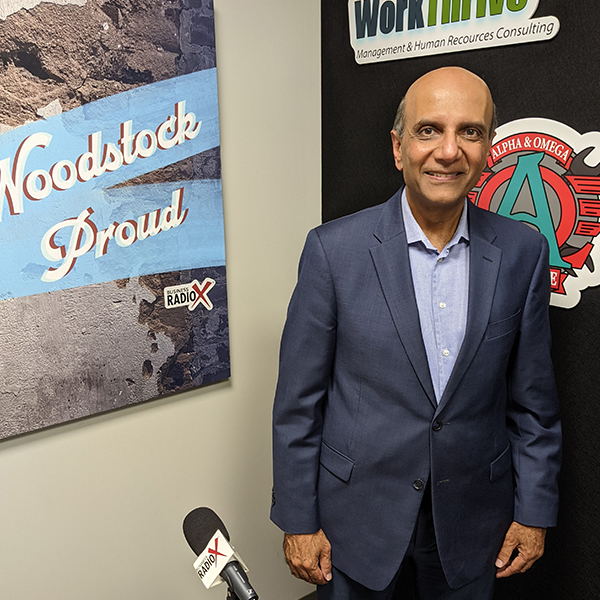
Tagged With: Family Life Publications, Purpusly, Rejoice Maids

The Wrap Podcast | Episode 047: Tax Forecast [Predictions for Tax Changes in 2021] | Warren Averett

September 5, 2021 by Kelly Payton

TheWrap
The Wrap
The Wrap Podcast | Episode 047: Tax Forecast [Predictions for Tax Changes in 2021] | Warren Averett
Loading
00:00 /
RSS Feed
Share
Link
Embed

Download file

Six months from now, what will your business’s tax position be? (Talk about a literal million-dollar question!)

President Biden has proposed new federal tax plans affecting both businesses and individuals. And while the specifics remain up in the air, the time to start preparing your business to adapt is now.

In this episode of The Wrap, Lisa Billings, CPA, and William Dow, CPA, join our hosts to discuss the possibilities of future tax changes under the Biden Administration and what implications they could have for businesses.

After listening to this episode, you’ll be able to:

  • Understand where the American Families Plan stands in the legislative life cycle
  • Differentiate the Made in America Tax Plan from the American Families Plan
  • Grasp what economic impact these plans may have and how it may influence decisions made by business owners and leaders
  • Know what provisions have been proposed as part of these plans
  • Understand what impact the federal tax plans may have on state taxes
  • Consider how your business can start anticipating future tax changes now

This episode reflects our views at the time it was recorded. Information within should be used as reference only. We recommend that you talk to your Warren Averett advisor, or another business advisor, for the most current information or for guidance specific to your organization.

Tagged With: Warren Averett

Nastran Andersen from A5 Advisory

September 1, 2021 by Kelly Payton

Women In Business
Women In Business
Nastran Andersen from A5 Advisory
Loading
00:00 /
RSS Feed
Share
Link
Embed

Download file

Nastran Andersen

This Episode was brought to you by

The Innovation SpotAlma Coffee


Nastran Andersen, CEO of A5 Advisory

As an inquisitive leader and born conversationalist, Nastran has secured a reputation for collaborating across organizational boundaries, with a focus on building teams, gaining trust, and driving results. She has over 24 years of executive experience in marketing, sales, and corporate strategy for Fortune 10 and Fortune 500 companies within the healthcare information technology sector, as well as smaller to midsize organizations across various industries.

In addition to her leadership experience, Nastran is a skilled communicator with a solid background in strategic planning and infrastructure, program development, partner relationships, marketing and sales strategy, sales training and development, and focused marketing campaigns. Her approach focuses on turning strategy into action, helping the businesses she serves at every stage of growth, translating ideas into operational success.

A5 AdvisoryConnect with Nastran on LinkedIn


This transcript is machine transcribed by Sonix


TRANSCRIPT

Speaker1: [00:00:07] Broadcasting live from the Business RadioX studios in Woodstock, Georgia. Welcome to Women in Business, where we celebrate influential women making a difference in our community.

Speaker2: [00:00:22] Now here’s your host.

Speaker3: [00:00:29] Welcome to women in Business RadioX Stone Payton here with you this afternoon. And today’s episode is brought to you in part by Elmore Coffee, sustainably grown, veteran owned and direct trade, which of course means from seed to cup. There are no middlemen. Please go check them out at my alma coffee dot com and go visit their Rotary Café at thirty four. Forty eight. Holly Springs Parkway and Canton. As for Harry or the brains of the outfit. And please tell them that stone centu you guys are in for a real treat this afternoon. Please join me in welcoming to the broadcast with a five advisory Miss Nastran Andersen, good afternoon.

Speaker2: [00:01:13] Hi, Stone. Thank you for having me.

Speaker3: [00:01:15] Oh, it is a delight to have you in the studio. We’ve been planning this for some time, and we got connected because of a mutual friend and probably someone that most of the people in the Cherokee business radio listening community already know, Mr. Mike Siena’s. So shout out to Mike. Thank you for putting this together. I enjoyed having a brief conversation with you several weeks ago when we talked about getting together for this. So thank you for making the time. I’ve really been looking forward to it. Mission purpose, would you share with us as we get started? Yeah, just what you guys at age five are out there and trying to do for folks.

Speaker2: [00:01:57] Yeah, absolutely. So we are focused on revenue advisory services. So we work with our clients to make sure that their sales and marketing parts of the organization are up and running, that they are they have their strategy in place, they have a great execution plan, and that they’re running on all cylinders. If you if you think about the sales and marketing as the engines of the plane, that actually lifts the rest of the organization up and allow you to fly. We’re focused on making sure that those are fully powered engines.

Speaker3: [00:02:30] Are the answers to those challenges sometimes often once in a while? Not at all. What they think they’re going to be. They being the client is, does that sometimes surprise them?

Speaker2: [00:02:42] Oh, of course, yeah. I mean, people have ideas about what they think they need. And often there’s there’s something there that is what they need, but they we help them uncover additional issues or will say, yeah, you’re actually doing OK here. This is an area where you’re performing pretty well in this part of the organization. You might want to put a little more attention or prioritize.

Speaker3: [00:03:05] I would think that that there would be some some challenges for for getting that process going effectively, if for no other reason, I would think someone would have to be really trust you to give you the information that you need to turn around and help them. And to the degree that you really need and want to help them, trust must be incredibly important in your world.

Speaker2: [00:03:31] Trust is incredibly important. I mean, if you think about it, this is this is how their business is going to continue to run. If you don’t have revenue, you don’t have a business. Right. So people are very trusting. It’s interesting, though, you know, I think we established that pretty quickly on early on in our relationships with folks, because if we’ve done this multiple times, we’ve done this hundreds of times with lots of business leaders. So when you see this over and over again, you know, the right areas, the right questions to ask, the right areas to help people when you’re in the middle of it yourself, these business owners. Yeah. I mean, it’s it is it’s challenging for them. And and there’s you can’t see the forest for the trees for for

Speaker3: [00:04:12] When we’re in the studio making hand signals at each other. For us, even though we’re on radio, which he was describing, that I was putting my hands very close to my face. But that’s the feeling when you’re in the middle of it.

Speaker2: [00:04:22] Yes, that’s exactly right. I mean, you’re in the middle of it and you have so many things that you’re trying to do to run an effective, productive business that you got to have some outside viewpoints to to help you see what’s around you.

Speaker3: [00:04:36] Well, and intellectually, I get that. And I own a pretty big chunk of the Business RadioX network and I own the whole thing of this little shop we’re in for for Cherki Business Radio. But I don’t know. I think it might take me a little bit to, you know, to share with you little details about all the stuff I’ve screwed up and what’s going on and what’s going on on the books. And I mean, it’s a little bit of a leap to to open up and and show you that. Right?

Speaker2: [00:05:03] It is a leap. It is a leap. Now, we’re working with you know, it’s it’s a different personality. I think we’re depending on the size of the company that you have. Right. So smaller organizations, smaller companies, they want to hold that closer to the vest because they they own everything, right. When you get into larger companies. So we’re working. And I’d say in the 20 million to 100 million range is our sweet spot of who we’re helping and.

Speaker3: [00:05:27] We’re not at 20 million here at Cherokee, just so you know, just to give you some context, we’re just not quite there yet.

Speaker2: [00:05:32] Not there yet. You’re going to get there. So you’ll get there and then you’ll be calling me. No, but it’s it’s when you have business functions, you say, OK, I have a marketing team or at least someone who’s leading that that part of the business. I have a sales team or at least a sales manager, a sales leader. I have engineering and we work with technology companies. So they have these kup these parts of the organization. And so when it gets to that that scale, I’d say past five or 10 million in revenue, that’s when they need some extra eyes on it. And so they’re at a point where they are ready for that help. They’re ready for that advisory.

Speaker3: [00:06:10] Ok, well, thank you for that lens, because that’s just that’s not my that’s not my world. But they have matured to it to a point and have developed people with specialized knowledge and expertize in a domain. And that’s, I guess some of their job is to share with experts like you. Here’s what’s going on over here and work in Yoki. Yeah, that’s all I have either read on your Web site or maybe it was you and I in conversation. You used this this this phrase, this term, and I’ve heard it before. Go to market. Go to market strategy. Can you break that down for those of us that didn’t go to class as much in college as others?

Speaker2: [00:06:43] Yes, absolutely. All right. Yeah. Without a business degree. Right. So go to market. When I think about go to market, I actually think about what is the. There’s a couple of things. What is the value proposition? What is it that we as a company provide and how are we going to get that to the market? How are we going to go solve that problem that we solve that we uniquely can do for those customers? And how are we going to approach that? The other thing I think about is, you know, there’s there’s competitive advantage. Is that something that’s really crowded? A lot of people are already trying to solve that problem. What’s different about what we do? And then the third piece of it is, what’s the vision of our company? What is our company going to or trying to solve? What are we trying to bring for our customers? How are we trying to help? So when we do that, we are taking all of those factors into account and developing a strategy and an approach. And that’s what I call go to market.

Speaker3: [00:07:44] So let us in if you’re if you’re willing. Let us in a little bit on your back story. How did you get into where you are now?

Speaker2: [00:07:51] Yeah, absolutely. So my background is all in health care, I.T. So all all of the technology systems, you know, we think about ours and we think about, you know, the system physician documentation and order entry systems. I started that in that industry 24 years ago. So working with big technology companies. So I was in the corporate world for over 20 years. And then three years ago, we decided to start our own business because I had seen this in and big scale and had worked with some super talented sales leaders, marketing leaders, corporate strategy folks. Those are the three areas of my background and really learned and thought, you know, this doesn’t have to only be in large corporate settings when you have these smaller organizations that are growing at this rapid pace and they don’t necessarily have big budgets to go have massive staff to accomplish those things. But that doesn’t mean they don’t need the talent and the help to someone to go do that for them. So that’s what we do. That’s that’s what we focused on. But it was taking that big experience and all of that background and being able to translate it to some smaller firms.

Speaker3: [00:09:02] Ok, so you saw the need again, I think I get that what I’m trying to envision, because I’ve been on the periphery of some of that large corporate work a long, long time ago and change management consultancies. So I know that you were probably making a very comfortable living. Yes. And doing what you were doing, and rightly so. So what I’m trying to envision is seeing the need and then and then navigating the the terrain between that and and starting your own business. I mean, was it was it you coming home to your spouse and declaring, I’ve got to do this, honey, or well, what did that look like?

Speaker2: [00:09:41] Yeah, absolutely. Well, I mean, it it is it’s it’s scary when you start to think, yeah. Jumping off and saying, OK, you know, look, we’ve got a family, we have children, then how are we going? You’re right. It was a very comfortable living. And so when you when you jump off. So he actually encouraged me. My husband is now my fulltime business partner as well. He had encouraged me for years.

Speaker3: [00:10:04] Need for him. Shout out. What’s his name? Neil. Neil, shout out to Neil. Good for you, Neil. Way to go.

Speaker2: [00:10:09] Absolutely. So, you know, he had been telling me for years, go do this on your own. Go do this on your own. Look at the value you’re bringing. Look at the help you’re providing. And so so I did. And so the stars aligned. We had we were in DC for a while. We moved back to Atlanta. And it was it was a perfect up. Fraternity for me to leave the role that I was in there and start fresh when we moved back here three years ago, and so we did. And so I jumped off first. And then in the fall that just in October, Neal joined me full time. So it’s been about a year that he’s been with me full time. So. Going from one. And now both of us jumping on.

Speaker3: [00:10:44] Yeah. What an exciting time for you guys. And what a what a milestone. That’s that’s fantastic. So I would think that there would be plenty of. It’s not fair to call it naive, but I will you know, it’s my show. Naive optimism in the early going. You know this from back from the old change management days, like when something new was coming. Some folks are really excited about it, but they’re they’re not as informed about it as they might be. And as a result, they don’t know some of the negatives. So I can see plenty of that when you first get going. And I’m sure there were some some pleasant surprises in some of those things came to fruition early in getting your business off the ground. Were there some things that just really took you aback, really, really surprised you when you were getting this thing off the ground or any like major growth or learning experiences?

Speaker2: [00:11:29] Oh, gosh. So many, so many. Krosnick. Okay. Yeah.

Speaker3: [00:11:33] I wasn’t just me, OK? Yes.

Speaker2: [00:11:34] No. There’s absolutely so many growth and learning experiences. I think when you start something like that, because, you know, consulting that feels very nebulous. What is consulting, you know? It took us a minute, honestly, to really laser in on sales and marketing, the revenue centers, the commercial functions of the business.

Speaker3: [00:11:51] That’s kind of your own business. Well, or as your focus of what you’re going to deliver as

Speaker2: [00:11:56] Our focus of what we’re going to deliver, because that. So that was one thing, right? Because there are there are different areas where what we do is and you’re improving on communication, you’re improving on strategy, you’re improving on internal making sure that these teams are working well together. That can apply. And you can almost say you have a general consultancy, but people, they’re like, oh, OK, well, I don’t know. How do I buy from you? Do I really need to work with you? What? So that was the challenge, right? Really zoning in on what I call our zone of genius, which is sales like sales and marketing. I may

Speaker3: [00:12:30] Borrow that.

Speaker2: [00:12:31] You can. Everyone has their zone of genius. You have your zone of genius right here in this in the studio. So, yeah. So that’s that’s that was one thing that was challenging the other thing, too. So this is really interesting. He and I both have worked with very large companies. And we also work, you know, even in the 20 to 100 million, you know, we’re not there yet either. Right. It was a big challenge for us to figure out just some of the operations or the how do I put this together? How do I start to scale my own business as a small business owner? Who am I marketing to? You know, we’re we’re, you know, experts at sales and marketing. We got to do our own marketing. So those are some of those challenges.

Speaker3: [00:13:13] Well, that’s an interesting question. I’m always curious and I ask it a lot and I’ll ask it of you with your permission. But how does the whole. Well, let me back up. My my preconceived notion is that in some respects, you’re in a fairly crowded arena, or to the layperson, what you do could look like there’s a lot of people in the field. And so my question is, how does the whole sales and marketing thing work for a firm like yours? Because you’re you’re building relationships with earning the trust of and getting people to write you checks from somewhere? That’s right. So it’s really established entities, the sales team. I would I would think and maybe I’ve got it all wrong that you couldn’t just pick up the phone and say, hey, would you like to talk about or maybe you do. How how does that work?

Speaker2: [00:13:58] Yeah. Well, I mean, you would think actually it’s really fascinating to me and we uncover this so frequently with our clients. And so, number one, it’s very referral, heavy business. Right. So people that I worked with over the last 20 plus years and that Neal has worked with over the last 20 plus years himself, that’s our network. And we are definitely very focused on maintaining our network, making sure that we’re staying in touch with people and continuing to to, you know, provide value to those those people that I grew up with that I in my career. Right. Right. That we sold together. We were in the trenches together. They’re now CEOs, CEOs, presidents of these smaller organizations. And those are our clients. So it’s very referral heavy. Now, that said, what we’ve found is 90 percent of our clients are actually private equity owned. So we have started to go in and working with the private equity firms directly. What’s fascinating to me is because these private equity firms have so many resources from financial modeling, merger and acquisition, due diligence and reast market research, those kinds of things. But when it comes to consulting specifically on the sales and marketing functions of these companies that they own, they don’t have as many resources. It’s amazing to me they don’t have as many resources because they lean pretty heavily on that business and expect that. That business is going to have a sales function. Have a marketing function, so. So that’s where we come in. We help the people in those businesses that those private equity firms own. So.

Speaker3: [00:15:37] In doing that, do you find that you guys are gravitating toward or more opportunity surface in a certain type of industry, a certain sector or a certain geo? Or is it kind of spread out?

Speaker2: [00:15:53] I would say it’s it’s focused in on a couple of different areas. One is so certainly health care I.T., because that’s what

Speaker3: [00:16:00] Makes all the sense in a world that.

Speaker2: [00:16:01] Right. And those are the folks that I’ve known for so many years. So that is that’s a key piece. Technology companies that are in high growth mode. So they are growing. They’re trying to figure out how to scale. They’re thinking about, OK, what’s our next move? Do we have the right people, the right talent to get us there? Do we have the right infrastructure to get us there? And then we have, like I said, that 20 to 100 million range seems to be the sweet spot. People who are these major corporations, can we help them? We can. But they a lot of times they have big, big teams themselves. They already have a very large marketing organization. People who are in the the small business, the under five million, the under one million dollar or even startup companies. That’s not who we’re able to help it just because it’s not our focus area. There are some super, super talented people who do that incredibly well. We focus on on a little bit like the next level up.

Speaker3: [00:17:01] Okay, so the term you used, did you say venture capital equity partners, private equity, private equity. Okay. So that’s a that’s a little further down the road than the than the venture capital that’s working with like startups that have gotten just a little bit of money to get off the ground here, a little further down the stream than that,

Speaker2: [00:17:19] A little further down the stream. Ok, these investors or you know, there may be there’s a merger and acquisition. A private equity firm is saying, hey, we’re going to buy these similar companies and merge them together or we’re going to buy these similar companies and help them run. They still do similar to, you know, they expect a return on their investment. Sure. But yeah,

Speaker3: [00:17:39] That’s. So the analogy I’m drawing in my head, and if I’m all wet, you can tell me to Husham be if you want, we’ll take it out of the show. I got kids in the shop that’ll edit it out. But my analogy, because, again, it’s just not my world. It’s one of the things that’s fun about doing the show because, you know, it’s OK to be a lay person. Just ask the questions. It helps us all learn. I think my analogy for this is we were so blessed, Holly and I, when we moved to town, we had a lady by the name of Jill Heinicke as our realtor, and she’s at the top of her game. She just part of what she did was very quickly on. She brought in a stager. Ok. So in my analogy is, if I’m a private equity outfit on top of our game, what we do is, you know, as soon as we get to a certain point with different folks, with different organizations in our portfolio, we bring in a five. Right. That’s right. But it’s just I mean, if you’re going to do it right, you just bring in a body just like you bring in a stage for your house.

Speaker2: [00:18:37] That’s exactly right. You bring in a five and you help them get stabilized with this function of the business. You know, whether it’s, hey, they need to build out their marketing strategy. They need to make sure that their sales team is structured to to serve the market. Maybe they’re going to go launch a new product or go after a new market. How are they going to do that? Do they even have a plan of how they’re going to accomplish it? And that’s exactly where we come in.

Speaker3: [00:19:00] Makes perfect sense. I like it. Well, I’m learning a ton here with you and Neil, have when you built this this thing out, as you begin to put it together, did you get really clear about delineating roles that each of you would play or did that sort of just speak a little bit, if you don’t mind, to that, to that? Because in some ways, I find it incredibly alluring, particularly because my wife, who has a real job and is very well accomplished, man, I’d love to have her in the business. She’s got to hang up her cleats and maybe a year and a half. Sure. And I’d love for her to join our business. But part of me is really excited about that. Yes. You know, I don’t know. There may be some challenges. Do you mind speaking a little bit to how you and your chosen to work

Speaker2: [00:19:45] This thing together? Yeah, absolutely. I’m happy to. And it’s funny, you know, people ask us all the time, we’re like, oh, my gosh, do you work with your spouse? How? I could never do that. So know we really enjoy it, actually. So, number one, you know, from a relationship standpoint and I think you think about this with how your even your business relationships and your colleagues and, you know, friends, you have to number one, you got to have some thick skin and make sure that it’s this isn’t personal. Right. This is when we’re talking about business. Neal and I are very good about compartmentalizing and saying, OK, we’re talking about business right now and we have to be able to challenge each other in unique ways that you would normally do with your team member. But when it’s your spouse, you have to you have to shut it down and think about, OK, this is my business partner. Right. So I think there’s some communication things that we’ve. We just have handled relatively well. The other thing is, you know, we don’t hold grudges. If you get upset, it’s like, all right, leave it, leave it at the office. That’s that was work. Now, where we’re married, where you have children, you know, let’s think about that. So, you know, just from a high level, that kind of thing as far as role delineation. It’s a matter of, you know, we are partners really in the whole thing. And so he has a really fantastic strategy brain. He’s great at sales training, sales enablement and on and on and building sales teams.

Speaker3: [00:21:11] And that would be incredibly important in your world.

Speaker2: [00:21:13] It’s incredibly important for us as a business, but it’s also where, you know, he’ll focus on that side of it. I have a lot more experience in and the corporate experience and the the tool sets and things that I’ve done over the years that are specific to marketing. So it’s it’s the two coming together. So, you know, traditionally, especially if you think about big corporations, sales and marketing is always like they’re at battle with each other. And so we have demonstrated this is the importance of and this is how sales and marketing can work really well together. And that’s something that we demonstrate for our our clients as well. So I think that his sales background, my marketing background, you know, we’ve we’ve kind of brought it all together.

Speaker3: [00:21:57] Well, that’s fantastic. So three years roughly into this thing, what are you finding the most rewarding and what if you don’t mind sharing are is a challenge or two that you’re still trying to work your way through?

Speaker2: [00:22:10] Yeah, absolutely. Most rewarding. This is fun, stone. We really are having a great time, like not just working together and doing our own thing. And it’s fun for a number of reasons. One is just being able to truly help our clients and to say, hey, I know how to solve that for you. I know how to help you. I know how to make this, you know, go to a certain way. Not to say that every product is absolutely perfect. Right. But really digging in and working with these businesses and getting to know them. And people really appreciate it. They enjoy it. They they are enjoying themselves along the way. So I love that. That’s very rewarding. And then just something for me to do. I think I enjoy being a consultant because I like the freedom to just call it like it is. And I’m going to tell you that there’s an issue. I’m going to be very direct, very kind, but I’m going to be very direct and straightforward about this is the business challenge that you have. I’m not concerned about my job security, about, you know, hey, I don’t want to tell my boss this thing. You need to tell them what they need to hear. And that’s fun because it’s a it’s just a freedom of this communication and calling things out that need to be called out in order to help them. Right. Yeah. Challenges. So, gosh, I mean, it’s you can

Speaker3: [00:23:30] Say, Neal, you know, I’m teasing. No, not until.

Speaker2: [00:23:35] Well, when it’s when it’s anneal, then I go he stays in his home office and I go to mine. No. So I think that it’s like I mentioned before, we’re working with much larger companies than our own. And so how do I go to market? What should my messaging strategy be? It’s funny. You know, I’m I’m a good marketer, but it’s really hard to write your own stuff. So that’s how it is. You got to you got to have outside eyes on that. So that’s been a challenge. And then, you know, there’s just so many number of things to do. You know, from running a small business, it’s everything from, you know, your billing to your email system, to your, you know, all of the offer, you know, your bookkeeper, all all of the little operations, things that you need to set up to have things running. There’s a lot

Speaker3: [00:24:21] In today’s the first day of the month, I think today

Speaker2: [00:24:23] Is September 1st.

Speaker3: [00:24:24] So, yes. So my sales manager, her name is Holly. Yes. So my wife, she’s going to ask me about revenue this month, even though she doesn’t really work here. You know, we have to have our little you know, she keeps me she keeps me on track. So maybe we’ve already touched on this. So the the things that. Is there anything that you find? Is there any like this what would you call it, like this cobbler’s kid syndrome? Oh, sure. Where you’re nailing this thing for your client. And it just it’s it’s it’s not it’s not happening back at all.

Speaker2: [00:24:59] Yeah. I mean, it has you know, for me and I think I’m so sensitive to it because I am a marketing professional. I consider myself a man. So I always want to tweak the website. I always want to I always want to change this email series that we’re sending out. I always want to, you know, think about, hey, should we be reaching out to this other part of the market? I really enjoy the sales side. I like meeting with new clients. I like speaking with all of these different private equity firms and chatting with those folks. I love that part. The doing my own marketing. It’s that’s exactly the cobbler’s kid has no shoes. Yeah.

Speaker3: [00:25:34] Yeah. And maybe my one of my best friends growing up. Well, he can buy and sell me three times over. He didn’t go to college, he learned he went to the kind of schooling where you go to fix air conditioners. But he lives in Pensacola, Florida. Yeah. Oh, God. The guy and all his friends, they’re all rolling in money. Yes. Yes. And his wife, Cindy, was complaining the other day that the air conditioner at his house isn’t working. Right. I just thought that just tickled me. I thought it was funny. But I guess it happens a little bit to all those who does.

Speaker2: [00:26:04] It absolutely does. Yeah. Yeah. It’s hard to avoid.

Speaker3: [00:26:07] So where do you find the short version of this question is where do you find your inspiration? But but it’s based on the observation and the premise that we all need a little recharge. We all could use a little influence and maybe input from from somewhere outside of our, you know, day to day domain. Yeah. Do you do reading. Traveling? Oh, absolutely.

Speaker2: [00:26:34] Yeah. Yeah. Ok, so there’s a couple of things. So clubhouse is an is an audio, a fun audio, social media. After that, we’re involved in quite a bit. And our friend Mike Zeena is on there as well.

Speaker3: [00:26:45] I’ve heard of this. I know I know nothing about it. And I probably should if I’m going to say that I’m in this audio in

Speaker2: [00:26:51] This audio world. Exactly. You sure you would love it? You would absolutely love it. So so lots of inspiration there because there are so many great conversations that are happening and it’s alive. You’re just on these live conversations. So clubhouse is always we we read a ton. I am an avid reader, mostly fiction, but I actually, you know, there’s business books and enjoy that.

Speaker3: [00:27:15] You’ll jump over to fiction, too. That’s a nice I most straightforward

Speaker2: [00:27:18] And I read business books because I have to I feel like for my job. But but, you know, we do we do book clubs. So we have an 85 book club and people can just sign up and we read a business book together and then talk about it for an hour, once a month. And we pick a different book every month. So that’s fun. You know, you get in just insights that you didn’t pick up from reading the book, that someone else, you know, jumped out at them. Yeah. And then just, you know, meeting with all of our clients, it’s you you see a different version of the same problem happening across, so. Right. Little bit different spin on it or a little bit different challenge that someone’s experiencing inside their organization. And it’s like, oh, actually, I’ve seen this in a different way. This this might work really well as a as a solution for you. So just the variety and the number of companies that we get to work with that provides a lot of solution and inspiration.

Speaker3: [00:28:14] There’s that. I’ll bet it does. So before we wrap up, as you look into the next 12, 18 months, and I don’t know if that’s your horizon or not. Do you think you you will put some attention toward growing your firm or is that not necessarily in check? Where are you going to put your effort, if you don’t mind?

Speaker2: [00:28:33] Oh, absolutely. Yeah, you know, so we have a couple of different horizons and we revisit these pretty frequently with each other. So for for the business. So we’re thinking about the near term, what I would call six to 12 months. Then we look we’re looking at two years old. I look at a five year and then a ten year. The five and the ten are probably not too far off from each other. Yeah, but I want to think about, OK, well, if this is the these are the goals that I want to achieve at that time frame, how am I going to reverse engineer it and how am I going to make that happen? So so we actually start with the longer range vision. But, yes, we are we are growing. We’re scaling. We’re thinking about how do we scale because we’re such a services heavy business that number one, I’m thinking about what can I productize, how can I turn consulting tools and resources into a repeatable process. So that’s one thing. And then the other thing is, you know, we’re always looking for very talented people, the the marketing folks, the sales folks who love that advisory piece of it. But they’ve got the background and the credibility with the clients to say, hey, I’ve done this, this works, this doesn’t work. You know, here’s how we’re going to go take this forward. So, yeah, that’s that’s big on my mind right now, is scaling

Speaker3: [00:29:48] Well as your story continues to unfold. We’re definitely going to be following it. And we’re pulling for you. And we look to learn a lot. And we really do want you to continue to succeed. Maybe you’ll consider coming back and giving us some insight and some lessons learned from scaling the books. I would think that you’re going to find some challenges and conquer many, if not all of them, based on what I’ve seen today in the studio. But in in in finding, you know, recruiting, developing, retaining that talent that to me, that’s a whole nother landscape. Right. So I hope you’ll come back and share the lessons learned with us.

Speaker2: [00:30:31] I would love it. Thank you. It would be really fun to share that. Yeah. And and and it’s fun for me, too, because again. I’m thinking of all right, here’s medal’s here’s what I’m trying to achieve, let me back into that and reverse engineer it to make that happen, so. Yeah, I’d love that.

Speaker3: [00:30:45] So if someone is out there, someone who may just, you know, love to hear a little bit of insight or an inspiration or trying to start their own thing or somebody in private equity that feels like, oh, gosh, I got to talk to this lady. Yeah. What is a good way for them to learn more, reach out and talk with you or someone on your team, whatever you feel like is appropriate. Maybe it’s a website or email, LinkedIn, whatever you think is appropriate. But I’d love for those people to be able to connect with you in some way. Yes, they

Speaker2: [00:31:15] Could. Yeah, absolutely. Okay. Yeah. So LinkedIn, we’re very active on LinkedIn so you can find a five advisory. We have our business page on LinkedIn and then you can very easily find me Nazaryan. You can find Neal. And we’re both connected to the company and certainly our website, a five advisory dot com. So that’s a great place.

Speaker3: [00:31:35] There are always improving website, are

Speaker2: [00:31:37] Always forever improving forever. A Work in progress website. Yes. Yes.

Speaker3: [00:31:42] Well, it has been an absolute delight having you in the studio. Thank you for coming by and hanging out and visiting with us.

Speaker2: [00:31:49] This was so fun. Thank you. I really appreciate you having me.

Speaker3: [00:31:52] All right. This is Stone Payton for our guest today, Masten Anderson with a five advisory. And everyone here at the Business RadioX family saying we’ll see you next time on women in business.

Tagged With: A5 Advisory

Dan Coker from Coker Signs & Graphics

September 1, 2021 by Kelly Payton

Cherokee Business Radio
Dan Coker from Coker Signs & Graphics
Loading
00:00 /
RSS Feed
Share
Link
Embed

Download file

This Episode was brought to you by

The Innovation SpotAlma Coffee


Dan CokerDan Coker, Owner of Coker Signs & Graphics

Dan fell in love with radio in the 70’s. He got his first radio DJ gig in 1981. Dan went to college / quit college and studied theatre / acting. He joined the US Air Force in 1986 and worked for Armed Forces Radio and Television until 1990. Dan moved to Atlanta in 1990 and got back into signs / graphics, and did some voiceover work on the side. He started his own (sign) business in 2001, and started producing audiobooks in 2015. He then started publishing his own writing (books) in 2015.

Coker Signs and GraphicsConnect with Dan on LinkedIn and Facebook


This transcript is machine transcribed by Sonix


TRANSCRIPT

Speaker1: [00:00:07] Broadcasting live from the Business RadioX studios in Woodstock, Georgia. It’s time for Cherokee Business Radio. Now here’s your host.

Speaker2: [00:00:23] Welcome to Cherokee Business RadioX Stone Payton here with you this morning, and today’s episode is brought to you in part by Alma Coffey, sustainably grown, veteran, owned and direct trade, which of course means from seed to cup. There are no middlemen. Please go check them out at my alma coffee ICOM and go visit their Rotary Café at thirty four or forty eight. Holly Springs Parkway in Canton. As for Harry or the brains of the outfit Letizia and tell them that St. centU you guys are in for a real treat this morning. Please join me in welcoming to the broadcast with Kolker signs and graphics. The man himself, Mr. Dan Coker. Good morning, sir.

Speaker3: [00:01:08] Good morning, Stone. How are you?

Speaker2: [00:01:09] I am doing fine. It’s a real pleasure to have you out. Mission purpose. What are you out there trying to do for folks with Kolker signs and graphics?

Speaker3: [00:01:21] Well, I started the business about 20 years ago when I got married, and my wife is a dental hygienist. She has a very set schedule and is very inflexible. And we needed we needed something that would kind of we needed one of our jobs to be flexible because we were raising kids. And somebody’s going to always go get the kids, take them to the doctor, or or at least have the kids home for summer. I mean, you just don’t want somebody else raising your kids necessarily all the time. We needed we needed a flexible job. And I had avoided creating my own sign business for a long time. So we we decided it was finally time just to do that.

Speaker2: [00:02:05] So when you try to help someone craft a sign, I’m operating under the impression that one way to do it is maybe they already have an existing logo or a set of graphics, and you can reproduce that and make it big and bold and and beautiful. But when that’s not the case, do you do you ever work with businesses who haven’t quite got that package together yet and or. Yeah, maybe it makes sense to fold in my my art and my the the look and feel, but I’m trying to create something for for an event or something totally different. What what is that creative process look like early in in the relationship?

Speaker3: [00:02:46] My my job is when somebody comes to me and tells me what they want, my job is to tell them that they can’t have it. No, of course I’m joking. But but I spent years past working for some bigger sign companies and franchise sign companies. And and one of the things I felt like when I wanted to start my own company was that a lot of folks are just being underserved by those bigger businesses. And it’s it’s hard to get. It’s hard to find somebody that will actually kind of tell you the truth about I mean, they’ve got you come in with what you need and then they’ve got what they need to sell you. And they’re usually going to try and sell you what’s best for them. I’m not criticizing everybody out there. I’m just saying that that’s the way that that the bigger, bigger sign shops and companies have to have to work to to get everybody paid because their overhead is so tremendous. I don’t really have very little overhead.

Speaker2: [00:03:51] Now, how did you pull that off?

Speaker3: [00:03:53] Well, I worked I worked for my home. I have a well, I have a certain I have a certain amount of technology that I use and work from my work, from my basement or from my garage. I have a home office and I’m able to accomplish a whole lot there now. And the bigger signs, you know, larger stuff I just don’t do anymore. I just give a referral. But but on the front end, somebody needs somebody there to be very honest with them about. You know, here’s here’s what that sign is. Here’s what you’re asking for. But you might be better served to to purchase this. It costs less. It’ll last longer and it will be more effective. So somebody needs to be there to tell people that,

Speaker2: [00:04:42] Well, that’s what I need out of a sign company. Right. So, for example, hypothetical. But I think we’re going to see more and more of this, because I think this this type of business for us is opening up again. We were talking about this before we came on air conference and trade show event, kind of a business. You know, having Business RadioX in your booth or at your event can add a nice dimension to it. If I were and I probably will be getting ready to either have signage for my community partners or my clients or for Business RadioX, I would think circumstances, objectives would dictate your council on what to do with respect. To science and graphics, for example, if we were going to be in an outdoor event under some sort of tent, you might have a whole different set of recommendations than if we’re going to be indoors at some, you know, start up pitch contest. Yeah.

Speaker3: [00:05:36] Yeah. Well, I mean, where I usually start with with customers is is it’s Christmas and you have anything you want. So and we’ll work down from there. But but a lot of it and it’s hard to talk about this without talking about how technology has changed things even over the past 15 years. That means that that a lot of stuff out there now costs less, lasts longer. I remember when digital printing was not a thing, and now it’s huge. Digital printing is is huge and it’s fantastic. It’s Carl, there’s a lot of color there. You can get your logo there. You can get a lot of pop. You can get a lot of eyeballs. And and there’s no reason to pay a fortune for it. But but but and there’s a lot of different ways to go. Like if you were doing a tent or something out there. Now, there is a a lot has been done with something called dye sublimation that is printing graphic onto fabric. And you see these tents outside that have graphics all over them. That’s typically the way they’re done now.

Speaker2: [00:06:45] I wasn’t even thinking about that. So you could actually that is one way to do it is to put the graphic on the tent itself.

Speaker3: [00:06:51] Right. And they’re sold that way now. They come as they come as a package. And and I have some friends who do that. And and the price I remember the price of that 10 years ago was outrageous. And now it’s very affordable. And it is something that you can keep and pack up and put in the garage and get it out six months or or whatever and. Right. And it represents your business very well. And and it doesn’t cost as much as it used to. And also, you know, just like giant outdoor banners or. Right. Or anything like that, they’re just a lot of different ways to go. And and I don’t have all of that stuff in the house. I really don’t. But I know the people who do. And a lot of times my job is to crunch the graphic and get it into an acceptable place for the for the printer to do their job.

Speaker2: [00:07:41] Well, here here again, I would feel better about if let’s say I think you mentioned you don’t do the tents, actually. But but if you help me design or redesign or do something special with our art, I would have more confidence in you referring me out to someone whom you believe to be best in class for that thing. I would feel like I was going to get better service. I would feel like you’re a better judge. Otherwise, I’m walking the Yellow Pages. For those of you that are old enough to know Yellow Pages

Speaker3: [00:08:09] Or know you are the only, you and I

Speaker2: [00:08:11] Are the last two, I just lost the whole audience for that reference.

Speaker3: [00:08:15] Now, there are a lot of there are a lot of industries out there now like don’t like to do dye sublimation or that do digital printing that are what’s called to the industry. That is, they’ll sell to me, but they won’t sell to you. And I just did I just did a video and I just posted it, as a matter of fact, a couple of weeks ago on this very subject where my my job is to is to crunch the graphic. My job is to is to kind of massage you and get you and get the graphic. Exactly to be what you want it to be. And at the same time, to be a file that this company can print from. And then they do their work, but they don’t have a graphic designer there. And and and like I said, I just did a video that has, you know, a lot of there are a lot of siin so-called science shops online these days where, you know, if you if you can get what you want from them, then fine. But buyer buyer beware. Chances are, you know, they don’t they don’t have a graphics person there that you can call and say, you know, can you move this logo over to the right a bit or can you make this bigger? That person’s not there. That’s why their prices are are very cheap. If you need to talk to them at seven o’clock at night, then they’re not they’re not there. But that’s just the online world. But but my job is to is to interface with you and to crunch that graphic and get it exactly where you want it and then give that file to the company that can get it printed and then get it in your hands.

Speaker2: [00:09:53] So I’ll share with you one potential example. And I think once again, we’re probably a little bit late in the game, and I don’t even know if it’s the right thing to do, but an idea that surfaced for us at Business RadioX Corporate, which is one of the hats that I wear in the Business RadioX system. We have talk show coffee mugs. You’re not going to get one today because we’re having a supply problem. But I owe you Business RadioX Toxo coffee mug. And we have this, you know, some dark red. You probably know the PMS color or whatever for the big eggs. But I thought in October, I know that is the Breast Cancer Awareness Month, and I thought it might be interesting for a little while to do like a limited edition with the X being pink. I think that could have been a fun thing and probably late again. But I mean, it sounds like you’re the kind of guy I would go to first to maybe get counseling, say Stone. That’s ridiculous. Don’t even do it. Or yes, stone. Cool idea. Let’s get let’s get a look or two together and then let’s think through. Do you really want it on the mugs? Do you want on Mike Flags? Do you want on the wall? You want our hats shirts. But I get the sense where I would start with that whole pursuit. Now that I know who you is, is I would start with you.

Speaker3: [00:11:09] Right. And in that case, in that case, I’m not that guy, but I know that guy.

Speaker2: [00:11:15] Right, for the end product. But you’re the guy to help me think through the strategy and and maybe even get the graphic, right?

Speaker3: [00:11:21] Yes, sure. Absolutely. And like I said, I started I started doing signs when I was 13 years old and I’m 58.

Speaker2: [00:11:31] Boy, you look good for. Oh, yeah. And 58 is not old. I just turned 58 August the 6th.

Speaker3: [00:11:38] Oh, okay. Another 1962, baby? No, I, I started doing signs when I was 13. I was we were talking earlier. I had a kid at an art teacher in middle school who taught art class the line space method of hand lettering.

Speaker2: [00:11:56] Oh, my. That sounds that sounds incredibly.

Speaker3: [00:11:58] And it was fun. It was absolutely fine. And for those of us who wanted a deeper course in in lettering, my art teacher taught us, those of us, how to drag who was called at the time, dragging hands, dragging letters with a paintbrush. And everything was hand lettered back then. And when I was 13, I got my first signed job. The local Baptist church needed their lettering, needed their their name painted on the side of their bus. And that was my first sign job. It was local Baptist church. I misspelled the word Baptist. Ouch.

Speaker2: [00:12:35] And you laugh. You oh, my goodness. You laugh.

Speaker3: [00:12:38] These Baptists did not have that sense of humor that you have, but I fixed it. And what I’m saying is, you know, that started me that started a track years ago when I was 13 of doing something artistic and something that was that was created or around signage. And because it was it was it just seemed like something fun to do and a good way to make money. And so but over the years, you know, I’ve seen technology come and go. You see what different types of things that become very popular at the popular like Rapp’s are really popular today.

Speaker2: [00:13:15] Vehicle raps. Oh, okay. Yeah, he are huge.

Speaker3: [00:13:18] I mean, and they’re absolutely great. I don’t do them at my shop. Right, because I’m a I’m a small one man shop and that takes a bigger shop. It takes expensive technology. You’ve got to have three or four sets of hands on that. You’ve got to have a lot of climate control to do a good job. But I have friends. I have friends who do that.

Speaker2: [00:13:38] You’re the guy that knows the guy.

Speaker3: [00:13:39] I’m the guy that knows the guy. Right. And and and if someone needs that, then I can refer it to them. I can process the artwork and then I can send it to him. So but I’ve just seen a lot of things come and go over the years that were fads or different technology that that I’m. Kind of able to steer people in in a in a different direction if they need to be steered that way.

Speaker2: [00:14:03] So so how is the whole sales and marketing thing work for a guy like you? I guess your work is out there advertising for you all the time. But do you I mean, do you go out and make sales calls or have you been at this long enough? Your phone rings. How does that whole thing work?

Speaker3: [00:14:18] Funny you should ask that. It’s it’s been a really interesting road of how to do that, because I do work from my home and I do work for my shop. Now, I write. You saw my truck outside. I’ve got my business name on my truck. I get a lot of I get calls from still today.

Speaker2: [00:14:38] Well, you have to think about that, guys. He has to do a really good job with that thing on his site, on his truck, because it is a sign advertising sign. It was like when I used to sell sales training. Right. You were expecting that. Go ahead. Yeah. Yeah. So I but yes, I did now.

Speaker3: [00:14:54] No, absolutely. That’s that’s one way. And and someone told me years ago, you’ve got to get a website.

Speaker2: [00:15:01] Oh, yeah. Like says,

Speaker3: [00:15:03] Ok, if I’ve got to get a website, I suppose I’m going to. And and I did. And I got a website. It was like one static page just floating out there in space. And I was that’s really not doing me any good. And then and then and then over the years, I’ve had to I’ve had to I started out going door to door just with business cards, just promoting my business, really. And I found that the that the business with the biggest sign on the door that said no soliciting, I was most likely to make a sale at that place.

Speaker2: [00:15:32] That’s interesting. You got to say more about that.

Speaker3: [00:15:35] They usually want a bigger no soliciting sign, but apparently that one’s not worth it. But no, no, I, I didn’t have I didn’t have a product to sell. I mean, I didn’t have anything in my hand to sell. I was promoting. And usually when you walk into someone’s place of business and have a business card and say, I’m local sign guy, they’re all kind of signs. And you turn around and walk and walk out the door. They usually stop you before you get to the door. And you know they need something, right? Because most businesses need signage of some kind. Right. So and I thought about that when I started to sign business is that people have always needed signs and they always will. So that’s something that I can do and that’s something that I’m pretty sure is going to be around. Even though years ago someone told me that, no, no, you got to get out of signs, because now it’s all websites. The only billboards are going to be on the information superhighway and you’re going to be left in the dust. And I thought that’s probably not true. I think that we’re probably going to have signs around for as long as we have brick and mortar buildings and all that. And that is true. We’re always going to have signs, even though the technology changes. But but for me, that was that was the big step was just and I told you before, I’m an only child. I’m painfully shy. So it’s hard to go door to door, walk in the door and place a business back and and try and start a conversation with somebody that that may be grumpy or be or just be tired of people, students coming in selling paintings or something like that. I mean, but. Yeah, but. But then that part of the business actually that was actually good and doing that was and some of the customers that I approached 20 years ago, our customers that I still have today, and a lot of them are right here in Woodstock. So. Wow.

Speaker2: [00:17:27] Well, that speaks to the quality of your work. And nothing sells, I don’t think, as well as good work.

Speaker3: [00:17:35] That’s that’s true. And I don’t want to spend a lot of time badmouthing, you know, other businesses. It’s just other business models. I spent time at other franchisees, let’s call them that, for to sign shop where we were taught that when someone hit the door, you know, hi, welcome to such and such signs. How will you be paying today? And I saw people I saw people turn around and go right back out the front door without even a word because that’s not what they’re looking for. You know, people want to be people. People want someone to listen to them, to understand what they need and to help them. And I and I felt like there was this huge population out there that was underserved as far as that went. And I was right. I mean, because people want personal service. I know. I do. And and that’s something that was being lost. That’s something that was being overlooked and thrown away in the industry. And I thought, well, it’s really sad, you know, me, because when I was growing up, there was a guy that I knew that painted signs out of his garage. And, you know, but that was back in the day of the giant boards and all the paint and all the sanding and all that kind of stuff. And a lot of that’s gone now. But he he he had customers come to his house and he would sit down with them and draw out a sketch, and they would come to a decision on, you know, what it was that they wanted to sign to look like. And three weeks later, that guy would come back and get his sign. Yeah. And so the guy the guy doing the the lettering, he always had plenty of work. He always had good customers. His customers appreciated him. And if he felt like working one day, he’d work. He felt like going fishing. One day he would go fishing. So I thought there was.

Speaker2: [00:19:26] Oh, that’s beautiful.

Speaker3: [00:19:28] There’s an attraction to that.

Speaker2: [00:19:30] All right. So tell us about your back story. How does one land here? I’m sure it wasn’t a purely direct path. Yeah. Tell us a little bit about your early career and some of the some of the milestones along the way, if you would.

Speaker3: [00:19:47] Well, we were we were talking earlier and I mentioned, you know, being 13 and having a teacher that taught taught art. Yeah, I’m learning the sign trade. What was also happening when I was 13, besides an infatuation with a certain redhead in school, was what was also happening was I just we were talking about this earlier. I loved radio. I mean, I just I really fell in love with radio at the time as well. And and I used to stay up late at night listening to the radio and listening to storytellers more than anything more than music. I didn’t so much get into the music. And then and then later on, when I was 18, I quit college for the first time,

Speaker2: [00:20:38] The first time, first

Speaker3: [00:20:39] Time. And I’ve got an expert at quitting starting and quitting college. But when I you know, when I was 18, I’d quit college. And a friend of mine called me and said that they they need DJs over at the radio station. I said, well, what? So what what am I supposed to do about that? He said, you know, I know you don’t have any job. I know you have a job to get over here and get over here and put in an application. And I said, OK. I mean, sure, why not? And I had all these fantasies about how radio worked. You know, there’s this big steel and glass building with 15 stories high and all these professional people running around and went to I went to this radio station my friend worked at. And it was not that I mean, I mean, it’s like they say making sausage. And it was there’s a there’s just this mystique around radio that that really got destroyed. When I was 18. I saw how it really worked. Yeah. But I put in and I and I got a job working as a deejay at this radio station and spent about a year doing that. But that that station was on the decline. It was on its way out, unfortunately. I mean, it was a small country station. And unfortunately, this is 1981. And it and the and the Oak Ridge Boys had just released the song Elvira. Oh, yeah. And and we played that about 20 times an hour, I think.

Speaker3: [00:22:03] And it was. Which is why I don’t carry a gun. I think I would have probably I would have probably put myself out of my misery back then. But but it was a good experience. I mean, it was a good experience and it was a lot of fun. And then years later, when I went into the Air Force, I went to an open general. I told the Air Force that could do whatever they wanted to with me. I was living in Colorado and I was bored and I didn’t want to go back to school because I knew I would just quit again. So a lot of my family members were military. Hmm. And so I said, I’ll join the military. And I joined the Air Force Open General. And and on the day that we got a dream sheet, what was called a dream sheet and basic training on the back page was radio and television broadcaster. And I thought, well, it looks interesting now. I’ll give that. I’ll see what that. I’ll see if that works. And I got a slot and I got an audition and and I got a slot in armed forces radio and television. So I got to spend the next four years working in an armed forces radio anthologist television for the Air Force. And I got to go to Korea. I spent a year in Korea doing radio mostly.

Speaker2: [00:23:17] I love your attitude toward life. I got to go to Korea. Well, it was you made it. You made it. You made it a positive experience. It you know,

Speaker3: [00:23:28] It was I did not grow up as a as an airplane guy. Right. But at that base. And there’s I don’t think I’m giving away any secrets here. There were two to two divisions of F-16. It was 12 and one and 12 in the other to two different squadrons. And and that was amazing when when just to stand there next to the flight line and watch those guys take off, all 24 of them were full afterburner right about dusk and just ground shakes every time that one would take off. And I would just I would just sit there and go, wow, this is this is amazing. But we did spend a lot of time in chemical warfare training, which was not a lot of fun. But most of the time I just did my radio show in the morning from six to nine. I did a radio show for the base, which is about 2000 people on the base. And you got to talk to people and you got to promote people and you got to be in a place. And I don’t know if you watch cooking shows on TV.

Speaker2: [00:24:34] Oh, yeah. That’s about all I watch.

Speaker3: [00:24:36] Well, Guy Fiete,

Speaker2: [00:24:37] I watched him last night.

Speaker3: [00:24:39] I watched him all the time. And I love that show. But one thing I love about Guy is that he he’ll take a he’ll take a nothing nobody hole in the wall, but was with a corps where people are really making good food and they’re well studied and they’re they’re working for their community and they’re doing good stuff. He takes a big spotlight and puts it on them, you know, and. Yeah, and and I think that’s great to be able to do that. What he does. And I really admire him for that. And I got to do that in the Air Force. I mean, in Korea, it was mostly with radio. You could highlight a program or a person or or whatever you wanted to highlight. And then when I moved on to to Turkey, I spent a year and a half in Turkey doing mostly television, their television news, television news. I was an anchor for a while, a television news anchor, and also did Inji reporting. But that was also a great opportunity to be, you know, in a military installation and and take a big spotlight and just put it on these people that that worked their fannies off and did the hardest jobs in the military.

Speaker3: [00:25:49] I mean, these guys on the were on the flight line in Turkey and Injia, like it was 95 degrees by nine o’clock in the morning on the flight line. And sometimes these guys would be in chem warfare gear for hours at a time. And just. And I mean, I was in the military, but I got to see people that did difficult military jobs and I got to do stories on them. I got to I got to shine the light on them and say, hey, look at this guy, these or look at this unit, look at what they’ve done. And this is a they’ve done an awesome job. They’ve gone from here to there. And, you know, when you see them at the NCO club buying a beer, because this is because they’re doing an outstanding job. So, you know, and I miss that. I miss being able to talk to people on television and and just shine a light on them and show what a great job they’re doing, because that’s that needs to be done.

Speaker2: [00:26:49] Amen. And that’s a large part of our mission at Business RadioX. It’s one of the things that I enjoy about this work, because there are people in our community right here in Cherokee County that are just out there grinding it out and doing great work for, you know, for the market, the profession, the community. So I really do. I genuinely identify with what you’re describing, because I get to live that to live that now. All right. So you’ve got all that background in radio. You’ve got all that you’ve had that very early background in the sign and graphic business. But you are you also kind of you went beyond just the broadcasting aspect of using these resources. And you’re you’re neck deep in the book and audio book world as well, speak to that, if you would. Before we wrap, I’d love to hear a little bit more about that. And I know we talked about a little before we went on air. I’d like our listeners to know about that, because that’s another way you’ve chosen to serve.

Speaker3: [00:27:52] Yeah, if you want to. Yeah, if you want to put it that way. Well, like we were discussing earlier on, I grew up around storytellers. Yeah. My dad, my grandfather, I had a bunch of uncles, you know, whenever there was a fish fry or whenever there was a campfire, whenever there’s a family get together, there were going to be stories told. There were going to be jokes told. And I grew up around this this this atmosphere of storytelling. And when I wanted to go into theater, I mean, I wanted to go in to drama when I was went into college. My parents kind of scratch their heads, I think. Where did this come from? You know, but but it’s like I’ve grown up with this year. This came from you. You’re the ones that you’re the ones that introduced me to this world of storytelling and and theater and stage and all that. And radio and television. A lot of it is storytelling. But the best

Speaker2: [00:28:45] Of it, I think, is storytelling. Yeah.

Speaker3: [00:28:48] Yeah, absolutely. And and to find a story that’s worth telling is just a is a great thing. But when I when I left the I left Armed Forces Radio and television in 1990, came to the Atlanta area. I didn’t want to be in broadcasting anymore. I wanted to be in production, didn’t want to necessarily be in broadcasting anymore. I love the writing part. I loved the performance part. I love the editing part. Loved shooting video, loved all a lot of aspects of production, but found it hard because the technology was changing. We got any technology in the Air Force. It was already worn out. We didn’t get anything. We didn’t get anything over the television camera or whatever until it was already worn out.

Speaker2: [00:29:35] Well, you mentioned before we went on air, I have technology right here in this little table that was probably every bit of as sophisticated, maybe beyond capability of some of the stuff you worked on that might have taken up a room, right?

Speaker3: [00:29:47] Absolutely. And now now you can do what giant radio station could do. Gosh, it would have cost hundreds of thousands of dollars. And you’ve got it on your desktop. Right, is amazing. And it’s and it’s very awesome. But but I was I missed writing when I left the Air Force, and I didn’t I didn’t have to write for television news anymore. I missed writing. And a few years after that, I mean, I started thinking about all the things that happened, you know, maybe a little PTSD going on. But there was just a lot of and I’m a weirdness magnet. I mean, whatever’s weird, something’s weird is going to stick to me or it’s going to come around me. And for some reason, I started thinking about all these stories and all these things that happened, you know, and and a friend of mine turned me on to audiobooks. I thought, oh, that’s kind of cool. And I thought, I’d like to make an audio book out of out of all these stories and stuff. And then I found out that I could not until I had copyrighted material. So a friend of mine saw had a shoebox in my in my sign shop. It was literally full of stuff that just paper on stacked on paper of stuff that I written. He said, why don’t you publish it? And I said, nobody’s going to publish. Nobody’s going to publish that in a book. Nobody’s going to do that. And he said, well, don’t worry about it. Just just publish it. Do self publishing.

Speaker2: [00:31:15] Oh, good for him or her or whoever. It was good for them for telling you to just don’t don’t don’t wait to be true to yourself. Yeah, I like that.

Speaker3: [00:31:23] Exactly. And I said that’s that’s a thing. I didn’t know that was a thing. And at the time, the the online the online way was through create space, which is now Kindle publishing, I think.

Speaker2: [00:31:37] Okay.

Speaker3: [00:31:38] But but I, I started looking into audiobooks because I missed a performance aspect. I love my sign shop. I’ve still got my sign shop running. And and I created a small audio studio in my basement. And and I had to sit down and I had to write this book because these are things that I wanted to publish. But I had to turn it into a book first. So I went through Kindle Publishing and created a copyrighted book that I could then take to to a audiobook creation exchange acts and created my book. And by the time I got my own first audio book done on my book, I had already produced 10 audio books for other people. Wow. Because that’s how easy it was

Speaker2: [00:32:25] And doesn’t sound easy to me. But apparently it comes easy to do. And I’m no stranger to the microphone, but I just you know, I. But it must be it must come easy to you.

Speaker3: [00:32:34] Well, again, and the technology has changed over the years. When I was in when I was in the Air Force, if you had a microphone, if you touched it, or if you acted like you were going to touch it. Engineers would pop out like these like ninjas, you know, and they would slap you on the hand. You couldn’t touch anything of the equipment. But now now with all the advancements in technology, with with microphones, et cetera, it’s right. You know, I spent a hundred dollars on my first microphone, which was not as a USB a plugs into the USB port. Yeah. And I was amazed at that. And and I started working with that and working with the audio editing software that’s out there now. When I started out, we were editing audio reel to reel with a grease pencil and a razor blade and some tape. That was the way audio was edited back then. And I could not believe I could not believe the advancements and just having a desktop editing software. And it’s it turned out to be very easy to do that, that editing job. Yeah, but getting in a studio and finding a book that I wanted to do, finding a book that an author wanted done, and then making the agreement with them to do that audio book for them. Just a godsend. I mean, just a just a lot of fun. And and sometimes you make some money. But but today I’ve done up to I’ve done about 35 audio books.

Speaker2: [00:34:14] Oh, wow. You have quite the portfolio and you’ve authored books.

Speaker3: [00:34:17] Right. I, I kept at it. And again, I just I tend to write. What I’m thinking? Yeah. Years ago, a friend introduced me to an author by the name, two of my favorite authors were Louis Grizzard.

Speaker2: [00:34:33] Yeah, I love this.

Speaker3: [00:34:34] I got to hear him speak years ago. And he was a funny guy and a great guy. And he’s one of my favorite authors. And also Dave Barry. Yeah, I’m from I think from Miami Times.

Speaker2: [00:34:46] I don’t think I’ve ever heard Dave Barry, but of course, I’ve read

Speaker3: [00:34:50] Dave Barry and I a friend handed me a book written by Dave Barry, and I read it and I thought, you can write like this. You can you can do that. Because I was in such a structured program of writing for television and radio. So much structure in it. And there was it was done a certain way. But he wrote Dave Barry just wrote, you could tell that it was just his brain. It was spilling out into the under the page. And he is a funny, funny guy. I mean, he just I’ve got all of his. Oh, yeah. He just cracks me up. And I’m not I wasn’t trying to be like him in my writing. It’s just that I, I learned a lesson from him that that I can write like I think. Yeah. So a lot of stories from growing up in South Georgia, having a bunch of, you know, being a young redneck youth and doing all sorts of things that probably I shouldn’t have lived through. And my cousins and I would probably be dead 100 times. But just stories from then, memoirs from my four years in the armed forces, radio and television, memoirs, things that happened there just it dawned on me just just get them down. You’ve got Microsoft Word on your computer, right? Just get them down. Just just get it out, you know, and who cares if nobody ever sees it? Somebody might.

Speaker3: [00:36:16] But if you don’t get it down, if you don’t write it, then it’s just going to evaporate one day and nobody will know it. And and a lot of these stories, I tell them, I try to tell my kids and they’re like, oh, dad, please. Oh, not again. And so I think, well, maybe one day when I’m dead and gone, you know, maybe maybe then they’ll read it. That’s a curious about their old man, you know, but but a lot of stuff I write is just and it’s just an attempt at humor. Uh huh. But and I always put it this way and I always put it this way, that that with my books, each chapter is there’s like a bag of potato chips. Each chapter is greasy and it’s salty and it has zero zero nutritional value. But sometimes that’s exactly what you need. Sometimes, as you know, is exactly what you need is a big old bag of greasy, salty chips. And it’s a fine thing to sit down with. And and I hope that I can I hope that I can pass on something that that makes someone laugh or make someone understand what life is like on in another part of the world or for someone else.

Speaker2: [00:37:25] So. Well, I have no doubt at all that you will be able to do that and that you’re already doing that. So on the on this side of your professional life, you are taking on clients to do audio books. Is that is sure that that’s business that you take on?

Speaker3: [00:37:43] Sure. That’s an ongoing thing. And I, I do my best to seek out local groups, local writers, groups. Oh, OK. And what I consider real writers now, not like myself, real writers. And you had Mike seen on the. Yeah. A few a couple of weeks ago.

Speaker2: [00:38:00] Yeah. Yeah. What a great idea, I thought.

Speaker3: [00:38:03] Yeah, I’ve known most and I know Mike for like four years. And and one day I realized he had a book and I thought, why haven’t you done that? Is an audio book. He said, I have no idea how. I said, well, let’s let’s get to it, man. Come on. I mean, and produce this audio book for him. And it was a lot of fun.

Speaker2: [00:38:21] And now and try to go to any establishment, certainly any any place where two or more are gathered and they already know mike it and think the world of him. And I know I’ve lived here for months now as of this live taping here, but I don’t know that I’ve ever met anyone in Cherokee County that didn’t already know and think the world of Mike Z.

Speaker3: [00:38:47] And it’s impossible not to be friends if it’s impossible not to be friends with Mike.

Speaker2: [00:38:51] Oh, no, no. You got you’ve got some real challenges if you can’t be buddies with me. And for a lot of reasons, not the least of which, here’s a guy whose first thought is, what can I do to help you? That’s that’s where his mind goes immediately.

Speaker3: [00:39:05] And I owe him I owe him owe Mike a lot.

Speaker2: [00:39:09] So I expect a lot of folks.

Speaker3: [00:39:11] He’s a great friend. He’s a great friend. Yeah. And I enjoy doing his book because I you know, I learned something from it. I don’t know. I don’t know money. I don’t I don’t deal with money. Well, I’m not good with money.

Speaker2: [00:39:22] That’s Mike’s thing.

Speaker3: [00:39:23] That’s his thing. That’s right. That’s right. That’s his thing. But I learn a lot. And I enjoyed being in the studio, reading, reading his book and then editing it. You know, you get a double dose of whatever you do. Right. But but that’s definitely enjoyable. So, I mean, I’ve tried to meet up groups in different, different different author places. Yeah, different places to meet authors and kind of preach the gospel of audiobooks where if you’re if you’ve written a book and you feel like it could be an audiobook, you just don’t know where to start, then it can be done. And and you should look into it. And if I can help anybody do that, I’d love to help. And I have signed customers that I realize that they’ve written a book. I’ve got others, other customers in my same business. And and I’ve realized that they’ve written them, written a book. And and I

Speaker2: [00:40:10] Said, oh, about that to make

Speaker3: [00:40:11] It into an audio book. Come on. I mean, there are ways to do it where it doesn’t cost anything up front, which is is unbelievable. It’s unbelievable today. But that’s because of that. That’s because of the technology and it’s because of the way things are done now, which which is a great advancement. So.

Speaker2: [00:40:29] Well, I think it’s marvelous. I think it’s incredible the way that opportunities continue to expand, but only for those who can see them. And you are you are clearly one of those folks, an idea that struck me as you were talking, and it might be fun. Maybe we should do a special episode where we feature some local authors and I’ll shut up and just run the board if you want me to, or if you want you. And I can kind of co-host it. But it might be fun to find a handful of local authors and have them come in for like a special episode. Let them talk a little bit about their work and their book, as if that’s something you’re up for. Maybe will. Well, I would love to do this scheme around that over a beer or something that with any any excuse

Speaker3: [00:41:10] Use to go to an information. No, that’s good. And and the joy in that is the joy that I felt when when I, I looked at publishing a book as something that was insurmountable. It just wasn’t all right, wasn’t something that somebody like me did. It’s not something that you do, Dan. And then having a friend that encouraged me to do it and then looking into it and then going through the process and learning a lot right through it and then getting to the end and having your own published book, you know, in your hand going, wow, that’s oh, yeah, that’s kind of cool. And then but no, to have a room full of people who who are at that place where they’ve published something for the first time are very excited about it. Right. That would be a lot of fun. Yeah.

Speaker2: [00:41:57] All right. Well, stay tuned. We might get that get that put together. Ok, before we wrap here, let’s make sure that our listeners know where to go. Points of contact, if they’d like to have a conversation with you or your team about the graphics and the signs and graphics work and or the audio or whatever you think is appropriate. Email, phone number, website, whatever you feel like is the the the best place for them to reach out and have a conversation.

Speaker3: [00:42:25] Well, my my science site. You can. Well, if you type in science, Canton, Georgia, in your browser, you’ll eventually get there. But it is under Kolker signs and graphics. And my website is Kolker saw Canton, Georgia dot com. And the two the other way would be through my voiceover site, which would be Dan Kolker voice over dot com for voice over work and things like that. But but find me online. And you know, if you need a sign and we’ll get you on a sign, whether I make it or not.

Speaker2: [00:43:04] Well, it has been an absolute delight having you in the studio doing quite sincere about maybe wanting to find a way to to work and play together some more. Thank you so much for coming and sharing your story and your your insight. And let’s do let’s let’s find a way to do some more mail.

Speaker3: [00:43:22] Thanks for inviting me. I appreciate it. And who doesn’t love to talk about themselves?

Speaker2: [00:43:26] Ahmed. All right. This is Stone Payton for our guest today, Dan Kolker with Kolker Signs and Graphics and everyone here at the Business RadioX family saying we’ll see you next time on Cherokee Business Radio.
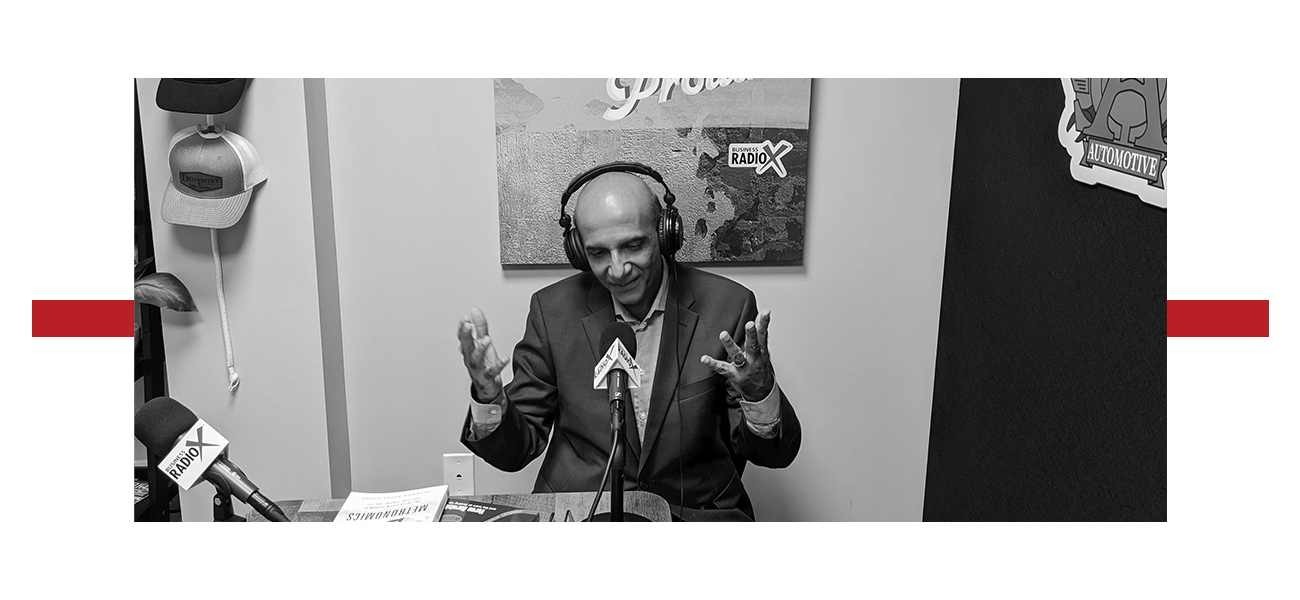
Tagged With: Coker Signs & Graphics

Our Community Partners

August 30, 2021 by Kelly Payton


Tagged With: Community Partners

Dr. Jennifer Angerami from Ridgewalk Chiropractic and Massage

August 29, 2021 by Kelly Payton

Women In Business
Women In Business
Dr. Jennifer Angerami from Ridgewalk Chiropractic and Massage
Loading
00:00 /
RSS Feed
Share
Link
Embed

Download file

Ridgewalk Chiropractic

This Episode was brought to you by

JenniferDr. Jennifer Angerami, Chiropractor at Ridgewalk Chiropractic and Massage

Dr. Jennifer Angerami is committed to helping families in the community experience improved health and vitality. She speaks regularly to local schools, businesses and organizations on health, wellness and safety topics. She enjoys educating others on how to manage stress better, how to prevent injury in the workplace and at home, and how to maintain peak performance in all facets of life. Her mission is to empower as many people as possible to experience their optimal health potential through genuine care and education.


Ridgewalk ChiropracticConnect with Dr. Jennifer on Facebook


This transcript is machine transcribed by Sonix


TRANSCRIPT

Speaker1: [00:00:07] Broadcasting live from the Business RadioX studios in Woodstock, Georgia. Welcome to Women in Business, where we celebrate influential women making a difference in our community. Now here’s your host.

Speaker2: [00:00:28] Welcome to Cherokee Business Radio, I’m your host, Megan Porter, and I’m here today with Dr. Haydon None and the practice manager for North Georgia Audiology. And Dr. Hayden is our lead audiologist for our Woodstock location. We are excited to introduce our Women in Business series. So our objective is to educate our wonderful community on the allied health professions and the very talented and knowledgeable women who run them. Here today is Dr. Dinn. Dr. Jen is a chiropractor with Ridgeback Chiropractic, and she has so kindly volunteered her time to share with you all of our many aspects of her career and how she is helping to make a difference in our community and health care. Doctor Dean, tell us a little bit about yourself and what it is you do daily.

Speaker3: [00:01:10] Good morning. Dr. John is my name and my last name is Andrew Ramey, which is why I go by Dr. Jen. And like Megan said, I am a chiropractor at Ridgemont Chiropractic here locally in Woodstock, and I’ve been serving my community for almost 20 years now. So that’s pretty that’s amazing. Pretty amazing. Yeah. And I see lots of patients. We’re a family practice. So we have patients of all ages, including infants, children, adults and adults that like to stay active in their later years. So we take care of everybody that wants to be healthy and improve their health in lots of ways.

Speaker2: [00:01:51] Awesome. So what made you get into chiropractic work?

Speaker3: [00:01:54] Yeah, I have been raised by a chiropractor. So my dad is a chiropractor. He practices is still in New Jersey. He’s about to retire. So growing up, he was in chiropractic school. And so there were always books around. And I just knew that I wanted to be a chiropractor. Like from a very young age. So I went to University of Iowa for my undergrad studies and moved here from Illinois in 1998 and went to life university for grad school for chiropractic. So, yeah, that’s awesome.

Speaker4: [00:02:26] So fill us in a little bit on what chiropractic work is. Do you say chiropractic or chiropractic? This is the question.

Speaker3: [00:02:34] It is referred to as chiropractic. Right. The technique or the art of adjusting. So chiropractic is a science and art and a philosophy. And basically, the the method is when we look at the spine, we look to the spine to try to remove any interference that might be causing pain symptoms, all of that. So what we do is gently adjust the spine by removing subluxation and a subluxation as when a bone or a vertebrae misaligned in the spine and actually causes irritation to the nervous system, reducing function of the body. So if we remove that interference by adjusting the spine, then the body can heal itself and function better.

Speaker4: [00:03:19] That’s really cool. So how long do you have to go to school to do something like that?

Speaker3: [00:03:23] About eight years. So it’s like a little bit less than eight years. You don’t technically have to have a full undergrad degree to get into chiropractic school, but it’s it’s the equivalent of of that.

Speaker4: [00:03:36] That’s really cool. I know that I didn’t know that you could have infants and children doing chiropractic work because, you know, I’m I’m an audiology. So the whole chiropractic side of things I’m not that familiar with. So I’m very excited to have you here today and kind of learn more about what you do. So tell us a little bit about your techniques with infants and children. That’s interesting to me.
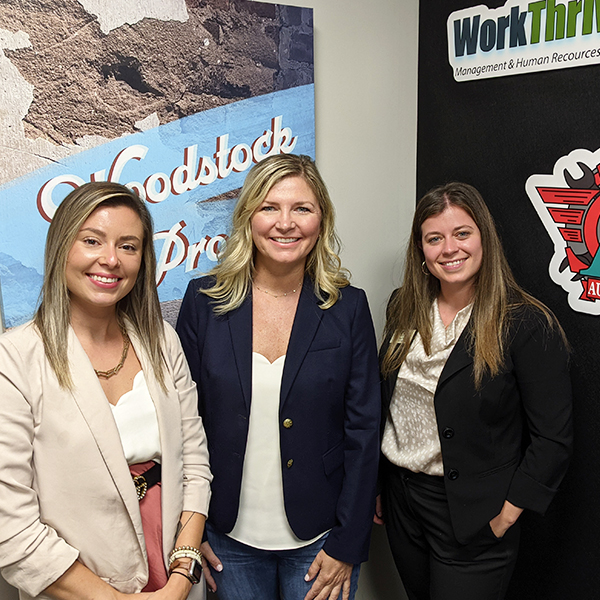
Speaker3: [00:03:57] Yeah, it’s very gentle. The way that we adjust an infant or a young child is very different from the way that I would adjust you or an adult. So technique wise, really what we do is palpate or feel the spine and notice any imbalances, mostly muscle tension and stress. So, for example, I have a lot of parents that bring children in for ear infections. So, yeah, very common problem for for young ones. And so oftentimes we’ll find that there’s an irritation or a misalignment of the spine in the upper cervical area, especially C1 or C to the first two vertebrae in the neck. And just adjusting that very gently, which it would be basically the weight of a dime, if you imagine that that amount of pressure can cause irritation to the nervous system. And so gently, just palpating and feeling and, you know, applying a small, gentle force to the spine allows the body to align itself. And that’s pretty miraculous watching kids get adjusted.

Speaker4: [00:05:02] I was about to say. So they’ll come in to see me and they’ll cry while I do the tests and hope you have an ear infection. Listen to the doctors. And that’s all.

Speaker3: [00:05:08] Exactly. Yeah. So it’s great because they respond very quickly. Kids and infants especially. But they haven’t had the amount of years of stress and tension on their spine. Right. So they usually respond within a couple of visits. They’re very squishy. They are. They are. And those bones aren’t fully formed. Right. So they’re most. We like cartilage, and so it doesn’t take a lot to really make a big difference.

Speaker4: [00:05:32] It’s pretty cool. So what would you say would be your most challenging patient to work with in terms of adults and things like that?

Speaker3: [00:05:40] Excellent question. So having been in practice 20 years, you know, I always thought when I was younger, young in practice, that the big, heavy people would be so challenging to adjust, like how am I going to adjust this big muscular guy? Usually they’re actually a little bit easier. It’s usually very petite, younger females that are so flexible. I’m trying to tell me you’re looking at Megan.

Speaker2: [00:06:06] I mean, I went through the whole practices with Dr. Jenn, including the x rays and everything, and she did adjust me. So I’m like, okay, cool. That is totally me she’s talking to. Yeah.

Speaker3: [00:06:16] Yeah. It’s challenging when there is hyper mobility in the spine or there’s increased flexibility or just when it’s difficult to get a patient to like joint tension. Those are the most difficult patients. And I would say, you know, as far as symptoms, acute low back patients are usually very challenging. So when we have somebody that has sciatic pain or, you know, just years of lower back pain, it’s it’s challenging to basically get them out of the bad habits that cause that, because in our profession, we kind of say now that sitting is the new smoking. And most of us are sitting for long periods of time now. And so embracing those bad habits is really challenging for patients to, like, get a full recovery.

Speaker4: [00:07:03] So how would you tell a patient, OK, let’s try not to sit so much, what would be your advice or something like that?

Speaker3: [00:07:09] So it’s amazing that now we have varied tasks which allow patients to work. Even if they’re working from home, they can actually stand for periods of time. Right. So that has been an an amazing addition, I would say, to home office life and even, you know, office life for patients. So really just being able to take breaks from sitting too long. So I really try to remind patients every 30 minutes they need to either change their position, which could mean just pushing back from their desk and flexing forward to touch their toes and kind of get those muscles to loosen up a little bit, get the blood flowing, just change their position. And posture has like such a huge impact on that. Right. So if we’re sitting, it’s causing stress on the spine. It actually puts three times the amount of weight on our desks in our low back when we’re sitting versus when we’re standing, because we know that support from our lower body. So it is yeah, that can be challenging, but

Speaker4: [00:08:06] That’s really good advice. You know, just yesterday, I was I was in an appointment with one of my patients and I was sitting there and I was the and I was like, man, my back is starting to really hurt. And you’re right, you do forget to move if you have an office job or even now with the world the way that it is. You know, a lot of people are working from home. So I think that’s really good advice that you would forget to do a lot of the times, right? Yeah, that’s awesome.

Speaker3: [00:08:30] I’m also impressed with a lot of companies are just more willing to provide that ergonomic workspace for their patient or for their really great employees. Absolutely. So whether they’re at home, I see a lot of those people having their home offices remodeled, which makes a huge difference over time. Nice.

Speaker4: [00:08:49] Yeah. OK, I’ve got a I’ve got a fornier question. I guess are not funny. But, you know, I know with my field there’s a lot of stigma that goes along with hearing aids and things like that. And there’s got to be stigma with your field as well. So like for sure, I was about to say for people who are kind of on the fence or a little bit nervous about going to get chiropractic work done, what would be some advice that you would give them? Because I see a lot of patients that are that are scared to go to see you.

Speaker3: [00:09:17] Sure. Well, first of all, I’ll tell you, you know, there are a lot of different techniques for adjusting the spine. I know I would say a lot of people that I deal with as as new patients might tell me that they have been afraid to have their neck popped or to hear that popping. When I hear a lot for sure, I hear that all the time. And being being raised by a chiropractor and being adjusted my whole life, I’m very relaxed and calm about the whole situation because I know what to expect. And so there’s obviously that element of fear when you don’t know what to expect. And really just removing that fear for patients and and explaining to them that it’s a very gentle process. It really is the popping sound. I think removing that idea for patients is just it’s not the bones cracking. It’s actually just gas being released from the joint capsule. So we have a small amount of gas in our joints. And when we release that tension on the joint, things move more freely. But it releases that. And that’s really all you’re hearing. You’re not hearing the bones crack. So usually that eliminates the fear for patients.

Speaker4: [00:10:23] That’s a really good it good to know, because I don’t think a lot of people realize that. Yeah. Yeah, thanks for that. OK, let’s see in my field, I deal with a lot of people who have had spinal trauma. They’ve had you know, they’ve hit their head and had some head injuries. And then sometimes I deal with people who, as a result of that, or maybe not even as a result of that, they have tinnitus or what we call ringing in the ears. And I have I’ve heard and I’ve seen a few people that have followed up with chiropractors for ringing in the ears and to kind of alleviate some of those symptoms. Have you come across any patients in your field that deal with that? And if so, how would you treat somebody like that?

Speaker3: [00:11:07] Yeah, absolutely. We do see patients with tinnitus or tinnitus, tinnitus. However, we can find out that is. Yeah.

Speaker2: [00:11:16] Yeah. Tomato. Tomato.

Speaker3: [00:11:17] Yes, exactly. Exactly. So and it’s funny. Most of my patients that I am adjusting, you know, usually will have something in their neck related to like some type of previous trauma, or it could just be years and years of of stress and tension on the spine

Speaker4: [00:11:33] Or bad posture

Speaker3: [00:11:35] Has bad posture.

Speaker2: [00:11:36] Sure.

Speaker3: [00:11:37] Sure. I know getting more on the radio right now and can see exactly where I like. So, yeah, noticing any stress or tension in that upper cervical area is usually when I see patients that have experienced that symptom in the past. But usually they’ll tell me after the fact, it’s kind of funny. They’ll say, you know, Doctor John, I never thought to tell you that I had ringing in the ears. And now that I’ve been adjusted and I’m my neck is feeling better, my neck pain is gone, but also I have less ringing in the ears or that symptom has gone. So it’s funny. It’s usually kind of on the back end of things that patients will kind of volunteer that information because they don’t really think of chiropractic care when they think of their ears specifically by even ringing in the ears. And I will say I notice a lot of jaw pain and or dysfunction of the jaw that relates to tinnitus. So, you know, usually that can come from some type of trauma. Most of us have been in some type of minor car accident. Some of us have been in major accidents. And a lot of that can, you know, impact the cervical spine, but also the jaw. And so when that jaw is misaligned, it really does impact that ear canal. And this creates some of that tension.

Speaker4: [00:12:55] And I can second that, too. You know, I see I see a lot of patients who have the ringing in the ears as well. And, you know, while we have a different approach to kind of treat and manage that tinnitus, I do think it’s good to have people like you in our back pocket that say, OK, you know, you’re telling me you’ve got TMJ, you’ve got GI issues, you’ve got neck problems. So let’s look and let’s look and see what your ears are doing functionally. But if that doesn’t work, then we’ve got Dr. Jin in our back corner, which is nice.

Speaker3: [00:13:22] Absolutely. Well, and vice versa. Obviously, if I’m not seeing results for the patient, I’m happy to refer out and grateful to send them to you as well.

Speaker4: [00:13:31] Yeah, I like to call this an interdisciplinary approach. You know, we like to keep our patients health care at the center. So, you know, if there’s somebody that I know that can help them, great. Why not, you know?

Speaker3: [00:13:42] Absolutely.

Speaker4: [00:13:43] And it’s you know, it’s crazy. I do see a lot of people with that TMJ, you know, and it didn’t really put two and two together before, but I will definitely start to think about that more moving forward. Yeah.

Speaker3: [00:13:53] And adjusting the jaw is is also very gentle and specific. But we have instruments that we can use that are mostly working on the muscles to like help align the jaw itself when we do have the joint actually out of alignment. Oftentimes there’s a physical adjustment for that manual adjustment, I’ll say. But yeah, it’s it’s a pretty easy process.

Speaker4: [00:14:13] So for all you listening, tinnitus is not hopeless. There is hope. You know, one of the things I see when they come into my practices, you know, I went to see this doctor, I went to see that doctor, and everybody told me that, you know, I just have to live with this. So there is good news out there that you don’t have to live with that. So I

Speaker3: [00:14:32] Say, yeah,

Speaker4: [00:14:33] Ok, let’s see. What’s your favorite part about your job?

Speaker3: [00:14:38] Definitely. By far. My favorite part is being able to help patients and, you know, especially patients that have maybe been suffering for years and really had nowhere else to turn and didn’t really necessarily take chiropractic as their first approach for whether it’s pain or just some type of disease or dysfunction. So really seeing that process of them being able to return to their daily life and get their health back and regain just their their ability to be happy and just allowing, you know, their body to do that is really amazing to witness how powerful the body is and like how just removing some stress and tension really allows the baby or the baby, the body babies, too, but the body to function the way that it should. So, you know, getting patients back out there enjoying life is really something that motivates me and is is my favorite part about what I do.

Speaker2: [00:15:36] Awesome. Well, I’ve known Dr. Jenn for three or four years now, and she’s probably the most compassionate chiropractor I’ve ever met because she is so compassionate about her patients. She does have a passion for helping people. So my next question for you is, what is your best referral source?

Speaker3: [00:15:54] Thank you for that. By the way, Megan, I appreciate that. My best referral source, you know, I’m grateful to have been in practice as long as I have. Most of my patients come from referrals from other patients. So it’s really just. After your experience in my office, you know, explaining that to other patients and potential patients about your experience in the office and just sharing that knowledge and, you know, removing those barriers for patients to consider coming into the office that might have, you know, reservations or. Not they’re just not sure about what to expect when they come to a chiropractor, so, you know, any any patient that just has a conversation and is willing to tell a patient about their experience, I think is really the best. Just word of mouth advertising by far goes the longest way. Right. When we experience something good and we share that with others, I think that’s that’s just awesome.

Speaker4: [00:16:50] We have a saying at our office that the best compliment you can give is to refer our friend.

Speaker3: [00:16:54] Absolutely.

Speaker4: [00:16:55] I would agree with that.

Speaker2: [00:16:57] Yeah. Coming from me, I’ve gone through the process with Dr. Jenn and it’s very, very laid back. And you don’t feel stress, which is amazing. I was about

Speaker4: [00:17:05] To say she’s got a good bedside

Speaker2: [00:17:07] Manner. Definitely. And I’ve told everyone in the office, oh, you need your back adjusted. Go to Dr. Jenn. She’s amazing. So with Ridgeback Chiropractic, how would someone get in contact with you to schedule an appointment? Yeah.

Speaker3: [00:17:21] So there are a couple of ways you can go online to our website, which is Bridgework Kairo dot com. And you know, we can also just accept phone calls, obviously, to schedule those those appointments. So our front desk staff is amazing and they are very accommodating. We have ours Monday through Friday. And so there’s always going to be, you know, a time where we’re there after hours as well. So there’s going to be a time that we can get you to to see you. But it’s usually about 45 minutes for the first appointment. Like you mentioned, you had X-rays when you came into the office. That is something that we do. We also have like a full physical therapy suite. So if we need to do any muscle stem or ultrasound or different additional therapy is in the office, we can do all of that as well. And that can change based on a visit to visit basis. Right. So a typical visit, once you’ve become like an active patient, we’ve already started you up, is usually about 30 minutes. So and again, it kind of just depends on what you have going on that day.

Speaker2: [00:18:22] So, yeah, and I know you gave some advice earlier in this podcast, but to leave the best bit of advice at the end of this podcast, what would you say for your future patients?

Speaker3: [00:18:35] The best advice is you have to be your own advocate for your own health. Right. You have to listen to your body and really trust that that you know best. And, you know, we got all kind of have that doctor within within us, so to speak. And so if you trust and know that what you’re experiencing needs further attention, then, you know, don’t ignore those symptoms, your symptoms or your body’s way of trying to tell you there’s something that’s wrong.

Speaker4: [00:19:05] You only have one body, right?

Speaker3: [00:19:06] That’s exactly right. And one spine. Yeah. Yeah. We got to take really good care of it. So, you know, it comes from staying active and exercising, obviously eating right. It all plays a role as far as our overall health. But, you know, from a physical standpoint, just really being in tune with your body and being willing to do those things that it’s going to take to actually get better.

Speaker2: [00:19:29] As Joseph Palladio said, you’re as young as your spine is flexible. That’s right. Yeah, that’s what I tell my husband all the time.

Speaker3: [00:19:36] Yes, absolutely.

Speaker2: [00:19:38] Lovelady’s awesome. OK, well, I believe this is about the end of our podcast.

Speaker4: [00:19:43] Do you have any questions for us before we go, or is there anything else that we haven’t talked to you about that you would like to to get out to the world and Woodstock?

Speaker3: [00:19:53] Oh, I think we’ve really covered everything. And I really just want to thank you for having me on. It was a pleasure. And this is my first radio experience live. So this is so much fun and it’s fun. Yeah, I really appreciate you having me.

Speaker4: [00:20:05] We’re so glad that you came. And like we said, we just wanted to kind of share you and the amazing things that you’re doing to help the community and and to help people lead a better life. So we appreciate all of the expertize. I definitely learned a lot as an audiologist. I don’t know a whole lot about the other allied health professions. So I’m glad that you’re here. And I hope that other people have taken away from this what I have. So thank you for coming.

Speaker3: [00:20:31] Thank you so much. I appreciate

Speaker2: [00:20:32] It. And again, to piggyback off hate in, I want to just thank you so much. We have been so excited for this podcast for the last week since we met you for lunch. And Dr. Jen, and just thank you for everyone for taking the time out of your day to listen to our Women and Business series. I am Megan Porter and this is Doctor Hayden then with North Georgia Audiology, and until next time, have the very best day.

Tagged With: Ridgewalk Chiropractic

  • « Previous Page
  • 1
  • 2
  • 3
  • 4
  • 5
  • …
  • 14
  • Next Page »

Business RadioX ® Network


Our Most Recent Episode

CONNECT WITH US

  • Email
  • Facebook
  • LinkedIn
  • Twitter
  • YouTube

Our Mission

We help local business leaders get the word out about the important work they’re doing to serve their market, their community, and their profession.

We support and celebrate business by sharing positive business stories that traditional media ignores. Some media leans left. Some media leans right. We lean business.

Sponsor a Show

Build Relationships and Grow Your Business. Click here for more details.

Partner With Us

Discover More Here

Terms and Conditions
Privacy Policy

Connect with us

Want to keep up with the latest in pro-business news across the network? Follow us on social media for the latest stories!
  • Email
  • Facebook
  • Google+
  • LinkedIn
  • Twitter
  • YouTube

Business RadioX® Headquarters
1000 Abernathy Rd. NE
Building 400, Suite L-10
Sandy Springs, GA 30328

© 2025 Business RadioX ® · Rainmaker Platform

BRXStudioCoversLA

Wait! Don’t Miss an Episode of LA Business Radio

BRXStudioCoversDENVER

Wait! Don’t Miss an Episode of Denver Business Radio

BRXStudioCoversPENSACOLA

Wait! Don’t Miss an Episode of Pensacola Business Radio

BRXStudioCoversBIRMINGHAM

Wait! Don’t Miss an Episode of Birmingham Business Radio

BRXStudioCoversTALLAHASSEE

Wait! Don’t Miss an Episode of Tallahassee Business Radio

BRXStudioCoversRALEIGH

Wait! Don’t Miss an Episode of Raleigh Business Radio

BRXStudioCoversRICHMONDNoWhite

Wait! Don’t Miss an Episode of Richmond Business Radio

BRXStudioCoversNASHVILLENoWhite

Wait! Don’t Miss an Episode of Nashville Business Radio

BRXStudioCoversDETROIT

Wait! Don’t Miss an Episode of Detroit Business Radio

BRXStudioCoversSTLOUIS

Wait! Don’t Miss an Episode of St. Louis Business Radio

BRXStudioCoversCOLUMBUS-small

Wait! Don’t Miss an Episode of Columbus Business Radio

Coachthecoach-08-08

Wait! Don’t Miss an Episode of Coach the Coach

BRXStudioCoversBAYAREA

Wait! Don’t Miss an Episode of Bay Area Business Radio

BRXStudioCoversCHICAGO

Wait! Don’t Miss an Episode of Chicago Business Radio

Wait! Don’t Miss an Episode of Atlanta Business Radio