
/
RSS Feed

 This transcript is machine transcribed by Sonix
Intro: [00:00:07] Broadcasting live from the beautiful legacy theater in Alpharetta, Georgia, for code launch Atlanta, 2021. It’s time for Atlanta Business Radio. Now here’s your host.
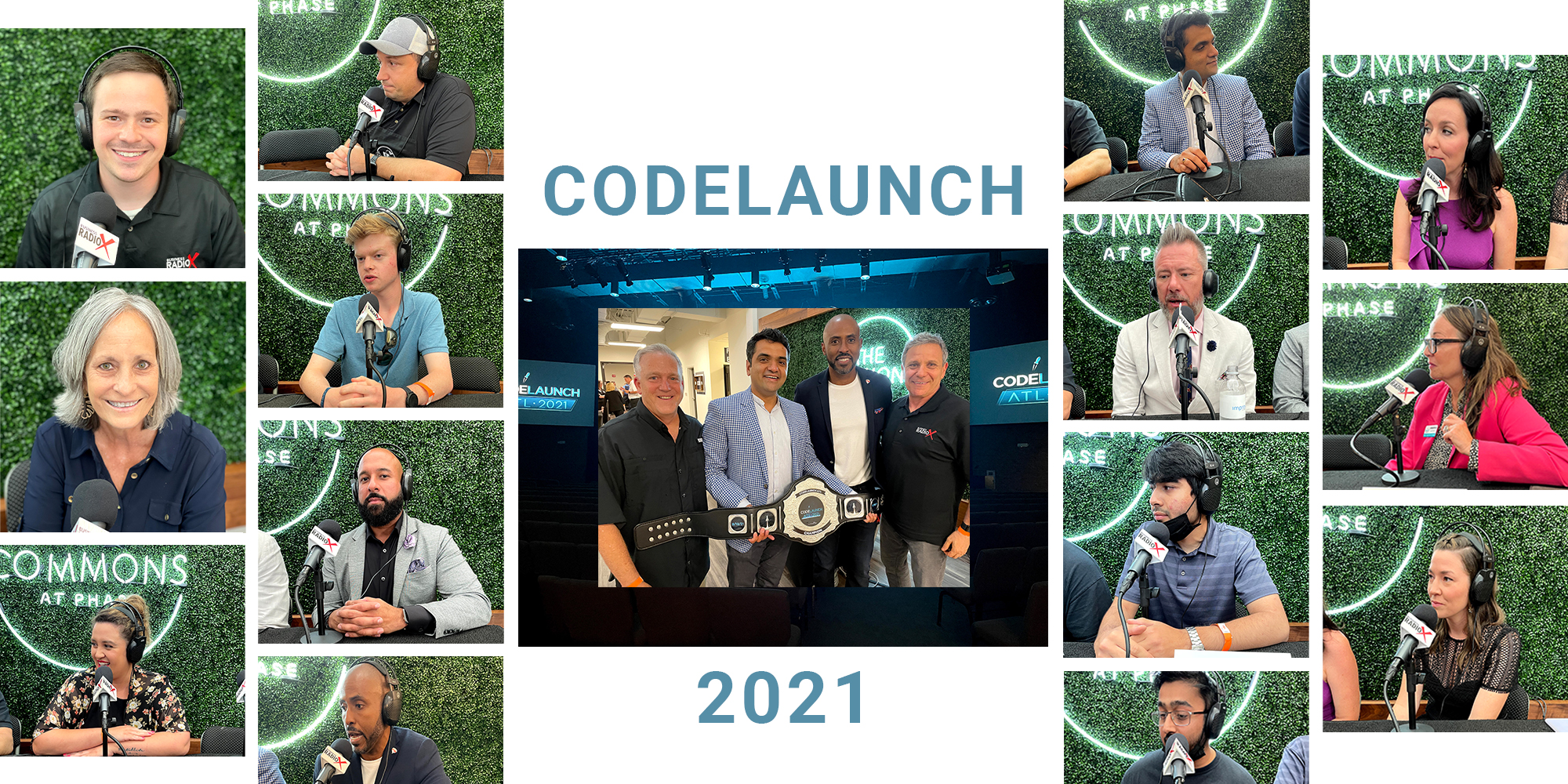
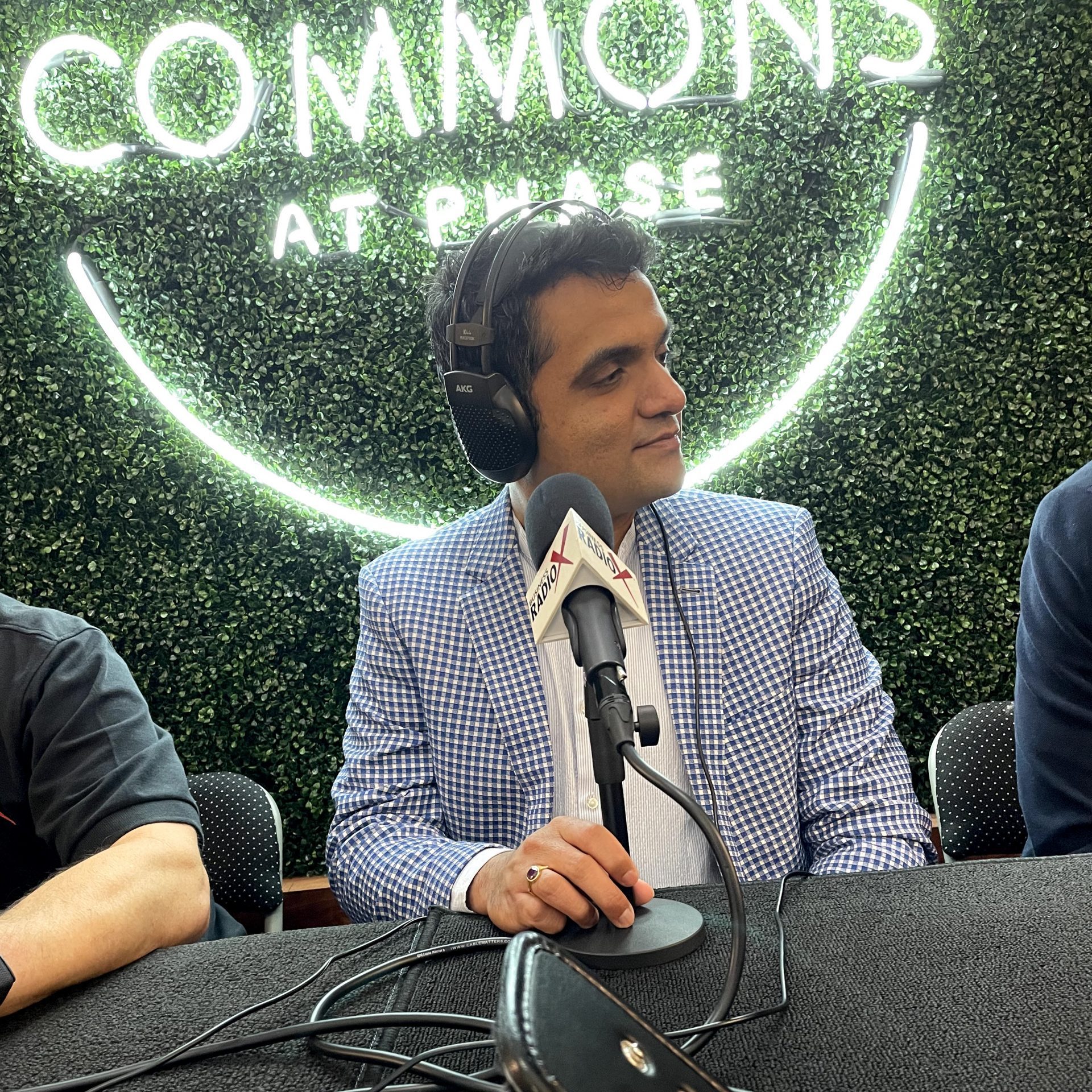
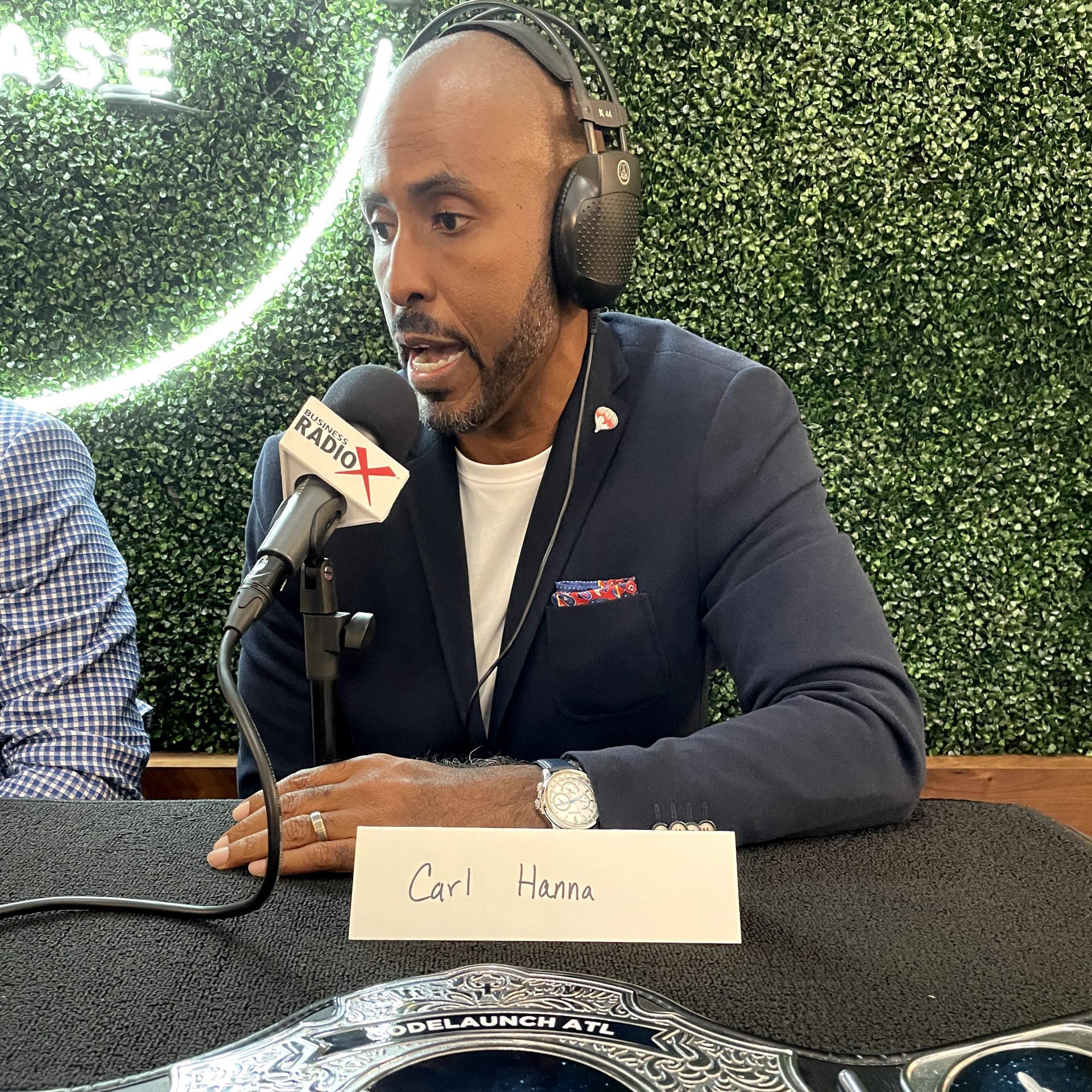
Stone Payton: [00:00:23] Welcome back to Code Launch Atlanta twenty twenty one we are broadcasting live from the beautiful legacy theater. And Lee, this is the one we’ve been waiting for, man. We’ve got the winners from the contest. Please join me in welcoming to the show with Eva helped Saurav this and Carl Hanna. Welcome to the show, guys.
Carl Hanna: [00:00:45] Thank you. Going to we’re so excited to be here. As excited to be holding a champions belt. That’s right.
Lee Kantor: [00:00:51] Hey, you said everybody’s a winner, but he isn’t the only one that gets to bring on the belt. So I think you’re the real winner. You got
Carl Hanna: [00:00:57] It. You know, I would tell that to the other folks.
Lee Kantor: [00:01:01] So tell us about as health.
Carl Hanna: [00:01:04] Well, so my health, you know, it’s a health tech site up where based here in Atlanta. And our mission is really to help family caregivers like you or me, you know, caring for for a parent. So we’re using technology to really help you to our the care journey. Right. You know, I don’t need to care for your loved one, but also your cells. Right. So you want to make sure that you want to make sure that, you know, you’re also healthy. Right. So that’s that’s the primary focus for us. And we’ve been at this journey for the last, you know, two years, you know, building this. And so, you know, excited to to get a win today. You know, so Rob is right there with me, you know, my partner in crime. So super excited.
Lee Kantor: [00:01:46] So now tell us about how the idea came about. What was the kind of impetus to get you thinking along these lines that you wanted to serve the caregivers? And I believe dementia is one of the areas you have to start with.
Carl Hanna: [00:02:01] Mm hmm. So dementia is you know, it’s it’s a it is a focus for us. You know, as a starting point. Right. And the question you ask is about caregivers. What’s what was our why? We also caregivers are also cared for for our parents caring for and some of us who are good parents are still alive. Right. So and we’ve been in the health care industry. We are we are consultants, you know, for two of the big three of the big companies crisscross the nation, you know, several times over then we’ve seen the needs. We see, you know, when the when the family leaves the the clinic, the hospital, their by themselves to figure out what they need to do on a daily basis. So not only we’ve seen it from a professional landscape, what was the challenge? We also have experienced that as well.
Lee Kantor: [00:02:48] So then what is your solution? Is it a platform for the caregivers to go and get other resources? Is it a place for them to commiserate among themselves as a support group? Like what? What’s happening on the block?
Carl Hanna: [00:03:01] I think you’re taking a lot of those questions, right. So I want to see everything right. But of course, you know that we’re our focus right now. So it’s essentially a platform like you say, right? Like you say. No, that’s not bringing together not only information I bringing to the caregiver, not on the information that they need on a daily basis, but also to technology, but also bringing support from their own community that can help themselves if it’s not about just, hey, you know, I need to find someone else is important to to to to to share your experience. But a lot of times when you’re caring for someone, you need that help, right? We need help right now. I want to make sure that the folks that you’re connecting with can help you. Right. And so that’s where ever comes in and doing that search for you at the community level. So you don’t have to do it right. And instead spend the time caring for your for your loved one, but also your view of yourself.
Lee Kantor: [00:03:59] Well, caregivers, sometimes you need help, but sometimes you need a helper and you need a place that you can go to find that trusted resource and to protect yourself, because there’s a lot of bad actors out there. And somebody has to kind of that to make sure they are who they say they are.
Carl Hanna: [00:04:17] Not saying that’s correct. And, you know, ever will be doing that. Will do that for you. Right. Will be vetting. You know, we do I think the resources in the community and also the information that you have access, you know, if you go on Google search, you say, hey, you know, I need someone to help. Right. Do you want to have like, you know, you’re going to have like several different type of result that come in?
Lee Kantor: [00:04:37] Right. And just because someone’s going to do SEO and can show the best care. That’s right.
Carl Hanna: [00:04:44] Right. And if you are in if you are, you know, if you are in Baghdad. Right. Your needs are very different from someone in barking. Right. Right. So you want to make sure you I mean, you’re you know, with the other platform is looking at the what’s you know, what are some of the needs of someone in Buckett or Bichette houses in St. Louis, take on Baghdad and and and bring those resources to that. So I’m thinking bankcard. I’m thinking sometime is a food desert. Right. What are some of the volunteer organization community organizations that can come in and support without you as a caregiver actually figure out? Because you are already too busy, you know, help, you know, caring for that problem. Now you. All right.
Saurabh Vyas: [00:05:28] Our intent is to start with ever. And then like you ever will guide you forever throughout the entire journey.
Lee Kantor: [00:05:36] So it’s starting now with dementia. And then now you mentioned Bankhead, the crackhead. So how do you target those kind of underserved areas where there are less resources? Because by definition, there’s less resources. So how how are you going in there to encourage other maybe nonprofits who who came to that area? They show them there’s opportunity here to serve. How are you kind of creating that community?
Carl Hanna: [00:06:07] There’s a lot of coordination, you know, that needs to happen. So I’m originally from Haiti. Right? So we are the countries of NGOs. And you and if you look at the news in Haiti is the worst, you know, the poorest country in the Western Hemisphere. Right. We have like the the most NGOs, non-governmental organization per capita anywhere in the world. And we you know, when you look at it, it’s like, OK, what’s going on? And one of the reason the case of Haiti is hoarding. Asian folks are trying to do the same thing. Right, where they can come in and work together and ever write to our platform is to bring all these disparate, disparate resources, women to one platform and be able to effectively support, you know, someone in banking.
Lee Kantor: [00:06:53] So how do you kind of meld that? Well, it takes a human kind of curator with technology and scaling.
Carl Hanna: [00:07:02] The solution has to be custom, you know, customized for. That’s why, you know, I mentioned market and bank and the needs are different. Right. And so what it’s it’s it’s looking at that community bank and, you know, what are the resources, you know, what are and how do you interact with the folks there? Right here, I’m thinking I’m African American. Right. And when I need guidance, I go to my city leaders. If I need support, I go to my faith needles. Right. So the African American approach to accessing information is different from, you know, whether you’re white, whether you’re Latin X. So having that flavor and not having a one stop, one size fits all approach, it’s what’s going to differentiate us is going to continue to be a differentiator for us.
Lee Kantor: [00:07:54] So now, what compelled you to get involved with code launch? What brought you here to this event?
Carl Hanna: [00:07:59] Well, well, you know, so I’m going to let you speak to after the quick question, but let me let me take that on. Right. So because I’m sure we, the listeners will want to hear from you as well. So codons, you know, I mean, as a startups, you you’re not new knocking on doors. Right. Trying to find the folks that can help. And sometimes, like any one thing, you know, you may find the best, you know, help. And coders get connected to a friend of ours. Right. Who told us, hey, we know there is this great, you know, initiative to cold launch and it’s helping startups just like you. Right. And by the way, the deadline is in. Is this still being three hours? So I’m scrambling. I’m like, OK, this is great, right? You know, I’m it’s already like 10:00 p.m. I’m tired. And I’m like, oh, man. But if I if I don’t do it right, you know, it’s like, well, you did need help. I offered help. So Putin, you know, quitting, therefore, trying to put the information in the system. Things were not working. Right. I’m texting, I’m e-mailing, I’m on Facebook, on Instagram, trying to reach someone. And then finally, I think it was probably midnight. They’re like, oh, yeah, we have a problem. Turn it in tomorrow. Right. So I had a few hours tomorrow and we started the journey. I mean, just like, you know, quarter finals, semi finals to the finals. And now we’re a champion.
Lee Kantor: [00:09:23] So now any advice for folks about code launch, how to get the most out of it?
Carl Hanna: [00:09:28] Oh, man, those folks are code launch. I’ve been sorry, sir. I’ll I’ll say one last thing also. I mean, those thing I code lines have been FoxI code launch, improving Atlantor. I’ve been fantastic. You know, a lot of times, you know, we’re looking for help. You know, folks always like, OK, how much of the company are you going to give? Right. Those folks are like, well, we don’t need anything. Right. We just want to help you. And you like. Is that true? Is that true? Is that after like two days, you’re going to be like, well, let’s talk paper, right. And so, I mean, the work, the dedication that they have and you know, I’m like, wow, we know we’re not. It’s just, you know, and they rally behind our idea. Right. And they give every everything that they got. And we’re able to do a successful demo, proud of it. And I mean, the team is is is excited as much as I.
Saurabh Vyas: [00:10:23] And one thing that really resonates is like code launches also based on this foundation of community and creating this new startup and venture community in Atlanta and this case and really making it thriving, bringing everyone together to actually push it forward. And that’s something that is like a shared value, because that’s what we are trying to do as well. When it comes to Alzheimer’s as a starting point in health care in general, let’s bring them together.
Lee Kantor: [00:10:46] Well, it sounds fully aligned with your mission of creating community. It sounds like they’re really walking the walk when it comes to this. There’s a lot of events out there, you know. Yeah. And so this one is one of the good ones in terms of they’re not asking for anything from you and they just want to really help you succeed.
Carl Hanna: [00:11:03] I know for sure and I think, you know, the folks we’ve met through this experience are of friends are part of our family, and they’ve said that we are part of their family. Right. And Saurabh Points, you know, community is a big thing for us. Right. And seeing other folks that have that are embracing us, you know, and bringing us bringing us into their community without asking for something, you know, that’s that’s family
Lee Kantor: [00:11:29] Now for you. What do you need more of? How can we help?
Carl Hanna: [00:11:33] Well, you know, it’s we’re we’re looking for beta testers, right. So if you’re a caregiver caring for someone, you know, reach out to us. You know, I’m call about three cecum. Right. Saurabh, as a you are a B.H. at every three second grade and reach out to us. Right. You try an investor in the area. Right. And are passionate about. I mean, we all getting old. We all going to be caring for our people, our caring for an aging parent. Right. So if you’re an investor in the Atlanta area or in the in the US, wherever you are. Right, interested in our mission. Let’s listen. Let’s have a conversation.
Saurabh Vyas: [00:12:14] And quickly to add to that, if you are an affinity organization, so if you are a church, if you are a religious organization, if you are a school, anyone who is interested in helping the care givers and being part of the community or already have services reach out to us as well, because we may be able to make it better, make it easier for you as well.
Stone Payton: [00:12:32] Well, sir Karl, congratulations again. What a fantastic feeling it must be to have gone through all of those machinations, put in the time, put in the energy, paid the price and come out with this. But you’re only getting started with what is the the next step for the next couple of steps for for you guys. What’s where are your energies going to be invested in the coming, I don’t know, six, six, nine months?
Carl Hanna: [00:12:59] Well, I think, you know, it’s it’s fund raising, fund raising. And you hear that legal a fund raising nightwear fund raising, you know, the right way to happen. And, you know, we’ve got to have we’ve got to bring the right capital, you know, of course, the right people, the right to get us to that next level, focusing and on tweaking. Right. Our our product also, you know, building alliances. Right. We all know our community. Right. So I Saurabh mentioned a hey, you know, if you’re out there, you are a community organization. You want to be able to see you want to support your community even better. Right. Let us let us be the technology platform that that lets you embrace your community.
Stone Payton: [00:13:39] I think that is a marvelous way to approach your continued success and your growth. OK, one more time. Let’s make sure that we leave our listeners with points of contact for either or both whatever you feel like is appropriate. Email, address, website. What have you. What’s the best way for him to reach out?
Carl Hanna: [00:13:56] Yes, I’m always on LinkedIn. Folks can call Hannah. I think there’s a story behind it. So a link to the on LinkedIn email. You know, call at ever EVGA 360 dot com.
Saurabh Vyas: [00:14:13] And that’s Calaway to see right away.
Stone Payton: [00:14:16] Right.
Stone Payton: [00:14:17] So and so. Obviously we need some Cortney’s for you. We should we just send the girl. I think it
Saurabh Vyas: [00:14:21] Will be easier for the listeners to just stick with Carl.
Stone Payton: [00:14:24] You got it, man. Well, thank you again, gentlemen, for all the hard work that you put in. Thank you for what you’re doing. Your mission, your work is important. It means a lot to all of us. We’re excited. We’re excited for you, at least at the Business RadioX Eco Lodge. We’re going to continue to follow your story. And we certainly want to help in any way that we can.
Carl Hanna: [00:14:43] Thank you so much. Thank you so much.
Stone Payton: [00:14:45] All right. We’ll be back in a few from code launch. Atlanta. Twenty twenty one.
This transcript is machine transcribed by Sonix
Intro: [00:00:07] Broadcasting live from the beautiful legacy theater in Alpharetta, Georgia, for code launch Atlanta, 2021. It’s time for Atlanta Business Radio. Now here’s your host.
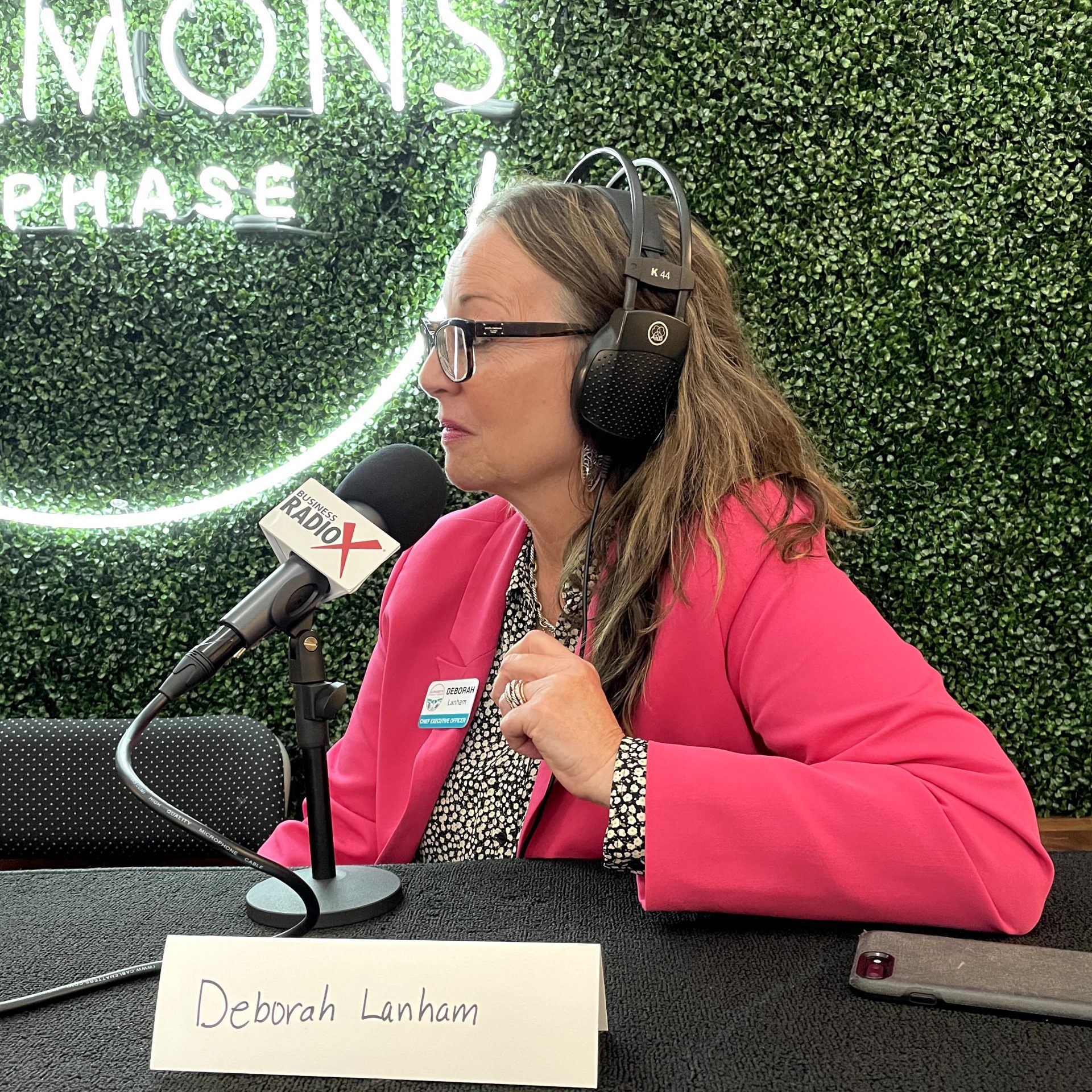
Stone Payton: [00:00:23] And we are back broadcasting live from code launch in Atlanta. Twenty twenty one Stone Payton Lee Kantor here with you. Next up on the broadcast today, please join me in welcoming to the show with Alpharetta Chamber, Miss Deborah Lynam. Good afternoon.
Deborah Lanham: [00:00:40] Good afternoon. How are you?
Lee Kantor: [00:00:43] We are doing well. What brings you to code launch?
Deborah Lanham: [00:00:46] Well, this was a dream. This was an idea presented to me back in the beginning of this year as a possibility that code launch would be expanding and coming into the Atlanta market. And because I’m the Alpharetta Chamber of Commerce obviously said let us host you in Alpharetta. So we started and that would be improving. Scott McMichael, who’s a member of our chamber and just been a great partner, started having those conversations. And now it’s reality here today. We have spent lots of months planning and helping promote, and we’re just grateful to be a community partner. And that’s what that’s what I’m doing here tonight.
Lee Kantor: [00:01:30] Now, talk about since the code launches, they’re based in Texas, but it’s a national brand is growing all over the country. Why don’t you let the folks know how Alpharetta is as attackable itself? Forget about Atlanta. I know we’re near Atlanta, but Alpharetta stands alone. And it would be a large community if Atlanta wasn’t even here.
Deborah Lanham: [00:01:52] Oh, absolutely. With the incubator here, check out Faretta. And they are well on their way and have the support of the city of Alpharetta. We have been just exploding as a tech community. And back when David Belisle was the mayor of the city, he had a dream about bringing these tech leaders together and created this coalition or a commission. And that’s what we now enjoy as Techo Faretta, led by Karen Kashan. So with that work, we are having more attention and focus on our startups as they’re incubating right here in Alpharetta. And the goal is to keep those businesses and that innovation right here in our town.
Lee Kantor: [00:02:34] And there’s a lot of kind of tech clusters in technology in Alpharetta specifically, like health care. I.T. is a big one here. Is there any other ones that we should be aware of, of types of companies within technology that are kind of flourishing here in Alpharetta?
Deborah Lanham: [00:02:50] Well, yes, health care. And then also the financial piece where you have a lot of transactional, you know, with the payment processing right here. So that’s another big area in terms of that technology. In fact, I think don’t quote me, but 72 percent of the credit card transactions come through Atlanta and a good chunk of that’s right up out of Alpharetta. So that’s another part of it. And then you see these startup businesses are definitely digital technology marketing. We’re we’re seeing, in fact, some of those contestants in the code launch that we’ve witnessed today are in that field. And the creators are really exploding with innovation and creativity. So love seeing some that we’ve we’ve enjoyed cybersecurity and watching and that particular piece of the technology in terms of educating our community, that’s been huge in the last few years. But interesting to watch it move into other categories, like I mentioned, the marketing and creative.
Lee Kantor: [00:03:50] Now, how does the chamber really kind of help support these startups you mentioned? Check out Faretta. How or what are some of the things that are happening, the events that are happening in and around the city that help kind of these entrepreneurs get their show on the road?
Deborah Lanham: [00:04:07] Well, as it impacts the Chamber of Commerce in our work, our focus definitely is to help drive the economy. And and to to do that, you have to make sure that your businesses are equipped. And so a lot of these startups do need the support of an organization like Tuko Faretta or a Chamber of Commerce, where we have access to tools and resources. And I think of SCOR in the SPDC and SBA right here, you know, arms of the SBA, but also those homegrown organizations that just have a passion to help and coach for free. And then, you know, once they begin to provide that kind of coaching, then they can introduce these small companies to greater opportunity to, you know, to actually engage in coaching that they would pay for. But it’s an ecosystem and it’s here to support, especially coming out of the Chamber of Commerce, that that’s what we like to teach our businesses and our members, is to be collaborative and to do business with one another. And in that engagement, they find where they can actually help one another, too. And so I would say through then the different and various events, chambers of commerce like ours put on. They’re designed not only to educate, but to bring in that connecting point, and then and beyond that, then just those faces you meet that are literally your resource, your tool that will help improve your business.
Lee Kantor: [00:05:36] There must be such a rewarding work to see these kind of relationships flourish and to see entrepreneurs come together in ways that they couldn’t without the help of the chamber connecting them.
Deborah Lanham: [00:05:46] Oh, it is. And why I’ve been doing this for almost 10 years. I love the work. And it is something where you feel that passion, that to be able to connect to people and just see them have these great testimonies of work accomplished. Yes. That revenue that comes in as a result of two companies working together. I love that as well. And that’s why I felt like really we have a mission and we know what our specific work is and where we fit in in our lane as a chamber of commerce. And that is to help drive the economy, to help our small businesses, and to give them those resources and tools that I also love, like what has happened here today, where we have that partnership, that’s our passion, is partnering up with companies like Improving, where we can then get a cold launched national event to come to Alpharetta. Yes, there in Atlanta. But we got him to come up here to Alpharetta and allow us to host them. So what a great turnout tonight to what a wonderful large audience we are so happy to see here.
Lee Kantor: [00:06:42] Must be great to see all these kind of folks coming out and celebrating technology, celebrating code launch. And really this event couldn’t be done without the support of folks like you.
Deborah Lanham: [00:06:54] Well, we’re happy to be a part of that. So it’s great to be here. And again, improving is done a wonderful job of engaging, including us and and allowing us to get together and brainstorm. But, yeah, code launch has been out there and in Texas, and it looks like they’re going to have a robust schedule going forward. So I’m excited to watch that.
Lee Kantor: [00:07:17] Now for people, they want to connect with you and join the chamber or maybe check out some of the events. What’s their best website to do that
Deborah Lanham: [00:07:25] While we’re at Alpharetta Chamber dot com? Pretty easy, but also reach out to me directly if you’d like to. Deborah Debow, R.H. at Alpharetta Chamber dot com. And I am happy to have a conversation with you and learn what you’re doing and how we as a chamber could come around and support you.
Stone Payton: [00:07:42] Well, Deborah Lynam with Alpharetta Chamber, thank you so much for joining us. And please keep up the good work. Thank you for your service. Thank you for everything that you and your team are doing. We just think the world of your work, we want to continue to try to support you in any way we can. And you’ve got some big fans over here to Business RadioX network, and I’m sure within the code launch system as well.
Deborah Lanham: [00:08:07] Well, let me just say that I am a very big fan of Business RadioX, so thank you for inviting me to speak with you tonight.
Deborah Lanham: [00:08:13] It is absolutely our pleasure. All right. We’ll be back in a few. From code launch Atlanta. Twenty twenty one.
This transcript is machine transcribed by Sonix
Intro: [00:00:07] Broadcasting live from the beautiful legacy theater in Alpharetta, Georgia, for code launch Atlanta, 2021. It’s time for Atlanta Business Radio. Now here’s your host.
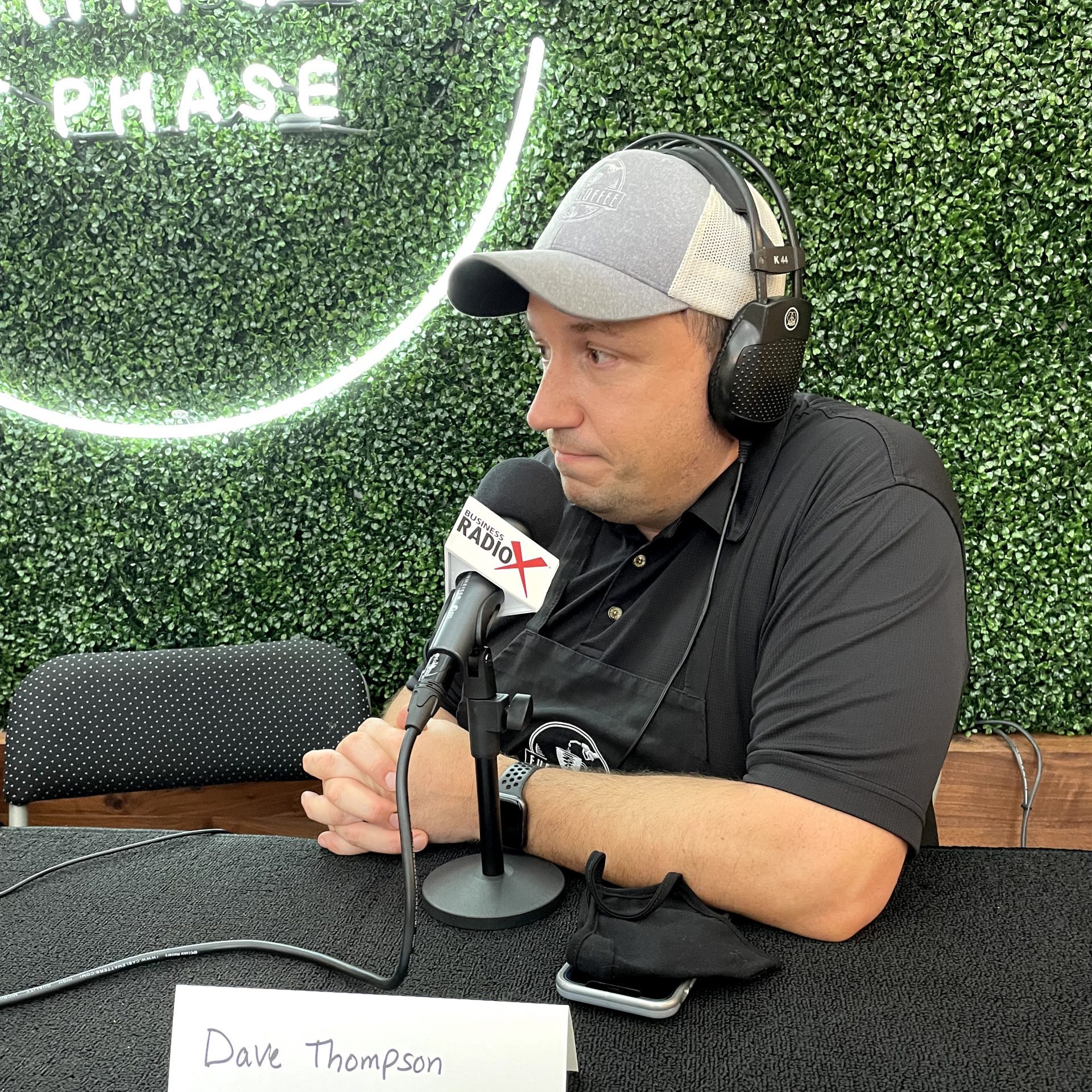
Stone Payton: [00:00:23] And we are back broadcasting live from code launch Atlanta twenty twenty one from the beautiful legacy theater out here in Alpharetta. We have had some marvelous conversations and we’ve had some terrific food. We had an opportunity just a few moments ago to meet this gentleman, and we just had to get him on air. Please join me in welcoming to the broadcast with Fuel Coffee Cafe. Mr. Dave Thompson. How are you, man?
Dave Thompson: [00:00:51] I’m doing well. Thank you. Thank you so much for having me on.
Lee Kantor: [00:00:54] So how did you kind of hear about code launch?
Dave Thompson: [00:00:58] So Scott McMichael actually is a regular at Fuel Coffee Cafe, and him and I got to chat in one day and he said, hey, man, we’re going to have a cool hackathon. Come to Alpharetta. You want to be a part of it. And I jumped in with both feet with him and him, and I started discussing what it would look like and what he wanted to see out of us. And we were able to take some of our menu items and kind of evolve them into what he was looking for, for some small bites. But, you know, still held true to the fuel coffee menu.
Lee Kantor: [00:01:26] So Teal Coffee is an actual cafe here in Alpharetta. And but you do you do any other catering or this kind of special event? You do some catering as well?
Dave Thompson: [00:01:35] Yes, we do breakfast and lunch all day in the shop and we take our menu and we kind of evolved into a eight to 10, 12 to 15, 15 to 20 person catering packs where we can accommodate coffee and pastries, coffee and breakfast, coffee and lunch. However you’d like us to say, you can do
Lee Kantor: [00:01:52] Any any event. Time is that’s relevant. You have you have a service that can accommodate that.
Dave Thompson: [00:01:58] Yeah. Yeah, we can do just about anything you’re looking for, whether in the cafe or in your residence or business.
Lee Kantor: [00:02:04] Now to talk about the history of the cafe, I mean, you decided to do this during an interesting time, a chaotic time, and then you’re it sounds like you’re really making a good go at it. So you got things are pretty rocking and rolling.
Dave Thompson: [00:02:18] Yeah. So, I mean, I’ve been in the restaurant industry a little over 20 years and through the pandemic, struggled just like most people did. And the frustrations of some of the things that, you know, corporations were doing during the pandemic kind of got my my wife and I thinking about what we could do as an independent coffee shop. So we decided that we were going to, you know, throw our hat in the ring and get together. And we we created a menu. Angela did some great work with reaching out to some local roasters. And we got a blend of coffee that we use exclusively in the shop. And we decided to to give it a go. March of this year. And things have been going pretty well for us. And we’re excited. We got a great community in Alpharetta and we’re we’re happy to be a part of it.
Lee Kantor: [00:03:01] So now what’s it like when you’re kind of you’re the entrepreneur and a lot of the folks here at code launch are entrepreneurs trying to figure things out. How do you take kind of a coffee shop concept and then say, OK, how can we squeeze the most juice out of this? Where where are the opportunities? How do how do you kind of go about kind of the ideation of this? You know, coffee is everywhere, but it’s also wherever it is, you want to make it special and stand out.
Dave Thompson: [00:03:27] There aren’t 100 percent. So, honestly, a lot of it is trial and error, but the real root of the business is taking care of people. So, you know, you have to have a good product. If you put a good product out there, people will come and they’ll find it. But the experience that people want to have, whether it’s in a coffee shop or a restaurant or whatever it may be, the experience is going to bring someone back. So if you can create an atmosphere that someone, you know, the welcoming greet, making sure that a guest feels like they’re walking into a family member’s house, taking care of them, you know, we have quite a few regulars, even in the five months that we’ve been open that have been coming back and getting to know them, getting to learn about them and their families and, you know, their children and what they have going on in their lives, just creating that experience. But, you know, that’s that’s the biggest part. You know, if if you can create an experience for someone and you have something good to offer them as well, that’s how you build a good brand right there.
Lee Kantor: [00:04:22] So now how did kind of the the taste and flavor component come in? You mentioned you have a lot of experience in the, you know, industry, but how did you kind of land on, OK, this is the signature fuel taste and this is kind of the products and kind of look and feel of what we’re going to be.
Dave Thompson: [00:04:40] So we drank a lot of coffee. My wife and I, we worked with our roaster to to find the right blend. And there’s a there’s a wide spectrum of coffee that you can have out there, mediums and darks and different types of blends in, different types of roasts. And even the beans, you know, are make a huge difference in what the what the coffee is going to taste like. So it was, again, a lot of trial and error. We tasted a lot of coffee. Angela did an amazing job working with our roaster. We have a medium to dark roast blend. It’s about a 60-40 blend. And she worked with him and ate all this. Take a little thisway, make sure it’s like this. And, you know, she explained what she wanted and they both got to where it is now. And that’s that. It was the. Probably the toughest part of of opening the business was deciding on the coffee and, you know, you want to have something that you like in there, but you also want to have something that resonates with everyone else.
Lee Kantor: [00:05:32] And then what about the menu?
Dave Thompson: [00:05:34] The menus. All me I’m a I’m a foodie. I love food. I love creating with food. And, you know, just experiences a lot of the things that are on our menu are things that I love, but also that that translate well. We actually put an avocado toast on the menu, and I really had no idea what avocado toast was. But I tried sample and some I did a few different things and I grew to love it. So it’s just, you know, it’s knowing what is relevant and what is good. And we got a good combination of both out there.
Lee Kantor: [00:06:05] So now you said it’s only been five or six months now. How is it going as planned? Is this is it as rewarding as you anticipated? Like what what’s the what’s been like for you?
Dave Thompson: [00:06:16] It’s actually been a little bit better than expected. You know, coming off the back end of Covid and the uncertainty of what that brings and even the uncertainty of what is to come. Like I said, the community has been very welcoming for us and we have exceeded our expectations to this point. So, you know, we’re we’re looking forward to the next five months and hopefully the next five years and hopefully a few more shops down the road as well.
Lee Kantor: [00:06:40] So now is the goal to ultimately franchise or is it always going to be owner operated? What are you looking at as kind of the road map?
Dave Thompson: [00:06:47] So we really haven’t looked at far into the future. I know. I’d like to get to 10 café’s owner operated. And, you know, if we’re at 10, I don’t know how much I can do more than that by myself. So at that point, it’s a possibility to look into the franchising aspect or maybe even, you know, a different avenue at that point. But but I know I can handle 10 in previous lives. I’ve had multiunit operator experience and and I’ve gotten up to as many as 16 restaurants at one time. And that was way too much. But I know 10 is a good solid number, a manageable number. So when I get to 10, I’ll probably have a different answer for you. But but right now, it’s going to be owner operated.
Lee Kantor: [00:07:26] And then where is this location?
Lee Kantor: [00:07:28] So we’re in Alpharetta. We’re just south of Wynwood Parkway on Main Street. We’re located at 800 North Main, and we’re in Suite 110. We are directly next to Compania Italian Restaurant.
Lee Kantor: [00:07:38] And then the website
Dave Thompson: [00:07:40] Is fuel atel dot com.
Lee Kantor: [00:07:42] And can you buy the coffee online or is it only that the only place to get it is if you physically go in?
Dave Thompson: [00:07:47] No, you can you can buy online and we’ll ship beans to you. And you can also order online ahead and come pick up in the in the shop at full at Alcom.
Stone Payton: [00:07:56] Well, I love it, man. Keep up the good work. We’re going to continue to follow this story. And we have a studio here now for an and not not just down the street on one word from him inside a Renaissance bank. And so I know where that is. Yeah. So we visit there from time to time. So we’re going to continue to follow your story. It’s one. What an exciting time for you, man.
Dave Thompson: [00:08:14] Yes, sir. I appreciate it. Thank you. Yes, sir.
Stone Payton: [00:08:16] We sure appreciate you joining us one more time. Points of contact, Web site, email, whatever you think is appropriate.
Dave Thompson: [00:08:21] So it’s fuel at Telcom. You can email me personally a Dave add fuel at elcome or you can call the shop six seven eight eight six one six nine one zero. So love to hear you. And please give us a call and we’ll take great care of you.
Stone Payton: [00:08:36] You got it, man. All right. We’ll be back in a few from code launch Atlanta. Twenty twenty one.
This transcript is machine transcribed by Sonix
Intro: [00:00:07] Broadcasting live from the beautiful legacy theater in Alpharetta, Georgia, for code launch Atlanta, 2021. It’s time for Atlanta Business Radio. Now here’s your host.
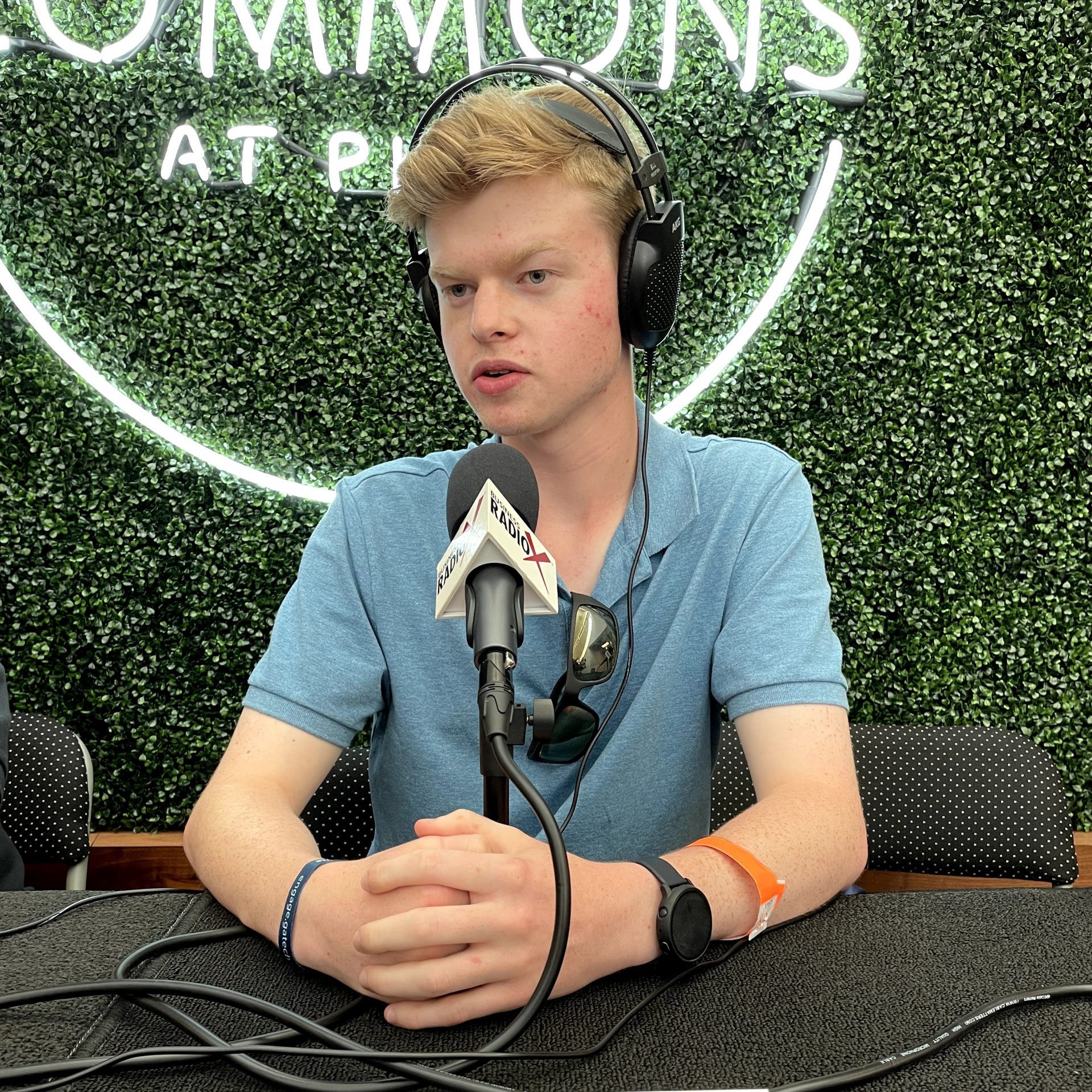
Stone Payton: [00:00:24] And we are back with code launch Atlanta twenty twenty one broadcasting live Lee Kantor Stone Payton here with you with the Business RadioX Network. Next up on today’s show, please join me in welcoming to the broadcast with hit snag dot com. Mr. Aiden Pratt. Welcome to the show, man. Glad to be
Aidan Pratt: [00:00:43] Here.
Lee Kantor: [00:00:44] Well, I’m excited to learn what you’re up to. Tell us about Hit Snag.
Aidan Pratt: [00:00:47] So hit snag basically lets your productivity tools not be a drag. So all you need. Well, you use email a lot, right? Like you’re always in and out. So a lot of people have to deal with, you know, productivity tools such as Knowshon, Trello or Google Docs. And they’re doing with sport tickets, action items that just pop up in their email. And we just let you put that data where it needs to be for like a team or, you know, you need to go back to it later and get through all these tattoos.
Lee Kantor: [00:01:12] So what was the genesis of the idea?
Aidan Pratt: [00:01:15] I just do my email myself a lot.
Lee Kantor: [00:01:18] So you know yourself a lot. And you’re like, I wish this would just go in there, just like just go to
Aidan Pratt: [00:01:23] The right spot.
Lee Kantor: [00:01:24] So then you created a code that does that automatically? That was. Yes, sir. And then are you the coder or do you have a tech person on the team?
Aidan Pratt: [00:01:35] So there were originally two founders, and now he’s going to Stanford, but now manning the project. So I was originally CEO and I still am CEO.
Lee Kantor: [00:01:42] So now what stage are you at? Is this thing out there in the wild or are you still testing it?
Aidan Pratt: [00:01:48] So it’s actually out there in the world, and you can use it today. It’s free at his noncom. And we have a thousand people using it as we speak. I think it’s about thirteen hundred.
Lee Kantor: [00:01:56] Now, what’s the monetization behind it?
Aidan Pratt: [00:01:59] So currently we have a couple of paid users and we’re trying to increase engagement and see what our free users like the most and then eventually monetize those features by the end of the year.
Lee Kantor: [00:02:07] Now, is this the first app you’ve ever created?
Aidan Pratt: [00:02:11] No, not by a long shot. I’ve been doing apps since I was nine. I was I was crazy addicted to this stuff.
Lee Kantor: [00:02:16] So then how did you kind of decide when to bail on one and move on to the next one?
Aidan Pratt: [00:02:22] So it really depended on how much I learned. So my first company, I slowly realized it wasn’t solving a market need. Then the second one, I was like, the monetization problem. You know, like all of these things kind of confusing. And then this one, it just depends on how much I learn and like the viability. So say I had a Chrome extension, right. There is one called Pop Hertel that helps you deal with, you know, like all of these pop ups that happened. It was basically a privacy based version of it. There was one called Poper Blocker that really took data from users, like they took keystrokes. So it’s very, very confusing to navigate that space. And some users didn’t know that their data was compromised in that process. So Popaditch was to solve that. Eventually, I decided to move on to hit a snag, because it seemed like it had a greater market opportunity.
Lee Kantor: [00:03:04] So now everything you’re doing is, is this to like find the, you know, the lottery ticket winner that this makes you millions of dollars?
Aidan Pratt: [00:03:12] I know it’s really to be useful to people. So I like being useful. I really, really like making things people want. Ever since a little kid, I’ve just built things that like help solve the problems that I had myself. So I’m really, really looking into building something that can go big, but also just being able to go towards something that drives like a product market fit.
Lee Kantor: [00:03:31] So now, when you were deciding where to go to school, why did you pick Georgia Tech?
Aidan Pratt: [00:03:36] Oh, it was my first choice, like hands down. So I grew up with tech. I’ve ever apparently one of my friends hit me up and asked if I got in from like, you know, like fourth grade. And I’m like, wow, I really plan back then to now. I did not realize that. So it was a stressful senior year. But honestly, I love this place for the startup energy. You know, Chris Clough’s, he’s a legend. All these startups like Staud Gimme Vending, like all of these places, like I’ve met some of these founders and they are like, it’s exactly where I want to be. Like startups really help me explore every facet of like the way things work. And that’s just how I drive my knowledge.
Lee Kantor: [00:04:11] So now any advice for young people out there who maybe they thought, I’m going to get a real job, but they decided, you know, they are on the fence about entrepreneurship because, you know, it’s an age where you can’t world as an entrepreneur.
Aidan Pratt: [00:04:24] Oh, yeah. So first things first. I would usually just say if you’re in college or you’re young, you have plenty of time. Like usually people are worried about, oh, I got to go get that internship or, oh, I got to go get this specific job. But there was one guy who’s a senior at Tech. Well, I’m literally trying to convince as we speak to start his own startup and come to the fellowship program. I was in this program called the Startup Exchange Fellowship, helped me launch a hit snag almost seven months ago. Very nice people. I was the only high schooler in that program. Me and my co-founder, I was for college, only college students at Georgia Tech. And yeah, I’m just like, let’s test that. I’m just gonna knock on the door, say hi. I knew the guy in charge of a club. I’m like, I love this place. Like and he’s like, I don’t know, man, but go talk to this guy. And then I went to talk to that guy and then I went to another guy. And then somehow here we are and we actually won the program. So for any young founder just thinking, just remember that anything is possible. Like, I know it seems so cliche, but honestly, just do the things you care about and then removed the word can’t from your vocab. And you actually get to where you want to go.
Lee Kantor: [00:05:25] So now what brings you to code launch?
Aidan Pratt: [00:05:27] Honestly, Abass, we just we just got here. So we just got on this bus. I try to convince my roommate. His name is Ahmed Qasab. And I met this legend over here who’s just sent it over there. But yeah, so really just helping other Georgia Tech students find entrepreneurship is a huge thing. And also networking, because, you know, my co-founder just dropped because he’s headed to Stanford from hit snag. So right now I’m just like looking around for, you know, other co-founders, really just getting to know the the ecosystem. A minute tech. I’ve known it for many years, but, you know, I was there on campus for like, you know, like eight years, you know, walking around startups. And they’re like, by the way, do you want to go here for college? And like, heck, yeah. So, you know, now here we are and just chillin here and sitting with you guys.
Lee Kantor: [00:06:12] This is awesome, by the way. So now at code launch, what’s your objective to get the most out of this event?
Aidan Pratt: [00:06:16] Honestly, just look around and have fun. There’s some tech students that I’m with trying to build some friendships and then also look at, you know, the Alpharetta tech scene. You know, a little bit of that. I’ve always been interested. I was actually the youngest member at the Atlantic College for a while. Like, I pitched. And it’s you know, it’s you know, you’ve grown when you look back and cringe at what you’ve done some times, like the first pitch at the Atlantic College really did not know what I was doing. And I was like very quiet about it. My idea is safeguarding it. And I’m like, yeah, no, now let’s fix that and actually like be open, because then no one told me that, like, I need my baby to be bullied, like I need to know, like what’s wrong with it? Is this actually hair on fire problem? So just getting up here, seeing what the tech scene is like, a piercing, like awesome things like what you guys are doing.
Lee Kantor: [00:06:58] So now if somebody wants to learn more about hit snag, what’s the best way?
Aidan Pratt: [00:07:01] Hits NASSCOM. That’s HIIT as an ag NORCOM. Basically, it’s free right now. Feel free to go and just sign up yourselves if you use any of that stuff.
Stone Payton: [00:07:11] Well, thanks for joining us, man. Keep up the good work for us. All right. We’ll be back in a few with code launch Atlanta. Twenty twenty one.

This transcript is machine transcribed by Sonix
Intro: [00:00:07] Broadcasting live from the beautiful legacy theater in Alpharetta, Georgia, for code launch Atlanta, 2021. It’s time for Atlanta Business Radio. Now here’s your host.
Stone Payton: [00:00:23] Welcome the code launch Atlanta twenty twenty one broadcasting live here from the beautiful legacy theater at this phase, is that what this place is called?
Lee Kantor: [00:00:33] Phase events,
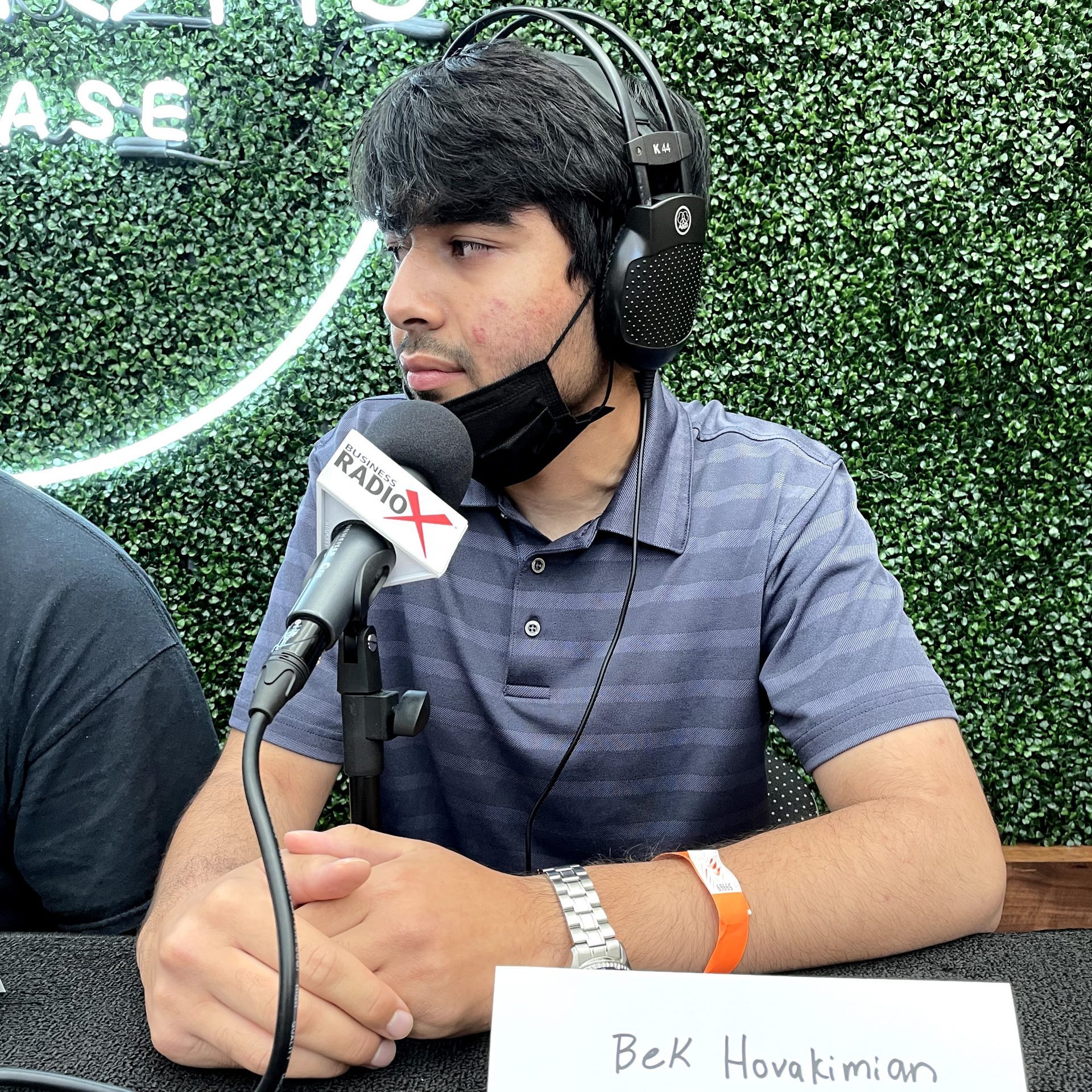
Stone Payton: [00:00:34] Phase events out here now Faretta. We’ve already made some new friends, caught up with some old ones. Folks are starting to file into the theater. We don’t want to keep these two young gentlemen too long, but we just had to visit with them. Please join me in welcoming to the broadcast with eight oh eight Wave Pobby and back. How are you
Abhinav Goyal: [00:00:55] Doing? Well, thank you so much for having us today. We really appreciate it. Well, we’re
Lee Kantor: [00:00:58] Excited to learn what you’re about to tell us about either way, way of how you serve in folks.
Abhinav Goyal: [00:01:03] Yeah. So A2A Wave is a platform where musicians can basically find recording studios in their area and book our request studio time. So initially we saw that the problem was musicians. They weren’t really able to find the right studio where they can make their music and make their music career. So this is why we created the app, basically.
Lee Kantor: [00:01:21] So you’re here by Georgia Tech students right now?
Abhinav Goyal: [00:01:25] Yes, we’re both fourth year undergraduate students. See us students.
Speaker3: [00:01:28] So how did you guys connect together? Were you friends? Like, what are you both musicians like? Did you have this problem? Like what’s the genesis of the idea?
Abhinav Goyal: [00:01:38] So originally from Boston, before the second Marosi from Chicago. And fortunately, we were able to connect through. We lived in the same dorm freshman year, so we were able to connect that way. And we just clicked on the spot and we just went through like six, seven different ideas freshman year. And we just at the end of the year was finalize this idea, like, OK, this is the one we’re going to work on. It’s like the next, you know, the rest of our life, basically. So.
Lee Kantor: [00:02:01] So where are you musicians? Are you just now that musicians would have this challenge?
Abhinav Goyal: [00:02:05] Yeah. So we decide that musicians have this problem. We were of like, what are some big problems? And we just saw that this was an issue. But yeah, we’re we’re not like producers are artists like ourselves. But, you know, I played a couple of instruments.
Bek Hovakimian: [00:02:19] Yep. And Obie was an executive producer for a on the track, and I worked at the radio station Hirotec.
Lee Kantor: [00:02:27] And. OK, so you’re a little familiar with kind of the music industry and you knew that this this could be a problem. People told you, hey, it’s hard to find studio time or I can’t get the right studio for what I need. So people were voicing that challenge to you? Yes, definitely. And then OK, so now you have this concept. What were the first steps to kind of validate this?
Abhinav Goyal: [00:02:48] So the first step was to come up with like different hypotheses. And so really go in the community and talk to customers and see like if they actually have this problem. And, you know, we validated all our hypotheses and they’re like, OK, yeah, I have, you know, where they were coming to us to see, OK, what what studios can I book? You know, what are the right engineers for me to work with? And, you know, at one point it became so much like, OK, we have to build an app to where they can do this themselves and they can, you know, see everything about that studio and then look at themselves as well.
Stone Payton: [00:03:15] Do do you hear the wisdom and what’s this guy saying? And I know people who are 55, 60 years old, who skip this whole step of customer discovery, idea validation, getting some real data from the marketplace. And here are these two young men. That was your that’s the first thing you decided to do. Did you get some direction to do that or did that just come to you instinctively?
Abhinav Goyal: [00:03:38] Oh, we definitely got some direction. So, yeah, being a it’s like there’s a great startup culture at Georgia Tech that they’ve been developing for so many years. If you heard of of the credit X program, Edgeware, it’s actually went through like Startup Lab. I did a prototype. And then the final stage, like that’s the first summer that we did this company. We actually got to step into the accelerator, Scottrade, that created Exide. So a lot of the coaches, a lot of the mentors, the Jerzyk, they really helped us really get that initial customer discovery phase off the ground, which has really helped us with the foundation of our business.
Lee Kantor: [00:04:09] Now, in any of these marketplace apps, it’s a chicken and egg. You need to have all of the studios in there and you have to have the users in there. How did you go about kind of building out the marketplace?
Bek Hovakimian: [00:04:21] That’s a great question. So right now, we’re about twenty five studios and about a thousand customers in and in the past, we’ve held studio sessions at Patchwork and we’ve done events in several different studios. So that was our initial core base building our brand, and now we’re ready to launch it publicly.
Lee Kantor: [00:04:38] So now how does the monetization, who pays or do you get a piece of any transaction that occurs? Like what’s the monetization?
Bek Hovakimian: [00:04:49] So right now, the way it works is we have a free model and a premium model on the studio side. So for example, you premium features in the studio, how many rooms you can list. And that ranges from fifty to two hundred dollars a month.
Lee Kantor: [00:05:02] And so that’s how you plan to monetize this through the studios.
Abhinav Goyal: [00:05:06] Yes, with a subscription process as well.
Lee Kantor: [00:05:08] So it’s a place for them to promote the studio so they can sell unused time.
Abhinav Goyal: [00:05:13] Yes. So we’ll have advanced booking management software that they can use to find and manage their clients as well.
Lee Kantor: [00:05:19] And so then the client can book the time and pay right there on the app.
Abhinav Goyal: [00:05:24] Yes. So like some studios, they prefer to prescreen so that they’ll be able to funnel in requests and then they’ll be like, OK, we want this Kliner, we don’t want this client. And then the client can essentially pay for the booking. Right.
Lee Kantor: [00:05:35] So what do you need more of right now?
Abhinav Goyal: [00:05:38] Oh, we don’t believe there’s any obstacles stopping us from going. So like our next steps. Right now, we’re looking to build an advisory team. That’s our next step. And then just building on some more features, more features that address the problems that the studios have. And then at that point is just about marketing and sales.
Lee Kantor: [00:05:53] So now how did you kind of arrive at the price point for the studios?
Bek Hovakimian: [00:05:58] That’s something we’re still working on, but we’ve seen what really provides value and we’re really trying to mimic what’s really going to get the best out of a studio and what they need,
Lee Kantor: [00:06:06] Because once the person box at the studio, that’s that person could be a client for a long time.
Bek Hovakimian: [00:06:12] Exactly. A lifetime customer.
Lee Kantor: [00:06:14] So do you have an idea of what that values or to a studio?
Bek Hovakimian: [00:06:19] We just had a customer book at AEOI Digital, and he was a happy returning customer. And let’s just say an average booking can be anywhere between two hundred to a thousand dollars. And you can book maybe five, 20 times a year.
Lee Kantor: [00:06:32] Right. So that starts adding up. And if you’re in a place where that started. I hope you’re getting a piece of that action.
Bek Hovakimian: [00:06:39] Absolutely.
Lee Kantor: [00:06:41] So what are you looking for funding right now or this thing? You’re kind of bootstrapping this until you get a few more clients.
Abhinav Goyal: [00:06:48] So currently we’re looking to before we go. So like an actual seed or presedo or a series around. We’re looking to build a advisory team of up to five advisors and then utilizing that leverage that we have to get possibly a higher valuation or more money when we do appreciate our seed round.
Lee Kantor: [00:07:04] Now, are you finding that that’s the case or are you hearing that in the startup ecosystem? Because there was a time where the people were trying to get funding almost immediately, and now it seems like people are trying to bootstrap and kind of get as much runway as possible before they start taking funding so they don’t dilute as much. Are you finding that to be the case?
Abhinav Goyal: [00:07:23] I think ownership has become a really big thing the last last couple of years with Saab’s and the startup founders. And I think that they want to have as much leverage as possible before and have as much product market fit as well before actually going getting that funding. Right.
Lee Kantor: [00:07:37] So then it’s kind of more on the startup to start selling some stuff. Yes. Now, how good is Georgia Tech and teaching you how to sell?
Bek Hovakimian: [00:07:48] It’s great we have a great team of different advisers and staff at Georgia Tech who really nail down the process of customer discovery. One of the biggest things we’re working on is really trying to get that product market fit, really validate if it’s a real problem and solve their needs.
Lee Kantor: [00:08:03] And then how many studios are there, I guess, in the world. Right. This things to the world. It’s not just for Atlanta or America.
Abhinav Goyal: [00:08:11] So according to like U.S. Census, there’s roughly 7500 or two thousand CDOs recording studios in America. And then in the in the world, we estimate to be about ten thousand. But that doesn’t really include like home studios, which is another aspect to it as well.
Lee Kantor: [00:08:26] Good stuff. Well, congratulations on all the success. If somebody wants to check out the site or app, what’s the best coordinates to do that?
Bek Hovakimian: [00:08:34] You can find us on Instagram at at the A2A wave. And the website is eight 08, the bio.
Lee Kantor: [00:08:41] Good stuff.
Stone Payton: [00:08:42] All right. Thank you so much. We’ll be back in a few from code launch Atlanta. Twenty twenty one.
This transcript is machine transcribed by Sonix
Intro: [00:00:07] Broadcasting live from the beautiful legacy theater in Alpharetta, Georgia, for code launch Atlanta, 2021. It’s time for Atlanta Business Radio. Now here’s your host.
Stone Payton: [00:00:23] And we are back broadcasting live here in total launch. Twenty twenty one Lee Kantor Stone Payton here with you. And the holes are absolutely teeming. We’ve got tables with food. We’ve got tables with Drake. People are starting to move to the to the hall to hear the presentations. And now it is my distinct pleasure to introduce to the program with Glendon Plaza, Miss Lily Hagan. How are you?
Lily Hagen: [00:00:49] Hi. I’m really well. Thank you so much for having me.
Lee Kantor: [00:00:52] Well, I’m excited to learn what you’re up to tell us about Linga Plaza, how you serve house.
Lily Hagen: [00:00:57] So Lango Plaza is a game inside and like language and cultural platform for kids, four to 12. So what we do is are what we call the kids are immersed in what we called the plaza experience for twenty five minutes. They’re exposed to this creative space and they get to learn a language. In this case, right now, we have Spanish through gamification, our characters, original audio content. But most importantly, they are have a one to one experience, whereas native speaker tutor.
Lee Kantor: [00:01:30] So what was the genesis of the idea?
Lily Hagen: [00:01:33] So I’m actually from Colombia. So English is my second language. I, I originally speak Spanish and I understand that benefit and also how overwhelming it can be to learn a second language, as well as I am also a mother and I’m raising two bicultural kids. And, you know, Spanish happens to be the Minori linguist. So I do understand the struggles and the lack of accessibility of language learning.
Lee Kantor: [00:02:02] So now what brings you to code launch?
Lily Hagen: [00:02:05] I was lucky enough to meet the founder of one of the startups workshops. That was part of a while back. And I was excited to be invited and just present and just bring Olingo Plaza to the world.
Lee Kantor: [00:02:19] So what was it like kind of having an idea then taking it, you know, and learning how to pitch and do all this stuff? You know, because that’s a different world for most people.
Lily Hagen: [00:02:27] One hundred percent. I mean, you’re talking about to someone who I consider myself a very creative person, and I’m a go getter. And I had the pain. I thought, you know what, this works. Why not? Let’s go for it. Obviously not knowing everything and the learning journey of, you know, of a start up in entrepreneurship. So it’s been a learning journey, but it’s a very exciting and it’s something that I’m able to provide to my audience as well. You know, that’s the biggest thing. People that have my pain are able to come back and say, oh, my gosh, I love what you doing, my kids love. So that’s the rewarding part of all this,
Lee Kantor: [00:03:06] Because I had to learn how to code. Like, where are you, ACOTA?
Lily Hagen: [00:03:09] I am not the technical founder. I would say I’m very tech savvy, but I am not a technical founder. I had some developers. I would say I bring the creative.
Stone Payton: [00:03:22] That’s a great line. I want to start stating that at work in our business. I am not a technical founder, so I don’t talk to someone else.
Lee Kantor: [00:03:29] So how did you find the technical founder to do kind of the way you envisioned?
Lily Hagen: [00:03:35] So that’s that’s a funny question, because that’s what I say. I’m a go getter, and I just happened to have an idea. And I knew people from Columbia and I look for Agencys the best of them, and they happen to, you know, grasp my idea from the name to branding to, you know, from the very beginning. And they just knew what I wanted.
Lee Kantor: [00:03:56] Wow. So, yeah, it’s pretty fortunate to be able to partner with something that early on in the idea process.
Lily Hagen: [00:04:02] Yes. One hundred percent. I am very lucky now that I understand all the Procyon, I, I do understand how lucky you get the stage and say you
Lee Kantor: [00:04:12] Have an agency to work with that’s taking your idea and bringing it to life. What stage are you at? Do you have a beta? Like, where are you at in the product development?
Lily Hagen: [00:04:23] So we launched our MVP in January and we had our first ping cohort for the last few months. Now we’re in the process of pretty much killing it and just targeting our audience after all the feedback that we got and, you know, being in constant communication with the audience that we already have.
Lee Kantor: [00:04:42] So what was it like the first time that some stranger came to the app and then signed on and started using it? You must want so excited.
Lily Hagen: [00:04:49] Oh, my gosh. Yes, it was really exciting. I had out actually an influencer who started following us, and that’s how we got our first customers. And I’m going to tell you that Stripp notification was the most exciting, intimidating institution I’ve ever had. So I still remember where I was at.
Lee Kantor: [00:05:11] Right. So you probably got like tears in goosebumps, right? That’s got me. Everything’s real
Lily Hagen: [00:05:15] Now. Yes, it becomes very real. It was exciting and nerve wracking at the same time, you know, having to. So last year, while you’ve been working on Harvard and this is it like this is what you know, it’s going to work or not, I guess.
Lee Kantor: [00:05:29] So then how did it how did you start kind of having conversations with investors and getting ready to, you know, do the work to scale it and get more funding and things like that?
Lily Hagen: [00:05:40] So we’re actually we have been bootstrapping at the moment and we’re getting ready to fundraise. We want to try it out first after we learned from our audience. But, you know, I’ve been networking for the longest time. Once I knew that was very vital. I started doing it and just started talking. Even this dog, even though I’m not fundraising at the moment. You know, it’s important to have those relationships, so to tell you, true clubhouse has been a big one for me. Really?
Lee Kantor: [00:06:07] Yes. So you’re really leveraging that platform to get in front of the right people to at least get them a chance to sample it and see it in action?
Lily Hagen: [00:06:15] One hundred percent, in fact, the workshop that I was part of, and that’s how I met Jason. I heard of it through Club House, and he was valved. He was one of the speakers. And, you know, now I’m here. So, yes, it definitely works.
Lee Kantor: [00:06:30] So now are you here from Atlanta or are you from somewhere else?
Lily Hagen: [00:06:33] I reside in Atlanta. Yes.
Lee Kantor: [00:06:36] So you’re from Atlanta. And then you found Jason just kind of randomly on the Internet and clubhouse, and then you decided to come to the event and you have a table. Are you one of the finalists?
Lily Hagen: [00:06:46] So, no, I’m not a fan of the finalists. So why would we actually find someone else is called Camp Vens? And then Jason was one of the speakers for that workshop for startups, and he was able to introduce, you know, this accelerate and, you know, the amazing event. So he they contacted me and, you know, they were going to be here. So I was last week, I was able to get the email and, you know, I’ll set mine up. I’m going to be there.
Lee Kantor: [00:07:11] So now what what are you looking to get out of cold launch here tonight? Well, my
Lily Hagen: [00:07:16] Biggest goal is to be able to network and network. And, you know, I’ve been able to get in contact with some schools, actually, one of the owners from one preschool here in Atlanta. So that was you know, that was amazing. And some people stop by by my birth and just ask questions. So, you know, the most the most exposure that you can get, the better at, especially at this stage
Lee Kantor: [00:07:36] Said now the events go to a good start if somebody wants to learn more about what you’re up to. What’s the website? What’s the best way to connect with you?
Lily Hagen: [00:07:44] One hundred percent. So my website Slingo Plaza dot com.
Lee Kantor: [00:07:49] Flinger Plaza dot com. And then is there an app available to the app store where like where are you from that standpoint?
Lily Hagen: [00:07:55] So we currently have a Web app. At the moment I’m looking into one chain between I say the next week or so. Ah. And just go live with our mobile and tablet app.
Lee Kantor: [00:08:07] And then so is the website the best way to connect or on other social platforms?
Lily Hagen: [00:08:12] Yes, but that is a website. You guys can find me on LinkedIn or Instagram. I’m on Twitter. I’m on clubhouse, pretty much every social media platform.
Stone Payton: [00:08:21] All right. We’re going to turn you loose. Let’s go hear some pitches. We’ll be back in a few with Kirtland’s atlatl. Twenty twenty one.
Visit CodeLaunch at https://codelaunch.com/
This transcript is machine transcribed by Sonix
Intro: [00:00:07] Broadcasting live from the beautiful legacy theater in Alpharetta, Georgia, for code launch Atlanta, 2021. It’s time for Atlanta Business Radio. Now here’s your host.
Stone Payton: [00:00:23] And we are broadcasting live from coatless Atlanta twenty twenty one leader, what a great way to kick this thing off. Please join me in welcoming to the broadcast Jason Taylor and Raheel Malik. How are you?
Jason Taylor: [00:00:38] Excellent. We’re excited to get this thing going in about an hour.
Raheel Malik: [00:00:42] Code launch date code launch day.
Lee Kantor: [00:00:44] So tell us a little bit about the history of Covid launch. What was kind of the catalyst for the idea?
Jason Taylor: [00:00:50] Well, the catalyst for the idea was I was running a software development consultancy in North Texas and. We discovered that in our startup ecosystem, there were a whole bunch of really great startup founders whose progress had kind of come to a halt because of the technology development part is expensive and difficult to do. Right. And we discovered that talented software developers can jump in a startups product and fix problems that add features, add polish and elevate that product timeline and accelerate the startup toward MVP and toward funding.
Lee Kantor: [00:01:31] So then you had that concept. You were like, hey, there’s definitely a need for an ecosystem that’s more symbiotic and everybody’s helping each other that if one person sounds, they have a place to jump off to. And then how did the actual event of code launch? You know, once you know that, how did you say, OK, code launches the solution to this?
Jason Taylor: [00:01:51] Well, we start with like six week curation process, and it’s kind of a part of us deciding who we like and then also part us educating some of the more inexperienced applicants that are in our group. And so we’re trying to sort those out and who is really a startup that we believe in and a team that we believe in. And is their product something that we can rapidly improve because our professionals engaged with them for two full days, 12 hours a day, back to back. So but it’s only so much you can accomplish in 24 hours. And so once we find that those groups, we realized these groups need attention now that we have accelerated their product, we need to bring the VC and Angel community and the whole startup community in to see how much further they are and how much more investable they are. So the event is a showcase and it also brings all the community players together, and it just adds to the connectivity of it.
Lee Kantor: [00:02:51] Now, when you first did it, did you find that after the event there were kind of these luvs connections and this ability to partner and collaborate and maybe kind of grow in ways that you didn’t anticipate when you kind of had it at the idea stage?
Jason Taylor: [00:03:07] Well, this is the ninth event, and it ran annually for eight years consecutive in North Texas before we decided to expand it all around the country and come to Atlanta first. And in the first two or three years, it was an idea that we were trying to get people to believe in and people that come to. And I could honestly answer that question, say I don’t know how much incredible benefit the startups got or the networking was at the first two or three. But we stuck with it. And more and more people kept coming in that were actually important investors saying, this is really cool what you’re doing. How can I help you make this bigger? How can I help you keep doing it? And around you, four or five, six, seven, eight. Many of the startups went on to raise serious funding after this acceleration process. And yeah, so now I would say it’s a very powerful networking event, especially in the startup community. And also a lot of our startups go on to achieve really great things.
Lee Kantor: [00:04:09] So now you’re getting a lot of attention from investors that say, hey, this is kind of a must attend event. This is a place where I have to be because they’re really cultivating, you know, kind of the next generation of entrepreneurs.
Jason Taylor: [00:04:23] Well, the smart ones. So I really do think that it’s going to take time for the the real sophisticated. Business side of venture capital funding and firms and funds to actually realize how powerful Covid launch is, but it’s going to happen eventually and we’re going to take this thing all around the country. My motto that I have is that, you know, venture capitalists and angels are always looking for something called deal flow. And what that means is just opportunities to talk to startups and consider them. And my motto is, tomorrow’s deal flow starts at today’s Covid launch.
Lee Kantor: [00:05:03] There you go. So now we’re here to talk about your kind of journey with Covid launch.
Raheel Malik: [00:05:09] Yeah, absolutely. Thank you. So, Jason, I’ve been friends for quite some time, and I was actually interviewing for a job. And I had the idea to kind of go unconventional with my interview process. And I built a pitch deck on myself as my resume. And I go, I like it, and I go, Jason, it’s something I want to run by it. Like obviously I know Jason Taylor is, but in this role, he’s my friend. I drink cold beers with. Right. He’s not, you know, business associate or anything. I know, Taylor, I need it. I’m going to want to show you something. I’m thinking about doing this job. You. All right. So I show him and he’s captivated, he’s like, you made this. Yeah. You know, Semion, I’m going to copy an awesome high praise. So you think I should do it? And he goes, yeah. Do this in the interview. Now, I didn’t get the job, but Jason then approached me and said, you should host code launch. I said, well, sure, I’ve never done anything like that before, but let’s go. Right. And as part of that process and the responsibility of being the emcee is being on that curation committee. Right. So you hear pitches and people from all different walks of life that are putting that on the line for the shot to be on the stage.
Raheel Malik: [00:06:29] Yeah. And it transformed me. Right. And I and I sat back and I looked and I go. These people are doing it. What’s my excuse? Right. They’re putting all their time, effort, energy, blood, sweat and tears into this thing. And they’re sitting here telling me about it, looking for looking for feedback, looking for, you know, comments, concerns, trying to dig holes. I go, what’s my excuse? And I’m happy to say and very proud to say that my business first and agency was launched out of code launch. Because and being in part of that selection committee, I gave some relatively brutally honest feedback, I guess I should say. And and as I was going up to approach this, this this this venture in this group to apologize, I want to apologize. They said, could we hire you guys? And and that was the beginning. And that’s how it started. And I am proud to say that I am a 100 percent a product of this environment. But but bigger than that, it’s it’s a community. Right. And it’s a community and it’s a group of people that are all in it for the same reason. Yes, of course. We all want to make millions.
Jason Taylor: [00:07:39] We want to be rich. But what really drives it home for me is
Jason Taylor: [00:07:44] We’re not alone. Right. You sit there as an entrepreneur starting out, you think,
Jason Taylor: [00:07:48] Oh, I’m crazy. Nobody believes in what I’m doing. Right. Like, you know, everybody in their mother is telling you why you shouldn’t do this. Right? How bad an idea this is. But you’re not alone,
Jason Taylor: [00:08:01] Because everybody on that stage, everybody that applied to Colman’s, hopefully all
Jason Taylor: [00:08:04] Of your listeners have that idea that they’ve been sitting on. But I mean, if this thing happens, then I’ll do it right or I’m just waiting for this perfect time. But they’ve been sitting on it for seven, eight, nine, 10 years some time and co launch launches here to connect those people with other like minded people so that we can all launch together like we’re all in this together and you are not alone. So that was the longest winded answer possible. But nobody truly believe that. And that’s and that’s why I flew halfway across the country to be part of this. And and thank you to Alpharetta, Atlanta, Georgia. Business RadioX here. Truly, it’s been an amazing experience.
Lee Kantor: [00:08:41] Now, any advice for the entrepreneur that is kind of had this on the back burner? What are some kind of direct pitch?
Jason Taylor: [00:08:49] Do it then.
Lee Kantor: [00:08:50] Let’s get some Petru advice. What are some things that are kind of do’s and don’ts in your mind that’s like, OK, they said this, that’s a red flag or I want to see more of that. This is something that’s a green light for me.
Jason Taylor: [00:09:01] No, that’s a that’s honestly the greatest question. And that is what first an agency does is, is that kind of consulting on the go to market strategy. But what we encounter a lot of times is that the pitch
Jason Taylor: [00:09:16] Is about them and their idea,
Jason Taylor: [00:09:20] As opposed to the problem that they’re solving. And people get really close to it and they just want to show up and tell you all this whiz bang, all these things. What I would say is, what’s the problem you solve and take anybody that’s ever listening on your pitch, anybody that’s ever going to see your slide deck, take them on a journey. Right. Show them what it looks like today. Whatever you’re trying to solve, this is this is transferable across all industries. What does it look like today? And then how is how does your idea dramatically impact that and taking that viewer who could be a potential customer or a client on that same journey with that? Right. You have to make it about the audience as opposed to you.
Lee Kantor: [00:10:04] So now how important in today’s world when it comes to getting investors interested, is having kind of that first customer or a sale of some size, some size? It doesn’t matter, I guess, the size, but just the fact that you sold somebody something. Is that a must have nowadays or can you still get something on a napkin idea?
Raheel Malik: [00:10:23] So I would like to jump in there. I think that for people that have been a part of a successful startup or they have some fancy pedigree from Stanford Computer Science or Harvard MBA, that of the and you know, they’ve been through an entrepreneurship program and those types people might be about. First of all, at the napkin stage, but almost nobody else’s, and there are almost nobody is in that group and a lot of people at Code Lodge certainly are not. And so we teach in lean execution model to try to help people to go get either promises to buy or actual sales. With surprisingly little effort or software development. So they can raise money later after that. Yes, definitely. Once you do have some customers, that increases your chances of being funded so many multiples, that’s not even worth trying to figure out. It’s a lot.
Lee Kantor: [00:11:22] So now let’s talk about code lines, specifically the year that Dana over the that what goes on at a code launch event?
Raheel Malik: [00:11:28] Well, code launch is the finale of a six week curation process. And so what’s here is startups that we’ve invited to just have free tables. So we try to just give free elevation to local startups that want to be a part of this. So there’s eight or ten in the startup expo that are that are not competing. They’re just startups and they’re not even she has to meet people, watch the finalists, see really good pitches, see products that have been developed and see what goes on. She’s about networking and, you know, practice their own pitch. And then you’re also going to see the four finalists who are going to compete on stage, and you’re going to see the crowd vote at the end using one of our sponsors platforms. And then we’re going to reveal who the winner is. And the winner is going to get more services from other companies to support the startup ecosystem.
Lee Kantor: [00:12:20] And that’s and that’s what the prize is, the grand prize at the end.
Raheel Malik: [00:12:24] Well, the funny thing is, all these startups that are finalists, which is for today, they have already received a two day intense try to tack us on from a professional agency like improving or like build technology group or like code authority. And so our motto is, by the time you’re on stage, you’ve already won. Everybody’s already won. Who’s a finalist at Covid launch? They’ve we’ve already accelerated their product far beyond what they ever could have with zero money. Right. So one group will win more free services than the others have already gotten. And a trophy. And the trophy is really cool. You’ll see.
Lee Kantor: [00:13:01] Now, this is just kind of turning the country right now, starting in Atlanta. What are the other markets that you’re going to do, launch code launches?
Raheel Malik: [00:13:12] Well, we’re definitely going to Houston. It’s not announced on the date yet, but it’ll be our next city after our traditional stop in Dallas, Fort Worth in November,
Jason Taylor: [00:13:20] Which is number 10, by the way.
Raheel Malik: [00:13:22] Yeah. So the 10th ever code launch will be November 17th in Dallas, Fort Worth.
Stone Payton: [00:13:26] Oh, right.
Raheel Malik: [00:13:27] Applications are actually open for that right now. So you can a startup can apply for free because we don’t charge startups any money to apply. And we don’t and we don’t take any equity. And that’s what’s really different. Coach the Coach doesn’t take money from the startups or take equity and we build their software for free.
Stone Payton: [00:13:42] Well, and since we’ve been sitting here, I’ve seen you hand out at least a dozen drink tickets. So, I mean, I think everybody wins if they ask. Well, you know, again, to Jason’s point, like on the margins that. You know, I’m a volunteer. You’re right. And I and I’m here because I believe in it. But and the same thing we shared with the finals that are on stage that, you know, come here and realize that it’s a real stage production. Right. We are doing this right. And you’re going to be on stage is that they’ve already won. Right. They’ve already won because we’ve helped them accelerate their product and they’ve already won by being here. Now, it’s about having fun and raising the awareness of the community that that that Jason has started building, that I’m piggybacked and I’m a wholehearted believer in. And it goes back to the simple fact that you’re not alone. Right. And, you know, the days of, in my opinion, humbly, but the days of Gordon Gekko and crushing my enemies and and and stomping on the competition so that I rise to the top. I’ll be honest with you, that’s not the way I want to do business. I’d rather have friends and enemies and people I can lean on because we’re all stakeholders and we all got a skin in the game here.
Jason Taylor: [00:14:49] If I help you get more listeners or entice some of your audience, you’re going to talk better about Covid launch. And everybody will say, man, OK, you got to tell me what is what is an emcee do? What what are your responsibilities? What do you got? Like a handful of jokes are going to be like Billy Crystal, if you ask me. I mean, I guess you’ll have to come to find out. Right. I mean, outside of outside of keeping this thing rolling and keeping the energy and excitement up, you know, it’s it’s it’s just in my mind as an ambassador, right. As as a as a as a true believer, as it were. Right. The what this is and what it entails and how it can help. And, you know, if I can get a platform to do that and talk about the amazing things that I see is like till he fires me or find somebody better, I’m going to run with it. You seemed like the right guy to do it, though. Jason, I think you got the right guy for the job.
Raheel Malik: [00:15:39] Well, the truth is, I always wanted there to be an emcee at the event because I need more people to get on. Bob with it, come to it and see, so I could have done the embassy the first five or six years, but I got semillon every year because I wanted someone new to come. And I’m like, oh, this person is impressive to me. Would you like to be the emcee? Well, I kept finding people that weren’t very good at being the emcee. And then I bumped into Raheel. And the more I hung out with them and the more I kind of saw his passion. I realized he had the right personality and the right affinity with the startup ecosystem and would be a really good one, so, you know, I was like, hey, you want to do it? And no one’s ever no one’s ever charged me money, but also no one’s ever been paid to be the emcee. So it’s a it’s a love of labor passion. And he did such a good job with the last one. We were like, boom, you’re the emcee all year. And next year, let’s go. Nice.
Jason Taylor: [00:16:37] Yeah, it’s wild, guys. But it’s we encourage you come to coastline’s coming to a city near you. Right. And and and if you can make it to Dallas and then applications are open worldwide. Right. So, you know, if you wanted to apply to Dallas, I encourage everyone to listening to apply with their idea. All you need is a pitch deck and maybe some mockups of wire frames if you don’t have a prototype. That’s OK. You don’t have customers. That’s OK. Let’s see it. Put yourself out there. Put yourself in the universe, because you never know what’s going to happen. You never know who you’re going to meet. You never know who’s going to see that deck. Hey, maybe there wasn’t for us, but we know somebody, right? We know somebody you should talk to. And that’s what it’s about. I mean, I’ve seen this man turn down Calonge launch applicants for a million different reasons. And then five minutes later, send a follow up email through a contact or somebody who’s a hitter and be like, hey, they weren’t for me. But you need to meet these people.
Lee Kantor: [00:17:33] So if somebody wants to apply, you said you can apply right now.
Jason Taylor: [00:17:38] Absolutely. Code launch, Scott Roboshark launched dot com.
Lee Kantor: [00:17:43] And then what do you need more right now? Do you need more entrepreneurs? Do you need more investors? We need more sponsors. What is it that you need to keep Covid launch growing and thriving and helping more folks?
Raheel Malik: [00:17:55] Sponsors, investors and startups.
Jason Taylor: [00:17:58] So, yes. Yes. Yes, exactly. That’s right.
Raheel Malik: [00:18:03] And like you asked a minute ago, what markets are we taking? This TISO co launch is an improving event improving? Is our parent company improving? Has a consultant practice in 10 or 11 North American cities. Atlanta is one of the biggest and Dallas Fort Worth is another big one and Houston is another baby. So what we’re doing is taking it to our markets first. We have a Chicago market.
Jason Taylor: [00:18:30] Yeah, wait for that one. That’s why I’m from Cleveland.
Raheel Malik: [00:18:33] Columbus. Calgary, Canada. Mexico. Austin. Omaha, Twin Cities. And with we’re acquiring new, we’re venture back, resay back, and we have a private equity back and we have an expansion plans based on him. So as we acquire in a new market, we will roll code launch in there to like establish what we’re about. And also try to help that startup ecosystem in that community.
Lee Kantor: [00:19:03] While we’re excited to participate, we have studios and a lot of those places that you’re going to be in. So we have to follow the story and keep telling your story.
Raheel Malik: [00:19:14] Well, thanks. We hope that it’s a very successful rollout. And if you’re listening right now, if you’re listening right now, you can still get out here to the legacy theater at Fay’s event center in Alpharetta.
Jason Taylor: [00:19:25] That’s right.
Raheel Malik: [00:19:27] As you walk in, someone will say, hey, do you have a ticket? And you just scan in with promo code JWT, dash VIP. My name is Jason W. Taylor. You’re my VIP guest. It will cost you nothing. And you’ll get to see what code launch is all about. So don’t start till five forty five
Jason Taylor: [00:19:44] That time in the car. Thank you, gentlemen. Thank you both for for what you’re doing. Thank you for making the time to visit with us. We’re going to continue to follow this story, of course, this evening. But as this thing unfolds across the country, you guys are doing. As my father would say, the Lord’s work. We should be so lucky. Thank you, John. All right. We will be back in a few from launch Atlanta 2021.
Raheel Malik: [00:20:08] Thank you.
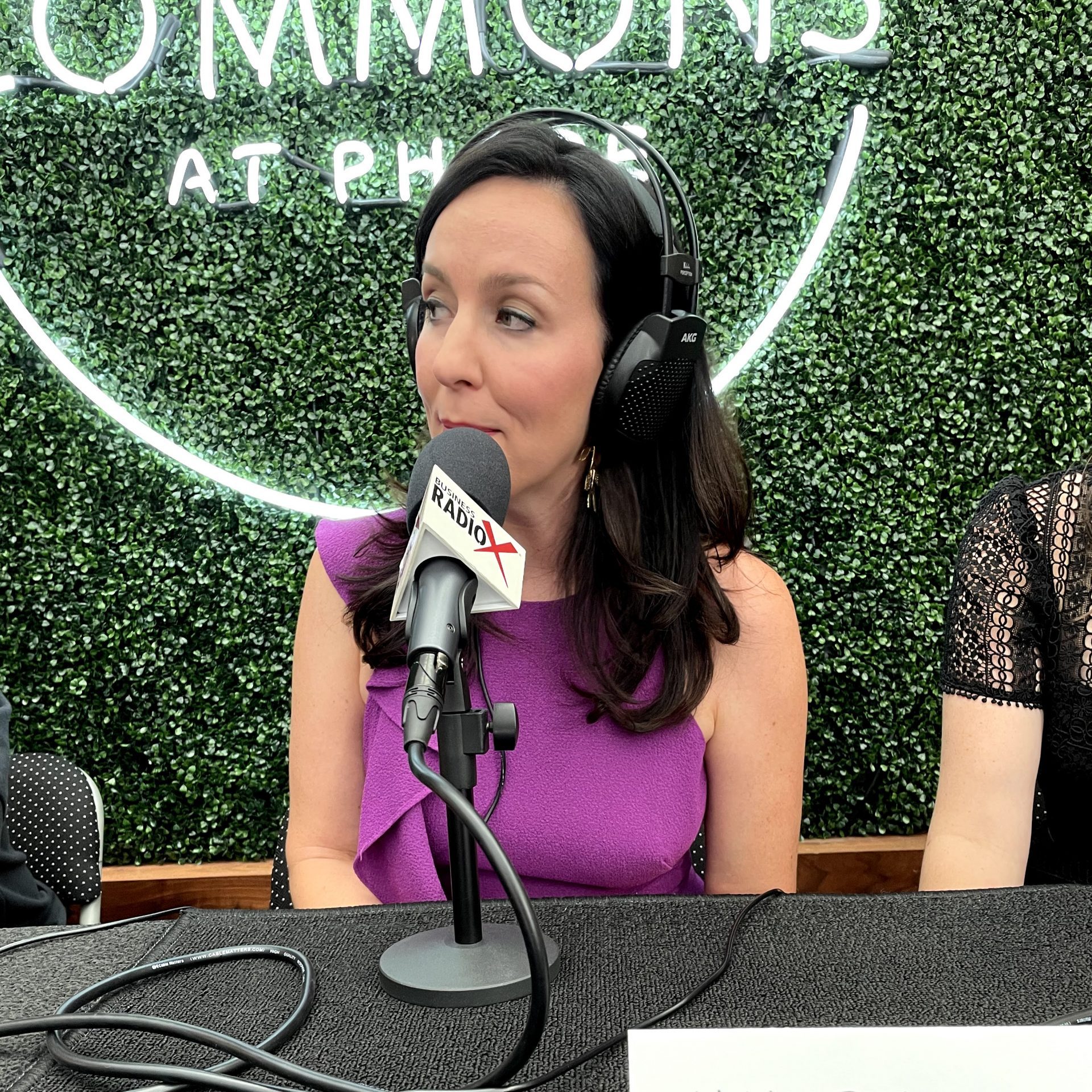
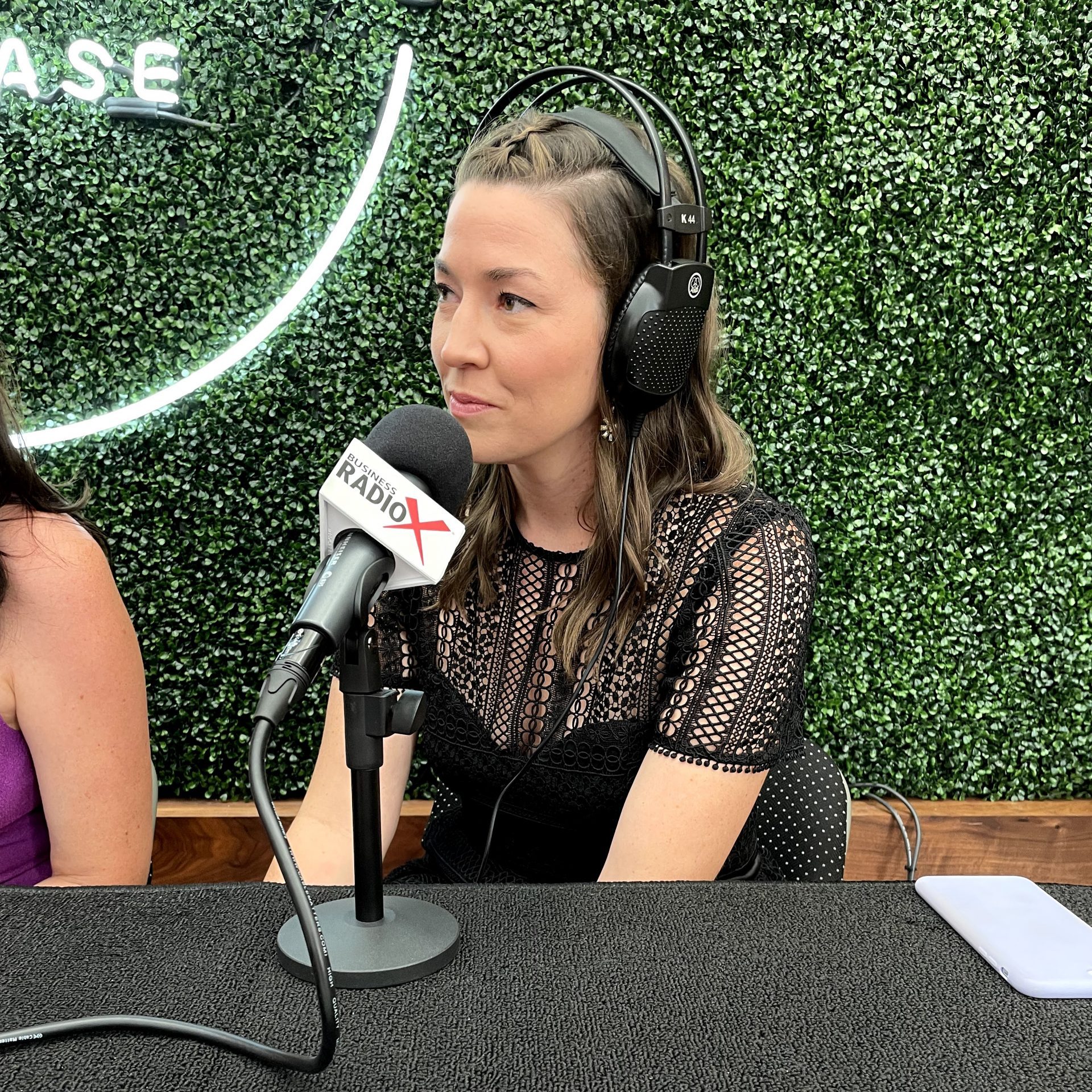
This transcript is machine transcribed by Sonix
Intro: [00:00:07] Broadcasting live from the beautiful legacy theater in Alpharetta, Georgia, for code launch Atlanta, 2021. It’s time for Atlanta Business Radio. Now here’s your host.
Stone Payton: [00:00:24] And we are back broadcasting live at code launch in Atlanta, twenty one Stone Payton Lee Kantor here with you with the Business RadioX Network. Next up on today’s broadcast, please join me in welcoming to the show with Mauti Misk, Katie Bhogle, Sherman and Courtney Harman. Welcome to the show.
Lee Kantor: [00:00:45] Thank you for having us. The are two things. Tell us about Maudy.
Kitty Bogle-Sherman: [00:00:50] Ok, Maudy is a place for people to remember differently. We’re building a new kind of home for your memories. So basically the idea is that there are billions and billions of photos and videos uploaded to the cloud and stored on the cloud. There are trillions actually there. Twenty eight billion new photos and videos uploaded to Google photos a week. And so the experiences currently available to experience your memories then are either social media or printing a scrapbook. But essentially, the experiences are very limited. And so we’re going to create an app where your digital presence can have a home forever.
Lee Kantor: [00:01:36] And then what was the catalyst of the idea?
Courtney Harmon: [00:01:40] So the main catalyst really goes back actually about seven years. When I first became a new mom and had a newborn, we lost an aunt that was really close to us. I’m sorry. And so it was at that time, as I was, I was going through a transition, becoming a new mom, that I had all these questions that I would have wanted to ask her. And there is no way to do that. And I just thought at that time, I don’t want my daughter to be left without with unanswered questions. So what are the things I can do? You know, what would be a way to leave your legacy? An intentional legacy, you know, really be able to be that influence in your in your family’s life, even if you aren’t there anymore. And then as we explored that idea, it’s expanded to pretty much just say, you know what, we have now thousands and thousands of photos that we take of our family and no way to really use them. They just sit in the cloud. And so really the problem is the limited experiences. So we wanted to just completely flip that on its head, something people really can’t even conceive of right now, because it’s it’s different than what’s out there and really change that experience.
Lee Kantor: [00:02:51] So now give me an example of how the experience comes to life. So I had a family member and it has like where does the context come in? Where does the threads that tie things together, where the stories are, or the experiences that maybe can combine different people together, and then we were all here at this time or we all experienced this, like how how does it all tie together?
Kitty Bogle-Sherman: [00:03:15] Well, you were right on track with your question. So basically you will be able to connect with your people. So anybody that you really actually want to share your life with and, you know, you think about it in that context or maybe contrasting with social media, you know, that typically tends to be more of a highlight reel. And I don’t think anyone here would say, oh, yes, my essence is really captured by, you know. So, you know, we’re kind of thinking about that differently. So you connect with those who are closest to you. And then we are developing a system of classification, and that’s really what’s going to make our tools so unique. So right now, what it can do, for example, is our grandfather, he uploaded a bunch of different jokes that he tells. Right. And so right now, our apps in the app store right now, what you can do is you can go in the last hour virtual code launch in April. Actually, the hackathon purpose was to implement voice activation technology into the app. So that has been done. And so you can pull Maudy open and say, hey, mordy, fetch Fopo, make me laugh, for instance. And then anything that’s been categorized in that way then pulls up. And so right now, the experience is a video pulls up and my grandfather tells a joke. But what we’re building towards and, you know, we’re in the middle of fundraising. So anyone who’s listening. What we’re building, though, is an experience where you will go into what we’re calling sets, and it’s a completely different world. And that’s where you are building basically a home that anyone in the future, your future descendants, your loved ones, whoever can come find you. And that’s where everything you’ve uploaded will live. But you also will be setting, you know, who sees what and when. So you can send messages to like, I want my child to see this on their 30th birthday or whatever, but. Oh, fine. So the possibilities are really in. Unless and it’s an opportunity that just hasn’t been tapped.
Lee Kantor: [00:05:27] So now you had this idea and then where does Kirtland’s fit into this?
Kitty Bogle-Sherman: [00:05:31] Well, we had the idea and then pre pandemic. So February of twenty twenty, we attended the memorial service for our great aunt in Little Rock, Arkansas. She was a very accomplished lady in the science and technology field. And so we had the good fortune to attend an event at the repertory theater there. And it was kind of like a celebration of her life. The play was an about Ann Richards. We’re from Texas. She’s really well known for her governor. And so in in that process, we saw you know, we heard from people eulogizing her. We saw videos people had made about her. We learned so much we didn’t know about her, but also our family and kind of where we fit into that legacy. So it was very inspiring, but also restarted, kicked that idea. Now, if we’re not, not everyone is going to have documentaries made about their lives, but every single person has a unique, interesting story. It needs to be put out there. So we were like, let’s go the pandemic here. We have two small children each. We were homeschooling for the rest of that semester and then, you know, summer twenty twenty. We realized, who knows when Covid will be over. We don’t know what that even looks like. Let’s go. Courtney said, Do you mind if I send this? I think he said I sent an application to this Covid lunch thing, and I was like, sounds cool. And then we ended up in code lunch and we were the alternate finalist out of, I think, like 160 hundred and congratulations. So the idea worked. But yeah, they really were the catalyst for like getting us into a network and then also giving us feedback on the idea. Yes, yes.
Courtney Harmon: [00:07:19] Evolution, providing a stage for us to collect market feedback, you know, really evolve our idea. What you gave us the confidence to go and start getting funding, which we haven’t gotten a significant amount yet. So and we’re in the middle of finishing out that round. And the idea has really evolved to something that has a very clear vision for us right now. And we’re excited now to just go execute on that.
Lee Kantor: [00:07:46] So now, what compelled you to say, you know what, I’m going to go to Atlanta to like, what are you here?
Courtney Harmon: [00:07:54] Well, I feel like we probably are giving you way too long of answers right now. But basically, my sister Courtney was living in Florida. We’re originally from Texas. I live in our hometown of Longview. Well, while all of this was kind of transpiring, she lived in Florida. So I would pick her up at the airport in Dallas. I would drive two hours, pick her up. We would go do all this. And this is
Lee Kantor: [00:08:16] No middle ground.
Kitty Bogle-Sherman: [00:08:18] Well, you know what? She moved to Texas in June, so also used to live in Atlanta. We’re southeast. We’ve been all over the place. So this really is a place we’re familiar with. And we’re just this is such a great event. We’ve gotten so much out of our other two events with this program that we know this is a place to be.
Lee Kantor: [00:08:38] So how have you seen the event evolve over the innovations you’ve got to be part of?
Kitty Bogle-Sherman: [00:08:44] Well, we’ve only been involved during the Covid era, and I will just say that the production value, in my opinion, has always been very high, and they have just somehow managed to work around every challenge. I would say, you know, compared to the event we attended last November in DFW. From what I’m hearing, we’re going to have like maybe double the attendance. And so I think that’s a pretty nice step for them to take.
Lee Kantor: [00:09:12] Now, any advice for entrepreneurs out there who maybe haven’t heard about Covid launch or they’re thinking about code launch?
Kitty Bogle-Sherman: [00:09:20] I think that you should definitely get involved, really, no matter what stage you’re at. There’s something for everybody here. As long as you know kind of what your goal is and what you’re trying to get out of it. It’s a great networking opportunity. And the people at Covid launch really care about this community of, you know, startup entrepreneurs. And it’s really exciting. You can learn a lot from anybody that’s here, and it’s a great way to just evolve your product.
Lee Kantor: [00:09:44] Now, any advice from from a networking standpoint, how do you kind of squeeze the most through an event like this where there is so much going on?
Courtney Harmon: [00:09:54] I think as an entrepreneur, you need to be really clear about what your goals are for the event. So, for example, in November, we knew we weren’t going to be on stage. We’re thinking, OK, well, who’s going to come to our table? We barely even know how to talk about this idea properly. And so we wore costumes and kind of in theme with our branding at the time. But it really works because I think, you know, Jason Taylor, I don’t want to speak for him, but I think, you know. He really took that as OK. These ladies will bring some value. So really, I think that’s it. What can you bring and what are your goals? And for us, we knew our goals. We’re not trying to get funding here. We’re trying to get some market validation. We’re trying to get to know people who can help us and we can connect with. And that’s what we did. And then our goal, for example, tonight is we’re ready to build a waitlist. So we have an Oculus giveaway, and that’s what we’re here to do. So I would say be specific about your goals and always, always think of how you can bring value
Lee Kantor: [00:10:55] And when you show up here with you and plan and
Courtney Harmon: [00:10:59] Execute. Yes, sir.
Lee Kantor: [00:11:00] Now, if somebody wants to learn more about Maudy, you mentioned the App Store as a website as well. Those investors who want to kind of learn more, what’s the best way to connect with you? I would say
Kitty Bogle-Sherman: [00:11:11] Either LinkedIn or Maudy app, A.R.T. i e a p dot com. Good stuff. Did I miss anything, Courtney? We’re also on Instagram,
Kitty Bogle-Sherman: [00:11:21] Although we’re not posting regularly yet.
Courtney Harmon: [00:11:25] That is coming. Yes. And it’s going to be great.
Kitty Bogle-Sherman: [00:11:28] And that’s also at App.
Stone Payton: [00:11:31] What an inspiring story. Thank you so much for visiting with us. Of course, we’re going to visit your booth. So we’re also going to continue to follow your story. And I think we touched on this in our last segment. Yes. Someone will emerge this evening as the winner of the event. No one loses here. Anyone here is going to gain, particularly if they’re of the right frame of mind. If they come in with a plan like you described, I can see why you’ve had the success that you’ve had so far. Congratulations on the momentum. Keep up the good work. One more time. Points of contact that people want to reach out to have a conversation with you make you a big check by your app. I already do. Let’s make sure we leave our listeners
Kitty Bogle-Sherman: [00:12:10] With that, OK? LinkedIn, Katie Vogel, Sherman, Courtney Harman or Maudy App. And again, Maudy Adcom has our contact information on it as well. We look forward to hearing from you. And thank you very much. You guys are just some more people are meeting that have been incredibly kind and generous to us, and we really appreciate it.
Stone Payton: [00:12:30] Well, it’s absolutely our pleasure. All right. We’ll be back in the future with code launch in Atlanta. Two more.














