
Business RadioX ®

  • Home
  • Business RadioX ® Communities
    • Southeast
      • Alabama
        • Birmingham
      • Florida
        • Orlando
        • Pensacola
        • South Florida
        • Tampa
        • Tallahassee
      • Georgia
        • Atlanta
        • Cherokee
        • Forsyth
        • Greater Perimeter
        • Gwinnett
        • North Fulton
        • North Georgia
        • Northeast Georgia
        • Rome
        • Savannah
      • Louisiana
        • New Orleans
      • North Carolina
        • Charlotte
        • Raleigh
      • Tennessee
        • Chattanooga
        • Nashville
      • Virginia
        • Richmond
    • South Central
      • Arkansas
        • Northwest Arkansas
    • Midwest
      • Illinois
        • Chicago
      • Michigan
        • Detroit
      • Minnesota
        • Minneapolis St. Paul
      • Missouri
        • St. Louis
      • Ohio
        • Cleveland
        • Columbus
        • Dayton
    • Southwest
      • Arizona
        • Phoenix
        • Tucson
        • Valley
      • Texas
        • Austin
        • Dallas
        • Houston
    • West
      • California
        • Bay Area
        • LA
        • Pasadena
      • Colorado
        • Denver
      • Hawaii
        • Oahu
  • FAQs
  • About Us
    • Our Mission
    • Our Audience
    • Why It Works
    • What People Are Saying
    • BRX in the News
  • Resources
    • BRX Pro Tips
    • B2B Marketing: The 4Rs
    • High Velocity Selling Habits
    • Why Most B2B Media Strategies Fail
    • 9 Reasons To Sponsor A Business RadioX ® Show
  • Partner With Us
  • Veteran Business RadioX ®

Paul Nieminen with Prudential Financial

November 23, 2020 by angishields

Paul-Nieminen-Prudential-Financial
Learning Insights
Paul Nieminen with Prudential Financial
Loading
00:00 /
RSS Feed
Share
Link
Embed

Download file

Paul-Nieminen-Prudential-FinancialPaul Nieminen is the Vice President, Learning Strategy at Prudential Financial and a globally recognized leader in the field of Organizational Development. He has created and implemented models that align and engage people with organizational strategies.

His expertise is in the areas of organizational culture, national culture, change management, organizational design, performance management, and talent management. He has held executive level positions in the largest global organizations, and has led the human component of Organizational Learning, Human Resources, Mergers &Acquisitions, and International Organizational Effectiveness.

Paul is a lifelong learner and holds several advanced degrees and practitioner certificates. He holds a BS in Business with an international concentration. He holds an MS is in Human Resource Development with a concentration in adult learning, counseling, and instructional design. He has a PhD (abd) in Human Resource Development has worked with the Anthropology Film Center in Santa Fe, NM. Paul is currently working on another PhD in Transformational and Social Change

Paul has two children and lives between Atlanta, GA and Matanzas Shores, FL. He travels the world often, reads Jung for fun, and appreciates both the concrete jungle and the magnificence of nature. Paul practices fatherhood, friendship, mindfulness, and gratitude. In addition to his corporate work, he often leads retreats at his lodge that is nestled within the rainforest of Costa Rica.

Connect with Paul on LinkedIn and follow Prudential Financial on LinkedIn, Facebook, Twitter and Instagram.

Transcript

Intro: [00:00:04] Broadcasting live from the Business RadioX studios in Atlanta, Georgia, it’s time for Learning Insights. Brought to you by TrainingPros. When you have more projects than people, TrainingPros can provide you with the right L&D consultant to start your project with confidence. Now, here’s your host.

Lee Kantor: [00:00:27] Lee Kantor here. Another episode of Learning Insights Radio. And this is going to be a good one. But before we get started, it’s important to recognize our sponsor, TrainingPros. Without them, we could not be sharing these important stories. Today on Learning Insights, we have Paul Nieminen with Prudential Financial. Welcome, Paul.

Paul Nieminen: [00:00:45] Welcome, Lee. Thank you very much for having me today.

Lee Kantor: [00:00:47] Well, I’m excited to talk about the topic we’re going to be talking about, which is learning strategy for 2021 and beyond. But before we get into that, let’s talk a little bit about Prudential Financial. How are you serving folks?

Paul Nieminen: [00:01:00] Well, I’ll tell you, we provide financial solutions for individuals, as well as advisors and employees in institutions throughout the world. We’re here in the US, as well as in some emerging markets around the globe. So, we’re here to bring you some unique and very fulfilling financial solutions.

Lee Kantor: [00:01:19] So, now, as the VP of Learning Strategy, well, like, what’s your role in the organization?

Paul Nieminen: [00:01:25] Well, my role, I’m in the Center of Excellence, and it’s the Employee and Development Capability Center of Excellence. And really, my role has three parts to it. One is to bring an overarching enterprise-wide learning strategy to Pru globally. Another one is really to help the organization identify the critical capabilities and develop those critical capabilities that will really give us a differentiated competitive advantage. And thirdly, I do some learning advisory for all of the different learning groups in the organization. So, it’s quite exciting. Really, I enjoy it, and it’s quite a great role for me.

Lee Kantor: [00:02:07] So, now, how does that kind of a mission get adjusted when the pandemic happens?

Paul Nieminen: [00:02:15] Lee, I really keep a close eye on the societal demands out there. And right now, there’s a big need for connection with employees. And so, I bring a very strong relational learning to the organization. There’s a lot of demands around social equity and racial equality. And we really address that as a learning organization. And really, finding what of those new capabilities out there for production within the organization that can help us kind of bridge this time and move into the future; adjust, if you will.

Lee Kantor: [00:02:59] Now, when you’re kind of coming up with this kind of a macro view, how do you get that drilled down into actionable things for your folks that you’re serving?

Paul Nieminen: [00:03:09] Yeah, and that’s a great question. And really, that’s the art of that is taking a strategic viewpoint. I create an architecture. I create a learning development architecture and leadership development architecture. And then, really, drill it down through alignment. So, I align the societal demands to the priorities for the learning organization. And then, we talk a lot about how do we take these demands, and how do we take these priorities, and really link them to the objectives of the learning programs and the learning that we do all the way down to the activities. So, it’s really about some ruthless alignment, is what I call it, which turns the actions, and aligns them to the strategy, and really makes it real for people.

Lee Kantor: [00:04:02] Now, how do you get kind of up and down the chain? How do you get that kind of alignment, and then being heard, and then knowing, “Okay, I can understand how this makes sense for me,” and then them having a voice to maybe kind of help you tweak kind of the overarching strategy? Kind of where it’s a back and forth?

Paul Nieminen: [00:04:21] Yeah, that’s a really good question, Lee, and I’ll give you an example about something we do with Puo. Let’s take racial equality, for example. We know that that’s a societal demand right now, and we know that that and diversity inclusion is a priority for us as Pru, as well as other organizations as well. So, what we do is we take that down and we overlay it over the learning that takes place. So, we have some programmatic learning that we give people the skills and the definitions about D&I.

Paul Nieminen: [00:04:51] But more so than that, and this I think, really gets to your question is, we bring in learning that is more relational. I bring an actual learning, which is something developed by Reg Revens and it’s business-driven action learning. And it’s about bringing these teams together, these diverse groups of people together where they can learn from one another, learn from the environment. They go through a process of asking questions. They go through a process of, really, applying their knowledge to the business issues at hand. And then, that, we bring it from the bottom of the organization up to the strategy, up to the policies, up to the procedures, so the entire organization is learning. So, that’s one example of taking the business demands of racial equity down into the learning, and then back up to the organization’s strategy. It works quite well, and it works quickly. So, you can really build the capability within the organization fast.

Paul Nieminen: [00:06:03] Now, one key here, for me, anyway, is not to rely on the programmatic learning, not to rely on just the learning programs that have a very hierarchical view. It’s really kind of learning, pushing it down from the top, but providing the guidelines, the guardrails, if you will, and creating an environment for people to learn from one another. And then, finding the ways to pull that learning up through the organization, whether it’s presenting to senior leadership or whether it is impacting the policies. So, it’s really learning from inside in, and outside in, and all throughout the organization. So, that’s one example of how we can bring that strategy to life, and then really make an impact, so we can address those societal demands.

Lee Kantor: [00:06:55] And do you find that the culture is really the key to making all of this thing click? Because if the culture and this kind of activity is congruent, and there’s trust and authenticity, then that kind of learning can be shared, and people can become vulnerable, and they want to help, and the information can flow more freely.

Paul Nieminen: [00:07:15] So, that’s another good question, Lee. I could tell you this for a living, asking really good questions. Concerning the culture, let’s look at it as underlying values, norms and belief systems, if you will, that are shared among a group of employees. What I do is, first, I describe what that culture is. And I look at, if this is what I want to do in the organization, if this is the change I want to make, what are the barriers in the culture and these underlying belief systems that might stand in the way? But also, what can I leverage in these belief systems?

Paul Nieminen: [00:07:48] Like, for example, if employees believe that learning from another is very valuable for them, I’ll really leverage that. But if they really believe that the only way to learn is top down, then I’ll find ways to combat that and change that belief system. So, it’s a matter of recognizing the culture, and defining it, and then working with it, and kind of evolving it over time, but finding those spots that inspire people in the culture, and drive that.

Lee Kantor: [00:08:24] Now, when you’re working in this manner, how do you kind of measure the results? Like, I know you have an intention that you would like to have happen, how are you kind of knowing you’re on the right track or if this is even a track worth pursuing?

Paul Nieminen: [00:08:39] Yeah, it’s a good point. So, what I do is I look at, of course, the lagging indicators, because everything that we do needs to align to the business strategy and it’s to move that needle. But that’s really tough sometimes to connect what it is we’re doing to the business outcome like that. So, what I do is I look for those leading indicators. For example, maybe it’s the succession planning processes, or maybe it is some diversity that we’re trying to bring in, or maybe it is readiness of managers. And I put measures around those leading indicators, many times, HR processes, to let me know if I’m on the right track.

Paul Nieminen: [00:09:25] But then, that’s firstly. And secondly, I’ll look at the actual learning itself, and look at the learning objectives, and make sure that you got those right, and make sure that you can measure those learning objectives in some way. So, it’s multiple layers of measurement, but I think that’s really important to design and lay out that measurement way upfront.

Lee Kantor: [00:09:52] And then, what is some of the activity or some of the results that you get that gets you high fives in your team at the end of the quarter?

Paul Nieminen: [00:10:00] Yeah. I’ll tell you what it is for me. So, one of these programs I brought in, I got a letter to my office, and it came in, and it was from one of the participants spouses. And it said, “Paul, I don’t know what you all did in that learning, but my husband sees the world a whole different way. The way he treats my family is different. He’s open to more discussions. He looks at things very differently. He’s a learner now, opposed to a judger,” as the words that were used in this letter. And I kept that because to me, if I can make that impact on leaders, if we as an organization can make that impact and spread that throughout the organization, that’s a high-five too because that was our goal.

Paul Nieminen: [00:11:01] Our goal was to shift the mindsets in the organization from judger to learner, if you will. Similar to racial equity and diversity, the mindset shift would be to really seek out these different perspectives and these fresh perspectives and bring those back into the organization. So, keeping an eye on how we impact the people, that’s what does it for me. That’s what gives me my gratification and my team’s high fives. I got a chat today from somebody over in Europe that said, “We did it. We moved the needle. And everybody is inspired about it.” So, it’s about inspiring people, for me, because that’s how you’re going to impact the business results.

Lee Kantor: [00:11:51] And it goes well beyond that. As the note kind of explains, you’re impacting a family, and that could be impacting a community. It’s not just the kind of work you’re doing at Prudential. The ripples go well beyond Prudential.

Paul Nieminen: [00:12:10] And that’s some of the societal demands, particularly right now with the with the COVID-19, is where the people connect, and what do we provide as an organization? I mean, today, we are the connector in many ways in society. So, we connect as an organization, and then they bring that back to the family, and then it truly does impact society over time. So, I think you’re right. It’s the whole person. It’s the authentic person. It’s the whole person that we’re dealing with.

Paul Nieminen: [00:12:49] And there, we move away from that programmatic view of learning to the relational view of learning, which is the way we started with this conversation. And that, to me, is where we’re heading as a learning industry is much more relational, asking questions, knowing the person, reflection, really taking feedback, and using feedback, and connecting, and looking at the person as a whole as authentic, and connecting those people in a networked way around the organization. And that’s what we do with these programs. And that’s what we do at Pru.

Lee Kantor: [00:13:29] Now, any advice for the learning leader in another organization that’s trying to kind of do similar work that you’ve accomplished at Prudential? How would you go about beginning this or, at least, having the conversations with the senior leadership to open their mind to the power of kind of this kind of thinking?

Paul Nieminen: [00:13:49] Yeah, yeah. And that’s a good one. And what I do is find a way to resonate to the leaders, because it’s really tough when you talk about training in terms of our why and those sort of terms, but if you logically appeal to the leaders, what I do is I create, and I call it an architecture, I create a learning architecture. In other words, these are the demands, this is how we’re going to meet those demands, these are the learning events and strategy we’re going to use to get there, and this is how we’re going to measure it.

Paul Nieminen: [00:14:26] And when they see that alignment, when they see how it all fits together, and it resonates, that’s the first step. And then, from there, building all the detail out of it, and showing them what it is. Because many times, people want to get down into the weeds, but they want to see examples of the weeds. So, start out by, really, calling it what it is, looking at those demands both in the society, the environment, the competitive demands, the customer demands, and then the demands inside the organization, and address those, and look for what I call the litmus test.

Paul Nieminen: [00:15:08] Does it resonate? Do they sit back and say, “That makes sense? I learned something today. I never thought of it that way before.” That’s what I go for in those initial meetings is that aha moment of “I never thought of that before. And that’s a great way to look at it. And that makes a lot of sense.” Then, I know we’re on the right track because that’s what resonates, that builds trust with the leaders, that builds hope that things are going to change, and that builds a lot of confidence in the training and the change that we’re going to build in the organization.

Lee Kantor: [00:15:44] Then, do you try to create like a pilot program or a beta test in order to test that thesis, and then roll it out system-wide? Like, how do you do that?

Paul Nieminen: [00:15:44] Well, I used to do that, but the environment is changing so fast, Lee. And really, I use an agile approach more than a waterfall approach. So, I really get in there, and build it, and start implementing, and let the process learn. Let the learning programs and learning processes themselves evolve with the time. So, I don’t wait. I like to get in there and implement right away because I know we have some sound things. And then, we adjust as we go along.

Paul Nieminen: [00:16:29] So, now, to that point, I look for things that we can leverage and scale within the organization. So, I will start small. I’ll start with small groups, but it’s not necessarily a pilot. It’s more of an implementation at a smaller scale. And then, I look for ways that I can scale that out in the organization, which saves money, saves time and is much more efficient.

Lee Kantor: [00:16:54] So, you’re rolling it out, and you’re learning and tweaking as you go?

Paul Nieminen: [00:16:58] You bet. Absolutely.

Lee Kantor: [00:17:00] So, now, how do you use the learning organization to leverage voice and choice?

Paul Nieminen: [00:17:07] That’s a great question, and one that I have been really working with lately, and that’s been really tough of mind. I’ve been looking at what’s happening within our organization and others. And when I think about voice and choice, I think about diversity and inclusion. Let’s put it in that lens, first of all. And I think the organizations that measures out there for that, we have numbers of diverse candidates in the pipeline. We have numbers of diverse positions, different positions. There’s training out there for implicit bias and all of that.

Paul Nieminen: [00:17:48] And I think that organizations or we, anyway, at Pru, are really evolving past that to include that, of course, that’s necessary, but evolve past that to really look at how do we create the agency in the organization, which is the voice. And I think we do that through using the BRGs. And a lot of organizations have business resource groups. But putting them into learning activities that allow connection with them to other groups in the organization and have them learn in ways that impact the processes and the strategy of the organization. And that’s where action learning again comes in.

Paul Nieminen: [00:18:36] And I’m a true strong believer in action learning. I’ve seen it work over and over again. Again, it’s attributed to the work of Reg Revens, who first brought it from some Nobel Prize winners. But it’s about searching out that fresh perspective, searching out learning from one another, searching out learning from outside the organization. Well, it’s this voice and choice that’s that fresh perspective. So, bringing these folks together, bringing this voice together in a learning community that impacts strategy, impacts policy, impacts decision making.

Paul Nieminen: [00:19:16] And you do that. We do that in Pru through action learning, through other types of programs that we have specifically for these groups, working on projects, this sort of things. So, it’s about the feedback. It’s about how do you get feedback from these groups into the strategy, the policies and the decisions that the organization makes. And that’s been on top of mind for me. And that’s really where when I build a learning architecture, and I look at these kind of demands of the environment, as well as the expectations of our organization at Pru, is to increase this voice, it’s about putting in the structure, the learning structure, to be able to get information not just from top down, but the learning structure to get information from bottom up and across the organization through different teams, through different supports, through different learning classes, through nominated type of learning activities, all of that.

Lee Kantor: [00:20:25] So, you’re actually bringing folks together that are across all layers of the organization, so it’s not siloed kind of learning, it’s across the board altogether, and then they’re able to share, and kind of get to know each other, and understand and maybe have more empathy for each other?

Paul Nieminen: [00:20:42] You’re right. That’s the relational part of it. So, specifically, we look at getting diverse groups of people together in a learning environment, like you said, from different levels, from different business units, from different parts of the globe, different geos, bringing them together and facilitating in a very strong way how they learn together. So, I use a lot of questioning. Instead of just giving information and saying, “What are your ideas here?” we use a lot of questioning to get at their underlying assumptions. So, through questioning, we can understand their underlying assumptions, understand their world view. That gives us the empathy that you’re talking about.

Paul Nieminen: [00:21:27] And then, we look at how we apply that worldview in different parts of the organization into the strategy. And that is that process of providing those guardrails for the learning, not just throwing people in the room and seeing what they come up with, not just throwing people on a project and assuming that they’re going to be able to get their voices heard, but facilitating the questioning in that deeper understanding. That’s what creates the change. And then, providing the environment and the pipeline to get that fresh perspective, to impact the policies and the organization. Does that make sense?

Lee Kantor: [00:22:05] Well, and also-

Paul Nieminen: [00:22:05] I wanted it practical. Hopefully, that’s not too theoretical.

Lee Kantor: [00:22:10] No, but it’s also you want to be able to have them see that they were heard and that you’re doing something, at least, along those lines, that you’re taking action along their thinking.

Paul Nieminen: [00:22:24] And that’s where that inspiration comes in. That’s where the inspiration comes in, Lee. So, when learners go through that, and they feel valued, and they feel heard, and they see the impact of their learning to the organization. If there’s one thing I heard over and over again the most, and this is what … again, to your high-five point – is people came up to us, and they continue to come up to us, and they said, “I have a lot of hope.” And that’s the word they use over and over again. And they have hope because they see how they impact the organization, and they see how their ideas can bubble up and really make a difference. And that’s where the inspiration comes from. And so, that in itself changes the culture of the organization into a very, very productive, inspirational, all-inclusive organization.

Lee Kantor: [00:23:27] So, now, as we head into 2021, any advice for folks regarding this new post-COVID world that we’re in for leadership? Maybe things that they should be thinking about that can be rolled out organizationally?

Paul Nieminen: [00:23:45] I do think so. I think that it’s so important to look at the collective capability of an organization. We spent a lot of time looking at individual competencies and look at how we develop individuals within the organization. I think we really need to take more of a collective view and look at the those critical capabilities that the organization does together, or the function does together, or groups do together, and identifying those and finding ways to build and develop those capabilities.

Paul Nieminen: [00:24:26] So, again, the difference is this is a capability across a shared group of people, like maybe it’s succession planning if you’re in HR, or maybe it’s actuary if you’re in an insurance group, or maybe it’s about the customer experience and these sorts of things. Finding those and allowing the space to develop there, not just looking at it from individual competency standpoint, because when people are working together and learning together, the environment’s moving too fast for us to fragment and deconstruct so much into those competencies.

Paul Nieminen: [00:25:08] So, my advice for 2021 would be to identify what of those three key capabilities, either at the organization or the functional level, that’s collective, and focus on those because that’s what’s going to give the differentiated competitive advantage. That’s what’s going to set your organization apart or your function apart. And if you’re support function, that’s what’s going to bring the biggest impact to the organization at all. So, that’s kind of what I’m looking at for 2021 is identifying and building those capabilities because the fact is, is that, Lee, they change every two to three years. So, that’s why you can’t take three years to develop a program for capabilities. You really have to identify them right away, and then find ways through people and from a relational standpoint to really develop them in an agile way. And agile, I mean, our processes to do that.

Lee Kantor: [00:26:16] Well, Paul, thank you so much for sharing your story today. You’re doing important work, and we appreciate you.

Paul Nieminen: [00:26:22] Lee, thank you very much. And I’m very excited about what Pru is doing. I mean, we’re really a true learning organization, and I’m real excited to be able to bring my craft there. So, thank you very much for having me.

Lee Kantor: [00:26:35] Now, if somebody wants to learn more about Prudential, the website?

Paul Nieminen: [00:26:39] Absolutely, prudential.com.

Lee Kantor: [00:26:41] And if somebody wants to connect with you, what’s the best way? Is that LinkedIn?

Paul Nieminen: [00:26:47] Yeah, Lee, connect with me on LinkedIn. You have my information. My name, Paul Nieminen. And feel free, anybody out there, to connect with me, and I’d be happy to share with you, and also collaborate with you on things that you’re doing in your organization.

Lee Kantor: [00:27:03] Well, thank you again for sharing your story, Paul.

Paul Nieminen: [00:27:06] Thank you, Lee. Have a great afternoon.

Lee Kantor: [00:27:08] All right. This is Lee Kantor. We’ll see you all next time on Learning Insights. And remember, this work could not be done without the support of our sponsor, TrainingPros. Please support them, so we can continue to share these important stories.

Outro: [00:27:23] Thank you for listening. For more information about TrainingPros, visit their website at training-pros.com.

About Training Pros

Since TrainingPros was founded in 1997, they have been dedicated to helping their clients find the right consultant for their projects.

23 years later, they are proud to have helped hundreds of clients complete their projects and thousands of consultants find great assignments. Training Pros continues to focus on helping their clients and consultants as well as their community.

Follow Training Pros on LinkedIn, Facebook and Twitter.

Tagged With: Prudential Financial

Kimberley Brown with Core Insights 360 PR

November 23, 2020 by angishields

Kimberley-Brown-Core-Insights-360-PR
Atlanta Business Radio
Kimberley Brown with Core Insights 360 PR
Loading
00:00 /
RSS Feed
Share
Link
Embed

Download file

OnPay-Banner

Core-Insights-360-PR-logo

Kimberley-Brown-Core-Insights-360-PRKimberley Brown is CEO of Core Insights 360 PR and is a highly sought after, Award-Winning, PR professional and writing expert with more than 14 years of experience. Some of her publicity efforts have landed coverage and/or interviews for clients in leading outlets like Forbes, Wall Street Journal, Huffington Post, Washington Post, Bloomberg, ABC TV, and CNBC – to name a few.

As part of her career, she has supported leading brands such as Dell Computers, Colgate-Palmolive, Coca-Cola, Dr Pepper, Turner Broadcasting, BellSouth Corporation and Cox Communications.

Furthermore, in 2013, she drove the PR efforts for Martin Luther King’s 50th Anniversary event in Washington, DC driving top tier and local media from around the country. She even oversaw the PR efforts for one of the anniversary’s featured events, which was a casting call for ABC’s The Shark Tank, landing interviews for Mark Cuban.

Connect with Kimberley on LinkedIn.

What You’ll Learn in This Episode

  • How Kimberley got into PR
  • Kimberley’s biggest PR campaigns to date
  • The definition and purpose of PR
  • The biggest mistakes that PR reps make that impact client results
  • Paid content vs. Earned Media
  • Digital solutions to enhance PR programs

About Our Sponsor

OnPay’sOnPay-Dots payroll services and HR software give you more time to focus on what’s most important. Rated “Excellent” by PC Magazine, we make it easy to pay employees fast, we automate all payroll taxes, and we even keep all your HR and benefits organized and compliant.

Our award-winning customer service includes an accuracy guarantee, deep integrations with popular accounting software, and we’ll even enter all your employee information for you — whether you have five employees or 500. Take a closer look to see all the ways we can save you time and money in the back office.

Follow OnPay on LinkedIn, Facebook and Twitter.

Colette Hughes with Virtual Real Estate Services

November 22, 2020 by angishields

Collette-Hughes-Virtual-Real-Estate-Services
Detroit Business Radio
Colette Hughes with Virtual Real Estate Services
Loading
00:00 /
RSS Feed
Share
Link
Embed

Download file

Virtual-Real-Estate-Services

Collette-Hughes-Virtual-Real-Estate-ServicesFor Colette Hughes real estate is not just her profession…it’s her passion. She has over 25 years of experience in different areas of real estate from traditional residential and commercial real estate sales, short sales, bank foreclosures, tax foreclosures/auctions, helping 1st time home buyers, helping seasoned buyers and sellers, property management to property investments.

She’s currently the Broker / Owner of Virtual Real Estate Services, LLC based in Sterling Heights, MI. She’s proud to go above and beyond to help any community, family, friends, fellow real estate brokers and real estate agents with real estate services.

Colette earned her Broker license from Middleton Real Estate Training, Associates Degree in Business Administration from Detroit College of Business and has a BA in Christian Studies from Midwestern Christian Institute.

Connect with Colette on LinkedIn, Facebook and Twitter.

Tagged With: Virtual Real Estate Services

CAW E9: AGILITY Innovation’s Drew Kallestad & Ken Sloan

November 20, 2020 by angishields

Tucson Business Radio
CAW E9: AGILITY Innovation's Drew Kallestad & Ken Sloan
Loading
00:00 /
RSS Feed
Share
Link
Embed

Download file

DREW KALLESTAD & KEN SLOAN 
Drew Kallestad: Founder, Chief Strategy Officer 
Ken Sloan: Founder, Chief Growth Officer 

AGILITY Innovation Partners 

16750 Amberstone Way 
Parker, CO ZIP: 80134 
Email:  Drew: dkallestad@agilitydcs.com  Ken: ksloan@agilityhda.com  Phone: 303.881.1872 


Drew Kallestad: Founder, Chief Strategy Officer 

Drew founded AGILITY in 2018, armed with over three decades of executive experience in healthcare, ranging from employee benefit consulting & health risk management to healthcare finance & employee engagement. 

A truth seeker and business connector, Drew has successfully guided innovation launches in health data analytics, payment integrity, direct primary care, and improved health outcomes fields.  Pre-Agility, Drew served as Executive VP at CoBiz Insurance. As the senior member of the division, he led the transformation of the Employee Benefits team. The firm tripled in size during that time. 

Today, Drew’s most invigorating “innovation workstation” isn’t behind a desk or a laptop, but up at his Colorado mountain getaway, skiing, hiking, snowshoeing, and fly fishing. 


Ken Sloan: Founder, Chief Growth Officer 

Ken has successfully launched multiple innovations in health technology, insurance technology, and has experience leading teams that have played a key role in transforming healthcare and wellbeing in America. 

He started this pursuit as an early adopter of consumer-driven health plans/ consumerism in healthcare in the early 2000s and moved into behavior change and driving innovation in health insurance for key stakeholder groups.  Prior to co-founding AGILITY, Ken served as the Vice President of Growth and Distribution at Vitality Group, a leading global behavior change health tech company. 

Originally from the Chicago area, Ken and his family now live in Evergreen Colorado. He enjoys everything outdoors, spending time with kids, grandkids, and the family’s Black Labrador, Teddy. 

About the Business

Since its inception in October 2017, Nice Healthcare (one of Agility Innovation Partners’ key initiatives) has focused on making primary care affordable and accessible to people who historically have not had access to care, either for cost concerns, convenience, or other factors. Nice clinicians currently provide healthcare services for over 200 small businesses that encompass 30,000+ members. 

Nice’s goal is to enable its care team to treat as many medical conditions as possible. By expanding its offering to include over 550 acute and chronic medications free of charge as well as virtual physical therapy to address the musculoskeletal needs of its patients, Nice is broadening the ways members engage with their Nice provider. Genevieve Swenson, co-Founder and COO, and FNP elaborate. “We want every one of our members to know that we are in their corner. Whether they are healthy, have the sniffles, or are managing chronic health conditions, a Nice healthcare provider is going to be able to engage with them and help them accomplish their goals. Expanding our prescription formulary and adding access to licensed physical therapists are the two newest examples of how we are broadening ways we can help.” 

Host

Matt Nelson: Senior Vice President, Crest Insurance Group 
Matt is a Senior Vice President at Crest Insurance Group in Tucson, consulting with companies to identify and implement insurance, risk management, and employee benefits solutions.  With more than a 15 years of industry experience, he has served as a keynote speaker on the healthcare industry, leadership, workplace culture and risk management for professional organizations throughout Southern Arizona, including the City of Tucson, Greater Tucson Leadership, the Financial Executives and Affiliates of Tucson, and the CEO Roundtable of Tucson. 

Matt is an active member in the Tucson community, having served as a Non-Commissioned Officer in the Arizona Army National Guard and volunteering with multiple local organizations, including as Treasurer and a Big Brother with Big Brothers and Big Sisters of Southern Arizona, a volunteer with the United Way of Tucson and Southern Arizona, Chair of the Pima County JTED’s Business and Industry Council, a builder with Habitat for Humanity and many other local youth charities. 
Email: mnelson@crestins.com  
Phone: 520.784.7636 
LinkedIn: www.linkedin.com/in/mattrnelson2   


Tagged With: Crest Insurance Group in Tucson, Culture at Work in Tucson

TMBS E126: Dr. Hunter Cherwick, Ophthalmologist

November 20, 2020 by angishields

Tucson Business Radio
TMBS E126: Dr. Hunter Cherwick, Ophthalmologist
Loading
00:00 /
RSS Feed
Share
Link
Embed

Download file

About Dr. Cherwek: 

Dr. Hunter Cherwek is a global ophthalmologist with a specific career interest on how training and technologies can be used to eliminate avoidable blindness in low-resource communities around the world.  

Dr. Cherwek received his undergraduate degree in biology from the University of North Carolina (UNC) Chapel Hill and his medical degree from Duke University.  

After his transitional year at Scripps Hospital, he completed his residency in ophthalmology at Emory University, where he was elected Chief Resident.  

Immediately upon graduating from Emory, Hunter joined Orbis International, where he was able to lecture and work in over 20 countries aboard the Flying Eye Hospital and help build the organization’s award-winning telemedicine platform, Cybersight.  

After working with Orbis International, he was based in Beijing, China, for six years, working with Alcon as the Medical Director of Strategic Markets to help improve surgical training efforts and access to quality cataract care in Asia and Russia.  

Most recently, Dr. Cherwek has returned to Orbis International to continue to support its clinical training efforts and patient care programs as Vice President, Clinical Services. 

For more information please visit www.orbis.org      


Tagged With: The Mark Bishop Show

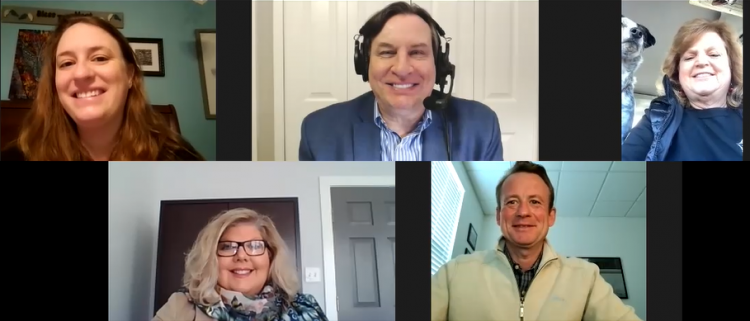
Rome Floyd Chamber Small Business Spotlight – Ryan Somerville of Business Water Solutions and Jack Knight of Knight’s Car Store

November 20, 2020 by angishields

RomeFloydChamber
Rome Business Radio
Rome Floyd Chamber Small Business Spotlight - Ryan Somerville of Business Water Solutions and Jack Knight of Knight's Car Store
Loading
00:00 /
RSS Feed
Share
Link
Embed

Download file

2020-11-18 Rome Chamber Pic

Tagged With: Business Water Solutions, Jack Knight, Knight's Car Store, Rome Floyd Chamber, Rome Floyd Chamber of Commerce, Rome Floyd County Business, Rome Floyd Small Business Spotlight, Ryan Somerville, Thomas Kislat

Chris Davis with fieldXperience

November 20, 2020 by angishields

Chris-Davis-FieldXperience
Atlanta Business Radio
Chris Davis with fieldXperience
Loading
00:00 /
RSS Feed
Share
Link
Embed

Download file

OnPay-Banner

FieldXperience-logo

Chris-Davis-FieldXperienceChris Davis is the Vice President of Business Operations for fieldXperience. With over 9 years of experience in the startup space, Chris has extensive experience managing business units, introducing new mobile app solutions to market, developing programs, managing projects, speaking at industry trade shows and conventions, and solving complex challenges to drive results.

Chris comes to us with industry experience, previously working to connect some of the country’s top brands to top high school academic and athletic talent through mobile app-powered events. Chris holds a BA from Duke University, where he served as team captain of the Blue Devils Football Team, and a MBA from Emory University. Chris is passionate about introducing young students and athletes to opportunities they traditionally would not have access to.

Chris’ superpower is: Supernatural active listening powers that can solve complex challenges to drive results.

Connect with Chris on LinkedIn.

What You’ll Learn in This Episode

  • Why we should be interested in the future of workforce and learning
  • About Chris Davis and his workforce readiness journey
  • What led Chris to fieldXperience
  • Launching 3 months before a global pandemic

About Our Sponsor

OnPay’sOnPay-Dots payroll services and HR software give you more time to focus on what’s most important. Rated “Excellent” by PC Magazine, we make it easy to pay employees fast, we automate all payroll taxes, and we even keep all your HR and benefits organized and compliant.

Our award-winning customer service includes an accuracy guarantee, deep integrations with popular accounting software, and we’ll even enter all your employee information for you — whether you have five employees or 500. Take a closer look to see all the ways we can save you time and money in the back office.

Follow OnPay on LinkedIn, Facebook and Twitter.

Tagged With: fieldXperience

Joseph B. Samples III with Samples and Young

November 20, 2020 by angishields

Joseph-Samples-Samples-and-Young
Detroit Business Radio
Joseph B. Samples III with Samples and Young
Loading
00:00 /
RSS Feed
Share
Link
Embed

Download file

Samples-and-Young

Joseph-Samples-Samples-and-YoungJoseph B. Samples III serves as a financial coach and financial advisor at Samples & Young located in Southfield, MI. He is passionate about helping individuals make better financial decisions. His firm believes in “better information leads to better decisions”. For the everyday working person, they help bring Wall Street to main street by focusing on your needs.

Joe has been serving his clients for over 20 in various capacities. He has helped many people, get a hold of their finances with budgeting first, so they could then focus on saving for their goals, such as college funding for children, a new home purchase, or retirement planning. Joe holds securities licenses, and insurance licenses to offer a variety of solutions.

Joe is a strong supporter of the local community by being active and offering his time in various organizations, such as Wholistic Living Community Development Corp., the Moors of Detroit, and he also actively engaged in his church. Joe has also participated with other organizations in helping promote to financial literacy to all age groups. He is passionate about helping people.

He and his wife of 22 years Sheila, are the proud parents of 2 children – Hailey & Joey.

Tagged With: Samples and Young

Justin Goodbread with Heritage Investors

November 19, 2020 by angishields

Justin-Goodbread-Heritage-Investors
High Velocity Radio
Justin Goodbread with Heritage Investors
Loading
00:00 /
RSS Feed
Share
Link
Embed

Download file

Heritage-Investors

Justin-Goodbread-Heritage-InvestorsJustin A. Goodbread, CFP®, CEPA®, CVGA®, owner of Heritage Investors and Heritage Business Advisors, and owner of FinanciallySimple.com, is a nationally recognized financial planner, financial educator, wealth manager, author, speaker, and entrepreneur.

Armed with 20+ years of experience starting, buying, selling, and owning businesses, Justin spends most of his time helping fellow business owners across the country increase and manage the value of their businesses and personal assets so that they can live the life of their dreams now and in the future.

Connect with Justin on LinkedIn, Facebook and Twitter.

Tagged With: Heritage Investors

  • « Previous Page
  • 1
  • …
  • 359
  • 360
  • 361
  • 362
  • 363
  • …
  • 1328
  • Next Page »

Business RadioX ® Network


Our Most Recent Episode

CONNECT WITH US

  • Email
  • Facebook
  • LinkedIn
  • Twitter
  • YouTube

Our Mission

We help local business leaders get the word out about the important work they’re doing to serve their market, their community, and their profession.

We support and celebrate business by sharing positive business stories that traditional media ignores. Some media leans left. Some media leans right. We lean business.

Sponsor a Show

Build Relationships and Grow Your Business. Click here for more details.

Partner With Us

Discover More Here

Terms and Conditions
Privacy Policy

Connect with us

Want to keep up with the latest in pro-business news across the network? Follow us on social media for the latest stories!
  • Email
  • Facebook
  • Google+
  • LinkedIn
  • Twitter
  • YouTube

Business RadioX® Headquarters
1000 Abernathy Rd. NE
Building 400, Suite L-10
Sandy Springs, GA 30328

© 2026 Business RadioX ® · Rainmaker Platform

BRXStudioCoversLA

Wait! Don’t Miss an Episode of LA Business Radio

BRXStudioCoversDENVER

Wait! Don’t Miss an Episode of Denver Business Radio

BRXStudioCoversPENSACOLA

Wait! Don’t Miss an Episode of Pensacola Business Radio

BRXStudioCoversBIRMINGHAM

Wait! Don’t Miss an Episode of Birmingham Business Radio

BRXStudioCoversTALLAHASSEE

Wait! Don’t Miss an Episode of Tallahassee Business Radio

BRXStudioCoversRALEIGH

Wait! Don’t Miss an Episode of Raleigh Business Radio

BRXStudioCoversRICHMONDNoWhite

Wait! Don’t Miss an Episode of Richmond Business Radio

BRXStudioCoversNASHVILLENoWhite

Wait! Don’t Miss an Episode of Nashville Business Radio

BRXStudioCoversDETROIT

Wait! Don’t Miss an Episode of Detroit Business Radio

BRXStudioCoversSTLOUIS

Wait! Don’t Miss an Episode of St. Louis Business Radio

BRXStudioCoversCOLUMBUS-small

Wait! Don’t Miss an Episode of Columbus Business Radio

Coachthecoach-08-08

Wait! Don’t Miss an Episode of Coach the Coach

BRXStudioCoversBAYAREA

Wait! Don’t Miss an Episode of Bay Area Business Radio

BRXStudioCoversCHICAGO

Wait! Don’t Miss an Episode of Chicago Business Radio

Wait! Don’t Miss an Episode of Atlanta Business Radio