

Business RadioX ®

  • Home
  • Business RadioX ® Communities
    • Southeast
      • Alabama
        • Birmingham
      • Florida
        • Orlando
        • Pensacola
        • South Florida
        • Tampa
        • Tallahassee
      • Georgia
        • Atlanta
        • Cherokee
        • Forsyth
        • Greater Perimeter
        • Gwinnett
        • North Fulton
        • North Georgia
        • Northeast Georgia
        • Rome
        • Savannah
      • Louisiana
        • New Orleans
      • North Carolina
        • Charlotte
        • Raleigh
      • Tennessee
        • Chattanooga
        • Nashville
      • Virginia
        • Richmond
    • South Central
      • Arkansas
        • Northwest Arkansas
    • Midwest
      • Illinois
        • Chicago
      • Michigan
        • Detroit
      • Minnesota
        • Minneapolis St. Paul
      • Missouri
        • St. Louis
      • Ohio
        • Cleveland
        • Columbus
        • Dayton
    • Southwest
      • Arizona
        • Phoenix
        • Tucson
        • Valley
      • Texas
        • Austin
        • Dallas
        • Houston
    • West
      • California
        • Bay Area
        • LA
        • Pasadena
      • Colorado
        • Denver
      • Hawaii
        • Oahu
  • FAQs
  • About Us
    • Our Mission
    • Our Audience
    • Why It Works
    • What People Are Saying
    • BRX in the News
  • Resources
    • BRX Pro Tips
    • B2B Marketing: The 4Rs
    • High Velocity Selling Habits
    • Why Most B2B Media Strategies Fail
    • 9 Reasons To Sponsor A Business RadioX ® Show
  • Partner With Us
  • Veteran Business RadioX ®

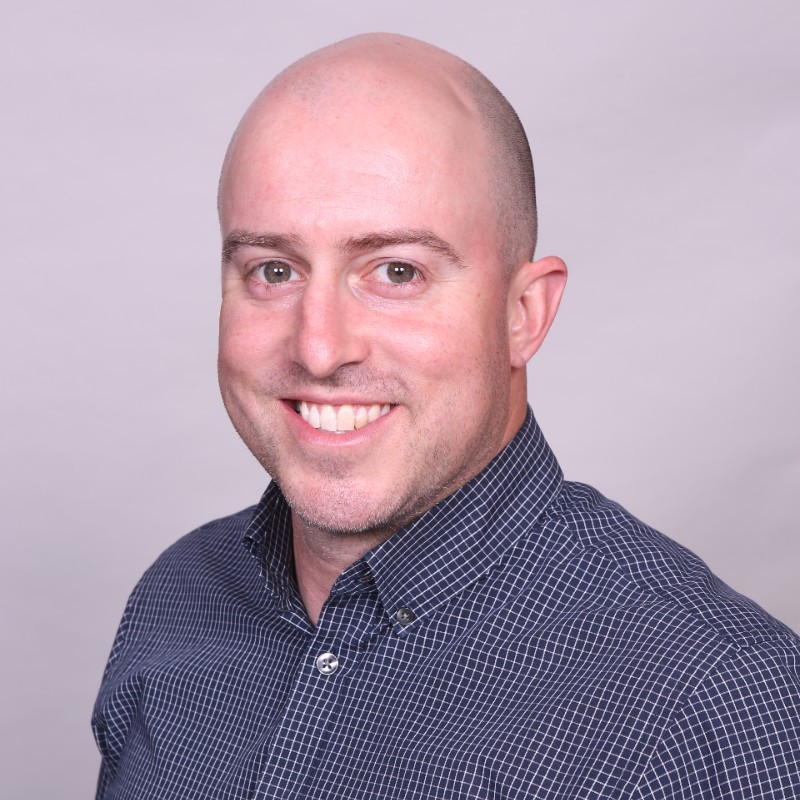
Maurice Contreras With Volcanica Coffee

August 10, 2023 by Jacob Lapera

Atlanta Business Radio
Maurice Contreras With Volcanica Coffee
Loading
00:00 /
RSS Feed
Share
Link
Embed

Download file

Maurice Contreras started Volcanica Coffee after visiting his homeland in Costa Rica. While he was there, he saw an opportunity to import excellent tasting coffee from volcanic regions, such as in Costa Rica, to consumers. The company started part-time in his garage and now operates a coffee plant near Atlanta, Georgia, with 20 employees, including his wife and two adult children.

Previously, he was a regional director for AT&T. Prior to joining AT&T, he was the national marketing director of TracFone Wireless when it was a startup helping it to grow to over $1B in sales. He also held senior management positions with Verizon and Blockbuster Entertainment.

He graduated from the University of Florida with a B.S. degree in Business Administration and earned an MBA from Nova Southeastern University.

Connect with Maurice on LinkedIn and follow Volcanica Coffee on Facebook.

What You’ll Learn In This Episode

  • New USDA Organic Certification
  • Upcoming Natural Coffee Collection Announcement
  • Seattle Seahawks Wide Receiver DK Metcalf’s Coffee for Charity
  • Amazon’s Prime Day Success
  • How he bootstrapped Volcanica Coffee

This transcript is machine transcribed by Sonix

TRANSCRIPT

Intro: [00:00:04] Broadcasting live from the Business RadioX Studios in Atlanta, Georgia. It’s time for Atlanta Business Radio. Brought to you by on pay. Atlanta’s New standard in payroll. Now, here’s your host.

Lee Kantor: [00:00:24] Lee Kantor here another episode of Atlanta Business Radio, and this is going to be a good one. But before we get started, it’s important to recognize our sponsor, Onpay. Without them, we couldn’t be sharing these important stories. Today on Atlanta Business Radio, we have Maurice Contreras with Volcanica Coffee. Welcome.

Maurice Contreras: [00:00:44] Hey, thank you. Thank you for having me on the show.

Lee Kantor: [00:00:45] Lee Well, I’m so excited to learn what you’re up to. Tell us about Volcanica Coffee. How are you serving folks?

Maurice Contreras: [00:00:52] Yeah, so Volcanica Coffee is a specialty coffee roaster. We’re based right outside of the Atlanta area in the city of Suwanee. We’ve been in business for 20 years, and our focus is on specialty coffee. More on the exotic side. Coffees that you usually don’t find in a grocery store. We import from 40 different countries and we offer over 150 different coffees. All of them are freshly roasted, and the primary focus of our business is business direct to consumer. We ship right out of our roastery across the country, across the world, and we’re also available on Amazon and also on walmart.com.

Lee Kantor: [00:01:28] So what was the genesis of the idea? What got you into the coffee business?

Maurice Contreras: [00:01:33] Well, I’m actually from Costa Rica, so coffee has kind of been in our blood in my DNA for a long time. And I had a career in wireless marketing and was very successful at it. I helped create the brand track Phone Wireless, which was recently acquired by Verizon, and so just was a little, you know, had a little curiosity about building my own brand, building my own company. And then on one of our family vacations to Costa Rica, after touring Coffee Farm, I realized that there was an opportunity because the coffee was so great in Costa Rica. And this was 20 years ago. And the coffee in the United States was pretty lousy at that time. And so I built the business brand website, all of that, back in 2004 and started importing coffee, starting with Costa Rica and Jamaica. And then I expanded and this little side hustle that I started ended up becoming a full time business. Now we have 20 employees and a 15 zero zero zero square foot roasting facility outside of Atlanta.

Lee Kantor: [00:02:38] And it was always geared like kind of to the consumer directly and not through coffee shops or coffee stores or things like that. You were selling direct to the individual consumer of the product.

Maurice Contreras: [00:02:50] That is correct. Yeah. That is the main focus of our business. We are in the process of building out our wholesale business though. So now we we actually are supplying coffee shops, restaurants and even chateau along the the nice resort and winery here in North Georgia.

Lee Kantor: [00:03:05] So when you’re going direct to the consumer, had you had any experience doing kind of that digital marketing and online sales?

Maurice Contreras: [00:03:13] Yeah, I did, because when I was with Track Phone, I helped build out the the first website back, back and this is late 90s. So it pretty much was just kind of like a brochure where and then we ended up hiring a company that built out the e-commerce portion for track phone wireless. So I did have a background in that and it was it was very intrigued by what was happening in the online space.

Lee Kantor: [00:03:37] So what was kind of the initial launch strategy when you have a brand new brand like this and you can kind of it’s a blank sheet of paper, you could have, you know, positioned yourself any way, you know, the sky was the limit when it comes to how to position a brand new entity like this. But in a in and around a product that a lot of people are familiar with, obviously they weren’t familiar with your specific brand, but they are familiar with coffee. So how did you go about positioning it the way you did and then launching it to get those initial buyers?

Maurice Contreras: [00:04:11] Yeah. So, so, so as I mentioned, I had a background in marketing and had a lot of experience in brand marketing and creating brands. And so just went through the whole evolution of who, what is this brand, what is the name, what are our, what’s our personality? And just jotting it down. I even bought books about it, you know, just to help me. Um, and then, um, you know, once, once I did that, once I settled on the name of Volcanica coffee, um, relating to volcanoes, because the best coffees in the world are grown on volcanic soil, like in Costa Rica. They’re from, you know, up at 4 or 5000 foot elevations. So that was the connection with the brand. Um, and then, um, so building the website, I learned how to code HTML by renting books at the library and built that. And then at the same time, I realized, well, there’s this thing called SEO search engine optimization because just because you build it doesn’t mean people are going to come. You have to build the website so that people can find it. So I immersed myself with SEO, learning all about that and just started building the website from the ground up just so that we could get organic traffic. We did do some advertising early on. It was just very expensive. It was it was tough to to have a profitable business with that. So our big focus was was organic business. And then part of part of the business plan originally is because I had a pretty good full time job, was just this was only something that I worked on at nights and and weekends. And it was a intentionally throttled business for several years, you know, until I became full time on it.

Lee Kantor: [00:06:05] So at the beginning, you tried to run ads, but you found that they were too expensive, I guess, to get an ROI that made sense to continue. How did you just, you know, I guess because it wasn’t urgent in terms of, oh, we have to make payroll this week. So I have to really do. You were kind of you could play kind of the long game on this because you had a full time job so you can experiment and be patient.

Maurice Contreras: [00:06:28] Yeah, absolutely. Yeah. So so so that’s one of the virtues that somebody has to have in a business and especially online businesses. It doesn’t come overnight. I mean, yeah, there are some stories out there, but they’re rare. It really comes from just time, from just building the momentum, from gaining the customer base, from gaining word of mouth. Um, you know, that’s yeah, you really have to have patience.

Lee Kantor: [00:06:55] So when did you kind of have a feeling like, hey, this could be something like, you know, at first you have this dream, you go through all the process, you put it out there to the world and then you kind of are waiting, right?

Maurice Contreras: [00:07:09] Yeah. Yeah. So. Um, you know, after four years, we outgrew our garage. We were importing coffee packaging in our garage and shipping it out of out of our house. Um, and then so we moved it to a co-packer. Um, our business kept growing, and then we outgrew our co-packer. So then it was, you know, we kind of realized, you know, it was either. We need to sell this business or we need to go all in and just, you know, take take it to the limit. And just so happened around that time, that’s when my son was, um, was finishing school and became available and, and I employed him full time and he really helped us out a lot, especially on the from a social media side, but also from a coffee sourcing and building out the whole roasting roastery and equipment and all that. He he, he really got it went went all in on it.

Lee Kantor: [00:08:11] But in those first four years while you were still in the garage, were there times where you’re like, this isn’t working? Or was it always like kind of you were always getting orders? It was always kind of positive, you know, like the when the mouse is in the maze, they got to get the cheese sometimes or else they stop playing. So were there ever times where you were like, I don’t know if this is going to make it?

Maurice Contreras: [00:08:34] Um, no, because the sales were always growing. It was like, it’s not like we went days or or weeks without sales. We were always getting sales. It was just on a slow trajectory upward. Um, so, you know, I knew that, you know, with time and with patience that eventually the momentum would, you know, would would grow to the point where it did become a decent sized business. I did have a some frustrating points, mostly from an IT perspective where, you know, there was a point in time where Yahoo! Some was using Yahoo! As a web hosting platform and they caused some problems and basically shut down our business, our website, for about two weeks, which was very painful. But we restored it and got everything back on track.

Lee Kantor: [00:09:30] Yeah, that’s a lot of folks learn those hard lessons when it comes to their partners, especially in technology where things are out of your control somewhat, that you got to have redundancy, you have to have kind of Plan B’s or else it can really bite you.

Maurice Contreras: [00:09:45] Yeah, absolutely.

Lee Kantor: [00:09:47] So once you started getting the momentum, it keeps growing. Was it a difficult conversation in your family to say, okay, we’re going all in on this? Or was it at that point you had so much momentum, it felt like a pretty safe bet. Um.

Maurice Contreras: [00:10:02] Yeah, we it when we were, we were doing over $1 million in sales. So, you know, and I just kind of feel like, hey, you know, for a part time business, that’s not bad as a side hustle doing $1 million in sales and we’re very profitable. And I actually did a pro forma. You know, I, I laid out the financial implications. What is the cost? What is what’s our profit? And and basically on my pro forma, we we got our investment back within nine months which was astronomical. Um, so there was no doubt that it was the right thing to do and, and everybody, you know, in our family just, you know, agreed and nodded their head, this is the right thing to do.

Lee Kantor: [00:10:52] So now in the is the strategy the same like pretty much your your word of mouth and you’re growing kind of organically off of existing customers and superfans or now do you have partnerships? Do you, you know, use influencers as your marketing changed any?

Maurice Contreras: [00:11:09] Yeah. So we’ve tried almost everything I can tell you. So we are, um, you know, and a lot of it is, is, is trial. Even the stuff that’s working, sometimes it stops working. Like, for example, Google advertising. It was, it didn’t work for us for a long time. I hired an agency a couple of years ago. It started working, started doing good. And then after I started peeking into the into the details of what they’re doing, I realized, well, maybe it’s not so good. So I fired them. And then then I went back and started over, and now it’s working again. Um, you know, we did. We’ve done a lot of influencers, a lot of social media. Social media is really difficult in our space. I can tell you that we’ve spent a lot of money testing and trying different things and we’re just refining the things that that do work. And and a lot of it is it kind of goes back to SEO. Seo is really important to us. We have an SEO agency that’s helping us.

Lee Kantor: [00:12:13] Now, is it like, what is the typical first purchase? Because people who drink coffee, you know, they drink coffee, so they have their favorites and are people’s choice when it comes to coffee, they’re they’re more pliable than maybe some other brands that they will try another brand if there’s something compelling that gets them to, you know, give it a shot.

Maurice Contreras: [00:12:39] Yeah. So the majority of our customers, I affectionately call them coffee snobs. We love them. They just love coffee. They are really into the industry and the flavor, nuances of coffee, coffee very much is like the wine industry with all the varietals and all the different flavor notes and taste notes. Same thing with coffee. Um, and those customers are the ones who are who make up the biggest part of our base and they just find us because, you know, they’re searching, they’re curious. They, they became disenchanted with their local supplier. Um, they like the varieties that we offer. They like the fact that all of our coffees are fresh roasted. They like the fact that we’re top rated. We’re, we’re five star rated on Trustpilot and also on Amazon. So we’re pretty proud of that.

Lee Kantor: [00:13:36] Now, when it comes to is it sourcing just something that is you got to do that all the time. You have to always be looking for kind of the next area where good coffee is being grown. Is it something that’s just part of the DNA of your organization to always know that and be kind of on top of that?

Maurice Contreras: [00:13:56] Yeah, absolutely. That’s really important. And we do sourcing trips and to origin, like we go to Costa Rica. We almost went to Tanzania this summer. We weren’t able to do that. We’ve gone to Jamaica and we’re making plans to go to Colombia. Um, it’s really important, you know, to to know who your farmers are and to have connections with them and to understand their farming practices and the quality. Um, but part of the reason why we’re also doing that is, is to, to cut out the middleman. You know, there’s a lot of brokers that deal with coffee and we work with them. But you know, some of our biggest suppliers or biggest origin countries, you know, we strive to to get a direct connection and we just order containers of, of, of of green coffee beans directly from them.

Lee Kantor: [00:14:47] Now, what may be a myth, you can educate our listeners about when it comes to coffee that maybe some of the larger players are doing that a boutique company like yours is doing it maybe I don’t want to say better, but in a different way.

Maurice Contreras: [00:15:06] Um, well, one of the myths is that grocery store coffee is good. So. And I say that because the by the time a coffee arrives in a grocery store, it was probably roasted a few months prior, maybe even several months, maybe even up to a year old. And coffee just starts to deteriorate very quickly as soon as it’s roasted. Um, the actual coffee is good to be enjoyed within 60 days as whole being. But if you grind the coffee, you have two weeks and then the, the the quality starts to decay very rapidly. And, you know, for that reason, you know, most of the coffee you see in the grocery store is ground. It’s in a bag. It was roasted many months ago. That stuff isn’t even close to what it originally tasted like. And that’s one of the myths. A lot of people don’t realize that they’re drinking just like really low quality coffee from the grocery store when there’s a much greater experience. Um, if you buy it closer to the source, something that’s fresher from the roasting.

Lee Kantor: [00:16:19] Yeah. It’s funny that you mentioned that my wife, she’s just started making fresh granola and so she does everything from scratch. And then the taste of it is totally different than store bought granola. And now the joke is when we go to the grocery store is like, we’re like, do you want that factory granola? And we’re like, No, we don’t want the factory granola. We want that homemade granola that’s fresh that, you know, it’s it’s a different food almost.

Maurice Contreras: [00:16:48] Yeah, absolutely. And and I grew up in Florida and, you know, I use orange juice as the analogy. You know, everybody knows that fresh squeezed orange juice is great and outstanding, you know, But then if you go back, you know, into the store, then there’s, you know, previously squeezed or just say, you know, in a jug at the grocery store, that’s okay. It’s not bad. But you go back another step and this is what I grew up on was concentrate orange juice. It was frozen. And you would mix it in, you know, in a pitcher with water. And that was horrible. But that’s what I understood as orange juice when I was a kid. And there’s a big difference from frozen orange juice to something that’s fresh squeezed.

Lee Kantor: [00:17:33] So your your best customers are that discerning coffee drinker.

Maurice Contreras: [00:17:38] That’s right. Yep, yep, yep, yep.

Lee Kantor: [00:17:41] Now, a couple announcements I know that you’re excited about is one with the DK Metcalf Charity Partnership. Can you talk a little bit about that?

Maurice Contreras: [00:17:53] Yeah. So DK Metcalf, the tight end for the Seattle Seahawks. Um, this was a couple of years ago on Monday Night Football. He passed the throne to him and he dropped the ball. And Joe Tesser from ESPN, who was who was calling the the Monday Night Football game, called him decaf. Instead of Metcalf by accident, he caught himself and reversed it. But Twittersphere, the Twittersphere went on fire because of that, because it was called decaf. Dk Metcalf is now decaf. And and the the next day we were on the phone with his agent and we put a deal together, and we’ve been selling his coffee ever since then. And a portion of that goes towards to a charity that DK Metcalf has, has, has requested, and also one from Joe Tesla. So that, that so it’s it’s kind of fun, you know, aligning ourselves with the star NFL player and it’s a really good coffee too.

Lee Kantor: [00:19:00] And also you have a new USDA organic certification.

Maurice Contreras: [00:19:05] Yeah. In late last year we became officially USDA organic certified. And I think we have like around eight, 7 or 8 different coffees that are all organic. You know, there’s no pesticides, no fertilizer or inorganic fertilizers have been used on those. So yeah, so, yeah. And they’re good coffees, too.

Lee Kantor: [00:19:29] Well, congratulations on all the success. If somebody wants to learn more, what is the website and what are the kind of the socials to find you guys?

Maurice Contreras: [00:19:38] So we’re at Volcanica Coffee and that’s spelled like volcanic with an A at the end Volcanica Coffee. And then our website is volcanica coffee.com. You will also find us on Amazon. We have a large selection of our coffees at Amazon.

Lee Kantor: [00:19:58] And that’s the best way to to buy it is the only way to buy it is direct right? You can’t find them in stores yet.

Maurice Contreras: [00:20:05] Yeah. So we do supply a couple of coffee shops in the Atlanta area, but not in grocery stores.

Lee Kantor: [00:20:15] Well, congratulations on all the success. You’re doing important work and we appreciate you.

Maurice Contreras: [00:20:20] Thank you. Thank you very much.

Lee Kantor: [00:20:21] Well, thank you for sharing your story. This is Lee Kantor. We’ll see you all next time on Atlanta Business Radio.

About Our Sponsor

OnPay’sOnPay-Dots payroll services and HR software give you more time to focus on what’s most important. Rated “Excellent” by PC Magazine, we make it easy to pay employees fast, we automate all payroll taxes, and we even keep all your HR and benefits organized and compliant.

Our award-winning customer service includes an accuracy guarantee, deep integrations with popular accounting software, and we’ll even enter all your employee information for you — whether you have five employees or 500. Take a closer look to see all the ways we can save you time and money in the back office.

Follow OnPay on LinkedIn, Facebook, and Twitter

Tagged With: Maurice Contreras, Volcanica Coffee

Catherine Iger With Experient Group

August 9, 2023 by Jacob Lapera

Atlanta Business Radio
Catherine Iger With Experient Group
Loading
00:00 /
RSS Feed
Share
Link
Embed

Download file

Catherine Iger, Vice President of Experient Group, is a customer experience expert with 20 years of experience building award-winning digital strategy and experiences for major brands, including AutoTrader.com, UPS, The Home Depot, Coca-Cola, Turner, HoneyBaked Ham and the International Olympic Committee.

Her leadership experience across the corporate, consulting, and startup worlds gives her a unique perspective on strategy, transformation, and problem solving.

Connect with Catherine on LinkedIn.

What You’ll Learn In This Episode

  • About Experient Group
  • What does Customer Experience (CX) mean
  • Example of good CX
  • Some trends in CX that listeners can take advantage of
  • Process to creating the right CX for a brand
  • How do they measure CX success

This transcript is machine transcribed by Sonix

TRANSCRIPT

Intro: [00:00:04] Broadcasting live from the Business RadioX Studios in Atlanta, Georgia. It’s time for Atlanta Business Radio. Brought to you by on pay. Atlanta’s New standard in payroll. Now, here’s your host.

Lee Kantor: [00:00:25] Lee Kantor here another episode of Atlanta Business Radio, and this is going to be a good one. But before we get started, it’s important to recognize our sponsor, Onpay. Without them, we couldn’t be sharing these important stories. Today on Atlanta Business Radio, we have Catherine Iger with Experience Group. Welcome.

Catherine Iger: [00:00:43] Thank you so much. Great to be here.

Lee Kantor: [00:00:45] Well, I’m excited to learn what you’re up to. Tell us about the Experience group. How are you serving folks?

Catherine Iger: [00:00:49] Sure. So we do transformational consulting for large brands across industries. We focus on customer experience, technology and management consulting.

Lee Kantor: [00:00:59] So what’s your backstory? How’d you get involved in customer experience?

Catherine Iger: [00:01:03] Sure. Well, I think it’s funny. Somebody was saying that I’m kind of really been doing it my whole career, which is true. I started out doing customer experience from sort of a more agency consulting background, and then I did customer experience from a corporate perspective and then started my own company that was a customer facing startup. And so I’ve really done it and now I’m in consulting and so I’ve really done it from kind of all angles. I’ve been doing it my whole career and I love it.

Lee Kantor: [00:01:37] So can you define how are you defining customer experience? Like, where does that start and stop?

Catherine Iger: [00:01:44] Sure. So, so people have defined this differently, but I would say it’s how customers perceive their interactions with a brand so that that can be informed by their interactions with employees, systems, channels, products, and it includes the business impact of those perceptions. So some people would say that customer experience, they kind of see it as user experience. It’s really it’s really much broader than that. It’s how the entire system of a brand interacts with the customer and how that impacts their revenue.

Lee Kantor: [00:02:18] So are you defining customer not only as the consumer who purchase, but it could be anybody in the ecosystem? Yeah.

Catherine Iger: [00:02:26] That’s exactly right. Yeah, we absolutely have clients who are B2B, so it’s not, you know, it’s not necessarily just consumer facing, it can be B2B, but we do tend to say that the customer is the person who is buying the product. So if it is B2B, it’s the it’s the business, if that makes sense.

Lee Kantor: [00:02:46] Now, what does an engagement with you look like? Does somebody come to you and say, I want to be better at this? Or they have another pain that kind of translates to a customer experience problem?

Catherine Iger: [00:02:58] Yeah, that’s a great question. And of course, the answer is it depends, right? We absolutely have clients who come to us with a specific problem, like, for example, Hey, we’ve got a particular customer segment and we’re not penetrated enough here. Or it can even be we have an idea that this might be the right solution, but we’re not sure or even to the point where they’re like, We’re pretty sure this is the right solution. Can you help us figure out the right way to build it? That said, we also have customers come to us and say we need to be better at customer experience, and so we help them build internal capabilities to help to make that sustainable for them.

Lee Kantor: [00:03:35] Now, what are some examples of maybe symptoms of a customer experience problem that your client or potential client may not even realize they have?

Catherine Iger: [00:03:45] That’s interesting. So so symptoms of a problem. Meaning like.

Lee Kantor: [00:03:50] Like maybe they’re having issues. Maybe it’s with if it’s like e-commerce, maybe they’re abandoning the shopping cart or maybe if it’s brick and mortar, they’re not buying as much as they used to buy. But maybe something is lacking in a customer experience where customer experience is part of the solution, where they’re attributing the problem to something else entirely.

Catherine Iger: [00:04:12] Yeah. So one way to approach that is to look at some basic measures of customer experience and kind of go back to how, how are these baseline metrics performing. So for example, Csat is one where most organizations would start, so it’s really the most traditional metric. It’s often captured through survey questions asking about their satisfaction. They might look at NPS, which is Net Promoter Score, and those kind of determine the levels at which customers would be willing to recommend or endorse the product or the company. Customer effort Score is another one which is measured ease of use. And then of course like retention, churn rate, loyalty, lifetime value and revenue itself. I mean, that’s all that said, as everything becomes more personalized, this whole system is going to shift towards getting more predictive and remediating issues in real time. So we’re helping our clients with things like that today, helping them to predict drivers of churn and save customers before they need savings. So it’s well, think about it. It’s almost. Like Minority Report in a way, except for the good guys.

Lee Kantor: [00:05:28] Well, you’re trying to anticipate where the problems are before they become real problems, I guess. Yes. Now, is the expectation of the consumer different today than it was 15, 20 years ago when it comes to this? Is this something where we’re getting kind of spoiled in that we want what we want when we want it? We expect a higher level of service despite the lower price. You know, like our expectations are kind of getting much more ambitious compared to how much we’re willing to pay a lot of the times.

Catherine Iger: [00:06:04] I think that’s true. And I think the problem is or I guess the good thing is we’ve got some companies out there who are really setting expectations that that then other companies really have to hurry up and follow. So whereas before we might have been willing to wait in line, I mean, I don’t know about you. I mean, I can’t I can’t wait in line anymore. You know, we’ve absolutely leveled up in terms of expectation. So everybody expects for things to be frictionless and seamless across channels and responsive and personalized. And like we were sort of just talking about anticipatory and definitely empathetic. So, yes, all of that stuff has absolutely leveled up.

Lee Kantor: [00:06:45] And is that is that because there are a handful of firms that are really pushing that customer experience value line a lot more aggressively? And then like you said, it’s forcing the whole industry or whatever niche they’re in to really follow or else they get left behind pretty rapidly.

Catherine Iger: [00:07:06] I would say so. I mean, I know Amazon, I mean, I kind of use this Amazon example of, of where I returned a sweater to Amazon and Amazon said they didn’t receive it, so they took back my refund and I called them and I said, Hey, I sent it, let me give you the receipt. And they said, Oh, you don’t have to prove anything to us. We trust our customers. And they immediately reinstated my refund. Like they they didn’t ask for paperwork. I mean, think about how what a drastic contrast that is to so many companies that require you to give them all of this paperwork. So I think there are companies like Amazon that are setting a very.

Lee Kantor: [00:07:45] Now, when you’re working with a client, how do you kind of implement something that could be very disruptive to their culture? It could be disruptive in their way. They communicate. You know, sometimes it requires kind of a drastic change.

Catherine Iger: [00:08:05] Yeah, absolutely. Yes. So I think this goes back a bit to this idea of of helping them to build their own capabilities. So one big one is, is culture and change management. And so, um, you know, sometimes we’ll work in companies and there will be pockets of folks who are really customer focused and they’re kind of pushing against the rest of the company that’s not as customer focused. And so one of the things we do is we will partner with them and really help them to lead that charge within the company. So while on one hand, we are helping them to build a new experience with their customers, we’re also helping them to change the way people think internally to make it easier for them to continue down that path.

Lee Kantor: [00:08:50] Now, sometimes when you’re working with a client is there. Maybe a incongruency in terms of how they think that they’re doing and what reality is.

Catherine Iger: [00:09:07] Yes, sure. Of course. And I think that goes back to some of those baseline metrics and really making sure that you are connecting the customer oriented metrics and the revenue oriented metrics, because sometimes you can have customer impacts that will have a trailing impact on revenue and and companies tend to be fine with it until it starts to impact revenue. Right. So I’m okay if customers are complaining a little more than usual, but if they start actually leaving, then I’ll recognize it’s a problem. And that’s where it goes back to this notion of of getting more predictive and really understanding what the leading indicators are of some of these revenue impacting behaviors like churn.

Lee Kantor: [00:09:57] Now, how how do you recommend your clients deal with the the social media conversations that are happening around their brand? Because a lot of times a handful of vocal people could cause a change that maybe isn’t necessary or to that level of change that a handful of vocal people think it is.

Catherine Iger: [00:10:19] Yeah, that’s absolutely true. You know, this does get into a bit of a PR area, but I will say we always recommend that companies track sentiment analysis, which is kind of the aggregate of how people speak about a brand on social media. So we always recommend that we that they track that and we tend to partner with PR to say, you know, we’re starting to see this kind of sentiment increasing. What can we do to increase? What can we do to remediate those perceptions within the experience, within the marketing communications, and then also in the press facing communications?

Lee Kantor: [00:11:00] Now, is there anything that a smaller business can be doing? Is there low hanging fruit that you see that more and more companies could be implementing if they would just take some action around a handful of things? Is it is there some easy wins for a company when it comes to customer experience that they can do on their own?

Catherine Iger: [00:11:20] Yeah, absolutely. I mean, I think that there are things like I mean, I wouldn’t say that they could do it necessarily on their own, but I think it’s not it’s not that difficult and it’s certainly a starting point. They could certainly do it on their own if they have somebody internally who knows how to do it. But customer journey management is a great place to start. So really getting everybody to understand what how the customer flows through their experience, understand that, that the customer does not experience the company in silos. They do not experience the company as just marketing or just product management. They experience the company as their own view and they touch all of those things. And so if companies start to segment and and really see the journeys for their customers based on those segments and share that those insights internally so that internally people have more empathy for customers, that is a big game changer. You know, it’s not new technology and it’s, you know, it’s not. But it really does make a huge difference when you have everybody internally that have some real empathy for the customer.

Lee Kantor: [00:12:32] Now, you used and mentioned the word empathy several times in this conversation. Do you think that that’s really an issue for a lot of companies that maybe they knew they had a good handle on who their customer was at one point and maybe the customer is slightly different or has evolved since that point, and they’re kind of using old information to make new decisions.

Catherine Iger: [00:12:57] Oh, 100%. I mean, you know, I used to work at a corporation, so I. I understand this completely. You get really focused on what’s happening within the walls of your company and you don’t think as much about how the customer sees things, right? I mean, I think everybody, particularly people who’ve worked in a corporation, can relate to that. I think they they do lose track.

Lee Kantor: [00:13:18] Now, does it require just constant conversations and surveying customers? Does it mean relying or helping kind of the frontline people bubble up information and share it with other people in the organization higher up? Like how do you kind of make sure that you really know who your customer is and what they really, really want?

Catherine Iger: [00:13:43] Yeah. So I usually recommend a combination of, of quantitative and qualitative. I kind of went through some of those quantitative ones earlier where and they tend to be pretty survey based based like like Csat and NPS scores are survey based. You also want to layer in box. So a voice of the customer program where you kind of determine where the right listening points are across the journey and make sure that you are regularly baselining and understanding how their perception of you is evolving. And then you also want to layer in the quantitative side of it where you are talking directly to real people and correlating those two.

Lee Kantor: [00:14:30] So who out there is doing good work when it comes to customer customer experience? Are there kind of you know, you’re kind of Mount Rushmore in this area?

Catherine Iger: [00:14:42] Sure. I mean, I think that I have different Mt. Rushmore in different areas. I can give you some examples that that Amazon example is one that I love, particularly because they said to me, we trust our customers. And I was like, oh, I love that. You know? I mean, that really made a huge impression on me. I’ll tell you, I bought a bed from Crate and Barrel and there was an issue with it after the warranty had expired and they said, yes, this is out of warranty, but we’re going to help you anyway. And they sent a bed medic like who knew there was such a thing to my house and fixed it. You know, there are things that some restaurants do really well. So when I go to my favorite Thai restaurant, they know my order as well as all of the variants of that order. And they sometimes remind me to order thing like, Oh, don’t you remember that you need to order the rice. They remind me to order the things that I forgot. It’s funny like that. This is the thing. Great experiences to me are the ones that this is going to sound a little cheesy, but please bear with me. They are the ones that fill you with joy and optimism about humanity and they make you want to tell everybody about it. I love telling everybody about the Crate and Barrel story because it was so good, you know? I mean, they were like, I got you. I know that this isn’t doesn’t follow the rules, but I got you anyway because we have a real relationship. And that’s why I love what I do because we’re really engineering joy.

Lee Kantor: [00:16:07] Now, in the examples that you shared, they seem very personable, personal, and they seem very kind of one offs in some ways. Is it possible to create that one off feeling at scale?

Catherine Iger: [00:16:24] It absolutely is, yes. And that’s that’s really what that’s really what personalization is. So so personalization is essentially tailoring an experience to an individual based on the information that you know about them. And so that’s what companies have to get really great at really fast right now. And so it means they have to figure out what their customer needs. Personalized. A lot of companies are very focused on just product personalization, product recommendations. That’s not true. Like if you think about what you pulled out of those individual stories is that I felt like they were talking to me, right? It felt like a real relationship builder and that is a part of what personalization is. It’s not just a product recommendation. It’s it’s really knowing me and having a conversation with me. And there are these capabilities that companies can build that allow them to scale personalization around systems and data and analytics and content creation and things like that.

Lee Kantor: [00:17:23] So what are some. Like you mentioned, some of the trends, I guess personalization being one of them and speed and being another. What are some of the other trends in customer experience that you’re seeing?

Catherine Iger: [00:17:41] So I would say more immersive and connected experiences in general. We’re seeing, you know, with the Apple vision goggles, a lot of things like that meta metaverse. And of course I with a particular focus on building and maintaining a trusted person to AI relationship. So right now everybody’s kind of focused on ChatGPT and how do we build a custom instance of ChatGPT? And you know, they’re really not thinking about what is the future of how I interact with my customers and how does I play a part in that and think about how hard it is to keep trust with your customers when customers are dealing with people. And imagine how hard that’s going to be when they’re dealing with AI systems and, you know, really thinking about how do you build trust between AI and humans. To me, that is that is a huge, really important next frontier, of course, especially.

Lee Kantor: [00:18:36] Because trust is so fragile.

Catherine Iger: [00:18:39] Yes, exactly. And it’s the core of all of the things we’re talking about right now. Like the the example I was saying about Amazon when they said to me, we trust our customers, that made me feel like I trust them. Right. And that that’s part of that. The power of all of this is connection.

Lee Kantor: [00:18:54] So who is the ideal client for Experian Group?

Catherine Iger: [00:19:01] Um, so we do tend to work with larger brands across a lot of industries, particularly retail and QSR. But we have a lot of clients in health care, things like that. So it’s not industry specific. We’re automotive as well. Um, so an ideal client for us is someone who really understands the value of customer experience and wants to differentiate.

Lee Kantor: [00:19:31] And what is the problem they’re having today that you’d be able to help them with?

Catherine Iger: [00:19:39] Sure. So a place that we like to start is developing a customer experience, North Star and Roadmap and that kind of. So often we’ll see that people are and I’m not really great at sports metaphors, so bear with me. But they’re skating to where the puck is at this moment in time instead of where it will be by the time they get there. So we’ll see people on these big transformation journeys and they’re five years long and by the time they get there, they’re going to be at parity with their where their competitors are today. So that is a big problem that we see everywhere. Everybody’s doing these digital transformations and in some cases they’re very behind those people that we talked about in the beginning who are setting the bar, setting the expectations to customers. So one way we help customers to get ahead of that and to not be, you know, to skating to where the puck is going to be is by helping them develop this customer experience, North Star, that gives them a clear path forward based on a deep understanding of their customers today. And then also really importantly, what their customers are going to need in the future. So that helps them kind of get around that. And we have a whole methodology for helping them to understand where they can play in the future in the next 5 to 10 years.

Lee Kantor: [00:21:02] So you’re looking for companies that want to be leaders in customer experience, not kind of laggards or followers.

Catherine Iger: [00:21:10] That’s right. Yes. I mean, those are ideal. We, of course, have clients who, you know, are catching up and then will ultimately be leaders. But yeah, I mean, I think it’s always really fun to work with people who are very excited about this as we are.

Lee Kantor: [00:21:25] So if somebody wants to learn more, have a more substantive conversation with you or somebody on the team, what is the coordinates for Experience Group?

Catherine Iger: [00:21:34] Oh, well. So we, they could go to Experian. Group.com Um, yeah, I think that’s probably the best resource.

Lee Kantor: [00:21:43] And that’s Experian. T Group.com. That’s right. Well, Catherine, thank you so much for sharing your story today. You’re doing important work and we appreciate you.

Catherine Iger: [00:21:54] Thank you so much, Lee, Great to talk to you.

Lee Kantor: [00:21:57] All right. This is Lee Kantor. We’ll see you all next time on Atlanta Business Radio.

About Our Sponsor

OnPay’sOnPay-Dots payroll services and HR software give you more time to focus on what’s most important. Rated “Excellent” by PC Magazine, we make it easy to pay employees fast, we automate all payroll taxes, and we even keep all your HR and benefits organized and compliant.

Our award-winning customer service includes an accuracy guarantee, deep integrations with popular accounting software, and we’ll even enter all your employee information for you — whether you have five employees or 500. Take a closer look to see all the ways we can save you time and money in the back office.

Follow OnPay on LinkedIn, Facebook, and Twitter

Tagged With: Catherine Iger, Experient Group

Langston Thomas With Democratic Systems Inc.

August 9, 2023 by Jacob Lapera

Atlanta Business Radio
Langston Thomas With Democratic Systems Inc.
Loading
00:00 /
RSS Feed
Share
Link
Embed

Download file

Langston Thomas is a political science Ph.D. student at Georgia State University and the Founder of Democratic Systems Inc. In 2016, Langston was awarded the Posse Scholarship and attended Grinnell College to study political science. During his time at Grinnell, he participated in grassroots organizing efforts, conducted research, and studied abroad in Ecuador for two semesters

In 2020, he graduated with honors and was selected to serve in the Peace Corps as a Youth Development Coordinator in Peru. When Covid-19 stalled his deployment, he returned to the D.C. metropolitan area and participated in the George Floyd and Brianna Taylor protests.

That summer, he also began working as an immigration paralegal for the private law firm, Benach Collopy LLP. After one year at the firm, he worked as a tenant organizer for Housing Counseling Services, Inc. – a HUD-approved nonprofit organization that advocates for tenant rights and provides technical assistance to low- and middle-income tenants across D.C. Despite helping individuals and families navigate the broken immigration and housing landscapes, he saw how his work failed to challenge the underlying factors that produce most of the suffering and dysfunction endemic to the immigration and housing ecosystems.

In reflecting on the limitations of electoral politics, grassroots organizing efforts, and social justice in the public and private sectors, he founded Democratic Systems Inc. to target the roots of systemic inequalities and empower vulnerable communities with substantive and sustainable solutions.

In 2022, he began attending Georgia State University as a political science Ph.D. to deepen his understanding of systemic inequalities in democracy while building his organization. His research examines the concept of democracy, the underlying factors that cause and sustain systemic inequalities in democratic societies worldwide, and the nature of institutions, particularly in shaping the preferences, actions, and experiences of the masses.

Connect with Langston on LinkedIn and follow Democratic System Inc. on Facebook.

What You’ll Learn In This Episode

  • About Democratic Systems Inc.
  • Problem DSI is trying to address
  • How does DSI plan to solve these problems
  • DSI plan to achieve these goals
  • DSI’s mission
  • How can people and organizations support your work

This transcript is machine transcribed by Sonix

TRANSCRIPT

Intro: [00:00:04] Broadcasting live from the Business RadioX Studios in Atlanta, Georgia. It’s time for Atlanta Business Radio. Brought to you by on pay. Atlanta’s New standard in payroll. Now, here’s your host.

Lee Kantor: [00:00:24] Lee Kantor here another episode of Atlanta Business Radio, and this is one of my favorite series. We do the GSU radio show where we spotlight some of the work that’s being done over there, and especially with the Main Street Entrepreneurship Seed Fund. We have one of the founders on right now, Langston Thomas with Democratic Systems. Welcome.

Langston Thomas: [00:00:47] Thank you for having me. Happy to be here.

Lee Kantor: [00:00:49] Well, I’m so excited to learn what you’re up to. Tell us about Democratic Systems Inc, how you serving folks.

Langston Thomas: [00:00:54] Yeah, so Democratic Systems Inc. or DSI for Short is a profit organization that helps individuals and organizations ensure their efforts to support vulnerable communities have a systemic impact. Because if our solutions aren’t intentional and sustainable, they aren’t real solutions that actually address systemic inequalities and empower vulnerable communities in an effective way. And so that is our ultimate mission. And we have two primary goals one, raising the consciousness of society about what a democracy is, how elected officials should function in a democracy, and how citizens can adequately hold leaders accountable in order to make our democracy function as we want it to. That’s our first primary goal. And then the second goal is to develop our collective capacity as citizens to address the roots of systemic inequalities and develop solutions that truly produce the societal outcomes that we desire.

Lee Kantor: [00:01:48] So what was the genesis of the idea? How did this come about?

Langston Thomas: [00:01:51] Yeah, so growing up I was actually a math guy. I performed well academically, was always very curious, but through various encounters with different forms of oppression and my personal life and the environments that I was in, seeing the situations that people around me were going through, I became really curious as to why myself and other people were going through these situations that we didn’t create. And despite our efforts to overcome these different hurdles, it seemed like different elements of society were beating us down and undercutting our ability to progress. And so it wasn’t until high school when I took AP US government, where I learned about the history of institutional oppression and how a lot of the situations that I’m seeing and that people around me were going through weren’t the result of fate or chance or they’re the situations that people were going through weren’t because of their individual flaws, but instead they were systems and institutions that have been in place for a very long time that create these environments, that make people suffer and undermine their agency. And so when I graduated high school, I was determined to understand the roots of systemic inequalities in American democracy and try to develop solutions that would create real change in our lifetime.

Lee Kantor: [00:03:08] So when you were doing your studies, were you looking at only America or were you looking at all the countries in, you know, throughout history?

Langston Thomas: [00:03:17] That’s a great question. So when I started at Grinnell College, I was primarily focused on the United States, and I immediately got into grassroots organizing as a primary pathway to pursue change while also studying political science. That’s what I majored in in undergrad, and that’s what I’m getting my PhD in now at Georgia State. But through my studies, my focus shifted from the US to democracy around the globe. I studied African politics. I studied abroad in Ecuador during my junior year and studied the history of democracy in South America. I studied Indian democracy and the comparisons between the civil rights era and the Indian independence movement. And so currently I am a comparativist, a comparativist political scientist. So I study democracy and systemic oppression and various democracies around the globe.

Lee Kantor: [00:04:09] So which country is kind of the gold standard that you’re aspiring America to be?

Langston Thomas: [00:04:17] That’s an interesting question. To be honest, based on what I’ve been learning, especially in the PhD program, I don’t know if there is a gold standard. Actually, there. There isn’t a gold standard. And America has very wonderful ideals that it has pulled from that has continued to fuel, you know, the functioning of our government to this day. But the issue is, despite the words and the promises that American democracy was founded on, the application of those ideals have really never played out as they should have. And that same situation is really mimicked around the entire globe. And so that’s a hard question to answer. It doesn’t really seem like any democracy has actually implemented its values in a way that’s manifesting across society for the masses.

Lee Kantor: [00:05:09] But aren’t all of the whether it’s a democracy or another form of government or republic, isn’t it what the outcome like, what’s the outcome you desire? The method of government is just the means to get. There.

Langston Thomas: [00:05:25] 100%. So the desired outcome is for all citizens, no matter their identities, no matter their background, no matter what cards they were dealt with, and they were dealt initially in life, have their basic necessities, met access to quality education, clean water, a safe community to grow up in, and education that would allow them to pursue their passion and to participate in their democratic responsibilities in an informed and empowered way so that they can hold their elected officials accountable and produce the societal outcomes that will allow everyone in society to benefit from democratic rights and liberties. So that is the ultimate goal. And of course, as you said, the system of government is the way to get there, but that requires the government to have a certain set of ideals, have a certain set of rules and regulations, and then follow through on the implementation for everyone. And that is the piece that has been missing in American society and many other democracies as well. That is where the key breakdown has been.

Lee Kantor: [00:06:29] How are the outcomes decided and then prioritized?

Langston Thomas: [00:06:34] Mhm.

Langston Thomas: [00:06:35] Well really that’s, and that’s the benefit and the beauty of a democracy. The people are supposed to decide, the people are supposed to come together, determine what issues they as a collective feel are most important, and then figure out what solutions collectively they would like to pursue to address whatever prioritized issues they’ve come up with. And again, this is inherent to an understanding of what democracy is a government by the people. That’s the foundation of what a social contract is. If we decide to have a democracy where we elect leaders to determine the direction of society, to pass legislation, we need to have ways to make sure that our leaders are doing what we elect them to do. We need to be able to assess their performance and ensure that they are producing the the societal outcomes that citizens desire. And if they can’t, and this is the key to a democracy, there should be accountability mechanisms that allow the people who are driving the bus to say, Hey, our leaders aren’t driving us in the direction that we’d like to go in. So because they aren’t doing the job we gave them the power to do, we need to remove them and put in leaders who will adequately produce the societal outcomes that the masses want. And when that accountability mechanism, the primary one I’m talking about being the vote when it loses its ability to allow the masses to hold leaders accountable, that is when democracy truly breaks down.

Lee Kantor: [00:08:02] Now, in I don’t want to diminish what you’re saying, but using a metaphor of another kind of entity like the NFL, there’s a saying in sports and in football. A coach said, you are what your record says you are. Mm hmm. Does that kind of mean that we are kind of what our voters say we are? And if voters don’t vote or they’re not inspired to vote or they choose not to vote or they they don’t get access to vote, is that just kind of on us as the citizens of this country that we are kind of by choosing not to decide, we are deciding by choosing not to vote, we are deciding and we are saying, I am going to allow others to make this decision for me. For for whatever reason, I’m deciding not to participate in the democracy or the republic.

Langston Thomas: [00:09:02] Mm That’s a great question. And I think to really answer it, you have to look at how American democracy was initially established and how it’s evolved over time. Even though we have this idea that American democracy is a government by the people. Our democracy was created by elites. Our institutions, political, social and economic have been driven, developed and catered to serve elite actors while maintaining the view that the masses, through voting actually have a say in how democracy evolves. And so kind of bringing it back to, you know, the 21st century, the public has won its significant gun reform. Remember Sandy Hook? The government has wanted the masses have wanted an increase in the minimum wage. We’ve wanted access to clean water, especially after hearing situations like Flint, even though the water systems are failing around the entire country. And so despite citizens having voted, you know, election cycle after election cycle, the societal outcomes have not improved. And so to your question, I think if people are unwilling to vote or are unmotivated to vote, I think we shouldn’t put the blame on to them, but we should actually look at how is the vote actually translating into societal outcomes. And if the vote isn’t actually producing changes that the masses want, it’s not the masses that are the issue.

Langston Thomas: [00:10:27] It’s not the people choosing not to vote who are the issue. It might be the leaders. It might be the people who have created and continually drive these institutions that, as in the past and continuing to do, you know, do this today, continue to serve the interests of certain actors, elite actors, at the expense of the public. You know, and it’s and it’s so interesting getting at the getting to the PhD level and really learning the nitty gritty details of democracy and how it’s evolved. It almost it’s almost insane to expect people to expect people continue to vote, continue to participate in these acts of democracy when the outcomes are the exact opposite of what we desire. When the function of our leaders is the exact opposite of what our nation claims to be. And so not to, you know, continue the point over and over, but for me, based on my academic experience, my my work in the public and private sector, my work in activism, the lack of desire to vote, the lack of faith in democratic leaders and institutions is the result of our leaders failing.

Lee Kantor: [00:11:36] So how does DSI plan to solve these problems?

Langston Thomas: [00:11:39] Yes.

Langston Thomas: [00:11:40] So as I said, we have two primary goals one, raising the consciousness of the public and enabling them to better assess the performance of elected officials, determine how societal issues are improving or worsening, and then also developing their capacity to pursue genuine accountability mechanisms that allow us to target the roots of systemic inequalities and develop develop effective solutions that empower. And so the way that we are actually moving forward with these different goals is threefold. The first is by developing these democratizing technical tools that allow, like I said, allow the government to allow the masses to evaluate the government’s performance every year. Just a quick example. We pay taxes, right? And the idea of taxes is that if we follow these established rules, if we pay our taxes, we follow the laws. The government is responsible for maintaining public goods and addressing systemic barriers and acknowledging this responsibility. Yes, the government collects taxes, but they also collect and release data every year on how homelessness is improving or worsening in every state across the country, how access to clean water, how food insecurity, how community infrastructure are improving or worsening, and every state around the around the country. But if you or I try to go see, wow, we knew Flint, Michigan was really bad. I wonder how water systems have been improving or worsening in Georgia. There is no simple or digestible way for any average person to go find that information, even though the government collects and releases that data every year.

Langston Thomas: [00:13:21] So one of the technical tools that we’re developing centralizes this annually released government data and produces visualizations that are easy to digest that will allow the public to adequately assess how our leaders are performing and maintaining public goods and addressing systemic barriers. That is one of the three technical tools that we’re developing that, like I said, will help the masses evaluate the performance of our government and then also pursue effective accountability mechanisms. So those democratizing tools are the first offering. The second offering that we’re developing is. Is developing a systemic impact and measurement system. So we’ve been working with different academic institutions, nonprofits and data science organizations that understand the situation, understand that for some reason, despite the resources and knowledge that we have, these societal issues are not improving. And so we’re working with these different organizations to say, okay, what is your mission? What communities do you seek to serve and what does systemic impact look like for you in this particular context? And how can I help you all better develop a strategy to achieve the impact that you want? How can we help you measure that impact? And then how can we collect feedback to ensure that the efforts of your organization are producing the outcomes that you want for the communities you seek to serve? So we’re partnering with different organizations to develop these systemic measurement and impact tools that will better help nonprofits, activist organizations and other groups develop a key strategy for empowering and tracking their progress.

Langston Thomas: [00:15:09] So that’s the second offering that we’re in the process of developing. And the final offering that we are working on at the moment is trying to create intentional gathering spaces for people who understand that Democrats and Republicans, these democratic institutions are not doing their job in uplifting the masses. And in order for us to actually move forward and address the issues in our community, we need to come together as citizens. Like we were sort of alluding to earlier. We need to take the responsibility onto ourselves, come together and figure out what resources do we have and what solutions can we develop that will adequately address the needs of our communities. And so we’re working with a local organization in Atlanta mental dialogs to explore how can we create these intentional gathering spaces that allow community members to utilize their knowledge, their resources and their passion to address these issues that are not being adequately addressed by the government. And so with these three offerings, and I know that’s a lot, but with these three offerings, we are trying to raise the consciousness of the public about what a democracy should function like and how it has broken down decade after decade, while also empowering the masses to pursue and develop alternative solutions that effectively address our needs so that we can create the American democracy, create the social, political and economic institutions that we desire so that we can have the healthy, functioning democracy that we all want.

Lee Kantor: [00:16:44] So if somebody wants to learn more, get Ahold of you and learn about ways to connect and engage. What is the coordinates?

Langston Thomas: [00:16:51] Yes. If you check out our website, Democratic systems.org, there is a Contact us button that would allow you to send us a message. If you look up Langston Thomas on LinkedIn or Democratic Systems Inc on LinkedIn, Facebook, you will find me and you can send me a direct message. Also, if you’re on Instagram, I just got on Instagram. I’m an old soul, but if you look up democratic systems on Instagram, you can also follow us. Send me a direct message. I am very much open to having discussions, collaborating and exploring how we can address community issues in an intentional and sustainable way. So I encourage anyone who is serious about empowering vulnerable communities and improving American democracy to reach out to me in any way you feel.

Lee Kantor: [00:17:36] Well, thank you so much for sharing your story. You’re doing important work and we appreciate you.

Langston Thomas: [00:17:41] Thanks for having me. I appreciate your time.

Lee Kantor: [00:17:42] All right. This is Lee Kantor. We’ll see you all next time on GSU radio.

About Our Sponsor

OnPay’sOnPay-Dots payroll services and HR software give you more time to focus on what’s most important. Rated “Excellent” by PC Magazine, we make it easy to pay employees fast, we automate all payroll taxes, and we even keep all your HR and benefits organized and compliant.

Our award-winning customer service includes an accuracy guarantee, deep integrations with popular accounting software, and we’ll even enter all your employee information for you — whether you have five employees or 500. Take a closer look to see all the ways we can save you time and money in the back office.

Follow OnPay on LinkedIn, Facebook, and Twitter

Tagged With: Democratic Systems Inc., Langston Thomas

Professor Rahul Telang

August 9, 2023 by Jacob Lapera

High Velocity Radio
High Velocity Radio
Professor Rahul Telang
Loading
00:00 /
RSS Feed
Share
Link
Embed

Download file

Rahul Telang, a Carnegie Mellon University professor, is the co-author of the book “Streaming, Sharing, Stealing: Big Data and the Future of Entertainment.” He says an entire era of change in the economics of Hollywood was shortened to two years during the pandemic. This has led to the current standoff between the Hollywood creators and the studios.

He says what is happening in Hollywood was bound to happen because of streaming. Everything that impacts the way Hollywood makes money was disrupted.

But the issues are, how do you decide what’s fair compensation in this new world? Writers want their “fair share,” but there isn’t a lot of transparency in the process. Studios, for their part, aren’t typically willing to share audience numbers. This can impact residuals.

Connect with Rahul on LinkedIn.

This transcript is machine transcribed by Sonix.

TRANSCRIPT

Intro: [00:00:04] Broadcasting live from the Business RadioX Studios in Atlanta, Georgia. It’s time for High Velocity Radio.

Lee Kantor: [00:00:14] Lee Kantor here another episode of High Velocity Radio. And this is going to be a good one. Today on the show we have Rahul Telang and he is a Carnegie Mellon University professor and coauthor of the book Streaming Sharing, Stealing Big Data and the Future of Entertainment. And he’s here to share a little bit of insight into what’s happening with the actors and writers strikes and how streaming is impacting that industry in a very disruptive manner. Welcome.

Rahul Telang: [00:00:46] Thank you. Absolutely great to be here.

Lee Kantor: [00:00:48] Well, I’m so excited to learn what you’re up to. This is an issue that’s obviously gotten the headlines everywhere and it’s impacting lots and lots of folks, not only the actors and the writers, but also all the folks that are involved in these industries that have been ground to a stop right now. First, let’s talk about your book. What inspired you? I guess you saw the writing on the wall on this a while ago.

Rahul Telang: [00:01:13] Yeah, absolutely. You know, at that you know, the book came out in 2017. Netflix was getting popularity and it was having a bigger impact on the major studios, the movies and the television episodes. And we saw at that time that the streaming companies like Netflix are going to have a major impact on the entertainment industry at large. So that was the motivation, that why we wrote the book. We obviously didn’t foresee the strike that’s happening right now, but we kind of foresaw that the streaming is going to be a major player going forward.

Lee Kantor: [00:01:56] Now, can you educate our listeners to why, why there is a strike and what is the difference between the way it used to be and then now with the influence of all the streamers and the domination of the streamers in the mix here, how how has the money changed in terms of how people are getting paid and how the money flows into these organizations prior to the streamers being kind of the influential players versus the way it used to be?

Rahul Telang: [00:02:24] Sure.

Rahul Telang: [00:02:25] In a very simple sense, the money that flows from the studios to the downstream, which is actors, writers, whatever you want to call them, at some level, there was an understanding that how well the movie or the TV show is been doing and because the demand for the movie so the box office revenue, the number of tickets sold. Similarly for the television shows, how many people watched the particular content and the advertising money that came from. So there was a sort of agreement that how much revenues are generated by that piece of content. And I think when there was at least a broad understanding that how much revenue is being generated, then there was a contractual agreement that how the revenues are going to be shared. So if a movie has done really well, then the money flows down to the actors, to the writers, and even if it doesn’t flow down to them directly, you know, eventually they get renumeration because, you know, they get very well known and so on and so forth. So that was sort of a established model that there is an understanding that how the content is doing and then you know how the money will be split. Then came the streaming companies, the streaming companies. The biggest challenge in the streaming companies is it’s very hard to know how a particular content is done, and the streaming companies don’t really share all the detailed data. And even if even if they share, it’s not entirely clear. So, for example, let’s just say a show comes on Netflix or Disney or HBO. Max, we don’t know how well the show has been doing.

Rahul Telang: [00:04:17] More importantly for the streaming companies, what broadly they care about is how many customers are they? Are they able to acquire because of the show show or how many people they have stopped from churning? So that kind of complicates the whole thing. So one way to think about streaming is more like a bundle. It’s offering a bundle of different content and then different content is basically bundled into the whole streaming company. And now the question is that how much compensation or how much value should be assigned to a content? And we once we cannot assign a value directly, it becomes very difficult that how can I compensate the actors and the and the writers and all the the downstream participants? And I think broadly that has created the issue that because we are not able to value content, you know, when we say we are not able to value content, we don’t really have public information. You know, the streaming companies have a, you know, a team of data scientists and they are investigating, looking at the data and trying to figure out that is this content generating the value. But there is no transparency. We don’t know the downstream, the actors, the writers, they don’t have a very good idea either. And that kind of create this whole sort of a black black box environment where everybody feels that they’re being unfair. So streaming company might feel that they are already compensating pretty highly. The actors and the and the writers might think that, you know, the streaming companies are treating them very unfairly.

Rahul Telang: [00:06:10] So this has created this whole environment that we don’t really know, you know, how the money is coming and how the money is going. And the strike is basically sort of an outcome of that. Now, if I just add if I just add to this, you know, a little bit more. If you recall, in the last two years, the streaming companies, they just wanted to show how big the subscriber base is. So every streaming company will report every quarter that how many people have signed up. And, you know, the financial market and The Wall Street Journal and, you know, we rewarded them based on how many people they are. They have signed up. So my feeling is that their whole game, or at least the major focus for the streaming companies, was I want to sign more people because they wanted to sign more people, they wanted to generate more content. So they threw money to the actors and writers to create content, get the content on the network and so on and so forth. So obviously, potentially they paid significantly more money and they also hired so many of them. Now the market has changed now. Now the growth is not the only metric. Now people are saying, show me the money. And the moment that question comes in, that goes back to what I’m saying earlier, that how exactly do you know what the show is worth and how do we split the revenue? So it’s a long answer, but I think in the nutshell, that’s basically what is going on now.

Lee Kantor: [00:07:48] How do we move forward? Because, you know, it’s hard to put the genie back in the bottle, right? Like, it’s difficult to say that we’re going to use the same system that was based on ad revenue and it was based on residuals and syndication and things like that. When that’s not the model of today, everything is on demand. You watch what you want to watch, when you want to watch it. It’s less driven by ads. It’s more driven by a variety of content. And whether they want to share the numbers of how many people are watching or not, the number is going to be a lot different than it was in the past. Like, isn’t that correct?

Rahul Telang: [00:08:34] Absolutely. I mean, that’s going to happen. But my feeling is that the number is going to change. And I think broadly, people have people have an understanding that how the numbers should be measured. My feeling is that as we go forward, the both parties will come to some sort of a agreement. That is, they will agree that when a show comes on a Netflix or a HBO Max or Paramount or whatever, they will have an agreement that how much is the worth of the show? And then they will have at least some numbers. Hopefully they will be, you know, more transparent, they will be more publicly available, and then they will have a number that, okay, this show came in, this happened, and that’s why it generated so much revenue. So as before, you know, when the movie came in, the box office money came in and we know how much money was generated when the show came in, how many people watched it. And then we knew how much the advertising money came in. In this same context, when the show comes on a streaming network, some measure will be actually developed, verified. And from that measure, there will be an agreement that how much approximate money is being generated and that will lead to at least some sort of agreement on how this contract situation will be resolved.

Lee Kantor: [00:10:03] Now, is it do you think it’s going to evolve into the movies and television and that kind of visual content similar to the way that it is with music and Spotify where they can give a fraction of a of a cent for every view, or they’ll come up with some number that based on this is the reality of how many people are streaming your show. And you might think that it’s super popular, but in the scope of things, you know, it’s only worth this fraction of a cent per stream.

Rahul Telang: [00:10:37] I mean, probably some some sort of a measure along the same direction. So, you know, the the Spotify, you know, when somebody downloaded a music stream, at least there was an agreement that the streams were downloaded. Then the question is that how much money should be given. So the stream is worth $0.01, $0.02, $0.05. And that discussion, you know, that controversy will keep on happening in the current version when when a show is watched by five minutes by individual user, how should we count that? How should the demand be counted when the when the show is two hours, Somebody’s watching only for five minute, ten minute, half an hour. So those issues have to be resolved in the music industry, at least there there is agreement. And then the question is how the money should be split. I think in the movie industry we don’t have an agreement that how do we translate to how much people are watching to how much money is generating, By the way, how much people are watching itself is basically a number that the streaming companies have, but they don’t publish it all on all the content. So that also has become like a challenge where there’s a lot of information that the streaming companies have which they are unwilling to share that also create this basically whole black box.

Lee Kantor: [00:12:06] So when you lack transparency and this is a lesson for a lot of folks and a lot of different industries, the lack of transparency creates a culture of distrust that is absolutely correct. So in their mind, I’m trying to kind of look at it through their lens. They’re saying, look, I’m paying a lot of money for this content up front. I don’t know if anybody’s going to watch it or not. I’m basing it on your track record. You’ve been successful in the past, so I’m betting you’re going to be successful in the future. But any given piece of content, no matter how much money you spent for it, doesn’t guarantee that you’re going to make your money back. It could be a flop. There’s a lot, you know, a lot of history of movies that have had huge budgets that didn’t pay back. How how do you foresee, you know, when that happens? Because it can’t be a situation where one side wins, you know, no matter what the the the reality of what happens after the fact happens.

Rahul Telang: [00:13:05] I mean, some risk taking is going to be part of the entertainment industry. That is, you make a movie, you pay the money to the stars and so on and so forth, and the movie doesn’t do well. So the studios basically take the loss on the same regard. When the movie does really well, they also reap the benefits. The the the at least the long and short will be that when the movie does really well, at least some part of the success goes downstream to the actors, to the writers, if not directly indirectly. So if a movie does well, even if the actors didn’t get a lot of compensation, they get a big name, they get, you know, recognition, and in the future they start earning significantly more money. So so the point being that will the show be successful? That’s part of the whole movie industry for the last 100 years. So so the studios know the risks and the appropriately, you know, you know, develop the contract to make sure that, you know, they account for the fact that the movie will be actually a failure with some probability. So their compensation are sort of built in the same direction. So I think streaming industry will not be very different. I think the biggest difference being that because we don’t know if a if a show has failed or succeeded, that kind of makes the whole thing more complicated.

Lee Kantor: [00:14:39] But why is it that the streamer is the one that is forced to take the risk when they are the creator of the platform and not the production company or the actual creators of the content of taking the risk?

Rahul Telang: [00:14:56] That goes back to the point. So, for example, you know, let’s just say you write a movie or you act in a movie, which does really well.

Rahul Telang: [00:15:06] You know, on the.

Rahul Telang: [00:15:07] Hind side, you should get an enormous amount of compensation because the movie is done so well. It made billions. But you don’t get appropriately the same amount. On the other hand, when the movie is done really poorly, you still get the compensation because you agreed on the contract. So you know that sort of. So the why the studios are benefiting because they are the one taking the risk. They are spending the money to create the content when the success of that is unknown, both to the actors, to the director, to the screenwriter. So when they succeed, they they get the benefit. When it fails, they are the ones holding the stake. The the downstream activity, the downstream actors and writers, they don’t get affected so badly. They get affected, but not so badly. So maybe I’m not able to follow. But that’s exactly the whole entertainment business. Is that, you know, the risk is the the part of the game where the studios are willing to take the risk and they’re able to finance and they’re able to create the content, even though we don’t know if the content will succeed or not.

Lee Kantor: [00:16:20] But that’s different than most other industries. Like in your case, you work for a university, you get paid for being part of the university, but you also created a book and you put that book like on Amazon and you’re not guaranteed any money for that book.

Rahul Telang: [00:16:37] No, Correct.

Lee Kantor: [00:16:38] But if it does well, you’ll get a piece of the action based on and so will Amazon. And then but you’re still going to get paid no matter what from the university, win or lose.

Rahul Telang: [00:16:50] That is correct.

Lee Kantor: [00:16:51] But that’s not how it works in the movie industry or the television industry. It’s kind of more work for hire that they’re hiring you for a project. You show up and do the project and then you want to be paid down the road if the project is successful. But if it fails, you don’t want to give back the money.

Rahul Telang: [00:17:10] Some of that is true. Some of that is true.

Lee Kantor: [00:17:15] So it seems like there’s a shift now, or at least the streamers want the shift to be more of a work for hire, project based environment rather than this kind of retainer residual based environment.

Rahul Telang: [00:17:30] I think some of that is that is some of that is, you know, absolutely true that they want to hire people for the work. But again, that goes back to my question. The whole dynamics is happening because it’s very hard to know how much money the show or the movie has been generating. And because we don’t know how much money it is generating, it becomes very difficult to figure out how to split the money in the in the movie and the TV and all of those. At least there was an agreement that how much money is being so residual is an example. So residual at some level is so how many people watch how many time the movie got downloaded, how many times even repeatedly, some money actually flowed down to the downstream activity? That’s so hard to do in the streaming companies. And I think that is one of the sticking point. The the actors and the writers, they want the residual. And those numbers are either unknown on the streamers are unwilling to share. Nobody even knows that they actually generate the money for the streaming companies. So this black box nature then create the contractual dispute that we are seeing right now.

Lee Kantor: [00:18:44] Now, another kind of a sub issue of this is how do you decide which group of creators or creative folks gets to even participate down the road? Because in every movie there’s lots of folks who just get paid to do work during the show and then they stop getting paid when the show is over. Like if you’re the electrician or the gaffer or the guy that holds the microphone, there’s no expectation for them that they’re going to get paid down the road. Their job ends when the project ends. But we’ve decided that creators get a piece of the action down the road. But these other people that are maybe below the line don’t get paid down the road.

Rahul Telang: [00:19:26] Correct?

Rahul Telang: [00:19:27] That is correct. But but but the same thing will probably happen in the streaming business as well. If a Netflix want to create a show, they will probably have the same structure that if they hire a cameraman or the or the audio person, they’ll probably pay based on how much, how, how many hours they’re putting in and they they get paid accordingly.

Lee Kantor: [00:19:58] Right. So but this is kind of an arbitrary thing. This is just based on the way it used to be is the way that it is.

Rahul Telang: [00:20:06] That is exactly what the demand and supply is, you know? You know, you’re supplying some skill and they look at that. The market will say what the demand is and the wages are going to be a function of how many people are willing to supply and how much is the demand for those skill. And that’s how the market decides the wages. So, you know, that is no different than what has been happening for the last 50, 70 years.

Lee Kantor: [00:20:33] Right. But that’s the way it used to be. Now, in today’s world, and especially if you layer in AI, that that model is going to be exploded. I mean, just because back in the day, a person used to get paid a lot of money for a certain task doesn’t mean that they’re guaranteed that money down the road.

Rahul Telang: [00:20:52] I mean, that that that’s a that’s a bigger question than how I will shake up the whole structure. Um, you know, the I might at least the, the fear that I might help, you know, the studios write the script. They might not need so many writers, they might have a voice. So voiceover they might use the actors images in ways without getting compensation down the line and then the downstream activity. So the AI itself is, you know, a significant threat. And I think the threat is not just to the entertainment. I mean, that threat is, you know, a on a bigger economy. So will I shake up the whole labor market? Will I shake up the kind of skill required? Will I will I shake up the employment? Will I shake up the wages? So that’s a bigger question. It’s much more pertinent in the entertainment industry because, you know, with the growth of AI and the chat GPT and the large language models, there’s a there’s a threat that now the songs and the scripts and, you know, all those things can actually be written by the AI. And the writers may not get the credit, they may be replaced and so on and so forth. So yeah, absolutely it will have an impact on. That’s a that’s a concern at a much broader level.

Lee Kantor: [00:22:25] But it’s, it’s no different than when, you know, machines replace humans, you know, plowing the fields or, or building, you know, or robotics inside of a car manufacturer. At some point, technology is going to replace some of what humans do and the humans that are able to adjust and make them and let the market see their value or the ones that are going to be successful there. You can’t, like I said earlier, put the genie back in the bottle. This is an issue that’s to me much broader. This is an evidence that at one point automation and robotics affected maybe blue collar workers more. And this is an example of this type of work affecting white collar people more. And, you know, nobody likes change when it comes to this level of disruption.

Rahul Telang: [00:23:16] I totally agree about your point that, you know, the AI is sort of no different than other technology that have been impacting our economy, our our skill set, the kind of work we do. It has been changing or changing for last so many years. So has the same realm. And because they’re affecting the white collar workers, at least the threat that the white collar workers will be affected more sharply, you know, that is coming in in the strike where the worker, the writers and the actors are now going to have some protection against whatever I might be able to do that. So you’re right. I mean, this is you know, this is how the market is playing. This is how the technology is shaping the industry and how the the participants in the industry basically adjust to the reality. And as you mentioned, you know, that typically leads some winners and some losers. And that game is basically being being played right in front of us.

Lee Kantor: [00:24:31] Right. And things are happening faster. So things that used to take decades are taking years or things that took years are taking months. So the the change is happening at a much faster pace so that it feels more disruptive and most people don’t it’s not a gradual like a gradually then suddenly it’s just suddenly and people have a difficult time kind of making that transition as quickly as the technology is making the transition.

Rahul Telang: [00:24:59] I fully agree with what he’s saying.

Lee Kantor: [00:25:02] So now what’s the way out of this mess? Because I don’t this seems to be kind of systemic problems. This isn’t like a tweak. It’s going to be difficult. You’re going to be forcing the streamers to say, okay, we’re going to be transparent in order to make this work. And they really don’t want to be transparent. How what’s the way out?

Rahul Telang: [00:25:25] I mean, I wish I knew the answer, but what I know is that they both parties eventually have to compromise. They both need each other. The writers and the actors need studio. The studios need the writers and the actors. They need content so they will, you know, come to some agreement. So maybe they will not be able to be fully transparent as we have been discussing. But I think they will come to some sort of agreement about deciding how much value the actors and the writers and the content and the show and the movies creating to the streaming company. And accordingly, they will figure out that how they end up splitting the revenue. So I think the transparency will not be what we are used to, but there will be some sort of an agreement on how should they decide, how should they split the revenue from the studios and the streaming companies to downstream to the writers and the actors and so on and so forth. So I think they will come to some sort of a some sort of agreement that how should they decide? The money should be split.

Lee Kantor: [00:26:47] So you think it’s more likely that the streamers are going to be able to figure out some amount of split versus having the production companies get paid more up front to create the content and force the creators to kind of put more skin in the game. I mean, I think it’s more likely that the creators are going to band together and become more like Reese Witherspoon or Kevin Hart, people that create their own production companies that create content that they control, and that way they can split the money however they want to.

Rahul Telang: [00:27:23] You know how the whole market will go? We don’t know. Remember the studios? They have the expertise about creating content marketing, content, selling the content, getting to the streaming companies, the individual like Reese Witherspoon, you know, some of them might actually succeed. But there are a whole lot of there’s a long tail of actors and writers. They just cannot do that. So, you know, what are you saying may be true for, you know, some, you know, Top End, like, you know, Taylor Swift is able to dictate the term to Spotify and Apple, but not every musician. So the same way I don’t think that the majority of actors or the screenwriters can actually dictate the terms because the streaming companies are big, they have resources, so they will have to come to some sort of agreement that how they’re going to split the, you know, the pie about the about the content that is being generated. And that goes back to the question of how the AI will disrupt. I think most people agree that the AI will disrupt even the actors and the writers agree that the AI will be having a disruption. They just want to put some guardrails both in terms of the contract that, hey, I understand that I will, you know, take, you know, whatever you know, you know, the script might come, you might help with the AI. They just want the appropriate credit. They just want appropriate compensation. And again, you know, the whole thing is that when the rubber meets the road, so I think the rubber will meet the road, you know. Not everybody will be happy with what comes out, but some sort of a compromise is bound to happen.

Lee Kantor: [00:29:21] Yeah. To me, this is a very difficult challenge and I don’t see a simple answer to this because the numbers are going to be the numbers and the creators are going to be very disappointed with how much numbers are actually being generated for any one specific piece of content. Like when you buy Netflix for $20 a month and you start dividing up how many minutes you’re watching any given program, it’s going to be very small number what that creator is actually going to be making, if they use something similar to a Spotify method of calculating this stuff, because a lot of musical acts, like you said, were not happy about how Spotify splits things up, while some of them, you know, a lot of them are happy. So it’s going to be a big disruption and a big change. And I don’t I don’t see a simple solution to this.

Rahul Telang: [00:30:15] No, I totally agree. I totally agree. And, you know, that may be one way to think about it, is that’s what the market is. Maybe the demand broadly has gone down. So you you know, you just mentioned about Spotify, you know, one way to look at it that, yes, a lot of musicians get paid basically very low amount. But other way to think about it that, hey, they’re getting paid at least some money that they never got paid earlier. So, you know, there’s there’s a plus and minus in both ways. So, yes, you’re right. The money that the show is getting, based on how many minutes the people are watching, that number might go significantly down. But I think that is eventually going to be a reality that the actors and the screenwriters will be sort of disappointed that they’re not getting paid as much as they were getting before. But, you know, that’s going to be the reality because the streaming companies just cannot pay them more than what they’re getting. So, you know, everything is going to come down to that. So that’s what I’m saying. The streaming companies have to be able to establish in a trustworthy way that how much revenue, how much value that generating from the content. And then they can agree about how to spread the money that the minutes watch the measure is the number of people joining the measure if people stopping you know turning from the streaming company is the measure are some sort of that you know so my feeling is that they will come to some sort of agreement. And I think that’s when, you know, hopefully this contract situation will get resolved. When measure doesn’t mean that somebody will not be a loser, somebody will not be a winner. I think it will happen. We just will have to wait and watch what eventually comes out, Right?

Lee Kantor: [00:32:17] Well, I think it’s like you said, everybody is going to become kind of YouTube. Content creators that right? It’s going to be some version of that where there’s going to be a lot more people able to make a living or make money doing this. But it’s going to be, like you said, there’s going to be some winners and there’s going to be some losers. Like not everybody’s going to be Mr. Beast. You know, it’s most people won’t be making what they used to be making, but some people will make an insane amount of money.

Rahul Telang: [00:32:49] I agree. I agree.

Lee Kantor: [00:32:51] So if somebody wants to get Ahold of your book and get some insight into this mess and maybe get a hold of you to maybe have a discussion to to figure out some solutions, where can they get the book and where can they connect with you?

Rahul Telang: [00:33:04] The book is available on Amazon, but they can always reach out to me on my email address, you know, and I’m more than happy to happy to talk to them, respond to them and so on and so forth.

Lee Kantor: [00:33:16] Well, thank you so much for sharing your story today. You’re doing such important work and we appreciate you.

Rahul Telang: [00:33:22] Thank you. Appreciate that.

Lee Kantor: [00:33:24] All right. This is Lee Kantor. We’ll see y’all next time on High Velocity Radio.

Tagged With: Rahul Telang

Andrew Fox With Charge Enterprises

August 8, 2023 by Jacob Lapera

Atlanta Business Radio
Andrew Fox With Charge Enterprises
Loading
00:00 /
RSS Feed
Share
Link
Embed

Download file

Andrew Fox, a globally-renowned serial entrepreneur with an impressive track record of executing disruptive strategies across diverse industries, from technology and media to transportation and real estate. With over two decades of experience under his belt, he has made a mark as a visionary leader, always at the forefront of innovation.

Currently serving as the Founder, Chairman, and CEO of Charge Enterprises, Inc., a NASDAQ listed company, he is driving the transformation of the electric vehicle (EV) infrastructure landscape. Through Charge Enterprises, he is making significant strides in supporting the EV revolution and creating a more sustainable future for transportation.

Beyond his role at Charge Enterprises, he is an active member of YPO (Young Presidents’ Organization) and a co-founder of YJP.org. As an early-stage investor, he has invested in more than 40 companies, backing promising ventures such as AllThingsGood, Nutrafol, Li.me, Grow Generation, Thras.io, and SLic.

As the son of a union electrician, he took his company public to offer stock options to workers who install charging stations across the country, reflecting his dedication to creating a company culture that values its workforce and promotes shared success.

Follow Charge Enterprise on Facebook.

What You’ll Learn In This Episode

  • Recent acquisition of Greenspeed Energy Solutions
  • Financial impact contributing to Charge’s overall mission and growth objectives
  • Decision to take Charge Enterprises public and offer stock options to workers

This transcript is machine transcribed by Sonix

TRANSCRIPT

Intro: [00:00:04] Broadcasting live from the Business RadioX Studios in Atlanta, Georgia. It’s time for Atlanta Business Radio. Brought to you by on pay. Atlanta’s New standard in payroll. Now, here’s your host.

Lee Kantor: [00:00:24] Lee Kantor here another episode of Atlanta Business Radio, and this is going to be a good one. But before we get started, it’s important to recognize our sponsor, Onpay. Without them, we couldn’t be sharing these important stories. Today on Atlanta Business Radio, we have Andrew Fox with Charge Enterprises. Welcome, Andrew.

Andrew Fox: [00:00:45] Hey, thank you for having me. Lee Hope you’re having a great day.

Lee Kantor: [00:00:47] I am having a great day. I’m so excited to learn what you’re up to. Before we get too far into things, tell us about Charge Enterprises, how you serving folks.

Andrew Fox: [00:00:56] Yeah, so, you know, we have a great business model and I’m excited to tell you about it. But really, once again, thank you for having me. We’re at the earliest stages of the evolution and unique companies that build cars, new companies that build batteries. And you need companies that build infrastructure. We build the infrastructure, so we design, engineer, install and maintain kind of critical EV and telecom infrastructure to broaden the adoption of EVs. And, you know, it’s it’s a really exciting time to be in that business. It’s kind of like akin to being at the beginning of the cell phone industry 35 years ago.

Lee Kantor: [00:01:35] So now what percentage of folks have electric vehicles right now?

Andrew Fox: [00:01:41] Oh, it’s still very, very, very low.

Lee Kantor: [00:01:45] Is it? It’s not half, Is it 10%? 20%?

Andrew Fox: [00:01:50] Domestically? No, Domestically, we’re about 5%. 5.5% of all vehicles on the road are EVs. In Europe, it’s higher. But as you can imagine, this is once again, think about the origination of the cell phone industry. The cell phone industry started. Everybody didn’t have cell phones. Most people thought they didn’t need them. And so the same thing is kind of ringing true with EVs is people don’t know yet. You know, maybe their brand doesn’t have a high quality EV, But, you know, Tesla, for example, is the world’s best selling car in 2023. You know, they dominated the car industry. So electric vehicles are coming. It’s just a matter of, you know, we got 200 plus million vehicles on the road today and less than 5% of them are EVs.

Lee Kantor: [00:02:41] Right. But I think that’s going to be surprising to folks because there’s so much conversation about Tesla and electric vehicles and how it’s coming. But it’s just we’re at the beginning of the beginning. We’re not even we’re still on the early adopters pretty much on who are buying these things.

Andrew Fox: [00:03:00] Yeah, teams are just running on the field. You’re in the top half of the first inning with like one out. And the interesting thing is, is that like a lot of industries, it doesn’t the adoption doesn’t happen overnight. It takes a couple of cycles. And so, you know, being this early infrastructure is a key driver. You’ve heard people talk about range anxiety, like, hey, why would I buy an electric vehicle if I can’t find a place to charge it? And and then maybe there are early adopters who get EVs and then they pull into a charging station and it doesn’t work. And that doesn’t happen when you’re refilling your vehicle with gasoline. So what’s going to happen is is between kind of now and the end of the decade, we’re probably going to 5 or 6 x the number of EVs on the road. And it could be more it depends what report you look at. But there’s a report by PwC that says, you know, we’re going to have 27 million electric vehicles on the road by the end of the decade. Um, you’re talking about such tremendous demand for infrastructure and that’s what I’m focusing on. I’m building that infrastructure. And, you know, locally in Atlanta, we do business as a company. Our company name is Green Speed and we’re very proud of the men and women that are in the Atlanta region working for us. But this is a nationwide problem. And the benefit of it is, is it’s going to be built by, you know, really solid in most cases, you know, union in some cases nonunion. But it’s going to be these are real great jobs that are being created to build this infrastructure.

Lee Kantor: [00:04:49] And this is one of those things where the charging stations, it’s going to take a rethinking of what recharging is compared to refilling your tank of gas. Right. Because the amount of time, at least now to charge it takes some time. It isn’t instant.

Andrew Fox: [00:05:05] And sometimes there’s so much friction. Exactly right, Lee It’s it’s this is the number one issue is, is that there’s friction for these early adopters and refilling their vehicle. And the the good news is, is that with EV sales up worldwide and this adoption kind of gravitational forces have started to take shape and consumer demand is rising. And so the infrastructure is going to be put in. We’ve got fast chargers now capable of refilling a vehicle from 20% to 80% in under ten minutes. And so what you’re going to see is, is and you see what this alliance that all the automotive makers in terms of the, you know, supporting Tesla’s charging standards, all this friction is going to work itself out when we get into the second and third inning and then in the fourth inning, it’s going to really start to kick. And we’re probably. In at least seven years away until the end of the decade. So we have 20 plus million vehicles on the road. Until you really then start to see the mass acceleration and adoption. And my belief is that this is probably a 25 year cycle to route through all of the combustible engines and and have the vast majority of automotive vehicles on the road be electric or hybrid plug in electric.

Lee Kantor: [00:06:36] Now, do you foresee that the concept of humans owning a vehicle is going to change as well, where like it seems like the younger generation, they’re not as excited about getting their driver’s license to driving. They’re very accustomed to ride sharing. Is this something that’s going to really accelerate when it comes to having electric vehicles where, you know, the cost of the fuel part is negligible and then it’ll become more you’ll see more autonomous vehicles doing these kind of short trips or for the young people where they may not own a vehicle in their life.

Andrew Fox: [00:07:18] You know, that’s a little outside of my swim lane. But here’s what I can tell you. As an American, we like freedom and we have open roads everywhere. You know, America is much different. We’re a car culture. We love our automobiles. Now, truth be told, self-driving is going to be safer and save tens of thousands of lives annually. And so I’m all for that. But I think there’s always going to be because of the way that America was built and how we are spread out, there’s always going to be a culture of independent thinkers who are going to want to drive their own vehicles. And and in certain countries and in certain cities, there’s a lot of validity to autonomous vehicles, especially in transportation deserts and and helping connect, you know, you know, areas that might have been harder to connect. But I think by and large, for the foreseeable future, while self-driving might be a feature that you have in your vehicle, you still want your own red vehicle or somebody else wants their own black vehicle and you want some freedom and independence to do what you want to do. And so while I believe that a lot of young people have the convenience of growing up with Uber. Um, you know, when you have your first job and, you know, you get your first apartment with your great job that you have or, you know, maybe it’s not a great job, but you still want that freedom of being able to go where you want to go. And I don’t think that changes so much. Um, and so, you know, that would be my take on that.

Lee Kantor: [00:08:58] So now as you build out the infrastructure for these charging stations and these partnerships that you’re building around the country, how do you attack something that large where there’s so little infrastructure right now? She just seems like a you know, you eat I guess you eat the elephant. One bite at a time. But how do you kind of prioritize what areas to go in and what regions to explore?

Andrew Fox: [00:09:24] Yeah, it’s a great question. We focus predominantly on solving big problems for the automotive giants. And so we worked on over 20 different car brands, EV Infrastructure last quarter alone. So to put this in perspective, every major automotive company has got an EV strategy and so we’re starting with them inside their 18,000 dealerships. And while we have other projects in other sectors, I think the key to success in any business is focus. And so we focused our attention on serving dealerships and our green speed division, which is in Atlanta, you know, has worked on over 200 dealerships in the southeast region. And so if you want to be successful and you focus having big customers like automotive dealerships is, I think, a great way to start. And remember, we delivered $698 Million of revenue last year. And, you know, in what is our third year of operations with, you know, a very small percentage of that actually coming from EV because the EV market is just evolving.

Lee Kantor: [00:10:37] So how do you work with the dealerships? Like, what are you doing for them?

Andrew Fox: [00:10:43] Sure. So as you can imagine, the only way that electric vehicles are going to be sold from a dealership is that the dealer is going to be able to sell and service an electric vehicle that’s fully charged. And so whether it’s a local Ford dealer or Cadillac dealer or Hummer dealer, each of those dealerships need to have a lot of cases, six figures of infrastructure put in just to be able to sell and service those vehicles. And so we’re putting chargers in the service center, We’re putting chargers in where they sell. And, you know, and some brands are getting very creative and wanting to offer public charging to their customers. And so as you can imagine, we have a lot of different projects going on. We’re also partnered with Georgia Power and they’ve got a program and, you know, we’re happy to be one of those, you know, lucky companies to participate in this program. But there are also the utilities who are getting very aggressive about EVs. And so, as you could imagine, utilities, this is a great opportunity for a new revenue stream for them. Electric bills are going to go up. And so the utilities are also our customers who we’re working with to put infrastructure in on their behalf.

Lee Kantor: [00:12:00] So now you see a sprinkling of charging stations at some shopping centers, some, you know, residential, you know, like apartment complexes, some businesses. Where are some places that you see in the future that are maybe unexpected, that maybe aren’t kind of obvious?

Andrew Fox: [00:12:19] Yeah, I mean, this is also, once again, I think has similarities to the evolution of the cell phone industry. Right now, they’re just putting them in places where, you know, it’s, you know, a critical amenity of sorts in a shopping center. And that experience is is really used to lure somebody into the store in the future. And we actually own a company called EV Depot in the future. If your prediction is correct, potentially autonomous vehicles will wake up in the middle of the night and they’ll go into these depots and recharge themselves autonomously. So that’s one area that I think that is something today we haven’t contemplated yet. But off highways, you know, A, B and C or, you know, off 95 and more rural areas, there might be opportunities to build what will kind of be the filling stations of the future and autonomous vehicles will wake themselves up. The Tesla rig that might be driving itself might pull in there and recharge its battery and and there might be nothing there but a parking lot full of chargers and and there’s legitimately no human intervention. It’s all automated and the vehicle just pulls in there and charges itself. And I think that’s one of many businesses that in the future are going to be realities, much like we couldn’t contemplate the amount of apps that we have on our cell phone today. I don’t think we can fully comprehend the number of business opportunities we’re going to be created around this EV space.

Lee Kantor: [00:13:59] So the charging is going to change from like right now, a lot of them are you have a nozzle of some kind that plugs into a car similar to the way we fill up with gas, but it’ll be more along the lines of where we can lay our cell phone on one of those round disks. And it’ll just so it doesn’t require, you know, an actual removing of something and plugging in, it’ll be you just roll over some sort of charger and it’ll charge that way.

Andrew Fox: [00:14:26] I believe that’s pretty accurate. I think we’re still, since we’re in the top half of the first inning, we can’t really predict how long that’s going to take to bring to commercial market. But I do think that that’s most likely a reality, that wireless charging will be kind of the norm. Now, the infrastructure still needs to be built into the roadways and into the asphalt. And but if I was a betting man, I think that’s the future today. It’s not practical, but I believe that with advancements, it is. And in some of the Nordic countries where they have access to hydropower and so they can afford to lose some of the power in transmission, I think they’re already starting to play with wireless charging, even in building into some of the roadways that can recharge the vehicle as it’s driving over the roadway.

Lee Kantor: [00:15:24] Now, you mentioned the partnerships with dealerships, utilities, but are you also partnering with municipalities?

Andrew Fox: [00:15:34] Well, every municipality, as you probably know this just living in the great state of Georgia is like its own country. And so, you know, with Georgia Power and Brookhaven, we have great relationships. I think in other municipalities the same. But each one is its own kind of relationship. And with projects going on in 40 states, you know, we have to work alongside lots of municipalities. And it is you know, it is one of the areas where we continue to see optimism in terms of bringing this to market. But there’s still a lot of red tape and permitting. And, you know, nothing takes two weeks to do. Everything takes, you know, six months to a year to do in most cases. Right. And it’s nice to have things, you know.

Lee Kantor: [00:16:24] Yeah. Things move at the speed of government, which is not the speed of entrepreneurs like you.

Andrew Fox: [00:16:30] Well, I never talk politics in business.

Lee Kantor: [00:16:34] But when you’re working with the municipalities, are you coming to them with a solutions that for problems that they may not see yet, or are they coming to you with problems that they need solutions for?

Andrew Fox: [00:16:50] I would think it’s a little bit more of the latter in some cases. I think that we’d like to be more proactive, but it’s it’s really not it’s not practical to be proactive when approaching certain municipalities. You just have to do the paperwork, check all the boxes, and then you’re in a queue. And because you’re number 215in the queue, even if you’re revolutionizing clean transportation, you’re still only X number in the queue and you’ve got to respect that process. And so right now, we’re just, you know, we’re respecting the process and cautiously optimistic. And in certain markets, as more and more EVs get on the road, then as the administrations in those local municipalities see the value in it, that, you know, some of the permitting that is, you know, a little bit more aggressive doesn’t need to be aggressive because it’s really still you know, it’s not a very challenging thing to get a permit through if, you know, you’ve filled out all the paperwork and done everything correctly. And so our goal is to just continue to work with every municipality.

Lee Kantor: [00:18:05] And what is their kind of point of entry? Is it like just charging stations at City Hall? I mean, is that where it begins or some version of that?

Andrew Fox: [00:18:13] Well well, maybe in the back of the community hospital for the doctors in the front, for maybe some of the patients at the post office, at the sheriff station, the small businesses want it. And and, you know, you got to figure out who’s paying for it. Right. And so that becomes an obstacle in the current administration. They’ve been very aggressive. And and I think that, you know, both the right should love EVs because it’s job creation and the left can love it because it’s saving the earth. But at the end of the day, like, this is just good business for all involved because of the economic impact it creates. And so the less friction to get there, the better.

Lee Kantor: [00:19:00] Now, can you talk a little bit about how you’ve structured the company in it’s very employee centric and its share the wealth kind of mentality that seems to be part of the values of the organization?

Andrew Fox: [00:19:16] Yeah, I’m the son of a union electrician. I’m proud that we’ve built a, you know, close to $700 million business in a short period of time. And I’m doing it with my workers who are my family and my partners. And so we decided to go public so that we could share with our team members and family members in the success. The good news is when it goes up, everybody’s happy. The bad news is if it goes down, everybody’s angry. And so, you know, you have to, you know, value kind of a long term plan. And our long term plan, since it’s only the first inning, we’re focused on on all this building. And the people who stay with us through the long term are going to see great benefits. And don’t think that happens oftentimes to blue collar workers or blue collar industries. And so it charge, you know, we’re trying to do it a little differently and see the the recipients of all this, you know, effort, not just be, you know, a few, you know, people in a room, but let everybody share in that success.

Lee Kantor: [00:20:22] Now, as a leader, how do you communicate that? Because a lot of like you mentioned, a lot of folks are very kind of security and safety minded and they don’t see or trust that there will be kind of a payoff at the end. And they they have been maybe taken advantage of in the past. So they have some scar tissue that doesn’t kind of open their mind to the possibility of really monumental wealth transfer to them. Doesn’t seem possible because it hasn’t been really happened to them or people they know.

Andrew Fox: [00:20:57] I mean, you know, Paul Williams, our CEO in Atlanta, uses a common he says, you know, I get banged up by the furniture and then I learn my lesson. And so, you know, we’re in the earliest stages of this. Um, we can only do what we believe is best for our team members, and that’s give stock options to them. We will have to work our tails off to make those options create value. And my commitment to our team is, is that I’ll try to give everybody the resources they need. Everybody gets a great salary and if the stock options work, it’s to all of our benefit. But that’s, you know, that’s the cherry on the cake and a little bit of the icing. The best part about it is, is you work with people who show you respect and pay you well. And and then the rest, it has to it has to take time. And it’s really hard. And only people who are really committed, who really want to be a part of a team and really do something different, you know, sign up for it. And those people usually will win, especially when they’re joining a team like we have. And we’re 425 people today. Our you know, our goal is to continue to grow the size of our business. But it’s, you know, every single person is important from our people who are, you know, down driving the truck to the, you know, to the chief financial officer and everybody in between all have a very difficult job to do because we’re only in the top half of the first inning of this. And we have to innovate and be creative and be nimble. But if it works, it’s going to it’s going to pay healthy dividends because it’s not just getting your paycheck, you’re getting stock options. And that’s the main reason why we’re going through this pain of being a Nasdaq company is because we want to share it with our team members. And that takes guts sometimes.

Lee Kantor: [00:23:01] Yeah. And but when you get an attract, the people with that owner mentality, I think a lot of times you get a better product. At the end of the day, you get a better result.

Andrew Fox: [00:23:12] That’s my belief as well. And I think that’s the most important reason to to join a company is because you want to make a difference. And, you know, that’s that’s what I’m all about. You know, I’m definitely, you know, eager to to work every day and prove it to our team members and to to all the people that are depending on us. And I think as it continues to evolve and as the adoption of EV evolves, the cream will rise to the top. And and that’s what I’m banking on for our employees and our stakeholders.

Lee Kantor: [00:23:47] So what do you need more of? How can we help you?

Andrew Fox: [00:23:52] Just continue to, you know, see the advocates talking about ev, talk about workers rights, talk about, you know, you know, we’re 500,000 people short in terms of workers and just in our industry. And so if anybody’s listening out there and you want to join a great company, you know, log on to our website, charge.us and and more importantly, just be good citizens of the earth. That’s all I need from you. I don’t I don’t have a specific ask. I think, you know, we’re always looking for great people in the Atlanta area to join the team. But, you know, my ask would just be that you have a blessed day and that your listeners know that there are companies out there like ours that are really trying to innovate, but at the same time take care of the people that are getting us there and not just, you know, the investors. And that message rings, you know, true to a lot of people. Then then we’re the great, you know, company to hopefully want to work with or work for.

Lee Kantor: [00:24:58] Well, Andrew, thank you so much for sharing your story today. You’re doing such important work and we appreciate you.

Andrew Fox: [00:25:04] Thank you, sir. And, uh, appreciate your, uh, your audience listening in today and wish you a great weekend.

Lee Kantor: [00:25:12] All right. This is Lee Kantor. We will see you all next time on Atlanta Business Radio.

About Our Sponsor

OnPay’sOnPay-Dots payroll services and HR software give you more time to focus on what’s most important. Rated “Excellent” by PC Magazine, we make it easy to pay employees fast, we automate all payroll taxes, and we even keep all your HR and benefits organized and compliant.

Our award-winning customer service includes an accuracy guarantee, deep integrations with popular accounting software, and we’ll even enter all your employee information for you — whether you have five employees or 500. Take a closer look to see all the ways we can save you time and money in the back office.

Follow OnPay on LinkedIn, Facebook, and Twitter

Tagged With: Andrew Fox, Charge Enterprises

Paige Malcolm With SkinCentric LLC

July 28, 2023 by Jacob Lapera

Atlanta Business Radio
Paige Malcolm With SkinCentric LLC
Loading
00:00 /
RSS Feed
Share
Link
Embed

Download file

Paige Malcolm, Founder of SkinCentric LLC, is a rising junior at Georgia State University. Her major is computer science and she chose that because of her deep interest in technology.

She’s a first generation American and first generation soon-to-be college graduate. Her family is originally from Jamaica and they came here in their 20s to seek better opportunities that what wasn’t available back home. A few things that are important to her are family, community and experience.

Follow SkinCentric on LinkedIn.

What You’ll Learn In This Episode

  • Foundation
  • Tech
  • Mainstreet
  • Mentorship

This transcript is machine transcribed by Sonix

TRANSCRIPT

Intro: [00:00:04] Broadcasting live from the Business RadioX Studios in Atlanta, Georgia. It’s time for Atlanta Business Radio. Brought to you by on pay. Atlanta’s New standard in payroll. Now, here’s your host.

Lee Kantor: [00:00:24] Lee Kantor here another episode of Atlanta Business Radio, and this is a special edition, GSU Ini radio episode where we are spotlighting some of the folks going through the Main Street Entrepreneurship Seed Fund program. And today’s guest is Paige Malcolm with Skin Centric. Welcome, Paige.

Paige Malcolm: [00:00:44] Hi, Lee. Thank you so much for having me.

Lee Kantor: [00:00:46] Well, I’m so excited to learn what you’re up to. Tell us about skin centric.

Paige Malcolm: [00:00:51] Yeah, So skin centric is a beauty tech startup that’s focused on sustainability, education and usability for our customers. And we’re currently developing a skincare device that you can use to store all of your skincare products while reducing plastic waste and just getting more education about your skincare routine and helping you to develop a better skincare routine.

Lee Kantor: [00:01:15] So is your background in cosmetics or is it in technology? Like where does your expertise lie?

Paige Malcolm: [00:01:22] Yeah, so both. I am in college as a computer science major and I have been in college since fall of 2021 for computer science, and I’ve always been in the beauty industry ever since I was in high school. So at 16 I became a hairstylist and I was doing hair up until about fall of last year. Not not necessarily cosmetics, but definitely in the beauty industry.

Lee Kantor: [00:01:51] So what was the genesis of the idea? Where did you when did you realize that there was a problem that you could solve?

Paige Malcolm: [00:01:57] Yes. So as someone who has always had an entrepreneurial spirit and was always, you know, basically looking for like problems, earlier this year, I joined the L’Oreal Brainstorm competition and they basically set the guidelines for us. They wanted us to come up with an idea that was sustainable, innovative, and that was tech centered. And so when I heard that, the first thing that came to my mind was a device that you can use to store all of your skincare products, because I know that’s something that I would use. And I just feel like, you know, that’s really important. And it was really important to L’oreal’s mission as well. So that’s where the idea came from. And, you know, we didn’t make the L’Oreal Brandstorm competition, so we just decided, me and my team and I, we decided to just continue pursuing this business.

Lee Kantor: [00:02:48] So if people aren’t using your device, what are they doing instead?

Paige Malcolm: [00:02:54] Yeah. So a lot of people who would like to reduce their plastic waste, they’re opting for glass products, but there’s not a lot of that on the market or they probably make their own skincare at home naturally. And then for education, I know YouTube is a big thing. That’s why I used to watch growing up. So a lot of people probably get their skincare from YouTube or friends and family. Tiktok is a big thing right now, so definitely using social media to get that information.

Lee Kantor: [00:03:27] So they’re getting the information and they’re kind of making their own stuff. And then this is a place where they can put all the stuff in one place that when they finish it up, then they can just add more to it in the same container. So you don’t have that waste in the plastics.

Paige Malcolm: [00:03:42] Yeah. So the idea here is that they can keep purchasing from the beauty retailers that they already use and we aim to partner with a lot of like big beauty brands so they can, you know, keep the same like companies that they shop with just go through us as like a third party. And of course there’s different packaging, no plastic use, and then they can order the products from us and, you know, put them in the machine. Yes. When they finish using them, they’re able to refill the same container with that product or something different if they want. And then, you know, put it in the machine again and reuse it.

Lee Kantor: [00:04:25] So have you been talking to any of the the larger manufacturers? Is this something they’re interested in?

Paige Malcolm: [00:04:33] Yes. So one of my mentors through the Main Street program is actually the vice president of finance at Charlotte Tilbury, which is a very big makeup brand. And she was very interested in our business. But we have not been doing a lot of customer discovery with businesses. We’ve more so been talking to our end customers, but we do plan to do more customer discovery on the business side to see if it’s something that they’re interested in.

Lee Kantor: [00:05:03] So was it difficult for you to build your team?

Paige Malcolm: [00:05:08] So it kind of came naturally in the beginning when we were going through the L’Oreal Brandstorm, we met online and we just started working. And my team consists of two other people. We were working for like four months, but since then, like a lot has changed and my team now is comprised of friends and family who have like expertise in engineering particularly. So everything pretty, everything pretty much came naturally. So no, it wasn’t hard.

Lee Kantor: [00:05:40] So any advice for other founders out there on? Building a team. What are some of the things that you look for in a team member and what are some of the maybe red flags that you don’t want them to have?

Paige Malcolm: [00:05:52] Yeah. So when looking for a team member, I would say make sure that you guys have the same viewpoints on work and you know how things need to get done because that’s like one of the fundamental issues I’ve found with co-founder or just, you know, partnership relationships is that if you guys aren’t on the same page about certain things, then it just won’t work out, especially in the long term. So just make sure that there’s an agreement about, you know, how things will get done. What are your work styles and find someone that has like complementary like skill sets to what you bring to the table. So if you’re in technology and you’re an engineer, you might want to find someone who’s in sales, you know, so that you guys can bring both of those skill sets to the table instead of, you know, you finding another technical person and then having to like fill the gaps in, you know, elsewhere with, you know, those other requirements. And I would say as far as like red flags is honestly, you know, like the person’s work ethic, that’s the biggest thing for me. Um, you know, having gone through like a co-founder situation myself recently, I would definitely say make sure that you guys have like an agreement about work styles and how things will get done right.

Lee Kantor: [00:07:19] There’s a lot of people out there that like to be an entrepreneur, but they don’t realize the amount of work and effort it takes to really be successful in this.

Paige Malcolm: [00:07:26] Yes. Yeah, it’s very like it sounds good on paper, but you know, when you’re actually in it and you see how hard things are and how long it will take to create something, it can be very like discouraging to a lot of people. I agree.

Lee Kantor: [00:07:41] And it’s one of those things where there’s no people to delegate to. You have to do the work. At some point the work has to be done and if your team is small, it’s going to be one of you. There’s no other person.

Paige Malcolm: [00:07:55] Yeah, definitely.

Lee Kantor: [00:07:56] Now, what has been your favorite part about being part of the Main Street program?

Paige Malcolm: [00:08:02] Yeah, so my favorite part has honestly been meeting so many other entrepreneurs and founders during our meetings, our workshops. I feel like we never get enough time to talk to each other. So yesterday we just had a session just for the founders, like a round table session where we all just spoke about our businesses and just exchange information and, you know, just really got to know more about each other. So that’s my favorite part so far. And then of course, the mentorship from from our mentors, from different companies and, you know, Erica Risha, like they’re just all doing an amazing job to help the founders.

Lee Kantor: [00:08:41] Now, what has been maybe the most challenging part of the experience so far, maybe something you didn’t anticipate when you got into the program?

Paige Malcolm: [00:08:51] Yeah, honestly, I would never anticipate going through this program. And so early on, having a co-founder like Breakup and that kind of it didn’t like destroy my motivation. But for like a week or two, I was just really not focused on my business but focused on that situation in particular. And I am really grateful, you know, because like everyone at Main Street was supportive and just giving me like words of advice and encouragement. So that really helped me through like that tough time that I was dealing with a couple of weeks ago.

Lee Kantor: [00:09:33] Yeah, that’s something that a lot of entrepreneurs suffer with. They think that they have to do everything themselves and they have to do this alone. But when you’re part of a community like you are, it’s really helpful to have other people that are kind of they’re not doing the exact same thing, but they’re doing something similar. And to have their, you know, advice or their lessons, it really does help.

Paige Malcolm: [00:09:56] Yeah, a lot.

Lee Kantor: [00:09:58] So what do you need more of? How can we help you?

Paige Malcolm: [00:10:02] Yeah. So I would say I just need more like advice and, you know, support. Honestly, you can never go wrong with just having, you know, like a team of people or just like a community that’s behind you and that’s there to support you. Um, I would say that that’s like the biggest thing for me.

Lee Kantor: [00:10:24] Are you do you have a place of people want to connect with you? Is there a website where they can maybe get on a wait list or kind of learn about what’s going on in the business?

Paige Malcolm: [00:10:35] Yeah. So our website will be active at the end of August and the URL is skin centric.us so WW dot skin centric US and our Instagram is skin centric. Co Our Twitter is the same thing and we also have LinkedIn that’s skin centric and then our TikTok is skin centric Co as well.

Lee Kantor: [00:11:00] Good stuff. Well, congratulations on all the momentum page. It sounds like you’re having a lot of fun and doing a lot of good work.

Paige Malcolm: [00:11:08] Yes. Yes, for sure. It is a lot of fun.

Lee Kantor: [00:11:11] Well, thank you for sharing your story. What you’re doing is important. What you’re doing is hard and persevering and learning like you are is going to help you no matter how this plays out in the long run.

Paige Malcolm: [00:11:27] Yeah, Yeah. Thank you so much. I really look forward to just, you know, seeing what the future holds. And I feel like there’s so much, like, value that’s concentric can add, you know, even if we, you know, have to make changes in the future. So anything.

Lee Kantor: [00:11:43] Sure. Well, I think what you’re doing in terms of sustainability and you’re saying there’s other ways to do this, that we’ve been doing packaging in a certain way and selling in a certain way. And maybe there’s another way to do this. It’s a great idea.

Paige Malcolm: [00:11:58] Yeah.

Lee Kantor: [00:11:59] Thank you. All right, This is Lee Kantor. We will see you all next time on GSU radio.

About Our Sponsor

OnPay’sOnPay-Dots payroll services and HR software give you more time to focus on what’s most important. Rated “Excellent” by PC Magazine, we make it easy to pay employees fast, we automate all payroll taxes, and we even keep all your HR and benefits organized and compliant.

Our award-winning customer service includes an accuracy guarantee, deep integrations with popular accounting software, and we’ll even enter all your employee information for you — whether you have five employees or 500. Take a closer look to see all the ways we can save you time and money in the back office.

Follow OnPay on LinkedIn, Facebook, and Twitter

Tagged With: Paige Malcolm, SkinCentric LLC

Angad Sahgal With Let Me Do It

July 28, 2023 by Jacob Lapera

Atlanta Business Radio
Angad Sahgal With Let Me Do It
Loading
00:00 /
RSS Feed
Share
Link
Embed

Download file

Angad Sahgal is an Atlanta-based entrepreneur and the founder of two businesses. He is the founder of Let Me Do It Application that enables persons with disabilities to make informed decisions and live independently.

He is Georgia’s state ambassador for Supported Decision Making and is a student of the GSU IDEAL program. Let Me Do It was recently accepted into the Georgia State University Main Street Entrepreneur Seed Fund.

He is also the founder of Chai Ho Tea- organic and sustainably grown teas. His love for food, drink and travel led him to founding Chai Ho Teas which provides ethically sourced, organic, gourmet teas from his home country of India. Angad has Down syndrome, is a black belt in karate, an avid soccer fan and loves a good challenge.

Connect with Angad on LinkedIn.

What You’ll Learn In This Episode

  • What is supported Decision making and why is it important for persons with disabilities
  • Empowering Persons with disabilities
  • Leveraging technology and support networks to create a world where Persons with disabilities belong and thrive
  • Entrepreneurship and Persons with disabilities

This transcript is machine transcribed by Sonix

TRANSCRIPT

Intro: [00:00:04] Broadcasting live from the Business RadioX Studios in Atlanta, Georgia. It’s time for Atlanta Business Radio. Brought to you by on pay. Atlanta’s New standard in payroll. Now, here’s your host.

Lee Kantor: [00:00:25] Lee Kantor here another episode of Atlanta Business Radio, and this is one of my favorite series that we do. It’s the GSU radio show where we spotlight the great goings on at GSU and especially the Main Street Entrepreneurship Seed Fund participants. And today we have folks from that initiative. We have Angad and Amit Sahgal with Let Me Do It. Welcome.

Angad Sahgal: [00:00:52] Thank you.

Lee Kantor: [00:00:53] So excited to learn what you’re doing over there and let me do it. So if you don’t mind, share a little bit about the mission purpose of Let me do it.

Angad Sahgal: [00:01:01] So I’m going to let Angad start with the purpose and then get into the business side of it.

Lee Kantor: [00:01:05] Okay.

Angad Sahgal: [00:01:06] My purpose is to empower people with disability. Informed decision had to own voice. So essentially helping people with disabilities to own their decision rights. Often times what happens is the decision rights of persons with disabilities are taken away through power of attorney. Et cetera. And Angad, being one of the Georgia youth ambassadors for supported decision making, thought that would be best served. That if we create a enabling platform which will allow for persons with disabilities to own their decision rights with the support of a network of their caregivers, support family to decide what’s what they want to do, what’s good for them, and what makes sense for them.

Lee Kantor: [00:01:53] Now, before we get too far into things, do you mind kind of defining some of these terms? Like what does supported decision making mean for the layperson?

Amit Sahgal: [00:02:02] So essentially it’s to simplify it. It’s like if you were to take a decision, if or if Angad is going to take a decision about something or my wife or his support network, help him with that decision process. That is what supported decision making is. So Angad’s decision rights are with him. He decides I’m going to do this, but leverages his support network to get to that decision. Does that make sense?

Lee Kantor: [00:02:29] Yeah. So ultimately, the decision is with Angad.

Angad Sahgal: [00:02:33] Yes. Or we can help with him as he decides something. Okay. When God decided, you know, he wanted to join a post-secondary education program, so my wife and I worked with Unga to decide what’s good for him, what he would like, what he wanted in a program, and then figure out which is the best program which will work. And Unga took the final decision that he wanted to attend the ideal program.

Lee Kantor: [00:03:01] So now how is it set up right now without Let me do It around to help facilitate this, How are people kind of handling this situation? Are the support team just kind of making decisions for the people they’re caring for right now, or is that individual in charge of their decisions? Like what are the what are the rules of the game right now?

Angad Sahgal: [00:03:23] It’s very open ended. It would depend from a person and their network. There is no process which allows you to do it or in a structured format. So, you know, our family may be different than somebody else who’s going, you know, who needs help in the decision process. And there isn’t you know, we haven’t really leveraged the power of technology to do anything in this space. So what we’re trying to do is, you know, we have a fair understanding of the world of disabilities, having our lived experiences. And through my through mom and my wife’s work, she runs a organization called Synergies Work, which works with folks with disabilities to become entrepreneurs. So we have a fair understanding. So what we’ve tried to do is, through lived experiences, our experiences try to create a solution which would benefit, you know, persons with disabilities, the community which we’re trying to serve.

Lee Kantor: [00:04:29] So how is technology being leveraged to help? So.

Angad Sahgal: [00:04:35] If you really look at the the app, it’s essentially it’s a it’s a structured decision tree or a task management format, which, you know, when when a person downloads the app and they create the decisions in consultation with their support network, hey, I’m going to mornings when I get up, I need to go to work or I need to go to college. I’m going to live independently. And then those decisions have sub elements or tasks built in, and then you define those and you also create your network, you know, in case if he has to go somewhere, he needs to call an Uber. So the person to help him is Dad. If he wants to go to a doctor, the person to help him, his mom. So you create those networks. So and accordingly, then once you get to that decision point through notifications, the app keeps telling you where you are in the decision process and what you have to do next. So it sort of brings it in front of you. All of us, whether you have a disability or not, tend to forget things. This just simplifies it and brings it to you and notifies you. It’s similar concept. When you get something on your phone, you get a notification. So you’re getting a notification. You have to go to college. To go to college, you need to call an Uber. So he gets a notification. He reaches out to me, Dad, can you call me an Uber? And I call him an Uber. And that’s how this, you know, the cycle of events would work. And he will achieve his desired decision to get to college, leveraging people within his network.

Lee Kantor: [00:06:08] So so building that appropriate support team and network is a critical element for success.

Angad Sahgal: [00:06:16] It would be. And, you know, from what I know of the the disability community, everybody has a network. But today what you have is your network is basically 24/7, has to be with you. What we trying to do is you can reach your network on demand when you need them.

Lee Kantor: [00:06:37] And so when so an individual signs up for the app, they then, I guess, plug in their needs and the network that’s associated with each of those kind of components and subcomponents.

Angad Sahgal: [00:06:50] Yeah. So you download the app and in our case, so when we started rolling out the app, so I downloaded the app with so did his mom, his brother and two people from his support network. So all of us help with certain parts of the decision or his everyday life and decisions which manifest into everyday life or longer term, you know, longer term impact decisions. And accordingly, based on that, you know, we created the network of which person can help him with what part of those decisions. And so that’s the person to call for. And then you the app also color codes, the need is it something which is immediate and urgent, something which is done going to be done in a few hours. So sort of a red, yellow, red, yellow, red, amber, kind of a color code which defines the urgency of the task and the need for help.

Lee Kantor: [00:07:49] Now, does it kind of evolve along the lines to include like doctors or professors In this case, if it’s college and folks that are also interacting with the person with disabilities?

Angad Sahgal: [00:08:06] You’re exactly right. The step one, what we’re trying to do is include your, you know, your doctors because they are a part of your care giver network. We are going to include them. But obviously, we need to get some we need to be HIPAA compliant, etcetera. But that’s on the plan. And we are going to involve your if you’re in high school, if you’re in college, your professors so that they have, you know, you’re going to need help from them if you need help from them. There is an easy way to reach them. We’re also going to be working with we are approaching organizations such as Vocational Rehab to allow for folks with disabilities, because in the current environment, they get a job coach for a defined period of time. Now, all of us can tend to forget things. So what that will do is essentially one, increase the breadth of how far a job coach can go instead of just working with one person at a time. You could work with ten people at a time because you have the ability to do so using technology. And as a person with a disability, what that does is you have the job in the job details on your phone so you don’t have to technically be have the physical presence of a job coach. But if you need the job coach or anybody else in your support network, like the person, your boss, you can reach out to them and they can help you work through that.

Lee Kantor: [00:09:28] Now, speaking of coaching, does it offer kind of and maybe I is helpful in this area, some help if you need help, you know, sometimes you need help, sometimes you need a helper. Does the app provide for like encouragement or a tip or here, have you tried this? You know, some problem solving assistance rather than going immediately to a human being?

Angad Sahgal: [00:09:56] Uh, so it’s going to be it’s on the, on the roadmap right now, the way the app is, it it does not have it. But in the next 12 to 18 months, the plan is to include that kind of thing. And we’re also going to create a community pool so that everybody, all the folks who run the app, they can provide their input on whether it’s, you know, a doctor or a college or a class, which somebody should attend so that there is information sharing. And in today’s world of disabilities, there’s a lot of reinvention of the wheel that will eliminate that.

Lee Kantor: [00:10:31] Because like in the case of, like you were saying, people going to college, it might be one professor’s a better choice for this kind of a community rather than another one. And if the community was aware of that, it could save them some time and grief.

Angad Sahgal: [00:10:48] That is why the community resource pool comes into very handy. So if there are some so part of the the GSU Idol program, if the all the people who are there, if they start giving their feedback, you know, I had a great time with this professor in the in the pottery class or in the fine arts classes then that’s a resource somebody else can leverage today. It’s, you know, experience and find out rather than some information being there which says, yes, this is already tried, tested and proven. So try it now.

Lee Kantor: [00:11:19] So now where are you at in the development of this app? Is it is it kind of based on your family situation or are there other people in the wild kind of using it and being your beta testers?

Angad Sahgal: [00:11:32] Yeah. So we started with the inputs from 4 or 5 folks, and now we have 45 pilot users. And like you said, the purpose of the beta users is to tell us what’s good, what’s bad, what’s needed, what’s missing, what’s working.

Lee Kantor: [00:11:49] So when did you get a sense of, hey, this is something here, we have something here that’s needed and provides a lot of utility for the community. Was it right away, like for your like, I know you were solving your own problem, but when did you start getting kind of that market tell you that, hey, this is something that we really should lean into?

Angad Sahgal: [00:12:09] So the, the the idea for the app came is part of Angad’s role as a Georgia youth ambassador. And all the young adults had to pick a project. So Angad decided to build an app given his love for his phone and his iPad and all the games he’s been playing on the Ps5. So that was the idea, which sort of led us to create a document or a thought process or a position paper which Angad presented at the conference. It’s called it’s run by an organization called Tash U. The Association of the Severely Handicapped in November December in Phenix last year. And the traction and the response we got there from either the the parents who were there or the the disability advocacy and support organizations told us this is something which we need to, you know, really double down and build. And that’s what started that’s where we started building the platform and sourcing feedback, talking to educational institutions, research institutions and families of persons with disabilities. That’s what’s the trigger. And that’s that got us all started and we started building because just not us. We, we, we knew that there is a definitive market need for this sort of a product.

Lee Kantor: [00:13:29] So how did the Main Street Entrepreneurship Seed Fund get on your radar?

Angad Sahgal: [00:13:34] Well, Angad’s, a student at GSU, he’s a part of the ideal program. And when we saw the main Street fund, you know, looking for entrepreneurs for cohort four, we could not think of a better way to, you know, one showcase that entrepreneurs, you know, you can be entrepreneurs and it’s not governed by the label if you’re able or disabled. So that’s what got us started. And it also helped us get bring the awareness has been Main Street Fund’s been phenomenal in bringing the awareness or creating the awareness of not just the app but also disability entrepreneurship. So the reason we started was the student here. What better place than to reach out and start building the app then, you know, then with Main Street Fund.

Lee Kantor: [00:14:29] Now how how what has been the interaction with the folks at Main Street and on God and yourself? Has it been mostly you or is this something that Angad is actively involved with working with them and the mentors?

Angad Sahgal: [00:14:45] Angad is being a part of every meeting call conference workshop we’ve had thus far, whether it’s our mentor meetings, you know, three times a month or four times a month or workshops every week, angad’s a part of that plus angad’s a part of our conversation twice a month with the folks who are building the platform for us. So he’s involved in every part of it and more from not the nitty gritty of the business, but why and the how of what is going to be done and angad’s the principal user of the app. So, you know, as we are building the app, one of the things we try at home is trying to see how it works because there is no better experience than first us experiencing it. If we can’t do it, then why are we going to tell other people to use it?

Lee Kantor: [00:15:36] And it’s aligned philosophically with this supported decision making, right? Pardon me? And having him actively involved is aligned philosophically with the supported decision making?

Angad Sahgal: [00:15:48] Yes.

Lee Kantor: [00:15:51] So what do you need more of? How can we help you?

Angad Sahgal: [00:15:55] We need to. So the biggest thing we need is that it’s a two part thing. One, there are roughly 2 million people with a disability in the state of Georgia. Okay. We need to get the message out that there is something which can help you with your everyday to long term life, you know, decision making process. And you need there is something which will allow you to own your decision rights. Obviously there are some people who will not be may not believe in that. So that’s that’s one part of it. Getting the message out there is something which can help you. And secondly, the second part, which I think is more critical, is what we want to highlight and surface is to be an entrepreneur. You don’t you know, it doesn’t go by a label if you’re able or disabled. Entrepreneurship leverages your skill, talent and desire to make a change. And that’s those are the two things we want to really highlight.

Lee Kantor: [00:16:52] And that’s more of a mindset, right?

Angad Sahgal: [00:16:55] Mindset. You’re absolutely right.

Lee Kantor: [00:16:58] It’s believing you can make a change and taking action.

Angad Sahgal: [00:17:02] I think what we and what I’ve been saying and we’ve always said as a family, what you need to look for is what is the person, what is what a person has, rather than look at, oh, this person does not have this. So look at the positives rather than saying this is something which is lacking.

Lee Kantor: [00:17:20] Right, because people have more than sometimes they remember. Yes. So if somebody wants to connect with you on God or somebody on the team, what’s a website?

Angad Sahgal: [00:17:31] Let me do it.org.

Lee Kantor: [00:17:33] Let me do it.org and they can maybe sign up to be a beta tester. They can play around with it. They can see what it can be and get involved.

Angad Sahgal: [00:17:43] They can sign up to be a beta tester of what we are doing right now is instead of, you know, I’m meeting with each one of the folks who wants to come in as a beta tester. I want to make sure what is their expectation and the need so that we are properly addressing it. And so that’s the process I’ve adopted so far. The beta or version release, which is going to happen in November, that’s the time you open it to the general public. Right now we are, you know, we’re adding beta users, beta testers, which is at current, we’re adding about one a day. And you know, I want to get a large group of folks who can provide us the feedback to action.

Lee Kantor: [00:18:24] Now what about organizations that serve the disabled? Are you involving them as well?

Angad Sahgal: [00:18:29] So two of three of our design partners and sponsors, Georgia Advocacy Office, Sangha Unity Network Synergies Work. These are organizations which are disability support and advocacy. We are also talking to organizations in Iowa, Illinois and Massachusetts to disability support and advocacy organizations.

Lee Kantor: [00:18:54] Well Angad Amit, congratulations on all the success so far in the momentum. You’re doing important work and we appreciate you both.

Angad Sahgal: [00:19:02] Thank you so much.

Lee Kantor: [00:19:04] This is Lee Kantor. We will see you all next time on g-s-u E.n.i. Radio.

About Our Sponsor

OnPay’sOnPay-Dots payroll services and HR software give you more time to focus on what’s most important. Rated “Excellent” by PC Magazine, we make it easy to pay employees fast, we automate all payroll taxes, and we even keep all your HR and benefits organized and compliant.

Our award-winning customer service includes an accuracy guarantee, deep integrations with popular accounting software, and we’ll even enter all your employee information for you — whether you have five employees or 500. Take a closer look to see all the ways we can save you time and money in the back office.

Follow OnPay on LinkedIn, Facebook, and Twitter

Tagged With: Angad Sahgal, Letmedoit.org

Jennifer Jones-Mitchell With Human Driven AI

July 27, 2023 by Jacob Lapera

Atlanta Business Radio
Jennifer Jones-Mitchell With Human Driven AI
Loading
00:00 /
RSS Feed
Share
Link
Embed

Download file

Jennifer Jones-Mitchell is an internationally recognized marketing leader and AI strategist. With nearly 30 years of experience leading marketing initiatives for top global brands, she is an expert on leveraging emerging technologies like AI and machine learning to drive marketing success. Jennifer realized that while many companies were excited about AI’s potential, few marketing teams understood how to practically apply it to their work.

She launched Human Driven AI to fill this gap and help agencies and brand teams future-proof themselves via AI adoption. Her data-driven methodology enables marketers to implement AI strategically across campaigns, content production, audience targeting, and optimization. She has held senior leadership positions within Ogilvy, Porter Novelli, Publicis and served as the president of The Brandware Group for many years.

A native of Georgia, she earned her Bachelor’s in Communications from Oglethorpe University and currently resides in Decatur with her husband, music composer, David Mitchell.

Connect with Jennifer on LinkedIn.

What You’ll Learn In This Episode

  • What is Human Driven AI
  • Will AI take jobs
  • What are the advantages of generative AI
  • What is AI transformation
  • Her favorite generative AI Tools
  • Future of AI Integration in Marketing, PR, Advertising and Business

This transcript is machine transcribed by Sonix

TRANSCRIPT

Intro: [00:00:04] Broadcasting live from the Business RadioX Studios in Atlanta, Georgia. It’s time for Atlanta Business Radio. Brought to you by on pay. Atlanta’s New standard in payroll. Now, here’s your host.

Lee Kantor: [00:00:24] Lee Kantor here another episode of Atlanta Business Radio, and this is going to be a good one. But before we get started, it’s important to recognize our sponsor, Onpay. Without them, we couldn’t be sharing these important stories. Today on Atlanta Business Radio, we have Jennifer Jones Mitchell with Human Driven. Ai, welcome.

Jennifer Jones Mitchell: [00:00:44] Thank you. Thank you so much for having me.

Lee Kantor: [00:00:47] I am so excited to be chatting with you today. Before we get too far into things, tell us about human driven AI, how you servant folks.

Jennifer Jones Mitchell: [00:00:54] Well, at its core, it’s a knowledge hub for marketers and companies who want to learn how to apply generative AI to their work, their articles, podcasts, master classes, workshops, things like that. And I also lead AI transformation strategies for agencies and brand marketing teams.

Lee Kantor: [00:01:13] So what’s your backstory? How’d you get involved with this?

Jennifer Jones Mitchell: [00:01:17] Well, I’ve been involved in marketing communications for 30 years now, and I’ve always been one to embrace emerging technologies. I was one of the early voices of social media back in 2007, 2008. And, you know, really for the past, I’d say eight, 8 or 9 months, I’ve been watching the emergence of generative AI tools and using them in my own marketing campaigns. And just, you know, I would talk to colleagues and clients and people who either are afraid of generative AI or they don’t understand how to use it. And it just sparked for me. I need to help people understand the value of these tools, the language and the mind of AI so that they can get the most out of it. Because like it or not, it’s here. So I just didn’t want my friends and colleagues to get left behind. And that was kind of the impetus.

Lee Kantor: [00:02:12] Now, AI has been around for a while now. In fact, a lot of folks, I mean, they have an Alexa in their house that they’ve been talking to, getting answers to questions for years. Can you maybe explain the difference between the AI that we’ve been talking to Alexa and Siri with and this generative, generative AI that you’re talking about now? Maybe define some terms and explain how these things are the same and different.

Jennifer Jones Mitchell: [00:02:41] Certainly, yeah. I mean, generative AI basically means AI that has been trained to generate something for you. So ChatGPT or Claude, these types of tools can generate articles or new ideas. Dall-e and Midjourney can generate images for you. So that’s what generative AI really means. But yeah, to your point, AI’s been a part of our lives, our daily lives for a very long time. Every time you use Google Maps or Waze to get somewhere, every time you use autocomplete in your searches or in your texts. It’s all AI. But yeah, the difference is really now we have all of these commercially available tools that can help us to operationalize efficiencies, particularly around marketing, which is my focus. I’m not an engineer, I’m not a software AI engineer. I just help people use these generative AI tools and develop the right tech stack to achieve their goals.

Lee Kantor: [00:03:47] Now, some of these tools right now, like ChatGPT, there’s free versions and some of them are kind of more they’re more like specialists and they, they do a certain thing for certain people and they are paid versions. Is this something that you help folks with is to say, okay, if you want to just kind of test it out, here’s some free ways you can do this, and here are some prompts that may help you achieve what you’re trying to do. But if you want to really make a bigger impact, you’re going to have to build kind of a tech stack around with certain tools to help you get to where you want to go.

Jennifer Jones Mitchell: [00:04:22] Yeah, absolutely. That’s really the difference between a workshop and an AI transformation strategy. A workshop is still customized, of course, to the people I’m talking to, but it is more about showing them the mind, the language of generative AI, how to use these tools in general, and then the AI transformation strategy. That’s about identifying those opportunities to automate tasks and augment skills gaps, build that tech stack that serves their specific needs, as well as developing company guidelines and policies around AI usage. It’s interesting. I like to think actually of generative AI more as an employee than a tool. I’ll give you an example. So many of my marketing colleagues used to say, Yeah, you know, I asked ChatGPT to write an article and it was fine, but I still had to proof it and edit it and to. Am. I always say, okay, if you ask an employee to write an article for a client, do you just blindly pass that off to the client or do you proof it? Do you edit it? Do you make sure that it is the best it can be? And that’s the way you have to look at these GUI tools. They are only as good as the inputs you give them. So that’s why in the workshop it’s about understanding the mind of AI. What do you need to tell it in order to get the right outputs that serve your goals?

Lee Kantor: [00:05:56] So now along those lines though, if we’re going to continue that metaphor about the AI being an employee at some point, can you stop checking their work or is it something that at this stage you’re going to have to check their work? They’re basically doing a good or a better and better first draft of something that you need, and it’s going to always take a human to kind of go over it to make sure that everything is just the way you’d like it.

Jennifer Jones Mitchell: [00:06:23] Well, I do.

Jennifer Jones Mitchell: [00:06:24] Think you should still check the work, but I have found that I need to give fewer and fewer edits to it the more you train it. One of the biggest mistakes that people make when using ChatGPT or Claude too, which I actually prefer to ChatGPT people will have one conversation with it and just keep adding to it. You want to start a new chat for different topics and that’s how you train it. So, you know, for example, I can train, you know, I write a lot of articles on behalf of clients because I still have PR consulting as well. And so I can train ChatGPT to write in the voice of a client. And all you do is you feed in an article written by that client. You ask it to the AI to analyze it and to recognize it as X client’s voice. And then I found if you do 2 or 3 of those and save that query, then it becomes easier and easier because I can just go to ChatGPT and say, Write this, turn these bullet points into an article in the style writing style of X client. So the more you work with it I guess is the shorter answer. The more you work with it, the better it is.

Lee Kantor: [00:07:43] Now when you’re working with a like a cloud or a ChatGPT in that form, is that is it going to remember that client over time, or is that something you need kind of a specific tool that you’re paying for that is is you’re building kind of that the the large language library of your own kind of unique needs rather than kind of a general purpose AI tool.

Jennifer Jones Mitchell: [00:08:11] Yeah, absolutely. That’s why you want to set up a different chat conversation for each task in that sense. And then within that chat conversation it will remember that writing style and it will improve with each new version of content that it creates. It’s like a lot of people will open up a chat, GPT chat, and this is someone else’s example, but it’s such a good one. They’ll be talking about quantum physics and then they’ll ask in that same chat for a recipe about Fettuccine Alfredo. Well, that AI chat is now trying to connect the dots between quantum physics and Fettuccine Alfredo So you really do want to have a separate chat for each task and you can save them and go back to them. And that’s how you train around specific tasks.

Lee Kantor: [00:09:04] Now, is it possible, like, for example, I’ve been doing podcasting for many, many years. I have a podcast that I do tips on. Me and my partner talk about tips and we have thousands of tips. Could I upload all of the the tips into a chat, into a chat and then it have and then we transcribe it. So there’s a machine transcription of all those words, could that be its own library? And then I could basically say, okay, now you come up with these ideas because you have pretty much everything I know in this chat.

Jennifer Jones Mitchell: [00:09:40] Yes. And that’s an excellent use of the tool. Absolutely. I also want to say, you know, a lot of people only think of these tools as content creation creators, and they are. But I’ve brainstormed solutions in these tools. I’ve brainstormed solutions to business problems, to marketing problems. It’ll come up with campaign ideas. I mean, there really is no limit to what you can ask these tools to do for you. You just do have to remember that generative AI tools were trained on the internet and everything on the Internet was created by humans. So there is an inherent bias. There is a chance that these tools will be wrong. So that’s why I do say you still need to. Look at it and proof it and make sure that it’s accurate. I like to ask for sources in an article. Please provide sources and examples, but I’ve found sometimes it’ll make up sources. So there’s still a lot of improvement in some of these tools. But again, it’s not just about content creation. There are generative AI tools that help with project management, that help you with pricing both B2C and B2B pricing. So there are just so many tools and that’s why it comes down to you want to understand what is your current state of AI and what is your future state and then what are the tools that that make the most sense for your specific needs.

Lee Kantor: [00:11:07] Now, a core element of all of these chats that I’ve seen so far is the ability to ask the right prompt or to ask the right question in the right way to get the result that you’re really looking for. How important is that skill to really be able to ask good questions and to really narrow down focus and give parameters when it comes to AI to really wring out the most value for this?

Jennifer Jones Mitchell: [00:11:37] It’s absolutely critical. I was giving a speech a couple of weeks ago and I told the audience, if everyone in this room asked ChatGPT to write an article about the top ten digital marketing trends for 2023, and that’s all we asked it to do. We would all end up with the same article and everyone would put it out there and we would just be lost in this sea of sameness. But if you ask that same question, right, an article, will you write an article about the top digital marketing trends of 2023 from a company perspective of this in the voice of this with the brand personality of that and give it a creative brief, let it know who, who is it writing for or who’s the audience. Give it everything it needs. That’s how you get something that is truly unique and and will truly serve your goals.

Lee Kantor: [00:12:33] So in a good prompt, how many parameters is there a rule of thumb like, okay, try to give it a minimum of three, but as many as ten parameters when coming up with a prompt so that you’re getting a better result.

Jennifer Jones Mitchell: [00:12:49] I mean, it really depends on what it is that you’re after. Do you remember Boolean logic back in the day? Yeah. You almost want to take that approach where you’re saying, I want something that is like this but not like this, like this and this. Similar to this, but not like that. You really want to have an in-depth string of prompts, but you can also, once you get the output, you can say, Oh gee, I forgot to tell it to do this. You can always improve upon it. I just recommend that you do that within that same conversation. Otherwise you’re going to be starting from scratch. So again, you want to teach it in each chat how to improve the output.

Lee Kantor: [00:13:31] So you mentioned that your work is primarily in marketing. If somebody is new to this at all, what are some of the kind of the basic things they should be doing to just test the waters and get a feel for some of the benefits of playing around in this space?

Jennifer Jones Mitchell: [00:13:50] Well, it’s exactly what you said. Play around with it. Start Start testing these tools, Play with certainly ChatGPT. I did mention I like Claude two better. I think the output is more human like. And Claude too, by the way, will actually give you prompts. I asked Claude to the other day to put an outline together for an upcoming podcast and it asked me What’s the audience? So again, to me that’s a way that it is far better than ChatGPT because it helps you. It actually prompts you to give it the information. But yeah, start playing around with these tools, see which ones really work for you. Read about, you know, visit human driven ai.com and read about some of the tools. But it really comes down to identifying the areas that can be automated or augmented with the right tools. You don’t want to just jump on every shiny new thing. You really do want to understand the value of each tool.

Lee Kantor: [00:14:54] Now, speaking of shiny new things, is this a shiny new thing that is going to be here, or is it a shiny new thing that may be, you know, I don’t want to, you know, like the metaverse was a shiny new thing. And and that was something everybody was like, oh, this is it. You know, this is going to be part of my everyday life. And it, you know, it’s still there and it’s doing interesting things, but it’s not kind of embedded in our life as maybe some people. Predicted when it first came out. Is this a shiny new thing that is going to be kind of just part of our day to day life? Especially if you’re in business nowadays?

Jennifer Jones Mitchell: [00:15:32] Yeah, absolutely. Make no mistake. Ai is changing everything. It will impact the way business is done at every single level. Again, I know it’s easy for people to think, Oh, it’s a content generator, it’s an image generator, but there are so many different AI tools. You know, I’m really impressed lately with Clickup, which is a project management tool powered by AI. We’ve all been there where you set up your whole timeline and your project and you’ve got all your teams and their tasks are all set up in a system, and then you’re suddenly told, Yeah, everything’s being delayed six weeks. Well, with one click of a button, your entire timeline can be adjusted in this tool. So again, it’s so much more than just generating content. But I do want to say something you said about the metaverse, because Zuckerberg may have been early with the metaverse, but he’s not wrong. We are absolutely headed toward XR, which is kind of a bucket for all different realities, augmented reality, virtual realities and the metaverse. We are going to see more and more in the XR realm very, very soon. We’re already seeing it with if you want to try on some clothes at Neiman’s, you can sit on your in your sofa and have your avatar. Not a cartoon, but an actual almost hologram of yourself with your dimensions trying on clothes. If you want to go to the Super Bowl, you can’t afford a ticket very, very soon you’ll pop on your headset and you can sit in the stands and watch the Super Bowl in the metaverse. Turn your head. There’s your buddy sitting next to you in the stands. He’s on his couch. You’re on his couch on your couch. But you’re all part of this reality that is coming very, very soon. And it’s the power and adoption of AI that’s going to lead to the metaverse.

Lee Kantor: [00:17:29] So when you’re working with your clients, you mentioned several different ways to engage with you. Can you go over those again and really explain the difference between them?

Jennifer Jones Mitchell: [00:17:39] Sure. Well, I can do in-person or virtual workshops, and this is custom to the client, you know, whether it’s an agency or a brand marketing team and it’s custom to the types of clients that they have because the needs of an agency that serves B2B clients versus B2C versus both, it’s all different. But I put together a workshop where I help you understand the mind and language of these GUI tools, how to talk to them, how to not just, Oh, here’s a list of good prompts to use, but rather how to craft the ask, how to craft the prompts, how to think through giving it what you need. Because I want you to be able to do more than just regurgitate a list of prompts that I give you. So that’s the workshops. And then the AI transformation strategy is far more in depth. It’s where I audit your teams. I identify those opportunities for automation. I look for those skills gaps that can be filled in by generative AI. You know, look for those operational efficiencies, look for data because so many companies and agencies have all this customer data that that’s being gathered through AI tools, but they don’t know how to use it. So I help them to operationalize that data for improved and personalized customer engagement. And then of course, those time saving and cost saving assistance through creative content generation. And then the last step of it is developing kind of company guidelines and policies to help really operationalize across the entire company. How you use generative AI tools, how we handle data privacy issues, how we handle, you know, all the risks that are associated with it as well, because you want to make sure you are not just strategic in your application, but you have an ethical application of GUI tools.

Lee Kantor: [00:19:42] Can you share a story of maybe one of the people or companies you work with that you don’t have to name their name, but maybe share the challenge that they were coming to you with and and how you helped them get to a new level.

Jennifer Jones Mitchell: [00:19:55] Well, just recently, like with an agency, one of the first things I like to do is look at their timesheets. Agencies, of course, have to track all their time. And I immediately found a number of areas where we could automate tasks that the agency was spending a lot of time doing. So, you know, identifying those those aha moments where you’re like, Yeah, you could have an AI tool. Achieve this for you. Also working with them on ways to recognize research and how to brainstorm in generative AI. That’s a big aha moment usually for the marketers that I work with because they just think of it as ask it to achieve and do this one task. But you can really have conversations with these tools that can kind of break you out of your normal approach to things. So just showing them how to use the tools in a new way. Always spark something in terms of application of it.

Lee Kantor: [00:21:05] Now, you mentioned a couple of the tools. Are there other. Can you list some of the kind of the tools that you your go to tools or the go to for marketers nowadays that you think should at least be experimented and played with?

Jennifer Jones Mitchell: [00:21:19] Well, absolutely. I’m a big fan as I mentioned of Claude two. I think it’s it’s far more human than ChatGPT. I mentioned Clickup anybody who’s trying to do project management. What I also like about Clickup is it has prompts, I think, over 100 different role based prompts. So as you’re building out your client campaign or some larger in-depth project, it, you can choose, let’s say engineering and it will have prompts not as I’m not an engineer, so I don’t inherently know what all the tasks I need to assign to an engineer for this specific campaign, but it will have prompts that will come up and say, write a technical spec or create a test plan. So it really helps you to map out your entire project management timeline. Price fix is one that I use a lot just in terms of developing my own B2B pricing for solutions. It basically reviews the market and competitive landscape and then helps you assist with your pricing. And then Wiser is another one that I’ve been playing with a lot on the B2C side. It captures real time retail data both online and in store, and it will help you develop your pricing strategies based on how your B2B B2C product is doing across the entire retail marketplace, which we know is, you know, beyond just the Tripoli.

Jennifer Jones Mitchell: [00:22:54] It looks at in-store, it looks at how resellers are pricing your products as well as competitors and gives you that real time data that helps you with your own pricing strategies. Beyond that, of course, I really love Mid-journey. I think it’s an incredible creator of images and I think that a lot of marketers also need to look at tools that they’re already using because a lot of existing tools are now adding generative AI features within them. For example, I already use Canva as a tool to help me create different graphics and images, particularly in social media. But with one click of a button, Canva will take your bullet points and turn that into a PowerPoint presentation. I can’t tell you how many hours marketers spend formatting decks to be able to have Canva, and there are a number of other tools that do it as well. But to have them create a beautiful PowerPoint deck for you in seconds, it’s just the time. Savings is is incredible.

Lee Kantor: [00:24:02] Now, when companies come to you, what is the typical point of entry? Like, are they coming to you to just get general information or are they coming to you to solve a problem?

Jennifer Jones Mitchell: [00:24:16] It’s both. Usually so far it starts with a workshop and then once their teams start using the generative AI tools, then they usually come back and say, okay, we understand the value, but we don’t understand how to get to this future state of AI. We need someone particularly to help us identify and test all of the tools because there are so many out there and some of them are really, really good and some of them are new companies that really haven’t tested to fruition yet. So a lot of times it comes down to we just don’t know which tools we should be using and we need help with that. And I always back that up and say, okay, let’s look at the strategy first. Let’s look at what we’re trying to achieve and not just give them a list of tools, but rather a true transformation strategy to get there.

Lee Kantor: [00:25:12] So if somebody wants to connect with you have a more in depth conversation. What is the coordinates?

Jennifer Jones Mitchell: [00:25:19] They can email me at Jennifer at Human Driven AOL.com or just visit the site human driven AI.

Lee Kantor: [00:25:25] Well, Jennifer, thank you so much for sharing your story. You’re doing important work and we appreciate you.

Jennifer Jones Mitchell: [00:25:30] Thank you so much for having me. I really appreciate it.

Lee Kantor: [00:25:33] All right. This is Lee Kantor. We’ll see you next time on Atlanta Business Radio.

About Our Sponsor

OnPay’sOnPay-Dots payroll services and HR software give you more time to focus on what’s most important. Rated “Excellent” by PC Magazine, we make it easy to pay employees fast, we automate all payroll taxes, and we even keep all your HR and benefits organized and compliant.

Our award-winning customer service includes an accuracy guarantee, deep integrations with popular accounting software, and we’ll even enter all your employee information for you — whether you have five employees or 500. Take a closer look to see all the ways we can save you time and money in the back office.

Follow OnPay on LinkedIn, Facebook, and Twitter

Tagged With: Human Driven AI, Jennifer Jones-Mitchell

Nigel Stewart With Mission2Motivate

July 26, 2023 by Jacob Lapera

Atlanta Business Radio
Nigel Stewart With Mission2Motivate
Loading
00:00 /
RSS Feed
Share
Link
Embed

Download file

Nigel Stewart, CEO of Mission2Motivate

M2M is a digital educational platform that aims to improve virtual learning for minority students. Young, energetic, and minority tutors can apply to tutor underrepresented students at struggling schools, mainly in the Atlanta area. All of the tutoring sessions are virtual and happen on the platform.

There are several other features that Mission2Motivate offers and he is excited to build and share.

Connect with Nigel on LinkedIn.

What You’ll Learn In This Episode

  • Transitioning to a web-app
  • Why this platform is needed
  • The process of “starting” a business
  • What my short term and future goals for the business are
  • Expanding the business

This transcript is machine transcribed by Sonix

TRANSCRIPT

Intro: [00:00:04] Broadcasting live from the Business RadioX Studios in Atlanta, Georgia. It’s time for Atlanta Business Radio. Brought to you by on pay. Atlanta’s New standard in payroll. Now, here’s your host.

Lee Kantor: [00:00:24] Lee Kantor here another episode of Atlanta Business Radio. And this is one of my favorite things we do. We have a series partnering with the folks at GSU where we spotlight some of the folks going through the Main Street Entrepreneurship Seed Fund. And I’m so excited to be talking to one of those people today. Nigel Stewart. He is with Mission to Motivate. Welcome, Nigel.

Nigel Stewart: [00:00:47] Hey, thanks for having me.

Lee Kantor: [00:00:48] Well, I’m excited to learn what you’re up to. Tell us about mission to motivate. How you serving folks?

Nigel Stewart: [00:00:53] It’s an online digital online educational platform designed to improve virtual learning for minority students. So the main aspect is that I connect virtual young minority tutors with young minority students, mainly between third and fifth grade at struggling schools who need the extra education.

Lee Kantor: [00:01:12] So what was the genesis of the idea? How did this get started?

Nigel Stewart: [00:01:16] It started in 2020 during Covid. I was a senior at Morehouse College. I have a sister. She’s 13 years younger than me. She’s in the third grade. At the time, her and all her friends were struggling with the new remote learning. I wasn’t struggling necessarily, but I didn’t enjoy remote learning at all. Most of my peers didn’t. So I knew there was a market for better virtual education, really for all ages. But I figured that grades third through fifth needed it the most, especially in the Atlanta area where I see a lot of education is lacking. So I just decided I used to tutor in undergrad and I just decided to first use my skills to see if I could make a difference. So I started tutoring online just to see what the market looked like and how things moved. And then once I got more comfortable, I started outsourcing and hiring some of my peers, some of my classmates who also wanted a tutor and just matched them with parents who wanted to sign up. So I started a website and allowed parents or students to just sign up online and then I would match them with the tutor that I had on my site. And this transitioned greatly since then, but that is definitely how it started.

Lee Kantor: [00:02:21] So is the curriculum the same nowadays, or do you study different things than you did when you started?

Nigel Stewart: [00:02:28] It’s the same. It’s always basic classes, math, English, science for all ages. So, you know, math could be regular edition and algebra and subtraction. It also be calculus. And, you know, science can be physics, chemistry, biology. And then also, I’ve had some tutors even be proficient in Spanish and French. So like I said, all ages. It really just depends on the student’s needs. Whatever a student needs help with, I can have a tutor help them.

Lee Kantor: [00:02:55] Now, is the tutoring one on one or is it a group session?

Nigel Stewart: [00:02:59] It’s a mainly a one on one session, especially for younger students. I feel like once it gets to a virtual session that’s bigger than three or to five, it just resembles a classroom setting, which is what I’m trying to avoid. I’m trying the goal is to always make sure that students are engaged, having a good time and just feel, you know, spirited about the session they’re in. I don’t want them to feel like it’s a drag or it’s it’s another class or, you know, an education setting that they don’t feel like doing. They should be excited about it. And I feel like that one on one opportunity just makes it a greater experience.

Lee Kantor: [00:03:34] Now, when you started doing this, when did you start seeing some traction saying, you know what, I think I’m on to something here. I think this is something that’s needed, number one. But also I can train other people to execute so I don’t have to do all the tutoring.

Nigel Stewart: [00:03:49] After the first couple of months because I started having a lot of parents signing up and my schedule didn’t allow me to tutor all their students. And that’s when it finally clicked, like, okay, I got to find some more people. And then I realized I don’t have to do it at all. And that’s kind of always the goal. You know, when you’re the CEO, of course you want to be hands on, but you don’t want to be doing the groundwork. So that’s when I realized that it’s time to start outsourcing and hiring more tutors. And then I started recruiting, which I hadn’t done before either. So sending out applications, interviewing people, hiring people, receiving resumes, all of that was was new to me, but it was a great learning experience and I’m glad I got to do it because that also helped with my managerial experience. So yeah, it wasn’t long, just a really maybe three, four months. I had a lot of parents start signing up.

Lee Kantor: [00:04:39] Now when you’re doing something like you’re doing with this double sided marketplace, is it harder to get students that need tutoring or is it harder to find tutors?

Nigel Stewart: [00:04:50] It’s harder to find students that need tutoring. Finding tutors was actually or still is one of the easiest parts of the business. Not to say it’s easy, it’s just easier compared to everything else. The tutors are eager. I have connections at my school at Morehouse College where I went, but also other several HBCUs, Howard University, Spelman College, Clark University. And I can go on. I’m trying to make connections at University of Virginia. The list goes on. It’s not never a shortage of people that want to to. Going get back to their community. Finding students that want to be tutored is definitely trickier because not every student that needs it necessarily wants to do it. And that’s at the age where a lot of students, frankly, just don’t really care or are highly invested in their education yet because they’re so young, you know, they’re focused on maybe playing a sport or having a good time being social, making friends. It’s a lot of other factors, especially if there’s stuff going on at home. But what I found early was definitely parents who were encouraging their kids to do that. So now I’m even partnering with schools or nonprofit school systems to just provide students so they’ll have a pool of students that need the help. And then I provide the tutors and match them with them, set up the organization. That way they don’t have to sign up individually. It’s already something that the school necessarily offers to them.

Lee Kantor: [00:06:13] So for parents that are listening right now, what are some kind of things they can be looking for with their kid to say, you know what, maybe my kid does need tutoring. I like it. It may not even occur to them that they would benefit from a service like this.

Nigel Stewart: [00:06:30] Just a lack of communication. I feel like a lot of students who are proud of what they do go home and just share with their parents. If students are hiding what they’re doing or aren’t being fully honest, it might be time just to check in. But also just, you know, if a student is lacking in something, maybe they are struggling and maybe they’re good in English and science, but not good at math. It doesn’t mean they’re a bad student. It just means they might need a little extra help, which is what my service is providing. There are our 30 minutes an hour long session, so they’re not very long. They can be once a week, twice a week, three times a week. It’s just something extra to help, you know, supplement what they’re not getting in school. And sometimes that’s what we need. I needed it when I was growing up. I’m sure at some point everybody’s kid has needed just a little help figuring things out. Maybe it’s help with organization, maybe it’s help with studying, maybe it’s helped with the subject, maybe it’s helped with reading. It could be a series of things that are all a part of a young child’s development, and you can never really get enough of that. So it might not even be. A student needs help with a certain subject it might need. They are extremely unorganized and can’t focus with all the work they have to do. So one of my tutors can help set up a schedule and facilitate things differently than what the teachers can at school or even what the parents can. It’s just an extra voice because really it takes a community to build up a child and my platform is adding to that community.

Lee Kantor: [00:07:55] Now. How do you see this platform evolving?

Nigel Stewart: [00:07:59] So I’m actually in the works of building out an app now, so it’ll be a web app platform very soon. It will be a one stop shop so students and schools will be allowed to apply based on, you know, certain criteria, but not much. They’ll be allowed to create a profile and then from there make a schedule with the tutors calendar as well. So tutors will also be able to sign up and apply. And then when I receive money from donations from nonprofits and organizations to pay out the tutors, donors will be able to make a profile and donate money on the site as well. And then all three entities or no, for school students, tutors and donors will all be able to communicate because everybody’s there for the same reason, which is improving minority education. And they’ll be able to interact, set up schedules, have one on ones, and make the tutoring aspect easy and all in one place. So it’s not a bunch of parties trying to figure out where everything is. Everything’s in one central area location and also schools and students and tutors will be able to keep up with students progress and just the work they have to do work completed organizing, planning, everything will be available on the platform. So that’s coming very soon.

Lee Kantor: [00:09:15] Now, have you been doing this long enough to see results of your efforts? Is there something that is documented that says, okay, we’ve had this many kids go through this and this is, you know, they were at this level when they started and now they’re at this new level several months in.

Nigel Stewart: [00:09:31] Yeah, I would say it’s a handful. So I don’t have extensive data, but I am confident in the work I’ve done, especially all the parent feedback. So every parent that I have had tutored has given great feedback and I can not I don’t just have their testimonials, but I also have their, you know, information to contact them whenever I need. Let’s see somebody or a recommendation or anything like that. So I have definitely proven the students that I have had come through. I have their their grades and their testimonials as well. I had one previous partnership with the I don’t want to name the school, but it was a school in Cobb County right outside of Atlanta, and they refused to give me the data once the semester was over. But, you know, that’s why that’s a learning process. So it I didn’t necessarily get. What I wanted out of it at the end, but I was able to say I did it and learn a lot of things doing that. But that’s just something that I’ll be working towards as I move forward. Especially building out the app is connecting with schools to make sure I get all the data necessary to move forward. But yeah, right now I have a handful of testimonials from students and parents who viewed my platform as highly helpful.

Lee Kantor: [00:10:47] Now, what inspired you to get involved with the Main Street Entrepreneurship Seed Fund?

Nigel Stewart: [00:10:53] It’s funny, so I just saw the application in my email and I was nervous to apply. When I first saw it. I was like, I don’t even I don’t need this. I think I’m okay. But then after a couple of days, I was like, You know, why not? It’s a great opportunity. I went in when I looked a second time, I went to the cohorts main page and looked at their first, second and third cohorts from the last couple of years and just figured that it might be something that would be advantageous for me in my business. I wasn’t aware of any other accelerator programs and I to be honest, I wasn’t even that wasn’t something I was looking for. I didn’t know they were really out there for that and I didn’t know Georgia State had one. I just am good with checking my email. I think that’s something underrated that a lot of people don’t do is check every email. You never know what’s going to pop up. But once I applied and went through the application and did some more research, I was extremely excited and then I wasn’t sure I was going to be accepted. It was a long interview process I had to pitch and I hadn’t pitched before. I had to build a starter deck, which I didn’t have. And yeah, the application led me to steps that I should have been doing with my business in the first place. So I’m forever grateful for what they’ve done. And now that I’ve been accepted, it’s been an amazing experience and where I might be halfway through. So yeah, they’ve given me much more than I could have ever, not just even like hope for, but just want it as well. I’m just extremely grateful. And every day I try to make sure I’m taking advantage of what they’re offering now.

Lee Kantor: [00:12:30] Are you able to incorporate any of the way that they’re mentoring you into your process?

Nigel Stewart: [00:12:37] Oh, every time they are well experienced, obviously, they’ve, you know, invested and created several businesses themselves from an individual standpoint. And also their network is extensive and they’ve been having people reach out to me when they can’t help me. So wherever I need help, they make sure that’s available. And it’s immediate. It doesn’t take them days or weeks. They find somebody that day and put me in an email chain and that person responds back to me very quickly. So it’s just all types of work. We have weekly workshops, so the workshops help their advice, help the one on one calls, help the mentor calls, help everything. And that’s really how I came to the conclusion that I wanted to even build a web app because I personally wasn’t thinking big enough when I started this app. And, you know, now that I’m here, it’s developing into something I never could have imagined. I told somebody the other day, I figured I’d be doing service in another country before I was building an app. So that’s what this Main Street program has done for me mainly is just open up my mind and taught me to, you know, expand what I believe this business can even be. And then just the knowledge and information I’ve gained in the last couple of months already is more than what some people get in their lifetime. So yeah, it’s it’s I could go on and on about the experience and the notes I’ve got and what they’ve done and how I’ve already pivoted 2 or 3 times since I even started the Main Street program.

Lee Kantor: [00:14:05] And it’s a great example and it really is similar to the work you’re doing when you put help at the right time in a person’s life, it can really take a person to a new level, help them dream bigger, help them accomplish more if it’s presented correctly, if it’s, you know, fairly easy to incorporate and it can really change lives.

Nigel Stewart: [00:14:29] Yeah. And just building on top of that, back to the tutoring. That’s why the tutors are so good at what they do is because they’re showing young minority and black students that it’s okay to be smart, it’s okay. You can come from where you come from and want to be an education, you know, And they’re showing that there’s other avenues besides the stereotypical and traditional ways there are for a young minority or black student to grow up and be successful. And that’s the main aspect of this whole business, is showing that education can be more than what’s offered from a 9:00 to 3:00 basis, especially when it comes to virtual education.

Lee Kantor: [00:15:10] So what do you need more of? How can we help you?

Nigel Stewart: [00:15:14] I just need, of course, getting the word out. Word of mouth is everything but starting to receive donations to pay off the tutors. The. I am not looking for donations for a mission to motivate. I’m looking for donations to pay out the tutors with and when I get those donations, they will sit in the fund until I’m ready to pay the tutors out. And then also, once the app and web app is being finished, donors will be able to sign up and see exactly where their money is going to, what schools and what students specifically by way of the platform. So just getting help, you know, starting those conversations and making sure that these nonprofits, organizations and donors know that this is being built and it’s all for the betterment of minority education, especially in the Atlanta area, so that they’re ready when the site is ready to go live again, because it’s obviously being built up that they’re ready to donate money and can help the tutors get paid.

Lee Kantor: [00:16:11] So if somebody wants to connect with you and learn more, what is the best way to do that? Is there a website or on LinkedIn? What’s the best way to connect?

Nigel Stewart: [00:16:19] Yeah, so there’s several platforms. First, my LinkedIn. Nigel Stewart It says it CEO of Mission to motivate, but also my personal and business email right now is Nigel Nigel Stewart street art to two at gmail.com. Nigel Stewart to two at gmail.com. But also contact at mission to motivate.com. That’s the business email the website. It’s funny it’s it’s almost like a dinosaur now because I pivoted so much in the last couple of months. It’s not up to date, but you can still sign up and send me a note on the website. It’s at the registration on the bottom. And then. Yeah, just if you know anybody that wants to get in contact, please share my email and I’ll be happy sharing my phone number off of this as well. So yeah, any LinkedIn email? Um, even my, my email is in Stewart 16@gsu.edu if anybody’s wondering and.

Lee Kantor: [00:17:18] The website is mission the number to motivate.com if they want to go and contact you through that.

Nigel Stewart: [00:17:23] Yeah I’m sorry it’s mission to motivate.com and it’s the number two so mission number two motivate.com.

Lee Kantor: [00:17:30] Well Nigel Nigel thank you so much for sharing your story you’re doing such important work and we appreciate you.

Nigel Stewart: [00:17:38] Thank you for having me. This is very exciting and very helpful.

Lee Kantor: [00:17:41] All right. This is Lee Kantor. We will see you all next time on GSU indie radio.

About Our Sponsor

OnPay’sOnPay-Dots payroll services and HR software give you more time to focus on what’s most important. Rated “Excellent” by PC Magazine, we make it easy to pay employees fast, we automate all payroll taxes, and we even keep all your HR and benefits organized and compliant.

Our award-winning customer service includes an accuracy guarantee, deep integrations with popular accounting software, and we’ll even enter all your employee information for you — whether you have five employees or 500. Take a closer look to see all the ways we can save you time and money in the back office.

Follow OnPay on LinkedIn, Facebook, and Twitter

Tagged With: Mission2Motivate, Nigel Stewart

  • « Previous Page
  • 1
  • …
  • 32
  • 33
  • 34
  • 35
  • 36
  • …
  • 116
  • Next Page »

Business RadioX ® Network


Our Most Recent Episode

CONNECT WITH US

  • Email
  • Facebook
  • LinkedIn
  • Twitter
  • YouTube

Our Mission

We help local business leaders get the word out about the important work they’re doing to serve their market, their community, and their profession.

We support and celebrate business by sharing positive business stories that traditional media ignores. Some media leans left. Some media leans right. We lean business.

Sponsor a Show

Build Relationships and Grow Your Business. Click here for more details.

Partner With Us

Discover More Here

Terms and Conditions
Privacy Policy

Connect with us

Want to keep up with the latest in pro-business news across the network? Follow us on social media for the latest stories!
  • Email
  • Facebook
  • Google+
  • LinkedIn
  • Twitter
  • YouTube

Business RadioX® Headquarters
1000 Abernathy Rd. NE
Building 400, Suite L-10
Sandy Springs, GA 30328

© 2025 Business RadioX ® · Rainmaker Platform

BRXStudioCoversLA

Wait! Don’t Miss an Episode of LA Business Radio

BRXStudioCoversDENVER

Wait! Don’t Miss an Episode of Denver Business Radio

BRXStudioCoversPENSACOLA

Wait! Don’t Miss an Episode of Pensacola Business Radio

BRXStudioCoversBIRMINGHAM

Wait! Don’t Miss an Episode of Birmingham Business Radio

BRXStudioCoversTALLAHASSEE

Wait! Don’t Miss an Episode of Tallahassee Business Radio

BRXStudioCoversRALEIGH

Wait! Don’t Miss an Episode of Raleigh Business Radio

BRXStudioCoversRICHMONDNoWhite

Wait! Don’t Miss an Episode of Richmond Business Radio

BRXStudioCoversNASHVILLENoWhite

Wait! Don’t Miss an Episode of Nashville Business Radio

BRXStudioCoversDETROIT

Wait! Don’t Miss an Episode of Detroit Business Radio

BRXStudioCoversSTLOUIS

Wait! Don’t Miss an Episode of St. Louis Business Radio

BRXStudioCoversCOLUMBUS-small

Wait! Don’t Miss an Episode of Columbus Business Radio

Coachthecoach-08-08

Wait! Don’t Miss an Episode of Coach the Coach

BRXStudioCoversBAYAREA

Wait! Don’t Miss an Episode of Bay Area Business Radio

BRXStudioCoversCHICAGO

Wait! Don’t Miss an Episode of Chicago Business Radio

Wait! Don’t Miss an Episode of Atlanta Business Radio