

Business RadioX ®

  • Home
  • Business RadioX ® Communities
    • Southeast
      • Alabama
        • Birmingham
      • Florida
        • Orlando
        • Pensacola
        • South Florida
        • Tampa
        • Tallahassee
      • Georgia
        • Atlanta
        • Cherokee
        • Forsyth
        • Greater Perimeter
        • Gwinnett
        • North Fulton
        • North Georgia
        • Northeast Georgia
        • Rome
        • Savannah
      • Louisiana
        • New Orleans
      • North Carolina
        • Charlotte
        • Raleigh
      • Tennessee
        • Chattanooga
        • Nashville
      • Virginia
        • Richmond
    • South Central
      • Arkansas
        • Northwest Arkansas
    • Midwest
      • Illinois
        • Chicago
      • Michigan
        • Detroit
      • Minnesota
        • Minneapolis St. Paul
      • Missouri
        • St. Louis
      • Ohio
        • Cleveland
        • Columbus
        • Dayton
    • Southwest
      • Arizona
        • Phoenix
        • Tucson
        • Valley
      • Texas
        • Austin
        • Dallas
        • Houston
    • West
      • California
        • Bay Area
        • LA
        • Pasadena
      • Colorado
        • Denver
      • Hawaii
        • Oahu
  • FAQs
  • About Us
    • Our Mission
    • Our Audience
    • Why It Works
    • What People Are Saying
    • BRX in the News
  • Resources
    • BRX Pro Tips
    • B2B Marketing: The 4Rs
    • High Velocity Selling Habits
    • Why Most B2B Media Strategies Fail
    • 9 Reasons To Sponsor A Business RadioX ® Show
  • Partner With Us
  • Veteran Business RadioX ®

Christine Wetzler With Pietryla PR & Marketing

March 2, 2023 by Jacob Lapera

Chicago Business Radio
Christine Wetzler With Pietryla PR & Marketing
Loading
00:00 /
RSS Feed
Share
Link
Embed

Download file

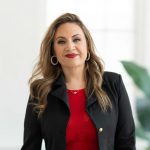
Firmspace-sponsor-bannerChristine Pietryla Wetzler, Founder and President of Pietryla PR & Marketing.

She has been a consultant since 2002. She founded a Chicago public relations firm specializing in communications strategy and media relations for packaging, CPG, and professional services clients. She has assisted clients with significant M&A and funding announcements, product launches, strategic thought leadership programs, and directed policy-changing public affairs campaigns. She is a proven strategist who generates consistent, widespread media coverage and manages significant press events. She has tremendous experience accurately integrating public relations, social media, and digital marketing to achieve desired messaging outcomes.

Throughout her career, she has spearheaded publicity efforts for larger clients like Dow Chemical, 3M, Rexam Beverage Can Americas, International Truck and Engine Corporation, and Hyster Company, as well as newer or disruptive companies like Footprint, National Coal Corp (Nasdaq: NCOC), Servidyne (Nasdaq: SERV), SPSS and Continental Broadband.

Since 2002, she has been in private practice with clients like Cask & Kettle, Pregis Packaging, Calia Stone, Vapiano, United Federal Credit Union, TCS Education System, and Oval Fire Products, among others, in both the B2B and B2C industries. Christine’s thought leadership has evolved into regularly serving as a guest or contributing writer. She is currently an active contributor to Forbes, Entrepreneur, Packaging Technology Today, and PFFC magazines. Christine received her bachelor’s degree in public relations from the University of Florida.

Connect with Christine on LinkedIn and follow Pietryla PR on Facebook and Twitter.

What You’ll Learn In This Episode

  • Pietryla PR and the problems she’s solving for her clients
  • Local client success stories
  • Active Campaign and how it helps her grow her business
  • Automation to save time

This transcript is machine transcribed by Sonix

TRANSCRIPT

Intro: [00:00:03] Broadcasting live from the Business RadioX studio in Chicago, Illinois. It’s time for Chicago Business Radio. Brought to you by Firm Space, your private sanctuary for productivity and growth. To learn more, go to firm spacecom. Now, here’s your host.

Max Kantor: [00:00:21] Hey, everybody. And welcome back to another episode of Chicago Business Radio. I’m your host, Max Kantor. And before we get started, as always, today’s show is sponsored by Firm Space, thanks to Firm Space because without them, we couldn’t be sharing these important stories. And we got a good one for you today. On today’s show, we have the founder and president of Pietryla PR and Marketing. So please welcome to the show, Christine Wetzler. Welcome to the show, Christine.

Christine Wetzler: [00:00:46] Thank you. Glad to be here.

Max Kantor: [00:00:48] I’m excited to talk to you about everything you’re doing. So let’s jump right in. Tell me a little bit about Pietryla PR and marketing.

Christine Wetzler: [00:00:55] Well, we’ve been here in Chicago for 20 years. I can’t believe it’s been that long. It’s gone so fast. But it has been. I have lived in Chicago a little bit longer than that. Worked downtown at a couple of PR firms prior to starting this one and for the last 20 years have been working with clients on both the B2B and B2C sides of the packaging, plastics and food and beverage brand side of things.

Max Kantor: [00:01:27] So what inspired you to start your own PR firm?

Christine Wetzler: [00:01:32] It’s actually kind of interesting because when I did it in 2002, there weren’t a lot of people. The gig economy wasn’t really a thing yet, and freelancing wasn’t really ubiquitous yet. So. So it was a little different. I started I had gotten laid off at an agency and that was happening at the time to too many different agencies. And the one thing that was kind of strange was our agency had a lot of different kinds of capabilities and PR was one of them. And so our staffing wasn’t as robust as I had seen at other agencies. So I was dealing with a lot of clients kind of on my own, which kind of made me realize, Wow, I’m I’m one person that can handle a lot of a lot of project management here. And then when I started interviewing for new jobs, I interviewed for one at a software company and they said, you know, well, this job really isn’t full time, but we can pay you part time. And they offered to 1099 me, which was kind of a new concept. And that just kind of melded those two things together and thought, well, gosh, if I could get 2 or 3 more of these, you know, I could run a successful business. So I reached back out to some of the clients that I had prior because they had nowhere to go. I mean, our agency was out of business and and picked some of them back up and and it just kind of rolled from there. It was, it was an, uh, you know, opportunistic. Two things just kind of came together and kind of clicked in my head. And, and then, of course, after a few years, everybody started getting the same idea. And now we have, you know, freelancing and starting your own business is something that is pretty fundamental, I think, for for most people Now.

Max Kantor: [00:03:32] What are some challenges a business would have to be facing for them to go, You know what, I could use Christine’s help.

Christine Wetzler: [00:03:39] I think, um, the biggest challenge is there are things about marketing and PR that are very difficult to understand. Um, and I think that it’s a very simple task. It’s kind of like when you look at somebody playing a game, you can look at it and say, Wow, that looks like a simple game, but then you start playing it and you realize it’s not as simple as it seems. And I think PR is one of those things where, you know, some people have a talent for it. They can be a little bit better at it than other people just naturally. But it is something that you have to practice over time and you have to develop the relationships over time and and know how to approach people. And I think that a business owner. Can very easily because of the way that they are kind of wired to want to be ambitious and to want to do everything can feel like I can do this myself, I can I can do this. And and I would say that when you get to the point where you realize, I need help with this, this is not something I can do myself. We’re the firm that bridges that gap because we do not function as a huge firm where we’re going to ask for, you know, $20,000 a month for a 12 month contract and and everything like that. We’re we’re going to come in small handful of people and say, okay, let’s talk about what you really want to accomplish.

Christine Wetzler: [00:05:17] Let’s focus on the things that really need to happen in order to push your business forward. And then let’s let’s work together to make those things happen. Um, you know, you’re working with me, you’re working with other senior leaders that have done this. We’re not, um, we’re not coming in with a team of young people who have to ask permission to do things before they do it. We’re coming in and really being helpful to an owner or to a brand owner. Um, the other thing that we, we offer and we do this a lot is because content has become so much, so much a big part of what we offer, um, is that we’re very quick studies, particularly in the industries that we service. And so when you, when you work with us, you know, you don’t have to get us up to speed over a couple months. Um, you know, we can write content and create content within a matter of days that resonates so because we already know what we’re doing. So, so it’s, it’s pretty, I think just to kind of the too long didn’t read version of your the answer to your question is we are the skilled kind of bridge between a much, much bigger agency and a very uh, very detailed single. Consultant. We offer the best of both of those things so we can we can help kind of ease you into doing this on a bigger scale.

Max Kantor: [00:06:57] Now, you talked a little bit about content creation and and writing copy. What are some other services that you kind of provide to your clients when they come to you for help?

Christine Wetzler: [00:07:08] Yeah, the content is a big one because that’s really. King Right now with with everything we’ve seen open up into social media and influencers and developing relationships with those kind of content creators as well as reporters. Um, but we’ve also seen, uh, different kinds of marketing. Right now we’re, we’re seeing people go back to more of the traditional basics. Um, email marketing, which sounds very old and traditional, but when we do it, it’s more personalized. It’s more segmented and fundamental. So we’re not recommending that people blast out 5000 emails to people. We’re recommending that they, they segment them into, um, bits of, you know, ten, 15, 20 contacts at a time and send personalized content to those folks and then use a, an automation system or a segmenting system like active campaign or, or, you know, there are myriad of them. But the one that we use is active campaign to make sure that you can do that at scale even if your list is 5000 people. Um, so we’ve been incorporating email, we’ve been incorporating Google ad campaigning, Um, and we’ve been, we’ve been doing quite a bit of keyword searching and creating content with the intent of getting people online to pay attention to what’s happening to.

Max Kantor: [00:08:48] So what it sounds like to me is like every time a business comes to you, you guys are really putting in the work to give them that unique experience that’s going to help their growth in a in a unique and specific way through research, through education, to introducing them to programs, like you said, active campaign or Google ads. You guys are really putting in the work to help each client individually.

Christine Wetzler: [00:09:12] Absolutely. Absolutely. And we’re helping them develop their own skill set, too. Um, you know, we’re agnostic, so I know I mentioned active campaign. That’s the one we like best, but we don’t need to work with any one specific software. I like to tell people, you know, we sit down with you. If you give me a problem, we’re going to help you fix it in the best way possible. And if that means that it’s a it’s another, you know, solution, then that’s what it means. We’re going to help you get up to speed with it or it might not be software at all. It could just be that maybe we need to help you reorganize your time and the the team that you have in place in house so that we can create more content in house. There’s a lot of folks that are that have the resources. They’re just not being used properly or they’re being used in a way that everyone kind of said, Oh, this is the way you need to do it, but it’s not moving the needle. And they don’t understand why we come in and say, well, this is why.

Christine Wetzler: [00:10:17] So let’s let’s focus more on, you know, doing this instead of doing what what everyone kind of told you you should be doing instead. Because at the end of the day, all of this is supposed to sell whatever it is that you need to sell. So, you know, it should be fun and it should be entertaining and it should be fun to work on. And ultimately, that’s what we all want out of what we do every day. But at the same time, it’s supposed to sell. So you want to sell your product, you want to sell the skills of your team. You want you want to create a culture that that draws people in is compelling. You can do that with content and you can you can radiate your company culture with content, but there isn’t a silver bullet for it. You know, you do have to sit down and give some thought to what the best way to do that is. And it is different for everybody just because everybody’s different, you know, there is no out of the box way to do it.

Max Kantor: [00:11:25] Can you share a success story that’s come out of you working with a client?

Christine Wetzler: [00:11:30] Oh, absolutely. We have one right now. We’re we’re just finishing up a really successful lead generation program for a company called Secure Applications. They’re women owned business manufacturer’s representative for security packaging solutions. So when you are, you know, say, like Intel, you’re shipping a bunch of pallets of computers, you need to have, you know, RFID packaging. You need to have certain kinds of shrink wrap solutions, you know, like tape solutions and things like that on the cargo to make sure that nobody steals anything while it’s sitting in the cargo bays and things like that. This company makes that. People don’t really understand that until they need it or it’s mandated by somebody to have. So they have an audience that is educated after the fact, which is really tough because they don’t know what they don’t know. So we came in and created a new website, created some content. We’ve been able to create a little bit of content on social media to help to help create some forward education, like why you would need this, how simple it is to enact where the point in the process is to start thinking about, you know, implementing some of these security measures and and why it’s important.

Christine Wetzler: [00:13:06] And then and then also just case studies talking about when other people do it so that, you know, people aren’t thinking about it when they’ve been told, hey, it’s a regulation, you have to have this kind of label on your palate before we can store it. We want them thinking about it before that. And so we’ve been able to basically overhaul their entire lead system. And they’ve not only gotten more leads, but very high level leads out of it. So we’re very pleased with the results of that program. Um, and as we roll out their new website, I’m, I’m expecting it to be even better the lead quality once that that happens. So you know and that kind of thing really wasn’t unattainable. It wasn’t something that costs an arm and a leg. It just was just a tweak. It was a couple tweaks and a re shifting of how we talked and how we communicated with people online.

Max Kantor: [00:14:12] So, Christine, that story is a perfect kind of transition into my last question for you. This is a question I ask every guest that comes on Chicago Business Radio for you. What would you say is the most rewarding part of what you get to do?

Christine Wetzler: [00:14:28] Oh, that for sure. I mean, that business. Like I said, Gina, the owners woman-owned business, I know that it had the capacity and the opportunity to help a lot of people, you know, protect their assets. Um, you know, she works with people in a way that’s very similar to us, very principled, very, very nice and welcoming. You know, she’s the kind of person when somebody calls her and they say, what can I do? She’ll stay on the phone with you forever and tell you what all the different ways you can do things and and find the least expensive and the easiest way for you to do it. And so helping her improve the quality of the leads she was getting, helping her expand her business, she got to the point where she could hire a salesperson. That was amazing. Just feeling like that was something that we had a hand in helping with was, I mean, I can’t even describe that. That’s just such a good feeling. And so, yeah, I mean, I think we have we have it’s different with every client, but we have a moment like that with almost all of our clients where, you know, there’s there’s opportunity to be had. And we finally get to that point where they’re realizing it and it’s just a nice little celebration point. And it’s it’s fun. That’s that’s what makes us worth worth all the hard work every day.

Max Kantor: [00:15:56] Now, if someone wants to work with you guys or learn more about all the services that you provide, what’s a good website or maybe social media where they can do that.

Christine Wetzler: [00:16:06] Mhm. Well, um, this is how we used to spell our name when we were little kids. It’s pi. Try a pr.com. So that’s petrilla.com is our website. Everything’s on there. You can also just email me directly. Um, I usually answer everything directly. It’s Christine at petrilla pr.com. And again that’s just pi try la pr.com and then you can also call us at (312) 612-0283.

Max Kantor: [00:16:41] Awesome. Well Christine, it was such a pleasure talking with you today. I mean, hearing you share all your stories, you’re so passionate about what you’re doing. And it was just a pleasure to learn more about your business and everything you guys are doing for the community. We appreciate you.

Christine Wetzler: [00:16:54] Oh, thank you. I appreciate you asking all these questions. It was lovely to share some.

Max Kantor: [00:17:00] Of it, of course. Well, thanks to you for listening to another episode of Chicago Business Radio. I’m your host, Max Kanter, and we’ll see you next time.

Intro: [00:17:11] This episode of Chicago Business Radio has been brought to you by firm space, your private sanctuary for productivity and growth. To learn more, go to firm Space.com.

Tagged With: Christine Wetzler, Pietryla PR & Marketing

Tarji Carter With The Franchise Player

March 2, 2023 by Jacob Lapera

Atlanta Business Radio
Tarji Carter With The Franchise Player
Loading
00:00 /
RSS Feed
Share
Link
Embed

Download file

Tarji Carter, Founder and President of The Franchise Player.

The Franchise Player was created to increase franchise ownership and wealth across the African American community. Their goal is to provide a clear path to ownership for aspiring franchisees with franchise brands committed to fostering inclusive and diverse environments and providing a sense of belonging.

With more than a decade of experience in franchise sales and development, she has helped hundreds of small business operators realize their dream of owning a franchise while expanding the footprint of some of the world’s most delicious brands: including Cinnabon, Carvel, Baskin Robbins, Dunkin, Wingstop, Edible Arrangements, Fuddruckers, Bojangles’, and more. Her focus is pushing for Black entrepreneurs to operate high-performing restaurants, while helping companies grow their brands and build wealth in the Black community.

Connect with Tarji on LinkedIn.

  • The Franchise Player
  • Franchise experience
  • Work experiences with Cinnabon, Carvel, Baskin Robbins, Dunkin, Wingstop, Edible Arrangements, Fuddruckers, Bojangles’,etc.
  • Resources she provides to aspiring franchisees and business owners

This transcript is machine transcribed by Sonix.

TRANSCRIPT

Intro: [00:00:04] Broadcasting live from the Business RadioX studios in Atlanta, Georgia. It’s time for Atlanta Business Radio, brought to you by on pay. Atlanta’s new standard in payroll. Now, here’s your host.

Lee Kantor: [00:00:25] Lee Kantor here another episode of Atlanta Business Radio, and this is going to be a good one. But before we get started, it’s important to recognize our sponsor on pay. Without them, we couldn’t be sharing these important stories. Today on Atlanta Business Radio, we have Tarji Carter, the franchise player. Welcome.

Tarji Carter: [00:00:45] Welcome. Thank you so much for having me, Lee. I appreciate.

Lee Kantor: [00:00:48] It. Well, I’m so excited to learn what you’re up to. Tell us about the franchise player, how you serving folks?

Tarji Carter: [00:00:55] So the franchise player was created out of a need. I’ve spent the past decade and a half selling franchises for some of the world’s most delicious brands. And I noticed that there was there was a huge disparity in the amount of African Americans who were franchise owners. And so throughout my career, I just really noted it was just something that stood out to me throughout the years. And I realized that it’s just a matter of bringing information, education and resources to the community so that they can be able to break down the myths versus realities and really create an achievable plan to prepare for franchise ownership.

Lee Kantor: [00:01:35] So what attracted you to working with franchises early in your career?

Tarji Carter: [00:01:40] It’s kind of a fluke how it happened. I actually was working in the hotel industry and I happened to meet the then president of Cinnabon Corporation, and before you knew it, I was on the team as a sales manager for the Carvel ice Cream brand and within eight months was promoted to director over Cinnabon and Carvel for the entire country. And that’s really how my career in franchising took off. So I, as a kid growing up in the inner city of Boston, I knew nothing about franchising. I had never even uttered the word franchise before in my life, and then was just really kind of thrust into it. And it’s been my passion ever since.

Lee Kantor: [00:02:26] Now, when you were working with the franchise or your view of the business is different, I would imagine, than somebody that’s an aspiring franchisee. Can you explain maybe some of the opportunities that that budding entrepreneur, that person who has that itch to become an entrepreneur would benefit from learning more about franchising, where, you know, there’s a playbook for success for franchisees.

Tarji Carter: [00:02:52] There is a playbook, but there’s a lot of work that needs to be done on the front end. And the preparation piece is really, I think, where a lot of folks don’t really give it as much effort as as they probably should before they sign on the dotted line. And I think the due diligence piece is also another area that most individuals don’t really take the time to to to really dig into. So I think just really having an opportunity to prepare before you inquire with a brand really helps you to get off to a great start. And and so that’s what the franchise player does. We, we prepare individuals for for that application process. They we inform them on what to what to expect, how to be ready when when it’s time to apply and some of the nuances that are involved to achieving an approval by a brand. Right. They award franchises and they award them based on a number of different criteria and every brand’s going to be different. And so someone who’s green to franchising or is just looking to pivot in in a career move or looking to add an additional revenue stream, it’s not that it’s hard, but it really does take some some some effort on the front end to ensure that you’re really vetting out the brand, the opportunity, and then whether or not franchising is a good fit.

Lee Kantor: [00:04:26] Now, it’s interesting because franchising, they’re very proud. I hosted for many years a show called Franchise Marketing Radio where I got to interview lots and lots of franchisors and to a to a franchise. They probably each of them you probably know more than me, but probably each of them have some program for veterans and they’re very proud of a veterans program, but they don’t necessarily also have a program to help underserved community members get franchises. Is this where you come in and you’re trying to fill that niche?

Tarji Carter: [00:05:03] This is exactly where I come in. So I work with a number of brands currently who are devoted and dedicated to improving the diversity within the franchisee pool. And so I’m able to work with different brands. We come to an agreement in terms of incentives. So in some cases it’s a reduction in franchise fees or royalty rates. In other cases, it’s a it’s a commitment to additional support from an operation standpoint. And so every brand is different. Every brand has something different to offer. But the franchise brands and franchisors that I work with are really dedicated to to the cause, and they understand that there is a need to really extend themselves in a way that hasn’t been extended before. And so, yes, that’s exactly where we come in.

Lee Kantor: [00:05:57] Now, are you finding that franchisors are like saying, Oh my God, this fantastic. Where have you been? We’ve been looking for somebody like you to help kind of be that bridge to help us enter that market because it is a win win situation. You’re helping them get franchisees, which is a hard thing to do.

Tarji Carter: [00:06:14] And yeah, I think they’ve been very receptive and it’s not just finding the franchisee. So the candidates that I work with, I don’t refer them to a brand unless I know they meet the criteria. So I might work with an individual today who’s not ready, but in six months or a year he could be ready. So now I can deliver this candidate to the brand with a bow, meaning their person is not going to have to work as hard or jump through as many hoops. And once that candidate enters their sales funnel, it’s a shorter sales cycle for them. And so they’ve been very receptive to that. It’s really kind of an I don’t want to say it’s an untapped market, but there’s definitely a lot of potential with what I’m doing in the candidates that come through the program.

Lee Kantor: [00:07:04] Now, are you finding the candidates open to the idea of working for a brand like the ones you mentioned, you know, Carvel or Duncan or one of those kind of. Is that meet their criteria of how they envision themselves as a business owner?

Tarji Carter: [00:07:23] You know, there’s some hard conversations that that that take place. And the hardest of them all is, you know, it doesn’t just appear right. There are some turnkey opportunities, but even with those, there’s still some work that has to be done. There’s a level of commitment that has to be present. And so once we have those conversations, in some cases, some folks come ready, they’re like, Listen, I know what it is. Let’s do it. Let’s just let’s go ahead and get started. But, you know, it’s a matter of I believe the franchise player is really a safe space for people to come and kind of dip their toe in the water and see if franchising is truly an opportunity. So we have those real life tough conversations and sometimes it works out where they’re ready to move forward. And sometimes it’s it’s a matter of, you know what, this isn’t a good fit for me because I’m really a true entrepreneur. I want to do things in my own way. I want to make my own rules kind of thing. And so, you know, just a really again, going back to separating the myths from the realities as it relates to the business model.

Lee Kantor: [00:08:29] And that’s one of the realities of the business model, right? Like a franchise is a kind of baked situation. They have rules. You know, you can’t be grilling your burgers at McDonald’s because you think it tastes better. Like there are certain ways that we do things at a given brand.

Tarji Carter: [00:08:47] Absolutely. And that’s what you’re buying into. You’re buying into the process. The systems. Typically, it’s a battle tested approach to that particular industry. Right. And so you’re buying into the experience. You’re benefiting from the mistakes that the brand has made and you’re able to basically reap the benefits of it. And so when you explain it, you know, and I can I can take the time to explain it because I’m not working for a brand. I’m not the clock isn’t ticking for me. Typically, most brands, when you’re working for Brand as a franchise sales person, you know, there’s a there’s a certain window, right? You need to have this deal closed within a certain amount of time. So the franchise salespersons, hand hands are kind of tied. They don’t have as much time that I have to prepare the candidate. They’re really expecting the candidate to come already prepared and knowing that they want to move forward and make the decision to become a franchisee again, should they should they be approved by the brand?

Lee Kantor: [00:09:47] And again, that’s one of the trade offs of a franchise model, is that they have systems and they have a methodology on how they do what they do. So if you don’t fit cleanly into it, they’re not usually they’re not the people who color outside the lines very often.

Tarji Carter: [00:10:04] That is correct. And sometimes when I work for corporate offices, some more times than not, it wasn’t one individual that met all of the criteria. Typically, it’s a group of folks, right? Someone might be their strength might be in real estate, someone else might be really good at the HR piece. And so the franchise player, we can we can work with individuals to help them build that infrastructure before they go to the brand, because the goal is ultimately to get them approved so that they can become a franchisee and start to create generational wealth.

Lee Kantor: [00:10:43] And are you a franchise broker or do you work with franchise brokers or are you something altogether different?

Tarji Carter: [00:10:50] I mean, I don’t know that any broker even likes that term, but I guess in a sense, yes, I would be a broker. So I but I work like both ends of the candle, right? So I’m working with the candidates to prepare them for the brand. I’m working with the brand to help them find the right candidates. And so it’s it’s a win win for everyone.

Lee Kantor: [00:11:10] So now in your methodology, you have something called pick your position. Can you talk about that?

Tarji Carter: [00:11:16] Absolutely. So pick your position is really just a self identified identification method. We have four different positions. The first would be in operations, someone that works in operations currently, maybe they are director of operations for a brand and they’re looking to move into an ownership position. So that’s position number one. Position number two is someone who is there in a different career altogether. But they they’re intrigued by franchising. They want to invest in some into something they’re not quite sure just yet what that might be. And so that’s the the the individual who is who is a professional but is looking to move into franchising, whether it be full time or part time, that would be position number two. Position three is the existing franchisee with another brand who’s looking to diversify, possibly even take down some larger acquisition deals. I work with brands who have pretty large opportunities for acquisition and in and I have some candidates that fit that third, that third position who I can then partner with these larger brands. And then the fourth position is someone who has a they have a concept and they want to eventually convert it into a franchise. So I, you know, all things franchisee, I don’t know everything about franchising, but I know enough to have a really strong team around me that can help with different aspects in different disciplines within the process.

Lee Kantor: [00:12:56] And something that I’m sure you found was while working inside that world, the insider world of the franchise, or you were seeing a lot of folks, franchisees, especially attaining a lot of wealth, that generation, generational wealth you were talking about. And you want to, you know, open that opportunity up to folks that maybe not necessarily even thought of that path.

Tarji Carter: [00:13:20] Yeah, they may not have thought of it or the opportunity was just never presented. Right. So, you know, we’re not talking about folks who don’t have a solid professional background. And, you know, these folks are just looking for new and new, new, newer ways to create that wealth. And so, yeah, we definitely want to make sure that we’re providing those opportunities to them and and then making sure that the brands are committed to the to the cause of what we’re what we’re doing, which is really franchising with integrity. Right? We think everyone deserves an opportunity. There’s enough to go around for everyone. And you know, we want to work with brands that that want to figure out how do we get to a yes with your candidate. Right. Something may or may not be off, right? There may be a group that I work with that that’s ready to just kind of hit the ground running. But what I found a lot of times in not just with the minority groups, but just in general, when when I would work with different different individuals or groups, I noticed that most folks who work in operations, right, they’re dedicating their lives to the work that they do.

Tarji Carter: [00:14:35] And so oftentimes they’re they’re away. They’re on the road a lot. They’re really focused on work. So in most cases and I might be speculating a little, but there’s usually some sort of a ding on the credit or maybe there’s a they might not have the financial wherewithal to enter into this opportunity on their own. And typically there’s an explanation for that. And if we can have that conversation, if the brand allows us to dig a little bit deeper versus saying, hey, you don’t meet this criteria here, so we have to decline you if they’re willing to have a conversation, because sometimes it’s a matter of, you know, maybe there was a divorce. Right. And we know how that can turn out. Right? Usually people take a hit on their finances, their credit. You know, it’s not a fun situation in some of the brands that I work with are willing to have those conversations, conversations and not just decline someone because this one particular metric wasn’t met.

Lee Kantor: [00:15:32] Right. Which could just be a function of timing.

Tarji Carter: [00:15:35] Absolutely. It happens more, more times than people even. And this is a conversation no one really talks about. And when I was working for different corporations, I would bring this up in meetings and I would notice like a light bulb would go off. Like most people don’t even think about it. Like life is happening for everyone. You know, individuals are not just numbers in words on a piece of paper. There’s a human being behind that, that the computer, that application. And if we can figure out how we get to a yes, I think it opens up a world of opportunity for everyone.

Lee Kantor: [00:16:09] So now what is it like been for you going this entrepreneurial route, you know, outside the protective coating of the franchise of a franchise or a larger corporation?

Tarji Carter: [00:16:23] I think it’s been great for me because I’ve worked for a lot of different brands. You know, some folks have spent their whole career at one brand and that’s all they know. I’ve worked for over ten brands in 15 years, and that might seem like a lot to everyone, to some folks, and it is a lot. However, I’ve gained experience from all these different brands that I now have that no one else has, right? No one no one’s walked in my in my shoes down that path of all of these different brands. And so I think working independently allows me to tap into everything that I’ve learned and and apply it in different ways. And I’ve met so many great people and I’ve been able to just kind of garner so many different resources that I’m I think I’m better utilized in this in this capacity versus being kind of captive with just one brand at a time. So I’m able to have relationships with many different brands and take the time, like I said earlier, with the candidates to figure out what’s the best opportunity. So maybe one candidate is is more qualified for something that is is is like maybe a snack brand or someone else might be want something or be a better fit for a pet services concept. Right? So I get that I have the ability and the flexibility to really. Feet in the dirt, get in the mud with the candidates and really figure this thing out. How do we make this fit for you?

Lee Kantor: [00:17:58] And that’s an important thing. You brought up that a lot of people think of franchising. And the first thing that comes to their mind are these food franchises. But there are franchises in pretty much every industry niche that you can imagine, and it’s just a matter of matching up the the person with the right fit.

Tarji Carter: [00:18:16] Absolutely. It’s almost like 300 different industries. Right. And so the different there are different industries, there are different price points, investment, investment points. And and it’s not one size fits. All right? You have to really dig into what is this individual bring to the table, what are their passions, what is their financial wherewithal? Do they have a team that they can put together that again, back to the initial what we discussed earlier in the conversation, you know, who on their team can handle which disciplines within their within their infrastructure. And so I think it just really opens up a lot of opportunity.

Lee Kantor: [00:18:59] So what do you need more of? How can we help you? Do you need more relationships with franchisors? Do you need more folks to raise their hand and say, Hey, I’m open to this, I want to learn more about franchising? How can we help you?

Tarji Carter: [00:19:11] Thank you for asking. I really appreciate that question. Yes, I mean, all of the above, right? We want to work with brands that that recognize that there is a need for some change. Right. We want to work with brands that say, listen, we we’re starting from ground zero. We know we haven’t done a great job of bringing in diverse candidates. And we recognize that. And you know what? We want to make a commitment to do better. Those are the brands that we want to work with because we think about it. You know, you have to start from somewhere, right. And some some just people in general, just our human nature is we don’t want to admit where we fell short. Right. And no blame here. We don’t want to sit here and point fingers or anything of that nature. It’s a matter of partnering with the brands that get it and want to grow and do better. And then also tap into this, this, this, this, this pool of candidates that they may not have considered before. So, yes, we would love to work with with brands that that that have this as a priority. Right. We don’t want to work with brands that where it’s just kind of a pie in the sky idea. We want to help bridge that gap. And so if there are brands out there that want to partner with what we’re doing here, we would love to talk to them.

Lee Kantor: [00:20:34] So if they want to learn more, what’s the website? What’s the best way to connect with you or somebody on the team?

Tarji Carter: [00:20:40] Absolutely. So the best way to connect is to email me info at the franchise player or visit the website, which is the franchise player dot com.

Lee Kantor: [00:20:52] Good stuff. Well, congratulations on all the momentum and you’re doing important work and we appreciate you.

Tarji Carter: [00:20:58] Well, thank you so much. And thank you for having me.

Lee Kantor: [00:21:01] All right. This is Lee Kantor. We’ll see you all next time on Atlanta Business Radio.

About Our Sponsor

OnPay’sOnPay-Dots payroll services and HR software give you more time to focus on what’s most important. Rated “Excellent” by PC Magazine, we make it easy to pay employees fast, we automate all payroll taxes, and we even keep all your HR and benefits organized and compliant.

Our award-winning customer service includes an accuracy guarantee, deep integrations with popular accounting software, and we’ll even enter all your employee information for you — whether you have five employees or 500. Take a closer look to see all the ways we can save you time and money in the back office.


Follow OnPay on LinkedIn, Facebook, and Twitter

Tagged With: Tarji Carter, The Franchise Player

Michael Udine With Broward County

February 28, 2023 by Jacob Lapera

Innovation Radio
Innovation Radio
Michael Udine With Broward County
Loading
00:00 /
RSS Feed
Share
Link
Embed

Download file

Michael Udine was elected to serve as the Broward County Commissioner for District 3 in November 2016 and was re-elected in 2020. He represents the Northwest Broward cities of Coral Springs, North Lauderdale, Parkland, Sunrise, and Tamarac.

From 2003-2016, he proudly served the City of Parkland, first as a City Commissioner and then Mayor. From November 2021 to November 2022, he served as Broward County Mayor. He is focused on expanding opportunities for small businesses, attracting new industries to our community, and public safety to build a bright future for all residents of Broward County.

In addition, he has been a partner for the past 25 years at the law firm of Udine & Udine, which maintains its office in District 3 in Northwest Broward. The firm focuses on real estate, insurance subrogation and banking law.

Michael and his wife Stacey reside in Parkland, Florida. They have three children who all attended local public schools in District 3. His two sons, David and Matt, and daughter Lexi have all attended the University of Florida. He has dedicated himself to his family, professional, and elected life within his community.

Connect with Michael on LinkedIn and follow him on Facebook and Twitter.

What You’ll Learn In This Episode

  • Tech Runway/Levan Center
  • Start-up help via Broward County OESBD
  • Attraction of new tech business to Broward County through the GFL Alliance
  • Building out infrastructure to support future modes of transportation
  • Tech utilization throughout future county construction and environmental protection projects

This transcript is machine transcribed by Sonix

TRANSCRIPT

Intro: [00:00:01] You’re listening to Innovation Radio, where we interview entrepreneurs focused on innovation, technology and entrepreneurship. Innovation radio is brought to you by the world’s first theme park for entrepreneurs the Levan’s Center of Innovation, the only innovation center in the nation to support the founders journey from Birth of an Idea through successful exit or global expansion. Now here’s your host, Lee Kantor.

Lee Kantor: [00:00:28] Lee Kantor here another episode of Innovation Radio. And it’s important to recognize we couldn’t do this show without our sponsor, the Levan Center of Innovation. Without them, this show just wouldn’t exist. I’m so excited to be talking to today’s guest. Michael, Udine with Commissioner Broward County. Welcome, Michael.

Michael Udine: [00:00:48] Hi, Lee. Thank you for having me. I’m a big fan of everything they’re doing over at the Levan Innovation Center over at NSU. I know Jon very well, and I’m happy to join you this morning to talk about the innovation economy and specifically the innovation economy in South Florida and Broward County.

Lee Kantor: [00:01:08] Well, before we get into that, can you share a little bit about your back story? Why was it important to you to get involved in public service?

Michael Udine: [00:01:16] So I got involved in Parkland on their city commission in 2003 as a way to give back to the community, treating it like a volunteer and a and a role where I wanted my my children to see and see involvement in the community. I want to help people. I believe in paying it forward. And this was an interesting way for me to do that, to learn a lot, to help the Northwest Broward community grow. And the rest, as they say, is history. I was mayor of Parkland from oh six until 2016. Watch the growth of Parkland, which turned from, you know, a smaller bedroom community to a little bit of a bigger bedroom community. In 2016, I ran for the Broward County Commission and have been working with a dynamic board of County commissioners for the last six years. I was honored to be selected and chosen as the mayor of Broward County from last year in 2022. Now I’m back on the commission as we rotate the mayor. So one of my themes when I was mayor and one of my passions is technology and bringing the entrepreneurial and innovation spirit to South Florida. And it’s been an honor of mine to serve the residents of Broward County for these past 20 years.

Lee Kantor: [00:02:46] And then at the beginning of your career was in business, right? You were a successful business person.

Michael Udine: [00:02:51] So you’re my lens is business. I’m a practicing attorney. Presently. I served on the board of directors of a community bank for about ten years, which we built and sold to one of the larger community banks in the state of Florida. I’m an active investor in innovation and tech. I believe in building businesses. I believe in the interaction between business and government. My public service is all technically classified as part time, even though many times I spend a full time amount of time on the jobs. So I still have my law practice and I still have other interests that I’m involved with, that I do simultaneously with being an elected official.

Lee Kantor: [00:03:37] And because of that lens, do you feel that it’s really easier for you to embrace the idea of these public private partnerships where the community business, the government, everybody can kind of work arm in arm for that the goal of serving the community.

Michael Udine: [00:03:54] So as a business person, I like to look for efficiency and I like to look for logic. And when there are these projects that are efficient and logical that make sense, I usually like to try and support them. Take the Leaven Center. The Leaven Center in and of itself was an interesting thing that got done in record time. It was a public private partnership in a way. Broward County had the space in the library. We were partners with Nova Southeastern University. So and then Mr. Levine came in with his vision and his monetary contribution. The whole thing clicked together, and within a very quick time it was up and running. And now you have that as a centerpiece for the start up economy in Broward County.

Lee Kantor: [00:04:44] And that to me is where, you know, you can really have explosive growth when you have that type of partnership in both sides can kind of get on the same page and really leverage the strengths of both kind of sides of this coin here. And and the Levant Center is a great example of how that can happen quickly and make the big impact in the community.

Michael Udine: [00:05:08] I believe in that. And I’ve been to Sullivan Center many times. I’m a big supporter of what they’re doing there. I’ve been with John throughout the world, promoting the Levant Center and Broward County as a tech hub, as a place to generate jobs, as a place to generate the economy, as a place to start and incubate new businesses. And I’ve said before some of the things that we’re seeing at the Levant Center right now in ten and 15 years, those will be companies that are on the S&P 500 and on Nasdaq that we’re going to read about. And they’re going to all have been birthed in the Levant Center in Broward County in South Florida. And we’re going to see that story in the future. And it’s exciting to be a part of it. And I think when you walk in there, you see that excitement of innovators that want to be together, that want to be in in a collaborative space to push the ideas forward.

Lee Kantor: [00:06:07] Now, do you find that communities all over the country need this type of ecosystem where you have a place for these budding entrepreneurs to kind of learn and grow and to see what’s possible and to be partnered with other people who have been there and done that to help them accelerate their growth.

Michael Udine: [00:06:27] I really do. A couple of years ago, I was present and involved when the rise of the Rest and Revolution Financial came down to South Florida and their big thing was going outside of Silicon Valley, going into other areas in the country to see where the startup and innovation is happening. It’s certainly not going to all happen in Silicon Valley, and we’re seeing that now once and when. When they did come here a few years ago, this was before the pandemic. This was before any COVID. A Broward company won that competition, Zenda, which is a which is a startup that started right here in Broward County and is having explosive growth in the financial services industry. And we’re seeing that. And then the pandemic comes and people can kind of work a little bit more remotely and they can quote unquote, live in the sun and work in the clouds. And that’s our Broward County motto for bringing businesses down here. So a place like like the Levant Center feeds right into that.

Lee Kantor: [00:07:35] Now, are there any other initiatives you’re working on to help promote that new tech businesses coming to Broward County?

Michael Udine: [00:07:45] You know, it’s something that I’ve been very passionate about and we’ve seen, you know, and by the way, I think now that every business in a way is a quote unquote tech business. And we’ve seen, you know, if you’re at City Furniture, which is a big business in my district, they will tell you that not only are they a furniture company, but they’re a tech company because that’s how they’re getting their products out. That’s how they’re doing the logistics. And we keep seeing that. So we’ve seen like El Al, who has moved their headquarters down to Broward County, they’ve come here and they want to they want to be in Broward County because of what we have to offer gateway to Latin America, access to Port Everglades, to FL, to a big convention center to to to the Startup Foundation between Israel and Fort Lauderdale with the NMSU Innovation Hub. And we see that over and over again with company after company that want to come down to South Florida and Broward County and start up and incubate and grow their businesses. So it’s something that we continually look to do, working with the Greater Fort Lauderdale Alliance, working with NDSU, working with the innovation centers around the country.

Lee Kantor: [00:09:01] So now let’s talk a little bit about infrastructure. What do you or is there anything on the runway to help in that area?

Michael Udine: [00:09:11] Well, we’ve expanded our airport. We continue to expanding it, and it’s a gateway to Latin America. We’re doing a lot throughout the county. When we when we did the penny sales tax a number of years ago for roads and transportation included in that. And a big part of that was fiber optics, which we’re trying to put in a lot of the main areas throughout the county. The technology is moving fast. Our port and Port Everglades, again, the gateway to Latin America. We’re expanding our convention center to bring more business down here. And we continue to be a support system and to be a government that can help companies flourish and grow here. We also have the responsibility to make sure that we’re bringing that growth in the proper way. So as a government, we need to make sure that there’s better housing affordability because people that are going to come and move here to work. These companies need to have a reasonable place to live. We need to find that there’s better transportation infrastructure because people want to get around. We need to work on education initiatives, which we do, and we need to work on cultural and the arts because people want to be here. They want to be able to do the fun things that make the communities flourish. And finally, and very important to Broward County, we need to make sure that we’re always thinking about resiliency, because whatever your politics are on this climate change in South Florida and our sea levels rising and different things that we’re seeing with king tides are real in South Florida and we need to pay attention to it because employees and the younger tech culture that are moving here, they’re demanding that as well.

Lee Kantor: [00:10:59] So what do you need more of? How can we help you?

Michael Udine: [00:11:03] I think that, you know, as these companies move here, as they scale up, as they as they mature, they need to hire our local tech people. We’ve just started an interesting campaign that we’ve put some billboards up in Silicon Valley and different areas that you think of with tech. And we said, we know, we see that companies are laying off tech workers. We need them here in South Florida. We need a better and we need a more educated and we need a higher performing workforce. And we’re going to go out and help get that. And we have that here. We have a cluster of universities with Nova Southeastern University of Miami, Florida, Atlantic, Broward College University. It all feeds into that. And we need to all work together to make things move faster and make things move better.

Lee Kantor: [00:11:59] So if you were a budding startup founder, how would you recommend that they plug in to the ecosystem there in Broward?

Michael Udine: [00:12:09] So I would definitely go check out the Innovation the Levant Innovation Center. I think that it puts you with like minded people. I would get involved with the Greater Fort Lauderdale Alliance. The good thing about South Florida and Broward County is you’re very close to real decision makers in real time. You know, there’s always a local elected official in a lot of these events. Decision makers are there. You can rub elbows with CEOs of major companies in South Florida, but I think it starts in a place like the Levant Center for Innovation. And I think that, you know, all the disciplines are right there there at Nova Southeastern University. So let’s take it. Let’s say you’re a health tech startup or you’re a health tech company. What better place to be than And it’s you in their innovation center because you have a med school there, both D.O. and an MD. One of the few places in the country that has that. So you have people that can work with you in those disciplines. You have a college right there, a law school right there, a business school right there. You have everything clustered right together in the central part of Broward County to help you grow your business. So I think that’s a big advantage that we have that helps us in the future.

Lee Kantor: [00:13:25] Now, if someone’s listening outside of the area, can you are there certain clusters or certain kind of sweet spots that are are really good for Broward that you already have kind of some momentum in that if they’re working in that space, this would be a great way for them to maybe accelerate their growth.

Michael Udine: [00:13:47] I think that the best part to look is on the Greater Fort Lauderdale Alliance website. They talk about some of our targeted industries. And just by knowing what Broward County and what Fort Lauderdale area is, Marine tech, right? We have a big marine industry, aviation, health, tech, fintech. We have a lot of that right here in Broward County. And we look at our targeted industries, travel and tourism. You know, we have Port Everglades is bringing down Disney cruises, all different kind of cruise companies. We have all of those things right here at your fingertips that you can tap into and and and be a part of. So there’s a lot of opportunity to get involved with those situations.

Lee Kantor: [00:14:43] So if somebody wants to connect with you or anybody in Broward County, what what do you think is the best starting point to kind of launch into a discovery about what’s to be found at Broward County?

Michael Udine: [00:14:57] I mean, I’m I mean, for me personally, I’m very active on social media at Michael Udine. I’m on Twitter, I’m on LinkedIn, Instagram. I respond. Usually I get I get unsolicited LinkedIn messages every day for meetings with new tech startups. I usually listen to their we we set up a day when I listen to some of their, you know, their elevator pitch, so to speak, and I try to refer them to the right person within the county. A lot of times I’m referring them over to NDSU, you know, to check out what they have to offer. But but we’re easy to kind of navigate around the Greater Fort Lauderdale Alliance website. The Broward County website has a lot of different links. We also just started and it’s getting very big. We’re very big into film and the technology around making television shows and making movies in film, Florida and film Broward, that’s kind of taken off and we’ve put a lot behind that throughout the county. So there are those opportunities there. There’s really a lot to get involved with in Broward County and with our mid range access between Palm Beach County, which is getting a lot of the financial services company and Miami-Dade County, which is getting a lot of the the new tech type things, we’re right there. We’re right in the heart of it all. And we have a we have an easier cost of living and quality of life in Broward. And a lot of times people use the Miami or South Florida term synonymously. If they’re if they’re in Palm Beach County, they may still say they’re in Miami and vice versa with Broward. So it’s there’s a lot out there and there’s a lot to take advantage of.

Lee Kantor: [00:16:47] Well, Michael, thank you so much for sharing your story today. You’re doing such important work and we appreciate you.

Michael Udine: [00:16:54] Thank you so much for having me. Keep up the good work. Follow me at Michael Dean on Twitter or LinkedIn or any of the social media. And I look forward to one day watching you start at the Innovation, the Levant Innovation Center scale up in Broward County and and who knows, exit and be a future Broward County unicorn.

Lee Kantor: [00:17:15] Amen to that. Well, thank you again. This is Lee Kantor. This is Lee Kantor. We’ll see you all next time on Innovation Radio.

Intro: [00:17:25] This episode of Innovation Radio was brought to you by the world’s first theme park for entrepreneurs, the Levein’s Center of Innovation, the only innovation center in the nation to support the founder’s journey from Birth of an Idea through successful exit or global expansion. If you are ready to launch or scale your business, please check out the Levein’s Center of Innovation by visiting Nova Dot edu. Slash Innovation.

Tagged With: Broward County, Michael Udine

Anne McAuley Lopez With Agency Content Writer

February 22, 2023 by Jacob Lapera

Charlotte Business Radio
Anne McAuley Lopez With Agency Content Writer
Loading
00:00 /
RSS Feed
Share
Link
Embed

Download file

Anne McAuley Lopez of Agency Content Writer has loved writing for as long as she can remember. When corporate America kicked her out in 2010, she decided to pursue her dream of becoming a professional writer. Since that time, she has worked with small businesses and nonprofit organizations across the country.

Her specialties include partnering with web designers and developers, and writing website and blog content for marketing agencies, placement agencies, recruiters, bookkeepers, home services, financial and legal services, travel, and real estate. When she isn’t writing, she is exploring her new city, Charlotte, North Carolina with her family and their dog.

Connect with Anne on LinkedIn.

What You’ll Learn In This Episode

  • Her decision to be a writer
  • How her business evolved over the years
  • Big dream for her career
  • We Don’t Get to Ring the Bell

This transcript is machine transcribed by Sonix

TRANSCRIPT

Intro: [00:00:05] Broadcasting live from the Business RadioX studios in Charlotte, North Carolina. It’s time for Charlotte Business Radio. Now here’s your host.

Lee Kantor: [00:00:17] Lee Kantor here an other episode of Charlotte Business Radio and this is going to be a good one. Today on the show, we have Ann Macaulay Lopez with Agency Content Writer. Welcome, Ann.

Anne McAuley Lopez: [00:00:30] Hi. Thanks, Lee.

Lee Kantor: [00:00:32] I’m so excited to learn what you’re up to. Tell us about your firm, how you serve in folks.

Anne McAuley Lopez: [00:00:37] Oh, well, thank you for having me. Yes. I’m a content writer. I’ve been a content writer since 2010. So a lot of things in the online space have changed. And currently my business is called Agency Content Writer and we provide website content for website pages, website projects, partnering with designers, website designers, and we also provide blogging services to businesses as well as nonprofits.

Lee Kantor: [00:01:07] So what was the genesis of the idea to get into this line of work? Is it have you always been a writer?

Anne McAuley Lopez: [00:01:14] I’ve always loved writing, but somehow I ended up in data type jobs when I graduated from college, and when I was laid off, I looked at my resume and thought about what I was doing, realizing that what my job description was didn’t feed my soul. And the other thing that I was doing at the job or things that we do as entrepreneurs. I was networking on a very micro scale. I was writing our newsletter and I really enjoyed that and I enjoyed the process of working with an editor. So when I went to a networking event for job seekers, I realized that you could rebrand yourself like a lot of people are doing now. I think too, is what are your skills and how can you take those skills to the next level or take them somewhere else and do something else? But with the skill set that you have, not having to learn a lot of new things. And that’s really where it started. I found a wonderful my first client, she was doing PR but was expanding into social media and marketing, and I started writing social media posts for her. When she had a need for a blog writer, she showed me the ropes of blog writing. And when I look back and when I look at what I do now, it’s actually still what she taught me back then. The basics are still the basics, and I grew from there.

Lee Kantor: [00:02:38] Now, when you’re kind of working in going from a writer who writes for themselves to a writer who is writing in a business context, how do you kind of capture the voice of your client? Because writing to me is so personal, like the person who’s hiring you in their head, they have what they would like it to be, and then you’re trying to kind of guess and try to give them back the content that they feel represents them in their brand.

Anne McAuley Lopez: [00:03:06] Yes. Yes, there are. That’s probably one of the biggest the most asked questions that I get. People say, what’s the process? How do you get what’s in my head onto my website? That’s it. And I actually wrote an article about it. It’s on my website, but it’s in different forms. I meet my clients wherever they are, so if you are a talker, we might record our conversation kind of like we’re doing today, where you talk about your business. And within that conversation, I typically hear topics that are good for website pages and blog content. It may be an email interview if they kind of are like, I need to do a brain dump, or they may send me some notes or what I call a recipe car. Just some basics. Some clients don’t really need the kind of personal branding. We’re really working on SEO and getting information about their industry out there. So like for home services, that might be the the path that we take. So it’s in different ways depending on what the goal for the client is. And I’ve, I’ve worked with lots of different clients and lots of different ways. I had one this is funny. She would email me literally in the middle of the night and say, okay, here’s my brain, don’t make it pretty. And I know exactly what she meant. And I did. And sometimes we had a couple of ideas in there and we had a couple of articles, but ultimately it was in her voice, really. And I was doing the the judge making it pretty for SEO, search engine optimization and adding keywords and links and all the things that Google loves for us to do.

Lee Kantor: [00:04:43] Now, you mentioned that since you started, obviously things have evolved quite a bit and there’s more social media channels, there’s a lot more places to share, content to distribute content, to acquire content. Is there any advice you can give a person like let’s take this interview right now. Today we’re doing an interview. You’re sharing all this thought leadership, you’re sharing personal information about yourself. At the end of the day, we’re going to deliver back to you, obviously, the audio file, but we’re also going to give you a machine transcription. The word. So you’re going to have all the words in a pile. How would an expert content writer like yourself repurpose some of these assets that you’re going to have now at your disposal?

Anne McAuley Lopez: [00:05:29] Well, I would take the transcripts and make it so friendly. I actually have clients and that’s what we’ve done together. And then we create some new content as well. But that’s a great it’s a great way to repurpose, as you said, to your point, where, you know, whether you’re starting with an audio file, a video file with a transcript, we can make that into blog content. For me, I feel like I’m maybe in the minority because I’m a writer. First, I take my writing and now I’m I’m making videos and audios from it. But I think it takes a while to kind of either way, develop your voice and your messaging so that you can repurpose that content. You can also take it and use it in your newsletter. You can use it across social media. So when I get that file from you, I will share it across social media or share your post across social media so that people learn more about what we’re doing here in Charlotte.

Lee Kantor: [00:06:26] But isn’t this something that a person who might be overwhelmed by, Oh, I got to create content. This is such this big burden. I have to constantly create new content. It puts a lot of pressure on somebody, even if they want to hire somebody like you, to the amount of content, Like you can repurpose content and it’s okay. And, and it’s and it’s more affordable and it’s easier in a lot of ways to take existing content and slice and dice it and put it in different piles and curate and do different things with it rather than always feel the pressure of I have to invent new content.

Anne McAuley Lopez: [00:07:00] Exactly. Exactly. There’s you know, we usually start with like, what are the most commonly asked questions about your business or your organization? And then it’s what do we want people to learn? And are you launching a new program or product or service? And then we kind of dive into a little bit more of the nitty gritty for something like this, like an interview like this. There’s different pieces, like if you listen to this with a content repurposing mindset, we could break this up for every question that you’ve asked or every couple of questions and use those and say, okay, this is our question of the day on social media. And if we post one question a week, say Friday is Question Day from this small interview, we would have enough content for every Friday for the next, what, 4 to 6 weeks?

Lee Kantor: [00:07:51] Right. And that becomes a very efficient way.

Anne McAuley Lopez: [00:07:53] To create manageable. Think of it that way. Right.

Lee Kantor: [00:07:56] And then and especially if you put somebody as skilled as you, you can take something and then make it into lots of things. It’s like a chef at a restaurant. They can, you know, take one thing and make it into, you know, kind of a meal.

Anne McAuley Lopez: [00:08:10] Idea for me. I borrow, borrow. I don’t steal, borrow. Yes, that’s exactly what it is. So we’ll put the carrots out this Friday and the celery out next Friday.

Lee Kantor: [00:08:21] But so as you’re dealing with clients, you have a niche that you’ve landed on. Like, are you better for like enterprise level organizations or big agencies? Do they hire you or small businesses? Do you have a niche that you like to work with?

Anne McAuley Lopez: [00:08:35] So typically it’s smaller agencies. So I have a website partner right now. For example, she does design and development, but she does not offer content to her clients. So that I call a very good marriage. That’s a great a great partner for me because we’re both asking the same kind of questions so we can both do what we need to do and we’ll have a call with our clients that we have in common to both talk to them and ask the questions we need to ask. And then I might do a deeper dive on the content side for them, and she’ll do a deeper dive on the design side where I don’t need to be on a design call. That’s not my that’s not what I do. So there’s a smaller, I would say smaller agencies, smaller businesses and nonprofits. So I would say if you have a website that hasn’t been updated in a few years and you’re like, you know, I really need we have new messaging, we have new product or service, we’re kind of redoing our branding. Where do I start? And definitely they could call somebody like me. I can introduce you to my website partner and you can call a website person and they if they don’t offer content, then I can help you with content. And sometimes we re-use content. We just give it a little, make it a little prettier or add some keywords and some links and things like that that are good for Google. So my industries that I like to work with, I’m currently working with accountants and bookkeepers, home services clients. So like landscapers, pools, those types of folks, nonprofits. And I say with nonprofits, if you’re passionate about what you’re doing, I, I will be passionate with you. Really, For any client, if you love what you’re doing and you want to get the word out about it and grow that business or organization, let’s let’s have a conversation. And I’ve got experience in different industries, also securities. The other one I was going to say.

Lee Kantor: [00:10:35] Now, in your work, do you work with local businesses in Charlotte or are your clients all over the place?

Anne McAuley Lopez: [00:10:43] They’re all over. I, I would love to expand my work here in the Charlotte market. We just moved here in May from Arizona, so I still have some Arizona clients. I’ve got clients in Minnesota that I just met through networking. But I’ve worked with clients all across the country and can do that pretty easily there. With technology, I feel like in this kind of post-pandemic world post lockdown world, we’ve all figured out how to use Zoom and other technology so we can connect easier. And that makes it really easy for me to to do my job without needing to meet people in person. I do love to meet people in person and am looking to expand my Charlotte network, of course.

Lee Kantor: [00:11:23] Now, how do you kind of see some of the trends in content creation evolving over the years like and, you know, including your career in this space? Because it seems like it’s always changing and there’s always something, you know, that’s the latest and greatest place you have to put content.

Anne McAuley Lopez: [00:11:40] Yes, that’s probably there’s a lot of it’s probably the biggest challenge. There’s a lot of shiny objects in this world of digital marketing, as I’m sure you know as well. And finding figuring out who your clients, who you want your clients to be is really the first piece of that. Who’s your target market and then where are they Spending time online is where you market. You might like Facebook, but my clients are not on Facebook. You might like making TikTok videos, but are your clients really there? I don’t know. So you really want to be where your clients are. And one of the things that’s happening now, that’s a big conversation. This is the third time I’m talking about this in the last couple of weeks on an interview is artificial intelligence is kind of rocking the content writers world chat. Gpt and other platforms are creating content. I went on last week and did a little experiment, not on chat GPT. There were no openings. It was all filled up on the servers. So I went to another A.I. product and I did a little experiment and for a very specific client with a very specific need, which is here’s the keyword, here’s the link that we want you to use. Write an article about anything that includes this keyword and this link. Those are very specific directions. It’s not telling a story, it’s not an interview. It’s go do some research and get creative. And okay, So my first test in I was me learning along with the software, right along with the site, along with the I.

Anne McAuley Lopez: [00:13:23] And what came out was a very like an article that was twice as long as what I needed. It was just I did a lot of cutting, which I don’t like to do, but I was able to get what I needed and it took me probably twice as long as it than if I had written it. But the next article I did. I was smarter and I took I was able to take links from any link, but I chose links from the client’s website, which I had written myself and put those links in along with some notes. And the I learned along with me and what I got was a really good basic blog post that I could then add keywords to, add the headings, add all of the magic that we do to format for a website so that Google loves it. I ran it through a checker to see if there was any other content online that was exactly this, because that’s my worry with I and there was nothing. I had branded it enough for the client that the eye helped me, but it didn’t write the whole article. And I don’t I don’t know that it ever will be able to do that to make it good content for a website, Right? You want a little bit of your flavor in there for your business. You don’t just want a computer generated kind of thing, right? Kind of piece of content.

Lee Kantor: [00:14:43] Yeah, I think at this stage it’s great for maybe thought starters or first drafts. It’s just I don’t think it’s there yet to have that personal like you said that where you it’s in the voice exactly of that specific client it might be able to go in a voice of a celebrity where there’s tons of content for that celebrity out there. But to get like a brand in a market, it’s going to be hard. But it’s I think a lot of people are going to use it as a blunt instrument and then we’re going to be bombarded with content like that.

Anne McAuley Lopez: [00:15:13] And it’s going to.

Lee Kantor: [00:15:15] And it’s going to be hard for the.

Anne McAuley Lopez: [00:15:16] Content.

Lee Kantor: [00:15:17] Right? But it’s going to be hard for a customer or client to discern like your skill that can make something like you says using it up versus an eye that can’t. And then the AI is free and yours you charge. So there I don’t know. We have to do a better job to help them discern why it’s better to to pay someone, an expert to help rather than just rely on some free kind of blunt instrument.

Anne McAuley Lopez: [00:15:45] Yeah, yeah, I completely agree. And really, the output wasn’t anything I would hope that somebody would post. I was talking to my sons and one of them is a computer science. My second oldest son is a computer science major, so AI is very big with in his community. And he said what they’re what they’re worried about now is things like students writing papers with AI where you’re not really learning how to write a research paper, doing the right thinking and research that you. Should be doing. So we’re still.

Lee Kantor: [00:16:21] All right. But remember, when we were.

Anne McAuley Lopez: [00:16:22] When we were a plagiarism checker, is it going to show up? No. But the kid who actually wrote their paper hopefully gets a better grade than the one who who relied on.

Lee Kantor: [00:16:30] Right. But remember, we went through this with calculators where they were like, how can you have a person have a calculator? Then they’re never going to learn how to calculate a.

Anne McAuley Lopez: [00:16:38] Phone in the classroom.

Lee Kantor: [00:16:39] Right?

Anne McAuley Lopez: [00:16:40] So good point. Yeah.

Lee Kantor: [00:16:41] So we go through this, you know, fear of technology, how to use technology. There’s always a transition period that I think that happens whenever something new disrupts what was old. And we’re at the beginning of I, I mean, it’s not the beginning beginning, but it’s definitely in the front end of this. So it’s only going to get more sophisticated and better over time. It’s not it’s not going going to go backwards. It’s only going to get more robust.

Anne McAuley Lopez: [00:17:10] Yes, I agree.

Lee Kantor: [00:17:11] But you need it in anything.

Anne McAuley Lopez: [00:17:12] I mean, we were worried about the Internet, too, and. Right. We need a website. It’s kind of part of.

Lee Kantor: [00:17:18] Look, and I’m sure there’s people who have had parents that didn’t want answering machines and, you know, switch to cell phones.

Anne McAuley Lopez: [00:17:27] My grandma didn’t even want a push button phone. She called the phone company and ask for her rotary dial phone back.

Lee Kantor: [00:17:33] Right. So that I mean, that’s there’s always a group that is once things the status quo so that never is going to change. Now in your career, you’ve not only are you a content writer, but you’ve also wrote a book. Can you talk about your book? We don’t get to ring the bell.

Anne McAuley Lopez: [00:17:52] Thank you. Yes, I did. It was released December of 2021. I have a condition called chronic myeloid leukemia that is managed with just taking a targeted chemo pill. Before this pill was available, which was the late 1990s, early 2000s. This was about a 3 to 5 year lifespan after diagnosis. So I wouldn’t be here talking to you. That hits home sometimes. That’s that’s pretty wild. I’m I’m a little miracle walking around. So we’re our type of cancer, this type of leukemia. We take this pill, but we’re never a lot of patients never come off the medicine and we never get to ring the bell that other patients who get traditional chemo or radiation, they ring a bell and they post their picture online and they’re so excited. Yeah, I’m in remission. We don’t get to do that. And that’s that’s where the title of the book came from, because, you know, in the beginning there was kind of some jealousy of the people who got to ring the bell. Now I see it as it is. It is symbolic. There are folks who unfortunately have to go back into treatment sometimes. But it’s it’s that you’ve you’ve fought this hard. Let’s ring the bell. And we don’t get to do that. We just CML patients. We just take our meds every day and go about our business. It is there was a period of time where I wasn’t able to do as much.

Anne McAuley Lopez: [00:19:29] Writing is very head heavy and when you have brain fog, you can’t really write. So I helped my I help my friend build her estate planning law firm back in Arizona. I worked for her for a couple of years and use the skills, my admin skills and process creating processes that I learned as a business owner and helped her grow her business while I was getting better. It is now really a chronic illness and I didn’t appreciate when people would tell me before this. I didn’t appreciate when people would tell me I have a chronic illness. Like what does that mean? Like just get up out of bed and go do your thing. And it’s really not sometimes your body really doesn’t cooperate. So I have a late start day or I have an early start day yesterday and today or early start. So tomorrow might be it’s Baltimore Saturday, but tomorrow might be a late start kind of a day for me because my body’s just not going to cooperate. And that’s okay. I’ve learned over the years that I set my schedule in such a way that if I can do something productive in this time. Block Usually in the afternoon, then I do something productive. But if my body needs to rest, I rest. And I think I’m healthier for it mentally, physically, spiritually, for having this journey and having a better understanding of people who have chronic illnesses.

Lee Kantor: [00:20:52] And that’s a good lesson for everybody. You don’t have to go and live life with the pedal to the ground. There are times where you have to pull back and coast a little rest, a little regroup and then go at it again. And you just have to find the rhythm that works for you.

Anne McAuley Lopez: [00:21:08] Yes. Yes. It’s hard like that goes against my natural instincts. I fought it tooth and nail, Lee. But the better thing to do is to kind of go with what your body is telling you.

Lee Kantor: [00:21:21] Right. And ultimately you’re going to get to where you need to go. So you don’t have to to rush there and get there. Maybe today, maybe we’ll get there later this week. And it’s okay.

Anne McAuley Lopez: [00:21:33] Exactly. Yeah, very true. Very true.

Lee Kantor: [00:21:36] So what could we be doing for you? What do you need more of? How can we help?

Anne McAuley Lopez: [00:21:41] I would love to meet web designers and developers, agencies, smaller agencies here in the Charlotte area during the marketing space. I’d love to have a conversation with you just about what I do, what you’re doing, and kind of our our take on things, because there are a lot of things changing as we’ve talked about today. I, my websites, agency content writers, I have a very newly released YouTube channel where I’m uploading a lot of the podcasts, video podcasts that I’ve been on to that channel, and I’ll be creating some new content as well. And on Instagram agency content writer and on LinkedIn.

Lee Kantor: [00:22:22] Good stuff. Well, congratulations on all the success and and let’s keep this momentum going one more time.

Anne McAuley Lopez: [00:22:29] The website agency content writer.

Lee Kantor: [00:22:34] Well and thank you again for sharing your story you’re doing such important work and we appreciate you.

Anne McAuley Lopez: [00:22:39] Thank you for having me. Lee This was a pleasure. A lovely conversation.

Lee Kantor: [00:22:42] All right. This is Lee Kantor. We’ll see you on next time on Charlotte Business Radio.

Tagged With: Agency Content Writer, Anne McAuley Lopez

Jennifer Prell With Elderwerks Educational Services

February 22, 2023 by Jacob Lapera

Chicago Business Radio
Jennifer Prell With Elderwerks Educational Services
Loading
00:00 /
RSS Feed
Share
Link
Embed

Download file

Firmspace-sponsor-bannerJennifer Prell is the founder and president of Elderwerks Educational Services, a not-for-profit 501(c)3 organization offering senior living coordination, advocacy, and education to older adults, seniors, families, and professionals. She is also the founder and president of Paxem, Inc., A+ Accredited Senior Move Managers and an ASEL (American Society of Estate Liquidators) Accredited Organization. Her credentials include SMM-C (certified Senior Move Manager) and Dementia Reality® Specialist. Jennifer is acknowledged as an expert on age related issues, and the transitioning of older adults.

She is a member of Leading Age Illinois, President of Continuity of Care Lake/McHenry Chapter, founding member of the Mainstreet Organization of Realtors Senior Service Committee, Board member of the National Association of Senior Move and Specialty Managers (NASMM), and a member of several chambers of commerce.

She has been on several radio programs, featured on WGN News, NBC News, Washington Post Live, winner of Entrepreneurial Excellence Award 2022, Community Organization of the Year winner 2020 by the Palatine Chamber of Commerce, and winner of the 2019 OWL (Outstanding Woman Leader) award from the Barrington Chamber of Commerce for mentorship.

Jennifer believes everyone deserves respect and dignity. Helping others has always been part of her core. She is married for over 33 years with two wonderful adult children.

Connect with Jennifer on LinkedIn and follow Elderwerks on Facebook.

What You’ll Learn In This Episode

  • Services Elderwerks offer to older adults to help them prepare for aging
  • Importance to plan for aging
  • Some programs Elderwerks has put in place to help people remain social
  • Different housing options for those over 65
  • Veterans’ benefits, moving, downsizing, organizing, estate liquidations, etc.

This transcript is machine transcribed by Sonix

TRANSCRIPT

Intro: [00:00:03] Broadcasting live from the business radio studio in Chicago, Illinois. It’s time for Chicago Business Radio, brought to you by firm space, your private sanctuary for productivity and growth. To learn more, go to firm Space.com. Now, here’s your host.

Max Kantor: [00:00:21] Hey, everybody, and welcome to another episode of Chicago Business Radio. I’m your host, Max Kantor. And before we get started, as always, today’s show is sponsored by Firm Space. Thanks to firm space, because without them, we couldn’t be sharing these important stories. And we’ve got a good one for you today. On today’s show, we have the president of Elderwerks Educational Services. So please welcome to the show, Jennifer Prell. Welcome to the show, Jennifer.

Jennifer Prell: [00:00:45] Thank you so much. I’m glad to be here.

Max Kantor: [00:00:47] I’m excited to talk to you about everything you’re doing and everything ElderWorks is doing. So let’s jump right in. Tell me a little bit about Elderworks and how you guys are serving folks.

Jennifer Prell: [00:00:57] Sure. So Elder Works is a not for profit. 51c3 located in Palatine, Illinois. And we help older adults and seniors with senior living coordination, advocacy and education. And we are a complementary service acting like senior guidance counselors. So if you have a question about aging, you want to join a fitness club, you want to get into health, then anything aging, we can help you.

Max Kantor: [00:01:22] So how did you get involved in this line of work?

Jennifer Prell: [00:01:27] Well, I started another organization back in 2003 called Packs, and we help people pack and move. And during our packing and moving, we noticed that the older adults and seniors didn’t really understand the aging process, where they were going, where they were moving. They didn’t understand anything about the landscape in Illinois. And I thought, hmm, maybe we need to start an organization that just helps people figure things out for themselves because no one likes to be told what to do or how to do things. And, well, maybe you do, Max, but I don’t. I like toys. So we wanted to give people choice. And I thought this would be a great way to offer information and referrals on a neutral platform and represent everybody. So we we help people find any type of senior housing. We know every type of community and any community in Illinois. We know them all. We know who’s good at what, we know who’s not so good at some things. We watch staff turnover, we watch the quality of care, things like that. And then when someone reaches out, we get person centered referrals based on their needs. They want to stay home. Great. Let’s figure out how you can stay home. Well, you want to move Well, let’s figure out what your best opportunities are. So it’s it’s a lot it’s not just a five minute conversation. It includes legal aspects of aging, your health, aspects where your family is, where what kind of lifestyle do you want? Because it’s about you and your loved one. It’s not about us for sure.

Max Kantor: [00:02:54] There are so many complexities that go into it. And so I feel like, you know, for a lot of people, having those types of conversations with loved ones can be really difficult. So over the years, have you encountered strategies to to bring up aging to loved ones or just begin that conversation to talk about this transition?

Jennifer Prell: [00:03:14] Oh, 100%. Our advice is always start early. The more often you talk, the better off everybody is. Everyone in your family should know what you want. So for instance, when my parents were close to 60, actually my dad was 60, we started talking about what he and my mom wanted for their futures every year. My dad’s now 83. My mom’s going to turn 80. And every year we have this conversation. This is where you’re at, This is where you are financially, this is where you are in terms of your health and this is where you’re going to be going should something happen. And it’s based on what they tell me every single year. And it is an important conversation. You are so right and it depends on your family. Some families are really. Not so good at divulging the finances to their kids. They don’t want their kids involved, or maybe they’re trying to protect them from some of their health concerns, but it doesn’t help anyone to not share that information.

Max Kantor: [00:04:08] Now, I’m sure you deal with clients who who aren’t fully healthy, whether they have dementia or maybe Alzheimer’s. Do you have programs for these types of people as well?

Jennifer Prell: [00:04:20] Yes, absolutely. So depending on where your loved one is in their stage of dementia and Alzheimer’s, there are things you can put in place to help them. So if your loved one is in the beginning stages of memory loss, it is time to make sure all of their legal and health aspects of aging are put in place. You need to make sure power of attorney or health care and power of attorney for property is in place so that should something happen and we know it will be because they have dementia and Alzheimer’s. When it happens, you can step in and make sure their wishes are granted. So if they say, you know what, I want to stay home as long as possible, wonderful. Let’s find someone, a home care agency who’s trained in taking care of someone with memory loss in the home. Let’s make sure the home is safe. Let’s make sure that you have the right nutrition in place, things like that. Now, don’t ever promise that you won’t move them out of their home. You just can’t do that. There is. There’s this thing called guilt, and everybody feels guilty when they try to do the right thing because mom or dad said, I want to live in my house forever. Well, everybody wants to live where they are forever. But sometimes you just can’t. Sometimes you have to move to a safer environment where you can thrive. If you stay home with cognitive impairment, you will lose your memory much faster because it’s not a structured environment. A person losing their memory needs structure. They need to get up at the same time, they need to have breakfast at the same time, they need to do an activity, etc. etc. If you don’t do that, your brain tends to go faster, if you will.

Max Kantor: [00:05:55] So when you guys are looking at, you know, services to recommend people or, you know, like residential places to recommend people, what criteria do you use to vet out places to know that they’re a trustworthy and safe place for either you, yourself or your loved ones?

Jennifer Prell: [00:06:13] Well, we tour often. We’re mostly we’re the strongest in northern Illinois. We don’t really go to bourbon often. We rely on family feedback. So we take all of the information that we see and what families give us. So for instance, when we tour a community or a facility, we’re looking at what kind of activities are in place, the quality of care, how clean is the community or facility? How happy are are the residents? Is it an engaging place? Does everyone take ownership of the building because people are moving in into their home? Are you treating it? Are you treating these people with respect and dignity or are you treating them like a patient? Are you treating them as a temporary resident? That is extremely important. No one wants their mom or dad or anyone else to go into a community where they feel like a number, Right? It’s just not appropriate. Everyone needs to feel love. Everyone needs to feel respect and dignity no matter where they are in the aging process. So we see all that we go in and we find how to all of the qualities. Then we also keep track of staff turnover. If there’s a lot of turnover in a building, we may not refer for a bit until we’re sure that the building stabilized.

Jennifer Prell: [00:07:27] If the building is of high quality, they will get referrals based on the person that we’re helping. It has to be appropriate for the person. So if someone is independent, we’re not going to send them to a memory care community. If someone has more memory loss, we’re not going to send them to a more independent assisted living building. They need more structure. So it’s all based on the person and their finances. Their finances are extremely important. So we need to find out everything about the person. We find out about their health, their physical limitations, their personality and their actual income, their assets and income. And the reason we do that is we don’t want to dangle a carrot and say, Oh, you should try this community, but you’re going to be out of money in six months. That’s just not appropriate. So we want to find the best place for the person we’re helping. And then the family feedback is wonderful. We always use it. And then when we do get a negative report, we always follow up on it to make sure that the issue is corrected. And if it’s not corrected, then we stop referring until the issues are corrected.

Max Kantor: [00:08:33] Yeah, it really sounds like you guys do your research and are only going to recommend places that you know you yourself would trust to put your own loved ones 100%.

Jennifer Prell: [00:08:43] 100%.

Max Kantor: [00:08:44] So let’s talk about once a loved one. It moves into to one of these residences. You know, I remember with my own grandfather when he moved in to one of his retired. I met Holmes. He liked to call it Shangri-La. That’s. That was his nickname for the place. But there were all these, like, events to keep residences, you know, socializing, happy, you know, exercise programs. So talk a little bit about some programs that Elder works has to help people, you know, get out and socialize or to stay healthy wherever they may move.

Jennifer Prell: [00:09:17] Well, if someone is staying at home or is more independent, our goal is to always get people social socialization helps people stay healthier. Honestly, if you are social, you’ve got a whole system of friends that can help your your psyche, right? You have your religious component, you have your friends, and then you have your health. We have a program called Stepping Out for Fitness. It is for any person that wants to get up and get healthy. It doesn’t matter your fitness level. You’re not competing with people in terms of their fitness level. It’s at your own pace. It is a challenge. Every month we draw gift card winners. Doesn’t matter where you live in the world, we can mail you a gift card and at the end of the year we draw from a big pot and you can win an Apple Watch or a flat screen TV. Our goal is to get people out of their chairs. And if they’re stuck in their chairs, at least exercising in their chairs, such as chair yoga or tai chi or lifting cans of corn, whatever you can do to get yourself some good health.

Max Kantor: [00:10:16] I saw to that you’re the 2022 Entrepreneurial Excellence award recipient. So can you talk a little bit about like what that meant to you to win that award based on what you’re doing?

Jennifer Prell: [00:10:30] Gosh, it meant a lot. Elder works works very hard for other people. We are not for profit. Everything we do is for others. We can think of ourselves as forward thinking. We adapt to the needs of the society we’re in. So we’ve grown from just one thing. We used to just tell people find senior living well. We expanded that every single year. For the last ten years, we’ve added on resources such as elder law attorneys, financial planners, handymen, plumbers, government officials, education support groups, book clubs, health and wellness programs, education. We have a huge education area where we provide community education and professional education on aging topics. We always are adapting to the need out there, and it was really nice to be recognized for our efforts because we are not a typical not for profit. We are not funded by the federal government or our local governments. We do get a few grants from like the McHenry County. They have a community foundation that supports us. We have the Economic Commission of McHenry County who’s supporting us because we help a ton of people in those areas and we don’t discriminate. So we’ll help any older adult or senior based on who they are, not on their wealth. So we help a lot of income restricted folks and it’s being recognized. We are now finally being recognized for all of our efforts. And you know what? It feels good because my team works there. Took us as off to help others.

Max Kantor: [00:12:05] Oh, yeah. I mean, it totally sounds like it to hear you talk about, you know, everything you’re doing is just absolutely incredible. And so for my last question for you is the question I like to ask every guest that comes on Chicago Business Radio. And I’m really interested in what you’re going to say because I know you’re going to have a great answer. But for you, what is the most rewarding part of all the work that you get to do with Elder works?

Jennifer Prell: [00:12:28] Oh, gosh. You know, the amount of good that myself and my team has done. Like we’ve spread happy and happy is a term I use quite often. It is pieces of ourselves to help others overcome and grow and move on with their lives because we all know there’s an end, but it’s how you get to the end that matters. And that is something that I won’t forget. I’ve worked with. Thousands and thousands of older adults and their families. And the best compliment I ever get is people that are in crisis just breathing. And no longer crying and getting centered and understanding that there is hope.

Max Kantor: [00:13:20] Wow. Well, Jennifer, I mean, it was an absolute pleasure to to talk to you. Your passion for what you do is really inspiring. And everything that you and your whole team at Ellen Works are doing. You guys are just doing some some really great work and we appreciate everything that you’re doing. So it was a pleasure to talk to you today on Chicago Business Radio.

Jennifer Prell: [00:13:40] Thank you so much.

Max Kantor: [00:13:41] If you’d like to learn more about Elder works and everything Jennifer and her team are doing, visit their website at WW. Elder works dot org. That’s elder e. R. W. E. R. K. S dot org. Thank you for listening to another episode of Chicago Business Radio. I’m your host Max Kanter, and we’ll see you next time.

Intro: [00:14:02] This episode of Chicago Business Radio has been brought to you by firm space, your private sanctuary for productivity and growth. To learn more, go to firm Space.com.

Tagged With: Elderwerks Educational Services, Jennifer Prell

Robert Cadena With Lean Solutions Group

February 22, 2023 by Jacob Lapera

South Florida Business Radio
Robert Cadena With Lean Solutions Group
Loading
00:00 /
RSS Feed
Share
Link
Embed

Download file

DTLLogo-Blue-Bannerv2Robert Cadena is currently the CEO and Co-founder of Lean Solutions Group. He has spent his entire career in logistics, having founded a transportation brokerage business in 2001 which was supported by his back-office operation in Colombia. After selling his brokerage business, he decided to dedicate all his energy on helping others in the logistics industry cut costs by setting up their own operations in Colombia.

Today, he has helped over 500 US based companies set up a satellite office in Latin America. These companies have reduced employee turnover, cut costs, eliminated the legal risk from ever increasing HR related issues, and created the ability to expand their workforces at a pace that would not be possible in the United States. Under his leadership, Lean Solutions currently has over 9,000 employees in five different Colombian cities, Guatemala, and the Philippines, expanding into Mexico in 2023.

Under his management, Lean Solutions has been on INC5000 fastest growing private companies in America four years straight. His vast experience has allowed him to provide tailor-made solutions for his customers in need of staff augmentation for operations, technology, sales, marketing, and traditional BPO services.

Connect with Robert on LinkedIn.

What You’ll Learn In This Episode

  • Lean Solutions Group
  • Company’s growth over the last decade
  • Attribute to his company’s success
  • Company culture
  • Future plans for growth
  • Nearshore and offshore industries changing over the next five to ten years

This transcript is machine transcribed by Sonix

TRANSCRIPT

Intro: [00:00:01] Broadcasting live from the Business RadioX studios in South Florida. It’s time for South Florida Business Radio now. Here’s your host.

Lee Kantor: [00:00:14] Lee Kantor here another episode of South Florida Business Radio. And this is going to be a good one. But before we get started, it’s important to recognize our sponsor. Diaz Trade Law, your customs expert today on South Florida Business Radio, we have Robert Cadena with Lean Solutions Group. Welcome, Robert.

Robert Cadena: [00:00:35] Thank you so much for having me.

Lee Kantor: [00:00:37] I am so excited to learn what you’re up to. Tell us about Lean Solutions Group. How are you serving folks?

Robert Cadena: [00:00:43] First, thank you so much for the invite. What we do is we set up satellite offices for US based companies in Latin America. So we first started with Columbia and now Mexico City. And what we do is basically set up their satellite office in Colombia for all their back office needs here in the US. As you know, we have a lot of problem with turnover, not finding folks to for certain positions. So we kind of set up that office for them to hire good college educated people for those type of roles.

Lee Kantor: [00:01:14] And then is there a sweet spot in terms of the type of roles or are all types of talent available there?

Robert Cadena: [00:01:21] Yeah, Right now when we first started, it was basic entry level positions. We are mostly concentrated in transportation and logistics, but we move them to their segments as well. We started with positions like basic customer service, but now everything has evolved. We’ve been in business ten years. We now have people that are doing auditing and cash applications, a lot of things that require a lot of technical expertise. And what we do is our team try to reposition ourselves so we can train them, make sure they’re doing the exact same functions as the US employee so we can compare apples to apples and make sure that that their quality is there and that they’re doing supposedly suppose what they’re what they’re supposed to be doing.

Lee Kantor: [00:02:05] So how would it work? So say I have a company and that I need help. How would I even think to choose you guys as a partner in this other than like, you know, if help can be anything, how do I even know where to begin?

Robert Cadena: [00:02:21] Absolutely. And as you know, outsourcing is not a good word to use. When people use outsource, they would go to a they would go to a country very far away who didn’t understand our culture. And it was difficult to facilitate that process of having back office support. So that’s what we came in and we called it different. We called it setting up your satellite office. It’s basically us setting up your own call center. So at the end of the day, if you have any positions that you have a business and you’re doing a lot of just to give you an example, accounts receivable, where did you just call in folks and ask them if they have their invoice when that check is coming and you have somebody here in the US, you can actually have that same position in Colombia. It’ll be your employee without the liability, but you would obviously have a cost savings. That is important at this point in time. We’re not only looking at cost savings per se because there’s obviously a lot of cost savings, but we’re actually looking at the quality of the employee that are going to be doing those tasks and how much how much better they get as time goes by and what other positions can they fill as they scale your business. So we have clients that have 20 people with us. We have clients that have 300 people with us, and the positions varied depending on the need of the company. So if a company is struggling and I usually tell them, listen, look at the positions where you have a lot of high turnover where it’s hard to hire. And let’s start with those with the positions that you’re really struggling with. They call us and tell us these are the positions we create an SOP, a job description for each one, and then we replicate what they’re doing here in the US and we give them tools to measure the productivity of their team in Latin America.

Lee Kantor: [00:04:08] Now, is there kind of a way to test this? So it sounds good. I mean, do I start with a 90 day project to see how it goes? Or do I have to commit to a period of time? Like, how do you move from sounds good to at least a pilot program?

Robert Cadena: [00:04:28] Actually, that’s a great question. And we try to make it very simple on our clients. We have no contracts, so what we set up to do is a 90 a month to month agreement. So you start with us, you make sure it works, and after a year it becomes renewable every year. But you can leave at any point in time because we wanted to make sure that if you start this project and it’s working great, we’ll continue to grow together. But if not, you can leave at any time. And that’s kind of our compromise that this and if this is not 100% of what you want it give you the outlet for you guys to to to just move on. But we haven’t had that happen so far. We have a great customer retention. And I think it’s because of that. Because. Give them complete visibility as to what their employees are doing. And in some cases they say, would you please use these analytics and these data metrics for our team in the US because we don’t have it. So it’s much more than staff augmentation is how do I utilize my employees to the best of of of their capacities and how do I know I given them the right amount of work to each one? And I think that’s what we’re really good at, how to maintain those processes in the back end.

Lee Kantor: [00:05:43] So now say, I take the leap and I’m working with you. Am I training somebody on your team at Lean Solutions Group on how to do this task? And then you’re finding that employee to do the task so that if that employee leaves, I’m not having to retrain them. Somebody on your team is already know how to do it, and they’re the ones that are kind of managing that individual.

Robert Cadena: [00:06:10] That’s right. Exactly. One of the the aspects that are not really considered by by business owners is how much time does it take me to hire, recruit, train and follow that process of that one employee that could leave in two months from now? So that’s where we come in. When when we start the process, we create an SOP, job description. We know the business. If somebody were to leave, we have enough people and we do the hiring and we do the background checks, make sure everything is online and we know what type of employee we’re going to be using for that particular position. So all this process that we went through, once we can replicate and train as many employees as possible, not only for people that are that that that are being replaced, but actual growth for the company. So you have explosive growth and you need to hire 1020 employees to do customer service or whatever it is. It’s hard to do it here in the US and it’s hard to do it by yourself as a business owner because that’s not your business. Your business is whatever the specialty you’re that made your business grow. So you get to partner with Lean Solutions and then you get this, this process where I’m growing and I have a partner that’s looking at all of my back office, making sure I have enough work for everybody. And I’m actually looking towards the future and I know I have the right partner in place. So like I said, we have right now over over 500 US based companies and we are very close to the 10,000 employee mark in all of our offices in that America.

Lee Kantor: [00:07:50] Now, you mentioned operations and but it goes well beyond that, right? Like you can help with business development or marketing. There’s a lot of areas that you have talent kind of ready to go. If I had a need.

Robert Cadena: [00:08:05] That’s correct. Our niche and how we got started is operations. It’s a basic back office. But then our clients started coming to us and say, We love this model. Do you guys can I have a marketing team? So we started leading our marketing division, which is basically the same staff augmentation for marketing. And then it happened the same with sales. My business needs a couple of leaders, business development reps. We place them in Colombia, they start knocking on doors and then the team actually makes the clothes in the US. And then finally we have the tech side and that’s our our largest segment. I think we have over 600 engineers, so programmers doing coding, we have front end, back end, all sorts of positions also assigned to US based employees because of the cost, which is considerably low and the quality is absolutely amazing. So we’ve been able to go into those four segments and really specialize in that niche and and grow from there. And it’s funny because it came from our clients saying, can you can you help me with this because I’m struggling with this? So we hear where our clients tell us and we also come back to them with with with best practices, given that we have so many clients that we can come to you and say, Hey, this process that you have currently, we can probably automate, get an RPA, get a team of programmers, we can build you this and this way you don’t have to do this on a on a day to day basis. So we’ve been able to develop over over 100 RPAs to build those models for customers. So if you ask me what really works, the combination between tech and and and people is really what enables us to go to scale. Where, where, where are we at right now?

Lee Kantor: [00:09:55] So now from the US standpoint, when you’re working with clients here in the US, what are some of the maybe misconceptions they might have about using a service such as yours? What are some of the areas where they might have a bias to think that they’re. There’s no way this is going to work for my company.

Robert Cadena: [00:10:16] Sure. There obviously, I’ve been I’ve been doing this for 20 years and I’ve had to break out a lot of those doors that were shut in front of me, the first one being the culture. So that’s why we began with this near-shore model, because they were right. The the culture of somebody being 12 hours away, 8 hours away, it’s completely different. The time zones are completely different. With this, we kind of mitigate a lot of those. A lot of those those things that came to us as as as opposing this business. So right now, we have places that are two and one half hours away. The culture in Colombia, Mexico and Guatemala is very similar to the one in the US. I’d say a big one is the English. We have a thick accent because maybe my customers are not going to like that. I was born and raised in Columbia. I came here when I was 24. I went to George Washington High School. And like me, there’s thousands and thousands of of people in Latin America that that really understand the culture, have great English levels. And I’d say 99% of our staff is completely bilingual with great English levels. So I think those that’s the most one. And and the last one was, is it dangerous for me to go over there and train my team? And I think we’ve had God knows how many visitors, but we have at least 5 to 7 clients visit us on a daily on a weekly basis. It’s very safe. It’s a beautiful place. And when you get to know the people there, you understand that this is not just a job for them. It’s it’s how they maintain their family, how they grow, how they set up a a career path. So it’s just amazing not only as a business, but the social component that this has to many people that maybe disregard this type of job. And it’s really something they value in the places where we have offices.

Lee Kantor: [00:12:11] But it doesn’t require me to go there, right? Like, ultimately, the employee is a Lean Solutions group employee, not an employee of my organization, right?

Robert Cadena: [00:12:21] Correct. Yes, absolutely. The whole liability is on us. We’re basically a vendor here in the US. We the business, the model works where we build our clients here in the US with a fixed monthly flat fee for a 40 hour work week like you would anybody here in the States. So that’s the business model. But in in as you scale and grow, we have companies that are we have over 20 companies that are publicly traded companies. They want their team to go down there and experience what it is to be with their team. But but you’re right. You don’t have to be there to have a team. We just recommend it because it’s it’s so close. You’re going to have a great time and you get to experience that culture and have conversations directly with the team that’s assigned to you.

Lee Kantor: [00:13:10] Now, regarding your ideal customer, I’m sure over the years it’s changed quite a bit, but are you finding that more midsize and larger organizations are using your service or you still work with some small startups or small companies?

Robert Cadena: [00:13:30] It’s it’s it’s incredible that that obviously when we first got started, our clients used to come to us and say, Hey, I need two or three. We can still do that. I truly believe that people want to get their feet wet before they jump in the water. So it’s okay to come in, to come to us and say, Hey, listen, I want to start with two. I want to see how this works. If there’s potential to grow, we have no problem starting with two for six right now. Our our ideal size to begin with is between six and ten. But that does not mean that if you have to, you can come to us and we’ll help you through the process. It really depends on the the complexity of the job because it takes for us our implementation team takes the same amount of time to onboard a 20 person account that it is a two person account. But if that two person account has potential and and they feel that that this is something that that it’s going to scale and grow, then by all means we definitely want everybody because we want to help every single company, not just the big ones that are already situated, that are that are positioned, but also those companies that are struggling to get over. And I think that’s the story behind mine. This is why I started my back office in Colombia. I was struggling to hire employees in the US, and the scaling is basically impossible for me as a small company. And then I just set up my satellite office in Colombia because I was originally from there. It just made perfect sense for me to do that, and that’s how this whole process got started.

Lee Kantor: [00:15:07] So if there was a firm out there that needed, like say, they’re ready to get a sales team in place or a digital marketing team in place for their organization, but rather than hire one person here in America, they can say, Hey, you know what, I’m going to partner with Lean Group and then I can hire a team and then I can be off and running and train them well once. And then I’ll have a constant supply as they grow and I scale at 100%.

Robert Cadena: [00:15:40] And like I said, their objectives should be to focus on their main business, what they do. And to your point, if I can bring one time a team of Lean group and they can if I need if I have need of more people, they can train them and go through the process of hiring, recruiting, doing all this process, then it makes perfect sense. The one thing that we’ve been able to do is replicate what the US based company has. We don’t want to change the culture. We don’t want to change any of the structure of the company. We want to ensure that what you build your business is growing. It’s because it’s a good business. So we just want to make sure we’re there and we kind of replicate exactly what what the company is doing here in the US. I think I think one of the biggest obstacles that we had was we had a lot of clients saying, Do I lose control of my like I don’t want I don’t know where Colombia is or Guatemala, I don’t care. But I just I don’t want to lose control. And the fact that we we kind of take these employees and present them to the customer, they can interview them. They’ll be talking to them on a day to day basis. It’s like hiring somebody in another state. It’s the exact same thing. So we just give you the tools for you to do that and you become a multinational multinational company overnight when you have an office in Colombia through Lean Solutions and you can manage that team very closely as opposed to just a regular outsourcing where somebody is doing the job for you. And there’s really no measuring of of whether or not that’s working. And if your clients are enjoying that. We have a ton of clients that have customer facing positions that were unheard of ten years ago. It’s because if we if we replicate everything, including the culture, the way customers are treated, the processing, which is done, then there’s no reason why you wouldn’t have something like this that gives you huge benefits and helps you scale and grow.

Lee Kantor: [00:17:39] So what do you need more of? How can we help you?

Robert Cadena: [00:17:43] Okay, so we’re one of the ideas of of of what we’re trying to do is go into different areas. Right? We’re in transportation logistics. We’ve been moving into the supply chain world. Obviously, that’s that’s where our expertise comes from. But we also have other shippers, people that that that sell products. So if there’s a company out there that has it’s in a different model of what we have right now. We can we can take that same model and do the same process and help them, and that’ll give us the knowledge and expertise of other other business and other areas that we can expand to. So for me, that’s the most important part. Right now we have a company that that wants to start startup with engineers and. Architects to help them build models and renderings out of our offices in Latin America. And I think that’s going to be a good one. I just I just want to know how many of those businesses we can we can help establish and grow.

Lee Kantor: [00:18:44] Now, are your clients primarily in South Florida, or do you have clients all over the world?

Robert Cadena: [00:18:49] All over? The majority, I’d say 98% of them are in Canada, in the USA.

Lee Kantor: [00:18:56] But they’re not in specific. Like, are you looking to target certain regions of of the US, like in certain areas like the Southeast? Is that better than the West or It doesn’t really matter.

Robert Cadena: [00:19:07] It really doesn’t matter. We have a ton of customers from Chicago. We have a lot of New York, California, Salt Lake City, Texas. It really doesn’t matter. And that’s why we position our offices in different places and Latin America to make it convenient for them with the time zones and the getting there if they decide to go visit their folks. So it really doesn’t matter. I think I think obviously there’s areas that struggle more than others, places like California and New York where talent is so expensive. And when you find a place where you get similar talent and it’s a fraction of the cost, then then it’s a no brainer. But but it works in every single and every single state in the US. And I think we have all over at this point.

Lee Kantor: [00:19:59] So if somebody wants to learn more, have a more substantive conversation with you or somebody on the team, what is the website? What are the best way to get a hold of you?

Robert Cadena: [00:20:07] Sure. Our website is lean group dot com. You can go in there. We have actually that website, the website for Lean group. We do have videos of our offices and it kind of shows each location, the cities where we’re in. We also have all of our services, all the information. So you can, you can check out that email. All the, the information for you guys to contact us is there. And like I said, it’s it’s I know it’s it’s one of the hardest things for people that have never done this before, but this model really works. So if you’re struggling on hiring, recruiting, finding that right time in the US, maybe we can find you the same sort of talent, the same level of talent somewhere else. So go to our website, check it out. There’s a there’s a contact info, of course, on the website and hoping we can get some some good companies out of the out of this interview of course.

Lee Kantor: [00:21:08] Yeah. And it’s one of those things where if you’re struggling, it’s worth a conversation 100%.

Robert Cadena: [00:21:14] And by the way, we mentioned before, there’s there’s no contract. So if you want to try it out for a certain period of time, you can try it out. You can leave it any time. So there’s there’s there’s really no reason why you can’t get this a chance. And if it works, it’s great. And if not, there’s no harm, no foul. Right.

Lee Kantor: [00:21:32] Good stuff. Well, Robert, thank you so much for sharing your story today, doing such important work. And we appreciate you.

Robert Cadena: [00:21:38] Thank you so much for you. Appreciate the invitation. And and like I said, again, we’re we’re very happy that that that that you guys have us on the show and hopefully this this reaches a lot of people that are listening and wanting to do this but maybe we’re reluctant to do so. And after hearing the story, they they’re probably going to try it out. So thank you so much, Lee. I appreciate it.

Lee Kantor: [00:22:00] You got it. All right, this Lee Kantor, we’ll see you next time on South Florida Business Radio

Tagged With: Lean Solutions Group, Robert Cadena

Gary Long With Botanical Sciences

February 22, 2023 by Jacob Lapera

Atlanta Business Radio
Gary Long With Botanical Sciences
Loading
00:00 /
RSS Feed
Share
Link
Embed

Download file

Gary Long is the Chief Executive Officer of Botanical Sciences. With an extensive background in healthcare in the state and across the country, Long is uniquely qualified to lead Botanical Sciences on its journey to provide hope and relief for the patients of Georgia.

Most recently, Long served as Executive Vice President and Chief Commercial Officer of R1 RCM (NASDAQ: RCM), offering technology enabled revenue cycle management services for healthcare providers across the country. While at R1, Long led the company to unprecedented levels of market success and profitable revenue growth.

Previously, Long held numerous executive leadership roles within the healthcare industry. He spent nearly six years with Premier Inc (NASDAQ: PINC), one of the leading group purchasing organizations and healthcare technology companies, and 11 years at McKesson (NYSE: MCK), one of the largest pharmaceutical distribution and health technology providers in the country.

In his free time, Long enjoys giving back to the community. He serves as a board member for an organization dedicated to the empowerment of underserved youth through mentoring programs and scholarships for post-secondary education. Long values spending time with his family and living an active lifestyle, with his favorite activities including golf, tennis and pickleball.

Connect with Gary on LinkedIn.

What You’ll Learn In This Episode

  • Legalization of Cannabis in GA
  • Day-to-day duties at CEO of Botanical Sciences
  • Benefits of medical cannabis in GA
  • The dedication ceremony that was held in December
  • Types of products

This transcript is machine transcribed by Sonix

TRANSCRIPT

Intro: [00:00:04] Broadcasting live from the Business RadioX studios in Atlanta, Georgia. It’s time for Atlanta Business Radio, brought to you by on pay. Atlanta’s new standard in payroll. Now, here’s your host.

Lee Kantor: [00:00:25] Lee Kantor here another episode of Atlanta Business Radio. And this is going to be a good one. But before we get started, it’s important to recognize our sponsor on pay. Without them, we can’t be sharing these important stories. Today on Atlanta Business Radio, we have Gary Long with Botanical Sciences. Welcome, Gary.

Gary Long: [00:00:43] Thank you.

Lee Kantor: [00:00:44] So be here. I’m so excited to learn what you’re up to. Tell us a little bit about botanical sciences. How are you serving folks?

Gary Long: [00:00:50] Yeah, Botanical Sciences is the first physician to own medicinal cannabis company in the state of Georgia. So we’ve been issued a license by the state back in the fall of last year, and we’re ready when the state is gives us the go ahead to start serving patients.

Lee Kantor: [00:01:10] Now, why does it take so long for this whole process to happen after it seems like you it’s been given the thumbs up and then but it’s still not able to kind of exist in real life yet?

Gary Long: [00:01:25] Yeah, I know there’s been some challenges in that regard. I mean, just for the audience. Medicinal cannabis has been legalized in the state since April of 2015. At that time, Governor Nathan Deal passed the HOPE Act, and that’s what legalized medicinal cannabis. So we’re coming up on almost eight years since then. But things are progressing pretty quickly now, I think, between the fact that a company like ours and five others were went through an RFP process back over the last couple of years, and we were fortunate enough and honored to be selected as one of the two class one companies to provide this therapeutic treatment to the patients of the state. And we anticipate that as things progress over the first half of this year, that the state will authorize us to begin dispensing product.

Lee Kantor: [00:02:18] Now, can you educate the listeners about where we are at regarding cannabis and maybe at the macro level in the United States and then maybe in a micro level here in Georgia?

Gary Long: [00:02:30] Yeah, sure. I mean, as everybody is probably aware, this has been progressing throughout our country for the last several years. I mean, I think everybody’s aware of what happened in Colorado and in the Western states over the last ten plus years. And that wave is now starting to make its way into the south. And Georgia, along with Florida, are kind of leading that way. And so just a reminder, the market for medicinal cannabis, there’s now approximately around 40 of the 50 states that have laws on the books that authorize the use of the product for patients that have a specified need. And we can go through that in a moment. And so our company is designed to serve those patients. We are a physician founded business. Our founder, Dr. Robin Fowler, was an interventional anesthesiologist and has been treating patients in pain and having these types of needs for his whole career. And so I’ve been involved with the business for about three years myself and just recently taking over. But as you can imagine, there’s this pent up demand that’s existed because our state has been a little slower on the on the uptake for this. But it’s definitely moving forward now and we feel like things will progress towards, again, our ability to dispense later this year.

Lee Kantor: [00:03:53] Now for medical cannabis, there are certain the science is there in terms of the effectiveness of this. Am I right or is this something that it sounds good people believe it’s so, or is it something that there’s research to document that there’s better outcomes with it?

Gary Long: [00:04:12] Yeah, there is a myriad of studies that have been conducted over tens of years, decades that just talk about the efficacy of of medicinal cannabis for the treatment of certain diseases in terms of being able to provide hope and relief for patients that may have cancer as an example, or intractable pain or seizure disorders, ulcerative colitis, Crohn’s disease. So there’s a lot of research that’s been done, but because this has been federally illegal, the research that you would normally see has not been funded by the government. Now the government is also now starting to change its tune in that regard. Our company, we we are actually sponsoring some of those same studies ourselves because we do believe in it. We know there’s a ton of people who have gained benefit from from utilizing it for, again, these types of diseases that I’ve referenced. And we’re certain that it’s going to be an incredible therapy for folks that are in need of it.

Lee Kantor: [00:05:21] Now, for folks that are in need of it, how are. Are they dealing with it right now if they are in Georgia? Is this something that they just have to wait until this comes out or are they going to other states right now? How are they kind of solving this problem?

Gary Long: [00:05:35] Yeah, it’s probably a little bit of all of that. The state of Georgia has a patient registry that’s run by the Department of Public Health. And right now, today, there’s somewhere between 28 and 30,000 people that have already registered. So that when it is available, they will be able to receive a a therapy of medicinal cannabis from their physician. So, yeah, I mean, there’s definitely some pent up demand there. We anticipate that there’s going to be many more patients that will present once it is available for them to purchase. What have they been doing in the past? I mean, you can imagine many of them have been going to other states where it is legal and they have the ability to buy it. I’m sure there’s a population of people that are also buying it on the black market, which isn’t great. And one of the things that I think we will bring, I know that the state is going to help us do this is we’re going to provide a very pure form of the product that is lab tested from by ourselves and then also by the state’s labs that will ensure its efficacy, its purity, its compliance, and so that patients can take comfort in the fact that when we are able to dispense that, our products will be of the highest quality and purity.

Lee Kantor: [00:07:00] Now, is this something that you are growing the cannabis here in Georgia?

Gary Long: [00:07:06] We are, yes. In fact, that was a key stipulation as part of our licensure. We’re located our manufacturing operations is located in Tatton County, which is about an hour west of Savannah. And the town that we’re located in is called Glenville, Georgia. So we are actually manufacturing product today. We are authorized to do that by the state, and we will be ready to have product for patients to purchase in the end of the first quarter, beginning of the second quarter of this year. Now, we are not authorized to dispense that until the state actually approves us to do so. But we’re in a position to be able to start serving patients in a month or so.

Lee Kantor: [00:07:50] And then is the climate in Georgia exceptionally good for growing cannabis, or is it one of those things where that’s not as important? It’s just possible?

Gary Long: [00:08:01] Well, it has dictated by the state. This has to be grown indoors. So it’s a very, very controlled environment. We use the most state of the art irrigation, hydroponic type of systems and lighting to grow extremely pure cannabis. All of the other folks who have actually been awarded a license are going to be required of the same thing to grow indoors. It has to be very secure and we have rules and regulations that we’re going to be following that the state has is close to passing, which will kind of dictate exactly how we’re to operate. So we are in compliance. We will be in compliance. And that’s another thing that patients can take comfort in when they do purchase products from botanical sciences is that we we will be a very compliant and are a very compliant company as it relates to what the state’s going to need from us.

Lee Kantor: [00:08:58] So you’re in control of the growing of the product as well as the distribution, or is it are you. Yes. So you.

Gary Long: [00:09:06] That’s correct. The state has, I think, rightfully so, awarded licenses that are referred to as seed to sale. And what that means for those people in business, I’m sure they will understand it’s a vertically integrated license, meaning we have the ability to grow the product, process the product into its useful form, distribute it and then dispense it. So essentially, going from the ground to a packaged product where somebody can purchase it. Many other states have chosen different approaches where they have vertically integrated license holders, but then they also have certain companies that would just manufacture the product. Other companies would distribute it, and then other companies would then dispense it. I think Georgia’s done it correctly because this ensures a consistent supply chain. And again, it makes it easier on us and it makes it easier on the state to ensure that there is a a high quality product that is completely trackable from the minute it’s planted to the minute a patient ingests it. So that’s going to be of benefit to all of us in the state of Georgia.

Lee Kantor: [00:10:23] Now, how. How are the various distribution points regulated? Are there a finite number of those? Did they say there can only be X number of this, or is it going to be like some things where they’re on every corner?

Gary Long: [00:10:38] Yep. Great. Great question. So there are two classes of license holders in the state. There were six total companies that were selected. There are two which are class one licenses, which is ourselves and another company. There are four class two licenses that are smaller. And I’ll explain the two. Class one licenses have the ability to grow with 100,000 square foot, square feet of capacity, and the class twos have 50,000 square feet of capacity. The delineation between those also dictates the number of dispensaries that you were granted as part of your licensure. As a class one. We were granted five initial owned dispensaries that we could open. And so we are in the process of actually finishing those right now as we speak. So that, again, when we’re authorized to dispense product, we will have the ability to do that for every 10,000 patients that gets added to the registry per the state. We are authorized with another dispensary. I don’t anticipate at least I can speak for botanical sciences. We’re going to be good stewards of the communities that we operate in. And so we’re very excited about the engagement with the patients, the communities that we’re going to be operating in. And we believe this is going to be a really, really good thing for the patients of the state.

Lee Kantor: [00:12:08] So do you have locations for the five kind of mapped out?

Gary Long: [00:12:12] We do. We’re not disclosing that externally just yet, but we’re going to be located, as you would imagine, across the metro Atlanta area and in other large population centers around the state. And as we continue to again add patients to this, we’ve got a plan to essentially be in near every population center in the state. So we’re very excited about that getting going because we do believe there’s a lot of pent up demand that hasn’t put their name on the roster yet for the Department of Public Health, but we anticipate that’s going to increase dramatically over the next several months.

Lee Kantor: [00:12:49] And but there being only five, Georgia is a fairly large state. Is this one of those things where it’s like, I’m going to Costco and I’m buying a big amount of this? Or is it something that I can only get a little bit and I’m going to have to go back every week or so?

Gary Long: [00:13:07] Yeah, no, that’s a great question. And just to clear it up for your audience, the state has only authorized us to provide medicinal cannabis in three delivery methods or packaging forms. So a tincture, which is like an eyedropper bottle that has a measured amount of THC oil capsules which contain the product as well, and topicals. So in the state, there is no authorization for a company like ourselves to provide any other form at this point in time that includes edibles and includes smokable oils. So this truly is being treated as a medicine, which is commendable because I think we’ve if you’ve been around the country and some of these other cities, there’s some abuse that goes on and where you see people walking down the street just openly smoking the product, this will be treated very much like a medicine, like a pharmaceutical therapy. And that’s again going to be great for for patients. Now, over time, will that evolve? More than likely it will evolve. But I can’t speak for what the state necessarily is going to is going to do and when they’re going to do it. But we do interact with the Georgia Access to Medical Cannabis Commission on a regular basis, as well as other legislators. And again, we’ll follow whatever guidance they give us. That is kind of a difference about how Georgia is treating this than other states. And also one other thing is that our product, which again is governed by the state, is what’s considered low THC oil. So that’s a 5% concentration or less. So that’s just another bit of information for your audience.

Lee Kantor: [00:14:47] So the people who will benefit will get the health benefits of it, but they won’t get the maybe recreational benefits.

Gary Long: [00:14:57] That’s correct. This is not a recreational market. The way that the process works is you would visit with your physician. That physician would then make a recommendation for you to receive product, which is then needed for you to register with the Department of Public Health. And once you have that registration listed, the Department of Public Health usually takes a week or two to turn around and get you your medicinal cannabis card, which then you will be required to present to us at a dispensary in order to receive product. So it’s a closed loop chain of how patients would receive product or be authorized to receive product. And it seems like a very good approach, at least initially, for giving access to patients around the state.

Lee Kantor: [00:15:47] Now, is this something that’s reciprocal? If I have a license to get cannabis in Georgia, that if I go to another state, I would also be able to get it there? Or is it just exclusive for Georgia?

Gary Long: [00:15:59] Yeah, it’s just exclusive for Georgia. That is something that I think some states have thought about this reciprocal license once you receive your card. But I think for now, my understanding is that Georgia is just very much focused on Georgia, and so are we in serving the patients of the state. And just going back to where we started this conversation, you know, having it been legalized almost eight years ago, there’s a lot of pent up demand and our state has grown tremendously since then as well. So the number of people that are potentially waiting for this as a treatment has grown leaps and bounds.

Lee Kantor: [00:16:39] So what do you need more of? How can we help? Do you need more people to get on the list? You need more people to sign up for your mailing list or get on your website so that you know they exist so that when the time comes, you are able to communicate with them.

Gary Long: [00:16:52] Yeah, I mean, all exact things that are that we’re helping kind of get the word out now ourselves in the state. We’re trying to communicate effectively about the availability. Obviously, our company being more formally introduced at the beginning of this year. Patients can go to our website at Botanical Sciences. We’re also on all the primary social platforms where we actually have these instructions, the very simple instructions for them, if they have one of these indicated conditions that the state is authorized for patients to receive the product, then how they would go about having a conversation with their physician and then essentially going through that process with the Department of Public Health to get their card. So, yes, if they have any questions, they can actually reach us through the website. We’ve got a team of people that are engaging not only with patients, but with a lot of the physician caregivers in the in and across the state to provide education, because again, we are a science based physician led company. And so our true north is serving patients the same way that physicians are the same way that pharmacists are. And that’s where we align ourselves as well. So we’re very excited about it and and just are eager to get going.

Lee Kantor: [00:18:18] And the website is Botanical Sciences within WSJ.com.

Gary Long: [00:18:22] That’s correct.

Lee Kantor: [00:18:24] Well, Gary, thank you so much for sharing your story today. You’re doing important work and we appreciate you.

Gary Long: [00:18:29] Thank you, Lee. I appreciate it.

Lee Kantor: [00:18:30] All right. This is Lee Kantor. We’ll see you next time on Atlanta Business Radio.

About Our Sponsor

OnPay’sOnPay-Dots payroll services and HR software give you more time to focus on what’s most important. Rated “Excellent” by PC Magazine, we make it easy to pay employees fast, we automate all payroll taxes, and we even keep all your HR and benefits organized and compliant.

Our award-winning customer service includes an accuracy guarantee, deep integrations with popular accounting software, and we’ll even enter all your employee information for you — whether you have five employees or 500. Take a closer look to see all the ways we can save you time and money in the back office.

Follow OnPay on LinkedIn, Facebook, and Twitter

Tagged With: Botanical Sciences, Gary Long

Michael Falato With Full Throttle Falato Leads

February 22, 2023 by Jacob Lapera

High Velocity Radio
High Velocity Radio
Michael Falato With Full Throttle Falato Leads
Loading
00:00 /
RSS Feed
Share
Link
Embed

Download file

Michael Falato, CEO and Founder of Full Throttle Falato Leads.

He has 25 years of enterprise sales in software. He has sold to the NFL, UFC, AT&T, Invesco, as well as many start-ups. He knows that producing qualified leads or recruiting top talent is a huge drain on resources so he started his own lead generation/recruiting company.

They have access to over 950 million contacts and can develop persona-based drip marketing campaigns using emails and LinkedIn automation. They will provide a shorter cycle, tighten the messaging, as well as provide metrics, insights, and consultation.

Michael has the capacity to safely send over 20,000 emails a month and over 150 LinkedIn Inmails/Invites a day for lead generation.

Connect with Michael on LinkedIn.

This transcript is machine transcribed by Sonix.

TRANSCRIPT

Intro: [00:00:05] Broadcasting live from the Business RadioX studios in Atlanta, Georgia. It’s time for High Velocity Radio.

Lee Kantor: [00:00:15] Lee Kantor here another episode of High Velocity Radio and this is going to be a good one. Today on the show we have Michael Falato with Full Throttle Falato Leads. Welcome, Michael.

Michael Falato: [00:00:26] Thanks, Leigh. How are you doing?

Lee Kantor: [00:00:27] I am doing well. I’m so excited to learn what you’re up to. Tell us about your firm. How are you serving folks?

Michael Falato: [00:00:34] Basically, folks spend way too much time hunting and hiring stars and lead gen approaches, and they don’t necessarily get enough leads or they damage their domain or their LinkedIn profile. So I basically serve up top of funnel qualified leads using email, LinkedIn, automation and roundtables.

Lee Kantor: [00:00:55] So what’s your backstory? How did you get into this line of work?

Michael Falato: [00:00:58] I was working as a software salesperson the last 25 years. Also, I have a background in the Air Force Reserve, and I’ve always been kind of hunting and gathering and selling the whole full cycle, and I’ve always been better at hunting than anybody else. So I basically started my old Legion company the last couple of years and grew it from zero to about 650 the first year and the million last year. So it’s been in hypergrowth mode. Took a couple other companies from 250 to 2.8 million in one year and helped them raise their series A. So I have a really good experience and background and just helping startups and companies that don’t necessarily know how to build their top of funnel or realize that they should be focusing on closing and selling, not on hunting.

Lee Kantor: [00:01:44] So since you’ve kind of gone through the whole process yourself, and what are some of the mistakes that folks make when they are trying to build out a funnel like you describe?

Michael Falato: [00:01:54] Well, the higher steers and they’re usually out of college, so there’s a lot of turnover and they don’t know what they’re doing yet, unfortunately, because they’re just starting. They’re using HubSpot or other things like outreach and they’re using their Gmail and Office 365 to send emails. And those tools are great. But if you’re using your own domain, you’re going to ruin your domain and ruin your your deliverability. And if you don’t have an email engineer that understands how to deliver these emails at bulk but personalized bulk, then it’s a really bad idea. And I actually have done the wrong things that I can basically shorten your time so you don’t have to do those yourself. So they’re doing that a lot. They’re also using automation tools for LinkedIn that get their LinkedIn profile banned or or penalized or suspended. I’m sitting out 200, 300 invites a day on LinkedIn or emails doing 20, 30, 40,000 emails a month and not damaging domains or LinkedIn. So I have a repeatable and scalable process that works.

Lee Kantor: [00:02:55] Now, one of the challenges for a lot of folks when they’re kind of they have an idea of who they’re they don’t have a clear idea of who the ideal client is and they market to maybe too broad a group. Do you help kind of hone in on who that that ideal target is so they can, you know, get some low hanging fruit so they get some wins right away?

Michael Falato: [00:03:18] Yeah. I mean, a lot of folks, especially when they’re starting out and getting through the MVP stage or getting just to go to market, they just raise a series A or seed round. They’re not for sure what their ICP is sometimes. And if you look at what I do is I deliver emails in bulk but personalize. So they’re good a B test and figure out what works, what doesn’t, and we reinforce the good and we stopped doing what’s not resonating. So I definitely help with that because otherwise there’s a lot of market research that is not real world and they’re guessing what their IP is, especially if they’re startups. So yeah, stats tell everything and that’s why Moneyball and all these analytics companies are popping up because you’ve got to do what the stats tell you, not what the heart and mind tell you all the time.

Lee Kantor: [00:04:03] Now, is it something that like walk me through what happens? Somebody says, you know what, Michael, I’m in. Tell me what to do. I don’t know what to do. I got this great thing. This is who we think the ideal customer is. But I need your expertise to really hone in on on, on the right person and double down when you find them. So how do you help me kind of get started to maximize kind of the value I’d get out of your firm?

Michael Falato: [00:04:32] Well, there’s a startup guy that I built because I get that question a lot. Like, what’s your IP? What’s your personas? What you do not contact list? Whose LinkedIn profiles do you want to automate what you’re offering? I always say, Listen, you’ve got to make the emails and LinkedIn about them. Who cares? So what? Why are you bugging me? What are you going to do for me? How are you going to save my job? And what’s the fear of missing out if it doesn’t attach to your brain or your heart? It’s not going to get people to book a meeting. Stop selling features and functions and buttons and start selling. Can I figure out a way to help you be prescriptive, be a doctor, be an investigator, ask 4 to 5 questions deep, and then you’ll find a solution that will fit their budget and fit their needs. Because realistically, doing this internally, it’s not getting the same type of people. And just the data alone on Zoom info or some other platform, it’s $0.50 to a dollar. So you’re going to pay more than that just for data and not have a good way to deliver it through automation. That’s not going to hurt. Domain or your LinkedIn. So you leave the expertise to the experts just like you would do for anything else in your life. Most people think they can just go out there and hunt themselves and it’s not the best way of doing it. Subject matter experts should be selling mat hunting press and buttons all day and trying to figure out how to automate.

Lee Kantor: [00:05:52] Now, Is this something that is done for you? Done with you? How does it work?

Michael Falato: [00:05:58] Done for you? But I think the partner approach like let’s talk about your messaging, your ICP or personas, have a week to two weeks. Every two weeks we have a meeting and we talk about strategy. So it’s I don’t like being left alone and saying, this is what I want to do. Go for it, because things change and we always got to be able to adapt and overcome. So it’s really more of a joint partnership. But once we get set up, you know, automation bots, they don’t get tired, they don’t complain, they don’t want to have their next job. As to it’s one of those things where it’s repeatable and scalable and way faster for me to do it for them and cheaper than doing it internally and trying to figure out. I mean, people spend millions of dollars on an SDR team and on a demand gen specialist, a demand gen manager, and I’ve been at companies, I don’t want to name them to call them out, but they’re really they’ve run their domains and had to change domains. They’re using HubSpot and using Gmail and they’re getting their email shut down because it’s not made to send mass emails that are not scrubbed. It’s a lot of people moving around. So emails get bad. You got to know what you’re doing and how you’re doing it and have a strategy. Otherwise you’re just throwing stuff at the wall.

Lee Kantor: [00:07:14] Now. So you’re still a believer in email marketing? You’re still a believer in in LinkedIn marketing that these haven’t been played out. They haven’t been too kind of saturated by so many of the scammers and spammers.

Michael Falato: [00:07:32] Yeah. You got to you got to think what’s in it for them. If you’re going to send a LinkedIn message and then the next message is, here’s what we do, here’s everything about us. It’s going to scare people away. You’ve got to look at it as a dating approach. Let’s introduce myself. How are you doing? Look at their background once. Once they connect, it goes off to automation and then up to that person to kind of find some common ground. That’s the same thing you want to do on email and LinkedIn. It automates to get the door open and then the subject matter expert or the person at the company should should kind of take over their messaging. So you have to do enough to get through the noise is kind of what I heard you ask. And if you don’t do that, you’re not going to get a plate appearance. So you’ve got to get up to bat. You have to have a chance to get a single or double. And that’s what I really provide, is that chance to get up to bat and get a single or double. And it takes time and effort and cost a database to do that. And if you don’t know how to deliver that, then you’re basically going too slow or you’re not going to get through the noise and email and LinkedIn. Another thing that I’ve added was the round table approach where you have everybody come on and talk about what they do, how they do it, why they do it, what’s their game and what’s their take. The whole idea there is to kind of just spread knowledge and then it’s brought to you by that company that I’m helping. And so they kind of get leads from that too. It’s more of a white paper thought leadership approach, roundtable approach.

Lee Kantor: [00:08:57] Now, do I have to have a big list to begin with, or is that some of the services you provide is kind of the way and the group to communicate with?

Michael Falato: [00:09:08] No, there’s 250 million people I have in my database, which is similar to like Zoom info. And then LinkedIn has 750 million people at least. So there’s a billion people I can reach out to. So I just focus on B2B for my particular approach. I’m outreach. I don’t do b2c, but there’s if they’re on LinkedIn, there’s a pretty good chance that we can we could find them. If you’re looking to sell like refrigeration equipment to Joe’s Pizza and there’s three in Chicago and three in Detroit. That’s not what I do. Mine’s more of an enterprise sales approach. It’s services or tech companies that I help. And it’s really it’s more of a more complex sale. And it’s really not like a $20 a month thing because you’re going to you’re going to spend 5 to 6000 a month on hiring SVR. I say, Hey, listen, we’re hiring an expert instead who’s going to do everything for you and put it in a rap and a bow and have it connect to your HubSpot or LinkedIn so that you can monitor all the data as well.

Lee Kantor: [00:10:08] Now, when you’re working with people. How quickly do they see results? Is this something that takes six months to a year to get kind of momentum, or is this something that if you do this right, you’re going to see results pretty rapidly?

Michael Falato: [00:10:23] Well, the first month you need to warm up the IP address and the LinkedIn profile. You’re not going to pretty much do full, full throttle, but you can go pretty half throttle to three fourths throttle in the first month and then month two, three and four and five. Then you’re going full throttle. So I say give it at least 3 to 4 months because you wouldn’t hire an STR or lead gen person internally and say you got a month or two months and then probably going to fire you if you don’t have this, because my KPIs are, listen, you can hire someone to do this or you can hire me and I can send out this volume and it’s a joint partnership. You know what I’m doing? I know what you’re doing, and we’re all on the same page. So it’s usually at least 3 to 4 months. Sales takes time. Momentum takes time. If you don’t have a brand, that’s a definitely challenge as well. A lot of the companies I work with, no one knows who they are yet because they’re a startup.

Lee Kantor: [00:11:20] Now, do you use LinkedIn as kind of the top, top of the funnel? And then once somebody is connected and then interacted a bit, then you move them off of LinkedIn into email?

Michael Falato: [00:11:31] No, it’s a12 punch. It’s email and LinkedIn at the same time and just get them in multiple tasks so they can communicate. The more salespeople are stars that I can automate their LinkedIn. That’s always good because there is a limit about how many we could send out a day. And then, like I said, the roundtables is more of a more of a approach just to kind of a thought leadership approach. So we use LinkedIn and email to drive people to those events.

Lee Kantor: [00:11:59] So you mentioned a variety of companies that you’ve helped, the types of companies, if you had one kind of group is there. Is it startups, Are they technology? You mentioned B2B. It has to be a sale That obviously makes it make sense. So it can’t be a $10 sale necessarily, but. So professional services, I would imagine, would benefit from this. What about, like some franchisors trying to get more franchisees? Do you work in that space at all?

Michael Falato: [00:12:27] Yeah, that’s a little bit harder. I mean, it’s hard to find people that own. Franchises. First of all, I’ve worked for a tech company where we had subways and Jamba Juice, and there’s folks that have like 20 Jamba Juices and ten subways, and they’re trying to find people that own that they’re not they’re not hidden. The people that are visible on LinkedIn are usually the ones that we want to help because we know that they’re not trying to hide from folks or not be contacted. So it’s services, it’s software. It’s really not hardware like mixers that that’s going to be a good fit. It’s really things that are more unique, the more unique the product and solution and the pain it solves, the better the approach. I’ve helped companies that just do web design and they had one client and there were two guys and they had no branding. So that wasn’t easy and that wasn’t something that was very successful. But if you have something unique, you have something that has the solving of pain. I amplify that. If you have something that’s okay and it’s not really that exciting and not many people want it, then I amplify that and I try to help, but I can only amplify what’s good or what’s bad from your company.

Lee Kantor: [00:13:43] So what do you need more of? How can we help you?

Michael Falato: [00:13:49] For me, it’s I do really well because I’m a lead shoe company, so I produce my own leads. But I’ll see working with you on your audience and helping some of the companies that you work with, it would be great. And just, if anything, just just not working. I just like to network and go to events and I do a lot of shows, whether it be blogs or blogs or or radio. So I’m here to help.

Lee Kantor: [00:14:14] So, okay, let’s give some advice. So what some low hanging fruit that anybody could do right now to generate a lead this week or next week.

Michael Falato: [00:14:24] I would say get this, get in Sales Navigator on LinkedIn. That’s not necessarily automation, but that will let you really get into who knows who filter out exactly who you need to go after and save list. So that’s a that’s a good start. You know, there’s a there’s a platform I use called Link Helper that takes a lot of. Studying to kind of figure out how to use it. But that’s what I use for link for LinkedIn and I can definitely help there as well. But it’s some of the stuff you just you just need. You need someone to help you. It’s not something that I can you go to that website and start doing it because you have to teach yourself pretty much, and what do you want to do? You want to sell and do your, your your normal job? Or do you want to try to figure out every single technology and try to be an expert to everything.

Lee Kantor: [00:15:22] So when they work with you, you’re giving them qualified leads that are closer to close.

Michael Falato: [00:15:29] Yeah, we call them skills or skills in space. I mean, that’s really I think they’re more skills because. They filtered out what we want to go after. We put some band questions in the calendar program like, you know, help us prepare for me. And what do you want to talk about? What’s your decision time process for this? A couple of questions that just talk about budget authority needs and timing would be nice to ask. And when you book an appointment, you’re using calendar or using HubSpot calendar or something like that. So the more you ask, the more you’re going to be prepared for the for the first call. And for the first call is someone that you really want to talk to because we just didn’t throw an advertisement on some sort of Google search. I think that’s a better lead because we targeted that person purposely.

Lee Kantor: [00:16:17] Now when you’re explaining the value to someone, obviously your work can’t close the sale. It’s up to the client to ultimately sell them whatever it is they do. How do you kind of explain that to them in a way that they don’t kind of blame you for their lack of sales?

Michael Falato: [00:16:38] Well, I know I’ve been selling for 25 years. I didn’t challenge her activist training Dale Carnegie. So I try to help them as much as I can as a consultant. But that’s not really what’s repeatable and scalable in my process. It’s more the Legion. So they should have some sort of sales. Ackman To basically close a deal once they do a demo or discovery call with them. So that’s I don’t necessarily get them to that because I don’t find that I have unlimited time as Michael Falardeau So mine is more of a repeatable, scalable type of funnel. Let me get them through the door and then we make sure that’s the right fit and then you build or read the person that that’s the client. They build a relationship with that person by asking them discovery questions and hopefully they get to proposal. My job is more just to get them to the door funnel, right?

Lee Kantor: [00:17:33] But when they’re kind of discerning if this working or not, are they going by, Wow, you gave me ten people to talk to or they going, I sold three people something.

Michael Falato: [00:17:44] Yeah, it’s mostly when they’re dealing with me, I let them know where I stop and where I start. So it’s usually how many meetings do I book and how many outreach do I do? And realistically I try to explain them. I’m FedEx and UPS. I’m delivering the messages that you and I both agreed on that the filters you and I both agreed on you. Either you can do this yourself or you can hire me. I’d be glad to help you, but just realize that this was a joint decision on the on the process. And my advice was this. And your advice was that. But we pushed it out. We got these meetings and it’s really more of an audit. I’m a automation expert more than just, Hey, what’s the KPI of the of the meetings? I’ll see that’s what they’re going to judge if they continue with me. But it’s also branding as well. So they have to realize that this is just the same, just meetings.

Lee Kantor: [00:18:38] Now when you’re working with these folks and they’re getting the results, is there been a story you can share that don’t name the name of the company, but one in which you kind of blew them away or you surprised yourself or was more rewarding?

Michael Falato: [00:18:54] Yeah. I mean, I would say the company that I was helping, that was an I.T. staffing company, boots on the ground, I.T. support, It took them from 250 to 250 K to 2.8 million in a year. And they were able to raise a series A because of that. I also worked with another company that is a software SaaS company, and they’ve been with me over a year and they brought in some big clients. Also another client in LA, they’ve got the meetings with guests. Home Depot, they go after brands, Tik-tok, Netflix, stuff like that. So I have a pretty big background helping people have in my past. I’ve also sold to AT&T, NFL worked in sports marketing. I have a pretty big background in as far as knock down the door, get someone in there, whether it’s me or someone else, and then the magic’s up to that person.

Lee Kantor: [00:19:53] So if somebody wants to learn more, what’s the website? What’s the best way to do to talk to you or somebody on the team?

Michael Falato: [00:19:59] Yeah, it’s full throttle. A lot of leads dot com. My phone number is 5126393375. But everything’s basically on the website and I’d be glad to set up a discovery call to see if there’s a fit.

Lee Kantor: [00:20:14] Good stuff, man. Thanks so much for sharing your story today. You’re doing important work and we appreciate you.

Michael Falato: [00:20:19] Thanks, Lee. Appreciate your time.

Lee Kantor: [00:20:21] All right. This is Lee Kantor. We’ll see you all next time on High velocity radio.


Tagged With: Full Throttle Falato Leads, Michael Falato

America Baez: Speaker, Author, Talent Attraction & DEI Leader

February 15, 2023 by Jacob Lapera

Chicago Business Radio
America Baez: Speaker, Author, Talent Attraction & DEI Leader
Loading
00:00 /
RSS Feed
Share
Link
Embed

Download file

Firmspace-sponsor-bannerAmerica Baez has an extensive career as a global thought leader in talent acquisition and diversity, equity & inclusion. She has implemented transformational global DEI talent solutions for Fortune 100 companies including Accenture, Comcast and most recently led the global diversity recruiting operations strategy for Verizon. She has held leadership roles in several organizations including Prospanica where she was Chicago chapter president and national board member.

She has also served in the Society of Talent Acquisition & Recruitment (STAR Chicago) board for several years where she launched the first-ever mentoring program for recruiting professionals.Recent accolades include the “2020 Diversity MBA Top 100 Emerging Leaders” award, “Who’s Who” in Hispanic Business in Chicago by Negocios Now, and the prestigious Prospanica National “Brillante” Award, just to name a few. She was selected as a National Hispana Leadership Institute (NHLI) Executive Leadership Program Fellow and invited by the We Are All Human organization to be a Hispanic STAR Ambassador. She completed leadership development programs at Harvard University and the Center for Creative Leadership (CCL) in Portugal.

She earned her MBA from Texas A&M International University and a Directorship Certification from the National Association of Corporate Directors (NACD). In her free time, she enjoys mentoring professionals and allowing them to discover their true genius and spending time with family.

Connect with America on LinkedIn.

This transcript is machine transcribed by Sonix

TRANSCRIPT

Intro: [00:00:03] Broadcasting live from the business radio studio in Chicago, Illinois. It’s time for Chicago Business Radio, brought to you by firm space, your private sanctuary for productivity and growth. To learn more, go to firm Space.com. Now, here’s your host.

Max Kantor: [00:00:21] Hey, everybody, and welcome to another episode of Chicago Business Radio. I’m your host, Max Kanter. And before we get started, as always, today’s show is sponsored by Firm Space. Thanks to firm space, because without them, we couldn’t be sharing these important stories. And we have a great guest for you today. She is the talent acquisition and Diversity Equity and Inclusion leader. So please welcome to the show, America Baez. Welcome to the show, America.

America Baez: [00:00:47] Thank you, Max. Thank you for having me.

Max Kantor: [00:00:48] Of course, I’m excited to talk to you and learn a bit about yourself. So why don’t you just tell me a little bit about yourself and what you do?

America Baez: [00:00:57] Yes, well, I am a talent acquisition and diversity equity and inclusion leader, as well as a nonprofit leader. I am involved in different in different fields, but I have led diversity, recruiting strategies and operations at Fortune 100 companies. And I’ve also led diverse organizations, especially Hispanic organization called Spanish to better Hispanic community in business.

Max Kantor: [00:01:28] Awesome. And so how did you find yourself in the field of HR and recruiting? What led you down this path?

America Baez: [00:01:34] Yes, well, precisely. When I got involved with this Hispanic organization, responding to the mission was to provide career development opportunities, educational opportunities for the members. And I was I became the Chicago chapter president, and eventually I was on the national board. So I was getting sponsors talking to different companies and also increasing or working on increasing the membership. And that led to my h.r. Career when one of those corporate partners suggested me considering hr and recruiting as my next move. And and that’s what i ended up doing it, and i loved it. It was a great fit and this was many years ago. So that’s when i made the switch.

Max Kantor: [00:02:27] So as you know, right now as a diversity equity and inclusion leader, you know, how are you helping companies create these DEI groups and developing strategies to attract talent?

America Baez: [00:02:39] Yes, well, definitely in the current environment, you know, with the social issues and racial issues going on, this has it was important before, but it became even more important now. And I work with the companies to assess their their recruiting practices, their attracting talent to make sure that their processes are are fair for everyone, and then they track people from applying to jobs also for a company perspective or an employer perspective to to position them as employer of choice in different communities, especially underrepresented communities, by building their brand. And and most importantly, you know, nowadays companies really need to commit to supporting diversity and inclusion, since this is very important for many people out there and that candidates are looking for those kind of companies that have a purpose and have a mission. So I work with them to establish processes and programs to to attract talent and and elevate the talent within their organizations.

Max Kantor: [00:04:04] Absolutely. And so while you’ve been working with these companies, you know, what you’re doing is so important. I’m sure as you’ve been working with them, you’ve encountered some challenges that the companies face in HR and recruiting. So what are some of these challenges that you’ve encountered and how have you helped companies beat them?

America Baez: [00:04:26] Yes, Well, definitely. Again, I mentioned earlier the issues around racial injustice that companies need to really be committed and committed in. And they have to establish programs, internal and external programs to to address those issues. And otherwise, they’re not going to attract the talent that they want to attract. And and so the company has to do kind of like a help with their homework, do some legwork in order to position themselves as as employers and. And another issue is also that with COVID or after COVID, things changed in the workplace and now most people, more people really want to work from home and they want to have more flexibility. And companies, some companies weren’t just to having that kind of flexibility before. And so now they have to really think about it and and and put that in practice.

Max Kantor: [00:05:38] I’m glad you actually brought up COVID, because I have a question for you about networking and its importance in, you know, building your relationships in a professional environment with COVID. Everyone’s at home. You you had to resort to doing it remotely. So can you talk a little bit about networking in person versus networking remotely?

America Baez: [00:06:01] Yes. Well, it has. I think that also had a silver lining or COVID and it working with COVID before there was social media and a lot of people were leveraging that. But with COVID, every everything and everyone pivoted to to virtual. So now folks have become more savvy about how to use social media, how to leverage social media and connect with folks out there. Also, the companies themselves or organizations and the people themselves. Everyone is more receptive to connecting with people virtually, because that became kind of the norm. So. It’s it’s something that, you know, we or the person has to get comfortable with and perhaps read articles or watch videos online about networking online and reaching out and how to leverage platforms like LinkedIn. But once they do that, it’s it’s going to become easier and people are more receptive again, because the the the the things that have really changed over the last couple of years.

Max Kantor: [00:07:42] Now, America, I’ve heard that you’ve been featured in a new book called Today’s Inspired Leader, Volume four. So can you talk to me a little bit about your thoughts on leadership?

America Baez: [00:07:54] Yes. Well, you know, I think that everybody well, you know, when I say this, it may sound like a cheesy line, but every everybody is a leader. I think that we just need to kind of like create a read more about ourselves and how we operate, how we lead and and and and really the this could be leading at any level in their careers, regardless of what they do. Now. They ideally, you know, to continue learning and growing. We want to we want to be able to identify these trends. To focus on our strengths as a person, as a professional. To to to continue developing in that area and in leading that those areas and also influence as people move from one career to the next or one job to the next, or even in nonprofit organizations or in government, you are influencing and leading. And that’s important. Mm hmm.

Max Kantor: [00:09:23] America. You’re doing so much good work for so many people. So this is a question I like to ask all my guests. What is the most rewarding part about what you do?

America Baez: [00:09:37] Yes. The most rewarding part is that I am lifting people up, that I am elevating at least my purpose. My personal mission is to help people out and to elevate the people and the talent around me. So even in my for my know the early days in my career, I felt that I was already doing this. And I continue to do it through again, through the work that I do day in and day out, at different capacities or different positions throughout my career. Regardless of that, every every moment I feel that I am doing that. And that’s the most rewarding thing and it’s the most meaningful, meaningful thing for me.

Max Kantor: [00:10:36] That’s great. That’s so awesome to hear. And so if if people want to learn more about you or maybe want to learn more about the services that you provide and the work that you’ve been doing, what’s the best way they can find out more about you, like a website or social media?

America Baez: [00:10:52] Yes, they can look up my they can find me on my website, which is my name America bias that com And I also have my profile there on LinkedIn.

Max Kantor: [00:11:08] Awesome. Well America, it’s been so great chatting with you. You’re really doing some really great work and we appreciate you. So thank you for being on the show today.

America Baez: [00:11:16] Thank you, Max.

Max Kantor: [00:11:17] And thank you for listening to another episode of Chicago Business Radio. I’m your host, Max Kanter, and we’ll see you next time.

Intro: [00:11:26] This episode of Chicago Business Radio has been brought to you by firm space, your private sanctuary for productivity and growth. To learn more, go to firm Space.com.

Tagged With: America Baez

  • « Previous Page
  • 1
  • …
  • 38
  • 39
  • 40
  • 41
  • 42
  • …
  • 116
  • Next Page »

Business RadioX ® Network


Our Most Recent Episode

CONNECT WITH US

  • Email
  • Facebook
  • LinkedIn
  • Twitter
  • YouTube

Our Mission

We help local business leaders get the word out about the important work they’re doing to serve their market, their community, and their profession.

We support and celebrate business by sharing positive business stories that traditional media ignores. Some media leans left. Some media leans right. We lean business.

Sponsor a Show

Build Relationships and Grow Your Business. Click here for more details.

Partner With Us

Discover More Here

Terms and Conditions
Privacy Policy

Connect with us

Want to keep up with the latest in pro-business news across the network? Follow us on social media for the latest stories!
  • Email
  • Facebook
  • Google+
  • LinkedIn
  • Twitter
  • YouTube

Business RadioX® Headquarters
1000 Abernathy Rd. NE
Building 400, Suite L-10
Sandy Springs, GA 30328

© 2025 Business RadioX ® · Rainmaker Platform

BRXStudioCoversLA

Wait! Don’t Miss an Episode of LA Business Radio

BRXStudioCoversDENVER

Wait! Don’t Miss an Episode of Denver Business Radio

BRXStudioCoversPENSACOLA

Wait! Don’t Miss an Episode of Pensacola Business Radio

BRXStudioCoversBIRMINGHAM

Wait! Don’t Miss an Episode of Birmingham Business Radio

BRXStudioCoversTALLAHASSEE

Wait! Don’t Miss an Episode of Tallahassee Business Radio

BRXStudioCoversRALEIGH

Wait! Don’t Miss an Episode of Raleigh Business Radio

BRXStudioCoversRICHMONDNoWhite

Wait! Don’t Miss an Episode of Richmond Business Radio

BRXStudioCoversNASHVILLENoWhite

Wait! Don’t Miss an Episode of Nashville Business Radio

BRXStudioCoversDETROIT

Wait! Don’t Miss an Episode of Detroit Business Radio

BRXStudioCoversSTLOUIS

Wait! Don’t Miss an Episode of St. Louis Business Radio

BRXStudioCoversCOLUMBUS-small

Wait! Don’t Miss an Episode of Columbus Business Radio

Coachthecoach-08-08

Wait! Don’t Miss an Episode of Coach the Coach

BRXStudioCoversBAYAREA

Wait! Don’t Miss an Episode of Bay Area Business Radio

BRXStudioCoversCHICAGO

Wait! Don’t Miss an Episode of Chicago Business Radio

Wait! Don’t Miss an Episode of Atlanta Business Radio