
Rome International Film Festival is a non-profit bringing film & entertainment to Northwest Georgia.
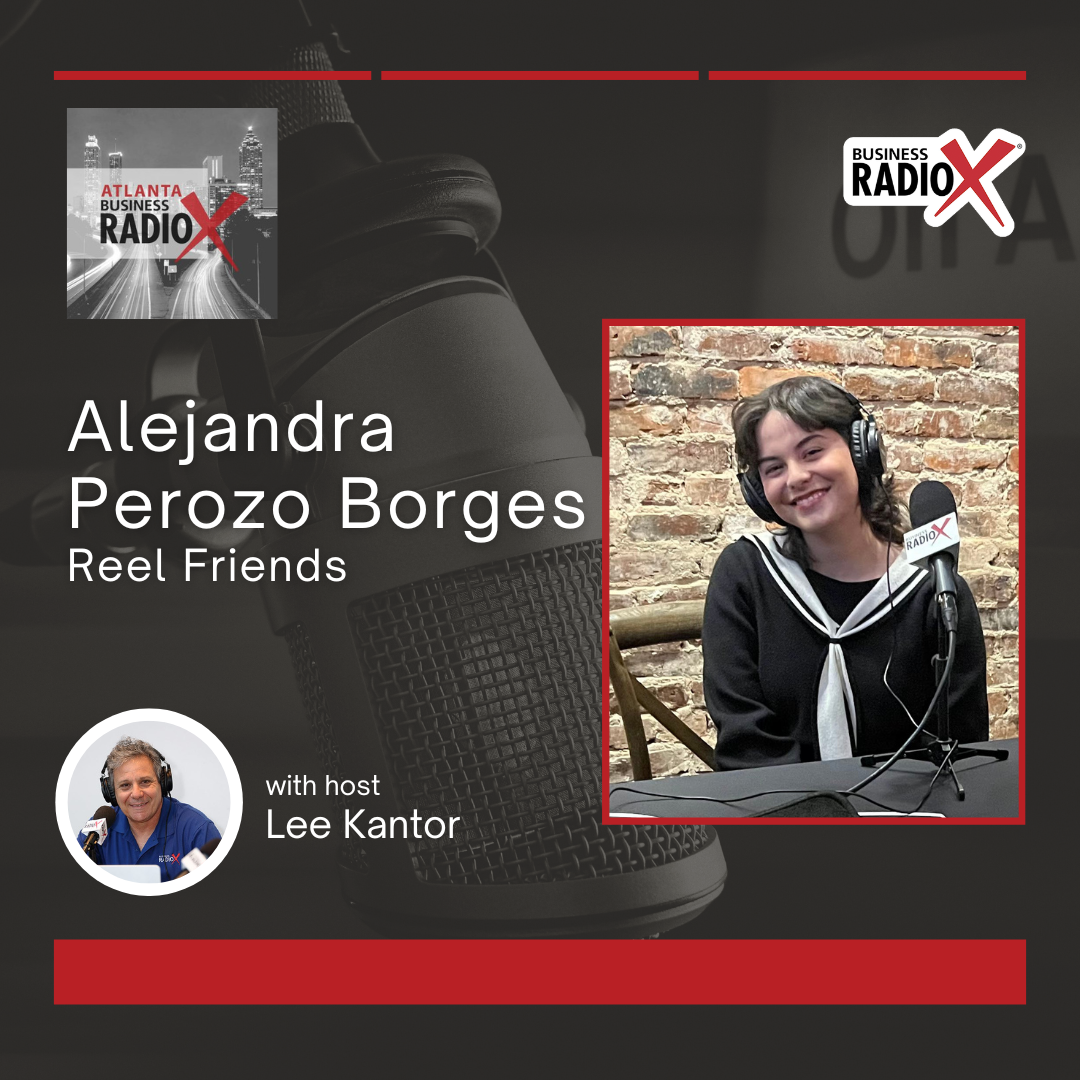
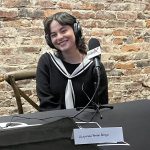 Alejandra Perozo Borges, Reel Friends
 This transcript is machine transcribed by Sonix.
TRANSCRIPT
Intro: Broadcasting live from the Rome International Film Festival. It’s time for Atlanta Business Radio, brought to you by my global Presence. Now, here’s your host.
Lee Kantor: Lee Kantor here broadcasting live from the Rome International Film Festival in downtown Rome, Georgia. So excited to be talking to my next guest, filmmaker Alejandra Perozo Borges, with the film Confessions. Hello. Is that right? How do I do? Fair. Well, tell us, first of all, congratulations for being part of this. What brought you to this festival?
Alejandra Perozo Borges: Well, yeah, we just. I was interested, and I’m very interested in Georgia film. I think local filmmaking is wonderful. I’m based in Atlanta, and we submitted. I heard great things about the festival, about the community and its walkability. So I was really interested in that. We submitted, and thankfully we were upset that me and my co-director, he can’t be here today. His name is Rocco Shapiro, but our short film confessions is showing tomorrow on Sunday.
Lee Kantor: Well, congratulations for appearing here now. Tell us about the filmmaking experience. What was the inspiration for the film?
Alejandra Perozo Borges: Okay, so we initially made this short for the Kodak 100ft of Film Challenge, which is a yearly competition. I would maybe I would say that they host in Atlanta, where they give all participants 100ft of film, which is essentially about three minutes or so, and we’re supposed to shoot an entire short with just that. We don’t get any other film for reshoots or anything. We just have that one reel. And so we thought of what could we do? And both Rocco and I was raised Catholic, and we were interested in exploring ideas related to that, which is what the kind of brought on this film.
Lee Kantor: So now what was the actual process? Because the, the, it’s finite amount of film. So you there’s no mistakes, right? Like absolutely not. This is a it’s kind of scary in the sense that you had to get it right right away. So how did you prepare to film in that manner? That seems like that’s a difficult constraint.
Alejandra Perozo Borges: It was a bit daunting because we knew that we had very limited resources in order to shoot, but we had a really great team. We worked with a lot of people we trusted and had collaborated with before, and our pre-production process was very thorough. We essentially shot the entire film on our phone first and were able to see what the timing we needed everything to be, and our script supervisor, which is the role that’s usually designated to continuity on film. Instead of really focusing on that, they were keeping time. We gave them a stopwatch while we were on set, so we knew that every shot that we got matched the edit that we had made ahead of time with the footage we had gotten on our phones. So we tried to match everything up as exact as possible, as we did in pre-production. Um, except actually on set with our actors in costume with the lighting as we had planned out with our gaffer. So it was it was a very thorough pre-production process.
Lee Kantor: Now, what about the writing process? That kind of was the starting point for this. Like, how did you come up with a story that you could tell in that period of time?
Alejandra Perozo Borges: Well, we knew that it needed to be very short because and Max, it could be three pages. So Rocco and I, when we were planning out, we had really thorough discussions about what kind of the structure we wanted it to be. He leans a lot into comedy. I’m very interested in melodrama. I grew up in Puerto Rico, and we watch a lot of telenovelas, which have a lot of like heightened emotional exaggeration. So we wanted to lean into that and use our Catholic background as like the unifying thing for that. And we wanted it to have really striking images. So there’s this beautiful shot, which is my favorite shot of the film of, um, our lead kind of looking like a Virgin Mary, which is such a central figure in the Catholic doctrine.
Lee Kantor: Now, were you using kind of storytelling technique and like with an arc and a payoff, like, did you have that kind of, uh, is that part of the thinking around this.
Alejandra Perozo Borges: Yeah, we well, we had a kind of a payoff at the end, which is a bit of a twist from what you would expect in the way that the story progresses. We wanted it to kind of be like, um, we’re building up one expectation and then having.
Lee Kantor: A.
Alejandra Perozo Borges: Twist. Yes.
Lee Kantor: And then were you happy how it ended? Were you? Did you feel good about okay, that we did what we wanted to do? Or were you like, ah, I wish we would have.
Alejandra Perozo Borges: No, I mean, I think that there’s some moments when you’re putting something together that you have an immediate panic because you don’t know exactly what it is you’re looking at when you have that first edit. And I panicked, of course, because we didn’t have any more footage to play around with.
Lee Kantor: Can’t fix it now.
Alejandra Perozo Borges: Yeah. But we kind of took a step back and we thought we talked to some friends who were also like our producers. Um, and they gave us notes and then it was like, okay, actually this is, this is great. We just have to be able to shift things around to give time to breathe to each of these moments. Right. As much as we can. So that was really nice. Um, and yeah, we, I feel very satisfied with how it came out, especially given the constraints that we were working with.
Lee Kantor: And that’s part of the fun of this, right? The constraints are, you know, a challenge, but that’s what makes it fun because you have to work with them and everybody has to work within those constraints.
Alejandra Perozo Borges: Yes. It forces you to be creative in ways that you didn’t expect because you don’t you don’t have all of the film in the world to create something. You have three minutes constraint. Yes.
Lee Kantor: No matter what you’re doing, there’s some constraint somewhere. Yes. So now, um, how do you expect to leverage this into something to keep your career going forward?
Alejandra Perozo Borges: I mean, we’ve submitted to other festivals, so we’re still waiting to hear back on those submissions. I’d love to get more people in the like, know more people in industry through these festivals. There’s such a great place to meet like minded individuals that also have a passion for creating and the arts. My goal in life, more than necessarily reaching some idea of standard idea of success for me, I really just want to keep creating. I’m so interested in developing my artistry and my voice, and I feel like every time that I make something new, I get closer to that.
Lee Kantor: So what? What would you say is your biggest takeaway from the experience you’ve had so far from this.
Alejandra Perozo Borges: Really thorough pre-production?
Lee Kantor: How important that is.
Alejandra Perozo Borges: Yes. Um, having really direct communication with all of your heads of department to make sure that you’re aligned, um, and trust your instincts.
Lee Kantor: And then what about team building? How do you make sure you get the right people on the team?
Alejandra Perozo Borges: I think for me, the most important thing is people who are open minded, who are not judgmental, and that won’t take conflict in bad faith. I think inevitably, because you’re working in such a convoluted environment and it’s heightened. Yes. And everybody’s so heightened because, um, like you just have, it’s a timed art form. So you have like specific hours a day. Everybody’s working and pushing, having things. I think that inevitably conflict will arise, but knowing that people will know that they will keep a good attitude, that even if there are issues that they aren’t immediately getting defensive or angry, that they’re of a mindset that allows you, okay, how can we problem solve this together and tackle this issue? I really love that collaborative.
Lee Kantor: Right? You need make it happen. People not blame people and you have to give each other grace because it is heightened and and there are finite kind of resources. So you have to all kind of respect that.
Alejandra Perozo Borges: Yes.
Lee Kantor: And as long as everybody’s on the same page, then it’ll all work out.
Alejandra Perozo Borges: And it really was a blessing. We had a really amazing team, really talented people with good hearts who really wanted to push forward any of the issues that came on the day. So I’m incredibly grateful and humbled by the amazing community that I’ve found in Atlanta.
Lee Kantor: So what do you need more of? How can we help you?
Alejandra Perozo Borges: Um, I mean, resources, I believe a lot in like mutual aid filmmaking resources, connecting to people in the community who might want to help up and coming filmmakers create more things. It’s so amazing whenever anybody comes together to create. I think it’s a small sort of miracle anytime a shoot is done. There are so many issues that come about the day, so many just people who are open to help and provide resources in any capacity.
Lee Kantor: So if somebody wants to connect with you, what’s the best way to do it? Is there a website for the film or a website or socials for you? What’s the best way to connect?
Alejandra Perozo Borges: Yeah, I think for me and Rocco, one of the main ways to contact us, I would say Instagram, the production company that it was under is called Real Friends real as an REEL. Um, so real friends movies on Instagram and then both of us for him, it’s Rocco Shapiro and for me, it’s a dot perozo so my first last name, PEROZO underscore. I think that would be the best way to reach either of us.
Lee Kantor: Well, thank you so much for sharing your story today. You’re doing such important work and we appreciate you.
Alejandra Perozo Borges: Thank you so much. It was really thank you for having me on. This was really special.
Lee Kantor: All right. This is Lee Kantor back in a few at the Rome International Film Festival.