
Rome International Film Festival is a non-profit bringing film & entertainment to Northwest Georgia.

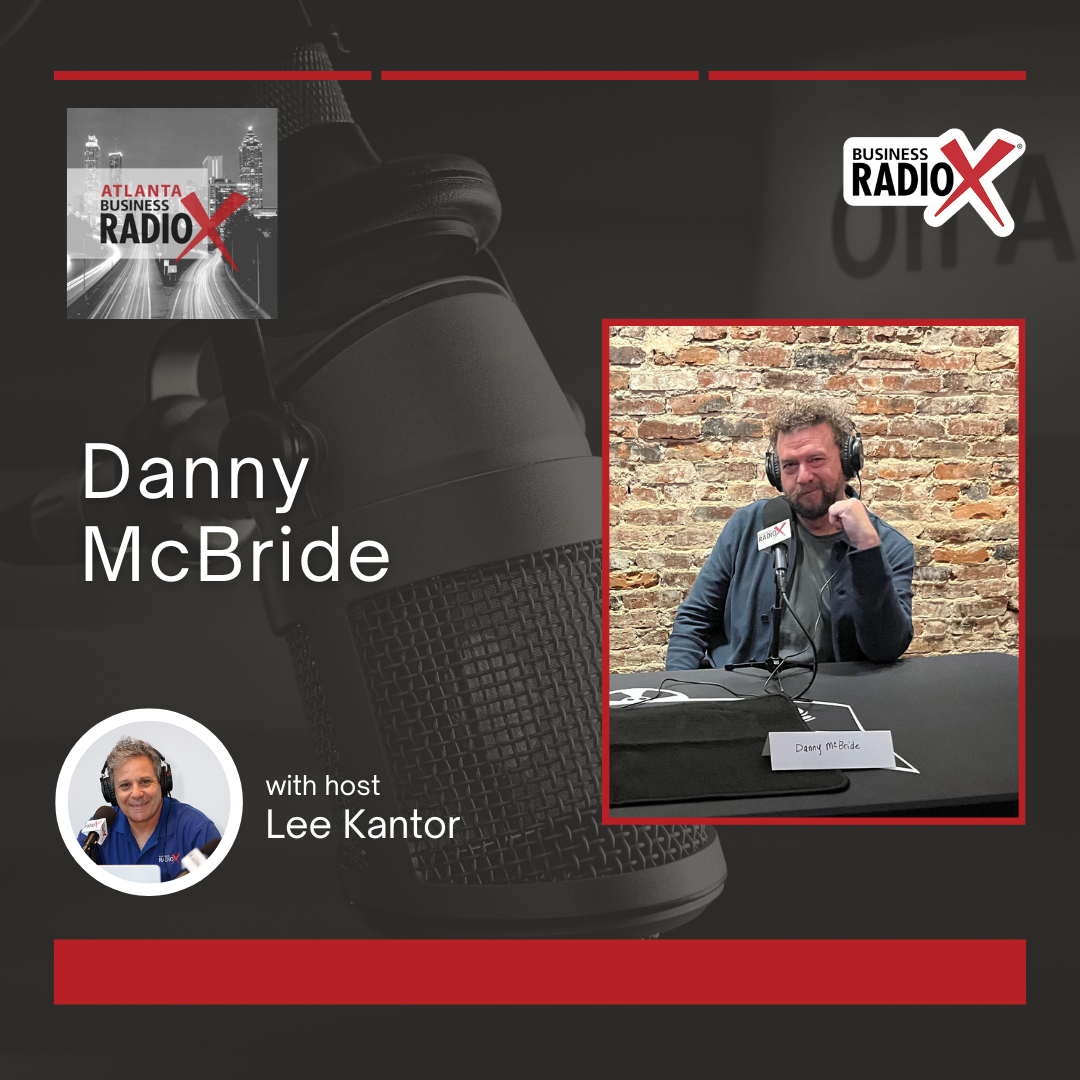
 Danny McBride
 This transcript is machine transcribed by Sonix.
TRANSCRIPT
Intro: Broadcasting live from the Rome International Film Festival. It’s time for Atlanta Business Radio, brought to you by my global Presence. Now, here’s your host.
Max Kantor: Hey, everybody, it’s your host, Max Kantor, live from the Rome International Film Festival. I’m here with the Flannery O’Connor Award winner for this year, Mr. Danny McBride. Welcome to the show, Danny.
Danny McBride: Thank you for having me on. I appreciate it.
Max Kantor: Uh, I’m excited to talk to you. I am visiting from Chicago, so that’s where I live. I’m a performer with the Second City, and I’ve been so excited to talk to you. You, you are one of my favorite comedians. And before we get started, I want to tell you, I remember watching Vice Principals. Vice principals came out when I was a senior in high school, and I vividly remember watching it and being like, I think this is actively changing how I look at comedy.
Danny McBride: Oh that’s incredible. Thank you.
Max Kantor: So I’m so excited to talk to you. Uh, let’s start with the Flannery O’Connor Award. You’re getting that this year for storytelling, for southern storytelling. What does southern storytelling mean to you?
Danny McBride: What does it mean to me? You know, that’s funny. I mean, at the end of the day, I don’t really look at storytelling like it is a regional thing or not. A lot of my stories take place in the South, so I only do it because that’s where that’s what I know. That’s where I live. It’s what I’ve grown up doing. And, uh, and so I just pull from my own experiences. Uh, you know, I think whenever you’re a storyteller, if you have a lane that, uh, is not occupied by tons of other people, that’s, uh, that’s beneficial. And so, you know, living out in LA for 20 years and working in this industry, I started realizing that setting stories in the place I knew made my work feel different than what some of the other people were creating. And so, you know, it’s, it’s been fun telling stories here.
Max Kantor: Um, I like that you brought up like your own lane. I think the characters that you write, your comedic voice is so distinct and so unique. Your characters are flawed. You know, they have big egos, but they’re always trying to do what they feel is right. When you’re writing and creating these characters, how do you not cross that line where the audience is like, fuck this guy, we hate them entirely, but you’re still giving them some heart.
Danny McBride: You know, that’s just part of the that’s the tightrope act that I think we do. And that’s what I like to do with it, is I like taking broken people and people that are complicated, and then figuring out how you put them in a traditional story where you’re rooting for them to win, even though they might not be your typical protagonist. I think it’s what kind of makes the storytelling a little different. You know, there’s so many, you know, we have access to so many ways to take stories in now. It’s like from audiobooks to regular fiction to, you know, countless streaming services and countless TV shows and access to every movie that’s ever been made. Audiences are so savvy when it comes to stories that you really have to find a way to make your stories distinct. And and I did find that, like starting with unconventional protagonists was an instantly a way to make your story feel different than the traditional stories that are out there.
Max Kantor: So when you’re creating your stories, are you starting with the character first and seeing where can I place them? Or are you starting more with the idea of the premise and going, how can I create characters within this world?
Danny McBride: Sometimes it kind of develops, uh, you know, at the same time a little bit. But I, I think that with a lot of the stuff I’ve written for TV, I’m supposed to be in these projects. And so I do start thinking, what would I want to do? Like what, what would I want to look like? What world would I want to, uh, you know, inhabit? And then you start kind of building things around there. But I think at the end of the day, if the character isn’t engaging or compelling, uh, none of the other stuff really matters.
Max Kantor: Mhm. You collaborate so much with, with your friends, especially friends from college when you’re looking for people to collaborate with, especially comedically, what’s something for you that when you see that in a person or creator, you’re like, that’s someone I want to work with.
Danny McBride: You know, I think with comedy, especially, like I really, I gravitate towards, uh, to people that are not just funny, but people who are great actors. You know, I’ve been so lucky to be able to work with guys like Walton Goggins and they can really do anything. And, uh, when someone has dramatic chops and you can also, uh, they also have a sense of humor. I feel like that’s like the most potent combo, you know, because then you can do really unexpected things with where you take that character, you know, uh, we would find that all the time with Walton as, uh, as Lee Russell and vice principals, you know, there was a very, he could have chosen a very one dimensional way to play that character. And instead he invested so much soul and, uh, you know, and just his natural charisma and depth to that character that I think it really makes that performance remarkable. Uh, and so I’m always looking for that. Like, I don’t, I love to make people laugh, but I think ultimately with a lot of these stories, we also want to have that deeper layer where there’s something a little bit more under the surface than just the punch lines.
Max Kantor: You’ve done so many projects like Vice Principals, Eastbound and Down, which are to me like Danny McBride voice This is All You. But you’ve also written for franchises like Halloween, like G.I. Joe coming up. How do you keep your voice intact when writing for these franchises that kind of have already created a voice?
Danny McBride: You know, I think that sometimes it’s, you know, sometimes your voice be. I think ultimately my voice would just be what I’m like, you know, I, I approach each of these projects like, what do they need? How do they, how, what is going to serve telling this particular story. Sometimes with comedy, for instance, you know, my voice is part of the DNA of what has to happen in that comedy. Uh, but then with things like Halloween, it’s like that. My voice isn’t what’s essential there. It’s just like my sense of storytelling or, or creating a story that hopefully is compelling and hopefully connects with people. Like that’s more of the assignment on some of those projects.
Max Kantor: Gotcha. Well, Danny, thank you so much for for joining us today. I know this was quick and sweet, but truly, like I said at the start of this, I’m so happy to meet you. You’re someone who has influenced my comedy so much. I actually just wrote a sketch for Second City. Right now we’re in process for our holiday show, and I brought in a sketch and my note on it was, this is too Danny McBride.
Danny McBride: There you go.
Max Kantor: Because I’ve been reading your book and it just, I guess, planted in my brain.
Danny McBride: Thanks for checking out the book, I appreciate that.
Max Kantor: Of course. Yeah. I finished it on the plane on the way here. Doing short stories was such a fun way, uh, to experience your writing and your comedy in such a different way. And I, I heard you talking about it upstairs. It sounds like it was really satisfying to, to do it in that way.
Danny McBride: Thrilling tales of modern men. Yep. New York Times best seller available now. Go get it. See what you’re what you’re talking about.
Max Kantor: That’s right. Well, uh, Danny, thank you so much for for chatting with us today. Uh, I’m your host, Max Kanter, and we’ll see you soon with another inspiring guest.