
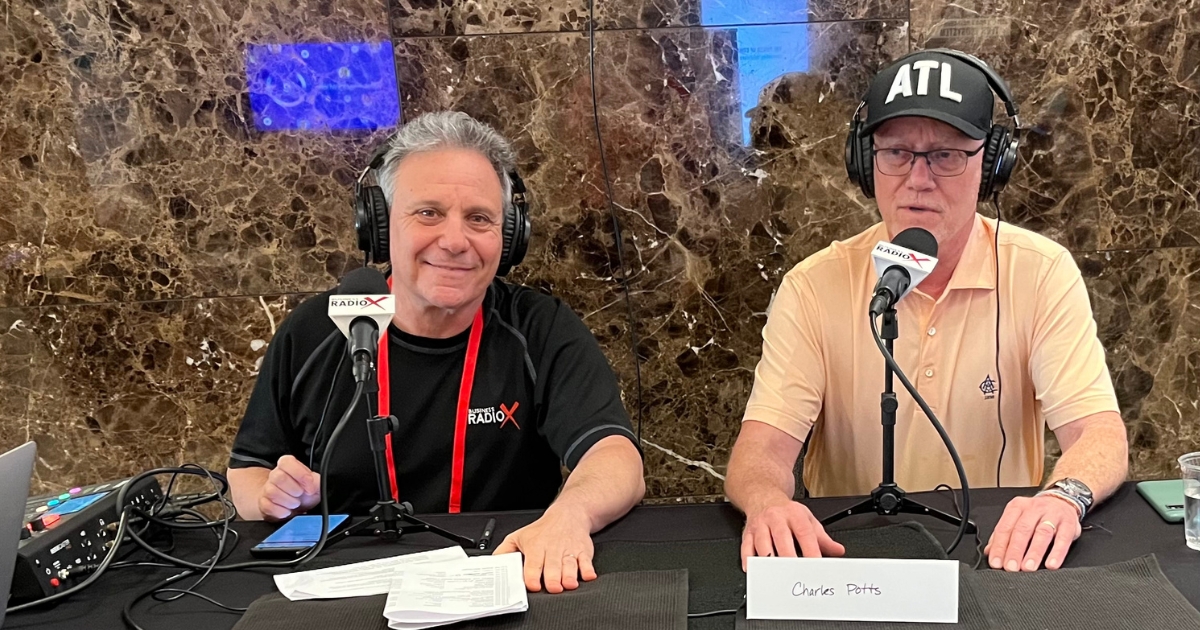

 Charles E. Potts is Executive Vice President, Innovation for the Independent Community Bankers of America® (ICBA).
In this role Potts drives ICBA’s innovation initiatives, and financial technology strategies, working with ICBA leadership to develop impactful, value-added solutions that help community banks seize new market opportunities to meet customers’ evolving financial services’ needs.
Potts’ extensive experience in banking and financial service firms provided the background Potts needed to start, co-found or lead various fintech start-ups including digital banking, mobile engagement, financial management and payments providers. Many had successful exits via IPO’s or acquisition via strategic acquirers.
A frequent speaker at national trade shows and conferences, Potts previously served as executive managing director at First Performance Global, where he led international business and corporate development activities for its card-control and fraud alert platform. Before that he served as CEO for NetClarity, a start-up in the University of Florida’s Business Incubation Hub. Prior to ICBA, he worked at the Advanced Technology Development Center (ATDC), leading the fintech practice where he mentored startups as part of the Georgia Tech-based incubator.
Charles attended the Georgia Institute of Technology, did his graduate studies at Georgia State University in Atlanta and attended the Graduate School of Banking at LSU. Potts, an avid masters runner, cyclist and soccer fan, lives with his wife in Atlanta, GA. They have a daughter who recently graduated from the University of North Carolina at Chapel Hill where she was a nationally ranked pole vaulter on the Track and Field team.
 This transcript is machine transcribed by Sonix.
TRANSCRIPT
Intro: Broadcasting live from Fintech South 2025 at the Woodruff Arts Center in Atlanta, Georgia. It’s time for Atlanta Business Radio now. Here’s your host.
Lee Kantor: Lee Kantor here, broadcasting live from Fintech South 2025. So excited to be talking to my next guest Charles Potts with ICBA. Welcome.
Charles Potts: Thank you Lee. Glad to be here and I appreciate you guys giving us this chance.
Lee Kantor: Well, for folks who aren’t familiar, can you share a little bit about ICBA? Uh, who are you serving? And, uh, why is it so important to learn more about what you guys got going on?
Charles Potts: Yeah, absolutely. ICBA is the independent community banks of America. We are the Washington DC based trade association or lobbying firm, if you will, for the community banks here in the United States, a little over 4000 community banks. We are their primary voice and advocate in DC, with with the legislative body and all the policy people. And we have been around for over 90 years looking out after the interest of the community banks and why this is critically important. Well, I have a unique role in the organization and why Fintech South is is again part of what we, um, immerse ourselves in. As I’m the chief innovation officer, I lead an arm of the organization that helps our community banks, um, address the real needs of their communities through the types of fintechs that that we see here, and taking advantage of the new technology to really service those customers. And this is more and more important because, you know, what we know is almost two thirds of all small business lending comes from a community bank in the United States, and 80% of all farm loans comes from community banks. And so in this very dynamic marketplace, we need to ensure that our community banks have the best tools and solutions to keep them competitive, to keep them on par with the biggest banks and biggest fintechs, and make sure they’re meeting the needs of the small businesses and customers that they serve in their communities.
Lee Kantor: Now, I’m a big fan of community banks, but for folks who aren’t familiar with maybe the difference between a community bank and one of those stadium banks that might be in a given community, um, can you share kind of what how they’re different and why it’s so important that each community has a thriving community bank ecosystem in their neighborhood?
Charles Potts: Well, look, it’s it’s not that far in our rearview mirror. What we dealt with in 2020 with the Payroll Protection Program, uh, and ultimately, Small Business America recognized once again that they needed a banker, Are not just a bank. And so the relationship model that is critical to the success of these communities, knowing who you’re doing business with. Uh, you know, knowing, uh, who is looking out after your interest in these communities is one of the biggest differentiators in community banks. They take local deposits, they make local loans. They really serve the needs of the community and the businesses that they that they’re part of. And they do this with their local leadership. So probably that relationship, knowing who you’re banking with, I tend to say, is one of the most critical differentiators in what, uh, what makes a community bank and, and ultimately, you know, you, you, you tend to know, um, what the pain points are and what the needs are of the community that you serve because you are part of it. You grew up in it. You have multi generations, uh, that have served it. And um, and that is a huge differentiator and for the customers in that community. You know, these are people that their kids go to school with. They play little league ball together with. And so there is a there’s a set of relationships there that are ingrained. Um, you know, very, very deeply.
Lee Kantor: And then when you as a customer go into a community bank, there’s a higher probability they’re going to remember you and know your name as opposed to you walk into some of these larger mega banks where it’s going to be a different person every time you go in there. They’re not going to know who you are. You’re a name on a spreadsheet.
Charles Potts: Well, and and look, as I said, um, you know, businesses particularly want to know who they’re doing business with. And, and the business owners and the operators of those banks understand that critical symbiotic relationship. And those are those are job creators in those communities. And so it is incumbent upon the community bank to know and understand the needs of that small business Operator.
Lee Kantor: And it’s also it’s it’s symbiotic, though. I mean, the community has to embrace the community bank as well. Oh, and they can’t take it for granted.
Charles Potts: Absolutely. And, you know, there’s a there’s a long, deep, rich history there that, uh, that that frankly, uh, plays out very, very well when you look at, as I said before, uh, the growth in the growth in jobs in the United States in general comes from small businesses, and small businesses rely upon community banks as their primary source of funding.
Lee Kantor: So now when you come to an event like a fintech South, um, how do you and your team, uh, attack it to make sure that you’re getting the most value out of it? Is it the education or is it the, uh, connectivity where you’re interacting and meeting new folks? Uh, how do you get the most out of something as important as a fintech south?
Charles Potts: Yeah. So. So, uh, our relationship, uh, from the innovation arm of ICB, and we really have three different pillars. We have the traditional advocacy, the lobbying side, if you will. We have a very robust education arm that works with hundreds of thousands of bankers every year to make sure that they’re trained on all aspects of banking, from compliance to lending and everything in between. And then our innovation arm sits at this really interesting intersection between the bankers themselves and these fintechs and these fintech entrepreneurs. And so an event like Fintech South is really as much as, um, our ability to promote and highlight what these companies are doing and how they’re helping community bankers, as well as it’s helping the community banks that are in attendance understand what these companies can do for them. So we, you know, we we kind of jokingly play matchmaker, if you will. And so our job is to continue to evangelize for all the great work that our community banks are doing. And at the same time, the great work a lot of these companies are doing to help our community banks. So we’re, you know, we’re, uh, we’re in oftentimes an extension of a lot of these companies at these kind of events where we’re helping highlight and promote what they’re doing. And we’re also always actively recruiting for new early stage and growth stage companies to be part of our programs. And one of our cornerstone programs is our Think Tech Accelerator, where twice a year we have six companies in a ten week program that is, uh, Community Banking 101. It is an immersive ten weeks where they, they learn and know and understand the community banking world, and we help bring them to market to solve real world problems that our community banks have. So this kind of event like Fintech South gives us all facets of really the business development side of our innovation arm.
Lee Kantor: So now, has there been any technology or trend that you’ve kind of picked up from being here that you’re bringing back to your folks.
Charles Potts: We know we’ve gone. We’ve gone this long and we haven’t said AI. But of course, anything artificial intelligence related, which in our world is more about operational efficiencies, sometimes backroom operations, uh, applying those tools and technologies to address some of the more redundant labor, intense repetitive practices. So there are a number of solution providers here that we know and work with very closely, who have tools and services and capabilities that can help our banks and those kinds of functions. There are a number of participants here who are longtime, um, corporate members and supporters of what we do, uh, sponsors of our programs. And so we’re constantly staying on top of what they’re doing and looking at their new initiatives. And as we’re starting to explore, I say we the industry, not just we ICB how things like stablecoins can be applied to to to banking opportunities and use cases, as well as all all types of other payments vehicles. Those are the things that we continue to look at in an environment like Fintech South.
Lee Kantor: Now, um, where are you when it comes to physical checks? Oh, good. Like, well, a lot of the a lot of the consumers have kind of moved to digital. And then a lot of the, uh, maybe legacy companies are.
Speaker4: A little smaller.
Charles Potts: Um, you know, this is this is not for attribution to my employer, ICB. This is Charles Potts personal opinion. But the biggest problem we’ve had in the last couple of years has been the increase in check fraud in the. And it is a well known, uh, issue in our industry. We have a task force that has been, uh, spun up to focus on this. We, we spend a lot of our efforts also inside of DC and Capitol Hill, the legislative bodies and regulatory agencies working to make sure that the policies are addressing the right ways for our community banks to address this this burgeoning check fraud world that’s happened over the last couple of years and one of the largest, I guess, drivers of that was, frankly, the Treasury Department and the federal government sending out, you know, millions of stimulus checks that brought a whole bunch of new bad actors into the world to figure out new ways to go back old school and, and steal checks and wash checks and sell checks on the dark web. So that issue of checks, I mean, we we we have a check zero mindset. One of our policy guys came up with that term check zero. We want we want no checks.
Lee Kantor: And but and the consumer seems to want no check.
Speaker4: No consumer wants no jail.
Charles Potts: Look for everybody out there. Please tell your your congressional representatives to tell the Department of Treasury that’s to the part of jigsaw.
Lee Kantor: It’s like a disconnect. Like some industries are just, like, still look like holding on to this.
Charles Potts: Like the businesses, B2C, um, rebates, refunds, um, those kinds of companies that are in those businesses, telecom insurance, so forth, they still produce a a massive amount of checks that go out to consumers. It is not consumer. Consumers are not writing checks. Small businesses aren’t writing checks. It is, uh, it’s some of the big players who are in those kinds of small business.
Lee Kantor: It’s more trouble than it’s worth.
Charles Potts: It’s it’s I mean, my my daughter is a small business operator, and, uh, and she, she and I talk about this far too often.
Lee Kantor: So, um, if somebody wants to learn more about the community bank in their community or learn more about what eBay is doing in their community.
Charles Potts: Um, find me Charles Potts on LinkedIn. I’m happy to share and connect. Uh, we have a, we have a very robust, uh, uh, world of, of partners and affiliates at all the state levels as well. And, uh, we’d love for, uh, businesses are looking for a good community bank in their marketplace to serve their needs. We’d love to connect you as well. And that is that is a critically important part of keeping and growing a vibrant communities, making sure that businesses have capital to grow. They have a good capital, partners who support them and, uh, and go create jobs.
Lee Kantor: Well, Charles, thank you so much for sharing your story. You’re doing such important work and we appreciate you.
Charles Potts: Well, thank you so much, Lee, and I appreciate what you guys do here at Business Radio. And, uh, and for all of our listeners out there, uh, I want to make sure that, uh, you know, you go use a community bank when you can.














