

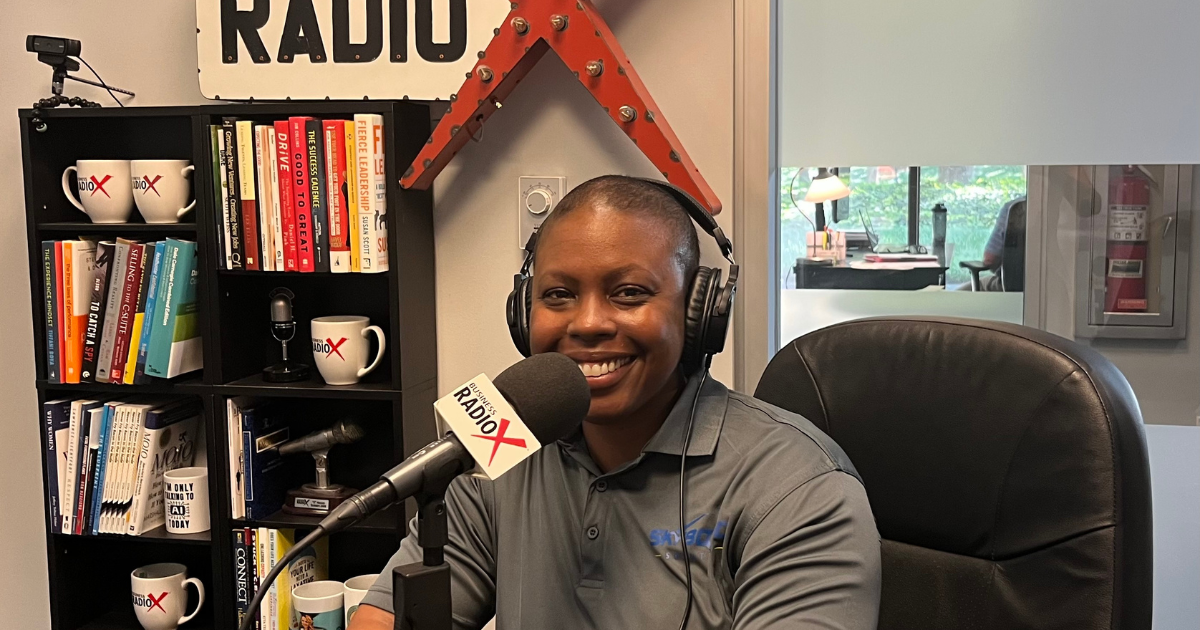

In this episode of Atlanta Business Radio, Lee Kantor speaks with Tracey Paulfrey, founder of Skybound Solutions. Tracey shares how her journey began when an agent suggested creating an Instagram profile for her competitive swimmer daughter. After successfully boosting visibility for Jamaican national swim team athletes, she launched Skybound Solutions. The company now serves athletes, nonprofits, startups, and small businesses, offering social media management, branding, and marketing strategies. Tracey emphasizes storytelling, system-building, and navigating NCAA and NIL regulations, while helping clients avoid vanity metrics and focus on meaningful outcomes.
 Tracey Paulfrey is the founder of Skybound Solutions, a business developmentand growth company that helps athletes, entrepreneurs, small businesses,nonprofits, and organizations see and strengthen the total picture of how theyoperate, grow, market, and connect with the people they serve.
Skybound’s work extends beyond traditional strategy or branding. Traceyworks across business development, operations, marketing support, digitalpresence, relationship-building, and growth strategy helping clients identifygaps, connect the pieces, and build practical systems that support where theywant to go next.
What makes the Skybound approach different is storytelling. Traceybelieves that behind every business, organization, athlete, and mission is astoryand when that story is understood and communicated well, it can become apowerful tool for building trust, creating connection, increasing visibility,and opening doors to new opportunities.
Whether helping a small business better understand its marketing, supportinga nonprofit in communicating its impact, or building an athlete’s total digitalfootprint for recruiting, Tracey approaches the work with the same philosophy: understandthe whole picture, tell the right story, and build intentionally forsustainable growth. 
Follow Skybound Solutions on LinkedIn, Facebook and Instagram.
Episode Highlights
- Tracey’s career transition from personal trainer to founder of Skybound Solutions
- Role of social media, particularly Instagram, in athlete recruitment
- Challenges faced by athletes and parents regarding NCAA and NIL regulations
- Importance of maintaining a positive digital presence for athletes
- Educational initiatives for athletes and parents about social media management
- Strategies for creating effective social media profiles for athletes
- Expansion of services to nonprofits, startups, and small to midsize businesses
- Emphasis on storytelling in branding and marketing
- Importance of systems and metrics in marketing strategies
- Addressing pain points for clients, including time management and cost-effectiveness in marketing efforts
 This transcript is machine transcribed by Sonix.
TRANSCRIPT
Intro: Broadcasting live from the Business RadioX Studio in Atlanta, Georgia. It’s time for Atlanta Business Radio, brought to you by My Global Presence, the award winning Atlanta public relations agency that elevates brands and non-profits through authentic storytelling and national media campaigns. Find them at my global presence.com. Now, here’s your host.
Lee Kantor: Lee Kantor. Hear another episode of Atlanta Business Radio, and this is going to be a good one. So excited to be talking to my guest today, Tracey Paulfrey, founder of Skybound Solutions. Welcome, Tracey.
Tracey Paulfrey: Thank you. Glad to be here.
Lee Kantor: Well, full disclosure, I’ve known Tracey, what, 15? We were saying at least 15 years, right?
Tracey Paulfrey: Oh my God, you’re aging me. Yeah, right. A long time, timers at least.
Lee Kantor: And then Tracey was my family’s personal trainer for ten of those years.
Tracey Paulfrey: That is correct.
Lee Kantor: And now we have pivot in your career since the last time I’ve seen you. Uh, now with Skybound. Can you tell us a little bit about Skybound?
Tracey Paulfrey: Yeah. Well, Skybound literally fell out of the sky. No pun intended. So, um, I was literally sitting in a gym and, um, an agent approached me about my daughter. My daughter swims and he was like, does she have a Instagram page? And I was like, no, what in the world is that? What do you mean an Instagram page for, for an athlete? And then I was like, well, is that something that’s important for college recruiting? And he was like, absolutely. Long story short, I had to figure out pretty quickly how to put together an athlete Instagram profile. And she, I launched her and then I met two other swim parents at a swim meet in Auburn. We’re from Atlanta and we met at Auburn. How about that? And same thing. They were talking to me about their kids and they need an ECG and all that. And I was like, well, let’s let’s see what we can do. Let me see if I can help you. Come to find out, both those kids swim for the Jamaican national team. Um, and I was like, whoa. So they had a major Caribbean competition in April. This is now January. And I was like, all right. They’re like, well, can you stream it? Can you launch it? Can you help us with it? Can you showcase it? And I was like, I don’t know. I have these set of skills. Let me try. Well, yeah, I did. Those three kids had over 40 to 50 000 views across the time that we’re competing. So I was like, I’m on to something.
Lee Kantor: And then so prior to that, they didn’t have anything.
Tracey Paulfrey: No, their, their page was like nonexistent. And I took them in that 1 to 4 days of competition to 5000 views. Wow. And I was like, I think I know what I’m doing. And then that birthed the first part of of Skybound.
Lee Kantor: So it was built initially around kind of aspiring athletes that were doing something at high school level, high school level, but hadn’t gotten recruited yet or were in the process of being recruited into college or and elsewhere.
Tracey Paulfrey: That is correct. That is correct.
Lee Kantor: And then so when that happened, did that unlock some opportunities for them once you started getting the ball rolling?
Tracey Paulfrey: Absolutely. Two of them are D-1 recruited athletes as we speak. This was their sophomore year that I met their parents and now they’re in their junior year. One is from New York. The other is here locally in Atlanta. And they’re both D-1 recruiting right now. And they all comment on your Instagram page, like their athlete pages, like top notch.
Lee Kantor: And that’s one of those things where especially in the sports that are kind of the non-revenue sports, they have a challenge that’s different than maybe, you know, some of the ones that are going to get attention because they’re, you know, in the sports that are revenue generating, right? Football, basketball. Those athletes are doing a different thing right than the non-revenue athletes.
Tracey Paulfrey: The whole process for them is just different in terms of visibility. It’s gotten so big now that most college recruiting happens for these sports through their socials. They ask them for that in their profile or their application or their intent of interest or any type of communication in the recruiting process. They ask them for their social media accounts.
Lee Kantor: So it’s one of those things where it used to be a nice to have, and now it’s a must.
Tracey Paulfrey: Have, it’s a must have, and then it has to line up with the NCAA rules. It has to line up with the ever changing Nil rules. Um, and so it’s, it’s quite nuanced and labor intensive. So parents truly don’t have a lot of time to really deal with this. Um, so they outsource or they hire firms like a Skybound solution to help them manage that. It’s a lot of work, right?
Lee Kantor: And, and it’s one of those things where they have to do a lot of things, right. But they also have to protect the athlete from doing things wrong. Right? So there’s a a level of education that has to occur to help the athlete make sure they’re not shooting themselves in the foot.
Tracey Paulfrey: That is correct. There is a lot of education that constantly happens, and that is something that is interfield or integrated into managing these athlete profiles is the parent education part. And I have sessions where it’s just the athlete. I have sessions where it’s just the parents, and I have sessions where it’s the athlete and the parent.
Lee Kantor: And then at what age should if you have a kid, that’s what in middle school, when do you start kind of paying attention to this and starting kind of laying some foundation?
Tracey Paulfrey: Ninth grade.
Lee Kantor: Ninth grade.
Tracey Paulfrey: Ninth grade. So what I’ve also learned recently is, is my eighth graders now, um, because it’s so heavily focused is I’m starting to bring on eighth graders in terms of ramp like a bridge, like to ramp them up so they’re prepared. So in ninth grade hits, we don’t have to do these road building blocks. We’ve already established it. We established a pattern, the expectation, the behavior, the education. Um, so by the time they get to ninth grade, they’re ready to go.
Lee Kantor: And then what are some of the elements of a good Instagram or good social media for an athlete that has, you know, aspirations to, you know, be a college athlete and further their career?
Tracey Paulfrey: Well, you have to tell your story. You have to give the coach a reason to stop. You have to. It’s more what I’ve learned. It’s more than just their highlight reel. Like everyone knows your athlete, you’re gonna, you know, we’re going to show your good stuff, right? But what else do you match the culture of the university that you want to attend? Um, do you have good speaking skills? Uh, what else do you do? Are you defined by your sport? You know, like, uh, for example, a lot of swimmers, some of them play in an orchestra, my daughter included. She played the violin. So we we told her story in totality of the complete person. It’s not Mariah that, you know, it’s not the swimmer Mariah, it’s Mariah the swims. And so coaches love that because then they don’t have to do this. Extra research and recruiting process is literally 2 to 3 clicks, and they already have the whole component of the athlete in front of them, right?
Lee Kantor: So they see the whole picture quickly, rather than having to go down 50 places where if they might lose interest.
Tracey Paulfrey: That is correct.
Lee Kantor: If it’s not compelling.
Tracey Paulfrey: And now they have software to, to run these IG profiles through. So these coaches use software. So you have to be high enough in the algorithm, or you have to tell the right story to even get picked up on the software that you’re using. So when I say it’s nuanced, it’s like that, like these different.
Lee Kantor: Variables, it’s super granular. You have to be doing a lot of the things right. If you want to be even seen by the people that you want to be seen by.
Tracey Paulfrey: That is correct.
Lee Kantor: Now, um, how does a parent of an athlete, what are some of the things they can be doing to help ensure that their athlete has the best chance of success? Because a lot of times, obviously the parents rooting for the kid and the parent wants the kid to be successful. Um, but they also want to protect them from, you know, social media as his own challenges by itself. So what are some of the do’s and don’ts from a parent’s perspective in order to enhance the chances for the the athlete?
Tracey Paulfrey: Well, from a security standpoint, all my parents, I tell them out of the gate one account, if they have a private social media account, shut it down, shut it down. Um, that gives the parent control and the parents who’s driving anyway, they’re the one that manages the, the.
Lee Kantor: Their funding things.
Tracey Paulfrey: Right.
Lee Kantor: They shouldn’t be in some control at this stage.
Tracey Paulfrey: They’re, they’re in complete control because they’re still minors. Right. Um, so both parents or one parent is involved in the process from beginning to end. They authorize, they see all the content. I’m constantly sending them, hey, look at this bad person here. We need to block them. I know what to block them for. And I also set their pages up with these security, um, in place already. But I do have a session where I sit the athlete down and I’m like, okay. Are you choosing this path? Because with this path comes sacrifice and commitment. With the sacrifice and commitment, you are not going to be able to do a lot of things you see your friends do. You’re not going to be able to go to certain things your friends go to, because all it takes is one picture and your whole entire career is done. It’s that serious, right?
Lee Kantor: And the kid doesn’t know. I mean, the kid doesn’t know what they don’t know, and they think they do because they’re in it and they see their friends and stuff, and they think they have a level of wisdom that they just don’t have at this stage.
Tracey Paulfrey: It’s a dangerous game. So instead of I give the the disclaimer and then I show through real time people that they see fall from grace and sometimes cannot come back. Right?
Lee Kantor: Yeah. Like you said, one thing could be the end of the game.
Tracey Paulfrey: I’ve seen kids lose scholarships left and right like that. Where do schools initially, because with swimming they can sign as early as their junior year. Right. But they still have a whole year, right? Of of.
Lee Kantor: They still.
Tracey Paulfrey: Have to perform right to hold that spot. Right. So it’s I seen scholarships get snatched because of one real that just went wrong. I’ve seen people get removed from the national teams they represent because of their behavior at an event that had nothing to do with what their sport is. So when it’s a serious commitment in these this day and age with the visibility and the accessibility that we have, that has to be regulated.
Lee Kantor: Right. And the and you have to go in with the right understanding ahead of time. Like it shouldn’t be a surprise that what you’re telling them is probably news to them at the time. But once they’ve been told now they’re making choices based on that information, right?
Tracey Paulfrey: So once they see that you’ve crossed the elite athlete threshold, I literally look at the parents and I say, hey, this is a different game now you have to shut everything down. And basically this is the rules that we have to go by, not Tracey’s rules. These are NCAA rules. These are nil rules. This is experience. I mean, how many athletes do you know, Lee, that you saw fall from grace?
Lee Kantor: Right. I mean, there are headlines, you know, every season, correct?
Tracey Paulfrey: Every season. You don’t have to look very far. Like Deion says, you know, I’m not hard to find. But that same situation right there not hard to find right.
Lee Kantor: That’s the good and the bad of that.
Tracey Paulfrey: Right. So we have to be prepared. And the earlier you prepare your athlete for that, the better that they are. And I’ve seen the ones that started with me in ninth grade and see where they are now as juniors and seniors. And it’s like, wow. Um, the level up is, is, is interesting to watch.
Lee Kantor: Now, at what point did you kind of expand your offerings to non-athletes and business and different kind of groups of people?
Tracey Paulfrey: So I’ve always, I’ve worked with so many nonprofits across the years, so nonprofits that hold a sweet spot in my heart. So I always worked with different ones. University of Florida Alumni Association is a nonprofit, and I served as the president for the Association of Black Alumni for the University for probably four years. I’m on the backstretch of my my run now that’s a nonprofit. So when I was president elect, I took on managing the profile for the association. And. And in the process of doing that, I was able to see how nonprofits can leverage a cost effective marketing plan through social media. So that birthed that concept. So aside from University of Florida, I also worked for Save a Life, Save a Life. Um, and I’ve had a long standing relationship with them, so I helped them do some things along the way to help the foundation get seen and visibility. And then of course, my, my superpower. I love startups, right? Entrepreneur fever. Um, and so I helped different types of businesses in their infancy stage kind of look at things differently through technology and AI and leveraging, um, a simple solution versus, you know, a turnkey big marketing solution that most people think they need. And it’s actually no start with the free resources given on to you and then build from there. I customize a lot of things because one box does not fit all, including athletes.
Lee Kantor: Right? And then so right now that’s the, uh, areas you work in is, uh, small to midsize businesses, startups, uh, associations and nonprofits and, uh, athletes.
Tracey Paulfrey: Yes, yes. And I, I had to go global. I mean, um, with Mariah, uh, earning a spot in the Jamaica national swim team. Um, it pushed me to go global. And in the process of doing that, I now have Bahamian athletes. I have athletes from Barbados. I have, um, potential athletes coming from Trinidad. Um, and later on we’ll be launching Skybound basketball, which is my husband’s side of the business, um, because he played internationally. So he has access to helping those athletes in building their profiles to communicate back to the US, Canada and UK. So there’s a whole global approach happening as well. Um, and so my region now is the Caribbean. Um, and I am responsible for quite a few athletes coming out of there. So I’ll be telling their story. And that’s really the fun part about Skybound solutions that really separates us in my humble opinion, is we tell the athletes story, we tell the business story, we tell the nonprofit’s story. Everyone can connect back to a story. I’m sure you’re familiar with that with business radio ads.
Lee Kantor: Yeah, that’s the heart of our business, right?
Tracey Paulfrey: So and it’s, it’s the heartbeat of ours as well.
Lee Kantor: Now, what about, uh, what do you tell, uh, maybe a new person that you’re talking with? We, we use the term here, cosmetics that it’s easy to find certain metrics that they think is important and they’re visible. And a lot of times that’s because they’re easy to count and they may not be the metric that matters, but it’s something that’s visible that they see and they think is important. And a lot of times we have to educate our clients in that those metrics may look good and sound good, but they’re not really at the heart of what you’re trying to accomplish. And, and having a big number there may not get you the outcome you desire over here. Do you have to do the same thing with your folks?
Tracey Paulfrey: Absolutely, absolutely. I give the example of here’s the outcome. I you probably shared this with me too. I feel like we do, I work from the bigger picture backwards, like retrograde and, and along the way, I hit key points and I point them out to them like, okay, this is a benchmark. If you don’t hit this benchmark, you’re not going to get to this outcome. Then I tie the outcome to their why and their goal. And then I’m like, is this a must happen in this phase? Or can we stair step it for another phase? So I draw maps. I’m a mind map a lot and I whiteboard it and I draw their pictures in front of them and I’m like, here’s the end result. This is where we are. This is the wise decision of how to step, to do this, to get to where you have to go. So I’m constantly evaluating metrics and bringing to them and asking them the question, where does this get us in the long run? For example, I use I use Mariah a lot because she’s my own. I’m allowed to use her.
Tracey Paulfrey: Um, but I asked Mariah, what is the end game for you making a national team? What do you want to do? She’s like, mom, I want to, I want to go to the Olympics. I’m going to try to go to the Olympics. And I would like to do it for Jamaica. And I’m like, all right, we wrote that goal on the wall and then we walked it backwards and I’m like, how do we get there? And so I do the same thing with everybody. I’m like, what is the what is the big goal? Right? I’ll use myself as an example. I would like in five years to sell Skybound Solutions. I just want to go chill and be and help people and do my philanthropic work. Um, so I wrote on the wall Skybound Solutions. What does that need to look like in five years? And then stair step it backwards all the way back to step one. What are the metrics that I’m going to cross along the way? What are the resources I’m going to need along the way? And that’s ever changing, right?
Lee Kantor: Sure.
Tracey Paulfrey: But at least you have a blueprint of where you need to walk to and just you have to be willing, just like you whiteboard it and you can erase it. You have to be willing to erase the steps and the metrics and replace them with new ones in real time.
Lee Kantor: Right? It’s not. It’s not in stone. These are all as you get more information, you can make changes.
Tracey Paulfrey: Correct. You’re going to have to you have to you’re going to have to be able to pivot. You’re going to have to be able to make a change. And that’s the same thing I share with business athletes. Your ability to pivot really determines your ability to keep going, right? Like you have to be able to look at things and say, okay, that didn’t quite go my way. That didn’t quite go my way, that didn’t quite go my way. But what did go your way? What did you learn even from the things that didn’t go your way? How do you use that to get to the next step?
Lee Kantor: Right. And not just make it be the thing that ends the journey.
Tracey Paulfrey: The journey never ends until you hit your outcome. Right. And even then, you may feel like.
Lee Kantor: Right. But a lot of people, you know, pull the ripcord and say, I’m done. You know, I didn’t make this, so I’m out. Right. I’m not good enough.
Tracey Paulfrey: Correct. No.
Lee Kantor: Instead of this is just information. Now, what are you going to do with the information?
Tracey Paulfrey: Where’s your follow through? Right. Where is your commitment? If it was easy, everyone would do it right. It is definitely a narrow path.
Lee Kantor: Right? And it’s not for the faint of heart.
Tracey Paulfrey: You definitely have to. You have to be attached to a deeper why.
Lee Kantor: Right. And you have to have a good have to have the mental toughness because it takes resilience. It takes, you know, not winning a lot to win eventually.
Tracey Paulfrey: Let’s talk about that. Lee, I love that you brought that mental resilience up. Emotional intelligence, mental strength are the most glossed over components to athletes and to business owners. I think that we should spend more time talking about building up your mental strength. Like we build up everything else that’s tangible, right? Your your body, you eat right. You sleep all these things. But I’ve yet to really hear the emphasis put on mental toughness. What does that mean?
Lee Kantor: It means that you’re going to do it again tomorrow. That’s what it means. It doesn’t matter what happened today. Win, lose or fail doesn’t matter. You’re getting up tomorrow and doing it again. Yep. Because you really only fail when you quit, correct?
Tracey Paulfrey: I tell Mariah that all the time. Well, you definitely know the answer is no if you don’t try.
Lee Kantor: Right?
Tracey Paulfrey: I mean, how many Olympians do you know? You can count them in your sport, right? That tells you it’s not an easy thing, right?
Lee Kantor: And most people self-select out.
Tracey Paulfrey: Correct.
Lee Kantor: They they said, okay, I’ve had enough.
Tracey Paulfrey: I’m done. As an entrepreneur, we share this, right? Like, can you imagine if we stopped every time we were told no.
Lee Kantor: Right. You wouldn’t start.
Tracey Paulfrey: It would be no Business RadioX. We wouldn’t have this wonderful platform to come share our stories on. Right. Um, and that’s, that’s another thing I really try to get across to, to business owners and young people early in the game. That’s why I love startups because you can infuse that lifeline in them early on because man, you’re going to face more no’s and more no thank yous and more doors shut than you’re going to face the ones that are open, right?
Lee Kantor: But that the beauty of business or the beauty of pretty much anything, is that you don’t need a lot of wins. You just need some wins.
Tracey Paulfrey: You need the right wins. Yeah. It’s really it’s really what it is. And then you’re the one that determines how right that win is.
Lee Kantor: Right. And what you’re going to do with it once you get it. Because some people win and don’t appreciate it and then move on to some other shiny object.
Tracey Paulfrey: Well, not only that, let’s talk about the magnitude of the win. Like everyone expects that it’s the big thing is like, okay, so you get a medal. That’s the win. Like Mariah’s attitude was like, okay, I hit this benchmark. I got this medal. Okay, let me get back in this water and figure out how I’m going to swim to the bigger outcome. You know, it’s nice. Yay! She celebrated the moment, but I loved how she was just like, this is nice. Next, right? Not to diminish what she did to get there, but just to say this is a step. And that told me right there her mental commitment. Right. And even. And let me tell you, that young lady has had more no’s in her very short career than she’s had. Yes. I mean, everyone told her she could not do what she’s doing because she’s asthmatic. They found every reason. You know, Mariah only has 70% of her lung capacity. Like they found every reason to tell this girl, no, you can’t do this. And she was like, um, actually, I can’t. I’m just gonna keep going.
Lee Kantor: Right?
Tracey Paulfrey: I’m like, where does that come from? She’s like, Ma, I just something I can’t describe it. It’s just something deep in my soul that says, this is what I have to do.
Lee Kantor: And then she will do because she’s doing.
Tracey Paulfrey: Yeah, I’m the same way. Yeah. It’s like, I’m sure you you could relate. Yeah.
Lee Kantor: Look, I all I know is the grind. That’s the only thing I know. Nothing’s come easy for me.
Tracey Paulfrey: Yeah. Me either. We share that.
Lee Kantor: Now. Um, any advice you talked about startups a lot in there in your heart. Any advice for that startup founder right now that might, uh, be overwhelmed by the marketing side of things because maybe they’re good at what they do. Maybe they’ve come up with a good solution, but they’re not marketers and they don’t understand what you know and they don’t know what you know. And so what are some low hanging fruit that we can help that person maybe get an up up level a little bit?
Tracey Paulfrey: Yeah. So the first thing I asked them is, all right, so in the next three months, what do you want to do? Let’s not look at a year, five years, ten years, which is like traditional business concepts, right? I’m like, no, where are you now? What’s the next three months? Do you want to do you want to hire a team? You want to get your name out there. You want to lead, generate, what do you want to do? And so I purposely pull them down to a very simple level, like tell me the three things. And then I give them the answer to the three things they’re looking for. So you don’t need a marketing firm to post on Instagram. You don’t need, um, you know, a big person to create a newsletter for you, the chamber of commerce, the chamber, your local chamber, your business resources. I think that’s something else a lot of people don’t tap into enough. They have all these resources to help you for free. So start there. Look at what you can manage, look at the spend associated with it, and then figure out where in your blueprint this ends up and just be open. Things are not always linear and mutually exclusive. Like you can do multiple things at once. And what I’ve also learned and shared with them is you may do one thing and it ends up solving five. And so now you’re further down in your step plan than you thought. You thought it was one, but it took you to six efficiency, right?
Lee Kantor: And you don’t know what you don’t know. So you have to start doing and running experiments. I call them experiments and just trying things and then seeing what happens, learning from them and double down on the things that are working, and then just get rid of the things that aren’t, and just keep running these experiments until you have the machine built, the.
Tracey Paulfrey: The system, the system, like you perform as well as your system is efficient, right? So that’s another thing I asked him, what’s your system? Some of them can tell me, some can’t. I’m like, write down your system. You should be able to tell me what you do in five steps. If you can’t do that, then we already have a problem. How can you have organization to something that is chaotic without your system? You gotta you gotta have a system, right?
Lee Kantor: Yeah. It’s always to me, systems first, and then the outcome’s going to come. If you build your system right.
Tracey Paulfrey: And be willing to change your system.
Lee Kantor: Right based on new information.
Tracey Paulfrey: Correct. So there’s, there’s three things happening as a, as an entrepreneur, right? Your cost efficiency, your time, um, and then your knowledge base of what you’re doing to get people to accept the solution you’re bringing to the table. It’s how well you communicate that it’s not the amount, it’s the quality of what you’re communicating. Um, in Instagram and this is a little gem here, um, inside Instagram and it’s ever changing, but folks will get this. There’s insights and inside the insights, you can choose videos of like how to make your brand better. I literally sat there and was schedule time to watch those different videos. They’re anywhere from 2 to 3 minutes long, and they match different components of what you’re trying to do. Keep it simple. If you don’t know, watch and then copy. Hey, copy someone who’s doing it better. It’s it’s that’s not a bad thing until you figure it out yourself. Right? And you just got to go. Technology is overwhelming in its own nature, but you just have to be willing to say, I’m just going to do this and just go. Like just start. Do not get into analysis paralysis. Just start.
Lee Kantor: Yep. Yeah. You always learn more by doing than just thinking about doing.
Tracey Paulfrey: Correct.
Lee Kantor: Now, is there a story you can share that maybe illustrates what it’s like to work with you and your team? Um, maybe share you don’t name the name of the person or the organization, but maybe share the challenge they came to you with and how you were able to help them get to a new level.
Tracey Paulfrey: I have two actually. So, um, one particular, uh, client, um, that person had no system and has been in business for 20 years and was facing a large change in the industry. Um, and this person was number one for a long time with ease, um, not understanding technology, not, um, having to depend on, on different components that were no longer there in the capacity that they had it. Um, their system was a mess. Their entire digital footprint was a mess. Um, their website antiquated at best. No LinkedIn presence. Um, no, their Instagram presence was very high. This is a, this is another gem. Just because you have over 100,000 views, if you have no engagement, you’re not going to fly very high in Instagram world, right? Um, understanding the power of your socials. They had every social media outlet, um, that they should, but was just misused. They were a digital nightmare. So I had to literally start from ground zero. And by the way, websites are essential. Websites are the sun. Your socials are the rotating planets. If you do not have a website as a business, you are you’re doing yourself a disservice. You have got to have a website, um, and a socials feed off of that. But that’s a story for another day. So I had to create a system because they did not have a system. Um, they’ve experienced all these different marketing firms and directors and everyone telling them and charging them all this money. So they already had like a bad taste in their mouth when it came to that. So when I, when I set up their session and I walked them through everything from beginning to end, um, their doors remained open while businesses around them were closed because they had an effective marketing plan.
Tracey Paulfrey: We relaunched the website. I relaunched their whole brand. I relaunched the website, um, rebuilt it, made it efficient, and matched their business. I then from the website built their newsletter presence. I think that’s something that people don’t realize how valuable that is. Um, email communication newsletters. Um, and then they did not use their database correctly. So I had to help them figure out the power of their database, like getting their client’s information and their, their who they service and sending out constant communication to them and then pulling in their socials and then using the engagement from their Instagram to build everything else. They were like, oh, my business cannot work on LinkedIn. I was like, LinkedIn literally is for business. That. Right? And I was like, no, actually, yeah, they were the only ones in their industry in Atlanta that was on LinkedIn. And I was like, watch how this works, right? Long story short, it took me a year from beginning to end. Um. They’re flying high now. They’re doing their thing. And, and, you know, uh, we, we, we parted ways in a good way. Um, but they’re off and running and we set up such a efficient system that the next person that they’re now working with was like, wow, like it was turnkey when they walked into it because of the, the things that we had in place.
Lee Kantor: Now, what is kind of the pain that your clients are having right before they call you? And let’s take each one of your, uh, niches one at a time. So like, if you’re a parent of an athlete, what’s kind of their pain that they’re having right before they call sky boom time. So they’re getting overwhelmed with the amount of time that they’re spending on this. And it’s not their superpower. And it’s easier to and probably better outcome if they outsource.
Tracey Paulfrey: Correct. They don’t have time. They’re, they’re driving kids to this, they’re doing this, this, they’re working. Um, they have other, stuff to do, and managing a social media profile is very time like labor intensive. So their frustration is they need it to do this. They don’t know how to use their technology to do this, and they don’t have the time to learn how to do this.
Lee Kantor: Right. So that’s their right before they call you. That’s what they’re feeling is this overwhelm.
Tracey Paulfrey: Mhm.
Lee Kantor: Now, what about the associations you work with? Um, what is the pain they’re having right before they call you?
Tracey Paulfrey: The affordability of marketing firm services, especially non-profits.
Lee Kantor: They’re just spending a lot of money on marketing. That’s not getting a good result.
Tracey Paulfrey: It’s not effective. And they’re, they’re spending all this money and the return on their investment is nominal. And you know, that they have a fixed budget. And also most marketing firms. Uh, well, I don’t want to say that that’s pretty general. What I’ve seen is they’re not sensitive to the non-profits price points. Um, there’s not a lot of customization that can happen. And that’s been my position where I get the wins with the nonprofits is that they’re like, wow. So I’m spitting back to them, their their information and knowledge and what they serve and how to reach people beyond who they serve. And they’re like, wow, yeah. And I’m like, yeah, and it cost you this amount of money. And they’re like, are you kidding? Are you lying to me? Like, because it’s, it’s so much less than what they’re usually told.
Lee Kantor: Right?
Tracey Paulfrey: Mhm.
Lee Kantor: And then what about the startups and entrepreneurs you work with? What are, what is their kind of pain they’re having right before they hire you?
Tracey Paulfrey: Two things. They don’t have a system and they don’t have time or the money.
Lee Kantor: And then what is not having a system? How do they know? Like they might think they have a system. What’s what are some of the symptoms or signals or signs that they don’t have a system?
Tracey Paulfrey: You don’t get to your outcome.
Lee Kantor: So they’re just kind of plateaued. They’re not getting to the next level. They’re just kind of, you know, having Groundhog Day every day is the same day.
Tracey Paulfrey: They’re spinning your wheels. And it’s like, I keep doing this, but it’s this is not happening. I don’t have a why. Why do I not have more leads? It’s kind of like I use. We could relate to this working out, right? Um, you think you’re eating right? You think you’re doing the right exercises, but your body looks the same. Same concept, right? Right. So you get a professional to help you tweak your nutrition. You get a trainer to help you select the right exercises. And now all of a sudden you’re starting to look like Iron Man or Superman or whoever we want to use is right. The litmus for, for, for the appearance of fitness. But yeah, it’s, it’s the same type of concept. You don’t know what you don’t know. So asking key questions to my entrepreneurs really helps them see that they don’t have a system. And I use, I use their current moment. I’m like, so you have this product. How many leads do you have from this product? Who are your partners? Have you thought about this B2B? And they’re like, no, no, no. And I’m like, well, show me your system. How do you get in contact with these people? How do you treat your clients? Right. And they can’t tell me. So it’s like, if you can’t tell me, that means you don’t have one.
Lee Kantor: So if somebody wants to learn more, have a more substantive conversation with you or somebody on the team, what’s the website? What’s the best way to connect.
Tracey Paulfrey: Meets the sky.com. Meet meets the sky. Literally like how you meet the sky. Everyone’s like, why don’t you have sky found solutions.com? I’m like, that’s too easy. If you think about meet the Sky, you’re gonna be like, oh, that’s going to sit in your brain, right? So it’s meetsthesky.com literally meets the sky.com.
Lee Kantor: Good stuff. Well, Tracey, thank you so much for sharing your story today. You’re doing such important work and we appreciate you.
Tracey Paulfrey: Thank you. Thanks for having me.
Lee Kantor: All right. This is Lee Kantor. We’ll see you all next time on Atlanta Business Radio.















