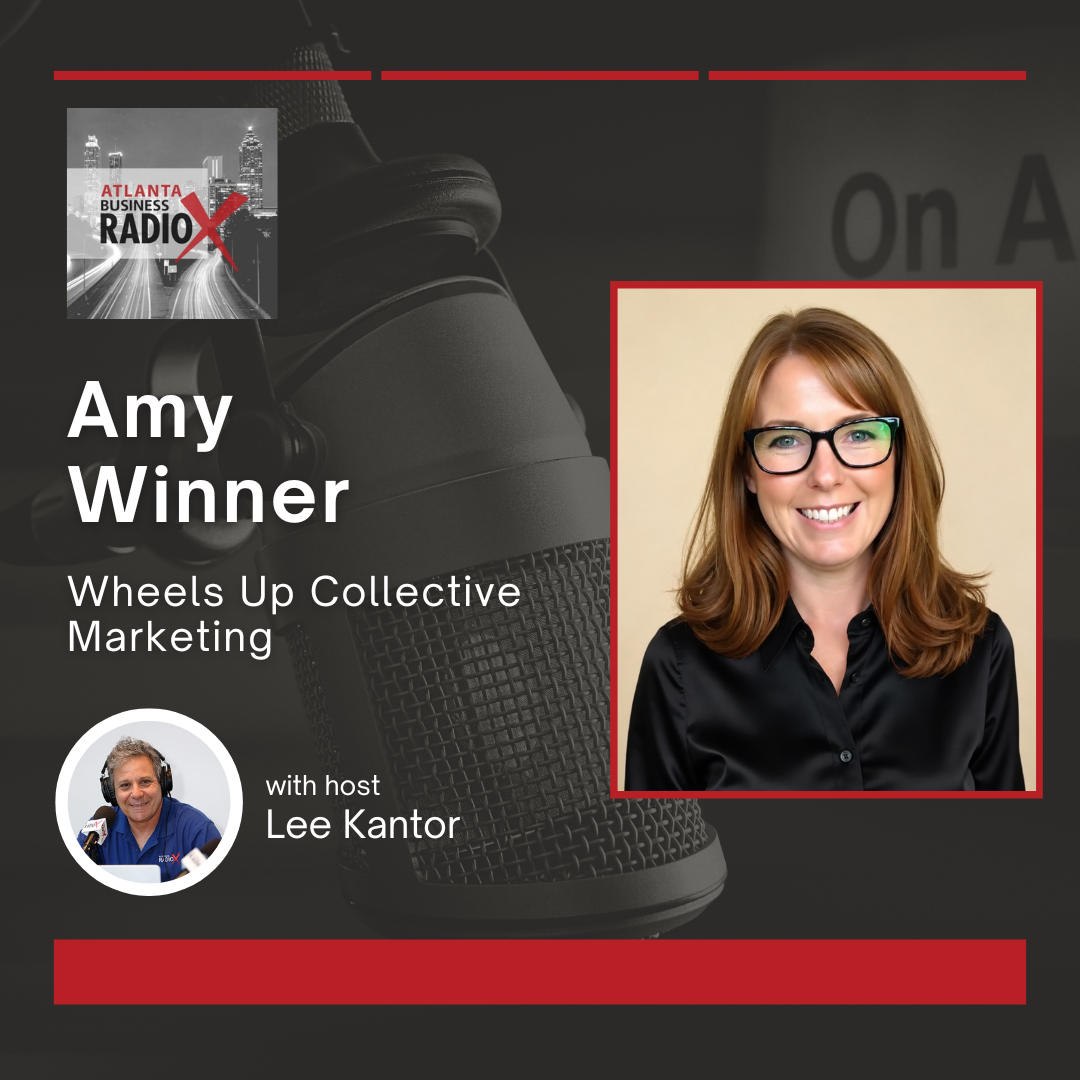

 In this episode of Atlanta Business Radio, Lee Kantor interviews Amy Winner, Co-Founder and CEO of Wheels Up Collective Marketing. Amy shares her experience helping startups, high-growth companies, and local businesses navigate growth through strategic marketing. The conversation explores the importance of product-market fit, the role of marketing as a growth tool rather than a quick fix, the differences between startup ecosystems, and practical strategies for building sustainable, data-driven growth. Amy also discusses how founders can avoid common marketing mistakes and create stronger connections with customers and communities.

 Amy Winner has spent the last 25 years helping brands turn uncertainty into opportunity. Whether economic downturns, competitive pressures, market changes, or company pivots, Amy has worked alongside both B2B and B2C leadership in a variety of industries to build pragmatic and resilient Go To Market strategies.
After a decade building marketing teams in Seattle’s tech startup world, she headed back to the East Coast, where in the early days of the COVID pandemic, she co-founded Wheels Up Collective – a boutique marketing agency that works almost exclusively with high growth tech companies.
Connect with Amy on LinkedIn.
What You’ll Learn In This Episode
- Sustainable growth begins with validating product-market fit before scaling marketing efforts.
- Strategic marketing serves as a business growth tool rather than a quick lead-generation solution.
- Founders benefit from taking an intentional, data-driven approach to growth decisions.
- Early-stage companies gain valuable insights by using sales and customer feedback as market research.
- Strong collaboration between marketing and sales creates more predictable business outcomes.
- Fractional marketing leadership can help startups scale efficiently without building large internal teams.
- Community trust and authenticity are essential for local business success.
- Google Business Profiles remain one of the most effective marketing tools for local businesses.
- Revenue-focused metrics provide greater value than vanity metrics such as likes and impressions.
- Long-term marketing partnerships create stronger and more sustainable business growth.
 This transcript is machine transcribed by Sonix.
TRANSCRIPT
Intro: Broadcasting live from the Business RadioX Studio in Atlanta, Georgia. It’s time for Atlanta Business Radio, brought to you by My Global Presence. The award winning Atlanta public relations agency that elevates brands and non-profits through authentic storytelling and national media campaigns. Find them at myglobalpresence.com. Now, here’s your host.
Lee Kantor: Lee Kantor here, another episode of Atlanta Business Radio. And this is gonna be a good one. But before we get started, it’s important to recognize our sponsor, my Global Presence. If you want global visibility and meaningful impact, go to myglobalpresence.com. Today on the show, we have the co-founder and CEO with Wheels Up Collective Marketing, Amy Winner. Welcome.
Amy Winner: Hey, Lee, thanks for having me. It’s great to be here.
Lee Kantor: Well, I am excited to learn what you’re up to. Tell us about Wheels Up Collective. How are you serving folks?
Amy Winner: Yeah. So Wheels Up Collective is a boutique marketing agency that specializes in high growth companies that can be, you know, they are coming out with a new product. They’re pivoting. Maybe there’s new competitive pressure, maybe they’re a startup that’s getting funding or they’ve been acquired. And we really go in and opportunistically look at the marketplace and the opportunities in front of them to figure out how they grow, how they take advantage of, of this new reality for them to grow. And we were born out of the startup scene in Seattle, so we’re sort of used to that figuring flying the plane, building the plane while you’re flying it as the startup kids love to say, and really figuring out how to help people use different marketing tactics to grow their business.
Lee Kantor: So what brought you to Georgia?
Amy Winner: I never thought I would end up in in South Carolina. I’m in South Carolina, actually, right outside of Augusta. And I this was sort of my long term retirement plan. I have horses, this is a big horse town, and thought that I would eventually end up here. And life sort of accelerated that plan a little faster than I thought. And so I moved here in 2022. And the amazing part of the move is when I, when I came here, I thought that I was just going to work in my office and then leave my home office and never really think about work again, that my personal life and my business life were going to be very separate in this region, and I could not have been more wrong. There’s so many small businesses and such a growing startup community in the Augusta and Atlanta metro areas that it’s been really fun to be part of, of that community and, and see how wheels up can, can be part of that too.
Lee Kantor: Can you share a little bit about the differences? Because I know a lot of our listeners are curious about startup scenes and business outside of where we’re at. So can you share a little bit about what it was like when you started and how you kind of compare and contrast the different markets.
Amy Winner: Yeah, absolutely. I spent 14 years in Seattle startup, and it was when cloud computing, cloud computing was really like taking off. It was when like it kind of hit that hockey stick growth. And Seattle really became known for the cloud SaaS capital of the world. And it was very frenetic, you know, energy, you know, the money was very frenetic. The hiring was very frenetic. I think that a lot of founders were, you know, kind of like shooting first and aiming second, because there was this sense of like urgency because the market was taking off so fast. And, um, I think that it slowed down a little bit. I think, you know, post Covid capital has kind of slowed down a little bit then, you know, in the 2000 teens and the early 2000, um, you know, 2010 ish. And I think that, um, here and maybe everywhere, but especially here, things are more specialized and more intentional, which is wonderful. You know, in Augusta, I didn’t know this when I moved here, but it’s the cybersecurity capital of the world. You know, from a tech perspective, there are tons of tech startups here that are specializing in cyber. And so there’s this very niche community of, um, specialists in that. And I think that that community lets you slow down a little bit more as a founder and, um, evaluate decisions, maybe, maybe, uh, start to shoot and then aim a little bit more instead of just shooting in the naming, you know, startups are such a fast scene to begin with, but, um, there’s just a little bit more intentionality and, um, maybe discipline, uh, which I think leads to maybe a little bit slower burn, but, uh, less burn out, which is nice.
Lee Kantor: Now, what about kind of the collaborative nature? Do you find the South a little different from that standpoint, or was Seattle kind of very collaborative?
Amy Winner: Um, well, Seattle is funny, you know, socially, you know, outside of, of the business world, it’s known for the Seattle freeze, which, um, is this phenomenon where like you meet somebody and, and you have a lovely conversation and they say like, oh, let’s get coffee or let’s get lunch. And then you never hear from them again. And it definitely is that way in business to where here in the South, I feel like those connections are, are more authentic. I think people are a little more collaborative here. I don’t know if that’s because it’s, um, a little of that like less frenetic energy. Um, but everybody here has been, you know, the South, the South has its, its reputation for being the hospitality capital of the country for a reason. Everybody is, um, just very kind and, um, transparent when they’re talking and, and really sort of genuinely wants to help each other out and kind of see everybody be successful. At least that’s been my, my situation, um, which has been lovely. That’s been a lovely sort of change.
Lee Kantor: What, what is kind of, um, the brand of the South when people from Seattle are looking at it or talking about it.
Amy Winner: We didn’t know. I mean, I never in a million years would have thought of the South as like a tech hub, you know, or a place, you know, I mean, Augusta or Atlanta has a huge tech startup tech scene. And, you know, it just was not anywhere on the radar. I think that Seattle is a little bit like San Francisco where, um, there’s a little bit of ego about, you know, being part of that community. And it’s a shame because there’s amazing collaboration opportunities across the country where, you know, these incubators are popping up and these accelerators are based all over the country. We have a client that came out of the Techstars Birmingham, um, location, that cohort and, you know, talk about very specialized. It was in regulated energy that was In regulated energy startup. And you know, that community is so tightly knit and so collaborative and had amazing corporate backing to really help those startups test and build, um, you know, specific products for their industry. And, and, um, I think it’s a shame that it needs a PR, it needs some PR. Maybe you can help with that. I think I’ve seen in, in the South needs some PR to the, to the, to the west coast.
Lee Kantor: Now, um, in marketing, uh, is there any advice you can share with startup leaders of maybe some do’s and don’ts when it comes to marketing their startup?
Amy Winner: Yeah, absolutely. I think a lot of times, um, we, I think when we, when we run into issues with, with startups, startup company, startup founder, founder, CEOs and their marketing, it’s that they quickly want to use marketing as like, um, the gasoline and they want to outsource it and they just want to grow and they just want leads right now. And I think as a as a entrepreneur, there’s the hard work that you need to do of really vetting what you’re building. And, um, you know, I think like digging into the data and, and sort of gnashing your teeth with some of those hard projects in the beginning to really make sure you’re finding product market fit. While it’s lovely to think that you can outsource them like you can’t, you can’t outsource them because they’re too important for your product roadmap, they’re too important for your, your sales cycles, they’re too important for the people who you need to hire. And, you know, we run into issues where we try to get hired too early and we push back and kind of say like, you know, you, we can come in and help advise you and help us give you sort of like fractional CMO type strategic oversight, but you really do need to do some of that hard work in the beginning of right sizing your market and really identifying what your Tam is and really identifying who your ideal customer profile, what your ideal customer profiles are before you can just start throwing money at it and running campaigns and trying to scale quickly.
Lee Kantor: So is that a mistake you see startups making? They’re just trying to, you know, looking for a cheat code that’s gonna get them the leads they think they need before they even have a product.
Amy Winner: Yeah, absolutely. Especially like, oh, I just got funding. I just closed the round. And a lot of times part of the pitch when you go in, when they when they go in and pitch, it’s how are you going to grow? How are you going to use this money and how are you going to grow? And they all have a marketing line item for how they’re going to expand exposure and expand awareness. And I think that you it’s, it’s good to go in and test those and run small campaigns. Maybe, but, but look at them as tests. Look at them as we’re using this to inform how we’re going to develop this company, um, and really do it very intentionally. You know, I can’t tell you how many CEOs early like we’re talking pre-series a, maybe series, a post series a. I’m just saying like, I need leads, I need leads. Well, you don’t know who you’re trying to sell to. You don’t even know what you’re trying to sell yet. Let’s figure, let’s use marketing to help you figure those things out, or use some strategic guidance to help figure those things out. But you know, it’s pretty easy to light money on fire pretty quickly running campaigns, you know, so, you know, we want to make sure that that money is being spent really wisely.
Lee Kantor: Yeah, it’s, it’s hard to find a product market fit if you don’t have a product.
Amy Winner: Right, right. And you know, I think, you know, honestly, for those really early stage companies, it’s, hey, I’m a marketing company. I want people to hire me. But I almost think like, if you’re pre-series a, hire a salesperson first or get your CEO selling first because, um, that, you know, those, those early sellers, the people who are really, really good early stage sellers, they’re just selling anything they can, and it’s a great way to really test market. It’s a really good way to test messaging. It’s a good way to test your product ideas and. You know, it’s kind of, you know, the, the concept of vaporware, we’re selling vaporware because we haven’t even built it yet because we don’t know what people are going to want to buy. Um, is, can be a little bit of a double edged sword, but it can be really good market research. And, you know, I think if you’re, if you have money to burn on growing early, early, um, you know, finding an exceptional sales person who is really good at thinking about sales as a market research tool, um, is, is money well spent, but I mean, I’m happy to work with early stage startups and, and help them run campaigns. But, um, you know, we also don’t want to light people’s money on fire, right?
Lee Kantor: And you have to manage your expectations. This isn’t kind of a magic wand that’s going to make leads and customers appear.
Amy Winner: Yeah, it’s a great point because a lot of times, like in those early, you know, you know, you end up Marketing the product one way. Um, people buy it with expectations and then you pivot and then, you know, your product roadmap shifts and then those customers become extremely expensive because you have to manage them, right? Like you have to build things that maybe they’re expecting that, you know, you decided you weren’t going to build or you have to deal with churn and then, you know, it’s like a Hail Mary when renewal time comes and it just ends up taking so much of your internal resources to keep a not great fit customer. So, you know, really making sure that you know what you’re selling and who you’re selling to before you start throwing gasoline on the fire and scaling quickly, I think is, um, prudent.
Lee Kantor: And even figuring out how to sell to an early adopter is different than to sell to somebody further down the customer journey. You know, it’s not the same mental mindset of a buyer. And if you’ve geared your marketing to early adopters and you’re past the early adopter stage because they’ve moved on to the next shiny object. You’re missing out on opportunities that might be, you know, right in front of you if you alter your marketing a bit.
Amy Winner: Yeah, yeah. And that was one of the things that like, I think especially some of these like industry specific incubators that have popped up and accelerators, like they’re so great because they deliver these, um, market specific customers that are, that end up becoming design partners with you and, you know, talk about invaluable, um, advice and counsel and testing and, um, you know, real life running, running water through the pipes. You know, I think that that’s sort of the best case scenario. If you can grow in a, in a commercial assisted way like that, um, where you’re really able to have design partners with customer, you know, with real life customers who, who match that, who you think your ICP is at least in the beginning.
Lee Kantor: Now, is that a good um, partner for you. Do you work with a lot of incubators and accelerators?
Amy Winner: We do. We actually we work with a lot of, um, like VCs and, uh, PE companies. Um, the incubators and accelerators are a little early for us. Sometimes we’ll come in and those in like a fractional CMO type role where we’re coming in and helping evaluate the market. We’re helping evaluate, um, customer or ideal customer sentiment. We’re helping to codify early messaging, like really early messaging to help test and see like what sticks. Excuse me, but we, I think are a better fit for a little further down the pipeline. When you know, you, you’re with a VC in a, you know, series B or later or a P company where we’re able to come in and help that, that funder standardize marketing across their whole portfolio. We’re able to come in and say like, okay, we’re going to come in and, um, we, we are a HubSpot shop. We work in lots of CRMs, but HubSpot is our preferred CRM. And, you know, we’re able to come in and like build HubSpot instances for all these VC’s portfolio, all their portfolios. Um, so it’s the same, so easy for, um, you know, the VCs resources to, you know, the people who they have that need to dig into data to go in. And it’s the same across their portfolios. Um, or their dashboards are all the same. The reporting is all the same, um, which, you know, helps them streamline as well. And also, you know, we can end up being a little bit of the adult in the room where a VC, you know, gives money or B company gives money to, um, you know, a founder found a founder, CEO and, and say, you know, here’s, here’s your turnkey marketing solution that we know fits for our stage and type companies. So, um, those have been really good partnerships for us as well.
Lee Kantor: Now is your niche, uh, B2B, B2C, both or industry agnostic? Like, where were you at from that standpoint?
Amy Winner: We’re mostly B2B SaaS in particular, we have a lot of B2B business governments, uh, exposure and experience as well. Um, and then we also, that’s like one part of the business. The second part of the business, which has been, um, new in just the past two years is, you know, small and local businesses, which are, you know, my neighborhood businesses here that have been a little bit like taken advantage of by bad marketing agencies, um, who are, you know, setting their money on fire and not helping them actually grow, um, and really helping them figure out how to use the right marketing, not just like running Instagram ads, which I think is what a lot of, you know, small businesses end up doing because they don’t know anything different, you know? So, um, we have those sort of two separate verticals.
Lee Kantor: So what’s like a brick and mortar, like a, you know, a fitness center? Is that.
Amy Winner: Yeah, yeah. Like we work with, um, in town, uh, one of the big bank, Local banks. Um, some of the larger one of the larger landscapers in town, um, some like, uh, trucking companies, really local realtors who are um, clients as well. So, you know, those, those sorts of companies that are selling within a very defined local area. And so much of that is community building and community awareness and, and, um, community branding. Um, you know, I live in Aiken, which is a small town and it’s, um, it’s both the easiest thing in the world and the hardest thing in the world, you know, because one, you know, once you’re part of the community and you become, um, sort of the default for, for whatever your, your little slice of business is. Um, it’s easy, but also like the, um, risk of losing trust is um, exponential, you know, because I think people do start to really kind of think of you as, as a partner in the community and part of their little community bubble. And so, you know, they’re, they’re a little more discerning about a little more critical about losing that trust. Like you, you can’t screw up. You have to do it. Right. Um, and word travels fast. So really maintaining authenticity and maintaining that trust within the market. Um, I think is what sets apart like really successful local businesses from just run of the mill ones.
Lee Kantor: So how did that come about? I mean, how do you, uh, a team that’s focused on high growth tech companies start, you know, working with the local realtor? Like, was that just kind of happenstance? Like that’s your neighbor or a friend of yours?
Amy Winner: Well, it’s funny because, um, it’s a great question. Um, because also, you know, wheels up’s like shtick is that we, we built a team of pretty senior B2B tech marketers, um, which, you know, we have everybody’s been in, in the B2B SaaS world for at least 15 years, which they’re kind of expensive people, which is, which is hard to make, you know. Right. Uh, find the right fit from a price price perspective for small and local businesses. Um, because they just don’t have the same margins. Um, but it happened very, um, organically. I sort of, you know, serendipitously got involved with the Chamber of Commerce here in town. They have a tech incubator. They’re starting, you know, there’s a, they had a pitch contest, I think it was two years ago with, um, with Augusta Augusta’s um, growing tech scene. And, um, I got involved with that and, you know, just kind of hit it off with the organizers at, at the, um, Chamber of Commerce and I’ve given a bunch of classes and I’ve come and, and done some speaking and, um, it’s become a little bit of like a passion project for me personally, because, you know, nobody gets into small business, nobody starts their small business because they want to be a marketer. They start their small business because they’re passionate about being a realtor or having a shoe store or having a flower store or, you know, like that. And, and, um, I, I feel for them because I think they’re getting pulled in a lot of different directions. It’s hard to find good advice from a marketing perspective. Um, and I, my favorite thing to do is to sit down with a business owner, whether they’re an early stage tech founder or, you know, the person who owns the florist shop in town and figure out like, okay, what, what keeps you up at night? Like, what are the things that are working in your business? What’s not working? If you could have ten more of, of a specific customer, who is that? Where is that person? How do we get to them? Like, how do we, how do we really think about marketing as a growth, a growth tool that is tied at the hip to sales? You know, it’s not just running Facebook posts.
Amy Winner: You know, it really is a way to, to sell things and grow your, your revenue. Um, and so it’s just like maybe a little bit a different slant on the same set of tools. But, um, it’s been really fun. And, you know, the thing, the thing that made it, um, uh, a profitable endeavor for us or a worthwhile financially endeavor for us is like we had already built all these frameworks and templates and tools for the B2B SaaS world. Like we already have our methodologies figured out. And so we didn’t have, you know, it was pretty easy to take that and adjust it for, you know, tweak it slightly to fit, um, a local business situation. So, you know, we kind of, we already had like the secret sauce figured out. We just had to adjust it a little bit. So that makes it the work go a little faster. And I think we’re able to be a little bit more, um, competitive price wise.
Lee Kantor: And also the impacts a little different when that realtor is high fiving you when they get a new client, right? As opposed to, you know, a mega, you know, a unicorn saying, yeah, look, you know, they both feel good, but there’s something about seeing a neighbor win that feels special.
Amy Winner: Yeah, yeah. One of the things I love about the tech startup world is, you know, when you work with, um, those early, you know, founder CEOs, like it is a baby, like they built, you know, they birthed this thing. And, um, you know, I’ve been, I’ve been part of probably over the years, at least two dozen, three dozen startups, you know, at varying stages. And, um, you know, every time there’s like one of those milestones, it’s really fun. And I think that you’re totally right. The milestones, um, uh, I, they’re really fun to, to hit those same, um, success points in, in a small businesses journey. Um, it is super, it’s super rewarding. It’s fun. It makes it fun. It makes my job fun, which, you know, after 25 years in marketing, it was starting to get kind of just, you know.
Lee Kantor: Well, it could be a grind. I mean, it’s it’s it is a tough it’s a tough business. It’s not it’s not the glamorous TV business that maybe people think it is.
Amy Winner: Yes. That’s a great way to describe it. So this has been a way to, you know, re-energize me a little bit um to this trade.
Lee Kantor: So what do you need personally?
Amy Winner: The rest of my team is fine. They love that. But you know, like I was, I, yeah, I needed a change of pace a little bit too. So it’s been a fun project.
Lee Kantor: So, uh, what do you need more of? How can we help you?
Amy Winner: Um, well, I mean, we always, we need, we are successful with, um, founders and CEOs who are willing to take the, I’m not gonna say the slow route, but the intentional route, you know, and, and to realize that marketing is a series of hypotheses and we’re going to go in and make those hypotheses with a lot of data or as much data as we can to back it up. But that, you know, there is no silver bullet. Like there’s no silver bullet. I don’t care what the ads say that you’re getting served as a small business or a small business owner or a tech founder CEO. Like there’s no silver bullet to marketing. And, um, you know, we do really well with, with clients where we can build that trust and build that rapport and, and collaborate together on like, okay, how are we going to grow this business? Um, but, uh, we’re always looking for really good fits. We’re, we’re not really a quick engagement type of company. We like to build longer partnerships. Um, and so whether they’re tech founders or, you know, a little bit more mature tech company leaders, um, we’d love to come in and help you grow your company alongside of revenue. Um, you know, from a marketing perspective and then, you know, from small local businesses, if you, uh, are kind of fed up with marketing in general and want somebody to come in and sit down with you and talk about like, how to grow your business. Like, I’d love to have those conversations. I will have those coffee conversations all day long. So, um, always looking for resourceful, small and local business owners who want to think about a different way.
Lee Kantor: So is there a story you can share about maybe one of those high growth tech firms that came to you? Uh, don’t name the name, but maybe share the challenge that they came to you with and how you were able to help them get to a new level.
Amy Winner: Oh gosh. Well, we, um, yeah, I mean, that’s all of them. I think they all are kind of like that. We have one client that, uh, was at an incubator. Um, and I was introduced to them through somebody who I’d worked with before. I’d worked with, um, their CRO, uh, at a company. We were colleagues, you know, in Seattle years ago. And, you know, he came to me and said, we need to hire a marketing manager. Like, can you help? And when and he just called as a friend. And as we were talking about it, I was like, you don’t need a marketing manager, you need a graphic designer and a web dev, and a marketing strategist and someone who can run like they needed everything. And I think that it’s, uh, way too expensive to hire all of those people when you’re early, early, and it’s too hard. Like it takes so long to, to recruit and vet and onboard and hire people, um, and then manage them to the point where they’re successful, you know, and they can actually like run their function. So as I was talking to him, they were really grappling with, you know, we have this early, um, this early product iteration and this was, um, maybe four years ago when I was like kind of going mainstream, you know, it was like, just like it was before ChatGPT. The first, the first version of ChatGPT had come out. So a lot of the tech world was very ingrained in, in the revolution that AI layering AI into existing technologies could bring.
Amy Winner: But it certainly wasn’t a household conversation yet. And so I said, you know, you really need a fractional CMO to come in and like, help you do this. But, um, somebody who has access to a, a vast network of doers, marketing doers. So I came in as a fractional CMO, I was fractional CMO there for two years. And you know, we use wheels, ups, um, uh, team to, to comment with when we needed to, we built out the first HubSpot, we built out their first, um, uh, you know, their lead flow and their lead tracking and their reporting. And, um, you know, we got to like predictive funnel metrics so that they could decide when they could afford to hire another seller and when they thought they would have enough demand to keep another seller busy. And, um, you know, we really saw that go from they were, they had done a small friends and family round when I started and um, you know, two years later they were post-series a, we ran their first customer summit for them. We saw them go from, I think there were about $300,000 in revenue, annual recurring revenue of revenue, $200,000 in recurring annual revenue to over a million. Um, and, you know, we still work with them in a limited capacity. You know, they, they kind of bring us in for specialized things that their, their team now doesn’t have the capacity to do.
Amy Winner: I actually, when I was there, one of my, one of my parting activities as the fractional CMO was to, um, re, um, find, recruit and, um, select and onboard their, their VP of marketing and really like worked with her for the first two quarters to make sure that she had all the information that she needed to be able to like take this little baby bird out of the nest. Um, and so, um, that was, that was a really fun project because every day it was different. It wasn’t a traditional, you know, like we are marketing and we run campaigns. It was, how do we vet this product idea? How do we take advantage of this moment in AI where we’re starting to add it into the platform and, you know, really use it to find the right to your point, early adopters, you know, and kind of sell that vision and, and, and then how do we turn this into a repeatable sales funnel that, um, can make sure that our salespeople can hit quota and that we can grow with the very aggressive sales numbers that are kind of like needed to be able to keep early investors happy and get the next round of investors to, um, it was fun. I would do that all day long. You know, that’s a great fit for wheels up. We would love to do those kinds of engagements all day long. We have three fractional CMOs on, on staff that that can do that. So.
Lee Kantor: So, um, and then before we wrap, how about advice for that local business? Are there some low hanging fruit that anybody could be doing or maybe some things they shouldn’t be doing?
Amy Winner: Well, low hanging fruit is Google business listings. I can’t tell you how many local businesses do not take advantage of it. It is a free, you know, ad. And if it ends up, you know, being like your free front door on the web, on the on the internet. Um, especially with the changes to Google right now where, you know, they have their AI generated answers at the top of every, I mean, Google searches changed drastically. And, you know, it was, you know, only going to continue to change. And so really optimizing that, um, and putting some regular, consistent, um, time into making sure your profile is up to date, making sure it’s relevant, making sure that you have new pictures going in or you know, your hours are posted and you’ve got specials on there. Like that really is the best thing that you can do to tell Google that you are a vibrant local business. Um, and then therefore end up, you know, in that map pack the search where you show up on the map. Um, and in those, those answers at the top. Um, that I think that maybe because it’s free, I don’t know, so many business owners like don’t, don’t do that.
Amy Winner: You know, they’re, they, um, totally glaze over that one. We have an ebook on our website about like how to make the most out of that listing. It’s a free e-book that, um, it’s not hard. You just have to set aside a couple minutes each month to stay on top of it. So that would be my do for sure. Um, and my don’t would be, you know, to, to not get too, um, romanticized by likes and, you know, likes on, on Facebook or clicks on Facebook because that algorithm changes so quickly and, um, you know, it’s getting harder and harder to show up on there. And I think that as a brand to, to show up in the feed. Um, and I think that a lot of marketing agencies are kind of just selling that, that we’re gonna get you lots of organic posts and get you likes. And, and unless that’s, you know, obviously translatable to sales, which I think there are many, many instances where it is, you know, I think that, you know, stay focused on what you can tie back to actually selling things and focus on that.
Lee Kantor: Yeah. We call those cosmetics.
Amy Winner: Oh, I love that. We call them vanity metrics, but I’m going to use that. I’m going to steal that from you.
Lee Kantor: All right. Well, if somebody wants to learn more about wheels up, get on your calendar. Uh, what’s the website? What’s the best way to connect?
Amy Winner: Yeah, we’re wheelsupcollective.com. Um, I’m on LinkedIn as Amy Winter. You can find wheels up on LinkedIn too. Um, I think there’s actually a scheduler link like on wheels up to schedule time with me or one of any of our fractional CMOs. We’d love to kind of talk shop, um, and, and do some of that early discovery brainstorming. Um, so we’d love to engage. All right. Well thank you.
Lee Kantor: Well, Amy, thank you so much for sharing your story today. You’re doing such important work and we appreciate you.
Amy Winner: Well, thanks so much, Lee. I really enjoyed it.
Lee Kantor: All right. This is Lee Kantor. We’ll see you all next time on Atlanta Business Radio.















