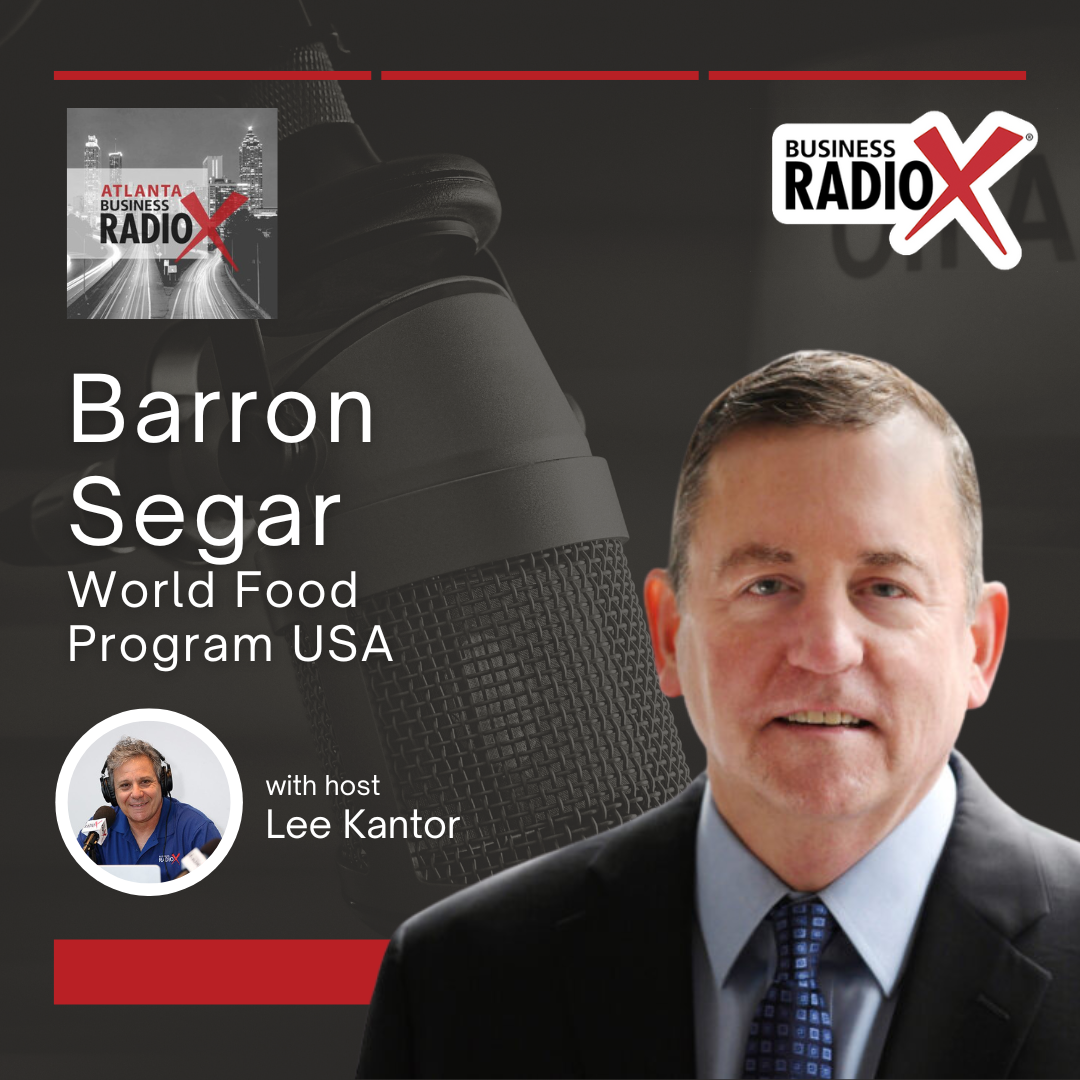


 Barron Segar is the President and Chief Executive Officer of World Food Program USA, the nonprofit charged with inspiring and mobilizing people in the United States to support the U.N. World Food Programme’s mission to save and protect the world’s most vulnerable lives against hunger.
He has more than 25 years of experience growing philanthropic and cause marketing platforms for organizations spanning global humanitarian aid, public broadcasting and finance. Under his leadership, World Food Program USA quadrupled its revenue in less than three years and has earned exceptional ratings from multiple trusted agencies for its financial health, accountability and transparency.
A leading voice on global food security, he has been featured in major media outlets including Bloomberg TV, NBC News Now, CNN, MSNBC, Forbes, The Hill, The Guardian, The Chronicle of Philanthropy and at events hosted by the Reuters, Devex, Axios, World Affairs Councils of America, and the Global Philanthropy Forum. He has led visits to field operations in multiple countries including Lebanon, Liberia, Ethiopia, Nepal, Guatemala, El Salvador and the Polish border of Ukraine to shine a light on the lifesaving work of the U.N. World Food Programme.
Prior to World Food Program USA, he served as the Executive Vice President and Chief Development Officer at UNICEF USA, with organization-wide responsibility for strategy, budget, and critical operational priorities. He led the strategic direction of the Development Division and all regional offices, raising $500 million in annual revenue.
Previously, he served as the Director of Development for Georgia Public Broadcasting, where he and his team were nationally recognized for record breaking fundraising performance. Barron also has experience in the private sector working in financial services.
For the past five years, The NonProfit Times has recognized Barron on its Power & Influence Top 50 list for leadership centered on innovation, broad sector influence and developing replicable organizational models. He is a Founding Board Member of the Elton John AIDS Foundation, serving over 30 years on the National Board of Directors. He currently serves on the Advisory Board for Open Hand Atlanta and Board of Directors for the Non-Profit Alliance.
He is a graduate of Leadership Atlanta and earned a bachelor’s degree from Hampden-Sydney College.
Connect with Barron on LinkedIn.
What You’ll Learn In This Episode
- The mission of the World Food Program USA and how do they work to combat global hunger
 This transcript is machine transcribed by Sonix.
TRANSCRIPT
Intro: Broadcasting live from the Business RadioX studio in Atlanta, Georgia. It’s time for Atlanta Business Radio, brought to you by Kennesaw State University’s Executive MBA program. The accelerated degree program for working professionals looking to advance their career and enhance their leadership skills. And now, here’s your host.
Lee Kantor: Lee Kantor here, another episode of Atlanta Business Radio. And this is going to be a good one. But before we get started, it’s important to recognize our sponsor, CSU’s executive MBA program. Without them, we wouldn’t be sharing these important stories. Today on Atlanta Business Radio, we have Barron Segar, who is the President and CEO with World Food Program USA. Welcome.
Speaker3: Hey, Lee. So happy to be here today. And, uh, and as you mentioned, I’ve lived in Atlanta for 26 years, so I miss all my friends and, uh, colleagues there, probably listening in today.
Lee Kantor: Well, I’m excited to learn about the World Food Program USA. Do you mind sharing a little bit about mission purpose? How you serving folks?
Speaker3: Yeah, sure. So I’m based in Washington, D.C., the World Food Program, USA. We’re the nonprofit arm supporting the work of the United Nations World Food Program. Our job here for World Food Program USA is to make sure that we’re advocating, uh, from a policy perspective, developing partnerships with the private sector, businesses, faith based organizations, individuals and raising awareness. There are a lot of people, unfortunately, today that are suffering because of a lack of food. So our job is to make sure that we’re amplifying those stories. And again, our work is to support the World Food Program. The recipient of the Nobel Peace Prize in 2020, largest humanitarian An organization in the world fighting global hunger.
Lee Kantor: So do you mind sharing a little bit about some of the stats, and give us some idea of the context in which we’re dealing with when it comes to hunger?
Speaker3: Yeah, sure. I would say unfortunately, we’re at a pretty unprecedented level today. 300 million people around the world don’t know where their next meal is going to come from. And the very sad part of that narrative is in two countries, we are facing pockets of of famine. And I will say that, you know, on the positive, we always have to remember that hunger was actually on the decline up until about ten years ago. And so I have a lot of confidence that we’ll be able to reverse the trend today, and we’ll be able to see hunger declining. We are seeing, by the way, pockets of hunger declining in parts of central South America. So, you know, our job, though, is to make sure that everybody around the world has access to a nutritious meal.
Lee Kantor: And then what is some of the ways that you help them have access to it? Is it bringing them food or is it helping them kind of grow their own food or provide for themselves when it comes to, you know, having the food they need?
Speaker3: Yeah. So how about if I, if I told you if I gave you the answer all the above. So one of the ways that the World Food Program works, unfortunately, right now a lot of war is happening around the world. And this is where the World Food Program will transport deliver through trucks, planes and cargo ships, food. So on any given day. Lee, this is a pretty amazing statistic. The World Food Program has on the on the go about 5300 trucks, 30 plus cargo ships and about 100 planes delivering food. So again, emergency relief supplies going out today. We also provide what’s called a cash based transfer. So where you have individuals where there are functioning marketplaces, we do temporary cash based cards, uh, so that families can go in and buy food, um, on a very temporary basis. And the other part of, of our job at the World Food Program is around resiliency. So there are a lot of parts around the world that are creating income and sustainability for their families. When you think about business and you think about agriculture in most countries, uh, most individual lives, um, revolve around agriculture. So our job is to make sure that, uh, individuals have the training, the tools, the resources necessary to grow their crops, to feed their local communities, and to take those products to the market to create income.
Lee Kantor: So when you when you’re kind of transporting some of this food, where are you getting the food?
Speaker3: So, um, I’ll give you an example and I’ll give you two different examples. One is one of the hallmark programs of the World Food Program is called Homegrown School feeding. Um, about, uh, 20 million meals last year, uh, were provided through the help of the World Food Program. But this is not, uh, the World Food Program. Putting food on a truck or a plane. You have to remember that’s really expensive to do. And that that is a last resort. But what we do is we provide funding and a lot of different, uh, context is to make sure that, uh, that communities can have the funding so that they’re working with farmers to grow the food. Communities are, um, are then rallying around to, uh, to make the food for kids. And so it’s called, uh, locally homegrown school feeding. Uh, it also provides a resiliency factor for income for the, um, the local community. Li one of the things I have to tell you is when I was in Liberia, uh, earlier this year, a teacher came up to me and said that, um, that without school feeding, uh, kids wouldn’t be in school. They said you could have all the desks and the teachers and the training and the chalkboards and the latrines, but without school, kids are working. So, um, I’m super proud. So again, that’s homegrown school feeding. The other part that I may surprise some of your listeners is that the World Food Program, through the work of partnerships with, uh, the US State Department and USDA, we buy a lot of food from farmers here in the United States, putting them on cargo ships. And they typically go to countries that don’t have the ability of growing their own food.
Lee Kantor: Now, what is the the state of the Union when it comes to the United States, when it comes to hunger?
Speaker3: So, uh, the US, um, so what I would say is we have to care about hunger everywhere, whether it’s happening in our backyard or whether it is happening halfway around the world. We should be investing here in the United States. And and by the way, the US, I think does a pretty good job. There are safety nets here in the US. So I would say, you know, you don’t see, uh, you don’t see famine, you don’t see starvation. Uh, however, you see a lot of struggles where people struggle to find their next meal. When you think about the World Food Program, our work is really, you know, I would use the word we’re feeding the hungriest of the hungry. And so what that means is we’re talking to people that don’t have access to maybe it’s a Snap program or a local community food bank. These are individuals that are facing extreme levels of hunger.
Lee Kantor: Now, what’s your backstory? How’d you get involved in this line of work?
Speaker3: So, uh, my story actually has some ties to Atlanta. I’m very honored, uh, to be a founding member of the Elton John Aids Foundation. Li. We started that foundation, uh, in Atlanta back in 1992. And, uh, I knew Elton, Alton because of his, uh, recovery. Um, moved to Atlanta, and then he asked me to be one of his founding board members when he started the foundation. Long story short, um, through Alton’s foundation, I had the opportunity to go to the field. Um, and I met with so many individuals who were impacted or living with HIV Aids, and I saw the vulnerability of humanity and felt that personally, I could play a role, uh, around alleviating some of that hurt some of that, uh, that, that, um, the the lack of dignity that goes in to whether it’s an individual having HIV or an individual that can’t feed their kids because of school. And so I would say it’s a product of experiences, a product of opportunity. But, uh, again, through the honor of being a founding board member of the Elton John Aids Foundation, had an opportunity to go to the field, see firsthand what very few people get. And I gotta tell you, you know, I never got some of those images out of my mind, by the way. Not all negative. A lot of them. Very positive messages of hope. Um, but I really determined that this was going to be the future of what I wanted to do, and it was going to be that my life would really revolve around impact.
Lee Kantor: So when you’re working in an organization that you are, how do you. It seems so overwhelming. How do you kind of choose and prioritize where the effort needs? Like you said, this is kind of a global problem. How do you kind of decide where to put your energy and efforts and how to reach those people most effectively?
Speaker3: You know, it’s it’s probably the toughest, toughest decision again at the World Food Program USA. Our job is to support the programmatic efforts of the global organization. But I would tell you what I’ve learned is that it’s a very difficult process of deciding who eats and who does not. I cannot imagine anybody on this earth wanting to be put in that position. But there are some factors and some factors that are dependent on levels of nutrition, uh, whether it’s with children or whether it’s with families, how many days an individual or family goes without eating, uh, and general lack or access to food in those specific communities. Uh, I would also say, um, access, um, we have to have access to, uh, to feeding people. And unfortunately, today we’re living in an area where war is now, the number one reason that people are hungry and people are starving. Um, and so our job is to make sure that we also have to secure the safety of workers at the World Food Program, but it is really determined based on the hungriest of the hungry. Can we reach, can we get into these communities, can we effectively serve? And, you know, like a lot of organizations, Lee, you know, we’ve seen, uh, some cuts, uh, around federal funding. Um, we are still getting funding. I’m very grateful for that at the World Food Program. But we also have to have to look at how can we make a dollar go further. And in some cases, and in many cases, it also means, um, some people, uh, unfortunately have to go with fewer meals or in some cases, uh, not having meals provided at all. But in most cases it’s reducing the number of meals. And I would say this is where it comes to having really thoughtful partners like UPS here, um, in Atlanta, who’s helping us do more with less. They’re looking at our efficiencies. They’re looking at our transportation hubs. They’re investing in the World Food Program to help us make sure that we can reach the most number of people in the most efficient way.
Lee Kantor: So, um, what is that? Ask to the folks in the private sector, as you mentioned, that funding is a challenge. Uh, And nowadays, in a lot of areas, I would imagine that you have to lean more on the private sector and individual philanthropy. How, you know, give me the sales pitch to help them understand why this is where they should be investing their dollars.
Speaker3: Yeah. Uh, for for me, it’s a very easy, um, offering. I would say that I have always believed that we have a moral and an ethical responsibility, uh, to provide food for those who are hungry. Um, and I would also say that I’ve really been humbled at the number of, um, companies and foundations and individuals and faith based partners that have rallied around hunger. Um, I would say that we’re seeing a lot of companies that are partnering with the World Food Program who are going all in because their employees are demanding it, and their customers are also, um, really stakeholders to make sure that if they’re buying a product from a company, that that company is doing good. I’ll tell you a story that happened just last week. Um, I talked to, uh, one of our emerging corporate partners. It’s a fortune 100 company, and they just surveyed, um, about a thousand customers around what? What was important to them. And they thought that the answer would be climate or maybe education. But guess what? It was hunger. That hunger was top of mind for their audience. So they’re now going more all in with the World Food Program because they they believe it’s not only the right thing to do, the ethical thing to do. Everybody deserves the right to food for food, but it’s also good for their business that Gen Z and millennials are going to go more all in to companies that are giving back and that are supporting issues that they’re concerned about.
Lee Kantor: So how would you, um, how would you have the private enterprise, the private companies, the entrepreneurs and the business leaders out there? What’s a way, uh, that they can kind of make that decision to partner with your organization? How would you recommend that they, like you mentioned, maybe poll their customers, poll their employees, get a feel for what are the issues that are important to their constituents. And I’m sure that, uh, your organization would be on the list of that, but is that a good starting point for them to just get an idea of what issues are important to their constituents, and then have them invest some of the dollars into supporting and serving these types of organizations?
Speaker3: Yeah, I think Lee. Oh, actually, no, this, uh, more companies are leaning into food than ever before, and our job at the World Food Program USA is to really co-create, I would say, with companies, if they have an interest in the World Food Program, particularly with global food. Uh, the, the the best way is to get in touch with us. But I would also say, you know, know what’s important to your employees. And I have to say, you know, we talk a lot about, uh, about, uh, the customers. But the most important factor companies are listening to their employees and their employees want to work for a company that is thoughtful, that gives back, that cares. And hunger again is top of mind across the board for almost every company. And so, uh, I would say that, you know, yes, you want to have some data points to look at what your customers, what your employees are interested in. Uh, and then if you go to our website at the World Food Program, WFP, USA, there are lots of ways to get involved. We’ve also just launched a, a youth, uh, Gen Z, uh, a zero hunger generation program that engages Gen Zers around book clubs and and engagements with country offices and gaming and volunteerism. So I would say, and in all honesty, there are lots of ways to get involved. Some of them include just financially supporting us. Um, and then some of them, uh, involve more integrated partnerships. So I wish I had a one size fits all. But the good thing is, I don’t. Uh, I think the first step is determining that you want to be engaged with the World Food Program. You want to be engaged with solving hunger globally, and you want to have a voice in a seat at the table.
Lee Kantor: Now, do you have, um, kind of chapters and presence around the country, around the world, or is this something that’s based out of D.C. that is just kind of serving everybody virtually online? Obviously you have boots on the ground wherever they’re needed, but are there chapters around the country to get involved in?
Speaker3: You know, it’s a really, Um, great question. And I work for an organization previously that had regional offices and chapters. But I would tell you that one of my jobs here is not only to raise revenue, but to do it as efficiently as possible. So, you know, this year, our efficiency ratio, meaning the the amount of money that goes to programs, will be somewhere between 88 and $0.90 on the dollar, which puts us in the very top, probably 2 to 5% of all nonprofits in the US. Uh, we are based in DC, but we have staff, um, in multiple states. Um, so whether it’s whether it’s Texas or whether it’s Atlanta, by the way, uh, could be New York, could be California. We have staff, uh, located in various, um, cities throughout the US. But I did make the decision that we just couldn’t afford to open an office because the expense just gets too high. And my job is to make sure that as much as possible, uh, dollars go to support the programs supporting those who are hungry, or those programs that are creating resiliency and jobs to create incomes to stop hunger.
Lee Kantor: And then one more time, the website. If somebody wants to learn more, get involved.
Speaker3: Yeah. So I can’t say that too often. Right. Uh is w um dot wfp USA? Org. We just, uh, recently launched a hunger relief fund. Um, so check that out. That’s a way that companies can get involved with their employees. Um, and you know, Lee, we have a lot of companies that are interested in very specific parts of the world. So when you think about the World Food Program, we’re in about 120 countries. So you may have a specific interest in, uh, central South America. Maybe it’s, uh, it’s Gaza, maybe it’s Africa, maybe it’s India or Southeast Asia. Um, you know, there are a lot of different areas that we support that you could choose to support as well.
Lee Kantor: Well, thank you so much for sharing your story today. You’re doing such important work and we appreciate you.
Speaker3: Lee, I’m. Hey, I’m grateful for the opportunity to to share with your audience. I know it’s an important audience, and I would I would just end by saying, I’m. I need your help. Everybody listening? Please lean in to the World Food Program, USA. Please reach out to us. There’s an opportunity to engage you. Um, the world is depending on us. Um, and, uh, we just can’t keep going at the pace we are. There are far too many people that are hungry around the world that need our help.
Lee Kantor: Well, thank you again for sharing your story.
Speaker3: Thank you. Lee.
Lee Kantor: All right. This is Lee Kantor. We’ll see you all next time on Atlanta Business Radio.














