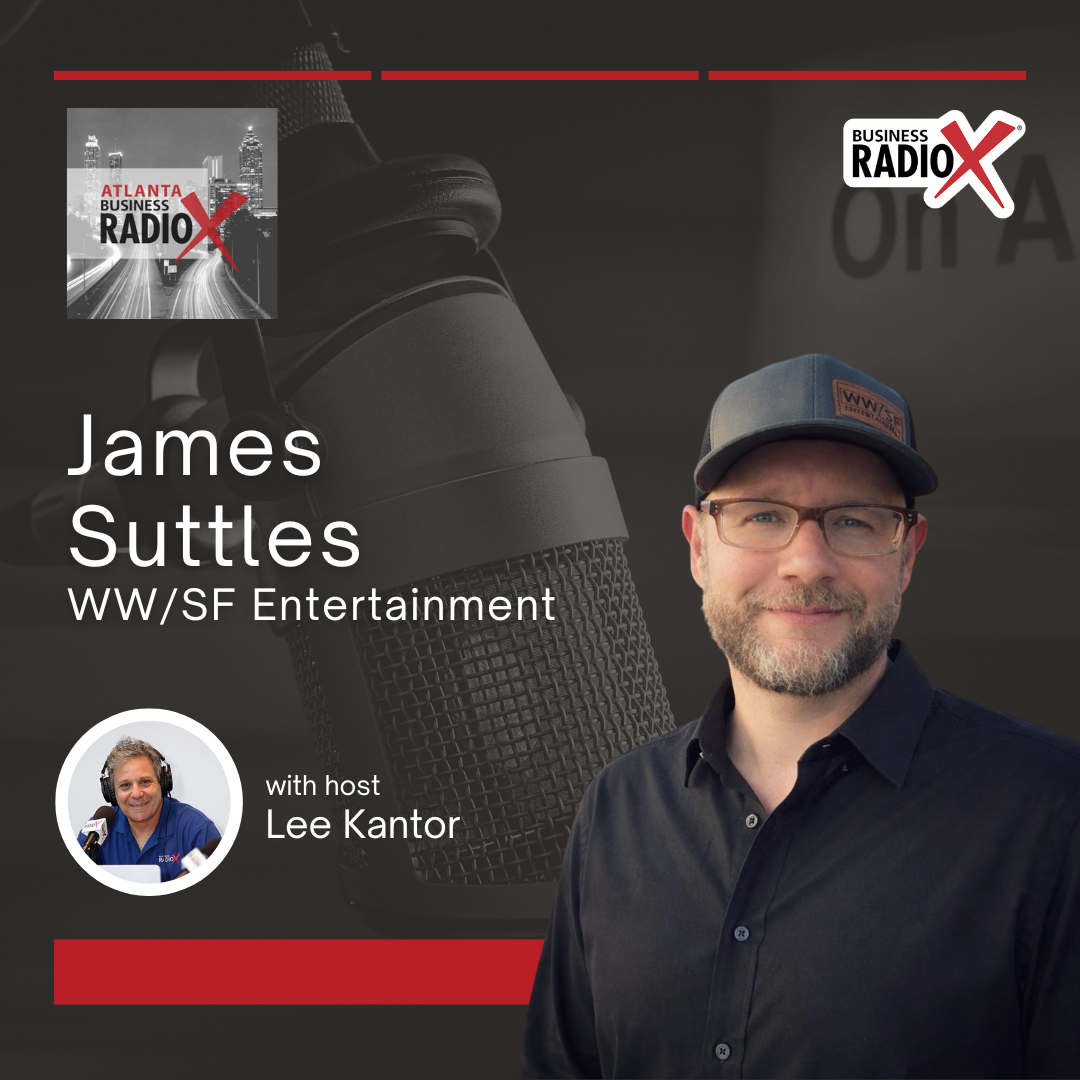

 In this episode of Atlanta Business Radio, Lee Kantor interviews James Suttles, co-founder of WW/SF Entertainment. Suttles explains how his Atlanta-based company provides full-service film production support for studios, networks, and independent filmmakers, handling everything from budgeting and crew to logistics and execution. He also discusses their film Clean Hands, which premiered at Tribeca and came together quickly once cast members like Zach Braff joined. The conversation covers trends in the film industry, including the rise of streaming, fewer big franchise projects, and growing opportunities for smaller, original films. Suttles remains optimistic about Atlanta’s role as a key production hub despite recent industry slowdowns.

 James Suttles is a multifaceted Producer, Director, and Cinematographer, and Co-Founder of WW/SF Entertainment. With a comprehensive command of the filmmaking process, he brings expertise across project management, cinematography, editing, color grading, post-production, and creative direction. His career spans large-scale feature films to independent productions, establishing him as a versatile and accomplished voice in contemporary filmmaking
Driven by a lifelong passion for visual storytelling, James is known for crafting compelling narratives through striking imagery and distinctive story structures. His work reflects a deep commitment to both the artistic and technical aspects of filmmaking, consistently delivering content that resonates with audiences
He has served as Producer and Director on feature films including The Nest, Seven Days Till Midnight, and The Evil Inside Her. As a Director of Photography, his credits include The Good Things Devils Do, Rift, Shifting Gears, and the Academy Award–nominated feature Alone Yet Not Alone. More recently, he has produced a slate of television and streaming projects, including the Tubi Originals Tarot Curse, Death Name, and The Murdaugh Murders, as well as the BET film God’s Grace: The Sheila Johnston Story.
He recently wrapped production on the crime drama Clean Hands, starring Zach Braff, Esther McGregor, Abigail Spencer, Lucas Till, and Holt McCallany. The film is set to premiere at the Tribeca Film Festival in 2026. Additional projects, Rescued By Faith and Kidnapped in Her Own Home: The Martha Carelli Story, are slated for release as Lifetime Originals in spring 2026—further highlighting his continued momentum across both theatrical and television platforms.
Beyond narrative filmmaking, James has collaborated with leading brands and media organizations including Huffington Post, Intel, GE, Apple, Blizzard, and Time Inc., as well as directing music video content, including work with acclaimed artist Steve Martin.
From 2015 to 2022, James served on the cinematography faculty at the University of North Carolina School of the Arts, where he taught digital cinematography, color grading, and the integration of post-production workflows into the production process from a producer’s perspective.
Through his work, James Suttles continues to push creative boundaries, contributing to the evolving cinematic landscape with a focus on impactful storytelling, visual excellence, and a deep dedication to the craft.
Connect with James on LinkedIn.
What You’ll Learn In This Episode
- How film production companies coordinate end-to-end logistics for studios, networks, and independent filmmakers.
- The process of packaging a film (script, casting, budget, financing) and how talent attachment can accelerate production and funding.
- How Atlanta’s film infrastructure supports large-scale and independent productions through crews, studios, and equipment networks.
- Current shifts in the entertainment industry, including streaming growth, rising costs, and the decline of large franchise dominance.
- Opportunities for smaller, original, creator-driven films and how new talent is emerging from platforms like YouTube.
- The impact of industry downturns and overseas production incentives on local film ecosystems like Georgia.
 This transcript is machine transcribed by Sonix.
TRANSCRIPT
Intro: Broadcasting live from the Business RadioX Studio in Atlanta, Georgia. It’s time for Atlanta Business Radio, brought to you by My Global Presence. The award winning Atlanta public relations agency that elevates brands and non-profits through authentic storytelling and national media campaigns. Find them at my global presence.com. Now, here’s your host.
Lee Kantor: Lee Kantor here, another episode of Atlanta Business Radio. And this is going to be a good one. But before we get started, it’s important to recognize our sponsor, My Global Presence. If you want global visibility and meaningful impact, go to my global presence.com. Today on the show, so excited to be talking to one of the co-founders of WW/SF entertainment, James Suttles. Welcome.
James Suttles: Hey, thanks for having me.
Lee Kantor: Well, I’m excited to learn what you’re up to. Tell us about your firm. How are you serving folks?
James Suttles: Yeah. So my business partner, Jason Wynn and I started our company w w SF entertainment about five years ago. We’ve he and I have collaborated for almost a decade and a half on different film projects. And we, uh, decided to join forces and just start producing content in Georgia specifically. The Atlanta area is kind of where we focus. We do do work all over the southeast, but we tend to be in Atlanta for the majority of our projects. But essentially, uh, we just got tired of raising money. So, uh, for film projects. And so we started a production services company that’s focused on studio and other independent producers and helping bring their projects to life.
Lee Kantor: So educate kind of the listener about how this works. Like everybody knows Atlanta is or is or has been a hub for entertainment over the years. But what is kind of a firm like yours do on a day to day basis?
James Suttles: Yeah. So, so our, our company focuses on assisting, whether it’s a studio such as, say, Fox is one of our bigger clients networks like lifetime, BT TV, variety of other networks as well that we’ve worked with. But essentially there’s always a need for a lead producer to put together a project. And when I say put together a project, that’s everything from sourcing the crew to equipment to locations, logistics, essentially, you know, a soup to nuts, facilitating, putting the project together. And so that’s essentially what we do. We’re a one stop shop in the southeast for exactly that, putting together projects. Uh, and depending on what the studio needs or network needs are, we can facilitate that.
Lee Kantor: So, so the project, when you’re saying a project that could be somebody has an idea for a film or a series, and they say, hey, help us get this, you know, onto screen somewhere.
James Suttles: Exactly. Yeah. And most of our clients, they have resources for getting it onto the screen, right? It’s more about the execution. So what will happen is a client of ours will come to us. There’s they have a script we, you know, agree to produce at a certain budget level. And then we go about facilitating, putting everything together to make that happen. We’ve also we also do projects with independent producers that are looking at just, they have an idea. They want to figure out how to get that in front of the studio or in front of a network. And so we also help them by holding their hand, putting together everything from the budgets to the production plan to the presentation, uh, documentation that we then take out to agencies, networks, and studios.
Lee Kantor: So you work on both sides. So like the the network could come to you or an individual can come to you and you kind of matchmake them with the resources they need to execute their vision.
James Suttles: Exactly. That’s exactly it. So it’s every project is different. I think that’s the, the thing that I personally love about this business is every project’s different, whether it’s in every, every partner is different, right? So whether it’s an individual, whether it’s a company, whether it’s a studio, whether it’s a network, there’s always a different approach that each project needs. And that’s what we kind of specialize in. We specialize in understanding, um, you know, the specifics and understanding, uh, uh, exactly how to put together a project, uh, depending upon what the client needs.
Lee Kantor: So is there a story you can share about a project that you had worked on before or an upcoming one?
James Suttles: Yeah. So, uh, the big thing that we have going on right now is we have a movie clean Hands, uh, that we partnered with a company called Margate House films. It’s an independent production. At the time, there was no studio or network behind it. Uh, and, uh, we, uh, we basically put together a production plan of shooting the film in Georgia. Uh, we had a fantastic cast. We had Zach Braff, Esther McGregor, uh, Lucas Lucas, uh, till Abigail Spencer. Um, we had this fantastic cast, uh, based upon a true story that took place in Hagerstown, Maryland, of all places. And so we turned Georgia into Hagerstown, Maryland for this production. And we were actually premiering this movie, uh, this coming weekend, uh, at the Tribeca Film Festival in New York.
Lee Kantor: And so when this project comes to you, does it have any of the stars you mentioned as part of it, or is it a script at this point? Is it an idea? Like at what stage did you get your hands on it?
James Suttles: So we actually got involved prior to there being any cast. Uh, we, uh, started having conversations with the producer and director duo team, their two brothers, Jake and Connor Allen, and they had this script that was just a fantastic script, and we partnered up with them to put together the production plan and the budget. And so as we do that portion of it, then there’s casting directors that get involved and started going out, uh, to potential cast, uh, talent. And then finally Zack jumped on board. And as soon as Zack jumped on board, it was sort of, uh, you know, within about three months we were filming. So it was a pretty quick process once we started getting our cast together.
Lee Kantor: And is that a common thing that if somebody that is known all of a sudden wants to get involved, then now everything can be accelerated?
James Suttles: It’s exactly it. Like I, I’ve worked on projects that have been in development for, you know, half a decade before. Right? So 5 or 6 years and you just, you know, you’re going after talent, you know, one after another and you just can’t quite find the right fit. Then finally, the second that, you know, named talent jumps on board, it’s you’re off to the races at that point because, you know, in the entertainment business, uh, you know, the talent really brings the audience. And so if the talent is on board, there’s an audience, you know, theoretically that’s going to be willing to, you know, fork out, uh, you know, money for a ticket. So then the investors or the studios, you know, will jump on board, uh, as soon as the talent is on board. Um, so it’s, it’s, it’s packaging. It’s exactly what it is. We’re basically packaging a project, uh, you know, and trying to put it, uh, putting forward the best potential project that we can and cast is a huge part of that. So in this, in this instance with clean hands, once Zack got on board, then we had Esther. And then it was just literally, we had a fantastic cast that just came together very quickly. And, you know, the money from the investors side then opened up and I think it was in I think he came on board in late November, if I remember correctly, and we were filming by early April.
Lee Kantor: And then, um, when how does he even become aware of it? This is something through casting and the agents and things like that, that scripts come to a variety of scripts. I would imagine come to stars all the time, and then they just see what resonates with them.
James Suttles: Exactly. So casting, you know, there’s casting directors out there that as a producer you hire and then they, they basically go and shop the script and they have relationships with agents and managers, and they’ll take, they’ll take a script to a variety of agents and managers targeting talent that they think would be ideal for the project. Uh, and then, you know, it’s just literally you just check them off. I mean, I’ve, I’ve done projects before, uh, for studios where we’ve went out to 25 plus actors until we finally locked one that was the right fit, that had availability, that had interest in the subject matter and felt like the project was challenging and wanted to tackle it.
Lee Kantor: And this story, though, is not Zach Braff comedy scrubs, uh, Garden State. This is a more dramatic role for him, right? This is kind of a departure from his usual.
James Suttles: Um, it is. Yeah, it definitely is. So Jake Allen, who was the writer director, uh, he was years ago, I want to say about three years prior, he was researching a different project that he was writing a script for, and he and he met a man named Kevin Simmers who used to be a cop in Hagerstown. And he learned about his story and that he just felt like it was a it was a story that needed to be told. He shifted directions and Jake wrote just a beautiful script. Uh, that is, it’s a, it’s a true story about a cop whose, uh, daughter, uh, falls into addiction. Um, and, you know, it starts off, you know, with alcohol weed, and then slowly just escalates into where she was doing some incredibly hard stuff and as a police officer. You know, he had, you know, went I think he’d been a cop since the 80s. And he had been trained that this was, you know, you you throw them in jail. You know, you’re hard love, right? And he tried everything he could imagine everything from the traditional, you know, police officer approach to the, uh, you know, heavy handed father approach to the loving father approach. I mean, he tried everything he possibly could, uh, to help his daughter. And so, like I said, Jake wrote just a brilliant script and Zach read it. And it definitely is a departure. There’s some there’s some humor, right? But it’s definitely not a comedy. Um, this is the first time that audiences will see Zach, uh, do a role like this. And, you know, even if I do say so myself, I think he just knocked it out of the park. Um, you know, and it’s pretty common for comedy actors to really do really well at drama. And I think that that Zach delivered here in such a fantastic way.
Lee Kantor: I mean, I think that comedians a lot of times can focus in on the emotion behind things and, and really bring out some of the nuance, um, of a role, at least the ones I’ve seen where comedians really shine, where they’re able to, you know, sometimes you’re waiting for that wink from them that, but it’s just, they’re able to be as likable as they are, you know, as you know them and then kind of deliver a performance that really gets to a deeper level than maybe you’re used to.
James Suttles: It’s true. I mean, if you think of Robin Williams or Jim Carrey, some of their best roles were the more dramatic. And, you know, there’s something about being a comedian that you can find the the humility in life. And I think that they’re able to, you know, they do that to find the comedy, but I think they can easily turn that switch because they can see, they can see character, they can see, you know, they can see like the pain in, in, in a circumstance. And they’re traditionally trying to find the comedy in something. And for whatever reason, comedian comedians can delve deeper into the, into the drama, into the heart, uh, more so than, than a lot of people give them credit for.
Lee Kantor: Now, when you have a project like this and it gets to Tribeca, like when does kind of your involvement end or does it end after it’s shown or it airs or it’s streamed, like, when does it end? And then you move on to the next project.
James Suttles: So like for this movie, you know, this is, this is a unique one because it’s an independent production. So there’s a lot of, there’s a lot of people that got involved and to make it. So Jason and I, you know, we were on the ground producers. We facilitated everything with how to, how to make the film. Uh, in Georgia, uh, Connor and Jake were producers that came on board, obviously, because they worked together as brothers and then Jake being the writer and director. Uh, but we, you know, we also had a variety of other producers that came in that, that, you know, either had connections to money or to other, uh, resources. And so, so there’s a massive team of producers that helped bring this, this film to life. Uh, and to answer your question, basically you’re a part of the project from the birth of it to the, to the, the death of it to a certain extent, which is forever, right? Because the, you know, movies live on for decades and decades. So there will be some element of involvement, uh, for, you know, another decade or more. So you don’t really ever step away from it. It’s always just, it’s almost like having a kid to a certain extent, you’re always a part of it.
Lee Kantor: So how do you choose the projects that your team works on?
James Suttles: Um, a big part of our business model, uh, is that we really, we like partnering with studios and networks because a, the money is there, which is one of the biggest challenges with, with film production is that if you’re doing independent film, it’s such a speculative, uh, business because it’s also 50% art. So there’s a challenge there in the film, right? So if you’re if you’re an independent producer, you’re always having to chase money and raise money. So what Jason and I focused on is partnering predominantly with studios and networks. And so that tends to be, you know, just a better business model for us. But then every once in a while, a film like Clean Hands comes up and it’s the right mix. There’s a good team, uh, that’s behind it. Uh, it’s got the right stories. It’s got the right script. It’s got the right, the right cast. So all the ingredients kind of come together. So as far as how do we pick? A lot of times it’s a movie like Clean Hands. We did it because we wanted to tell the story because it’s just such a fantastic movie to make. Uh, that a lot of our other projects, it’s really, it’s really based upon, you know, is it, is it a film that we think that we can do? And logistically, and the regions that we work is a project that, you know, can be proud of when we’re done with it. We don’t want to go off and make something that we’re going to be embarrassed of. Right? So, so really, it’s, it’s, it’s a mixture of like, is it the right, you know, it’s the right project business wise, it’s the right project creatively. And is it the right project for the right partners? And so I think it’s really those three, those three things that we look at.
Lee Kantor: And why did you kind of land here in Atlanta? What did you like about Georgia? As for filmmaking?
James Suttles: So, so Jason is an Atlanta native. Um, he, he grew up in Alpharetta. Uh, I’m actually from North Carolina. I live in the mountains sort of near Asheville. Um, it was got the big thing that Atlanta has that a lot of other regions don’t have in the southeast in particular is just the resources, right? So it’s like the industry has been so dominant there for so long that you’ve got vendors that understand film, you’ve got prop houses, you’ve got studios, you’ve got, you know, uh, logistics, truck rentals and trailer rentals, uh, you know, the grip, electric and camera gear. There’s many rental houses there in Atlanta that, um, uh, that all provide everything you need. If you go into another state like Alabama or if you go to, uh, Kentucky, for example, you’ve got to import a lot of that. You gotta import a lot of your, your gear and your equipment. And honestly, you have to import a lot of crew. Uh, the big thing about Atlanta that we love is that we’ve got our base crew and they’re fantastic. They’re, they’re, uh, they’re trained, they know what they’re doing. And so when you go into another, another state or another city, often you’re having to bring those people in because there’s just not that that workforce that’s trained, uh, like it is in Atlanta.
Lee Kantor: So what do you need more of? How can we help you?
James Suttles: You know, I mean, the biggest thing that, that I think everyone in the industry is trying to get out there right now is that, you know, there’s a bit of a downturn in Georgia and in the US in particular, uh, just across the board because, you know, it’s a lot of productions have went overseas because it’s cheaper to produce. Uh, you know, I think, I think just people remembering and understanding that it’s a major industry that brings a lot of money and resources into the communities it comes to, uh, Atlanta or any outlying area in Georgia or across the southeast. So I think it’s really about understanding that it’s an industry. It’s not just, you know, movies look at it’s like, you know, people sometimes roll your eyes. That’s just entertainment. It is entertainment, but it’s also a major industry within the within the region. So I think it’s, I think the big thing that we’re trying to get out there and really use the success that we’ve had for the past, you know, five, six years in Atlanta and Georgia in general, is just reminding people that it’s an industry that needs support, just like any other manufacturing industry or tourism or anything. Uh, it, it brings a lot of money to the table and it keeps a lot of people employed.
Lee Kantor: So are you optimistic about the future of filmmaking here in the region? Or is this something like you mentioned, a downturn, but is this something where you’re, you know, net optimistic that people are people and they always are going to want to spend time watching something? I mean, I don’t think that’s ever going to go away.
James Suttles: No, I think I’m very optimistic. You know, it’s interesting because AI has become the, you know, the dominant point of conversation in our industry and in a lot of industries, you know, the downturn with incentives taking film productions, and it tends to be the much larger films, right? The big thing that has moved away from Atlanta in the past couple of years has been the Marvel and the Disney movies, this massive 100, $200 million epics that they make that a lot of those have went to, to Europe for the most part. I mean, it’s all related to, to incentives, uh, that, um, that those countries are offering that just exceed what Georgia currently has. Georgia has a 30% incentive. Um, new Jersey’s another state that has a great incentive. They’re actually pretty busy because they’re a little higher than Georgia right now. But in general, I am optimistic. I think that there’s always an ebb and flow, uh, to any, any industry. And I think that’s true with, with, uh, film and entertainment. I think, I think it will come back, uh, to Georgia because I think Georgia has this resources that are so difficult to find in most other areas. Um, I think the entertainment has, you know, will change as everything always changes and AI will change how productions are done. But no matter what, there’s always going to be the need for entertainment. If we, you know, people like you said, people are always trying to fill their time. So I don’t see that going away anytime soon.
Lee Kantor: Now, what about independent filmmakers like yourself in telling those kind of stories that aren’t, you know, the 17th sequel to a, uh, you know, some franchise that is just, they’re just kind of, it seems like just doing it for the money at this point, but like creating those original new stories. Um, is are you optimistic about more of those happening? I mean, I can’t the hand, there’s only a handful of or, you know, like original independent comedies or original independent dramas compared to all you hear about is, you know, a sequel to some animated movie or a sequel to some, um, sci fi or, or, uh, Marvel movie. They take all the oxygen out of the room.
James Suttles: They do. And it’s interesting because I think that what’s happening right now in the, the industry, whether it’s theatrical, whether it’s streaming, is that the audience is losing interest in those larger movies to a certain extent. Right? So it’s like Marvel has been releasing films. I think they’ve released maybe three last year, I believe it was. And they didn’t perform that well. Um, you know, and, and the, the bigger tentpole movies that they’re just doing the rinse and repeats the fast and the furious that are out there. Um, the business just seems to be declining a little bit, but yet this past weekend, for example, there’s two movies that came out, uh, in the past two weeks, I guess obsession and, um, backrooms, I think it’s called. And both of those are smaller, uh, their horror, uh, they’re, they’re produced by, you know, A24 is one of the companies that produced one of them. But, but for the most part, they’re smaller companies that are producing, they’re much lower budget films, and they are performing exceedingly well without huge names behind it and without the giant budgets. Um, and so the thing that tends to happen, and if you look back decades upon decades in the film business, the audience just gets overfed. You know, these studios that are just large corporations, they just want to rinse and repeat. You know, there’s always a joke in the industry. It’s like, you know, the film business was started by creatives and people that wanted to entertain and tell stories.
James Suttles: And now it’s ran by, uh, you know, attorneys and, uh, and accountants. And so the accountants are saying, well, you know, Iron Man’s, you know, three did great. Well, if we do 4 or 5 and six, they’ll do great too. But then now we’re at that point where there’s a down downhill slide monetarily, they’re not performing as well. So now they got to find the next great thing. And the next great thing is not going to come from a rinse and repeat. It’ll come from someone unique and someone original. Both of those movies that this past weekend have done well, from my understanding. Both are directed and created by, uh, uh, directors that came from the YouTube world. They were, you know, creating found footage, uh, films that they were uploading to YouTube. And they have a huge following. They’re, uh, the same thing with, uh, obsession there. There’s a new avenue to finding who are the next lead creatives out there. And, you know, YouTube is one of them clearly. Um, so I think ultimately There’s this big tent pole movies. The superheroes will kind of die off if they’re not already starting to die off. Um, and then the next, the next great big thing will come from a creative that no one’s thinking of right now.
Lee Kantor: Yeah, I hope so. I mean, I have superhero fatigue. Uh, I, you know, how many ways can the world explode or not explode? Uh, you know, there has to be other stories out there that are worth telling.
James Suttles: Exactly. Yeah. I think back to like the first Iron Man, which was like the first big superhero movie. And like, you know, the risks there were not the world is ending, right? They were a little more reasonable and accessible. And then suddenly now every movie is like the world’s ending and now it’s the universe is ending, and now the multitude of universes ending. I’m just not sure where the where it all ends at that point.
Lee Kantor: Right. And the, the villain or the hero has these super unbeatable powers. Then it’s like, then what is this? There’s no more stakes. If at a snap of a finger, The world ends, but the stakes have ended.
James Suttles: Yeah. And that’s. That’s why I find myself, you know, uh, falling asleep, watching a movie at home anymore. Because it’s just. It’s a rinse and repeat yet, uh, you know, you go and find a unique story that’s, that’s all different. That’s not the same thing that you’ve been seeing over and over and suddenly now you’re engaged again. Um, and so, and that’s what’ll happen is, you know, maybe it’s these two movies that came out this weekend or something coming out this summer that’s unique. And suddenly that’s the IT thing, right? I guarantee you right now they’re, uh, agents, managers, and studios are going through the Rolodex of everyone, every YouTube creator, and saying, okay, who’s the next? Who’s the next person that can succeed this way? Right? It’s the ebb and flow of the way the industry works. So they’re going to go out there and they’re gonna try to rinse and repeat the success of the past couple of weeks with these horror films. And then they’ll do that until they, they, they, they, they kill us with too much of the same. And then they’ll go down another path and find another, uh, you know, direction that they’ll oversell and overproduce.
Lee Kantor: Well, I mean, it’s to your point of having attorneys and accountants be the arbiters of what gets made. I mean, they’re looking to mitigate risk and what mitigates risk better than somebody else did a similar thing before. So if we do a similar thing now with a different person, it’s a safer investment.
James Suttles: Exactly. And, and that’s, you know, and unfortunately, you know, I think for the how do I put it, I think unfortunately, you know, large multinational corporations now own all the big studios. And so they are risk averse. So they’re not willing to do that. And then you look at the small independent production companies and independent distributors, they’re more willing to take some of that risk. And so you’ll see success grow there. And then the bigger studios will then again, try to grab that idea and run with it until they bury it in the ground. Yeah.
Lee Kantor: I mean, the sad thing is like their craft service budget could make a bunch of movies, you know?
James Suttles: Oh, absolutely. I mean, and I do think that that’s also where the industry is headed to. And it’s I think we’re media is it’s so easy to produce media and there’s so many different distribution outlets now, you know, whether it’s streaming, whether it’s YouTube. I mean, every day you hear of a new platform, right? And whether it’s short, short form or long form, there’s so many different avenues to get content out there that, you know, you used to spend, you know, back in the day that Mel Gibson would make the action movies, right? The ransoms that are out there and they’d spend 40, 50, $60 million. That was a good investment for the studios at the time. And now what’s happening is that you’ve got to really pull back on those budgets, because the audience is just much more splintered than they ever were before because of so many different avenues of distribution. And so now those movies are going to have to be three, four, $5 million or less. Um, and that’s okay. I think we’ve just got to as as producers and as creatives, we just have to find ways to tell stories on more limited budgets, because our audiences are somewhat more limited than they ever were before. Yeah.
Lee Kantor: And now I’d like to see more of the artists put, you know, get put skin in the game and invest in their own projects. I mean, you see some of it, uh, where the Reese Witherspoon’s of the world are, you know, okay, I’m going to do my own thing and I’m going to control some of this stuff, and I’m going to put my people in there. I’d like to see more artist driven projects.
James Suttles: Yeah. Yeah. I mean, and that’s the, you know, you can take that control if once you get to a certain level, when you can be at that point where you can get projects greenlit as on camera talent, right? The more, the more of them that start taking control and start helping, whether it’s them being the lead creative or them finding partners, you know, directors and writers, producers that they want to work with and helping kind of shepherd that stuff forward. I think all of that is good because then we’re getting more diverse stories that are more entertaining and more interesting. And again, not the rinse and repeat. Um, and I think that that, to your point, you know, skin in the game, I think the skin in the game is just taking the risks and also just, you know, caring enough to try to do something unique and different, you know, if, you know, McDonald’s always has to put a new burger out every few months and a new promotion, right? Because people are, you know, even though their core, their core, uh, customer is probably ordering the quarter pounder, they still got to diversify to keep people’s interest. And I think that’s the same thing in the film industry and entertainment in general. You’ve always got to just diversify and have a variety of options that the audience doesn’t lose interest.
Lee Kantor: Right? Because it is so fragmented. But I don’t think it takes as much money to make some of the things that people will watch. Um, I just don’t think that a lot of the studios believes that, that it’s like they’re just going for Grand Slams. They don’t want to hit singles, and I think you can make some money just hitting singles and doubles.
James Suttles: I agree. I mean and that’s how, you know we we specialize in, you know projects that are, you know, sub 6 million and under because that’s our sweet spot. Like that’s we, we know how to make those movies. Um, the reality is, is that it seems like the bigger corporation controlled studios to your point, they would rather put $200 million into a movie with the idea that they’re going to make a billion versus making $2,010 million movies. And at the end of the day, it’s, you can probably make close to the same amount of money, or at least have more diverse entertainment by doing it that way. But, but they see the $200 million bet with a property that has been, quote, proven in the industry. That’s a better bet for them. Right.
Lee Kantor: But they’re also, I think when you do the 10 or 20 for that same amount of money. You can find your next tent pole. You’re not. You’re not going to find your next tent pole by doing, you know, Iron Man 11.
James Suttles: No, no, I 100% agree. And I think that that’s where, you know, back to the the conversation about the downturn in the industry. I think that’s part of it. You know, if, if, uh, you know, Atlanta was incredibly busy, uh, for what, over a decade and a half because Marvel, Marvel set up shop and they were just constantly in production on something. And because they were producing and releasing 3 or 4 movies a year. And so that’s died off. They’ve pulled back. They’ve also shifted some of their larger productions to go overseas. And so that’s why you’ve seen a downturn in the industry. Um, it’s not just going overseas. It’s also a mixture of the amount of content being produced is less because they just are rinsing and repeating the same thing over and over, and they’re not taking those risks and they’re not producing content that the audience necessarily, you know, wants to see. They’re tired of it. So I think we it will pivot back and I think that you’ll you’ll start seeing more creative, uh, experimentation. And I think that’ll lead hopefully to, to more work being produced.
Lee Kantor: Yeah. And the gift that that Marvel did leave Georgia is now, like you mentioned, is an infrastructure. Like there’s stuff here that’s like they’re going to be used in one way or another. These soundstages there, I don’t think they’re bulldozing them. They’re going to be used in some form or fashion moving forward. And all these skilled people that now live here because they like it here, it’s affordable. You know, there’s people here that are willing to work and ready to work. So I think there is an opportunity at this time it might be a downturn, but I think it’s also an opportunity.
James Suttles: Exactly. And it’s like, you know, there’s I, I think the last time that I, I think it was last month, I was reading that I think there’s 35 or 36 projects in production in Georgia currently. Well, that’s nothing to sneeze at. Um, you know. Yes. Back in the day when you had, you know, a Black Panther shooting and it’s a, you know, $200 million expenditure and you’re employing, you know, 1200 1300 people for seven, eight months at a time. That one project alone is massive. But when you still have, you know, 35, 36 productions in the state, uh, you know, the first quarter, I think it was, is what, what I was reading in the first quarter then. That’s fantastic. And that’s a great, you know, the amount of people being employed and the amount of money being spent is substantial. So, um, I’m all with you with what you said, I would much rather see there be 20 productions as opposed to one giant production. Um, and I think at the end of the day, more people are employed, more money’s being spent. And as audiences, we all benefit because we get more diverse entertainment. Yeah.
Lee Kantor: Well, if somebody wants to check out clean hands or find out what is going on in your world, is there a website for your firm? Or is there a way that people can, uh, check out clean hands Absolutely.
James Suttles: Yeah. So as far as our, uh, our company goes, you can go to w w w w dot w.
Lee Kantor: W w dot.
James Suttles: W w sf dot film. Yes, thank you w w dot film for our company. And then as far as clean Hands goes, uh, we do premiere this weekend at Tribeca and we will be making an announcement next week, hopefully, uh, on, uh, distribution of the film. Uh, we’re hoping to see it hit theaters and, uh, sometime the fourth quarter of this year. Uh, that’s the goal. Uh, but we should be able to make that announcement next week.
Lee Kantor: Good stuff. Well, James, thank you so much for sharing your story today. You’re doing such important work and we appreciate you.
James Suttles: Awesome. Well, thanks for having me on. I really appreciate it.
Lee Kantor: All right. This Lee Kantor, we’ll see you all next time on Atlanta Business Radio.















