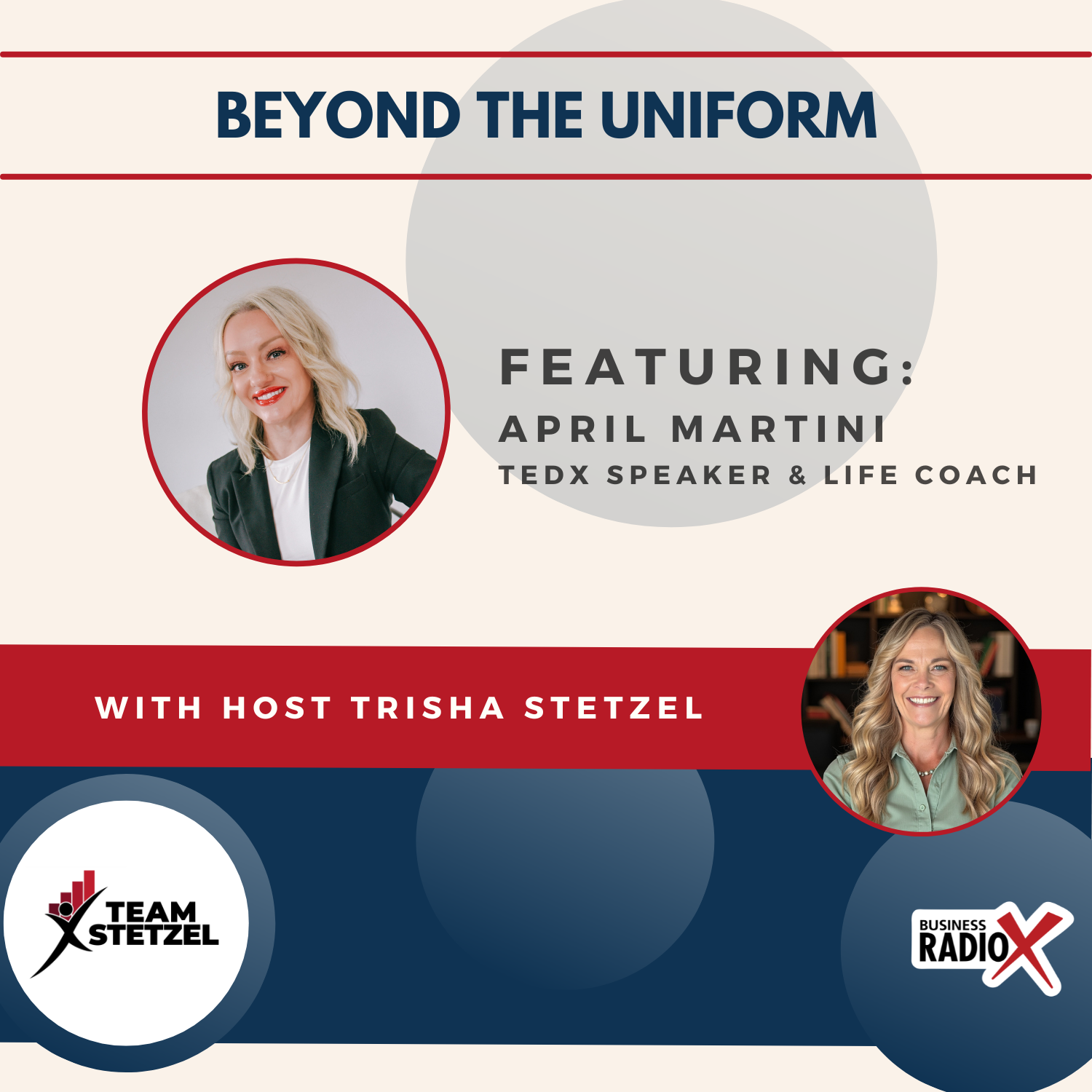

 April Martini is a TEDx speaker, certified life coach, and US Army veteran who has spent the last decade doing the most radical thing she has ever done: getting curious about herself.
After 18 years in corporate America, rising to senior leadership in customer success and operations, she walked away in 2025 to build a business around the work that actually changes lives. That decision was not impulsive. It was the result of more than a decade of doing her own deep work, the kind that requires you to get honest about the stories you are carrying, where they came from, and how they are showing up in everything you do.
Her coaching practice works with women navigating hyper independence and self-abandonment rooted in generational trauma. Her keynotes bring that same unflinching honesty to conference stages and business audiences. 
April’s signature message is that authenticity is not a practice. It is a prerequisite. You cannot perform your way into a life or a business that fits. You have to know who you actually are first, and most people have never done that work.
Her TEDx talk, “The Risk of Being Unknown,” was delivered in April 2026 to a response she did not expect. Audience members told her she had told their story. That is the point. The work is not about April. It is about what happens when someone finally sees themselves clearly.
LinkedIn: https://www.linkedin.com/in/aprilmartini/
Website: http://www.aprilmartini.com
 This transcript is machine transcribed by Sonix.
TRANSCRIPT
Intro: Broadcasting live from the Business RadioX Studios in Houston, Texas. It’s time for Houston Business Radio. Now, here’s your host.
Trisha Stetzel: Hello, Houston. Trisha Stetzel here bringing you another episode of Houston Business Radio. Beyond the Uniform Series. It is my pleasure to introduce you to my guest today, April Martini, a TEDx speaker, certified life coach, US Army veteran and founder of April Martini Coaching. After serving six years in the Army, she spent nearly two decades leading teams in corporate America. April made the courageous decision to walk away from a successful executive career to build a business focused on helping women discover who they truly are beneath the expectations of others through her coaching, keynotes and her powerful Ted talk. The Risk of being unknown. April helps leaders uncover the stories shaping their decisions so they can lead with greater authenticity, confidence, and purpose. April, welcome to the show.
April Martini: Thank you so much for having me.
Trisha Stetzel: I’m super excited about first meeting you through the no network. Like there is no better KNOW network that I found this year. And it’s been such a blessing to meet people like you.
April Martini: Same same. I was, um, you don’t meet a lot of female veterans in spaces like that. So when I heard there was another one in the room, I had to find you.
Trisha Stetzel: And we did. And we’re here now. So tell us a little bit more about who you are, April.
April Martini: Yeah. So I, as you said, um, I am now an entrepreneur and I’ve been doing so for about two years. Um, and what got me here was, you know, the last 44 years of life. So, um, grew up with a ton of childhood trauma in and out of foster care dealt with different types of abuses there. Grew up with an alcoholic father and grandmother who was very close to us. And, um. Didn’t do too hot in school when dealing with all of that. So when it came time to graduate, I, uh. Was not going to go to college right away. So the Army was it? Um, I knew that was going to get me out of that small town, and I knew it was the best choice for me at the time. So I spent six years in the military with time in Korea and a deployment to Baghdad. And then I also got to work on the the personal staff of the chief of staff of the Army at the Pentagon. So, um, some exciting things there. Um, and then I jumped from there to corporate America and spent, like you said, almost two decades of climbing that ladder and working my way up and, um, spending a lot of time in client success roles, account management roles. I was always client facing and, um, woke up one day a couple years ago and just didn’t feel like I was making the impact I wanted to make anymore. Um, so my team deserved a better leader at the time. And because I was just kind of waking up and rinse and repeating, so I took the chance to walk away and go build something that meant something to me. Um, and I’ve always wanted to use my story in order to turn it into good and help people. So, um, especially women. And that’s what I do today.
Trisha Stetzel: Mhm. Okay. So if I’m counting, right, it’s about 26 years worth of experience before you jumped into this brand new entrepreneurial space and opening your own business, what did you learn over those 26 years that helped you get this beautiful piece of work that you’re doing now off the ground?
April Martini: I would say resilience and, um, and taking risks, uh, being okay with taking risks is the big one. Um, it is risky to step away. I mean, I have children, I have a couple in college, I have a 12 year old, I have a husband and all the things that come with that dogs mortgage, all the bills. Um, so I needed to take a strategic risk and that 26 years showed me that I was capable and that I was worthy of it and that I can do hard things and I can figure out whatever it is I want to figure out. So, um, with the right mindset, that’s, that’s what I, that’s what I did.
Trisha Stetzel: Wow. So over the last two years building this business, what have you learned?
April Martini: Um, I have learned that, um, being your own boss is not all rainbows and butterflies, um, especially coming from the military, something that I needed and like really thrived in when it came to the military was that discipline and that structure and that, um, time management, you almost didn’t even have to think about time management because it was kind of done for you. It was built in and I really thrive in that environment. Um, I really like that. So when I stepped away, at first, I just kind of looked around and was like, but who’s going to tell me what I’m supposed to be doing? So I had to quickly figure that out, um, and build in my own structure, which was, um, took a little bit, uh, because you, you kind of look around and you’re like, well, what do I do next? Like, how do I build a business from scratch? And I had to decide, um, early on what was revenue producing action versus non-revenue producing action. I think a lot of entrepreneurs get stuck in that. Um, well, what about my branding? And what about my website? And like, those are important. Um, but they’re not gonna, they’re not making you any money. So you gotta be smart about what you do. And when you do it and how much time you spend.
Trisha Stetzel: Yeah, absolutely. Talk about the transition from always knowing what needed to get done during a day to being your own boss and being a mom. And I’m assuming maybe working from home and taking care of all the things. So tell me more about that experience and doing all the things that women do. When we open businesses and we’re moms and we’re wives. And how is that for you?
April Martini: I would say my calendar is my favorite tool because I block everything. And yes, we have a lot on our plates, but if you are diligent about putting it on your calendar, even if it is taking the dogs for a walk, even if it is prepping for dinner, whatever it is, your business meetings, your your self-care time, you know, when I’m going to meditate or when I’m going to go to the gym, or when I’ve got to pick up my kid in carpool, everything lives on my calendar and you have to find a slot for it, and you’ve got to live, live and die by that calendar. I would say that’s, that’s the biggest key to my success at least.
Trisha Stetzel: Okay. Yeah. And learning and learning what the ROI is behind each of the things that you’re choosing. I heard you say that, right? What is the return that I’m getting where I’m spending my time? It is. It’s a hard shift to move from, you know, exactly what you’re going to wear and what you’re going to do to now what I can do the laundry, I can go outside, I could. Yeah. I love your calendar.
April Martini: You have to get real about, um, how your default operating system too. So like, if something doesn’t go my way business wise, I will then be like, well, you know what? I, I can go do the laundry and that’s going to feel like a win to me. So you have to like take a step back and be like, how do I default into who do I, who do I become when things aren’t going exactly how I want them to go? Um, because you want to feel like you’re winning at something. Like you got something done today. And so when something in the business world doesn’t quite shake out, my default is to go do something in the home that will be able to be checked off my list. Like I got something done. And while it feels good for a second, you know, the next couple of days after you’ve fallen behind on things for your business. And the reason why is because you stepped away and decided to fall into a comfort zone. So you it’s, there’s a lot of, um, getting curious about why you do things, taking a look at your, your default patterns and your habits and why you do the things you do.
Trisha Stetzel: Okay, so I was kind of feeling okay about doing laundry in the middle of the day. And then it was like, but wait a minute.
April Martini: Why am I doing it in the middle of the day?
Trisha Stetzel: Yes, exactly. Um, I want to go a little bit deeper into something that you said to me when we met a few weeks back, which is authenticity isn’t a practice. It’s a prerequisite. Yeah. That’s so powerful to me. So tell me what you mean by that.
April Martini: I’ll unpack it a little bit. So the the biggest example I think we have right now is, um, thinking about social media and we all follow, you know, an influencer or a celebrity or a coach or someone out there that we really admire, and we probably know almost too much about their lives, and we start to compare ourselves and we’re like, oh, well, she’s doing this particular morning routine. Let me do the same one, and then maybe my life will look like hers. Or she takes these particular supplements or, you know, fill in the blank. You try and copy these people and your life doesn’t magically turn into theirs. And you’re wondering, what, why? Why can’t I get it right? And what I mean by authenticity is a practice and not a prerequisite is you have to be authentic to you first, and then decide which of those practices are going to make it stick in your life and move the needle in your life. You know, you hear a lot of things out there around, um, movement and working out and that working out in the morning is the best time. Okay, well, if you’re not a morning person and you try to work out in the morning and three weeks later you just stop going in the morning, now you feel like a failure, you feel like you’re not getting it right. When you know what. If it doesn’t matter when you move your body, if you move your body, you’re winning. So do it when it’s right for you. And if you lean into who you are and you pick up on your authenticity, then then adding the practices in that makes sense for you will be where you see the needle moving.
Trisha Stetzel: Mhm. Okay. So you in your practice, uh, help women uncover the authenticity. Blind spot. So tell me more about you and your practice and how someone might recognize their living according to someone else’s expectations as you were talking.
April Martini: Yeah. It’s all going to come down to what feels like alignment. Alignment is the big word I would use. If you are waking up every day and something still feels off, if you are finding yourself responding to life in the same way, and then you sit back, you know, 20 minutes later, a day later, and you’re like, I don’t know why I keep doing that. Then there’s probably a blind spot that you’re not seeing. And the biggest thing the most I say this a lot. The most radical thing I’ve ever done is get curious about who I am because I’ve uncovered a lot of goodness, but I’ve also uncovered some really bad habits that came from having a traumatic experience in life and responding to the world in a way that it served me at the time. It protected me from those traumatic experiences. But it doesn’t serve me now in a space where I’m trying to be more intentional and healthier. And so I’ve gotten very curious about why I do what I do, and I’ve uncovered a lot of blind spots that way.
Trisha Stetzel: Wow. All right. Tell me a little bit more about your practice and who you serve.
April Martini: Yeah. So I typically help women, the ones that usually are attracted to all of my content are, um, probably above the age of 30. They’ve lived some life, they’ve done some things. They’ve Likely had some sort of trauma in their life, which is why they, um, now find themselves trying to unpack some of their habits and their triggers and their trauma responses. Um, and they’re just feeling stuck. Um, and they’re not really sure why or what to do or what, how to move the needle. And, um, you know, I always think about we have our girlfriends, right? And we have the ones who will be really honest and raw with us. However, there are still things in our lives that if you say it even to your best friend, she may remember it in a way that, like, you don’t want her to remember it that way, and I’m that safe space. So I’m the judgment free, safe space. You come and you unpack it with me and we will figure it out. And then you can go and live your best life at that point. Um, I love that.
Trisha Stetzel: I’m like, okay, April, what’s your number? For real, though, I know that there are some, um, listeners that are really into what you’re talking about today. And they would love to learn more or even connect with you. April. So what is the best way to do that?
April Martini: Sure. There’s a couple of ways. My website is April martini.com. And from there you can book a free discovery call, which I lovingly call off the record. Um, and we can dive in and see if we’re a good fit. And, um, you can also find me on Instagram, April t Martini or find me on LinkedIn.
Trisha Stetzel: Okay. Fantastic. I’m loving your last name. I know you probably likely married into it, but I did like this. Could feel good.
April Martini: Oh yeah. I make the joke all the time to my husband that I married him for his name. Like I can I can market that name. I can, I can use some branding around that.
Speaker 4: You can?
Trisha Stetzel: Yeah, absolutely. Okay. I have, I want to dive into this Ted talk that you did because when you and I met a few months back, I think it was that same week you were actually going to be on stage, and I’m really excited to unpack it. So tell me about your talk. Uh, I want to know more about the talk, but would love to hear a little bit about your experience leading up to getting on stage.
April Martini: Yeah. So I will first unpack the experience. I volunteered with Ted a year ago and got to see all the behind the scenes of how it works and what it looks like and the work that goes into it. And, um, I got to see how nervous everyone is all day long, like waiting for their time to go on stage. So at that point, I knew if I ever get the chance to do this, I do not want to go last. I want to be first. So I carried that experience with me into applying for TEDx apex. And I found out right before the holidays that I that I got it and I was super pumped. Um, we once the holidays were over, it was a little busy during that time, so we didn’t really start any training, but towards the. Towards the end of January we started having weekly check ins with everyone in the cohort and we had quite a large cohort, 20 people, I believe, spoke that day, which is, which is almost double what they typically have in a day. Um, so our cohort was big, we met with, um, our curator and we did a lot of training and figuring out like all the best practices.
April Martini: And we also were, were given, um, a speaker coach and I had a couple of sessions with her and worked through my, my speech. And then the day came and I got to be number one. So while that was a little nerve wracking, it was also like the perfect thing because I could just be done. Um, I remember standing backstage and it was time to go and I was so nervous, um, as one would be doing Ted. And I just remember my legs started moving before my brain told them to. And then I saw myself standing on the red dot and I knew I just had to start talking. So, um, and I did it and, um, everyone afterwards was very lovely. They told me I did a great job, but I knew I had to wait for the video to see because I completely blacked out on stage and just had to hope and pray that it turned out well.
Trisha Stetzel: Okay, and now that you’ve had the opportunity to see it back, how does that feel?
April Martini: So good. Um, it went off perfectly. I, um, it was really important for me to get up there and tell that story. Um, a lot of it centered around the relationship that I had with my father and how that impacted the rest of my life. And, um, my stepmom and both my sisters were able to be in the room, which was a surprise. I didn’t know they were coming. Um, they, they were there. And um, afterwards they were all very complimentary that I didn’t just tell my story. I told theirs too. And that was pretty powerful for me. Um, I talked about, you know, envisioning him standing or standing in our living room and kind of laughing at me and telling me things that he certainly said out loud many times, which was that I was ugly, that I was stupid, that I would never amount to anything. And that inner voice became my own inner voice, and that required me to build up this armor around me that didn’t let anyone in. And I could never actually be vulnerable enough to allow others to truly know who I was. And I talked about what that what, what then happens when you don’t, when you aren’t known, when you’re not truly known, you alienate so many good people and so many experiences in your life. Um, and to be truly known is one of the top, I think, experiences that a human can have. So, um, I wanted to make sure that people understood that there’s a risk there for not allowing that armor to come down.
Trisha Stetzel: Mhm. So the risk in our brain of being vulnerable always seems so much heavier than the risk of actually being known. Yeah. And the name of April’s talk, you guys, is the risk of being unknown. So, April, if someone wants to catch the full talk, where’s the best place for them to find it?
April Martini: Youtube is is exactly where it’s hosted by by Ted. So you can go on YouTube and search my name and you’ll find it very easily. It is also linked on my website, so you’ll find it there too.
Trisha Stetzel: Okay. And we need to support April. So you guys go out, find it on YouTube, make some comments, like it and share it with other people who, who need to hear April’s story. I want to talk a little bit about that story that we all carry around with us. And the risk of being vulnerable in our brain feels so heavy compared to what you just described, which is, um, the risk of being unknown. So tell me more about the work and your personal experience in the struggle between those two things.
April Martini: I was just so afraid of being judged, or not being liked, or being exactly who my father told me I was. Um, and it took a really long time for me to identify that, that inner voice that I had as his, because it had been put, it had been put on me for so long as a child that it was it really did sound like me for the longest time. And it didn’t take it took it took until I went to start going to therapy for me to finally realize that’s not true. And whose voice is that? And once I recognized whose voice it was and I identified it, it was one of those things that, like, once you see it, you can’t unsee it. And then I was able to start deciding what is truth and what isn’t, what is fact, where’s the evidence? And if there was no evidence, then it wasn’t true. And it wasn’t something that had to constrain me or keep me down and growing out of that. Um, it’s still, I still, you know, we talk about healing and trauma. Just because you go to therapy doesn’t mean it goes away. You just become better equipped at handling it. So I still put in my own practices today on a regular basis where I have to. In the talk, I also ask the question, am I unsafe or am I uncomfortable? And you have to decide, am I really in an unsafe situation right now that I need to see myself out of? Or am I just a little uncomfortable because I haven’t? This is unknown territory, or I need to be a little vulnerable, or I need to let someone in and I ask myself that question on a regular basis.
Speaker 4: Mhm.
Trisha Stetzel: How important has it been for you to allow others to hear your story?
April Martini: In the beginning, I really thought it did come from a, I don’t want to say a selfish place because it didn’t feel selfish, but I really just I was like, if I tell my story, it’s going to have such an impact. And the more I’ve told it, the more I’ve heard. That’s also my story too. Almost every single time I’ve spoken, I’ve had that feedback. That’s my story, too, where I was walking around thinking that there’s no way anybody else has this story that I’ve got, which on one hand is, um, it makes me kind of sad that other people have such a traumatic story as well. And not that I was naive to think that there weren’t other trauma stories. We all have something, but, um, but then it also makes me feel really proud that, um, not everyone is given the opportunity to say their story out loud. And some people don’t want to. Some people are afraid and some people need someone to have a voice and have the courage and the strength to say it out loud so that they at least know they’re not alone. And so that’s where I’ve settled into this space of I want people to know that they aren’t alone. They don’t need to be afraid, and that bigger and more beautiful things are out there.
Speaker 4: Um.
Trisha Stetzel: I love what you’re doing in your practice and so many of us leaders and particularly women spend so much time taking care of everyone else that they rarely pause to do this self-examination. What’s one simple practice that listeners can take away today that you recommend for becoming more self-aware before they make the next big decision?
April Martini: Sure. I always like to say remaining curious. Um, and that can be, that can, that can turn into a very big journaling day, which, which isn’t what you’re asking for, but it could. But I think if. So for example, if I’m in a conversation with my husband and we aren’t seeing eye to eye, and I respond in a way that’s, um, you know, a gut reaction. And I didn’t pause to think about it first. I might walk away. 20 minutes later and be like, I know that that response was not going to get the response that I then wanted. Um, so why did I do that? And I think just remaining curious about why. So whether it’s a conversation or a situation you find yourself in, just it’s typically that we’ve responded in a certain way. And that says a lot about like our behaviors say a lot about past, the past and how it’s driven us to who we are today. So I would say remaining curious, it doesn’t have to turn into a full journaling thing, but just ask yourself why? Like, why do I think I keep doing that thing that I do or, or responding that way or acting like that? Or, um, I think asking yourself why is very important.
Speaker 4: I think this circles us right back.
Trisha Stetzel: To authenticity, which is where this whole conversation started before, whether it’s self-examination and being authentic with ourselves, but also being authentic outwardly so that people know exactly who you are, which is what your talk is about, right? And sharing your story. So why do you believe authenticity is such an important foundation for effective leadership and long term business success.
April Martini: I’m a firm believer that unless you are operating from a truly authentic place, then alignment will not find you. And when alignment doesn’t find you, you’re making decisions based off of things that do not make sense to your your core of who you are. So, um, maybe you’re making decisions solely based off of, um, a business expectation or numbers or, um, you know, goals that you may have, but how, you know, you almost need to work from both ends of the spectrum. So what are your goals and expectations and numbers over here for business? And then when you think through how do I want to show up in the world and then trying to find that meeting in the middle space of how do I stay aligned and also meet these expectations? Um, I think when you shove away how you’re really feeling about something and you just keep plowing through and keep pushing to these goals that you have or these numbers that you need to meet. You wake up one day thinking, I feel really burned out. I don’t feel like this is like I hit this number, but it doesn’t feel good. And it’s because you got there being misaligned. And I think if you just step back for a second and come back to your core and come back to who you are and why you are that way, um, and sometimes you’re going to uncover things that you don’t want to continue to carry with you, which is fine. Um, but at least you identified it and now you can start to shift that mindset or that, that reaction or that response that you have. Um, and then you finally come to a place where the alignment feels good and you can move forward with that.
Trisha Stetzel: Yeah. And by the way, listeners, this is exactly what April does with the people that she takes on a journey. And this has been such a fantastic conversation. April. There’s so many, uh, even beyond nuggets, but so much good information. Thank you for being vulnerable and sharing. I can’t wait to go see the full talk. Uh, I know it is. I’m sure over the top. Amazing. I have one last thing for you, and this is going to be the hardest question of all, which is if our listeners could just take one thing, just one thing away from the conversation that you and I had today. What would you want that to be?
April Martini: I would say that, um, going back to the remain curious and do not be afraid of vulnerability. That that, that vulnerability is weakness. That is not that vulnerability is the most courageous thing I’ve ever done. And it came from me being curious about who I am.
Trisha Stetzel: Oh my goodness, this has been so much fun. I can’t wait to have you back on the show, because I’m sure there’s something else that we need to talk about, I’m sure. Thank you so much for your time. So one more time, if folks are interested in connecting with you, uh, or even taking this journey with you. What is the best way for them to find you.
April Martini: On the website? April martini.com. You can book a free discovery call there. Uh, you can find me on Instagram at April T Martini, or you can find me on LinkedIn by searching my name, April Martini.
Trisha Stetzel: Awesome. Thank you so much, I appreciate you.
April Martini: Thank you so much for having me.
Trisha Stetzel: All right, you guys, that’s all the time we have for today. If you found value in this conversation that April and I had, please share it with a fellow entrepreneur, veteran or Houston leader ready to grow. And as always, we need you to follow, rate and review the show. It helps us reach more bold business minds just like yours and your business. Your leadership and your legacy are built one intentional step at a time. So stay inspired, stay focused, and keep building the business and the life you deserve.















