

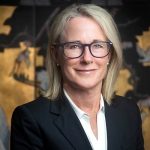
 Irene V. Glaeser, COL (Ret.) is a decorated U.S. Army Military Police veteran and the CEO of Spahr, a service-disabled, woman-owned small business delivering advanced IT solutions—including cybersecurity, software development, and cloud engineering—to federal and Department of Defense clients.
Under her leadership, Spahr also manages two Small Business Administration Mentor-Protégé joint ventures with TekSynap, expanding capabilities across defense and government sectors.
Following her military retirement, Irene held senior civilian leadership roles in the Department of Defense Office of Inspector General and the U.S. AbilityOne Commission, where she advocated for individuals with disabilities in the federal workforce. Her post-service career reflects a continued passion for integrity, public service, and veteran support.
A graduate of George Mason University, Irene holds master’s degrees from Webster University and the U.S. Army War College, as well as executive certifications in national security from George Washington University. She is also a Board Member of the National Veteran Small Business Coalition and author of Choose Your Battles, a memoir that shares her journey with resilience and humor.
Irene currently lives in Wilmington, NC, with her husband of 37 years, enjoying time with her children, seven grandchildren, and fellow veterans.
LinkedIn: https://www.linkedin.com/in/irenevglaeser/
 This transcript is machine transcribed by Sonix
TRANSCRIPT
Intro: Broadcasting live from the Business RadioX studios in Houston, Texas. It’s time for Houston Business Radio. Now, here’s your host.
Trisha Stetzel: Hello, Houston. Trisha Stetzel here bringing you another episode of Houston Business Radio. It is my pleasure to introduce you to my guest today, Colonel Irene Glaeser, US Army retired and CEO of Spahr LLC, a service, disabled and woman owned small business providing IT and cyber solutions to the Department of Defense and federal agencies. Irene’s career spans more than three decades of leadership, beginning as an enlisted soldier and rising through the ranks to become a military police colonel and later a senior executive with the Department of Defense Office of Inspector General. She also served with the US Ability One Commission, Advancing Communities for people with Disabilities and Wounded Veterans. She is also the author of Choose Your Battles. We’re going to talk a bit about that today, a powerful reflection on leadership, resilience and grit, both in uniform and in business. Please welcome a true servant leader, Colonel Irene Glaeser: .
COL (Ret) Irene Glaeser: : Well, first of all, I just want to say how absolutely honored I am to be on your show today. It’s very exciting. And any chance that I have to showcase the values that are, uh, servicemen and women bring to the defense industrial base. And in fact, any workforce is, um, is is a pleasure and a and just what I like to do best.
Trisha Stetzel: I’m so excited about having you on the show, Irene. And as you know, I’m also still very involved in serving after I served with the Houston Regional Veterans Chamber of Commerce, which is, I think, one of the connections that we had and why we had our first conversation. I’m so excited about letting folks who are listening to the show get to know you a little better. So can you tell us just a little bit more about you, Irene?
COL (Ret) Irene Glaeser: : Okay. I’ll try. I’ve had a very lengthy and colorful career, as you, um, so kindly introduced me, but I think where I got my my actual set of work values and ethics comes from the fact that I am an immigrant child of two naturalized citizens who came having survived wars, um, from two different countries. And um, for example, my father, um, escaped Russian invasion in Lithuania and came to New York just as World War Two was really kicking off. And he always made me work right from the time that I would cut the grass with a little tiny power mower and make a few bucks. But actually, I’m sorry, I made a few cents. Um, but I was held accountable. So if I did something wrong or got in trouble, those few cents would go right back into the coffers and I’d have to go earn them again. I think those qualities made me a quite a good little soldier. Um, but I always had a strong desire to serve the country that welcomed my parents. Um, and my father was drafted upon arrival here, but by the time I was born, he wasn’t serving anymore. So what did my much older sister do? She came into the Army just after Vietnam, was one of the first women to get through Army infantry airborne training in the mid 70s. And once I saw that my big sister could do it, I said, oh, there’s nothing that she can take on that I can’t take on. So I have served in the Cold War, um, doing some really cool black market investigations and working with the German customs to do military customs. During that period, we used to have to identify Russian diplomatic vehicles and report them, and among other interesting things, I have also served in Iraq, Afghanistan and continued my service in the government. And finally, um, I took those leadership qualities forged through all those decades of training and experience to, um, forming my own company and supporting our veterans by bringing it services to the warfighter. It’s a lot of stuff, but it all ties together.
Trisha Stetzel: Yeah, absolutely. So I’d like to dig into that just a little bit more. You’ve gone from leading troops to leading a tech company, but what specific lesson or lessons from your military career have really shaped how you lead in business today?
COL (Ret) Irene Glaeser: : I, um, I knew you had asked me that question and I was prepared. However, I’m always prepared to answer that question because this ties into the value that every veteran brings to the table. A military service member becomes a leader the minute they put on that uniform. You from the lowliest private, are being taught how to lead. Because the day after you put the uniform on, you may find yourself in a position where you do have to leave and leadership is um, occurs at the the very lowest formations, the smallest formations of the military. So I, um, have learned to good leaders and not so good leaders on how I wanted to take the qualities such as selfless service, such as loyalty, ethics, running into danger, uh, as opposed to running away from it. And some of the lessons that I’ve learned in the military, we were always taught when you give a presentation, when you talk to your soldiers, give them three takeaways. Your your brain manages that and and retains it. So I have three takeaways from all of this. One is be authentic. I call these my three A’s, by the way, but be authentic. There’s a term that we use in the military. Does the audio match the video? Do you practice what you say? I, um, I used to have a boss when I was very young, um, a young captain who would quote Vince Lombardi. I think that was his name. Always do your best, always do what’s right, and treat others the way you would. You would want them to treat yourself. Well, I was treated pretty poorly by this individual and that was one of the bosses I learned from how not to lead.
COL (Ret) Irene Glaeser: : So I just throw that out as an example of, um, be authentic and and mean what you say and make sure others know that you mean what you say and you’re presenting every day your best self. And the next a is also hold yourself accountable. Um, good leaders accept that the challenges that people face, that work for them, and maybe the outcomes that aren’t, um, the most favorable. And maybe you could call them mistakes, but own them. Own your own. In the military, when a soldier or officer accidentally misplaces a piece of equipment, the consequences can be very severe, whether that is a weapon or a radio, a whole number of things. But every person in that entire chain of command all the way to the top gets held accountable. So this is a quality that we learn and that we bring to the work workforce. And it’s natural to us veterans. And the final one is accessibility. So make yourself accessible. There’s an open door policy that, um, most leaders have to allow soldiers to come in and get on their calendar and say what’s on their mind. It can get a stigma sometimes because your immediate supervisor may think, hey, she’s going over my head. But the point of the whole thing is you’re there. And if a soldier feels uncomfortable talking to their squad leader or their platoon leader, they have the permission to go to that commander. And it’s not abused. It’s usually because something perhaps might be going on that they feel they need to go to the next level with that conversation. So accountable, authentic and accessible. Those are my three A’s.
Trisha Stetzel: I love that. Thank you for sharing. And I think you and I should write an article about does the audio match the video? I love that. I might steal it if that’s okay.
COL (Ret) Irene Glaeser: : Well, it’s out there, so it’s all yours.
Trisha Stetzel: I love that. Okay, Irene, so many veterans face challenges transitioning from the military into civilian leadership roles. What helped you really find your footing as you made that transition?
COL (Ret) Irene Glaeser: : Um, first I want to talk about the word transition. If you enter the workforce and you change jobs After several years, you call it. Congratulations. You accepted a new role. Um, you got a promotion. You switched agencies. Guess what? If you’re a military service man or woman, by transitioning, you mean I’m not just getting a new job. I am putting aside a lifetime of danger. And that might be three years, actually. Or it may be all the way to retirement. But the qualities that I have, the, um, environments that I have worked in, have caused me to very often be in a state of constant movement and, um, you know, making rapid decisions in fluid environments and transitioning is there because you’re you’re taking those skill sets to an entirely different environment that could be slow paced, that could not, um, always recognize the qualities and value that you bring to the table. Sometimes you take, um, uh, enter a job and you realize, well, maybe that isn’t exactly how I want to spend the next 5 or 10 years, because I was trained to do this, and I don’t feel like I’m using that. And so when we transition, there’s a lot on our minds. Um, and adaption, adaption to those new environments is one of the greatest things in mind. But also finding your purpose. Um, also feeling that worth that you felt when you embraced your your fellow soldiers? That was a family.
COL (Ret) Irene Glaeser: : That was camaraderie. And you seek those things in the workforce. So what helped me specifically was I knew that if I left this environment completely, I would be miserable. Um, so I thought, okay, what if I find my purpose? And that purpose does not involve getting paid? So before I found the right, right thing to do, the right positions, um, did a little bouncing around, like, like most veterans do. I made sure that I was in organizations who exist to help other veterans with their transition or helping to, um, fight for benefits. Some of these organizations are the National Veteran Small Business Coalition, where I serve on the Board of directors. Military Officers Association of America, who fights for US medical benefits, retirement benefits, lobbies every day on Capitol Hill, and also just local events coming out for Military Appreciation Day at the local university. Carrying that flag out with so many other veterans onto the baseball field, all of those activities bring me joy and purpose, when sometimes it doesn’t always feel like you get that on a daily basis from wherever you land. So my recommendation is find your tribe. Everything else, the networking you make there will lead you to a paid tribe, perhaps. Or you find that the nonprofit world is the world that you want to remain in.
Trisha Stetzel: Oh my goodness, find your tribe and I feel like your three A’s apply here as well. The, uh, being authentic, accountable and assessable as you transition from what you knew in the military to being a civilian. I thank you for that. That is just beautiful. So, um, I know folks are already ready to connect with you. Irene, what is the best way for folks to reach out?
COL (Ret) Irene Glaeser: : Well, I, um, I’m glad you asked, because I am a creature of one social platform. Social media platform. This has a lot to do with focus for me. I feel like a lot of people do that. Digital, um, spending too much time on these platforms can really distract you from your focus. So I use LinkedIn, where I’ve gained so many connections, many of whom I served with because I have served for for decades in some form or fashion in the past, but it’s also very effective way to promote your own small business, promote your own brand, and get that out there so that other veterans who may have an interest in talking to you for whatever reason, um, can find you accessible. So I am accessible on LinkedIn messaging. Um, please find me. I believe I’m the only Irene Glaeser: , not just on LinkedIn, but in the, uh, what do you call it, the the metaverse. You, um, you can Google my name, and I’m the one that pops up. It’s nice having an uncommon name.
Trisha Stetzel: That’s right. She is not hard to find. So if you’re searching for her on Google or LinkedIn, her last name is spelled g l e s e r Irene Glaeser: . Okay, Irene, back to talking about you. I’d love for you to tell us more about spa. What kind of work you do, and what makes your team’s approach unique in serving federal clients?
COL (Ret) Irene Glaeser: : I went into the IT business for several selfish reasons. I know that the Army, I’m sorry the government spends billions of dollars on information technology. It, uh, requirements change not hour by hour, but minute by minute. And so what better field to go to where? Challenges from a constantly changing landscape, um, are something that come naturally to me. And in addition to that, information technology in the now now called Department of War Or provides direct support to the warfighter on the battlefield. The government and and Department of War bring technology to enable warfighters around the around the globe, and I find that purposeful and exciting. And the last thing I’ll say about that is I’m a lifelong learner. I think we should all be lifelong learners. So webinars, classes, attending conferences is something that keeps my brain sharp and I believe keeps me young, at least at heart.
Trisha Stetzel: I love that, and if you guys are looking for that business, it’s spelled s p a h. And of course it’s associated with Irene you can find. Just Google it and you guys will find all the information that you’re looking for about both her and her business. Okay, Irene. This is the thing that I’ve been waiting to get to. I’m so excited about choose your battles. This book is both personal and powerful. What inspired you to write it, and what do you hope that readers will take away when they read it?
COL (Ret) Irene Glaeser: : So that’s a two pronged question. Of course, it was born of the fact that my grandchildren will grow up and never know the first thing about the Cold War or, or how their grandparents have served. I am, uh, obviously a daughter of a service member, a sister, a wife, my own soldier, myself, and then my son and so many other relatives, and in one case, our grandparents, I’m sorry, our grandkids, all of their grandparents and parents served. So how exciting is that? Um, I wanted to get those stories down. My own style. And in case it hasn’t come through, is I like to poke fun at myself. So I was going to take topics that are pretty intense and make them funny. Um, you almost have to read it to see exactly what I mean by that. But what really? And I’ve gotten so much feedback. It’s the best selling book. There’s a lot of wonderful reviews on there. Um, some by people I don’t know, mostly by people I’ve served with. And what inspires them is the fact that you can find humor in adversity. For example, in airborne school, I’m standing there in what they call a chalk. It’s sort of a equivalent of a squad. And two of the men next to me, which, by the way, everyone was a man that’s in the book, um, stood about the same height, and we were issued the ugliest black glasses that you’ve ever seen, although I think they sort of came back in style, but a little nicer. Just ask Denzel Washington. But but when we were, um, we were issued these black glasses that people called RPGs, rape prevention glasses.
COL (Ret) Irene Glaeser: : And, uh, and the two guys next to me in this squad were just like all of us. We looked ugly. Um, they had shaved heads and they had their black glasses, and, uh, we women, we were marched to the P.x. And they didn’t shave our heads, but they cut them or permed them pretty, pretty rotten. But these guys, the the instructors, which were called black hats. You ate and ate, junior. Now, if you’ve ever seen the movie E.T., that’s a very endearing critter. But I wouldn’t call him attractive. So he referred to them as ate and ate. Junior. And you’re sitting there sweaty and filthy and tired and and unsure of whether you’re going to make it through the next day, much less the next hour. And this instructor, who we all fear Blackhat, has me laughing. Then you get in trouble for laughing. It’s just crazy. It’s just crazy. But it’s so much fun. Trish and I wanted to inspire. Inspire people who feel discouraged, um, who feel like they don’t have worth to look at their own careers and kind of see this, this lifelong pattern of of growing, of learning, of being able to laugh at yourself. Of appreciating the camaraderie that’s all around you. I think it’s a lot of fun and I’m really glad I did it. It was hard. Um, I had to face down memories, good and bad. And I’ve been asked to write another one. I don’t know if I’ll do that, but there’s so many more funny stories.
Trisha Stetzel: I love that. All right, Irene, where can listeners find your book?
COL (Ret) Irene Glaeser: : Um, actually, that’s even easier than finding me. Because if you go on Amazon and type in, choose your battles, if you throw my name after that, it will be the first thing that pops up. I think Katy Perry sang a song called Choose Your Battles. I have a little competition on Amazon, but not much. You can find it there, and every once in a while I sort of morbidly in my mind, Google myself. Um, and maybe morbid is the wrong word, but with great trepidation. And I’ve found it’s been translated in Denmark, somewhere in Latin America, in Germany, the Netherlands. And I was really surprised to see that it’s on Barnes and Noble online. It’s in a lot of locations, Amazon just being the one at the top of my head where it it has sold the most copies.
Trisha Stetzel: I love that and I encourage you guys to save Irene Glaeser: as your favorite author in Amazon. So when she does write her next book, you’ll get a notification. I’m just saying.
COL (Ret) Irene Glaeser: : Irene Frisch I didn’t even know that features out there. So thank you for that shameless plug. I really appreciate it.
Trisha Stetzel: All right. If it’s okay with you, maybe something a little more personal, you know, balancing the work that you do with being a mom and a wife and having a career, and also all of the serving that you do. None of that is a small feat. So what advice do you have for the women who are listening today that are trying to balance purpose and family?
COL (Ret) Irene Glaeser: : I’m glad you asked me that. I’m glad we didn’t, you know, finish up without talking about the women. Um, what I have learned. Because, honestly, I became a mother very early on in my career. Early on, I had to pretty much conceal the fact that I was a mother. Best I could, which presented an enormous amount of stress. But I talked to women in the boardroom today who struggle with the same problems. They’re in the middle of a presentation. They’re in the middle of a high pitched sale, and they get a call that their kid has a fever and needs to go home. It’s what I tell women is that you will always feel like you’re, um, only halfway doing the job of motherhood and halfway doing the job of your, um, profession. Um, well, you always feel that way. You feel like bad mom, bad employee. I would flip that to say, maybe you’re doing 80% in both of those arenas. Stop being so hard on yourself. 80% and 80% add up to way more than 100. Um, but it goes back to find your support group.
COL (Ret) Irene Glaeser: : I’ve, I’ve lived in I’ve lived in areas where I was the only military mom, and I felt very much the, the, the pressure from the moms who chose to stay home and that that’s a tough job. It’s a job I chose not to do. It’s hard. But don’t make me feel ashamed. And I won’t make you feel ashamed that you chose this kind of work. Being a full time mom. And I chose this kind of work. Being a mom on top of a full time career. Both are hard. Both are hard. And you, you throw a lot of challenges in there. Like military moms have to deploy. Military moms have to be gone for a year because that’s how long they’re going to be in some training environment. I missed my daughter’s high school prom. I, I missed a lot of things. And while I felt guilty forever, they are parents. They appreciate. And they’ll tell me the hard work and sacrifice that their mother made. They want to do the same things. So don’t be hard on yourself, ladies.
Trisha Stetzel: Yeah, it’s so important. All right, as we close, the last thing that I’d like to pick your brain on today is exactly what you were talking about. Which is we can’t be too hard on ourselves because we are giving and giving and giving and giving in so many places. What mindset shift? What kind of tools do we need to get out of that? Oh my gosh, I’m not doing a very good job to. I should be proud of all of the things that I’m doing. What is that mindset shift or a tool that we can use, Irene, to get from here to over here and be proud of what we’re doing.
COL (Ret) Irene Glaeser: : And that’s a good way to cap this off. Um, I’m not sure that veterans are always appreciative of their own service and sacrifice, of the fact that they raised their hand to to protect, serve, and defend our nation against all enemies, foreign and domestic. Um, this is this is a unique and special kind of person that leaves the military. And America needs to lean into and and find ways that they can absorb this type of, of a, an amazing employee into their ranks or help them with their entrepreneurship journey. Um, this being hard on oneself is sometimes born out of the very high consequences of making the slightest mistake when you’re under fire, when you’re in battle, when lives are dependent on you, and when you take that next step into the civilian workforce. Sometimes you’re being harder on yourself than the situation merits. So one of the things we don’t do well when we’re serving as take time out for ourselves. Take time for reflection. Take time for self-care. I laughed when a, um, a family member who was a nail biting war fighter, uh, after transitioning, started taking yoga. Uh, you know, we always think of women when we think of yoga. Yoga is very important to service men and women. Um, and this is something the military has been, um, slow to accept and resilience. They call it resilience training. But but if you don’t have that while you’re serving, figure out how to have that time for yourself, that time to reflect, that time to take care, um, after you’re serving. And that will help you to not be as hard on yourself as does your tribe, your your group, your support group that you find after service?
Trisha Stetzel: Yeah. Absolutely. Okay. Irene, you’re probably going to have to come back because they have so many more questions for you. This has been such a great conversation. Thank you for taking the time to spend with me today.
COL (Ret) Irene Glaeser: : Well, you remind me when you say, coming back of my fourth grade teacher who told me, you talk too much. But I like to think I have a lot to say. So I really hope that your readers and listeners, I’m sorry your listeners got something out of this. Some pearl that they can take to their daily lives. I care about veterans. Texas cares about veterans. I was researching the Texas Veterans Commission. Tap into those resources. Um, they are out there even when you feel alone. Um, and so, yes, I have days that I can talk about, uh, our veterans, their sacrifice, their service and how we can support them. And I’d love to come back. Trish.
Trisha Stetzel: Thank you so much. And, uh, thank you for continuing to serve after you’ve served. That’s so important as well. Thank you for your time today. And you guys, that’s all the time that we have with Irene. If you found value in this conversation we had today, please share it with a fellow entrepreneur, veteran or Houston leader ready to grow. Be sure to follow, rate, and review the show. Of course, it helps us reach more bold business minds just like yours and your business. Your leadership and your legacy are built one intentional step at a time. So stay inspired, stay focused, and keep building the business and the life you deserve.














