

Brought to you by Diesel David and Main Street Warriors

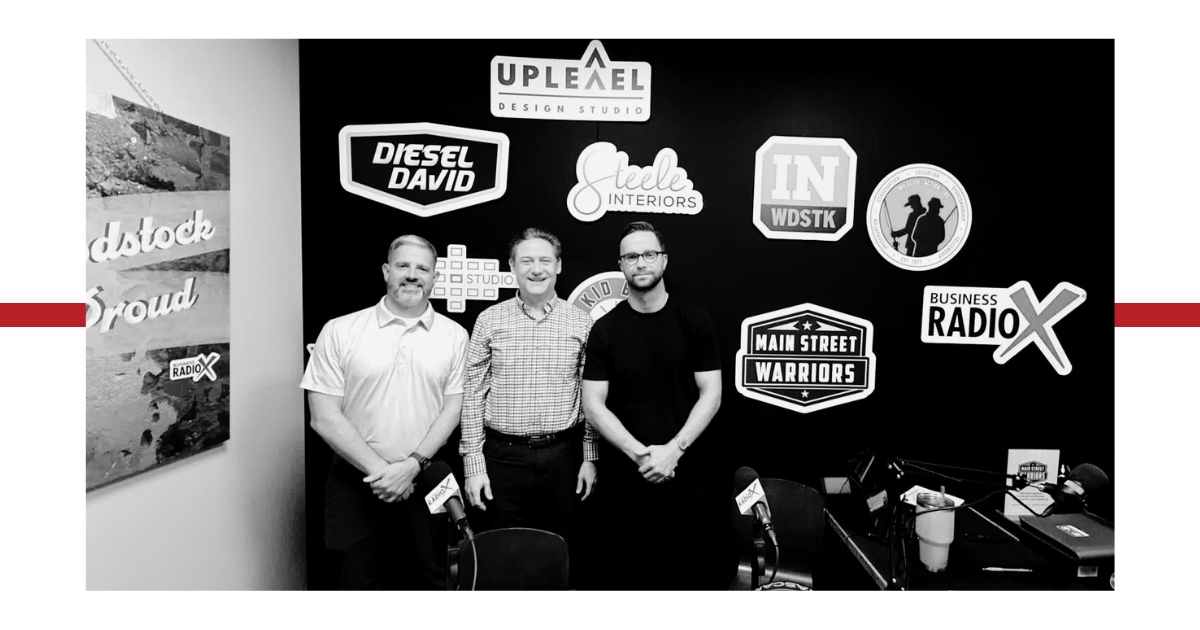
In this episode of Cherokee Business Radio, Joshua Kornitsky welcomes Brian Lemmings of EightyTenTen, who shares strategies for aligning IT teams with business goals through process and people-focused improvements; Carl Nicpon of Marsh Creek Advisors, who discusses simplifying business sales and the importance of early exit planning; and Sean Dineen of Iron Age Office, who details building a successful handcrafted furniture company and fostering a strong workplace culture. The episode blends practical business advice with inspiring entrepreneurial stories, offering listeners valuable insights on leadership, transition planning, and craftsmanship.
 Brian Lemmings is the founder of EightyTenTen, a consultancy focused on helping IT and service teams move from reactive support functions to strategic business enablers, by shifting their service and delivery models.
With over 20 years of experience in operations, service delivery, and IT leadership, Brian brings a practical, people-first approach to solving complex internal challenges.
His journey began as a teacher, teaching middle and high school before transitioning into different leadership roles in IT. That foundation in communication and clarity now fuels his work with CIOs, IT support teams, and service leaders looking to improve performance, reduce friction, and earn trust across the business.
Brian is the creator of the Business Clarity Framework — a proven model that helps internal teams align their strategy, structure, and influence to better serve the organization. 
He’s known for cutting through complexity, simplifying processes, and helping teams shift from task-focused to impact-driven. Whether he’s coaching service desk leads, advising PMO leaders, or partnering with university IT teams, Brian brings an encouraging and grounded presence.
He’s passionate about helping leaders build confident, capable teams that drive growth, clarity, and trust. At the heart of his work is a simple belief: we’re better together — and that mindset shapes how he shows up as a coach, consultant, and collaborator.
Connect with Brian on LinkedIn.

 Carl Nicpon was the third-generation owner of a wedding services provider with 14 Atlanta locations and 200 employees.
Carl led the effort to sell the 50 year-old business in a private equity roll-up of the industry, and he now uses that first-hand experience in his role as Managing Director at Marsh Creek Advisors, where he helps business owners bring their company to market and negotiate a successful exit.
Carl is also an Adjunct Professor in the Executive MBA program at the University of Georgia. He also holds the gold standard designation of Certified Exit Planning Advisor.
Carl lives in Dunwoody with his wife Lyn, and they have two boys who attend Georgia Tech. 
Connect with Carl on LinkedIn.
 Sean Dineen is the President & CEO at Iron Age Office.
With an extensive background in design, Sean set out to make his mark within the US design industry.
His work portrays success, creativity, and power that attracts the successful professionals of America.
Connect with Sean on LinkedIn and follow Iron Age Office on Instagram.
Episode Highlights
- Enhancing IT service delivery and internal processes for businesses.
- Aligning IT teams with broader business objectives through process improvement.
- The importance of effective communication and collaboration between IT and business teams.
- Tailored solutions for mid-sized companies with dedicated IT support.
- Mergers and acquisitions (M&A) and exit planning strategies for business owners.
- The emotional aspects of selling a business and the need for clear communication.
- The significance of building a strong advisory team for successful business transitions.
- Challenges faced by business owners during the exit process, including owner dependency.
- Craftsmanship and custom office furniture manufacturing in the U.S.
- The importance of hiring for character and cultural fit in business growth.
 This transcript is machine transcribed by Sonix.
TRANSCRIPT
Intro: Broadcasting live from the Business RadioX studios in Woodstock, Georgia. It’s time for Cherokee Business Radio. Now, here’s your host.
Joshua Kornitsky: Welcome back. This is Joshua Kornitsky professional EOS implementer and the host of Cherokee Business Radio. I’ve got some great guests here in the studio today. But first, I want to let you know that this episode is brought to you in part by one of our community partners, the Business RadioX Main Street Warriors defending capitalism, promoting small business, and supporting our local community. For more information, please go to Main Street Warriors. And we’d also like to give a special note of thanks to our title sponsor for the Cherokee Chapter of the Main Street Warriors, Diesel David, Inc.. Please go check them out at diesel. David. Well, here we go. And as I said, we’ve got quite a group of folks here with us today. And I’m really excited to get started. So let me begin by introducing, uh, Brian Lemmings. Brian is the founder of EightyTenTen, a company that’s focused on helping IT teams and businesses improve their service delivery and internal processes. And the reason I wanted to read that is 8010 seems a little vague. And he’s going to tell us a little more about that. Good morning Brian, how are you?
Brian Lemmings: Hey. Good morning. Good to be here. Thanks.
Joshua Kornitsky: I’m so happy to have you. Um, tell me a little bit about who you are, and then we’ll lead into what 8010 is about.
Brian Lemmings: Sure. I’ve. I’m Brian Lemmings. I’m founder of 80 1010. Um, so, uh, I started about six months ago. Officially launched a business in 2023. But I spent corporate world for 20 years. And then, um, with the business launching in 23. I did both for a while and, uh, 8010. Ten’s real focus is helping. Uh, within the IT world, uh, support and delivery teams, uh, to be better and more aligned with the businesses. And so, uh, the business or the technology model has not really changed in the last 50 years. And so, uh, the way we used to do things is just not as beneficial to the businesses and to technology teams as we can do today.
Joshua Kornitsky: Okay. And I apologize, I missed the ten on the end of that. It’s it’s it’s 80 1010. And I should have known that because we discussed it beforehand. And I know the reason behind why it’s 80 1010. But tell us why did you name the organization 80 1010.
Brian Lemmings: Yeah. So it’s 80 1010 is a play off of the Pareto principle. So 8020 rule. Right? So, uh, as I, uh, as I venture through technology, fully focusing on projects, I’ve been in it for 20 plus years, but not a technician by any means. I’m just a guy that understands when I can’t do something and get the right people in the right place. So a leading technology teams, technology projects. It always came back when working with business teams that instead of just putting people and throwing people or throwing technology on a problem, they needed to go backwards a little bit more and look at process. So process is the key to all the different parts and pieces of a business, of a technology team. And so the eight, ten, ten to me just made sense that 80% of the from a business problem perspective, 80% can be solved by getting the process right, by getting the right people aligned, by getting the right people involved and making it clear, making it simple. And then you can add people on top of it, and then you can add technology on top of it. So 80, ten, ten became a mental more of a mental picture for myself. And with the different teams I’m working with to really focus in on processes and whatever that may include from process perspective, and then put people and then put technology on top of that.
Joshua Kornitsky: Okay. And just to clarify, you’re not providing technical services, correct?
Brian Lemmings: You do not want me to do any technology service at all. But I’ve worked through enough technology implementations, work through enough technology teams that I understand what the technology teams are going after. And I play a good middle role between the businesses and technology teams, and that the businesses have a, uh, a, a an end goal, a value driver they want to get to. And technology plays a role in that in some instances. And so it’s getting those teams working together to help them move forward when implementing technology or when looking at we want to do I want to move to the cloud, but what does that mean from a technology perspective is much different than what it means from a business perspective. So working those two worlds together?
Joshua Kornitsky: Sure. So so you’re helping align other people’s teams to.
Brian Lemmings: Yeah, exactly. So helping align other people’s teams, whether it’s from a full business perspective or whether that is from IT support perspective, how does the IT support team really support the business, and what does that look like or from a project management perspective? How is that delivery of that support or delivery of that project impacting the overall business itself?
Joshua Kornitsky: So it sounds to me like you refined very carefully what it is you’re teaching your clients or your client staff. How did you arrive here? Are you a trainer by experience.
Brian Lemmings: So I before getting to the business world, I was a teacher, so I was in middle school and high school teacher. So I’ve moved from this, um, guerrilla warfare of teaching, of sneaking up on them and helping them, you know, learn something they didn’t know they were learning and moving. That same mentality, that same mindset, taking that something that may be complex, breaking it down, meeting in that situation, kids where they are and and then helping them guide them through those pieces. So I take that same mindset and move that into the business world, into the technology world. So what’s the complexity we’re trying to get through? I help them get there to make those connections that they need from a mental connection or from, oh, that’s what you meant. Let’s go this way. Oh, we’re looking from a business perspective. You know, it measures in performance. They measure in heavy metrics where the business may not. Business is, you know, going to be more focused within the value brought. And so how do we measure and bring those two worlds together.
Joshua Kornitsky: So this sounds like a sarcastic question but I really do mean it. Do you find that the skills that you learned teaching kids help you better bridge and explain complex concepts to the adults, because you’re not explaining the technical aspect of it? So does it make a difference to me?
Brian Lemmings: Makes a huge difference. So I started in teaching again middle school, high school, science and working with things. I was a coach from a from a sports perspective and then moved into the business world, began at the very bottom of it from a production control support as a support role, and then began to recognize and be recognized for project delivery, project management. So I had a great manager who said, hey, go be a your project manager. We’re going to help you do that. And then everything I learned in teaching, I could apply through project management because it’s the same thing you’re getting people to do. So if they don’t really want to do it, it’s not their primary job. Oftentimes their project is something different. So I definitely use that capability to, uh, to bring people better. We’re all better together. So helping them from a collaborative perspective, taking thoughtful approach, how do we really want to do this? Does it make sense for us to do this? And then the biggest part for me is winning over the hearts and minds. So understanding what is the end goal? We’re trying to get to working backwards to get that and to show and to communicate. As we’re walking through these different areas, we’re going to hit this goal at the very end. And, uh, getting that collaborative approach to things is really important.
Joshua Kornitsky: Makes perfect sense to me. And I think that your, your pedigree coming out of teaching kids and again, not being denigrating is, is enormous in helping adults sort of bridge that gap. Um, I think that’s incredible. Now, what are the types of, uh, organizations or companies that that you typically help.
Brian Lemmings: Sure. So I’ve I’ve been asked that question a lot in the last couple of weeks, whether to myself or from actual, um, you know, actual potential clients. And, and what I’m finding is I initially started trying to solve every problem that was out there, because that’s what I can do. Right. We all have superpowers. We can solve everything without thinking. Sure. Um, but, uh, within the last six months really narrowed that down to looking at, um, midsize, midsize companies up through corporations. I’ve worked with 25 people up through 10,000 people. So working and and either those levels, which is a really big swag of, you know, count of people. But working with those mid-sized companies that have it, teams that are dedicated to either support, whether that is customer support, that is actual help desk, or on the project delivery side, project management. So working with those sized companies, a thousand people, up to 10,000 people. Right. So there’s that group there, um, and helping them. A business that has technology or a technology team. And someone who’s putting AI in someone who’s software development, uh, working with those teams to get their business goals set. So helping to change the mindset from a technology we are here to we’re reactive in technology to being more proactive in helping the business to be enabled to be stronger.
Joshua Kornitsky: Sure, that makes sense. And let me ask you, if I’m somebody in an organization or in a company like that, what are some what are some tools or some warning signs that would that would tell me that that my staff could benefit from this?
Brian Lemmings: Sure. Uh, the primary piece is when you’re looking from a business perspective, it really is. It feels like my IT team is not ever doing anything from the business perspective.
Joshua Kornitsky: Understood.
Brian Lemmings: Right. And but on the IT side, it’s. We’re doing everything. Holy cow. Light my hair on fire. I have 6000 tickets I have to get through or it’s. The business doesn’t understand what we do. That’s where the telltale from the IT side of the business, says we need to do these 15 other things. We’re already doing 2000 things. We need to prioritize what we’re doing. Are we really aligned to what? From a technology perspective to what the business wants to do? Or are we just picking up things because the business thinks it’s the next shiny object? So from the technology perspective, it is we’re overloaded or we’re overloaded, right? We’re being very, very reactive. Business says we’re hard to do business with. Right. That could be projects don’t ever get done the projects. We have 1500 projects that are the number one process or the number one priority. Nothing’s a priority on the business side. It’s I’m not really sure what it does. They sit this black box I put in a ticket, and I may have to wait in line for a long time. And I don’t get updates. It’s not really helping. Maybe we should get somebody else to do that for us. Right. So it’s having those different conversations from the value or assuming from the viewpoint of either the business owner or from the technology owners.
Joshua Kornitsky: So you kind of blow the fog out of the way and help the top. See the IT team and the IT team. See the top.
Brian Lemmings: Right. It’s really working. Its better together. Right? So my 8010, 80, ten, ten was built on the same things I learned from I was teaching to when I became within the corporate world or through the business world, which was we’re better together taking a thoughtful approach and hearts and minds whenever that change, organizational change management to get to that next piece, whatever that next piece is.
Joshua Kornitsky: And broadly speaking, because obviously every case is going to be different. How long do you typically end up working with the teams?
Brian Lemmings: Uh, for some teams, it has been a of course, for some conversation has just been a conversation. It has been more, uh, on demand advisory. Uh, I had a client I met with last month that we met for two hours, and we were able to help get, uh, move from a decision of what tool they wanted to go after, which would be the right set for them. And we just looked at everything, and at the end had an end result after a couple hours. I have a I have a potential client that is a six month project where we’re completely transforming their PMO, And so that would be a six months. It could be a year depending on how far they would take that next step. But the first step is just getting that baseline foundational piece, a setup and move there. So it could be anywhere from an hour to two hours to six months. From a fractional perspective, it could be a year long depending on really what what is the pain point. And that’s really important to understand. What’s the pain point they’re actually going after. Instead of what is the pain point that you’re feeling at the initial pace of asking those questions, get down to that root cause analysis.
Joshua Kornitsky: So it sounds like it’s not a one size fits all.
Brian Lemmings: It’s not. It’s a thoughtful approach.
Joshua Kornitsky: There you go. We always used to call that a tailored solution.
Brian Lemmings: Absolutely.
Joshua Kornitsky: That’s fantastic. Well, Brian, I think that what you’re bringing to the world is more clarity and more clarity helps everybody. Right? Um, how do people reach you if they’re interested in exploring more and understanding what it takes to work with you?
Brian Lemmings: Yeah. That’s great. So I’m in really two main places. I’m I’m on LinkedIn a lot, and I’m probably the only Brian Lemmings in all of LinkedIn. There may be three lemmings Maybe looking for maybe five lemmings total. Okay, I’m the only.
Joshua Kornitsky: Are they all right?
Brian Lemmings: Um, of the ones that I’m aware of. Yes. Fair enough. And then, uh, I have a web page called Gain Business Clarity. Com.
Joshua Kornitsky: Okay, fantastic. Well, we’ll have all of those links on, uh, when, when the story goes live and we push out to the podcasts. But you’ll also be able to reach out to Brian directly with that information. Brian, I thank you for sharing your insight and letting us understand how you can truly bring clarity to folks. I think that what you’re doing aligns very well with what the needs in the world are, so I salute you for finding a great niche. Awesome. Thank you so much. Thank you. Well, my next guest is a gentleman I’ve known for a couple of years now, and I’ve had the opportunity to see him in action. And he’s he’s actually, um, well, he’s a little bit of a superhero in what he does. And I actually just heard him helping a family member with homework, so I know he knows what he’s doing. Uh, I’m very pleased to introduce Carl Nicpon who is an M&A advisor and Certified Exit planning advisor with Marsh Creek Advisors. Morning.
Carl Nicpon: It’s great to be here.
Joshua Kornitsky: Sorry, I didn’t mean to embarrass you with the homework thing, but I’m probably going to have my daughters call you from here on out.
Carl Nicpon: Oh, now we’re in trouble. Well, we’ll see how they do. I remember my, uh, my my boys when they were growing up. You know, my wife handled all of the reading and writing and social studies, and I had the math and science, and, you know, I did pretty well in math. I thought I might even be a math major. Uh, and I realized how, like, extraordinary my kids are because I tapped out helping them with math when they got in ninth grade. And it was it was over. So I was like, yeah, yeah, you’re gonna have to go with your teacher on that one.
Joshua Kornitsky: You made it further than I did. So this was I think sixth grade was as far as I got.
Carl Nicpon: Well, this was a sixth grade nephew, so, uh, that’s who you saw.
Joshua Kornitsky: Perfect. Um. Well, so tell us, girl. What does an advisor do?
Carl Nicpon: Yeah. So, uh, you know, this is all about helping business owners retire in style and when they’re ready to sell their company. We do that by showcasing what really sets their company apart, so that the exit feels like the true reward that they really deserve.
Joshua Kornitsky: Well, so I know from our, uh, discussion prior to this that, that, uh, the firm won the, the top firm of the year from M&A source, uh, and that you yourself had been a business owner and I believe, um, had you went through the process of selling your own business, didn’t you?
Carl Nicpon: That’s true. So, uh, I guess to me, it I work in the space of businesses that are, you know, very much similar in size to the business that we had. And I really appreciate the ability to connect with business owners and the emotional things that they’re going through. Um, it is a roller coaster ride as you prepare for an exit and then going through the process of selecting a buyer and negotiating a sale.
Joshua Kornitsky: Okay, so let me ask, following up on something you just said, roughly what size organizations do you. Do you typically work with?
Carl Nicpon: Yeah, we play in the space that is, um, a little bit smaller than what an investment investment banker might handle, but larger than what a a main Street business broker. So revenue wise, think 5 to 50 million.
Joshua Kornitsky: Okay. So that that helps people understand. But you mentioned the word a couple of times and you have the accreditation. Why is being a certified exit planning advisor important to what you do?
Carl Nicpon: So you’re never going to do this on your own as a business owner. And it’s not just one advisor that you need. You’re going to need a whole team around you. You need your wealth manager needs to be on the same page of what’s happening here, your tax advisor, your CPA. Um, you need probably some work around trust in estate planning, and, um, you may need some support from internal folks to produce the due diligence that’s going to be needed. And all that takes a lot of coordination, and it takes people having a similar framework. When those folks all have done the CPA, uh, framework, then we kind of intuitively get where this is going together. Okay. And it you know, we know how to work together without stepping on each other’s toes. And, you know, quite frankly, that’s important to the business owner because they can focus on running their business while we focus on preparing and selling the business.
Joshua Kornitsky: It makes sense, as you explain it to me out of curiosity when it comes to that framework. Obviously, coming in with with a broad outline of how you’re going to attack the every step of the way, knowing that there’s variables you can’t plan for. Um, are you the usually the, the group that’s in charge of that process.
Carl Nicpon: Some people think of us as the quarterback. Okay. And, you know, uh, kind of coordinating all the pieces, making sure that they’re all in place. Um, and that there aren’t any gaps. Uh, coordination. We’re there. Another way to say what we do is. Interestingly, I don’t say that we sell the business. I say that we set the stage. We bring the lights. We bring the microphone. We bring the right audience. We set the teleprompter. We whisper in the business owners ears. When we’re going to cover. What? Because there’s a cadence to the conversation. But in the end, who sells the business is, in fact, a business owner.
Joshua Kornitsky: Well, it sounds like there’s a million moving parts.
Carl Nicpon: Exactly.
Joshua Kornitsky: And and I’m going to ask you a question, knowing full well that there’s no perfect answer. But if a business owner is even thinking about this, when should they reach out?
Carl Nicpon: The moment they start thinking about it.
Joshua Kornitsky: Okay. And when do they typically reach out?
Carl Nicpon: The moment they get an offer that’s unsolicited and they talk to a lawyer and the lawyer says, uh, maybe we need to take a couple steps backwards. And that’s often when we, we get a phone call. Uh, but I, I think I like to describe what I hear as the seven year syndrome, and, and here’s what that kind of how’s that plays out a business? If you ask a business owner, when are you planning on retiring? Uh, they’ll say, uh, 7 to 10 years if you ask them that same question a year later. The answer doesn’t change. It stays 7 to 10 years, and it stays that way until all of a sudden they say, I’m just done. I’m exhausted. I’m ready to go, you know, spend time with my grandkids or travel or whatever the case may be. And they’re like, ready for it to happen. Now, the the issue with that is that most business owners don’t realize that from the day. Let let’s just say that you sold the business today, right? Well, most buyers are going to expect you to stick around in a transition period. The most common transition period is 12 months. So there’s a year right there. The process of selling, marketing, negotiating, doing diligence and closing the sale. That process right there is a year long.
Joshua Kornitsky: Okay.
Carl Nicpon: And most people don’t have great financials going into this process. So there’s a cleanup period. And you want to show the last 12 months of operation being highly profitable and and growth. So that sometimes takes say at least 12 months. That’s three years right there.
Joshua Kornitsky: So it’s only got four left in there. 7 to.
Carl Nicpon: 10. Yeah exactly.
Joshua Kornitsky: That. But you explained it very well because those are things that often people don’t think about what are other, what are some of the other things that they consistently kind of, uh, either miss or, or don’t do in anticipation of, of eventual sale?
Carl Nicpon: Yeah. I think, you know, the number one thing that will make it difficult for a business to transition and depends on where you get your stats, but anywhere from 20 to 30% of the businesses that go onto the market will actually sell. Really? Yeah, pretty low odds.
Joshua Kornitsky: Why?
Carl Nicpon: Well, the biggest reason for a business not to transition is owner dependency.
Joshua Kornitsky: Okay. We’re the owners of the bottleneck or the the the keeper of the tribal knowledge.
Carl Nicpon: All of that. They might also be doing a lot of the work. They might be responsible for a lot of the sales. If they haven’t unloaded these important tasks to other team members than what does a buyer buying? People think, oh, they’re buying my customer list. Well, you know, if you’re the linchpin to all of it, then when you leave, what’s to say that that client is going to stick around? They have a personal relationship with you, they have a connection with you. And all of a sudden you say, I’ve selected, you know, this new person to come in behind me and they’re going to do great for you. And that’s the perfect opportunity for the client to say, you know, I haven’t shopped for a while. I’m going to check out what else is out there. And that’s exactly what they do.
Joshua Kornitsky: And that I can’t say it makes sense, but I understand the thought process behind it. Right. So in order to become sticky, you’ve got to delegate as as that business owner and get other players involved early so that you’re not the bottleneck.
Carl Nicpon: Yeah, we say that every day. You should work on finding yourself just a little bit more.
Joshua Kornitsky: There you go. And I think that’s great guidance because in the work that I do with my clients, oftentimes I’m the first person that’s ever said to them, you’ve got to delegate. Because the only way to get elevation in the business, as the owner is to to get things off of your plate.
Carl Nicpon: And that is absolutely the beauty of systems like iOS.
Joshua Kornitsky: Right. Well, thank you, I appreciate that. Well, um, it works. Karl. So everything you’ve explained makes sense to me because it lays out a clear and concise path. How did you gain this perspective? Did you have any teachers or mentors that helped you sort of see the the universe through these eyes?
Carl Nicpon: Well, okay. Yes. And before I get there, I’m going to now tag team on what Brian started. Uh, I started my, my career also in the school system as a counselor and and as an administrator. And, uh, you know that really? I used that work all day long now. Uh, one just coordinating everything. But to and more importantly, understanding the emotions that business owners are going through and being able to help them manage stress. Um, and when we operate under stress, we make suboptimal decisions. So part of what we want to do is just help bring that down a notch so that the business owner is able to see things with clarity. Uh, and then, uh, you know, commit to an action and then take that action, not get stuck in, you know. Uh, and that what is it? Paralysis by analysis. Not get stuck there, but be able to move forward. So now to your question about mentor. Uh, so the business that we were in was, uh, if if you’ve been around the Atlanta area for a while, then you might, uh, remember names like dingus firmware or savvy firmware. That was our. That was our family.
Joshua Kornitsky: Okay.
Carl Nicpon: And my mom, my dad passed away, uh, when I was a teenager. My mom took the reins and, uh, continued to to run the business with her brother. And my mom never went to college, and I remember very vividly one day that we were in a meeting with a whole bunch of external advisors, and conversation was going great. And, uh, my mom was very engaged, and she was nodding and like, you know, it was all making sense. And the end of that wrapped up and the advisors all left shut the door. And my mother said to me, okay, can you explain to me what what that was all about? And my heart broke, because here is the woman who taught me so much about business, how to how to work and lead people.
Joshua Kornitsky: Right?
Carl Nicpon: And then she was in a meeting where it was for her, and it didn’t make sense to her. And so so two things happened from that conversation. Number one, I learned how to say complex business things in simple English that don’t take an MBA to understand. And then the second thing I learned was how to ask questions in a meeting that got the participants in the meeting to break it down into simple terms. And I look like the one that maybe I didn’t know exactly what I was talking about, but it gave her the confidence and the clarity she needed to be able to just put her finger on it and say, this is the direction we’re going to go and move on. Right then and there.
Joshua Kornitsky: Those are both incredible skills that I can see how that would be a game changer. If you’re helping a business owner or owners understand some complex things that just aren’t part of their daily vocabulary, no matter what their business is.
Carl Nicpon: And truth be told, M&A is not that difficult. But it scares a lot of business owners because there are these weird, strange, you know, terms like networking capital.
Joshua Kornitsky: And that they don’t understand because it’s not a it’s not a game that they play ever.
Carl Nicpon: However, if if we talk about it, you know, bare bones and what it really breaks down to. It’s actually pretty common sense, right? And, uh, I actually kind of get upset at some of my folks in my industry because they perpetuate this shroud of, of, of knowledge that, you know, they keep the conversation at a level that just, you know, most human beings don’t engage in. And and that just drives me nuts because it’s not supposed to be that way. It shouldn’t be that way for a business owner.
Joshua Kornitsky: I just read this in a book. Why say something in ten words that you can say in a hundred?
Carl Nicpon: Exactly.
Joshua Kornitsky: Some people just feel the need to demonstrate that they know all of the ten letter words, and in doing so, they actually remove the conversation from an understandable level. So I think the emotional intelligence that it lays between the lines of what you’ve shared probably makes a big difference to the the folks you work with.
Carl Nicpon: Yeah. And here’s the thing. The the biggest issue is that it prevents people from engaging an advisor in the first place. They think to themselves, you know. Oh, man. I found a buyer. That’s all I need. Or the smarter ones, you know. Think I found I found a good buyer. I mean, I’m happy with that. But what makes the difference when you’re selling company is I found lots of good buyers because now we’re creating competition. And, you know, it’s it is. It is just like, sort of think about early on when you were dating. Right. If there were a whole bunch of folks interested in the person that was the apple of your eye, you know, you stood a little taller, you dressed up a little bit better, you took. You took them out to nicer dinners, and you made sure that you were the one that kind of shined. Sure. Well, the same thing happens with buyers. They, you know, put better, put forth a better offer. They sharpen their pencils, they’re more willing to work with you around the things and the priorities that are important to you when they know that there are others who are qualified and interested.
Joshua Kornitsky: Sure, it drives the price up and makes everybody more interested. Exactly. That’s great. Well, Carl, how do people get Ahold of you?
Carl Nicpon: Yeah. So I’m on LinkedIn, Carl Nippon and our websites. Com.
Joshua Kornitsky: That’s fantastic. And again, we’ll share all of that information so that people know how to find you if they didn’t write down fast enough. But, Carl, uh, thank you for sharing the insight and the surprising emotional awareness. And, Brian, I don’t take that away from you, but he highlighted it. So but I think.
Carl Nicpon: He tweeted up. Well, this is teamwork over here.
Joshua Kornitsky: There you go.
Brian Lemmings: Listen better.
Joshua Kornitsky: Together. That’s right. That’s that’s the the root of it all, isn’t it. Um. Well thank you. Appreciate it. Carl. So our last guest today is someone that I’m so pleased I had the opportunity to get introduced to. Uh, I’d like to introduce everyone to Sean Dineen. He’s the CEO and co-founder of Iron Age Office headquartered in Kennesaw, Georgia. Welcome, Sean.
Sean Dineen: Thank you for having me.
Joshua Kornitsky: Thank you for being here. So tell us what.
Sean Dineen: Is not all down a downhill from here?
Joshua Kornitsky: No no no, no. I noticed you taking a lot of notes, though, while Karl was talking about what it takes.
Sean Dineen: Maybe mentally.
Carl Nicpon: I think he saved the best for last.
Sean Dineen: You’re in. Good.
Joshua Kornitsky: Well, you’ve got the better voice from anybody in the room, so we’ll start from there. What is Iron Age office?
Sean Dineen: So Iron Age office. So we, um, we manufacture office furniture for commercial workspaces and also residential. But if you think of the likes of, you know, uh, Knoll, Steelcase, Herman Miller, we have positioned ourselves as the powerful alternative. Um, you know, they’ve they’ve kind of set the standard. And I believe that to be great. You don’t necessarily necessarily have to reinvent the wheel. You just take take the existing wheel and make it look better. And that’s what we’ve done. And we’ve we’ve changed. What what you initially think is the commercial world is laminar. And all of this press board and that kind of material and we’ve, we incorporate raw material. We’re talking like solid maple tops, carbon steel frames. Oh wow. It’s all handcrafted right?
Joshua Kornitsky: Yeah. No one’s ever said what a sexy Steelcase assembly you have in your eye.
Sean Dineen: Yeah, exactly. Yeah.
Joshua Kornitsky: Yeah, yeah. But but I saw the pictures of some of the stuff you build, and it’s it’s really quite incredible. And, uh, how did you get into this? How did how did you find yourself making furniture?
Sean Dineen: Yeah, very random actually. So, um, you know, I finished college in, I think, you know, 2013, and I was like, I don’t want to go do a 9 to 5 job. And this was in England. Um, so I heard of this, the program called Challenge of Sports. And it’s basically where you’re coaching, coaching, uh, soccer camps all over the US. And I was like, you know, sign me up, let me go to America and, um, enjoy three months in the sun before I get get back into the real world. So I came over and I was coaching, um, different camps and living with different families every single week. One of the families I lived with, he owned a machine shop called so The Machine Fabrication. And he, you know, he saw that I was leading these camps with multiple kids and all that kind of thing. And I guess he saw something in me. So he took me to his, uh, workshop. I saw what he did, and I saw that he’d actually made a desk for himself out of wood and steel. And with my design background, I actually tweaked the design, um, and made it, you know, slightly more appealing. And and we actually, um, then put that, took photos, put it on Etsy, and, you know, from there you never knew what was going to happen. And, um, sold one. I think one of the first projects was like a State Farm office as well. Uh, and it just kind of exploded from there. So it’s all been natural organic growth and, um, turned into a process that I’m incredibly proud of. And, um, I may be from the US, but I was, um, certainly made in America so.
Joshua Kornitsky: Well, and only because it was mentioned earlier, you are now one of us.
Sean Dineen: That’s it, that’s it. I’m officially a US citizen. Um, honestly, it was an incredible process. The it was very emotional being there as well because I, I got married. So for me, it was, you know, it was quite a simple process. But for a lot of people in that room during the ceremony, they’ve, they may have been in this process for many, many years and come through many trials and tribulations. And so it was it was emotional to see quite how much it meant to people. And, um, and, you know, likewise, it means the same to me. But it was just nice being able to hear and see other people’s stories, too.
Joshua Kornitsky: Well, we appreciate you making all those efforts and becoming a citizen. But let me return back to the Iron Age office, because I realized the way that I made it sound. People may think you are the only person making furniture.
Sean Dineen: I know, right?
Joshua Kornitsky: Yeah. And I think we should clarify that because otherwise. Yeah, I mean, it may be beautiful, but it takes a very long time if it’s just one guy, right?
Sean Dineen: Right. I actually am when I meet people for the first time and I tell them what I do and they yes, they presume that I’m the one making the furniture. I’m like, no, my hands are way too soft for this. So, um, but my, uh, no, I have a wonderful team and, you know, started from a few hundred square feet to a few thousand square feet to, um, 20,000. And then in 2021, we actually bought a new building which is 80,000ft². And now we have up to 60 employees, and it’s all made in under one roof, made in America, US materials. And, um, our product is. There’s nothing like it. We our Instagram account, you know, we have 120,000 followers now and and they’re not not just people that are going to purchase the product, but we we’re creating a fan base.
Joshua Kornitsky: And so share your Instagram handle so that people know how to reach them.
Sean Dineen: Yeah. Yeah. Of course.
Joshua Kornitsky: Use it as.
Sean Dineen: Well.
Joshua Kornitsky: Um, where would people find you on Instagram?
Sean Dineen: It is at Iron Age office. Okay.
Joshua Kornitsky: Um, I didn’t want I just didn’t want it. You can’t just drop it just in case. I know you say it.
Sean Dineen: Yeah, yeah, yeah, of course, but, yeah, like I said, we, um. One of the things I’ve realized is that, yes, we make a beautiful product and there’s no one that does what we do. But I also realize that the brand, the Iron Age office brand, is equally as powerful. Um, so a lot of the people that do follow our Instagram are they’re not just there for the product, but they’re they’re there for the process. Therefore, the fact that it is made in America And it’s, you know, it’s it’s raw. You see the the sparks flying, the, the woodworking. And we’re really trying to trigger emotion through our content.
Joshua Kornitsky: Well, and and not just you becoming a citizen, but you being, you know, I live in Kennesaw. Employing 60 people is no small feat in a town, much less a town like Kennesaw. Um, so thank you for for that. You’re welcome. You’re welcome. Because that makes a difference in the community. Yeah. Um, but as you’ve grown. Right. And and this has been over what time period that that you’re up to those 60 employees.
Sean Dineen: Yeah. Ten years now. So.
Joshua Kornitsky: So that’s pretty that’s pretty rapid growth. What what are some of the challenges that you’ve had going through that process?
Sean Dineen: Yeah. The um, you know, the our product, we do not need to sell our product, which is quite, you know, a unique thing to say, right? Our product truly sells itself. And the way we do that is through our content and, and social media. But the, um, the biggest challenge becomes the the skilled craftsmen and women that build the product. Um, welding. No problem. You still have, you know, um, different schools that teach welding. And you can you can go and learn that trade. Woodworking, on the other hand, is really is, um, a dying craft, like one of our missions is to revive craftsmanship in the US. And that’s mainly because of the woodworking. Um, we found that the the talent in our team. Now, they didn’t come to us with experience. They came to us with, you know, the eager and and willingness to learn. So we brought them in green and let them develop and learn skills, learn how to use tools and become a master craftsman. And now, you know, when you and when you think about welding and In woodworking, you’re not necessarily thinking about healthcare for one and a true career, but we’ve been able to turn what what may have been a hobby into a full fledged career and something we’re proud of.
Joshua Kornitsky: Well, and and again, you’re not just being an employer. You’re you’re training and that that’s training that sticks with them forever. Yeah. So you’re you’re creating craftsmen. And I can tell you I’ve, I’ve talked to probably thousands of businesses. You don’t encounter that as something very often because most people just want to hire the talent that exists. Yeah, exactly. So you’re putting the time in to create the talent you need.
Sean Dineen: Yes, exactly. And the fact that, you know, we have everything is under one roof. So you’ve got multiple departments working together. So this skill. Yes, it’s important, but first and foremost you have to be a good person because you’re you know, it sounds very cliche, but you’re coming into our Family, which it really does feel like that because you know, you’re under one roof for so many hours working together. Um, and we try to input that, you know, like, no silo rule, but you have to be a good person. So if if the interview goes well and we enjoy talking to you, you know, then then that’s really all we need. We will teach you everything else you need to know from there.
Joshua Kornitsky: You’re you’re speaking my language. We call that the getting the right people into the right seats. They aligned your core values. So. So you’re already in a better place. Exactly. That’s fantastic. So I happen to have a couple of friends, and my late father in law also were, were skilled, uh, in really what I would call artistic woodworking. And they all three had one major thing in common. They were perfectionists. And as perfectionists, working in a craft, how do you how do you produce at scale when you’re working with what most people would consider art versus the science of manufacturing.
Sean Dineen: Yeah. No. Great question. I mean, yeah, when you when you think of like a, a wooden table, you automatically kind of think of like a mom and pop type shop where they might be producing a small amount of tables a year and they’re happy and on they go. But we’ve, we’ve turned that mom and pop type process into a full production facility. So, um, yeah, we it’s again something that we, we really take pride in, in, um, the process is because of the good people as well. We really have to, um, make sure we’re amplifying that process and make sure that, you know, the right things are moving as they should. And, uh, and it’s going out the door.
Joshua Kornitsky: There’s a book by a man named Daniel Pink called drive. And it’s about what motivates people. And it’s a little dated because it was pre-COVID. And he predicted how everyone would be working from home. So some of it didn’t quite hold true. But the one thing all of his scientific study revealed Yield. Was that carrots and sticks are great for motivation short term, but the only way people will work really, really hard is when they take intrinsic value and pride in the work they do. And it sounds like you’ve tapped into that.
Sean Dineen: Yeah, totally.
Joshua Kornitsky: And that makes a difference. So. So how do people buy your stuff?
Sean Dineen: Yeah. So, um, that’s a that’s another good question, sir. So we yes, we have a website, but believe it or not, we do not have pricing on our website, which is often frustrating because, you know, we’ve got a large social media following that often funnels them to the website. And then there’s a bunch of cool products with no pricing. Um, the reason for that is, you know, like like Herman Miller Knoll, we, we distribute our product through furniture dealerships. Okay. But when, you know, there’s also there’s also occasions where not everyone wants to work for a furniture dealership. So we work directly to. Oh, um, but we, we encourage people to reach out so we can learn about their project, what’s going on and how we can best help them. We have an incredible design team in-house as well that can help with floor plans. Um, and honestly, one of the most exciting things that we’re doing right now is we like to implement the the client’s branding into the workspace, and that’s through the furniture. Um, and that can be as loud and as bold as, um, a logo in a conference table. Or it can be as discreet as a, maybe a laser cut in a sheet metal or something like that. So, um, and especially the logos in the conference tables has really become that.
Joshua Kornitsky: That’s a huge differentiator in a space that you mentioned earlier. Steelcase and Herman Miller, and you weren’t speaking ill of them. You were just acknowledging that you were in the space. But that really does set you apart, because that’s that’s the kind of personalization. And I’ve been in many, many, many conference rooms. You don’t see that. Yeah, exactly. You know, you might see a real nice sign on the wall. Uh, but to have it built to that level, uh, it sounds like it’s more than just furniture. It truly is designed.
Sean Dineen: Yeah, exactly. And along with the brand, like, my tone of voice on LinkedIn and other platforms, is is incredibly confident because I truly believe that we are the cool kids in the industry. And because there’s no one that does what we do, so why not own it and just be true to who we are and and, uh, keep rocking and rolling.
Joshua Kornitsky: It does not get any better than that. And it sounds like the confidence is well placed because you’ve got 120,000 people on Instagram telling you that, that you’re doing something that’s cool. And and believe me, as a father of two daughters, I’m never told I’m cool. So I understand what what what the value of that is. Um, any advice you give to somebody that was just starting out?
Sean Dineen: The, um. I think that, you know, there’s a lot of, you know, you can listen to podcasts and all sorts of things nowadays that there’s these, um, entrepreneurs and, and whoever that, uh, are given all this advice and things. But I think the bottom line is you don’t have to take a big risk to get started. Like if you have an idea, you know, stick to your normal job, do it on the side and then until it becomes something big, then take that step and then take that risk. But you know, you’re not going to get anything done without getting it. Something started. So my advice is just to, you know, be be humble as you kind of initially at least. And um, and wait till, till you get your, the, the ball rolling.
Joshua Kornitsky: So don’t be afraid to take that first step.
Sean Dineen: Yeah exactly. But also stay grounded. Like stay keep that job keep keep that income. Come in and then take the risk.
Joshua Kornitsky: I think it’s a healthy perspective. I’m all for working hard, but you can’t just throw it out the window because you think you have a great idea.
Sean Dineen: Exactly. Yeah. You’ve got to be real. Yeah, you’ve got to be real.
Joshua Kornitsky: Well, Sean Dineen, thank you so much for for sharing your perspective. Oh, let me ask, uh, how do people get Ahold of you and Iron Age office?
Sean Dineen: Yeah, for me, my personal brand, just on LinkedIn. Um, and obviously my website and, um, Instagram is definitely the platform to to be and learn more about what we do. Iron age office.
Joshua Kornitsky: There you go. Well, we’ll have all of that, uh, available when we get the things posted live here in just a couple of days. Well, I want to thank my guests again for coming in today. Uh, first was Brian Lemmings, who is the founder of 80 1010, focused on helping IT teams and businesses improve their service delivery and their internal processes. Carl Nickerson, who is an M&A advisor and a certified exit planning advisor with Marsh Creek Advisors and I forgot to mention, is also a teacher in the MBA program at the University of Georgia. So thank you for that. My daughter just graduated. And last but certainly not least Sean Dineen, who is the CEO and the co-founder of Iron Age Office. Thank you all for being here today and sharing really your incredible stories, and it’s a pleasure to have you on, and we invite you back anytime that you have the opportunity. Uh, today’s episode was brought to you in part by the Community Partner Program, the Business RadioX Main Street Warriors defending capitalism, promoting small business, and supporting our local community. For more information, go to Main Street warriors.org. And a special note of thanks to our title sponsor for the Cherokee chapter of Main Street Warriors Diesel David, Inc.. Please go check them out@diesel.com. My name is Joshua Kornitsky. I’m a professional iOS implementer and the host of Cherokee Business Radio. Thank you for joining us. We’ll see you next time.














