
Brought to you by Diesel David and Main Street Warriors

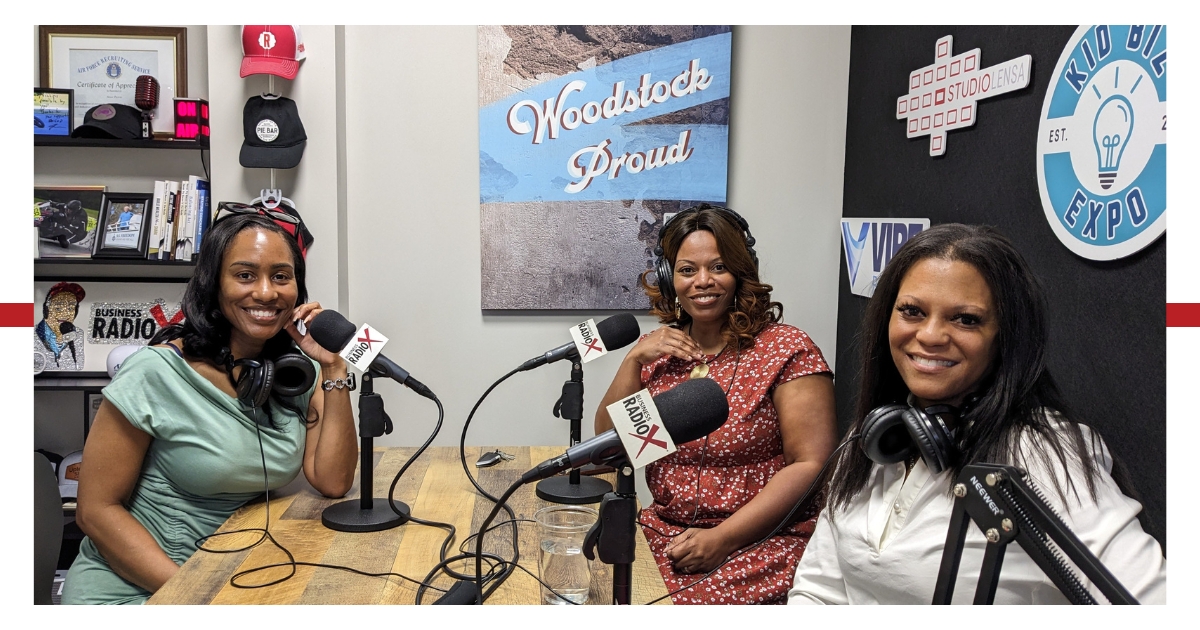
In this episode of Cherokee Business Radio, Stone Payton facilitates a roundtable discussion with Natalie Hutchins, Dr. Angela Coaxum-Young, and Dr. Angelita Howard. Natalie discusses EverFund’s mission to secure funding for small businesses and educational institutions in underrepresented communities. Dr. Young and Dr. Howard highlight the challenges faced by students in the juvenile justice system and the importance of educational opportunities. The conversation emphasizes the need for financial support, community involvement, and partnerships to create transformative educational environments.
 Natalie Hutchins has 23 years of experience in education and community development. Her primary roles and responsibilities have been to oversee federal grant budgets upwards of $55M annually and the development of the Consolidated LEA Improvement Plan (CLIP) and comprehensive needs assessments for the districts she has served.
In 2020, as the world faced unprecedented challenges during the pandemic, Natalie recognized a critical gap in the landscape of grant writing and charitable funding. With small businesses and educational institutions struggling to stay afloat, the realization was that too many dreams were being lost simply because people lacked the expertise to navigate the complex world of funding. This realization led to the creation of EverFund – a venture dedicated to helping individuals, organizations, and communities secure the resources they need to thrive.
She enjoys marrying the politics and the practicality of State and Federal Laws to seek relevant opportunities to fit the district’s needs. As a part of the EverFund team, she aims to bring her wealth of experience to meet the needs of some of Georgia and our nation’s most underrepresented, justice-involved families by bridging the gaps in equity and access to high-quality education.
Natalie began her career pursuing a double major in Biology and Chemistry at GaTech, received her Bachelor’s in Interdisciplinhttps://theeverfund.com/ary Learning and Master’s in English Speakers of Other Languages from Western Governors University, and her Specialist Degree in Educational Leadership from Berry College.
Connect with Natalie on LinkedIn.
 Angelita Howard is an educational pioneer, author, teacher, mentor, scholar, and servant leader. She serves as the Vice President for Global and Online Learning at Meharry Medical College.
Formally, Angelita was the Founding Dean of Online Education and Expanded Programs at Morehouse School of Medicine, in Atlanta. She served as inaugural Co-Director for both the Master of Science in Biotechnology (MSBT), and more recently over the last 2 years, the Master of Science in Health Informatics (MSHI) and the Doctorate of Health Administration (DHA), which were both established under her direction.
In her current role, Dr. Howard has demonstrated outstanding leadership, teaching, scholarship, and academic achievements. She has successfully launched and overseen several new online programs, including the #1 ranked MSBT. She has also developed and implemented innovative teaching methods, such as the Summer Bridge Pathway Programs, which have helped to increase diversity in the student body.
In addition to her administrative and teaching responsibilities, Angelita is also an active researcher with scholarly activity. More recently, she is a certified clinical research coordinator and has extensive experience in conducting research on educational interventions.
She has published several articles in peer-reviewed journals highlighting these research approaches and has presented her work at numerous national and international conferences.
Dr. Howard is an exceptional and internationally recognized leader of graduate education and online student performance & outcomes research. She is a gifted leader and educator who can connect with students from all backgrounds. She is also a tireless advocate for students, and always willing to go the extra mile to help them succeed.
Connect with Dr. Howard on LinkedIn.
 Often regarded as an innovative leader, researcher, author, and speaker in education, Dr. Angela Coaxum-Young brings nearly two decades of experience to the field of education.
She is a candid, frank, and resilient educator, committed to disrupting systematic norms that often marginalize or disregard students deemed “at-risk”. Dr. Young’s public trials and triumphs became the conduit of change that ignited her advocacy and discussion around equity in education.
She is an energizing public speaker and challenges audiences to innovate and create new practices that ensure ALL students have a seat at every table.
Dr. Young began her career as a middle school social studies teacher in Miami-Dade County Schools. She continued her career trajectory serving in various roles in school districts across Metro Atlanta including principal, district support specialist, and most importantly, teacher.
Dr. Young founded Favor Academy of Excellence, Inc. (2009). The non-profit is credited for expanding educational opportunities for underserved youth in communities with limited resources. Dr. Young recently opened the company’s first tutoring and intervention center in Douglasville, Ga.
The center provides intensive academic, social, emotional, and restorative intervention for K-12 students. The center’s signature educational therapy: the Restorative Learning Model (RLM), is committed to ensuring students are academically inclined and mentally well.
Dr. Young is a respected school strategic planner, program/curriculum designer, published author, and culture builder. She has committed her life’s work to establishing educational programs and opportunities for underrepresented student populations. She utilizes her experiences as an educator to develop programs for diverse student groups including Students with Disabilities, Gifted Students, Students with Socio-Economic Disadvantages, and first-generation high school/college-bound students.
Dr. Angela C. Young received her Bachelor’s in Sociology from Bethune-Cookman University, her Master’s in Administration of Educational Programs from Nova Southeastern University, her Specialist Credential from Georgia College and State University, and her Doctoral Degree in Educational Leadership from Georgia Southern University.
Dr. Angela C. Young is married to SFC Travis Young, and they have four children: TJ, Jordan, Joshua, and Jacob.
Follow Favor Academy of Excellence on Facebook and Instagram.
 This transcript is machine transcribed by Sonix.
TRANSCRIPT
Intro: Broadcasting live from the Business RadioX studios in Woodstock, Georgia. It’s time for Cherokee Business Radio. Now, here’s your host.
Stone Payton: Welcome to another exciting and informative edition of Cherokee Business Radio. Stone Payton here with you this morning. And today’s episode is brought to you in part by our Community Partner program, the Business RadioX Main Street Warriors Defending Capitalism, promoting small business, and supporting our local community. For more information, go to Mainstreet Warriors and a special note of thanks to our title sponsor for the Cherokee chapter of Main Street Warriors, Diesel David, Inc. please go check them out at diesel.david.com. Also a very special announcement. I’m so excited I can’t see straight. For those of you who have been following our collaboration with Wildlife Action and so many community partners here in the Greater Cherokee area, the SS Freedom Adventure, for all that wheelchair friendly boat that we are going to be taking folks out in fishing, cruising, having a good time, it will be in the water tomorrow, will be booking cruises soon. Please continue to follow us and you can go to ssfreedom.org and stay on top of that. You guys are in for a real treat. Today we have a special roundtable episode. Please join me in welcoming to the broadcast to introduce all of this, set the stage. With EverFund, she’s the owner and executive Director of federal grants and funding for EverFund. Natalie Hutchins. How are you?
Natalie Hutchins: I’m doing so well. Thank you so much for having us.
Stone Payton: What a delight to have you and your crew.
Natalie Hutchins: Oh, yeah.
Stone Payton: Here in the studio. I’ve really been looking forward to this conversation. I have so many questions. I’m looking forward to to learning a great deal and sharing this conversation with our listeners. But let’s start. If we could give us a little bit of an idea of your work, what are you and your team at EverFund really out there trying to do for folks?
Natalie Hutchins: Thank you. Well, at EverFund, we are a small but mighty team and we really have two intents and purposes. Our objectives are to support small businesses, especially those in underrepresented communities, to ensure that they are fiscally responsible and fiscally ready for funding opportunities so that they can grow their own agencies. Right. And on the second side, we have a procurement and grant administration firm where we support charter schools, private schools and public schools under 30,000 students to ensure that when funding ebbs and flows, schools and students and families don’t miss out on the very vital programs that they need to be successful. So that’s really what we bring to the table. We’ve been doing this work for about five years exclusively, but as a team of five between all of us, we have about 200 years of experience in the federal programs world, and we’ve managed between 50 million and $150 million annually. So it’s just really, really great to be able to share our skills within the community and around the state of Georgia and beyond. We’re officially now we have seven programs, two schools, and we’re in nine states. So it’s just really a blessing to be able to do this work.
Stone Payton: Well, congratulations on the momentum and every indication that it’s not anywhere near stopping. It’s only going to continue to scale and grow. Uh, sounds like noble, just and true work, if you can get it. What was your journey? How did you wind up doing this?
Natalie Hutchins: Well, I started off at, believe it or not, as a pre-med student at Georgia Tech.
Speaker4: Of course. Makes perfect sense.
Natalie Hutchins: A double major in chemistry and biology, which was awesome. And I realized very quickly that if you got out of work at 5:00 in the hospital, it really was 9 to 10:00 pm, and the schedule was a little bit hard for me with a bunch of little kids. So I decided to take a break. And I am a bilingual speaker, so I do speak Spanish very fluently, and I was invited to just hang out at school. So I started as a paraprofessional. Then I was a bilingual educator and things just kept going from there. And I found myself in central office in one of the largest school districts in our country for about 20 years. And within that every program had money and had funds. So I had the opportunity to just slow down and learn how to navigate the 32 overarching federal grants that are available in the United States. And now I just do that work for the people that can’t afford it.
Stone Payton: So at this point in your career, what what are you finding the most rewarding? What’s the most fun about it these days for you?
Natalie Hutchins: Well, that’s what we’re going to talk about today. A board that I had been on for about three years, um, the private school has done so well. And in their space and the juvenile justice and juvenile engaged arena, they’re going to be here with us today, or they are here with us today to just really speak about that work. And I’ve transitioned, um, from that role of being on the board to actually supporting them in their Office of Finance, and they’re doing some really, really amazing things, and I’m so proud of them. So I really just want to highlight a really great example of what partnerships can do when you believe in others and give them the support that they need when they need it.
Stone Payton: Fantastic. Well, let’s bring them into the conversation. Introduce our other guests, if you would.
Natalie Hutchins: Absolutely. We have our Executive Director and Founder, Dr. Angela Young. Um, so she’s here with us, as well as her President of her board, Dr. Angelita Howard. Um, so they’re going to take it away and share with us what’s going on. Um, with Favor Transition Academy and Favor Academy of Excellence.
Dr. Angela Coaxum-Young: Um, thank you so much for having me on. I am super excited to engage this discussion, and I hope there’s an opportunity to to merge, um, the value of financial support, um, with missions that are underfunded in communities that are certainly underrepresented. So, um, today we’ll give a little bit of discussion around the juvenile justice, mental health and, um, how we have been able to kind of partner and work together. I want to pause before I get into favor Academy of Excellence and just give some homage to Dr. Howard. Um, allow her to tell a bit of her work and why she is so integral in our success as an organization.
Dr. Angelita Howard: Thank you. It’s such a pleasure to be here and share. And so the three of us came together over the last two years. When we talk about justice involved juvenile justice and partnership and finance. We do understand that if you don’t have financial support, it’s a nightmare. It can be a nightmare. So that’s why it’s really important, the work that Natalie has done and is doing. But beyond that, we also understand how important education is. And so with Dr. Young, she and I are the educational specialists, if you will join team to create opportunities for those who are marginalized, who don’t necessarily have the support and then adding a financial support to that to make sure that students, no matter where they are, no matter their background, have opportunities to success, is what we’re about. That’s the work that we’re doing, and I’m so happy to have joined this team of amazing women on this last few days of Women’s Month, to highlight the work that’s being done to create opportunity, access and impact for young women and men.
Stone Payton: So what are some of the the major gaps, the the unfunded things, or they’re not properly funded things until you guys get involved at a layperson like me may not might not even cross our mind. We might take for granted.
Dr. Angela Coaxum-Young: Um, I’ll start in the K-12 space. So I will also say that Dr. Howard and I represent education from two different lenses. And so we’ll be able to speak to this, um, in a more in a broad way. Um, K-12 specifically, um, has some challenges when we’re talking about dynamic student groups. And so in our case, we are talking about students who are just disengaged. So students who have what we call enter the pipeline to prison. So at some point, their behavior, um, their attendance, uh, their records, uh, criminal records have removed them from the ability to continue their traditional learning in a traditional school environment. And so we look for alternatives for them. What we found to be an issue was, uh, the resourcing for alternative spaces for students like that is just not there. So our partnership was birthed, um, from the idea that this is a student group who needs more, not just for the benefit of educators and for society. These are the group of kids that we certainly want to reform, restore, make sure they are ready to return to our neighborhoods and our communities, um, healed, um, free of all interest and participating in any criminal activity and just create safe environments for everyone. So I was really looking for a thought partner who had some expanded experience. And I came to Dr. Howard, who at the time was working with the college, and they had just created, um, a justice involved care program or. I’m sorry. Yeah. I’m sorry. Um, and she she really blew me away with the work she was doing and how she could expand our vision. So.
Dr. Angelita Howard: So, yeah, you know, that’s the wonderful thing about education is transformative from k through 12 to college. And so even at the institution I’m at now, Meharry Medical College, one of the things this is why it’s so important for we’re talking about, uh, networking and partnerships is because even to your question, even when we think about the needs of those who, again, are underrepresented, underserved, we’ve had we have to have partnerships. We have to have back to finance. We have to have those grants because we’re trying to make sure people have access to education. They have access to to equitable education. And a lot of times, the way that happens, especially in minorities or marginalized populations, are through grants or through grant fundings or through private funding. Some of course, now with everything that’s taking place, honestly, we are concerned because a lot of the federal money is being taken away. A lot of the words, the key words that we in favor Academy have dealt with, you know, if you say those words, you can’t get funded, certain funding, certain federal funding. So that’s a stressful time. And so when we think about partnership with Natalie, then what happens is here she can find opportunities that are not necessarily Really funded by federal grants. It might be private sectors that can help us streamline some of the work that we’re doing from K through 12 private. And then certainly in the college arena.
Stone Payton: Way to go. Natalie, you’re the hero. All right. So kind of break it down again. Kind of at the layperson level. And I’m going to say $100. Check. I know there’s a lot more zeros probably attached to some of these programs. I certainly hope so. But so what are some things you would you tactically invest in once you receive the funds?
Natalie Hutchins: So I would like to just if we think about how much it costs to educate a student. So with our particular program that we are sharing we have a middle and high school program. So that program is a Saturday program that maybe will run about 12 to 16 weeks, where we’re watching students and partnering with our nearby counties to say, hey, we can see that these students based on an early warning system, may be on the trajectory to not being able to complete school or being very close to being just disengaged. So let’s start now. We do with our middle school and our high schoolers. We have a wonderful giveback program. That alone you’ve got teacher, you’ve got a counselor, you’ve got a psychiatrist, you’ve got the therapist. You have the building. Right. So that alone can cost us $25, $40,000 just to run that program.
Natalie Hutchins: So that’s huge. And then on the other side, we have a private school for high schools that is fully accredited. You know how much it takes to raise money for a kid to go to school? We all know what our tax bill looks like, right?
Natalie Hutchins: We’ve talked about the Tax Digest. We’ve talked about those homestead exemptions and what those funds look like. So favor is positioned well to ensure that they have the funding that’s necessary to take care of all of a high school student’s needs and some of our really large endeavors for next year. We recently just put in some applications Dr. Young for some school and sports things. So if you want to maybe share what that looks like, because we are a petite private school, but we’re intentional.
Dr. Angela Coaxum-Young: And so I think it’s important to kind of expand on the understanding around the student group we’re talking about. These would be students that for some can not return to the traditional public school system. Some have already, um, acquired felony charges. Um, some have through school disciplinary measures. Um, been permanently expelled from the school system. Um, what’s in place right now typically for this student group is online learning. And that poses a problem because these are students who are very active already, very connected in communities. Um, and they are kind of left to their own devices, Vices, if you will, to learn independently. Most times they won’t continue their learning, but even if they are more tenacious and they decide to pursue their education, they’re still partnering with people who might have been the very people who led them down the wrong path, and they are free all day to, in some cases, if I’m honest, wreak havoc on communities. And so this is where we need partnership. This is where we need everyone on one accord. We want to have safe communities. We want to have students who are prepared. We want to have students ready to enter our workforce. Um, we have a student group who, if we reform them well, might be, you know, ideal candidates. Um, and so we need to make sure that we get them prepared. So when we think about this school favored Transition Academy in particular, it would be the kids who are already disconnected from the public school would be the kids that we need some oversight or certainly some resources like mental health therapists and etc. to make sure that we deal with the thing that lives inside of them that might be creating some of the behaviors we’re seeing.
Dr. Angela Coaxum-Young: And we certainly need people who are willing to partner with the school to create, to create opportunities for them to get job skills, career readiness skills, etc. and we need advocates. Very strong advocates who are going to say, give the students a second chance. They may look a bit scary sometimes, but like at the end of the day, they are still children and that is something we firmly believe restoration, like giving them an opportunity to restore their communities through righteous and rightful efforts. And so that is the the premise and the basis of this school. And so partnering with Natalie was huge because we kept running into barriers and we attempted everything. We attempted to open the school as a charter school. Charter schools are, you know, in general, schools are very focused on academic success. This is a group that we can’t guarantee. Academic success for. I can’t even guarantee sustained enrollment for, because I am in competition with the very thing that attracts them outside of the schoolhouse. Um, so that that’s problematic. Um, and ultimately, we did not win there. Um, but we kept pushing and again, through partnership and I have to be able to, um, really, really just celebrate Natalie and Dr. Howard. These ladies have continued the fight with me alongside of me breaking walls, connecting, you know, partners and networks as best we could to get us to this point. Um, we are now positioned to open an actual school site. So we have been operating out of our program site for the last a little over a year. We’re now opening a school site coming into the next year. Um, it’s a little scary, but we because.
Natalie Hutchins: What I hear, I, what I hear is, you know, we’re about to get into a building, right? We are looking for.
Natalie Hutchins: And you know what that money looks like. So, um, anyone who has a mortgage, if you, you know, you buy something that’s two, three or $400,000. I mean, now we’re looking at 2 or $3000 a month just for overhead on top of what we just recently talked about with that program. So educating children is a very expensive and fundraising is very important. Um, we’re getting into some spaces now where we’re going to be looking at kind of some adopt the students, um, opportunities so that corporations and of the like can volunteer or at least maybe pitch in and say, you know, if this is the tuition for the student, can you, you know, how many students could you, you know, pay a semester or a quarter, those kind of things? Um, in addition to the, um, the grants, because these families really do need the help and support. But more importantly, like Dr. Young is saying, we all need these students to go through the program and to be successful, it’s for the greater good of our communities, right?
Stone Payton: That’s an excellent point, and it’s an inspiring mission. And I got a ton more questions around it. But I’m thinking just if even just from an enlightened self-interest point of view, I want these kids on this other path than the one they’re they’re on. Absolutely, absolutely. And it also, it occurs to me that it’s great if we can have this, you know, major sea change and, you know, incredible transformation. But even if you just change, the word you used was trajectory. Even if we just move them a few degrees, we’re talking about a very different future.
Natalie Hutchins: And think about the families, right?
Natalie Hutchins: So if you know your grandfather or your great grandfather, think about your life differently today. If your great grandfather made some really bad decisions, you know, how long does it take a family to recover from maybe an accident, an incident, or just being naive. And we are talking about children, and children are children, right? They’re going to do things. They’re going to test the limits, because everybody has had that experience of just saying, I’m invincible. I can do anything because I’m 15, 18 and 20. And then when you get on the other side, you’re like, how did we make it? You know, what were we thinking? But, um, that’s just what we’re here for because we understand, like you’re saying, if we just can get them a few degrees to look the other way or have something else inspire them or catch fire inside of them. The world isn’t going anywhere anytime soon. You know they deserve their grandchildren deserve for someone to step in to help change their grandchildren’s lives. And that’s what we’re here for.
Stone Payton: And the earlier we can get to them and provide some of that positive input. But yeah, I’m thinking just a few early wins and, and the, the psychological benefit of hey, someone you know, something has invested in me a little bit. And now I’ve tried this set of behaviors and I’m getting some positive results, then maybe we can achieve some escape velocity. I asked Natalie the question a moment ago. I’m going to ask each of you because I’m interested in kind of the the day to day, that energy that you must have to have to keep doing this work, as noble as it is, has got to require a great deal of energy. Um, but what are some of those things that you find rewarding? Uh, Angelina, that just push you on to tomorrow? Even if today was a tough day.
Dr. Angelita Howard: Change, change pushes me. And knowing that students, no matter where they are, things can happen. Dr. Jung talked about workforce development, but even beyond there, there are students who will be in her program or who are in her program, who will come to college. They will end up going to college if we get them early enough, if we help them, if we make sure that they have guidance, if they have mentorship, they will come to college. And so then it’s my responsibility to make sure that we have programs for them, aligned for them, so that they don’t feel as if they are on an island by themselves, that we embrace whatever has taken place. For example, in a program that I have run, we had a felon, a person who was in there in prison for 25 years. He’s now graduated from college. He now works for the government. He works for the Department of Behavioral Health. So he went back to the system that had him for 25 years, and now he’s training uh, other, uh, juvenile impacted or justice impacted individuals to do some of the work. The peer specialists that he’s that he has done. So this type of work is what fuels me to get up every single day to make sure that, again, people have opportunity. Because oftentimes in my field and in what I am so passionate and I care about, is to make sure that those who would not have the opportunity, that they do have the opportunity. So that takes a little bit more work, a little bit more elbow grease, because they’re not the ones who normally have a 4.0. They’re not the ones who normally will just get accepted into your Ivy League schools. They are ones that may have, you know, some issues along the way. They may have had lower GPA, they may have had family issues that have stopped them from progressing in the way that they should. And so it’s my responsibility to go and find opportunities, create opportunities for them to be successful, create pathways for them to be successful.
Stone Payton: So does, um. I’ll come back because I want to hear this from you, too. Um. Dr. young, but does healthcare impact this world at all? Because it strikes me. Well, my my wife, who made a very comfortable living and we had Cadillac insurance and all that, she hung up her cleats, retired. I had to go out on the thing, get my own insurance. That was even, you know, in my situation in life, that was kind of a tough transition. But does health care impact us?
Dr. Angelita Howard: Oh, absolutely. Yeah. In fact, at Meharry, where I am now in the School of Global Health, we just built a program focused on not only health equity, but looking at how health equity really is amongst everyone. There are people who are in the jail right now who, you know, they tell them to take one medicine for everybody. It’s like blood pressure medication. Okay, everybody take metformin. But my body is not like the next person’s body. And if you don’t have equity, if you’re not teaching, if you’re not showing, if it’s not building, if we don’t have access to these different types of medicines, these different types of therapies, then people, no matter where they are, are going to suffer. And that’s the that’s that’s the bad thing about, you know, disparities and social determinants of health. And beyond that, political determinants of health. Because if you don’t have access then of course you’re going to suffer. And in again, marginalized community in which we serve, which we know a lot of our kids are from, they have chronic diseases which have stemmed from years and years. Grandpa, grandma, all of those years of of health issues. If they’re not addressed early on or through their process, then they’re it’s only going to get worse.
Stone Payton: Yeah. So Dr. Young, speak to that as much as you want as well. And what keeps you going? What are you really enjoying?
Dr. Angela Coaxum-Young: I definitely want to make the connection. Um, the health care connection with the student group that I serve. Just because we’re when we think about students who are inclined to link up with people who would perpetrate, um, unsavory or they would perpetuate, um, scenarios that are unsafe for themselves and for everyone around them. Um, you have to wonder where the origination of that mindset comes from. And so we find that there is an intersectionality between mental health or mental instability and student behavior. We definitely see that show up in our schools. And I also want to kind of bring this back to just the passionate side of me. Um, I served as a school assistant principal, a school principal, and I happened upon one school, one population of students. It it affected my health care. I’m going to say I’ll start there. Right, right. Um, I don’t think I’d ever come across a set of students who who had such a hopelessness. It was such a buried hopelessness that it was hard to describe. And I remember driving to work for the first year on the job, just wondering when and how could we ever get a student to be so angry? How could they wake up angry? How could they wake up so aggressive, so ready to fight the world and attack anyone that that stepped into the space that they were holding on to their life for. Um, and so slowly I began to unpack that. But as we moved into the pandemic, I started to see what a lot of educators saw.
Dr. Angela Coaxum-Young: Um, there was a rise of violence, um, in schools, there was a rise of violence in the communities. The kids had had some time to be home. Um, that created this for some, this interest in isolated environments. And so, of course, when we brought them back into the school with hundreds of kids, anything and everything could set them off. Um, I shudder to think. Um, for some of the things I’ve engaged in, I won’t be as colorful as I could be for some of the things I’ve engaged, some of the experiences I’ve had as an educator and students I’ve had to kind of come alongside of and help turn the bus around. Um, I shudder to think of a society that would be laden with large amounts of students who operate with that level of hopelessness. It’s scary. I’m. I’m saying it from someone who has seen it, who does not separate myself, who does not categorize myself in a specific race. And I don’t want to paint a picture that’s untrue. This is scary. Some kids are scary. There is danger. No one wants to deal with that group. The only way we could get to that group is if we put them in the prison system. There has to be an alternative, because it could take us 20 years to catch a kid and put them in a prison system. They’re running around doing who knows what. In between that time. So this is a very hard thing, which is why it isn’t a one that you see every day.
Dr. Angela Coaxum-Young: You’ll you may see one school dedicated to students who have some very advanced and significant negative behaviors. Um, in every community, I’m going to say in every county, maybe. Um, but they are very few and far between because this is hard work. Even as we open the private school, we’re opening it with the idea that we want to keep it small. We have to grow, you know, in concert with what we’re seeing. Because we don’t know what we don’t know. I don’t know if I bring the wrong set of kids together, what that’s going to look like in a school building, I don’t know, but what I do know is I have to staff it with enough mental health support. I have to staff it with enough teachers that are not just, you know, able for to be able to teach the curriculum, but they have a passion that exists beyond what their degrees have prepared them to teach. Because that’s what you need. You need someone willing to go the extra mile for this group of students. And that wakes me up. The idea that I’m not just changing a life because that’s important to me. I have to be purpose driven. That’s that is definitely motivating. But the fact that every life I change changes the lives of so many others. You when you drive into our county, because there’s a favorite transition academy, there may be an incident you never experienced because we existed. And that’s important to me.
Dr. Angelita Howard: So and you see why we love it? Do you see why I follow her? Do you understand now why we follow her?
Stone Payton: Absolutely.
Dr. Angelita Howard: We’re connected.
Stone Payton: Well, and you said you don’t know. There’s a lot that you don’t know right now. I applaud your your efforts for so many reasons, but the your willingness to throw your hat over the fence. Because what you do pretty well know is what’s going to happen if you don’t do anything.
Stone Payton: If you’ve got some real not just anecdotal evidence. You probably have even some hard data on what’s going to happen, what’s going to continue to happen. And I’m sure, Natalie, I’m sure it’s everybody’s doing a high five in the parking lot when we get like an injection, you know, a company, an organization steps up and provides some money, or you win this big grant from a from the federal government or something like that. But what you really I suspect you need this ongoing, you know, consistent funding to make this work. Right. That’s got to be on your mind.
Natalie Hutchins: Absolutely every day. So we’re just like a stool. Any client that we work with or we support, you know, we talk to them about those three legs, you know, what are your private sales? What’s happening? What are your donations? What is foundational, what is philanthropic. And, you know, what is federal, state and local. And I know those are a lot of things, but we’ve got to decide what those three prospects are and really be steadfast and consistent. We had a conversation on our way over. Um, as we were driving up today, just going, okay, so we’re looking at this building. What is this going to cost? What do we have in the pipeline? When is the next thing over? How many opportunities do we have in the waiting? What’s pending, what’s next? And it’s just that everyday grind of it all because like, um, Dr. Young said, you know, I have to come alongside her. And when she prompted and she was sharing this and I said, wow, I’ve never thought about what happens with the children that because every district is trying to raise their API. And we can do that by saying, you know, this kid’s a little bit too rough for our our building, but also protecting the students that we do send to school. Right? So you have those students who are not coming to school traumatized. We don’t want them to leave traumatized, right?
Natalie Hutchins: So what do we do in the interim? What do we do for the child who needs a different safe space? What does that safe space look like? I remember years and years ago. I believe it was either cut or racetrack. But I want to say cut. And of course, like now we all see the blue lights, right? That’s the thing. I love the fact of thinking like Favre as that blue light. We knew that if we rode past a cut and it was 2 a.m. and something was happening, and we used to tell our children this because we’re all educators, you know, I’m in the K-12 space as well. So we always tell our students, if you ever have a, you know, a situation or you can’t find your mom or there’s a fire, or we worked with lots of homeless students in our district at the time. You know, if you can find that blue light, they will feed you. They will give you a snack. I mean, you can walk into that and say, I don’t know where my mom is. Call. They have someone on staff. And that was huge work that you think a gas station like, why would a gas station do that? A gas station understood that it is common to loiter at a gas station. That’s where people are. So if you’re having an emergency, there is always a gas station. So they took it upon themselves 15, 20 years ago to say, hey, we’re going to create safe spaces and you’ll see the little yellow. This is a safe space. Next time everybody’s going to go to sh and a racetrack and be like, I’ve never known this space, right?
Natalie Hutchins: So we used to really talk to our parents about that and talk to our students about having that safe space. And that blue light is explicitly what that is. It’s like, hey, if you’re homeless and you need food, that’s why we keep fresh food and fresh vegetables. You guys always we can walk into sh and you see that little basket. That’s one of their selling points.
Natalie Hutchins: They don’t make any money off of that. They want people to be able to come in and grab that. If you have an emergency or if you need something. So I feel that same way about favor. I feel like that is the the blue light that is really shining on that side of the county. And we look forward to their growth and their efforts. I love that they are so intentional and so thoughtful about the student group in a way that I’ve never seen. And so for me, I was like, let’s do it. Let’s just find the funding. I know that this is important not to just us, but other people, because we want everybody to be in their community safe. We want you to be able to go to the grocery store and not worry about the teenager who can no longer go to high school, who’s doing nothing all day. Right. Um, and Faber has been really instrumental in building partnerships with barbershops and places like KFC and Taco Bell, so that students actually can work during the day and do classes in the evening, which may not be very traditional, but it’s excellent for our population of students because now, instead of you going to school for only seven hours a day, now, you know, we’ve kept you occupied for 12, 14 hours a day, which again, is that, you know, reentry into society. And it is our community responsibility. So that within itself, it just takes a ton of money to do it. Um, and I’m here for it. So I’m going to my you know, papa always said that, um, you know, it’s easy to tell a man to pull himself up by his bootstraps. But what about the man with no boots? Right.
Natalie Hutchins: Well, we’re boots on the ground. Boots on the ground.
Stone Payton: So I want to talk more about these sponsorships, because now you’re starting to touch my world a little bit. We do a lot of work with with small business, of course, and they want to try to contribute in any way that they can. That’s why we have a community partner program here in Cherokee County for our little operation. Um, but I got to tell you, you know, as a, you know, a middle aged, rich white guy, I am going to make a point of doing more business at the county on my way when I go hunting and fishing.
Stone Payton: And, you know, because it just that makes me feel I would rather buy my coffee and beer, buy my coffee there, and I gotta believe a lot of folks would, would feel that way, even if they’re not as educated and all. So I’d like to hear more about the partnerships, and then I’d like to hear a little bit more about how you’re educating, you know, people like me and people with a lot more power and influence than me to try to to help you guys?
Natalie Hutchins: Absolutely. I will get straight to the money and then I’m going to turn it over to, um, Dr. Howard because she is all about that. Um, I will tell you that the tuition for a student is $7,000. So any partner that wants to say, hey, I’ll cover a kiddo for a year, that would be lovely. And a semester is 3500. Super easy math. Um, and that’s a lot cheaper than what it costs to on our tax dollars, because our tax dollars are about $25,000 a year to house an inmate, even at the juvenile level. So you can pay $25,000 a year off your taxes or, you know, ask your boss for some cash.
Speaker4: Right? I like that framing. Yeah, absolutely.
Natalie Hutchins: 7000 is nothing. That’s a third of the cost. Um, and if a kid goes to high school for, you know, four years and you’ve kept him out of that, then you know, that return on investment for community people, we will we will feel that in our pockets when we’re not building more and more prisons. Right. Because that is it’s very costly. So, um, that’s, you know, our pitch. If someone wants to adopt a student, we would be more than grateful for you to be able to do that. And then we have those Saturday programs where the students are actually reinvesting into the communities that they’re tossing. Right. So that’s really important to us that we say, hey, we are going to be community builders and not community wreckers. So what Dr. Young has going on is every Saturday, those middle and high schoolers that we kind of see on that trajectory, we keep them in small groups, but they are doing community service oriented projects. So if you ever want to donate any amount that helps us with community service, as we look at a building, we’re going to need to get paint. And the inside of the building is great, but the outside of the building we’re going to need some work on. So we’ll be definitely hitting up Home Depot and your fellow friends if you want to come out and help us and bring some. You know, I love the cow manure. So bring it. Bring the plants, bring some trees, bring the flowers and let the kids, you know, make that building their own as we begin to, um, really set that in motion over the next couple of months and be ready to open our new building in August.
Stone Payton: Well, and here again, it would just it would feel good to contribute to something like that in whatever fashion we could like as the Business RadioX network or something like that. Um, but again, it’s everybody wins in that equation, right?
Natalie Hutchins: Absolutely.
Stone Payton: Everybody wins. So at the, um, Dr. Young, um, at the school level, like if you identify a kid or maybe you Angelita as well, um, that has an interest. I’ll just make this my little tiny world. But you got a kid that’s interested in media or broadcasting or, you know, they they think so. Like to give them opportunities to come and hang out and do, like, how cool would it be to have the a kid sitting right here running the board, right. Or.
Dr. Angela Coaxum-Young: Absolutely. That’s a huge part of our school, um, model.
Dr. Angela Coaxum-Young: Um, the students aren’t always earning money at jobs during the day. It is internship. What we’re trying to do is occupy a large portion of their awake time. And so.
Dr. Angela Coaxum-Young: It is getting them connected to career fields that they thought were just off the table for them, for their past, you know, commitments. Um, and so partnering with people who say, I understand this is going to be a student that I might have to work with a bit, I might have to kind of coach up and maybe, um, through redundant practices, teach and reteach again. But I am committed to making this student ready and prepared to consider this as a viable career option for us, because that’s the first part of restoration. They have to see the potential.
Stone Payton: And they got to believe that there’s there’s light at the at the end of the tunnel. And you know, my example may be very pedestrian, but how cool would it be for that kid who in that environment may be, you know, they’re there. They really like the rap music. And they see all the stars and the flash and all that stuff. Um, and, you know, maybe we can’t put them in a limo and make all that happen for them, but how cool would it be if the raw audio from this interview was sent to the that kid and and he’s on a computer, you know, doing all the the magic to the audio and he’s he’s part of the industry just again those little moves.
Dr. Angela Coaxum-Young: It would be life changing.I think it’s life changing for them if they see that what they’ve done is a part of something great, it’s a part of something useful. Yeah. When you hear negativity all the time.
Dr. Angela Coaxum-Young: You start to believe that. So when you and you’re able to put something out there, product, anything. I mean, if they paint a wall and someone walks in and says, this wall is gorgeous, there’s a pride that lives inside of them that is hard to contain. And so that’s what we want. We want to inspire that feeling all the time, because then they’re more inclined to move in this direction than this. Because now this one also comes with finances, Answers, praise, adoration. People like me here, over here, not so much. And I want to really get away from this, this level, this lane and live in this one. And so it’s it’s exposure. It’s access. It’s all the things we’ve talked about today. And when you asked about community education, that was one of the reasons we initially partnered with Dr. Howard. Um, so they were doing a justice involved care program. They were training people who were very interested in working with justice involved people, not just juveniles, adults as well. And I was in love with their life coaching model because it’s a whole child, whole person effort. And there are some things that as an educator, a veteran educator, it’s more than the social studies. I can teach you what’s going on right here. I need to be able to take the the titles off and just be your aunt for a second.
Stone Payton: I love that, I love that.
Natalie Hutchins: And, Dr., um, Howard, talk to us a little bit about the film festival. That was a great segue, Stone. So talk to us about the film festival, which was our most recent, um, program project.
Dr. Angelita Howard: The film festival.
Dr. Angela Coaxum-Young: I think she’s talking about the act, but but I do want her to piggyback on, um, the program that she did with, uh, the justice involved care and what you all were doing with that and how we got to. Because it was all.
Natalie Hutchins: And I’m calling it a film festival because it was just really awesome. And I was a guest, and it felt like a film festival to me. I mean you know.
Natalie Hutchins: I mean, the kids did an amazing job, and you, I was like, wow, kids edited this.I’m just trying to, like, figure out how to turn on my cell phone. Right. And I walk in and these kiddos were just did some really amazing, amazing things. Um, under her, her support and her leadership.
Natalie Hutchins: That was a part of that care program.
Dr. Angelita Howard: So, yeah, that was the menopause that just happened.
Dr. Angelita Howard: Like, that was a menopause moment.
Dr. Angelita Howard: I’m like film.
Speaker4: Festival because.
Dr. Angelita Howard: We know, honestly, this team does so much all the time because in this world, in the world that we serve. You don’t stop. You don’t get a chance to stop. You rest, and you wait for someone to kind of hold your hand up while you’re resting and then you jump back in the game. But so this film festival we had, oh my goodness, one one, one little young lady, she stole my heart. But we had people, children, youth that came and gave projects. They were given a title to work within, but they took it and transformed it to another level. It was held in Douglasville somewhere not far, uh, in a convention center. Uh, the team had done such a amazing job. Back to what Dr. Young said. Providing them an opportunity, giving them this is this is what you can do. And so they took their film. They put it on like a YouTube, if you will. They created they had all these segments that they were able to do based on a justice involved, if you will, or an issue and how to go through that issue like one of the issues dealt with absenteeism, frequent absenteeism and how to overcome those things. Some of these students, unfortunately, have had some of the worst home life, upbringing, sex trafficking, you name it. It was it was so difficult to to know their background, but then it was so rewarding to see how they pushed through, how they wanted to push through.
Dr. Angelita Howard: But then even more, when they saw the adults cheering for them, clapping for them, praising them, and really saying, you know what? I really can do this. I really can be something different. I can go and I can shift or pivot because somebody invested in me. Somebody saw me today. Someone looked at me today and saw that I was not just a piece of meat, or I was not just a piece of, uh, a story that I had this or I had this or this background. And so that was one of the changing moments for even our school for favor, because we knew then it was we it was unspoken. It was really unspoken. But we knew then we had no other choice but to push forward with all of the what we believe were setbacks. I believe they were set up for something greater. We didn’t need we. Not that we didn’t need, but at the time that we were trying to go through the charter schools and go through that, those rejections, they were certainly they were needed because we wouldn’t have been able to experience what we’re experiencing now if it were not for the rejection. So each one of us have had rejecting moments and workforce over the last 2 or 3 years that if I were to talk about it, about it, I think we would all cry.
Dr. Angelita Howard: But the rejection that came as a result of us losing. But God said, we’re going to win on the other side. And so because of rejection that she had. It’s been greater for her because the rejection that she had has been greater for me because of the rejection that I had, has been greater for all of us. And that is absolutely why we cannot not have a favor. We cannot favor is on our lives. And we didn’t see it then and we didn’t understand. Each one of us did not understand why we lost. We lost our jobs. There were jobs. There were people who, um, and not before. And I hope they don’t mind me sharing. But we we lost even with my last employer, you know, not giving the things that I simply asked for. And when we talk about going hard, going hard for we are all 200% workers, not 100% not 99. But we had to transition in order to transform. And so what you’re seeing now is transformation. You’re seeing transition. You’re seeing hurt. People heal. You’re seeing heal people going to heal others. And so we’re excited about the work.
Stone Payton: Well, I’m glad that you’re invested in this work because you could be out making a ton of money as a keynote speaker. I feel like i just went to a big corporation keynote talk, and I will, from this day forward that it’s it’s not a setbacks or set ups.
Speaker4: Yeah, absolutely.
Stone Payton: You’re going to if you’re if you listen to any more of our program, you’re going to hear me say that. And I’ll try to remember to credit you in the early.
Speaker4: Going and then.
Dr. Angelita Howard: And then it’s.
Speaker4: Yours.
Stone Payton: Over time, it’ll be like I always say.
Speaker4: Yeah. That’s right. There you go.
Natalie Hutchins: I feel like we all need t shirts.
Speaker4: Yes.
Stone Payton: Oh, you guys are doing such important work. Okay, let’s make sure. Before we wrap, Rap. Let’s leave our listeners with whatever coordinates or ways to connect continue to tap into your work. I want to make sure that, you know, maybe they can have a conversation with you guys, go to websites, LinkedIn, whatever is appropriate. But let’s, uh, let’s make it easy for them to, to tap into this.
Natalie Hutchins: Well, I just want to say thank you so much for having us, um, for trusting us in this great work and allowing us to share just a small piece of our story with the community and the listeners at large. Um, we appreciate you. We appreciate your support of Stone and what he has going on at Business RadioX. And just all the people out there doing what they know needs to be done and filling the gap for someone else. So for that, I’m just so very grateful. At EverFund. We have lots of different spaces that we’re in. So, um, we’ll be on the road here for the next 3 to 4 months. Um, we have some campaigns with KSU Small business, UGA Small business as well as Grameen America with Bank of America. So we’re going to definitely be on the road. Um, just really supporting entrepreneurs and making their for profits and nonprofits steadfast and give them a really good foundation so that financially they can, you know, do what they need to do because it takes a lot of money to, to make people’s dreams come true. So that’s where we are. And as far as favor is concerned, I’ll hand it over to Dr. Young. Um, there will be a there is a link to be able to donate. Um, on the website. But, you know, I’ll give you her cell phone number if you guys want.
Speaker4: To.
Natalie Hutchins: Support a kid, like I don’t mind. Um, you know, giving you the direct bat phone. Um, but we’d really appreciate, you know, any type of corporate or individual sponsors. Uh, we have a goal of ten students next year. Um, so that’s $70,000, right? Like, it’s seven grand a kid. So we need a budget of about 125,000 to make that happen. And that’s, um, that’s our charge. So, Dr. Young.
Dr. Angela Coaxum-Young: Um, yes. Um, they can follow Faber News on Instagram, on Facebook, on Twitter. Um, our website is Faber Academy of Excellence. Org. The school in particular is Faber Transition Academy. Org. Um, we spoke a little bit about our program, our restorative program. We are in Douglasville, Georgia, but we are a Georgia nonprofit organization. So I certainly want to be able to say we are mission minded. Um, doesn’t matter where the student lives, if you have a student that would benefit from partnering with us, if you feel like this would be a program that could exist in another community, I avail our organization to you. We have written our own curriculum. Um, we certainly train on justice involved care. We’re operating under a grant right now and we are able to reduce tuition for students for next school year. And so, um, I just encourage everyone to please reach out to us if you, um, just for students. And so if you have a neighbor next door who you feel like needs to be connected to someone yesterday, do not feel like because we’re in Douglasville, we would close the door because we are mission minded and this is important work. Wherever the kid is, however we can help them, we will help them.
Dr. Angelita Howard: And if you’re interested in anything around healthcare, especially health care law policy, health law policy, how the policies work, how leadership works from going to advocate, we talked about advocating and making sure people have a voice. And so sometimes people need a voice, but you’re their voice. So if you’re interested in health law, policy management or healthcare equity, health equity, political determinants of health, we certainly have those Opportunities available at Meharry Medical College in the School of Global Health. They’re online so you don’t have to move. You can stay right here in Georgia or wherever you are. And that’s Meharry Global. Org. And I’m so thankful to be here.
Speaker4: Thank you. Thank you so much.
Stone Payton: Ladies. It has been an absolute delight having you in the studio. You’re doing such important work. And keep it up. And we want to continue to follow your story. And we’re going to try to figure out how to help you any way we can. So thank you so much. This has been fantastic.
Speaker4: Thank you.
Natalie Hutchins: Thank you so much. We appreciate.
Speaker4: You.
Stone Payton: My pleasure. All right. Until next time. This is Stone Payton for our guest today. And everyone here at the Business RadioX family saying we’ll see you again on Cherokee Business Radio.














