
Brought to you by Diesel David and Main Street Warriors

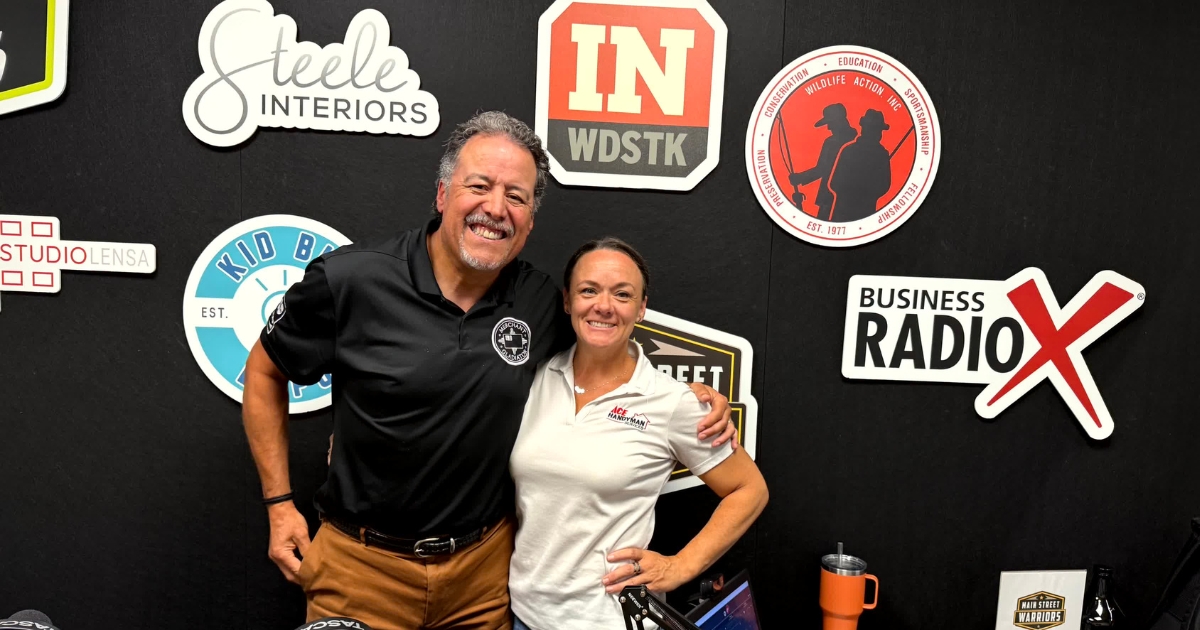
 Alicia Todisco is a Georgia Native. She opened ACE Handyman Services serving Acworth, Kennesaw and Powder Springs area. Has recently expanded to include Hiram, Dallas and west cobb to the Marietta Square.
Before ACE Handyman Services Alicia was involved in the technology world for 12 years. As a sales leader in the working with other sales professionals to teach them to sell with the need of the client as the priority.
She spent the last 3 of 12 years working as the Director of Learning and Development creating programs to teach and train on those processes companywide to create a productive sales professional selling the most ethical way to sell any product.
Her transition was not an easy decision, however, made with three very important factors. Grayson and William, her 8 and 6 year old sons being the most important aspect of her transition. She has gone from 50% travel to coaching soccer, at Legacy Park and running club, at Swift Cantrell and is seeing a major change in the way her boys are developing and responding to her work life balance.
The third reason is to be more engrained in a local community. Ace Hardware and Ace Handyman Services are both companies that encourage and support their owners to make an impact in the community and that is exactly what Alicia is here to do.
Connect with Alicia on LinkedIn and Facebook.
 Jim Hilber is the President of Merchant Gladiator and a Champion in his industry.
He is armed with viable payment solutions for every industry type. He is sworn to serve and protect local businesses.
He is fighting for good and has been victorious in the merchant payments arena for over 30 years. 
Connect with Jim on LinkedIn, Facebook and Instagram.
 This transcript is machine transcribed by Sonix
TRANSCRIPT
Intro: Broadcasting live from the Business RadioX studios in Woodstock, Georgia. It’s time for Cherokee Business Radio. Now, here’s your host.
Joshua Kornitsky: Welcome back to another great episode of Cherokee Business Radio. I’m Joshua Kornitsky. I am a professional EOS implementer. And your host. This morning and today in the studio, I have two fantastic guests. Let me start by introducing Alicia Todisco of Ace Handyman Services. She is the owner of Ace Handyman Services. Uh, good morning and welcome.
Alicia Todisco: Good morning. Thanks for having me.
Joshua Kornitsky: It’s a wonder to have you here. I really appreciate it. So, Alicia, I’m so happy to have you in the studio because I have so many questions. But I want to start by explaining how involved in the community you are. And the way that I met you was through the Acworth Business Association. But I also know that you now sit on the board of the Acworth Business Association. You sit on the board of the Kennesaw Business Association, where I was this morning. Uh, and that you’re now on the board of the North Cobb Rotary as well?
Alicia Todisco: Yeah. That’s right, actually, president elect for the Acworth Business Association. So I’ll take the reins next year.
Joshua Kornitsky: That is, uh, a pretty impressive accomplishment, but not as impressive as how you yourself spend your time. Because I understand you’re one of the only female franchisees of ace handyman.
Alicia Todisco: Yeah, there are me and maybe 1 or 2 others. Um, the other ladies, uh, partner with a father or brother husband. Uh, so it’s really it’s really an interesting place to be in my world.
Joshua Kornitsky: Well, and did you say you’ve started a women’s group.
Alicia Todisco: Within the Ladies of ace? Yep.
Joshua Kornitsky: That’s really great. Uh, and there was even an article about you recently.
Alicia Todisco: So it was actually a couple of years ago, but they did a, excuse me, an article that is called resiliency. It’s just a Women in Franchising Blazing the Path article so well.
Joshua Kornitsky: And in the in the field that you have established yourself in I’m sure as you just indicated. Right. There’s not an abundance of women operating in that space. So you really are trailblazer. That’s really, really great. Um, what got you here? What did you do before you decided to become, uh, the the the first female franchisee, or at least one of the only female franchisees of Ace Handyman.
Alicia Todisco: Get me in trouble by calling me the first.
Joshua Kornitsky: But sorry, one of them.
Alicia Todisco: One of the only. Yeah. So, um, my background is in sales. Um, I owned a couple of small businesses in my 20s. Um, but then I went into corporate America selling payroll and HR technology through a company called Paychex.
Joshua Kornitsky: Okay. I know that name.
Alicia Todisco: Yep. Most people would. But then I started working for a company out of Louisiana called Netflix, and I spent seven years there in sales, leadership, sales management, national or regional management. And then I took over the director of learning and development for them, and spent about three years developing their sales program.
Joshua Kornitsky: Wow. So you’re a process driven person.
Alicia Todisco: Very process driven. Mr..
Joshua Kornitsky: So, well, thank thank you, thank you. So, uh, all of that sales experience and then learning and development on top of that, how did that prepare you for where you find yourself now? Do you spend a lot of time having to educate your prospective clients?
Alicia Todisco: It’s no, you know, my prospective clients still mostly with our office team. Okay. Um, I am more community focused. So we’re brand building, brand awareness, driving sales. And so it’s 100%, 90% of what I do every day is sales.
Joshua Kornitsky: Okay. So let’s talk about what you do. What type of services do you provide.
Alicia Todisco: So my company is Ace Handyman Services. We provide services for both residential and commercial. We say we do 162 different things in the home. That’s it. Yeah. That’s all.
Joshua Kornitsky: Okay. So let’s I’d like to ask let’s put commercial to the side because I want to come back to that. Let’s talk about the residential side so people know what you can do to help them around the house.
Alicia Todisco: Yep. So it just depends on their need really. I always encourage if they’re curious what a handyman does to call us. Um, so we can do everything from installing a door, uh, you know, closing in a room, building a wall. We’ve done that for one of our fellow networkers and the associations you discussed to something as simple as hanging pictures on the wall. If you could see this beautiful wall in the studio, um, with command strips, uh, it doesn’t really matter. It’s where the need is and what provides value to our clients.
Joshua Kornitsky: So you’re really able to sort of customize the offering to fit whatever it is they’re after.
Alicia Todisco: A beautiful long honey to do list is one of the guy’s favorites. Yep.
Joshua Kornitsky: Wonderful. I think I told you this before. I just need somebody to live at my house because I don’t know how to do any of this stuff. So? So what’s a good rule of thumb? When. When should somebody call you on the on the let’s again, let’s stick to the residential side. Then we’ll get to the commercial.
Alicia Todisco: Sure, sure. Um, so I’ve had people sit on a honey to do list thinking that it was going to take forever. Um, and then we go in and knock it out in two hours because of the skill set of the guys. Right? They’re used to doing this every day. They’re in and out of the hardware stores a lot faster. Um, so when someone’s thinking about a project, just call and ask questions. My team is very, uh, well, they’re sales oriented, right? Because of of what I do. Right. So they’re happy to consult and really dig in and ask a lot of questions that will help the customer. Self-actualize maybe I can do this piece of it myself. Um, and maybe I really do need to get to this. A lot of times when people sit on a project for too long, the damage that son gets worse. Um, let’s say you have a leak in a gutter and it’s dripping on a door. Well, instead of replacing the bottom of the door, now you have to replace the entire door. So if we can help to protect and preserve the home, it’ll help to prevent issues in the future.
Joshua Kornitsky: So you’re telling me my long standing practice of turning up the radio so I don’t hear the noise in the car, is not the way to do things correct? I know I’m talking about a car versus a house, but. But I can turn the TV up real loud too, so I don’t hear the dripping.
Alicia Todisco: Both. Assets? Yes.
Joshua Kornitsky: So? So what you’re saying is that’s not a good strategy.
Alicia Todisco: Not the.
Joshua Kornitsky: Best. But but in that circumstance. So so you know, ace itself always had this helpful persona. Right. So let’s talk about the the types of people that you bring on board to, to execute on the services that you provide. Are they just, you know, any anybody knows how to swing a hammer?
Alicia Todisco: It’s funny. Um, we we say we bring helpful into the home. Right? So we’ve, we’ve taken that helpful hardware folks and we, we do bring it to the home. I mean, it starts with, uh, the ladies in the office. So that is a specific skill set that we, that we hire for. Um, they have to be patient. They have to be kind. Um, they have to also be able to remain in control because if someone’s calling the office, they don’t know what they don’t know. So for us to offer a lot of education is really important as far as the craftsmen are concerned. The number one thing I hire for is humble and kind. Within our industry, there are a lot of peacocks.
Joshua Kornitsky: Okay. That’s an excellent description of of someone who perhaps wears their perceived accomplishments out front. Yeah, right. Doesn’t mean they have those accomplishments, but they think they do.
Alicia Todisco: Yeah. So I’m not a skilled, handy professional myself. Um, I really rely on them to be good at what they do. And so they have to be humble enough to, you know, talk in layman’s terms to me and to the ladies in the office, which translates to how we’re speaking to our customers. We’re speaking to them in a language that they understand. We’re not talking over their heads. We are very cautious not to belittle them. So humble and kind is really important. What I’ll tell you is over the years, um, the craftsman quality has gone up because we’ve learned what we’ve learned. Right. Um, and that becomes really important. So it becomes kind of hard to hire.
Joshua Kornitsky: Well, it’s I gather that it becomes kind of hard to hire because you’re, you’re hiring at a higher standard based on the what you’ve come to expect from your craftspeople, your tradespeople, when they’re executing on your behalf.
Alicia Todisco: Precisely.
Joshua Kornitsky: So holding people to a higher standard so that so that the higher quality output, that’s a positive, that’s not a negative. If it makes it a little harder to hire, I understand. But I also suspect that you get a much better hire when you do find someone.
Alicia Todisco: And that leads to a higher retention in our clients. They come back.
Joshua Kornitsky: So do you. Do you have a fair repeat rate with your clients?
Alicia Todisco: Yeah, we hover around 35%. Um, we’re pushing for a goal of 50%. Um, but 35% of our customers come back on a regular basis, whether that’s monthly, whether that is quarterly, whether that’s annually.
Joshua Kornitsky: That’s great because that’s truthfully that’s the Google reviews are great, online reviews are great, but repeat business tells you how much they find value in what they’re getting and what they’re paying for. Um, do you get a lot of referrals from your customers?
Alicia Todisco: We do, we do. And one of the biggest compliments is when a parent, um, has an experience with us and they bring us into their children’s homes. Um, they know that they’re going to be able to offer an experience that’s protecting them, that they’re safe. They feel confident with the guys that we’re sending in. Um, on the other side of that, they send us into their parents homes. Sure. Um, so for the same reason.
Joshua Kornitsky: I can understand that because those are, uh, we’ve all heard horrible stories of of people, uh, let’s just say making bad decisions about who they hire. And it costing them a lot more than just a few bucks. Uh, so that’s great to know so that you’re a resource for that. Um, let me now ask, tell me about the commercial side of your business. What type of, uh, services do those skilled craftspeople bring to to the businesses you work with.
Alicia Todisco: So sitting in a meeting with Ace a couple of months ago, and I guess I hadn’t thought about it through this lens, but it is really valuable to know that if you are a business owner and you have a ladder in the back, your insurance may not cover your employees getting on that ladder. So if something happens, uh, with them doing that, it’s it’s really more of a liability to them than the cost would be to hire someone to come in and do simple things around the office. Um, so we do things like, you know, change light bulbs, um, change HVAC filters that are in high awkward spaces. Um, we just did one at Vino Market in downtown Acworth, for example. That was kind of cumbersome to get to. Um, but Toby would rather hire us to do that versus sending one of his people up into the attic space in the rafters.
Joshua Kornitsky: Right. And that makes sense. And when you engage on the commercial side, I imagine in addition to simply paid service, like I need light bulbs put in at a high ceiling. Do you also offer agreements?
Alicia Todisco: We do, we do. We have a membership program for both residential and commercial. Oh, wow. Um, and so let’s say that a client has multiple locations and they want regular maintenance, those simple things that keep them in compliance. The light bulbs, the air, the air filters. But maybe they also have some projects they need to paint a bathroom door. They need to rearrange a couple of offices, paint an office space, hang a couple whiteboards, you name it. Simple tasks that we can do for them. They can hire us for a bundle of hours that will offer them a concession. And that concession we do throughout the course of the year, if for whatever reason, they don’t use those bundled hours throughout the year, we can allocate those. They can share those as incentives for their employees where we can do projects in their homes.
Joshua Kornitsky: Wow, that’s pretty amazing.
Alicia Todisco: Um, we can do it in combination with one of our giveback programs, like if we go into the VFW or if we go into a battered women’s shelter, they can donate those hours. Wow. In which case we would then give them the write off, obviously. But they can allocate those however they choose if they don’t use them all for the business.
Joshua Kornitsky: That’s a really compelling offer and a really kind thing that you as a business owner are offering to your clients. So that’s that’s an aspect of your business I was less aware of. So is that something that you’re continuing to to grow and get out there? And when people want to learn about either side of this on the commercial or the residential side, two different phone numbers or all one thing.
Alicia Todisco: It’s all the same phone number. Um, so the office manages both commercial and residential. So they would call our main line. Do you want me to share that?
Joshua Kornitsky: Now I’m going to come back to it. But yes, let’s go ahead and share it because we’re talking about it.
Alicia Todisco: So what’s that number? Uh, the office line is (770) 627-7770. We have an amazing office team that can troubleshoot either. Um, so that we can take care of our clients on either side, residential or commercial.
Joshua Kornitsky: Awesome. So we’ll come back again to to how people can best reach to you in just a minute. But there’s one other thing on my list that I that I was looking through that we had talked about before that I really want to ask you about and, well, really two things you were talking about the, the skill of the craftspeople that you’re bringing on board. And, and when it comes to that, how important is that as you kind of look to the future, how do you ensure that you’ll have those tomorrow and next year and the year after?
Alicia Todisco: So we, uh, the skill of the craftsmen, I always say I’m as good as my craftsmen. So oftentimes people will come up and say, can you do fill in the blank?
Joshua Kornitsky: Right.
Alicia Todisco: Can you do tile work is probably a good one because tile is very specific. It’s very tedious. Historically, we’ve said no. Right. Um, partially because we’re hourly. And that would become very expensive for them to take on with an hourly model. But tile has gone up. If you call a tile professional, it’s just as expensive as an hourly model would be, for whatever reason, right? So we’ve started taking on tile jobs, and as long as I have a craftsman who is skilled to do that, we can take on those jobs. Um, sometimes we have a new guy, got a new guy starting today that I’m very excited about. We understand his his skill set from his history. Um, so he’ll do some projects at my house. He’ll do some projects by my craft, my field supervisor’s side. So we really get a chance to inspect what he’s good at. Um, we do talk a lot about transparency. Communication, integrity and teamwork are our three core values. So if a guy can’t do something, we highly encourage him to be very, very transparent with us about it.
Joshua Kornitsky: I’m only laughing because I’ve been that guy not working for you where I thought I could do something that I well, I didn’t know how. And it turns out that fixing it after the fact usually costs a lot more than if I’d called somebody ahead of time.
Alicia Todisco: So much more money. Yep. Um.
Joshua Kornitsky: So what advice would you give to somebody that was looking to get started in the trades. Now what what can they do to improve?
Alicia Todisco: Um, this is my favorite. And honestly, probably one of the hardest things that I had to find coming into this industry was I’m a very mentor driven person.
Joshua Kornitsky: Okay.
Alicia Todisco: I’ve had some crazy, amazing people, um, in my path, um, very, very lucky. Probably. Probably more than most. Right? That’s just me being very blessing, right? Um, silly about it, but also really, really true. Um, I had a really hard time finding a good mentor, uh, when it came to the trades industry. Um, I come with a very different background of mindset. I’m not the technical side. I am way more into the business side. Um, so we had some nice shared value there. Um, but what I’ve done is I’ve had the opportunity to, to generate a lot of great people around me that are trades professionals. It was one of the first things I did when I came into Acworth Business Association at the morning jolt, in fact. Right. Um, was I looked for other trades professionals who could do the things that I can’t do but operate with the same level of professionalism that I expect out of my team. So if I ever have to send a referral, you know, Jim calls and he needs a plumber. I know where I can send him, where he’s going to get top notch service as an extension of my business. And that, to me is invaluable because we work very closely with other trades professionals. Um, if a mover hits a wall, for example, and they need someone to come and fix that, they’re going to call us. If an HVAC company steps through a ceiling, they’re going to call us. We’re going to fix it. We’re responsive. We’re on time. We’re quick. We’re offering that same level of professionalism. And if you are a trades professional that wants to do things differently, I really encourage that behavior.
Joshua Kornitsky: So that’s a really great point and a great tie back again to the commercial side of things. So that if you are, uh, someone already operating a business in the trades, if you’re a plumber, if you’re HVAC, if you’re an electrician, uh, no one wants these things to happen. But sometimes these things do happen. And rather than trying to scramble and spend the valuable time of a plumber and electrician or an HVAC technician, they can just call you and you can mitigate the issue.
Alicia Todisco: Yeah, we can get them in touch with great people. It’s worked on both sides. You know, when we were brand new, we would we would step in it from time to time and we would need someone to come in. So we have great general contractors that we can call on if we made mistakes. And thank God we haven’t done that in a long time.
Joshua Kornitsky: Well, that’s how we all learn.
Alicia Todisco: But yeah. And so it’s cool to for the tables to have turned, you know, three and a half years later and we’re that resource for other trades professionals.
Joshua Kornitsky: Now that’s that’s a wonderful thing. I am grateful to have a few clients in the trades, and I will make sure they know to call us. Last question that I have is, is really, uh, related to what you shared with me ahead of time. One of your passions was we were talking and you touched on something that’s near and dear to my heart because my wife was a professional, uh, a collegiate soccer player. Pardon me? I almost said softball, and that’ll that’ll cost me later. I’m gonna say, uh, my my wife went to Florida State on a soccer scholarship, but you and I were talking about soccer.
Alicia Todisco: Yes.
Joshua Kornitsky: So share with me or with us. Uh, what? Your passion is there. What? What is it about soccer? About kids?
Alicia Todisco: It’s kids. Yeah. For sure. Um, I played soccer growing up in high school. Okay. Um, and then I happened to have this little rock star soccer kid. Um, he’s ten. And a few years ago, he started to get involved on a soccer team. Uh, about a season in, his coach quit. Um, and it was about the same time.
Joshua Kornitsky: Whoever would fill in that song.
Alicia Todisco: Who would it be? Um, I stepped in as the assistant coach for a few seasons, um, with some amazing, uh, other coaches. And, you know, I was still traveling, uh, half. You know, part time with my last company. So it was a good way for me to get ingrained in the community without really having to transition yet. So I got to see. Well, did I like the community? Is this a community I wanted to be a part of? Sure. But it’s really interesting to me. I don’t know that people talk to kids the way that I talk to kids a lot do. Right. I don’t mean.
Joshua Kornitsky: In a positive way, I hope.
Alicia Todisco: Yes. Yeah. Yeah. Well, you know what? They deserve to be held accountable. Sure, they deserve to be treated like humans and not little breakable, fragile things. They they really thrive in an environment where you’re teaching them integrity and balance and rules and consequences. Um, so between running club and between soccer, those are those are good platforms for me. And to watch them thrive, um, is pretty incredible.
Joshua Kornitsky: That’s really awesome. And what an incredible way that you give back. So thank you for that. Speaking as as a soccer dad and a soccer husband, it’s, uh, it’s really something. And the only thing I’ll say on that, and it’s not my interview, but the only thing I will say on that is they’re not little adults. They’re children.
Alicia Todisco: Yeah.
Joshua Kornitsky: And and people who treat a child like a little adult. Yes. You’re correct. Discipline. Yes you’re correct. Rule set. But you have to understand that this is this is a unique individual that’s learning. And you can’t treat them like they’re a small 38 year old individual. They don’t have the skills and the knowledge. And I’m grateful that you’re there helping them see that.
Alicia Todisco: Thanks.
Joshua Kornitsky: Well, uh, Alicia Tedesco, the owner of Ace Handyman Services. What’s the best way for people to reach you again?
Alicia Todisco: So our office can be reached. We multiple people see this. So the best way to do it is to call the office line or the office email, which comes to three of us. Okay. Um, the line is (770) 627-7770. And our email is Acworth, like the city of Acworth at Ace Handyman Services. Com.
Joshua Kornitsky: That’s awesome. Well, we will also have your phone number, your website, and all of your social links posted on the Cherokee Business Radio site when the interview goes live for download. Uh, we’re live right now as well, but thank you so much for sharing your background and your story. And I’ve got one more guest here in the studio. If you don’t mind hanging out. We’d sure love to to have you here. Uh, I’d like to introduce someone who I’m very pleased to say I’ve known for a few years as well, uh, and has made a great positive impact on me because he’s such a giving guy. I’d like to introduce, uh, Jim Hilber, truly the champion of merchant payments and the president of Merchant Gladiator. Welcome, Jim. Good morning.
Jim Hilber: Good morning. Joshua. A pleasure to be here. Alicia. Great to hear you speak.
Joshua Kornitsky: I’m just so happy to have you here in the studio with us. You and I met early on in my journey, uh, kind of reaching out into the networking universe. And I think it’s fair to say, with due respect to Alicia’s board seats, that you are a very effective networker because I think you get the value of it.
Jim Hilber: Yeah, absolutely. Are you networking or not working right?
Joshua Kornitsky: Oh, nice. Nice. That sounds like something my dad would have said. So I understand, uh, first and foremost, because this is a really unusual thing, that you’re actually a certified payments professional, and that’s that’s a designation that not a lot of people have or know about. Tell us what that is.
Jim Hilber: Correct. I’m actually in the inaugural class of the Certified Payment Professionals. And, uh, it’s something not a lot of merchants know about. And I think everybody should. Uh, when I first, uh, went for that certification, it was to really rise above the competition like we all want to do. Uh, but the truth of the matter is, I do believe in the ethics of the industry and doing things the right way. And it’s a very loose industry. Believe it or not, payments for merchants are non-regulated. So, uh, I believed in it, and, uh, it didn’t get the traction I thought it would globally or nationally. But ultimately it is something showing that I have, uh, worked a little harder than the average Joe to, uh, make the industry great.
Joshua Kornitsky: Well, and you. So you touched on the ethics of the industry, and I won’t crack any any jokes this way simply to say that, you know, ethics to me, tie to core values and core values are pretty much what an organization needs to run on in order to be who it says it is. Not not aspirationally, but in reality, you know, so so I think the the fact that that, uh, was what drew you to it, it speaks a lot to what your character is. But, you know, how long have you been involved with, with this type of business, with, with payment processing and specifically with with what you’re doing now?
Jim Hilber: Probably my greatest achievement. Thank you for the question. I’ve been 30 years victorious in the payments arena. Wow. I came.
Joshua Kornitsky: Undefeated.
Jim Hilber: Undefeated, undefeated. Well, I don’t know about that. I think I failed more times than most people have tried in a tough industry.
Joshua Kornitsky: But you gotta fail to move forward. It’s the only path.
Jim Hilber: Michael Jordan, right? Michael Jordan uh, but yeah, 30 years in, I came from the days of when there was a little thumb buster, if anybody knows.
Joshua Kornitsky: Oh, I remember that.
Jim Hilber: Listeners, uh, you know, I went to a chamber event and I said, everybody, close your eyes. And I made that sound with the old chunk chunk and half the room knew what it was. The other kids in the room were like trying to YouTube it. What was that?
Joshua Kornitsky: Yeah, but for that other half, if you played the Apple Pay sound, they all know that.
Jim Hilber: Yeah. There you go. Exactly. Excellent.
Joshua Kornitsky: So 30 years in, in in merchant payments. Uh, I guess you’ve probably seen a lot of change because just looking back over it as a consumer and as a business owner myself, the landscape, just with my limited understanding, is completely different than it was a two years ago versus now. What are some of the changes that you’ve seen over over time that help give you perspective?
Jim Hilber: Oh, I absolutely love it. Previous to being a merchant payments professional, I managed grocery stores. Joshua, if you don’t remember this, but a lot of the listeners might relate to this. I was a manager and I got called to register seven and I ran right up to that cash register. Are we on fire? Are we being robbed? No, sir. I have a credit card over $50.
Joshua Kornitsky: Over. Wow.
Jim Hilber: And I really had to take this card out of the customer’s hand. I had to walk it to what they called the lobby, the lobbies, where we rented VHS tapes back in the day, and we called a square DVD. Yeah, there we go. Square DVD. Exactly. It had a sticker on it, said, be kind, please rewind. Okay, that’s a different hot topic.
Joshua Kornitsky: Yeah, we’ll have that as a totally different dialog.
Jim Hilber: At any rate, I had to call a bank Joshua an 800 number, and I had to request authorization for a $51 card payment. And I had to recite the 16 digit card number over the phone. No, not a 773. I’m sorry. Seven. Three. Two. Starting again. And then they gave me a six digit authorization code. I had to look for a crayon, a pencil, write it on a piece of paper. That’s the short version. Right. And then take it back to the cash register. And I say thank you, customer, for your $51 in grocery payments. Carry out register for.
Joshua Kornitsky: Right. But in those days, $51 probably filled your grocery cart too. So. So there is that. But but still that’s that’s a really amazing piece of perspective kind of looking back, and I imagine that helps inform what you do now. To a large degree.
Jim Hilber: Fast forward to today. You’re waiving your watch over a Coke machine in the airport and something pops out.
Joshua Kornitsky: So. So let’s talk about specifically what is a merchant gladiator, right. I love the term. He’s got a great badge on on all of his stuff in his shirt. And he has the coolest business card I’ve ever seen. It actually looks like a credit card. Yeah, I’ve tried the number on it. You can get Jim on the phone, but you can’t buy anything.
Jim Hilber: You know? Uh, really, the gladiator comes from. If you study the history of gladiators. They weren’t all slaves. Many of them were servants. And I believe to, uh, you know, nothing really happens in this country to something gets bought and sold. Uh, and merchants are out there in the wind. You know, it’s a huge industry. You see those big logos Mastercard, visa, American Express, discover, and, you know, they need someone who can unravel the madness, but more importantly, that not just getting the facts, it’s about who’s going to protect them, who’s going to fight for them. And that’s really where the premise of Merchant Gladiators started is I am unraveling the madness for merchants and protecting them, along with the great taglines armed with viable payment solutions, sworn to serve and protect local businesses fighting for good in the merchant service arena. I’ve said that a couple of times.
Joshua Kornitsky: I think that’s awesome though, man. That and and because here’s the other part of it, right. And I and I want to touch on this, but just based on on the clients I’ve had the pleasure to interact with throughout my entire career, um, let’s just say there’s a lot of assumptions that are made with regards to any type of electronic payment, right? Sure. But what are some of the misconceptions that you encounter when when you meet somebody new? And I want to come back and specifically talk about protection, but let’s talk about first what are some of the things that everybody knows. And if everybody knows it, chances are it’s probably not 100% accurate.
Jim Hilber: Yeah you’re right. There’s always exceptions to every rule. Uh, there’s a great photo album in my, uh, in my iPad here. Uh, and it shows what customers see when they go to pay and you went to go buy a donut or get your car fixed, isn’t there a little sign written on the back of a piece of paper in Sharpie marker? No payments over this amount. The $3 surcharge for this 5% surcharge fee. So, um, you know, this is affecting things every single day from the consumer side, but keep in mind, being a merchant gladiator, I’m on the acquirer side. My job is to put myself in the side of the merchant, not the payer. But if you’re going to be a merchant like Alicia, I have the pleasure of having her as one of my clients. She knows more importantly, what her customers think and do and how they operate is super important. So ultimately, um, it’s those queues that we see that are misunderstood. Why did they charge 3%? Why did they charge a dollar? Why are they trying to add money on? Can they do that? Can they not do it? So again it goes along those lines, Joshua unraveling the madness of the queues we see every day when we buy something.
Joshua Kornitsky: Okay, so what are some of the things that people get wrong on the merchant side. So let’s talk about that because that’s who we’re this show is is a business to business show and and most of the most of those that are listening are on the the business owner or the business leadership side. Beautiful. What are some of the challenges that that you often encounter that you’ve got to overcome?
Jim Hilber: Yeah. The two hottest topics. Thank you for the question is again what I mentioned that Surcharging, you know, what percentage are they legally allowed to charge? Are they allowed to do it? And they’re still cardholders saying, are they allowed to do this? Right. You know, it’s a difference of a guy saying, hey, you know, remember the guy on the movies when your car breaks down in that little town and he’s holding that big wrench? Sure. They say, well, how much is it going to cost? Well, how much you got? Right.
Joshua Kornitsky: You know.
Jim Hilber: Right. That’s what it is. It’s almost like they’re holding your cup of coffee, you know, hostage with this, you know, surcharging amount. But the truth of the matter is, it used to actually be, for lack of better terms, illegal to surcharge. And that’s where people are confused. You should not be able to allow it. It was a cost of doing business.
Joshua Kornitsky: You couldn’t do a pass through charge.
Jim Hilber: You could not do a pass through. That’s correct. And now you can if you do it the right way. But the biggest challenge you see for merchants is they are in good faith trying to say, hey, I need to work on costs. I am choosing as a merchant to pass this through. Many have, but there’s the right way to do it. And so Merchant Gladiator can help unravel that and make sure they’re doing it in the word of compliance which comes under the shield, the safety doing it the correct way, but doing it in a way to benefit them. And what merchants have to understand is there’s good vendors like myself out there that our job is to really focus on them being, which is not a dirty word. Are you ready for it? Profitable profit is not a dirty word for anybody.
Joshua Kornitsky: You’re speaking my language. I always joke with my clients is it doesn’t say on your website, you’re the last thing I want anybody to be is an accidental nonprofit. If you choose to be a nonprofit, that’s your business. And that’s great. But they still have to. Even in the instance of merchant processing, it’s not like the banks are going to give them a pass on on the execution charge or the processing charge just because they are a nonprofit, correct?
Jim Hilber: That’s correct. Absolutely. It has to be paid for. And then just a quick recap on the other challenges, very common for both merchants and consumers. Um, if I say square on this podcast, everybody knows what square is. And then, of course, I can be at a networking event with Alicia and I say, don’t be square and do the little hand signal making a square. Um, but the truth of the matter is, Square’s a fine product. Nothing wrong with it. And it might fit some merchants, but once merchants compare truly apples to apples and understand what they’re getting. Um, the misconception to your point of your question is that they are, um, just saying they’re all pretty much the same. That’s just not true. They’re not the same. There’s a lot of differences.
Joshua Kornitsky: So you help your clients kind of sift through the differences and understand what’s going to be advantageous for them.
Jim Hilber: Absolutely. Just give them the facts. Because once the facts are clear, the decisions will jump at you.
Joshua Kornitsky: So how often if I. So I am a merchant. I occasionally accept a credit card. It’s not my preferred because of that same surcharge. Um, and I and I don’t always want to pass that along, because I do think it can, in the circumstance might, might give somebody a bad taste or bad impression. That’s case by case. So I’m not going to ask your opinion on that. But, um. What what how often excuse me, should someone reexamine who is handling their merchant services? Because that’s something I know. Uh, when it’s like an embedded payment system, they may have the right to change it, but, you know, it’s just easier to leave the way it is.
Jim Hilber: Absolutely. If it’s not broke, don’t fix it or. I’m sorry. I’m sorry. Let me say it correctly. If it ain’t broke, don’t fix it. Right. No you’re right. That’s a that’s a harmful statement for merchants. So as a blanket statement, for the sake of our listeners today, merchants should evaluate at least annually. And it’s one of my qualifying questions when I’m networking or meeting with people or referral partners is I have them ask Mask it. Hey, I know this guy, Jim, but let’s pocket that for a minute. Josh was talking to a great business owner. How often do you evaluate your merchant payments? And if they’re being honest, they’ve never evaluated them.
Joshua Kornitsky: Or they signed up. And whoever provided the equipment provided the processing, and they. And that was that.
Jim Hilber: You’re talking about every day. Joshua. Wow. Yeah. So so.
Joshua Kornitsky: That’s.
Jim Hilber: Really good. Yeah. Yeah.
Joshua Kornitsky: Wow.
Jim Hilber: Yeah. That’s and beyond that, you know, it’s like when you work with someone, you know, versus an 800 number or a.com like Alicia. And a matter of fact, Alicia, you do for your evaluation. We need to probably do that. Yes. At any rate, truly the the you don’t close deals, you open relationships. And when you say that on the front end when you’re selling the deal, hopefully you’re available on the back end to do that as well and kind of put your money where your mouth is or I guess your credit card where your mouth is.
Joshua Kornitsky: So, so all joking aside, you you just mentioned to Alicia, do you actually help your clients do this annual review once they’re working with you?
Jim Hilber: Absolutely. And it should be done because things change. Uh, you know, volume and average ticket are the two most important things volume and average ticket. So when I met Alicia in a little coffee shop in Acworth when we first met. Day one. Do you think her volume has grown since then over her last years of success in the last.
Joshua Kornitsky: Couple of years? I suspect so.
Jim Hilber: So possibly. Maybe she needs to sharpen the pencil with her vendors a little bit. Again, she knows as well as I do. Profits is not a dirty word for me as her vendor either. Sure. And so that’s part of it. Um, so yeah, the valuations are super important, but you need a good, viable option, not just somebody. What’s your rate. What’s your rate. That’s the most dangerous statement that can be made. What’s your rate. Because if you say oh I’ve got a good rate, the guy gave me 2%. If you look at that bill and drill it down, he could be paying 4.5% overall effective rate. Because what matters is not what your rate is. Every merchant. This listing will know this. How much money comes out of your bank account is what the important number is, right?
Joshua Kornitsky: Right, right. Well, and it sounds like, uh, not maligning the, the processing providers, but it sounds like there’s a lot more nuance to it than just the rate.
Jim Hilber: Absolutely.
Joshua Kornitsky: Absolutely. So that’s why you’ve got to have a gladiator in your corner.
Jim Hilber: Glad you got to say Gladiator.
Joshua Kornitsky: Gladiator. So one of the other things that we, uh, we chatted about ahead of time, because I was curious to know, is you had shared with me a concept that resonated with me. You talked a little bit about something called the 12 week year, and I wanted to ask you about that, because that aligns a lot with what what I work with my clients on talking about a 90 day world. Almost the same, but not so. Can can you share that with us? Because I think that’s a really insightful thing that you brought to my attention.
Jim Hilber: Yeah, absolutely. Thank you. Uh, the 12 week year is a book by Brian Moran. Um, that whole concept could be an entire another podcast.
Joshua Kornitsky: And so I’m going to stick a pin in you. We’ll come back and talk about that.
Jim Hilber: Yeah. Yeah. Um, it’s a beautiful thing, but, um, the 12 week year is based on the premise of, I think, from the insurance companies. Remember how, like, these insurance guys were always bonused for annual, um, you know, production. And they always made their bonus and they were most busy. And if you look at their, um, flash reports for the year, December, they crushed it and they crushed it. It was an annual bonus. It was available January 1st, but they don’t make their bonus till December. So what happens is they’re all just kind of waiting, you know, things are going good, you know? I’ll get there. I’ll get there next month. Oh, I’ll make it up. Stacking your goals. Right.
Joshua Kornitsky: So we used to call that sandbagging.
Jim Hilber: And then all of a sudden magically have a great year. So, um, I think the pressure that puts on salespeople, um, especially when you’re trying to stack goals, which you should never do, should recalibrate, um, I think is is monumental. And I’ve again failed more times than people have tried in sales. And so ultimately, I think that, uh, when I was reading Brian’s book, it spoke to me. It’s like, why don’t we break this down in a way that if you put your entire year into 12 weeks and it’s not 90 days and it’s not quarterly.
Joshua Kornitsky: I understand.
Jim Hilber: That’s a that’s a different.
Joshua Kornitsky: Concept, simply drawing a broad comparison. No, you’ve got it.
Jim Hilber: You got it. Um, it’s really just, um, you know, uh, setting those goals to be in 12 weeks. And guess what? The fast forwarding to the end result. If you have a bad year, that’s pretty detrimental for any business.
Joshua Kornitsky: Absolutely.
Jim Hilber: But if you have a bad 12 weeks, do you think you could bounce it back and save the true calendar year? 1,000%. And more importantly, if you have a great year or 12 weeks, do you think that’s time to put the hammer down and make it even better? So, you know, it helps minimize the challenges of the industry, but it helps capitalize on the actual strength of it. And um, ultimately, like I said, it’s it’s celebratory. You get 12 weeks and you’re doing the happy dance or saying, okay, I got to bear down. And what mistakes did I make?
Joshua Kornitsky: So is this how you run Merchant Gladiator?
Jim Hilber: Absolutely. I’ve been doing it for the past five years, and it’s really helped me, um, grow in a way that’s very systematic, because at least I know very much of a process. Person by nature, I am not. I’m like, uh, I’m the president of Merchant Gladiator, the guy who runs a pretty loose ship. Okay. I mean, I’m a I’m a field player. I, you know, and I’m in a tough industry that needs to have, you know, decimal points in the right position. Sure. But ultimately, this that process allows me to be intentional with how I use my time. And if you open my iPad right now, the first thing on the screensaver says script your day. So every day, because in the 12 week year, to finalize that thought in a 12 week year, a day becomes a week becomes a day, a month becomes a week, and a year becomes 12 weeks. So it’s it’s really scaling things down and just helps you just succeed in a faster way.
Joshua Kornitsky: Okay. Well and obviously it benefits and trickles through to your clients because you’re helping keep them ahead of things that could potentially impact them.
Jim Hilber: Absolutely, absolutely.
Joshua Kornitsky: Well, thank you very much for sharing that with us, Jim. That’s that’s just great. Uh, anything that enhances the business relationship between you and your clients and helps your clients get a better view down the road. That ability to predict is everything, right? Nobody. Nobody knows for sure what’s around the corner. But. But if we make educated predictions, we we have a tendency to do a lot better than just randomly guessing and hoping. We come around the corner to a bridge and not a gap in between the mountains.
Jim Hilber: Absolutely, absolutely. I mean, I always say, what’s a man? But I say, what’s a what’s a business without energy? Nothing, nothing at all. So that’s where the, you know, the motivation and all that type of stuff comes in. Gladiator motivator sounds great, right? But I learned a very.
Joshua Kornitsky: If there was a motive, if there was a gladiator behind me, I’d be pretty motivated.
Jim Hilber: But that’s awesome. But I learned a sad fact. I’ll be honest. I learned that you can’t motivate anybody. You must inspire them. But Gladiator inspire just doesn’t click. So I’m going to stick to Gladiator Motivator at this point.
Joshua Kornitsky: So. So my last question for you before I ask how people can get Ahold of you is, is you had said this earlier on and I just want to ask about it. You had said that you you don’t close deals, you open relationships. Absolutely. Um, tell me what you mean by that.
Jim Hilber: Um, I see a lot of salespeople, and I’ve been one for my entire 30 year sales career. And, um, you know, most of the things once that that that app gets signed, I guess it’s now digitally. I used to literally get them signed on paper and Fedex them at the airport.
Joshua Kornitsky: And then you rode the dinosaur to the delivery.
Jim Hilber: Exactly. Uh, somebody tried to send me a fax. I said, I can’t get a fax. He goes, oh, where are you at the 21st century? Um, so yeah, I think relationships are everything. Um, not only is it good for business, it’s really good for our spirit and our heart. Uh, the energy that’s created in a room with Alicia and I seeing her run a meeting or be a participant in a meeting is absolutely contagious. Joshua, I saw you operating in northwest Georgia and just taking names, and I loved your style. I loved it, and that’s one of the reasons I’m here today. So, yeah, let’s, uh, let’s talk about relationships more than just deals.
Joshua Kornitsky: That’s fantastic. Well, Jim, what’s the best way for people to reach you And it sounds like if I’m going to ask this question, but I’m asking Alicia as well, it sounds like both of you are willing to answer questions from people that are just curious. Is that.
Jim Hilber: Absolutely.
Joshua Kornitsky: Is that a fair?
Alicia Todisco: Absolutely.
Joshua Kornitsky: Okay. So, Jim, how do people reach you if they have a question?
Jim Hilber: Yeah. You know, um, I always say, you know, everybody in the industry has a help desk, and I’ll be honest, I’ll help desk suck. And we hope ours sucks the least. But let me tell you something. Uh, I like to talk to people, and I give every client and every prospect and every person out there my direct number. It is (770) 883-2080. And a lot of listeners like to text. I’m happy to take one of those as well. Um, but yeah, reach out to me or Jim at Merchant Gladiator.
Joshua Kornitsky: Wonderful. And as I mentioned before with Alicia, we will have your contact information, your phone number, your website, any social links. All of that will be on the Cherokee Business Radio website. Uh, as soon as we get everything posted and live. Well, I can’t thank you enough for being here, Jim. Uh, the champion of merchant payments, the president of Merchant Gladiator. Uh, Alicia Tedesco, the owner of Ace Handyman Services. I felt like I needed to give it more emphasis.
Alicia Todisco: A little oomph.
Joshua Kornitsky: A little oomph. Yeah, I like it. The gladiator. Now, that doesn’t work. Uh, I thank you both for coming in. It was a wonderful dynamic between the two of you. I think you both are focused on helping the people that just are are brave enough to ask for the help. Uh, and that’s the last thing I thank you for being here. I appreciate your time and your energy. Um, this has been another wonderful episode of Cherokee Business Radio. I’m your host, Joshua Kornitsky professional US implementer. We’ll see you next time.














