

In this episode of Cherokee Business Radio, Joshua Kornitsky interviews Joanie Chamberland, owner and head instructor at The Rise Up Brazilian Jiu-Jitsu Academy. Joanie shares her lifelong martial arts journey, the founding of her academy, and her mission to create a safe, inclusive, and technical environment for students of all ages. She discusses the mental and physical benefits of jiu-jitsu, addresses common misconceptions, and highlights her academy’s supportive approach, including fundamentals-focused classes and a two-week free trial for newcomers.
Brought to you by Diesel David and Main Street Warriors

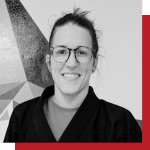 Joanie Chamberland, Owner of Rise Up BJJ, is a retired black belt competitor and the only female BJJ school owner in Georgia.
She’s been training 16 years and teaching 12 years. 
Follow Rise Up on Facebook and Instagram.
 This transcript is machine transcribed by Sonix.
TRANSCRIPT
Intro: Broadcasting live from the Business RadioX studios in Woodstock, Georgia. It’s time for Cherokee Business Radio. Now, here’s your host.
Joshua Kornitsky: Welcome back to Cherokee Business Radio. This is Joshua Kornitsky professional EOS implementer and your host today. Uh, before we get started, I’ve got a great guest here in the studio, but I want to make sure everybody knows that today’s episode is brought to you in part by our community partner program, the Business RadioX Main Street Warriors defending capitalism, promoting small business, and supporting our local community. For more information, go to Mainstreet Warriors and a special note of thanks to our title sponsor for the Cherokee chapter of Mainstreet Warriors. Diesel. David. Ink. Inc. please go check them out at David Comm. Well, as I said, I’ve got a great guest here in the studio. I’d like to introduce Joanie Chamberland, uh, owner and head instructor at the Rise Up Brazilian Jiu-Jitsu Academy. Welcome, Joanie.
Joanie Chamberland: Hey, thank you for having me here today.
Joshua Kornitsky: Uh, it’s wonderful to have you. So tell us a little bit about yourself and how you got involved in and then ultimately created the academy.
Joanie Chamberland: Yeah, absolutely. So I actually grew up doing martial arts for my whole life. I started when I was four years old, and, um, that was up in Canada before I moved here.
Joshua Kornitsky: Okay.
Joanie Chamberland: And then, um, when I got down here, actually, my parents had me start gymnastics, and I absolutely hated it.
Joshua Kornitsky: At what age did you.
Joanie Chamberland: When I moved here? When I was eight.
Joshua Kornitsky: Okay, so. So you were already four years in when you got here?
Joanie Chamberland: Yes. Correct.
Joshua Kornitsky: That’s crazy.
Joanie Chamberland: Um, and I was doing kenpo karate up there, and then I came down here, they made me do gymnastics, Monastics, and I was a tomboy. It was not my thing. I’m wearing the leotard, I hated it. Um, so then we found a taekwondo school here, and I trained there for a good bit of time, till my dad lost his job when I was in middle school, and. And then we were just working out at Gold’s Gym. And I remember I would have friends come over in high school, and my best friend and I would wrestle in the living room, like, we moved the tables and everything off to the side. And she was, uh, a very athletic soccer player. And I was a beanpole my entire life.
Joshua Kornitsky: Okay.
Joanie Chamberland: And, um, she would beat me up, to say the least. And one of my brother’s friends at the time, um, was doing, like, garage jiu jitsu, and he was like, hey, let me show you some stuff. And I was like, what is this? This is awesome. And he was like, it’s called jiu jitsu. And so it clicked to me because there was a school near where I was working out with my dad. And so I went and asked, you know, what jiu jitsu was about? And all of that. And they wanted a six day commitment. And I was like, um, I yeah, I can’t do that. So then I decided, well, let me go try Krav Maga, where I used to do taekwondo. And the guy looked at me and he was like, um, you’re too young. And I was like, it’s 16 and up. And he was like, yeah, but you’re also too small. And I was like, okay, well, I guess I’ll go train at this other gym.
Joshua Kornitsky: Isn’t that the point, though, that that size shouldn’t really enter into it? Well, it’s not the point, but a point with regards to it.
Joanie Chamberland: For jiu jitsu, yes, but not krav.
Joshua Kornitsky: Okay.
Joanie Chamberland: And and I mean, he’s not technically wrong because if you’re a certain size and your partners are a lot bigger than you and they’re kicking you, it doesn’t matter. You’re gonna get kicked across the room with the bag.
Joshua Kornitsky: Okay.
Joanie Chamberland: So, you know, I was like, okay, well, I’ll go here to do some jiu jitsu. And they’re like, well, we have a grappling program. And so I was like, okay. And so I started there in the grappling program and like within a month we had a really incredible instructor come in who was a Brazilian jiu jitsu black belt. And our grappling program became an actual jiu jitsu program. And it was just I fell in love with it. I loved jiu jitsu, so I just continued to train with him until eventually he moved out of state and they offered me the job to start teaching it.
Joshua Kornitsky: Wow.
Joanie Chamberland: Yeah. So it was it wasn’t really something. I was just like, well, I’m gonna do this for a living, right? Um, even when I had that job, I still never really planned on opening a gym. Um, I was going to school for criminal justice and plan to work for, like, human trafficking or crimes against children. And, um, I went to law school. Not I didn’t finish. I did a semester, and it was just. I did not like it.
Joshua Kornitsky: Okay.
Joanie Chamberland: And then it was just like, maybe I should open a school because then I could help people before things happen to them. And so it was like, you know, once they’re in the system and you’re helping them through the system, like, unfortunately something has happened for them to be in your care, right? So I was hoping that maybe if we start educating people younger and, you know, showing them those skills, that they would be able to defend themselves before anything happens to them.
Joshua Kornitsky: Well, and you bring up an interesting point. So. Growing up, I had a friend who was very involved in a different martial art, but he had always shared with me that that by and large it is a defensive art versus yes, it can be used offensively, but it’s meant to keep you from from being harm. And if if it is from being harmed, if it is necessary for you to harm. Most martial arts are designed to make that a very short process. Is that an accurate statement?
Joanie Chamberland: Yeah. Well, and it’s like, um, you’re right. With jiu jitsu, it is technically made for the small person to defeat a bigger person. Right? Um, which is not the case with a lot of other martial arts where you’re striking because you can only strike so hard. Right? You got to be very, very precise. If you’re not as strong as they are, like hitting the same spot. And I still have other martial arts that I’ve taken, right? I did end up doing Krav at some point. I have my level three in Krav. Wow, Um, I do Mikio Shirai and, um, did Kenpo karate. Taekwondo. So I’ve done a lot of different martial arts. Um, but I personally don’t like striking, um, in the whole Krav mentality, like you’re saying is more offensive, right? It’s. They hit you and you hit him back many times harder, faster, and try to get them off of you. Right? Whereas jiu jitsu, we don’t do any striking. I mean, there’s some striking defense depending on the gym you’re at. Um, I did choose a sports, um based approach to jiu jitsu just because I enjoy it more.
Joshua Kornitsky: Can you explain what the difference is for someone like me that doesn’t know what the difference is?
Joanie Chamberland: Yeah, absolutely. So you’re not going to come in and per se learn how to like block a punch or, you know, learn how to block a strike. Really, you’re going to be learning how to start standing and take somebody down if necessary, which most fights go to the ground. And jiu jitsu is is a ground based martial arts, right? So most everything is on the ground. You learn different techniques from judo, wrestling to do takedowns to take somebody down. But the majority of it is all based on how you control things from the ground, and how to knock over a bigger opponent and get on top, or get behind them to control their limbs. And so over that. Being able to have confidence in yourself and have confidence in being able to control an opponent that’s bigger than you are to move around their limbs, it’s going to still teach you, in a sense, how to defend. Now, is it going to be the number one thing? No, you might, but you’re still going to hit get hit in a fight no matter what. Even if you knew all that stuff, right? Um, but for me, it was just the most practical approach. I want to be training every day. So I didn’t go with an MMA route of jiu jitsu. Okay, um, my goal isn’t to create MMA fighters, it’s to create jiu jitsu practitioners that they can use everything that they’ve learned mentally and physically.
Joshua Kornitsky: And that’s actually the. So in in my other professional life, I teach leadership teams discipline and accountability. And I had the opportunity to to, as I will only say, a little glimpse not into your world, but just into martial arts in a broader sense, through a friend growing up and through another adult, one of my closest adult friends who practices another form of martial art. Uh, and I’m being vague because I don’t remember the exact name. Um, but both of them had told me. And I’d love your your perspective on this, that so much of what the physical training is, is really mental training. And it’s about building confidence and it’s about building self-discipline. And is that something that resonates with you as being correct?
Joanie Chamberland: Oh, absolutely. I tell people, you know, jiu jitsu is kind of like a parallel to life, right? Because you’re going to be constantly in situations that you are uncomfortable in you don’t you feel like you don’t know what to do? Right? In jiu jitsu and I’m huge about learning your fundamentals because it takes and it’s it’s monotonous. Right. Like I’m having a shrimp every day. I’m having to redo the same move over and over, get your drills in. Right. But that’s the discipline you’re talking about, right? In life. Like you can’t just write a sentence without knowing how to make a letter. Right? And if you guys remember tracing those letters over and over again, right. It’s like after a while you’re like, okay, I don’t need this, right? But they still keep making you do it till you’ve got it down pat. It’s the same thing. You’re learning your fundamentals. You’re drilling them over and over again so that the next time you get into a position that you’re super uncomfortable in, your body just knows how to do that thing. So it makes you use and realize too, that if you practice and you practice, once you’re in one of those positions, you realize like, oh, I can get out of this. And so that’s where that confidence comes from, right? Like you have to do the thing to gain confidence. You just don’t oh I’m confident I’m gonna go do that. Like that’s not really how it works.
Joshua Kornitsky: It’s not like The Matrix where they just plug in the drive and you know it all. Boy, wouldn’t that be nice?
Joanie Chamberland: That’d be great. But it’s definitely not so. Yeah, it causes you to have a lot of discipline. And especially when you’re talking about self-control with jiu jitsu, you have to be able to control your limbs and someone else’s limbs that are, you know, moving at you. So if you can’t control your own limbs and tell them where to go and, and a lot of it. And I don’t mean like you’re just going to be punching without telling yourself to punch, right? No, I mean, you’re going to be told to move your hand and you’re going to move your foot. And then your instructor is like, no, no, no, your hand. And then you’re going to move your other foot like, no, the foot that’s connected to your arm, that’s what you move, you know, because it’s so much body like understanding. You have to understand every part of your body and which part to move at what time, because you’re having to use your whole body all at once.
Joshua Kornitsky: And that must take a lot of fundamental drilling to, to get into regular, non-conscious thought about it, where it happens at an automatic level. Uh, and I imagine you have to continue to reinforce that otherwise things fade over time.
Joanie Chamberland: Right? And and it does come back quickly, though. I mean, that is something people fear when they’ve done jiu jitsu in the past. Or they’ll take a break like somebody who’s pregnant, let’s say, right when they have their kid, they’re like, I’m gonna forget everything, right? It doesn’t work that way. Like when you first come back, you’ll feel like you’ve forgotten it all, but it will click back in because it’s muscle memory, like it’s ingrained into your brain. How to move. Just like. Well, when we were kids and you guys were kids, right? You learn how to ride a bike, right? Like I haven’t ridden a bike in years just because it’s just not on my priority thing.
Joshua Kornitsky: So it might be wobbly when you get on it, but.
Joanie Chamberland: Yeah, but then you’re gonna be like, oh, cool, this is easy. Now. Nowadays, I know a lot of kids who don’t even know how to ride a bike, but, you know, it’s one of those things you don’t really forget. It’s like brushing your teeth, right? You could stop brushing your teeth for a month and still know the movement of brushing your teeth. You know.
Joshua Kornitsky: I hope not, but. But I follow it. Yeah. Um, so how long ago did you create the the the academy? What? What drove you to create the academy?
Joanie Chamberland: Um, honestly, I was teaching jiu jitsu in a taekwondo school for years and the overhead like, not my boss as a franchise, right? So the franchise just didn’t really push the jiu jitsu, and so there wasn’t really ever going to be an opportunity for growth of that program. Even though we kept trying to get them to push jiu jitsu, they just never did. They stuck with the martial art that they were doing. And so I had a friend who was like, hey, you know, I’m thinking about opening a school, do you want to join me? And that didn’t end up happening. I ended up opening it on my own, but it was something I was like I was interested in doing. I was already teaching jiu jitsu and I loved doing it. I love teaching and helping people. So, um, I ended up opening the gym in July of 2019.
Joshua Kornitsky: Oh wow. So you’ve been around for a while now, right? That’s fantastic. And and where is the gym located?
Joanie Chamberland: So it’s in Kennesaw right off of exit four by the Publix, um, where the harbor freight is. Everybody knows about the Harbor freight ferry.
Joshua Kornitsky: Yep. Okay.
Joanie Chamberland: Yep. Exit for Bell’s Ferry. It’s like right off the exit. So super close to Woodstock.
Joshua Kornitsky: That’s fantastic. Well, so tell us about some of the programs and things that are going on in the gym so that if people are interested, they can learn more.
Joanie Chamberland: Absolutely. So we are an academy that focuses on GHI and Nogi, which is the the guy is the uniform. So we have classes where you’re in the uniform and then we have Nogi, which is more like kind of like streetwear clothing where you can’t grab the material in order to help you with different techniques. So we have both options available. It’s pretty evenly filtered on that. And we have youth programs as well as adult programs. How young we start them at seven now. We used to have a 4 to 6 year old class. It’s just very difficult and it’s a class that you have to have the right instructor.
Joshua Kornitsky: That intention spans awful small from 4 to 7.
Joanie Chamberland: Yes, yes. And so maybe one day we’ll open it back up. But the person who was teaching it had a child and moved away. Um, and that’s just not a class I’m willing to take on.
Joshua Kornitsky: Sure. Well, and you know what? Knowing limitations is smart too. So exactly.
Joanie Chamberland: So we take them at seven and, um, all the way to whatever age, right. Anybody can take it. And, um, what we did just open up a new offer for people that are homeschooling their kids because it’s such a thing that’s happening now. There’s a.
Joshua Kornitsky: Lot of it’s everywhere.
Joanie Chamberland: Right? There’s a lot of homeschoolers. So, um, for like, a PE credit, let’s say they could take jiu jitsu. So it’s a it’s a great way to get physical activity. But also your kids will be learning a life skill, right? They’ll be learning self-control, discipline, respect.
Joshua Kornitsky: And those with no disrespect to to the styles that you’re teaching. To me, those are things that that last forever. Uh, hopefully their knowledge of jiu jitsu will as well. But understanding, discipline, understanding, um, inner strength and confidence. You teach amazing things, right?
Joanie Chamberland: And it’s honestly, it’s it’s more fulfilling for me because I get to see the the difference and the change in the kids. Um. And the adults. Right. It’s it’s so cool to see somebody do something that they never thought they’d be able to do.
Joshua Kornitsky: I, I have two daughters, and I occasionally have those moments, and it’s it makes you incredibly proud. Um, so, yeah, I have to think you get to see that over and over again as, as time goes by. Um, and with. So you’ve been in business six years, so you must have had some students that that joined you quite young, that are now adults or young adults.
Joanie Chamberland: Oh yes. I’ve got some now that are so I was teaching before opening my gym for years as well. Right. Um, I think it was eight years I was teaching before opening my gym. And so I’ve got kids that were like 6 or 7 when they started with me, you know, that are old enough to drink now.
Joshua Kornitsky: That’s crazy.
Joanie Chamberland: Yeah. And it’s like, you know, people look at me like, oh, you’re so young. It’s not like you’ve been doing this that long. I’m like, guys, I’ve been teaching jiu jitsu for since I was 16. I’m 33, so I can’t math for life. Yeah, exactly.
Joshua Kornitsky: Well, so what do you say to people that are like, well, I’m interested, but I’m afraid or it’s going to be too much money or how do you how do you help people walk through that door? Because I imagine there’s there’s a psychological barrier, right. To to just crossing that threshold. What how can you help them?
Joanie Chamberland: So one of the biggest things is most people find out about jiu jitsu through like the UFC.
Joshua Kornitsky: Okay.
Joanie Chamberland: Right. And the MMA circuit. And so they’re like really worried that it’s going to be this, like, macho sport. Sure. Um, especially if they know anything about the Gracie brothers and what they were doing back in the day. Um, fighting on the UFC and just destroying people. Um, so the main thing is that I’ve been training for a very long time, and I am a small female, and my training partners were not mainly male. You know, and they were big dudes. I, I got my black belt at a gym where my small training partners were 180 pounds, and I’m 130. So and that was the small range. And I had a few women and some of them were like 155, 160 like Crossfitters. So I was.
Joshua Kornitsky: Always fighting a lot. You were always fighting up.
Joanie Chamberland: Exactly. And so, you know, I made it to where? At my academy. Well, one of my biggest goals is to one day have a small person Jiu-Jitsu class. Um, that would be amazing for us, but we aren’t there yet. Um, but I’ve made it to where whenever people come in, right? I have trained my higher ranks that have been training longer to be the partners for the the newcomers, and so that they can help them make sure that they’re training in a safe environment and getting basically like one on one help throughout the class. So I’m teaching the moves, and when they go off to do the moves, they have, like a personal helper with them. And it’s the same thing in the kids class. I try to always partner the higher ranks with the lower ranks so that they can help each other, because two people who don’t know what they’re doing, getting together to do something that they don’t know how to do, usually doesn’t turn out well.
Joshua Kornitsky: You know, you would be amazed how often I have a version of that occur in my professional life that you would, when you come to me with a problem, come to me with an answer. Well, if I had an answer, I wouldn’t have come to you. Similar concept, right? If you put two people that don’t know what they’re doing together, you’re going to have two very confused people making a lot of assumptions, all of which are wrong and some of which may hurt them.
Joanie Chamberland: Yeah. Exactly. So and and honestly, as an instructor and I’ve gone to a lot of different schools, so I’ve tried to create a, you know, an environment of like where would I want to go. Right. And a big thing I’m trying to teach people is that, for lack of better words, you can be a bad a without hurting yourself and hurting your training partners. Right? You can have safe training and still come out hard and and beat people up when you’re going out there to compete. And so I want to make sure that that’s the same thing in all my classes. And when I go to other places I’ve been you know, I watch they have like a fundamentals class which is all white belts only like a white belt class. And and honestly, it’s terrifying as an instructor to watch that, especially when it goes to like the what we call rolling, which is the sparring version of jiu jitsu where you get to learn everything. We call it rolling because you look like you’re rolling around on the ground. Um, that’s the scariest part, is watching two white belts, especially males, because of the ego thing. And it’s always friends. Like, it’s not one of those, like, I’m gonna beat this person up. This guy’s. No, it’s it’s always.
Joshua Kornitsky: Funny, Jim.
Joanie Chamberland: Yeah. Exactly right. And so they’re just out there going at it and you’re like, oh, guys, please don’t use 100% like, right. So that was my goal is to make a class environment where we wouldn’t have that happen because I’ve had that in the past. I’ve been teaching for a long time, you know, and I’ve had that in the past where two friends come in and they hurt themselves training together, and then they’re out and they can’t come back and train for a while because, well, I got my shoulder hurt or this and I’m a working dad. And it’s like I kept telling you guys to slow down. So instead what I do is I go ahead and partner them and don’t allow them to choose their friends until they’ve got more training in. And I can see that they’re not gonna hurt themselves. That’s kind of the goal.
Joshua Kornitsky: You have to learn enough to know how not to hurt yourself, which probably takes more time than most people give it credit for.
Joanie Chamberland: Yeah, I actually have a new white belt who’s a college student, and he said to me, you know, how come you don’t train with some of the people in here? And I was like, well, I don’t like training with the white belts because they’re terrifying. And he was like, no, you’re scary. And I was like, I know how to do jiu jitsu, so I know how to not hurt you and not hurt myself. But when I go and roll with a new person, especially if they’re bigger than me, which is likely if they’re a man, um, and they’re going to use all their strength because they don’t know how to hold back. And so I have to protect me and protect them while we’re training, like it’s a lot. And honestly, it’s just not fun for me to be doing that. It’s a lot of mental thought, physical movement. So, you know, to me, the scariest people are people or the white belts, and that’s why we got to keep them the safest, right? So that’s the environment that we have going on, trying to make sure everybody understands. And in our fundamentals classes we actually don’t do any rolling okay. We do technique drills. And then there is an open mat at the end that if you want to stick around and watch people train. So you can start to see like how to play.
Joshua Kornitsky: How it develops from the fundamentals that you’re learning.
Joanie Chamberland: Exactly.
Joshua Kornitsky: That’s really cool because a lot of times it’s not until much later in any type of scenario where when you’re learning the fundamentals, you don’t understand that, you know, these may be the movements that lead to all the cool things that you think you came here to, to learn that you will learn in time. But you have to master these, and you can kind of show where they all represent in the more advanced material and maneuvers. Right? I just think that’s awesome because to me, I love understanding the context of things. So if you tell me to, you know, No. Make this movement seven times. Every time I’m there practicing. But I don’t understand what that movement will lead to. For me, the light goes on when you show me. Well, here, if you look at these more advanced students, here’s where that lead, that move leads to. And for me, that always turns a light on. So I love that idea. Um, are the classes um. When when you have your classes and obviously you must have different classes throughout the week. Um, how does it work from an engagement perspective? If you want to just try it out, is there a way you can come in and just try it out?
Joanie Chamberland: Yeah. So actually the way that it works is we do have fundamentals classes. It’s just I have high ranks in there as well. Um, honestly, they’re one of our more attended classes. Just because people understand the value of building up somebody new so that they get a higher, you know, a better person to train with. And so what we have right now is we have a two week offer where you can train for free for two weeks. Unlimited.
Joshua Kornitsky: That’s great. And that’s as many times as you want to show.
Joanie Chamberland: Up, as many times as you want to show up. You just can’t come to the advanced class if you’re not advanced, and all the other classes are open to you.
Joshua Kornitsky: That seems like something that’s a pretty good decision for on behalf of that student.
Joanie Chamberland: Right? But if you were somebody that’s maybe taking a break off like we were talking about earlier, right? That’s you know, I don’t want to come back in. I’m gonna feel silly. Like, what if I forget? Like, it’s a perfect class to come into, to come back and come into that fundamentals class because you’re going to have some high ranks with you and you’re going to have some lower ranks, and it’s just an environment where you can just come in and like get those, you know, those movements moving back through right into your brain, into your mind, and then your body will just pick it back up. Right. So it’s not just for newcomers, it’s for anybody. Right? Anybody who just wants to come in and get some training with with people who have been teaching for a long time, have also been competing. Myself and Andrew have competed a lot, have taught for many years. So anybody who wants to come out can do that. Free two weeks and it is unlimited. So like I said, any classes for those two weeks you want to come to that is an advanced unless you’re an advanced rank.
Joshua Kornitsky: That’s really an incredible offer to make out there for people. And once you get through those two weeks and you decide you’re going to stick with it, are there, um, prescribed days, so many days a week, or is it kind of up to you? How do you how does a student determine how frequently they’re there?
Joanie Chamberland: So that’s going to be up to the student. But we do have options. So like you could take two classes for three classes or unlimited classes a week. And then we have like a monthly breakdown on that. So and you can always upgrade or downgrade based on if you’re traveling or something.
Joshua Kornitsky: It’ll fit the needs of the student. That’s great because a lot of times, you know, you think about a gym membership, you sign up and you’re just stuck for whatever amount it is every month, whether you’re there or not. So to be able to customize it, I think is fantastic. So we talked about your background. We talked about your gym. We gym. We talked about really your philosophy and in helping the inexperienced not harm themselves, which I think is is notable in a lot of respects. But I want to ask one the one question when when I learned you were coming on, that I wanted to know the answer to is what are some of the assumptions people make about jiu jitsu? Pardon me? Jiu jitsu. Hard word when you’ve been talking all day. Uh, hard phrase. Um, what are some of the assumptions that that people walk in the door believing that are just not the case? Because I feel like that’s you had talked earlier about sort of that macho mindset, and I feel like that must lead to more damage than positivity. Right. So what are some of the other assumptions that people have about walking in the door about learning this style of fighting?
Joanie Chamberland: So I think there’s a lot of people who think that they’re gonna have to fight somebody that day, which is not the case. Um, if you would like to. And there’s somebody there that’s willing to work with you on it, of course. But, um, we’ve had a lot of people that think it’s going to be like a big click, right? Um, so they’re not going to fit in, um, which does happen often when you go to gyms where you don’t even get greeted when you come in and you’re kind of like waiting around. Yep.
Joshua Kornitsky: Scan the barcode.
Joanie Chamberland: Exactly. So there’s that. There’s a lot of just especially with having a female instructor, like, people don’t want to get beat up by a woman. And it’s just like, first of all, I don’t want to train with you on your first day either. Right. And I’ve got plenty of men here, if that’s what you’re looking for. Um, and I’ve had some people just think it’s not technical in which kind of is crazy to me.
Joshua Kornitsky: It’s. I would from from a complete outsider’s perspective, it’s it’s somewhere between operating heavy machinery and ballet because it seems like it’s an incredibly graceful but incredibly complex scenario. Right. It’s it’s not anybody that could look at that. Unless. Unless you simply have no other context in the world and watch popular action films and think that happens naturally. I can’t imagine how people would, but obviously they do because they walk in the door with the wrong assumption.
Joanie Chamberland: Yeah, and I think another big one is, um, I’m too old or I don’t want to get hurt is a huge one, right? I have another job. Um, and I’m gonna feel stupid. Yes you will. So did everyone who first started, including myself. It feels really silly. It’s movements that you’re completely unsure of. Um, and then you got that guy on the other side who’s like, well, I could take all of them. Jiu jitsu doesn’t work. I’ll just pull out my gun. It’s like, guys, that’s not what this is about. It’s a martial art.
Joshua Kornitsky: Right, right, right. And if you just dropped a bomb on the entire city. Problem solved.
Joanie Chamberland: Yeah, exactly. I can’t teach you self-defense for that. You’re right.
Joshua Kornitsky: Yeah. You know, an umbrella. Good luck. Best of luck to you, buddy. Um, I learned a lot today. I appreciate it. Now, is there anything else that we talked about? As I said, the the homeschool class time? Uh. And is that how do how do we learn more if we if we’re interested in, uh, the two week free trial or if I’m a homeschooler and I want to learn how to get my kids involved, what’s the best way to reach you?
Joanie Chamberland: So you can go to rise up BJ B as in boy, G as in Joy. J as in Joy stands for Brazilian jiu jitsu for short, right? Com.
Joshua Kornitsky: Okay. Yep. Um, and when we publish the interview, we’ll also publish the link to that and make sure that people know how to get in touch with you. Um, Joanie, thank you so much. I learned a lot today, and to me, that always marks a great day. Um, my guest today has been Joanie Chamberlain, the the owner and the head instructor of Rise of Brazilian Jiu jitsu. Uh, I want to remind you that she’s added homeschool class time and that the gym offers a two week free trial, which these days unlimited, which is pretty rare these days. You don’t run into that. Thank you so much for coming in.
Joanie Chamberland: Thank you for having me here.
Joshua Kornitsky: It’s my pleasure. So I want to remind everybody that today’s episode is brought to you in part by our community partner program, the Business RadioX Main Street Warriors Defending Capitalism, promoting small business, and supporting our local community. For more information, please go to Mainstreet Warriors. And a special note of thanks to our title sponsor for the Cherokee chapter of Main Street Warriors. Diesel. David. Ink. Please go check them out at diesel. David. Com. My name is Joshua Kornitsky. I’m a professional EOS implementer and your host here on Cherokee Business Radio. We look forward to seeing you next time. Thanks so much.














