
Brought to you by Diesel David and Main Street Warriors

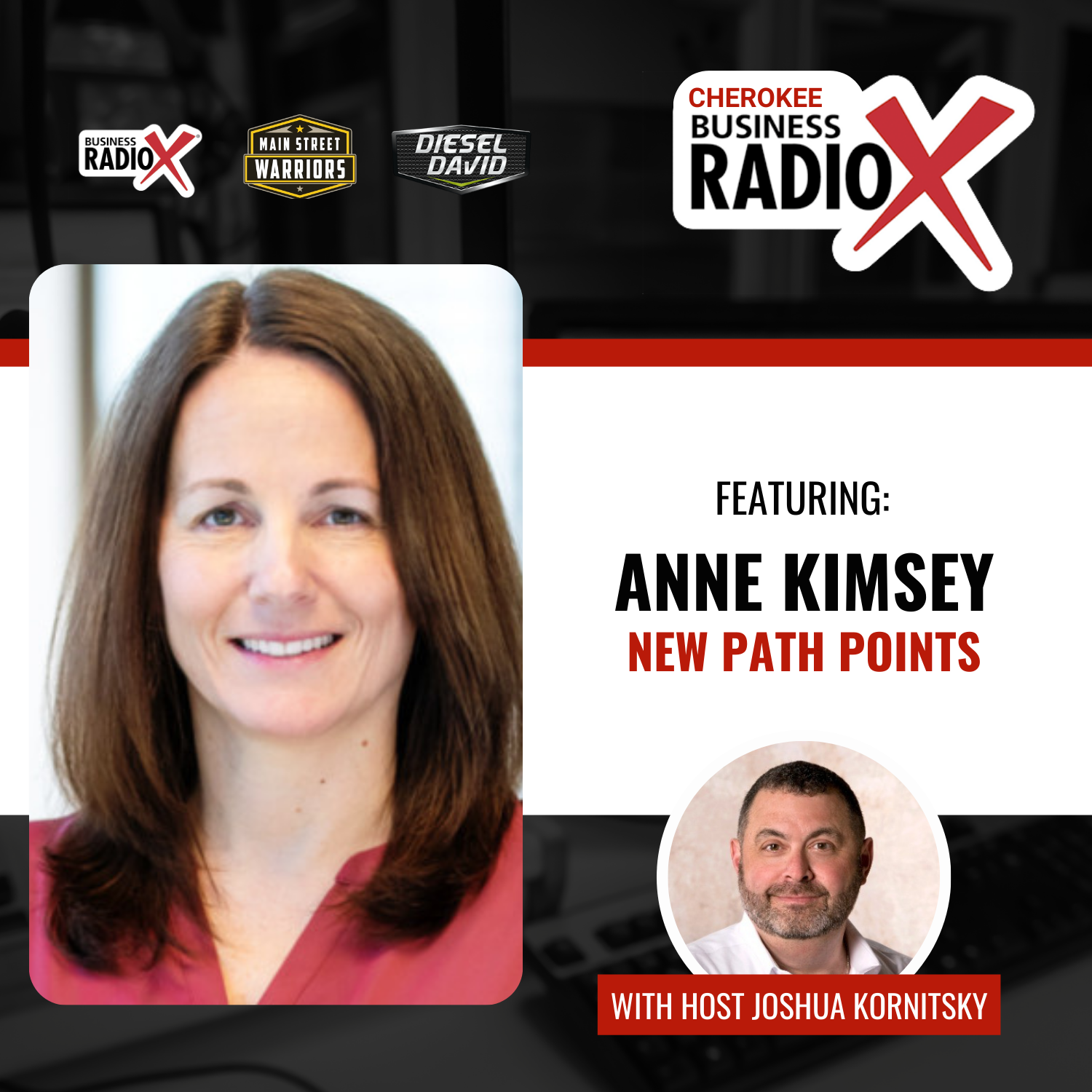
In this episode of Cherokee Business Radio, host Joshua Kornitsky sits down with Anne Kimsey, Founder and CEO of New Path Points, to explore why organizational change often fails—and what leaders can do to make it succeed. Anne shares insights from her career across finance, Six Sigma, consulting, and product management, explaining how real change happens when people—not just technology and processes—are prioritized. They discuss common pitfalls in large-scale transformations, the cost of ignoring change management, and practical strategies leaders can use to drive adoption and reduce wasted investment.

 Anne Kimsey is the founder of New Path Points, a consulting firm that helps companies navigate complex transitions, specifically system rollouts and post-M&A integrations.
Anne specializes in change management at the intersection of people, process, and technology. She’s the person organizations call when Go Live is around the corner and things aren’t ready. With a background in change and product management, Six Sigma, customer experience, and operations, Anne brings clarity, structure, and execution discipline to projects that are stuck, stalled, or spiraling.
From rescuing $2M rollouts to achieving 90% adoption in 60 days, she brings practical calm to high-stakes moments.
Connect with Anne on LinkedIn.
Episode Highlights
- People Over Process: Anne explains why even the best technology and processes fail if employees don’t adopt them, and why an “okay plan with buy-in” outperforms a perfect plan nobody uses.
- The Hidden Cost of Poor Change Management: Organizations can waste 40–60% of transformation budgets when they ignore the human side of change and focus only on technology and timelines.
- Why Change Fails (and How to Fix It): Anne outlines key red flags—leadership misalignment, unrealistic deadlines, and “we’ll figure it out” planning—that signal a change initiative is headed for trouble.
- Building Trust During Transformation: She shares real-world examples of how listening to frontline employees and acting quickly on feedback builds trust, increases engagement, and improves implementation success.
 This transcript is machine transcribed by Sonix.
TRANSCRIPT
Intro: Broadcasting live from the Business RadioX studios in Woodstock, Georgia. It’s time for Cherokee Business Radio. Now, here’s your host.
Joshua Kornitsky: Welcome back to Cherokee Business Radio. I am Joshua Kornitsky professional implementer of the entrepreneurial operating system known as EOS. And your host here today, I am excited to share with you that in this week of time between Christmas and New Year’s, I managed to secure myself a really incredible guest and I can’t wait to introduce everybody to her. But first, I want to remind everybody that today’s episode is brought to you in part by the Community Partner Program, the Business RadioX Main Street Warriors Defending capitalism, promoting small business, and supporting our local community. For more information, please go to Main Street Warriors and a special note of thanks to our title sponsor for the Cherokee chapter of Main Street Warriors Diesel David, Inc. please go check them out at diesel. David. Well, as I said, I was really, really thrilled to be able to get such an incredible guest. I am joined in studio today by Anne Kimsey. Anne is the founder and CEO of New Path Points, and what she does is she works with organizations that are navigating meaningful change, particularly where technology process and people intersect. Her work focuses really on helping leaders think through what change actually looks like once it reaches the people doing the work. And we’re going to explore how organizations prepare for change in ways that create clarity instead of disruption.
Anne Kimsey: Sounds great.
Joshua Kornitsky: Welcome, Anne. I’m so happy to have you here. Thank you for taking time out of your schedule for me today.
Anne Kimsey: Absolutely happy to be here.
Joshua Kornitsky: It’s wonderful to have you. So if you would, Let’s begin at the beginning. Tell us your origin story. Tell us how how you came to be someone who’s focused on change management.
Anne Kimsey: Absolutely. So my background is absolutely varied, which I come to find. That’s how people land in change management for the most part. So I’m not your you know, I’ve been sitting here for three decades in change management. I started off as actually a staff accountant. Okay. Then I went into finance and then I went into sales compensation. So, you know, it’s your journey always is interesting where it starts out. Right. And, um, so with that then I moved actually where I really see a lot of the change came in at is I had an opportunity through I have three kids. And so I after my third kid, I was like, hey, I’m ready for a change. Like put me somewhere else in the organization. And I got the opportunity when I was at McKesson to join Six Sigma.
Joshua Kornitsky: Oh, wow.
Anne Kimsey: And so being and I became a Six Sigma black belt and little work. Little work. Exactly. Exactly. Yeah. There was. That test was hard.
Joshua Kornitsky: I can’t even imagine.
Anne Kimsey: We, um. So there we were, as we were, you know, focused on projects. One of the things we did was change management, because you can’t just roll out, you can’t roll out these new processes and whatnot without change. So I really got into change there, but not full time. So even after that, I went on and I went did sales enablement, sales operations, customer experience. So I was focused on customer implementations, customer support. Then I actually ventured over into product management.
Joshua Kornitsky: So because you were bored?
Anne Kimsey: Because absolutely, I was like, hey, there’s a there’s a challenge, let’s go do it. And with that customer implementation and customer support and product management, there is so much change management that’s needed there because you’re trying to drive adoption.
Joshua Kornitsky: You’re you’re touching on areas that I’ve had mild experience in and some deep experience. I just one of those is a full time, uh, mindset. So I can’t imagine you must have a very holistic view.
Anne Kimsey: Exactly. And so I think that’s what helps me. So as I as I went on from product management, then I was fortunate. I got into a consulting company that I worked at for a few years, and we ended up with some cool change management gigs that I was able to get in and lead. And when I got in there, it was like, wow, I’m home. This is like what I really enjoy.
Joshua Kornitsky: That’s awesome.
Anne Kimsey: I think the reason I really enjoy it so much is because I love relationships. I thrive off of relationships. Um, it’s it’s my superpower. And so when I, when we when I go in and when I started that with change management, I was like, this is fantastic. This is what I want to do. This is where I want to be. And so that’s that’s how I landed here.
Joshua Kornitsky: It’s a great story. And as you mentioned, uh, pretty big firms that you were working with. Not not small fries. Yes. Um, how do you really describe the role that you try to fill for your clients? Because you talked about technology, you talked about relationships, you talked about people. Are you bridging those? How does that work exactly?
Anne Kimsey: So definitely bridging that gap. And so even I saw that back in the days when I was doing Six Sigma and, and all those other roles that I’ve done, I was always recognizing that there was a gap there between what the the tech team was doing versus the business side of the equation versus getting it out. I mean, ultimately, in any business, we have an end user, we have a customer that we have to get to. And it was bridging all those pieces together. And one of the things that we would talk about in Six Sigma is you could have the best plan, the best process, the best everything. But if the people do not change with it, then your plan is not good. So we would talk about we would be like, hey, I’d rather have a okay plan, right? With people adoption, I will have a much higher success rate than a super duper awesome plan and very little people adoption.
Joshua Kornitsky: In the universe that I live in. As an EOS implementer, that’s the difference between success and failure. Absolutely right. If the leadership teams all in, but nobody outside of the leadership team knows there’s been a change. Nothing actually changes.
Anne Kimsey: Exactly.
Joshua Kornitsky: We’re using new terms. We’re calling it something different. Yeah, but at the end of the day, it makes very little of the impact. And and it sounds like not just a bridge, but it sounds like there’s that you’re assisting at a strategic level.
Anne Kimsey: Absolutely.
Joshua Kornitsky: Because it’s one thing to talk about change management down on the ground. We are moving from system A to system B, but I know from my own experience and you know much better than I do, you know, back it up when when we’re changing from this ERP or CRM to to this one. When does that when should that planning start?
Anne Kimsey: Absolutely. Yeah. So I mean that that’s one of those things I will say most of the time I get brought in when they’re about to go live. We’ve gotten brought in before. We’re like, hey, we’re going live next week. We need a change management plan. We’re like, sure, you know, yeah, um, can we move that off a little bit? Sure. Or a lot of times I get brought in after it doesn’t go well. So we’ve implemented it. No one’s using it. Don’t know why. Um, I’ve been lucky a couple of times where they’ve actually brought us in early and they said, hey, we’re thinking about it, we’re doing it. We’re going to be there. It’s about a few months off that is perfect, where we can actually plan way ahead of time and talk through those strategies and talk through everything that’s needed.
Joshua Kornitsky: And is part of that planning process. When when you are in the have the opportunity to be involved Strategically before the ship is already hitting the water, so to say. Um, you know, does that involve budgetary planning as well?
Anne Kimsey: Yes, absolutely. And so from a budget perspective, I’ll say, just in general, we talk about or I talk about that folks will spend millions of dollars. I mean, if you’re a small.
Joshua Kornitsky: Yeah, you’re a small.
Anne Kimsey: Fry. Maybe, maybe not millions of dollars, but the experiences I’ve been in millions of dollars, they should take at least 10% of that. I would even say 5% of that to focus on change management, to focus on that people side.
Joshua Kornitsky: Well, and what have you seen when it even when you weren’t involved at the strategic level, what happens to those budgets?
Anne Kimsey: Oh yeah. From that perspective. Well, what do you mean from those budgets? You mean like if they don’t do it or which part?
Joshua Kornitsky: Well, so in my experience and with what I’ve seen, um, all the best laid plans without having expert consultation, there tends to be a lot of waste. And that’s what I’m really asking. Because if, if, whether it’s $50,000 being allocated for the transition or $15 million being advocated for the transition, if you don’t have a plan, isn’t waste almost built in?
Anne Kimsey: Oh, yeah. Absolutely. So yeah, I’ve talked about this before is that you’ll see you can see 4,060% of the budget wasted.
Joshua Kornitsky: How do you prevent that? That’s crazy.
Anne Kimsey: Exactly. And so that prevention is is making sure that we focus on the people side of change, that human side of change. Because like we were just talking about is you can have all the best laid plans. You can have the best tech in the world, right? And if people don’t adopt it, they don’t take it, they don’t use it. You’re gonna have waste. What’s crazy to me, though, is that that’s not that number. That 40 to 60% is not a new number. I mean, there’s 75% failures, AI, there’s 90% failures. These stats have been around for decades. If you go look, you go look in the 80s, the 90s, you see these same stats and I’m like, we are in 2025 and 2026 and here we are. We’re still talking about failure. It’s like why are we not focusing there? One of the things I’ve seen in my personal, in my personal space where I’ve been at is a lot of the change is driven by leadership and is driven by a date. We need to get.
Joshua Kornitsky: By this.
Anne Kimsey: By June 1st. No, no holds barred. Just gotta go. Don’t care. You people go make it happen. And then and then middle management is sitting there going, oh, I got to make this happen. How do I make this happen? And then it ends up just being like that, that waterfall kind of thing of like it all goes down. And that’s another area where I see a gap between leadership and, and management and the front line of getting there.
Joshua Kornitsky: So when when that happens, things go sideways.
Anne Kimsey: Yes.
Joshua Kornitsky: And, and can you share a story in your experience where, where something like that happened and you were able to make an impact.
Anne Kimsey: Absolutely. Um, well, I definitely have a few stories. So it’s like.
Joshua Kornitsky: Picking your choice of of the one that will resonate the most because, um, you know, I’m sure particularly at some of the dollar amounts you’re talking about, some of these organizations are whatever comes after massive. But just to put it in context, give us give us some idea without obviously giving away information that we can’t share.
Anne Kimsey: Exactly. Yeah. So I think there’s um, like like I said before, a few times where I’ve been in is where they’ve tried to roll it out a few times. Right.
Joshua Kornitsky: Oh, multiple false starts.
Anne Kimsey: Multiple false.
Joshua Kornitsky: Starts. Okay.
Anne Kimsey: Type of thing of where I’ve seen those things happen. And so where when I go in, I step in and I’m like, hey, what’s happening? What’s going on? Why did it why why did we have a false start? Why did we not get where we were going? What is what is going on? Um, and so do that root cause discovery. Get in there. Understand that 99% of the time it’s people. It’s people related.
Joshua Kornitsky: And so I’m only laughing because it’s true.
Anne Kimsey: You know it’s true. And so they’ll sit there and go, hey, we you know, again, SAP, Salesforce, NetSuite, HubSpot, all those kind of things. They’ll go in and they’ll say, but, but they have to use it. So they have to use the tool. So there is no change management that needs to happen because they have to adopt it. I was like, people don’t have to really do anything right. People find workarounds, they find this. So that’s what what I find is like, is change being done to me or is change being done for me?
Joshua Kornitsky: That’s a great mindset because that’s the difference.
Anne Kimsey: It is. And so that’s where I’ve gone in. And so in this case where they’ve had some false starts and missteps, whatever I go in and I’m like, hey, people feel like it’s being done to them. How can it be that they’re it’s done for them? Or they’re like, hey, we rolled this out and they’re doing this, but this process, this feature, this whatever doesn’t work for me. It doesn’t do the job. So that’s why I’m having to do a workaround. I’m not. And so people take it the wrong way and that oh, they’re just resisting. And so they created a workaround. They created a workaround because it literally does not make sense for them. So that so and again that’s where that root cause discovery goes. And then we’re going into that next piece of like hey how can we drive. How can we drive this so that folks understand it. So how can we get that alignment and buy in. So then I uncover those. Go back to senior leadership, because I mentioned earlier is that there’s a gap between senior leadership in the front line. So how do we get that buy in then next we’re driving execution. So we’re saying hey how do we take all this and align it with what they need? Talking to the tech teams, talking to the frontline teams, talking to the managers and pulling this all together that it actually makes sense.
Joshua Kornitsky: Well, in in between the lines, something that you you both didn’t say but you also said without saying is with you in in that role where you’re able to bridge that gap. Let’s be direct. Often if you are 3 or 4 tiers down in the leadership team and you are tasked with this responsibility, you’re going to say whatever needs to be said, you’re going to find an explanation as retrospectively as as to why something was wrong that you signed off on as right. You sort of eliminate all of that buffer because you’re not trying to see why your a, you are being transparent because this is what it takes to get it done. Absolutely. And I know that that sounds silly, but we’ve both seen that where somewhere in the management stack somebody is the roadblock because either they don’t get it and they’re embarrassed, or they do get it and they’re threatened and self-preservation, it’s that fight or flight that that comes in where they’re like, well, gosh, if if I tell leadership, I don’t get it. Now, six months in after I’ve signed 11 things saying yes, you know, having you in that mix takes that worry out of it because you’re not trying to make yourself look good. You’re trying to get the job accomplished.
Anne Kimsey: It’s amazing what people will open up when when I walk in the door, or me and my team walk in the door, that they’ll actually tell us a lot of stuff. And when we go share it back with leadership, they’re like.
Joshua Kornitsky: No one told us. Absolutely, I, I was invisible for 15 years of my career when I was early stage in technology, where I was under desks fixing things in it, and it turns out it is invisible. So people say and do things in front of you, and you hear and observe, and you have the intelligence of when you open your mouth and you don’t. But it’s incredible what people will share when you just ask them.
Anne Kimsey: Exactly. When you ask them and you’re.
Joshua Kornitsky: And they’re not threatened.
Anne Kimsey: And they’re not threatened. That’s what I was about to say. When you have that very human element I am here, I am here to help.
Joshua Kornitsky: And coming from the outside, it has to let them breathe a little bit. Because you’re not the division manager, you’re not the regional VP. You’re just here to get this done.
Anne Kimsey: Yeah. And they want to be valued and heard. And so a piece to that of what you just said was good, because that goes into another piece that we found in another engagement that I was in. It was.
Joshua Kornitsky: Please.
Anne Kimsey: We, we walked in and you know, again, it was like, hey, we’re trying to we’re trying actually it was an acquisition.
Joshua Kornitsky: Okay.
Anne Kimsey: And so it was for a plant. And they were moving them from a old ERP paper, pencil kind of thing to SAP. And it was one of those.
Joshua Kornitsky: That’s a massive shift.
Anne Kimsey: Massive. And they were like, they just have to do it. I was like, whoa, whoa, hold up a second. And so, you know, as a leader was like, we don’t need no change management. And we got brought in by other folks. That said, I think you do need it. But anyway, so we get there and we’re talking to everybody and they’re like, you know, we’ve been through this three times already. We’re like, I’m sorry. What? We’ve been through it three times. What do you mean you’ve been through it three times already. They’re like, oh, we’ve been acquired three times. Oh shoot, this is this or this is our third time. And we were also trying to move to SAP before and we’re like, no one told us this brand new information. We’re like, wow, there’s a lot in there for these folks so that they’ve gone through it.
Joshua Kornitsky: Right.
Anne Kimsey: And a lot of these folks have worked at this plant since it started for I think it was like 25 years. And so there’s, you know, they were connected to it because they were like, hey.
Joshua Kornitsky: They’re personally invested.
Anne Kimsey: Personally.
Joshua Kornitsky: I opened the doors.
Anne Kimsey: So we got in there and we started hearing all kinds of stuff, like we talked to everybody and how upset they were and how they felt like it was just getting jammed down their throat. And no one was listening. No one was hearing them and everything. So we were like, okay, but so that’s the one piece of, hey, let me listen to you. But we got to act on it. So that’s a piece too, is you got to look at all what you heard and say. What can we act on quickly to make a difference? So these folks that spent an hour or two hours, whatever it is of their time, right with you to tell you all these things, all these things that they were probably maybe like, oh, I hope there’s no repercussions for can we act on it? And we did. We went back to leadership and we said, here, look at all these different things that they’re saying that there’s they’re little things like, let’s have a town hall, let’s address these issues. Let’s do some nice things for for you guys. That right there, we did that like one week after we had all those stakeholder meetings.
Joshua Kornitsky: Sure.
Anne Kimsey: Huge difference. Because then what that did is they went hey wow. They made a change.
Joshua Kornitsky: They see the buy in from leadership or ownership or management reflecting their concerns.
Anne Kimsey: Exactly. And then what that did is it made them open up to us even more. Right. So then when we went in to do process mapping to talk about the system changes, to talk about their jobs, to talk about what they were doing, they opened up even more. Oh, you need to know this, and you need to know that. And let me tell you about Joe Bob over there. And let me tell you about Sally over here. And let me tell you about all these things. We were able to find out so much information because we created so much trust with just in a week or two of being on site.
Joshua Kornitsky: It’s amazing. And it’s one of the core values I live by, of just simply doing what you say, right? That that you collect that feedback and you actually act on it shows a level of credibility because, you know, the the suggestion box, like you would see in an old editorial cartoon, usually drops down to a trash can, because while we want your feedback, we don’t really care. And I’m not saying that’s a universal, but it is a trope that exists for a reason. Um, because people typically aren’t as open and I see this daily aren’t as open to constructive feedback as they are to positive feedback.
Anne Kimsey: Exactly.
Joshua Kornitsky: Um, and I, I have a next step question that I want to ask, but I have to ask this because of the organizational state of my own brain.
Anne Kimsey: Mhm.
Joshua Kornitsky: In an ideal engagement, would those interviews and those stakeholder meetings happen prior to implementation.
Anne Kimsey: Oh gosh.
Joshua Kornitsky: Yes. Okay. I had to ask because because that’s the difference that, that uh, I find myself saying this a lot these days, that when you don’t know what you don’t know that right? There is an enormous differentiator in how success will will arrive or if success will arrive, if you take the time to talk to the people being impacted ahead of time.
Anne Kimsey: Mhm.
Joshua Kornitsky: Imagine having a heads up.
Anne Kimsey: Yeah. And we had a project. It’s not a long story. No, please. Well, we were in the company, and we were actually doing 4 or 5 projects where we’re. Four of them were after the fact. One of them was like way before the fact. It’s like we’re thinking about this, right? And when we told the team, we’re like, hey, we need to get out to those impacted and talk to them about this or like, but we don’t have a full fledged plan yet. We’re like, exactly right. This is perfect. We get out there and we build the plan with them and they’ll feel so much more, you know, collaborated with and involved and invested. We had a lot of pushback on that, but we were able to push through it and get and them go, okay, fine, fine. We’ll talk to these folks. We did. And the buy in we got was huge. That’s don’t get me wrong, we had a ton of issues because they were like, what are y’all thinking? Why are you doing this? Holy cow. This is going to be huge. This is going to be horrible. This is the worst idea ever. I mean, that’s where we started with, right? But we’re like, well, let’s work with you. How can we make it a better idea? How can we go from worse to better? Not not great. But how can.
Joshua Kornitsky: Right? Well, then I’m all about the incremental step. Because if you’re not familiar with. I will get you a copy of the book The Gap and the gain. Aha. It’s it’s about those baby steps. That’s that’s how you cross the whole planet.
Anne Kimsey: Exactly.
Joshua Kornitsky: Um, so this begs me to ask this question of of what are some of the red flags? How do you know when something is, uh, you know, you’ve got red yellow or red yellow green. Right. And when we transition from green to yellow, it’s most people are speeding up. But when we get to red, you know, when, when things are flashing and blinking and you’re smelling smoke, what are some of the things people can look for ahead of time to say, hey, pump the brakes for a minute.
Anne Kimsey: Absolutely. So I want to like the first thing that came to my mind was like, when it’s focused on a date, only a date, but sometimes you can’t get past that. I mean, and I think that’s I think one of the things, as I would say, and I’ll get into the other things that I see as red flags is don’t try to push too, too much back on the date, unless you have real concrete reason that you can go to senior leadership with why to move the date. Otherwise than that, figure it out, right? Figure out how you’re going to get to that date. But with that, one of the big, big things I see is, um, leadership is the leadership piece. They look aligned in meetings. So we do these fancy presentations, and we get there and we talk and we go to the meetings and we have all this good conversation, and then we all leave. And within a few days or a week, we start seeing action that wasn’t really reflective of what we talked about in the meeting. Right. And we’re like, oh, whoa, wait a minute. What happened? Because this leader went this way, this leader went this way. And those teams and then how it went down to those teams went differently. Sure. So it’s like we’re we seem aligned here, but we’re really not aligned. You got to bring that back. You gotta bring that back.
Joshua Kornitsky: Same page, same language. Gotta be.
Anne Kimsey: Exactly. And then, um, obviously when teams say they’re too busy. That’s another big, big red flag. And then what I’ve seen too is when I walk in, they’re like, these teams are so busy, you really can’t take much of their time. That’s a red flag for me as a change manager going in to go, okay, you want me to come help you? But I can’t spend time with the team.
Joshua Kornitsky: But we’re so busy, we can’t have help.
Anne Kimsey: Exactly.
Joshua Kornitsky: This is. This is the most common defense I have when I tell people I’m an EOS implementer. Oh, man, we’d love to do is we just don’t have the time, like, oh, when do you think that’s going to improve? Yeah. When your business turns down.
Anne Kimsey: Yeah. And so that’s where it’s like getting in and start, you know, helping them and seeing it. But um, the other thing is this is this is actually near and dear to my heart because it’s most recent is the plans phase. And it’s like, we’ll figure it out.
Joshua Kornitsky: Oh, sure. Seat of the pants.
Anne Kimsey: Oh, my. Let’s let’s not figure it out. Let’s not do that because it’s like, hey, we’re going to roll it out to 200 people, a hundred different sites. It’s fine. We will. It’ll happen. These guys are used to doing this stuff all the time. I know, but this is different. This isn’t, like, the same as that other thing. So let’s just. How about we not figure it out? But a thing I want to talk about in that situation is the let’s figure it out. Because I had a I’ve or I’ve had, but I’ve had a situation recently where I pushed and I pushed and I said, no, you can’t just figure it out. No, we need a plan. We got to think about this. And they looked at me and they said, and you’re just you’re thinking about this too much. It’s really not going to be that hard. And I said, okay, you know what? I’m just doing harm here. And I don’t want them just to like, give me the straight arm and say, go away. So I said, okay, fine. Can we at least do this? Can we do this level at least have a plan at this level.
Joshua Kornitsky: Right.
Anne Kimsey: And be able to get it out there and go from there. They’re like, yes, that’s okay. Luckily it was a migrated implementation. So they were going to do, you know, like a few sites one month if he writes another month. And I said, let’s see how it goes the first month.
Joshua Kornitsky: And how did it go? The first month.
Anne Kimsey: A lot of issues.
Joshua Kornitsky: But we were going to just figure that out. And that doesn’t equate to any money loss does it?
Anne Kimsey: So I was like, okay, let’s do that. And then after, you know, it came through, I was like, oh, can we actually talk about a more detailed plan for the next months? And they were like, yeah, that’s probably a good idea. Yeah.
Joshua Kornitsky: I’m at a different time in my life when when technology was the core of everything that I did. Uh, I will simply say that computer downtime has actual tangible cost. And whether it’s a small business and it’s a point of sale system, or in the case that I was working at a fortune 500 company and we knocked, uh, with a loss of power, we had knocked a quarter of the country out. You know, that was roughly a half million dollars an hour, and that’s not easily Recoverable, and it does an awful lot of damage to your customers because while they are empathetic. Oh, there’s a storm. Oh, there’s an outage. They still want their thing.
Anne Kimsey: Exactly.
Joshua Kornitsky: You know, whatever it is they were waiting on, they they still have the expectation that that’s not their problem. That’s your problem.
Anne Kimsey: Exactly.
Joshua Kornitsky: And and I think that that that that leads me to, to want to talk about the idea of, of, well, I guess who who reaches out to you because anybody that’s hearing this, anybody that we share this with, um, and I say this with full respect to every level in, in the organization, there are plenty of people who have no authority that understand what you’re sharing. Um, and there are people with Ivy League degrees who believe they will figure it out. So who typically reaches out to you?
Anne Kimsey: So who typically reaches out to me versus who should reach out to me? Right.
Joshua Kornitsky: Okay. I’ll let you interpret that.
Anne Kimsey: So who should reach out to me? I would love if if the if the technology people would reach out. Right. Your CTO, your VP of it, that type of stuff. Because they’re the ones in the case of implementations. Right? They’re the ones that are leading that charge. They’re the ones that are over it. However, tech people don’t necessarily. And there are some out there get me wrong, I’ve got some good a good allies, but there are many of them are like, no, we don’t need change management. We’re just rolling out a system, right? So who typically ends up reaching out is more of my ops folks. So my.
Joshua Kornitsky: The impact we’re we’re we’re the thud lands.
Anne Kimsey: The transformation leader. Those kind of those kind of folks are the ones that actually reach out. And again, it’s either they see it coming or it’s happened and they’re like, we need to we need to right the train kind of thing and and get that on track. Um, so but definitely I mean, I want people to reach out, like you mentioned earlier before, you actually do orientation or and definitely a week not not a, not a week before, but months before that’s going to happen. Like let’s talk and have some to your point strategy discussion. Because this is this is not just pure execution. There’s strategy here that we need to think about of how we’re going to do this.
Joshua Kornitsky: I had the opportunity to be involved earlier in my career in the construction of of four new buildings for an organization that had multiple. And when I tell you that the architects and the planners were involved before a shovel went in the dirt by about two years and and because when you’re building several hundred square feet, 100,000ft² of a facility, you know, you can’t just figure it out. The roof has to be level, the walls have to be the same height. And that’s what it draws in my mind. A comparison to you’re an architect in in a lot of ways, and helping people understand the impact earlier will make an enormous impact on the outcome.
Anne Kimsey: It will. It will.
Joshua Kornitsky: For sure. So something you mentioned earlier that I wanted to swing back around on, and in the example you gave, you were talking about, oh, this is the the third or fourth time we’ve done this right. People get tired of it.
Anne Kimsey: They do.
Joshua Kornitsky: And I don’t know what you call that. I just call that tired. Yes. And and even in the world of of what I do, you know everyone. Oh, it’s the leadership flavor of the month. You know, um, what you’re doing is stuff that’s that impacts in a very, very different way. But don’t people get that change fatigue?
Anne Kimsey: Yeah. That’s what I was going to say.
Joshua Kornitsky: And well you had told it to me earlier, so, uh, so, so how do you deal with that.
Anne Kimsey: So with that change fatigue, we, you know, and part of it is, is like, is it? I mean, it can be changed fatigue, but it’s also like, to your point, the flavor of the month. We’ve done this three times before. This is spelled. Why is it going to work this time? Um, I think one of the things is, is actually recognizing the company you’re going into. So I’ve had where I’ve walked in and I’ve walked into companies, like I mentioned, where they’ve been there 20 years. Right. They’ve seen it. They felt it, they’ve done it. They’ve seen the failures they go through. You have to manage that type of change. Fatigue one way versus I go into a company and the average ten years is 3 to 5 years, right. So that they they still feel it because they’re like, oh.
Joshua Kornitsky: But it’s a different thing.
Anne Kimsey: It’s a different thing because their their change fatigue is like I’ve been at other companies where they’ve tried to do it. I don’t know if you’re going to be successful here, whereas the first one, they’ve been there for 20 years, they’re like, I’ve seen this. I’ve seen it happen. Like, how are you going to do it differently? So you really have to recognize the environment you’re going into, the tenure of the employees you’re going into. Have they been successful doing what they’re doing? Because I’ve walked into that too. Like we’re making money hand over foot. Why are you even coming in? Like, what we’re doing is working. Why would you change that? That’s one thing versus going into, wow, we need some change, but I don’t know how you’re going to make it happen.
Joshua Kornitsky: Well, in visionary, leadership requires somebody to be looking two years down the road that says, hey, you know, our systems are great now, but if we hit our goal of X million, you know, this CRM, this ERP won’t do it. And to scale ahead of time because even in my own experience, scaling after the fact, you’re trying to build the airplane while you’re flying and it’s and when you can you don’t want to be in that position. Yeah.
Anne Kimsey: But going back to what you were saying is like, how do you do it? I think there’s there’s two angles to it. Okay. One angle is, is you got to be transparent. You got to be authentic. You got to be like, you’re right. This is why these things didn’t go well. And as a as a change management person walking in, I need to do my due diligence and finding out why they didn’t work, because I need to be able to address that with the folks of. It didn’t work because of these reasons. And we’re not going to repeat those same mistakes, right? That’s one piece. And to talk.
Joshua Kornitsky: That’s huge.
Anne Kimsey: You know how we’re going to do things differently. What that plan is going to look like. The other piece that and I say this to people all the time, I was like, it’s it, it probably isn’t going to go great. So don’t just assume that we’re here. We are gonna have problems, right? It’s how we respond to those problems that’s important. And a story that I tell folks is a few years and Fortnite. Fortnite is the game, right? My kids, I have boys and big gamers, and I guess it was probably a few years ago at this point where they were really big into playing Fortnite, but I it went down often because I would walk in and I’d be like, what’s going on? Oh, the game’s down. I was like, and that product management person that I have in my heart, I was like, wow, that’s that’s really bad.
Joshua Kornitsky: World’s most popular game can’t stay running.
Anne Kimsey: And he and my kid was like, oh no, it’s not a big deal. I was like, it’s not a big deal. The game went down. He’s like, oh, they’ll have it back up five minutes, ten minutes, 30 minutes. At the most. They were like, yeah, it goes down, but it comes back up. And I was like, I like how that hit me was a wow. They created this following this loyalty, this this trust, this credibility that, hey, we’re going to have glitches, we’re going to have issues, but we’re going to respond to it and we’re going to get it working again.
Joshua Kornitsky: Clear expectations.
Anne Kimsey: That’s what I tell the people when I go in, especially as I’m like, hey, I get it. Guess what? When we go live on this new technology, we’re going to have issues, right? We’re going to have performance issues, something we’re going to miss, something we’re going to forget about something, something something’s going to happen. And that’s okay. It’s how we respond to it that’s important. I said, so don’t think this is going to be all great. And unicorns and rainbows. We’re going to have problems, but we’re going to make it better.
Joshua Kornitsky: And even if it’s something that you or the organization has done a dozen times before, write a migration across the country three a month that doesn’t take into account an AWS failure or a Google Cloud failure, or CrowdStrike issue where or Cloudflare where these. Now this infrastructure exists that is invisible to everybody except technology. And you know, when AWS goes down, we learn just how many eggs are in the basket, even though it’s just one region. Yeah. Um, and those are things that, that you can have a contingency for. But, you know, you can also have a contingency where you wear belt, suspenders and a and a strap. At a certain point, you can’t plan for everything. And, and accepting and acknowledging on the front end that transparency you mentioned of saying, hey, there’s going to be glitches, there’s going to be Gonna be problems. That’s what we’ll figure out. Not the plan. The plan isn’t to be figured out. It’s the workaround. When. When the nightmare shows up on the doorstep.
Anne Kimsey: I’m a risk mitigation person. I’m a I’m a plan a b c I.
Joshua Kornitsky: I worked with with a guy a long time ago who used to say it’s the difference between risk and risky. Yeah, there’s risk behavior. There’s risky behavior. Risky behavior is not something we want to get involved with.
Anne Kimsey: Exactly, I love it.
Joshua Kornitsky: Um, so what’s next? We’re we’re. Where do we go from here as far as, uh, new path points. What are you hoping to to, um, make available? How are you going to educate or teach or train? How what do you have going on?
Anne Kimsey: Yeah. So from that perspective, um, like I’ve mentioned, I have worked with a lot of very large, um, large clients. Right? Big SAP migrations, Salesforce migrations. I really love working with, like, the middle ground folks, you know, people that have 50 to 500 employees.
Joshua Kornitsky: Because I know that space.
Anne Kimsey: I look at that and say, like when I’ve been at the the mckesson’s of the world and, you know, looking at my past, I would always be like, wow, if I could get with some smaller companies and really help them, like at the ground up, so that they can avoid all these mistakes that I see at a large company, that would be fantastic. So that 50 to 500 person kind of company is where I would love to be, because I love working at that level and helping them meet their strategic goals and get their, um, to do that. Things I like to do is workshops. Okay. So, you know, so as leadership is looking at that, they’re like, hey, we’ve got a lot to change company coming. We need to either implement something, we roll out something, think about something. And it doesn’t have to be just systems. It can be processes too, right? We’ve done things just on just processes rolling out and looking at that. So that would be a place of doing workshops, going in with the leadership team or, you know, with a contact.
Joshua Kornitsky: So. So if an organization’s interested and we’ll share all of your contact info, um, they can reach out to you and you can come in and I’m going to use a word that may make you cringe, but even generically to discuss either change management or process planning or mapping so that you’re able to help them at a very high level to understand it. And then if they’re interested, I’m sure you can work more detailed delivery.
Anne Kimsey: We can do that. The other thing is like that diagnostic kind of going into their scoping that on understanding those diagnostics to say, I, I want to everybody likes to charge for everything like every hour of time. I’m kind of the person of like, I really want to come in and help you. And I really want to understand is like, is it a right relationship between the two of us? So if it means spending lots of hours together to figure it out, I am okay with doing that because I want to make sure it’s a right fit for both of us. And if it makes sense.
Joshua Kornitsky: Well, and it certainly sounds like you’re going to tailor whatever you’re going to do to what their needs are, not a one size fits all. But but the other piece that because you’re talking about a size wise this this 50 to 500 a group that I spend a lot of time with, um, I want to remind anybody here in this that that we that there was old but established understanding that an shared of 40 to 60% of the transformational budgets get wasted. If a portion of that went into preplanning the transition, you would still come out ahead based on the average loss for the transition. And I want to share that ahead of time, because I, I wouldn’t ask you what you charge because it’s going to be deeply, deeply differing depending on the organization. But if you’re wondering how anyone hearing this is wondering how they would pay for it, it’s built in, right, that the the savings alone is going to more than cover whatever the cost is, and they’re still going to come out ahead in all likelihood.
Anne Kimsey: Yeah.
Joshua Kornitsky: Um, I can’t think of a reason that it wouldn’t make sense, other than. We’ll figure it out.
Anne Kimsey: Exactly.
Joshua Kornitsky: And and if that’s your mindset, you know, the the reality is, as a business owner, that will work for you to a point. The question is, is can you afford for it not to work for you when it’s the most critical processes or systems in your business?
Anne Kimsey: Exactly. Yeah. Let’s avoid those migraine headaches.
Joshua Kornitsky: Right. And and and would you rather be right or would you rather have the transition work?
Anne Kimsey: Exactly. So I appreciate that.
Joshua Kornitsky: Um, what’s the best way for people to get in touch with you? As I said, we’ll publish all your links, but a website, phone, mail, phone or email that you share.
Anne Kimsey: Yeah. So email is an at newpath. Com obviously you can find me on LinkedIn. So Anne Kimsey out there and message me there. Um, are the best ways to get in touch with me.
Joshua Kornitsky: And it certainly sounds like you’re willing to chat with folks to, to help them better understand their needs.
Anne Kimsey: I love it. I think gets me more excited.
Joshua Kornitsky: I can’t tell you how much I enjoyed this, because I can see a place with some of the folks I work with, uh, that that perhaps they can get on board with you early. Yeah. Uh, and, and I also can, can say that to any businesses that are listening to this, that the phone call is not going to hurt you. Um, really, all you’re going to do is gain. Yeah. So at the very least, you’re going to gain knowledge, because I can tell you, I wrote three things down I’m going to ask him about.
Anne Kimsey: So thank.
Joshua Kornitsky: You. Um, thank you again for joining us. My guest today is Ann Kinsey. Kinsey. Pardon me. I got a screw up at least one name a week. And Kimsey, founder and CEO of Newpath points and works with organizations navigating meaningful change, particularly where technology process and people intersect. Her work focuses on helping leaders think through what change actually looks like once it reaches the people doing the work. It’s been really interesting, really insightful. I appreciate your time today.
Anne Kimsey: Thank you so much. Thanks for.
Joshua Kornitsky: Having me. My pleasure. And I do want to remind everybody that today’s episode is brought to you in part by the Community Partner Program, the Business RadioX Main Street Warriors Defending capitalism, promoting small business, and supporting our local community. For more information, please go to Mainstreet Warriors. And a special note of thanks to our title sponsor for the Cherokee chapter of Main Street Warriors. Diesel. David. Ink. Please go check them out at diesel. David. Comm. Well, we’ve reached the end of another wonderful episode. My name is Joshua Kornitsky. I am your host. As well as being a professional implementer of the iOS operating system, and it’s been a joy to have you. We look forward to seeing you next time.














