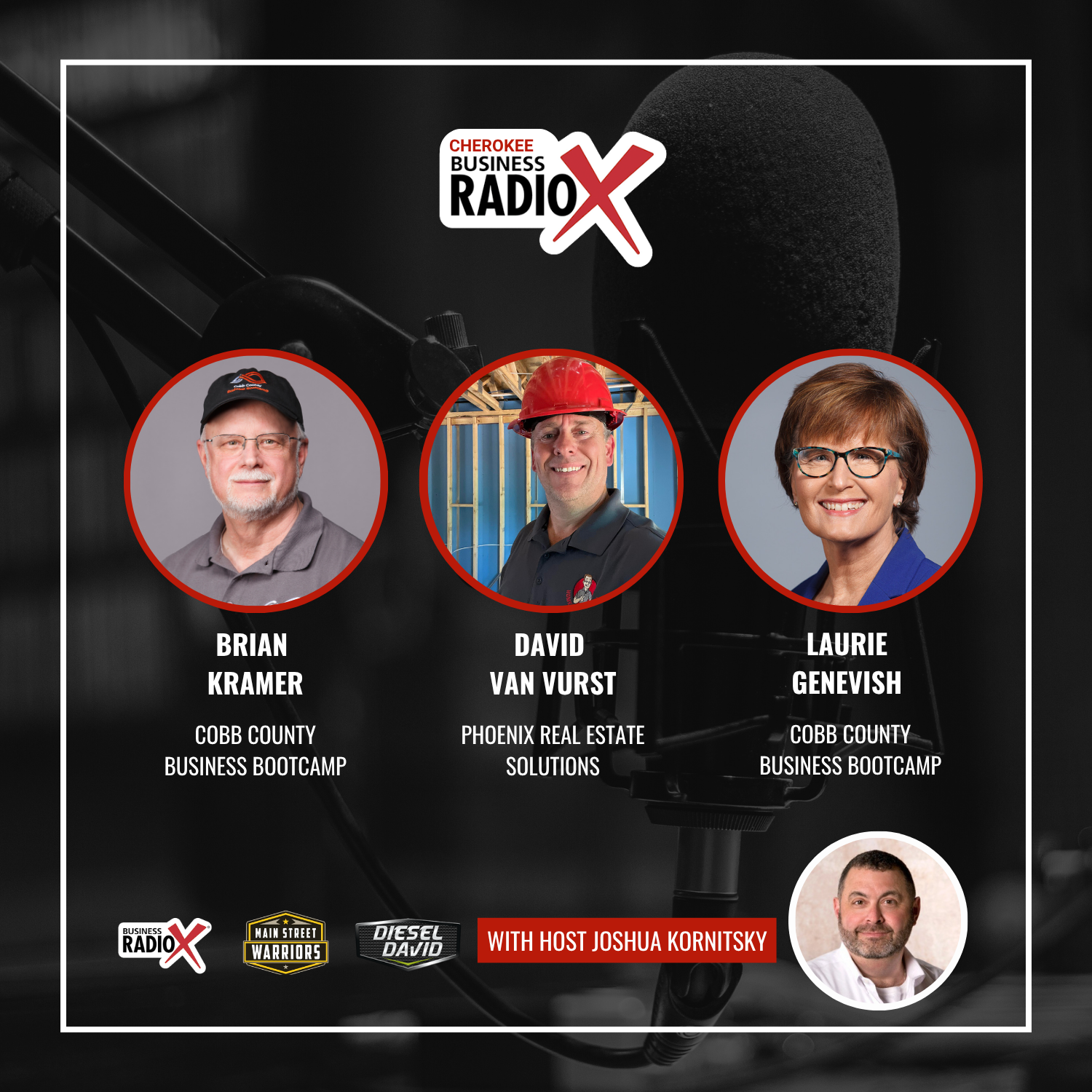

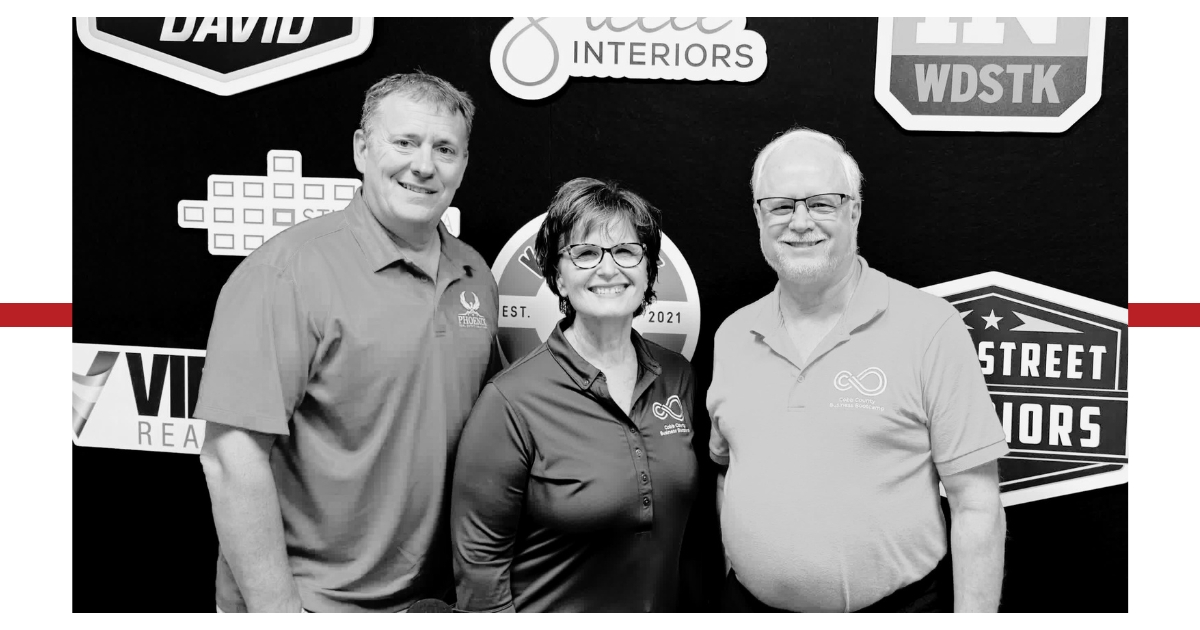
In this episode of Cherokee Business Radio, Joshua Kornitsky speaks with Brian Kramer and Laurie Genevish of the Cobb County Business Bootcamp about their program supporting local entrepreneurs through practical education, coaching, and community. They discuss overcoming common business challenges, building sustainable ventures, and new tools like the Hive Deck. Later, David Van Vurst of Phoenix Real Estate Solutions shares insights on real estate investing, the importance of financial analysis, and lessons learned from his entrepreneurial journey, offering valuable advice for both business owners and homebuyers.
Brought to you by Diesel David and Main Street Warriors

 Brian Kramer is a seasoned business leader and entrepreneur with a passion for supporting small business owners in Cobb County.
Over his 30-year career at IBM, he led global training initiatives in 25 countries, gaining deep expertise in business strategy, project management, and process innovation.
In 2004, he served as lead consultant for the Workforce Development component of Governor Sonny Perdue’s Commission for a New Georgia, reflecting his commitment to workforce and community development.
In 2008, Brian co-founded Roam, one of metro Atlanta’s earliest co-working spaces, helping shape the region’s entrepreneurial ecosystem. This transition from corporate to small business advocate allowed him to focus on helping entrepreneurs with strategic planning, team alignment, and talent development.
Brian’s community involvement includes serving as president of the East Cobb Business Association and the East Cobb Prosperity Partners chapter of BNI. He’s also been active in Men’s Ministries at Mt. Bethel United Methodist Church for two decades and volunteered with MUST Ministries. 
Today, as president of the Cobb County Business Bootcamp, Brian continues to mentor and empower local business owners—offering training, consulting, and support to help them grow sustainable, community-minded businesses.
He is married with two adult children and two grandchildren, and remains a trusted leader in both business and civic life across Cobb County.
 Laurie Genevish has over 20 years of training management and performance improvement experience, and experiences consistent internal growth to continue to bring the latest power drivers to her clients.
She creates learning environments by providing a holistic approach that determines skill gaps, comprehensive instructional objectives and analysis and selection of the best delivery modality for individual and/or company development.
Laurie has worked with renowned companies such as Penske, Freshii, Marlin Leasing, The Home Depot, Chick-fil-A, Bank of America, and HeatTek.
At the CCBB, Laurie is leading the development of the curriculum for our programs and managing our experts who will be facilitating the courses.
Follow Cobb Country Business Bootcamp on LinkedIn and Facebook.

 As a Certified Commercial and Residential inspector with several years of experience in the industry David Van Vurst has a thorough understanding of building construction and a keen eye for identifying potential issues.
He is committed to providing his clients with detailed and accurate inspection reports, along with clear explanations of any issues found.
Being dedicated to educating clients on the proper maintenance and care of their properties, David’s goal is to give clients the information they need to make informed decisions about the property they are considering purchasing or owning.
Connect with David on LinkedIn an Facebook.
Episode Highlights
- Overview of the Cobb County Business Bootcamp and its mission to support small business owners and entrepreneurs.
- Discussion of common challenges faced by entrepreneurs, including feelings of isolation and lack of knowledge.
- The bootcamp’s approach to education, including personalized coaching, online courses, and hands-on assistance.
- Importance of community support and constructive feedback in the entrepreneurial journey.
- Tailored guidance for various aspects of business development, such as financial management, marketing, and operations.
- Introduction of innovative tools like the Hive Deck for collaborative business idea development.
- Emphasis on the significance of understanding financials and market analysis in real estate investments.
- Insights on the importance of building sustainable businesses that can operate independently of the owner.
- Success stories and measurable outcomes from bootcamp participants, including personal and professional growth.
- Upcoming initiatives and partnerships aimed at enhancing business opportunities within the community.
 This transcript is machine transcribed by Sonix.
TRANSCRIPT
Intro: Broadcasting live from the Business RadioX studios in Woodstock, Georgia. It’s time for Cherokee Business Radio. Now, here’s your host. Broadcasting live from the Business RadioX Studios in Woodstock, Georgia. It’s time for Cherokee Business Radio. Now, here’s your host.
Joshua Kornitsky: Welcome back to Cherokee Business Radio. This is Joshua Kornitsky professional iOS implementer and your host. Today’s episode is brought to you in part by our Community Partner program, the Business RadioX Main Street Warriors Defending Capitalism, promoting small business, and supporting our local community. For more information, go to Main Street Warriors and a special note of thanks to our title sponsor for the Cherokee chapter of Main Street Warriors Diesel David Incorporated. Please go check them out at diesel.com. Well, welcome back and thank you for joining us today. I’ve got some great guests in studio. I’d like to first introduce Brian Kramer, co-founder and president, as well as Laurie Genevish, co-founder and director of development and delivery of the Cobb County Business Bootcamp. Welcome.
Brian Kramer: Thank you.
Laurie Genevish: Thank you.
Joshua Kornitsky: I apparently I’m continuing my tradition of clarifying name pronunciation and still getting it wrong. Laurie, would you please tell me how to correctly pronounce your last name so I can fix it then when we’re done.
Laurie Genevish: Genevish.
Joshua Kornitsky: Genevish. Okay. Well, welcome.
Laurie Genevish: Thank you.
Joshua Kornitsky: Thank you both for being here today and for being patient. And look, as they say, the only way to improve is to make mistakes. And I am doing a great job of improving.
Laurie Genevish: Oh, yeah. Awesome.
Joshua Kornitsky: Thank you both. Um, let’s begin at the beginning. Can can you help me understand what is the the Cobb County business boot camp and kind of how did it come into being?
Brian Kramer: So, uh, it’s really a culmination of a lot of experiences I’ve had in my life, uh, through IBM and through, oh, and through consulting with small businesses. One day I just received an email from Cobb County saying we’re looking for ideas and workforce development. And I had a team of people that I’d been working with on and off for several years. I said, hey guys, let’s come together and write an idea. You know, let’s craft. What would it take to help in the workforce development space? Small businesses throughout Cobb County be more successful. So we pulled together a program that supports our mission, which is, you know, we help small business owners on a life changing journey to create sustainable businesses that support their community and just as importantly, bring hope with valid optimism to their families. You know, it’s not just blowing smoke. It’s like, here’s how we do it. Stop running your face into the same fist over and over again. Yeah, this is what works.
Joshua Kornitsky: And I imagine that’s a challenge that all I know, it’s a challenge all entrepreneurs face, but. But as having walked the path myself as a new entrepreneur, many times it’s you don’t know what you don’t know I guess.
Brian Kramer: Yeah. And we want to provide an environment where it’s not just here’s some classes. I won’t let someone on the team unless they have walked the same walk as our members. They have to have had those difficult conversations across the dinner table. That, oops, that sale didn’t come in. Now what? And how do we strengthen ourselves? What resilience do we have? You know, they have to understand the actual journey that the people have gone through. So it’s not just, hey, we have some classes for you. We try to offer an experience that supports them and encourages them or tells them to do something different. You know that their idea is not necessarily going to work, that their math is faulty. So either way, it’s to reduce the suffering that people experience in our community, trying to reinvent themselves and help them come out stronger.
Laurie Genevish: Yeah, because, I mean, entrepreneurship can be very lonely, right? You sit in your house with ideas, and not only do we offer how to learn how to build your business, but community. And this is the biggest thing. And how How? Yeah. So you don’t feel like you’re all alone?
Brian Kramer: Sure. Yeah. And oftentimes when you’re at home all alone, you don’t get the support that you really need. Uh, oftentimes it can be confrontational and it can tear you down and, um, not, not allow you to have the energy that you need in order to be successful. Um, but you also need to be open to people saying you’re doing it wrong.
Joshua Kornitsky: So you foster sort of this openness and the understanding right from the get go that they’ve got to be willing to, to take the constructive feedback.
Laurie Genevish: Uh, yes. But also, I mean, we offer a variety of ways, right? We meet them where they are. So depending on where they are in the business, do they need guidance on financial. Do they need guidance on operations? Do they need guidance on marketing sales. And help them identify where’s the best spot for them to start.
Joshua Kornitsky: So it sounds like it’s not just lecture ING classes and articles.
Laurie Genevish: No, no, not at all.
Brian Kramer: Not even close.
Laurie Genevish: Yeah.
Joshua Kornitsky: So what do your members learn from going through the program?
Laurie Genevish: So we have broken down a program into the main pathways operation, sales, HR and culture. Entrepreneurship, uh, and governance are the different areas. And so they learn topics from everything from, you know, mindset sale. You know, a lot of times we stop ourselves from doing sales because there’s a certain mindset we have and how to get past that, uh, how to identify your right audience and how to speak to them from a marketing perspective. Uh, how to build standard operating procedures, why they’re important. What processes should you be looking at? Uh, we have managing your business and cash flow. So what we found with our members is a lot of times they just need the basics.
Brian Kramer: Really.
Laurie Genevish: Right. Yeah, they just don’t. And to be honest, I mean, as Brian said, you know, all of us here in businesses, I wish I had this program when I was starting my business.
Joshua Kornitsky: From the sound of it, so do I.
Laurie Genevish: Exactly. So we offer and again we meet them how they best learn. We have online courses where they watch a series of videos. We have coaches corners where we teach, and they can also ask questions. We bring in experts in different areas. We also have done with you consulting services. So even though you know, okay, you understand how to build a spreadsheet and cash flow, but it’s just not your strong suit. Is there someone who can help you with QuickBooks?
Joshua Kornitsky: Really? So and when you say done with you meaning that that it’s literal side by side. So to say we’re there.
Laurie Genevish: Right? Right. Because I think also as an entrepreneur you need you need to understand some of the basics because then you can work with a consultant even better.
Brian Kramer: Yeah. And it could be online. It’s not necessarily physically right next to you. It just depends on what’s taking place. But what’s so fun about it for me is that we basically help people get unstuck. Mhm. You know, they may be stuck on their website and started with a website issue where someone contacted our marketing guy and said, look, I’m just stuck with my website. He goes, well, I don’t really know that platform, but let’s meet for coffee and see what we can do. Well, he didn’t know the platform, but he knew all those weird acronyms. And for the things behind the scene, he goes, oh, flip this one, flip this one. And then it worked. And just we got her unstuck and she was able to move on to drive her business. So you might be stuck with your financial analysis when we talk about encouraging or discouraging. We have a very simple spreadsheet. Well, I think it’s simple, but that’s me. Uh, but it helps people say, oh, look, you’ve got all these ideas. It’s going to cost you this much. You’re going to sell this much. Oh, look, you’re not making money. Well, what would it take for you to make money? Let’s play with this and see, you know. Oh, if I just sell two more a month or three more a month, or if I raise the price, or if I cut this cost, now I can afford to pay myself. And this is all things that people have not seen before, typically, and they don’t have the tool to do it. So we give them tools to help them see, you know, what they’re trying to do. Um, so they have they’re operating with good information.
Joshua Kornitsky: That makes a huge difference. And it’s a it’s a huge hand out and up to help people, uh, get a better understanding of what it takes to be an entrepreneur. And, Brian, you had said something before that that I want to kind of revisit. You had mentioned this concept of, for some folks, maybe it’s not for them.
Brian Kramer: No, it may not be, you know, owning a business. Yeah. I mean, you can tell by looking at me and I know the audience can’t see me, but there was a stage devastatingly handsome. Yeah. In my teenage years, I looked in the mirror and realized I was never going to be an NFL linebacker. You know, it’s just. Nope. That is not me. I would get creamed. I wouldn’t even get to the point to get creamed. But the, um. Similarly, being an entrepreneur and a business owner is not for everybody, right? However, owning a business is not. Owning a business is not only a business, it’s not only a business. Business. You can select what kind of business you have and what the demands are going to be, what regulations, what laws, what, etc.. How many employees, if any, employees. So I do like to work with people along that thinking to say what? What does it really take? But at the end of the day, it’s not for everybody.
Joshua Kornitsky: Well, and the reason that I specifically asked that question is, is that’s one of the hard truths of life, right? I, I, I, I may still be an astronaut, but they’re going to have to get very far down the list until they select me. But it’s been the dream all along. It just may take time.
Brian Kramer: Disney World might have a spot for it.
Joshua Kornitsky: Fair enough.
Brian Kramer: Yeah.
Joshua Kornitsky: At the very least, I feel certain I can buy a costume somewhere.
Laurie Genevish: And the Another thing I’ll add. Like we actually have a course is entrepreneurship for you. Right? And so to help you think through it, we also see it as a success. If someone comes to us say, I have this idea for a business and we go through it and it may not be a viable business. And what a gift to learn that early versus five years later going, yeah, this ain’t going to work.
Brian Kramer: Five years later after you’ve spent a lot of money and maybe ruined your marriage and things of.
Joshua Kornitsky: That. Yeah, I’m sorry to say I have seen that play out many, many times. And a great idea doesn’t always make a great business as as I’m sure you guys have learned multiple times. But but let’s talk about success. What are some of the things you’ve encountered or that you’ve accomplished already? And how long is the as the Cobb County Business Bootcamp been around?
Brian Kramer: Well, we’ve been open now about 16 months.
Laurie Genevish: Yeah, something like that.
Brian Kramer: Yeah. And we’re about to cross the 300 member mark. It’s fantastic if we haven’t already. And one of my favorite stories is there was a person that joined us. She had a home cleaning business and she really dove in. She she dove in deep with all the things that we offer. And then I was at a networking function and she was there, and she came up to me with so much enthusiasm and said, Brian, since I’ve been in the program, my business has improved, my stress level has improved, and my marriage has improved. Just because they.
Joshua Kornitsky: Because they’ve got direction.
Brian Kramer: They’ve got direction, and they weren’t making the same mistakes over and over again. And we have a thing called roles and responsibilities work worksheet that people tend to love once they start using it, because it really clarifies what do I expect from different team members I’m working with, you know, what can they expect from me? And it reduces a great deal of conflict within. And you may not have employees, but you may have several vendors you rely on. And guess what? They’re human beings too. And to the extent that you can be collaborating with them and having roles and responsibilities clearly laid out with them, which then transfer into contracts. Right. You know, this is what I need. This is what you need from me. Okay, well, let’s modify our contract. So it says that. And it just makes execution easier, which makes it easier for people to create business processes.
Joshua Kornitsky: So now you’re speaking my language. Yeah.
Brian Kramer: So now now they can write down this is how we get work done. And that is the path that is necessary. So you can take vacation and still get paid.
Joshua Kornitsky: Yeah I mean that’s a great point. Clear accountability leads to clear expectations. Clear expectations leads to a better delivery and a better product. Um, and no matter what it is that you’re delivering on. So so that I think, adds an enormous amount of value to what you’re teaching them. But there’s one other thing that you guys had mentioned to me before that I really want to understand a little bit about and, and it fascinated me as a concept. How do you when we were talking about how do you get people started? You mentioned the idea, the business idea generation workshop. Right. And can we talk a little bit about that? Because I think that, that that will I’ll let you tell me.
Laurie Genevish: Yeah. So the Business Idea Generation workshop, it’s a 90 minute workshop where we help you think through an idea, uh, and think about who your ideal audience is, uh, what are their needs and such. So laying the groundwork to help you decide. In the end, you can almost craft your elevator pitch, and it just gives you a taste. And I think it gives people that initial hope to say, okay. And then they go, I need more to help do this. And that’s where the full CCB work. Uh, the Cop Cannabis Bootcamp can help with that.
Brian Kramer: Yeah, I like to look at it from a slightly different angle. And I agree completely with what Laura just said. Sure. But I also have this perception that people have been laid off 4 or 5 times already, and they’re in a funk. Do I really want to apply for another job. Here I am. Pretend I’m sitting in front of my monitor all day, pretending to apply for things, knowing that it’s with a belief that it’s not going to happen. And deep down, they want their own business. They want to get out of that vulnerability or at least develop a successful side hustle. What the Business Idea Generation Workshop also provides is an opportunity for them to get out of their basement, get away from their monitor, get around other people who are thinking about creative ideas, be coached through a process of thinking, through an idea, and maybe from that they say, you know what? I could do that or I’m close. I’ve got an idea. I know it’s not exactly right. Let me think it through some more. And then they can join the Cobb County Business Boot camp, where we will work with them to flush it out and give them tools and methods and skills to take it to the next level and hopefully make some money from it.
Joshua Kornitsky: So. So it sounds like it’s a great way, really, to begin to understand whether or not it’s the right place for you, is to understand whether or not you can develop that idea any further, right?
Brian Kramer: It’s a great first step, and it’s free and open to anyone in the community.
Laurie Genevish: So I even see a sense of community start there. In the workshop, people will start talking with each other and bounce each other ideas. So immediately you feel this energizing, knowing that you’re not alone.
Joshua Kornitsky: That’s awesome, because collaboration is is the builder of bridges, and that’s fantastic. So let’s talk about how if someone’s interested in the Community Business bootcamp, how do they get involved with it?
Brian Kramer: Well, our website’s really difficult to remember. Okay. It’s the CDC. Bebe. Com The Cobb County Business bootcamp.com cc. Com.
Joshua Kornitsky: And how much does the service cost? It’s got to be outrageous.
Brian Kramer: We offer scholarships, and if you qualify for the scholarship, it’s free. Everything is free.
Joshua Kornitsky: Really? Wow.
Brian Kramer: Yeah, it’s funded by the federal government.
Joshua Kornitsky: That’s fantastic.
Laurie Genevish: Obviously, you have to be in Cobb County. Yes, sure. That’s one criteria.
Joshua Kornitsky: And but to have that available for for a qualified applicant to be able to do that for free, and what does success look like in the program as far as if someone’s gone through it? How do you know that that they’ve gotten to a place where they’re able to move forward?
Laurie Genevish: Honestly, you know, the example that Brian gave regarding, you know, fancy she was able to build her business. It’s whenever someone says they’re unstuck, okay.
Joshua Kornitsky: Like that’s.
Laurie Genevish: Help. We help with our website. They now know their numbers. Uh, they have these aha moments to us. That’s that’s that’s success.
Brian Kramer: Yeah. It’s we are making great progress in defining how to measure what success looks like, because we had to see it for ourselves, first of all. And, uh, there’s no mistaking it when you talk with some of our members. I mean, they will. They’re raging Fans because of not only how we helped them get unstuck, but now they’ve got a community that they often on their own form. Hey, let’s keep getting together on our own and doing things, you know, so they’re no longer by themselves, right? But we are seeing, you know, revenues grow. We’re seeing business getting started. Uh, but there’s a few things. We just have to tighten up some stuff so we can all effectively. And, um, um, I’m missing a word now, but so, truthfully, the progress has been made so that that the government could actually see. Oh, yeah, we’re seeing this difference in our numbers.
Joshua Kornitsky: Well, and I realized after I asked it, you’re not just training people on how to make and sell widgets. You’re you’re a spectrum of services to a spectrum of entrepreneurs. So there can’t be a single definition of success. But being unstuck certainly is a benchmark that everybody that is walking that path can understand.
Brian Kramer: Oh yeah.
Laurie Genevish: We’re also, you know, creating great partnerships we’ve been working with Cobb County. Procurement. And we’re getting ready to launch how to do business with Cobb County, which a lot of people don’t understand. So excited about launching that because several people have said, I want to know when that’s available.
Joshua Kornitsky: Oh, sure.
Laurie Genevish: When that’s available.
Joshua Kornitsky: Yeah. The well, the the conventional business wisdom is if you want to do business with the school system or a county, if you have to hire someone that speaks that language, and if you don’t, you’re out of luck because you know the school is not going to talk to you to be a landscaper, right. Or whatever. Right. Um, and that’s fantastic that you’re you’re going to create or you’re creating that program because I think that’ll help a lot of people, because I’m sure there’s a lot of opportunity in this space.
Laurie Genevish: Yeah. And they’re just as excited the procurement, they want people there like we want people to want to do business with us. There’s a lot of opportunities out there that you just don’t realize.
Joshua Kornitsky: That’s great. I, I’m so thrilled. As someone who works with entrepreneurs for a living, I’m so thrilled to know that this is available and in the county that I live in, and it’s a resource that I’ve started trying to point people towards, at the very least, to learn what they don’t know about becoming an entrepreneur. Uh, and we all know that multi-billion dollar companies sometimes get started in garages, but but they don’t happen by accident. They need guidance. They need direction. Is there anything? I’m sorry, Brian, I cut you off.
Brian Kramer: Well, um. Yeah. You talk about multi-billion. You know, I my big goal, my personal passion for this is that people start making more money every month. That life in their household becomes better, right? Because they’re making more money and they’re doing it in such a way that is sustainable. It’s not crushing the family with stress. And I believe it’s my fervent belief that if we do that, then maybe families will stay together.
Joshua Kornitsky: I think that’s a very noble goal and a realistic one.
Brian Kramer: And a family stay together. Maybe the community improves because I don’t know, they get involved in these wild and crazy things like Boy Scouts or Little League or church and, uh, volunteer in the community. Uh, but on the other hand, if they can, if that’s happening, then how do we get them to the point where they can take two weeks off and still get paid? Right, which can be a pretty difficult next step for a lot of people? How do you keep this? Because when you can take two weeks off and still get paid, then you have a business you can sell. So everybody talks about, uh, investments in the stock market and things of this nature. Well, why not just from the beginning be thinking about, uh, if I can get this to the point where I can take two weeks off, then look at the generational wealth we’re creating by having a company that can continue to run without me, or we can sell it, do whatever. But it’s it’s really not just saying, oh, I’ve got to do something. I don’t want to work for the man anymore. And flipping that logic to a more empowering set of logic that says, I’m building something for the family that could be sustainable.
Laurie Genevish: Yes, bulk. Be control. Controlling your destiny, controlling your life.
Brian Kramer: That’s exactly it. That’s exactly it. You know, when I first started the entrepreneurial journey, someone told me that it’s riskier to be an employee than to have your own business. Because as an employee, you only have one customer, and that’s your boss. That’s true. As a business owner, you develop the skill of getting lots of customers, and when one leaves, you get another one. When one leaves, you get another one. And once you start having that occur, and then it can occur even if you get sick. You know, if something happens and you have needs surgery and you’re down for a week or two. Oh, look, the money machine is still working. Isn’t that cool? So, you know, you just got to have that vision when you’re starting, so you have something to build toward.
Joshua Kornitsky: I don’t think your goal is unrealistic. It is a beautiful one. And I agree with you that the way well, you look at America is 85% built on small and family businesses, and the path to happiness is to strengthen those communities and those local businesses. I cannot thank you both enough. Is there anything that we didn’t cover that we should have anything that we didn’t touch on that? Because I want to make sure that people know how to get in touch with you. And you mentioned the website.
Brian Kramer: I have one more thing and I’ll start it off. And Lori might just got Lori might take off with it, but it’s kind of her baby. But we are getting ready to roll out what’s called the Hive deck and the hive deck. And this will be out maybe, I don’t know, in a couple of months. We’re working through some of the final phases of it, but it’s a deck of cards with six sides on it, and it’s designed to help you think through your ideas, particularly along with another person. So we’re going to have a feasibility deck. All right. You know, you have a business idea here. Let’s play with the feasibility card deck.
Joshua Kornitsky: I love this.
Brian Kramer: Idea and say, you know, have you determined if you’ll make money? That’s one card. Have you talked to anybody about the idea? Yeah. Have you? Who would you sell it to? You know, these fundamental things. But at the basic level, as I look at this, uh, and this never happened to me, but I have a friend. But let’s say you’re just sitting there, you know, in your house saying, okay, I got laid off. What am I going to do? And you take these cards and lay it out, and you sit down with your spouse and say, honey, this is what I’m thinking. Here’s how I’m thinking it through. To which the person says, huh? Well, what about this card? Or what if you move the card in this angle and try these different things? How does that look? And then you’re starting to collaborate together. And when you’re done, this configuration of cards really is a business plan. That’s fantastic. It’s an initial business plan. Then then we have we’re working on the, uh, the hive launch deck. What would it take now to launch it? It’s a different set of cards to say, okay, now here’s what we’re going to do for marketing. What are you gonna do for sales? I am so excited about this because of what it’s going to be able to enable people to do, and people who learn differently and people who need to see things differently. You know, my wife’s an artist, my sister in law is an artist, and both of them just fell out of their chairs when they saw these cards.
Laurie Genevish: Yeah, we’ve actually tested it with startup entrepreneurs and they love it. They’re like, it’s like a business vision board. Uh, we’ve also tested it. So as your business grows, you start to mature. So instead of like, here’s what you should do, it’s very, um, uh, questions like, what are some things you should think about? And we’ve tested with mature businesses and they’re like, I want this for my teams. Oh, I wanted.
Joshua Kornitsky: To bring it to my clients. It’s interesting.
Brian Kramer: Right? It’s it’s a I was delighted to see the reaction from those business, mature business owners, uh, because they said every, every day we’re dealing with different they’re playing whack a mole every day. They want to use this for their retreats? Yeah. And the questions that Lori referred to. They’re basically questions that a consultant would ask. So what have we done this? Have we done this in these different areas? And they said, I want that for my retreats. I you know, just they can use the same card deck every time. Right. You know, just let the people play visually and say, what do we need?
Joshua Kornitsky: Sign me up for a set. That sounds fantastic.
Brian Kramer: All right.
Joshua Kornitsky: Well, I’m going to try again. Lori. Genevieve.
Laurie Genevish: Geneva.
Joshua Kornitsky: Geneva. Geez, I just can’t get it on me. Janine and I wrote it phonetically and everything.
Laurie Genevish: I’ll change it for you.
Joshua Kornitsky: For your patience and understanding.
Brian Kramer: Okay. And easy.
Joshua Kornitsky: And then the much easier. Brian Kramer. Yeah. Thank you. Brian Kramer to pronounce. Easier to pronounce. Co-founder and president Brian Kramer. Lori, co-founder and director of development and delivery. Yes. And with my inability to pronounce your last name. But from the Cobb County business boot camp, I can’t thank you both enough for coming here. We will have all of your information on our website as long as as well as links to Cobb County Business Boot Camp. Is there any other way of reaching you is the best way through the website?
Laurie Genevish: I would say through the website.
Joshua Kornitsky: Fantastic. Well, thank you both for being here and for entertaining my poor pronunciation. It’s all good and I am. I’m happy to introduce both of you and our and our listeners to my next guest, David Van Vurst, also known as Dave. And as, as as well. I’ve known I’ve known Dave for a couple of years. Dave. Dave, actually, uh, has been in my orbit for a while, both knowingly and unknowingly, because he’s an entrepreneur as well. But. But David Van Vurst with the Phoenix Real Estate Solutions and goes by Inspector Van on social media and has some of the best stories you will ever hear. Welcome, Dave.
David Van Vurst: I appreciate that you.
Joshua Kornitsky: Got to be a little closer in.
David Van Vurst: I appreciate that.
Joshua Kornitsky: Thank you so much. So tell us, what is Phoenix real estate?
David Van Vurst: Let me. Let me just add right from the start. Brian, where were you? 12 years ago when I was starting my other business with my wife.
Brian Kramer: Yeah.
David Van Vurst: Where were you 12 years ago? Because she’s from corporate America. And I came from a sales background, and we jammed each other two and a half years until you said something, and we worded it different. We figured out our own swim lanes, and I stayed out of her swim lane. She stayed out of my swim lane no matter what happened. That’s your lane. That’s mine. And that’s how as a couple we got past all that. So that’s interesting that you guys, the way you were, it was a little different. But I’m like, I see all this in my other business. So anyway.
Joshua Kornitsky: So further validation that that kind of business boot camp is.
David Van Vurst: Yeah that was to be a great thing. I’m like 12 years ago. That would have been perfect if I had known that. But you worked through what you got to work through. Yeah. All right. Your question, I apologize.
Joshua Kornitsky: So just stay up here. But. Yeah. No. So tell us. Well, tell us a little bit about yourself, because I know that you’ve got some very unusual certifications for this area?
David Van Vurst: Yes I do. And, um, so I come from entrepreneur background. I was in sales for years, and then I opened up, um, with no knowledge what I was doing, the Sky zone indoor trampoline park in Kennesaw, Georgia.
Joshua Kornitsky: My wife worked. I knew it.
David Van Vurst: Well. Yes, my wife worked with me as well. She built the business plan and I ran day to day. I we built out the building and everything ourselves and that’s what we did. So that was our haste and entrepreneurism. Um, yeah. It’s amazing. It’s scary. It’s confusing. It’s every emotion you can throw in there. Um, and with Covid happened, close the business down. And I started Phoenix Real Estate Solutions. My wife and I started that together. Phoenix as a joke. I mentioned it because we were rising from the ashes of everything burning to the ground. Um, you know, Harry Potter and his little Phoenix. My daughter used to watch that show. I’m like, oh, rising from the ashes. We’re the phoenix and r e stood for Real estate, Real estate solutions. So we started together. We wanted to continue to work together after Sky zone burned to the ground. We enjoyed working together, so we wanted something together. So we actually started rehabbing houses, doing short term rentals so we could stay together. Sure. And from that it branched off because every house I would go to, I would inspect it. And every house we went to, she would do the financial part of it because she graduated in accounting from the University of Florida. Okay. So from that, that’s how we branched off. And she said, you know what? I’m going to get my real estate license because I don’t want to pay somebody to sell these for us. And I’m like, well, I need to get my certifications for inspections because I really enjoy that avenue of what I’m doing. So that’s how it actually started. Um, it’ll be interesting for you guys to listen to how I did what I did, which will be probably completely against how you guys tell people to do it.
Joshua Kornitsky: How not to.
David Van Vurst: Do it. Yes. Don’t do it the way I did it.
Joshua Kornitsky: But I have a book is much thicker. How not to do it is a much thicker.
David Van Vurst: Yes. Um. It is. And the way I. I had no help from anybody. Um, I actually started with a company called ICA out of Chicago. Um, inspection certifications of America. And when on line, shut my office door for months. Um, studied, took the exams, all that good stuff. And then from there, I started my inspection business. Um, but I got mentors, uh, Austin Jenkins, Chris Aslin, Frank Lundgren. I have 4 or 5 mentors that I could reach out to like, hey, what is this? What is that? Um, and then a year later, I ran across another organization called international. It was actually the largest inspection company training company in the country. It’s actually, uh, recognized by the Department of Education. So it’s a huge organization, and I actually ran across them in one weekend. My wife and daughter were out of town, and I said, oh, I wonder what your exam is like? And I went on their website and there was a five step process, take our exam. And I’m like, wow, Let me just take their exam. I have no idea of their study patterns or their questions. Let me take and see what I do. And I ended up getting a 90% on the first time I took it. Wow. I did a handful of things and they said, you can become an inspector within our organization, but you have to do these 12 other modules within a year. Um, this is outstanding. So that’s how I got involved with it. Okay. Now the second part of that is commercial inspections with a new organization. Who’s I say, a sister, a distant cousin to international CPA. Um, and that’s the only association in the country that has ongoing commercial training. Um, and it’s a whole association with that.
Joshua Kornitsky: So so you’re doing both residential and commercial inspections. Correct. And one of very few certified commercial. Correct.
David Van Vurst: Yes. It’s a new it’s relatively new. I think when I started and got certified, there was only like 3000 of us in the country, right? Um, so yeah, it’s relatively new, but that’ll be the wave in the next 3 to 5 years as commercial buildings cost to cure PCAs property condition assessments that, um, like Cobb County, they don’t have people that are giving them a lot of that information for for government buildings and stuff like that. So that’s I see that’s where it’s going with a lot of people don’t know how to take care of buildings and stuff.
Joshua Kornitsky: Sure. Well, and real estate has gone from being a necessity to being an investment vehicle. And as far as commercial real estate is arguably less volatile than residential real estate, I’m sure people put money into it, figuring that it’s the long term ATM, without expecting the fact that they’ve got to make sure that the roof doesn’t leak and that there’s not a million other problems.
David Van Vurst: Commercial is an asset. That’s all it is. There’s no emotion at commercial.
Joshua Kornitsky: So where does most of your business come from? Now that we understand what you do, where where do you find the folks that you’re able to help?
David Van Vurst: So I have kind of a three part way, um, a lot of is referral based.
Joshua Kornitsky: Okay.
David Van Vurst: Um, because for me, I choose piece coming from an industry sky zone where I had 750 some kids work for me for the years. Millions of people coming through the park always stressed out. Um, I choose peace, so I get a lot of referral business for people that, hey, he inspected my house. I get sellers that when I go inspect their house for when they’re selling it, they’re like, I want him to come look at the one I’m buying because I. I’m an empty nester now, right? Um, I don’t have anywhere to be. And I choose peace. So, like, I have an inspection this afternoon. If it takes me three hours, if it takes me five hours, it doesn’t bother me. I’ve got nowhere to be. Um. Which makes it great for the inspection purpose. Um, Realtors, I get a lot of referrals from realtors that I’ve used him, I recommend him. My social media now is is driving more referrals.
Joshua Kornitsky: So yeah, let’s let’s pause for a minute because full disclosure, I did have, uh, I call him van did have van come out to to my house not because I was buying or selling, but because it’s old and, and, uh, we were just concerned, as we had inherited from my, my late mother in law, that there might be some baked in issues. So I got to see the output of his work. But this isn’t about me I want. I want you to share some of the things, um, that you’ve seen that that you’ve shared without when he. Oh, yeah. Anything on social media does not have any personal identifying information for where he is. Let me know.
David Van Vurst: And I’ve learned that from there’s a gentleman out of Arizona, Cy Porter, who when I first started, I consumed hours and hours and days of his content because not only is it educational, um, he’s kind of raw in some of it, which is nice. And I learned pretty quickly that, um, if you start putting people’s names out there, um, buildings, they have a problem with that? Sure. So, understandable.
Joshua Kornitsky: Yeah. Unless you’re praising it.
David Van Vurst: I’ll put out what city I’m in. Just so people that are watching my videos. No. Oh, he goes there. Oh, he goes there. Um, but they’ll there’ll never be a person’s name on it. They’ll never be an address to the house I’m at just because I don’t want that trouble in my life.
Joshua Kornitsky: Sure I understand. Um, so let me ask this then. Speaking more on on the residential side than the commercial side. Um, and happy to ask on the commercial side as well. But what are what are some of the mistakes people make when they’re looking at a house?
David Van Vurst: Uh, the biggest one I see when they’re looking at a house is their eyes are too big and they’re too emotional thinking, oh my goodness, look at this house. It’s four bedrooms. I can raise my kids here. I can do this there. I can put, you know, our sofa will go over here and and you have it on the sheet here. It’s buying a house should always be math and never emotion.
Joshua Kornitsky: So interesting. Brian and Lori, we’re talking about sort of the math of business as well earlier. And explain what you mean by the math of it.
David Van Vurst: So I’ll go back to, to the when I’m rehabbing a structure and I’m looking at buying a house. Right. Um, when when I do that, it’s always, hey, what is my cost to hold? What is my cost to rehab it? What’s the after repair value? What am I buying it for? You never make money selling a house. You make money on buying a house. Um, so when I look at it and I’ve got a client that she was out in Covington looking at a house, and I’m inspecting it, and I’m listening to her. Well, we’re going to remodel the kitchen. We’re going to redo this. We’re going to redo that. And I’m just putting all this in my brain. Right. And as we get three quarters of the way through it, I call her over. And her dad was, uh, in the Navy, wonderful family. And her mom was the toughest one of the group, which was amazing to watch. And I’m like, so, what are you coming up with your math and what it’s going to cost you to rehab this place? She’s like, well, I’m thinking 60. And I’m like, ah, I’m thinking more 85 with what you’re telling me, right? Um, let’s meet in the middle. Say 70 grand. She goes, okay, that’s fine, I’ll agree. Like, what are you buying it for? 255. So what are the houses in the subdivision selling for? Fully done? 300, maybe. And she looked at me and I’m like, the math tells you, you’re buying it for 255.
David Van Vurst: You’re going to put 70 in it. You’re already upside down when you’re buying it. So those are the things that I’m looking at going, hey, are you going to have to redo the roof? Are you going to have to redo the AC in the difference to your point? Commercial versus residential. Most people that buy a residential house, right? As soon as they buy it, they’re already gently house poor. Meaning if something was to go wrong, right? Do they have the money to fix it? Where commercial is an asset. As an asset. It’s. It is what it is. They already know they’re getting it. So, um, I can go out now to a well, not now. If, say, December comes around and it’s 30 degrees outside and the furnace that they’re this house they’re buying the furnace is 23 years old. Right. It’s working right now. But I can’t guarantee you the AC is going to work when we get into summer because I can’t test it. Right. And the age of it tells you it’s not going to work. It shouldn’t work. They don’t want to hear that. So now they buy a house and now summer comes around. Now they’re going to be spending another eight, ten, 12 grand changing their furnace out when I’m. So those are the emotional things. They didn’t think about that and I try to push that to them. Go. You got to think of everything. Take a motion out of it.
Joshua Kornitsky: Well one. And I do want to draw a distinction because I know this from previous discussion. When you talk about your own renovation versus when you’re doing inspection, those two roads don’t cross right? Yet. You don’t do renovation for people you inspect.
David Van Vurst: No, I, I don’t. Second of all, I can’t it goes against my code of ethics. Sure. With international. Um, and the reason they do that is so I can’t say, hey, you got to replace this, and then I come behind and do it right, so I don’t do any repairs on anything that I do. I can, and I’ll actually tell people how to do it themselves. But I’m not getting involved.
Joshua Kornitsky: And I just wanted to clarify that for anybody hearing that misunderstood because I knew that from our previous discussion that that you’ll call it out or you’ll identify it. But but it’s not your you’re not coming in to fix it. No I’m not. No matter. And by the way, no matter how much I begged him, he’s not coming in to fix it. Um. Well, then, what other things should we learn? Actually, you know what? I. I did want to ask you this. Ask away because you talked about your previous entrepreneurial experience. What what have you learned through your own journey that that if you were meeting somebody today that was just getting started out, regardless of of pathway? Yeah. What what what would you share with them?
David Van Vurst: It’s funny because the, the two businesses that I started with Sky zone and with this IT Sky zone, I had absolutely no idea what I was doing. And I’ll be the first to admit it. And there’s a quote from one of our. Now she’s one of our dearest friends. Um, she just got married to one of our old team members that worked with us when we opened our doors at Sky zone. It was February 22nd, 2013, I believe it was. And yeah, we opened the doors at noon. There was a line out the door already because everybody knew what Sky zone was from the Suwanee location, the little Roswell location. And my wife was on a register. Maria and Hannah was sitting there and Maria said, look at the line. And Hannah looked at me and or looked at me and said, well, if we didn’t know what we were doing before, we’re sure gonna figure it out now. There you go. Um, so that was my initial. We have no idea what we’re doing to the second business. I had actually a one year, a three year, a five year plan, and now a plan. Yes. And I’ve actually changed gently that five year plan to include commercial because of. That’s a new phase to the industry that we’re going. So yeah, that’s my first sky zone. I had no plan. It’s I have a franchise franchise advisor, but they really didn’t know what they were doing as well because that business blew up so quickly. Sure, they couldn’t get a handle of it.
Joshua Kornitsky: Um, so did you make any mistakes.
David Van Vurst: That sky.
Joshua Kornitsky: Zone anywhere?
David Van Vurst: Oh, I have tons. Every day you’re gonna make a mistake and you’re gonna learn from your mistake every day. So don’t beat yourself up over a mistake because it’s gonna happen. Um, that was the one thing I would tell everybody. You’re gonna make a mistake. Don’t beat yourself up. Don’t make the same mistake.
Joshua Kornitsky: Right. Learn from them.
David Van Vurst: Learn from it. Um. And I’ve learned every day I go out to a house, I’m learning. I learn stuff at a structure. I’m like, that’s an interesting way. You did that completely wrong. But then I try to put myself in their shoes of what they were thinking. Sure. And a lot of times I come up with nothing. But it is what it is.
Joshua Kornitsky: That’s that’s me. So last question. Just because we’ve talked about commercial, we’ve talked about residential. Um, are there other services that you’re offering?
David Van Vurst: Not at this time. There was I was doing a maintenance for seniors, and I had like four, four seniors that I still do this for. It was never an inspection business. Um. I’ll go. I’ll change our filters, clean condenser coils, things like that. Okay. The other things I’ll do for the inspection part of the business. Sure we do, radon. I do.
Joshua Kornitsky: Oh, I see.
David Van Vurst: Okay. Radon testing for people that are buying a ranch or a basement house. They want radon. Um, mold. I can do mold assessments. I use a company out of, uh, Western Florida Pro Lab that I’ll do that. Sewer scans. So there’s other avenues or other little ancillary services that we.
Joshua Kornitsky: Do, but they’re in support of the inspection.
David Van Vurst: Correct? Correct. Like, I have software that I’ll go in and do a 3D or 2D blueprint of the inside of the house. Um, people are like, hey, I want to know, will my sofa fit here? I want to know what this is. Um, so I can do a 2d, 3D blueprint.
Joshua Kornitsky: You’ve entered the virtual world. I can you scan my house to put it in a virtual world?
David Van Vurst: I’m in. Can you can. Yeah. No. And I use I for a lot of stuff.
Joshua Kornitsky: You’re not actually here. This is actually just.
David Van Vurst: Yes, it’s a hologram. There you go. Was that multiplicity? Yeah, I remember that. We’re all older. We remember.
Joshua Kornitsky: That. Not me. I’m just. Yeah. Uh, van, what’s the best way for people to get in touch with you?
David Van Vurst: Um. I joke and say, Inspector, underscore van. On my social media, you will find more content that is relevant to your house. Those videos. I can’t say they’re absolutely raw. Um, it’s just me doing it for fun. And that’s actually how I met my mentors. Um, Austin Jenkins, Inspector AJ, I tell everybody, follow him. Preston Kincaid, um, and Chris Asselin out of Delaware. Um, I actually was absorbing as much content as I could from them, and I met them in 2023 at a convention and come to find out, they were all friends, right? And come to find out, they’re like, oh, you’re by yourself, come hang out with us. And they became my mentors, which that’s fantastic. It was it’s funny, I texted a picture of my wife and I’m like, look who I got to meet. And she says, you’re like a fanboy right now. And I’m like, you have no idea the implement implementation that I’m going to get from them into my business because of suggestions they put out there and don’t. Every suggestion is a good suggestion. Sure, it just doesn’t know if it works for you, right?
Joshua Kornitsky: Fair enough.
David Van Vurst: That suggestion was good for somebody at some point, but is it for your business? And I had 5 or 6 suggestions from them, and it took me 12 weeks to implement all other suggestions, and my business took off. Um, so I yeah, I, I’ll forever be in their debt.
Joshua Kornitsky: All right. So social media and.
David Van Vurst: Social media inspector inspector underscore van. Um, my website, uh, Phoenix resolutions.com, which I didn’t want to make it. Phoenix real estate solutions. That’s just too long. Okay. Yeah. So resolution is just worked. Our solutions. It just worked out that way. Uh, my website. And then you’ll see me driving around in my suburban.
Joshua Kornitsky: Sure. And we’ll share all of this on our website as well.
David Van Vurst: Absolutely.
Joshua Kornitsky: Uh, I can’t thank you enough for for the good humor and the interesting stories and what you’ve shared with us. It’s a it’s a joy to have you here.
David Van Vurst: And they’re fun. And the videos on social media, I’ve got one I’ve got to put out where someone did a, uh, a support beam across a sunroom, and they used two by sixes.
Joshua Kornitsky: And I assume that’s funny.
David Van Vurst: It is funny seeing how now it’s sagging almost three inches and the roof is coming down in the middle.
Joshua Kornitsky: I wasn’t.
David Van Vurst: Sure. See, that’s my humor.
Speaker6: Okay, that’s not your humor. Okay? That’s that’s my humor.
David Van Vurst: Uh, yeah.
Joshua Kornitsky: Two entrepreneurs walk into a bar.
Speaker6: Exactly right.
David Van Vurst: You’re gonna see the nice wood and the bar and the drinks. I’m gonna see the roof leaks right in the unlevel floors.
Joshua Kornitsky: Fair enough. Yeah, well.
Brian Kramer: That’s why you’ll never be invited to my.
Speaker6: House. Yeah, I get that. I get that all the time.
David Van Vurst: When I go to a friend’s house, they’re like, hey, don’t look at our house. I’m like, I’m not here for that, but I’ll have fun.
Joshua Kornitsky: But that’s, you just come out of the bathroom and you’re like, has the sink always been that way?
Speaker6: So you say that.
David Van Vurst: That was actually the deciding factor for deciding factor for me to get into inspections, right? I was at a Louisiana kitchen in downtown Acworth. Fair enough. There. Bathroom doors in the hallway. One opens into the bathroom, one opens out into the hallway, and I’m like, why is that? And that’s how my brain works. I’m like, why did they do that? That bothers me. My I don’t know if it’s A.D.D., OCD or something with a superpower. It’s something I’m like, why is that? And that’s what started. My wife looked at me. She goes, you need to start doing inspections. I’m like, okay. When I sat down here, I was looking at the roof tiles to see if there’s any leaks. I can’t help it.
Joshua Kornitsky: Well, thank you. David Van Voorst with Phoenix Real Estate Solutions inspector, underscore Van on social media. Thank you, Brian and Lori from the Cobb County Business Bootcamp. I appreciate you guys being here today and having good humor and laughing with me. Uh, it was a great show. I really appreciate everybody. Today’s episode is brought to you in part by our community partner program, the Business RadioX Main Street Warriors Defending Capitalism, promoting small business, and supporting our local community. For more information, go to Main Street Warriors. And again, a special note of thanks to our title sponsor for the Cherokee chapter of Main Street Warriors Diesel David, Inc.. Please go check them out at diesel. David. Thank you for joining us for another episode of Cherokee Business Radio. This is your host and professional EOS implementer, Joshua Kornitsky. We’ll see you next time.














