
Brought to you by Diesel David and Main Street Warriors

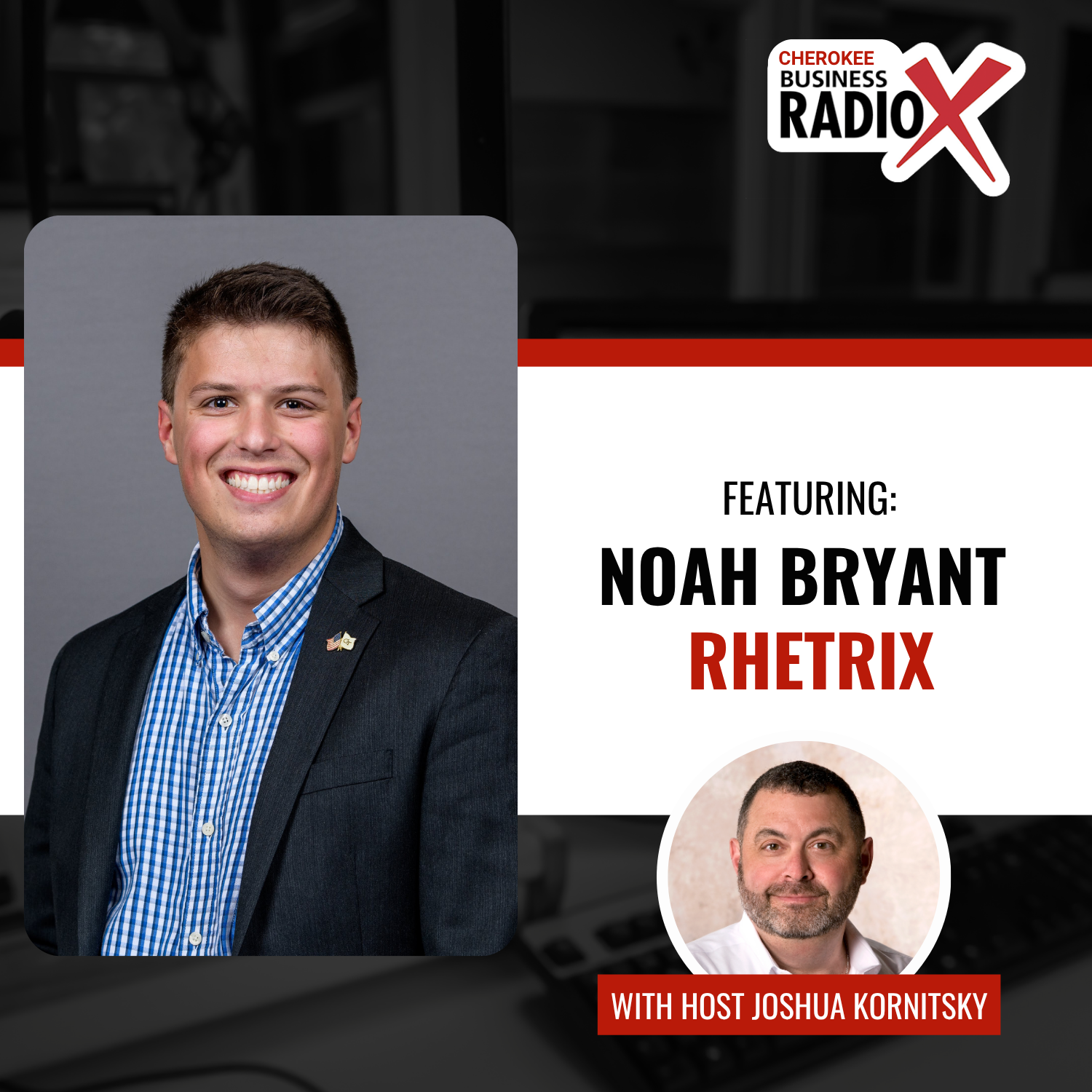
In this episode of Cherokee Business Radio, Joshua Kornitsky talks with Noah Bryant, founder of Rhetrix Public Speaking, a communication coaching program for students in grades six through twelve. Noah shares how his own struggles with public speaking and his background in tech sales inspired him to create Rhetrix. He discusses tailored coaching tracks for different age groups, one-on-one and group cohort options, and his “point-picture-point” communication method. Noah emphasizes authentic presence over performative confidence and encourages parents to actively engage their children in conversation at home to build lasting communication skills.

 Noah Bryant, Founder and Head Coach, Rhetrix Noah Bryant founded Rhetrix to close a gap he kept running into. Students get graded on presentations, interviews, and speaking up long before anyone teaches them how to do it.
Rhetrix is communication coaching for grades 6 through 12 in North Atlanta, built to close that gap before it hardens into something a kid carries into adulthood. The program runs in small cohorts across four grade-specific tracks: New World for 6th graders, Rise Ready for 7th and 8th, Break Through for 9th and 10th, and Leading Edge for juniors and seniors.
Every student is on their feet every session. Every cohort ends with a live showcase for parents. What separates Rhetrix from a speech class or a debate team is the goal. Students aren’t handed a script or taught to perform confidence. They find the version of their own voice that already works, and they get enough real reps to trust it. Authentic presence over performed confidence.
Noah is a Georgia Tech MBA candidate, an Eagle Scout, and a former NCAA Division I athlete who spent a decade learning elite communication in high-stakes rooms where getting it wrong had a cost. He built Rhetrix so students wouldn’t have to figure that out alone. He lives in Woodstock, Georgia with his wife and two kids.
Find your voice. Command the room. rhetrix.com
Connect with Noah on LinkedIn and follow Rhetrix on Facebook.
Episode Highlights
- Development of communication and public speaking skills in students.
- Overcoming public speaking anxiety and building confidence.
- Tailored coaching approaches for different age groups (grades 6-12).
- Importance of authentic presence versus performative confidence.
- Strategies for managing anxiety and improving communication.
- The role of storytelling in effective communication.
- Partnerships with schools to integrate coaching programs.
- The significance of communication skills in education and career success.
- The impact of peer support in learning environments.
- Parental involvement in fostering communication skills at home.
 This transcript is machine transcribed by Sonix.
TRANSCRIPT
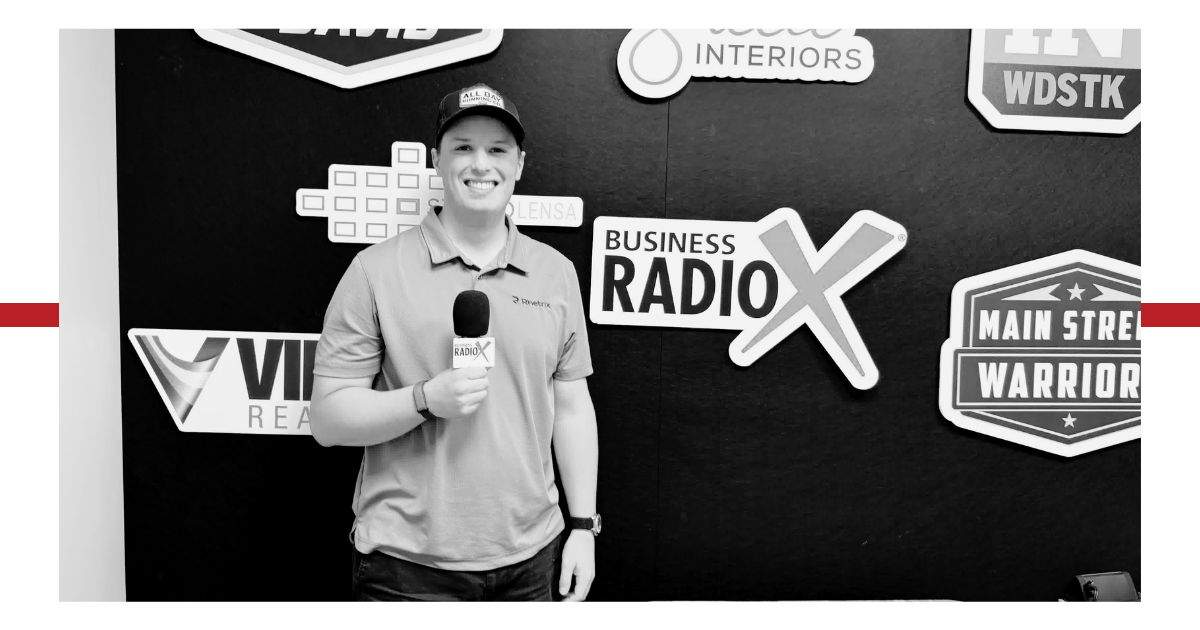
Intro: Broadcasting live from the Business RadioX studios in Woodstock, Georgia. It’s time for Cherokee Business Radio. Now, here’s your host.
Joshua Kornitsky: Welcome back to Cherokee Business Radio. I’m Joshua Kornitsky professional EOS implementer and your host here today. Before we get started, I just need to remind everybody that today’s episode is brought to you in part by the Community Partner Program, the Business RadioX Main Street Warriors defending capitalism, promoting small business, and supporting our local community. For more information, go to Mainstreet warriors.org. And a special note of thanks for this title. Sponsor of the Cherokee chapter of Main Street Warriors Diesel David, Inc.. Please go check them Dot com. I’m really excited to share the guests that I have here in the studio. I’d like to introduce everybody to Noah Bryant. Noah is the founder of Rhetrix, a communication and confidence coaching program for students in grades six through 12. Drawing on his experience and high stakes sales, Noah created Rhetrix to help young people overcome speaking anxiety and develop a communication style that is genuinely their own. Welcome, Noah.
Noah Bryant: Appreciate it. Thanks for having me.
Joshua Kornitsky: Thank you so much for being here today. So tell us a little bit about yourself, your background and what brought you to create Rhetrix.
Noah Bryant: Oh great question. So again, thanks for having me. So when it comes to kind of the story behind Rhetrix, Rhetrix was birthed from my own challenges, going through the schooling system and trying to figure out on my own how to best be a public speaker, right? We are, as individuals, graded and judged on a metric of public speaking. Sure, before we even have any training on it. Right? If you can think back to maybe when you were in middle school or even before you enter into that next phase, and all the teachers are like, well, you know, you’ve learned.
Joshua Kornitsky: To the front of the classroom talk.
Noah Bryant: Just hop up there. You know, it’s even like math, like you take math and you’re like, you’re prepared for the next level, which is right. You know, you do the training and you get to that next grade where we don’t have that training is, you know, maybe in math class or in language arts, you’re asked to go up to the front of the classroom and present what you have worked on or present your project, which is just not something that we’re trained or coached to do. And students are put in these positions where they kind of have to, for lack of a better example, like just fail, just be bad. And I’m a big proponent of failing. I love failing fast. It’s the only way to learn. You learn more than from a no than a yes. But when it comes to these situations, these students are set up for failure because they’re walking away from these failure moments, not saying, man, how can I improve from that? Right?
Joshua Kornitsky: That’s Like I want to die.
Noah Bryant: Exactly. It’s like I never want to public speak again. I’m not a good public speaker. And that seed gets planted. And so that’s where this came from for me is I had the chance at a young age to get in front of some groups, be able to practice public speaking at a younger age and start to blossom earlier, get some more reps in sooner. And those reps started to pay dividends over time, right? It’s cumulative. So it’s, you know, little investment here pays off tremendously down the road. And so that’s where that came from. That was my experience going through middle school, high school, and of course into college. Graduated from Georgia Tech in 2020. Love being in the sales world. That’s what I’ve done. Been in tech sales for going on six, seven years now, six, seven, as the kids say.
Joshua Kornitsky: And you know, I wasn’t going there.
Noah Bryant: Yeah, hey, I’ll always go there. But no, it’s it’s been a great journey, right? Learning how to use the skills that I’ve hard developed over time and put those into practice. And funny enough, all of that experience is what employers are looking for. So I’ve accidentally put myself in a position that’s like, hey, this, this person’s really shining because they have this raw ability to communicate and tell a story better than their peers.
Joshua Kornitsky: Well, so I want to stop you there and ask you a question. Sure. Raw ability is an interesting approach, right? So, um, I do a lot of public speaking and as people often say, I’m a 20 year overnight success. Love it. Hated it with every ounce of my being. I can now get up in front of a thousand people and really not blink an eye. Yeah. Um, but that came from repeated failures. Repeated crickets. Yep. Miserable nervous days and nights. Um, I would when when people come up to me after I’ve been at an event where I, where I’ve spoken or presented, um, people say you’re a natural and, and I want to talk about that because is that real? Is, is, was I born for this? Because I certainly don’t feel like I was.
Noah Bryant: Yeah. I mean, the simple answer is no, I don’t think any of us are born to be in front of a crowd. And when I speak of innate ability, I more speak of kind of your innate personality type. Are you more naturally bubbly and outgoing, or are you more shy and reserved as a person? I have a bunch of information on the website, a bunch of information all over my social medias that basically say my favorite folks to connect with. And my personal bias is that I think quiet folks or more introverted, introverted folks are actually poised to be better public speakers than some of the more outgoing and kind of verbose people, because they’re the ones that listen. They’re the ones that are listening first and speaking second. So everything they say carries value and weight versus some of the more kind of verbose and just out there, folks. They’re more speaking first than listening. And it and it hurts them in a lot of ways. And so we coach from both ends of the spectrum, right? The more outgoing folks that people would think, oh, you don’t need any public speaking training at all because you’re really good at speaking with your peers. The drum needs to be tightened.
Joshua Kornitsky: It’s a different skill set. Yep.
Noah Bryant: Definitely.
Joshua Kornitsky: You and I, talking in this environment, nobody’s nervous. You and I doing this in front of a room full of people that are there to see a panel discussion is a very, very different psychological mindset.
Noah Bryant: Absolutely. Yeah. And that’s one of the biggest things that we try to focus on at Rhetrix is the kind of mind body connection of how we, how we exist in the space of communicating with others. And really the challenge comes especially with introverted students is they just aren’t getting the reps right. And so kind of going back to my example before, right with school, you end up getting in positions where you do it once. Everybody has to do it once. Hey, go up in front of the class, speak about this topic and you know, do as good as you can. The students that are shy or more naturally reserved will do what’s easiest. Stepping away from that moment, right, which is falling back into the hey, I’m just going to, whenever I get the chance to put this opportunity to speak onto somebody who I recognize or identify as somebody who is more naturally gifted as public speaker. So what happens is you get this split where you have these, you know, more shy folks, more reserved folks stepping behind the scenes of their own accord. Right? And then the more natural public speakers are going in the other direction, and they’re getting more reps organically.
Joshua Kornitsky: Because everybody knows that kid.
Noah Bryant: Totally.
Joshua Kornitsky: Kills it when they when they do a talk or. Exactly.
Noah Bryant: Exactly. And so that that split starts to happen at a really young age. And as you get older and into the college age or the NBA age, the opportunities for shy or more reserved folks to deploy. The kind of push over to peers is almost built in, right? You get to say like, here’s a group of four folks. Not everybody has to present maybe 1 or 2 of the folks from the team will present. And then the other two just kind of get to sit in the background and just kind of contribute on the back end.
Joshua Kornitsky: The group project group project.
Noah Bryant: Oh my gosh, I have I’m a big proponent of group projects. I love group projects, but I have my own qualms with them, of course.
Joshua Kornitsky: I think everybody does to a certain degree. So. So let me ask, what do you say to a because we’re talking about grade six through 12. Totally, totally. So, um, I have two daughters and, and that period of time was not very long ago for me. Um, what do you say to let’s start with the lower end of that spectrum age and grade wise, when I say lower end, that’s what I mean. Kids that are in sixth, seventh grade, irrespective of gender, although I have opinions there. Having two daughters. Um, you know, I’m just here. What do you say to the kid that says I, I just I’m terrible at this, or I have no confidence or I’m. I can’t do this.
Noah Bryant: Yeah. Uh, when it comes to students who are already have that seed planted and go, I’m just not a good public speaker. I immediately push back on them. And one of the biggest things with Rhetrix is we get everybody butts out of seats as fast as possible, right? Like, let’s get reps going because there’s not a way and I have written about this multiple times, but there’s, there’s not a good way to talk somebody out of bad habits. Like you can’t just, hey, slap on the back, just fake it till you make it.
Joshua Kornitsky: Just eat less and exercise more.
Noah Bryant: Exactly. It’s like, I’m just going to talk to you and you’ll do it, right. Like that’s just not how that works. And so the biggest things is like pairing the communication side, which is like giving the encouragement and giving the verbal affirmation with tangible things that the students can hold on to and do. So like from your example or from your question, right, is like, what do you say to these students that are bad or that think they’re bad? It’s push back immediately and then go, well, what do you do in those moments? What do you let’s say you’re in front of a crowd of ten people, like, what are you doing? What’s making you the most nervous? And using a little bit more of a Socratic method to pull out of them. Some of that internal thinking about how they, they communicate themselves. And so what we do is we take that and then we go, okay, great. That’s good feedback. Or, you know, I’m concerned about this or this certain aspects of it.
Joshua Kornitsky: Peer pressure is it’s a judgment of I. Some comedian once said that there is no crueler human being on the planet than an eighth grade girl. Oh, yeah. Absolutely. And I say that not to malign eighth grade girls because I don’t want to get on the wrong side of them. Um, but particularly in that middle school age, they are so all consumed with their, what they believe their peers think of them.
Noah Bryant: Totally. And that’s, that’s really the key part is, is taking the anxiety that they feel, which is real.
Joshua Kornitsky: 100%.
Noah Bryant: Taking that anxiety and saying, what do you fall back on in those moments when you’re anxious? Like, do you have tools in your tool belt that you can deploy when you’re anxious? Because, you know, even just coming to this right now, there are nerves that you I like there’s a baseline that even good strong public speakers have in terms of nervousness and what tools you fall back on in those moments of nervousness push you forward to get through some of those nervous moments and have success. And so those are the tools that we equip our students with.
Joshua Kornitsky: And that was my my next obvious question is, is at their level of age and experience, they’re unlikely to have many tools, very few. So you’re going to teach them and more importantly, allow them the opportunity, I presume, to use those tools.
Noah Bryant: Absolutely. Yeah. So we have really two tracks with Rhetrix when it comes to engagement with us in general. So one track is one on one coaching on that side. I find it beneficial for a lot of shy or nervous students to start there, because it gives them a space much like this, where we can gain rapport, gain comfortability for a lot of those tools to be instilled first. The second way that we engage with a lot of students is through cohorts over the summer, of course, we have cohorts around the corner in Woodstock. We operate out of there, out of the circuit. And so we run cohorts over the summer that allow students to come in. And in a group setting practice. A lot of these methodologies that we have, right in the fall and the spring, we do a lot of direct partnership with schools. We’re actually launching with.
Joshua Kornitsky: Oh, really? So you’re going right into a school.
Noah Bryant: Correct. And that’s we felt like that would be the environment that would benefit not only growing the business side, which is of course paramount for any business, but also making sure that students have a more seamless integration into the environment that they’re operating in every single day. Sure. And also the materials and the tools that they need to have to successfully operate in that environment every single summer.
Joshua Kornitsky: Broadly, summer camp is a different experience than when you’re in high school, particularly, you know, that freshman year where it’s all new and different from middle school.
Noah Bryant: Yeah. Especially if, you know, imagine like going to a camp or going to school, and then you have a room of 7 to 12 of your peers that are all in this public speaking class. And you’re like, well, man, I never thought, I never thought Sally would need would need help with this or Johnny or whoever. And they’re in it with you. That kind of realization of, wow, I’m not alone. Right? In this kind of growth path is, is very formative for a lot of these students, especially in schools.
Joshua Kornitsky: Well, it’s it’s like a kid who everybody knows plays piano well, taking lessons when they get to school in a in an environment designed to teach skill and technique, you suddenly find the kid that was pretty good on the piano is perhaps exceptional because there is a very different, uh, skill set involved with training versus whatever ability or whatever way that they learned what they’ve learned up until that point.
Noah Bryant: Yeah. And I’m a big proponent of not saying fake it till you make it. I, it’s one of my least favorite idioms that we kind of have as a culture. Because what it, what it fails to do for our students is instill them with actual techniques and tools. It basically just says, you know, hey, I’m anxious about X, whatever that thing is, right? Oh, just fake it till you make it. What that accidentally creates in our students as they grow up is what we call imposter syndrome, right? It puts them in a place where, oh, man, I’ve just kind of faked it. And now I’m here as a accountant. Uh, you know, finance professional faking it. And I faked it, and I don’t feel like I belong in this room. And so that’s where that basis of the imposter syndrome kind of comes from, at least from my experience in view. And so it’s a challenging thing to, to correct later in life. It’s very easy to correct and simple to correct as students.
Joshua Kornitsky: Well, so we were talking about you going into the schools, and I want to touch on a specific area that, like I was alluding to that having twice lived through my children’s transition from middle school to high school, irrespective of, of, uh, Rhetrix and what you’re helping them with. Sure. That’s a big shift. So you do you handle things differently at the high school level as far as how you work with students?
Noah Bryant: Yeah, for sure. So I feel like it’s a great opportunity to kind of break down the grades of how we partner with those. So we have four buckets, right? First of which is an alone sixth grade bucket. We separate sixth graders into their own course and their own curriculum because we feel like putting them with eighth graders or, you know, lumping them all together with high schoolers would not only be inappropriate for social reasons, but would also not make sense in terms of development and comfortability growth. And so for sixth grade, we focus on it’s called new world, right? They’re basically starting fresh in this new environment, whether they came from homeschooling or now in a hybrid, you know, middle school hybrid, you know, homeschool program, or they’re in a public middle school or a magnet middle school. That’s a huge change, right? For any developing student, you know, physically, mentally, there’s a lot of changes that are going on. And so having them in their own track for the new world track puts them in a place where they can better understand the things that are coming ahead. The next track is the seventh and eighth grade track. We specifically focus on them as the breakthrough or I’m sorry, rise.
Noah Bryant: Ready? I’m getting ahead of myself. Rise. Ready is the seventh and eighth grade, right? We always are preparing for that next step. So as they think about and get ready for their high school transition. Right. It’s important that these seventh and eighth graders are aligning themselves with the expectations that are coming ahead of them. Right? They’re getting ready for high school. They’re about to be a number of presentations they’re going to have to give, and they’re going to have a tremendous baseline social demand on their level of interaction, right? They’re going to be in the school, in the hallways before classes, looking to interact with other peers. And you can do it one of two ways. You can just head down, go straight to your classroom, or you can start to blossom in those environments and that it’s not, you know, solved in, in the hallways of high school. It’s solved in the, in the preparatory areas and the, the growth areas of seventh and eighth grade. So that’s that rise ready track. The ninth and 10th grade is where we break through. I always made the joke in high school and college that the sophomores and freshmen are kind of the the forgotten classes of high school.
Joshua Kornitsky: I think I understand what you mean by that. Yeah, they just they just get to the end of the day.
Noah Bryant: They just exist. Right. Really high school is built for the juniors and seniors, right? And so for those students, it’s the breakthrough track. We want to focus on who you are as an individual. Ninth and 10th grade is where you truly start to build your reputation. And so the ninth and 10th grade track is built all around. How do I best communicate and build the pillars of who I want to be known as and communicate that to other people? Right. And so we ran through a couple of cohorts this summer of ninth and 10th graders, and it went tremendously well and very well received, so much so that some of these students, unprompted, were writing me notes afterwards saying, you know, hey, thank you for the notebook and letting me have kind of a place that I can start to think about my future.
Joshua Kornitsky: So I don’t want to touch on this until we go through the entire journey together. But these are life skills. Your. You are making an impact on kids that they will remember into their 70s.
Noah Bryant: Exactly.
Joshua Kornitsky: And you are going to ultimately change career paths, educational paths in in in. I’m very cautious. I don’t sling mud at any particular generation because it is as wrong as judging any group by association because they’re a member of that group. Totally. There are kids of every age that are helpful, smart, intelligent, hard working. Uh, there are kids. There are adults at every age that don’t get off their phone. Right. So don’t don’t use the broad stroke. But I do think that equipping up and coming kids, even before college with the ability to communicate at a higher. Look, you in the eye level is giving them an absolute leg up over the people they will be competing with for whatever job it is they want, whether it’s a waitress at waffle House or a one of three slots in a medical program. Totally. The person who comes to that interview and can speak and communicate well is going to have an advantage.
Noah Bryant: It’s lights out. Yeah, it’s lights out every single time. And especially in and before we get to that, I’ll touch on the kind of 11th and 12th grade track here in a second, but kind of to build off of what you said, the AI age is upon us, right? In terms of how students are interacting with computers and how we’re building and teasing out ideas that we have, I’ll come out and say it. I’m a big proponent of AI. I think it’s great for iterating ideas. I think it’s great for business startups, right? It gives.
Joshua Kornitsky: Collaborative.
Noah Bryant: Tool. It’s an amazing tool. What it what it is setting us up for, unfortunately, is students who aren’t good communicators are getting to the place where AI is doing a better job at communicating their ideas than they can. And so the best people who shine are the people who can take the ideas either from their peers or from AI ideation and communicate that effectively. Those are the people who are getting a leg up in advanced. And if you cut through all the noise, the jobs that are surviving and are thriving are the ones that are based around communication and strong public speaking. That is where the growth is happening, because we’re never, ever going to want to lose that human touch. And so if you can start to grow your ability in that, you’re going to have a tremendous amount of success.
Joshua Kornitsky: I couldn’t agree more. So let’s turn back around now. I want to finish up where in high school we’re about to be juniors. What happens?
Noah Bryant: Yeah. This is where the rubber really meets the road, right? If you remember your junior and senior experience, it was, hey, where are you going? To college. Right. What’s your next step? Right. If you’re not going to college, where are you going to work? Right. It’s where you really start to hear all of this pressure start to come on your shoulders. And so our job as rhetoric is to come alongside these students and prepare for interviews, prepare for, you know, what’s going to be demanded of you in terms of presenting at a job.
Joshua Kornitsky: And I want to interrupt you because you have something really important. It’s wonderful to envision a world where every student goes on to higher education.
Noah Bryant: Totally.
Joshua Kornitsky: These are not uniquely higher education skills. No.
Noah Bryant: Not at all. And it’s actually, I would almost argue it’s higher education has its own built in way for you to continue to practice some of these public speaking skills. Granted, like I mentioned before, right. It also gives you the chance to shirk it off and not do it. But especially for our students who want to go into trades, want to go into just working straight out of high school. I, I look at my own two boys, very young, two and a half and four months old, and I have little to zero expectation of them if they want to not go to college. Right. If they want to go pursue a career in trades, if they want to go do something else. What I focus more on is their raw ability to interact and build social communication skills with other people, because that is what gives you success. Degrees. I love college, I’m a big. I’m finishing up my MBA at Georgia Tech this fall. So you know, I’m not one to to shirk off or Naysay College. But when it comes to, you know, certain individuals, they’re not everybody’s built for college. Right? Like it sometimes people just need to go straight into the workforce. And I think that’s great.
Joshua Kornitsky: Several clients that are in the software, uh, broadly technology and software industry. I also have several clients that are in the trades. I can tell you that the clients that are in the trades have a great deal more security in their future, because no matter how advanced technology becomes, you still are going to need pipes to carry the waste away.
Noah Bryant: Always, always need somebody to unclog them and somebody to fix them and build them and. Yes, absolutely. And you know, I love like my having kids, if you don’t want to change radically as an individual, I encourage you not to have children. It uncovers things about yourself that you didn’t know before. And so for me, it is forcing me to slow down and admire things that you would typically kind of just rush past. And a great example of that is the trash trucks, right? Like they come every single week and dispose of your trash. And my son is.
Joshua Kornitsky: Greatest thing he’s ever seen.
Noah Bryant: Obsessed. It is his favorite thing every single week. And the trash man, you know, waves at him and is so nice and friendly. And I look at that kind of interaction experience and I go like, this is critical. Like, this is huge. And their ability to do what they do well week in and week out lets society continue to, to exist as we know it today.
Joshua Kornitsky: And so as, as silly as it is, you’re 100% right. Ask anybody in New York when in the past, when there were trash strikes.
Noah Bryant: Gosh.
Joshua Kornitsky: I can’t even imagine.
Noah Bryant: Yeah. Interview somebody on Roosevelt Island right now and see how they’re feeling about their automatic, you know, suction tubes of trash leaving the island. They’re a little nervous about it. But no, I love seeing my son blossom and see all of these little things in life. And so that gives me, you know, reinvigoration into Rhetrix and into how I’m instilling into students. Because it goes, we need to slow down. We need to slow way down and reinvest in the tools that you have now to then look forward and prepare for what’s coming next in your life. I currently one on one coach quite a few different students. One stands out in my mind. He’s an amazing student. He’s a rising 10th grader, ninth grader. And he started in our cohorts, which is actually backwards to how I think students kind of interact with us best. But he’s shy and started in our cohorts and ran through a summer cohort, and he really blossomed. And he found a lot of voice that he didn’t have. And he found a way to communicate what he was passionate about, right? Identifying something I want to do. I want to be a pilot. Wants to be a pilot. I want to be a pilot. Okay, great. Why do you want to be a pilot? Okay. I want to be a pilot because my family has been in the air, airline and aerospace industry for generations, and I’m inspired to continue to do the same and hold up that same legacy. That’s a story, right? And so tapping into that, right. And, and I’m like, okay, homework, right. Is designed in the one on one sessions. So we went from the cohort to the one on one sessions. Now this fall is to dive in further to that.
Noah Bryant: So it’s to build out stories with your family. And this is one thing for any family out there that you can do with your kids today, actually, is start to encourage your students to build a story bank, right? Have a story bank that they can reference one off. So a question that students will start to get as they enter into the 11th and 12th grade years is, hey, where are you going to go to college? Hey, where are you going to go to, you know, work after after school. And a lot of students will go, yeah, I don’t know. That’s typically an answer most adults will get, and the onus kind of falls onto us as adults, right? To continue to prod, continue to prompt. Right. And I remind parents, hey, you are the best audience your students are ever going to get. Like you need to be engaging with your students at a level four, five, ten X beyond what a typical person would interact with your students beyond. But these questions are coming for our students, and I encourage our students to go. You need to have two things. One, stories to tap on. So you know what I’m thinking about you GAI saw something in the news and I think it’s really cool. What do you suggest? Like very simple tools that they can hold on to. And then the other side of the spectrum is like, I don’t know, like I’m still thinking about where I’m going to school. Do you have any ideas like having hooks? So I call it like non cliff conversations. So a lot of students will just say an answer. So. So they’ll go. I’m thinking about going to UGA. Okay. Yes. That’s correct.
Joshua Kornitsky: You answered.
Noah Bryant: You’ve answered the question successfully. Good job. What you failed to do is engage in a successful conversation. And so I always tell students, move away from the cliff conversations where you just answer something and it just drops off and be a good conversationalist and give hooks and allow people to latch on to different things you’re speaking about.
Joshua Kornitsky: That’s great guidance.
Noah Bryant: Yeah. So a good example of that would be, you know, if I’m passionate about flying, it’s like, oh, what are you gonna do when you grow up? Oh, I want to be a pilot. Okay. That’s a cliff conversation. Moving away from that. It’s like you could say, oh, I want to be a pilot. My family’s been in the airline industry for years, and I’m very passionate about, you know, learning how to fly and pilot, you know, these large aircraft. That’s about 3 or 4 different things that somebody can then hook into, right. And find ways of, of understanding and communication.
Joshua Kornitsky: And just because of my own life experiences. You never know who you’re going to meet by opening that door.
Noah Bryant: Absolutely. Like you could accidentally be talking to a head pilot at Delta.
Joshua Kornitsky: Absolutely.
Noah Bryant: And you say, oh, man, I want to be a pilot. And they just go, oh, that’s really cool. Good luck on that. I’m a pilot. Oh that’s amazing. Cliff conversation. Right.
Joshua Kornitsky: And just end of the discussion.
Noah Bryant: Right. Or, you know, it’s like, hey, I’m passionate about this. And they see the energy coming from you. And then they find ways to inject into that passion with more of their own passion and insight and advice and potentially recommendations. Those are the biggest ones, right? That’s where those relationships build. And that’s why communication in my mind, is never going to go out of style, and also is extremely important for our young students to grow. Because you’re only a student, right? You’re only in the youth once, right? And you can kind of deploy that card unlimited amount of times when you’re a student, if you reach out.
Joshua Kornitsky: The day, you can.
Noah Bryant: Yeah, until the day you graduate, everybody will reach out to you and want to have a coffee. Yeah. You the day you graduate. Nobody’s going to respond to you.
Joshua Kornitsky: Just a bum looking for a job.
Noah Bryant: Exactly. And so like, being a student is important and powerful, but deploying the nature of being a student, I think, is another skill entirely.
Joshua Kornitsky: 100%. So let’s talk about what we’ve talked about, the path that you helped guide them through. What’s the experience on the student side? What what have you observed as you’ve, uh, shepherded these students through the program? Yeah, it’s.
Noah Bryant: It’s been foundational for me to see these students come in strong and want more coaching or very weak and get to a place where they’re at a minimum aligned with their peers and can go and now speak in front of a class. I’m seeing one of the biggest changes in students that come through the program is their ability to communicate their ideas more clearly. And one of the ways that we do that is through a point picture point methodology, right? So again, I’m all about tools. And when you’re nervous, you fall back on nothing. You go blank. I give the analogy of juggling balls, right? You have 17 different thoughts in your head about how you can respond. Somebody interjects into your juggling session and asks you a question, and it interrupts you and you drop all the balls. That’s why students start replying with I, uh. Well, then, you know, and they start picking up the different ideas and well, I was well, well and well. Then there was this thing. And so it starts to sound very stuttered and, and staggered because it’s out of that normal rhythm. And so I see students coming in and we practice the kind of idea of juggling ideas and giving a point, picture point methodology where they can come in and say, you know, have a question asked of them, and they fall back on this structure where it goes, you know, go ahead, we’ll play it right now. So ask me a question about anything and I’ll kind of show you what this looks like.
Joshua Kornitsky: What’s the focus of your MBA?
Noah Bryant: Focus on my MBA is around management and leading people point. I’ve loved the program so far. It’s been amazing to get interaction with my peers and be able to learn and lean into some of these professors who are more interested in your success than some of the undergraduate professors are, and build those relationships for future career success. Picture. Once I’m done with the program, I’m excited to pivot into continuing to coach for students, right? So it gives students this point, picture point way of structuring their own thoughts. And I.
Joshua Kornitsky: Love that.
Noah Bryant: I lean on it really hard because what the challenge comes is these students are prompted with questions that adults expect them to have the answers to, and they do. And that’s the most challenging part is like, as a parent, you can prompt your you said you had daughters, two daughters.
Joshua Kornitsky: Yes.
Noah Bryant: You can prompt your daughters to answer a question that you ask. And they will at the drop of a hat. Answer it right, because there is a level of familiarity, familiarity and comfortability there. Even if they do fumble over their words, they’re going to push through that because they know no harm, no foul. Right? On the other side of that, when it is a pressure inducing situation where, hey, I might be in a mixing session or a mingling session, I might be meeting somebody new, and then that person asks you a question. Not only is it outside of your normal rhythm, but it’s not in the environment where you can fall back on it. There’s no, oh my gosh, this is low stakes. This is no problem. I can fumble over my words and, you know, have no consequence potentially. It’s no this is important. This is really important. And communication here, if you don’t succeed super well, like this could bode poorly on, on kind of my success and career moving forward.
Joshua Kornitsky: Just that technique is going to change the outcome of a teacher, a professor, a job interview, 100%. All of those things are touched by that technique. And if you’re helping them get the repetitions in to build it, to make it second nature, it’s going to make a dramatic difference.
Noah Bryant: Well, even think about like taking that structure and pairing it with a story bank.
Joshua Kornitsky: Mhm.
Noah Bryant: Like in an interview, if we were in an interview right now and you’re running, you’re less interested in learning about me personally, more so than learning about how I can succeed professionally. And so my job as the person who is being interviewed is to insert the personality into the professional questions. And that’s where that story bank comes from. So use the structure of point, picture point and pair it with your story. Bank of maybe an interview question might be, tell me about a time that you succeeded in a group project. Right, right. And there’s a thousand questions, but that’s just one that is asked almost in every interview. And the person who’s being interviewed can very quickly go, okay, point, picture point. I already have my structure. I know how I’m going to talk My story. Bank is here. I have three kind of queued up group project stories that I can kind of reference. Where am I interviewing? Okay, this one makes the most sense, right? And then they can deploy that story, put it into the structure, and then you’ve just eloquently delivered a professional answer with personality attached. And that’s where the best interviews shine.
Joshua Kornitsky: 100% because the paralysis that can occur in the moment of that question, which is human nature, absolutely aren’t prepared. Correct. You freeze.
Noah Bryant: Absolutely.
Joshua Kornitsky: Most most people.
Noah Bryant: Well, it’s like, um, it’s like driving, right? Like we spent spend a lot of money and a lot of time for our students to get driver’s education and also practice driving in a car with another adult for hours and hours and hours before they even get their permit or license. We do not have the same expectation of communication, which I would almost argue you could not get your driver’s license. And communicate well and succeed more than if you did the opposite.
Joshua Kornitsky: No, I agree with that.
Noah Bryant: And I just think it’s funny how we invest so much time and effort. It’s like you have to drive well, you have to drive well. And I think it’s an amazing skill to have. But we do not spend the same amount of focus on the other side of the equation where it’s like, yes, you may move to New York and you may never drive again. Right. But you will be communicating in public with your peers at work for the rest of your life.
Joshua Kornitsky: Every day, every day. So what do the parents say?
Noah Bryant: The parents love it. And I’m not just saying that to boost my own stock as a parent, right? As a parent from parent to parent, when it comes to students and understanding your students. Typical. And I’ll kind of go high level. I won’t paint broad brush, but I’ll kind of go high level for public speaking. I’ve experienced in the past public speaking courses, either professionally through work or before. Professional career in middle school, high school where the goal isn’t authentic presence overperformed confidence. It’s it’s literally stand in a certain way, speak in a certain way, deliver a certain lines in a certain way, just raise your volume.
Joshua Kornitsky: It’s performative.
Noah Bryant: It’s all performative. And the goal isn’t to equip your students with a professional set of skills. It’s to have that Friday showcase and be like, look, parents, we got your kind of wind up dolls here to do what we want.
Joshua Kornitsky: It’s a parroting.
Noah Bryant: 100%.
Joshua Kornitsky: And and as someone who spends a lot of time training adults, parroting is not usually very beneficial.
Noah Bryant: No. And that kind of falls back into the fake it till you make it right. Like, oh, here, we’re going to give you a false sense of confidence and we’re going to have you stand up in front of a room and just kind of pretend that you can do these. Just move your hands in a certain way. What rhetoric does is we focus on authentic presence, not performed confidence. So we meet students in a group setting or one on one where they are. So I’m not interested in coming in with preconceived notions about students. I’m not interested in coming even into a cohort. Aside from the curriculum goals that we want to, we want to achieve. But on an individual student basis, like I’m not coaching students the same across the board, you’ll have a very tall, lanky student come up to the front, and I’m giving them very different tips on how to stand and move in front of a room than somebody who’s a little bit shorter, right? Because somebody who’s shorter, you can take three steps and it seems natural. If you tell a tall person to take three steps in a room.
Joshua Kornitsky: On the other side of the room.
Noah Bryant: Yeah, that’s gonna be strange. You’re going to be behind the people you’re presenting to. And so like those, those, and that’s a silly example. But those small tweaks is where students really start to shine and come into their own because everybody’s different. And I’m a big proponent of the individual is where that kind of basis of successful, uh, interaction and community starts. And if you’re just trying to act like 17 other people who you saw that you think are good public speakers, yeah, you’re never finding something for your own. You’re never finding your own voice. You’re never finding your own way to interact and communicate in public. And it’s a tragedy because you end up pretending to be somebody else and walking away from a moment feeling inauthentic, and it only hurts you going forward.
Joshua Kornitsky: It really sounds like it is an unbelievably impactful approach to things. So you had mentioned that you are working in schools. Um, how do you partner with schools? Do you work with PTA? How does all that work?
Noah Bryant: Great question, complicated answer. So in my experience, partnering with schools has gone one of two directions. It’s the One direction is schools are actually moving away from managing after school and before school programing themselves at all. Right. So there’s an organization called Fun Clubs, and they’ve kind of taken over the space when it comes to before and after school, you know, enrichment opportunities and programing. And so that’s one avenue that we’re going down, right? Going directly to fun, fun clubs and seeing what schools they’re plugged into and see what makes sense in terms of partnership. That’s ongoing. On the other side is direct partnership, right? So you’ve got homeschooling schools in the greater Atlanta area, right? Kings Academy and so on. And then you’ve got also like school aggregation, so like funnels. So you’ve got the Marietta City schools, right? They actually still have a direct director and directors in place to manage the before and after school programing. So as much as people think, oh, just reach out to the principal, you know, get plugged in, you know, with my sales background, I know usually the biggest heads in an organization. Yeah. It’s, it’s less so just go to the top of the chain and they’ll just say yes. And then you’re in. Right? They, I don’t want to say don’t care, but their days are filled to the brim with much other and equally important fish to fry.
Joshua Kornitsky: Well in their. Constrained by things that may or may not be known to others with regards to budget in regards to, uh, this program versus that program because of people above them.
Noah Bryant: Correct. Well, and in the spirit of sales, right, taking my background in building this business, like the goal approaching a lot of these schools and finding the directors of the before and after school programing is to make the yes as easy as possible, right? Like it would be no skin off their nose if they said yes. And so I’ve designed the program to be where $100 of every student’s seat goes directly back as a donation to the school. And so for administrators.
Joshua Kornitsky: That’s pretty attractive, very attractive.
Noah Bryant: Right? So you can imagine like a full cohort of 14 to 18 students, $100 of each seat. And you fill five cohorts throughout the course of a fall semester. Oh my gosh, like that’s an amazing way to passively fundraise for your school community. And, you know, just give the sake of, you know, broken record analogy. It’s like maybe your music program is underfunded. It’s like that money can just directly flow back to your music.
Joshua Kornitsky: There’s not a school, public or private, that that does not have a financial need for something somewhere.
Noah Bryant: 100%. And so that’s why it’s like, we’re not looking to take money from schools. We’re looking to find parents who have students that they want to invest in for their future, and then take that investment and, and give back to the school community that they’re in to continue that self-fulfilling kind of wheel of students who want to come through the program and continue to build the goal, right, is to take this program, get it plugged into schools so that these parents and students go through Marietta High School and they go, all of our students, like, they love taking Rhetrix and, you know, to graduate. It looks really good on resumes when people have communication coaching, um, even if your resumes then, right, if you have something on it in terms of, you know, maybe a quick summer job at Holy Moly and Communication coaching that immediately you’re way ahead of the pack. Yeah.
Joshua Kornitsky: Absolutely. Um, two more questions. Number one, what’s the best way for people to get in touch with you?
Noah Bryant: Yeah.
Joshua Kornitsky: To learn more about this.
Noah Bryant: Yeah. We we’re online of course. So feel free to go on ChatGPT or, you know, any kind of AI and say, hey, best public speaking near me. If you’re not local or you want to just have the best public speaking that you, you can have near you.
Joshua Kornitsky: Well, and we’ll share whatever links you want to give out.
Noah Bryant: Totally, totally. And so a lot of, you know, in, you know, interest into the Rhetrix community that has come organically has ironically been through a lot of these AI platforms. Parents and moms and dads are going to these platforms saying, I need help with this student in this area. Who can I go to? And we’ve, we’ve built rhetoric so well in that area so that.
Joshua Kornitsky: The answer.
Noah Bryant: We’re typically one of the top two answers. And so we’re getting a lot of interest in that way. Um, so feel free to test it out. And then you can find us at metrics rhetrix.com. That’s one of the best ways we’ve got my email on there. You can email me at noah.bryant@metrics.com. Um, happy to, of course be a resource where founder made local, very small team as in a team of me. And so.
Joshua Kornitsky: Far.
Noah Bryant: So far.
Joshua Kornitsky: It’s something tells me this is going to scale.
Noah Bryant: Yeah. And and that’s the goal, right? Is to is to build it into something that can then be, you know, I know franchise kind of has a negative stigma to it, but, you know, built out across the country so that you might have a metrics Houston or metrics LA. Right. Um, and that continues to grow and finding like minded people like me, where they have a passion to give back to students and can run their own local businesses by taking on the, you know, Rhetrix, curriculum and Rhetrix, name and go out and so forth and prosper. So those are the best ways to get in touch with us. We have a lot of free resources on our website. I’d encourage parents to go to Rhetrix.com and tap into a lot of those free resources. We have a lot of resources specifically on there for homeschooling students for free, and things you can do at the dining room table to immediately tonight start to instill some of these strong skills into your students.
Joshua Kornitsky: Well, and that was the last question, right? Is what’s one thing that that anybody listening that wants to help their child? Uh, I know I wrote down a bunch, but what’s one thing you can suggest?
Noah Bryant: Yeah, I think I might have mentioned it earlier, but it’s definitely worth repeating is parents, if you’re listening to this and I know that you are, you are the best audience that your students are ever going to get. And so public speaking doesn’t start in school. It doesn’t start in the job. It doesn’t start in the interview room. It starts at the dining room table. And for you to give the interest, give the floor and not speak for your students. I know it’s challenging. Sometimes we want to speak and defend our students shyness. If you can encourage. At the dining room, table your students to speak up. Ask follow up questions. Third, fourth, fifth level questions. Have them continue to to pull. It’s, you know, it’s like an onion, right? It’s a Shrek. Oh, it’s an onion. Keep diving in. Right? Diving into our students to make sure that they can speak for themselves. That, in my mind, is the biggest piece of feedback for parents that I can give is you are going to always and continually be the best audience that your students will ever have in their life.
Joshua Kornitsky: That’s awesome. I can’t thank you enough, Noah. This was absolutely fascinating for me. Uh, and I believe for anyone that’s listening. Thank you again for coming in to join us. Thanks for having me. I really appreciate it. I want to remind everybody that today’s episode of Cherokee Business Radio was brought to you in part by our community partner program, the Business RadioX Main Street Warriors, defending capitalism, promoting small business, and supporting our local community. For more information, please go to Main Street warriors.org. And a special note of thanks to the title sponsor of the Cherokee chapter of Main Street Warriors, Diesel David, Inc.. Please go check them out@diesel.com. To remind you, our guest today has been Noah Bryant, the founder of Rhetrix, a communications and confidence coaching program for students in grades six through 12. Drawing on his experience in high stakes sales, Noah created Rhetrix to help young people overcome speaking anxiety and develop a communication style that’s genuinely their own. Thank you again, Noah. I appreciate you coming in and sharing all of this with us.
Noah Bryant: No. Love it. Looking forward to next time.
Joshua Kornitsky: My name is Joshua Kornitsky. I am a professional implementer of the entrepreneurial operating system and your host here on Cherokee Business Radio. Thank you for joining us. We’ll see you next time.















