
Brought to you by Diesel David and Main Street Warriors

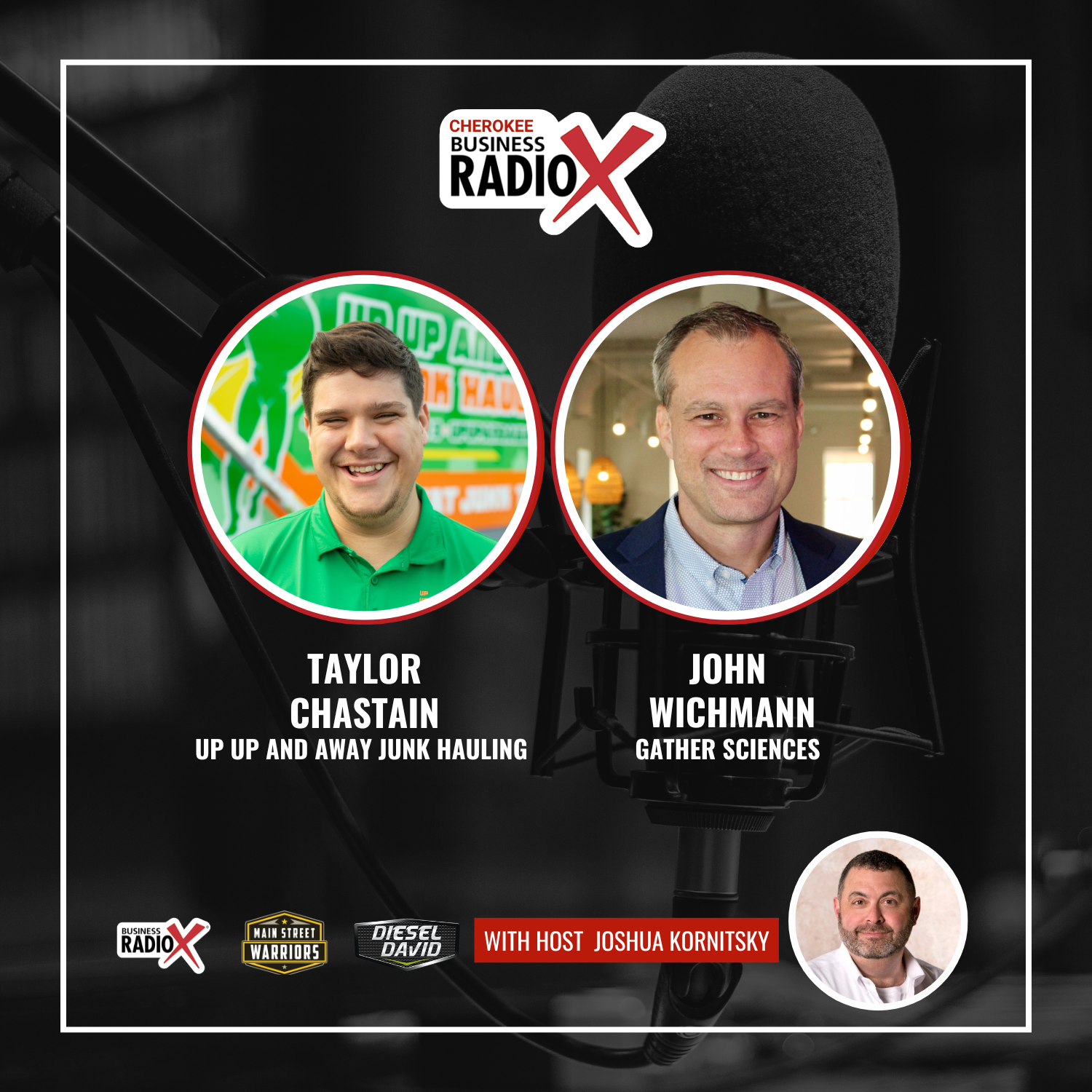
In this episode of Cherokee Business Radio, Joshua Kornitsky interviews Taylor Chastain, owner of Up Up and Away Junk Hauling, who shares his entrepreneurial journey and the growth of his award-winning business. Taylor discusses building a strong team, community involvement, and customer-focused operations. Later, John Wichmann, CEO of Gather Sciences, explains how his company helps organizations implement effective hybrid work models. The episode highlights practical business insights, the importance of intentional strategy, and community  engagement, offering valuable advice for entrepreneurs and leaders navigating today’s evolving work landscape.
 Taylor Chastain is a father, husband, friend and owner of Up Up and Away Junk Hauling. He leads with hard work and a team attitude.
Up Up and Away Junk Hauling provides white-collar service in a blue-collar industry.
Hard work, reliability, encouragement, and openhandedness are the core values that grew Up Up and Away from a truck and a dream to where it is today.
Connect with Taylor on LinkedIn.

John Wichmann is the Founder and CEO of Gather Sciences and the creator of Balanced Hybrid®, a data-driven platform for developing sustainable hybrid work models.
John is a prominent advocate for intentional hybrid work strategies, emphasizing their potential for organizational growth, employee well-being, and environmental benefits.
He frequently speaks at events, panels, and webinars about designing effective hybrid work models.
Connect wtih John on LinkedIn.
Episode Highlights
- Leadership and growth
- Hybrid and remote working
- Entrepreneurial journey of Taylor and the founding of Up Up and Away Junk Hauling
- How Gather Sciences came to be and why
- Building client relationships and ensuring customer satisfaction
 This transcript is machine transcribed by Sonix.
TRANSCRIPT
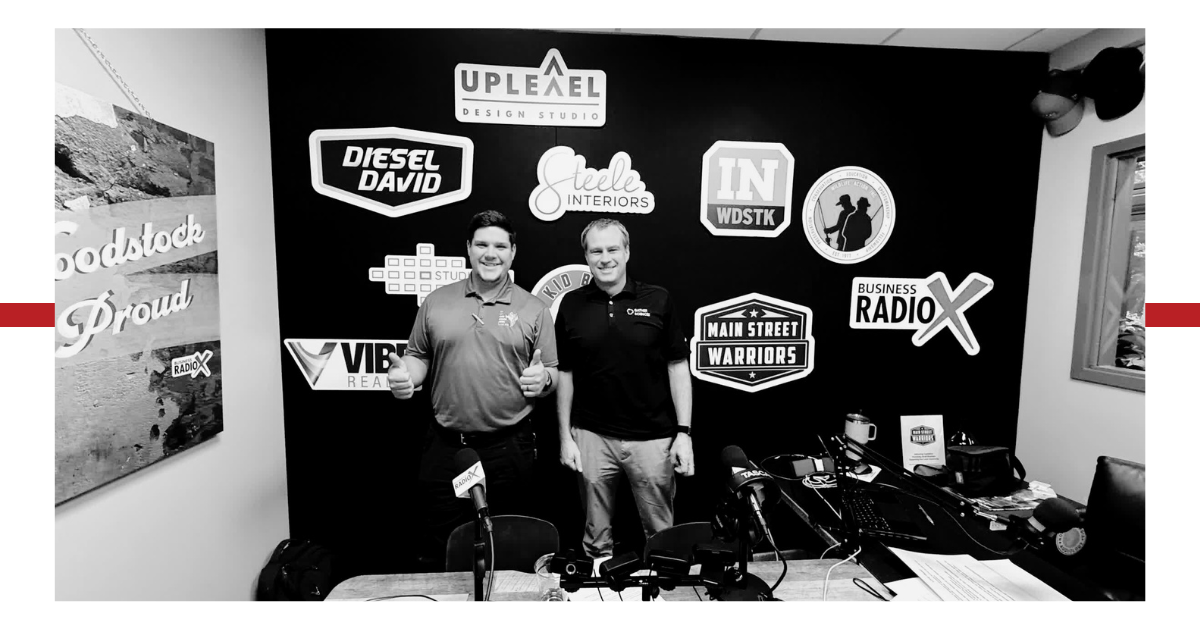
Intro: Broadcasting live from the Business RadioX studios in Woodstock, Georgia. It’s time for Cherokee Business Radio. Now, here’s your host.
Joshua Kornitsky: Welcome back to another episode of Cherokee Business Radio. I’m your host, Joshua Kornitsky professional EOS implementer, and I’m really happy to have in the studio today two great guests. But before I get started, today’s episode is brought to you in part by the Community Partner Program, the Business RadioX Main Street Warriors Defending Capitalism, promoting small business, and supporting our local community. For more information, go to Mainstreet Warriors. Org and a special note of thanks to our title sponsor for the Cherokee chapter of Main Street Warriors Diesel David, Inc. please go check them out at diesel. David. Well, again I said, I’ve got some great guests here in the studio today. Uh, let me start by introducing our first guest, Taylor Chastain, owner of Up Up and Away Junk Hauling. Taylor and his team were recently recognized as the best to Cobb, uh, 2025, in junk hauling. Uh, and it’s really a reflection of the hard work and the customer focus that they have and the impact that they make on their community. Taylor brings a real entrepreneurial spirit and commitment to the service that he and his team offer, and they continue to fuel the growth of his business. Welcome, Taylor. Thank you for being here.
Taylor Chastain: Joshua. Thanks for having me, man. I’m glad to get to do this. This is a long way from the cigar shop where we first connected.
Joshua Kornitsky: That’s true. Well, first connected was Kennesaw business. Well. That’s true. It led to a cigar shop called the Cigar Gallery Club, also in Kennesaw. But we’ll talk to them later.
Taylor Chastain: Great spot. And we did trade cigars today because we brought each other something else to try.
Joshua Kornitsky: It’s the way it works. That’s how it is. Well, welcome. So tell us, Taylor, why junk?
Taylor Chastain: Why junk? Uh, because I hated landscaping. Uh, so.
Joshua Kornitsky: So let’s let’s begin at the beginning.
Taylor Chastain: Yeah. So I, I right out of high school, I started cutting grass because my dad cut grass out of high school, and I figured, why not? I need to make some money. Turns out landscaping is terrible. I do not care for it at all. Also, turns out I’m allergic to grass. Huh? I’d break out in hives between every job. It was awesome. Um, but one of my landscaping clients had their toilets redone, and they said, hey, when you come cut the grass, can you take those to the dump? I said, sure, where’s the dump? And they told me where gave me 20 extra dollars. I went to the dump, backed in, threw the toilets in the ground, and they shattered and I went. That was fun.
Joshua Kornitsky: Yeah.
Taylor Chastain: Yeah. And my next thought was, I bet I could get paid for this. That was the summer of 2014, and I’ve been hauling junk ever since.
Joshua Kornitsky: Wow. So from pretty simple and somewhat fun beginnings, right? You you have grown and grown. So how many folks do you have now?
Taylor Chastain: Well, right now, there are 13 of us on the team, and we run a fleet of six trucks, eight dumpsters and two support trailers.
Joshua Kornitsky: And one of the things that I learned, as you and I have kind of gotten to know each other, is that it’s very easy to sort of misunderstand what your business is about and to just assume it’s a bunch of guys with a bunch of trucks or dumpsters that that just haul trash away. But you’ve really spent a lot of time thinking through how your organization functions. Can you tell us a little bit about that? Because it’s not just for the business insight, but for customers that are that are hearing you to understand that this isn’t just a guy in a truck.
Taylor Chastain: Right. I think the biggest thing that people don’t understand is a lot of home services do one of two things. They either sign you up to see you once a week, once a month, once a quarter, which is great. It’s a set it and forget it type of model, or they charge you a lot of money to do a big thing once we do neither of those things. Now of course we have some big projects we get into, sure, but the vast majority of our work is relatively small ticket. And once the junk is gone, it’s gone forever. So the people don’t understand the amount of volume we have to create just to survive. So, for example, last month was an okay month and we did 225 jobs.
Joshua Kornitsky: Wow. And and for that type of engagement what’s the what’s the the geographic area that you’re covering.
Taylor Chastain: Oh man. In three weeks we’re going to Alabama. So.
Joshua Kornitsky: Okay.
Taylor Chastain: But generally what we’re doing is our goal for the junk removal side is to be within 40 miles of Atlanta. Um, we’ll go farther if they’re bigger projects. Um, I mean, back in December, we did a huge cleanup in Griffin that was about 60,000 pounds. Wow. So obviously, some of that scale, it’s easier to justify the dispatch time and the cost associated.
Joshua Kornitsky: And is it all residential clean out?
Taylor Chastain: No no, no. So residential clean out is great. And that’s the you know, residential clean out allows us to start the trucks every single day. Sure. But where we really are focusing and growing now is the commercial side, which is the broadest bucket. To put that in is who needs me to do my job so they can make money.
Joshua Kornitsky: Okay, whoever.
Taylor Chastain: That.
Joshua Kornitsky: Person a high level, that’s great. But but bring it down to the ground. What does that really mean? If I’m a business listening, right.
Taylor Chastain: Uh, any high end renovation contractor is going to be great because they understand that there cannot be nails sitting on the ground every Friday because Saturday that customers walk in the property.
Joshua Kornitsky: That’s true.
Taylor Chastain: Um, property managers are great. Like anyone. I mean, anything from an office park to a skyscraper. Whoever is running that building, one of the things they’re concerned about is how leased up is our space. And you can’t lease full space. It’s got to be empty, right? Or they’re dealing with illegal dumping, which we we clean up a lot of that.
Joshua Kornitsky: Really? Yeah. And who is it, a property who calls you for that?
Taylor Chastain: Uh, generally property management or, um, you know, there’s actual property managers, and then there’s companies that execute all the service. And there’s some of these one stop shop companies and we’ll subcontract for them as well.
Joshua Kornitsky: So for something like a commercial job where say you’re you’re clearing out an empty office, how much notice do you need. Is it planning, you know, six weeks out.
Taylor Chastain: Depends on the volume. Um, but not as much notice as you might think. I mean, obviously, what I should tell people is give us lots and lots of notice, but, um, you know, if it’s something relatively small, under 15,000ft² of office space, we can generally get it done within 3 or 4 days. The only exception would be, um, some of the properties. You’re not allowed to work 8 to 5 because they’re businesses. Sure. So in that case, it might take an extra day or two to get enough overnight crews mustered up because we don’t just run an overnight crew every day.
Joshua Kornitsky: But you have that capacity.
Taylor Chastain: We do one. We had one down in Atlanta on Peachtree Street. We pulled 1413 loads over 18 hours. 80, 65,000 5,000 pounds and we started at 5 p.m. on a Friday.
Joshua Kornitsky: So when you say the. The pulling the load. What what size capacity are you talking about a dump truck. Are you talking about a pickup or a dumpster or.
Taylor Chastain: So those are our 15 cubic yard dump trucks, slash dump trailers. We run both sets of equipment. And so, uh, yeah, in that particular case, it was the entire 36th floor of a skyscraper.
Joshua Kornitsky: Going up and down the entire time.
Taylor Chastain: Yeah. I mean, the elevator ride was a minute and a half apiece each way. So we actually our. Our office manager came and sat in the elevator and just pressed buttons so that we didn’t have to send any guys up and down. We just had an upstairs crew and a downstairs crew and we just rocked, rocked and rolled on it. It was great.
Joshua Kornitsky: That’s that. But that demonstrates a level of flexibility, and I will never ask you to speak ill of competition, but that demonstrates a level of professionalism and scalability that I don’t think your industry is known for.
Taylor Chastain: Yeah. I mean, the easiest thing to be would be to send two guys in two trucks and it gets done when it gets done, but it’s not going to get done the most efficient way.
Joshua Kornitsky: Well, and and as you say, having a having the resources to have a team upstairs and a team downstairs, that in and of itself, I mean, I imagine like all industries right now are people a challenge?
Taylor Chastain: Surprisingly not for us. And I think that really is, um, driven by our culture. We have awesome guys. And so, I mean, I think I put up my first job posting in five years, two weeks ago.
Joshua Kornitsky: Really.
Taylor Chastain: And it really is, because the problem is when, like our average tenure is over two years at our company.
Joshua Kornitsky: In a junk hauling.
Taylor Chastain: In a very blue collar, hard.
Joshua Kornitsky: Hard, hard work. Yeah. I mean, I don’t ever blue collar is beside the point, but it is very hard work.
Taylor Chastain: Right. Well, that’s what I mean is it’s just it’s just super demanding. Uh, but all that to say, uh, all their friends and family, they’ve already had the opportunity to work here. You know what I mean? So we’re we’re we’re running the referrals out. Um, but even then, I put out the push for add sourcing for job source job ads. Goodness gracious. And the best candidate I’ve got so far still was a referral out of one of our guys, and he’s the one I’m going to hire.
Joshua Kornitsky: That’s somebody who understands the core values and the culture of the company, saying, hey, this person will fit right up. So let me ask you a hard question. From my perspective, what happens to all the junk? Because junk’s a real broad term.
Taylor Chastain: It is. We were we were just at the Atlanta Home Show this weekend. And after the question about price, that’s the most common question.
Joshua Kornitsky: Is what happens?
Taylor Chastain: What happens to it? Does it all go to the landfill? The answer is no. Right now, a lot of it goes to the landfill, because when somebody rips a 40 year old deck off a house, you really don’t have a lot of options, you know? But we, uh, we sort out every load for three things donate, recycle and dump.
Joshua Kornitsky: Okay.
Taylor Chastain: And the guys will pack that accordingly. So if you ever watch where to watch them pack a truck, you’d see the obvious junk go in. Then the recyclable Recyclables and then the donate. And then when they leave, they’re going to swing by a donation center. They’re going to swing by either the recycling center or our lot. We have a bunch of recycling set up on our lot.
Joshua Kornitsky: Oh, so you’re able to kind of store to you’ve got a full load to to go over.
Taylor Chastain: So we actually have dumpsters on our lot. We have a 40 yard metal dumpster, and we have an eight yard cardboard dumpster that we we fill up and rock and roll. And so that allows us also like Saturdays, almost all the dumps close. It allows us to get some things off our truck and keep moving.
Joshua Kornitsky: That makes sense. And again, kind of speaks to the the more business side of your business. Right. Because you and I have had a lot of conversations about that. And I think one of the things that sets you apart is that you, uh, did start, I’m sure, by yourself in 2014. But now you’ve got a leadership team. You’re running your business like any other business. So what’s the plan for the future? Are you going to continue to grow in scale?
Taylor Chastain: Yeah, the goal certainly is to continue to scale. Um, I think the runway is pretty long, just in metro Atlanta. Metro Atlanta is known to be like for many of the big national and international franchises. It’s like one, two, three top market, right? Um, which and I’ve got some insight on some of the numbers there. And so I think we have a ton of room to grow here. Uh, so that’s the plan over the next 3 to 5 years is see how much we can dominate Atlanta. Um, even even meaning moving to multiple locations and doing things like that. That’s one of the reasons it’s a big deal for us that we’re up right now for Best of Georgia. We’re up for Best of Tucker and Stone mountain.
Joshua Kornitsky: Congratulations.
Taylor Chastain: And so while, yes, we’re in Acworth and that Stone mountain, it’s still great because guess what? Next year we’re going to have an office a lot closer to Stone mountain. And we certainly would love to be working out there. You know what I mean?
Joshua Kornitsky: So I travel from Cherokee, Cobb, Gwinnett, and it seems like I see these up, up and away. Uh, I don’t want to call them yard signs, but the the small signs that are stuck every. I don’t know the proper marketing term, but I see these signs everywhere. Uh, has that been an effective strategy for getting the word out?
Taylor Chastain: Yeah. Um, we so we have call tracking numbers on them so we can see how much money we make off of them directly. And then we also get a lot of calls. People will find us on Google and say, oh, I saw your yard sign. Even though our CRM tells us they’re coming from Google. It’s because it’s creating the brand recognition. And then as I’m out networking, people say, oh my goodness, I see your signs everywhere. Or oh, I see your trucks everywhere. And that’s a that’s a big part of just having the consistent branding presence and letting that be a focus point for us. And the fact is we’ve got multiple guys out and multiple trucks every day, and if they’re putting their truck in park, it means we’re stopping in a customer’s house and customers live near customers, so we might as well mark.
Joshua Kornitsky: Philosophy, right?
Taylor Chastain: You know what I mean? We might as well mark it because. Birds of a feather, right?
Joshua Kornitsky: Right.
Taylor Chastain: So that that’s a the the we call it marketing. Like it’s 1995 and it works out great for us. We don’t have to compete on Google. Well, that’s not nearly as much of a cornerstone for us as it is for many companies.
Joshua Kornitsky: Well, and it does seem like from the outside looking in, it’s an industry that that there are a lot of transient players and people that show up may survive a year or two and for whatever reason, just go away. Um, you having been around now for, I guess, coming on to 11 years.
Taylor Chastain: Yep. Uh, just over.
Joshua Kornitsky: Just over that that that’s a consistency that people like. And and I learned from my dad a long time ago that the first way that you get business is by being where people can find you.
Taylor Chastain: Yeah, absolutely. And consistency is huge. So and especially in the level of service which we work really hard to do.
Joshua Kornitsky: And, and I know that that’s important to you. And I know that the culture is important to you. But I want to ask a little bit about your community activity because I know you personally. Uh, are you still part of the Kennesaw Business Association board?
Taylor Chastain: Yep. I serve on the board there, and, Lord willing, I’ll be on again next year, so. Well, that’s been fun.
Joshua Kornitsky: If you don’t know the KBA, it’s definitely something I’m a member as well. It’s certainly something worth investigating. Uh, it’s a great way to connect with other folks in the community, but what other things are you or up, up and away involved in?
Taylor Chastain: Yeah, so. So I’m involved in that. Uh, up, Up and Away is also involved in West Cobb Business Association. Um, actually, my business development guy, Rob is slated to be their president next year.
Joshua Kornitsky: Oh. That’s great.
Taylor Chastain: Which I told him I was like, dude, I own the company and you’re beating me to the president role. But I guess that’s a I guess you pay people to be awesome at what they’re awesome at.
Joshua Kornitsky: Well, you hire people that are the right fit and they will exceed your every expectation.
Taylor Chastain: Absolutely. And then Rob and I both are pretty involved in a group called Powercor, um, which is kind of a competitor to BNI, but, um, we make a crazy amount of money out of that group. I hate even talking about it because I don’t want anyone to get any ideas. But at this point, you know, we’ve kind of got it locked down. And then I’m involved in a group called Boma, which is Building Owners and Managers Association of Atlanta. That’s where we’re getting a lot of these commercial relationships and, uh, takes a long time to foster that. It’s very, very, very relational. So you have to develop that buy in. Um, but it’s been great because you show up and be a genuine partner, not putting a sales pitch on, which is how I like to operate anyways.
Joshua Kornitsky: Well, and that’s the last piece that I want to ask you about before we, uh, talk about the Touch-a-truck event that’s coming up. Um, I, uh, I’ve known Taylor now for a while, and, uh, we were talking before we we started broadcasting about your email cadence and communication, and I think you do something that’s really different. Would you share a little bit about sort of the why and the what of of of your outreach?
Taylor Chastain: Yeah. So the vast majority of our outreach, whether it be email, uh, text, social media or the events that we’re doing is not to create a sales pitch or whatever. It’s to inform customers of what’s going on, to give them a good opportunity. So oftentimes our newsletters are, you know, hey, did you know it’s a national Clean out month? Here’s some resources as you’re looking around your house. Or here’s a recycling event that Cobb’s putting on or Cherokee’s putting on or whatever. Because does it technically, you know, we talk ourselves out of 100 bucks a week. Sure. Who cares? But if you only have four gallons of paint, take them to the paint recycling event. Call me when you get a hot tub. No big deal, you know, and I’d rather provide value to other people, uh, instead of just trying to constantly be a sales pitch. Because sales pitch is annoy me. But I love it when people make me aware of things I wish I would have known well.
Joshua Kornitsky: And that’s as so on the consumer side of this, I can tell you that that’s exactly how they resonate for me. Um, I like everybody else. I get a ton of email and most of it I don’t pay a whole lot of attention to. But when I get the emails from you, I have a tendency to to read through them because typically I find something I did not know. Uh, and to me, that I’d love to learn and I love to learn about new things. So it’s always an interesting read. Um, and speaking of, uh, always learning. Tell us about the Touch Truck event that’s coming up.
Taylor Chastain: Yeah. So we’re doing the Touch Truck this weekend. I think it’s at the Veterans Park here in Cherokee County. Um, we’ll be out there. We do tons of touch trucks. I think this will be four or 5 or 6 for us so far this year. First, yes, we wash them. Um, we definitely do not let the kids get in the back because there’s no amount of water in the world that would make that not gross. But we clean the calves and everything. Let them get in. And, uh, it’s fun, man. We give them stickers and coloring books, and if the parents are interested, we’ll give them a card. But it really is something to give back. I remember being eight years old. I went to the touch a truck in downtown Kennesaw. I remember sitting in the funny car, you know, the drag racing car. And that was a cool thing for me. And now I get to be the guy who has a bunch of big trucks that kids are gonna think are cool, so I ought to just bring it. So we do do a lot of stuff like that. As we get around the holiday season too. We do some other kind of events, but.
Joshua Kornitsky: Well, as you got other things coming up, please let us know. We’ll we’ll have you back on to talk about them. Sounds great. And see what we can do to help. Yeah. Well, what’s the best way for people to reach you, Taylor?
Taylor Chastain: Best way would, uh, probably be through my LinkedIn page. It’s a Taylor Chastain. My first name is actually Austin, but nobody calls me that.
Joshua Kornitsky: We won’t. We won’t use it. And we’ll share all of these links as well.
Taylor Chastain: Yeah. So LinkedIn, you know, Taylor Chastain or just follow our Facebook page. I’ve got a social guy who runs a lot of it, but I actually end up staying pretty involved on the messaging side, just because I like to be able to chat with people. So between me and my office team, we’ve got it locked down.
Joshua Kornitsky: That’s fantastic. Well, thank you again. Uh, Taylor Chastain, owner of up, Up and Away Junk Hauling. It’s been a pleasure having you here. And if you have time, I’d love it if you could stick around when we talk with John Wick.
Taylor Chastain: Yeah, I’d love to. Thanks so much for having me, man.
Joshua Kornitsky: Oh. Absolute pleasure. And it’s always nice to catch up. And thank you for the cigar.
Taylor Chastain: Yes, sir. Of course. Thank you. I’m excited.
Joshua Kornitsky: Did. Awesome. Well, my next guest is John Wichmann. He’s the CEO of Gather Sciences, where he and his team developed a balanced hybrid framework and certification. John works with organizations to intentionally design hybrid and remote environments that improve performance, strengthen culture, and create sustainable, high value employee experiences. Welcome, John Wichmann, I’m thrilled to have you here, because I don’t have a single client that hasn’t had a challenge in this vein.
John Wichmann: Joshua, thanks for having me. And it’s great to to join you and tell her today.
Joshua Kornitsky: I’d love to love to learn more about it. So so before we jump into exactly how all of it works, what brought you to this, this universe other than because I’ve other than Covid, which kind of brought everybody into the remote universe. What what drove you here?
John Wichmann: Yeah, I’d say my first entry into sort of workplace related topics and technology was when I, uh, had the opportunity to join as a co-founder of a company called Optician and Optician, provided and still provides. Does a great job of it really workplace management, SaaS software. So that’s helping people understand who sits where, how many seats they have available. Um, we really got that company up and running in 2018, 2019, uh, beginning of I’d say March of 2020. We had, uh, first ten customers and then the pandemic hit. So we found ourselves with, uh, workplace management software where nobody was in the workplace. Um, so that really started a transition into safe return and, um, doing some more dynamic things. And we were right on the front lines in terms of how people were approaching workplace, the emergence of hybrid work. And I think one of the things I recognized at that time was that hybrid work was very significantly misunderstood. And we would see some people thought it just meant having a hoteling right offer. So it was very misunderstood. I think it was under applied and certainly under capitalized in terms of the value it could provide.
John Wichmann: The other big thing that stuck out was that it was very much sort of becoming a power driven policy. Meaning who in the equation of employee employer had more power in this relationship? So just as I think employers started to think they were going to bring people back into the office, then all of a sudden the the fears around the Great Resignation started to surface, and then everybody backtracked and said, well, gee, we can’t ask anybody to come back. They might quit on us. And then you see, you know, at some periods in, in the more recent past, companies saying, well, hey, gee, maybe the economy isn’t as strong and maybe this is my opportunity to tell everybody they need to come back in full time. So, um, so really the, the impetus of, uh, of starting Gather Sciences was in large part around that to say, hey, we think there’s a way and an opportunity to help companies do hybrid in a more purpose driven, intentional way so that it can last for the long term.
Joshua Kornitsky: Well, and I think you put your finger on it, right. That intentionality is what was missing because like a lot of things, it was an organic reaction to, uh, somewhere between panic and terror to what was happening in real time, which it’s, uh, when I talk about anything related to employment during the pandemic, I try to always remind people, and I know you know this, we have the benefit of hindsight, right? And and we can look back and say, well, these were the right strategic moves or these were the wrong strategic moves. But when we were all in it day to day, we had no idea whether it was a day, a week, a month or forever. And and I understand why that intentionality must have become the, the impetus to begin. So now tell us where from from the ideas that formed born of that time. Where have you brought it? And what is it that that other sciences is doing to help employers and employees?
John Wichmann: Absolutely. A great question. And, you know, to your earlier point, and we look at this and we do say, because so many companies are facing so many of the same challenges around this topic, and what we’ve really noted that down to is that and you just put your finger on it, which is that hybrid work as it sits today in many, many companies, is really an evolved environment. It was never designed because we went sort of three weeks, four weeks, six weeks at a time during that whole period. And then all of a sudden companies sort of said, okay, well, I guess this is what we’re left with. And unfortunately, what most companies, I would say probably a majority are left with is not great. And it’s not it’s not working super well for them. One of the reasons you’ve seen a lot of, especially larger companies push that full time return to work. And so really, our view because we’ve we’ve seen it work, we’ve helped companies make it work, is that for those companies that can do hybrid or remote work in an effective, sustainable way, that’s going to both continue to allow that company to be successful, to grow and be successful, and for the employees in the company to grow and be successful, um, that those companies will really be able to have a competitive advantage against others who just couldn’t figure it out, didn’t know there was a way to figure it out, and sort of said, well, we’re just going to have to go back to full time office return.
Joshua Kornitsky: So help us understand what the engagement looks like. Is it do you have the secret decoder ring and you walk in and say, you know, Monday, Wednesday, Friday for this group and and Tuesday, Thursday for this? How does how do you determine what works for the client?
John Wichmann: Yeah, I’d say we we bring part of the secret decoder ring, but the other half is honestly in the business and it’s inside the information and the input from the executives and the associates. And so we combine those two things to really give them a map and a path on how to move from where they’re at to really where they they want to go and have hybrid work. Well for everyone in that organization and for the organization itself. So we really, um, take a three sort of key steps with that. The first one is, is to come in and just talk to the executive team. Obviously, we’ll talk to a managing partner or CEO just to understand some of the background and some of the challenges they’re seeing, because executives are absolutely seeing real challenges around hybrid and remote work. It’s not that they’re just upset about empty offices. If it was that easy, um, we would have solved this a long time.
Joshua Kornitsky: And it’s not the political issue aside, because it’s really got nothing to do with that. These are functioning businesses that have to stay functioning. And and that’s you’re talking about people’s lives. You’re talking about people’s income. All the rest of that can go to the side. Right? So how once you’ve spoken to the executives, how do you work to tailor it? Because the name of your company is Gather Sciences. And I know data’s in there.
John Wichmann: Absolutely. Right. So so that first set of data gathering is obviously with that senior executive. And then we’ll do a one on one. I’ll do a one on one with each of the ELT members. Because if there’s if there’s um, significant, um, misalignment, you know, uh, as it relates to that executive team, it’s important to know about that. It doesn’t mean there’s there’s necessarily it’s not fixable. But it’s important to understand that. And in what we’ve found in most cases, there’s certainly a variety of opinions across that ELT, which you would expect. But it’s important to know that because it factors into the solution. So once we’ve done that, and really in parallel to doing that, we have a very targeted survey that we provide. And it goes to literally from the C-suite all the way down to the last person they hired out of college. And it will. It’s not asking them how many days they want to come in, right? It’s really working to understand what they value from that in-office experience. And so we will also ask different questions to different levels of people in that organization. So it’s been something we’ve probably refined over about two years and really have gotten it to a very targeted, very valuable set of data we collect. And we’ll combine that with some internal data that we get from the organization, and we’ll bring all that together. And then what really that provides is a map, if you will, of of again, moving from where that organization is at to where, where it wants to go.
Joshua Kornitsky: And what size organizations do you typically work with?
John Wichmann: And right now we’re typically working with organizations I would say that are probably 50 to 500 600. We’ve worked with some larger than that and some smaller than that. But I’d say that’s probably the majority.
Joshua Kornitsky: And so okay, Let’s. And I’m obviously oversimplifying. Let’s say that you have gathered the information, you’ve analyzed the data you’ve come up with, with, um, with the approach that will likely be the, the best success. Is it just hand it off. Here’s here’s the treasure map. See you later. How does the engagement continue? Because certainly the the structure of every organization evolves over time. How does how long does that take? I guess first of all, to, to broadly speaking to to reach the point of here’s the plan and then how do you keep them on plan?
John Wichmann: Yeah. So really to do that first part, it’s within 30 days. So we can do that very quickly. Then of course there’s recommendations that come out of that. And you know that’s something they could completely do on their own. Uh, we’ve created tools and workflows to help them go through that more consistently and throughout that whole organization to really come out with hybrid plans that speak to the needs of not only the organization, but the different departments in the organization. So that’s one of those core tenets of of balanced hybrid, which is really that we recommend that whenever possible is to really factor in the differences across the different departments and then even the different seasons that those different departments have, because that’s really where the success of hybrid work is going to live, as well as why it often fails, because it’s not specific to the needs within that organization, and people don’t see the value in it.
Joshua Kornitsky: So it sounds to me the way you’re explaining it, John, that it is that hybrid work is is not pacifying, uh, unhappy, potentially unhappy staff or employees or even leaders. It sounds like it’s more of an opportunity.
John Wichmann: It’s absolutely an opportunity. I mean, part of that and part of the reason why there’s so much tension on this topic is you have on one side executives who are seeing real issues happening with those organizations and they rightfully believe, hey, I can’t sustain this. Some are sustaining it, some are sort of suffering through it and feel like, well, if I bring everybody back, well, that’ll cause more harm than the harm I’m suffering right now. So that’s not a great situation. Some larger companies figure, well, we can weather the attrition and we’re just going to pull everybody back. So you know you have that situation happening. And then really from there it’s it is about. So here’s an example. So one of the core measurements that we do Joshua is called uh an EOS an office experience score. And what that does is we call it sort of our Net Promoter score for hybrid work. And asked one simple question, which is, um, in the past 45 days, how often has your in-office office experience been worth the commute? So pretty.
Joshua Kornitsky: That’s a loaded question.
John Wichmann: Up against.
Joshua Kornitsky: Cuts. Right to it.
John Wichmann: There’s five options. And there’s well, six. You can say you haven’t been in the office in the last 45 days, but the five are really the answer is never. It’s never been worth it in the last 45 days. Seldom. Sometimes. Usually or always. And then that nets out to a score of somewhere between 1 and 5. So a three would be right in the middle of sometimes. And so honestly, most of the time companies land right around the three. We just did one. It was 3.04, I think. And when we talked to the executive team say, well, understand that without really saying it quite so directly, that’s and oftentimes that’s 76 or so, 74, 75% of your employees are hitting that sometimes or less. Is that 75% of your employees are kind of telling you that they believe coming into the office is a waste of their time, at least half the time.
Joshua Kornitsky: Right.
John Wichmann: And that is a problem, right? That is a problem if you’re worried about employee engagement, retention, ability to attract, ability for people to refer their friends who might join your organization. Now, whether they’re right or wrong and whether, well, gee, don’t you know, we used to always come into the office and say you should be happy with coming in three days. That’s kind of a moot point. If the person believes you’re forcing them to do something that’s actively wasting their time.
Joshua Kornitsky: Well and leaning on something Taylor mentioned about his employees. Um, I want to ask this in a careful way, because I don’t want to lead you to a conclusion, but from what you just shared, do you believe that that middle of the road score of of people is that is that score speaking to only hybrid work, or is that speaking to culture of the organization? And I know that that’s a specific question about a generic or or broad statement, but I feel like it has to be a little bit of both. It is.
John Wichmann: It absolutely. It’s both. And and sort of one feeds the other. Right. So the lack of, you know, those sort of quality interactions with others starts to degrade or prevents the forming of positive relationships. Right? In the office and in the workplace, it makes people feel they’re off on an island, for example. And so like, as our work doesn’t just cover those folks who live locally and come into the office sometimes and don’t, it covers the entire organization, whether that person is classified as in office as hybrid or flex.
Joshua Kornitsky: Right.
John Wichmann: Or whether they’re remote. It’s just as important to be intentional about how your remote people will interact in person with people from their team or your organization, as it is for those who are local. Now, it may not be as frequent, but it needs to be just as intentional, or you’re putting at risk your ability to retain those people and have them feel excited about your organization and feel like they’re part of something bigger than themselves.
Joshua Kornitsky: Makes sense to me in having managed a remote team on the other side of the world for about five years. Um, that connection and engagement was critical. Uh, and I have to imagine, as the entire world got to be remote for a period of time or most of the entire world. Uh, it was one of those things that that everyone strived and very few people found. So let me ask this, because I think anybody listening right now is, is probably leaning in a little because you are, uh, you are suggesting that Gather Sciences has made significant progress to helping organizations solve this really inscrutable problem, that it sounds like data is the first step, but there’s more to it than that. What what should someone who’s listening? What? Well, let me back up. What are some of the 1 or 2 of the assumptions that people make that may or may not align with the reality that you’ve seen as you’ve helped clients. So about hybrid work or about hybrid workers.
John Wichmann: Well, um, I would say one of the things we hear most often, and this will come from executives and certainly from the larger employee population, is an overfocus on this, on productivity. Um, most people and most of the tension that we’ve seen develop where an employee is asked to come in and oftentimes it’s somebody who’s five plus years into their career and they’ll say, well, my company only wants me to come in because they think I can’t be trusted at home to work. They think I’m less productive at home, but don’t they know I’m crushing it at home? And you’re forcing me into the car two hours a day and you’re short sighted and you don’t understand this. And so we really try to work to change that conversation and move from this, what we would call sort of this output mentality to really an impact mentality. And so impact includes output, but it also includes your ability to mentor, to be innovative, to, to help problem solve within your organization. And if you say you’re ten years into your career and maybe 5 or 6 years into that company, if you’re home all the time or just come in randomly, it’s very difficult for the organization to tap into those really important, arguably more important contributions that you make beyond your output, beyond your productivity. Um, and that alone, honestly, Joshua can change the mindset of people and change how they feel about that. Why? For coming into the workplace.
Joshua Kornitsky: Oftentimes in in my professional life, uh, I encounter a desire to and this is sort of analogous, but it’s a desire to have a 10% improvement in productivity. But there’s no baseline. Right. So in in a lot of the the examples that I encounter that I would put in in sort of the same boat as this is, they don’t believe they’re as productive, but they don’t have a measure for the pre-COVID or the pre hybrid productivity. They just know and you can’t make legitimate business decisions. Always on a gut feeling. You know it. You’ve got to have the data. And it sounds like other sciences helps bring them that data.
John Wichmann: Absolutely. I mean there’s another example sort of on a you know, a related note would be sometimes we’re talking with a senior leader, um, and say, well, how’s it going? How is hybrid and remote work going or how’s hybrid work going. And they go, well, I think it’s going pretty good. Okay. Which is awesome. But. Well, how do you know? Like are people coming in like, do you measure badge swipes? You look at it. No. You know, we don’t want to be big brother, which I certainly understand. Sure. But we try to stress to them, is that Big Brother is in large part what you do with the data. But if you don’t know about it, and to your point, if you’re just sort of saying, well, the parking lot seems kind of full or.
Joshua Kornitsky: Vice.
John Wichmann: Like there’s people here, it’s very difficult in a 500 person organization to sort of finger in the wind to get a sense for it. So we advocate getting the data, but certainly being very careful what you do with the data so that you don’t, you know, create a situation you really didn’t intend to. Um, but it is, we believe, very important to know. And it can provide a map again on the best way to move forward.
Joshua Kornitsky: So if someone wants to get started, what do they what do they need to do? Is it as simple as picking up the phone or going to your website? How how would how would a company that wants to understand more about what you’re offering get Ahold of you and learn?
John Wichmann: Yeah. So website scientist.com. Reach out to me on LinkedIn or drop me an email. Jon, at any of those would be would be a great way to get in contact. And what we’ll typically do is just have a conversation, right? Just to get a sense for where things are at and how we would approach that. And it’s pretty consistent. So we’ll do those executive conversations. We’ll do that. It’s a ten minute survey right. And we’ll bring that stuff together. And then really we’ll provide recommendations that they can do on their own. We can help with a little we can help with a lot. And then we actually also have a certification so that if an organization is committed to remote and hybrid work and that they are committed to continuous improvement, committed to ensuring that young people are going to be surrounded by people who can help them learn and grow in the office and an in-person environment. And some of these core tenets we’ve set up, we can actually move them to balanced hybrid certified. So wow, balanced hybrid is our framework, which really talks about bringing together the right people at the right time and frequency into an inviting, impactful office environment to do things that matter most. And the certification is a way for an organization to have an outward facing sign and signal that they are doing hybrid work very intentionally and purpose driven. So it’s a signal to somebody coming out of school. Sure. Hey, this is an organization that it’s not just about me coming in and working from home part of the time, but it’s really to say the quality and value of the time of my time when I’m in the office means I’m going to be able to learn and grow and progress my career forward, versus just coming into an a place where I have no ability to learn.
Joshua Kornitsky: And it sounds like it would give companies a real competitive edge to fly that flag. Right. Because I can tell you, uh, being connected for, for many years with lots and lots and lots of people, people reach out to me when, when they’re looking for new, uh, opportunities. And more often than not, the first thing they say is hybrid or fully remote? Absolutely. And now maybe that’s just the type of people I know, but I don’t think so, because I hear it in every company that I go to. Um, there is a desire for some parts of the workforce to be remote, or at least be hybrid. So knowing that there’s a certification out there that they can look towards, I think goes a long way to both helping the employer get better employees, but also help the employee decide where they want to work.
John Wichmann: Absolutely. And for an experienced hire, I mean, we’ve seen an example here recently in Atlanta, a very large employer, which was in theory committed to hybrid work, um, within the last, what, 45 days said, nope, sorry, we’re actually going to come back full time. Well, I’ve talked to several people who their friends there, and they thought they were working or recently were hired into a hybrid environment, which won’t it won’t. And no company is going to promise anything.
Joshua Kornitsky: Sure.
John Wichmann: But if you join where, say, certification is in place. It does give a signal that hybrid work is not on its last leg. We’re committed where this the C-suite is already talking about getting rid of it. You just don’t know yet. And you’re going to join a place that in three months, this hybrid, you know, environment is going to go away. Back to to full time. And so it does give a positive signal there. And it’s important because a lot of large companies are um, unfortunately moving away from hybrid and remote work, um, versus being able to really work, work through which we understand why they’re doing it. But, um, we do think it’s an amazing opportunity for small and midsize businesses who can figure it out and do it well to pick up some really amazing talent.
Joshua Kornitsky: It certainly seems like it’s far more of a competitive advantage than it is a hindrance, but it is dependent on the right approach. And it sounds like Gather Sciences has has got that figured out and can help clients with that opportunity.
John Wichmann: Yeah, we think so. And again, it really goes to the fact that it’s a purpose driven approach, and we leverage a lot of the answers that we get are really come from within that organization. We’ve just gotten really good at surfacing them and putting them in a way that they can action against.
Joshua Kornitsky: When I work with leadership teams, I tell them 99% of the answers are in the room. We just facilitate bringing them out because the experts on the business aren’t us, it’s them.
John Wichmann: That’s exactly right. Which is why we don’t come in and say it’s this many days or that many days. We do not believe in one size fits all across companies or honestly, honestly, many times that’s not even the right fit within a company. And if a company wants to think more broadly about this topic and say, hey, you know what? For example, a CPA firm, you know what audit is different than tax? Different seasons, different types of work. Sometimes it’s on site, sometimes it’s not. Um, and advisory essentially a consulting function. Right. So those are three entirely different sets of needs around hybrid and remote work. There’s some similarities, but there are also differences and enough differences where those we believe and we’ve been successful with really helping them to consider those differently and navigating questions like, well, gee, doesn’t what if somebody thinks that’s unfair because this group is different than that group? Okay. I mean, you can go you can go join the audit team if you want. Sure. Um, but there are different jobs, um, and helping really explain that. So, um, but it’s it’s certainly an exciting time. And we think huge opportunities for organizations to extend this, as you said, as a, as a competitive advantage.
Joshua Kornitsky: Sure. And I think that there will be a lot of people interested in learning more. So I can’t thank you enough. John Wickman, CEO of Gather Sciences, I am excited to have had you on the show. Uh, thank you also to my other guest, Taylor Chastain, from up, Up and Away Junk Hauling. And, uh, we will have contact information for everybody on our website. When? When everything goes live. Uh, last thing I want to do is just remind everybody that today’s episode is brought to you in part by the Community Partner Program, the Business RadioX Main Street Warriors defending capitalism, promoting small business, and supporting our local community. For more information, please go to Main Street warriors.com. And one special note of thanks to our title sponsor for the Cherokee chapter of Main Street Warriors Diesel David, Inc. please go check them out at Diesel David. If you’d like to learn more or become a main Street Warrior, please reach out to me. Joshua Kornitsky. Your host for this episode of Cherokee Business Radio and a professional EOS implementer. As always, it was a pleasure to have everybody here in the studio. Anything we can do to help. We look forward to seeing you both again. Thank you so much for your time.














