
Brought to you by Diesel David and Main Street Warriors

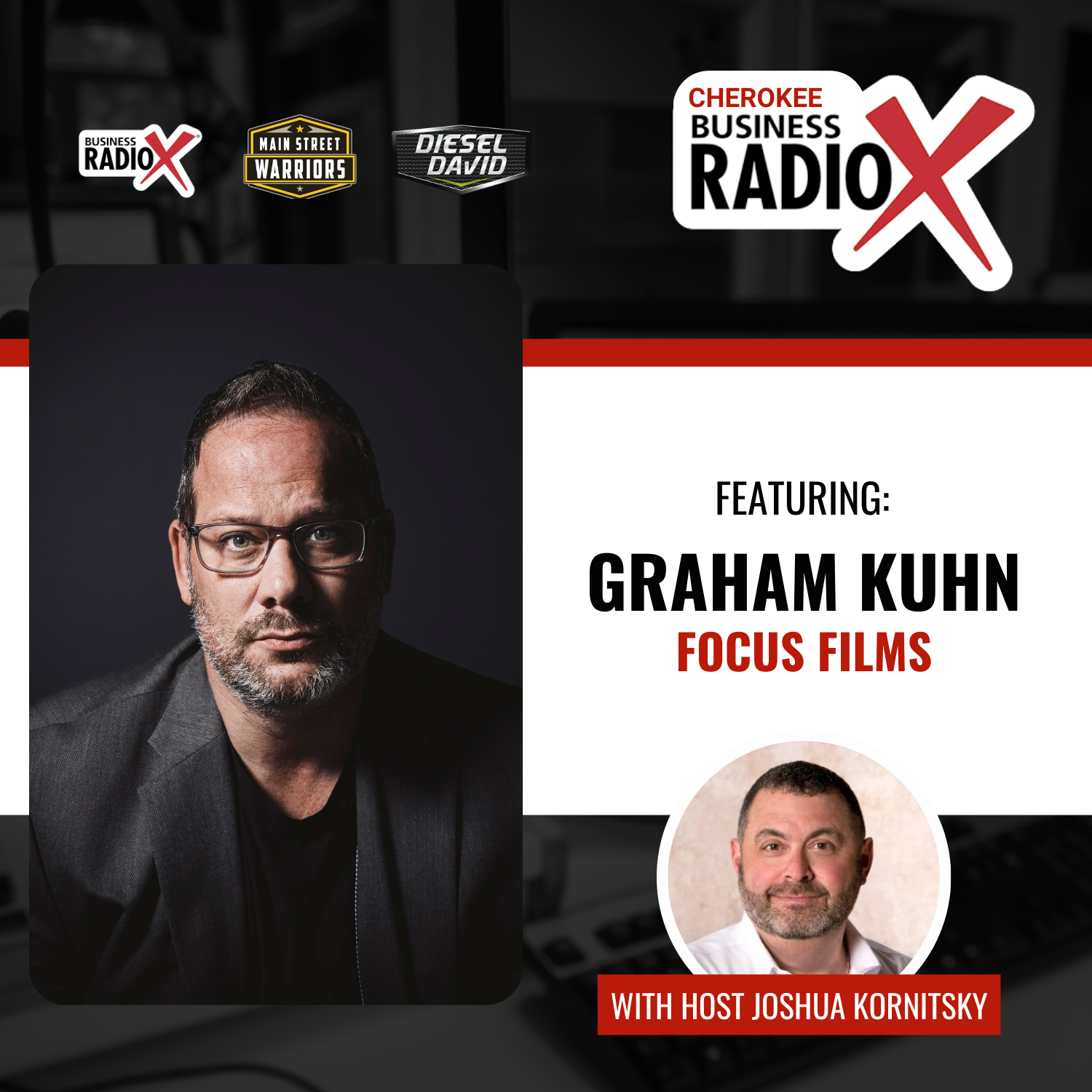
On this episode of Cherokee Business Radio, Joshua Kornitsky sits down with Graham Kuhn, Founder of Focus Films, to explore how authentic storytelling through video builds trust, credibility, and meaningful connection. Graham shares his journey from opera singer and wrestling coach’s son to full-time filmmaker, and explains why real conversations—not scripts—are the secret to powerful brand storytelling. The discussion dives into how businesses can use video strategically to stand out in a crowded, AI-driven world.

 Graham Kuhn is the founder of Focus Films, a video production company rooted in results-driven storytelling. He works with business owners who are tired of generic content and want videos that actually do something: build trust, convert leads, shorten the sales cycle, and educate prospects with consistency.
From law firms shifting public perception to homebuilders elevating their brand presence, Graham helps companies stand out by showing the human side of what they do. His storytelling is never scripted, he uses interview-based videos to capture authentic emotion, paired with smart strategy that aligns with business goals.
Before video, Graham spent 20 years as a professional singer and a wrestling coach. That blend of artistry and discipline is what sets him, and his videos, apart.
Episode Highlights
- From Farm Kid to Filmmaker
Graham’s path began in small-town Wisconsin, shaped by hard work, music, and athletics. After years as a professional singer and church video producer, his side hustle in video storytelling grew into a full-time business built around authenticity and human connection. - Why Scripts Kill Connection
Graham doesn’t use teleprompters or scripts. Instead, he relies on documentary-style interviews and real conversations to draw out the “why” behind a business—because people connect emotionally with stories, not polished sales pitches. - Storytelling Isn’t Passé—It’s Powerful
In a short-attention-span world, authentic storytelling still engages the brain more deeply than facts and data alone. Emotional connection builds trust, and trust drives buying decisions. - Video Strategy vs. Viral Hype
Focus Films doesn’t chase viral reels. Graham emphasizes strategic video assets—brand stories, testimonial videos, and website content—that convert viewers into clients, rather than just generating social media views. - Authenticity in an AI World
As content becomes more polished and AI-generated, genuine human presence stands out even more. Imperfections—“ums,” pauses, real emotion—create relatability and strengthen trust.
 This transcript is machine transcribed by Sonix.
TRANSCRIPT
Intro: Broadcasting live from the Business RadioX studios in Woodstock, Georgia. It’s time for Cherokee Business Radio. Now, here’s your host.
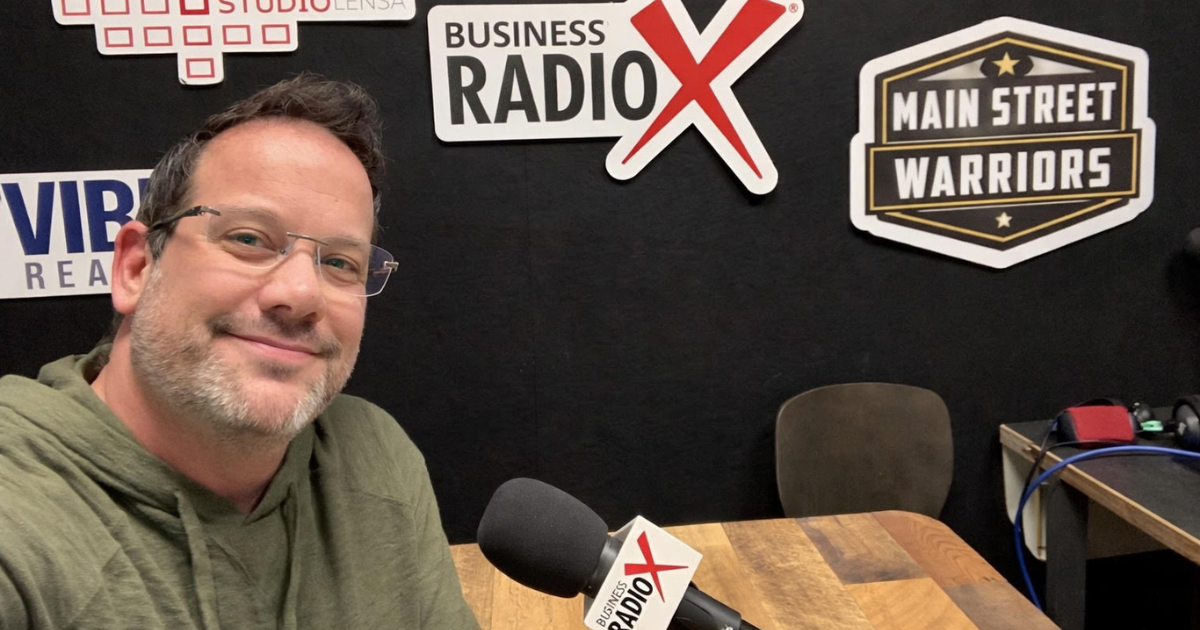
Joshua Kornitsky: Welcome back to Cherokee Business Radio. I am Joshua Kornitsky, your host and professional implementer, and I’ve got a great guest in studio with me today. But before we get started, I want to remind everybody that today’s episode is brought to you in part by our community partner program, the Business RadioX Main Street Warriors Defending Capitalism, promoting small business, and supporting our local community. For more information, please go to Mainstreet Warriors. And a special note of thanks to our title sponsor for the Cherokee chapter of Mainstreet Warriors. Diesel. David. Ink. Inc. please go check them out at dieseldorff. Well, as I said, I’ve got a fantastic guest here in the studio with me today. I’d like to introduce everybody to Graham Kuhn. He is the founder of Focus Films. His work centers on helping business owners think intentionally about how they show up, communicate, and connect with their audiences. He operates at the intersection of storytelling, trust, and personal presence. Graham brings a practical, human centered perspective to how business visibility and credibility should be. Welcome, Graham. Good morning.
Graham Kuhn: Good morning Joshua.
Joshua Kornitsky: Thanks for being here, man.
Graham Kuhn: I know everybody says happy to be here, but I really am. I’ve been I’ve been looking forward to this. So I’m excited to chat with you.
Joshua Kornitsky: Well, let’s begin at the beginning. I always like to hear the origin story. How did you get to where you are? What inspired you to do what you do?
Graham Kuhn: Well, going way back, I mean, I grew up in in a small farming town in Wisconsin, um, you know, hard work, blue collar. My grandparents had a farm, you know, baling hay, driving tractors when I’m eight, ten years old. Um, so, I mean, that really instilled a work ethic in me that I still have to this day, where my wife is like, you’re a workaholic. I’m like, I don’t, I’m just driven, man. I just I like to work hard. Um, and then, um, when I got to, like, middle school, high school, I had a love for music. So, um, I started singing, and I became, you know, I got, like, the lead in the musicals, and I was, like, on stage, like, oh, that’s kind of what I want to do with my life. That’s awesome. So I went to college, um, and I studied opera and I wrestled in college. And so it was an interesting dichotomy of the right brain and the left brain and the emotion and the tough guy and all that kind of stuff. And I just, um, I had been shooting videos for my father, who was the wrestling coach at my high school.
Graham Kuhn: Um, because he said when I was like in sixth grade, he’s like, hey, um, we need somebody to to film the the high school wrestlers. Do you want to do it? I’m like, yeah, sure. And I liked it running the camcorder on the tripod. This is like 1986 and, uh, uh, you know, the old school camcorder. And then at the end of the year, I’d like throw the, the best moves together into, like, a highlight video and on the VHS tape. And we’d show it at the banquet and everybody would cheer and be like, that’s so cool. I’m like, I like that. And then when I was wrestling in college, my college wrestling coach was like, hey, I heard you made some highlight videos. Would you do that for us? Sure. Right then, through music, I auditioned for a singing group, a professional acapella group in Atlanta, and they let me in. So I moved to Atlanta in 1999. Um was a professional singer for 20 years. Wow was, uh, working at my church doing music, worship leader and also video production because they also got wind that I had done some videos.
Joshua Kornitsky: It’s amazing how word gets around.
Graham Kuhn: I know, and it was like, I mean, it was the Catholic Church. So in 2010, they decided they wanted to be on the cutting edge and start doing videos. But um, so then from, gosh, 2009 or 10 until 2020, I was cranking out 2 or 3 videos every week.
Joshua Kornitsky: Wow.
Graham Kuhn: So I got pretty good at it. And it was through that that I that I discovered this, like, authentic storytelling kind of vibe. Um, just letting people be themselves that really resonates with people when they’re watching videos. And, um, so then long story short, my side hustle video business just got too big because people from the church were calling the office, like, who makes the videos? I need them for my business. They’re really good. I need them for my business.
Joshua Kornitsky: That’s awesome.
Graham Kuhn: So then my wife and I just, you know, we had some we had some conversations. We’re like, am I gonna quit my job and do this full time? And so we did. We we left the salary and the benefits and went full time into this. And, uh, it’s been really great.
Joshua Kornitsky: I mean, it sounds like it was born of passion and genuine love and interest. And when it comes to starting a business, those are not uncommon reasons, but they are usually difficult to become sustainable. So it sounds like it’s got its own momentum. And you’ve been at it now for a number of years, plus all the many years of experience getting into it. So let’s talk about storytelling, because I, uh, in my heart of hearts, I want to retire to the hills and just be a storyteller in storytelling competitions. It’s a it’s a passion for me.
Graham Kuhn: That’s very.
Joshua Kornitsky: Cool. Um, I just think it would be a lot of fun. But when you talk about storytelling, you’re talking about your words, right? The authentic person in front of you, how do you help them go from being? I’m afraid of being on camera, and I hate the sound of my own voice to getting to the point where you’re actually reaching that person.
Graham Kuhn: This is going to sound scary to people, but the biggest thing is I don’t script anything. There’s no there’s no teleprompter, there’s no script, there’s no reading. And I mean, the real the real secret is that most of the videos that we make are interview style, like a documentary style where, like the conversation you and I are having right now, there’s no script, right? You’re asking me questions. I’m answering, and we’re having a conversation and it’s the real me. Whereas if we were doing this for a video project, there would just be two cameras off your shoulder that were filming me.
Joshua Kornitsky: And a teleprompter behind my head.
Graham Kuhn: And we’re just and we’re just talking for like an hour. And the real key, though, is I’m not asking when I’m talking to my clients. I want them to connect with the viewer on an emotional level, a psychological level. If, for instance, you’re if you’re a roofer, I’m not asking you about shingles and gutters and siding. I’m asking you like you asked me about my origin story. I’m asking them why they do this. Why are you so passionate about this? And most of the time for, say, a roofer, it’s going to be because I know that home is where the heart is, or home is where they make memories. It’s more than windows and a roof. It’s where a family is safe and all that. And that’s the passion behind it. It’s not. I love to put this kind of shingle on a roof. It’s because they want to help people and help them make memories. That’s the story and the way I get them to open up is literally have a conversation with them. We do a one hour deep dive pre-interview, if we will, a week before we ever shoot. Then I already know their story, so I can help guide them by asking them questions to pull out what they need to get. Um, and then we really they’re never looking in the camera. They’re always looking at me. We’re just having a conversation, and I’m really trying to focus on why they do it. And then we’ll touch on, you know what? What do you do? How are you different from competitors. But really that why is what connects with people. That’s emotionally. If I hear somebody saying, I do home building because I grew up working in the woodshed with my grandpa and he really inspired me, you know? And again, I know that home is where people are going to make memories. That’s what connects versus we’ve got this architect and we’ve been doing this since 1998, and we’ve been it sounds like everybody else, but it’s really the conversation and just leading them to talk about who they are, why they do what they do.
Joshua Kornitsky: Why it’s right.
Graham Kuhn: I mean, it’s it’s almost cliche these days with Simon Sinek and all, but it is. That’s what resonates. I want people to watch my clients video, connect with them on an emotional level and go, hmm, I would trust them with my money.
Joshua Kornitsky: Well, and ultimately we do business with people we trust, right? Absolutely. And stories are what connects us at a human level to better understanding why you’re doing what you’re doing. Yeah. Um, you and I did have a pre-show discussion, and one of the things that I distinctly remember, because it’s something I think we have in common, is, uh, that we both like to focus on education and helping people understand. I’m less concerned, and I feel you’re less concerned about getting to the here’s your invoice and much more concerned. Talk to me about how you educate and what it is you educate because I well, there’s there’s another question here, which is probably what are the assumptions people make about what you do. And then let’s talk about how you educate them, because I imagine kind of like when Facebook got popular, if you had a DSLR camera, you put yourself out there as a wedding photographer, right? And as, as someone who’s been burned by a wedding photographer. So what are the assumptions people make? First.
Graham Kuhn: I have no comment. I was a wedding DJ for 13 years and I’ve heard some horror stories about photographers and videographers. Anyway, um, the misconceptions people have is when they hear, oh, you own a video company with how the world is today with TikTok and Instagram, and they assume it’s a bunch of 32nd reels, or it’s, um, you know, you’re going to write a script and we’re gonna come up with a skit, you know, because that’s what. Well, that’s absolutely not what we do. Um, that may be the first step in a strategy, right? Because I firmly believe that those, um, social media reels and social media, Facebook and TikTok, that gets eyeballs, it gets engagement. But most of the time it’s not going to lead to business. It’s not going to lead to conversions. That’s your first step. You get eyeballs and then somebody goes, huh, I think I’d like to check out their website and maybe hire them. Then they go to the website and there’s nothing but text there. And like, my dad and I started this business in 1992 and we’ve been around for this many years, and there’s no emotion or psychology. There needs to be a deep like brand story video, almost a documentary about the why. Like we were talking about testimonial videos from clients because we use emotion. We buy with emotion. Sure. And then we use the logic to justify it. But if it’s just a website with text, it’s like logic, logic, logic, logic. They saw these great videos on social media. They go to the website, nothing there. So biggest misconception is that we do social media content. That’s not it. It’s storytelling videos, marketing assets that are going to drive business because I firmly believe if you’re going to hire us, you better make that much money back and more. That’s why we’ve got a pretty stringent pre-qualifying process, because if I don’t think it’s going to be effective for you, we’re not doing it.
Joshua Kornitsky: And I think that’s a really upfront way to represent yourself, because I feel certain that anybody can get a camera for hire. Uh, anybody, certainly with modern technology, can just record, right. But what you’re offering is a whole lot more than that. But you also want to make sure that, uh, as we say in my universe, that the expectations are aligned to the outcome. Right? Otherwise, you have someone who is expecting. And one of my marketing is is a hobby. It is not a focus of mine. But I’m I’m always fascinated by by reading thought leader’s perspectives. And, and one of the things that I’ve read is anybody that promises you that they can get you viral, fill in the blank, uh, move along. There is. If anyone knew the recipe, everyone would be following it.
Graham Kuhn: Yep. Yeah. And I mean, I would say I tend to know what works in my universe. Like this will probably get results, but I will never guarantee this is going to happen.
Joshua Kornitsky: 70 million people are going to watch you do this.
Graham Kuhn: You never know. And then from. But that’s part were you asked about educating is um, also part of the strategy in that I like to teach people how to create videos, how to use videos in their business, whether it’s I’ve got a couple clients who own DSLR cameras, but they never use it. And I’m like, hey, I’ll help you set it up. And then other people are like, well, we don’t have the gear, we don’t have the it doesn’t matter. You’ve got a phone. I’ll help them talk about what kind of content they could do. Or here’s some ideas. Or if they want to set it up on a tripod with nice lighting and microphones, I’ll help them do that. Like, I will educate them on that if you want to talk about gear setting up, but then it’s really about educating them on getting out of their own way and just being themselves on camera, getting over that fear of, oh, people are going to judge me and oh man, you just gotta do it, you know? But the way that benefits me if we want to be selfish, is that I tell my clients they don’t have to pay me for everything. You’re paying us to do, say, a brand story video, maybe three testimonial videos. You don’t need to pay us to do social media content, but I’ll help you teach you how to strategy. Yeah, because then the the more content they’re putting out there, it’s going to work better for them. And they go, wow. Graham with Focus Films really helped us. And video works great where they’re not paying me for everything. I educated them on how to use video. Everybody wins. I mean, which is really my my driving why and passion is just I want everybody to win, man. I want everybody to be happy and joyful and full of gratitude. And I want everybody to crush, you know? And so if I’m a part of helping a business owner win, especially the little businesses beating the big guys, bro.
Joshua Kornitsky: It it is among the most satisfying things that I’ve gotten to experience professionally is, is when I see the the teams that I work with Achieve the success that they were always capable of. They just needed guidance to get there because it’s not my success, it’s theirs. And when you see that, that’s immensely satisfying. It’s immensely rewarding. And oh, it usually helps a whole bunch of people at work for that company have a better life. Yep.
Graham Kuhn: And it also, not only does it help the people working for the company, but it has it has an impact on the clients that hire them. Like if they’re doing a service or a product that’s going to help people. The more people that are doing business with them, it’s helping more people. And I, I mean, I love, I, like I said, I love people winning. I love to see people helping. And so if we’re promoting a company that helps other people, the more promotion they get, the more clients they get. Right. They’re making more money, but there’s more people being helped. So I just think that’s that’s really what I love about what I do.
Joshua Kornitsky: Well, and and so I want to go back to something you said about and my words, not yours. Where where you work with a prospective uh, customer to understand their expectations and to make sure that that your deliverable will align with what they’re after. What is, uh, I don’t want to say the ideal client, but who are your clients? What type of business? What size business? Um, and I’m not asking you to rule anybody out, but on average, what are the types of organizations you work with?
Graham Kuhn: Yeah, I would say if you want to know industries, typically attorneys, healthcare, um, construction, uh, would be three of the main industries. Um, and if you want to get specific about why like, especially like, let’s say a personal injury attorney, why it works well is because personal injury attorneys have a have a stigma attached to them. You say Pi attorney people have negative connotations, negative ideas. When you see a brand story video of this person being authentic and real on camera, talking about their story and why they do what they do and that they actually care about helping people? Yes, they get paid and they get paid well. But when you hear them talking about how much they love to help people and get them results, all of a sudden that stigma goes away. In those the the connotation that you have goes away. So it builds that trust. Um, so that’s why video does really well with like attorneys. Um, and then more larger companies typically like 5 to 10 million revenue, um, probably has at least a marketing person, whether it’s a director of marketing or if you’ve got a chief marketing officer and a director of marketing and a couple people that do social media, um, working on retainers and outsourcing to, to us has been a great relationship for us, too. Um, so the small business and then, you know, the, um, the little bit larger business that’s already got maybe a marketing person, but not to go off on a tangent, but most marketing people don’t understand how to use video. And I’m not saying that to beat my own chest. It’s just they understand the overall marketing strategy. And okay, we need video, right? But I understand different types of videos for different types of purposes and different results. And you know, so it’s like it’s just going a little deeper with that. And that’s why you would put somebody like us on a retainer, just like larger companies would put a marketing agency on retainer. They’re not going to bring in a logo designer and a social media and put them on their salary.
Joshua Kornitsky: Because they don’t need them all the time.
Graham Kuhn: They’re going to they’re going to outsource it to retainer. So that’s what we do.
Joshua Kornitsky: That makes perfect sense to me. And I would I would only ask the question for anybody listening right now that doesn’t fall into that immediate, any of those immediate categories, should they still pick up the phone and ask?
Graham Kuhn: Yes. And I will tell you that. I mean, it’s it’s going to sound cliche, but if it’s not a good fit, um, I’m happy to refer. I’ve got a great network of other people, um, who I would never call them competitors. When I, when I first started out, I competed with everybody. I was very, very, what do you call it? Um, not small minded thinking, but not abundance. I didn’t have an abundance mindset. I had a scarcity mindset. And so everybody was competition. And then I learned through coaching and mentoring that, hey, you need to become friends with other competitors in your community because you can help each other. You can get resources. Man, I know like 7 or 8 other video owners in our immediate area that are great friends of mine who, if it’s not a great fit for us, I can refer to somebody else. Um, one of my friends called it collaboration and I absolutely. I love that.
Joshua Kornitsky: Collaboration over competition is really the secret to competitive success because, you know, there are a lot of, uh, organizations that I work with that have coaching needs outside of us. That’s all I do. So I’m happy to refer to any of the other coaches that I know that’s a good fit. Uh, or that would be a good fit, because the goal ultimately is to help the customer or the prospective customer or just the person who’s asked for help.
Graham Kuhn: And that’s what I say all the time. It’s like people, I love to go have a coffee with people or have a zoom call with some. If you want to pick my brain and ask me questions about how to use video in your marketing strategy, I am happy to have that conversation. Whether you hire me or not, whether it’s a good fit or not. I am happy to tell you what I know, um, and try to help you implement it into your marketing strategy. So even if you’re a solopreneur who just started your business and don’t really have a business yet, I’m happy to meet you and just give you ideas and strategies like I do. And I think I was having a conversation yesterday with somebody. I’m in my 50s, somebody who’s a little older than me, and we were really vibing on, you know, I just like to help people, and it’s not all about the money anymore. And I was like, you know, it’s cool being altruistic like this, but I think it just comes with time. The more success you have after you go years and years in a business and things are kind of going okay, then you start to move into, hey, man, things are okay. I’m comfortable. I can help people and kind of give away stuff. But I’ll tell you, six years ago I wasn’t like this. I was like, gotta get the money, got to get the money, but now I’m at a place where I’m just like, man, I’m happy to help. You know.
Joshua Kornitsky: And I would hazard a guess. You’re probably a happier person right now.
Graham Kuhn: Oh, yeah.
Joshua Kornitsky: Because I think, uh, I think some, some people, myself included, uh, were just wired that way. Where, where that help first mentality is just a core value. And you just it’s not always, as we’ve said repeatedly, about putting money in your pocket, putting knowledge in your head is is going to do more in the long term, helping others better comprehend and understand. Um, so another question that I have that, that I, I want to try to articulate it as best I can, but I’ll probably not quite hit the mark. We live in a short attention span world, and you had mentioned earlier about helping guide people for the right application of video in the right place. So maybe this falls under that category is in current climate. Marketing climate is storytelling pass. Have we moved past the point where it resonates? Do people really listen to the whole story?
Graham Kuhn: They really do. And I think it has a lot to do with neuroscience and how the brain works. And if somebody is engaged in the story, um, you can go 20 minutes, 30 minutes. I mean, I’ve watched I’ve watched hour long podcasts on YouTube, you know, um, just because the content, the stories were engaging. Now, if I was doing a five minute scripted teleprompter thing trying to sell you, nobody’s gonna watch that. But, I mean, there’s all techniques with hook em in the first five seconds, you know, and all that. But if you’re telling a story versus facts and data, if you’re telling facts and data, you’re going to light up two parts of the brain. If we’re telling a story and people are envisioning and all that, you’re lighting up seven parts of the brain, so you’ve got more of the brain lit up and engaged. You’re gonna the person is going to remember more. Which is why when I’m telling stories about a client, how I helped them, people remember that versus me saying, I do this and we do this. And, you know, we show up and we shoot the video and it’s all data and facts.
Joshua Kornitsky: There’s a time and a place for.
Graham Kuhn: It’s all logic.
Joshua Kornitsky: Right?
Graham Kuhn: Whereas if you can get emotional, it lights up more of the brain. So no, storytelling is not passé at all, in fact. And maybe this leads into something else we’re going to talk about. But being authentic and telling stories and being real is what makes people stand out. Especially now with everything that’s AI. And everybody can make really cool looking images and perfect looking videos and manipulate things to look perfect, right? But that’s where being authentic and being yourself and standing out and being like, if we say um or uh, I don’t cut those out anymore in videos because it’s like, oh, that’s a real person humanized. And it connects so much better now than we’re. So everything’s sterile now. Everything is so produced and just. That’s why user generated content UGC does so well in like TikTok does somebody grabbing their phone, walking down the street. There’s no production. There’s no. But they’re telling a story and you’re engaged with that because it’s human to human. We want connection as humans. Um, so short answer no, storytelling is not passé.
Joshua Kornitsky: Thank you. And and I, I am very much of the kind of the Carl Sagan mindset that that we are all just gathered around the fire in the darkness. Right. And I think, I think it’s primarily part of who we are as humans that, that that’s just how we are wired. And I don’t think, uh, 11 second or 22nd or 32nd video shorts can change that to your point when it’s engaging.
Graham Kuhn: Yep.
Joshua Kornitsky: So you’ve talked about how you get to know somebody in their story ahead of time. You talked about how you conduct your conversations with them in in an informal way. Is there any type of coaching you offer or any type of advice that you give about authenticity? Because I imagine, right, to a lot of people, that camera’s a gun. They get nervous. They they are concerned how they look, how they sound, and a million other things. How do you help them be themselves?
Graham Kuhn: Well, if I’m there and I’m doing the video, it’s literally just having those conversations. It’s I’m on a chair facing them on a chair. We’re at the same level and we’re just talking. And the first 5 to 10 minutes might be very robotic, and they’re very in their head and they’re very worried about what they. And it’s horrible. But something magical happens. After 5 or 10 minutes, those cameras disappear and those walls come down and that insecurity, and they forget it’s there. And then almost to a person, when we get done with the interview, I’m like, all right, we’ve got everything we’ve covered, all the points. They’re like, that’s it.
Joshua Kornitsky: Where’d the time.
Graham Kuhn: Go? That was so easy. So that’s what I would say. If I’m there and I’m doing it’s really just I can I actively listen like you’re doing, I can tell that we’re actually having a real conversation here. I know there are probably points that you want to get to, but you’re actively listening to what I’m saying and you’re taking the conversation there that is so important versus the interviewer who’s got ten questions on their paper and they go, okay, great. Thank you. All right. Number two, what is your it’s not it’s not conversational. It feels like an interview. So that’s the biggest thing when I’m there. If they’re doing it on their own right. That’s the biggest fear. People are like I won’t be on camera, but you just got to do it. I have no great advice other than the first 20 times you’re going to suck at it. You just have to push through it, keep doing it, keep looking in the camera and doing it and doing it and picture one person that you’re speaking to, like, right now. I’m talking to you, Joshua. It’s just you and me. I’m not even thinking about the people that are going to listen to this. I’m just talking to you. The same thing as if I was looking in the camera. I would picture, let’s say, my wife or, um, a client of mine. And I’m giving that message to that one person. If I thought a thousand people are going to see this and I’m trying to, it gets really weird. Get in my head. So picture one person when you’re talking into a camera and you’re trying to record yourself, and two, you’re gonna suck. Just accept it. I like the more you do it, the better it’s going to get. And all of a sudden, one day you’re gonna go, dang, I’m pretty good at this.
Joshua Kornitsky: It I can absolutely attest to what you’ve just said. We, uh, we are approaching March. The end of March will be a year that I’ve been, uh, a host here. Uh, and certainly it has evolved enormously over that time, uh, and over all those conversations. And now we incorporate video as well. And you are 100% correct. You simply have to disregard your concern with the lighting or the camera angle. You do the best you can and you keep moving because as as I coach my clients, it’s not about perfection. It’s about moving the ball one extra yard down the field. And maybe next time we’ll buy a light. Maybe next time we’ll change the camera angle. If you get hyper focused on that now, I imagine that all you have is paralysis.
Graham Kuhn: I will say I tell clients if I’m mentoring younger videographers, I am anti gear. I don’t care about the gear. I don’t care what kind of camera you shoot on, what kind of lighting you have. It does not matter to me. First of all, none of that matters if we’re trying to connect with people. Um, let’s say we’re making a brand video for someone, um, or somebody. Somebody is shooting their own content with their phone. They’re worried. Is the lighting right? Is the framing right? None of that matters. What matters is the story, the content, what you’re saying, and connecting with people. Human to human. I don’t care if you’re on the bottom half of the frame. And it’s the worst lighting in the world. If we can hear you speaking and you’re telling a story, and that is all that matters to me. And then when you’re getting to my level with, you know, professional equipment and all that, I don’t care if it’s a Sony, if it’s a Nikon, if it’s none of that matters to me. If we’re telling the story and it looks good and it’s going to get results, that’s all that matters to me. Literally. I don’t care what I hire guys that shoot with me, they care about that stuff. Sure, I they geek out about cameras and gear. I can’t have conversations with them. I don’t care about that. Or you get with editors who are like, oh, I can’t wait to do all the color grading and all the editing. It doesn’t matter to me, right? What matters to me is telling the story that’s going to get my client’s results. And that can happen with an iPhone. That can happen with a $50,000 Hollywood camera. The gear doesn’t matter. The story and the content that connects on a human level, that’s all that matters.
Joshua Kornitsky: I mean, I think if if I were to distill this discussion down into a single statement, I think that’s it, right? It’s it’s far less about how and far more about what and and uh, in, in that instance or in that case. Let me ask one final question, because I think it’s important for anybody that’s listening to understand, um, we talked about the types of customers that you typically work with. We talked about the fact that you are willing to offer guidance and advice to to people who are who are reaching out to ask about it. But if you think video is the next logical step, or if either your internal or your contracted marketing people tell you video is the direction they need to go. What advice would you give that owner who who has made the decision that okay, video is the way for me? What are the things they should think about?
Graham Kuhn: Well, one think about being authentic and being real. And what is your story? I know we keep talking about story.
Joshua Kornitsky: But it’s the.
Graham Kuhn: It is like the heartbeat. It’s the oxygen. It’s the it’s the story. Don’t focus on like I make all these funny. Oh, I think they’re funny. I make these LinkedIn posts about all that matters.
Joshua Kornitsky: You think.
Graham Kuhn: It’s like, that’s that’s why.
Joshua Kornitsky: We’re entertaining ourselves, that’s all.
Graham Kuhn: That’s what keeps me going, man. But it’s like about how terrible your About Us page is on your website. And I do all these pictures of me, like laying around my house, like passed out, like on the floor of my glasses. Go like, this is me reading your About Us page on your website. Um, don’t focus on the, uh, on the benefits on on the on the features and benefits of your business. Focus on the heart of the business. Focus. I always say I like to tell the story of the person behind the brand. I don’t care about your logo. I want to know the person behind the logo. Really? And I mean dude, use AI, use ChatGPT to come up with ideas. Now don’t ever script it and copy and paste it. But to ideate and come up with ideas, what.
Joshua Kornitsky: Can a collaborative tool.
Graham Kuhn: What can I talk about? Right? It’ll come up with ten topics. Oh gosh, I never thought about that. And so if you’re thinking about doing it, I mean just start doing it, grab your phone and start making content. Or if you want to speak to somebody like me, let’s have a conversation. But the biggest thing is just, you know, getting, what is it? The, um, the best time to plant a tree was 20 years ago. The next best time is today, right? Just get started. It’s gonna. You know, if you want to talk to somebody like me, great. If not, use ChatGPT or Claude or whoever. Come up with ideas of topics you can discuss in your industry, and then don’t worry about the production value. It literally doesn’t matter. Make sure we can hear you and we can see you. That’s that’s all that matters.
Joshua Kornitsky: Great guidance. Well, let me ask you this, Graham. What’s the best way for people to get Ahold of you?
Graham Kuhn: Uh, the website is Focus Films. Com. Um. Or. I love being on LinkedIn. I love making connections on LinkedIn. Graham Kuhn k u h um, and I love to just connect with people on there all over the country. We do on location videos. We do virtual videos that are very high quality. Like we can help anybody anywhere.
Joshua Kornitsky: That’s fantastic. And we will share those links when we publish the interview. Uh, I really can’t thank you enough. I found this both fascinating and fun, and to me, those are the best kind of conversations to have. Um, I want to thank you again for being here. So today my guest has been Graham Kuhn. He’s the founder of Focus Films, and his work centers on helping business owners think intentionally about how they show up, communicate, and connect with their audiences. But let’s be direct. Clearly, he’s going to help tell your story, and he’s going to help you tell your story in a way that you probably haven’t thought about. And I think that’s the greatest thing that I can say. Uh, Graham, thank you so much. Let me also be upfront and thank, uh, the Community Partner Program. Today’s episode has been brought to you in part by the Community Partner Program, the Business RadioX Main Street Warriors defending capitalism, promoting small business, and supporting our local community. For more information, please go to Mainstreet Warriors. And a very special note of thanks to our title sponsor for the Cherokee chapter of the Main Street Warriors. Diesel. David. Ink. Please go check them out at diesel. Com my name is Joshua Kornitsky. I am a professional implementer of the entrepreneurial operating system known as EOS, and your host here on Cherokee Business Radio. Thanks for joining us. We’ll see you next time.














