

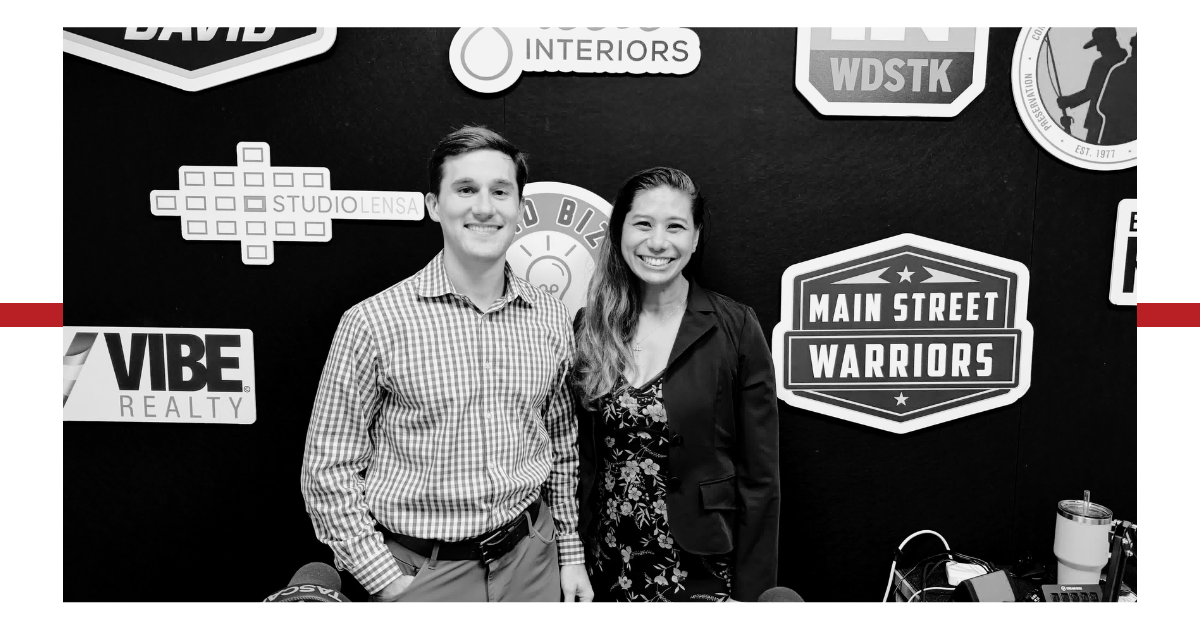
Brought to you by Diesel David and Main Street Warriors

In this episode of Cherokee Business Radio, Joshua Kornitsky welcomes Harrison O’Neal of Snelling Walters to discuss commercial insurance and risk management, emphasizing proactive client education and the importance of tailored coverage. Later, Sue Dunlap, founder of Hitch HR Services, shares her journey in HR and explains how strategic, flexible HR support can help businesses of all sizes build strong cultures and manage growth. Together, the guests provide valuable insights into protecting and empowering businesses through expert risk management and human resources solutions.
 Harrison O’Neal grew up in Roswell, Georgia and is a graduate of Georgia College with a degree in business administration. After starting in the insurance industry as a commercial lines underwriter, he transitioned to the agency side, following in the steps of both his father and grandfather.
Harrison is an advisor and advocate for a wide variety of middle market commercial clients, seeking to simplify the insurance process and reduce their total cost of risk. Harrison enjoys learning the people and the story behind the business, then working to craft an insurance program to protect exactly that: the people and the story of the business.
He is committed to bettering himself professionally and personally. Professional and spiritual mentorship have made him the man he is today, and he seeks to extend that impact to others.
Harrison lives in Marietta with his wife Melissa, and is active at Christ Covenant Church. Outside of work, Harrison enjoys playing soccer, mountain biking, and spending time with family and friends in the outdoors.
Connect with Harrison on LinkedIn.
 Sue Dunlap, MBA, PHR, SHRM-CP, is a seasoned Human Resources executive based in Atlanta, Georgia.
With a distinguished career spanning over two decades, Sue has a proven track record of transforming organizational cultures, developing corporate infrastructures, and driving employee engagement across various industries, including healthcare and private equity-backed firms.
She holds an Executive MBA from Georgia State University and certifications in Human Resources and Lean Six Sigma, which underscore her commitment to excellence and continuous improvement.
Sue’s background spans a variety of industries, with extensive work in healthcare, multi-site operations, and professional services. She has led full-cycle HR initiatives including M&A integration, compliance risk audits, organizational design, culture alignment, and HR technology optimization for businesses undergoing transformation. Her practical and consultative approach is grounded in operational execution, leadership development, and long-term value creation. 
Sue is deeply involved in her community and continues to contribute to the field of Human Resources through her active participation in professional organizations like the Society for Human Resource Management (SHRM) and a Board Member with Side by Side Brain Injury Clubhouse.
Her comprehensive experience, coupled with her strategic vision, makes her a dynamic leader committed to fostering inclusive and high-performing workplace environments.
Connect with Sue on LinkedIn.
Episode Highlights
- Business risk management and its importance for companies.
- The complexities of commercial insurance and challenges faced by business owners.
- Proactive insurance management and understanding coverage needs.
- The role of insurance in protecting businesses from financial losses.
- Human resources support for small to medium-sized businesses.
- Misconceptions about HR as merely administrative versus its strategic role.
- The significance of organizational culture and leadership’s role in shaping it.
- The value of data in measuring HR effectiveness and organizational culture.
- Flexible HR solutions for businesses lacking full-time HR resources.
- Strategies for improving employee engagement and retention through effective HR practices.
 This transcript is machine transcribed by Sonix.
TRANSCRIPT
Into: Broadcasting live from the Business RadioX studios in Woodstock, Georgia. It’s time for Cherokee Business Radio. Now, here’s your host.
Joshua Kornitsky: Welcome back. I’m Joshua Kornitsky, professional EOS implementer and your host for this edition of Cherokee Business Radio. Before we get started with the great guests we have in studio, I’m going to tell you that today’s episode is brought to you in part by our community partner program, the Business RadioX Main Street Warriors Defending Capitalism, promoting small business, and supporting our local community. For more information, go to Mainstreet Warriors. And as a special note of thanks to our title sponsor, the Cherokee Chapter of Main Street Warriors Diesel David, Inc. Please go check them out at diesel. Com. Thanks again for joining us today. I’ve got two fantastic guests here in the studio with me and I’m really excited to get started. So first I’d like to introduce Harrison O’Neal. Harrison, welcome to the show.
Harrison O’Neal: Thanks, Joshua. Thanks for having me.
Joshua Kornitsky: It’s great to have you here. So Harrison is a risk consultant with Snelling Walters, where he works with commercial clients to help them navigate complex insurance needs. He brings a strong focus on clarity and trust in the industry, and it’s an industry that’s often viewed with skepticism. Harrison joins us to share his approach to demystifying the risk, building strong relationships, and leading with culture. Welcome, Harrison.
Harrison O’Neal: Thanks for having me.
Joshua Kornitsky: Thanks for being here. So come a little closer to the mic if you would tell us what what drew you into this universe?
Harrison O’Neal: Um, so like a lot of people, um, kind of fell into insurance, um, wasn’t something I set out to do. Um, but I do have a strong background. My granddad actually owned an agency in Atlanta that my and my dad, um, is also in the industry as well. So kind of got out of it into college and then soon realized it’s just a great industry and just a lot of opportunity, especially for young people.
Joshua Kornitsky: So it’s really been a building block for you. How long have you been involved in it?
Harrison O’Neal: So ever since college, um, graduated, got my first job as an underwriter and then really just, um, built, built from there and then got into the sales side in the middle of Covid during 2020 and haven’t looked back.
Joshua Kornitsky: So was that was that a good thing or a bad thing to to come in at that time?
Harrison O’Neal: So it ended up actually being a really good thing. Um, because just with Covid and just kind of all the chaos in 2020, a lot of people, business owners were out there and they just were kind of abandoned and weren’t being taken care of. And so I kind of was the new kid on the block out there and get my name out there. And it worked out really well.
Joshua Kornitsky: Well, good, good. I’m glad that that led you to some early success. Right. Because that’s what builds the momentum and gets us going. Um, so as you’ve gotten to know this, this industry, what are some of the things that get misunderstood or challenges that you help some of the business leaders that you work with deal with?
Harrison O’Neal: Sure. Yeah. So, I mean, in general, insurance on the business side is just extremely difficult right now. Georgia is actually one of the most litigious states. And so business owners are just getting hit really hard from a pricing standpoint. And then at the end of the day, also insurance, they’re being sold a piece of paper. And so it’s just very challenging. Um, they’re having to trust someone that this piece of paper that they pay a lot of premium for is actually going to cover them.
Joshua Kornitsky: So and I don’t know if you know the answer to this, why are we such a litigious state? Is is it our laws or is it just the way that it’s viewed as an industry here?
Harrison O’Neal: Yeah, I mean, it’s a little bit of both. I think we are really pro-business, um, growth and a lot of good businesses here. And so a lot of attorneys and lawyers have moved in and they’ve gotten some very favorable rulings. So it just kind of ramps that up and it continues to go down that path.
Joshua Kornitsky: That’s that’s unfortunate because it ends up costing all of us more money, doesn’t it?
Harrison O’Neal: Exactly. Yeah.
Joshua Kornitsky: Excuse me. So when you first engage with a client, um, you know, are they viewing you at this point as a necessary evil, as a required business expense, or do they see it? For what? I try to picture it as, as sort of an investment in the future of their business. I know it’s a necessity in almost all cases.
Harrison O’Neal: Yeah, exactly. I mean, we we do have some people that approach it, um, seeing the value right away, but most people, um, see it kind of as a commodity and something that, you know, they just need to give us their numbers and we’ll come back with something. And hopefully by the end of our engagement, we show them there’s a lot more value, um, that their business can, can get out of it.
Joshua Kornitsky: Do you have any stories from just your experience and your time working with any of your clients that might resonate for, for how it really is going to help them?
Harrison O’Neal: Sure. So I mean, the biggest, the biggest one is a claim. So you have a situation where, um, we had a nonprofit that had works with a lot of schools, and they had a situation where someone ended up getting hurt when they were supervising, and it was this huge lawsuit, and the insurance company ended up paying, um, over $1 million to help cover that. And so when they see that, that’s that’s just a huge level showing that it did come through for them, because for them to go out of pocket on that would be would be detrimental.
Joshua Kornitsky: Sure. So it definitely saved the day, as it were.
Harrison O’Neal: Yes, exactly.
Joshua Kornitsky: All right. Um, with the business clients that you work with, is there any specific industry you work in?
Harrison O’Neal: Yeah. So I would say there’s kind of three. I’d paint it as there’s three categories. Um, the most broad would be um, would be kind of contractors, restaurant groups and manufacturers kind of in that 5 million and up space, 20 plus employees.
Joshua Kornitsky: Okay.
Harrison O’Neal: And then moving on to a little bit more specific, some of our larger clients. So 100 plus employees, um, when they’re kind of just stuck in the rut of traditional insurance and getting hit really hard, we have some captive, uh, focus and expertise that we help them out with. And then the last one, which is very specific, is we have a niche in security system integrator. So think like alarm contractors, people who are helping with security access control. We have a program built out for that.
Joshua Kornitsky: And is that because of anyone’s previous experience or just the the luck of having found success in that industry.
Harrison O’Neal: That one there’s another guy, one of the partners that I work with. He’s actually based out of Athens, but he got involved in a couple associations. And so from that, we’ve kind of grown it to writing insurance for in all 50 states for, for that industry.
Joshua Kornitsky: So you found yourself a nice little niche, which is fantastic. Um, can you share across your, your clients or prospective clients, you know, what are some of the common misconceptions? Because in my mind, I, I imagine people come with a whole bag of of things they think that insurance does or doesn’t do, and seems to me either side of that coin could be expensive for them if they’re wrong.
Harrison O’Neal: Sure. Yeah. I mean, it’s there’s just so much out there and a business owner, I mean, they look at their insurance policy, it’s got hundreds of pages. So there’s kind of a lot of times they just throw their hands up. They don’t know what to do. Um, but what we want to really encourage business owners is to empower them and, and to set standards of, hey, this is when, um, we can get our renewal. We have control of, of our, of our insurance rather than kind of just sitting back and getting things late. What we what we find is there’s a lot of business owners that get their renewal and their insurance terms very late in the game where they can’t do anything. And, um, they’re not really getting to dictate the terms, if that makes sense.
Joshua Kornitsky: So they’re just sort of stuck with you get what you get.
Harrison O’Neal: Exactly.
Joshua Kornitsky: But that’s due to their, um, I don’t want to say poor planning, their lack of prioritization.
Harrison O’Neal: Perhaps it’s a little bit of everything. I mean, they have there there’s so many things that pull them in different directions. So a little bit of just making the time for it. But also I think a lot of them don’t even know what they can have. So they’re just so used to I would say just kind of like the, the standard average or sometimes even below average service and help. And so they don’t even know that they can have a proactive approach and get, get better results.
Joshua Kornitsky: So is that something you try to work with them on?
Harrison O’Neal: Yes. So we’ll um, really, when I engage with either a client or potential client, just want to be very upfront with them and kind of figure out where they are and what they how their setup is. And then just from there, give them feedback right away. And so, you know, sometimes that can actually be from what I’m hearing from you, you’re actually in a good place. I think your program is really good. What you’re telling me that your current person is, is that current agents helping you out, that we think you would actually be good continuing on with them? Um, and then other times when we do see where we can add value or get get them a better result, then we’ll we’ll bring them on board and work with them.
Joshua Kornitsky: So it sounds like you’ve got to do a fair amount of discovery on the front end to make sure that it’s a good alignment for them and for you.
Harrison O’Neal: Yes. And I try to go more high value looking at the big picture of the the business rather than right away, um, getting into just providing them a quote, because I feel that if we’re just gathering the revenue, their payroll, their claims history and shooting out a quote, we’re not necessarily providing them value. So we’re really trying to take a step back before all of that, um, and make sure that we’re able to add value before just taking their time and.
Joshua Kornitsky: Just being a number cruncher, that that throws back a quote that they can probably do online. And that really brings me to the question of, of what kind of sets you and your organization apart. And we talked a little bit about kind of culture earlier in, in when we spoke on the phone. And if you could share a little bit about that, because I do think it’s a really key differentiator.
Harrison O’Neal: Sure. So I think the best, best tagline, um, is the chick fil A of insurance. And I know that’s a pretty, pretty bold statement. Um, but, uh, just the way the culture is from the employees that I work with, um, even the, the type of clients that we take on and then also just the, the upper management, how they handle things. Um, and right off the bat, um, when I was hired, we, they ran me through something called the culture index. And what that does is it really kind of gave me understanding of how I operate and then also how I interact in the, uh, the workplace. And then once they did that, I what we do is each everyone’s desk space and then also their, um, their office. It’s out there. So when I go to talk to somebody I know, um, exactly kind of how they want to be communicated with. So it really helps us communicate together as employees. And then we’ve even had, um, some of our clients take it. They’ve enjoyed doing that. And I actually, when I was dating my wife, we both took it nice. And it was actually. Really?
Joshua Kornitsky: That’s a dangerous game.
Harrison O’Neal: Yeah. Yeah. It was. Yeah. We were. Yeah, it was, uh, but it was helpful because we saw one. It was encouraging to see. Okay. We got a lot of similarities. So that’s that’s good. But there were some differences and they weren’t they weren’t bad, but it just was for us to realize that. So that way we can work through those. And kind of.
Joshua Kornitsky: It’s learning about those complimentary skill sets. Exactly. And I say that with humor because I worked with my wife for five years, and we went through a similar personality analysis as part of our work. And, um, I will share with you that it is, uh, a source of insight. How about that? We’ll go with that. It’s nice and clean and simple and, um, it never hurts to better understand how someone hears, because we’re always focused on, on, uh, on how we say it. Sometimes you got to pay attention to how they’re going to hear it. So out of curiosity with the, the the customers that you work with, with the clients that you try to help, that may or may not be a good fit. Are there some blind spots? Are there some things that they should look for or think about? So say say I’m, you know, writing in your range. I’m a couple of million dollar business. I’ve got 20, 30 employees. And I’m thinking about looking around on on insurance. What are some of the things that I should consider or think about?
Harrison O’Neal: Sure. Yeah. So I mean, a lot of times it’s the, the things that you don’t think about, um, that can catch you. So, I mean, there’s a lot of these miscellaneous coverages out there, um, from a coverage standpoint, like cyber liability that a lot of businesses are like, hey, I don’t really need that. I don’t get on the computer that much. And then, you know, they have a they have an issue and realize, hey, I really wish we we could could have gotten that. So it’s really trying to give them real world examples to other small businesses to show that they they need to purchase that versus learning that after the fact they have a big loss and then really just trying to stay, you know, high level, take a step back and just figure out from a from a risk standpoint, you know, where are they most vulnerable because there’s some some areas that, hey, maybe worth them taking a higher deductible or self-insuring it where there’s other areas where if they have a claim there that’s going to shut down their business. So just taking a big, big picture, look at it and figure out where, you know, where’s where do we need to make sure we have insured and let them know.
Joshua Kornitsky: And when you go through that, is that, uh, in and of itself, sort of a process to help them identify all those sort of nooks and crannies of, of things they haven’t thought about.
Harrison O’Neal: Yeah. I mean, I know this question probably is overused, but it’s kind of like what what keeps them up at night and that can help uncover, hey, we got this this exposure here where these guys are young guys are hopping into vehicles, and I’m worried that one of them texts and drives, gets in an accident. We get sued. So it starts to uncover, Um, they’re real issues.
Joshua Kornitsky: Sure. And unfortunately, uh, in most instances, they only uncover those issues after they’ve had to write a big check for something they didn’t realize they needed coverage on. Exactly. And that’s it’s amazing to think about all of the exposure when you look at what modern businesses have to deal with. Um, so if you’re talking, if you have, uh, 60s to talk to anyone thinking about why they might want to consider reaching out to you, what what would you say is just something that they should take away from our discussion and take into consideration when they think about their business insurance?
Harrison O’Neal: Sure. So, I mean, I think my why, when I’m sitting face to face with business owners is, um, to provide clarity and margin. And so clarity. I want to sit down with them, whether we’re going to work with them or not, and let them know, you know, how their current program is, if they’re in a good place, and so that they have that peace of mind that they either need to stay where they are or look for a change. And then creating that margin, they’re extremely busy. They have so many things to worry about. So I can basically take on me, and my team can take on that burden of the insurance and also drive those those results for them.
Joshua Kornitsky: That sounds like it’s a pretty good thing to keep in mind. Well, Harrison, what’s the best way for folks to get Ahold of you?
Harrison O’Neal: Yeah. So the best way would be by phone. And my my direct is (404) 556-7439 or by my email, which is H O’Neal. So h o n e@snellings.com. And that’s s n e l l I n g s w a t e s.com.
Joshua Kornitsky: And we’ll also share those links in that phone number with your permission, so that folks know how to get Ahold of you. I can’t thank you enough for your time again. That was Harrison O’Neal, a risk consultant at Stelling Walters. He works with commercial clients to help them navigate complex insurance needs. Thank you. Harrison.
Harrison O’Neal: Thanks, Joshua.
Joshua Kornitsky: And I’m going to now switch to my second guest. And I’m so happy to have you in the studio. I’d like to say good afternoon to Sue Dunlop. How are you Sue? Is it Dunlop or Dunlap?
Harrison O’Neal: Dunlap.
Joshua Kornitsky: Dunlap. I want to make sure I get it right. Sue is the founder of Hitch HR services. It’s an HR consulting practice based in Atlanta. She offers fractional interim and project based, project based HR support to organizations of various sizes. Her work experience spans industries and company stages. Forgive me, I misspoke. Her work spans industries and company stages, often stepping into environments where HR infrastructure is missing or underdeveloped. Her focus is on relationships, clarity, impact, providing real answers to help businesses move forward. Forgive me. I occasionally stumble over myself. I think I must need another cup of coffee. Sue.
Sue Dunlap: So you’re doing great.
Joshua Kornitsky: Well thank you. So if you’ll come in a little bit on the microphone and don’t worry about the, the cameras in the room and just tell me, you know, how did tell me about your career journey. Pardon me. How did you get here?
Sue Dunlap: Yeah. Um, so I takes me all the way back to the age of 15, when I started my first job and I worked in a hospital. My mom was a nurse there.
Joshua Kornitsky: Okay.
Sue Dunlap: And she, um, got me my first job, um, transcribing doctor’s orders in in the hospital there. And I worked in various departments, um, all the way through college to where, um, I thought I was going to go to med school and realized quickly that I was doing that for the wrong reasons. Um, I was in my last semester of pre-medicine and finished it, um, but wasn’t sure where I was going to go. What was I going to do? And there was a role open in the HR department at the hospital where I worked at. I had no idea what HR was, and but I needed a job. And so I took it.
Joshua Kornitsky: An auspicious beginning.
Sue Dunlap: Yeah. And, um, that’s how the birth of my HR profession slash career started.
Joshua Kornitsky: So you started in in the hospital.
Sue Dunlap: In the hospital universe, in the HR department, as a front desk receptionist, um, answering phones and having people come in and apply for jobs that just kind of ages me a little bit, um, before online jobs was a thing. Um, and then on the job training worked my way up into various roles of recruiting, um, employee benefits. Um, you know, I managed a team, a recruiting team, and, um, just grew up in the ranks of HR, and, um, you know, had really great mentors that I was able to lean on and help learn all the different facets of HR and went back to get my MBA. Um, but in all of that, a lot of my experience has been in the healthcare HR space.
Joshua Kornitsky: Which has got compliance issues, you know, for employers to be aware of, it’s got all kinds of legal implications. Uh, the, the HIPAA acronym that makes everybody sort of tense up. But I mean, it’s it’s all there as protection for both sides of the equation. Right.
Sue Dunlap: That’s right. Yeah. So, uh, hospitals, um, orthopedic. Uh, I was in orthopedic space. So we’re resurgens. Orthopedics is one of the largest orthopedic practices here in Georgia.
Joshua Kornitsky: I take my mom there every couple of weeks.
Sue Dunlap: Yeah. So, um, I oversaw HR there. Um, I did, um, step out of healthcare briefly and worked at One Digital, which is a competitor of Snelling Wolters.
Joshua Kornitsky: I, I’m sure there are fine.
Sue Dunlap: Yes, yes. Great group. Um, and then, um, returned back into the healthcare space. So I’ve been in home care, um, hospice. Um, the last role that I was in before I started my own HR consulting practice was acquiring plastic surgery practices in medical spas. Wow. Um, yeah. So now I’ve started my own.
Joshua Kornitsky: Well, so. So what led to that decision? Because that’s a big leap.
Sue Dunlap: Yeah, absolutely. Um, I had always wanted to go into this, and timing was never right. Um, you know, the my kids were small. Um, I had I was in a job. I wasn’t ready to leave it, and it was just the right time, right? Alignment and being in the HR space now for over 22 years, I was like, okay, I think I have enough street cred now to try this on my own.
Joshua Kornitsky: Absolutely.
Sue Dunlap: And, uh, jumped into it, took a leap of faith.
Joshua Kornitsky: And and do you work specifically in sort of the medical vertical or across the, the spectrum?
Sue Dunlap: Across the spectrum? Uh, that’s the one thing that I have really enjoyed is being able to dabble in different industries and companies that I would have never otherwise been able to get into, and so been really fortunate to. My first client was is in the electrical supplier distribution space.
Joshua Kornitsky: Okay.
Sue Dunlap: And I have never dabbled in that at all. And so but I have found that HR is is HR. Um, this was an organization that was really small. Um, unfortunately, the finance leader was doing HR on the side of their desk, and, um, you know.
Joshua Kornitsky: What could go wrong?
Sue Dunlap: Yeah, exactly. They know exactly what they’re doing. Um, but, you know, it’s not to their their own fault, right? They don’t know what they don’t know.
Joshua Kornitsky: Well, and that’s a great jumping off point to ask the question if, if, if we’re starting from the assumption, kind of like when we talked with Harrison that they don’t know what they don’t know with HR, I think there are a lot of assumptions that people make about what is and isn’t correct, what are and are not the rules. Never mind the fact that I don’t know how you keep up with every state that has its own rules, right? Um, when you look to engage, what’s the ideal type of client for you? Are you looking for an organization without HR that needs to get set up? I know you can handle that. Or you better suited to slot into where HR needs support.
Sue Dunlap: Yeah, um, I have the ability to support pretty much any all levels, all sizes, all industries. But I guess where my passion and what I love is being able to support small, medium sized businesses that can’t otherwise afford an HR person or an HR department because, um, they’re kind of underserved, right? They just don’t, again, don’t know what they don’t know, and they don’t realize that there is, um, services like what I have to offer, um, to be able to provide an a la carte, basically, however little hours or as many hours as they may need support on. And so my, my goal is to provide value for them, um, in any way that they can, whether that’s their excuse me, they’re trying to get out a compliance issue or they’re they’re now in a stage of growth and they, they, you know, want to, you know, grow up or make sure they have policies and procedures in place or they’re looking to be bought, and they want to make sure that they’re providing value at exit, things like that. Um, and you know, so I have the ability to come in on an interim basis as well as fractional. All right. Um, so if somebody abruptly leaves an organization and they, you know, have a gap until they find a permanent person, I can help with that. And then also on a project basis. So if they do have an HR, existing HR department, but they need to implement something, um, but they don’t have the manpower internally. I can help with that.
Joshua Kornitsky: That makes sense. So that you’re able to step in with a I’m using the word in the wrong context, but with a compliance level understanding.
Sue Dunlap: Exactly.
Joshua Kornitsky: To be able to, to help them roll out.
Sue Dunlap: So for instance, like if they were, um, moving from one hr payroll system to another system, some somebody to help project manage that, if the HR leader has a million other plates they’re spinning.
Joshua Kornitsky: They likely.
Sue Dunlap: Which they typically do. Yeah I can help project manage that to to to um success.
Joshua Kornitsky: So that’s a that is a pretty wide spectrum of, of services that you offer. But let me, let me step back sort of to that sweet spot. You were talking about those small to medium businesses. Um, again, sort of going off of what we were talking about with Harrison. What are some of the assumptions that get made when you’re a small to medium sized company about HR? Because I’ve started mentally to frame things as, is it an expense or an investment? And I know how I feel about it, but I’d be curious. What do you encounter?
Sue Dunlap: Yeah, yeah. Um, you know, the perception is, uh, we’re just paper pusher people. Um, we just do administrative tasks, and we. We pay people, or we just onboard them. But it’s just so much more than that. It’s, um, making sure that your people strategy is aligned with your company, you know, initiatives and what goals they have in place or vision 3 to 5 years from now, because that does impact your people strategy. Um, yeah. So being able to be thoughtful and making sure that’s aligned, um, you know, making sure that there are policies and procedures created as a reference tool or a template so that, you know, you have that as an ongoing on an ongoing basis. So if your company doesn’t hire a whole lot, you have a reference manual to go back to. If it’s not me that I’m directly helping you with, you have something to reference. So there’s some consistency, and they have a good onboarding experience from day one so that they are engaged, that they do stay up and you are able to retain that employee and hopefully they’re folded into your company culture. So, you know, it all is a bigger picture. And I think Covid really brought that to life as far as people HR being a really strategic partner to organizations and making sure that you’re just being intentional about that.
Joshua Kornitsky: And, and I can share with you in, in the time that I’ve been a host here as well as in my life as, as an EOS implementer, uh, I’ve observed a massive upsurge in what I’ll just broadly call culture. But culture’s usually driven within an organization by HR. Mhm. Um, and I’m curious to know in Your universe where you’re directly tied in. Is there more focus now on that type of thing, or has it always been there and we weren’t listening?
Sue Dunlap: Yeah, I think that’s the the misconception, unfortunately, is that that HR is the culture owner, right. Um, but that’s not the case. It really has to start from the top down. Hr can help facilitate and help communicate and help make sure that that’s cascaded from the top down. Um, because companies companies have culture regardless if it’s a good culture or bad culture, it’s, you know, there is a culture in each company. Sure. And, you know, if you don’t dictate it from the top and you’re not intentional about it, um, the employees will dictate it for you. And that’s good or bad or indifferent, but you have no control unless you have the upper hand and you are able to control that from the top.
Joshua Kornitsky: We share with our clients, in my universe that the good news is everything that’s wonderful in your organization. You’re responsible for that. But the bad news is, is everything that’s horrible in your organization. Well, you’re responsible for that, too. And that’s very much true of culture. And when it comes to the culture within any organization, it does start at the top. Because what you’re going to tolerate and allow at the top level just it’s literally like having children. To equate being a good leader to being a good parent is not. I’m certainly not the first guy to do that. Um, but they’re the employees of any organization will see what’s allowed and accepted and they’ll in a respectful way, they will push their boundaries to align with what they’ve what they’ve seen. Mhm.
Sue Dunlap: Exactly.
Joshua Kornitsky: At least to my experience I’m, I’m outside of the HR industry.
Sue Dunlap: You’re absolutely.
Joshua Kornitsky: Right. Um but now swinging back around. So we talked a little bit about the, the sweet spot the small to medium size. But I know from previous discussion that you’ve also worked with some very very large like very large organizations, and what are some of the needs that you have seen in? And I’ll let you quantify very large organization by giving a size or what have you. It’s not for me to say, but how are those needs different than small to medium?
Sue Dunlap: Yeah. As far as the services that I can offer. Um, again, really depends the dynamics or the needs. But just reflecting on a most recent client, um, 17,000 employees in 38 states, um, they have a team of 130 plus people in their HR department alone. But being able to help come in and do a culture assessment, um, being a third party, you know, um, objective person coming in from the outside can be helpful, right? Because if you already have somebody internally doing that assessment, they’re going to have their own biases and opinions based on the experiences that they already have. So being able to come in as an outside resource and perspective can be helpful in that type of engagement.
Joshua Kornitsky: Well, in, uh, because it’s funny, Harrison touched on on culture as well. And I’m sorry, what was the name of the the cultural.
Harrison O’Neal: Yeah, it was, uh, culture index.
Sue Dunlap: And I’ve actually taken it through you guys. Oh, yeah. So I’m actually a daredevil. Okay. Um, which is good or bad. I think it’s good for the company, for the fact that I am starting. Have started my own HR consulting practice.
Joshua Kornitsky: I think it’s fantastic. And where I was going to ask was essentially with things like that. My presumption, and I’d be curious for your perspective, is that the employees would be much more comfortable taking a cultural assessment with a third party as opposed to, you know, Joe from HR that they see every week in the lunchroom. You know, there is an assumption of trust. There is an assumption of anonymity. But I don’t know, particularly in this day and age when people can tell not only that I opened an email, but what time I opened it and how long I looked at it. I imagine there’s a fair amount of skepticism when the call comes from within the house, right?
Sue Dunlap: Absolutely. And so being able to be, uh, telling them up front, you know, I’m a consultant, I’m just collecting things on a broader basis, you know, to pick up patterns or, um, and just make sure that I’m capturing everybody’s opinions. Um, without naming names, um, they feel very comfortable sharing with me.
Joshua Kornitsky: Well, and you had shared with me. And if you would share a little bit here about sort of that cultural investigation process, because I don’t know that a lot of people are aware that that exists.
Sue Dunlap: Yeah. Um, you just have to be intentional about, um, taking a look at the metrics that they’re already measuring, the organizations already measuring, uh, like engagement surveys, uh, turnover data, uh, exit exit surveys. What’s the onboarding data looking like? And what does that show? But align it with the, um, focus groups that you’re also talking to in the different departments, the different levels, and then putting that all together to really come up with an assessment of where are your strengths, what’s working really well right now, but what other opportunities does the organization have and what action plans can you put to just strengthen that culture? Or if it’s not good, um, blatantly, you know, report that back, but also provide those action items to help improve it.
Joshua Kornitsky: And that’s something that you can help a larger organization start to finish with.
Sue Dunlap: Absolutely.
Joshua Kornitsky: That’s that’s really incredible because it’s ironically we we always come back to data and analysis. But I think that, you know, things like marketing, things like HR, we simply lacked the tools to measure. And now we have those tools, uh, in, in multiples of multiples.
Sue Dunlap: Absolutely different resources. Yes.
Joshua Kornitsky: But at the end of the day, is it about data or is it about people?
Sue Dunlap: It’s both. I mean, you have to have both of them to tell the story.
Joshua Kornitsky: Um, that’s a great that’s a great answer.
Sue Dunlap: Yeah. I mean, absolutely. So, like with turnover, for instance, there’s going to be the nuances of is it voluntary turnover. Is it involuntary turnover. Um, so those numbers are skewed. And then, you know, you have to talk to a manager to find out okay. What was the dynamic. Did somebody maybe somebody had to move because their husband or their spouse had to move. So it wasn’t because they wanted to leave. You know, they left because they had no choice. Right. So all those dynamics come into play.
Joshua Kornitsky: And that’s something that I imagine, uh, again, swinging back to the smaller side, that’s an education for you to give and to help people see. Um, although in a smaller company, sometimes it’s closer to them, but they’re no less enlightened about it.
Sue Dunlap: That’s right. Absolutely. You’re right.
Joshua Kornitsky: That’s fantastic. Well, um, what’s the best way for people to reach you?
Sue Dunlap: Yeah. Um, find me on LinkedIn. So, um, Sue Dunlap, um, comma MBA, that’s in my LinkedIn profile. Or you can look up HR services. That’s my business page. Um, I like to equate, even though that’s not the intention of why I created HR services, but I like to equate it to the Will Smith Hitch movie.
Joshua Kornitsky: I know it well.
Sue Dunlap: Yeah. So, you know, I’m I’m typically behind the scenes and and helping to coach companies um, with, with the retention that they need and you know want to have and, and overall HR strategy. Um, so you know, I’m just happy to help in any way, uh, fractional interim or project based.
Joshua Kornitsky: And you’re intentional, but you’re intentional behind the scenes to ultimately make the the Kevin James’s of the world.
Sue Dunlap: That’s right.
Speaker5: That’s right. Wow. Do the Q-Tip.
Sue Dunlap: Dance and everything.
Joshua Kornitsky: That’s that’s amazing. Well, Sue Dunlap, thank you so much for sharing your wealth of knowledge and experience. Sue is the founder of HR services. It’s an HR consultancy, uh, really based out of Atlanta. But she offers fractional interim and project based HR support. I’d also like to thank my other guest, Harrison O’Neal. Harrison, thank you so much for being here with us today and sharing all that you did to help people understand what they need and they don’t even know they need from a business perspective. I am your host, Joshua Kornitsky. Before we go, I just want to remind everybody that today’s episode was brought to you in part by the Community Partner Program, the Business RadioX Main Street Warriors Defending Capitalism, promoting small business, and supporting our local community. For more information, go to Mainstreet Warriors. And a special note of thanks to our title sponsor for the Cherokee chapter of Main Street Warriors Diesel, Inc. Please go check them out at diesel. Com. Again, I’m Joshua Kornitsky professional EOS implementer and your host for this episode of Cherokee Business Radio. Thanks for joining us.














