

In this special episode of Cherokee Business Radio, Joshua Kornitsky broadcasts from the Russell Innovation Center in Atlanta to spotlight the EDA Georgia AIM Grant Project Three. Guests Quia Cunningham and Sherard Polite discuss how their mobile AI studio is bringing hands-on artificial intelligence and manufacturing technology experiences to communities across Georgia. The episode explores the project’s focus on education, workforce development, and entrepreneurship, highlighting partnerships, community engagement, and upcoming events—all aimed at fostering innovation and career readiness in Georgia’s evolving manufacturing sector.
Brought to you by Diesel David and Main Street Warriors

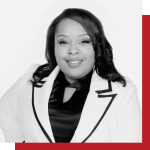 Quia Cunningham serves as the Project Director for the EDA Georgia Artificial Intelligence in Manufacturing (GA AIM) grant at the H. J. Russell Innovation Center for Entrepreneurs.
An Atlanta native, Quia is driven by a deep passion for providing resources and knowledge that empower individuals and communities to thrive. With more than 15 years of experience in educational leadership and federal program management, she has built a strong record of advancing access, learning, and opportunity.
Quia is excited to contribute to a field that fuels innovation and imagination, helping shape the future of manufacturing through the power of AI.
 Sherard Polite is a seasoned project manager and servant leader with extensive experience overseeing complex initiatives and leading diverse teams across the nation.
With a proven ability to deliver results in high-impact environments, he has successfully managed multi-year projects funded by organizations such as the U.S. Department of Health and Human Services, National Institutes of Health, NASA, Apple, and Pfizer. Most recently, he plays a key role in managing the EDA Georgia AIM grant, a statewide initiative focused on advancing artificial intelligence and manufacturing innovation through workforce development, strategic partnerships, and applied research.
His career highlights include his work as a Health Policy & Initiatives Manager for the 100 Black Men of America, Inc., where he implemented innovative solutions to address systemic health disparities, and as a Senior Health Educator with the Fulton DeKalb Hospital Authority.
Renowned for his organizational expertise and collaborative approach, Sherard Polite excels in driving strategic initiatives from conception to execution. He leverages a results-oriented mindset to ensure projects meet or exceed expectations while fostering stakeholder engagement. 
Above all, Sherard is a loving father of two who brings the values of care and compassion to both his personal and professional life. His dedication to servant leadership drives his unwavering commitment to advancing equity and fostering healthier communities nationwide.
Follow Georgia AIM Project 3 on LinkedIn, Facebook and Instagram.
Episode Highlights
- Overview of the EDA Georgia AI Manufacturing (AIM) Grant Project Three
- Integration of artificial intelligence in manufacturing technologies
- Focus on innovation, education, and career readiness in Georgia
- Development and purpose of a mobile AI studio for hands-on learning
- Engagement strategies for diverse audiences, including students and entrepreneurs
- Collaboration with workforce development and educational institutions
- Measurement of project success through community engagement and partnerships
- Importance of strategic partnerships, including with Georgia’s CEO program
- Impact of the project on local economic development and job creation
- Future events and initiatives to promote AI and manufacturing awareness
 This transcript is machine transcribed by Sonix.
TRANSCRIPT
Intro: Broadcasting live from the Business RadioX studios in Woodstock, Georgia. It’s time for Cherokee Business Radio. Now, here’s your host.
Joshua Kornitsky: Welcome back to Cherokee Business Radio. I’m your host, Joshua Kornitsky professional EOS implementer. And today, we’re not in the studio in Woodstock. We’re doing a remote broadcast from an absolutely incredible place called the Russell Innovation Center, downtown Atlanta. We’ll talk a little bit more about the Russell Innovation Center and who we’re here to talk to in just a minute, but I want to make sure we know that today’s episode is brought to you in part by the Community Partners Program, the Business RadioX Main Street Warriors. Defending capitalism, promoting small business and supporting our local community. For more information, please go to Main Street Warriors org and a special note of thanks to our title sponsor for the Cherokee chapter of Main Street Warriors Diesel, Inc. please go check them out at diesel. Com. Well, as I said, we’re not in the studio today. We’re coming to you live from the Russell Innovation Center in downtown Atlanta. My guests today are Quia Cunningham, who is the project director. My guest today is Quia Cunningham, the project director of the EDA Georgia Aim Grant project three and shared I swear this never happens to me. We’ll try it one more time. My guest today are Quia Cunningham, the project director of the Eda Georgia Aim Grant project three, and the project manager, Sherard Polite, also from the Georgia Aim Grant, project three, the EDA, Georgia Aim Grant project three. It’s a lot to remember, so welcome both of you. I’m so happy to have you. Quia, Sherard, let’s start by talking about what got you here. What what brought you, uh, to Georgia. If you’re not from Georgia, what brought you to the Russell Center? And ultimately, what got you involved with the EDA Georgia Aim grant project three?
Quia Cunningham: Absolutely. Joshua, we’re so happy to have you here at the Russell Center for entrepreneurship as well. We are, uh, the faces and the the brains behind keeping this grant moving and progressing and the way we got here, I myself, I, uh, my background started off in education. Okay. Um, I worked my way up through educational leadership, and then I moved over to federal programing, uh, within the school district. And then I made a little pivot and came over to the federal grant side of things, okay. And became the project director of this wonderful program, um, that’s connected to so many other wonderful programs in Georgia. Um, so let me let Gerard. Yeah. Tell us about you.
Sherard Polite: Yeah. Thank you. And welcome. Welcome to the Russell Center. Yes. So I’ve done programing, uh, all across the United States. I’ve done some programing in other countries, such as Turks and Caicos and also in London, uh, a lot of community, uh, activations. Um, and that that kind of summed up all of my, uh, my work that brought me here, um, to be working on this fabulous grant, uh, because, as you know, AI is the future, and the future is is now.
Joshua Kornitsky: You could not be more. Right. So. So tell me, what is the Aim grant project three?
Quia Cunningham: Absolutely. Um, well, approximately three years ago, maybe a little more. Almost four. Um, a wonderful opportunity was, uh, was offered by the Build Back Better grant Build back Better program, I should say, uh, from Biden’s administration through the EDA, where they were offering grants to promote the use of manufacturing in AI and kind of make manufacturing great again and showing. Showing basically the people that these this is the place for innovation, that Georgia is the place for innovation and employment and bringing people to that career path as an opportunity and basically going from K to gray, from educating young children, young students, and building a path and program that builds up to job readiness and career readiness, including AI and manufacturing and all types of technological innovations.
Joshua Kornitsky: Okay.
Quia Cunningham: And you’re right.
Joshua Kornitsky: Well, so so you’ve both mentioned AI now, but I’m still not clear on what the mysterious project three is.
Quia Cunningham: Wow. Well, project three is kind of a the on the road force of the the the Georgia Aim grant. And when I say Georgia aim, I want to make sure I’m clear the Georgia artificial intelligence and manufacturing grants.
Joshua Kornitsky: Okay. So the the a and the AI in aim is.
Quia Cunningham: Aim and.
Joshua Kornitsky: Ai. Now I get it. Okay. So artificial intelligence and manufacturing. And so what have you done as a, as a part of this grant to get this to more people?
Quia Cunningham: So basically what we’ve done is part of the grant kind of listed direct fundamentals that needed to be covered. Um, the first big piece of that was building a AI mobile studio that could be on the road and taken all around Georgia to give people the opportunity to interact and engage in a very innovative environment to show the, you know, the wonderful technology that is available within AI now and that is only going to progress and become even greater, um, things that are already in use in manufacturing now and kind of give people a hands on experience in that environment.
Joshua Kornitsky: So you, you built a mobile version of this.
Quia Cunningham: A mobile version that includes.
Joshua Kornitsky: What does it look like?
Sherard Polite: Well, our mobile version is actually 53 foot mobile studio. It’s on wheels. It’s mobile. We bring it all across Georgia. It’s a different communities. Uh, it has a lab that’s equipped with advanced tools and educational vignettes to showcase, you know, these real world applications of AI. We have things such as the robotic arms, we have drones, we have CNC printers, 3D printers, laser cutters, robot dogs, and much more.
Joshua Kornitsky: Wow. So is it built 53ft? It sounds too big to be like an RV. What is it built into?
Quia Cunningham: We actually attach it to a rig.
Joshua Kornitsky: Oh, so it’s like a full 18 Wheeler.
Quia Cunningham: You gotta have a driver. Wow, that takes it all around. Wherever we are scheduled to be and wherever we’re, you know, allowed to promote, um, this wonderful opportunity for people. You know, we do travel a lot to, to, you know, areas that may not have had opportunities to engage with this type of technology because we want everybody to understand that this is a choice and a path that is within reach.
Joshua Kornitsky: Well, so you said something that caught my attention. You said engage, right? So everything that Sherard pointed out sounds very expensive. So I would think, you know, usually when you see something like that rolling along, it’s behind a very nice piece of plexiglass. And there’s a sign that says, this is a robotic arm.
Quia Cunningham: No, we want you to touch experience. We want you to see what your hands can do and what the technology can do without, you know, any any particular barrier to being able to do that. Because if I bring you something and you can’t touch it, are you really getting the experience?
Joshua Kornitsky: No, no, not at all. That’s why I’m kind of surprised by that. And and I think you touched on it very briefly. And I want to also make sure that I ask who is the intended audience for the engagement that you’re delivering?
Quia Cunningham: Oh, I would love to answer that for you. So, you know, like we are here in this building now. We are in the Russell Innovation Center for entrepreneurship.
Joshua Kornitsky: Okay.
Quia Cunningham: Part of AI most definitely includes entrepreneurship.
Joshua Kornitsky: I can speak to that.
Quia Cunningham: Absolutely. So when we when you put those things together, the grant kind of encompasses both of those. So we want the relationships with manufacturers in order to bring people to the table of what that looks like and how a career path could look at that. But also, entrepreneurs need to have the opportunity to engage and learn about automation and AI so they can scale up their businesses, which is what the Russell Center does an amazing job of.
Joshua Kornitsky: So this isn’t just a rolling tour for me to decide what to major in in college.
Quia Cunningham: No. Absolutely not. It is an opportunity for you to see what’s out there and hopefully inspire you to either look forward in that direction, or even take the piece that you need to just further your understanding and knowledge.
Joshua Kornitsky: It sounds absolutely incredible. So did you guys actually design and and build the the rig here? Sorry, the mobile studio here.
Quia Cunningham: Well, like I said, it’s been a few years in the making. Um, the it took the first two years to kind of get the, all the items together to get the studio designed. And you know, before that, we were there were still, you know, the mission of reaching the people. So you would go out into the communities and do demonstrations of things. But once we got the mobile studio complete and rolling out, we were able to completely change the program and how we approach the entire subject. So that took, you know, definitely years of planning, putting together, you know, what would be the most effective and what people would get the most benefit and impact from.
Joshua Kornitsky: So it really sounds like it’s a pretty incredible, um, educational opportunity. Absolutely. It’s not just, uh, hands on, but it’s actually something that that you can experience firsthand. Before I have a million questions, my background is all technology, but. But I do want to ask, how did how did you get connected with the the Russell Center for Innovation and Entrepreneurship?
Quia Cunningham: Well, sure. Um, let’s talk about how Russell Innovation Center for entrepreneurship is like no other place. Um, it connects entrepreneurs who we like to, you know, lovingly call stakeholders. That is their title, because they have a stake in what happens in this building and how it affects them. So this is an incubator for entrepreneurs to gain resources to learn about securing capital, to also, you know, receive just as much attention, to build and scale their businesses to places that they may not have even imagined they could go to. Um, you know, it covers programing. It covers, um, just special opportunities with major manufacturers, distributors and just providing people with the information that they need and the uncommon access of being in a building with full of entrepreneurs who and coaches and people who are there to strictly help your business be better.
Joshua Kornitsky: So it sounds like it was kind of a natural partnership.
Quia Cunningham: Made sense.
Joshua Kornitsky: And on that front, okay, so here you have this mobile studio that’s got drones, robots, AI manufacturing, uh, a robotic dog, internet of things. Um, all of this really bleeding edge technology other than your own engagements where you take this out and have scheduled events where people will be there. How else do you. Well, so I like I said, I got a million questions. How else do you get to a place where. Okay, I’m interested. Someone wants to turn what they’ve learned into a career path. How do you. You’re not doing the employment side of this, right?
Quia Cunningham: Well, our job is connections.
Sherard Polite: Yes. And I can speak to that. So we connect, uh, manufacturers and future job seekers. Um, that’s with our strategic partnerships. So, you know, part of our grant, one of our KPIs is to support entrepreneurs and to support manufacturers. Okay. We go out to the manufacturers. We, uh, let them know and show them how AI can, you know, enhance their business processes. Right. And at the same time, we are working with their workforce development departments, and we’re actively going to colleges, universities, these different trade schools and we’re bringing out their resources. We have a partnership with Tag tag, and there’s an online platform in which they they post jobs and they actually use AI to help select the top five candidates. And then those candidates can actually be sent to the manufacturers. So, you know, if you’re in the job seeking, uh, you know.
Joshua Kornitsky: Mode.
Sherard Polite: Right. Uh, you can, you know, access that website, you can come, come check out one of our events, okay. And then you can go check it out, check out one of the jobs. And then, you know, if you see something that you see fit, then you definitely apply. So we’re we’re trying to make sure we’re engaging both sides.
Joshua Kornitsky: So it’s through those strategic partnerships that you’re really extending the impact of what you’re doing with the mobile studio.
Quia Cunningham: It’s a must. Um, because bringing the studio is a wonderful, you know, opportunity. But we want that to lead to the next step.
Joshua Kornitsky: Absolutely. What’s the point? Otherwise you’re you’re you’re you’re essentially a road show to show cool things and then.
Quia Cunningham: Inspire, right? You know, give someone the opportunity to say, hey, I could do this. I could incorporate this into what I do for a living and make money off of this. So that’s the you know, that’s the overall goal is to show people the future and how the future is here now, like Sherard said, and how we have to, you know, upskill and learn that, you know, you have to be able to transfer and move into these fields because this will be, you know, where we are going and you know the train is going to move.
Joshua Kornitsky: Do either or both of you have the opportunity to to accompany the mobile studio?
Quia Cunningham: Oh, absolutely.
Joshua Kornitsky: Yes. So so I have to ask this. I have two daughters. Do you. Is it cool? Do you see the light go on. For kids or for adults or for, uh, an entrepreneur that that they’re like, oh, that’s possible.
Quia Cunningham: Every time.
Sherard Polite: Every single time.
Joshua Kornitsky: That’s, you know, as a parent, seeing it with kids is one thing. As a as a business coach who works with entrepreneurs, when that light goes on, that is ten times more rewarding to see an adult realize that that there are no limits on their ability to continue to advance and move forward. So that has to be incredibly gratifying.
Quia Cunningham: Oh, absolutely. I feel like that is, you know, most certainly what makes each all the hard work and labor that goes into maintaining this program and, you know, making sure everything is handled through processes that, that that is the ultimate reward is that when we’re on the road. And I’ll give a key example, we just got back from Georgia a week where there were 13 events scheduled throughout Georgia the entire week. So we went from Carrollton to Augusta to Athens and then ended up down in Rankin County. Wow. Yeah. Effingham County at Effingham. Um, career tech career tech Academy. So we ended up, you know, being able to see and interact with so many people, um, from UGA to the to Carrollton, Southwire 12 program. Amazing. If you get a chance to look it up. Um, Georgia Cyber Center, we like we’ve been all over the place. So last week was, you know, a beast, but it was, you know.
Joshua Kornitsky: Definitely must have been incredible.
Quia Cunningham: Yeah. And so the planning that goes into it is way more than people think. But with that being said, it definitely shows the proof is in the pudding of what we get to see when we get there.
Joshua Kornitsky: So what does success look like for a project like this? When when everything that you’re describing, because your term was, was, uh, all Georgians, right? This serves all Georgians. This I gave the impression and I did it a second time referencing my daughters. This is not just for children. This is for any Georgian. Mhm. Um, that’s a really broad target audience or target market. It is. What does success look like. How do you know that you’ve made an impact. What are your goals?
Quia Cunningham: You know success. Uh, you know on paper looks like, you know, meeting, you know, quotas on how many people were able to engage with and interact with. It also looks like, you know, building that connection between entrepreneurs and automation and AI and providing opportunities and workshops to to teach and show them the path of how that looks. And then it also involves the job readiness and career connection part of it. Um, like Gerard was, you know, speaking on our, our partnership to, to to put together job seekers and job ready Georgians with actual job openings. So our success looks you know, it’s probably about 5 to 6 pronged. But you know, the major key pieces are, you know, assisting entrepreneurs with making that connection and scaling their business using AI and technology. Uh, it also looks like reaching Georgians and, you know, meeting all 12 economic regions of Georgia. It also looks like, you know, making sure that we assist in employing as many people and connecting to jobs as possible. Um, it also looks like, you know, ongoing and continued success with the mobile studio. You know, once the grant period ends, like moving on and figuring out the next step and how that looks.
Joshua Kornitsky: So understanding that there’s not an. Well, first of all, I’ve asked about how you measure success. How are you doing on those measures.
Quia Cunningham: This is the one for that.
Sherard Polite: Yeah. We’re actually we’re doing very good as far as, uh, our timeline goes. Um, I mean, we’re we’re ahead, um, of most of the KPIs, especially engagement. Yeah, engagement. We I mean, we’re.
Joshua Kornitsky: I mean, you got pretty shiny toys. People want to see them.
Sherard Polite: Yeah. It’s not hard to get people to come out. We got a big draw. Um, and that’s kind of how we hook them, right? Uh, our engagements are looking fantastic. Um, we’re, you know, we’re in the thousands, um, you know, tens of thousands of engagements. Um, as far as, um, manufacturers go, uh, we’re steadily increasing our stakeholder, uh, register of manufacturers. So we’re, we’re making great partners, like Georgia CEO, for example.
Quia Cunningham: Exactly.
Joshua Kornitsky: Tell us about Georgia CEO.
Sherard Polite: Yeah. Georgia CEO.
Quia Cunningham: I mean, it’s a it kind of happened and it made sense and we didn’t even know at the time what was what was happening. But then once we made the connection with Marie, I believe I met Marie down in Albany at, uh, the Agra. Agra fist. Agra. Agra Tech Fest, uh, that was hosted by our wonderful community engagement specialist, uh, Clinton. Um, I was able to meet and interact with Marie, and then someone else brought us back together again. And, you know, we were able to discuss, like, just how she works with manufacturers and how important employee ownership is. Um, and then that brought us to, you know, now at the end of this month, we are working together on a celebration of, you know, Georgia Center for Employee Ownership and, you know, succession. We’re working on a celebration with them that will be hosted here at the Russell Innovation Center for entrepreneurship. And we’re super excited about that. We’ll have the mobile studio here.
Joshua Kornitsky: Oh, wow.
Quia Cunningham: Yeah. And we’ll be able to have, you know, manufacturers of employee owned companies will be able to have stakeholders here to interact Iraq together. Also another really important stakeholder here, Kendra Futures. They’ll be here talking about secession. So it’s just a kind of a match that makes sense and makes sense for what the the goal is for both. Both of us.
Joshua Kornitsky: Well, I’ll be here too, then.
Quia Cunningham: You sure will, won’t you?
Joshua Kornitsky: I sure will. We’re gonna see who else we can learn from.
Quia Cunningham: Absolutely.
Joshua Kornitsky: That I’m overwhelmed by what it is you guys have put together. And, uh, do you have any idea the numbers of people that that have experienced the mobile studio?
Quia Cunningham: Oh.
Joshua Kornitsky: Um, I mean, ballpark, ballpark, ballpark.
Sherard Polite: Around 12,000 or so.
Joshua Kornitsky: That’s pretty incredible. And I know that you said the project’s three years old, but how long has the mobile studio actually been out there?
Quia Cunningham: One year. That’s one month.
Joshua Kornitsky: Wow. So you’re averaging around 1000 a month and and, uh, I can’t wait for the future to learn what the impact of this has been, because you’re you’re planting seeds, right? And and those seeds need time to germinate and grow. But there’s going to be success stories. There’s no question about it. Yeah. And the fact that you’re seeing those fires lit while you’re out there. That’s absolutely amazing. Excuse me. I’m so sorry. So how do people learn more?
Quia Cunningham: Well, uh, we are googleable.
Joshua Kornitsky: Okay.
Quia Cunningham: And, um, you know, just I know it’s we’ll.
Joshua Kornitsky: Put the links on when when we publish and push out the podcast, we will put the links up there. Sure. But it’s the, uh, the Georgia Aim grant project three, right?
Quia Cunningham: And the easiest way to find us, um, would be through our socials.
Joshua Kornitsky: Okay, we’ll get all of those from you, but if you know them, say them.
Quia Cunningham: Yeah, they’ll be listed. Right. We’re on Instagram. We’re on LinkedIn. Uh, heavily. Um, we also, uh, have a newsletter that we send out. So, you know, once you sign up with us to get more information, we kind of send you links to be able to, to check all of check us out and check out where we’ll be and where we’ve been. And, you know, and we have, uh, you know, a wonderful presence online that gives, you know, just connections to where AI is and where it’s going. And that’s really important because I feel like what you what you present to the world in person is only strengthened by what you present to a digitally. So we love to provide the opportunities for people to see, you know, more about or investigate more about what AI is, um, how it’s connected to manufacturing and you know, what events we have coming up, because a lot of them are public facing and people can register and join.
Joshua Kornitsky: So wonderful. Anything that you want to highlight that you know is coming up in the short term, other than obviously here at the Russell.
Quia Cunningham: Yeah. Um, our next big event is definitely, you know, going to be here and that’s, that’s going to be that’s listed online through our socials as well. So people want.
Joshua Kornitsky: October 28th, October 20th and that is open for anyone that wants to come.
Quia Cunningham: It’s open. Yes.
Joshua Kornitsky: Wonderful. Okay. So we’ll make sure that we have that link so that everybody knows. Yeah. Um, we’d love to have you. I am a lifelong technology enthusiast, and everything about this just has me. I can’t wait to play with it all. Uh, it sounds absolutely like the best toy to show you. Yeah, it’s the best toy I’ve ever seen. I want one under the tree for Christmas. Oh.
Quia Cunningham: That’s a big.
Joshua Kornitsky: Tree. Yeah, I guess it would have to be. Yeah. Um, well, I can’t thank you both enough for your time again. Uh, my guests have been Quia Cunningham, who is the project director of the Iida Georgia Aim Grant project three. And remember, Aim stands for artificial intelligence and manufacturing. And I’ve also had with us the project manager, Sherard Polite, also for the Iida Georgia Aim project Grant project three. And it’s important that I say all of that because when you’re dealing with a grant and I want the the, the folks listening to know, you have to acknowledge where that grant comes from. And that’s why, uh, though I may step over it or step on it when I say it, it’s really important that we communicate where Grant comes from, because that Grant is absolutely making a difference.
Quia Cunningham: Absolutely. And it’s so, uh, it’s important to know and for people to understand the source so they can understand and feel more comfortable with interacting and engaging and knowing, you know, where we’re going and how that will impact them and their communities.
Joshua Kornitsky: I can’t wait to see this mobile studio.
Quia Cunningham: Absolutely.
Joshua Kornitsky: Thank you both so much.
Sherard Polite: Thank you, thank you.
Joshua Kornitsky: Just as a reminder, today’s episode is brought to you in part by the Community Partner Program, the Business RadioX Main Street Warriors Defending Capitalism, promoting small business, and supporting our local community. For more information, please go to Mainstreet Warriors. And a special note of thanks to our title sponsor of the Cherokee chapter of Main Street Warriors Diesel, Inc. Please go check them out at diesel. Com. My name is Joshua Kornitsky. I am a professional implementer of the Entrepreneurial Operating System, also known as EOS. Your host here on Cherokee Business Radio. Thank you for joining us. We will see you next time.














