

Joshua Kornitsky welcomes Tiffany Collins, founder of Happy Tears Cat Rescue, to Cherokee Business Radio for an inspiring conversation about her personal journey from dog lover to passionate cat rescuer. Tiffany shares the evolution of her grassroots nonprofit, highlighting the challenges, triumphs, and the role local community support plays in saving and rehoming cats throughout Cherokee County and beyond. The episode illuminates how one person’s compassion can create lasting change, and explores the emotional highs, logistical realities, and hopeful dreams driving the Happy Tears mission.
Brought to you by Diesel David and Main Street Warriors

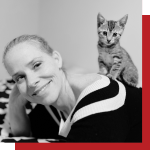 A career executive assistant for companies like Philips Electronics, Coca-Cola and Aflac for most of her work years, Tiffany Collins continues as an EA in corporate America, but 7 days a week works around the clock rescuing kittens and cats, taming feral cats and doing Trap Neuter Vaccinate and Release efforts which led to the start of her 501c3, Happy Tears Feline Foundation Corp in July 2023.
Tiffany grew up in Sulphur, Louisiana and has lived in Georgia over 30 years. Always an animal lover and feels her life is complete and filled with purpose doing the work of a rescue person.
Connect with Tiffany on LinkedIn and follow Happy Tears on Facebook and Instagram. 
Episode Highlights
- Origin Story: From Dogs to Cats
Tiffany recounts her unexpected entry into cat rescue, sparked by fostering a friend’s cat during the pandemic, and how this experience revealed her calling to help animals in need. - Grassroots to Nonprofit
The episode follows Tiffany’s transition from casual helper to founder of a formal nonprofit, detailing her work securing a shelter license, building community partnerships, and managing a growing network of volunteers and supporters. - Viral Rescue & Social Media Impact
Listeners hear about the viral TikTok rescue of “Luna,” the Emory University dorm cat, and how social media dramatically expanded the foundation’s reach, increasing adoptions and engagement. - Challenges & Needs: The Realities of Rescue
Tiffany shares candid details about the operational pressures of running a shelter, including the physical toll, fundraising needs for equipment like litter robots and a new truck, and the cost of veterinary care for dozens of cats. - How Listeners Can Help
The episode closes with practical ways for listeners to support the rescue: volunteering, fostering, donating supplies, attending adoption events at Hollywood Feed locations, and spreading the word to help more cats find their forever homes.
 This transcript is machine transcribed by Sonix.
TRANSCRIPT
Intro: Broadcasting live from the Business RadioX studios in Woodstock, Georgia. It’s time for Cherokee Business Radio. Now, here’s your host.
Joshua Kornitsky: Welcome back to Cherokee Business Radio. I’m your host, Joshua Kornitsky professional EOS implementer, and I’ve got a great guest here in the studio today. But before we get to that, let me just let you know that today’s episode is brought to you in part by the Community Partners Program, the Business RadioX Main Street Warriors Defending capitalism, promoting small business, and supporting our local community. For more information, go to Mainstreet Warriors. Org and a special note of thanks to our title sponsor for the Cherokee chapter of Main Street Warriors Diesel, Inc. Please go check them out at diesel. David. Comm. So as I said, I’ve got a really special guest in the studio here today. I’m really, really excited to introduce Tiffany Collins. She’s the founder of Happy Tears Cat rescue. It’s a grassroot organization. Uh, it’s a nonprofit dedicated to fostering, saving and rehoming cats from across Cherokee County and beyond. And really, what began as a single rescue quickly turned into a mission fueled by compassion and persistence. Today, Tiffany balances a demanding career with leading a volunteer driven rescue operation that’s changing lives one cat at a time. Welcome, Tiffany. I’m really happy to have you here today.
Tiffany Collins: Oh my God, thank you. I’m so happy to be here.
Joshua Kornitsky: So let’s begin at the beginning. I always like to ask for what I call the origin story. Right. Um, what brought you to this place in your life? Where? Where? Happy tears, which is an unusual name. I’m going to ask about two. We’re happy tears. Cat rescue became, uh, the driving thing in your in your daily life.
Tiffany Collins: Yes. Um, thank you for asking. And, you know, I was always a dog person. I always had dogs. Um, but then I say I really always an animal person. So, um, what led me to, you know, having a cat was total accident. Um, I got a cat. And that’s what kind of made me start seeing cats. And seeing cats was just almost like I’d never seen them before. Although I know they exist. My mother is the hugest cat lover ever. Okay, so I guess what started was, you know, again, I’m babysitting a cat and this is where the accident comes in. I’m my my dog who was 15 years old. His name was trooper. He was a Pekingese, okay. And I’d had two Pekingese in my life as an adult. Those were my pets. And the next thing I know, my friend, is, during the pandemic, adopting a cat. She’s in an apartment. She is saying, I’m lonely. It’s the pandemic. You know I can’t have a dog. I love dogs, but I think I’m going to get a cat. I went with her to the shelter and we got to looking at kitties. She found one, and it’s. The funniest thing was the cat seemed to like me a lot. And you.
Joshua Kornitsky: Weren’t there. You were just the guest.
Tiffany Collins: Heck, no. I’m allergic.
Joshua Kornitsky: To cats. To keep her. Oh, really, I am.
Tiffany Collins: Which makes everything is so crazy about this whole story. There’s so many things we could probably talk this whole time about how crazy this is, but, um, the kitty, you know, she. Its name was Julia inside the shelter. And my friend kept the name Julia, and I thought some names just fit. But, you know, do you really love a kitty if you don’t name it yourself? And I have an old boss named Julia who I absolutely adore, but I would never keep the name Julia for sure. So this was kind of, like, very telling to me. Although, you know, she gets the cat home. The cat has little quirks about it. I thought they all came out potty trained and used a litter box, but this one was partially using the litter box sometimes and partially not. And my friend was so frustrated. And when she decided I got to go to India, can you babysit this cat for me? And my dog was at the end of his life and had about a month left to to live.
Joshua Kornitsky: This is your your Pekingese trooper?
Tiffany Collins: Yes. And he was 15 years old, so he lived a long, beautiful life. But my friend goes out of the country and I’m babysitting this cat, and I’m posting on social media constantly, like, look at this cat, look at this cat. Everybody’s like, you’re falling in love, Tiffany. And I’m like, no, I’m not. I literally was the last person to know.
Joshua Kornitsky: Isn’t that always the way?
Tiffany Collins: Yes.
Joshua Kornitsky: And how did the dog feel about the.
Tiffany Collins: Oh, he hated her. And she hated him.
Joshua Kornitsky: Certain things are universal truth.
Tiffany Collins: Absolutely. And, you know, it was just weird seeing the cat greet me at the door and things that my dog used to be able to do, but he was so sick that he couldn’t. And it’s like. So my friends over in India, and she she never once called me to say, how’s the kitty doing in five weeks? I always had to tell her. So that was also very telling to me.
Joshua Kornitsky: So little Julie set up.
Tiffany Collins: I, I swear to God. And so the next thing I know, I am like, thinking I need to ask her, does she like this cat? Because I want it out of my house and really, seriously? Okay, at least I thought I did.
Joshua Kornitsky: Right.
Tiffany Collins: And so she and I cried over the phone Together we had this great conversation and I said, I just you haven’t checked on the cat. You’re not trying to hurry up and come back home. And she her family’s in India. India. She doesn’t get to go much. I mean.
Joshua Kornitsky: So she was there.
Tiffany Collins: She really.
Joshua Kornitsky: Really. Family time?
Tiffany Collins: Yes. And she wanted to stay longer because she could. And so.
Joshua Kornitsky: Sure, she’s got somebody watching her cat.
Tiffany Collins: Yeah, well, she ended up not coming back for five months.
Joshua Kornitsky: Oh, wow.
Tiffany Collins: So. But I actually said, let’s go ahead and take this cat back to the shelter. And if not, I can find it a home. I’ll try to find it a home again. I’m no rescue girl. I’m a dog girl I like. So this.
Joshua Kornitsky: Happened. I’m waiting to see where this goes.
Tiffany Collins: Yes. And so the next thing I know, somebody comes over. They’re interested in the kitty. And my friend and I both are on board. That if I find somebody great, they can take the cat. Well, they left, and I called my mother, who’s the huge cat lover, and she’s in Louisiana. And I said, mom, I’m so excited somebody wants this cat. And then she goes, really? Who? And when she said that I could not breathe, I could not talk. I was crying, and I was so upset. I wanted this cat. And I did.
Joshua Kornitsky: Not tell you about Julia. The.
Tiffany Collins: Yes. Oh, Julia.
Joshua Kornitsky: So at this point, do you still have Julia?
Tiffany Collins: Julia is my cat, and her name is Kiki.
Joshua Kornitsky: Okay. So? So Julia. Ni. Kiki, you. You never were able to put her out? No. To adoption. Not not put her out.
Tiffany Collins: No.
Joshua Kornitsky: So you. It turns out you fell in love.
Tiffany Collins: I was so in love with her and I. That’s what started it, really for me. It started me being a cat person. But I’m also a person that only had one pet ever as an adult. One at a time. Like I didn’t want to pay double vet bills. I didn’t want to, you know, double everything up. And, um, having a cat was so much easier. And I thought, wow, I’m going to get a second one. And this is kind of what started me on my journey.
Joshua Kornitsky: Okay.
Tiffany Collins: Because I met some people, I went to a body shop to get my truck fixed, and there were 17 cats in the parking lot.
Joshua Kornitsky: Like, literally, that’s not an exaggeration. 17 a bunch.
Tiffany Collins: Somebody argued that there was only 11. But this lady. No, no, I counted 17. It was a sight to see for me because I was. Now I have a cat. Now I’m starting to see them more. So I see this pile of cats and I ask the body shop owner, I’m like, what’s going on out here? And he says, you want one? And I was like, well, I already have a cat. And I didn’t know what people do about this stuff. And so I went to our local Facebook page, Cherokee Connect here in Woodstock, and I just made a post and took pictures of these cats. And I said, can anybody help these cats? They look like there’s pizza on the on the ground. I mean, these people were just feeding him junk food and.
Joshua Kornitsky: Right.
Tiffany Collins: So I want everybody to be spoiled like my baby, you know? And so I found some trappers who do TNR, which is trap neuter return. Okay, so they trap them, they go get them fixed, and they put them right back where they were. So these people said, yeah, we’ll help. Would you like to learn how to help? And would you like to learn how to do this?
Joshua Kornitsky: And these are the trappers. Okay.
Tiffany Collins: And I was like, not really. Um, I don’t trap animals like. But this one girl said, you know, come do it with me. You’ll get addicted. And I was like, I’m not gonna get. I’m gonna cry when I see a cat in a trap, you know? But sure, as she told me, I saw the cats getting trapped and I thought, oh my gosh, they just run in for the food in the trap. It closes gently.
Joshua Kornitsky: No scariness, no harm.
Tiffany Collins: No. I mean, they’re definitely scared, but they have no reason to be scared. And then you cover the trap up with a blanket. Yes. And so I started doing that. And my thing was I probably did that for several months, but I would cry every time we’d put him back out. I was like, I don’t want him to go back out. I’m glad they’re fixed.
Joshua Kornitsky: Right.
Tiffany Collins: So I wanted to turn the R in return. I wanted to change that to rescue for me. I don’t want to return him. I want to rescue him. And so my friends even said, gosh, we spend so much of our own money doing this stuff. And, you know, they’ve been doing it for years just trapping cats. And some of them said, we’ve always wanted to start a nonprofit, but we just never have. And I said, well, let’s do it.
Joshua Kornitsky: Takes a lot of work, doesn’t it?
Tiffany Collins: It does. And, you know, for some reason, I’m the only one in the group that says, let’s do it.
Joshua Kornitsky: Well, I know a little bit about you from our initial discussion, and it’s up to you whether you want to talk about the other things you do in your life. But you do seem like a highly organized person.
Tiffany Collins: I am. I’m an executive assistant. Um, so I’ve been doing that for 30 years, so I.
Joshua Kornitsky: So you’re used to handling the day to day? Yes. And all of the things that have to get done. And juggling 11 balls and six countries.
Tiffany Collins: Absolutely.
Joshua Kornitsky: And so it was I feel like the universe set you up.
Tiffany Collins: I think so too. It still freaks me out. But there is a universe doing stuff to people, so.
Joshua Kornitsky: So the trappers suggested that or agreed with you that a nonprofit. I want to let you finish your story, but I get so interested. Yes. Uh, the trappers suggested that that they’d always wanted to do a nonprofit. But I take it that you grabbed that concept.
Tiffany Collins: I did, because when they started telling me all the money they’ve spent out of their own pocket. I don’t have that money. I’m paid as an executive assistant. I just don’t have that money. And I’m a single woman. I’m not married. There’s no second income in my house, but I want to do this and I want to figure it out. And so I just slowly started trying things and sometimes posting about a cat that we’re helping. Strangers were sending me $50 or $100 and thanking me for what I’m doing. And there’s all these little things that just kind of put it in motion because I thought, wait, maybe I can do this. And if people help me and we all work together, I can definitely do this. So it’s just it’s strange how it all went down, but that was it. It was.
Joshua Kornitsky: So you became a nonprofit?
Tiffany Collins: Yes.
Joshua Kornitsky: Now, how long ago was that?
Tiffany Collins: That was 20, 23. Uh, well, at the beginning, at the end of 2022 is when I started, you know, trapping. And then I started getting serious, I guess the first quarter of 2023 And by July, June and July, I was definitely, you know, full fledged nonprofit just did the the business name. I did the all the paperwork, the paid the fees and started the nonprofit.
Joshua Kornitsky: So why happy tears?
Tiffany Collins: Oh my gosh. You know, the first couple times I did some adoptions, I cried like a baby just.
Joshua Kornitsky: Because of the letting go or the fact that they had permanent homes.
Tiffany Collins: The yes, the happy tears were, you know, I looked like I was sad, but I was I might cry just talking about it, but I, I just get so happy that it brings tears to my eyes because of what rescuing really means to me and and the adoption part of it especially. It’s like I didn’t just do something for the cat. I did something for these people that are adopting. Like, I know what it feels when I get my look at me, I’m starting to cry.
Joshua Kornitsky: I’m not getting a lump in my throat.
Tiffany Collins: Don’t feel sorry for me. It’s good. This is the happiest thing I’ve ever done in my life.
Joshua Kornitsky: This is. This is why it is happy tears.
Tiffany Collins: Yes.
Joshua Kornitsky: So? So tell us, how has happy tears grown? Right? Because it simply started with you. And are you still working with the trappers that you were working with?
Tiffany Collins: Every day I talk to them. We are so close. I talk to all these people more than I ever do my family. And I’m sad to say that.
Joshua Kornitsky: You make along the way.
Tiffany Collins: Well, and you know, if they would help me with the cats, I’d talk to them more, you know? Fair enough. Family’s kind of spread out. And my dad fostered for me recently, and that was really sweet of him. It was a big, big deal. He’s allergic to cats. And so for him to help me, it was amazing.
Joshua Kornitsky: So how, uh, I guess. Where did it go? So you’ve established the nonprofit. Um, Did you start, for lack of a better word, collecting cats and for the purpose of of saving and rehoming? Yeah. What did where did you keep them?
Tiffany Collins: Yes. So, you know, you get a shelter license through the Department of Agriculture?
Joshua Kornitsky: I did not know that. Yes. But I presume you knew where to go.
Tiffany Collins: Yes. I had to figure it out, too. I was like, how do I do this? How do I do it legally? There’s a lot of people that do this kind of stuff, and they don’t go through the proper channels. But, you know, the Department of Agriculture is who we all report to, so to speak. And, you know, you have your license. You they come inspect and they try to see what is your house capable of holding, what makes sense. You know, there’s a license that you can get for whatever kind of shelter you have. And I started out with a shelter for 20. I now have a shelter license for 40. Okay. Up to 40. And Lord, I have 30 cats in my house right now. But in the beginning, you know, I.
Joshua Kornitsky: Was a lot of cats.
Tiffany Collins: I know I have a four bedroom house that I never really used.
Joshua Kornitsky: And you’ve surrendered it to the cat?
Tiffany Collins: Yes. Now, I only have a.
Joshua Kornitsky: Licensed legal all above board.
Tiffany Collins: Everything.
Joshua Kornitsky: It doesn’t look.
Tiffany Collins: Crazy.
Joshua Kornitsky: Yeah, it’s nonprofit and real. Just so that everybody knows it’s. It’s not just one lady with a bunch of cats in their.
Tiffany Collins: House, and they’re not running amok. They’re not everywhere. They. A lot of people look at me funny. But then the people that come to my house and know I have 30, they walk in the front door and they’re like, I thought you said you had 30 cats in here. I’m like, they’re all contained. You know, there’s three bedrooms and two bathrooms that are, you know, basically dedicated to quarantining and then having, you know, kitties. Right now I have some sick kitties that are I have an FIV kitty that’s in a bathroom by himself. Um, but my bedrooms are good size, so there could be 8 or 9 cats in a bedroom and there’s plenty of room. There’s a window, there’s trees. There’s everything they need.
Joshua Kornitsky: Um, so how do you help them find their forever homes?
Tiffany Collins: So I don’t have a website, but what I do have is petfinder. Org. Okay. Um, most rescues use that. That’s your online place to adopt animals out. Um, and petfinder. Org is amazing. Most I know 20 years ago, that’s where I found my dog. Really? Yeah. Wow.
Joshua Kornitsky: Yes. Okay, so they’ve been around for a while.
Tiffany Collins: Oh my gosh. Forever. And, um, they’re a wonderful organization. And, you know, social media really helps me. Um. Happy tears. Feline Foundation is on Facebook, um, TikTok and Instagram. And we even recently went viral on TikTok. It was.
Joshua Kornitsky: Pretty.
Tiffany Collins: How so? Yes. So I saved this crazy cat. It was a black cat that was at the Emory University dorm. Um, one of the dorm rooms. Somebody brought it in. Long story short. Ought, um, somebody brought it into their dorm after they took it to the emergency room. And I think this kid, it was Mother’s Day weekend, which is when schools ending for everybody. They’re moving out of the dorms, right? And so this kid brings a carrier into the dorm to try to get the cat into it for a rescue that was going to help him. And the rescue didn’t get that cat. The kid couldn’t get the cat. The cat went absolutely crazy. Um, and so Mother’s Day weekend, I’m on a long text thread with 20 people. Nobody has time to go get this kitty. And I thought, well, I don’t have anything to do. And it was raining. It was a crazy day. And I went over to Emory, went in this dorm room. I saw this boy, and he was so sweet. I just couldn’t believe how kind he was as a student. A young student helping a kitty. He even.
Joshua Kornitsky: Took.
Tiffany Collins: It. He took it to the vet and paid the vet bill. And I know how much an emergency vet bill is. Yes, I.
Joshua Kornitsky: Was, sadly, so do I.
Tiffany Collins: I was like, dude, you did your thing. Don’t worry that you can’t get this cat, I got you. Well, then I walk in the room and I can’t get this cat. I had to call animal control. She was crazy.
Joshua Kornitsky: Just didn’t want to be contained.
Tiffany Collins: No. And usually cats will run from me. And I’ve got my gloves on. I’ve got. You know, this cat was running at me, scaring me half to death. So I took this video and shared it with the text group because most of us were like, what’s wrong with this kid? Just put the cat in the.
Joshua Kornitsky: Cat by the neck, throw.
Tiffany Collins: It in the thing. You got this. Like, what do you need us for? Oh my gosh. When I saw what I saw, I wanted to show everybody. Hey, guys, it’s not the kid. This cat’s crazy. And, uh, animal control got there. And the next thing I know, me and animal control guy are zipping it up in a net because I knew we needed a net. There was nothing I could do. And I’m five foot three, so this cat was on the top bunk bed, so there was no it was just crazy. So but that video that I took went viral. It was hilarious. 6 million views. We have 10,000 followers now because of that one cat.
Joshua Kornitsky: And did it help bring any did to help sustain the organization?
Tiffany Collins: There was a couple adoptions. People found me, and I think I might have had maybe 400 followers on TikTok before that. And I found out a lot of people are just like, what’s your Instagram? What’s your. And I’m 52 years old. I’m using Facebook religiously, but I really need to start doing more. Not having a website, but using my social media in a better way to reach adopters.
Joshua Kornitsky: I mean, don’t get me wrong, this is just my opinion, which is worth exactly what you paid for it. Websites are great, but you’re meeting people where they are, which is social media. And I think that that as long as you’re getting the the cats that are available out in front of people, that’s all that really matters.
Tiffany Collins: Yes.
Joshua Kornitsky: And I feel quite certain, though it’s not my area of expertise, that there’s 1 or 2 people looking at it.
Tiffany Collins: Yeah, well, without much help and without much, you know, advertising. No store to go in. Last year I adopted out and saved over a hundred cats.
Joshua Kornitsky: All by.
Tiffany Collins: Yourself? Yes.
Joshua Kornitsky: So let me ask the most burning question that occurs to me. And I’ve got a lot of questions, but the one that occurs to me is how can people help?
Tiffany Collins: Yes. Oh my gosh, there’s so many ways to help me. And the rescue. Um, anything from just coming over and cuddling? I tell everybody you can be a volunteer and just cuddle. You don’t have to scoop a litter box. Uh, but if you help me clean, that would be amazing. Um, so, you know, I like the idea that people could come over, especially when I have 30 cats. There’s just only so much of me to go around. But volunteering to do anything around the house, um, anything as far as Is transporting a kitty to surgery or a group of cats. Sometimes I’ll have 15 cats going to surgery in.
Joshua Kornitsky: A day for for getting spayed or neutered.
Tiffany Collins: Aha.
Joshua Kornitsky: Okay.
Tiffany Collins: And so vet appointments fostering at their house. Um, you know, sometimes I don’t want 30 cats in my house. If I could have somebody give me a room in their house for two weeks, you know, a bathroom or a bedroom, something where, you know this. I don’t have room for a cat, but I’ve got some fosters that can kind of hang on to them. And I pay for everything. I’ll give them everything they need. All the food and supplies. Oh, yeah. Absolutely. And a lot of people are so great. They’re like, Tiff, I want to help. And part of that help is you don’t have to pay for anything. I’ll buy the food. So people do want to help in a great way.
Joshua Kornitsky: So I do want to back up because you said some days you could have as many as 15 cats going for for surgery, meaning again to, to be spayed or neutered. Yes. Um, are you paying out of pocket for each one of those?
Tiffany Collins: Uh, uh, sometimes. And, you.
Joshua Kornitsky: Know, you work with a number of vets or how do you.
Tiffany Collins: Okay, I do I work with different clinics. Sometimes it matters. You know which appointments. Who can see me the fastest? Right. Um, and obviously, price is a factor. I mean, 15 cats having surgery that day was over $2,000, and that’s a low cost. I mean, that’s just I mean, more vet, you know, some of the vets charge way, way more. So we are using the lower cost spay and neuter clinics which we have to and they’re used to we’re volume clients is what we’re considered. And so it is discounted. But every cat that I take care of costs me just on that surgery day because they’re getting shots, they’re getting fixed. They’re getting, um, you know, a combo test, which is very important. We want to know if they have Fe, Felv or five. And so we are testing them for things. We’re were deworming them. But I spend about $225 on average for one kitty. So again, that, you know, and that’s just that day. Um, when they come into my house, I’m already treating them for parasites. I’m giving them flea treatments. All that stuff costs money.
Joshua Kornitsky: So if somebody wants to adopt, obviously Facebook is is number one place to seek you out.
Tiffany Collins: Yes.
Joshua Kornitsky: Uh, and it sounds like there’s some entertainment on TikTok that they can check into. Yes. But it sounds like, like any other shelter, one would assume it sounds like these cats are all medically as up to date as as is required for them to be a safe adoption, to go into a home with adults or children or what have you.
Tiffany Collins: Yes, absolutely. Okay.
Joshua Kornitsky: That’s that’s important to make sure that everybody knows that. Because again, my fear would be that people would misunderstand that. It’s just a very nice lady spending time to get cats homes. And it isn’t. This is a legitimate shelter. Yes. That’s making, um. Pets available. So what does it look like when someone wants to reach out to adopt? Do they. Have to, I assume, coordinate a time with you? Do you have any. Yes. Any permanent staff that are. That are volunteers or it’s just all running through you?
Tiffany Collins: It’s all running through me. I do have some random volunteers. Random people come and help me. Friends, people that need, you know, kids right now that need community service hours for school. Um, but I don’t have any regular volunteers. I have a pet sitter that comes once a day, and I’m paying her because my full time job has me at an office five days a week now. I used to work from home and could do it, really do it all myself. But yeah, I’m very short on volunteers, so everybody that wants to adopt, um, has to go through me. And, you know, I have an application on my Facebook page. Pinned at the top. Um, so the application is short and sweet, but it asks the questions that are important to me. The same questions um, Humane Society would ask you. I kind of went off of what other rescues ask on their applications. Um, and so the application process is really easy. I’ll read through it, I’ll talk to the people, and then we’ll schedule a visit, because again, because of my day job, I don’t have anybody to show the cats for me during the day, and it’s just me. So at night we schedule, you know, when I worked from home more, I could add a.
Joshua Kornitsky: Little bit of flexibility.
Tiffany Collins: Yes, yes, but now it’s strictly nighttime visits, weekends. Um, I just have to get it in where I can. And, uh.
Joshua Kornitsky: Is it rewarding?
Tiffany Collins: Very. I’m so exhausted. I don’t know if you can see these bags under my eyes. I’ve never had bags under my eye, but I’m. I’m also 52. But, um, it’s it’s time. And I’m not going to look the same forever. But I am. So I’ve never been more exhausted. My body aches. I have tennis elbow from all the lifting, bending, scooping litter, but I have never been more happy in my life. I’ve finally have something that gives me a purpose. Um, and I didn’t know I didn’t have that. I literally thought I was.
Joshua Kornitsky: Great observation because you didn’t. You didn’t feel you were lacking?
Tiffany Collins: No. I thought my friends all told me, Tiff, you’re so lucky you’re not married. Oh, you’re so lucky. You can do whatever you want. You’re so lucky. Lucky, lucky. And I thought. I just thought, I’m so lucky. But, you know, I did have the ability to kind of be selfish almost my whole life, which I’m not. I’ve always done.
Joshua Kornitsky: You certainly don’t come across that way.
Tiffany Collins: Not at.
Joshua Kornitsky: All. You come across as someone that gives all of themselves, I do.
Tiffany Collins: I’m good to my friends and family. I Most of the trips I take are to visit them like I’m a good human, but I didn’t realize how good I could be. And until I started doing this and I thought, oh my gosh, this is incredible.
Joshua Kornitsky: So in a in an ideal world, where would you like to see happy tears go or grow to? What what do you have a goal that you would like to see?
Tiffany Collins: Not yet. Which is sad. I mean, I.
Joshua Kornitsky: Well, right now you’re in day to day survival mode. It’s not. It’s not sad. You’re right. It’s to be expected from the the place along the path that you are.
Tiffany Collins: You’re right. Absolutely. No, I, I keep saying I don’t want to get big, but I sure would like to have some place that’s not my bedrooms in my house, but close by to take care of the animals and do what I do. Um, you know, if I, if I were to dream something up that would be perfect for me would be to have a couple acres of land somewhere not too far, because I still have to work in corporate America. But to have like some kind of a facility on my property to do the same thing I’m doing, but not have these cats, you know. I mean, it. They’re great.
Joshua Kornitsky: Let them have their own space.
Tiffany Collins: But they’re messy. I mean, it’s like sometimes I come out of my bedroom and I can smell in one of the rooms, like, okay, I got to go change a litter box out in there. You know, it’s I’m exhausted from having it right there in my house. And, you know, I just had to paint. It cost me thousands of dollars to paint my house, which I would have never had to paint my house if I didn’t have this going on. And and I had to pay for that out of my pocket. And so I built a enclosure behind my house, which HOA had to approve. And it was one of these enclosures that I built for the crazy cat on TikTok. Her name is Luna, by the way. And then I called her Luna TikTok because she got so famous on TikTok.
Joshua Kornitsky: And so she’ll be she’ll get sponsorship deals.
Tiffany Collins: Yeah, I know right? She really should. And she’s still with me. I don’t know if I’m ever going to adopt that cat out, but I built an outdoor enclosure for her. And it wasn’t just for her, it was for cats like her. And I spent about $8,000 building this out of my own pocket. I did get some donations. Um, people, you know, saw that I was doing it and helped donate. And I got about 3 to $4000 in donations, which was helpful.
Joshua Kornitsky: Some.
Tiffany Collins: Absolutely. And, um, so this outdoor enclosure I built for feral cats, because when I bring a feral cat in my house, this is going to try and make sense in a second. They start tearing my house up because they’re so upset that they’ve been brought inside. I had a cat take down one of my light fixtures because he was so upset that he was brought in a house that he just jumped up on the light fixture, pulled it out of the wall. Lights went out. It was dark. I was like, you know, it was crazy. So there’s just things that I need to do to keep my house from being torn up and destructed.
Joshua Kornitsky: For your own mental well-being, too, I’m sure.
Tiffany Collins: Yes.
Joshua Kornitsky: So if people listening want to help.
Tiffany Collins: Yes.
Joshua Kornitsky: What is the best way for them to help you?
Tiffany Collins: Well, you know, my Facebook page. I have, um, you know, all my links. So donations, you know, are great.
Joshua Kornitsky: Um, so is that is it for happy tears or is it for you personally?
Tiffany Collins: Oh, no. Never. Never.
Joshua Kornitsky: I mean, how do they find you on Facebook?
Tiffany Collins: Right. Oh. I’m sorry. Yes, I do have a Happy Tears Feline Foundation page on Facebook.
Joshua Kornitsky: I just want to make sure people know what to look for.
Tiffany Collins: Yes. Um, send me spa treatments, but. Yeah, but everything else goes to the kitties, right? So, um. Yeah, Happy tears has Facebook and on Facebook. I’ve usually got my links for, um, we can take credit card donations through Zeffie. Okay. Um, there’s a whole link for that you can actually do. If somebody wanted to do a monthly donation or just a one time donation, that’s a great thing. And Zeffie gives you a perfect receipt for your taxes. Everything anybody gives me is tax deductible.
Joshua Kornitsky: So and we will post all of these links when we publish the story as well. But there’s Facebook and you said you had told me that there’s an Amazon wish list.
Tiffany Collins: Yes, there’s Amazon and Chewy. There’s people that love to shop both places. So we did both places. Um Amazon wish list. There’s chewy wish list. Um, both of them have anything from cleaning supplies? Uh, we know we do a lot of cleaning, but food, litter, um, you know, medications that we can buy through Amazon, things like that. Toys. I never have enough toys. Right now we need some cat towers. And we need some of those great little shelves that go on the walls to, um, you know, let the cats play and have less things on the floor. Exactly. Like, get them, let them get up high like they want to, you know. And so. But the wish list is full of just great things we need and and fun things as well as the, the necessities.
Joshua Kornitsky: Do you have any events coming up that if anybody wants to meet you in person or see some of the kitties?
Tiffany Collins: I do, um.
Joshua Kornitsky: We’ll again, we’ll post them online, but if you don’t mind sharing them, I’d love to make sure people know that they’re coming up.
Tiffany Collins: So I’ve just started working with Hollywood Feed, and they’re a great store. Um, a lot of people think they’re a feed store, like livestock. It’s like, no, no, no, this is a holistic pet food store with toys and everything for dogs and cats. And so it’s a wonderful store and they have really, really good products. Great. Um, so I hope I’m allowed to plug them.
Joshua Kornitsky: Absolutely. We want to do it. And if you know anybody there that likes to come on, we’d love to get them on too.
Tiffany Collins: Oh my gosh, I love that.
Joshua Kornitsky: Let’s focus on those who help.
Tiffany Collins: Yes. And they are a huge help to me when I probably every time I go there, they’ve got stuff for me that’s either about to expire. So they’re really giving. Um, but yeah. November 1st Hollywood feed on Sandy Plains Road in Marietta. I’m going to be there in the afternoon, probably from like noon to five, uh, doing an adoption event. So I’ll have some of my kitties there and myself and maybe a couple volunteers. Um, and then on November 9th, I’m going to be at the Hollywood feed in Roswell on highway 92.
Joshua Kornitsky: Um, I know I’ve driven by that one.
Tiffany Collins: Yeah. Yeah. And so, you know, both of these days are special. It’s a chance for my cats to actually be seen. Um, they can’t be seen when they’re sitting in my house. And my thing is, I don’t want them in a pet store every day of the week. And so that’s why I don’t mind tearing up my house, because these cats of mine are different. They’re learning how to be in a house. They know what a TV sounds like. They know.
Joshua Kornitsky: Do they get along all right?
Tiffany Collins: They love each other, really. And they love me. And it’s when I walk in a room. There’s one room right now that has a king size bed in it. And I lay on that bed and I have six cats crawling all over me, and they’re just, they love me so much. And it’s funny. My pet sitter asked me about that yesterday. Like, how do you get them all to get along? And it’s just like, and I’ve never been trained in this stuff.
Joshua Kornitsky: I don’t know, I’m sure they work out. You know, they’re largely, I presume, there. I’ve had cats most of my life. They’re largely solitary animals. Yeah. And they tolerate one another. Yeah. Sometimes they become friends. But, you know, we as humans anthropomorphize it. They’ll hang out for warmth, and then they’re.
Tiffany Collins: Yeah. It’s so true. No, they I mean, these cats, It’s. They really do love each other. I think they’re having a good time. They’re eating good food. They’re being treated well, but they they do get along. So it’s crazy to me.
Joshua Kornitsky: This is really the most burning question I have. What is Kiki think of all of this?
Tiffany Collins: Oh, man, she’s so angry. Um, I’m actually taking her to the vet today. This is how sad my life is. I’m almost afraid to say this, but I’m gonna say it. I have worked so hard for two and a half years with the rescue that I haven’t even taken my own kitty to the vet, and she’s healthy and good. But lately, she’s doing that thing she did that my friend didn’t like. And that’s she’s not using the bathroom where she’s supposed to use it. She’s sometimes.
Joshua Kornitsky: Sometimes trying to message.
Tiffany Collins: Me a.
Joshua Kornitsky: Message.
Tiffany Collins: Yes. And so she’s going to the vet today to get all caught up on her stuff. And she’s very healthy. She’s very sweet. And her boyfriend, I say, Coco, I have Kiki and Coco. I got a second cat and they’re both going to the vet today. But Coco doesn’t care. Coco is my beautiful black cat who I wish I could clone him ten times, but Kiki is the spicy sassy one. But she loves people. She just can’t stand these kitties in the house. And I think that’s. I think she’s at the point where 30 is a little much, mommy, you know?
Joshua Kornitsky: And it sounds to me like she’s enslaved you and had you build her a queendom.
Tiffany Collins: This. Yes, yes. I mean, she’s running the house. I’m not. I’m running the rescue. She’s running the house.
Joshua Kornitsky: All these cats work for her as she’s.
Tiffany Collins: Yes. She’s so mean that I think if a mother cat was giving birth in a brand new baby kitten came out, she’d hiss at it.
Joshua Kornitsky: Nothing but love out of cats. Yes, but I. I can’t thank you enough for what you’re doing. Thank you. If no one else has said it, you are doing a very good thing. Yeah. Thank you. And. And every animal deserves love. And every animal deserves a forever home. Yeah, and I didn’t ask the question, but I feel like. Like I need to. And I’m pretty sure I know the answer. Um. I presume you are a no kill shelter.
Tiffany Collins: Absolutely. I absolutely.
Joshua Kornitsky: I had to ask that question because it’s hard to believe that they still exist.
Tiffany Collins: Right?
Joshua Kornitsky: I know that’s that’s a different discussion.
Tiffany Collins: Absolutely.
Joshua Kornitsky: But but I’m not surprised to learn, as I imagine, that that would be unthinkable.
Tiffany Collins: Yeah, absolutely.
Joshua Kornitsky: Anything else that we can do to help? Is there any. We’ll have all the links up. We’ll have, uh, the wish lists up from chewy and from Amazon. If you want to volunteer, reach out via Facebook.
Tiffany Collins: Facebook or email. Our email is Happy tears. F at gmail.com. And that’s like happy tears. Feline foundation.
Joshua Kornitsky: Gotcha.
Tiffany Collins: We just had to shorten that. I can’t do a whole email address with that.
Joshua Kornitsky: Yeah, that that’d be a long one. Speaking. Speaking as someone with a long last name, I got you.
Tiffany Collins: Yes.
Joshua Kornitsky: Um.
Tiffany Collins: There is one more story I could share with you. Um. There’s a big, big need. There’s two big needs that we have. And, you know, I mentioned the tennis elbow earlier, and so I’m getting to the point where I really would like to do a fundraiser or find some help getting litter robots, because those are the things that scoop themselves. There’s just so many. You know, I need about five litter robots, so we’re trying to figure that out right now. We kind of determined that recently because I was a little scared like of those robotic, you know.
Joshua Kornitsky: As I understand it, they sort of have a waiting period so that the cat doesn’t freak out.
Tiffany Collins: Exactly.
Joshua Kornitsky: After it leaves.
Tiffany Collins: Yes. And they they are most of them are safe. So I’ve, I’ve tried one out with my own personal cats and I thought, my goodness, if I could have one of these in the rescue rooms It would be amazing and would take so much work off of me. Um, it’s so hard to scoop all that litter for that many cats three times a day.
Joshua Kornitsky: What do they cost?
Tiffany Collins: Um. They’re around. I’ve seen them from anywhere from 4 to $700.
Joshua Kornitsky: Okay, so they’re pricey. It’s about $4,000 worth of fundraiser.
Tiffany Collins: Yes, exactly. And then.
Joshua Kornitsky: Anybody listening, that’s feeling generous.
Tiffany Collins: I know. Right? I mean, it’s it’s it would be so helpful to have those that would take some real heat off of me as far as the cleaning duties. Um, and then the other thing I wanted to share with you. This is a huge need for us. Um, we need a truck. Um, I’m going to tell you what happened.
Joshua Kornitsky: What type of truck?
Tiffany Collins: Oh, an open bed. Pickup truck.
Joshua Kornitsky: Okay.
Tiffany Collins: So I had a truck. When I first started rescuing, I had a 16 year old Nissan Frontier. That was my truck I’d had for 16 years. And I thought, this is what I use, you know, for all the rescue stuff like I don’t need, I already have what I need. Um, about this. It was July of 2023 when I first really started the rescue. Okay, I went during a storm to go rescue a kitten. And, um, this kitten was in an apartment complex, and as soon as we got Ahold of the kitten, got it in the truck. This terrible storm took over. It was over here in Woodstock. We were in canton, and I was coming back and the lights were out. The storm was so bad, the water was, you know, flooded in the streets. Um, I ended up taking an exit that I don’t normally take. And I got on a side street instead of going to Sixes Road, and somebody hit me in an intersection and totaled the truck. And so the truck, you know, being 16 years old, had been paid for for years. And so I have started trying to think of ways that maybe someone could donate a truck that they don’t need anymore. Or maybe a dealership has a truck they can’t sell and it’s a tax write off. I don’t know how any of that works, but I’ve started trying to brainstorm. And if I feel like if anyone has any thoughts of how we could get help getting a truck because I ended up buying, um, a small SUV, which, you know, there’s now I have a car payment that I didn’t have.
Joshua Kornitsky: And how many cats fit in a small SUV?
Tiffany Collins: That’s right. I mean, seriously, and it’s, you know, and it’s not just the cats. There are so many opportunities. I miss not having a truck like the stores that I go to, you know, to do adoption events. There’s a lot of stuff that needs to be packed up to take to these events. There’s also chances that I can get litter and food and items.
Joshua Kornitsky: In larger bulk.
Tiffany Collins: Yes, and I can get it so cheap. Um, and make a donation myself, but I can’t haul it. I’ve tried it a couple times in my SUV, and I’ve actually damaged the I don’t know if this particle board or whatever it is that’s in the back of an SUV, but it’s.
Joshua Kornitsky: Too much.
Tiffany Collins: Weight. Yes. So I tried to get 1,000 pounds of litter and found out I shouldn’t have put that in my SUV, but, you know, things like that. I desperately need a truck and I can’t afford it. There’s trucks are so expensive.
Joshua Kornitsky: And and for anybody else that hears this that just has information they can share.
Tiffany Collins: Yes.
Joshua Kornitsky: Um, that information would be beneficial because we all have opinions. But we need more than an opinion. We need someone who says, oh, I know this about a charity, and I personally know a couple of folks in the nonprofit world. I’ll ask them for some guidance to see if they can offer any. But if anyone that’s hearing it, uh, knows something that would would help Tiffany with this, please reach out via the channels we’ve mentioned, because, uh, just that information alone has huge value.
Tiffany Collins: Yes. And you know. But you know what? Nobody got hurt. The kitten was saved. We even named him T-Bone.
Joshua Kornitsky: And did he go to a good home?
Tiffany Collins: He went to an amazing home. In fact, I asked about him recently because he’s a couple years old, and I started thinking about the need for this truck and thinking, you know what? What’s going on with T-Bone? Now that I’m thinking about this need for a truck and somebody that helped get him adopted out sent me some great photos. I mean, he’s living his best life, and he’s one of those beautiful white kitties that has a green eye and a blue eye. He’s a stunner. He was. It was worth it. I will just say.
Joshua Kornitsky: That’s quite a statement.
Tiffany Collins: Yeah. I miss my truck. I need a truck desperately. But that kitty was worth it.
Joshua Kornitsky: We’ll see what we can do to help. I can’t thank you enough for coming on and sharing your stories. Uh, and we will do everything we can to try to raise awareness and get folks out to the adoption days that all of that will be on, uh, our site when we publish. And all of that is obviously available through Tiffany’s Facebook page, or I should say, the Happy Tears Cat rescue Facebook page. I want to make sure I delineate.
Tiffany Collins: Yes.
Joshua Kornitsky: Um, my guest today, uh, has been Tiffany Collins, and I can’t say enough, but before I, I remind everyone about Tiffany, I want to remind you with the name Happy Tears Cat rescue, because that’s the nonprofit that she’s founded, and it’s dedicated to saving and fostering and rehoming cats across not just Cherokee County, but beyond. As you heard in some of her stories, she’s done a little bit of traveling, and what began as a single rescue quickly turned into a mission fueled by nothing but love, compassion, and persistence. Uh, Tiffany balances her own demanding career with leading this all volunteer driven rescue operation. And if there’s anything anybody can do, please reach out and do so. I can’t thank you enough for your time and for your your willingness to share your story.
Tiffany Collins: Thank you so much. This is a big deal for me and just you having time for me is incredible. I hope this.
Joshua Kornitsky: We hope you’ll come back and we’ll find more things to share.
Tiffany Collins: Absolutely. I’d love to.
Joshua Kornitsky: My. Absolutely. Our pleasure. So I just want to remind everyone that today’s episode is brought to you in part by the Community Partner Program, the Business RadioX Main Street Warriors Defending Capitalism, promoting small business, and supporting our local community. For more information, please go to Mainstreet Warriors and a special note of thanks to our title sponsor for the Cherokee chapter of Main Street Warriors. Diesel. David. Ink. Please go check them out at diesel. David Comm again. My name is Joshua Kornitsky. I’m a professional EOS implementer and the host here at Cherokee Business Radio.














