

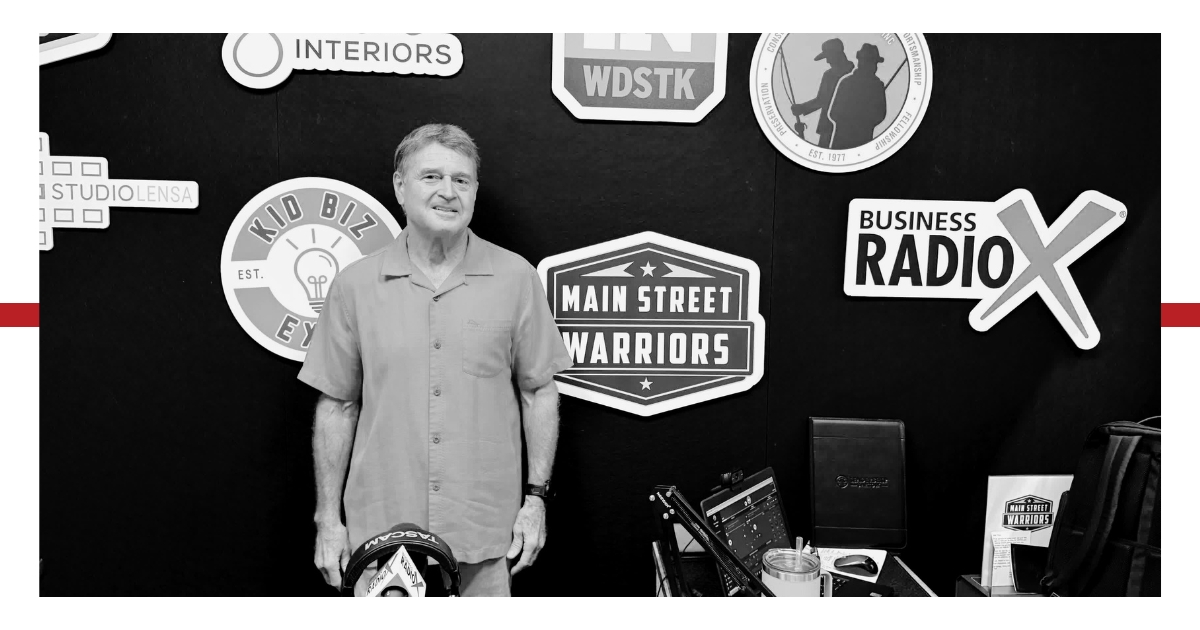
Brought to you by Diesel David and Main Street Warriors

In this episode of Cherokee Business Radio, Joshua Kornitsky interviews Laird Carmichael, an executive coach and Vistage Chair. Laird discusses his journey from global manufacturing leadership to facilitating peer advisory groups for business owners and executives. He explains how Vistage fosters collaboration, accountability, and growth through structured group meetings and coaching. The conversation explores the value of vulnerability in leadership, the selection process for Vistage, and the benefits of the broader Vistage network. Laird also shares insights from his sports background and praises the impact of the EOS methodology on business success.
 Laird Carmichael grew up in Atlanta, and has an ME degree from GT (wrestling scholarship, baseball, GT Hall of Fame). He’s worked for 11 companies, two of his own, 24 positions with 28 managers.
Laird started with GE on the Mfg Mgmt Program, then spent 15 years in multiple businesses and locations. Alcatel Alstom, 4 PEs and ended in Chicago as the VP of Global Operations with plants in Chicago, Brazil, Mexico, China (2) and Malaysia.
Laird consulted for several PEs for 3 years after retirement. He decided to chair a Vistage group to stay engaged with the business world and give back from his experiences. He has a very active retirement life full of family, friends and activities.
Connect with Laird on LinkedIn.
 This transcript is machine transcribed by Sonix.
TRANSCRIPT
Intro: Broadcasting live from the Business RadioX studios in Woodstock, Georgia. It’s time for Cherokee Business Radio. Now, here’s your host.
Joshua Kornitsky: Welcome back to Cherokee Business Radio. This is Joshua Kornitsky professional iOS implementer and your host for Cherokee Business Radio today. I am so happy to have you with me in the studio, Laird Carmichael. Laird’s an executive coach and also a vintage chair. Welcome.
Laird Carmichael: Thank you. Joshua. I appreciate you having me on today. And, uh, I’ll warn you ahead of time, I’ve never done a podcast, so, uh, I’ll, uh, I’ll work my way through this with you.
Joshua Kornitsky: Well, the good news is we’re just going to be talking. Yeah, so that makes it much easier, because I know you can talk because we’ve done that for a long time.
Laird Carmichael: I make up for things by talking too much. So that’s a that’s one of my lessons learned at Vista.
Joshua Kornitsky: All right. Well so let’s start right there. Well, so let’s assume someone doesn’t know what Vista is. What is vintage.
Laird Carmichael: Well, basically Vista is a peer advisory group. Okay. So you have a room full of and that could in our groups. Uh, that could be a president. That could be a CEO, that could be a managing partner. Most uh, most times it’s smaller businesses, 5 to 50 million size, uh, in revenue. Um, and, uh, and their owners and all of my group, uh, is all owners and, and they’re passionate and, uh, they collaborate once a month in a monthly meeting, and then we do some 1 to 1 coaching individually in between the meetings.
Joshua Kornitsky: Okay. Thank you for giving us some context. And I’ve got a few questions on that, but I want to ask kind of what brought you into this role. How did you end up in. Tell us a little bit about your background.
Laird Carmichael: Well, not to get too long with the story and I can do that, but, uh, I, actually grew up in Atlanta. I went to Georgia Tech there, so I spent the first 21 years in Atlanta. I then worked for 45 years and had to make a retirement speech eight years ago. And so I said, well, I worked for 11 companies. I had 24 jobs and 28 managers. So I got to and I worked in six different countries, you know, including the US. And it was all in a manufacturing businesses, two of which were mine. Anyway, I retired eight years ago and I worked for four private equity companies the last 25 years. And uh, as soon as I retired, they started calling me and said, hey, we need to fix something in a plant somewhere, right? And I stayed. I stayed domestically on those assignments, but I’ve consulted for about three years until one day I woke up and said, you know what? I’m getting up at 4:00 in the morning up in North Georgia, driving an hour and a half to two hours down to the airport to get to get on an 8:00 plane. Right. Fly somewhere, get back home at 6:00 at night on Friday and Atlanta traffic and take three hours to get back to my house up in North Georgia mountains.
Joshua Kornitsky: That’s a hard working retirement right there.
Laird Carmichael: It was. I’m. I’m working full time. I didn’t need the money. And I’m saying no mas. That’s that’s it. And so I had a really good experience back. Uh, I did, uh, 15 years with General Electric and three with a French General Electric. Uh, I left the corporate world and, and became a part owner of a contract manufacturing business. And, um, when I went to that, I lost all that infrastructure of the corporate world. Sure. And, and so I needed somebody to talk to when it, you know, because most of our employees were Mexican. Uh, and, and so I joined this thing called the chief executive Network, which is a similar and still around today as visage, only it doesn’t have near the bandwidth of a visage. Um, so anyway, I said, I’m going to do a due diligence on all the all the places that do that. And that’s how I found visage had no earthly idea who they were, uh, and, and how big they were. But they’d been around for 60 years. They got 47,000 members and, wow, 30 something countries, mostly us. And, uh, and I went through their vetting process and academy and to get trained and, uh, became a chair about, uh, a little over a year ago.
Joshua Kornitsky: Wow. Okay. So you’re working with, uh, companies, usually 5 to 50 million ish is the range. And and, uh, you had said typically it’s owners or senior senior, you know, C-suite level management.
Laird Carmichael: And it’s basically somebody that owns the PNL, somebody that’s fully responsible for a PNL. It can be a, you know, a $150 million division of $1 billion company. But, uh, they need to be running some sort of a PNL and be responsible for it.
Joshua Kornitsky: So who tends to thrive in a in a pure environment like that, from, from your experience, both inside of this stage and outside, who who does best?
Laird Carmichael: Well, the vestige, uh, people, I’m telling you, the vintage chairs that I’ve met. Uh, there’s 16 of them down in Atlanta. I went to a to a chair world, they call it in Orlando back in February of of last year. And there were probably 500 chairs down there. These are people that you’d hang with professionally and personally. Great personalities, good people. Just really, really good people. The people that joined visage are people that want to collaborate with their peers to basically make better decisions. Um, you know, when you’ve got nobody to talk to. As that situation came up for me back in the 90s. Um, you know, it’s it’s a tremendous help to listen to somebody else. Different kind of problem. But basically the, the typical the topic is the same and therefore it’s transferable as to how you attack the problem, how you collect the data to decide what to do with it, and then and then decide on the solution and then do the execution and all that process. You get to listen to maybe 15 other people tell you how they got through that.
Joshua Kornitsky: Wow, that seems incredibly valuable.
Laird Carmichael: And the power of, of uh, we basically call it issue process. And we go through a, a funnel process to say, okay, what’s your issue? What the what’s the impact it’s having on you financially? Emotionally? The the culture, your personal life? Uh, the, the rest of the members will ask a lot of clarifying questions. Then you decide, do you still have the same issue, or is the issue something a little different from all those clarifying questions? And then we go through a process of solutions, and you become accountable for whatever solution that you’ve listened to. Wow. Um, is is the right solution for you. And when you’re going to do the first thing to execute on it and, and you’re you become responsible to the group for the accountability, then.
Joshua Kornitsky: Okay. So so it sounds like the type of person who’s going to thrive is going to be somebody who’s open and and willing to listen and willing to take the, uh, learn from the advice. I read somewhere once and I don’t remember whose quote it was that that a smart person learns from their mistakes, but a wise person learns from others mistakes. Exactly. And it sounds like that’s the vintage serves its members very well that way because you’re bringing all that experience to bear.
Laird Carmichael: Very much.
Joshua Kornitsky: So. Um, and so when you’ve got an opportunity to talk to somebody about Vista, what are some of the most common questions that prospective members ask you? The types of things that, uh, you know, I’m not sure it’s for me. What are the things that they’ll bring up to to ask and understand about this stage?
Laird Carmichael: Well, um, I usually do a sorting process to end up in that discussion with somebody. Um, I’ll, I’ll sort a, I’ll sort LinkedIn for my particular area because my area is not like the 16 people down in Atlanta that are all vying for the same people in the Atlanta area. I, I basically do North Atlanta through the rest of North Georgia. So it’s a fairly about half the state. Um, and there are no other chairs or are any other members up in North Georgia? So I’m operating in a place where they don’t know what visage is.
Joshua Kornitsky: Okay.
Laird Carmichael: Okay.
Joshua Kornitsky: So you’re introducing a new concept, which is hard.
Laird Carmichael: Yeah. And and there are there are lots of other organizations that are networking organizations, but they tend to be more social than, than and maybe a little bit of off away from whatever meeting the group has. It’s maybe one on one with another member that you that you do some collaboration. But this is very focused on bringing the right people to the table. So when I get into a phone call, I may be introducing vintage for the first time like we just talked about, right? Or they may already know about vintage and decided that, well, I didn’t want to back then, but I think I might want to be interested now. But, um, what I’m looking for and these are mostly zoom calls because of the size of the territory, I can’t go I can’t go have coffee with somebody and and and have to drive an hour or two at an hour back. So, uh, we do a lot of zoom calls, but I’m looking for the a person that’s humble enough and vulnerable enough to be the right kind of person in the room. And the one thing we don’t do is have two people chasing the same customer in the room, because you lose the the trustworthiness and the confidentiality. You’re not going to open up when you when you’ve got somebody chasing one of your customers sitting right across the table. So it’s a very confidential, you know, room of, of information we have going on.
Joshua Kornitsky: Sure. And that makes sense because you you’ve got owners and presidents and CEOs sharing data. That’s not public data in most cases. So I want to grab on to something you just mentioned and tie it kind of back. You had you had mentioned that you’d worked in multiple organizations across multiple countries, which these days is not as rare, but but still pretty rare to have somebody that’s had that broad swath of, of cultural, uh, experiences. Right. And you used a term that I hear a lot in my work, but I don’t hear it a lot in business discussion. You said they’ve got to be vulnerable, right? So I want to ask you first. Were you always vulnerable during that career? And if the answer is yes, I’ll call bull crap on that. Uh, but but really, what I want to know is, is kind of what what opened that door for you, and maybe give a hint or two to somebody that might hear this that says, oh, well, all right. So a little bit about vulnerability.
Laird Carmichael: Well, you’re exactly right. Anybody that says yeah I’ve always been vulnerable. You know, that’s that’s bullshit. So so excuse me. No.
Joshua Kornitsky: Quite all right.
Laird Carmichael: Yeah. Yeah, exactly. Um, in fact, I’d have to say with all the experience I had and all the different cultures and all the places I had, uh, factories, you know, predominantly in Mexico, but, uh, all, you know, Brazil, China.
Joshua Kornitsky: Uh.
Laird Carmichael: All over Malaysia, France. Um, yeah. I wish I’d have had vestige back when I was running two of my own businesses and and some of the other businesses that, that I was associated with. Um, I’ve learned about vulnerability, trying to find it in other people in a, in a quick, uh, first 30 minute discussion that you get into, if the person connects with me on LinkedIn, we we basically schedule a zoom call and we’ll do an information exchange is what it’s called. And if we decide there’s more there, then we’ll we’ll go on for there. Um, but, uh, you got to find somebody. If you find somebody that’s not vulnerable, that’s not humble. And there’s degrees of that, obviously. Sure. You don’t want somebody coming in to dominate in the room. You don’t want to doing all the talking. You don’t want them to to be adversarial with the rest of the group in there. And, and so, uh, that, that that’s probably the most important personality traits that you want with the person. And then you start getting into, um, what kind of organization they run and does it fit in the group. And we try to get a diversity in the group. Uh, that that facilitates a very good discussion about issue processing.
Joshua Kornitsky: I mean, that makes sense to me. Is, is there is there a way you can sort of quantify or qualify the type because of ROI that people get from Vista? Because obviously I’m sure there’s a financial investment, but there’s a time investment. And in more often than not, broadly speaking, when you’re talking about the, the type of individuals that join visage, their time equates very directly to money. So what type of return do they get for that time and, uh, financial investment?
Laird Carmichael: And those are the the two leading, uh, you know, roadblocks. If there’s a roadblock, somebody’s doing a lot of. I talked to a lot of people say, you know, this is great. That’s exactly what I need. But I’m too busy to do this, and and this is a lot of money. If it’s a smaller business, I don’t know if I can afford to do this. And those are always the two biggest things. And it gets back to an ROI. And and if you’re not getting a ten x on your on your investment of either time or money, uh, then you shouldn’t be there because you should find that out very quickly. And, and in our sorting process, if we get past the information exchange, um, you know, there’s two ways you can go. You can go straight to a selection interview where you go through about an hour and a half of questions that are very, very specific and, and either sign the person or not sign the person at the end of that selection interview. But but I prefer that, uh, that we bring a person to the to the meeting, to our regular meeting, and we’ll have guests at every meeting. Oh, really? Yeah.
Joshua Kornitsky: And and and so that’s that’s that.
Laird Carmichael: Well, it’s it’s so, it’s so that I can see how the person interaction interacts with the rest of the members. And after the meeting is over, I can get their opinion of whether they want the person in the room or not.
Joshua Kornitsky: Sure. Well, that makes you, uh, a deeply ingrained chair and facilitator, because you’ve got to make sure that they gel.
Laird Carmichael: Yeah. If the person does well in the meeting itself and and and the person and our members, our current members say, yeah, thumbs up. Then then then we go forward. Well, but I’ve had a couple of guests that I remember said, no, no thanks. And uh, and I just didn’t give them an invite to become a member.
Joshua Kornitsky: It seems like an upfront and very clear process for folks. And and if somebody is interested in learning more and, and, uh, understanding what Vista is about. We’ll have all your information on our site, but is there an easy way for people to learn about it or get in touch with you?
Laird Carmichael: Yeah, I’m I’m on a I’m on LinkedIn just with my name, Laird Carmichael. Um, you’ll see a vintage background when you come on to it. Um, the. You know, other than that, uh, just getting just getting Ahold of me through that is probably the best way to do it. But I would highly encourage, if you have zero, zero knowledge of vistas, just poke on to the vintage.com website, go through it and you’ll start seeing all the all the, the webinars and the speakers that we bring in and all the, um, there’s there’s a lot of networking groups where if you’re doing M&A work or if you’re doing all sorts of there’s 37 different networks that you can join. And that way you get access to the rest of the 47,000 members.
Joshua Kornitsky: Wow. Okay. So so that peer group extends really, uh, nationally.
Laird Carmichael: Exactly. And internationally.
Joshua Kornitsky: Oh, see, and speaking back, you you had said when you were in different countries running your own, That that would have been beneficial. I didn’t realize that.
Laird Carmichael: So hugely beneficial I’ve gotten. I joined about five of them. I joined obviously the manufacturing one because that was what my life was or my career was and uh, and uh, and several other ones and, and sometimes the email they go across, I haven’t gotten involved with hardly anyone. But if somebody comes up and says, geez, I know I need to be in Mexico manufacturing and, and I got this new product, blah, blah, blah. Anybody got any experience at that? And I couldn’t, I couldn’t resist.
Joshua Kornitsky: Right, right. Well, it’s it’s a hook that, that that works for you.
Laird Carmichael: I had 30 years of that. And especially doing contract manufacturing, I was bringing in any and all products and uh, having to deal with all the border issues and the, and the other issues that are involved.
Joshua Kornitsky: So that brings up just a couple more points that that occurs to me. So if let’s say that you do, uh, engage with someone and, and it turns out that that, uh, they’re not a fit for your group, can you suggest different groups to them if that’s a good a better fit?
Laird Carmichael: Absolutely, absolutely. Even somebody that didn’t fit in my that’s called a C group because it’s CEOs, you know, presidents, owners whatever. Whoever’s running that p l there’s 16 more of them down in Atlanta. And, you know, the chairs were all got our own personalities and, and our own different types of groups, our own different groups, so that you might fit in there. Or they have about five other categories of groups from trusted advisors, which are kind of individuals that are providing a service of some kind. So they’re a little less money, a little less coaching. Uh, not as many speakers per year, but but they’ve got, you know, small businesses, they’ve got, uh, key key, uh, employee groups or emerging, uh, uh, employees. Uh, so they’ve got a group. So if if the CEO or president is getting value out of vintage, they’re probably going to want somebody off their staff in a key group. And and somebody below that is an emerging leader in the organization. And they’ve got a group for that. So you know, a lot of these companies will have three or 4 or 5 different people in five different groups. That’s one of the advantages.
Joshua Kornitsky: That makes a lot of sense.
Laird Carmichael: The development capabilities within Vista is far more than just the top.
Joshua Kornitsky: Well, I’m glad that we touched that subject then, because it seems like it’s a pretty holistic approach to help the entire organization move forward. So the last question that I had for you is based on a discussion we had had previously, and I just wanted to ask, what are some of the influences that impacted you in the way that you were a leader, that you were a CEO, but now as a Vista chair? What are some of the things in your background? I know we’ve talked about athletics in different teamwork, things that that impacted you.
Laird Carmichael: Yeah, I was in an organized sport 12 months a year from the time I was five until all the way through Georgia Tech, I played, I was on a wrestling scholarship, but I played baseball because I love baseball. So, you know, I’ve always felt competitive people that come out of the sports world of some kind or almost, almost any, any thing that occupies your time besides school or whatever, right? Um, the competitiveness is there. And those that have been in an individual sport, like wrestling, is absolutely an individual sport. Very intense. Um, and, uh, and baseball is a team sport. And you could go back and forth with 20 or 30 different sports that have both. And those are some of the best people I’ve worked with my entire career. Um, the, the sort of the lessons that, that I learned and, and the, the application of doing things differently now is I’m no longer, uh, responsible for coming up with the solution. However, I did that during the business life I had. Right. Uh, and then the. Absolutely. The execution of it. Um, that’s not what I do anymore. So I have to learn how to facilitate a meeting, ask good questions, and have the members come to their own conclusions of what the answers are and, uh, and become accountable to the group for execution. Um, and so that’s actually fun. I’m enjoying the hell.
Joshua Kornitsky: Out of it. So you went from being a player to being a coach?
Laird Carmichael: Exactly. And I’ve never had so much fun. I mean, uh, seriously, this. And what I love is when I see, uh, which happens in my group, uh, you know, members in the group helping each other. And some of them may be two hours apart. Sure. They’re driving to the other person’s location on their own time, not charging anything and helping a business that’s struggling in a certain area that they’ve got a skill set in. So when the members start helping each other away from the meetings, away from the one to ones, that’s really satisfying.
Joshua Kornitsky: That’s got to be hugely rewarding.
Laird Carmichael: Yeah. And and you know, I’ll, I’ll, I’ll insert myself when I see we’re running down a rabbit hole that doesn’t seem to have any value in whatever the subject is we’re talking. So I might I might divert it into another question that gets us out of that rabbit hole.
Joshua Kornitsky: So. Sure. And that’s the value in the perspective that comes from experience. Right. That that you that we can allow people to chase rabbits for days and go down the rabbit hole, but it doesn’t actually help anybody.
Laird Carmichael: No.
Joshua Kornitsky: Exactly. Um, well, Laird Carmichael, executive coach, vintage chair. I can’t thank you enough for your time. I feel like I learned a few things today. I certainly hope anybody that’s listening has heard a few things that garnered their interest. Any final thoughts?
Laird Carmichael: Well, all I can say is, uh, I think we met each other when, uh, when I was, when I, I had heard EOS multiple times in, in the as I was, you know, trying to find potential people for the group. And I had no idea what EOS was. And so you came up on, on my LinkedIn searches and I thought, well, here’s a chance to learn about EOS and possibly get another member. Um, and so you were helpful and teaching me about EOS. We went offline and did it for an hour or so one day. And, uh, and it was just ironic that, uh, you had actually started helping one of my members up, uh, up in Dalton, which is, you know, an hour from me and almost two from you here. Uh, you’d already started with the EOS program up there with, uh, with the lady that runs that business.
Joshua Kornitsky: So, uh, and they’re doing great.
Laird Carmichael: And I’ve enjoyed, uh, the interaction with you for the last year and, uh, and, and I think anybody looking to look for a methodology to run their business. And it’s just a methodology, but it’s it’s important to have that discipline that iOS brings. So and I love your demeanor and your personality at this. And I think it’s excellent for, uh, for, for being a facilitator with iOS.
Joshua Kornitsky: So thank you. And I and I think I can say without hesitation, I completely agree with you. Ios is great to use in in any organization to help them get stable and to help them grow. So thank you again for joining us here today. We’ll have all the information on our website so that people can learn about you and get in touch. Um, I want to thank everybody for listening. It’s been a fantastic episode. This is Joshua Kornitsky professional iOS implementer and your host here at Cherokee Business Radio. We’ll see you next time.














