

Brought to you by Diesel David and Main Street Warriors

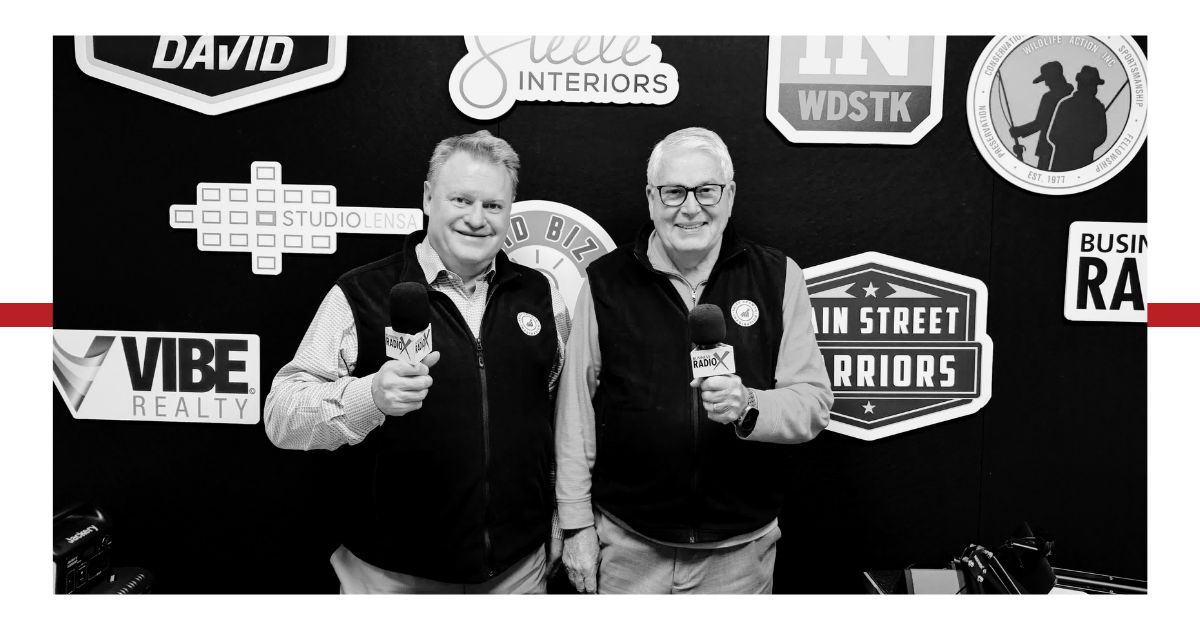
In this episode of Cherokee Business Radio, Joshua Kornitsky explores sales training and development with experts Dean Nolley and Lou Melancon. They discuss building effective sales teams through continuous learning, tailored coaching, and strategic hiring using assessments. Lou and Dean share practical advice for aligning sales roles with individual strengths and company goals, emphasizing a holistic, scalable approach for businesses of all sizes.
 Dean Nolley, Founder of Sales Growth Imagination, is a senior sales leader with more than 30 years of experience driving business growth and profitability. He has an impressive record of scaling up sales teams and improving revenue for organizations of all sizes.
With his collaborative approach, Dean structures partnerships for mutual success and a shared sense of accomplishment. His experience includes corporate leadership, a Silicon Valley start-up, and multiple VC/PE-backed portfolio companies, while starting and successfully selling his own company, Digital Imagination.
Thus, Dean is walking down memory lane with supporting small businesses, as he has successfully walked the walk as a small business founder and owner. Dean has certifications in OMG (Objective Management Group), CSL (Certified Sales Leader), and AI Certified (Business Transformation, AI in the Sales Process, and AI Sales Tools).
Connect with Dean on LinkedIn.
 Lou Melancon is a Sales Leader, Individual Contributor, Sales and Product trainer for 50 plus years. After a short retirement he decided to share with others what he has learned through years of successful selling and coaching.
Your sales force will be more effective, new clients and client retention will increase and your revenues will increase as Lou moves your sales team to their next level.
Connect with Lou on LinkedIn.
 This transcript is machine transcribed by Sonix.
TRANSCRIPT
Intro: Broadcasting live from the Business RadioX studios in Woodstock, Georgia. It’s time for Cherokee Business Radio. Now, here’s your host.
Joshua Kornitsky: Welcome back to Cherokee Business Radio. I’m your host, Joshua Kornitsky professional EOS implementer, and I’ve got two really interesting guests here in the studio with me. But before I get started talking to Dean and Lou, I want to remind you that today’s episode is brought to you in part by our community partner program, the Business RadioX Main Street Warriors Defending Capitalism, promoting small business, and supporting our local community. For more information, please go to Mainstreet Warriors. And a special note of thanks to our title sponsor for the Cherokee chapter of Mainstreet Warriors. Diesel. David Inc. Please go check them out at diesel. David. So as I said, I have two guests here in the studio with me today that I’m really excited to talk to both of them. But unlike normal interviews where it’s one than the other, we’re going to do this all together. So here in the studio, I’ve got with me, Dean Nolley and Lou Melancon.
Lou Melancon: Excellent.
Joshua Kornitsky: Doing my best.
Lou Melancon: Excellent.
Joshua Kornitsky: And they’re here to talk a whole lot of sales with us. So before we get started, Lou, let me start with you. Give us a little bit of your background so we understand why you’re an expert at what you do. Sure.
Lou Melancon: I’m glad to. And thank you for asking. In the Sales Imagination organization, what I do is training. Training of salespeople, sales managers, business development people, telemarketers. My background is in 1973, I was a fair but not very successful disc jockey, and I married the receptionist at the radio station and decided it needed a real job. Well, it didn’t have a college education. I liked college, but I didn’t finish. And I got a job as a commissioned salesman. Didn’t pay me anything. Only when I sold something did I get paid. And let me tell you, that was quite a learning experience. In the third year, I was the top salesman in the nation. And I’m very proud of that. I migrated from that into sales management. That led to marketing and market development. And that led to training. I spent a lot of time training salespeople on how to sell our products and how to market our products. And that led to working with very large accounts. So at the end of my career, I was working with two accounts nationally across many hundreds of locations, and we were very successful with that client, did a good job. They liked us. We liked them. Very rewarding. So in a nutshell, that’s how I spent the last 50 years. I retired in March, and in April I said, I don’t like this. I want to do something.
Joshua Kornitsky: You don’t seem retired as long as you want to say.
Lou Melancon: So Dean and I were talking because we had worked together, and he said, hey, listen, I want to add training into my portfolio. And I said, Dean, I’ve done that for years and done it very well, so I’d like to be part of it. So that got me to working with Dean.
Joshua Kornitsky: That’s fantastic.
Lou Melancon: I think it’ll work.
Joshua Kornitsky: Well, I think you said you worked together previously. How long did you work together?
Lou Melancon: I guess about ten years.
Joshua Kornitsky: Okay. So good. Solid working relationship.
Lou Melancon: Yeah.
Dean Nolley: And then the one thing with Lou that he’s not saying I saw him as a high end services specialist, very successful, overachieving, uh, put him in a leadership. Needed some help running Georgia. Unbelievable leader. Um, and so he’s not telling the whole story.
Joshua Kornitsky: Well, the best leaders are usually the the least boisterous about their own abilities. But, Dean, tell us a little bit about your your background and tell us about your working relationship before and since with Lou.
Dean Nolley: No, I appreciate that. Um. My background. I started out at Eastman Kodak. Successful career, a lot of number of different sales, sales, leadership. Um, we were sitting in our starter home, me and Heidi, um, I would normally say we were pregnant with Alex, but you both have met Heidi. Heidi would cut me off publicly and say I was pregnant with Alex. And as we were evaluating another promotion to go back to beautiful, cold, snowy 186in a year at Rochester, New York, and I watched my wife profusely crying. I knew that it was time to leave corporate America and go out. So I went out and my background at that point was start up in Menlo Park did not have to move there. I was such a good employee of Kodak. My job was to put film out of business. Saw the digital cameras, thermal desktop printers and the 1996 Olympics in Atlanta, Georgia was a catalyst in the foundation to do that. Um, so that taught me. I worked for people from Apple, Logitech, Sun Micro, SGI, Microage on the channel, and John Sculley of Apple was none other than the consultant for the company. Wow. Um, I saw entrepreneurial set Joshua like I’d never seen. I loved it. Well, it was all good. Things come to an end that PE groups were able to sell within two years. At that point, me and another gentleman went out and started Digital Imagination. So that’s what kind of brings me to where I am now, because we started a company. What we saw is on the services side, all the service providers were avoiding digital.
Joshua Kornitsky: So well, it was new and scary, right?
Dean Nolley: Yeah. It was. So our claim to fame was mastering the Santa Clause and the Easter Bunnies in the mall. So we found a way to partner with them because it didn’t feel right competing with Santa Claus or Easter Bunny. Right?
Joshua Kornitsky: I have to know the story.
Dean Nolley: Yeah. So plus plus, we saw how good a relationship these mall providers had with the mall developers, right? So we found a way to educate them, train them, support them. And all of a sudden, instead of you getting that Polaroid from Santa Claus and Easter Bunny, you notice you started getting the digital files and the thermal print. That was us. Wow. Um, so we sold that successfully applied graphics technology in New York. Uh, at that point, I kind of hung out in the PE world not running the companies, but running sales. So startups three, four, 5 million trying to go to 30, 40, 50 million. So when you look at where I am now with sales, growth, imagination, it’s like deja vu. I’m walking down memory lane is the best way to say it. So hopefully I can help business owners be smarter than I was. We learned a lot the hard way. We won a lot of business, but we outgrew our structure. Joshua. So, um, on the on the loose side, what makes this fun is at the end of the day, I should have been focused on Raine Group and training, but there’s so many different things that we do with sales. Go ahead.
Joshua Kornitsky: Well, so back up. What is Raine Group?
Dean Nolley: Well, if you go to Raine Group and we’re going to let you walk through. But as you know with what I do, I help companies build out sales infrastructure, get their sales sustainable, then build out the framework roadmap to help them strategic sales playbook to help them scale.
Joshua Kornitsky: Right.
Dean Nolley: Um, the there are people that do what I do nationally. There’s so many things I’ll do. If I tried to tell people, I’ll lose them in about five seconds. So rank Group is one of those. And but what’s really cool about rank Group. It’s individual based training. So what it does for our sales growth imagination. I’ve not been B2C as you know I’m B2B right? But guess what? I go into a UPS store. Now husband, wife. They bought a franchise they’ve never sold before. Rank Group applies. You have one. Two salespeople is all. You now have an affordable way. And Lou’s going to go through that. But what I love about it is it really broadens what we do because anyone I touch, we now have a solution, because my higher end services of infrastructure management framework that doesn’t apply other than generally B2B, right? Probably 5 to $50 million or plus companies.
Joshua Kornitsky: Certainly not going to help on a small scale. So so Lou is is rain group sales training.
Lou Melancon: It is exactly what it is. Let me tell you how we got to it, Joshua. Thank you. When we sat down and talked about doing training, we said, okay, we’ve got to train new hires. We’ve got to train those who are early on in their career. Then we’ve got to train the old pros, the ones that teach old dog new tricks. And then there’s a lot of people now that sell or develop leads through the internet, through social media.
Joshua Kornitsky: We all know that.
Lou Melancon: Through the telephone. God, God bless them. So we said we’re going to have to train all of those people. So we looked around at the possible training programs we could offer, and we looked at writing our own. And that’s how we arrived at the Raine Group. They’re an organization based out of Boston, and they do two things extremely well. They analyze why people buy what caused them to buy something, what caused them to buy from that sales rep from that company. So they analyze that and they’ve developed training programs. They’ve got training that starts with the very basic of how do you hire the right person?
Joshua Kornitsky: Okay.
Lou Melancon: And then once you hire the right person, how do you set them on a path for the next month, the next three months, the next six months, the next year? In other words, they teach managers how to manage salespeople effectively.
Joshua Kornitsky: So it’s not just end user sales training, it’s it’s sales management training as well.
Lou Melancon: Yes. Okay. And it can rain group offers 70 modules. And and I guess I should have talked about the modules so you could visualize this. Most people when they train will call you to a room and 12 or 15 or 20 of you will sit down and and you’ll go through a training session. And it might be one day, it might be three days, it could even be a week. And the people in that room might not all be in the same business. They one might be in construction, one might be in engineering, one might be in services sale. So there’s not a lot of synergy in that type of group. And incidentally, for the most part, those trainings are very expensive.
Joshua Kornitsky: Well, I didn’t want to ask about costs, but I will when when you finish the explanation, because I do want to understand it. And for anybody listening to to have a grasp of what they’re talking, what you’re talking about financially.
Lou Melancon: That is one of the greatest things about the Raine Group. Now you’ve got these 70 individual modules, 70 aimed at sales management and sales reps at prospect, people doing prospecting. Right. And the modules are packaged together in a 14 week course. And that covers your midrange salesperson. Then we’ve got to focus on prospecting for your newbie. It’s just come in. We’ve got a process for the experienced sales manager. How do you do better? And for the new sales manager, what should you be focusing on so you can take these modules in sequence or In any way you want. You have access to 70 modules, each an hour long, with text in them, with reviews in them, with supporting materials. Okay, for $985 a year, a year for 70 modules for one person that’s per person.
Joshua Kornitsky: That’s incredibly, uh, compared to what I know sales training can cost. That’s an incredible value.
Lou Melancon: It is an incredible sales training program. It’s phenomenal.
Joshua Kornitsky: Is there, um, performance metrics that’s that are reported upstream so that anybody can see because anybody can sit down in front of a computer and click through and say, okay, I’m done.
Dean Nolley: You’re making this easy for us.
Joshua Kornitsky: Well, I want to understand.
Lou Melancon: So yeah, in the rain group, you can’t do that. You can’t just click through okay. You’ve got to watch the module to get to the validation quiz that follows each section of the module. Each module is divided into about six sections okay. And the scores are recorded and they come back to me. And I can share that with Dean, and we can share that with the business owner. Tell him how his sales force is doing. It’s all part of the evaluating your sales force and helping you figure out how to get them on the track you want them to run on.
Joshua Kornitsky: It sounds like it’s a really, really incredible kind of start to to end system. And one of the questions, and I don’t want to make it sound silly, but I know that when it comes to any type of sales is a skill, right? And when it comes to any type of skill training, there’s no such thing as one and done anywhere in the universe. So if I’m a mid-career sales rep and let’s be honest, I know everything when I’m when I’m a mid-career sales rep, there’s nothing new. I’m being sarcastic, but typically they have a a perception of the universe that they got this down. Are there courses and and tests to help them continue to perfect their art.
Dean Nolley: I’m going to hand it over to Lou in a second on this one, but yes. Okay. You get into consultative selling and we were on with a very, very large prospect yesterday. And while they have a lot of new reps coming in mid-level, they have some reps that they are now focusing on larger accounts. So consultative selling comes in. But that also ties in to what we’re doing with business coaching or sales coaching around these classes, because that’s aligning to a scorecard and a metric so that that owner can see the improvement and they can actually see the results aligning with the training that’s taking place. So okay, I know Lou is going to go into a lot of detail around that part.
Lou Melancon: Well, on the old pros.
Joshua Kornitsky: Um, dogs, you don’t want to learn the new tricks.
Lou Melancon: If you really look at the trajectory of a successful salesman for the first two, three, four, five years, he’s out there prospecting a lot, building his client base, and trying to build repeatable business so that by his fifth year onwards, he tends not to do any prospecting and he just holds on or tries to hold on to those clients. And that’s maybe good for them, but it’s not good for the company. Sure, you want the company to grow.
Joshua Kornitsky: Built right into it.
Lou Melancon: So there’s a couple of really challenging courses that I use to start working with the old pro, the seasoned old pro, the you can’t teach an old dog new tricks type of guy, right? One of them is using is having a prospecting plan using, uh, social media, using the internet, using email the right way, not just bombing somebody with 300 emails, but how to make it effective and what to say, and then how to sell on the computer. There’s a lot of selling today that’s not done face to face. It’s done over the over the internet using Google or teams or something like that. And what we’re finding is that when people buy, they start the buying process. They’ve already done a lot of research online. You couldn’t do that years ago. There wasn’t a Google there for you to search with. There is now. So they come to you with a perspective and thinking of where your company is in the industry. Are you number one, number two, number five. So we teach the the guys who can’t get into the accounts, new accounts, how to do it. Also, one of the things I find with experienced salesmen is they won’t call on competitive accounts. You must call them competitive accounts. They’ve already decided to use your product. They’re just buying it from somebody else, right? What you want to do is talk to them about, let’s say something goes wrong. God, I hope it doesn’t go wrong, but something goes wrong with your current supplier. Yeah, and you’re going to need to switch over fast. You need to have a backup strategy. So we talked to them about backup strategies. We talked to them about prospecting. We talked to them about the six personality types that you get in a committee sale.
Joshua Kornitsky: And I’m laughing because committee sale is more accurate than not. In some cases.
Lou Melancon: There’s some people that want to make the decision all on their own. There’s other people that don’t want to do anything without consensus. So we teach them the six personality types and how to deal with each one. And those are just some examples. There’s also modules on keeping and retaining accounts. Joshua, the range Group has a tremendous training program and I love it. I’ve taken the modules, I’ve studied them. But if you don’t reinforce it it doesn’t stick. It goes in one ear and out the other. People learn something this week and they forget it by next week.
Joshua Kornitsky: So how do you reinforce?
Lou Melancon: That’s the key. That’s what we at Sales Imagination Add. That’s the that’s the secret sauce if you will.
Joshua Kornitsky: Okay.
Lou Melancon: What we do is once a week after that training session and say there’s four people in the session, and they do it on four different days at four different times. But once a week we all get together on a day and time, say Tuesday at 10:00 in the morning and we spend an hour together. I go over. I’ve already looked at the module and their test scores, so I know where they’re strong and where they’re weak, and it allows me to sit there and talk to them individually about situations they’ve got, how they handled it, how they would have applied this new learning, what they thought of it, what they’re going to do to reinforce it. Now, the rain group training reinforces last week’s lesson in the new week’s lesson. It’s a reinforcement process and it’s a great one. So we do a lot of role plays in the coaching. We help them deal with real world situations, and we make sure they’re paying attention to the materials and they’re getting the most out of it. And maybe the most important thing you do as with salesman is show what’s in it for them. Okay. Show them how to make more money.
Joshua Kornitsky: I’m laughing because I spent 20 years in sales and everything you’re saying I know to be true.
Lou Melancon: Yeah. We want to show them how to make more money. We want to show them how it’s easy to prospect if you do it the right way. And it’s not always fun, but it’s something you do 100%.
Joshua Kornitsky: And to be fair to the great salespeople of the world, the best salespeople I have known, men or women, never stop learning, never stop refining their craft. Um, truthfully, it is. It is the anomaly to have that old stick in the mud. Who who doesn’t want to continue to learn because most of those people self-select out before it becomes their career. Because if you’re going to sell for a living, you have to be serious about it. And just like any professional athlete, you have to have coaching and training in an ongoing way.
Lou Melancon: What what I find is you get a lot of pushback from the experience because his attitude is, I don’t want to do this. I’m doing it because I have to. Right. And I recognize that because I’ve been a sales manager for so long. But I try to do with that type of person with the reign group is is put them into the situation where we can involve them or willing get their willing buy in. And I use that as using them as a partial coach in the class. You know, I would say you’ve done this before. Tell them about one of your most successful sales and we’ll talk about it. So you get them involved by sharing. And once they start feeling important, they’re committed.
Joshua Kornitsky: The tide goes out. You bet comes in. And, uh, that that makes great sense. And that’s a fantastic, uh, clearly hard learned strategy for for breaking down those more seasoned folks who, well, breaking downs the wrong term for including those more seasoned folks who are more resistant.
Dean Nolley: Well, and yesterday, you know, we were on a call. And the other part think of this as a simulated version. It was with a decision maker, but Lou would have seen the same thing if he had tenured salespeople. We were talking about consultative selling, getting to larger accounts. It was very obvious when we asked, what kind of tools will your people have to get into these accounts? They didn’t have any tools. So that led into a strategic conversation around sales, Riccio, Avner, and Knowledge Net. So the owner said, well, can you give us an example? Well, we had already done one where we showed how we made a connection path to one of their area. Franchisers. Right. And but at the same time, the guy put us on the spot and he said, okay, I want to do one live right now and see how it works. We pulled it up. He’s like, how quickly can you get me a recap? Recap? Because we need to look at this very seriously. It was amazing. The connection path. And he’s like, man, where has this been? But. That’s the thing that Lou’s going to pick up on. And one other thing to touch on, because when I first thinking of rain, you know, I started thinking about my college days of listening to Eddie Rabbitt, you know, rain on the windowpane. But in this world, rain stands for something quite different. And I wanted to allude to kind of walk through that as well. Um, because he taught me a lesson that I should have probably known this answer two years ago, and I didn’t.
Lou Melancon: Now Rain is an acronym. Acronym, excuse me.
Joshua Kornitsky: An an acronym. Would, you know, be a digital watch on a dinosaur?
Lou Melancon: That’s exactly right. Good comparison. Joshua. Um, rain stands for rapport. That’s the very first thing you’ve got to do is establish a conversational relationship. Not. I’m not talking about being a suck up to somebody. I’m talking about a valid business relationship that has value for both of you have a rapport. And as you’re doing that, you learn what their aspirations are. Where do they want to take the company? Where do they want to take their career? And you think about how you could help them as a sales rep do that. Then you ask them, what are their afflictions? What’s holding you back? And if you don’t achieve it, what happens if you do achieve it? What happens? And then you talk to them with ideas. New ideas are as rapport, a is affliction and um, is aspiration as I as ideas.
Joshua Kornitsky: Okay.
Lou Melancon: And it’s new ideas. The number one thing people say why they bought from somebody is a person brought to them a new perspective, new ideas, a new way of doing things and, and really showed them it would work. It didn’t have a downside. And the final thing, the N is the new normal. What’s it look like when you get there. And if you do all four of those things, you will stand head and shoulders above the other salespeople you’re competing with. Wow. Yeah, it’s a strong program. It really is. And then our coaching reinforces it. And then the training is just one of a continuum that Dean’s company Sales Imagination offers. We help with hiring people. We help with prospecting. We help with with getting your first call on key to select clients. And we train you on what to do when you get in that position.
Joshua Kornitsky: And it sounds like you train and coach salespeople as well, so that they’re able to continue on when it’s not at the enterprise level. Mhm. Because, Dean, you had said and I want to switch back to what we were talking about. Initially you had said that often some of your engagements are at a higher level. And when you’re, when you’re dealing at a higher level, what is it that you do. How do you help those organizations.
Dean Nolley: Well, you know when you say higher level, you’re talking about larger companies.
Joshua Kornitsky: I’m presuming larger companies.
Dean Nolley: Yeah. When you’re in that world, think of someone. And it’s interesting because these are the folks that I try to find. They’re 15, 20, 25 million. They’re doing okay. They’re making money.
Joshua Kornitsky: Right.
Dean Nolley: But they’re winging it. They don’t care.
Joshua Kornitsky: That seems crazy at that scale.
Dean Nolley: Well, it does, but they don’t care because it’s working. But now someone says, I really want to grow this. And then what you look at is they’ve got 18 salespeople. There’s no documented process. Every rep is doing something different. They report into three managers. So any rep that comes in new to the company, depending on which manager they report to, is going to be how they’re trained and onboarded differently than the other teams.
Joshua Kornitsky: That it doesn’t seems absurd.
Dean Nolley: It seems absurd. But now let’s say that manager leaves the company, new manager comes in and they’re going, what are these people doing? So but you can’t knock them because they’ve never dissected and gone into the details of the go to market strategy, the competitive benchmarking, the buyer personas. Have they mapped that out to the individual customer profiles, the ISPs? You know, that part is critical because everyone would be working hard. But what if they’re doing the wrong activities? That’s not moving the deals forward in that funnel? What if there’s been no investment, no investment at all in training or all the training’s kind of been on their company, but nothing around selling skills. So in that world, it’s about mastering the sales process documented. Every activity at each step of the funnel must be repeatable. And at that point, equally as important, you have to know that you’ve got those right activities. What are the predictable Results, outcomes it’s producing for the owner and for the company. And then at that point you’re building that into a framework. Because if you’re going to scale well, it’s very important to master it with the current staff. Sure. It’s equally as important to have an onboarding plan. So how do you onboard without getting the right people, the right hiring, the right onboarding and training? You then have to have that program so that anyone coming in new is going to be trained and going to be mentored and managed the same way as the existing sales professionals. That’s then built into a strategic roadmap. And when I say it’s detailed, Joshua, there’s about 65 elements of sales strategy, sales process, methodology, the analytics and the metrics that you’re measuring. And then the people in the sales organization.
Joshua Kornitsky: So that’s the other side of sales growth imagination.
Dean Nolley: That’s where I live daily.
Joshua Kornitsky: And how do you begin that process when someone says, okay, we’re looking we’re at $15 million and we’re doing just fine. How do you determine whether or not they have all of that truly worked through, or if they are winging it?
Dean Nolley: Well, if they’re a sales lead owner, I pray a little bit because, as you know, I was one of those myself. So in that world, you’re going and touching someone’s baby. That’s their blood, sweat and tears. Their heart and soul. You cannot. You have to be extremely delicate. Um, but here’s the beautiful part about your question. The folks that find me are the ones that you or other trusted advisors have said, hey, these folks need help. They’re struggling, or they know they need help. They reach out, so they’re going backwards. They’ve lost some good people. They’re flat in a good market. The ones we’re talking about here, things are working okay. They’re making money, right? Right. So it all begins with a full fledged sales discovery. And I’m so thankful you asked that question, because it is probably the most important thing that I do. We come in with a discovery where it’s a computerized around strategy, process, metrics, people, again, about 65 elements. Every the leader is taking it or the owner, their leadership team, their sales leader sales team. But also as important and maybe the most critical employees are those other employees touching customers that have nothing to do with leadership or sales. And either they’re giving feedback and it’s been ignored, or maybe they’re not given feedback, but it’s now confidential. So maybe it’s someone in shipping sales support, customer ops, tech support. Maybe it’s someone in marketing.
Joshua Kornitsky: The frontline workers who.
Dean Nolley: See.
Joshua Kornitsky: It.
Dean Nolley: Could be a service technician, an implementation. So what you’re doing there, you’re taking what the owner is saying. Here are my what I believe my issues are or aren’t. You’re matching that up to their leadership. Then the sales organization, you’re building that together and you’re saying, okay, here are the sales gaps that we have. Now I go through one on one interviews and it could be the entire gamut of every employee. If it’s a really big company, they may say you’re going to do all the leadership owners and sales, but we’re going to do a subset of the other groups because at some point you get to too many masses. But once you do that, you now come back and you say, okay, here are all the different issues we have. And if anyone tells you that one, you’re going to nail it upfront. Run and run fast. Sure. Um, but at the same time, there’s not a right or wrong way to start normally. So what happens is you’re now prioritizing with the with the leadership team. Here are all the things we saw. I tried to give them my perspective based on my knowledge. But ultimately, it’s their decision and there’s usually a couple good paths to start. We then build that into a project management statement of work. It goes into 90 I o which I know you’re very familiar with.
Joshua Kornitsky: No. Yeah.
Dean Nolley: And at that point we managed to the deliverables. Now I will give you a perspective. Every one I’ve done to date has almost come back on the sales process. I just went through one a new client, um, over 45 days. It’s a new owner. He just bought the company and said, Dean, I need your help here because I want to reassess this because I’m going to make the right investments, and I want to take this to the next level with the previous owner. Took a lot of costs out of the company, less real estate, less people, and said, we’re going to not do as many products. We’re going to get more focus. But what he really did is he took a lot of costs out that increased his EBITDA to sell the new owner. So in this particular company where everyone is collaborative, right. He wants to know our number one focus is reassessing their go to market strategy, what products they’re going to sell, what verticals they’re going to participate in. That’s where we’re starting. First time I’ve ever seen that, but it’s a good example that each one can be a little different where they need help. Sure.
Joshua Kornitsky: Lou.
Lou Melancon: Yeah, your original question, Joshua was here’s a company successful at $15 million. Why do they talk to you? That’s a question that all salesmen should be asked because it’s very important. My experience with 50 years of selling is when I contact somebody. I’ve done some research on them to begin with. Right. Know what business they’re in, know what status this person has within the company, and if I’m fortunate enough to reach them, either phone, internet, Regular mail just by writing them a handwritten letter, whatever it takes to get their attention. Once I have their attention, I tell them a story. Tell them a story that’s similar to their business, that what we’ve done for someone, I said, that’s what we do. Does that sound like something you’d be interested in? And they’ll generally say, tell me more or they’ll say, no.
Joshua Kornitsky: Okay. So you help them see themselves in those shoes.
Lou Melancon: Well, once you get to, I’m willing to look and listen. Once the client tells you, I’m willing to look and listen. Stop. Don’t sell at that point. What you do is say, well, what are where are you taking the company? What are your plans in your department? What is your group’s goal this year and why aren’t you achieving that? What’s holding you back? And that way you learn their dreams and their self-perceived hold backs. At that point, you start taking some of your products in your mind, saying, I could apply this here. You don’t tell them what the product is. You tell them what the product does for them.
Joshua Kornitsky: Sure.
Lou Melancon: Now, that applies to every salesman and every industry, but. But those are the things that people are generally not taught to do. And it is a process. It is the right way to do things. So if you can get your company, if you can get your salesmen just to do those few things, you’re going to see your sales go up. So we get them to the point where they’re talking to somebody. Then we tell them how to talk to them, what to talk to them about, how to ask questions, how to build rapport, how to introduce new ideas. In other words, whatever your dreams are, Mr. Customer, I’m here to try and make them come true.
Dean Nolley: Well, and back to your your question. And Lou’s point is dead on. As sales, I feel like I’m on double secret probation. Um, I’m sure you both have saw animal House, right? Yes, sir. I feel like I’m John Belushi or flounder or Pinto in the Delta fraternity with Dean Wormer. Because on the sell side, you have to educate. Yes, but even when we’re talking on sales, it sells. Sounds salesy at times, so we have to be extremely careful. But what the discovery process does, it has nothing to do with selling. It’s educational, it’s questions, it’s the customers data. And you can’t even give them an outcome because we don’t know that. And that really speaks to, you know, what Lou saying? I mean, you have to be educational. And that’s the one tool and the one process that’s not immediately saying, oh, here’s how we can help you.
Joshua Kornitsky: Right.
Dean Nolley: Now.
Lou Melancon: You know, the greatest compliment you can give somebody, Joshua, is to listen to him. Nobody ever listens to you. Nobody just gives you 100% of their attention. If you’re talking to somebody and you’re asking questions, if you give them 100% of your attention, and when they say why they’re not doing something or what’s going wrong, and you ask them why and you ask them why again, you ask them why again, and you dig down and you find and but you let them talk. You just guide the conversation. I learned years ago that to make somebody love you and think you’re a great conversationalist, don’t talk. Listen. Why the greatest conversationalist in.
Joshua Kornitsky: The world.
Lou Melancon: Are listeners. So these are the things that some of these things are lost. Some of these things are not understood. Some of these things are not being taught. And with our experience and the quality of our tools and the coaching we do, I think we can help just about anybody out.
Joshua Kornitsky: I mean, it sounds like it’s a holistic system, and it sounds like it works from a small mom and pop all the way up to a company of considerable size.
Lou Melancon: It’s very scalable.
Dean Nolley: Well, it does. And if you think about how we’re going to help master the sales process, build that out, document it, we’re going to automate it to the CRM. The right activities, the right metrics. Now we got the right proactive analytics. So you’re not spreadsheet managing retroactively. You’re proactive with lifetime data. We can do all of that. But you’re still going to be onboarding people and you’re going to need more of your existing people. That’s where this rain group fits so nicely. And, you know, the whole people part makes sense because we already had tools, as you know, like OMG and I know the last time I said that someone went, oh my God. And I’m like, no, no, it’s objective management group. What’s beautiful about there? There’s about 21 characteristics. It’s a people assessment right. Specific to skill sets. It’s not personality. It’s not behavior. It’s not personal. Sets it apart right there. Well you get into tactical right. You get into sales DNA. That’s a heart and soul of it and the will to sell. But the reason I say the DNA DNA’s a heart and soul is. You might be really good at selling high end construction equipment, but you might not be so good selling a SaaS model. Or if you think about Gen Y, Gen Z, they’re going to be a lot more excited selling a SaaS model than going out into a construction site. Right? So the key is making sure we’re not just hiring and helping them develop existing people or hire new people. We’re trying to make sure they have the right people selling the right product or services. And in a lot of accounts, we’re in there dynamically changing their business, so they may add a new product or service that their go to market might be more of a SaaS model, but yet everything else is direct selling. Right? Or it’s.
Joshua Kornitsky: Through change.
Dean Nolley: Yeah. So you got we’re trying to match up that part so we can help you on the hiring. We can help you on the assessment. But what’s beautiful about OMG and there’s a couple others like Pqrst, but OMG is really on that skill set. That helps us with the existing salespeople as well, which now what ran group sales acceleration? One of the tool sets I use is, you know, um, and OMG have done collectively they have matched the characteristics of these 21, um, characteristics of OMG, right? And they’ve matched it to the modules of Raine Group of how to train to those skill sets. So now Lou has a almost a secret sauce. Yes, he has an unfair advantage.
Joshua Kornitsky: Now it’s a blueprint for success for the organization. So do you start with it’s the, uh, objective management group assessment. Is that OMG is do you start with that?
Dean Nolley: You would start with that. Well, let me tell you where you start. You start building up the job description. Right? And the skill sets you need for that role. You then work with OMG to build the assessment around that. So each candidate that you’re interviewing for a new role are taking that assessment. Um, and then for existing people, they’re taking it so that that can then help us then build the curriculum. Your onboarding new employees, uh, with training and other onboarding, um, with existing people, it’s how you’re going to train them, how you’re going to manage them. Um, and each person’s going to be a little different. So the beautiful part is with customizing some of these modules, you may tweak that differently for existing reps. And or if someone’s selling, say, down the street, more tactical, what you’re going to train them versus the person on, say, major or larger companies that may be more consultative selling. But the nice part is it gives us that blueprint, but it kind of ties together the whole element of hiring the right people, making sure you’re onboarding them and when they’re onboarded. Making sure you’re still putting the training and the development. But this is also helping the managers have the right tools to better lead these teams as well. Sure, Lou.
Lou Melancon: Yeah. I wanted to talk about the sequence because I think it’s very important.
Joshua Kornitsky: That’s what I was trying to get to as well, because it while it sounds like it’s a holistic system, I would also want to understand, you know, am I able to go at my own pace with this as the business owner? Because it’s a lot, guys. It’s a lot.
Lou Melancon: Well, let’s say you’re the business owner and you’re the person doing the recruiting and the interviewing and the hiring. I’ve I’ve yet to meet a natural somebody that naturally picks the right candidate every time.
Joshua Kornitsky: They all think they do.
Lou Melancon: Well, a lot of them. Just a lot of them just flip a coin saying, I’ll give this person a shot. I think my gut tells me and what they need to do instead of doing that is they need to have education as to proper interview techniques. They should interview the person at least three times, not just once. Don’t hire on the first interview. Should have multiple people in the company interview them and get their impressions. Um, even other salespeople. Now, once you do that, the next thing you want to do before you extend an offer is you want to have them tested. There are testing packages and programs through OMG that are going to give you a good feeling of whether you should or should not hire this person. He’s a fit or he’s not a fit for your business.
Joshua Kornitsky: That’s a good.
Lou Melancon: Idea. Okay, now what you’re doing is you’re spreading the risk and you’re learning a lot more about the person. Now, once you do bring them on board, you know, their strengths and their weaknesses. If we’re consulting with you, we’ll take that information and say, here’s what you’ve got. Here’s the program we recommend you put them through. Here’s how we recommend you manage them. Here’s the management strategy or training plan or one year plan that you should put this person on it. We’re going to do a very focused on the goal. What’s the end result we’re looking for? And everything we’re going to do from hiring to getting that person. There is the sequence of of what Dean is delivering.
Dean Nolley: And I’ll give you a live example. Um, we were in a recent meeting and there’s existing salespeople, so they just hire everyone the same today.
Joshua Kornitsky: Okay.
Dean Nolley: But what they’ve realized is some of the people they need to be business development. So they’re going to be on the phone or generating others are going to be in the field face to face. Well, this allows us to, as they’re building that model out, reassess their current people and try to get the right people in the right seat, which I know you know a lot about. Um, but we’re really trying to master that. But as important, let’s say everyone today really fits outside sales face to face. Okay? That means we now will be hiring and making sure we’re getting people at the right skill set that fit the business development role. Um, so with existing clients, depending on where they are with their different models, that’s how you can start having a little bit of fun with really helping them and most importantly, leveraging their good people. But they might wind up being a different role than they are today.
Joshua Kornitsky: Well, but you’ve already explained how you’re able to help the clients understand the strong, uh, skill sets rather than just the individual personality profile, so that you can make sure that wherever those individuals end up, is the right place for them. So it’s not just, you know, it’s convenient for me to put this person here. It’s. Pardon me. It’s that this person fits better here than here. Maybe they were born for inside sales versus on the road. Or as the examples you were given of of large technology versus small technology.
Lou Melancon: Give you an example how things have changed years ago. Uh, the doorbell at my house would ring and it was the Fuller Brush man. Or.
Joshua Kornitsky: That was a few years ago.
Speaker5: It was a few years ago, by the way. It was in the 50s.
Lou Melancon: Or an encyclopedia salesman would come to the door, and that was the way they sold. Well, when I started selling, basically, they gave me a territory and said, go get em, tiger. You know, just go make direct sales calls. And I could not everybody would see me, but a lot of people would sit down and talk to me face to face. And they were in their office. Today, there’s a whole bunch of people that are not in their office.
Joshua Kornitsky: As an office for some people.
Speaker5: Yeah.
Joshua Kornitsky: And and that that’s not a criticism. That’s just a fact. Well, that you’ve got to be able to reach people where they are.
Lou Melancon: And this is something that most sales managers who have been doing it for a while don’t have a skill to do. They’re not used to. They weren’t brought up doing virtual selling, or at least your initial appointment virtually. So that’s another thing that we teach. Josh.
Joshua Kornitsky: That’s it sounds like it’s comprehensive and it sounds like it scales from, uh, just getting started out of the garage all the way up to the, the boardroom of of the big company.
Dean Nolley: Well, it’s critical because think about if people didn’t do this and they’re hiring what they think are good people, they might be great salespeople, but now you’re having the wrong role. You probably have the wrong territory. You may be paying them significantly more than you would have paid them in the other role. Both base salary and compensation. So now you’re realizing they’re in the wrong role. So you’re going to go change the world. Ken Blanchard moved my cheese where you’re moving their house, right? You’re probably going to lose that sales professional so we can help you better plan for that. So that from day one, you’re getting the right people for the role. You’re able to affordably pay them for the job they’re doing and align it to what they want to do and where they’re happy.
Joshua Kornitsky: Make sense? Do you have anything you wanted to add.
Lou Melancon: A concluding remark?
Joshua Kornitsky: Fair enough.
Lou Melancon: It is very gratifying to be able to help a company achieve its a company, an owner, achieve his dreams and help get him on the right path. I agree and it’s just a wonderful feeling.
Joshua Kornitsky: It’s so in us. We teach people about vision and being aligned to the founder or founders vision. And you know, it’s not just the vision of where they want the organization to go. You also have to take into consideration the vision of the individuals who work for you and what they want out of it. And it sounds like the training that that you offer through Raine Group, it sounds like the assessments that you offer will help better align the people to the organization to make sure that in their daily life, because no matter how strong a leader you are, if you don’t have people that enjoy doing what they do, you’re not going to achieve anybody’s vision or goal. And it sounds like it’s a very it yes, it’s it’s a by the numbers to a degree approach, but it’s also a very thoughtful approach that considers the humans that are involved to make sure that there’s a destination for them to arrive at.
Dean Nolley: Well, and from an overall perspective, for sales growth, imagination. I know we already have the secret sauce on the full sales discovery, right? That is the right approach now with the training and having, as I call him, Sweet Lou that way there, I don’t have to worry about spelling or pronouncing his last name. Uh, as I’ve done that incorrectly many times, we now have a way to help everyone. I couldn’t help that. Ups store owner and his wife or owner and her husband, uh, we couldn’t help companies with one sales rep affordably. We could help them. So this really rounds it out. So I kind of think, look at this as akin to the full sales discovery. This training is the two areas that we are really focused on.
Joshua Kornitsky: So two last questions for both of you. Question number one, for both of you, anybody who who has spent the time to listen and understand, uh, what we’ve discussed today, what’s something you want them to take away from this conversation to know what’s possible?
Dean Nolley: I’ll take that one. I want them to be comfortable and trusting the call to have a conversation. It’ll be just that there won’t be any selling. It’ll be a conversation.
Joshua Kornitsky: Well, and I think you’ve both gone a long way to proving that, because you’ve educated me and the listeners today. And at no point did anybody try to close on anything. It was just sharing information and sharing the approach, because I think that being fair and objective, you have to, as you both have said, you have to educate first. Um, second question, how do people get in touch with you guys sales growth?
Dean Nolley: Um, imagination at gmail.com. Okay. Um, and (404) 307-1841 is my cell okay.
Joshua Kornitsky: I will have that information published when we get the show, uh, pushed out to the platforms. Uh, I can’t thank you both enough. Uh, Lou Melancon.
Lou Melancon: Yes.
Joshua Kornitsky: Tried to get it right. And, Dean, both of sales growth imagination here in Georgia, but with far reaching, uh, opportunities to help. So please don’t hesitate to reach out. We’ll have that information available for anybody that wants to reach you guys. Thank you both for joining me.
Dean Nolley: Hey, thanks so much for having us.
Joshua Kornitsky: Uh, and I just do want to remind everybody that today’s episode was brought to you in part by the Community Partner program, the Business RadioX Main Street Warriors defending capitalism, promoting small business and supporting our local community. For more information, please go to Mainstreet Warriors. And a special note of thanks to our title sponsor for the Cherokee chapter of Main Street Warriors. Diesel. David. Ink. Please check them out at diesel. David. Com. I am Joshua Kornitsky professional implementer of the Entrepreneurial Operating System and your host here on Cherokee Business Radio. Thank you for joining us. We’ll see you next time.














