
Brought to you by Diesel David and Main Street Warriors

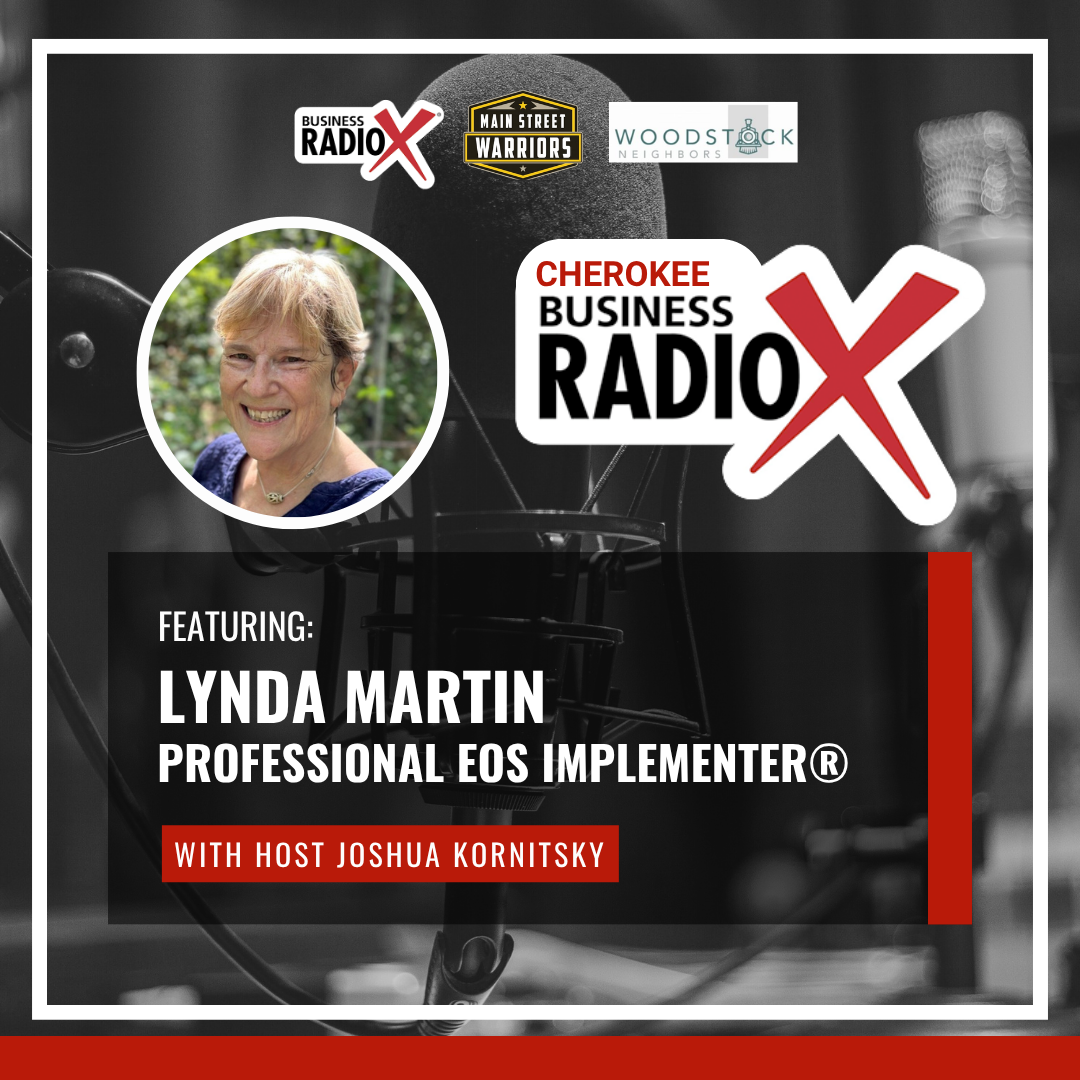
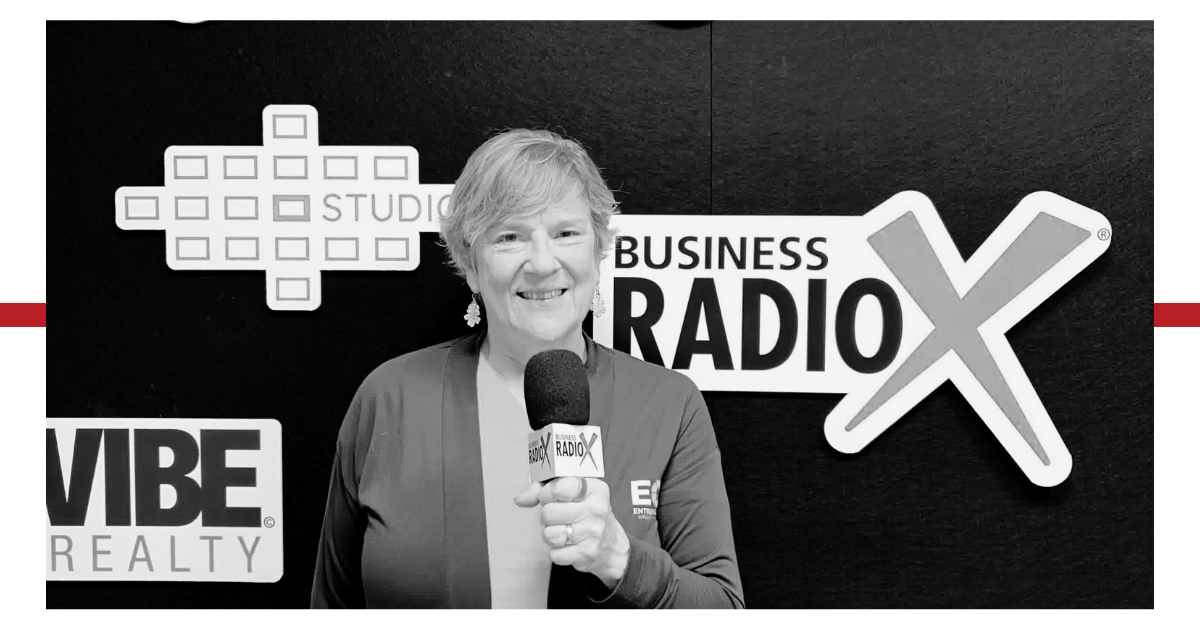
Lynda Martin’s path to becoming an EOS implementer began with a family rupture: the week she graduated high school, her great-aunt fired her father, and he never really recovered. On this episode of Cherokee Business Radio, Lynda tells Joshua Kornitsky how that experience—and years spent inside chaotic businesses—shaped her work helping owners get clear, align their teams, and build companies that don’t depend on them for every decision. She shares how one construction company grew from 80 to 250 employees across 14 locations, and why a Ford factory worker empowered to stop the line helped deliver 99.6% good carburetors. The conversation also gets candid about hard conversations, letting people go, and why 90-hour weeks aren’t a badge of success.
 Lynda Martin is a Certified EOS Implementer® with 30 years of experience as a trusted advisor to more than 200 companies, helping leaders build healthy, sustainable businesses and achieve meaningful growth.
Having owned nine businesses herself and worked with organizations ranging from solopreneurs to major corporations, Lynda brings a practical, empathetic approach to leadership, grounded in her passion for helping entrepreneurs succeed.
Episode Highlights
- Using the Entrepreneurial Operating System (EOS) to improve business operations
- Clarifying company purpose, core values, niche, and long-term vision
- Aligning leadership teams, priorities, goals, and communication
- Reducing workplace chaos and improving efficiency, quality, and profitability
- Developing leadership and management skills, including listening and honest communication
- Building a culture where employees feel valued and can raise concerns
- Supporting sustainable leadership practices, work-life balance, and succession planning
 This transcript is machine transcribed by Sonix.
TRANSCRIPT
Intro: Broadcasting live from the Business RadioX studios in Woodstock, Georgia. It’s time for Cherokee Business Radio. Now, here’s your host.
Joshua Kornitsky: Hey, welcome back to Cherokee Business Radio. I’m your host, Joshua Kornitsky, and I have an incredible guest that I can’t wait to share with everybody. But first, let me tell you that today’s episode is brought to you in part by our Community Partner program, the Business RadioX Main Street Warriors, defending capitalism, promoting small business, and supporting our local community. For more information, please go to Main Street warriors.org. And a special note of thanks to our title sponsor for the Cherokee chapter of Mean Street Warriors Diesel David, Inc.. Please go check them out at diesel david.com. So joining us in studio today is Lynda Martin. Lynda is a certified EOS implementer with 30 years of experience advising more than 200 companies, having owned nine businesses herself. Lynda understands the challenges entrepreneurs face and brings that perspective to helping owners and leadership teams get what they really want from their business. Welcome, Lynda. I’m so happy to have you here.
Lynda Martin: Thank you Joshua. It’s great to be here. I have loved our conversation so far already.
Joshua Kornitsky: There you go. Uh, it’s just always fun to get to learn about people and their approaches, but I always like to start in the same place. Would you please share your superhero origin story? What brought you here to to becoming a certified EOS implementer.
Lynda Martin: I would say Payne did okay.
Joshua Kornitsky: Please elaborate.
Lynda Martin: The week I graduated from high school, my great aunt fired my father.
Joshua Kornitsky: Okay.
Lynda Martin: And he never really recovered.
Joshua Kornitsky: Family business, I’m assuming. Yeah. Okay.
Lynda Martin: Yep. Sprawling interests in Atlanta. And I wanted to know why. First of all.
Joshua Kornitsky: Sure.
Lynda Martin: And I was obviously at a very vulnerable part in my life. And I wanted to know why my great aunt was hard to be around. But my uncle, who runs what is now a fifth generation business in Florence, Alabama. He’s a big part of the community. He has a lot of fun. He’s great to be around, even though he’s a Navy Seal. Um, and I just what’s what’s the difference here? So that became my quest.
Joshua Kornitsky: Okay.
Lynda Martin: And I swore I would never have anything to do with small business.
Joshua Kornitsky: How’d that go?
Lynda Martin: Well, as you can see, it went really well. I joined the clergy, but I ended up running other businesses with fellow clergy members. So I was right back in the fire again. A restaurant, a stained glass business. Um, a couple others, but. And so at a certain. And then I went to work for what I thought was a corporation.
Joshua Kornitsky: Okay.
Lynda Martin: It turned out that it was just an entrepreneurial business on steroids. It was morale services. It was a big company here, staffing company. It was in the top five in the country when I was working for it, and it was pretty pure chaos. Some of the brightest, most innovative people I’ve ever worked with.
Joshua Kornitsky: And it was a successful organization, I guess.
Lynda Martin: Well, yes, defining success and we’ll get into that a little bit. We’re Talking about maybe now I’m thinking that’s how it shaped how I see success.
Joshua Kornitsky: Okay.
Lynda Martin: You know, because yes, there was lots of money flowing through that organization. People were pretty miserable, which meant we had some great parties at Rupert’s, at Rupert’s Club down the street because people were blowing off steam. So not wanting people to be miserable at work became a driving force for me. And often the most miserable people are the entrepreneurs.
Joshua Kornitsky: The owners, the owners. Okay.
Lynda Martin: And nobody knows that. They nobody knows.
Joshua Kornitsky: That. I can see that because they don’t really they’re not going to vent to their staff. Otherwise they kind of destabilize.
Lynda Martin: Yeah. They shouldn’t. Yeah. So, um, so when I became a business coach in the mid 90s, that wasn’t even a thing. Business consultant for small businesses. People didn’t even know what that was. As the as the industry has progressed, I started looking for something a little more structured, a little more stable than what I was doing, and found dos. And here we are 14 years later.
Joshua Kornitsky: Wow. So 200 companies is a lot of companies. How do you help them? What do you do to help them run better?
Lynda Martin: The primary thing, if I distill it down, is I want to look them in the eyes and say, set clear expectations.
Joshua Kornitsky: Okay, so let’s, let’s dive into that a little bit. When you say clear expectations, are you talking about, um, where we’re going, how we’re going to get there? What, what is it that you are working with them to try to refine?
Lynda Martin: Well, in EOS, we’re working with all those levels because first of all, I cannot, as a business owner, set a clear expectation. If I’m not clear, most of the business owners I work with have a clear idea in their mind, their ability to articulate it in a way that other people understand is not always there.
Joshua Kornitsky: So that’s a really interesting point. And it’s something that that I actually have bumped my head into many, many times. Um, when, when, when they go out, you know, and hire good people, why don’t they seem to understand when I tell them what to do is what I’ve heard and, and how do you counter that? What is what do you say to that?
Lynda Martin: It’s a multi-level discussion.
Joshua Kornitsky: Okay.
Lynda Martin: First, as you alluded to, you’ve got to be clear about where you’re going. What are we building here is the kind of first obvious question, but it’s important to go deeper. We like to get down to what are your core values? What’s driving you? What is your purpose? What is your purpose in life?
Joshua Kornitsky: And, and when you work with a company, is that information that they’ve got off the top of their head.
Lynda Martin: They have a version of it off the top of their head. I learned early on in the mid 90s when I would do a business plan with a small business owner, that they often had it clearly in their mind, but they couldn’t articulate it. And so I would ask questions. You keep asking, why is that? What makes you do that? Why is that? How does that work? And you get down to something that they go, oh yes, that’s it. I mean, you can almost see it click in their head. And then it’s like, now that I have that piece, I can build everything else off of it.
Joshua Kornitsky: So so you have to work with them to sort of deconstruct it and really think about it in ways that that may have just been a off the cuff answer in the past. They’ve got to be intentional.
Lynda Martin: Yes. And most of the people I’ve worked with are really smart. Experts in the psychological field estimate that somewhere around 70% of entrepreneurs are some version of ADHD, because the gift they bring us is that they can see 40 directions at once. Part of the trick is to bring it down to what are we going to do next? And so then we come back to setting clear expectations.
Joshua Kornitsky: Okay, so so we’ve got a clear expectation set. How are we going to run the business better now?
Lynda Martin: All right. So how we’re going to run the business better is with a clear understanding of the values we run the business on what the business is here for and what is our niche. And these are all on the Vision Traction organizer as an iOS tool, which is one of the things I love about the system. It clarifies these questions. Now you’re in a position to develop what we call an accountability chart.
Joshua Kornitsky: Okay.
Lynda Martin: Who’s going to be accountable for what and.
Joshua Kornitsky: How is that different from an org chart?
Lynda Martin: An org chart often talks as much about what is my title and what is my position.
Joshua Kornitsky: Okay.
Lynda Martin: And, and when you’re talking about titles on an on an org chart, people have different ideas about what that means.
Joshua Kornitsky: Oh, I yeah, absolutely.
Lynda Martin: You know, you’re the chief marketing officer. What does that mean?
Joshua Kornitsky: If it’s got chief in it, it’s important.
Lynda Martin: There you go.
Joshua Kornitsky: Everybody knows that. I would never make fun of my brother. My brother’s a vice president of a large insurance company. I think there’s 300 of them. Vice presidents.
Lynda Martin: Right.
Joshua Kornitsky: And I’m not taking away from him and his accomplishments in his careers. But when there’s 300 of them, maybe it’s not quite the elite club you think it is.
Lynda Martin: And, you know, people in entrepreneurial organizations often have strong egos. They need to have a strong ego to survive that environment.
Joshua Kornitsky: Right.
Lynda Martin: When we have the conversation about who is accountable for what. And the answer I most often hear in the beginning is we’re all we’re all doing sales, we’re all taking care of the customers. We’re. And it’s like, okay, let’s define who’s accountable so that we can begin to shepherd all this amazing energy they have and make it very pointed. The biggest challenge many leaders face is their energy is just scattered. And so they throw their bodies at it and they work long hours to make up for it.
Joshua Kornitsky: Working longer and harder doesn’t solve all the problems.
Lynda Martin: Yeah. No.
Joshua Kornitsky: So I interrupted you at accountability.
Lynda Martin: Okay. So yes. Thank you. The accountability chart helps define what are the five key things that each role or each function is accountable for.
Joshua Kornitsky: Okay.
Lynda Martin: So one of the most interesting conversations can be is marketing separate from sales. I had this conversation yesterday with a, a I with a young business owner. Um, I end up doing a lot on the phone with just trying to help babies get going. I mean, she’s 17. She’s literally a baby.
Joshua Kornitsky: In this world. Good for her that she’s already got her brain in gear.
Lynda Martin: Yeah. And explaining the difference between a market, a marketing mindset and a sales mindset and helping people understand that more clearly, they know it well.
Joshua Kornitsky: And I have to think with, with you having helped over 200 companies, almost like you said, about titles, marketing and sales, no matter what it means to you, to each organization is going to have its own definition and they’re going to say, oh, no, no, no, they have to be together or, oh no, no, no, no, they have to be apart. And I gather. Do you tell them which one’s right or do you, how do you help them get to, to to that determination for them.
Lynda Martin: So one of the truisms we practice in iOS is that we are not business gurus. The answer and the genius is in the room. My job is to facilitate it out of those amazing minds and hearts.
Joshua Kornitsky: So you don’t have the crystal ball?
Lynda Martin: I have one. It’s I actually, I literally have magic wands on my table.
Joshua Kornitsky: Okay.
Lynda Martin: But they all need to go into Ollivander’s and even Ollivander can’t fix them, so.
Joshua Kornitsky: All right. Well, I, uh, I myself favor a magic eight ball. Okay. Okay. And signs point to yes. Is always a good decision making, uh, until it’s something you didn’t want to do. In which case, signs point to. Yes. That was wrong. You got to shake the ball again.
Lynda Martin: You know, Josh, that’s another great use of the accountability chart is to filter those kinds of questions through the person who’s actually going to be accountable for it.
Joshua Kornitsky: Well, so let me dig in on that because it sounds like it, it not only does it clarify, you said the major functions, but it’s isn’t it common, Lynda, that an entrepreneurial organization, everybody’s going to wear seven hats. That is true. And or, you know, multiples and, and in a smaller entrepreneurial organization, isn’t everybody in sales. So what’s, you know, meaning trying to move whatever the product or service is forward. So how does, what is that accountability chart do? Does it say that that the other six people can’t sell?
Lynda Martin: I often get that question. That’s a really great question. And of course not. We want the organization to build on its strengths. And so, um, having someone who is in sales, who is the accountable person for it means you won’t be tripping over each other. The, the staffing company I was telling you about is we got really big, we presented to IBM, right? Unfortunately, the account executive and marketing presented to IBM and the regional leader presented to IBM. And IBM’s question was, do you all talk to each other?
Joshua Kornitsky: And I’m guessing the answer was not yes.
Lynda Martin: Yeah it was. Oh, it was very clear. They had not talked to each other.
Joshua Kornitsky: Different promises, different opportunities.
Lynda Martin: Exactly.
Joshua Kornitsky: So so ultimately that one accountable person for sales is, is that where the buck stops? Is that what that means?
Lynda Martin: What it means is that they’re going to orchestrate and coordinate. And yes, they are often going to be the one who, if we’re missing our numbers, we’re going to look in their eyes and say, what’s going on? Not because they are supposed to go out and do everything, but because they’re the one that has the look. They are the ones that gets up above and says, what is going on here? Are we getting enough leads? Are we getting the right leads? Are we presenting well? Is the where’s the breakdown?
Joshua Kornitsky: So they own it.
Lynda Martin: They own it.
Joshua Kornitsky: Okay.
Lynda Martin: Yeah, they own it.
Joshua Kornitsky: So so now we know. We know who we are with our core values. You said. Um, our understanding, our, our what we’re good at and our niche, which I interpret as sort of who we help.
Lynda Martin: Yeah. Well, Orville Redenbacher’s niche is popcorn. Don’t go and talk to him about Crackerjacks.
Joshua Kornitsky: Okay. Fair enough cracker. So so it’s it’s narrow, just like you had talked about narrowly focusing accountability. It’s about narrowly focusing who you serve.
Lynda Martin: Yes. And we call it the anti shiny object portion of our show.
Joshua Kornitsky: Okay.
Lynda Martin: Because plain on to I don’t know if you’ve ever noticed this, but entrepreneurs who are smart and ambitious and have a lot of great ideas will start a business the next morning. We used to joke that our founder and CEO do not get in the elevator with him when he’s just read SkyMiles management magazine, because he is going to reorganize whatever you’re doing. By the time you get to your floor.
Joshua Kornitsky: One of my closest friends, uh, Owen, is exactly that. I think he’s up to five businesses right now, and he’ll just tell me, oh, I’m doing this. Like when? Right when. Right when is there time? And, and, and I think that speaks to what you were saying before that, that they, that good entrepreneurs are distracted in a lot of directions. So let’s, let’s move back to getting this business running better and more efficiently. So we, we talked about the accountability chart. What happens next?
Lynda Martin: Once you’ve defined who’s accountable for what. And sometimes there are some pretty significant egos in the room that have to take a step back. Once you’ve done that, the team is on a different platform with each other. And so communication gets better. And now we can talk about priorities and goals, bring it down to what does it look like in ten years? What does it look like in three years? What do we need to do this year? What do we need to do this quarter? And who needs to do what to make this vision a reality? And if we’re focused going to the left end of the island, if we are focused on servicing the people over there, you do not get to veer to another island.
Joshua Kornitsky: I, I can see the value in that, but I imagine that that’s a process to get there. It is a process because people you’re, you’re changing the tires on the car during the race. Yes. And and do you encounter resistance? Do you encounter people that that push back?
Lynda Martin: Oh, no. Entrepreneurs never push back on anything. Yeah. So that’s why we call it a system, the entrepreneurial operating system. And like any system, you have to keep coming back to the foundational basics. Okay, wait a minute. What are you doing? Is that in your core focus? Is that on your accountability chart? Is that really part of your three year picture? Oh well, no, I’m going to create a new one. All right. You go write up a new one and then we’ll talk about it. But in the meantime, your leadership team needs to stay focused.
Joshua Kornitsky: And you had said that that you’re not the guru. So I’m trying to think, uh, as someone who doesn’t have any understanding of EOS R, if you’re not telling them what to do, What is it that you’re doing as you’re working with them to help them make the kind of progress you’re describing? Because that if I’m hearing this for the first time and it sounds like us, it sounds great, but it also sounds a little confusing. Like, how does this happen? What’s your role in this?
Lynda Martin: So my clients will tell you that I do tell them what to do, even though coaches aren’t supposed to tell them what to do. But sometimes I’m just like, okay, y’all, you need to stop talking. You need to take a deep breath. Where are we trying to get to here? So my job is to bring the focus back. I’ve had clients tell me at the end of a session and you know, I’m with them all day. So it’s like a pressure cooker, right? And the leader I’m with the leadership team all day. And so it’s like a pressure cooker. And we are solving what we call issues in a very structured format that allows them to go deep and talk in real terms about things that are near and dear to their hearts, their egos, their dreams. And I’ve had them say at the end of the session, we talked about something that was hugely difficult and it felt easy and calm. It’s probably my clergy background.
Joshua Kornitsky: I can definitely see it come through a little, just as we’re talking from a from a patience and guidance perspective. And I gather that that’s a big piece of what you bring to it. So if I if my $2 million company sets a $4 million goal, it doesn’t sound like you’re going to say, no, that’s not realistic. You’re going to ask the question so that they realize whether or not it is realistic.
Lynda Martin: Yes. I would never judge whether they can achieve it or not.
Joshua Kornitsky: So that’s I view that as like a consultant role that would say, no, no, no. You know, the number needs to be this. That’s not you. You just help them see whether or not it makes sense.
Lynda Martin: Yes. And because I’ve worked with so many companies and seen so many people stub their toes on things, I big dreams or not big enough dreams. I, I will ask questions. I think my, my study, my craft is to ask really great questions.
Joshua Kornitsky: That’s as someone sitting here asking questions. It’s a hard thing to get your head around because when I first started here, uh. Open ended questions took me a year to get to because otherwise I would sit here and say, I would ask you a bunch of yes and no’s and yes and no questions are wonderful when you’re talking to a child, but if you’re actually trying to learn about who you’re talking to and what it is that they do, yes and no won’t get you very far, will it?
Lynda Martin: No.
Joshua Kornitsky: See, see, there you go. And there it stops. Okay. So I’m trying to remember all of this and I’m taking notes. We we know who we are. We know who’s accountable for what. We’ve done some planning. Now we’ve looked farther out and we’ve kind of brought it back down to the ground level. So what is what are the results that happen? I don’t want to make an assumption, but as that starts to come into focus, what happens to the organization you work with?
Lynda Martin: Well, one of the things that happens is there is less chaos. There is less need to miss your daughter’s gymnastics meet. There is less need to go without sleep. And there’s the ability to take a vacation without your phone tied to your hip, because the leadership team gets on the same page about every about these visions and dreams. They’re still fighting. They’re still passionate engagement about which way we should go. Right? But they’re also training their next in command who are training their next in command. I was talking to a former client a few weeks ago. They have we call them level ten meetings. That has a specific agenda. It’s genius. Call me if you want to talk about it more. It’s genius. They have level ten meetings at every level of their organization. They’re in the construction world. They have 250 people in 14 locations.
Joshua Kornitsky: Wow.
Lynda Martin: And they I think he said they have 27 level tens every week. That Keeps them. That’s why they’ve been able to grow. When I worked with them, they had 80 people.
Joshua Kornitsky: Okay, so they have doubled and then some.
Lynda Martin: Yeah. Tripled. Really?
Joshua Kornitsky: Yeah.
Lynda Martin: And it is because they have built these foundational tools out. They have an accountability chart that covers the whole wall, and it is in each of the 14 locations, everybody can see who’s accountable for what across the whole organization.
Joshua Kornitsky: So there’s that level of transparency through the whole organization. Yep. I mean, that that has to be pretty unusual for, for a company in the construction industry. You don’t think transparency, you think one guy chewing a cigar, yelling at everybody. Uh, at least I do. But I think I think in Warner Brothers cartoons. Forgive me.
Lynda Martin: Okay.
Joshua Kornitsky: Okay. Um, but you made a statement that I want to come back to where you said that they’re teaching, um, their leaders and and what does this do to, to leadership and management of people as this type of I don’t know what else to call it. Culture takes root.
Lynda Martin: So yes, it is a culture that takes root. And what I love about the system is that it’s firm enough to put some guardrails up, but it allows for freedom for the culture that is unique to that organization to shine through. And as it rolls out, leadership and management gets developed throughout the organization. Because you’re in, you’re Steve Jobs called culture. Um, he said, you’ve got to pay attention to it like a fish tank.
Joshua Kornitsky: Okay.
Lynda Martin: If the fish tank gets cloudy, the fish are going to die. So you need to clean the tank. And this system, iOS, provides a way to keep cleaning the tank because it encourages leaders to listen and managers to be humble.
Joshua Kornitsky: So where does that come from that that leaders to listen, managers to be humble. Or did I get that backwards?
Lynda Martin: Well, it’s both ways.
Joshua Kornitsky: It’s both ways is that you give them a book. How does that work?
Lynda Martin: Yeah. Giving a book to entrepreneurs is really tricky. Um, we teach something we call LMA, which is lead, lead and manage equals accountability.
Joshua Kornitsky: Okay. So this is something you bring to help them be better leaders, better managers, right?
Lynda Martin: Speaking honestly creates clarity. One of the fuzziest things that business owners have to deal with and that they hate dealing with is hidden agendas and emotions.
Joshua Kornitsky: I mean, isn’t that just part of running a company?
Lynda Martin: Yes. You’ll never get away from it completely.
Joshua Kornitsky: Right.
Lynda Martin: However, if we are clear, if you and I are clear that your job is to make 50 calls this week and you didn’t make 50 calls this week, and I come in and I’m yelling at you, how’s that going to work?
Joshua Kornitsky: I’m going to feel crappy, and I’m not going to like working with you.
Lynda Martin: And if you had a bad week, because I once worked with a business owner who we could see his numbers. It was a restaurant. His numbers would literally go down. You know, his numbers would literally go down when he had had a fight with his wife.
Joshua Kornitsky: I mean, I get it, right.
Lynda Martin: It’s magic. I mean, how does that happen that you’re standing behind the counter in your restaurant.
Joshua Kornitsky: And you’re grumpy and mean and.
Lynda Martin: And somehow that’s radiating out into the people. This was in Midtown, right? Who are walking around. They’re somehow not coming in your door. And so you want to, as the leader, you are accountable for, for creating a culture where people’s best comes out. So if you and I are talking again about those 50 calls that you were supposed to make, my job as a leader or a manager is not to browbeat you. My job is to say, what’s going on, Josh? What’s working and what’s not working. It might be something personal. It might be that you don’t have certain resources you need, or it might be that you just need to talk through with me what the script is.
Joshua Kornitsky: So it sounds like when you when you work to bring this knowledge to the organization and to the, the leaders, and then I assume the leaders that work for them. Uh, it sounds to me like you’re trying to reframe their view of leadership or their view of management because I was born in the car business, you don’t want to know my management style from those days. Um, you know, I, it. It was very easy to shape patterns because we would simply withhold pay. If you didn’t do something that was expected of you. I’m sure that is not legal, but I will tell you that after I was docked $100 for failing to get a copy of a driver’s license, I never didn’t get a copy of a driver’s license again. That doesn’t mean that that’s the right solution, but there are a lot of people that bring let’s go with outdated mindsets into leadership and management. What is the. The old facts you used to get. The beatings will continue until morale improves.
Lynda Martin: That’s right. That’s right. And you know, there’s a whole, um, there’s a whole study, a whole, there’s a whole industry of study. My master’s is in human resources development, which is all about how do you motivate people? And yes, sometimes a little fear has to creep in there. I’m not gonna. I’m not gonna earn money if I don’t bring new clients in. So that that can be motivating. However, we have found that the old the old industrial model doesn’t really work so well in the information. And now the AI age. We want people to be nimble. We want people bringing their best. Do not. As a. As a tour guide at the Ford factory in south Atlanta told us, we used to check our minds and our emotions at the door. And when total quality management came in, we were expected to start thinking again. This guy could pick up a carburetor on the line and tell it wasn’t going to work. In the old days, when Ford stood for found on the road dead, he would put it in and total. And the quality control was supposed to catch it. Right now it was his job to push a button, stop the line.
Joshua Kornitsky: Say there’s a problem.
Lynda Martin: Here and negotiate with the vendor. Do you know he said 30% of the people on the line quit because they didn’t want to reengage their minds.
Joshua Kornitsky: That’s crazy.
Lynda Martin: Well, now we’re in a position where if we don’t have their minds and their hearts and their energy.
Joshua Kornitsky: They’re not going to stay.
Lynda Martin: Well they’re not. Not only are they not going to stay because they want to be part of something bigger. Our job as leaders is to paint something bigger and give them the opening to be professionals, whether they’re a professional dirt digger or a professional, you know.
Joshua Kornitsky: Project manager.
Lynda Martin: Yeah. Our job is to open that, open that door for them and then help them manage to the numbers. So we have a, we have a module that we teach that differentiates between leadership and management. There are five skills that we talk about, five approaches that we talk about in each of those categories. Again, genius Gino distilled it down. There are 10,000 leadership books and things out there that you can that you could get something out of. But this distills it down. So focusing on creating an opening, creating clear expectations is what a leader does.
Joshua Kornitsky: Go ahead.
Lynda Martin: Managing to what the activities are to create that vision is what the manager does. And we wear both hats.
Joshua Kornitsky: That’s interesting. And I think it warrants pointing out when when you reference Gino, that’s the book you gave me traction. Um, Gino Wickman, it’s important to note that everything you just said about what I’ll broadly call buy in, right? That buy in, we’re not talking about millennials or Gen X or Gen Z or out. You’re talking about a book that that predates a lot of those terms, but a methodology that’s very much still alive because even a 60 year old person wants to feel valued in their role and doesn’t want to live in fear every day.
Lynda Martin: Humans really do want to be good at what they do. I mean, you can go back to industrial studies. Taylor was famous for this. He simply added lights to a an assembly line and production increased. Not because they could see better, but because they felt cared for.
Joshua Kornitsky: Isn’t that interesting?
Lynda Martin: And humans are humans.
Joshua Kornitsky: So because we are speaking to business owners. What is what? What does this do to efficiency, to profit, to revenue? What how does how does this system impact those things?
Lynda Martin: Well, let’s go back to that guy at Ford.
Joshua Kornitsky: Okay.
Lynda Martin: How do you think it impacted productivity and quality when the guy who was closest to the carburetor and had the most expertise for the carburetor could call the shots?
Joshua Kornitsky: I imagine it’s pretty empowering.
Lynda Martin: And they had 99.6% good carburetors.
Joshua Kornitsky: Wow. That’s crazy.
Lynda Martin: The reworks, the customer frustrations.
Joshua Kornitsky: Everything goes down are expensive. Oh, yeah.
Lynda Martin: And what it does to your marketing and sales is just the beginning of that story. So as people get engaged, then things get more efficient and the quality gets higher. You can walk into a business and the person who is waiting on you behind the counter can tell you everything you need to know about that business, just by how they interact with you.
Joshua Kornitsky: Chick fil A comes immediately to mind.
Lynda Martin: Yes, they are famous.
Joshua Kornitsky: Um, and it’s I knew chick fil A had something special because I grew up in South Florida and I went back to South Florida. And you think south? It isn’t. It’s like a piece of New York that drifted south. When I walked into a chick fil A in South Florida and was treated like I was in Macon, Georgia, I’m like, wow, they’re training. Must be really good. But to your point, it’s because they found a way to make that employee care.
Lynda Martin: Yes. Well, no, you can’t make somebody care.
Joshua Kornitsky: Okay. So let’s talk about that.
Lynda Martin: Just like you can’t make somebody accountable. Hold somebody accountable.
Joshua Kornitsky: Okay?
Lynda Martin: Once they’re once they’re past two. And some would even argue two year olds are the worst. It you can’t make them do something. It is important to motivate them in a way that they. They will do it. And that is an art and science. And that doesn’t mean that you’re sweet and kind and nice all the time. Sometimes you got to have really tough conversations when those conversations are pointed at, I am doing this for your well-being and for the well-being of my business. Because if I don’t do this, other people are going to suffer.
Joshua Kornitsky: Which is I completely understand that because when when Someone’s not great at their job, but they’re a great person. It impacts the entire group, the department, what what have you. And and the worst case is when they’re great at their job, but they just don’t fit right. When when you have those scenarios, what do you do with that?
Lynda Martin: It’s really hard. You know, I’m talking a lot about being heartfelt and being focused, but I’m not saying it’s easy. So we have a tool we call the people Analyzer, where we try to put a little science around those two questions. Okay, they’re a great person. We love them. However, we don’t really have a place that fits their skills. So I’ve had clients find those people connections with other business owners and they go, you know, it’s really hard to be that person who says, you’re not a fit here, holding in your mind that they are going to be a fit somewhere else. Every human has a place. Sure, it’s surprising to me this was a big surprise to me back when I first started. Even that business owners hate to fire people.
Joshua Kornitsky: That’s a. I think that’s a very complicated concept to really digest because number one, there’s the I, I don’t like having tough conversations. Number two is then I got to just train somebody else. And even though, you know, Joe may be lousy at his job, at least he’s here. Yeah. Number three, how long is it going to take? And so I mean, there’s, there’s, I, I can understand what you’re saying. There’s a million reasons why people don’t like to fire people. So you help them understand that better.
Lynda Martin: Yeah, I mean, it sounds terrible, but I help people, fire people. Fire the right people.
Joshua Kornitsky: And that’s ultimately it. Because aren’t is it really serving the greater good of the organization to keep somebody there when when they don’t fit the organization in some way or form? Aren’t you really hurting them by keeping them?
Lynda Martin: Absolutely. And I have seen it where? Oh, we’re just going to keep Charles for the next. We’re just going to keep him. He’s such a great guy. And then finally like this. This was really evident during the 2008 downturn and during Covid. Now we’ve got to cut him.
Joshua Kornitsky: Right.
Lynda Martin: And look what we’re sending him out into. And now we have completely decimated his confidence.
Joshua Kornitsky: So with the type I don’t have a better word than clarity, right? With the type of clarity that you’re talking about helping these organizations achieve. What does that do at the management level? What if, what if? Um, or even at the ownership level? Let me take it up a step higher. And I’ll give you an example from my own life. Um, the, the reason that I left my last company that I co-founded was because my business partner and I had, using your terms, a divergence of core values. Mhm. I still had them. And he appeared to have let them go. So what do you do in a situation like that? How do you are you able to work with the ownership and help them get into that right mindset?
Lynda Martin: You’ll be surprised to learn that iOS has a tool for that.
Joshua Kornitsky: Really?
Lynda Martin: Yes.
Joshua Kornitsky: Sounds like you got a big toolbox.
Lynda Martin: We do. Well, it’s a small toolbox, but it’s very effective. Okay, we have about 20 foundational tools. And then there’s, yeah, maybe ten, 20, 30. You know, we all have many tools. Sure. But this one is about facilitating a difficult conversation.
Joshua Kornitsky: Well, I can see that applying pretty much everywhere. So that’s something you can help with.
Lynda Martin: Yes, yes. And if you’re going to have a difficult conversation, it’s really important to understand your purpose. Again, its clear expectations. What do we expect from this meeting. But we find it’s a structured meeting with an agenda. And we find that 95% of the time things get better and we can figure out a way forward. And then sometimes somebody’s got to go. And then we have to work that out. But if you’re doing it with some clarity, with a shared purpose that humans do not want to be miserable. I’m sick of. I’m sick of being. They have to be sick enough of being miserable to be willing to have the conversation.
Joshua Kornitsky: Okay. That me that speaks to me very, very clearly because that’s, um, respectfully, having been divorced once, there is a point where you are not willing to deal with what you are dealing with any longer.
Lynda Martin: That’s correct. I have been divorced once myself. I call it my practice marriage.
Joshua Kornitsky: There you go. Yeah. There you go. Um, so it it you used a term a minute ago. That was the second time you used it in a different context. And I want to ask about it. Why is there an agenda for everything?
Lynda Martin: Well, I don’t know if you’ve noticed, especially in the South, storytelling, talking conversations can go very long and go nowhere.
Joshua Kornitsky: I may have been born in Boston, but having lived in in South Florida and Georgia for most of my life, I think I may have picked up on that.
Lynda Martin: Although I have lived in Boston too, and there are some. Those Irish people can tell some stories.
Joshua Kornitsky: Yes they can.
Lynda Martin: But having a focus so that things don’t wander off into everything from two brothers that were working together and having serious problems. It almost came down to you stole my toy truck when I was 12, and I have never forgiven you. And now you’re trying to steal my current toy truck. Okay, that’s therapy land. And I think you guys might want to consider some family therapy in terms of what the business wants to accomplish, what you want to accomplish for your families and your life. What are you willing to give up here? What are you willing to do here?
Joshua Kornitsky: It sounds like you make people act like you don’t make you help people act like grown ups.
Lynda Martin: Yes. We’re literally using transactional transactional analysis. It’s an old theory that says communication can be adult to child, child to child or adult to adult. And when you’re in business, the owners and leaders tend to be viewed as the adults.
Joshua Kornitsky: Okay.
Lynda Martin: And the employees tend to be viewed as the children. And so then every family dynamic associated with you remind me of my mother. I literally had a client who was resisting everything said, you know, you remind me of my mother. And I was like, okay, now we can get down to what are we trying to accomplish here?
Joshua Kornitsky: So you sent them to their room. No, no. But that. Yeah, yeah. That breakthrough, that level of clarity. Yeah. Helps everybody move forward and move past it.
Lynda Martin: We want to get but it helps me to hold in my mind. We want to get to adult to adult. That is the most productive form of conversation in business.
Joshua Kornitsky: So let’s step out of the leadership team for a minute. If I can ask this question, what does this do to the employees? So now we have this open and honest communication happening. And I make a face because I’ve had a lot of jobs in a lot of places, and I can count on no hands how often that happened.
Lynda Martin: It takes some time. The culture of business I can only speak to in America. I mean, I’ve traveled and I know people in other countries, but and, you know, well, I’ve worked with people in other countries. It can be worse in other cultures, but our culture is to please our boss and not raise our hand, not stick our head up above where it might get bonked. And so at first, people don’t believe you.
Joshua Kornitsky: Sure, I can see that because you the the infamous anonymous survey.
Lynda Martin: Oh yeah. Let’s not I’m not even going to talk about those.
Joshua Kornitsky: But you, you know, every everyone’s quite certain the anonymous survey is anything but anonymous, right.
Lynda Martin: Teaching people that it’s okay. You know, you’ll see them, they’ll kind of raise their hand just a little bit. I was leading a cohort. This was we’ll do we’ll do middle management training.
Joshua Kornitsky: Okay.
Lynda Martin: In our in our clients, when that is needed, we prefer for the leaders to train them. But I was doing one and we actually brought their teams in and had them run an issue solving session.
Joshua Kornitsky: In front of their team.
Lynda Martin: Together. They would. And then I roamed around with a couple of the other man, a couple of the managers to monitor and help them. And there was literally a guy who kind of in a circle, he just it’s six people. He’s raising his hand. It’s like, okay, what’s going on? My issue is, and we had said, you got to name names. You got to be clear. He’s like, I’ve been here three months and you. And he points to a woman and you, he points to a man, are telling me two different ways that proposals need to be written, and I’m afraid I’m going to get fired right now. And they looked at each other and they went, what are you telling him? What are you telling him? And he’s kind of going. And then they went, we’re going to talk about this. Thank you so much for bringing it up. What do you think everybody in the room in the circle is going, oh, I can bring things up.
Joshua Kornitsky: But I can see how that does take a little time. Yeah, but it sounds pretty transformative.
Lynda Martin: Oh it.
Joshua Kornitsky: Is. So are you working with companies for five and six years? How long do you work with them?
Lynda Martin: Primarily two years.
Joshua Kornitsky: Really?
Lynda Martin: It takes us two years to get the system in place. And then I say, once a client, always a client, I call and check in on them. Um, I’m always available to run a brush up session. I do have clients I’ve worked with for ten years because they just like having the discipline and the third party person and their teams are changing and they want help.
Joshua Kornitsky: Sure. And I can understand that because having run my own companies, uh, it’s very hard to, to have a planning session where I’m running the planning session, but I’m also contributing to it because what I always found was that my words were taken as his direction, not suggestion, which kind of ruins the flow of that because you have to keep going back and saying, no, no, no, that wasn’t a I wasn’t setting the course. I was making a suggestion, and I found it was two steps forward and taken one back all the time. So I can understand why they would maintain that.
Lynda Martin: That’s very insightful. And yes, there are those that I have to say to them stop bullying. I even have a little bull on my table. Um, I want to come back to distilling down what I have seen success look like over the years, please. And setting clear expectations from the big picture to what do I do tomorrow and how do I treat clients? And how do I treat my fellow workers? And how do I speak honestly to management? That’s all under setting expectations. Core to that is the Leaders have to take care of themselves. They have to know who they are. They have to know their strengths and weaknesses and be able to apply them. That’s part of because it’s very stressful to operate in a way that is counter to your natural way of being. It is also really important that leaders get enough sleep, eat well, take care of themselves, because when they don’t, they make bad decisions.
Joshua Kornitsky: But we are in a culture, in a business culture in this country, where it’s almost a badge of honor to tell Lynda, I worked 90 hours last week. I’m a I’m a self made man. So you’re saying that may be counterproductive?
Lynda Martin: Not maybe. Totally is. You know, we look up to our geniuses, but would you want to live with Steve Jobs? And I would like to make the argument that if Steve Jobs had had a more balanced approach to life, the iPhone might have fewer destructive aspects to its genius.
Joshua Kornitsky: That’s that’s a different conversation that I would love to have. But that’s a very interesting observation. Um, because when you have time to really think on things as opposed to always being in reactive mode, which sounds like this definitely leans into.
Lynda Martin: And not every iOS implementer is going to approach it this way. But again, with my background, I am in this because we, we talk about the iOS life and we want it for all people, which is living is a form of living well and being sustainable. Our job in business, to my way of thinking, is to make the world a better place, not by being social service agencies, but by creating things that people need in a way that supports my life and my health and my family as well as yours.
Joshua Kornitsky: That seems like a pretty healthy outlook in a positive way that also allows for people to make money doing it.
Lynda Martin: And you know what’s so funny? I learned this in my Human Resources Development master’s program is that when people are happy, when people are committed to a purpose, when they are, um, running on forward thinking energy, they make better decisions, they treat the customers better and they have more ideas. Well, what a win win.
Joshua Kornitsky: That sounds like an ideal outcome. So what are some of the things you’ve seen this do for the businesses you’ve worked with? I mean, you said one of them we talked about tripled in size. And I’m not saying you had your magic wand. I’m just saying.
Lynda Martin: I released their magic. And and not only did they triple in size, but this is this is a level of construction that includes a lot of grunt work.
Joshua Kornitsky: Okay.
Lynda Martin: And they do. It’s on my it’s on my website. You can see this. They do an annual party. And these people who work with their hands and their feet and they get dirty, they bring their families to the aquarium and you can look out over this aquarium and the owner looks and he says, I am making all these lives better. And he’s making serious money too. I just want to say, you know, um, I’ve, I’ve got another client who is, I’m following on Instagram as he flies his private jet around the world.
Joshua Kornitsky: So his business doesn’t need him to. He sold it every day.
Lynda Martin: He sold.
Joshua Kornitsky: It. Okay.
Lynda Martin: But we got it to a point where the buyer said, I’ve never seen a 40 person business that ran this well. I know that I can turn you loose in a year, and we’ll be fine.
Joshua Kornitsky: So it can run without him.
Lynda Martin: And they again, good money. So it’s not that, you know, good money is good. We need good money.
Joshua Kornitsky: Right.
Lynda Martin: Um, but capitalism as a way to make lives better, not as a way to decimate people, you know.
Joshua Kornitsky: It’s not kill or be killed. We, we can all have, uh, healthy collaborative competition. And, and my, my father always taught me, you know, you never talk down your competition. I’m sure their product is fine. This is what I have to offer.
Lynda Martin: Yeah.
Joshua Kornitsky: Uh, there’s no. If you need to talk down your your competitor, you’re you’re you aren’t bringing your best.
Lynda Martin: Yeah. And we say that in iOS too. I don’t know much about my competitors because I know this works. I researched 300 different ways to do business coaching and consulting before I decided on iOS.
Joshua Kornitsky: And you’ve been at this how long?
Lynda Martin: Um, at iOS 14 years.
Joshua Kornitsky: So it sounds like you, you, you have a lot of faith in what you’re doing.
Lynda Martin: I have seen it transform lives from top to bottom.
Joshua Kornitsky: That’s awesome. That’s just awesome. Uh, and, and what a great way to round out the dialog because, uh, this is not seminary background aside, this is simply helping you help a yourself be your employees and see their families again. Going back to my dad. He always taught me that when you see a business owner, remember that business owners carrying not only their employees, he’s carrying their families on their back. And if they make a mistake, if they take a risk, if they screw up in perhaps slightly more colorful words. Yeah. All of that is on them. So I have a lot I’ve always had a lot of respect through my dad’s educating me of business owners, particularly small business owners, because they are the backbone of this country. And it’s nice to have the IBM’s and the Fords, but IBM’s and Fords only exist because of the mom and pop businesses on every street.
Lynda Martin: And because they were mom and pop when they started.
Joshua Kornitsky: That’s true. People forget that.
Lynda Martin: And this circles back to my uncle. Yeah.
Joshua Kornitsky: Perfect. We. Yeah. Come back around.
Lynda Martin: He just got, um, an award from the YMCA in his town for 50 years of service, sponsoring teams and inspiring kids.
Joshua Kornitsky: That’s pretty awesome.
Lynda Martin: It’s been part and parcel of his life.
Joshua Kornitsky: That that says a great deal about him as a business owner.
Lynda Martin: Yeah.
Joshua Kornitsky: Um, Lynda, what’s the best way for folks to get Ahold of you? You have so much here that you’ve shared with us, and I’m so grateful for it. If somebody wants to learn more, if somebody wants to, uh, find out what it takes to move forward with you, how would they reach you?
Lynda Martin: Well, I’m kind of old school, Josh. I’m like, give me a call.
Joshua Kornitsky: Okay?
Lynda Martin: When you’re driving home and you’re frustrated, give me a call.
Joshua Kornitsky: So we’ll put with your permission, we’ll publish your number when we publish, uh, the, the podcast. Uh, I’ll make sure I have that right number, but please share it with us if you don’t mind.
Lynda Martin: Yeah, it’s Five. 212. And if it’s, you know, late at night and you’re just tormenting yourself or you have some questions that you. I’m doing this well, but I want to do this better. Then drop me an email because you know, at Lynda dot Martin at EOS worldwide.com.
Joshua Kornitsky: And again, we’ll put both of those out there. So if you don’t have a pen on you while you’re writing this, they’ll they’ll be there along with the published podcast. Lynda, I can’t thank you enough. I, uh, I will tip my hat to you. You’re a great teacher because I sure learned a great deal.
Lynda Martin: I am so happy to see that. Um, I love doing this.
Joshua Kornitsky: Thank you for for joining us today. Um, let me just remind everybody that today’s episode of Cherokee Business Radio, uh, was brought to you in part by the community partner program, the Business RadioX Main Street Warriors defending capitalism, promoting small business and supporting our local community. For more information, please go to Mainstreet warriors.org. And a special note of thanks to our title sponsor for the Cherokee chapter of Main Street Warriors Diesel David, Inc.. Please go check them out at diesel david.com. Again, my name is Joshua Kornitsky. My guest today has been Lynda Martin, a certified EOS implementer with more than 30 years of experience advising more than 200 companies, having owned nine businesses herself, Lynda Martin understands the challenges entrepreneurs face, as she clearly shared with us today and brings that perspective to helping owners and leadership teams get what they want from their business. Thank you again, Lynda Martin. Again, my name is Joshua Kornitsky. This has been Cherokee Business Radio. We’ll see you next time.