
Brought to you by Diesel David and Main Street Warriors

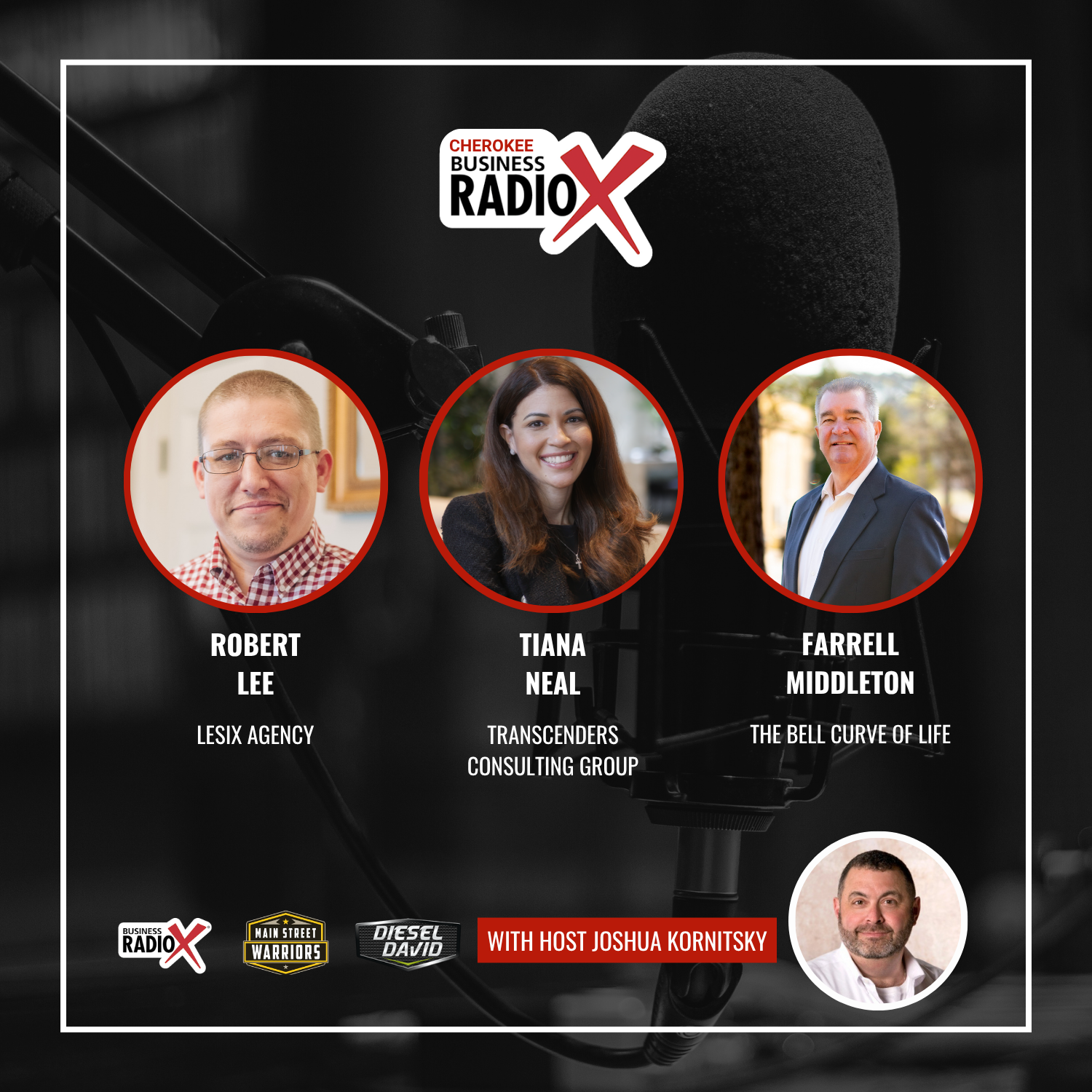
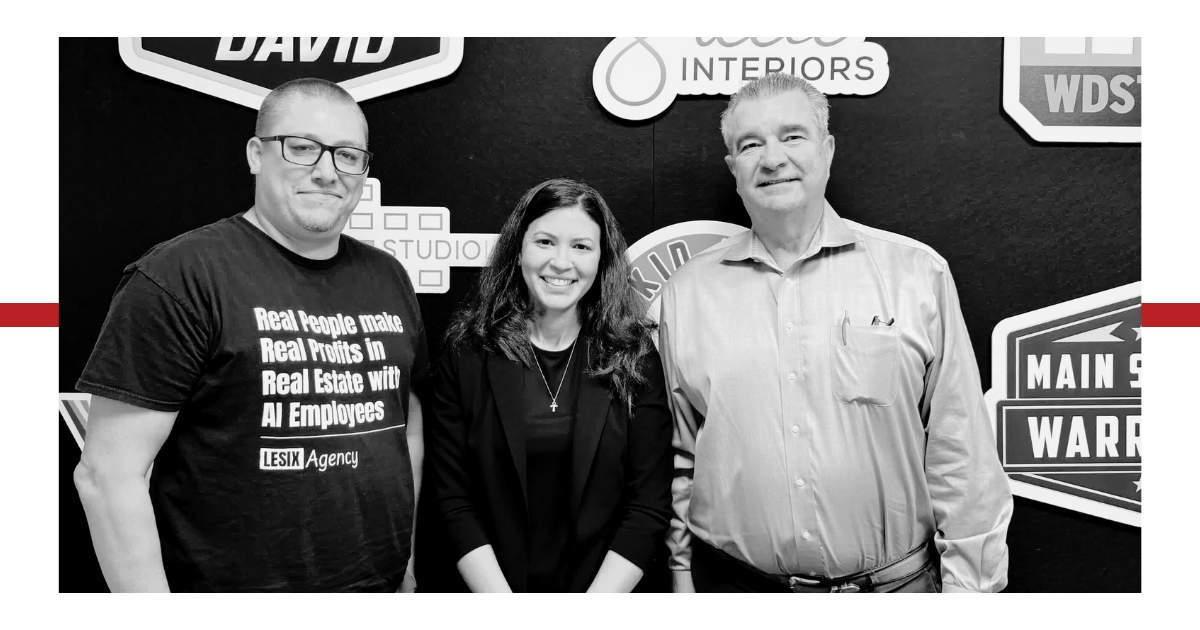
In this episode of Cherokee Business Radio, host Joshua Kornitsky welcomes guests Robert Lee, founder of The Lesix Agency, Tiana Neal, CEO of Transcenders Consulting Group, and Farrell Middleton, Owner of The Bell Curve of Life. The conversation explores each guest’s unique journey and insights into business growth and professional development. Robert shares how personal loss and business setbacks inspired him to help real estate professionals improve their operations and quality of life, highlighting the industry’s lack of business education, the importance of mindset shifts, and the benefits of AI-powered tools. Tiana Neal discusses her approach to building strong client relationships and fostering resilience in the face of challenges, while Farrell Middleton offers strategies for navigating market changes and sustaining long-term success.

 Robert (Rob) Lee lives in Dallas, GA with his wife, girls, and pets. He’s an AI Branding Academy Partner, AI Persona Method Certified, REEA Gold Standard Instructor, and member of the Paulding Board of Realtors.
His marketing agency, The Lesix Agency, helps Real People make Real Money in Real Estate with AI Employees.
Follow The Lesix Agency on LinkedIn and Facebook.
 Tiana Neal is the Founder and CEO of Transcenders Consulting Group, a firm specializing in Human Capital Management (HCM) solutions and the host of The Human Roll where she explores key topics in HR and payroll spotlighting emerging businesses in the HCM space all while sharing insights in leadership, trends and best practices.
With over 15 years of experience in the professional services industry, Tiana has a proven track record of optimizing processes, ensuring compliance, and driving seamless implementations to help businesses achieve operational excellence. 
Her passion lies in empowering organizations to transcend traditional boundaries and unlock the full potential of their workforce through innovative and tailored HCM solutions.
Connect with Tiana on LinkedIn.
 Farrell Middleton founded The Bell Curve of Life in 2022 to inspire positive change for individuals and organizations. His mission is to help people become A-level performers and support leaders in creating A-level environments.
Since launching the program, Farrell has connected with hundreds of people through one-on-one sessions, small groups, company presentations, contractor accreditation classes, and public speaking engagements.
After a successful 36-year career in residential land development and homebuilding, Farrell transitioned to his long-anticipated second career as a teacher, speaker, and author. This shift, made at age 57, has allowed him to share his passion for growth and leadership while engaging with people in meaningful ways.
In 2025, Farrell became a published author with the release of his first book, A Performer/A Environment. The book presents a practical framework for personal and professional growth and serves as the cornerstone of The Bell Curve of Life program.
Farrell’s programs draw on his extensive personal and professional experiences. A Georgia Tech honors graduate, he held senior leadership roles with both private and public organizations in the thriving Atlanta housing market. Over his career, he managed hundreds of employees, directed diverse teams, and navigated complex group dynamics. 
A Savannah native and the youngest of four, Farrell met his wife Kathy in high school. Married since 1986, they’ve raised two daughters, Pfeiffer and Collier, who now reside in the Atlanta area.
Follow The Bell Curve of Life on LinkedIn.
Episode Highlights
- Personal and professional challenges faced by entrepreneurs and professionals across various industries, including navigating significant life events and setbacks.
- The impact of adversity on business operations and the potential consequences, such as financial strain, burnout, or even bankruptcy.
- The founding and mission of organizations dedicated to supporting professionals in enhancing their business operations and overall quality of life.
- Unique challenges within different industries, such as the lack of formal business education and common misconceptions about professional roles and responsibilities.
- The importance of mindset shifts and clear goal-setting for achieving success, regardless of industry.
- The role of AI-powered tools in establishing efficient, repeatable processes that boost productivity and reduce stress for professionals.
- The necessity for individuals to adopt a strategic, proactive approach to their work rather than reacting to daily demands.
- The significance of building community and support networks within professional environments.
- The value of engaging with clients or stakeholders through discovery sessions to identify opportunities for growth and improvement.
- The philosophy of simplifying complex business concepts into actionable principles to drive high performance in any professional setting.
 This transcript is machine transcribed by Sonix.
TRANSCRIPT
Intro: Broadcasting live from the Business RadioX studios in Woodstock, Georgia. It’s time for Cherokee Business Radio. Now, here’s your host.
Joshua Kornitsky: Welcome back to Cherokee Business Radio. I’m your host and professional EOS implementer, Joshua Kornitsky. And we’ve got a full studio today. Uh, three wonderful guests that I’m excited to get to. Before we get started, I just want to remind everybody that today’s episode is brought to you in part by our community partner program, the Business RadioX Main Street Warriors. Defending Capitalism, promoting small business, and supporting our local community. For more information, go to Mainstreet Warriors.org and a special note of thanks to our title sponsor for the Cherokee chapter of Main Street Warriors, Diesel David Inc. Please go check them out at diesel.david.com. Well, as I said, we’ve got a full studio today and I’m really excited to introduce my first guest, uh, Robert Lee. Robert, before I go any further, I’m going to screw up the name of your company. So please tell me the name of your company.
Robert Lee: Lesix Agency
Joshua Kornitsky: Lesix Agency. It’s a marketing consultancy focused on real estate professionals. Uh, your background is in engineering and Lean Six Sigma principles. You hope your clients streamline operations and adopt AI powered tools to elevate their impact. Would you say that? That’s about right.
Robert Lee: I would say the only thing that’s missing is we use a lot of theory of Constraints as well. So Lean Six Sigma, that’s where the name Lesix Agency comes from. But TOC is a very critical part of that as well.
Joshua Kornitsky: So let’s begin at the beginning. Tell us how we got here.
Robert Lee: Oh my gosh. Okay. So if everybody has a day and a half to hear my sob story, let’s.
Joshua Kornitsky: Reduce the beginning. No, please.
Robert Lee: That’s. That’s fair enough. In short, two years ago, two and a half years ago, I had a very successful direct mail business based out of Marietta and operated my consulting on the side. And in August of 2022, my wife and I lost her third child. She was about seven months pregnant. That sent me down a little bit of a hole. And while I was out, I don’t know if I was grieving or just kind of lost. But while I was out, the business continued to run. But I had a staff member that authorized some expenditures that were not exactly in the business’s best interest. So I got back in and wasn’t fully through that grieving process yet. I know nobody ever is. Uh, but got back in, made some changes, got everything aligned. And in February of 2023, my old man, the guy that raised us, my parents split when I was young. My dad taught me everything I know about how to treat people, how to show respect. I just get a phone call that he had a heart attack and a doctor’s chair. Wow. And so I have these three instances of where life and business were colliding. And so I went through to write the book on how to destroy a $2 million business in four months. Right.
Joshua Kornitsky: And that’s rough.
Robert Lee: I mean, I look at it and I say, I could have self-destructed through drugs and alcohol, like a lot of people do. Or. But but thankfully, I didn’t. I just destroyed a business. And my wife and I have everything separated in terms of business structure. So I had to go through the bankruptcy process. And as I’m fat man crying in my room while my girls are daycare and my wife is at work, I just I get a lot of sleep, which I hadn’t had in years. Right. And I started to get some clarity by asking the question, Why was I not set up to grieve the right way? Why was I not set up to understand how business impacted life and how life impacted business? And and that was the beginning of the process of really launching the Lee6 agency as my core business. And through that process, found that there’s a lot of real estate professionals out there that suffer through those same questions, and there was a great way for us to make money together, make memories together, go out there and just make the world a better place.
Joshua Kornitsky: That’s an absolutely incredible story to to go from the lowest point I imagine you’ve been, and then to lose your dad and then to to rebuild on top of it. So thank you for sharing that. Um, if you would share with us a little bit more about who and how you help with Lee6.
Robert Lee: Again, real estate professionals, Brokers, individual agents. There’s realtor associations that are really having a tough time right now with a lot of the industry changes around Nar and real estate schools, like, believe it or not, there’s a huge cottage industry of real estate educators.
Joshua Kornitsky: Right.
Robert Lee: That that have to provide the educational services to this professionally regulated industry here in Georgia, 36 hours of continuous education every four ish years, as you renew your license, you have to go through 75 hours of pre-license. You have to go through 24 or 36, I don’t know, education is miserable.
Joshua Kornitsky: Sure. Well, and it’s a necessity of a lot of industries. Right.
Robert Lee: Exactly.
Joshua Kornitsky: But it also keeps them current on things. So so with that being out there, how are you assisting.
Robert Lee: Yeah. And and to, to basically I outline all of that to say that the thing that each of those have in common, they’re very different from one another. They’re sets of experiences are very different. They’re very unique. But what they all have in common is they operate in an industry that doesn’t have a lot of business. Common sense. There are common practices that have been done in the industry for years, and it’s very reactive. It’s very shoot from the hip. I mean, there’s this thing that real estate agents are told you’re always on as a real estate agent 24 over seven. And I hear stories of people taking phone calls during kids recitals. And I mean, that just sucks, man.
Joshua Kornitsky: Just no quality of life.
Robert Lee: That’s not that’s not.
Joshua Kornitsky: And you had even shared with me kind of this perspective that you that you have, uh, that a lot of the real estate professionals don’t see themselves as business owners.
Robert Lee: And that’s it, right? They’re taught to be reactive to everything, because in many cases, these people are making a transition into the industry from another one. A lot of veterans choose real estate. But think about it. You go from being a very in a very structured environment.
Joshua Kornitsky: Right.
Robert Lee: Where you’re told what to do. You respect a chain of command into an industry where you’re not an employee of anybody. Most agents come into the industry not understanding that they are a business of one.
Joshua Kornitsky: Right.
Robert Lee: They don’t work for their brokerage. They’re not employees. They have to pay all of their taxes. They have to handle all of their HR issues, hire their vendors, all of that. Now, a brokerage will help out with that, but they don’t get that experience of business education while they’re getting their license. They’re taught in these real estate schools from the start how to pass a test. And so what happens is you have this vicious cycle where brokers who should be providing that business education never got it themselves. So it’s just this continuous years long re-investment in the idea that you have to go out and just do it as opposed to, again, common sense and common practice are not the same thing in this industry. And that’s not anybody’s fault. It just means that the industry has to be approached differently. You have to start asking the questions of why is it so miserable to take calls at 10 a.m. or not 10 a.m. it’s not miserable to take a call at 10 a.m. 10 p.m..
Joshua Kornitsky: Less so.
Robert Lee: Because you have a client that’s freaking out as opposed to approaching it from the perspective of how can I set up my business to prevent 10 p.m. calls? How can I set up my business to prevent these problems that we know are going to exist from ever happening?
Joshua Kornitsky: So at a high level, explain to us, how do you do that? How do you help them shift their mindset and their understanding? So what types of tools are you able to introduce? What type of approaches do you share in order to make that quality of life difference.
Robert Lee: Pretty simple. First thing we do, we start introducing clarity and clear thinking into their business. Start asking by questions. What’s the goal? What are the necessary requirements? What assumptions are you making about how to meet that goal? And then start teaching them from that foundational question. What’s the goal on how to align everything they’re doing with their particular business and personal goal, and teaching them that it is okay to not do things that do not help you meet the goal, that do not fall within the parameters of that necessary, those sets of necessary requirements. Because honestly, like 6,070% of the crap that people do in real estate don’t align with a well-defined goal. And imagine just being able to just kind of let it go like a that the rock and curling, right? You watch curling and you see these guys just slide across the ice and they just let go of the rock and it just goes. You just want them to let go of those things that are doing that don’t align with the goals. So once you introduce that clarity of thinking, that clear thinking process, get them used to saying, I’m not doing that and I am doing this and educate them on that, then we can start to use AI and the strengths of AI to actually create AI employees repeatable, predictable, consistent processes that the real estate professional, in whatever context they’re in, can pull off the shelf and use when they need it and put it back when they don’t.
Joshua Kornitsky: So thank you. Now I think we’re in is that I think the the term is agentic AI is that the.
Robert Lee: And this is part of the conversation that we have with folks is that Agentic AI there’s a lot there’s a lot of confusion about what that term really means. Most people begin with the question how can we use AI as opposed to how do we understand our business? Now, when you get to the question of understanding your business, then you can start to view AI in a variety of different ways. And we kind of look at it in three different levels. Okay, AI employees are documented processes that don’t run on their own unless you tell it to start. And you can do that in ChatGPT. We use a lot of cloud, but basically these processes don’t execute themselves. You have to start it. And it has a very well defined set of training and parameters.
Joshua Kornitsky: Do a do be do c stop.
Robert Lee: Correct. Right. Underneath that is automation which is not artificial intelligence. But it’s kind of the basis. Right. I mean it’s if A happens then B follows. If B follows then c, D and e follows. So on and so forth. Your automations can be defined by your AI employees. Okay. Right. And then you have agentic AI which is more autonomous. And these are things like Manus and these automated phone call systems that answer phone calls. You can actually use your AI employees to train your agentic AI to answer the phone in a certain way, collect certain information. Because if that agentic AI, that autonomous semi-autonomous AI isn’t trained well, it’s not going to do its job well. Just like a person.
Joshua Kornitsky: Just like real people.
Robert Lee: Just like real people. And so we always begin with the clear thinking about your business, because if you don’t have that right, you’re never going to use AI, right? And then it doesn’t. Then the definition of what agentic AI is and what an AI employee is, it doesn’t really matter.
Joshua Kornitsky: No. And I think you’re I know and you know, you’re 100% right on that. I do know that people don’t care what it’s called, if it does what they would like it to do. Exactly. But the fact that you’re introducing clarity on the front end, um, Probably has. Well, let me ask rather than than assume. Does that lessen that fear of adoption? Because you’ve you’ve taken the big scary unknown of AI, which, I mean, at this point, I think my refrigerator and my toaster have AI. Not for any reason I can think of, but I guess it’s just a great way to harvest more data from me. That’s, of course, how I like my toast is relevant to somebody. Um, what does that do for for your, um, clients from from an adoption approach? Once that that fear is diminished.
Robert Lee: Well, one, it gets them to slow down, which is the nice thing. It actually forces them to sit there and think through what it is they’re using AI for. And then second of all, it makes it less scary because it shows people that AI is not really intelligent. It’s a logical prediction engine, which is just a fancy way of saying it takes a bunch of data about how you like your toast, and about how you two here that are also guests might like whatever it is you like, and then creates the logical prediction of what the right output is. So when we talk about real estate, many people don’t know how to write a listing description. That doesn’t suck. And what I mean by that is this beautiful four bedroom, three bathroom house with 3500ft² in an idyllic neighborhood is a house of your dreams. Well, every damn house is the house of my dreams if it’s described that way, sure. But by understanding how to connect with their clients and understanding how you build profiles for marketing, they then can create AI employees to help them create those profiles, help help them create their marketing strategies that help them write those listing descriptions that are completely aligned to the goal inside of their business. And if that goal is to sell single mothers with children homes, right. You can still do that without running afoul of the regulations and the legal requirements of of how you you practice real estate.
Joshua Kornitsky: So please.
Robert Lee: Know. And at the end of the day, this is just a lot of different ways of saying no your business then use AI. And if you know your business, your AI use will be simple and easy to implement.
Joshua Kornitsky: That makes sense. So so do you. It sounds like there’s certainly uh customizable tools. Mhm. Um, but it also sounds like there’s a level of guidance or coaching involved here because it starts with mindset. And if you’re starting with mindset, what does the engagement look like? If someone wants to work with you and understand and benefit both from the mindset approach, from the quality of life approach, but also from the technical, uh, facilitation to make their life easier. Mhm. What does that look like?
Robert Lee: Yeah. Pretty simple. So our business we’ll just call it our business development process. We essentially walk up to people all the time and say, hey, how’s life going? What’s going on in real estate from your perspective? And then they start to find, I hear, a little hint of a complaint. They may try to to paint it over as being something amazing and wonderful and perfect in every way. But there will be a little hint of complaint in there, like, this really isn’t working. And then I just simply say, well, hey, I have this great process. It’s a TOC. It’s it’s basically the TOC tool thinking tools, right. The current reality tree and the future reality tree and the evaporating cloud and all of these things. I’m throwing those terms out there. If you’re listening, go read the goal. Go read. It’s not luck. Go look up everything by Eli Goldratt and you’ll know what those terms mean okay. But at the end of the day they’re they’re processes. They’re thinking processes. And so I just tell folks, hey, you have an hour a time I can actually help you change your business strategy. It’s not even I don’t offer it free of charge. We don’t even talk about money at that point. It’s just like, do you have an hour of time? And you’ll get a business strategy out of it. It’s up to you on how you implement that. Sure. But you give an hour of time. I’ll give you an hour of time. We will have a conversation. And then I introduce the AI employee that we use. Explain to them that our conversation will be used as basically data to help us use this process more effectively. By the end of it, we get into the discussion of how we might be able to help.
Joshua Kornitsky: So then let me ask the the most important question of all in this context, who are you best suited to help if someone’s listening right now? Uh, what are what are the right size organizations, the right type of people, the right type of roles within real estate profession that that are a good fit for what you offer and for being able to make the biggest impact for them.
Robert Lee: From a brokerage perspective, mid-size brokers that are looking to recruit producing agents that can produce more. So in other words, you might have 150 200 agents on your brokerage roster, and maybe ten of them are actually producing on a consistent basis. You know, at least 20 of them have the potential to produce better. And you know that there are thousands of agents out there that are unhappy paying their brokerage whatever they’re paying their brokerage. But you don’t have a way to necessarily recruit and retain and mobilize those agents. From a brokerage perspective, that’s who we’d like to work with. Individual agents. You’re doing 4 or 5 transactions a year. You want to get to 10 or 15. That’s a difference of six figures at least.
Joshua Kornitsky: Right?
Robert Lee: Those are the types of agents that we want to talk to from a business perspective. Sure. Real estate schools. I mean, really any size real estate school who is mentally ready to turn it into a business? And then any realtor association of any size, you want to build a business model that actually helps you grow in very difficult times. Those are the types of folks we want to to speak with from a business perspective. Now, from a personal perspective, my personal goal is that I have to be a happy, present father in the lives of my wife and children. I have two necessary requirements for that. I have to be home, pick up my girl off the bus, get dragged to Disney World four times a year because my wife and girls love it.
Joshua Kornitsky: I was there last week.
Robert Lee: Oh, I was there last week too. You know how it was like walking in to the sun with humidity of 100%? It was miserable.
Joshua Kornitsky: Yep.
Robert Lee: But that means being a happy. That means being a present father, which I didn’t have the opportunity to do beforehand. The other necessary requirement to be happy. I’m an extrovert. I love to talk. I love to problem solve, which means I have to be around people. So from a personal goal perspective that aligns with business, I’ll talk to anybody involved in any size organization that really meets some standard of they want to grow their business, they want to improve processes, and they want to make more money in less time. I will have a conversation with any of those businesses. For some reason, I got hooked up with non-profits lately that are wondering how to write better grant proposals. I can’t tell you how to do it, other than the fact that I had a. I had breakfast with a long time friend who was involved in a nonprofit. Uh, I’ve been dealing with roofing companies the past couple of years. Right. I mean.
Joshua Kornitsky: So across the spectrum.
Robert Lee: It is. Right. Because good business, common sense and common practice are not often the same thing in small businesses.
Joshua Kornitsky: Fair enough. So what’s the best way for people to reach you?
Robert Lee: Rob. Dot. Dot com will give you access to my personal socials, which you’ll see all kinds of sage advice and wisdom on. Uh, it will give you access to the six agency socials and website, which has all kinds of sage advice about real estate. Specifically has a way to download our Ultimate Guide to AI employees, which is basically a Google Doc and an eBook that is designed to give you access to the core of our knowledge about how we build processes from an AI perspective, and a way to just schedule some time with me.
Joshua Kornitsky: Perfect. And we will also share that link or links. Uh, when we publish and go live. Uh, I hope you have time to hang out. Robert. I’ve got a few more folks here to talk to. I can’t wait to introduce you to 100%. Uh, thank you again. Robert Lee, founder of Lee six agency. Uh, we’ll come back to you real fast when we close out, but I appreciate your time. I appreciate you sharing your knowledge and your wisdom.
Robert Lee: Look, it is a privilege because it is part of my goal to spend time around people that love to talk and love to listen. So, really, I owe you the thanks here because you’re making my day awesome.
Joshua Kornitsky: It’s our pleasure.
Robert Lee: I appreciate it.
Joshua Kornitsky: So my next guest is someone that I met recently, but we have just hit it off in a great professional sense. I’d like to introduce Tiana Neal. She’s the founder of Transcenders Consulting Group, a consulting firm specializing in human capital management with an expertise across payroll tax, HR benefits, o HR, comp benefits, project management, and system implementation. Tiana is an HR leader, also a podcast host who probably doesn’t get company names wrong like I do. Uh, and a connector with really a strong passion for rehumanizing the workplace conversations. She bridges the strategy and empathy, helping organizations see people beyond the policies. Welcome to the show, Tiana.
Tiana Neal: Thank you. Thank you. Josh, really excited to be here.
Joshua Kornitsky: I’m really happy to have you here. You and I had some great conversations when we first met, sort of about the HR universe. And I really thought you had a refreshing perspective on it. So let’s let’s let me start by asking what kind of brought you into the world of HR.
Tiana Neal: Yeah, absolutely. Um, so I initially got started in the payroll space. Payroll and taxation was my thing. And then I got into the role of air operations, where I handled more benefits and heavy implementations. And from there, that got me really close to the people side of the business, which is where I really found my niche. I would say, I think just, you know, listening to people, um, bringing that human back to HR. It was really important for a lot of populations that I worked for. Um, sometimes when you get into the day to day, companies can miss that. They can miss that, like your people are the most important. And so once I became more personable and built proper relationships with, you know, my employees around the office, that was really where I realized I was a great fit and could add, um, really good value. And then not to mention, I had really good system experience on the HR tech side, and I loved to untangle the web of a lot of things. So there I was, just found my match.
Joshua Kornitsky: Well, and I’m going to ask you about your spaghetti, your spaghetti bowl concept here in just a minute. But one of the things that I remember, uh, from our initial discussion was around sort of how HR has changed over time. And, and as you just mentioned, you know, through your own evolution, your perception of it changed over time. Just looking at the last few years, how are things different? And to Robert’s point about AI, I imagine AI in the workplace has changed a great number of things.
Tiana Neal: Yes, as Robert was talking about, AI in my head was spinning because there is a very unknown. It’s very unknown in our industry, and I’m involved in a lot of webinars that I, you know, tuned into every week. The HR tech side is changing and will continue to change drastically from, you know, within our world. And so it is very critical that most people in our industry start to learn AI and not push it away. I can admit that some years ago when AI was coming, you know, to becoming a big topic, I was just like, this is not taking my job. It’s not taking payroll. This is ridiculous. Until I started going to my annual conferences, you know, adp’s, the workday’s HR techs. And as soon as you walk into the room, AI is on the screen. And so I was like, oh, okay. So this is really happening. Um, and so from there, I started playing around with it and realizing that it was here. Right? And I just you can’t ignore it. And so being a systems person, I started jumping right in. Um, and that has, you know, really helped because a lot of times if I’m interviewing with clients, they will have a question now involved where it entails AI, because a lot of if you’re a true, true HR person, I would say most HR people don’t necessarily like to get involved with the system aspect.
Tiana Neal: You know that there’s a different you know, obviously the HR role that typically heavily handles systems. But true HR people from R and usually like to deal with employee relations and, you know, hiring, firing, recruiting. But getting in that back end system is not a lot of people’s things. And now it’s almost going to become a must. I think for the most part, you’ve got to start understanding what AI is doing, um, and not get too far behind just because the younger generation that is now in the workforce. They are heavy, demanding. And so, um, you know, they’re used to using these phones and these platforms and they do not care about pizza like that. To have a pizza day, you really have to show them the growth and show them that, you know, you’re in the know of tech because that is truly going to be, you know, a long term thing on the tech side.
Joshua Kornitsky: That makes sense to me and kind of opens the door for me to ask, you know, how when. So when you are engaging with the organizations you work with, I presume oftentimes these are relatively new avenues for them that you’ve got experience with. Are you able to help shepherd them through the the embrace and transition into these types of systems?
Tiana Neal: Yeah. So surprisingly, though, a lot of times I’m having to just go back to start with the basics. Um, and even though that seems kind of odd, a lot of companies, just from the basics, need to get the right people, not only on the bus, but also in the right role. Right. So it could be a perfect person for your company, but if they’re in the wrong role, it’s not going to be good for your population. And a lot of times executives will typically overlook HR, especially payroll. Starting off in payroll, I always say payroll is like the red headed stepchild, which is very odd because, you know, we process the bacon for everybody, right? And so from an HR stance, you have to have the right people in the seat that care about the company that are loyal. And you know the CEOs need to also treat HR properly. Right. And then from there the rest of your population will typically go smoothly. So we need to have like right training for our people. Make sure there’s the right, you know, vision and mission and that everyone is abiding by it.
Tiana Neal: So from the top of the chain of HR down to your supervisors, directors, managers, everyone has to, you know, show well with that stance and be a good example for your employee population, and a lot of times that gets lost in transition naturally, I think. And so I think even before jumping to the high AI system part, people really just have to get to the basics, understand foundationally where the company is going, start getting your employee population to begin to trust HR. We are a partner, but here, if I had a dollar for every time I heard HR is just for the company, not the employee, it’s like, okay, we’ve got to change that narrative. A lot of times people don’t see what’s happening behind the scenes. And then from there, once the foundation is set, then we can start adding in new systems and start implementing AI and be transparent with it so that people don’t think that they’re going to lose their job and then, you know, run away from there.
Joshua Kornitsky: Well, and so you touched on this briefly, but it really was the foundation of what you were sharing, that there’s a lot of misconceptions, particularly at not just employees thinking that that HR is just protecting the company, but backing it up to the higher level at the leadership team level. There are often um, we’ll just go with misconceptions. And, you know, I guess it comes down to and I’ve, I’ve got sort of a linear mind. Is it that do they view HR as an expense or do they view it as an investment, or do they view it as a necessity?
Tiana Neal: Probably one of the first two initially until there is no HR and then they start to see how needed it is. I will say I have worked for and have seen companies just not pay attention to HR or go without having an HR.
Joshua Kornitsky: I’ve seen that too, but that’s scary.
Tiana Neal: Yes, it’s very scary and that’s when you get into heavy compliance issues. I mean, the legal side of things, I mean, the lawsuits that come through are just sometimes insane. Lots of times. Obviously, companies are settling behind the scenes, but there’s a lot of companies that I’ve just had to step away from because of just when you’re on the side of the house of HR, obviously you see a lot of unfortunate things that happen and you hear a lot of things. And so the leadership from the higher up, not every CEO or CEO or C-suite executive of a company is this way. But I ran into more than a few born with a silver spoon in their mouth, and are just so used to having certain things that they don’t necessarily pay attention to the bottom end of the population that is actually doing the work. And so having a very strong HR team that gets to know the population has those conversations and understands what people are going through in life is very helpful because sometimes employees may act out, but it might just they might be dealing with a breakup, going through a divorce, you know, they may have had a miscarriage, you know, just something of that nature may have happened and they just need to step away. And so, you know, giving them some time off or some leave. I’ve seen that work wonders for people. But if people don’t trust HR or don’t know HR or don’t feel like they can come to HR, then you essentially lose out on a really great asset in an employee if you’re not paying attention. So a lot of times, um, it sometimes it’s unfortunate a little too late for a CEO to, to realize the necessity of HR, but it is very critical. And the companies that recognize that early on, um, I see do very well when they, you know, when they put, um, money towards HR to ensure there’s proper training, they have the proper people that helps the population accordingly.
Joshua Kornitsky: Well, and you you bring up an interesting point, right. Because if you’ve got legal compliance issues, and I know Farrell will speak a little bit to this, and I know Robert sort of implied that in real estate as an example. Right. There’s there’s legal compliance stuff that’s a mandatory but that’s, uh, often more a function of just training than actual understanding, you know, to check in a box that we did this training, we did this training. But understanding how to how to not only protect the organization, but to protect the individuals within the organization. That takes a lot more planning and that takes a lot more work, I imagine.
Tiana Neal: Yes. Um, planning for your employees. I think one thing that I did want to touch on is there are a lot of back in executive conversations that obviously the employee population isn’t privy to. And there are a lot of HR teams that have fought for heavily, right, for, for for the executive C-suite executives to understand certain things. Sometimes you win those battles, sometimes you don’t. Um, but yes, I would say just ensuring that your focus on your employees and knowing that having them know that they are supported is top key priority and brings in a lot of loyalty, right? Makes employees stay there. So your tenure is top heavy. There’s reports, you know, EEOC reports that are filed every year to show different races and genders and tenures. Now, um, you know, pay transparency is a really big thing, right? So years ago, when I started in the industry, it was very disheartening doing payroll and seeing the difference in pay. And so the fact that, you know, many people fought to kind of get that transparency out there is really critical and definitely helps ensure that companies are having to be mindful of that. Right. You can no longer get away from having, you know, someone in the same seat doing the same role. One making 100,000, one making 50,000. Right. Like you got to stay within range. So all of that is very critical.
Joshua Kornitsky: And and I think that the the fact that you’re helping clients understand that and again it’s not and I choose my words carefully. It’s ultimately about protecting the organization from harm Because ethically, morally, I’m not even touching those arguments. You are legally at risk if I am playing employee A this amount, and employee B regardless of the difference, less than this amount, though, they have the same education and experience. I put the company at risk, and ultimately the c-suites role is to keep the company safe and profitable.
Tiana Neal: Correct. Um, and I would also say this, I mean, there’s many companies still skating by. I mean, there are some, um, even a recent, you know, client of mine that is in some heavy taxation issues. Their VP stepped in to hold the project. Sometimes they just don’t see the risk too much, you know? Sure. I mean, the entire HR team was fighting to get things pushed through myself. And, you know, my consultants were ready to get things pushed through. And, um, sometimes when you’re dealing with those executives, you can only explain to them what the compliance is. They, you know, call us when you’re when you’re ready, but this is what you’re about to get into. You know, we can help. So there’s some times where you just aren’t going to win that battle where they’re, you know, they just don’t understand a lot of times when they’ve had so much large money for so long, they would prefer to go with the risk.
Joshua Kornitsky: Oh, sure. Versus sue us and we’ll.
Tiana Neal: Yeah.
Joshua Kornitsky: It’ll cost me less for the lawsuit than it would to pay for HR.
Tiana Neal: Exactly. What are my chances of someone actually reporting until someone does report and then you have a class action? So, um, unfortunately, at this level and stage in my career, I’m brought in when things. It’s a little too late. You know, they should have brought me in six months or a year before. And so I’m doing a lot of cleanup, and I see a lot of things and things are always fixable. But there is a cost to that. And right now states are struggling. I mean, when I first started over 15 years ago in this industry, it would take states and the IRS years before they sent you a notice. You’d get a you know, you’d get a notice from something that happened 3 or 4 years ago. Right. But over the last few years, you were getting.
Joshua Kornitsky: Notices that automation in AI right there.
Tiana Neal: You were getting notices within like 1 or 2 quarters, 3 to 6 months. And it was like, oh, they are not playing around here. And a lot of times, even when employees were catching on, they may file an employment even though they left a company. If you don’t respond in enough time, they would win that claim. I mean, it was just it’s especially since Covid, it’s just been a battlefield. Osha has been, I think one company I was working for, OSHA, had showed up so many times. Right, because they were just looking for ways to find companies. And so you do have to be mindful of it now. But yeah, unfortunately some some executives still try to um, they might be gamblers, they might like to roll the dice.
Joshua Kornitsky: And that’s their privilege, right? It seems to me like they’re taking unnecessary risks, but that’s up to them. Very true. So I do want to touch on your the last superpower that we discussed of yours, which we touched on. You touched on briefly and gave me the term, and I’m coming back to it. Let’s talk about that bowl of spaghetti.
Tiana Neal: Yeah.
Joshua Kornitsky: Uh, because I thought coming from a technical background myself, I knew exactly what you were referring to once you spelled it out. But. But share with me, if you would, and share with those listening. What is this superpower you have as it relates to spaghetti?
Tiana Neal: Yeah. So I just like to untangle, um, untangle every single noodle, every single web spider web there is. Um, I have a really good sense of discernment now where I can identify when I’m having an HR conversation with someone if they’re, you know, feeding me nonsense. I’ll say, sure. I won’t say the other bad word, but if they’re feeding me nonsense.
Joshua Kornitsky: I.
Tiana Neal: Will. Okay. Um. And I can also tell when someone hasn’t been supportive. I mean, or if someone just is very green in their seat and just needs a little bit more training or coaching or if it’s like, no, um, got to get them on the bus because they’re not just the company or team player in general and ripping that band aid off, you know, earlier instead of later, because a lot of times keeping the wrong person in the seat, naturally your good employees will step away. So from there, getting back to the people aspect, setting the foundation. But then when you’re digging into the system aspect, once you have the right people in place, cleaning up, going through automation, I mean, we’re about to approach 2026, right? So it’s literally unfathomable to me how many companies are still doing things manual on manual paperwork and just getting that to be automated to make the hiring process more seamless for employees, and making sure that everyone is trained, but also accommodating your employees who aren’t used to using technology. I mean, that’s still a big thing in the workforce now, and just making sure that outside of sending one pagers or, you know, a PowerPoint or having one, you know, basic quick training call. Really make sure you are hand-holding those employees that need that support so that they feel comfortable and allowing them to reach out to you whenever they need something, and then from there, just sticking to the process.
Tiana Neal: Um, there’s very rarely naturally where you might have to accommodate a higher end C-suite executive. Sometimes that happens, but, um, you know, you got to at least have 95% of the process on board and have everybody participate in it just to make sure things are flowing smoothly. And then your HR payroll process can go really smooth. You know, of course, there’s those day to day fires that come up that are unexpected. Um, but sometimes it just doesn’t have to be that hard. And a lot of times with AI coming in place, too, there’s so many laws, especially if you’re a multi-state, there’s so many different laws that are changing from not only the federal state, but then also the locals of certain states, um, minimum wage requirements. And you just constantly have to keep up with those day to day. So a lot of times, instead of having to deal with just basic cleanup, once your system is running smoothly, then you can really focus on the legal aspects of things and just making sure the company is staying on top of compliance. And then from there, um, yeah, you can look at a look like a scholar in your job.
Joshua Kornitsky: Well, and all of that to say, uh, as you started with, right, that there’s these disparate systems, there’s these disparate processes. And I think the fact that that you’re willing to unwind that bowl of spaghetti and have the skills and the experience to do so, really speaks to the fact that I know from the other side and the types of clients that I work with often they don’t know a resource like you exists, right? They they think that, well, you know, we created this mess. We’ll we’ll just have to spend a bunch of time and money to, to sort it out. But now knowing that there’s someone that they can reach to, that not only will help keep them current, but also help them untangle and make sense of the mess. Seems like that’s a pretty valuable thing to put out there.
Tiana Neal: Yes. Very good. And I will say unpopular opinion. I like my spaghetti with a little bit of sugar on it. So. So I think from my end, even in my work, um, work function to from consulting, I’m strong and majestic as well. So I think, you know, at this point I’m knowledgeable, but I think just bringing the true authentic and realness and not, you know, not coming across, um, condescending in a way, when you’re coaching people goes a long way. So I like to, you know, follow suit with that as well. And just continuing to get myself out there so people know that I do exist. I think, you know, how Joss and I met was at a networking event, and I’m typically a behind the scenes systems person. But since I’ve started my business, I’ve been doing podcasting. It’s been very helpful that people know that I am there and that I can provide support, and sometimes I just take a call and do some advisory one off without charging. Naturally. Um, you know, and sometimes that leads into business. But I think just even if it doesn’t, just helping people in general, um, what Rob was kind of alluding to earlier is just being an added asset to people so that, you know, they can always remember your name. I think in general, outside of whether or not that turns into business. People still remember you and know you and will continue to follow you and look to you as an inspiration. And that’s what I’m mostly getting out of my experience now, which has been very helpful. And um, yeah, very welcoming for me to kind of just keep going.
Joshua Kornitsky: That’s fantastic. Well, if people want to get their spaghetti untangled or get help with some process or get a better understanding of why HR really is the difference maker and really in in not just the organization, but in the culture of the organization. Sure. What’s the best way for folks to get Ahold of you?
Tiana Neal: Yeah. So, um, so my LinkedIn page is, um, I’d say first off, I’m Tiana. Tiana, and last name is Neal N as in Nancy E. Um, but then my direct email is first name Tiana t I a n a and then it’s at transcend. Com t r a n s e n d e r s.com. Um, yeah. And if you send me an email or send me a LinkedIn connection with message, I’m happy to, um, to reach out and set up, you know, a call or if anyone out there is into HR and payroll or just leadership in general and or starting a business and wanting to get, you know, your name out there, I’m more than happy to schedule a podcast taping also.
Joshua Kornitsky: Fantastic. Well, Tiana Neal, founder of Transcendence Consulting Group, it’s been a pleasure. I really appreciate it. I hope you can stay with me while we talk with my certainly not least, but my last guest, Carol Middleton. Uh, and thank you for sharing the information that you shared with us and to know that there are solutions for problems that most people probably give up on.
Tiana Neal: Yes, absolutely. Thank you, Josh, so much for having me.
Joshua Kornitsky: My pleasure. Well, my my last guest of today is someone that I’ve had the pleasure of knowing now for about three years. Uh, we kind of went into our own perspective lanes about the same time and met around the same time. I guess that’s about right. Yes. I’d like to introduce Farrell Middleton. He’s the founder of The Bell Curve of Life. It’s it’s really a unique teaching program. He’s also written a book, a performer, a environment. It’s a roadmap to enhance your performance and upgrade your environment. After 30, after a successful 36 year career in residential land development and home building, Farrell transitioned into his second career as a teacher, a speaker, and an author in 2022. His mission and focus are to cultivate a level performers and a level environments to drive personal growth and business health. If both can be achieved, success will follow and failure will be rare. Now, Farrell, I know you’re a Georgia Tech graduate with honors, and I know that you have decades of leadership experience, um, in really every session of your life. Tell us how you got here.
Speaker5: All right, well, first of all, thank you very much for having me. And I’ve thoroughly enjoyed my other guests here today. I’ve learned a lot so far. So thank you very much. So, uh, with me, I’m a lifelong Georgian. I grew up in Savannah, moved to Atlanta in 1982, went to Georgia Tech. Uh, as you mentioned, I graduated from honors degree in building construction. Married my high school sweetheart. Her name is Kathy. We married in 1986 and we have two adult daughters. They live here in the Atlanta area and we are a first time grandparents.
Joshua Kornitsky: Congratulations.
Speaker5: Wonderful stage of life. It’s everything everybody said it would be. So, uh, very glad for that. My professional career started in 1986, and I got into land development and homebuilding immediately. Got a degree in building construction from Georgia Tech, so I’m one of those that use my degree. Day one of my career. Wow. And I spent 36 years I was a manager of other people at the age of 22, and I held high level positions for most of my career. And I have touched about 10,000 houses in some form or fashion in my professional career. I was a high volume guy. That’s lots of numbers. Yeah, a lot of numbers.
Joshua Kornitsky: Wow. So? So 36 years? Yes. 30 in the industry? Yes. What on earth made you want? When? When you were done. When? When you said that’s it. That’s house number 10,000, I am done. What on earth made you want to continue on in this capacity? And I want to. I want to give you particular props because I’m a teacher and facilitator of iOS. I didn’t create iOS. I just know it and have lived it. You created your own coaching program that is exponentially harder.
Speaker5: It was a bit of a challenge. Yes, yes. So to answer your question, I’m 61 years old. I’ve got a lot of years left. Professionally, I just decided I wanted to provide a different type of service to society from a way to say it, and I’ve always wanted to be a teacher of sorts in my second career. It’s been a lifelong desire. I assumed it would be at the university level or college level teaching construction management, which I’m highly qualified to do. But I took a different path about ten years ago, and I started working on this program, and it’s called The Bell Curve of Life. And what this relates to is the old 20 over 20 principle that we all remember from middle school. 20% are in the upper category, 60% in the middle, and 20% are in the lower category. And for my program and material that relates to behavior, skills, performance and results, okay. And my program is I’m in the people business is about professional growth and development. That’s what my main focus is. And I want to help people get into and stay in that top 20% in areas of life that matter to them. They have to decide what it is they want to do. I want to help them get in that top 20%, and I can especially move the needle with those folks that are in that middle 60 and that lower 20%. But they have to be willing participants in this. They they have to want to grow and learn. I can help them with all kinds of material, but they have to come to me with a good attitude.
Joshua Kornitsky: We have a saying in my world, if you drag them in, you got to drag them around.
Speaker5: Absolutely.
Joshua Kornitsky: If they don’t want to be there, there’s there’s no helping someone who doesn’t want to learn. That’s right. But let me back up and ask, are you only focused on on the home building industry? Who who are the folks that that bell curve of life helps?
Speaker5: Uh, no. Uh, the majority of my clients are in the homebuilding industry. Uh, and that includes builders, um, trade partners, suppliers, subcontractors, those types of companies. But I’ve also done work with, uh, other companies outside the industry. I’ve done some work with some financial services companies. I did a little work with the Georgia State Golf Association. Uh, I’ve got a new client starting this week. It’s a regional furniture distribution company. Okay, that I’m starting. So my principles in both a performer and a environment get above what I will call hard skills, or specific products or services being delivered to the marketplace. Mine are in that softer, higher level stuff and my principals can relate to, you know, all individuals and all types of businesses. So I guess the the word for it is agnostic. That just sounds like such a negative word, but that’s the word to use for it.
Joshua Kornitsky: But well, it means you’re well here. You’re a vertical independent. I like that.
Speaker5: Yeah. There we go. There we go.
Joshua Kornitsky: So, uh, so can you and I. I freely, freely admit I haven’t received your book, but have not yet finished it.
Speaker5: Fair enough.
Joshua Kornitsky: Um. Share some if you would share 1 or 2 of the the main guiding principles so that people understand what exactly it is you’re trying to help folks move the needle on.
Speaker5: Okay. Excellent. We’ll start with a performer. I’ve got 11 chapters on a performer, and the first chapter in the book is on attitude. And attitude is the aspect or facet in life that has the most influence over your success and happiness. Other people and circumstances can influence it. They can never control it. That’s up to the individual. And positive attitudes are contagious, as are negative attitudes. So which one do you want to be? So attitude is a huge part of my program. In my A environment material, I’ve got seven main components of an A environment. I’ve got 12 chapters overall. I get into some secondary type things, but my number one component of an A environment is vision. And this can be vision, mission, purpose, slogan, that type of thing. And I like to start with this without vision, leadership and direction, you will end up somewhere, but you don’t know where it will be and you won’t know when you get there. And so what I advise my clients to do is when we do talk about this is the number one topic when I engage with them is I like them to develop a 12 to 15 word vision or mission statement that can just roll off their tongue. For example, mine is to cultivate a level performers and a level environments to drive personal growth and organizational health.
Joshua Kornitsky: We’re in clear and concise.
Speaker5: Clear, concise. And what you want that to do is you want that to whoever your audience is, you know, of one person or a few or whatever, maybe a network group or whatever. You want that initial statement to get their curiosity going for them to say, hey, that sounds kind of interesting. How do you do that? And I’ve seen a lot of vision mission statements that are very, very good. But there are multiple sentences, a couple of paragraphs, people lose them. And what you want to do is you want to make sure that you share this very clear, crisp and short vision with your internal associates and your external partners. They will help you attain it. They will. But it’s got to be clear, crisp and concise that rolls off people’s tongues. They’ll help you get it if you share it with them and if you’re committed to it.
Joshua Kornitsky: So clarifying question I work for you at company X, and company X has its own vision. Are you saying that I need my own vision as well.
Speaker5: Oh, inside the company from.
Joshua Kornitsky: No. Just for me. From my own success. To become an A player. The a environment I may not be able to control how they run their company. But if I want to be an A player.
Speaker5: Mhm.
Joshua Kornitsky: How is that one of the steps to understand my own needs.
Speaker5: It is. You know what. I have not looked at it that way before. So you’ve given me something good to think about today. But the answer is yes. Uh basically.
Joshua Kornitsky: But it’s already there.
Speaker5: It’s already there. Yeah. You just rephrased it for me. Uh, but, uh, no, uh, the whole thing is, is that what you want to do? Is frame yourself, set yourself up, uh, you know, back to a little bit of what the other guests have talked about today is how do you fit into your professional role? Right. And that is what I help people do. And actually, a little tangent off of your question a minute ago, what I like to do as well inside a larger company, let’s say a company that’s a home building company, which of course is my background, but you’ve got several internal departments, you’ve got production and you’ve got sales and marketing, finance and accounting and, you know, a land development, that kind of thing. Each of those departments can have their own internal vision with what they want to do, to provide internal customer service to their coworkers, into the organization. They all need to roll up and support the overall mission and vision of the overall company. But departments can have their own vision as well, and that helps them produce what they need to do again, to get that product or service to the marketplace as effectively as possible. That’s what that’s what internal customer service is all about.
Joshua Kornitsky: It makes sense. So let’s talk a little bit about the book a performer, a environment. And it’s really it from its own title. It’s it’s a roadmap to enhance your performance and to upgrade your environment. I’m looking at the title. There you go.
Speaker5: That’s right there.
Joshua Kornitsky: Yeah. So did you. Which came first, the training or the book?
Speaker5: Uh, actually, this was just one of the topics in my program that I started about three years ago, and I’ve got about 25 main topics that I talk about. And this relates to personal circumstances and other types of business things. I’ve got some management and leadership material as well, but over the course of the last two years, this material just kept kind of surfacing to the top right. It just became very important, very valuable. I was getting great feedback on it from my clients, and I just started to really gel around this. And I am a professional speaker as well. Now I’m an author, and in that world there is what is called signature material.
Joshua Kornitsky: Okay?
Speaker5: And this has become my signature material. And basically the whole premise here again is I want to help individuals become a level performers. And again, this all relates to our historical educational grading scale of A, B, C, D, and F and create a level environments. And my main lead in with this is if you put a C performer in an A environment, they can become an A performer. If you put an A performer in a C environment. They will drift towards C performance and they will probably leave the key to success in our economic society because we choose who we do business with. You know, we have guardrails in place, of course, with laws and, you know, finance, you know, constraint, all that stuff that has to happen. We’ve talked a little bit about that with, you know, regulations, but we can do business with whom we choose. And so if a business owner or leader wants to attain a performance from their internal associates and external partners, those companies that support them on a routine basis every day, then they need to create an environment. And I’ve got the blueprint for the A environment, and I’ve identified the main traits of a performers. And if you can get that combination going, then that is a clear direction for success. Without a doubt.
Joshua Kornitsky: It sounds like it’s a pretty clear plan. And as we’ve talked about twice already today, if you’ve got a clear plan, you stand a much better chance of of getting where you’re going. Yeah.
Speaker5: Um, so one thing real quick, uh, basically my concepts. I haven’t created anything new, okay? I’ve just assembled it in a really good format, and the book reads well, I present well, uh, yeah, that type of stuff. It’s easy for people to understand. There’s simple concepts, but I read something years ago. I wish I could take credit for this, but simple rules guide complex behavior.
Joshua Kornitsky: And that’s great.
Speaker5: I lived a complicated life. Uh, with my career, I’m in the simple world now. My concepts are simple and easy for people to grasp and understand and improve their lives.
Joshua Kornitsky: There are natural, complex fires in the world, and there are natural simplifiers. And some days we sit in one chair, some days we sit in the other. But. But the simplifying chair is a much easier chair to deal with.
Speaker5: It is it just you can communicate well with people, they understand the concepts and yeah, that kind of thing. It’s a it’s a comfortable place to be. Let me be very clear.
Joshua Kornitsky: Absolutely. And like I said earlier, you never want to come across as condescending just because you’re trying to explain a concept that’s that’s complicated. And I think it was Albert Einstein that said, if you can’t explain it simply, you don’t understand it well enough. Right.
Speaker5: I like that.
Joshua Kornitsky: Well, he’s a lot smarter than I am.
Speaker5: Me, too.
Joshua Kornitsky: Um, but I want to ask you. How so? I know you’re a speaker. Obviously you’re you’re an author. We were just talking about the book, and and you offer your services directly. But how else do you get your message out? How else do you help, folks?
Speaker5: Uh, what? I’ve got, uh, again, keynote speaking engagements, which I do. I love doing those. Uh, but I will do small group sessions with private companies, like about ten people in a room. And mainly I like to start with a leadership team to, uh, review a environment. And it takes 90 minutes to go through my seven components. And it’s a discovery session. I’ve moved beyond training and coaching with this particular material. We discover what’s working well and why and what’s not working well and why. And gee whiz, let’s focus on the stuff that’s not working well and why once we discover it. So that would be the next stage of this. And so that’s how I like to engage, uh, to start with and then with my A performer. This material can relate to any level of authority or management or activity, whatever the case may be. These principles relate to everybody. And so a key here is engaging with the clients and customers to expose them to these concepts. Again in a discovery method. And the great the beauty of this is every company and every individual will have different takeaways from the material because they are their own, uh, you know, their own people at that point in time. This is a snapshot of where you are at this point in time. And my goal and desire is to help people discover areas that can move the needle for them. And engaging with me in these sessions is everybody will walk away with something they can do better that day.
Joshua Kornitsky: That’s awesome. That day. And that’s that’s a surprisingly short window, because most of the things that that we teach just in general, take time and application. So just if, if you’d be willing to share without names. Uh, can you share a success, someone or an organization that you’ve worked with that you. You saw the light. Go on.
Speaker5: Oh, absolutely. Uh, there’s one, uh, young man that I work for. He is a, uh, building material supply salesman. Okay. Uh, a good friend of mine, and he just, uh, got into managing other people. So we went through my management material, and he’s in his mid 30s. He’s never managed other people before, and he’s, uh, he’s done that. So we sent him my management material, and then we did a performer a environment with his six person team. And the light bulbs were just going off around the table. That’s awesome. With what we did. So started with him individually, uh, to get him ready and prepared to manage these folks. And then we brought the other folks in as well and had a great group session. And they have made tremendous strides in their, uh, their work as a group. So very, very, very satisfying.
Joshua Kornitsky: That’s and the best part is, is that they get to feel and see that it’s not just you being able to appreciate it, but they get to see it. Absolutely, yes.
Speaker5: So they saw them, saw the results.
Joshua Kornitsky: So a couple of questions. Yes. Number one, if I want to get Ahold of the book, how do I get the book?
Speaker5: Uh, the book is in all the places it should be. Okay.
Joshua Kornitsky: So we’ll have the Amazon link.
Speaker5: Amazon, Barnes and Noble. Uh, it’s on Kindle, of course, and the audio version is on audible. And, yes, I narrated the book. Uh, so it’s out there as well. So it’s in all the right places.
Joshua Kornitsky: You’ve got pleasing dulcet tones.
Speaker5: I’ve been told that.
Joshua Kornitsky: There you go.
Speaker5: And I’ve got a career in radio. Somebody told me that. But I’m 61. I better hurry up.
Joshua Kornitsky: Well, so. So that’s actually my next question is, is, which has been more fun all those years in home building or or sharing the knowledge?
Speaker5: Well, uh, let’s say I had a very good career. Let me let me put it that way. Very 36 years.
Joshua Kornitsky: I didn’t say which was good. I said, which is more fun?
Speaker5: Yeah. Oh, this is a whole lot more fun. Are you kidding? This is a lot more fun. But I did have fun building houses every once in a while. But, uh, it’s, uh, you know, it’s got its challenges. But no, this has been, uh, been a lot of fun for me, but I actually the the really good joy is that I know that I’m helping people live a better life. It’s really that simple.
Joshua Kornitsky: And and again, having known you for a few years, it comes through, right when when people talk to you, when you talk about a performer, a environment, when you talk about bell curve, you just radiate that light of somebody who knows that they’re helping people and it really comes through. So how do people get Ahold of you?
Speaker5: Uh, very simple. Um, my website is The Bell Curve of Life.com. Very easy. I’m on LinkedIn as well under Farrell Middleton and the bell curve of life got a good LinkedIn presence. And, uh, my cell phone number, I gave it to my homeowners. (678) 618-2024 is my cell phone number. And yeah, so that’s how people can get in touch with me. I’m here in the Atlanta area. Uh, but again, my stuff, I can do virtual sessions and things of that nature. So, uh, doesn’t have to be here locally in Atlanta, but I do. I like in-person, but virtual. The world works in different ways these days.
Joshua Kornitsky: It does, it does. And the fact that you’re willing to embrace that in and of itself is is knowledge and acceptance of the fact that that the universe keeps rolling, whether whether we’re in it or not.
Speaker5: That’s right. Like I said, I’m 61 years old and I’ve got a I’ve got to conform to the world as well. So.
Joshua Kornitsky: Okay, I just got an error that popped up on my screen there, but I’m not going to worry about that. I want to say thank you, Carole Middleton, for sharing your journey. Uh, from successful home builder into speaker, author, teacher, coach, I want to say thank you to Tiana Neil, who’s bowl of spaghetti will stay with me forever. But reality being is knowing that there are people that can help, um, organizations untangle the messes that they kind of grew into is a huge, huge thing. And then, uh, first but not last. Robert Lee, I think that you’ve shed a very different perspective on why people don’t need to be necessarily fearful of AI, that it’s a tool to serve. But it starts with getting your yourself organized and understood to what your goals are. So, uh, thank you all for being here today on Cherokee Business Radio. Uh, I just want to quickly remind everybody that today’s episode was brought to you in part by our community partner program, the Business RadioX Main Street Warriors Defending capitalism, promoting small business, and supplying, excuse me and supporting our local community. For more information, go to Main Street Warriors and a special note of thanks to our title sponsor for the Cherokee chapter of Main Street Warriors. Diesel. David. Ink. Please go check them out at diesel. David comm. My name is Joshua Kornitsky. I’m a professional implementer of the entrepreneurial Operating system and your host here on Cherokee Business Radio.














