
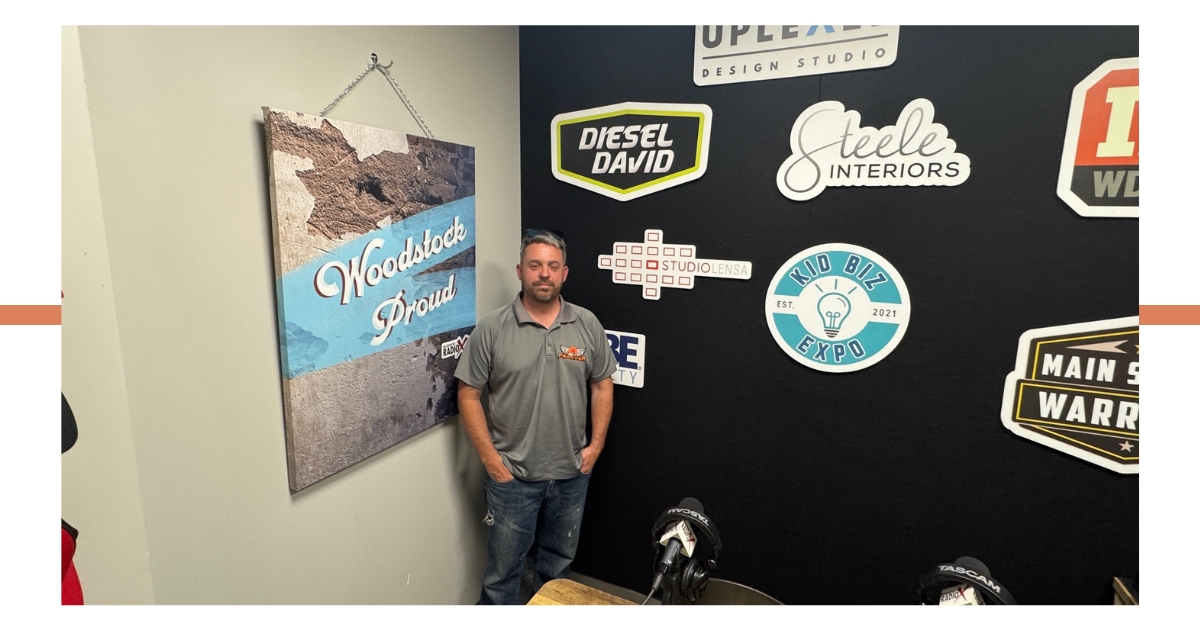
 Matt Chapman, owner of ProRider Atlanta.
ProRider Atlanta is a motorcycle training class to unique that you can’t afford to miss it!
Our advanced motorcycle skill course incorporates the same training exercises used by police motorcycle officers and motorcycle rodeo competitors, like those you have seen on internet videos.
You’ll improve on-the-road and slow-speed skills; learn slow-speed maneuvers, confined space turns, hazard avoidance and understand various breaking challenges.
Follow ProRider Atlanta on Facebook.
 This transcript is machine transcribed by Sonix.
TRANSCRIPT
Intro: Broadcasting live from the Business RadioX studios in Woodstock, Georgia. This is fearless formula with Sharon Cline.
Sharon Cline: And welcome to Fearless Formula on Business RadioX, where we talk about the ups and downs of the business world, and we offer words of wisdom for business success. I’m your host, Sharon Cline, and I’m so lucky to have a really interesting, cool guy in my studio today. He is the owner of ProRider Atlanta. He gets to teach people how to ride motorcycles safely, and this company has been around since 2011. And he’s got a really great Facebook page that shows you all the different ways that you’re going to learn how to be the safest rider on the road. Welcome. This is Matt Chapman.
Matt Chapman: Good afternoon. Thank you all so much for allowing us to come out here and check you all out. This is a cool experience.
Sharon Cline: Thank you. Well, I’m lucky that you’ve come in today. I’m very much a very happy motorcycle rider. I did take two basic rider courses at a Harley dealership, and then the advanced rider course at the Harley Harley dealership, because I wanted to feel like I was taking care of myself as best I could, as safely as I could, and know that I could at least handle my bike the best I could so that I wouldn’t cause myself any harm or anybody else. And I mean, I heard a statistic while I was taking classes there, which was like nine years ago that, um, most people that you see riding on the road have taken no classes. Is this true?
Matt Chapman: It is very true. Most people, um, they see a motorcycle riding down the road and they go, oh, that would be so cool to be a part of. I want to go get on a motorcycle. How do I do it? What do I do? Where do I start? And so in this day and age, people are just jumping on computer and they’re typing in motorcycle class or motorcycle or how to ride a motorcycle. And there’s a, there’s a, a plethora of different areas you can go to, but we are definitely happy to help anybody get into motorcycling. Whether you’ve been riding dirt bikes, um, any type of motorized bike, street or not, a street. We can get you on the road safely.
Sharon Cline: So you obviously ride.
Matt Chapman: I ride as much as I can. I’m a fair weather rider, though I’m going to be honest. Whenever it’s nice and pretty outside, I’m riding it. I’m not going to be a 365. You know, it’s it’s a hurricane coming. So let’s jump on the Harley. No, I’ll say I’ll stay inside till it’s nice and pretty.
Sharon Cline: It’s funny, the the spring weather is so changeable that, you know, you think it’s like 10% chance of rain, but that one rain cloud will be over you. It’s kind of misery sometimes. But, um, I wanted to ask you then, when your whole history of riding kind of came into your life.
Matt Chapman: So I’ve actually been riding since I was, you know, a knee high to a grasshopper, like I was started off on four wheelers. I was on little peewee 50 dirt bikes. Um, really enjoyed motorized vehicle. Anything that got me going out through the woods. That’s how we started out. Um, I actually didn’t get into street riding until probably the early 2000. Late 90 nines. Um, because, you know, I was old enough to get my own bike and and be out from underneath my parents who said, no, you shouldn’t ride a motorcycle because it’s not going to be safe. You know, there’s thousands of ways to die, and that could be one of them. Um, so when I did get on a motorcycle, um, inevitably, if not, if you wreck, it’s when you wreck, you’re going to get in a wreck. I’ve. I’ve been in a motorcycle wreck. Um, it was not a bad one, but it was, you know, bad enough that I had to actually be life flighted to Grady, but it was just a concussion. I didn’t break any bones. I didn’t have any, like, loss of consciousness, but they were just panicking. So they’re like, we’re going to fly you to Grady. And I was like, okay, whatever it is, what it is.
Sharon Cline: Do you mind if I ask what the details are of your accident? Because I wonder how I would handle something if I were in that situation.
Matt Chapman: So in this situation, it was actually the first time that I had ever rode with a large group and we were going to be taking off to Tennessee. It was like a weekend trip. Um, and so I had a passenger on the bike with me. Um, and so we were driving through a, you know, a backwoods country road. And when we come around the corner, um, the edges of there’s very safe places to ride in a lane. And there’s actually three different locations in one lane that you can ride. You got the left side of the lane, you’ve got the right side of the lane, and you’ve got what’s called the Greece lane, which is the one right there in the middle. We always tell folks, try not to ride in the Greece lane, because that’s where your gunk from the oil and the engine, uh, liquids are in there, and they can get slippery, and they can cause you to get loose on a bike. Um, but I was actually in the far right side, and, um, I don’t know if you’re familiar. There’s a thing called edge rut where the road kind of dips off and there’s, like, little holes on the road. Well, there was I was coming over the top of a hill, and there was a huge hole in the side of the road. And as soon as I hit where the pothole was, where the edge rut was, it just shot me right off into a field. And I was like, oh man. We had been on the bike ten minutes. We had just left the house. We were getting ready to go up to Tennessee and I was like, ah. I woke up to the whirlybird, uh, in the, in the, um, in the field, they’re like.
Speaker4: We’re going to Grady.
Matt Chapman: And I was like, well, that ends this weekend. I mean, I don’t know what else to do.
Sharon Cline: Was your bike damaged?
Matt Chapman: Um, yeah, it was totaled. It was a it was a I think it was a Honda. It was a Honda Spirit. It was a 750. So it was a little bit on the smaller side. Uh, but yeah, it had a we had a proper burial for that thing afterwards, so.
Sharon Cline: So I like that you’re actually saying, look, not everybody is going to be guaranteed to not get in an accident. You’re going to get into one. Yes. What is the way that you kind of prepare people for that?
Matt Chapman: Um, you know, every accident is different and there’s multiple levels of accidents. Um, you can have a strictly a fender bender where someone slows down right in front of you, and you don’t grip the front brake hard enough, and you kind of just roll into them. Those are just things that keep in mind when you run into something. It’s not like a car where you sit back in your seat and you go, oh, Dadgummit, why did I do that? You’re going to fall over. You’re going to you’re going to have a bike on top of you, or you’re going to have your leg pinned. And so there’s a there’s a level of trauma in that situation. You’ve got a bike on top of you. It’s probably a heavy bike. What do I do? How do I do this? Um, the biggest thing is remain calm. The first thing is to evaluate what’s what’s going on. Is there any more immediate danger that’s coming? Am I in the middle of the road? Am I on a highway that people are going to be running over me in a second? What do I need to do to get out of my enemy? Immediate danger. What? You do that. And once you get out of that danger, then you can say, okay, let’s start assessing. Am I hurt? Am I have a passenger hurt? Is anybody else involved into it? Is there going to create another problem? Is my bike in the middle of the highway? You know, whatever it is? Um, sure. If you can lift up your bike and get it off the road, we suggest doing that. That’s one of the things we teach in our class, is how to get up a motorcycle, even the 975 pound Harley’s. We can we can throw them up. It’s really easy. I could teach you how to do it. Not a problem at all. What do you ride, by the way?
Sharon Cline: I have a 2015 Sportster 1200 custom. I also have a 1996 Sportster 1200. That’s carbureted. Nice. Um, it was rattling in a kind of strange way recently, so I wound up going to Harley and getting something that’s not too big. I used to have a 2005 Fatboy. Okay. Um, which was a great bike. It just was a big bike for me. And I’m short and it was lowered and it was very hard to lean because it had been lowered. So this, um, this new bike, the 2015, um, I just got her like two weeks ago, and I’ve been riding around a lot this week, getting used to her and I, and I call her her because she’s a her. Okay. All right. Just making sure.
Matt Chapman: You have a name.
Sharon Cline: I do. Her name is Ayaka. It’s a Cherokee Indian name.
Matt Chapman: Okay?
Sharon Cline: It means she brings happiness. Thank you. Um, so it’s it’s an interesting thing how different bikes, all different bikes have a different feel to them, but I’m still. I remember taking the class at one of the Harley dealerships. They said that it takes about a year for you to really feel like you know your bike. Would you agree with that?
Matt Chapman: Absolutely. I get people that call me every day that have never ridden before, but they said, I want to go get my license and I want to do this. What’s the best way to do this? Um, and, you know, with Harley Davidson, you didn’t train on your bike. You trained on one of their bikes, the advanced class.
Sharon Cline: I brought my bike, but the beginner one is is you’re on a I think it’s a 500. Yeah. That’s right, a street 500.
Matt Chapman: Exactly. So when you when you’ve never ridden before and people call me and they say, well, how do I get a motorcycle license, the first thing I’m going to do is I’m going to say get a motorcycle, because the motorcycle that you learn on is going to be the bike that you need to practice on until you get comfortable enough to where you can pick up to a bigger bike. Um, if you go, you know, want to, uh, go to a Harley class and ride one of the five hundreds, but then you leave the Harley class and say, well, I don’t want to do this. I wanted to write a, you know, a crotch rocket or a R6 or, you know, any sports bikes. Well, everything you learned, you know, the basics are still there. But there’s a lot of aspects of sport bikes that are completely different. So you’ve got to understand what do you want? What’s the image you want to portray? What do you want to be in sport bike. Do you want to be in a cruiser? Do you want to be in a moped? You know, what do they call it?
Sharon Cline: The grom.
Matt Chapman: Little scoot. Scoot.
Sharon Cline: Yeah.
Matt Chapman: Dui cycle. Um, so whatever you want to ride, you need to have that first before you say, okay, this is how I want to go learn. Let’s learn on your bike first.
Sharon Cline: Let’s get smart to think that way. Because my friend Tricia has a Ducati, and we were riding together the other day, and her, uh, you know, not stance, but her position on a bike is so vastly different from mine that I can’t kind of imagine, like what? Even the muscles, I’m sure, that are used to keep yourself upright are completely different than what I’ve been using.
Matt Chapman: It’s all about center of gravity. So like, every bike’s got a different center of gravity, you know, on a sports bike or even the, the Euro bikes, the, the dual sports, you’re going to be sitting a lot more forward to the handlebars where on a cruiser, you know, we lay back and ape hanger it up. So it is what it is. But um, so your position on your bike is also going to determine how you’re driving it, how you’re going into corners, how you’re coming out of corners, how sharp you’re turning in parking lots. You know, I tell people all the time, anybody can go get a motorcycle. They can drive down 400 at 80 miles an hour. It’s easy. You hit, you hit the throttle and you go straight and fast is easy. What’s really difficult is the parking lots. What’s really difficult is the gas stations, the intersections. That’s where your accidents are going to happen. I mean, it’s if people don’t spend enough time in the parking lots or in the slow first gear, second gears, then they’re not going to be as safe. They might they might make it, they might ride for ten, 15, 20 years, but they would be doing much better if they would come and get the right fundamental skills first.
Sharon Cline: Yeah, I always think about the friction zone and how this bike has a different spot where the clutch and where the gas kind of meet. And I’m still getting used to it. So when I’m at a stop, I’m kind of I don’t want to jolt forward too fast. So it’s just this really. It’s like my brain’s learning this very nuanced little timing. Um, but I was really proud of myself because I’ve only ridden two bikes my whole writing life, which is nine years, The Fat Boy, and then the Sportster, um, the 96 Sportster. So for me to get on a bike at the Harley dealership and go ride with Ted, crazy eye over there, who was so helpful to me. Um, I was proud of myself for being brave enough to do it. Like, I trusted the skills that I had enough to be able to handle a new bike. As we’re going into, um, what, highway nine or whatever in the midst of traffic? Um, I did have nerves, of course, because every bike kind of handles differently, But I was like, I got this, you know? Trusting myself enough to know that I have the skills enough to stop my bike when I need to. And I think that’s a testament to the the effort that I really did make in the beginning. I know that, like, I think the statistic is 93% or something like that of people you see ride have never taken a class to be able to really know that they can handle their bikes on tight curves, or even knowing how to stop in a way that’s safe when you need to stop very quickly. Yeah. What are some of the things that you could tell someone who’s considering taking your class? What are the skills that you can say, this is what I know you’re going to leave with.
Matt Chapman: So when you come to our class, we do everything on a very basic level. I know it says advanced motorcycle riding class. Um, but what we want to do is we want to start you off with the pure fundamentals. Uh, we want you to be comfortable with using your rear brake and slow speeds. Your high, your forward brake in high speeds. You never use your front brake at low speeds because, you know, you you just don’t do it. It’s going to put you down into the ground.
Sharon Cline: You push, you’re you’re pulling on that front tire and.
Matt Chapman: Yeah, pulling on that brake lever. And that’s going to cause you to go down. The reason why that’s there is to slow you down from high speeds. Your rear brake is for slow speed stuff. Um, so the first thing we do is we go over friction zone, where your friction zone is knowing your friction zone. Feeling the motorcycle, being able to pull against the friction zone. So that way when you let off of it not using any throttle we don’t use we don’t use much throttle at all at our class. It’s pretty much all friction zone and all rear brake. Most of our class, you can do the entire program with no clutch or with no throttle at all. You can do the whole program with just your friction zone. You got to know where your friction zone is so people end up, you know, romping on that throttle a little bit, but it’s all, um, control of each arm. So your right hand’s got a position. It needs to go up and down. Your left one is squeezing. When you squeeze your clutch, You need to have the control and know where you’re at, because when you turn with the right hand, when you’re in a right hand turn, your left arm is farther out. So it’s a harder stretch to be able to find where that friction zone is. It’s easier in the in the left hand turning position. So most of the time when people are turning right, they’re going, oh well where’s that friction zone? It was right here. But no, it’s now changed because the handlebars have changed. Um, so we go into all those fundamental skills, we teach you how to, uh, have the ready position. You know, when you’re in a ready position, it’s the same thing when you’re sitting at a stoplight waiting on the light to turn green. You’re not sitting in neutral. Your hands aren’t on the not on the the.
Sharon Cline: I go in, I’m in neutral at the light sometimes.
Matt Chapman: Well, we don’t like to do that because we want to be able to respond and react to whatever.
Sharon Cline: If a car is coming up behind you really fast, you need to be able to get out of that spot.
Matt Chapman: Exactly. And that’s why we do that. And then and then your right foot is up on the rear brake, so you want to have your foot on the right brake. And your left wheel is what? Or your left leg is. What’s keeping you up from falling over onto the road. So that’s the ready position. So our first skill is teaching you those basics. Once you go and you’re comfortable with those, that first skill is um amplified in this skill. So when we start turning that handlebar, we’re giving you the option to learn where that stuff is and that goes into the next skill. So everything we do is progressive. So as you move up, if you’re having a hard time with the first skill, you might want to hang on and and work that one out a little bit better before you jump in. Because by skill three, you’re, you know.
Sharon Cline: You’re.
Matt Chapman: You’re look locking and lean in that thing and you’re going, wow, I didn’t think I could do this, but I can do this. I have people all the time that that have been riding motorcycles for 10 or 15 years, and they’re like, I didn’t even realize that I could turn the bike this fast. It’s really that easy.
Sharon Cline: So it’s an eight hour course.
Matt Chapman: So it is an eight hour class. So we usually do it the first Saturday of every month in most cases. Um, uh, it is an all day class. It is difficult. It is.
Sharon Cline: Tiring.
Matt Chapman: Very.
Sharon Cline: Your brain is working hard. Your body’s working hard.
Matt Chapman: It is, uh. And at the end of the day, uh, what we specifically offer, um, is we give you that day of class, but we also give you another day to come anytime in the next calendar year. So, you know, you learn all these fundamental skills, you’re getting good at them. You go home, you practice them, you work in your driveways, you work in your neighborhoods and whatnot like that. We know you’re not going to be a rodeo driver by the end of the day. Obviously, we know that, but we want you the option to be able to come back and say, hey, I’ve picked up friction zone, I picked up my rear brake. Now I really want to look at this, or I want to look at, um, how far I’m looking into a turn as opposed to, you know, getting tunnel vision. And when you’re rounding a corner and you get halfway through the curve, you go, oh, wait, I got to keep looking as opposed to right off the side. So, uh, we give you that extra day to just come back free of charge and do the course over again. Do a portion of the course. We know you don’t have cones just sitting in parking lots. Uh, so you can come back to us anytime after the first class.
Sharon Cline: Great. It’s two classes then.
Matt Chapman: So it is two classes for the price of one.
Sharon Cline: Yeah. Yeah. I like the idea of building on something that you are riding already. Because learning on the street 500, it was a very different feel to have a fat boy where I had four forward controls. It was a heavier bike.
Matt Chapman: Huge difference.
Sharon Cline: Right? Massive. My brain struggled with like, where do I put my feet? How does this handle? I understand that it’s beneficial in lots of ways. These bikes at the different dealerships are set up to be dropped a thousand times, you know, and that’s that’s the way. And I dropped mine a thousand times. Sure. But coming back on to that same course with my own bike was very challenging for me. I felt like I was learning kind of all over again, even like the S curve, just negotiating. How much can I lean? How much, how fast can I go when it’s a a heavier bike or a bigger engine? It responds differently.
Matt Chapman: Exactly.
Sharon Cline: I like that you are having people learn on their own bikes. It’s the safest way.
Matt Chapman: So just I guess it was the 1st of May, we actually went and did a, um, we were contracted out for the whole weekend for the, um, BMW Riders of Georgia. And so we went up to Hiawassee. They were having one of their rallies, and we had a great turnout of people that were that were going to take the class. We had some crappy weather, but it was what it was. Um, but a lot of people that weren’t able to get into the classes, they were really questioning. They’re like, well, you know, you’re riding a Harley and we’re riding these Euro sports and these and these adventure bikes. They’re like, how is this, how is this relevant to what we’re riding? And as I was explaining to them, just because you’re you’re taking your brake pedal, your brake pedal goes straight down in those bikes and we have forward. So you push forward. I said, just because you’re using a different direction doesn’t mean that you’re not using constant slow pressure to find where your rear brake is catching. You’re not, you know, if you if you sit there and, and hop up and down, your bike’s going to be lurching. If you’re lurching, you don’t look cool. And that’s really the only reason why I buy motorcycles is to look cool. Um, so I you have to teach them. Hey, you know what? It’s use this side of your foot to give it easy pressure, and you want to feel that, that pull against your throttle. So that way you can know where you’re at.
Sharon Cline: Who’s an ideal client of yours that would come and take your course?
Matt Chapman: Um, anyone who has either just gotten a motorcycle, just gotten the permit. We do private classes as well. Um, and I’ve had a lot of people that because you’re when you’re in a group setting of 5 to 10 people, you know, that’s about the size of our classes. When you’re in a group setting, if you have zero experience and you’re not familiar with anything, it’s going to be a little bit of a struggle to be in a group class because I, you know, I have to go with the level of the group. When the group is doing really good, I have to stay with the group. Um, when I’ve got an outlier or, you know, a dory, who wants to who wants to be overthinking something, I can’t give that person as much attention. So our private classes that we offer are paramount for someone who has not been riding for a long time or, um, who has never ridden private classes, is really going to benefit. But on those group classes, those 5 or 6 people, you’re getting an opportunity to learn from what the bike in front of you did or did not do. And so what we do is in class, um, as we’re going through the skills, I’ll sit here and tell the person behind it, hey, see what that person did? That’s either good or hey, let’s try and do it different and we don’t do it anything to, you know, point fingers or we’re not any better than anyone else.
Sharon Cline: It’s just it’s constructive.
Matt Chapman: We’re trying to make people safer.
Sharon Cline: I think when I was taking the different times I took the classes, I felt I was I felt like I if it were just me, I would not have gone as quickly in terms of skills. I wouldn’t have pushed myself because I wanted to keep up with what they were doing. So I felt like I almost like trial by fire. You sink or swim like you just do not. Not that I wanted to sink, but I mean, just try to keep up with what they were doing. It made me feel braver, I guess, than I would have on my own.
Matt Chapman: Now we have some people that have literally been riding 15 and 20 years. I mean, I’ve got an older gentleman who have really been driving most of their life, but when they come to the class, what you have to remember is depending on who taught you and the way you were taught, you may have had some good skills. You might have had some bad skills, but everybody develops bad habits. Everybody gets complacent on a bike. And so when you come into the class, whether you’re brand new and you’re trying to learn it, or whether you’ve got the I’m going to ride this way because I’ve been doing it forever attitude. When you come into it, I’m going to show you on the bike how much safer and better you can ride your own bike. And I have never heard or seen anyone leave our class without going. I learned X amount. I learned ten times more than I should if I would have. If I would have been riding like this, I might have saved two bikes from accidents, or I might have had a different outcome than than what I do right now.
Sharon Cline: So what do you think the biggest mistake that riders have? Like, even when I’m right, when I’m riding and I see another bike, sometimes they’re like what I call the statistics, where they kind of are cutting in between the cars and I’m just like, no, you’re just a bad representation of what bike riders can be. But what would you say is something that you see is kind of a classic wrong thing to be doing.
Matt Chapman: Um, you know, there’s there’s so many of them. I unfortunately, I am an extremely hypercritical person when I’m driving down the road on my bike or in a car, I evaluate people and their riding. Um, not because I’m trying to be judgmental, but I’m like, could you use a class? Do I need to race ahead of you and hand the flier out the window, or do I need to pull in behind you on a gas station? Um, duck walking your motorcycle? I’ve seen so many people that when they come up to a gas station, You know, they’re giving it a little bit of gas. They’re easy out on your friction zone, so the bike’s moving forward, but they’re just walking or they’re kicking their legs beside. Um, sure. It’s it’s kind of trite, but that’s could break your ankle. Um, there’s there’s been many cases where, you know, that got caught up on her floorboard. You break your ankle. Well, then guess what? A you’re out a couple months or riding your motorcycle and nobody wants that, but then you’re also. You get scared the next time. Well, how do I fix this problem that I didn’t know was a problem until.
Sharon Cline: I.
Matt Chapman: Really created the problem. So.
Sharon Cline: Wow. So how full are your classes? I mean, are they are you pretty much always booked?
Matt Chapman: We are constantly got people coming in. Uh, we have so many callers. Um, you know, nowadays with Google, everybody Googles us and and thank the Lord we have five star reviews. We’ve never had a negative review. Um, and so everybody sees that and says, oh obviously, you know, reviews nowadays that’s the, the way small business is going. Um, so they give us a call and just depending on where they’re at on their motorcycle journey, whether it’s a baby or whether they’re crawling or whether they’re trying to put their feet in front of their, uh, their foot, uh, or walking. I mean, you know, you got walkers and we got some runners out there. Um, I get calls periodically. Hey, I want to learn how to do wheelies and do endos and do these types of things. We don’t teach that kind of stuff. We teach safe skills that are going to get you to the ride and home from the ride. That’s my biggest thing, is I want to get you home, back to your family. Um, but there are classes that do that and race schools, but we don’t. We don’t offer those.
Sharon Cline: So you also don’t offer, um, like, a your certificate of being able to ride. I mean, as a motorcycle rider. Right. It’s not like a course that you could take with the DMV.
Matt Chapman: So the MSF course, um, has a curriculum that they have to follow. The curriculum that we follow is a a higher level than what they require. Uh, we’ve actually gone to the state board and they said, hey, we said, hey, you should probably implement some of these skills and they would like to do that. But they can never they can never get it passed. I don’t know if you’re familiar with this. When you drive down a country road, you see a yellow sign that’s got 35 miles an hour on its own. That does. And that’s not the speed limit. That’s just the, the the advised turn that it is. That sign is based off of an average person that drives a any car down this road. That’s the speed they have to go at. And the reason they have to have that speed sign there at that speed is so everybody can go through that intersection or that curve at that speed. Not everybody’s the same way. Some of us are going to hit that thing at 80 miles an hour, and we’re going to do fine at it. But they have to have that standard with the state. You’re going to have a minimum standard, and that minimum standard is to get anybody on the road. Now that’s good and that’s also bad. That means anybody that wants to go get a motorcycle license can go down the DMV. Now, you don’t even have to schedule an appointment. You just go down there, sign your name, give them your ID, and you know you can take the 20 question multiple choice take. And then you get a permit for six months.
Matt Chapman: You’re riding around on a permit at any time during the day. You can’t ride at night, you can’t have a passenger, and then you can’t be on the interstates. Obviously, you’re not supposed to be on the interstate. People do all the time. Um, but you’re not supposed to be. So you can have a permit and then have those restrictions lifted as soon as you get the license. When you go to those Harley-Davidson classes and Honda America, they also do the same program. Uh, when you take those, they’ve got a certified individual from the DMV that comes out there and administers the test. So it’s basically a little bit longer of a class. It’s a couple day class, so a little bit longer. But we give you the option of put some skin in the game. You go get a motorcycle because you’re the one that’s going to be vested in the motorcycle. You go get your permit, that’s fine. And then you come to us and do the class. Now I will say we have some people that come to the class without the permit. It’s okay. You can bring you can trailer your bike. We have several people that trailer their bikes to our course. Do the course because we’re on a closed course and then take their bike on home. No problem with that whatsoever. So you don’t have to have your permit, but you need to be in the mindset of, hey, if you’re going to do this, you know, go in two feet, don’t go in, don’t go in half.
Sharon Cline: What would you tell a new rider who would want to take your class? Like what are some of the classic things that you find people struggle the most with as they’re learning to ride?
Matt Chapman: I would say it’s the starting and stopping like.
Sharon Cline: The basics, right?
Matt Chapman: It is absolutely the basics. And if people would spend, it’s not cool. Nobody likes starting and stopping, but you’re going to start and stop ten times more than you run fast down the road. But everybody wants to get on a bike and go fast. Cool, I understand that, but you’ve got to get those fundamental skills. You’ve got to get that friction zone. You’ve got to know where that brake is to be able to keep it up.
Sharon Cline: I remember in class that our teacher told us that parking lots and neighborhoods that have all these driveways and things, those are actually the most dangerous because every one of the driveways is considered an intersection. That’s right. And it’s kind of scary to imagine that, because that’s my parking lots are kind of my nightmare because they don’t expect, I assume that people who are driving a car as they’re backing up, they’re not looking for a smaller vehicle. Um, so I have anxiety about it, I guess when I’m anytime I’m in a space where I feel like, okay, because I’m always thinking, as cool as I look on a bike, okay, I’m just saying that right now. As amazing as I look on a bike, I don’t look at me. I just mean, like, I’m thinking defensively all the time. Like, okay, wait, do they see me? Do they see me? If they don’t see me, where am I going to go? You know, I’m always thinking safety, safety.
Matt Chapman: I’m not going to say that motorcycles are safer drivers than other drivers, because then somebody’s going to get offended by it. Um, but I will say this if you’re a motorcyclist who has had negative experiences and that negative experience could be someone locking them down in front of you. Um, an animal jumping out in front of you. Um, an intersection that the light turned red a little bit faster than you were expecting it to. If you’ve been in those situation, you have that oh crap feeling. And once you have enough of those oh crap feelings, you’re going to go, okay, do I need to take a step back and reevaluate how I’m writing? Am I the mistake, or is it truly someone else who’s not paying attention? And most four wheelers don’t pay attention. It’s not because they’re being mean. It’s not because they’re being rude. It’s just. They’re just not thinking about it.
Sharon Cline: Well, it’s an interesting dynamic of riding in a car, obviously, and riding in a motorcycle. And it’s hard to explain to people who don’t ride why it’s so great, at least in my mind. But when I’m in a car, I mean, I can be thinking about I’m on automatic a lot of times. I hate to admit it just happens. I guess I’m driving to work, driving home or whatever is normal. I can be thinking about other things, but the most dangerous moments are if I’m on a motorcycle and I’m thinking about other things. It is absolutely not. Actually, that happened to me one time. I was on Holcomb Bridge Road and I my mind just wandered for a second and the light changed to fast.
Matt Chapman: That’s an Audubon down there. You don’t want to be not thinking about anything.
Sharon Cline: Oh, my gosh. It was during rush hour. We were going to a bike night. You know, it was starts at seven. So you’re in traffic, you know, at 630. And it’s like one of the worst roads, um, in terms of, uh, like rush hour time. And I could not stop fast enough and luckily was able to take a fast right into a parking lot area. And I don’t know what I would have done if I didn’t have a place to go. And that was the only time that has ever happened where I got just kind of in my head about something, and that scared me straight, if that makes sense. That was I was a terrible feeling and I thought, oh, I probably shouldn’t be riding like, let me evaluate my mindset before I get on a bike. You know, there are times where I’m too tired and I know I’m tired and it’s like, that’s not a good day to be riding a bike. But thankfully I’m doing like a little sign of the cross. It’s been all right. But what I like knowing, too, is that even if you’re a long term rider, there’s still something to learn with you.
Matt Chapman: Oh, absolutely. Um, and kind of going along with that, um, I’m not going to give you my whole class, but I will say this, um, we have some acronyms because all of us are either private law enforcement, military, something like that. So acronyms are the way to go. Um, it’s skippity. Uh, so the first thing you do is you’re always going to be scanning ahead. And I tell the people in the class, I say, when you’re looking to drive ahead of you, how far ahead do you scan? You know, sometimes you get ten feet, 50ft, 100ft. And some people say the correct answer, which is as far as you can physically see at the time, you’re not determining how fast someone’s going to be able to brake. And braking distance is where you start looking, you know, 500ft, 80ft in front of you. Uh, I’m looking at scan space, and scan space is as far as where my vehicle is going to be in 30s or 45 seconds. That’s where I want to be looking, because then I can identify what a problem is. It someone pulling right? Is it someone turning left? Is it a school bus? Is it someone broke down? Whatever the issue is, I can identify far enough ahead so I can start planning what I need to do to figure out whether it’s make a right hand turn, change lanes, whatever I need to do to mitigate the problem that I’ve seen that will allow me to decide, okay, I’m going to do this.
Matt Chapman: Do I have any other issues, like a car to my left that I now have to go, oh, how I have to. I have to deal with his problem. Um, and then I can execute what I’m actually doing. Um, so yes, we we do all that, uh, and, and I’ll tell you, the Georgia is probably one of the best weather states to ride. Uh, we’ve got mountains, we’ve got the beach, we’ve got Atlanta traffic. Um, but we’ve got some great riding roads. And so when people get out there and ride the roads, they’ve got to, they’ve got to be remembering, hey, not everybody’s paying attention. They don’t care if you’re a one percenter. They don’t care if you’re in a club. They don’t care if you’re a brand new writer. They don’t care what the situation is, what kind of bike. They just they’re just driving their own day. So you’ve got to overcome what their problem is and be safe on your bike.
Sharon Cline: You had talked about kind of the fact that you were in law enforcement. You had mentioned a lot of them have these acronyms or whatever, like t clocks, I think.
Matt Chapman: Oh yeah. Yeah.
Sharon Cline: Yeah, yeah.
Matt Chapman: We teach that one too.
Sharon Cline: Oh, nice. So what is your background in law enforcement? And I know you had said that you had worked. Is it Cobb County?
Matt Chapman: Dekalb County. Dekalb County. So I actually originally started in city of Alpharetta, right around the corner. I graduated from Milton High School. Where where the N stands for knowledge. And. I swear, my valedictorian said that at graduation, and we’re all like, what? Okay. You know, it is what it is. Um, so I graduated from Milton, uh, and again, at that time, I was planning on staying in the city of Alpharetta, and I would never leave. You know, I left less than, like, two months after that. Um, so I left at City of Alpharetta, and I actually worked with a state of Georgia Phillips State Prison, um, for several years. Uh, and then at that time, I realized, hey, I want to get on the road. I want to be a police officer on the road. So I went to the city of DeKalb County. Dekalb County, um, got hired on with there, worked there for several years. Unfortunately, it was at the time that this tragic situation happened in the world, September 11th. I was actually a part of the Georgia National Guard at the time, uh, from graduating high school.
Matt Chapman: So I went to I literally graduated high school, went to basic training, started doing drill over here off Barrett Parkway, um McCullum airfield at the 1/90 MP company. Um, and so that’s actually where I kind of blossomed my policing side of it. Um, and so in the process of doing that, I was literally going from the military to the state to DeKalb County, back to the military. Um, it was for about four years. I don’t even remember where I was because I was literally at every, every different place. I’ve stayed in DeKalb County till 2006, I think it was. Um, and that’s when I realized I was missing my true calling to ride a recliner for the rest of my life. And so I decided to to chase the blue for the red and went to Forsyth County Fire Department. And good Lord have mercy. It was the greatest decision ever. I loved it. Um, you know, nobody likes seeing police come, but everybody loves a fireman. Uh, it was, uh, it was a.
Sharon Cline: Amazing.
Matt Chapman: A great, great part of my life. Uh, and so I did that until the late 2016. Um, because I started my own private companies, um, I needed to. I needed to stay stay in those because they were a little bit more financially beneficial at the time. Um, so that’s where that’s where I got out of public safety was 2016.
Sharon Cline: So and that’s and now you’ve been you’ve been with Atlanta pro rider for um what like three, four years. Did you say when was it.
Matt Chapman: So I’ve, I’ve actually been I’ve known Ken since DeKalb County.
Sharon Cline: We both talk about Ken. He’s been very important to this country.
Matt Chapman: Yeah, absolutely. Um, he’s actually he’s actually the reason why I moved over into pro riders, because I knew how long he’d been doing it, and I knew how how much of a love he had for it. And he really wanted to keep people safe, um, and teach people how to ride like a police. That’s what that’s one of our mottos, is.
Sharon Cline: Yeah, I really like that because I had a police officer in one of my classes who was going to be riding, um, and he was so incredibly good at managing a ginormous bike, and it was enviable. Like, it was perfect. And I also have a friend that’s in one of my riding groups. That’s a girl women’s riding group. She’s a police officer, and she, um, can do. I think she competes. She can do all of those. Yeah. Um, tiny, tiny, tiny movements that are great. Feel like you can’t handle a bike? Like it’s going to tip, you know, and it never does. So it’s it’s impressive skills.
Matt Chapman: We can teach you those skills because we teach them in our class all the time. Um, but, yeah, Ken, he really just had a love for it. Unfortunately, due to health concerns, he just had to pull back a little bit. And so he’s going to do more of a personal side of his life now.
Sharon Cline: Is still associated with.
Matt Chapman: This. Absolutely. We’re not taking anything away from them.
Sharon Cline: People talk about Ken and this company, you know, that they’re still kind of together in people’s minds.
Matt Chapman: Absolutely, absolutely. We’re never going to take that away. Um, because he’s he’s really the bread and butter from it. Uh, but all I’m going to do is I’m just going to take it to the, to the next level, the next chapter. I’m not going to go to the finish line. Hopefully somebody else will take it to the finish line. But it’s not going to be me. I’m just going to take it to the next couple of chapters.
Sharon Cline: So you were in policing. You were in firefighting. What is it like to be a business owner?
Matt Chapman: Um, you know, within the government sector, public safety, you’re guaranteed a check no matter what. You’re going to get a check at the end of every two weeks. You’re not guaranteed that as, as a, as a, a private industry owner. Um, so I’ve actually got several different companies. Um, and I do that because I want to have my hand in a little bit. So when you detract from one, you can go a little bit more like you’re diversifying. Right, exactly. Um, so luckily with the with the government, they gave me an ability to have the diversified portfolio, and I was able to invest and I was able to have the monetary needs that I need taken care of. But, you know, the living day to day, that’s great for when I’m 65.5. Great. But for the every day and day, you’ve got to have, you’ve got to put food on your table. And it is difficult right now, especially in the the growing economy that we’ve got because I’m actually in the demolition side as well. And um, it’s it’s difficult but it’s very, very advantageous. Very, very good.
Sharon Cline: What’s the most satisfying part of your being a business owner, do you think?
Matt Chapman: Um, I would say the ability that I get to spend with my children. So I’ve got four children. Um, I’ve got two older ones, and then I’ve got two younger ones. Um, because I was in public safety and I was working 12 hour shifts. 24 hour shifts, uh, as a fireman, you’re gone literally a third of your life, and you’re only sleeping in your bed 1 or 2 nights a week. Um, I was not able to cultivate those relationships with my two older girls. Um, the way I can now with my two youngers, um, and and I’m able to spend every day with them. I’m able to do anything. Like this morning they had the fifth grade. Well, my my daughter, she’s got the fifth grade graduation walk. So, uh, we were able to go sit there and video her. She was walking out of the school for the last time, so I didn’t get a chance to do that with my two olders. But I was definitely. I am and will never not do that again. So.
Sharon Cline: So the flexibility has given you that freedom that you’ve always wished you had had. Um, what is it like to market as a as a small business owner for you?
Matt Chapman: That is a chameleon. So one day you’re doing one thing, and then the other day you have to do something completely different. So like when I started in my industries, you know, we didn’t have Facebook. We were not into the social media aspect. It was literally business card, business card.
Sharon Cline: Business card, magazine.
Matt Chapman: And you had to go out there and hit the doggone roads. Um, now it’s a little bit different. It’s not easier, but a little bit different. Um, it’s a little bit more at your fingertips, but it’s just as difficult because now you have to say, what group am I trying to go for? What territory, what area, what radius am I looking for? And is that going to bring in enough income to be able to cover my costs as expenses? And then, um, how do I grow from that? I mean, only residential people aren’t going to get 30 yard dumpsters every single month, you know? So maybe once every 5 or 6 years they’re going to use us. But I got to have money in between those two times. So that means I’ve got to have enough customers built up in my pocket that are always calling my name, always saying, oh, hey, we need this or we need this. And coming back to us.
Sharon Cline: Do you collaborate?
Matt Chapman: I do a lot. Um, I’ve been doing it long enough that I know most of the people at my level. There’s different levels of business. So, you know, you’ve got fortune million dollar companies and you’ve got fortune 500 companies. Um, and then you’ve got the, the medium sized companies. That’s kind of where I’m at the medium size. And then you’ve got the smaller companies. Um, I have the opportunity to help and mentor some of those guys. I have a couple friends right now that are starting to really get into it, uh, general contractors, that kind of stuff. So they’re saying, hey, what do I want to do five years down the road? So I’m able to help them out, and I like doing that.
Sharon Cline: Or you’re paying it forward, almost like giving, giving people some help along the way that you wish you had had.
Matt Chapman: Yeah. And unfortunately I did not have that. It was me and a, uh, and a roll off truck myself. There was nothing else. It was this is how you got to do it. And it was actually 2008 when the market tanked. Oh, Lord. So that was a problem. And then September 11th happened after that. And then the Covid happened after that. So it’s like the hits keep coming. Come on now.
Sharon Cline: What would you like to see happen and where would you like your. Well, I guess provider Atlanta won the one we’re here really mainly talking about. Where would you like to see it in five years?
Matt Chapman: So what I would like to see is so we’re actually a part of a franchise and that franchise is is nationwide. So we are the Georgia picture of that franchise. Um, it was actually started in Pennsylvania. Um, and uh, the individual that started it is still actively working on it. Him and his son are still working on it today. Um, but what we’re doing is we’re trying to branch out to a bigger area. Um, there is a provider in West Georgia that is down south. Um, but we kind of got a no compete clause. So the people that are in our area have to use us, and it’s not efficient. Anyway. You’re not going to drive all the way to to South Georgia to go take a class. And I wouldn’t expect anyone from down there to use us. Um, so we are in a very, very large growing population. Um, I would love for every single first Saturday of the month for us to have, uh, 8 to 15 people. I pretty much can’t go more than 15 just because it is a it is a talk about an eight hour day that’s like a a 15 hour.
Sharon Cline: Day.
Matt Chapman: Put into eight hours. So that’s a little bit difficult. But I would love to see consistent people coming in not only for the first time, but second and third times. Um, we do a, a class that allows you to have a two year insurance certificate. So, you know, you get a reduction on your insurance rate. And most insurance companies allow that every two years. So you know what? Every two years come back to our class. I mean, in a drop of a bucket, $220 is what the class cost is. Nothing when you’re really looking at the skills that you’re getting. And unfortunately, because we’re complacent and because we’re out there having a good time, we might forget this or this. Come back for a refresher, come back and do this, get another insurance certificate, drop that rate off a little bit. You can always save money somewhere else, but you really can’t save money when it comes to your safety and security.
Sharon Cline: We’re totaling a bike or whatever, you know, so. So you would like to see it grow and have even more people appreciating the different aspects that they can affect their own financial well-being and physical well-being, their life.
Matt Chapman: I mean, you’re never going to have people stop riding motorcycles, so I guarantee you you’re always going to have a need for motorcycle education. It’s just how much are you willing to put into your own education? You had to go to school for 12 years to learn how to do something that you don’t ever do again. This is something you want to do every weekend, a couple nights a week. Uh, couple weeks during the summer. How much? How much time are you really putting into being a master at your craft?
Sharon Cline: Yeah, well, eight hours doesn’t feel like asking too much.
Matt Chapman: Not at.
Sharon Cline: All. I think about it. What is the. What do you think the. You said that there are bad habits that people develop. What is like the main bad habit you think you see? I know complacency can be a habit, but what what kind of physically do you see as people are writing?
Matt Chapman: Um, you know, your position on the bike. Lazy positions on the bike. Um, it’s where you have your feet stuck out too far on the outside. Um, if you’re not using the controls the way they’re supposed to, um, we joke around in our classes, you put all four fingers on all levers. And the reason why you do that is because if you do the okay hand sign and you put your one finger around the throttle and you use the other three, what happens if you get an emergency situation? You go yank that thing back and you go, oh, shoot, I just pinched my finger and you let go and you just you completely, uh, negate what you literally were just trying to do.
Sharon Cline: Oh, my gosh, I never thought about that.
Matt Chapman: So we always tell you, keep all four fingers on all levers. Um, and so that’s something that, you know, people have been driving like that forever. Oh, it’s not that big of a deal. Wait until it’s a big deal and then you won’t ever do it again.
Sharon Cline: Or don’t wait. Come take your class.
Matt Chapman: Yeah, exactly. And then when I see you driving down the road, I’m like, hey, your finger. Oh, by the end of the day. By the end of the day, we do emergency braking and accident avoidance at the end of the day. And everybody loves that part because they get to go fast. They’ve been going eight to 8 to 10 miles an hour all day long.
Sharon Cline: Doing those small kind of movements.
Matt Chapman: It really.
Sharon Cline: Challenges.
Matt Chapman: But when they can go 15 to 20 miles an hour and get to lock their brakes down to get to feel their abs kick in, because a lot of people don’t even know what abs feels.
Sharon Cline: I don’t have abs, and I wanted them on my bike because I was wondering about actually, I asked about that when I bought mine, and I’m thinking how a bigger bike really does require that, but mine is kind of small and maybe it’s not as crucial, but I do think anything that you can have like hill assist, anything you can have on your bike that makes you safer is a good thing.
Matt Chapman: I’ve seen actually one of the guys the other day had that and I was like, that’s pretty cool. I’ve never seen that thing before.
Sharon Cline: Roll backwards a little bit. Yeah. Hill assist is kind of.
Matt Chapman: You had your foot on your right foot on the brake.
Sharon Cline: I mean, sure I have. Absolutely.
Matt Chapman: Just trying to help out.
Sharon Cline: Did that did that sound convincing?
Matt Chapman: Yeah, I believe you.
Sharon Cline: I believe me too.
Matt Chapman: It’ll work.
Sharon Cline: Well, who? How can people get in touch with you if they would like to know more about Pro Rider Atlanta?
Matt Chapman: Um, so you can check us out online. Um, obviously Pro rider com uh, we’ve got a Facebook page, we’ve got an Instagram page, we’ve got a TikTok, we’ve got a YouTube. We’ve got as much as we as much as I have time to throw on there, I get as many videos out there as I can. Um, you can give us a call, uh, and we’ll get you into the next class, I think is the next one is June 7th. Um, and then July 12th, because obviously July 4th is going to be on that first weekend. Right? So we’ll give everybody the holiday off. But, um, you want to get in the class sooner or you want to wait till later because everybody knows what’s going to happen in Georgia here in a month and a half, it’s going to get so hot.
Sharon Cline: I was wondering what it’s like for you, um, to be out there, you know, eight hours. Do you wear hats and things?
Matt Chapman: I wear hats. Well, again, you got to have your helmet on when you do the class. So when you’re riding, that’s why we’ve got these dry fit shirts. So that way there’s not a there’s not an issue. But yeah we have we provide water at all the classes and we take a lunch break. You know, there’s a there’s a nice little Mexican place down the road. There’s a barbecue place right around the corner. So we take a nice little lunch and and relax. But no margaritas. But not during class, because that would get me in trouble. So.
Sharon Cline: But, you know, some of the people that I took classes with, like, I follow on social media, and it’s almost like we just went through this little experience together. It’s like, you know, you can have some friendships form.
Matt Chapman: It’s all.
Sharon Cline: Like.
Matt Chapman: The.
Sharon Cline: Same.
Matt Chapman: Things. Exactly. You’re doing the same things. Um, you know, and as you grow in your life, as your journey as a motorcycle, you can get into clubs, you can be a part of, uh, events. You know, most motorcycles when they’re going to a bike night or when they’re doing something like that, they’re going for a reason. It’s not just, hey, we want to go to a bar and and drink. We want to go for this cause we want to go for this assistance of a family who house burned down or a cancer patient or some some issue. There’s usually something that motorcycles are going to do. Motorcycles are notorious for donations. Um, even, uh, even clubs on the, on the, the good side and the bad side, they still have a moral obligation and they choose to, hey, we’re going to put money towards this or we’re going to try and help out this cause.
Sharon Cline: One of the things I think is very surprising, um, that I think most people don’t know, and please feel free to let me know your opinion is that there’s this obviously, uh, you know, idea that motorcycle riders are like this hardened people or maybe, like, looking for trouble. And the absolute opposite has been the case for me. And for the nine years that I’ve been riding, I have never experienced such support and care. If I called a group of people right now and said, I’m in trouble, I have no doubt they would come and help. And there’s just something very heartwarming about that. I think knowing that most of us are all just trying to have a good time, get to a safe place, like you said, do something that’s bigger than yourself, helping to contribute to something. So when you have people like a community like that around you, it’s it makes you feel like you have family. And so I think there’s this idea that even myself, people are surprised I ride. But I, you know, maybe I’m not typical, but it doesn’t matter to me. I think anyone who really in any bike. Anybody who really wants to be on the road, I do the two. I don’t care what you’re riding. I do the two fingers, you know, to say hello because I feel like all, all we’re trying to do is have a good time, be safe, you know, and enjoy and enjoy like a hobby.
Matt Chapman: It’s a brotherhood and a sisterhood. Um, and, you know, um, you’re one percenter clubs, uh, they keep their club business to themselves. And even your law enforcement clubs, they keep their business to themselves. And we have a saying in clubs, it says club business stays in club business. So we’re not going to be bringing that stuff out to the normal rider, to the, the, the dad who’s riding every couple weekends, um, or someone even like sportswriter like you’re saying that just cruises in the mountains every couple of weekends. Uh, we’re we’re not worried about your life situations. Unless you need us to be worried about your life situation, and then we’re here to help you out.
Sharon Cline: That’s probably the case with everything. We just kind of just stay in your lane. Yeah. How about that?
Matt Chapman: It’s kind of like the Jeep owners. You know, Jeep owners always wave to each other when you buy a car. You go, oh, hey, I see that car now. And I see that car. Motorcycles are the same thing. We’re just motorcycles out here having a good time doing what we gotta do.
Sharon Cline: Well, I am so glad you came to the studio today. Um, you were really sweet to be willing to be brave because you said you knew nothing about this. Have never done this before. Look at that. It went well.
Matt Chapman: Awesome.
Sharon Cline: Matt, thank you so much. And if anyone else is out there listening and is curious about motorcycle riding and would like to have the best, your best foot forward, your best bike forward as you’re getting used to the road, um, feel free to check out Pro Rider Mix well. And also, thank you all for listening to Fearless Formula on Business RadioX. And um, this is Sharon Cline reminding you with knowledge and understanding we can have our own fearless formula. Thanks, Matt.
Matt Chapman: Thank you much.














