

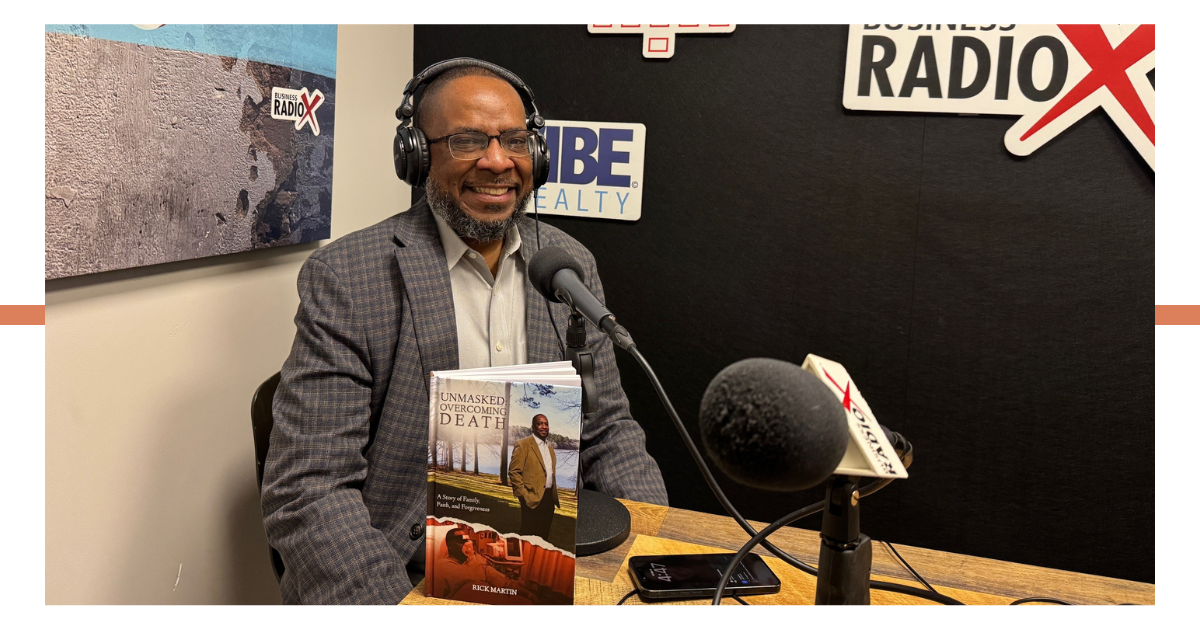
 Rick Martin is a trusted voice in journalism, public relations, and crisis communications, bringing decades of expertise and an unwavering passion for storytelling.
A three-time Peabody Award-winning journalist, Rick’s career spans pivotal roles at CNN & top-tier local newsrooms in Washington, D.C., Baltimore, Philadelphia and Atlanta.
From covering history-making events like the September 11 terror attacks and the Beltway sniper case along with Hurricane Katrina to navigating the uncharted waters of a global pandemic, Rick’s experience is as vast as it is impactful. 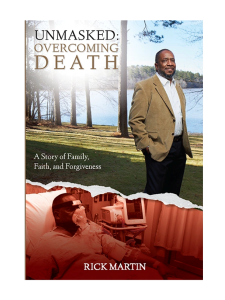
But Rick’s story doesn’t stop with headlines—he’s lived through one himself. During the COVID-19 pandemic, Rick not only guided a local government’s communications strategy but also fought his own battle with the virus, spending 17 days hospitalized, including five on a ventilator.
That life-altering experience deepened his resolve to inspire others to rise above life’s challenges.
Connect with Rick on LinkedIn.
 This transcript is machine transcribed by Sonix.
TRANSCRIPT
Intro: Broadcasting live from the Business RadioX Studios in Woodstock, Georgia. This is fearless formula with Sharon Cline.
Sharon Cline: Well, it has been quite a few minutes since I’ve done an episode of Fearless Formula, but I’m so excited to be back in the studio for actually kind of a very special interview. This is a gentleman that is a three time Peabody Award winning journalist here in the Fearless Formula Studio. Thank you so much for coming. This is Rick Martin.
Rick Martin: Ah, you’re too kind. No, you’re too kind.
Sharon Cline: It’s true. I’m very impressed to be able to say that. I was, um, very lucky to be, um, in touch with you through a mutual friend of ours who just believes in your story so strongly that he’s like, you got to get back in the studio to meet this gentleman, and his story needs to be told. So I’m so grateful that you came to the studio this afternoon.
Rick Martin: Thank you Sharon, thank you again. Honestly, thank you for having me.
Sharon Cline: You’re welcome. Rick wrote a book called Unmasked Overcoming Death. It’s a story of family, faith and forgiveness. And everybody’s got their journey. Everybody’s got their story. But this one has to do with Covid and how much it changed things for your life. But before we get into the Covid story, why don’t you let me know? How long have you been here in Georgia? What kind of led up to this moment of being an author?
Rick Martin: Sure, sure. So I had been working in television news for almost 30 years. I worked 14 years in local news and 12 years at CNN. I worked in local news departments in the cities of Philadelphia, Baltimore, Washington, DC and relocated from DC to Atlanta to join CNN in 2003, where I worked on a political desk. I worked at CNN from 2003 to 2015, then became the assignment manager for the local CBS station. And then from there in 2017, joined Douglas County government, worked for the Douglas County, Georgia Board of Commissioners, became their director of communications and community relations department.
Sharon Cline: When you were growing up, did you always want to be a journalist?
Rick Martin: You know, I will tell you, I had some influence, heavy influence. I actually my father, my father was a radio broadcaster.
Sharon Cline: You have a radio broadcast voice.
Rick Martin: And my dad still is broadcasting. He’s broadcasting from home? Yeah, from Washington, D.C..
Sharon Cline: Oh, my goodness. That’s amazing.
Rick Martin: So he’s in his 80s and.
Sharon Cline: And still out there kicking.
Rick Martin: Still doing his show.
Sharon Cline: That’s wonderful.
Rick Martin: I’m proud of him. Yeah. I grew up and he gave me a little small segment of his show, you know, which was just as a young kid. Calendar of events, telling people what events are happening in the community.
Sharon Cline: And like a little kid, you were like your little voice on the radio.
Rick Martin: Exactly. Oh, yeah. So it was a lot of fun. And, you know, but I still remember the day I decided, no more radio TV, is it? It’s when. Hey, dad. How much do you get paid? Yeah. And dad is like, ah, I don’t. It’s, uh, listener sponsored radio. I’m like, oh, you don’t get paid. I was like, yeah, TV’s.
Sharon Cline: Tv’s it. And that’s what made you you go to school for journalism and all of that?
Rick Martin: Yep. Yep. Went to the University of Maryland, got a journalism degree from the College of Journalism at the University of Maryland, College Park. And I loved my experience there. And, you know, actually, I had difficulty getting into the College of Journalism because I wasn’t testing well. And, you know, you had to pass the test of standard written English. If I remember that correctly, um, you have to get a required score. And I just, you know, test anxiety, I just didn’t test very well and I didn’t get the score needed. And I took this exam multiple times, you know, trying to pass it. And it wasn’t until I, um, decided to, you know, I need to appeal or something look into whether, you know, I want to get in. I don’t, I don’t want to just go out and give up like that. So I did, I appealed and got recommendation letters. I was doing internships that I had completed working for the campus newspaper and on the basis of appeal, and the chair of one of the departments there at the College of Journalism had written a recommendation letter for me, doctor McAdams, Catherine McAdams, uh, God rest her soul. She recently passed. But, um. Yeah, that’s how I got in. And in getting in, that really was, um, a change in life. Um, because I loved it. I loved, you know, writing, I loved news, I loved getting the information first. You know, I got, I did an internship at CNN in the Washington, D.C. bureau there I met, you know, Bernie Shaw. Um, Frank Sesno. Um, you know, I loved it.
Sharon Cline: You’re part of something so much bigger, but but I, I want to go back just a second. You fought for yourself. You fought for your. And I also think how interesting it is that you’re clearly very intelligent, but not everybody. It’s not a measure of intelligence test taking. And I just love that you didn’t let that keep you down. You were like, I’ve got to work around this. You know, it’ll even get in your head. I’ve got to take this test. And if you take it more than once, it’s like a thing. And you shouldn’t let it take you down.
Rick Martin: Right? Right. And I think that, you know, now I could see that it was a work ethic. I think what separates me from anybody else is, um, work ethic, you know, not giving up, um, resiliency. And, you know, it’s that came out, I wrote about it in my book actually, um, because I was born with a birth defect that a lot of people don’t know, I’m actually really coming out more or less. Yeah. I was born with a birth defect. It was called a pectus excavatum and a pectus excavatum is when your sternum, your breastbone grows inward instead of outward. And when it grows inward, you know, organs are pushed aside or what have you. I had my first surgery at 18 months old. 18 months.
Sharon Cline: Old baby.
Rick Martin: And, uh, yeah, and, um, you know, so it was a fight, you know, from the get go from the beginning. And I had multiple surgeries, a total of five with the last one, I was in my 20s, you know, to try to correct the problem because they couldn’t fix it. And, um, so I was always a fighter medically and always felt that, you know, things were stacked against me. You know, why me? You know, you had to deal with that. I dealt with that. And, um, so I think, you know, as a, as a kid, you know, that was on my mind. So when I got into to college, you know, I had it in me to fight. Yeah. Oh, yeah.
Sharon Cline: It makes me wonder how many times people give up if they had just asked, you know, just tried to work around it or proven in whatever way they could that just because this test doesn’t show. I still do know this. And the fact that when you got there, you thrived.
Rick Martin: Yeah.
Sharon Cline: You know, that says everything.
Rick Martin: Oh, yeah. And I yeah, in college, you know, it was. I made it fun. You know the experience. I mean, it was a lot of work. You know, it was hard, but, um, I took a great, um, honor in, you know, arriving, you know, a lot of people, you know, didn’t get the chance that I did, you know, to at least have a chance to get a degree. And, um, I was really excited and hopeful, you know, that my career was going to go someplace.
Sharon Cline: I love that you got just a little taste of national news rather than local news. And then you’re just like, this is where I want to go. This is what I want to do.
Rick Martin: Yeah, yeah. Oh, yeah. And, and, you know, College Park was really strategically positioned in a great place right outside of Washington, D.C.. So things that happened locally for local news when they happened in the district usually became national news as well, right?
Sharon Cline: So yeah, that yeah, yeah, you’re right. I didn’t think about that. Oh yeah.
Rick Martin: It was it was a big deal. It was a big deal.
Sharon Cline: So then you came down to Atlanta. Oh, you started working at CNN. Um, and then now it’s official.
Rick Martin: So. So, you know, the irony is, um, I worked in Philadelphia and after Philadelphia, I came back, worked in Washington DC and in Washington DC, I was working for the local ABC station and working for the local ABC station. That was, I was the chief assignment editor and I could never forget working there, because that’s where we covered September 11th terror attacks in 2001 and also covered the. I don’t know if you’re familiar with the Beltway sniper case.
Sharon Cline: Oh, yes. So all around D.C..
Rick Martin: Yeah, we covered that as well. So there, I covered that two story. So between those two stories and life was challenging. Um, experienced a divorce. So through all of, all of that in one one year, it seemed, or within that period, I said, oh, I think it’s time to go. If I could, I need a break. Basically, I need a break. And, uh, I went to a convention, the National Association of Black Journalists Convention, uh, was in Dallas, Texas that summer. And Turner was there broadcasting and we were putting together, uh, their political desk, and they asked me if they were, you know, if I had anybody to recruit. So I said, yeah, I think I have somebody in mind.
Sharon Cline: You are looking at him.
Rick Martin: Yeah, basically I got somebody.
Sharon Cline: Well, you fought for yourself again.
Rick Martin: I did, I did, I said, I think I’m the best candidate you’d want.
Sharon Cline: And they said yes.
Rick Martin: They said.
Sharon Cline: Yes. Come on down.
Rick Martin: Oh yeah.
Sharon Cline: So move to Atlanta.
Rick Martin: Mhm.
Sharon Cline: Um, how different was it for you? How much of a change was it for you? Did you know anybody down here or was it like.
Rick Martin: Yeah, I had one friend who was in, uh, in broadcasting. Um, and, uh, I did know, you know, a couple people.
Sharon Cline: Yeah. So you start to build your little tribe or life.
Rick Martin: Yeah. Like your.
Sharon Cline: People. Yeah. Even though obviously it was a surprise and a change.
Rick Martin: Yeah.
Sharon Cline: But it’s nice when you know, you’ve got at least one person there that can kind of show you around, especially in the industry. Yeah. In the news industry.
Rick Martin: Absolutely, absolutely. And you know, it’s, you know, and actually it, I ended up meeting my, my wife.
Sharon Cline: Oh, and I love the love story.
Rick Martin: So yeah, yeah.
Sharon Cline: Sorry, I’m a very romantic person, but I also, I love seeing like, you know, happy people, but knowing that, um, if you had never moved down here, that wouldn’t have happened. There’s just something so amazing when you know, the right person comes along and the right circumstances almost, almost feels like meant to be.
Rick Martin: And yeah, especially when you don’t see it coming, you know, you don’t see things coming like that because, you know, once that came, you know, once I met her and then, you know, we had two children and, you know, I mean, fast forward, they’re both in college now thriving, you know. Um, I think we did pretty good.
Sharon Cline: Yeah. I’m very happy for you. What a switch to go from news as well to working for a county. Yes. That must have been like a mean, it’s probably it’s it’s got similar themes.
Rick Martin: I imagine it does because not only did I, you know, leave, you know, CNN to work for a county, but I was working in a capacity of communications, right? Communications for government. And the way I pitched it and I pitched how I could make an impact. And yeah, they loved it. Um, I could be a storyteller, help government agencies, departments tell their story, right? Tax paying dollars at work, you know, and that’s what I was good at. Um, I could break the complicated muckety muck of words into singsongy type and.
Sharon Cline: Yeah, get people to understand music. Beginning, middle, end. This is the point. Yeah, yeah, I can see that.
Rick Martin: And stick and get right to it, you know, not not this long word. Awkward sentence.
Sharon Cline: And budgets. I don’t know, just reasons why this is important.
Rick Martin: Exactly.
Sharon Cline: Yeah. You honed your skills that in journalism that way, it’s very smart.
Rick Martin: Yeah. Yeah. So and that just, you know, it was it it won people. I mean, really, you know, it garnered a lot of attention.
Sharon Cline: Oh, good for you.
Rick Martin: Success of that. Thank you, thank you.
Sharon Cline: You’re welcome.
Rick Martin: You know, but really, I mean, often I didn’t know what I was doing. I mean, government, you know, I mean, I was the watchdog for society as a journalist. Right? And then now I’m working for the government. Whoa. You know, so I was.
Sharon Cline: So scary and intimidating and. Yeah, and maybe not not the way that you ever thought you would present yourself to the world as, like, associated with the government.
Rick Martin: Yeah. I mean, yeah, you know, it was funny because when I was working at CNN, I served on a couple boards. Um, actually one board in particular, um, children’s voices, uh, incorporated, uh, Casa stands for court appointed special advocates. And, you know, I served on the board to help raise funds for Casa and, and they would, um, Casa individuals would, you know, represent children during, you know, juvenile court proceeding cases and stuff. And, you know, there’s some real hardcore stuff that kids, you know, deal with. And, you know, sometimes it’s, it’s, it’s difficult to for them to go through the process.
Sharon Cline: I mean, even to know about these things, you know, it takes a special person to have the right temperament and disposition to hear those things too.
Rick Martin: Absolutely.
Sharon Cline: You were an advocate for them.
Rick Martin: Yeah. Yeah. Huge advocate. And, and, you know, it still places a part of my heart, especially now that I have kids, you know?
Sharon Cline: Oh. Of course.
Rick Martin: So yeah.
Sharon Cline: So you get to March 2020 where, you know, ground zero moment people. It obviously had to start working from home. Um. Everything stopped.
Rick Martin: Yep.
Sharon Cline: And you got terribly sick.
Rick Martin: Yeah. So March 2020. Um, I remember that because I was the director of communications and community relations for Douglas County, and I was just pretty much coming back. You know, I was, I was weary of Covid because I had gotten sick in 2019, November 2019. I had gotten sick with the flu and pneumonia. They were looking at me. Oh, I was in ICU unit. Um, and I’m just like, man, did I have Covid? They said I had the flu in pneumonia, but was this really Covid early?
Sharon Cline: Early Covid before they knew.
Rick Martin: Right before they knew what it was. So, uh, keep in mind, um, I had all these surgeries. And what happens when you have surgeries throughout my life, it weakens your immune system. So that’s why I would get sick. I’d have to keep, you know, get eating vitamin C, getting a lot of vitamin C and what have you. Um, but yeah, March 2020, we’re like, you know, starting to shut down separate. I get to, um, you know, my team is, is at home, you know, and we’re still broadcasting and recording meetings and stuff and stuff running, you know, the government, you know, you’re able.
Sharon Cline: To figure it out to be able to isolate enough, but keep things running.
Rick Martin: Yeah, exactly.
Sharon Cline: Got you.
Rick Martin: Um, but at the same time, a lot of stress, a lot of stress. And so that being said, ah, man, it wasn’t until December. Um, my wife developed symptoms from work. She was an educator. So, um, she, we all went and got tested and my wife and one of our kids, they tested positive and I, my test had not tested positive yet, hadn’t come back yet. And it wasn’t until, uh, went to sleep. Woke up December 23rd, sore throat, took my temperature fever. And I told my wife, wife said, let’s go. And so we’re on our way to the hospital. And as we’re on the way to the hospital, I didn’t have a good feeling, especially after what I went through in 2019.
Sharon Cline: You had like a dread feeling.
Rick Martin: Yeah, yeah, yeah, I, I, I, yeah, I wasn’t, I, I literally, you know, my mindset was not positive and I almost felt defeated, like, because you have all this information. You have, you know, the corner in your office phone rings. She’s going to pick up a body. You’ve got fire and rescue dealing with transporting.
Sharon Cline: You saw it in a different way than even the public saw it, right? So you saw every day.
Rick Martin: Every day.
Sharon Cline: Oh, Lord.
Rick Martin: I mean, literally, my job was part I was a spokesman for the fire and EMS department. I was dealing with the news media. You know, I was a spokesman for the board of commissioners, the chairwoman and the board of Commissioners. So, you know, as the chief spokesperson, I knew all the information I was coming in. And so, yeah, now that I’m feeling weak, lethargic, um, chills and and the memories of what 2019 was like, I mentally was not prepared, but, um, I took it, you know, on the chin, I was strong and just, I called HR director and said, look, uh, we’re on the way to the hospital. Uh, I may have Covid. Here’s my wife. I’m introducing you to her. Um, take her number. She’s going to be the point of contact. And when my wife dropped me to the hospital, you know, I thought I was entering a Mash unit at the hospital. It was just like, wow.
Sharon Cline: I’m sure I know they tried to isolate people, you know, who had it. Um, but they’re just the numbers that were on TV every day. Just thousands and hundreds of thousands, tens of thousands, hundreds of thousands of people. And then seeing it firsthand, there must have been like a, a toll on your spirit to, you know, to, to actually feel and see the effects of what this is having on the people that are right in front of you, in your community.
Rick Martin: Eloquently said, yeah, you’re right. You’re absolutely right. Um, Um, it was, it was really, really. It was tough. Um, you you knew people were dying. There was no secret. Um, there was also conflicting information. And when I say conflicting information, people were, you know, saying one thing, believing another. So you had conflicting information. Um, it was chaos. Like we’ve never.
Sharon Cline: Never would.
Rick Martin: Have experienced.
Sharon Cline: Yeah. Never could, never could have known. It’s like a movie.
Rick Martin: Yeah. Yeah. As a matter of fact, I talked about that, you know, in my book on masks. I thought I talked about how it reminded me of outbreak with Dustin Hoffman. Right. And, and, uh, Morgan Freeman and I’m like, man, I was getting chills and I’m like, what is this? You know? And, um.
Sharon Cline: They admitted you obviously they admitted you to.
Rick Martin: Yeah. And, and that was chaotic because when they checked me, you know, took my vitals. Um, I still had a fever and they took my vitals and, um, my health was depleting and they were talking about, um, I remember at one point you were talking about, you know, intubating me and I was like, I don’t want to die. And I kept saying, no, no, no, like, no, no, no, I don’t want to die. That type of no. And they were saying, no, no, they were interpreting me as saying, no, no, no, I don’t want to be intubated. So there was confusion. So they called my wife, and then my wife gets on FaceTime and, you know, she’s trying to, you know, mitigate, deal with the situation. And it was like, so it was just really, really chaotic. And my wife finally called, she thought to call a dear friend of ours, Charles, my friend Charles, he’s in the emergency room physician. And she talked to Charles and she said, you know, look, you know, they’re talking about wanting to intubate, but Rick is saying, no, there’s confusion and chaos. Can you anything you can do? He said, well, tell Rick, go on the ventilator.
Rick Martin: Just tell Rick, go on the ventilator. And then my wife says to me, Charles has gone to ventilator. I said, okay, just like that. Okay. That was it. And yeah. And then, you know, the doctors went, oh my God. He said yes. Okay. Then they went into their mode and then put me on two things to that. Me saying, okay, what I took from later, as I analyzed that situation is when you’re at your worst, scariest moment. All you’re looking for is comfort. I didn’t trust anybody at that point. If I’m going to die, I’m dying fighting. And that’s where my mindset was like, I didn’t trust anybody, I didn’t, it was like, okay, God, come on, let’s, let’s take on the world. Let’s what’s going on? And, and my wife wasn’t with me. And that’s, you know, my riding partner. So she, you know, so it was just chaos and, I wouldn’t wish anything on anybody. So when she guy’s as smart as she is, when she got Charles on the phone and she said, Charles, that was just a comforting moment for me. You know, Charles is I mean, he was just. Okay, great.
Sharon Cline: Well, imagine if all of these people all over are going to the hospital everywhere. You are just one of many. Yeah. And they’re just trying to, you know, how do you know that they really are in touch with you. And you’re not just patient in this room that they’re trying to keep alive for this moment when they’re already strapped and already stressed. And you just want that reassurance that you’re not just one of many, that you really are being seen and understood. I mean, it’s a very vulnerable position to be in.
Rick Martin: And that’s, that’s you’re, you’re absolutely right. And that’s one of the things my wife read. She said, you know, whenever she talked to the staff, she was trying to encourage her staff, Look, he’s a husband. He’s a father of two. This man has a family waiting for him, you know. Personalize him. And that’s what it took, because the staff was, like, under so much stress, so much pressure, so much because they had their own families. And keep in mind, I mean, staff was, was, was quitting. I mean, there were nurses not showing up or so from what I heard and gathered. Right. And so it was, it was chaos, you know, and you, you watched and saw so much on the news, but you didn’t know which hospitals affected or impacted and what have you.
Sharon Cline: How sick, how sick did you get? How sick were you?
Rick Martin: I got so sick that I was in a hospital for 17 days. Of those 17 days, I spent five days on a ventilator. I was intubated. I was placed in a medically induced coma, only to wake up on January 1st, 2021 to a respiratory therapist pulling the tube out of me. And that’s when I jarred open, awake and I said, please call my wife. Please call my wife. And the respiratory therapist said to me, Mr. Martin, thank you for talking back to me. Many of these I’ve taken out. They don’t talk back, which indicated that she had a lot of deceased and you know it. I mean that that was what it was like. That was real. That was life. And, uh, we were dealing with it.
Sharon Cline: You slowly got better after that.
Rick Martin: After that, slowly got better. Um, you know, my, um. I was just weak. You know what happens when you’re on a ventilator? Um, you lose all muscle mass, and. I didn’t know that. I didn’t know what happens to you. Right. I’ve never been intubated before. So in losing all muscle mass, I couldn’t move my arms or anything. So I had to go through rehab, but didn’t see rehab for a day or two. Someone didn’t come. So I’m sitting still, lying still. And I did, you know, figure that out. Like, why am I not moving? Why can’t I move? Am I paralyzed? I’m trying to figure that out. Um, so I ended up seeing rehab going through that. And then after a period of time, um, I had to be sent to a rehabilitation center for continued rehabilitation.
Sharon Cline: Could you even believe this? Do you know what I mean? Like you hear about it and it affects some people. They would test positive because they wanted to go somewhere and they wouldn’t have one symptom. And then other people, you know, suffered.
Rick Martin: Yeah, yeah, I, you know, I, I, I couldn’t believe as a matter of fact, you know, when I woke up, I was telling my wife about my dreams. I was telling my wife about, hey, honey, I think I’m going to get the job. She’s like, what are you talking about? I said, yeah, I think I’m going to get the job. Yeah, president Biden was trying to, uh, he’s interviewing me for a us US government today job. He wants to start a new network for the government. And, you know, so I’m auditioning and. Oh, yeah, I mean, the dream was good.
Sharon Cline: You’re famous in your church.
Rick Martin: So I was I was like, man, wow. So she’s and my wife. My wife was like, no, no, you’re really sick. You’re sick.
Sharon Cline: Don’t you wonder why all of those kinds of lucid dreams would come to you like that? It’s crazy. Right?
Rick Martin: Yeah, yeah. And I mean, it’s all the medication they put you on.
Sharon Cline: Yeah. What’s real and what isn’t, though. It’s so crazy.
Rick Martin: Absolutely. You know, I mean, I was on fentanyl, uh, and yeah, I mean, they. Yeah, they gave me some serious stuff.
Sharon Cline: Did you feel like there was a period of your life where it was before Covid? After Covid, because I see this book and how much this has. I mean, it’s it’s stirred your soul so hard enough to, to actually write, which is a daunting task as it is to write a book. But knowing that this was a before and after period for you must have been just the impact of it must have been upending, basically upending the way you were before. So to a new normal.
Rick Martin: So to to tell you the truth, um, I the book wasn’t my idea. I, I was not looking to write a book. Um, you know, I felt, I felt like a victim when I, you know, from the situation, I felt victimized. I wanted to go bury myself in a hole. Um, I wanted to hide. Um, and that’s what traumatic situations tend to do to you. Um, I, I keep in mind when I got sick, I was the spokesman for the county government. So I was one of the most visible people that works for the county. I was a man busy enough that I needed two phones so I could be immediately held. At a moment’s notice I went from being seen to. Not by the snap of a finger, and it was at no fault of my own. Mentally I wasn’t in a good place, and that’s. I’ll tell you now. As a result, that’s why I’m an advocate for mental health, and I’ll elaborate more. But I was not in a good place, and. When I had to figure what happened to me. Yeah, man, I mean, while I was in rehabilitation, my wife and daughters would come visit and they weren’t allowed to come in and I kind of lost it, I lost it, I was trying to throw the chairs. I was threatening the staff. I was, I was angry, I was hostile, I was I need my wife. My wife is my life. I need her. And they wouldn’t let her in, I was angry.
Sharon Cline: You reached your limit. You reached your limit.
Rick Martin: I did, I did. You know, there was a time where my wife, the first time my wife and my daughters came to the outside the building on a glass. And my daughters were 13 and 15 at the time. And as they were there, um, you know, I came to them at my walker and touched the glass and we, we were trying to figure out because I couldn’t hear her, they couldn’t hear me. And I’m like, oh, cell phones. You figured the cell phone. So that’s how we were commuting. Audio. So we met and asked, you know, exchanged pleasantries and the girl’s dad, how are you doing? I said, hey, daddy’s good. Daddy’s good. You know, I’m kind of, you know, not telling the truth. You know, tell your daughters the truth at a time like that, right? So as we’re there, a vehicle drives behind me, behind them in the parking lot. Now they’re in the back of the the building at a rehabilitation center. So it’s not a public parking per se. And this van drove up behind and my wife looks at me, I look at her, she looks at the vehicle and she goes, I think we better go. And I was like, man, really? She said, yeah. And I said, okay, because she has two intuition. She’s pretty good at figuring things out. So she takes the girls. She leaves as she leaves, two men get out the vehicle. I said two men get out the vehicle. They put on PPE, protective personal equipment. They go to the back of the van and pull out a stretcher. They ended up coming into the side building of the hall and they rolled out a body. And as they rolled out the body, I’m looking at this and my instincts began rolling. I had my cell phone, so I began rolling, videotaped it, and I kept thinking, I don’t want that to be me. I don’t want that to be me.
Sharon Cline: It’s so real to see it like that.
Rick Martin: Never be me.
Sharon Cline: Yeah.
Rick Martin: You know, I said nobody’s going to roll me out like that. And then something hit me. I’m like, I’m fighting. I’m like, no, I’m not going to be rolled out like that. And, uh, yeah, and I remember I’m like, you know, it’s just something flipped in me a flipped me. I’m like, nobody’s going to forget I’m here. I’m alive. Um, Um, and I’m thinking now, how am I going to fight? You know, the public has to know what’s going on. You know, they’re not going to sneak in and take bodies out. No that’s not. So I called a friend of mine who’s a at the time, um, senior vice president of CNN, who’s a mentor of mine, uh, Rick Davis. And I explained to Rick, I said, Rick, you know, man, I know what’s going on, but hey, man, I’m, I’m, I’m hemmed up, man. I almost died from Covid. I’m in a rehab center. I’m getting help. And, and, you know, they just rolled the body up from the floor. And this is not a good situation. And I think the story needs to be out, but I don’t want to, um, you know, my, my wife and my kids, they’re, they, they, I need, you know, they need privacy. So I’m trying to think how to do. Help me, help me through this, please. So we went through some scenarios and discussions and talked and, you know, ended up, you know, Georgia Public Broadcasting was the choice. And, um, Wayne Drash wrote a wrote a heck of an article and then we reconnected, um, you know, because we worked at CNN together so nice and wrote the story and it was just a beautiful, accurate story, you know, of what’s going on and what have you. And, um.
Sharon Cline: How did that feel to tell your side?
Rick Martin: You know, it was the beginning of the medicine.
Sharon Cline: Oh, the truth. Yeah. Was like a medicine.
Rick Martin: Yeah, yeah, it was, it was the beginning of, for me, my medicine. It was cathartic. It was someone cared. And that’s what I mean by medicine, right? Sometimes, you know, it’s, it’s, it’s how you’re treated. Right. And, and so, yeah, I’d heard my story.
Sharon Cline: What did you feel like the public wasn’t really getting the truth about what were you able to share with them that only you would have been able to. To tell?
Rick Martin: That. This people were dying.
Sharon Cline: They’re coming to the backs of buildings to take bodies out. So.
Rick Martin: Exactly.
Sharon Cline: So people don’t see.
Rick Martin: Yeah. And, and this is a situation where, you know, you see what the public didn’t know was you don’t know everyone’s health history. People could look at me and I would appear healthy and look healthy. Right? But you don’t know I have five, six surgeries.
Sharon Cline: Or have asthma.
Rick Martin: You don’t know if I have asthma? Yeah. You know. Exactly. And that’s what the problem is. So we know that Covid was attacking people with preexisting conditions and people. So you don’t know people with preexisting conditions. So, you know, and everyone’s trying to protect their privacy. So it just, you know, I don’t know, it was it, it’s.
Sharon Cline: So glad you had that opportunity. First of all, the context to do it, which is just how amazing to be able to get people to rally for you when you were already feeling so physically compromised, you know?
Rick Martin: Exactly, exactly. I think.
Sharon Cline: Yeah, being able to tell people, tell people what you knew. I love that the truth was medicine to you.
Rick Martin: Yeah. And, and you know, what spoke volumes to was the relationships formed. Like, you know, these, these people didn’t have to Hear my story. These people, like I showed up in their lives in a way that they cared about me. And I think that speaks to the story of really, Rick Martin. And. If I showed up enough where they stood up for me. Man, that gives me chills. Um. I’ve lived life. I’ve lived my life, you know, I. So all this was, you know, the article and stuff and people responding on Facebook and stuff like that. You know, when I eventually got home. Um, a buddy of mine was checking in on me. He was a novelist, right? We worked together at NBC way back. Jeffrey Blunt is his name. Uh, Geoffrey. You know, checked on me and what have you. And we talked and I talked more about what it was like, you know, and he’s like, man, have you thought of wanting to write a book? I’m like, I don’t know, man, I don’t know. I don’t know about reliving that trauma. Right? You know, and going through that again, I don’t know. But what I learned. Was that in writing a book and I asked him, I’m like, well, what kind of book would it be? And he said, he said it would be a memoir.
Rick Martin: You’d tell your life story. And I said, my life really? And I didn’t even see myself like that, I really didn’t. I’m like, man, Colin Powell writes memoirs. You know, John Lewis writes memoirs, man. Tiger Woods writes memoirs, man. Rick Martin. Come on now. I didn’t see that. But I’ll tell you, a friend of mine. I don’t know, man. This was all a spiritual journey. A friend of mine named James Taylor. God just placed his name on my heart. James Taylor. James Taylor, James Taylor. James Taylor. James was a buddy who had produced a book before, and he said he only did one book. James is a graphic design artist. And you know, I didn’t have any money, but I’m like, James, you know, do you think you could help me? So I just need to know how much it costs. James. Any, any. And he said, well, yeah, I think I could do this. And I’m like, James built that graphic you see in holding and it it did. And he said, well, you know, tell me your vision. And I said, you know, man, basically it’s just from despair to triumph. And I gave him the pictures and he put it together. And when I saw it, it literally brought tears to my eyes.
Sharon Cline: Yeah, I can only imagine.
Rick Martin: It brought tears to my eyes because I know he saw something that I didn’t and couldn’t. Whatever blinders I just. I didn’t see it.
Sharon Cline: That’s why I love that because so many people, God makes them all different, you know, but to.
Rick Martin: Be.
Sharon Cline: You know, someone could could see something you can’t. But he they’re needed. You’re needed. He’s needed in order to, to help each other.
Rick Martin: And it’s, it’s so funny. Like he, he’s, he, because I know it’s for him. It’s just, you know, his work. Yeah, yeah.
Sharon Cline: For me more than that. Yeah, yeah.
Rick Martin: For me, man, you changed my life, bro. Bro, you made me live, man. I know he’s tired of me, right?
Sharon Cline: He’s seriously talking about me again.
Rick Martin: He helped me, lost my mind. He helped me lose my mind. Like I’m just like, you don’t understand. You don’t.
Sharon Cline: But you know what? The themes I think are so important that you touched on it really is, uh, facing death makes you think about life differently, right? How many of us have rebirths of our lives and stories and chapters of our lives that have the exact same theme of rebuilding or a change? So even if your story can’t be exactly replicated, the themes of them can be understood by anybody.
Rick Martin: It it can. And, you know, people have heard this before, like resilience. We had our word a lot. But resilience can come in different forms and that’s what makes it different. And what made my journey incredibly, incredibly powerful and uplifting. Are the people that got me to where I am today. The people who got me. Now I’m not just talking my wife and my daughters, right? I’m talking people who helped support me, encourage me. You know, um, Wayne Drash wrote the article of Georgia Public Broadcasting. I ended up tracking him down because I needed another editor to go through, and he chipped in.
Sharon Cline: Oh.
Rick Martin: You know, gave me the family discount, but he chipped in and, you know, to, to edit and you know, I’m like, wow.
Sharon Cline: You were loved on. You were, you were loved.
Rick Martin: Yeah. You know. Yeah. Yeah, that’s exactly it. I was loved on where I was loved on at a time where I felt the earth left me. And I was left to be buried.
Sharon Cline: At your lowest, lowest.
Rick Martin: Oh, yeah. Oh, yeah.
Sharon Cline: Most vulnerable. Right.
Rick Martin: It. It. Yeah. Yeah. You know, there’s a quote now for me. I was ten years old when I personally accepted Christ as my savior. And what I learned from this ordeal. That I was committed to my ego. You know, through the job titles I had, through the organizations I worked for. And I was so committed to the brand and the titles that after this ordeal, I’m now committed to my faith and family. So if I had to do it all over again, I would if I could be the person I am today. And I know that’s hard to believe. But I thank God he allowed me to be the person I am today because I interact with so many people. To encourage them to love on them and just get them out of the rut that they’re in.
Sharon Cline: The business of being a human, that can just derail anybody’s thought processes and can take over. And even just an attitude change can make everything good or bad.
Rick Martin: Absolutely. Your attitude is altitude. You know, I just and I just love helping and raising people’s, you know, attitude, especially when they’re down. Oh, totally. Totally.
Sharon Cline: When you look at how you interacted with people and your job and the county before, how do you, how do you approach it now? Like, I know that you said you love on people, but. Do you do you feel a different sense of peace, I guess?
Rick Martin: Yeah. Yeah. Um. What I could tell you now. So I’m no longer working for the county. Um. I need peace in my life. Whatever I do now. I could tell you that whatever I do for a living now, you know, I’m consulting. But if I’m to become employed, there’s got to be a peace. Like I won’t tolerate gaslighting, rudeness, disrespectfulness.
Sharon Cline: No, the, um. The way people can backstab to get ahead like that price is just too high.
Rick Martin: Exactly. Yeah, exactly. Yeah. I’m I’m all about a healthy environment. Yeah. Healthy is it?
Sharon Cline: Who would have ever thought that going through something like this would have landed you here, even in the studio today. It’s it’s kind of, um, amazing, you know? So like, I wonder at things like this. It’s just like, it’s a wondrous thing.
Rick Martin: It is, it is, it really is. Um, you know, I’ll tell you now, you know, I live truly a purpose driven life. Um, I used to be very intense at home with the family and stuff, and now everything’s cool.
Sharon Cline: You don’t like, you don’t sweat the small stuff, so to speak.
Rick Martin: Yeah, yeah. I’m like, we’ll get through this. We’ll get through this, we’ll get through this.
Sharon Cline: Okay?
Rick Martin: It’ll be okay. We’ll get through this. Yeah, definitely. Oh, yeah. Yeah.
Sharon Cline: What do you think? Um. What do you wish that you had known before this happened? That you wish you could tell people now, like the lesson that you learned so that someone doesn’t have to face this kind of moment of death for them to be able to glean, glean, and learn something from your experience and your wisdom. What would you want them to know?
Rick Martin: I’m glad you asked, honestly, and I don’t. And I mean this from the bottom of my heart. And I’m going to say this to men, you know. So I want men to hear me loud and clearly. Get mental health care. Um, we live hard lives, tough lives at the same time. We wear a mask.
Sharon Cline: Everything’s fine.
Rick Martin: Everything’s a mask. We walk around like we got it handled. We walk around like everything’s fine. Not a big deal. We got this. You know, we got it handled. It’s okay when you know, stuff hits the fan. Um. And there’s chaos, and we don’t have all the answers. We end up carrying the weight of the world on our shoulders, and it’s too much. And I’m here to tell you it’s too much. Um, I needed mental health care coming out from the trauma. Our brains are not able to handle this kind of trauma and normalcy, And I had to seek the treatment necessary. And it’s important, you know, there’s a difference between counseling and therapy and psychiatry. You know, um, psychiatry is when medicine is provided, you know. Um, and what have you. And then some people need that medicine because the trauma is so severe that the brain chemicals have been altered. And when brain chemicals are altered, you need to get the chemicals back in order for you to sustain a reasonable life.
Sharon Cline: Not a failure either, because there’s such a stigma with things like that.
Rick Martin: Exactly. And, and what I want to encourage people to do is look, be the advocate for yourself. Be that. Stop listening to people. Believe in yourself and people you trust. See your physician. Your your primary care physician. Your your health care. You know, and from that point, you know, you see a counselor, see a psychiatrist. Do your homework, read. It’s so important. And, um, really, all of this is what got me, like, here to the studio. I mean, I was on a television show, talk show this week, earlier this week. I did another radio interview. I’ve been doing interviews for a year since the launch of the book. I never imagined like an end. I’ll be honest. I’ll be so honest. There was a part of me that didn’t even want to talk about mental health because I was a journalist and I’m like, no, no, no, no. I don’t need. But you know what? After this experience, I’m telling you, I’ve got nothing to lose. I’m all in, you know, and I. I challenge somebody that would have an issue with discussing mental health, you know? And I remember I used to be one of those like, oh, no, no, I don’t want to. I don’t want to. No, no, no.
Sharon Cline: It’s funny when you resist something so hard, it’s almost like the only way to stop resisting and and actually is, is to embrace it. And then the, the good things come by embracing it. But I have the same thing. I have the big hard no and no, no, no, I got it. I’m gonna do it this way. And yeah. And no, I don’t want to talk about it like that. And but it’s almost like the harder the no is, the more I’m supposed to do it.
Rick Martin: Exactly. And, and it goes and spiritually speaking, let go, let God. And that’s really what I had to do And I am.
Sharon Cline: I bet you’ve heard story after story after story of people who needed someone to normalize that topic.
Rick Martin: Yeah.
Sharon Cline: For men, I think it’s hard for men in so many different ways. Hard for women, but hard for men in so many different ways, too.
Rick Martin: Because we’ve grew up and were trained differently. You know that that’s the bottom line, you know? So it’s from generation to generation to generation. But I’m here to tell, you know, you got to do it differently. Really, you know, um, definitely.
Sharon Cline: I love that you’re a spokesperson, an unintended spokesperson for a topic that, um, feels like it’s time has come.
Rick Martin: Yeah, it really has. Um, and you know Yeah, I, you know, I mean, this is the first podcast that I’m like so comfortable and open, you know, and I think probably because, you know, I, I don’t know, it’s, you know, you’re really good at what you do.
Sharon Cline: Oh.
Rick Martin: So I applaud you.
Sharon Cline: Well, thanks, but wait, we got that recorded, I’m sure, but. Wait. My ego.
Rick Martin: Well, well, you know.
Sharon Cline: I’m just kidding. Hey.
Rick Martin: Listen, you know, I’m a happily married man of two daughters. So women is boss, right?
Sharon Cline: Thank you. This is the best interview I’ve done. Woman is yours.
Rick Martin: Woman’s boss. Man.
Sharon Cline: Hey.
Rick Martin: It took me to be on my deathbed to get that straight. Okay? Woman is boss.
Sharon Cline: Well, I think what’s interesting about it, too, is, like, even though a lot of people look at ego as being, you know, it can be taken too far and can be, you know, your foibles can all come from you. But there is a healthy sense of ego and a healthy sense of self-esteem that that can be used for good. Yes. You know, and, and you seem to be the kind of person that would be very conscious of whether you’re in alignment with yourself or not.
Rick Martin: Yeah, yeah. Oh, yeah. Definitely. You know, I think, I think, you know, feeling sort of proud of, um, the accomplishments of overcoming such great adversity is something you care that ego with and you’re helping any and everyone who’s going through a difficult time get through it, you know? I mean, that’s what I wanted to tell you. So there’s a quote, uh, in my book, you know. Oh, yeah. So, you know, I talk about how far ago I accepted Christ as a kid, but I was suffering so badly in that hospital like I wanted the Lord to either heal me or kill me, like the suffering that I was feeling. Being alone, I couldn’t see. I wear glasses, as you can see. I didn’t have my glasses so I can’t see anything. So talk about being vulnerable. I can’t see and there are no windows. There’s no light. There’s no. And the quote I have. There’s nothing like knocking on death’s door. Only to have your Lord and Savior turn you away. And what I mean by that is I wanted to sit with people. And the way you make it sit is. I wanted to enter the gates of heaven to get away from the suffering. That’s how big my ego was. Let me in, let me in! No. God has more work for me to do. He brought me. He wanted me to go back. So I did. I didn’t want to come back.
Sharon Cline: You had to fight.
Rick Martin: But you know, he didn’t give me a choice, right? So. Okay.
Sharon Cline: You’re doing, do you? Because it sounds like to me that you’re doing what God wants you to do with it. I mean, this is like a vocation now.
Rick Martin: Yeah, that’s what I’m saying. Exactly. You, you. That’s it, that’s it. That’s the context of my life. I mean, I never imagined writing a book. I wrote my memoir. That’s crazy to me.
Sharon Cline: Oh.
Rick Martin: Oh, and let me tell you, when I wrote let me tell you how God is working in my life. I wrote and launched that memoir March 26th, 2025. Two months later, a New York City publishing company, Morgan Jane’s Publishing, signed me to a book deal in June.
Sharon Cline: Wow.
Rick Martin: So we have the latest edition of unmasked, and the titles changed a little bit. Unmasked. How one man overcame death with the power of family, faith and forgiveness. It’s coming out later this year.
Sharon Cline: Oh my goodness. Yeah. You never would have thought that would ever happen. Isn’t that amazing? I don’t know. You’re right. I’m amazed.
Rick Martin: I am, I am too, because I don’t. That’s that’s real. It’s real.
Sharon Cline: It’s funny, I, I talk about this a lot in over the years that I’ve done this podcast that I think we’re here to help each other. Yeah. Um, because I think it’s very hard to be a human on the planet and that when you find something that you believe in and really want and only you know this, really want what’s good for other people. I mean, you know, if it’s a sacred something to you, right? And God is part of it. It’ll go where he wants it to go.
Rick Martin: That’s true.
Sharon Cline: And it’s so neat to actually see it, you know, in real time with your life.
Rick Martin: That’s true. Thank you, thank you.
Sharon Cline: Oh, that was a that was an amen from from God.
Rick Martin: I think so.
Speaker 4: I don’t actually.
Sharon Cline: Know what.
Speaker 4: That was. Wow.
Sharon Cline: Something fell in the studio, which is kind of unusual. Um, well, no, I mean, it sounds it sounds to me like the transformation that you’ve gone through has almost like what I consider a f the phoenix, you know, where everything that wasn’t necessary for you in your life got burned away and you became even a purer version of you.
Rick Martin: Yeah. Yeah, I really think so. And oh, yeah, I’m taking good care of my health. You know, I’m trying to work on doing my walks. I used to walk a lot. Um. And you’re picking up walking. Um, I do, uh, biofeedback treatments, you know, homeopathic care. And, you know, I do a lot to, you know.
Speaker 4: Take care of myself.
Rick Martin: Yeah.
Speaker 4: Yeah.
Sharon Cline: I’m sure. One scary flu, you know, probably be terrifying, you know, given what you’ve been through.
Rick Martin: Oh, yeah.
Sharon Cline: So every day, every day that you’re healthy is like a good day.
Rick Martin: Absolutely. Absolutely.
Sharon Cline: I need to hear that because I can be all grumpy about things. But the truth is, if you don’t have your health, there’s a lot more to be upset about.
Rick Martin: Your health is your wealth really? Yeah.
Sharon Cline: Well, before we wrap up, which I hate to have it end because I’m enjoying this conversation so much. Um, is there something you would like to tell the listeners? Um, about like where they can find your book and, and, um, and find more information about you.
Rick Martin: Sure, sure. Um, my book’s website is Rick Martin media.com. Um, you can find me there. Uh, also, I have a book crowd funding platform on publishing or publicizing.
Speaker 4: I saw it, I thought that was amazing.
Rick Martin: Yeah, I would just Google, you know, Rick Martin en masse and publicize her. You know, I encourage you to preorder the, uh, next edition of unmasked later this year. Um, and I am traveling and speaking and sharing my story. Um, so you can make requests to, on Rick Martin Media.com and I’d be happy to consider coming out. You know what’s cool about this? You know, with me speaking is that, um, at the end after I speak, I turn the tables as a spokesman for county government. I allow people to answer to, um, ask questions. Um, and it’s kind of cool because nothing’s off the table so they can act like a reporter. Great engagement for all those who attend.
Sharon Cline: Well, thank you so much for sharing your story. Something that could have taken you down and turned you to a very bitter and victim kind of mentality person that would have done nothing good for your spirit or the world. You chose the higher ground and you. You believed in your love of your family and love of the people around you so much. And it bolstered you to fight and and now you get to fight for people who don’t have that opportunity and maybe don’t have the voice that you do to affect people, the quality of people’s lives by loving them too, in their own way.
Rick Martin: Well, this has been awesome. Now, thank you so much for having me. Um, it was truly a pleasure. Thank you and honor to be here and, uh. Oh, yeah.
Sharon Cline: Well, come, come back. I would love to hear more about like when your, your next book launches. I would love to hear about, um, sort of your journey and the things that you’re learning along the way because it’s not over. That’s true. There’s more coming.
Rick Martin: The story is continuing. Oh, yeah.
Sharon Cline: Well, thank you all too for listening to Fearless Formula on Business RadioX. And again, this is Sharon Cline reminding you that with knowledge and understanding, we can all have our own fearless formula. Have a great day. Usually I have music playing at that party. I don’t know why it’s not playing, but anyway, it’s over. That was so fun. That was. I wanted to ask you more questions, I wanted. I always forget to ask this, but like the show’s fearless formula, like what is your fearless formula? I like to ask that question.
Rick Martin: Yeah, no.
Sharon Cline: It’s still running. I could splice it in.
Rick Martin: Okay.
Sharon Cline: What is your fearless formula? Rick Martin.
Rick Martin: Help me. I don’t even understand what’s.
Sharon Cline: If there was something that you do that’s a good. That’s actually a good question. Is there something that you do that allows you to face. What is a normal fear for people like public speaking or like fear of death things, things that normally take people down? What is your formula that you put together that fights that?
Rick Martin: It’s called the laser strategy. The laser strategy actually is a specific guiding tool of principles that helps individuals get over stress before stress takes over them. Um, it’s an acronym stands for listen, assess, support, execute and respond. And I work with a team that helps people deal with their stress and difficult situations. My wife and I were able to develop it in 2009 when it was at CNN. No. Yeah. No way.
Sharon Cline: You actually really have a formula. Yeah. It’s not just like an idea. That’s actually like a real. I think you might be the first person I’ve ever asked that question to where you’re like, oh, no, I know.
Rick Martin: You just can’t be focused on managing your stress. You got to be laser focused. And the reason laser works for your brain because when you feel stress, you receive some bad news or anger. You got to listen first. You want to close your mouth shut, listen. So you know, you can begin to process, to engage in the calming effect of your body and the stress that’s compounding on it.
Sharon Cline: You’re taking that the information out of your limbic system fight or flight, and you’re using the higher functioning of your brain.
Rick Martin: Yes. Listen. And then a, you assess, take a diagnostic examination of exactly what’s causing the stress. Right? What is it? Is it, you know, really the words that were said to you, really the feeling, what’s causing that stress, maybe the lack of sleep. You didn’t have s support. Ask for help. Don’t suffer in silence. Ask for help. E execute. Winning coaches will tell you. You don’t just have a plan or a play. You got to execute it. The players have to execute the play. And then our respond and what you’re responding to you’re responding to. The whole guidance of the principals.
Sharon Cline: Not just that response.
Rick Martin: Right? Yes.
Sharon Cline: And really.
Rick Martin: Yeah. Review how things are going. You know, what’s working for you, what’s not working. What can you do to avoid similar situations? Yeah.
Sharon Cline: Well, I’m so glad. I’m so glad that I asked you. Thank you. I’m going to tag this on the end, but thank you so much, Rick, I love that. I hope people listen to that and can take that in, not just in um, I mean, for mental health reasons. Yeah. You know, I mean, just the not just everyday fears, but like there are times where like you said, a bad news, anything even feeling bad about myself, about something, I can still use that absolutely. Uh, tool. I like tools.
Rick Martin: Yeah, yeah. And that’s exactly what it is.
Sharon Cline: Yeah, I like tools.
Rick Martin: So I’m, I’m, I share that. And that’s part of my mantra for, you know, what happens everyone. Everyone doesn’t always like to say the word mental health, right? Mental because of the stigma. So what I do is I talk about stress. I’ll bring up stress.
Sharon Cline: Everybody knows stress.
Rick Martin: Everybody knows stress. Everyone can relate to stress. People will react differently to the word stress rather than mental health. So I just talk about stress, right? Talking about the same thing. But stress makes you feel better. Stressed then. Yeah.
Sharon Cline: Here’s what you do when you’re stressed.
Rick Martin: Exactly.
Sharon Cline: Not having a mental breakdown. Just stress.
Rick Martin: Exactly.
Sharon Cline: Thank you. Rick.
Rick Martin: Ah. My pleasure.
Sharon Cline: Okay, we’re done now.
Rick Martin: Okay.














