
Brought to you by Diesel David and Main Street Warriors

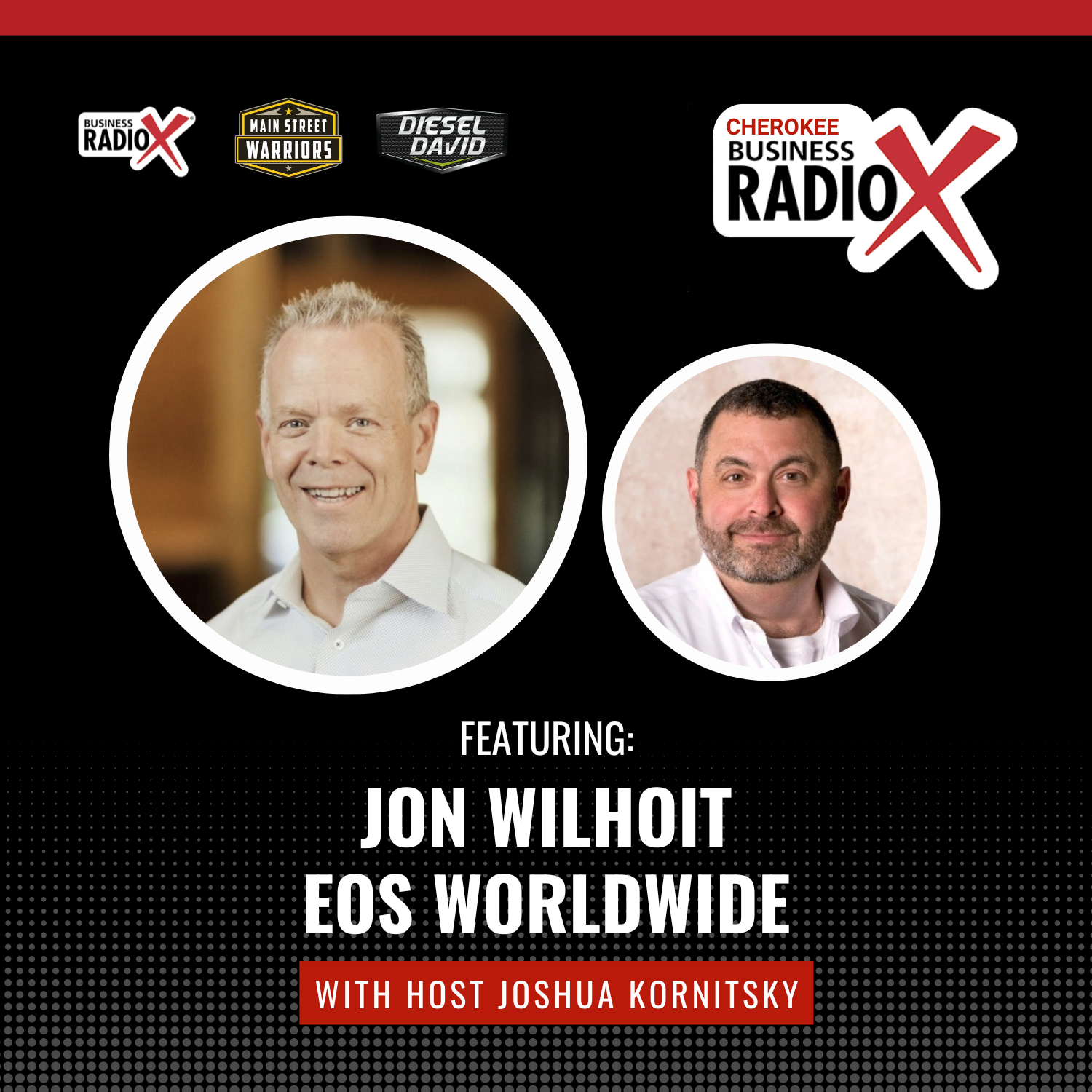
In this episode of Cherokee Business Radio, Joshua Kornitsky talks with Jon Wilhoit, a professional implementer of the Entrepreneurial Operating System (EOS). Jon shares his entrepreneurial journey and explains how EOS helps small to medium-sized businesses gain clarity, accountability, and healthy team dynamics. He discusses the EOS process, its focus on vision, traction, and culture, and shares success stories of companies that have scaled using EOS. Jon also outlines his collaborative, no-contract approach to client engagement and emphasizes that EOS can benefit a wide range of industries seeking growth and operational excellence.
 Jon Wilhoit is an Atlanta native who attended the University of Georgia and subsequently earned his MBA from the University of Texas.
His career spans more than 30 years and includes time with entrepreneurial software companies and over a decade operating his own executive search business. Jon’s company, Elite Sales Professionals, became a market-leading niche firm helping small software companies secure top-performing sales talent.
Today, Jon applies the experience he gleaned from his own business, his customers, and employers to guide growth-oriented businesses to utilize EOS to overcome the barriers to success they inevitably face.
Connect with Jon on LinkedIn.
Episode Highlights
- Jon’s background and entrepreneurial journey
- Overview of the Entrepreneurial Operating System (EOS)
- Key components of EOS: Vision, Traction, and Healthy
- Importance of cultural fit and core values in hiring
- The EOS implementation process and its structure
- Collaborative approach to client engagement and communication
- Common challenges faced by businesses and how EOS addresses them
- Tools and techniques for effective meetings and team dynamics
- Client success stories and measurable outcomes from EOS implementation
- Industry applicability of EOS and considerations for different business types
 This transcript is machine transcribed by Sonix.
TRANSCRIPT
Intro: Broadcasting live from the Business RadioX studios in Woodstock, Georgia. It’s time for Cherokee Business Radio. Now, here’s your host.
Joshua Kornitsky: Welcome back to Cherokee Business Radio. I’m your host, Joshua Kornitsky. And I’ve got a great guest here with me today. But before we get started, I just want to let you know that today’s episode is brought to you in part by our community partner program, the Business RadioX Main Street Warriors Defending Capitalism, promoting small business, and supporting our local community. For more information, go to Mainstreet Warriors and a special note of thanks to our title sponsor for the Cherokee chapter of Main Street Warriors Diesel David, Inc. go check them out at diesel. David. Dotcom. Well, my guest today is someone that I’ve known for a little while, and he’s really got quite a good story to tell. I’d like to introduce Jon Wilhoit, a professional implementer of the entrepreneurial operating system iOS. Welcome, Jon. How are you?
Jon Wilhoit: Good. Josh, thank you for having me.
Joshua Kornitsky: It’s a pleasure to have you here. So tell us a little bit about yourself so that we understand kind of how you arrived where you are.
Jon Wilhoit: Good, good. I am, believe it or not, a native of Atlanta. I’ve lived here all my life, with the exception of a couple of stints in Texas. I’m married with three adult children, but my family has been been filled with entrepreneurs for as long as I can remember. And my turn came in the early 2000, when I started and ran an executive search firm that was focused on, uh, high level software salespeople. Uh, we had a great run. Uh, it became something of a niche leader in our space, but, uh, chased the wrong shiny object. And I know a lot of business leaders can understand that. They get distracted, they lose focus. And next thing I know, I was closing the doors to the business. Really? But I wound up in the software world, and what was really funny was as I got to see these really entrepreneurial, growth oriented companies that were fast paced and surrounded by lots of really smart people. They had the same issues I did. They had cash flow issues. They had employee issues. They had those shiny objects coming at them all the time. And I realized, all right, it’s not how big your company is. We’re all facing the same challenges. So it was an eye opening thing. And then, of course, the entrepreneurial bug bit me again. And I learned about EOS. And as I started diving into it, it’s kind of funny. I’m doing my homework thinking, where was this when I was running my own show? And it just looked like a great opportunity to to kind of flip the script a little bit to help companies and business owners become really great companies. Instead of where before I was helping companies develop great sales teams. So it just kind of expanded the scope a little bit. But, uh, what a wonderful, wonderful place to be. And, and I couldn’t be happier that I’m helping companies like this.
Joshua Kornitsky: Well, so flesh it out for us a little. What exactly is EOS? How does it help? Who do you help?
Jon Wilhoit: Yeah, yeah. So that’s a great question. Eos. Like you mentioned at the beginning, stands for Entrepreneurial Operating system. Think of it as an operating model for small to medium sized companies. And it really helps them get their arms around three things that we call vision traction and healthy. And you can think of those as vision meaning how do I get everybody aligned and on the same page with where we’re going and how we’re going to get there as a company? And then traction, meaning operating throughout the whole company with discipline and accountability. So everybody really knows what their job is and how to get it done. And then healthy because so many companies, they are really, uh, an accumulation oftentimes of people that were available in the right price when they were hired. But over time, they don’t necessarily fit the job anymore. So we help them make sure that they’re really developing open, honest, and healthy teams so that they’ve got the right people that are going to help them, you know, migrate into a more successful pace.
Joshua Kornitsky: So on on that healthy part, right. That sounds like something a lot of people ignore because to your point, usually in an entrepreneurial business, those were the the right people or the available people or the people that grew into their roles. How do you help them? What do you mean by healthy?
Jon Wilhoit: So healthy likes is open, honest, transparent. But most importantly, they have to fit the company culture and fit is not a broad generalization of of, you know, hey, do they like college football? This is defining what are the really core values of the company, and then making sure that every employee is exhibiting those core values on a consistent basis. So let me give you.
Joshua Kornitsky: A leadership team or.
Jon Wilhoit: Pardon me.
Joshua Kornitsky: I didn’t mean to step over you. I said starting at the leadership team.
Jon Wilhoit: Absolutely. Okay. Yes, it has to. It has to start there. Everything starts at the leadership team. And then, you know, as the leadership team goes, so goes the rest of the company. Right. Okay. So a good example of that, uh, iOS client here in Atlanta was an engineering firm that had plateaued at about 15 people. And that was very common in that industry. They make enough money as an architect or an engineering firm to support a partner to, but it’s not enough to really promote the next level of of engineers or architects into that role. So they hit what we call a ceiling. They implement iOS Us, and in four years they went from 15 people to 120.
Joshua Kornitsky: Wow.
Jon Wilhoit: And as I, you know, caught up with with the the exec that runs the show there, we were having lunch and I kind of cornered him. I said, okay, but what happened? What changed? What was so different? He said, well, it really changed things on a holistic level. It made us just a different company. We were more vibrant. We really knew where we were going and how we were going to get there, and we could leverage that. But the real impact came on the people side. And he said, when we started hiring to our culture, all of a sudden the people that were in the company that were creating friction or really weren’t getting their jobs done, those people, you know, we found another way for them to either be successful somewhere else or really to fit better into the company. Now they knew they had targets that they had to meet that were in that that that culture framework. So really, um, incredible, you know, story for them. And I, I pressed, man, I said, yeah, but you’re a smart guy. You and your partner, bright. You’re hard working. Was this really you or was this us? And his response was, no, no, this was iOS. Because without iOS, we’d be lucky to be about 30% of where we are today.
Joshua Kornitsky: Wow.
Jon Wilhoit: So tremendous success story. And again, he really, you know, gives iOS the credit for it.
Joshua Kornitsky: That’s fantastic. So how long does the process generally take?
Jon Wilhoit: So when we work with clients every client obviously is different. Sure. And we work with them in what our full day sessions. So I’m not a consultant. I’m not coming in to bring, you know, piles of advice and looking for other projects that I can kind of land and expand. You may have heard that in the.
Joshua Kornitsky: Sure. That’s well, that’s a consulting arrangement or relationship in most cases.
Jon Wilhoit: Yeah. Yeah. So this is a very structured process in which I am a teacher, facilitator and coach. And in these full day sessions I’m working with a leadership team to really draw out of them all of the elements of the EOS structure that they need to be ultimately successful. They’re the ones that are defining where the company is going. They’re the ones that are really surfacing what those core values are and validating those. They’re the ones that understand what the focus of the company is, what the ultimate targets are, and how we break those down. So it starts with the leadership team. It’s typically about five sessions or six sessions in the first year, and about five in the second after about two years. I’ve taught them most of what they need out of EOS. All of our tools and disciplines. Some companies will then what we call graduate where there’s a big celebration. Sure. Or they may say, hey, look, we really love the fact that you come back every quarter. You are a kind of outside perspective on things. You’re the one that really can help us and maybe even sometimes play referee when conversations get difficult and they do. And that’s healthy. When everybody’s focused on the same goal and there’s a disagreement, it simply means that two opinions are clashing. But the ultimate solution is going to be the right one. So as long as everybody’s focused on what’s right for the company, that’s okay. But it helps sometimes to have somebody there that’s not got a daily, you know, place in the mix so that you can can really help them through that. And there’s no residue left over for for the from the conversation.
Joshua Kornitsky: And it sounds like the only agenda that you have, if you’re acting as a coach and a facilitator, um, is, is to get them moving in the right direction. Not not if you’re inside of that organization, right. You’re going to have your own perception of how you think things ought to be versus your coming at a higher level. And it sounds like most of the time when you hear about something like this, you think, well, Jon must be in there. Just telling them what to do. Doesn’t sound like that here?
Jon Wilhoit: No, not at all.
Joshua Kornitsky: Dictate.
Jon Wilhoit: No, not not not at all. Uh, I defer to them quite often, but I also will call things out that I see when we’re in session together. Someone may be being, uh, conspicuously quiet. And a lot of times it’s because they’re there’s a thought in their brewing that needs to come out. So we say, look, you’ve got to be open and honest. Be open, listen to the the perspectives of your peers. Be honest. Say what has to be said, because if you leave the session with something unsaid that was important to the group, you’ve taken away from the value that you can bring to the company. So I don’t want to go in and dictate. I want to go in and like I said, facilitate, draw out of the the leadership team. Uh, you know what? What is the right direction? What are the right aspects of this that we want to to bring forward to the company overall? Because once we’ve got it established at the leadership team, now we’re going to press it down into the organization overall so that everybody has a clear vision of where the company is going. Everybody knows how the company is going to get there. Everybody understands what it means to operate with discipline and accountability and really get that traction within the organization. And then once you combine that with having the right people in the organization, it’s just incredibly powerful.
Joshua Kornitsky: Well, just even from this description, it makes sense to me that because that openness and honesty is a scary concept for a lot of people. But if you’ve taken the time to make sure you’ve got people that align to the organization, that makes sense, that that you’re going to have better, uh, grasps of the concepts and people buying in because you’ve made sure they line up to who you are as an organization. So understanding that openness and honesty means different things to different people. What are some of the misconceptions or the hesitations or the concerns that you encounter when when people are considering Working with you and with with iOS.
Jon Wilhoit: You know that I that transparency, while it’s often a concern, is usually not one that that stops the train.
Joshua Kornitsky: Okay.
Jon Wilhoit: Oftentimes the biggest one is is really the most ironic one. And it’s time. Sure. It’s funny you’ll talk to business owners or leadership teams and they love the material. They love the strategy behind iOS and the success that we’ve had and and how it simply helps companies work better. But they’re so busy. They’re fighting fires. They’re covered up with chaos. They have never really had the time to step out of an organization and look at it from a bigger perspective. We call it working on the business instead of working in the business. So they think they they think this is something that’s really cumbersome that they don’t have time for. But if you think about it, there are a lot of aspects of life that are like that, People, you know, wanting to have a family, someone wanting to redo their house, somebody that wants to maybe change jobs or take that once in a lifetime trip and they put it off until every circumstance is just right. You know, we don’t exactly have exactly the budget that we need. We don’t have this. We don’t have that. And when they finally pull the trigger on it, they realize, wow, I wish I hadn’t waited.
Joshua Kornitsky: Right.
Jon Wilhoit: So that’s what we find most frequently. I don’t have time. And then when we finally get busy and get them into the process, they realize I should have done this from the moment that you. You called me about it the first time. So it’s not a complete upending of how they do business. They still do business, but it’s a different approach from a higher level to make sure that the way that they’re doing some things are more streamlined, simplified, just really a more consistent way to do business helps them scale and actually operate it with less stress.
Joshua Kornitsky: So with your clients that have gone through this process or that you’re working through, what are some of the things that they say were the most impactful, that that made a difference to them? So that someone who’s listening to this can kind of understand at a high level what they might get out of going through this.
Jon Wilhoit: Yeah, that’s a great question, Josh. So it’s funny, in the very first meeting, we cover a handful of things that are are called leadership abilities that help what we we termed earlier breaking through the ceiling.
Joshua Kornitsky: Right.
Jon Wilhoit: And then we teach them a couple of foundational tools. And because each company is wrestling with different issues, there is a different tool for each one. And we teach more and more as we go along. But it’s interesting. I had a client recently who, after our first meeting, one of the things that I taught them was simply how to have an effective meeting. So many companies.
Joshua Kornitsky: Something that simple.
Jon Wilhoit: Yeah. They’ll get into a room. They’ll think that they’re going to solve a problem. Somebody the guy with the loudest voice will hijack the meeting wanting to talk about whatever the problem is that’s at the tip of their tongue. And instead of letting the group actually determine what the the priorities are among the issues that they want to resolve, they’ve allowed somebody to make that the priority. So I taught this client. All right, here’s the proper way to have a meeting, the proper way to go about issue resolution. And they called me at the end of the week and said, we just had the best leadership team meeting we’ve had in three years. So that was just one little nugget. I think the one that we hear about most frequently is on the people side. Uh, people issues are so profound in small companies because just a few wrong employees makes a far greater impact than when you’re a massive organization, like a fortune 500 company.
Joshua Kornitsky: So let me stop you when you say wrong employee. Help me understand what you mean by wrong employee.
Jon Wilhoit: Yeah, yeah. So that’s that’s, um, something that we call the people key component of a business is one of six in our model. And as you strengthen those, the issues in your organization get fleshed out. So on the people side, there’s really two elements to that. One is called right people and the other is right seats, the right people side. Those are the people that fit your company’s culture. They they reflect and exhibit those core values that we identify on a routine basis so that they just are a pleasure to work with. They fit that open and honest and transparent world. They just again map to the elements of your your core values. Right. Seats means you’ve got people that that get their job done well. And so you have to have both pieces. They have to exhibit your core values. They have to get your job done well. And we use a couple of different tools for that. The one for the right people is something called the the people Analyzer. And the one for the right seats is something that we call the accountability chart.
Joshua Kornitsky: Okay.
Jon Wilhoit: So it makes sure that you’ve got the right structure first because people come and go when you have the right structure and you’ve defined, okay, what are these functions that we need people to do and what do they need to deliver with excellence on a consistent basis? As you’ve got that in place now, you start to have a company that is structured the right way. That’s going to have the right people doing the right things, and they’re going to fit your company culture. So things are going to operate more smoothly. Team gets along better. They enjoy each other more. So it’s just a much, much more productive way to go about it. And so that that engineering company that I mentioned earlier, when I asked him what was the biggest impact for you, that was the first thing he went to. He said, when we started hiring to our core values. And we structured our company in a way that those functions really fit what we needed to have done, not what fit the people that we had hired. It resolved our people issues so rapidly that it set us on fire. We were a rocket ship headed out of the gate from there.
Joshua Kornitsky: Well, and thank you, because that really kind of sheds a light when you say wrong people, that can mean a lot of things. But in your case, you’re saying either they don’t line up to the values or they don’t understand their job. That’s much clearer and cleaner to understand. So thank you for for giving that context. Um, as I understand it from, from the way that you’ve presented it to me, you’re not a consultant, you’re a coach, you’re a facilitator, your teacher. Um, you you said that there’s a series of meetings this year, a series of meetings next year that you’re essentially working yourself out of a job. Right? So did they sign a multi year contract with you? How does it how do you engage with your clients so that that they understand anybody listening understands what that looks like?
Jon Wilhoit: Yeah. Great. Great question. And it’s interesting because coming from the, uh, the software world where contracts were just an everyday part of life, um, we don’t operate with a contract. There’s not even a letter of engagement like there is oftentimes with, uh, you know, consulting firms. This is done on a handshake. So I come to interested parties. We get together with their leadership team and the owner and walk through a free session that I’ll. I’ll give to them that we call the 90 minute meeting. And in that session, I lay out everything about the the EOS model, the tools and the process. And if they are interested in moving forward, we simply set up the first session, first full day session, which is called Focus Day And I charge a daily fee. It’s fully guaranteed. If we get to the end of that session and they felt like they’ve gotten value out of the session, they hand me a check. And if for some reason they felt like the session was not valuable, then they don’t hand me a check.
Joshua Kornitsky: And that’s quite a guarantee.
Jon Wilhoit: It is. And we just feel like, uh, it keeps my interest aligned with theirs and ensures that, um, they have comfort that. Hey, look, we’re not going to waste a whole day of our time. They’ve really got to have something to offer. And and again, we’re in about 30,000 companies around the country that, uh, you know, the, the percentage of of ones that say, yeah, this isn’t for us in that first session is minuscule.
Joshua Kornitsky: I can I mean.
Jon Wilhoit: I don’t out of, out of the hundreds of EOS implementers that that I know I don’t know one that that’s happened to.
Joshua Kornitsky: Must be a lot of value that you’re delivering. So who do you work with? Are there specific, you know, do you work with one industry versus another, or how does that work from from anyone that wants to reach out to you or their folks that you’re a better fit for?
Jon Wilhoit: Yeah. Great. Great question Josh. There are always going to be prospective clients who really want to know you’ve got industry expertise in their world.
Joshua Kornitsky: Sure.
Jon Wilhoit: And I I’m not going to try to talk them out of that. If that gives them a comfort level I’ll find an EOS implementer that that fits that for them. But the reality is EOS itself was designed for really any type of business. It much more is determined by does the leadership team and the owner have the right profile? Are they growth oriented? Are they open, honest and transparent? Do they fear the status quo more than they fear, the pain of change that they would go through in a process like this. Are they really hungry? And if they are, EOS will help them get whatever it is they want out of their business. There are a couple of industries that sometimes really don’t tee up great for EOS, and they are industries that are highly partner oriented. So think old school law firms, old school consultancies, old school accounting firms where the partners go out, they find clients, that client belongs to them. They provide a service to that client that is done the way that they want. So they typically aren’t as open to a, a management or an operating model coming down from someone else telling them how to do things. They become more resistant.
Joshua Kornitsky: So, sure, they know best.
Jon Wilhoit: Yeah, but but what’s funny is one of my clients is a law firm, right? But they are a large personal injury firm and they tend to operate a lot more like your typical, you know, corporate setup where there’s a an executive team that is driving everything operationally other than exactly what the attorneys do.
Joshua Kornitsky: That makes sense. So it sounds like really anybody that’s interested should reach out because there’s you’re you’re not ruling anybody out that you may be able to help.
Jon Wilhoit: Yeah, absolutely. I love working with so many businesses. And this is funny. I’ve enjoyed, um, this same thing very early in my career. When I first got out of school, I was actually a commercial insurance broker.
Joshua Kornitsky: Okay.
Jon Wilhoit: And I loved the fact that I got to go into new businesses all the time and learn what they did, whether they were a manufacturer, a printer, a services company of some kind, retail. I had a company up in North Georgia that was supposed to be a hardware store, but the reality was they had a lumber yard. They had a, you know, multi-unit retail deal in this small town. So that was just fun to get to know these clients and understand what they did and all the intricacies of their business. And that’s what I get to do now as well.
Joshua Kornitsky: It certainly seems like you enjoy what you’re doing, Jon. So what’s the best way for folks to reach you? And we will share all your links and all of that on our site when we go live.
Jon Wilhoit: Thank you. Thank you for that. Yeah. So either email, which is Jon spelled j o n no h j o n dot willhoit w I l h o I t at EOS worldwide comm. Or they can text me at (400) 443-1877 one.
Joshua Kornitsky: Okay. And we’ll have all that information again. Um, my guest today here has been Jon Willhoit, professional implementer, coach, teacher and facilitator of the entrepreneurial operating system. Jon, I can’t thank you enough for your time today. I learned a lot and I really appreciate you sharing.
Jon Wilhoit: Thank you. Josh, this was great. Really had a good time.
Joshua Kornitsky: Thank you so much. So once again, I just want to remind everybody that today’s episode is brought to you in part by the Community Partner Program, the Business RadioX Main Street Warriors Defending Capitalism, promoting small business, and supporting our local community. For more information, please go to Main Street warriors.com. And a special note of thanks to our title sponsor for the Cherokee chapter of Main Street Warriors Diesel David, Inc. please go check them out at Diesel David. If you’re interested in becoming a main Street Warrior or a title sponsor, please reach out to me. I’m your host Joshua Kornitsky here on Cherokee Business Radio. Thank you so much for being here. We’ll see you next time.














