
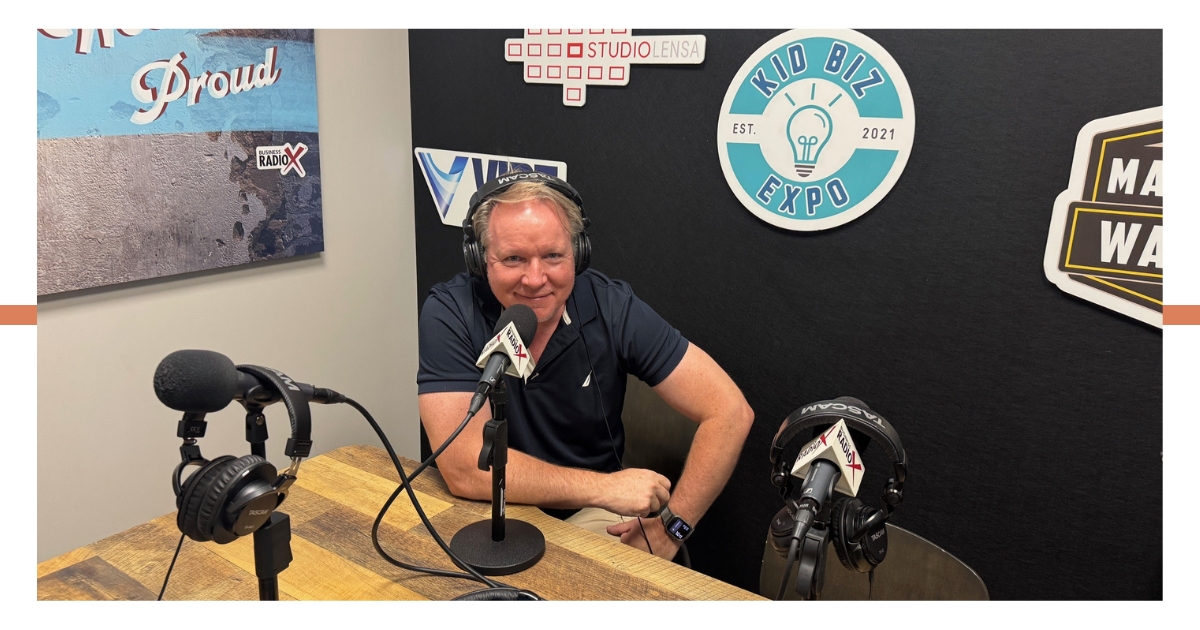
 Christopher Dawson is an award-winning producer and empowerment journalist who spent two decades at CNN, where he led groundbreaking initiatives like Impact Your World to connect audiences with real-world change.
He brings heart, depth, and clarity to powerful human-driven storytelling across broadcast, digital, and social platforms.
Now, through his independent series Slice of Good, he continues to highlight real-life moments of kindness and resilience that inspire hope and action. 
 This transcript is machine transcribed by Sonix.
TRANSCRIPT
Intro: Broadcasting live from the Business RadioX studios in Woodstock, Georgia. This is fearless formula with Sharon Cline.
Sharon Cline: Welcome to Fearless Formula on Business RadioX, where we talk about the ups and downs of the business world and offer words of wisdom for business success. I’m your host, Sharon Cline, who has not done as many shows lately, but if I have to come back to the studio, this is a really good reason to come back. This gentleman is an award winning producer and empowerment journalist who spent two decades at CNN, where he led groundbreaking initiatives like Impact Your World to connect audiences with real world change. He’s also a great gentleman, by the way. He’s just a really all around wonderful person to chat with. Oh, and so handsome, by the way. Had to say He brings heart, depth and clarity to powerful, human driven storytelling across broadcast, digital and social platforms. Now, through his independent series Slice of Good, which is great. He continues to highlight real life moments of kindness and resilience that inspire hope and action. Welcome to the studio, Christopher Dawson.
Christopher Dawson: Thank you. Thank you so much. And I should add that I did pay Sharon for the good looks comments.
Sharon Cline: I would collect after the show.
Christopher Dawson: Money well spent. Thanks for having.
Sharon Cline: Me. Of course. Thank you for coming. I’m excited to talk to you about several different things, one of one of which is your new initiative, which is just such good content to put out into the world. But before we get to that, I’m really excited to also talk about your history. You have your award winning. It isn’t just a little initiative that you decided to do here, little sort of background that doesn’t have some meat behind it. So can you tell me a little bit about how what you did at CNN, how you got to CNN and where you are now?
Christopher Dawson: Sure. Uh, CNN was a great opportunity for me to be able to. I relocated back here from Los Angeles, and I. Cnn was such a great opportunity for me to be able to start reaching a larger audience, because I was a producer for a couple of different production houses. And one thing I discovered at CNN, and I was the the lead for a new business resource group there called NextGen, where we were trying to get the younger employees having a larger voice to try to steer where the company was going was I was really wanting to try to do positive news stories. There’s just so much negativity. There’s the idea if it bleeds, it leads. And that we’re all about, um, talking about our failures as a species. You know, here’s how humanity is is doing wrong. Here’s the murders, here’s the war, here’s the business collapse of blackmailing and and everything. And we don’t celebrate the good. And we are an amazing, an amazing group of people. And we need to inspire that in each other. And if I thought often about my parents and other people’s parents who are watching way too much cable news, and I’ll say that for a person working in cable news that people watch it way too much. Right. And they have it on 24 over seven, and they’re just hearing about what’s wrong here and what’s wrong there. And and they’re never given a solution. So here’s a bad thing. Here’s a bad thing. And by the way, here’s another bad thing coming up next. More bad things. And what does that do to a person’s psyche. What does it do to their heart. And what does it do with their outlook about us? So after the Iraq war and all the work that I did on that, I got the opportunity to be the lead producer on a new initiative called Impact Your World, which I really ran with because it gave us the opportunity to give our viewers a chance to write the next chapter of a story in a way.
Christopher Dawson: Um, especially around natural disasters, when a hurricane would hit, a would come ashore in Florida or a small town in Iowa, would be hit by a tornado and wiped out. We would be in touch with the charities on the ground. We would verify and vet them to make sure that there were good organizations making a difference actually there. And we would connect our audiences with ways that they could help, ways that they could even go and volunteer how you could donate. And so the idea was that, yes, bad things happen, horrible things outside of our control things. But here’s a way that you can help. Write the next chapter, tell the next tale. Make this better. So instead of just being helpless, we gave our our audience a way to feel like they they could do something about it. Right? And then that gave us an opportunity to shine a spotlight on these amazing charities, these amazing volunteers, people who are there on the ground making a difference. You know, we we can’t always act in this world, but we always can react. And the way when horrible things happen, the way people respond is, is very inspiring. And I just wanted to be a part of telling that story more. So I think the heart of my CNN career was what I call being an empowerment journalist, which is to empower and inspire our audiences to either make a difference or just feel better about what we can do, whether they do something with it or not. Right.
Sharon Cline: Have you always had a heart for helping? In other words, why do you think it was that instead of the if it bleeds, it leads kind of drive? You were looking for balance there?
Christopher Dawson: Well, I’ll tell you two little stories on that. First, when I was growing up and we would go to the, um, to the blockbuster or the or the movie video store, and we’d get the. There was a legendary VHS tape for you to check out called Faces of Death, right?
Sharon Cline: Oh my God.
Christopher Dawson: I don’t know if you remember that one.
Sharon Cline: No I don’t.
Christopher Dawson: Okay, so it was because they had some different documentaries and stuff. And this is one where people actually died on camera. And it was footage taken during Vietnam and other places where the cameramen themselves sometimes perished. And it wasn’t so much it wasn’t so much gruesome. It wasn’t so much like a lot of blood and guts as it was that you. You got to see death. And as a, you know, 14, 15 year old teenager, myself and all my friends, we were wanting to see things that we were not supposed to see. And that was a falling thing. And my point on it was that in watching it, it was it wasn’t really that great. We watched it and we were like, oh, that’s kind of horrible. Um, been there, done that, move on to the next thing. But then when I started at CNN, one of my first big jobs was working on the Battle of Fallujah and the Iraq War. And I was a media coordinator, I think, at the time doing a lot of documenting. And I had to go through all of the footage to try to find the shots that were sanitary enough for air, you know, because here’s a great shot of a tank coming around this corner. But if you look closely, you can see that there’s a person kind of underneath the tank over here at this angle in the rubble.
Christopher Dawson: We maybe shouldn’t show that. So here I celebrate it as a, as a, as a kid of doing something I wasn’t supposed to. Watching the faces of death. And now at my job. I’ve got to see that. And that hit me pretty hard. And and CNN. I give them credit. They had a lot of therapy sessions and counseling available for all of the staff because covering war, which is when we do treat each other the absolute worst, um, covering that took a toll on everybody. And it was from that experience that made me really want to be like, has got to be more, you know, I, I’m only getting this horribleness. And as a job, I was getting a 24 over seven. What’s the good we’re doing? You know. And um, and when the Impact Your World initiative took off, people on the international desk in our field, producers and our talent around the world all wanted to really be a part of it because they were desperate to tell a good story. They’ve had to cover such horribleness that there was just a hunger and a need to. Can’t I shine a light on something, or put a focus on something that we could maybe help to show that there’s some good happening out of all of this horribleness, you know?
Sharon Cline: So do you think there is too much of a focus on that, the darker side and not enough of the balance? I know that news, by definition, is something out of the ordinary, right? And as far as like news media, if you work at CNN, you’ve got 100% of your world is what’s out of the ordinary. Right? But that really only represents about 3% of what’s happening in the world. There’s a lot of good that happens that isn’t considered out of the ordinary or newsworthy. Do you think that there’s a way that there can be more of a balance? Because all these years that I’ve been following news, I never really have been able to find something that kind of truly balances out the negative.
Christopher Dawson: Well, the challenge is and and I’ve seen the reports and the studies and, and all the different work with different audience focus groups and the like is that when you put on good news on a cable news program, viewership goes down and people change the channel and they can turn it off because it’s not as important, it’s not as dire, it’s not generating outrage. It’s not pulling on those feelings. The positive on all of this is on social media. People are more likely to share positive stories or pictures of cute kittens than than they are to do with negative, horrible things. Um, so I think that with the rise of social media being our primary platform for engaging one another, that there’s an opportunity to try to create a little bit more of a balance there. But overall, we heavily push and discuss and sadly celebrate and want to discuss the negative, the wrong and how wrong and how horrible we are. Then we are wanting to celebrate the the good in all aspects. I mean, here’s some racial strife, but we’re not talking about the rise in, in in marriages between people of different races or faiths or cultures. Right. We we look at the deaths, but we don’t look at the births, as it were, you know. So I push for more. Good. But the good isn’t the crisis of, of of something that you need to pay attention to because of disaster coming.
Sharon Cline: You know, I haven’t heard somebody talk about social media in a positive way like that. I’m like, kind of learning something. No, but I love it because it’s true. I mean, if I were to go on social media, let’s say I’m on TikTok and all of it’s just the negative, not negative, but like important things that are happening around the world that are often devastating and have some kind of impact on my safety or well-being, or I need to know, or if it was constantly that I wouldn’t want to look at it all the time. I mean, it’s it’s nice to know there are people that think that cute kitten videos are worthy. And I look.
Christopher Dawson: At the popular, extremely popular. I mean, you got to think that that first of all, am I in danger? If there’s a story about, hey, you’re in danger, you’re going to pay attention. Um, there’s a couple cable channels out there that I won’t name, but their focus is on. You should be outraged by this. And they’re about making you angry and feel like that. You’ve got to take action. And political campaigns have demonstrated that it’s not so much vote for me because you like me and I inspire you, and I make you want to. I hope you believe in a better world. It’s. We must stop the other side. They’re bad. Let’s talk about how horrible they are. And you need to take action to stop the bad. And it’s been proven to be successful. So I just think there’s space for both. And if I’m going to be putting something out there, I’d like to share the good.
Sharon Cline: What did it feel like when you were working on Impact your World and encouraging people to think beyond themselves in that moment and look at ways to help, which is almost relieving, you know, in a way, what did it feel like to be part of that side of CNN when so much of it is focused on the other part?
Christopher Dawson: You know, it was very inspiring to myself. Um, it’s it’s in a way, it’s kind of the, the, the, my own personal complaint is because I got to travel around to a lot of different disasters and work with a lot of different charities and get footage of so many different organizations making a difference because in addition to disaster relief, Impact Your World was a sponsored series in which we would go highlight different organizations. So I would go to, for instance, to Chicago, to an organization called Second Harvest, where they’re collecting extra food and food, starting to go bad at grocery stores, and extra food prepared on the farms to make it available for people around the community that that really needed the food. You know, projects like that and all the people that I met that were doing so much good work for others, not for themselves. Um, I was inspired. I also felt a bit lazy and that I should be doing better because all these people are doing such good work and they are making such a difference, and they’re dedicating their lives to it. And it made me believe that we could be like that. But like I said, I did feel a little lazy that I should. Maybe I put a microphone, a megaphone in front of them to make them feel good and get their word out. But they’re the one doing the dance and it’s beautiful.
Sharon Cline: I’m lazy too, though. It’s difficult to. I mean, there’s always someone that’s doing a little bit more, a little bit more impact. I do what I can, but knowing that you actually made media and made it accessible for more people to help actually is doing something very major for a for a worldwide news network. That’s that’s doing a lot.
Christopher Dawson: It’s worth mentioning that it started with the audience, the idea for Impact Your World. Um, you know, it really became an idea once we got some letters at our we used to have a department that was in relations with the audience. Audience communications and engagement. And people could call a number to if they had an issue with CNN or the like, and they started receiving checks and requests on, hey, how can I help? And it was this one story. There was a boy in Iraq named Yousef, who unfortunately got doused in gasoline and lit on fire and had horrible burns over his body. And one of our reporters there, Arwa Damon, went and did a story on him and his family. And what happened was, is that boy was thought to be his family was thought to be supportive of the U.S. troops. And so they punished the child. And our viewers were like, how can we help? How can we help them get plastic surgery? How can we help them recover? How can we get his family out of there? And that really showed us that people want to make a difference. You know, they don’t want to be passive anymore. And that’s I think that’s wonderful.
Sharon Cline: Do you know what happened to this boy?
Christopher Dawson: Yes. Uh, and it’s still ongoing. A lifetime, unfortunately, of surgeries and the like. But he he came to the U.S., I think it was to a plastic surgeon in California and had numerous, uh, surgeries done. And it was all through the support of our viewers that has helped make all that happen.
Sharon Cline: My goodness, what a heartwarming story.
Christopher Dawson: And that stuff’s going on today still as well. I mean, it’s not also natural disasters. Um, the there was a campaign just last year that, uh, impact your world was, was leading for, uh, Ukraine and helping people that were now in, in camps, you know, uh, refugee camps because of the, the war in Ukraine. And that has raised, you know, over, I think, over 5 million, $8 million or so. And this was just in 2024. So the audience is still very engaged. We are people that want to help and we give. Most people don’t understand how much we give to help around the world. And, uh, and that’s a story that needs to be told more.
Sharon Cline: So you’re no longer with CNN, but before you left. Well, okay, how about I ask this? You know, these awful floodings that have happened right in Texas would impact your world. Would that have been something that you would have been involved with as well in trying to find help?
Christopher Dawson: Yes. First of all, I think there is a campaign right now on CNN with Impact Your World on ways to help. So and that’s a great resource. One thing for anyone listening. Cnn. We have a vetting and verification system where we make sure the charities are top notch and that the money is properly being spent. So there is no concern about the money going in the wrong way. If you’re ever going to donate to someone for a disaster, I think that’s the best way to go. Um, but not only is there that campaign, but as I started doing something on my own, the slice of good the story I’m working on for this week deals with those floods. Right.
Sharon Cline: Well my goodness.
Christopher Dawson: Yeah. So the story I’m working on right now is about a grandma who lives a couple of miles from the Guadalupe River, and she was down there with everyone else, trying to look for survivors and debris and anything of importance. And as they’re picking up trash. A lot of those are personal effects. Here’s someone’s shirt or here’s some photos from someone’s house. And they said, well, let’s start putting them in different trash bags, what’s clearly debris and what is maybe something worthwhile. And somehow she got to be the point person on things that are worthwhile. And she started a Facebook page called found on the Guadalupe River. And it has over 40,000 people, I think now are members of it. And they are taking items, cleaning them and trying to reunite them with the owners, which sometimes this is the things that people are getting back after losing loved ones. So it’s it’s another example of how here’s a horrible, horrible thing that happened. And yet here are people who are doing good in the midst of it.
Sharon Cline: How beautiful. Yeah. And that’s your slice of good. Your next slice of good.
Christopher Dawson: Yes.
Sharon Cline: Let’s talk about slice of good. Tell me about the impetus for that. Uh, what inspired you and how it’s come to where it is now.
Christopher Dawson: So I got to, uh, had a lot of opportunity to step away from CNN and think about what I want as my next chapter. And the downside of that is I wasn’t able to tell amazing good stories. And I’ve got to be honest, I feed on that myself. I want the good. Right? Um, because it helps keep me going and helps keep me positive in this lifetime. And I also, just towards the end of my time with CNN, really started trying to lead the charge for my department into social media and to do vertical videos and to make them all underneath a minute so they’d fit for the Instagram Reels and the YouTube short algorithms. And there’s a whole different design there as far as what available space you have for where the comments go and where you can put, uh, branding icons and fonts and where the captions go. So it’s, it’s a, it’s it’s own little beast as far as, uh, on a producing side. And so I really started doing that right before I left CNN. And I was wanting to get back into it.
Christopher Dawson: And also, I was missing the good news. So I launched a social media series, which I have available on TikTok and Instagram and YouTube and Facebook, which is called Slice of Good. And it’s one minute stories, always under a minute of something good going on in the world, which you should be inspired by. You should, uh, feel like, hey, here’s something good going on. You know that in an in, I call it slice of good. Because if you look at the pie of of everything, you’re going to be consuming on your feed, you know, and you’re going to be seeing some ridiculousness, you’re going to see something funny and you’re going to see something outrageous, and you’re going to see something that outrages and you’re going to, you know, see something for the third or fourth time that you quickly swipe past. But I think amongst all of that, you should have something pop up that is going to make you smile and maybe make you feel like, you know what? I should get out and do something.
Sharon Cline: I like that you’re highlighting things that oftentimes I just miss, you know, a good story that I would have been inspired by, but somehow just didn’t get into my feed. Or I saw maybe just a little second of it and just passed it right by. But you’re taking a moment to really shine a light on it.
Christopher Dawson: One thing that I hope happens is if more people subscribe and watch this type of content, that that in itself, you know, because there’s the hashtags and all everything else of like good news or uplifting news or uplifting stories and the like is the more of that that you consume your algorithm, just like how the algorithms have been turning to the horribleness for so many of us, where you see one bad thing, but you watch it too long and now you’re getting fed more and more of it. Well, let’s just feed you some more. Good. Let’s, let’s let’s give you some positivity. You know, so if people can, um, subscribe to and follow and like and share content like mine, and there’s other folks out there doing this, and then your feed can just be flooded with, with goodness, you know, and you can like, we can spend more time talking about how great we are.
Sharon Cline: Well, I mean, it’s interesting that you talk about production too, because I’m like, do you have a YouTube channel? But like, do you have a YouTube channel because they are horizontal videos as opposed to the vertical? So how do you do? You do both. Are you staying with the vertical. Because something I think about as well, because I had initially for my sort of side of my social media project, I had I had an intro that was a vertical version and a horizontal version, and it’s such a like you said, it’s a beast in itself. So production wise, how did you decide? Okay, I’m just going to go ahead and stick with vertical or or do you? Or did you?
Christopher Dawson: Well, right now I am doing 100%, uh, nine by 16 vertical and I am doing it. So I do have a YouTube channel. Uh, slice of good that the only thing on it are shorts all under a minute. So that’s the only thing that I’m building right now, I, I might stretch into adding a podcast version and then adding also maybe a longer, uh, nine by 16 or I mean 16 by nine horizontal, you know, landscape version. I might eventually start getting into that.
Sharon Cline: Is it necessary though? Like if someone’s out there just doing their own TikTok channel, do they even need to have something that’s like that in terms of like what’s shown on TV? Let’s say Good Morning America wants to show a slice of good. They work around the fact that they don’t have that horizontal look.
Christopher Dawson: Right. Yeah, that’s it’s not needed. I’m old school, so I’m used to like wanting to hold my camera or Santo, but the youngins have told me that, you know, you got Ahold of vertical.
Sharon Cline: The youngins.
Christopher Dawson: Right? So it’s a I would say that the challenge really is our attention span. You basically have three seconds at most before most people swipe away on whatever your content is. And, um, I produce this with a lot of quality. It takes me time because I have a certain standard just from my profession of wanting to make sure that I have everything right, so I do my captions myself. I’m not going to rely on TikTok to generate the captions because it’s going to misspell words, and I’m not okay with that. Right? As an example, and I’m so I’m going for quality over quantity. So I’m doing about once a week is.
Sharon Cline: What.
Christopher Dawson: Is my current pace. But the uh there are people out there generating so much more content in this space. And some of it is really not that engaging, but because they do it so much, they’re able to get the the algorithm and the attention. And so I see it like I’m an artist and I’m and I’m putting out some good out there. I haven’t focused too hard on on reach and what I need to do to maximize the reach, because it’s an interesting it’s an interesting world that we’re entering into with social media because it’s it’s I’m growing this organically currently. But you could also buy viewers or buy subscribers or make deals where you’re taking over an account that already has, you know, 150,000 followers. And then that’s just now your base. And that fools and tricks the algorithms to then give you greater play and can really give you explosive growth. I just right now I’m focused on telling good stories. If I do it, I’m four weeks in, and if I do it for a couple more weeks, I feel like this is something I really want to be my thing. Then I’ll probably look into ways that I can maximize it and really try to make it grow and make it more successful. But right now, it’s a passion project. You know, I just want to get some good out there.
Sharon Cline: Do you see yourself wanting to really go all in?
Christopher Dawson: I don’t. There’s some other projects that I’d love to do. You know, I’m. I just finished two decades at CNN, which has been an amazing ride. I got to work with some of the top people in the industry, and I got to tell some really good stories. And now I’m thinking about what is it that I might want to do next? And it might be with news. It might be with video production. It might be writing poetry on the beach.
Sharon Cline: It’s nice to have options. Options? Well, I don’t know. I think I like the idea of knowing that you really do care so much about putting something good out there. I mean, and the standard you have, because you’re talking about volume. There’s so much junk that gets put out there as well.
Christopher Dawson: And it’s going to get even worse.
Sharon Cline: Why is this?
Christopher Dawson: Uh, with the ease of production that is underway with AI. Uh, people are able to mass produce things and then slightly change it and mass produce it even further. So to find real, human, authentic voices and productions is going to get to be more of a needle in the haystack. And I’m not saying not using AI as a tool. It’s a very helpful tool. And I and I encourage people to explore it. But you have things that are being 100% generated by AI. So it’d be like if I was an artist and I was doing my own watercolors. Um, you know, it’d be hard for me to find an audience for my work when in the time it would take for me to produce one watercolor portrait. You know, I can generate millions. And all of those are clogging the same pipes of the internet and and the same reach of the audience. So for me to find authentic, positive, well-produced work is going to get harder and harder and in a way discouraged, I think, because it takes so much time when you could just do the cheat and have something do it for you.
Sharon Cline: Okay, what’s the negative of having that kind of content that you’re consuming all the time I generated. In other words, where’s the market for the real? Is there a market for the real? The real deal?
Christopher Dawson: And I sound like I’m a Debbie Downer. And that’s exactly the opposite of what I want to be.
Sharon Cline: So, no. How about we’ll just say you’re realistic? I’m just saying it is realistic.
Christopher Dawson: Yeah. You’re saying I produced content? You know, they can come up with amazing songs and amazing art and amazing productions. And it is a it is a remarkable tool. So I don’t mean to suggest that it’s not quality. It’s just the quantity is so heavy. And if I’m producing something or if you’re producing something yourself using AI, that’s fine. If you start your own company and that company is generating 10,000 AI pieces of content a day and just pushing it out there to see what sticks. Then that’s really going to make it difficult for us to find our way through the noise, to find something that we really can connect with. You know.
Sharon Cline: What do you think I. Why’s there They’re connecting with now. That makes it so advantageous for anyone to put out AI content. What are they like? What is what is what’s making it hard for for real content to come out there? If if they’re able to make money off of very little effort, what is it that, that we’re consuming?
Christopher Dawson: Okay.
Sharon Cline: So in this.
Christopher Dawson: Space we’re getting a little off off subject.
Sharon Cline: Wait, is this okay? Is it okay to talk?
Speaker3: No no, no. Okay.
Christopher Dawson: I just I just don’t want to spend all our time on this craziness. But here’s an interesting side tangent on that whole thing.
Sharon Cline: Right. I’m ready for a side.
Christopher Dawson: Tangent is that it’s all about the algorithms. And how can we take advantage of the algorithms. So we already saw the development of well, the longer someone watches, the more that algorithm is going to send this to more people. And so if you wanted to get views, then how can you tease someone to watch longer? So you saw a lot of creators, uh, creating content where, okay, something really bad is about to happen or she doesn’t know he’s hiding behind here and she’s about to walk out and find out or something like that. But then instead of it just having its natural conclusion of a silly little video, they stretch it forever and ever because, you know, so now it’s not content that’s enjoyable, it’s just content specifically designed to beat the algorithm, to get greater reach. And and that’s the downside is that now content isn’t being generated because it’s it’s great. It’s being generated for the sole purpose of how can we get this account more views, more followers, so that this account can be sold? I don’t know if that example works.
Speaker3: Yeah, but.
Sharon Cline: Are they hacking our brains then? Do you know what I mean? Hacking our attention.
Christopher Dawson: I think to a degree that, uh, we, we wise up really quick to it and we go like, okay, this is a time waster and stuff. But like, the latest phenomenon I’m seeing is disaster videos, right? Where here’s a huge wave and it’s taking out all these cars on the street. All of it’s AI generated, right? But you don’t know that until you’ve watched it for a little bit. And and then once you see 1 or 2 of those, then the algorithm is going to flood your thing with that. Well, someone’s out there generating this stuff, making it appear that these disasters are happening and our poor grandmothers are going to see it and.
Speaker3: Go like, what happened to Honolulu, you know, or what have you.
Christopher Dawson: And it’s, you know, because it’s like it’s footage of a horrible plane crash. And if you look close enough, then you can see that maybe someone running away has an extra finger on their hand because it’s AI generated. But you’ve got to know that stuff. And so the blur between what’s real and what’s not real is, is getting more and more difficult.
Sharon Cline: And do you think there should be regulation around it?
Christopher Dawson: So here’s the fascinating thing. Um, we had a period of time where everything was based on someone’s word, right? We didn’t have cameras everywhere. Right? So, hey, this house is haunted. And there’s a ghost here. Or. Or the UFO show up over here and stuff. And then we hit a period where? Now everyone has a camera on their phone, and you think, okay, well, now we’re finally going to see all this amazing footage of all those these things that people say are happening. And we didn’t. Right. There was there was a moment of truth where. And now we’re going back away from it. Because with a eye and with the advancement of of editing tools, um, now you’re starting to see all this crazy stuff because it’s all generated and with face swapping and everything else, it’s hard to know what is real again. So it’s going to get back to a place of trust. I think, you know.
Sharon Cline: Uh, it gives me anxiety because, excuse me, in the voiceover world, I is everywhere now. And I just saw a post yesterday about the fact that they’re allowed to use our voice in a certain way. The regulations aren’t as strong, and it really does bring down opportunities, really lowers opportunities for people to use their own natural voice. And it’s there’s something about a real voice that you really can’t replicate, like like a breath sound or a little laugh or whatever. I’m just saying it’s like there’s something that’s lost and it’s almost like, I sort of wish we would get to that saturation point where people are sick of it. Let’s get there real quick so that the pendulum can swing back over and you really feel like someone’s real natural voice is like a it’s like a boutique thing. Like I only use my own real voice, you know? Nothing. Nothing generated. It’s really me reading this, so I kind of can’t wait for it all to kind of reach that peak. And then we can all go back to what’s somewhat normal, because it it’s, um, it’s not it’s it’s being manipulated in some way, but it’s I can’t it’s like I can’t get myself grounded in what I’m looking at. Like you said, the Golden Gate Bridge is, like, coming down, and you don’t know if it’s real or not. I mean, it’s it’s upsetting, but then it’s like I’m being messed with. I don’t know.
Christopher Dawson: We are all being messed with the. Have you ever heard of the uncanny valley?
Sharon Cline: I have heard of that. But why do I know that?
Christopher Dawson: It’s basically the term for when you’re. And often this is done with, um, with the visual of, of trying to create someone artificially on how they physically look. And it’s, it’s a point where it looks so good that you can tell it’s not real.
Sharon Cline: Oh, because it’s so good.
Christopher Dawson: Because it’s so good. And it’s like, it’s this, uh, at near peak perfection. Boom. All of a sudden it’s like it’s clear as day that that’s not a real thing. Um, there’s a similar thing I think, that we’re seeing where. And it’s funny because now you’re seeing the adjustment where if something’s too polished and too perfect, then it’s people are going to like, ah, is this real? So now you have the AI voices that are doing voiceovers, uh, making a couple, uh, verbal flubs and catching their breath or coughing in the middle of it and things like this, all to make it sound like, you know, make little mistakes. So it’s not as polished. So it’s it’s viable. You know, I think that the secret is for us just to have human face to face conversations more.
Sharon Cline: I think the premium is going to be when I can say, I was right here in front of Christopher Dawson and saw him and heard him say this, and then imagine that’s you. And like an auditorium. Well, that is proof that it’s real, as opposed to a video of you saying something.
Christopher Dawson: All right, so I’m gonna pull the curtain back for everybody. Uh, Sharon actually is not here, and I’ve been talking to a computer the entire time, and this is one of the best eyes ever.
Speaker3: And, uh.
Christopher Dawson: And I’m sorry, I just can’t. I can’t do this anymore.
Sharon Cline: Maybe someday I’ll be like this hologram. I’ll be able to do interviews all over the world because it’ll just be like a version of me somehow that’s kind of terrifying in itself. It’ll probably be a really polished version, though I’d probably actually be pretty critical of it, because the thing is this I know I’m not a perfect interviewer. Perfect and perfect anything, but I’m never 100% satisfied with anything that I that I do. So like the video that I just put out recently for History Highway, where I went up to this rock garden in Calhoun, Georgia.
Christopher Dawson: I still I love that one. That was.
Speaker3: So good.
Sharon Cline: Oh. Thank you. I’m going to slip you that 20 that I promised before the show, but I think I could. I see things that I think I could have done this better. That better. I, I’m trying to decide what’s good enough. And I think as a content creator now, do you find I mean, I’m finding that for myself. Do you find that for yourself that you think I could always do a little bit better, a little bit stronger, a little bit different?
Christopher Dawson: See, that’s for me. That’s the challenge that I was speaking of, is I’m doing this slice of good as a weekly one minute feel good positive series. Um, I’m doing that on my own just as a passion project, and I’m going to continue doing it. But I’m trying to shave how long it takes. The the problem is, you know, like a transition between scenes, I can spin and knock that out in one minute, or I can spend four hours playing around with it and making sure the audio is just right. And if you enjoy what you’re doing as far as editing and producing, then you’re going to want to play with it until you feel it’s just right, because it’s you’re creating your art. Um, but I will push back a little bit when it comes to being art. Art can never be perfect. You know, that’s wow.
Sharon Cline: What a good way to put it. Art could never be perfect. I never really thought about what I’m doing as art, but I like the notion of it doesn’t have to be. I don’t even know whose idea of perfection I’m trying to reach. I guess I just always think, oh, I could have said that better. I could have filmed it differently. I don’t know. It’s good enough.
Christopher Dawson: Good enough. And everyone always perceives things on their own. The way they own. They see, they they intake and they and they’re taking their own perspective and their own life experiences as a judgment onto that. And those are the lenses that that they’re going to perceive things. So you might think it’s one thing and, and feel and and it, you know, creates a certain feeling or reaction. And someone else has a different thing. I always go back to the idea of the artist who’s painting a painting, because they have something in them that they want to get out. And whether that ends up in a museum, whether it’s ever seen by anyone else, whether it’s appreciated and celebrated or scorned and laughed at, is all irrelevant. It all comes down to us expressing ourselves. And that’s something that we should take the time to do, right? It’s one of the few things that a few species that do it, and it is that creativity? I think is is part of our lifeblood, too. That keeps us going. You know.
Sharon Cline: I love that because it’s not about the views. No, it’s not about the the smooth transition.
Christopher Dawson: And that’s why I’m okay with the fact that I’m growing slice of good organically is because, I mean, even if I only reach a thousand people. Well, first of all, that’s a thousand people who I put a little good in their day, right? So that’s a win. And it’s but it’s, it’s if I’m going to be remembered for something, if I am going to, uh, make my mark on this world. Well, this is what my mark is. And someone else could generate and get millions of subscribers and, and probably make some good bank by creating content where they have this fake outrage scenarios where, you know, someone stole a purse and all these other things that are actually all made up and mocked, but or they can create disaster videos using AI and try to scare grandma’s, right? But grandma’s at the end of the day. Whether you get paid or not, it’s also this. This is how you’re trying to affect the world. What are you doing? You know this is what you’re going to be known for. This is your quality, your worth.
Sharon Cline: What do you want your legacy to be?
Christopher Dawson: So I in my early 20s, when I had my quarter life crisis and I was trying to figure out what life is about, I decided I had it come down to three things.
Sharon Cline: You already have this answer ready.
Christopher Dawson: Oh, yeah. I’ve had it for a long time.
Sharon Cline: Okay.
Christopher Dawson: I’m ready. All right. So the three goals that I see in life are first to procreate. Uh, and I got two beautiful daughters. Um, and because, you know, the one thing everyone did before me was have a kid, you know. Um, so I felt like continuing my family line, my DNA strand was, was one of the one of the primary things I had to do in this lifetime. And then the second thing is, I wanted to make a mark on the world of curing cancer. Maybe I’m not that smart. Uh, but, you know, create great art. Do something to try to help my fellow man and woman. To try to help my society continue its evolution. So, uh, my work with Impact Your World, I think, was a good step in that direction. Uh, my ongoing effort to try to help people see the good in a sea of bad that we are currently residing in, I think is could at least maybe stem the tide of the divisiveness and the issues. Um, or. Yeah, maybe it’s a a cup of water into an ocean, but it’s my cup, right? Um, so make a difference in the world in some way. And then the third thing is have fun. I mean, we are given this breath. We are. We are, uh, a cognizant species on the one planet that we’re aware of, where we’re able to survive and thrive. We’ve got this time and we don’t have to work for survival 24 over seven. So we’ve got some downtime. Um, so have some fun. You know, life. Life is for the living. Carpe diem. Right. Let’s go.
Sharon Cline: You had this in your head like in your 20s. You already had this all mapped out.
Christopher Dawson: Well, I didn’t have the answer on how to accomplish.
Sharon Cline: No, but you knew what your drive was. You knew what your mission was. You knew what you wanted to accomplish.
Christopher Dawson: I think for me, a driving force was my fear of death and. And my fear of regret. I didn’t want to be an old person laying in my deathbed saying, I wish I would have taken that chance. I wish I would have done that. And you, that’s what you hear. And I encourage anyone to talk to an elderly person and ask them, you know, what are your regrets? And often the regrets are not something that they had done, it’s what they had. Not so. And I also didn’t, you know, I I’m not 100% sure on what happens when when we die, because no one is. And I know I have the the here and now. So in the here and now, it’s like I want to do as much as I can to do something with it. So that’s why I worked on trying to come up with my plan of action.
Sharon Cline: And it’s, you know, if you think about it, you’re in your mid 20s and you’ve come up with, um, legacy building, um, almost mantras for yourself, which is unusual, I think, for someone in their 20s to even be thinking that way. So I think that’s pretty unique.
Christopher Dawson: I had to get off the couch. I had to go seize the day. I had to go live. And what I ended up doing then was raising up a lot of money and moving out to Los Angeles and chasing a dream out there. And, um, an interesting little side story on that is when I came back from LA, back to Georgia, where I grew up, and saw some of my old friends and went to visit them, and they were in their starter homes, and they were almost done with their starter homes and about to buy their next home in their first marriages and, and, and.
Sharon Cline: Marriages.
Christopher Dawson: And pretty well into their careers and the like. I felt like I was so I was like, I’m about 7 or 8 years behind all of you guys. I’m like renting, renting a place, and I don’t have this figured out. And because I went and played in LA and did some stuff, I, I, I felt like I was behind and, and one of them said to me that I, that I held dear, which was like, you don’t understand. We can’t go do now what you did. We have so many anchors around us, important anchors of marriage and children and mortgages and, you know, life, adult anchors. But because you went out and and tried something and had an adventure, you know, I’m always going to regret that I didn’t go do that like you did. So I would say to anyone, uh, that’s young, that’s that could possibly. Here. This is go out and have an adventure.
Sharon Cline: Before the anchors.
Christopher Dawson: Yeah, because if you think about the world that we’ve created, it’s like. All right, so you’re supposed to be in this maze of of work and career and and and and striving and pushing and accomplishing. And then when you get to the end of that maze and you get to retire, that’s when you’re now going to have the time to go live your adventures when your body doesn’t work so well.
Sharon Cline: When you might not even be here.
Christopher Dawson: When you might not even be here. So I’m 100% on board with the the change of of a lifestyle where you you have play and work mixed together. And if that doesn’t prepare you for retirement, then that’s fine because you can figure that out then. But that is not even guaranteed. Tomorrow’s not even guaranteed.
Sharon Cline: What do you think your fearless formula is?
Christopher Dawson: So you see this this girl Sharon here. You know, I came in to talk about some podcast, The Slice of Good. And now I’m talking about life and death.
Sharon Cline: Yeah, but I mean, to me, this is interesting. And these are themes that are so universal for anyone who’s listening. They can identify with what someone else felt during transitions, or maybe listen to some, um, words of wisdom you had that they never even thought about. And maybe it will impact them to want to do something different. And that’s to me why I think this is a little bit of sacred work for me, because I’m hoping it lands wherever it lands, that someone will hear something and be inspired not just to not be afraid, but to maybe know what it’s like to walk in your shoes for a little bit and imagine themselves. That is a 25 year old and already knowing kind of what their legacy they want their legacy to be, has that some people don’t even think about that. So, yeah, I don’t know. This conversation just goes where it goes. I don’t have a plan.
Christopher Dawson: No, I know I love it.
Sharon Cline: I have no plan. We can still talk about slice of good because I do want to talk a little bit more about that. But yeah. What do you think your fearless formula is? Okay. Go.
Christopher Dawson: Fearless formula. Tell me what your fearless formula is.
Sharon Cline: Uh, I asked the questions here.
Christopher Dawson: I know, I just I just want a base.
Sharon Cline: Oh, um. My fearless formula, I think, is allowing myself to not beat myself up for being afraid of things. Um, because I’m very hard on myself. A judge myself, pretty, pretty harshly. Um, and that judgment can stop me from doing things. Not just the act of doing something can be scary, but the judgment about doing it and about the feelings I have all kind of come together to make it to where I won’t do something. But I, I check with myself if what I believe that I’m doing is in alignment with who I think I really am. Um, then I have confidence in it. I can live with the outcome because I, I don’t feel like I’m going against anything. I feel like I can I can tell if I’m Lying to myself or not about something. So like this show could be scary to do. And some people come in here and are nervous, but I know my intention behind it is for good, and to give some people who may never have had an opportunity to feel heard and valued and understood and seen. And at the end of the day, if it doesn’t go well, will I still know that my intention was for that I can live with the outcome if I know what my intention is. Um, so I haven’t really thought it’s funny because I’ve never really put into words exactly what my fearless formula is. And I’ve done this show for three years.
Christopher Dawson: I like that. I like that.
Sharon Cline: Okay. What about yours?
Christopher Dawson: You’re very authentic, you know.
Sharon Cline: Oh. Thank you.
Christopher Dawson: And to me, that’s a big part of it is, is authenticity. If this is your one life, be yourself. You know. And if people don’t like you, then that’s perfectly fine, because not everyone’s going to like you, you know? I mean, be respectful to others and and and have empathy. But be yourself. Be authentic you. If you can’t be comfortable in your own shoes, then. Then what are you doing? Right? Um, I don’t have so much a formula. I do have a couple sayings that I try, mantras that I try to hold myself to. Uh, one that helps keep my productivity up is if not now, when? So I can give myself a pass. I don’t feel like working out today. Okay, but if I’ve got it, then commit to a win. You know, you get a mulligan. You can say, I’m not going to do this right now, but you then got to commit to when you are going to do it, and then you’ve got to do it because you’ve got to use your mulligan. Um, I try to do that in a lot of different ways because I like taking the pass. I like procrastination.
Sharon Cline: Uh, it’s the truth, though. That’s that’s authentic.
Christopher Dawson: Yeah, but I give myself the procrastination. But I also give them my spell. I give myself the requirement to see things through. You know, um, I compliment myself every day. I look in the mirror and tell myself how damn good looking I am.
Speaker4: That’s your fearless formula.
Christopher Dawson: You know me. You can see me doing.
Speaker4: That, right? I know.
Christopher Dawson: And and I try to inspire my kids by doing that in front of them, you know? And they were like, oh, dad’s complimenting himself on the mirror again. But it’s it’s important. If you don’t love yourself, then why should anyone else, right? You gotta you’ve gotta find out who you are. And if you don’t love who you are, then change. But that doesn’t excuse you from not loving yourself. You gotta love you, you know, because you are the greatest thing that you will ever know in your lifetime as yourself, you know and you are the biggest supporter you ever have, is yourself. And the person who would defeat you more than anyone else is you. So, um. Yeah. You got to find a way to get your own back, you know?
Sharon Cline: Do you feel like a slice of good is all the things that make you feel like you’re in alignment with yourself?
Christopher Dawson: I think it it it works right now for me because a it’s a brand that I’ve built, uh, and what I’ve been known for as a journalist, as, uh, he’s the guy who goes out and does the good stories. So it’s in line with that. It works. I’m going to talk on the superficial level first. So it works because it continues my my brand of what I’m known for. It helps me exercise my skills and keep myself polished and my abilities, and actually helps me better understand and be able to excel in the social media space. So those are all wins, right? Um, but talking about it personally, I have had greater exposure to really good people in my life, more than probably anyone else I know, because I’ve got to go and interview amazing people who are making a difference for so many through their own courage and a space that that opportunity did not exist before. Right. A guy who created an organization called Adopt Together to crowdfund adoption fees to help people adopt kids, right. Things like I mean, it’s just there’s so many examples of of amazing people that I’ve been really lucky to have an opportunity to sit and talk with and learn about. And even with all that positivity, I’ve been depressed and I’ve been discouraged in my fellow man and woman and our society, especially of like of late, uh, with what’s been going on in our society. I mean, my other big mantra that I learned from my, from my mom was love is the answer. If you don’t know what to do or how to handle a situation. Come at it with love. You know, and that’s that’s been my safety of when I get too frustrated or too confused on something or too exasperated by something as I try to come at it with love. Right. So that demands a lot of empathy. And right now, we’re in a world that empathy is is not celebrated. It’s actually a.
Sharon Cline: Weakness.
Christopher Dawson: It’s seen as a weak or as a weakness or an insult in a way. Right. Um, so for me to have exposure of such good out there and even then doubt whether we as humanity are a positive thing or a parasite on this world. Right? If I’m struggling with that, what about all the people out there who have not got the blessing of of getting to meet all these amazing, great people who are making change and saving lives and, and, and just being the best amongst us. How depressing must that be? Or maybe I just. I’m. Maybe I got a weak sauce, but. So one of my reasons of doing Slice of Good is I realize for myself and for whoever I can reach, there’s no negative to hearing good news. There’s negatives to not hearing good news. And we all need to know that there’s another way to be we don’t have to be cruel or selfish or horrible or just impassive. We could care. We can love each other. We can. We can look out for the weakest amongst us. We can really be there for one another. And there’s a reason why this is considered good news. There’s a reason why there are religions built around these concepts. Right. So spreading that word if I can, is it? It is not just a selfless act of I want to help the world be positive. It’s it’s selfish because I still need that positive reinforcement to not get too exasperated with everyone else I’m seeing on the road in rush hour traffic.
Sharon Cline: Well, I really appreciate that. Whatever small way you feel like you are impacting people or large way like you did with impact your World and other ventures that you’ve had, you’re still wanting a positive outcome no matter what. And I think it doesn’t have to be grand. It can be something like being nice to someone you know, smiling at someone. It does come down to tiny things that can make a big change. And I think knowing that you are providing content for people that can see under a minute, Under a minute, which is great.
Speaker4: Under a minute.
Sharon Cline: Under a minute. Because mine are not that short. As a matter of fact, I struggle to cut out things. It’s so hard for me.
Christopher Dawson: So painful, isn’t it?
Sharon Cline: Like hurts and I’m like, oh, it’s still four minutes, that’s too long. But the fact that you’re making this so digestible and that it could give someone a little inspiration to do something small in their own way, it still does feel like that is who you are.
Christopher Dawson: So the catch line, my phrase on each slice of good is this has been a slice of good. Find your next slice within you. And the idea there is, yeah, I’ll have another episode out next week. Right. Another minute of good. But you can also find the good inside yourself. You don’t have to do anything as grand as some of the stories that I tell. But you can be kind. Love is the answer.
Sharon Cline: Love is the answer. Well, there’s no better way to end this show than to say that I really want to thank you for coming to the studio today and helping me kind of understand a little other side of you that I hadn’t really explored, which is sort of exactly how your mind works, what you would like your legacy to be, how how you see yourself in a space of not having exact boundaries around what you’re doing. You’re still choosing for your own free will to do something good, which is inspiring for myself. Thank you.
Christopher Dawson: Hey, thanks for having me. This has been awesome.
Sharon Cline: Yay! Well, thank you all so for listening to Fearless Formula on Business RadioX. And again, this is Sharon Cline reminding you that with knowledge and understanding, we can all have our own fearless formula. Thanks, Christopher. Bye.














