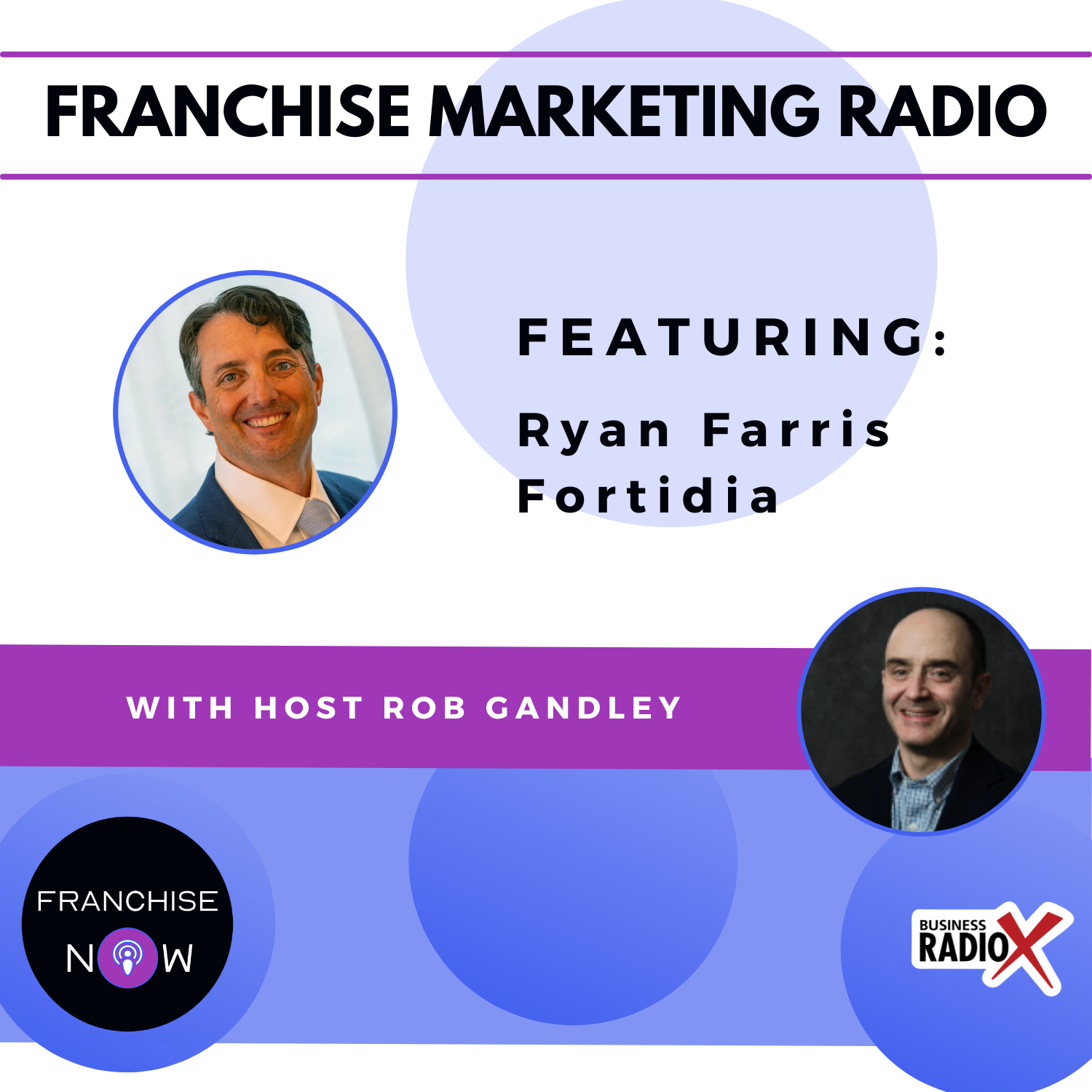

 Ryan Farris is a business leader, entrepreneur, and growth strategist with a passion for building and scaling companies. He currently serves as Region Executive Vice President of Fortidia, overseeing a portfolio of global brands, and holds multiple leadership roles, including President and COO of AlphaGraphics and PostNet, CEO of Print Speak, and COO of World Options US — supporting seven companies across the U.S., U.K., Australia, and Europe.
Ryan’s career blends hands-on entrepreneurship with high-level executive leadership. He started building websites in the 1990s through his first company, World Web Creations, and later founded urTalker, a communication app designed to support individuals with special needs. This early foundation in technology, innovation, and purpose-driven business has shaped his leadership style ever since.
In the corporate world, Ryan has led brands through transformation, driving double-digit EBITDA growth, launching national sales and digital marketing programs, and building scalable systems across franchising, printing, shipping, and service industries. He has experience working with both founder-led and private equity-backed businesses, always balancing operational excellence with a strong, people-first culture.
Across every chapter of his career, Ryan brings a practical, entrepreneurial mindset focused on building value, empowering teams, and navigating real-world business challenges.
Connect with Ryan on LinkedIn.
 This transcript is machine transcribed by Sonix.
TRANSCRIPT
Intro: Coming to you live from the Business RadioX studio. It’s Franchise Marketing Radio. Ready to revolutionize your franchise with AI? Franchise now empowers franchises with advanced AI solutions, automatic processes, and enhanced marketing strategies. From personalized customer interactions to predictive analytics, we help you harness AI to drive growth and efficiency. Transform your franchise with the power of AI. Visit Franchise Now to learn more and take your business into the future. Now here’s your host.
Rob Gandley: Welcome, everybody, to another episode of Franchise Marketing Radio where we explore the ideas, innovations and individuals reshaping the future of franchising. Today, we’re joined by Ryan Farris. He’s the executive vice president of Fortitude Brands, and they’re a newly unveiled brand born of the mailboxes, etc. worldwide US platform bringing together powerhouse franchise names like Alphagraphics, Postnet and others under one United identity for Htatea is more than a rebrand. It’s a bold repositioning aimed at streamlining print marketing, shipping and logistics services across a global footprint. Let’s explore the evolution of Fortidia and how Ryan is leading the charge into a new era of franchising. It’s great to have you back on the show. Yeah, good to talk to you again. Yeah. Welcome back. Ryan.
Ryan Farris: It’s a pleasure. Thank you for having me. I think we were just talking. We’ve been exchanging, uh, or crossing paths for, uh, you know, close to almost a decade now. So it’s it’s great to be on your show and look forward to the discussion.
Rob Gandley: And this, this brand or what you’ve been affiliated with. This keeps growing and keeps multiplying. So it’s it’s fun to watch. And I love franchising. And I love the opportunities it affords and the way we serve communities. So you’re a big part of that. I appreciate you, but tell us, tell us about Fortidia, man. This is a pretty new thing. And big direction shift. You were already leading a big part of this. So tell me, why was the timing right? And what’s the future looking like for that?
Ryan Farris: Yeah. No, this has been an exciting evolution. Uh, we have been operating, you know, really well in the, you know, franchise printing, shipping, logistics business and over the last, you know, several years, our platform acquiring great companies, great franchise companies or great technology and logistics companies has just grown to a point where we needed to elevate our brand name or our platform name. And that’s where the Fortidia brand came in. So you’ll now see the group operating as a for tibia, and it’s fantastic because it gives us a broader platform to help illustrate the power of these ten companies, over half a dozen franchise brands. As you noted, we’ve got several great ones in the United States market with Alphagraphics, Postnet, and now World Options US. We have some great companies in the UK with Parkinson, World Options UK, as well as mailbox etc. UK. The Netherlands is represented by Multi Copy and Australia. We have our Parkinson Australia and New Zealand as well and then all through Europe as a lot of the the group know, we have the mailbox etc. brand that is just massively expanding and we’ve got some great technology companies with prestashop gel proximity and so we just continue to grow, even companies like dingo and it’s great, you know, nearing 1.5 billion in system wide revenue, more than 3200 locations and over 52 countries. So it just continues to grow and it’s super exciting for all of us.
Rob Gandley: Holy mackerel. That’s that’s big leagues. I mean, how many how many kind of frame it though with the industry. You made some big moves to be a big player. Who who would be I mean, is it like who’s your competitor? Not franchising wise necessarily, but just out there in the world? I mean, I think of Fedex office or whatever, but that’s only a piece. But yeah, like, you know, you did this, but who was on your mind when you were, you know, gathering the strength together? And who are some of the big players that you kind of competing with?
Ryan Farris: Yeah. You know, it’s kind of interesting in in our world, you know, especially in particular where you’re talking in the shipping and logistics space in some ways in the US market, you’re we’re very accustomed in the US to have a Fedex store or a UPS store, which certainly does have some competitive attributes to someone like a postnet that operates in the US market. But I would keep in mind that, you know, we actually use the Fedex and the UPS and the DHL of the world as our partner. We’re actually a value added reseller of those, uh, you know, let’s say logistical services. And so in some ways, yes, we might, you know, compete, uh, indirectly with a UPS store or even a post office for that matter. But we tend to, uh, I think, stand out because we’re not dedicated to any one carrier. We’re dedicated to providing the best customer service for any type of logistical services. So you can go to a postnet or a mailbox, etc., or a world Options and pick from any number of carriers and services based on your product, the destination, the type of cargo, etc. and I think that’s really why, you know, it’s hard to nail down a specific competitor, whether it’s franchise or not, because most of the markets we get into, we’re looking to provide that value added service. Uh, and I’ll note again, the US is a little more concentrated, but a lot of the markets that we operate these brands in Europe, South Africa, South America, the UK, you don’t see as many of those typical shipping retail stores. It’s not really common to see a UPS store or a Fedex store. So so the competition almost becomes the the local, you know, postal system, which we all know isn’t any better than the US market. So I don’t know if that’s really competition.
Rob Gandley: Yeah. Yeah. No that’s, that’s helpful to understand that the framing of but but I want to go back to the name for you. I mean obviously it’s a big deal. It’s time went into that. You know, it must be exciting. I don’t know how involved you were with the naming and the branding, but can you help help me understand what does that mean? And you have all these amazing brands and you throw in some technology brands and so, like, what are you trying to gather together in that name in that brand?
Ryan Farris: Yeah. So it’s a really good point. And yes, we took a lot of thoughtful time to, to come to the name. Um, one to have a brand that we could carry into all of these industries, all of these markets, um, internationally, domestically, depending on how you look at that. Um, uh, and that was really important to all of us as well as we wanted to really exude, you know, that aspect of fortitude, perseverance, empowering people. And if you look at our messaging, it’s all about empowering people to power business. At the end of the day, we still want to have a very people focused, people powered business model, and we want to add value to those small and medium enterprises so that they can market their products and services. They can ship their products and service warehouse and manage them. And even now, with companies like Prestashop be able to order and manage that e-commerce aspect. And so we want to be that unique platform that uses diverse people and technology to basically uplift the world of business onwards, upwards and outwards.
Rob Gandley: That’s beautiful, I love it, I love it well. So I know that you have multiple roles, even though you’re the EVP. Evp of the platform brand, but you you go way back to the Alphagraphics running the Alphagraphics Postnet some of I think there’s another brand in there, but you’re still sort of doing president COO role in some of that. How is that informing this, this launch of of the new brand and push forward?
Ryan Farris: I think it’s a really complementary attribute. And yes, I’m very involved in the, in the in the ongoing growth of our US brands as well as some of our international brands. And so bringing to bear, you know, some of my prior, let’s say, entrepreneurship, understanding what it’s like to own and operate your own business so that we carry that passion into every entrepreneur partner we bring into our group. Um, but also staying in tune with the customers and that owner customer relationship we really do believe in, you know, being in the local market, supporting the local market and doing it through people that are highly invested in the business with us. And that’s why we love the franchise business model. So I think you’ll continue to see, you know, throughout the fortitude Group, you know, even in the countries where we directly operate, what we call directly operated countries, we want headquarters, team staff in the local language in the local markets, supporting our local owners so that we have the best possible business model. And so, um, so to that end, yes, I continue to have a heavy at, you know, attribute, let’s say, or access into our networks. In fact, just this week we had our Leadership Council meeting. Um, some people call it their advisory council. And myself and our worldwide chief operating officer, Giuseppe Rudy, attended that with our alphagraphics owners and the prior week with our postnet owners. And so we think that’s a key piece of the the driving growth of our brands is to be connected with our owners and our customers.
Rob Gandley: Well, and, and and we know it. Right. Like this. This that’s a franchising is right. Well, can I can I ask you, is every brand in your umbrella a franchise or is it some of them complimentary to serve the network?
Ryan Farris: Uh, some of them are complimentary. Okay. So we have, like I mentioned, just over a half a dozen our franchise brands, and then we have others that are complimentary largely in the technology, um, arena. Um, so if we look at a company like Prestashop, um, some people in the US would think of it more like a Shopify or somewhere between a Shopify and a WordPress. It’s an e-commerce enablement platform. Okay. So we we acquired that company several years ago to really show that we want an end to end platform of products and services for our small to medium enterprise businesses. We also have companies like Gel Proximity that help with the logistics and maybe some of the technology for last mile services. Other companies like that do the same thing. So we you’ll see all of our holdings fit within the print shipping logistics space with that complementary technology that really provides a 360 platform to our customers.
Rob Gandley: Yeah. And that that’s that’s huge. That’s huge for franchise owners, for customers. It’s smart. Um, yeah. It’s it’s I thought so. I mean, I just couldn’t, you know, just looking at the brand names and there’s some new ones in there that I’m not as familiar with. And I think the e-commerce, I mean, again, another brilliant move. I mean, that thing exploded in the 20 tens. And that channel, you just want to leave that on the table. And it’s so sort of complicated for an everyday business owner, right, to kind of just run an e-commerce, you know, website on top of the, the local presence. But that’s brilliant. Brilliant add on.
Ryan Farris: Um, yeah. And you know, and we recognize that that there is ever and will always be growth in, in let’s say the online ordering arena. But I think it’s important to note that it has to be connected to a physical something. Right? Those products come from a company. Maybe even out of a warehouse. Somebody’s got to ship and deliver that to your front door. And so we want to be part of that ecosystem. And I think we found a really good niche with as many locations as we have and operate in all the countries, we can really help, you know, those small e-commerce companies and platforms have a, you know, high end, you know, world class, end to end platform from not just the online ordering, but making sure they get good shipping rates and then have that warehouse fulfillment, print and marketing to really take it all the way. So it’s I think it’s a really neat platform. I think it’s unique in the space, not just being franchise only platform, but kind of looking at that full integrated solution set so that these, you know, small and medium businesses can really grow substantially in their own rights.
Rob Gandley: Right. And I think of I always say it, but Jeff Bezos was asked about, you know, what’s all the fancy stuff? Amazon should be doing in ten years? It was a few years back. Whatever. And he’s like, well, I’m not sure what the new stuff will be, but I know what the old stuff will never change. And that’s the customers want their packages on time and faster if possible. So having good infrastructure and consistency, it’s you need to do it or else no one’s going to use the website.
Ryan Farris: So yeah. Absolutely.
Rob Gandley: Well okay. So I’ve been dying to get into it. So let’s talk a little bit about AI. Obviously that’s in everybody’s uh, at least it’s out in everybody’s mind. Right. On some level for me it’s every day for you probably every day. Um, tell me how you guys, first, as a leader, how do you take such a fast moving target with so much promise and potential and harness it and do it in a way where you got to do this globally, across brands? So tell me a little bit about the just sort of the foundation of even being able to implement AI and how that works.
Ryan Farris: It’s a great question. And, um, you know, you know, um, a little bit more about my history, but I love technology. I’ve always believed technology is the ultimate enabler for a fast growing business. It doesn’t even matter what industry. And it’s really interesting when people think about printing or shipping logistics, you know, technology doesn’t always jump to mind. Although I think the Amazons have helped kind of push that. But, um, in that respect, we believe technology continues to be a key foundation to our operations and our revenue growth. And when I really started to become viable, right, a technology that we could use and scale, we decided to break it into a couple key areas. We looked at it first and foremost, as a franchisor, how can we use this to be better in servicing our franchise partners? How can we be more effective with our entrepreneurs helping them be productive and more scalable in their business. And and we broke it into four lanes. So we put together a worldwide steering committee. We looked at every brand and every region. We looked at our headquarter team, and we said the first thing we really need to do is get our own team members, right. Those those headquarter staff members, to actually understand what this is and use it for their own purpose. So what we did was we called that the functional work stream. So we said we need, you know, if you’re an LMD, how do you use the different AI tools to be more effective in LMD? Could be recording a class, writing the class, doing the operations manual, conducting training, moderating testing and and benchmarking the training.
Ryan Farris: Um, and then we just department by department, wrote out kind of a game plan of how we would bring a department together by similar skill sets, train them on the different AI tools that they should consider, and then actually monitor, measure and kind of cheer on those successes. And so that was a really productive exercise. And and the outcomes were fascinating because you kind of go in sometimes with technology. I think everybody does with a preconceived notion that the younger you are, the better you’ll do. And the older you are, the, you know, the less effective you might or the more the resistance you might put into place. I almost saw the complete opposite. It was really fascinating. You know how many people really saw this as an amazing way to make their job easier, to do a territory analysis, to do a customer analysis, to to understand that complex data that you get and benchmarking and, and have these amazing, you know, enabling tools to make you more efficient and effective at your job. So so that was one of our first initial, you know, swim lanes. Then we moved into utility. And I think you can see this as well, especially more than a year later with a lot of AI tools out there.
Ryan Farris: It gets a little bit annoying to see like ten note takers jump into a meeting and all, you know, all different note takers, right? When you only need one, you just need one. And so the utility track was designed to begin to align to, you know, what is our best policies and practices so that we’re using the same tools we’re maximizing, you know, the capability that tool. And we also have some just good policies and behaviors so that, you know this is our calendar management tool. This is our email tool. This is our note taker tool. Right. Our meeting recording tool. Um, so that we’re not all spending money differently or, you know, kind of being inefficient. And to me, I know those sound really simple. Everybody wants the really high end AI tool, but those two tracks are probably provided us the most effective runway. And inside of that, subtly, you’re also establishing credibility and knowledge that you can then build on right when the network when your franchise brands owners say, well, why would I use AI for my business? I’m just a retail shipper. Now I’ve got my, you know, franchise consultant saying, well, let me show you how it could actually make it. Now we’re, you know, teaching the teachers, if you will. And I think that was a a really good foundational step, if that makes sense.
Rob Gandley: That makes tremendous sense. And, uh, the, uh, the comment about the older folks, it’s totally true. I one of the encouraging things, we were doing workshops early on, and one of the slides we would talk about is you actually are at an advantage if you’re an older folk because you have real life experience. And now you have an assistant you can talk to. You don’t have to push buttons anymore and mess around. You can just use your, your, your knowledge and and amplify it. So really, when you’re coming right out of college, you don’t got the 2030 years of. So the older folks are in a better position. I agree if they understand that. But you gotta show them that.
Ryan Farris: Yeah. You know, I think I think that’s the reinforcing attribute. You know, there’s a lot of positions that I think were very nervous copywriters, graphic designers, things that it looked like, you know, the eyes of the world would just completely, you know, eliminate. And it turned out to be you needed this skill, the language, the nomenclature to make the AI effective. Right. The more precise you were on. Hey, I need this photo to be at an F5 with this filter, at this distance, with this blur. Then you got quality product. But you have to be skilled in that profession to use that language. So if you’re not a photographer, you don’t know color, you don’t understand color theory. You’re not going to be as efficient with the tool. So so it actually over time we were able to show them that as a professional, that’s the scripting. That’s the output that makes it better, right. Without it then people are getting pretty mediocre at a low quality output. And so the skill is still ever important. You’re just able to do more, right. You’re able to create more content, which is, you know, in a franchise model, you know, we’re never going to have as many employees as our owners, right? So to better keep up with them is only a good thing.
Speaker4: Uh, yes. Yes.
Rob Gandley: No. It’s, uh, I love that. I and it is, it is so true that, uh, these are these are times where I think as much as we kind of were light about it. I mean, people have to take that seriously, right? Because whether you’re your company, which, by the way, the way you just articulated, that was very helpful. I mean, I would replay that and write down notes, because every business leader needs to know that if they’re not already doing that. And and I think some are still waiting right wondering like and people are doing it on their own. But I think that’s the key. Is there some will do it on their own. Maybe do it well some won’t. And you can’t have that mixture when you got guys like you leading the entire network with what you just described, which is what you have to do to sort of normalize it across everybody and get those benefits. Right.
Ryan Farris: Yeah, It’s really interesting even as we deployed it. Right. As you can imagine, ten companies, lots of leaders, great people, even original founder owners in those businesses, you know, some are eager to embrace AI and like gung ho, let’s go. And then others are like, well, I don’t need it, right? I’m not I’m not big enough or I don’t want to spend that much money. And that’s that perception, right? And I still hear that I was just at the International Franchise Association conference in February, and I still heard that from, uh, you know, franchise leaders saying, well, we’re not big enough or ready for AI. And I think that’s a big misconception, is it doesn’t have to be a half $1 million investment to get started. You don’t have to have this massive clean data warehouse. There are really incremental steps that that I think are even more important to grow into it before you do. And that’s my other two swim lanes, is those sales transformation and those operation transformations, because those are bigger endeavors. That does take a little more commitment, more mindful, thoughtful execution and and really a three year view, right. What what do you want to do over time to really enable your system and really your data to work for you, right. You know, when we think about I think sales transformation, I you’re talking about, you know, how do I more quickly find my customers, you know, target those customers remarket those customers retain those customers. That’s where I can be great. But man, you also can’t mess it up, right? No different than the email marketing campaigns of the day. Nobody wants to be blasted. You know the wrong thing, the wrong time.
Speaker4: So yeah.
Ryan Farris: Those are transformational pieces that are much slower and much more methodical.
Rob Gandley: Right? Yeah. Like the upskilling of people is one piece and there’s some low hanging fruit there. And then of course, when you talk about an infrastructure like yours, it’s a whole different ball game in terms of when you say clean data warehouse like that is sort of the idea, like we need to get our data cleaned up because we didn’t know we needed to have it cleaned up five years ago.
Speaker4: Right. It’s a different.
Rob Gandley: Kind of cleanup when you want AI to have access to certain things, right? And it’s secure. And but you’re right. Once that’s done, then so much can be unlocked. But that will take time. And then you still have to. Then once you do have the capabilities, roll things out step by step and get people on board. So being a guy that you kind of have, you’ve run businesses at the top levels of finance and and operations still something you’re very close to and manage. Is there something there that you found even for yourself as a leader in that space, or that you find helpful or anything you’re doing on the finance ops side that is right now working?
Ryan Farris: There’s a tremendous amount. Okay. At a really, really superficial layer is I can take the data that I have available to me and use it to interpolate trends, patterns, industry overlays. Right. So as an example, I could pull some metrics on a territory. Um, maybe, you know, the last, you know, or this year to date data and say, man, what’s going on here? Why are they not year over year improving? What are the micro and macro factors that maybe I’m missing? You know, maybe I don’t understand the Charlotte market very well. Tell me what might be happening there. And that’s where I begins to layer in data that you don’t have. Right. So I think sometimes, you know, taking the data you have is good or bad as it may be, at least data. And then adding in some of those industry competitive similar trends might give you a better picture and also open up avenues of consideration. Maybe we should think about, uh, changing our seasonal marketing. Or maybe we should think about coaching, or maybe we should have a better competitive analysis on this area. And that’s a really, you know, simple utilization of eye on current data. And then we can obviously go deeper, um, which has been fantastic for me in an executive level to do quicker summaries, to do quicker, you know, presentations of data to prepare for those, you know, owner meetings or even board meetings. It is amazing the the formats, suggestions and critique you can get just by bouncing it off of I. I tell people, use it like a consultant, right? If you were to hire, you know your your big six consultant to come in and coach. You talk to your AI, whichever tool you use, whether it’s, you know, ChatGPT or Claude or, you know, uh, you know, any number of tools out there, but if.
Speaker4: You.
Ryan Farris: Talk to it like if you even say, hey, I want you to talk to me like a XYZ consultant and tell me, what am I missing? What should I consider? What is my Swot analysis? You get, you get amazing insights. Um, I’ll give you an example. We were using it to or we were just checking the table of contents. We didn’t want it to write our ops manual. Okay. That’s not that’s not the goal. But we just put the table of contents in and said, does this look reasonable for this industry and this type of, you know, let’s say trainee? And it came back and said, hey, I don’t see disaster recovery in here. I don’t see sustainability in here. I don’t see. And you’re going, oh, that’s brilliant. We have those. But we forgot, you know, we left those out. And so it to me it’s those little I call it incremental. You know bits of advice that this adds.
Rob Gandley: Yeah, yeah. We, we uh, we had a little again I told you we do these workshops and we had one slide where we had a picture of an I pod from 2005 thousand songs in your pocket. You know, they were amazing marketers. You know, it was a great ad. It was an old ad, and it’s like we kind of paralleled that to I is like a thousand experts in your pocket. Like anybody you ever want to talk to on demand, ask them as many questions as you want. I mean, it really is that powerful. But again, the language, right? You got to know what you’re asking and how to ask. But anyone, right? Like, I want to talk to someone like Bill gates, you know? Help me. You know, it’s just. Yeah, it’s amazing the capability. Just how using it as your cognitive super assistant is how we framed it.
Ryan Farris: Yeah. And back to the finance piece. You know, we we we all rely on finance Departmentally functionally executive to tell us what what is this mean? Right. Great. I have all these numbers. But what does it mean? Or you know, what do we need to look at? Is there an area or an opportunity, a weakness, a strength that we need to, you know, minimize, maximize. And, you know, a lot of times you’d have to go to a by department. They would have to write some code and then put it into power BI. And then you can access the report on power BI, maybe 30, 45 days later. You know, all this really sluggish, you know, ability to use the data to steer the ship faster. And now you can take that and it’ll either write the power BI report for you. So great. Done. Or it’ll just do what power BI would have done and and analyze the data real time. So now as a business operator, right. Or a franchise partner coach, you don’t have to wait for someone else to do this interpretation of the data or crunch the numbers. It’s doing it. And so now you can begin to make those micro adjustments faster, right? You don’t have to wait till the 20th of the next month. Right. You can you can take that data and process. And I think that that financially, when you’re asking about the utilization of financial data, I think to me it’s the analysis of what the data means so that I can more quickly adjust if I have a plan. Is my plan working? What adjustments do I need to make to that plan now? Not, you know, a month later, which may be too late.
Rob Gandley: Exactly. I mean, the the actionability right of the insights and the speed. Right. Speed is obviously a key. I don’t know how you guys do it at your level. Like you, you must learn some things about how do we maneuver this many, this complexity and still keep the speed. But I must be. You must be loving it. It must make life a lot easier in such a complex environment. So if we look at okay, so we looked at finance and ops. What about marketing. I mean that seemed to in the early days when ChatGPT first was released, it was real obvious that it could create certain types of content quickly. And we’re like, oh my goodness, how have you guys looked at content and also marketing like related to supporting the franchisees? Are you using it in different places? What have you found helpful? Anything planned there?
Ryan Farris: It’s quite expansive. I mean, one, we have an entire, you know, franchise set of franchise companies that focus on print and marketing. And so it’s not even at the HQ level at that point. It’s also making sure that our alpha graphics are multi-copy, you know, and even our postnet owners understand. Hey, did you know that you can add that AI is built into Adobe, built into Canva, you know, so as you’re doing design, you can do it faster, smarter, better. You can give customers faster examples, illustrations and and that’s been amazingly powerful for, you know, for for a franchise owner, if you if you think about the average size of an Alphagraphics or Postnet, you can be talking 3 to 8 people. So trying to provide marketing expertise, multiple design mockups, multiple concepts, if you will, can take a lot of time and need a lot of revisions. This greatly speeds that up, right? You take that, you’re able to give a client a quick turn, give them a quick proof, move the product into production faster. So so production wise, it is literally a fantastic enabler. Um, you know, with the different tools, with good training on just the general marketing side, you noted content’s super, super enhanced by this, right? So if you use your your team, everybody can have better written content, more professional looking content.
Ryan Farris: Um, which which obviously is fantastic. So things like, you know, weekly updates, network wires, you know what’s happening. You know, all of that now becomes, you know, ten X, right? You can do a lot more. Used to be constrained. Right? I can only do so much because I got to write it, check it, proof it, blah, blah, blah, you know now now the speed to market is faster. What I think is even, uh, super powerful in that world is all these industry reports you get right now. You can quickly have a summary, make it nice and concise, send it out to the network. Like here’s what you know. We talked about the trade environment before and all of our owners. You know what does this mean. What’s it going to happen. Right. We can grab five different reports, get a key summary, send them the notes, send them the source links. And, uh, you know, now we’re not waiting a week just to compile the research and understand. And by then it’s changed again, as we know.
Speaker4: So who knows.
Ryan Farris: What comes out of this next China meeting, right? So. So I think things like that make the content part of marketing super powered, right? And I think, uh, we know communication is the number one opportunity and it’s the biggest challenge. And so to me the content is improving communications at all levels. Then we get into the design and some of the imagery and all of that. And um, you know, we we just, you know, you know, you know, you we talked about the branding. Well, we needed to rebrand our entire office, right?
Speaker4: Yeah.
Ryan Farris: Well, you know, a lot of times you’re out there, you know, with the tape measure and you’re trying to figure out, you know, how to make that wall look like you know, this and what’s what’s going to look great. Well, now I steps in, you give it a picture, you tell it a few dimensions and you say, hey, give me a few different ideas. Here’s my color palette. Here’s my brand. You know, all of a sudden, you know, it is just transforming our ability to be productive so much faster. So it’s just endless, endless, endless, you know, especially in the marketing world. I mean, I could give you hundreds of examples, but those are.
Rob Gandley: Yeah. No, I, uh, I think of it like meta learning too. Like I’ve created so much content that I would have never bothered to try, you know, because it’s like, well, what if we layer this idea in this perspective in and, you know, it just things you would never do and then it bangs it out and then you can read it and edit and kind of learn and then and then and then deploy. But so it’s like the learning process you can learn while creating. You don’t have to use everything, but you can do so much more, so much faster, which just wouldn’t have asked. You wouldn’t have, you wouldn’t have bothered to try.
Ryan Farris: Yeah. No, I think something neat, you know, for, you know, your various audience to consider is, you know, by playing with these things and learning what can really help, you know, take a complex thing and make it simple. Okay. I’ll give an example. Uh, a vehicle wrap for a car is quite complex. All cars are different sizes, makes doors, panels, coverage. But yet vehicle wrapping and adding graphics to a vehicle is a wildly profitable business. But you make a mistake, you can lose a lot of margin. And so that was a typically complex initiative. Well, using, uh, we’re kind of transforming our own gpts. By using AI, our owners can now put in the car, make model how they want to do it, what coverage and it’ll it’ll spit out exactly the film, the materials, the time, you know using our cost model what the cost is. So we’ve taken something complex and made it hyper simple and still deliver maximum value to our customer, which is faster quotes, more accurate quotes, more accurate production schedules. And, you know, and that’s really to me where you take it next, right? You use it initially, you know, individually department function, but then you start building these GPT right that are highly refined, highly controlled so that you can have the alpha graphics vehicle wrapping GPT. You can have the Postnet shipping logistics GPT. So now you’re taking your best practices models and then tweaking it for removing complexity. It’s really.
Speaker4: Right.
Rob Gandley: So when you say, are you using the open AI platform or is that, you know, just another word for agent, or do you find that that’s been helpful using the open AI platform for the GPT specifics that.
Speaker4: You’re we really.
Ryan Farris: For for a lot of our uses, we like the the ChatGPT model right now.
Speaker4: We.
Ryan Farris: Certainly go down the, the pro and even the, the, the various upgraded versions of ChatGPT. But the fact that we can publish one, control the link and access to it, have it learn from itself in a in a kind of, let’s say, brand specific environment has been really, really rewarding. Um, it’s been very helpful for, again, making the complex simple. Right? Things like setting up your system, programing your inventory, setting up your pricing was a video, an instruction sheet, a checklist. Okay, still great. But what if I forgot one piece, right? Going back to my GP and saying, hey, how do I add a custom inventory line? And boom, there’s the information, there’s the illustration. Um, it really is, to me, almost enhanced learning. Um, and that may be a good way to think about it.
Speaker4: Yeah.
Rob Gandley: No, you learn as you use it. It’s not like you stop. It’s amazing. It’s been great for me, I love it. I of course I’m the wrong guy to ask. Um, me and you, we could talk all day, so. But I do want to get into Fran Dove, too. Um, and your thought of that, like, obviously you got a lot of thing. A lot of a lot of markets, a lot of different markets. Let’s talk about the United States. Let’s talk about your legacy brands, like just in terms of your growth goals in Fran Dove, where do you see AI playing or where have you leveraged it in? In that side of the business?
Ryan Farris: Yeah. Franchise development. Um, several several areas. And we’re continuing to expand. I would say at the most progressive end, we literally have for certain brands, I let’s say calling agents that will do outbound and inbound calls. Right. So, um, what we what we believe in strongly is that when someone’s interested in learning about your franchise opportunity, they need to get answers fast. And unfortunately, a lot of times they’re not calling you during business hours because they’re thinking about a franchise after work. Right? They they’ve had that day at work that says, I don’t want to do this anymore. And maybe I do want to, you know, own an postnet or own an Alphagraphics. Well, what a bummer. If you get a voicemail or you can’t get an answer. And so we’ve just decided to start pushing into and you can you can check it out with our World Options US brand and soon to be the rest of our brands, where you can call a number and you’re going to get an AI agent that knows the brand, can answer those questions quickly, can make sure that this is the right opportunity for you, and then actually put you on the calendar the very next day with a sales consultant.
Ryan Farris: And so that has been fantastic. Right now we’re moving people, you know, getting through the qualifying questions, making sure that they’re, you know, thinking about the right brand the right way and then set that appointment immediately. So that time the deal right is is exponentially faster. And that’s been fantastic. Right. So whether they call us or we know that they’re a fit right. We know that demographically on on LinkedIn let’s say that they’re a fit. Well, why not just proactively reach out to them and say would you be interested in, you know, becoming your own, you know, your own boss and doing it in a business that’s been around for 50 years and blah, blah, blah, blah, blah. You know, if they’re interested, then great. I would love to set a time with our our franchise consultant. And so it’s not closing a deal, but it is greatly, you know, think about this, that one agent can make 300 calls in a few minutes, right?
Speaker4: Um.
Ryan Farris: It’s unbelievable. I mean, seriously, I mean, I can take my entire target list and crush all of them in, in less than an hour.
Speaker4: So, yeah.
Ryan Farris: It’s fantastic on on just that side of it. On the other parts, I think there’s small little pieces where, you know, territory analysis, um, helping make sure, you know, we’re really thinking through the, the location, um, the traffic, the density, the ideal customer target, so that we can really be confident in a candidate saying, you know, this is a fantastic market based on your needs and the market opportunity, or, hey, we need to modify. We know you want to. You’re thinking here, but, you know, really you should you should think over here. And then also just the the we have a very structured 7 to 9 nine step sales process.
Speaker4: Okay, so.
Ryan Farris: Getting that where they can self-serve properly and then they can get a consultant properly and know where it’s at. Right. So just using AI to monitor where people are at in the funnel so that they they move through. We’ve gone from uh, almost 90 days as kind of an average, you know, initial contact to signing cycle, let’s say. And we’re now getting under 60 and we think we might be able to get to 45. So so that’s an amazing, you know, let’s say sales cycle improvement by just using more formal processes, proper technology and a little bit of AI enablement.
Rob Gandley: Yeah. And I was thinking on the front end and you outline that very eloquently. Um, but that that problem at the top of the funnel has been something we just never, like I said earlier, like, I wouldn’t think to ask it because it was just impossible. Like I wasn’t going to do that. But when you have AI doing, it’s a different, different way of looking at it. So the two big metrics that we know, and I’ve been in the friend of marketing space most of my career too, and it’s like the connection rate or the lead and the, the, the number of people to book a meeting. Number two and then thirdly, the number of people that show up for a meeting, that introduction meeting. So those gates typically and all brands are a little different, but those are typically gates that no one paid much attention to. It’s like, yeah, we get 100 leads a month and we’re getting this many appointments and that’s it. Well, why why do you only get that many? If you change those and the AI will change those rates and boom, same marketing, same leads, better output, which is amazing.
Ryan Farris: Well, and honestly, um, better may not be the initial output. It may be that, you know, what we learned is, oh, maybe your marketing is not working right. So that very top of the funnel we have, our first two steps are very marketing driven. You know, whether it’s organic, paid or broker. People are still largely going to the website or trying to learn more there. So if it’s not converting, even though the actions are right, then maybe your message is wrong, your persona is wrong, or whatever. Okay, so we learn quickly how to see it and fix it just because the reporting is getting you know, the analysis of the reporting is telling us more insights. Then we very clearly delineated that these steps are sales driven steps. Did the salesperson call them back timely? Did they say the right things? Uh, you know, did they push to close properly or qualify them out? Right. You got to move them up or out. And did they do it? And that’s helped us coach the sales people. Right. So some sales coaches are are being highly refined and getting a better close rate. So. So I think it’s it’s not as much about it makes it better. It makes you more uh, let’s say wise or, or you have better insights into how to make it better. And so by doing so staying rigid in your systems and processes, then you start getting better results. You know we’ve moved from the US is a little bit better in conversions. But you know.
Speaker4: You.
Ryan Farris: Know most brands are a half to 1% you know lead to conversion. We were already moving into the two point fours in the US and now we’re pushing almost three. And so you know that means quality leads, quality marketing quality conversions. And more importantly, you know, good spend right. And that’s what you’re looking for.
Speaker4: Yeah.
Rob Gandley: And and moving the needle with the time to sale which again is another area that most. Why would how do you do that. Right. Prior to AI. How do you really move that needle to move it? 45 days is pretty ridiculous. I mean, I can’t wait to you probably can’t wait to look at your panels from a couple of years ago to next year. Right.
Speaker4: The.
Ryan Farris: You know, the the number of signings has been record month after month starting in Q4 last year. Right. So it takes a little time to get all the tweaks and people and processes in place. But now it is. I mean, the excitement the franchise development team has now just winning and winning and winning is is is fantastic. And then the brand itself, right. New owners coming in, growth in markets. It is an energy that every brand wants and needs. And this this can be a really neat way to get better insights and optimization into that process. It’s it really is fantastic.
Speaker4: Yeah.
Rob Gandley: It’s exciting to be in business right now isn’t it?
Ryan Farris: It really I mean, I, I think, uh, um, it’s interesting that the perceptions, uh, my daughters are, are two good examples. So I present.
Speaker4: You know.
Ryan Farris: I showed them, I just showed them this is a year ago. And my, uh, let’s say at the time, my 18 year old daughter looked at it and said, this is so cool. This is going to be fantastic and great. I can’t wait for it. And my younger daughter at the time was 15, said, this is the worst thing I’ve ever seen. I don’t have a future, I don’t have a job. And so I think that’s literally almost encapsulates, you know, the different reactions you can see on the extremes, right? Super excited. This is going to make my life better or oh my goodness, I’m going to be out of work. You know so it is neither one right. But but.
Speaker4: It is.
Ryan Farris: A fantastic, you know, middle of the road. Make your life a little bit better if you embrace it properly.
Rob Gandley: Thanks for for sharing that because that is so true. What you just said. You and I again we we love it. We can talk all day about AI, but you’re right. That’s sort of the world I see when I’m interacting with different people. And it’s like, oh, I would say is we want human AI to serve humanity. That’s my focus. I don’t it’s not about being twiddling your thumbs in the future, having nothing to do. Right. Fear of boredom. It’ll be all right. We’re going to we’re going to find new things to do.
Speaker4: Um, exactly. Yeah.
Ryan Farris: Humans will always navigate around it. I, I, I remind, you know, you know, on the on the more comical side of it, we all enjoy a hot shower. We love cars that drive us from point A to B. We appreciate planes. These were all technologies that scared some industry, some worker, some whatever, but it just opens up a new set of industries, jobs and performance. And so I think improved, improved anything is always good and we’ll just change the way that we support ourselves in that economy.
Rob Gandley: Yeah, exactly. So alright, so you you got a lot going on, but I’m gonna I’m just going to try to ask a high level question because I’m just kind of curious. Like obviously M&A is in your strategy, right? Like, you know, expansion that way. And I know you can’t maybe talk about certain things on your roadmap, but is there anything you could share about okay, we’re we’re really rolling now. We’re really improving things. Ai’s been great. Is there anything strategic in the roadmap that you’re just dying to see or want to accomplish that’s related to tech and innovation?
Ryan Farris: Yeah, I mean, I would say even across the board, I mean, we’ve noted some some pretty substantial tech. Um, we probably minimize some of the smaller ones that we’ve integrated in. But I think a neat one that we bought several years ago is called a print speak out of Australia as a technology company for CRMs, right? So it built custom CRMs that fit well into our franchise model. Now they’re almost moving into, you know, a high end of the AI side of that, as you can imagine. So that’s been neat. Um, I think we’ll continue to explore, you know, lots of technology opportunities, whether it’s people, processes and systems that just further fuel that. Right. You know, you don’t always you know, we don’t have the, the, the hardcore philosophy that we got to build it. Um, we don’t mind buying it. So as we run into partners, I think we’re going to continue to see partners on, let’s say, the lead generation. I think that’s really attractive to us.
Speaker4: Yeah.
Ryan Farris: Everything from appointment setting to conversion management, those are really exciting areas for us. And then also, you know, just in the managing logistics and And managing print flow. You know that real time tracking improvement automation side is going to continue to be an exciting area for it in some areas. Right. When we get into design and we get into the creative technology, partnerships really do make a, you know, a lot more strategic sense. Um, but but I think it’s a good mix. I think you’ll continue to see some great announcements this year and for years to come. On continued acquisitions and the franchise and the technology space that really still fit into our core products and services, which is going to be that print marketing, shipping, logistics and e-commerce.
Speaker4: Yeah, yeah.
Rob Gandley: Well, you know, your tribe is going to be surrounded by companies that help the network or more network based companies. So it’ll be fun to watch it grow. Um, I wanted you to wrap things up, and just one thing I wanted to get a chance to do is to see, because you had said it a few times in this conversation that a lot of people are sort of sitting and waiting, you know, in the franchise industry. And, you know, when you look at the industry, there’s so many that are under the 100 unit mark right there trying to get to that next level. They’re not where you are, right? What kind of advice would you give to these these leaders, these presidents, founders of these brands about AI and about what they what what would be a good next step or what advice would you share?
Ryan Farris: Yeah, I would I would very, you know, blatantly and confidently say AI is that professional franchise consultant coach mentor you need. Right. And everyone on your team needs because again, you know, being a franchisor and not having a tremendous amount of center count means your revenue is and your cash flow is very limited and has to be very strategically deployed. So if you can make your people Both superpowers. Even better, whether they’re sales coaches, whether they’re operations coaches, trainers on borders, whatever that is. Imagine if they were 50% more productive, 50% more effective, or even just 30%. You know, our goal was really 20 to 30% more effective. That means that’s that many fewer people. You need to still drive the current or future success of your brand. So, um, so it is it is a critical area to invest in. It is worth every penny, even if that is just time. And I think that’s a lot of the the consternation is you’d be surprised how much of the effort is mostly time. Time to focus on it, train on it, encourage it, celebrate it so that it really takes root in your business. And you can start to see that, you know, ten, 20, 30% improvement without a tremendous investment. So I think it’s a fantastic opportunity to look like, you know, the 3500 unit business, while still having the funds and team size of a 50 unit business.
Speaker4: Yeah.
Rob Gandley: Very doable. It’s it’s like you said, it’s not like you have to wait or it’s not affordable or you’re not big enough. It’s it’s for everybody. I is for everybody. But yeah, making 30%. It’s funny you say it like it’s. Yeah, we were shooting for 20 or 30%. Right. Like, can you imagine doing that prior. Right. Like to make someone that much more productive. I there was a study done by Harvard and it was Procter and Gamble, and I don’t know the name of the study, but I know the result and essentially was they had 3 or 400 employees of Procter, Procter and Gamble use a specific like a GPT, like you had mentioned, like a specific set of GPT that would help them with certain projects, not even their whole job, just these certain projects. And they reported back these numbers, like basically someone without experience was as impactful as an expert with a team if they used AI. So I think I think training your people is a smart move.
Speaker4: It’s absolutely so.
Rob Gandley: Yeah, yeah. I appreciate you, man. I appreciate the work. You do appreciate you being on the show and sharing these insights today.
Ryan Farris: It was fantastic. Thanks for having me on. It was great to do this with you and uh, look forward to, uh, being on again soon.
Speaker4: Absolutely.
Rob Gandley: And can we just share, like, the best way? What would be the best way to get Ahold of the new brand, the the platform company?
Ryan Farris: Absolutely. Just go to. Com and you can connect to any of our brands in any region of the world. And, uh, we would love to continue the conversation. Just reach out to us anytime.
Rob Gandley: Beautiful. Appreciate you. And to our audience, thanks again for tuning in. Please share if you found it valuable. And bye for now.














