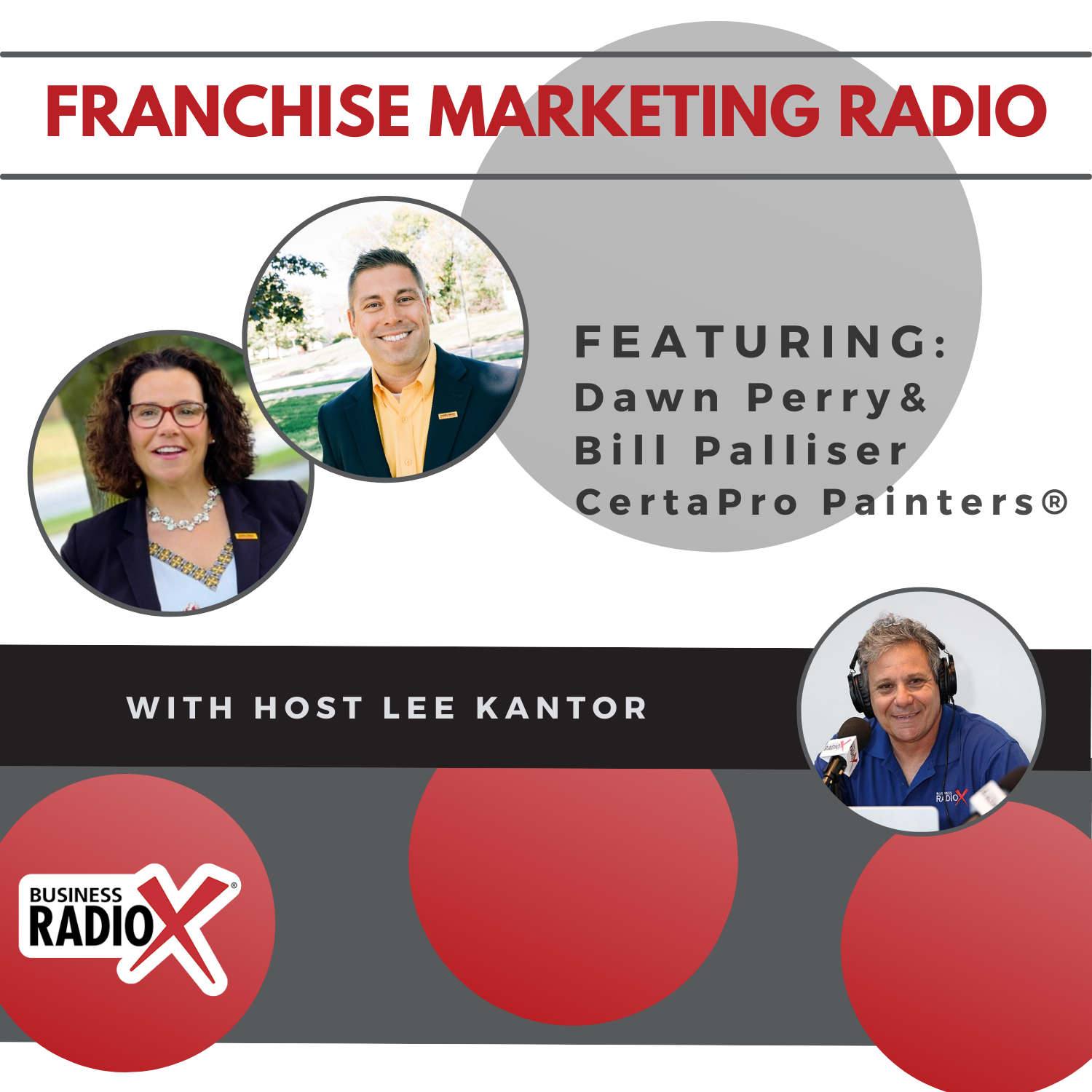

In this episode of Franchise Marketing Radio, Lee Kantor talks with Dawn Perry and Bill Palliser of CertaPro Painters®. They discuss the company’s evolution from a college summer business to a leading franchise, emphasizing the crucial collaboration between marketing and operations. The conversation highlights the importance of alignment, peer support, and shared values in driving franchisee success. CertaPro’s approach—uniting corporate teams and franchisees through training, peer groups, and open communication—demonstrates how a strong, values-driven culture leads to growth, engagement, and operational excellence across the franchise system.

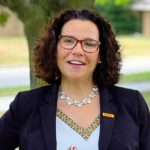 Dawn Perry joined CertaPro Painters®, North America’s Most Referred Painting Company®, in August 2022 as the Chief Brand Officer.
In this role, she is responsible for leading the company’s brand strategy and marketing.
With more than 15 years of franchise marketing expertise and 30+ years of marketing experience, she has a proven track record of driving lead generation and delivering extraordinary brand experiences with a customer-centric approach.
Prior to joining CertaPro Painters, Ms. Perry held two roles over 12 years at Anywhere Real Estate as Senior Vice President Cross Brand Marketing, and as Chief Marketing Officer at ERA Real Estate. Previously, she held marketing management positions with Avis Budget Car Rental Group, Scholastic Book Club, and Time Inc. She also led her own Little Gym franchise for four years.
Ms. Perry has received several accolades for her innovative branding and marketing strategies with bottom-line impact, including being a recipient of the Consumer Marketing Achievement Award from Time Inc., the Alex Perriello Innovation Award, and the Realogy Round of Applause recognition.
She is currently a member of the American Marketing Association (AMA) and has previously contributed to Forbes. She also holds a master chef certificate from The French Culinary Institute.
Connect with Dawn on LinkedIn.
 Bill Palliser brings over 22 years of operations, management, and sales experience to his role as Executive Vice President of Operations at CertaPro Painters®, North America’s Most Referred Painting Company®.
With a proven track record of driving organizational success, Bill leads all operations functions with a primary goal of achieving revenue targets and supporting franchise owners in reaching their individual goals. Bill is passionate about the development and execution of business plans and key strategies for franchise owners to drive significant results.
Prior to joining CertaPro, Bill spent 18 years at Sherwin-Williams, where he held numerous roles in store management, commercial and residential sales, and district management. Notably, he spent five years on the national account team, where he managed the partnership between Sherwin-Williams and CertaPro across North America, devising strategies to enhance collaboration.
Bill’s final role at Sherwin-Williams was as National Accounts Sales Director, leading a team that delivered innovative solutions to strategic clients in various market segments, including residential, multifamily, commercial, hospitality, and healthcare.
Connect with Bill on LinkedIn.
Episode Highlights
- History and evolution of CertaPro Painters® from a college summer business to a full-time franchise.
- The significance of collaboration between marketing and operations in franchising.
- Support systems for franchisees, including peer networks and training.
- The role of shared core values and culture in franchisee selection.
- The importance of operational excellence in fulfilling marketing promises.
- Strategies for engaging franchisees in corporate initiatives and decision-making.
- The impact of peer-to-peer learning and sharing best practices among franchisees.
- The necessity of corporate alignment for effective communication and strategy execution.
- The influence of franchisee engagement on overall performance and success.
- The relationship between a strong corporate culture and franchisee commitment to the brand.
 This transcript is machine transcribed by Sonix.
TRANSCRIPT
Intro: Coming to you live from the Business RadioX studio. It’s Franchise Marketing Radio.
Lee Kantor: Lee Kantor here. Another episode of Franchise Marketing Radio. And this is gonna be a good one. Today we’re going to be talking about why marketing and operations must work together in the world of franchising. And, uh, to talk about that, we have Dawn Perry and we have Bill Palliser, and they are with Certapro. Dawn is the chief brand officer and Bill is the executive VP of operations. So they are very qualified to be discussing this important issue. Welcome.
Dawn Perry: Hi. Thanks, Lee. It’s great to be here.
Bill Palliser: Happy to be here.
Lee Kantor: Well, I’m excited to talk about this topic. But first let’s talk about Certapro painters. Tell us about your mission. Purpose. How you serving folks?
Dawn Perry: Oh, no, I’ll take that. I’m sure Bill can add on. Um, again, thanks for having us today. Look, uh, Certapro painters has been around since 1992, and and we are. Our mission is to lift up the painting painting industry, to aspire to transform homes and properties, um, by creating a workplace of choice. But even more to the core is we are strive to deliver extraordinary experiences. Every paint project at the time we paint for both residential and commercial customers, and we have core values that we live and breathe every single day, that we bring to everything we do. And so we’re happy to be here today. But I can tell you, any organization, including Enfranchising, it is only as successful as the alignment and the collaboration of all the teams that are involved in helping our franchisees succeed. And so Bill and I have been working really hard on being collaborative to deliver on that promise of delivering extraordinary experiences to our franchisees and to our painters and to our sales associates. So what would you add to that?
Bill Palliser: Yeah, I mean, I think well, well said. I often, uh, you know, talk internally and externally about clarity, unity, alignment. And you spoke to that. Dawn, it’s super important that we’re all united in the direction we’re going. We’re clear and we’re aligned. And again today we’re here to talk about, I think, internal and how Dawn and our teams work collaboratively together, but super important that we go external right to the franchise body and all of our stakeholders. Dawn mentioned a few, uh, starting with our franchise owners, of course, all their associates, the painters that put the paint on and really deliver the extraordinary experience to the customers. And then last stakeholder, of course, that that customer. So have to have that clarity in any alignment across, uh, all of those stakeholders to, uh, to be successful and drive the organization forward.
Lee Kantor: Now, can you tell me a little bit about the history of Certapro? Did it start as a mom and pop and then evolved into kind of the franchise that it is today. Is was that kind of the genesis of the idea originally?
Bill Palliser: I can take that one, Dawn, if you’d like. No. So we started many of the listeners may be familiar with college pro painters, which was a concept of, uh, taking college kids, young entrepreneurs and, uh, help them establish a robust, uh, painting business over the summer. And you can imagine how how challenging that would be a working with, uh, with college folks and then those college folks as general managers trying to recruit, uh, you know, their friends, their peers, uh, over the summer instead of, uh, doing what college kids do over the summer, typically, uh, you know, go sling a brush, go sell paint jobs, uh, go deliver extraordinary experiences by, uh, bringing beauty to someone’s home. And so that’s where it started. Uh, and then in 1992, as Dawn alluded, um, Charlie Chase, who is the founder of uh, Servpro, along with another individual, said, hey, maybe we can take this to a full time model, Obviously, working in the summer with college kids has limitations. So let’s let’s see where this could go. And, uh, you know, they had, uh, some aspirations of, of sales and, uh, fast forward 30, you know, almost 35 years. We’ve, uh, we’ve surpassed that significantly. So, yeah, started with a summertime college, uh, gig and, uh, grew into something much, much greater as, uh, what Certapro painters is today.
Dawn Perry: Yeah. And I, I completely concur with what Bill said. I’ll tell a little illustrative story. So one of our biggest franchise owners out in the San Francisco area, um, started out in college pro slinging a brush. And then he also worked for corporate for many years, worked his way up in the organization and went back to being a franchisee. There was a lot of legacy to be proud of at Certapro, including our CEO, who once was a sales associate, is obviously leading the charge for us now. So, um, it is it’s a great operation. It started with exteriors and now moves over to interiors, uh, for both residential and then commercial. Both exteriors and interiors as well.
Lee Kantor: So how do you collaborate when it comes to delivering on the brand promise? Um, you know, in marketing, you know, you’re probably charged with making it enticing and persuading people to try it, but operationally, it has to kind of deliver on whatever it is that marketing is promising. How do you all work together, or do or do you work together and or do you just have to kind of manage whatever the other person’s doing?
Dawn Perry: Well, I think you can operate that way, but you’re not going to be successful that way. So I’ll just start with my role is to, uh, build and amplify brand awareness of certapro painters. Right. To make sure that we are always in the consideration set for anybody who needs to paint. And so how we do that is all the things that we talked about before in terms of delivering the brand promise. But I can say that all I want, but if the the teams are not delivering on that expectation, we’re we’re nowhere. Right? And so where Bill and I try to be aligned and in lockstep is not only what do we stand for and how do we go to market, but how are we delivering on that promise? And we have a phrase, and I’ll let him talk about this, about mastering the basics. Right. We most franchise concepts have a system and it works. And the ability to marry what we do in brand marketing and advertising to what actually happens on the ground, because that’s really where the magic happens, is essential. And we can’t do that without being aligned.
Bill Palliser: Yeah, 100%. And, you know, mastering the basics is kind of our, our, our thematic goal. Right. And and really execution, it’s foundation of operational excellence and executing the fundamentals on what makes our company or anybody’s company great. And we believe the more consistently you execute on the promise, the more raving fans of your brand you create, right? This leads to more referrals. It leads to more repeat customers, and the stronger the brand is. Uh, as a result, in my mind, you know, marketing is really the message, really merely how we kind of tell our story and go to market. Um, but, you know, operationally how you walk the walk and demonstrate and stand behind that message or story is really the lifeblood of of who you are as a, as an organization. So you can’t just have the message, um, and you can’t just have the operations. You need the two lock step, uh, again, with that clarity, entity and alignment, uh, rowing in the same direction together. That, to me, is what true operational excellence looks like.
Lee Kantor: Now, how do you handle, uh, the franchisees as opposed to if this was a kind of a, um, uh, brand that was that owned all of their, uh, all of their stores because the franchisee and the market is an entrepreneur, maybe they didn’t have a background that you all have in on the brand. With the brand doing this kind of work, how do you get a person that’s a kind of a layperson or maybe an executive, or had a different career, and then get them number one to be proficient and efficient and effective when it comes to delivering on the brand promise, and also give them the operational skills to execute at the highest level. Because in the franchisor’s mind, the brand is one thing, but the franchisee in a given market, you would like them to actually think the same thing. But they might think that, hey, maybe that my market’s different, that maybe I am. I’m seeing things that the franchisor really can’t understand.
Bill Palliser: Yeah, I’ll take that one. Leah let let Dawn backfill. Um, she had talked about it earlier. Franchising is all about systems, right? And a good franchisor develops great systems based on, you know, feedback and and trials and pilots and then success. Um, and then once you’ve got those systems, it’s all about driving, uh, execution. Right. Of, of those systems believing that what you have works and having proven success behind it. But franchising is all about inspiration and persuasion. Um, right. We cannot. As you mentioned, they’re independent business owners. We cannot tell them what to do. So we have to inspire and lead them. And really, the best way that that we find to do that in franchising is through their peers, right? Uh, find peers, others that are having success following the systems, doing the things that we believe work and then, uh, telling, uh, telling their story. So, um, you know, whether that’s leveraging technology, adopting marketing tactics, it’s so important that we capture where owners and teams are having success, uh, and share it. And then the more successes we can share, the more feedback we can provide, the more collaboration we have with owners. And then each of us internally, the more effective we’ll be in driving adoption, making changes, and ultimately the more impact we’ll have. Uh, on our results. I always say it’s it’s really about the why, the what, the how. Right. Why is it, uh, valuable or important for a franchise owner to go in a specific direction. Um, what is that thing? Right. Whether it’s technology adoption, how does it work? Uh, and how do they use it? How do they use it to, uh, to drive or drive their results? And again, the more we can use peer to peer engagement and successes of other, uh, other owners and associates, the more likely we have, uh, to drive adoption and execution of those, uh, those systems.
Dawn Perry: And I would just add to that, and I agree wholeheartedly, is and I did not coin this phrase, but I’m sure you’ve heard it right. When you’re in franchising, you’re in business for yourself, but not by yourself. And that that definitely holds true at Certapro, right? I, uh, Bill has a phrase that he coined. I like to say access and insight. When you work with a franchising network, you Dawn’t have to think about the next thing that’s happening with AI or your Google search, or how do I, um, find a new vendor for lifts, you know, from a from an operation standpoint, right. You have the backing of not only the franchise or, um, where Bill and I represent, but also and I, I am completely aligned with him. All of the peer network is really where the strength is. They’re doing it every day, right? The success of a new franchisee comes from. Yes, representing well. And there is obviously, uh, compliance to the brand standards and making sure that you should all like the brand, but it’s what you do in your local market and how you can leverage things that you learn from your peers that will drive your success.
Lee Kantor: So if you were giving advice to other franchisors out there, other business owners out there, how do you what are some of tactically how you’re, um, encouraging, uh, this kind of peer to peer learning and developing this peer network. Like, what are you doing kind of inside that is capturing the stories and sharing the learning.
Dawn Perry: While star and then Billy. I’m sure you’re going to lean into it a little bit, but look, it starts from the moment they come to what we call a meet the team day or Discovery Day, right? Well, they get access to franchisees right then just to, to mingle with and understand. Um, but from that point forward, we make sure say they join, um, a franchise territory that’s in, uh, the New York area. They would be part of a New York co-op. So they immediately get introduced to all of their peers in that co-op. They meet regularly, um, with that peer group, and we facilitate those. Um, there are peer groups that we help facilitate along the way. And again, Bill can give you more about that, but we really just try to make sure that they stay connected to like size businesses. And they have the right support, which really comes from what Bill’s team, uh, represents.
Bill Palliser: Yeah. I think what I’d add to that is, uh, while this may appear to be slow, I often say, you know, go slow to go fast. Um, and I think that holds true to a lot of the innovation, uh, and things that we do at Certapro, and I’m sure others do as well, or I’d recommend others do, and that involve the franchise owners or the key stakeholders early in the process. So you’re rolling out something new with marketing. You’re rolling out something new with technology or something new with with operations. You Dawn’t want to work in a silo, right? Dawn and her team Dawn’t want to work in just the marketing team. I Dawn’t want to work just in the operations team. We a need to be working together and collaborating. But as importantly, we need to be pulling in the franchise owners and the key associates that are doing it every single day. Because we can sit, uh, you know, here at the corporate office and we can put our heads together and come up with what we consider some really great ideas and maybe ideas that, that that might go very far. But at the end of the day, back to that inspiration and persuasion. If we have their buy in from the front end and their input, we may or may not take all their input, and we certainly won’t always take the input 100%.
Bill Palliser: But we take that feedback. We consider that feedback and we we adopt that feedback into the thing that we’re rolling out or developing, uh, so much easier to get buy in when peers can say, yep, I played a role in that, I support that. It was well thought out, and it’s absolutely something that you should adopt or leverage to to grow your business. So again, we do that through a number of different ways. Dawn mentioned the peer groups where we work with like size owners to help them grow their business, but as importantly, get feedback from them about directions that that we’re taking. We have peer groups with associates and things where we’re meeting with these folks monthly to share success stories of where, like peers are having success with various initiatives, uh, and or just business results. And then part of that, again, is bringing that feedback internally so that we can continue to cascade, uh, out best practices, uh, and things that people are having success, success in. So to summarize all that, it’s really working together with all the different stakeholders as we make major moves in the organization to drive the business forward.
Lee Kantor: Now that sounds good from a corporate standpoint to have these things, but are you getting the engagement from these peer groups or people looking forward to these peer to peer interactions? Is this something that they, uh, schedule things around, or is this just another thing that corporates making me do?
Bill Palliser: Yeah, I would say in general they’re looking forward to it. Uh, again, our our peer to peer program, uh, which consists of, you know, probably roughly 75% of our, of our franchise owners, uh, has been the lifeblood of our organization and many of our sister brands, uh, organizations in the first service brands. And, um, yeah, they this is a priority for them because they understand they not only have an opportunity to work with corporate, but as importantly, most importantly, they have an opportunity to get feedback from like sized peers. And again, back to how I opened this. It’s all about, uh, driving success through through each other. Uh, and so short answer. Yeah, they’re they’re looking forward to these things. Uh, and again, the more of a value and the more success that you can drive as a result, the more that they want to participate. So we here have great relationships at Certapro. Again, I think that is because we, uh, we listen, uh, we continue to adapt and learn from our franchise owners and associates. And as a result, uh, they want to continue to engage and participate with us at a high level.
Lee Kantor: Well, it speaks highly of the corporate culture. I mean, if you’re able to choose franchisees who, um, have that same kind of mindset and values, then it’s you’re doing a great job in terms of getting them to buy in and wanting and looking forward to kind of these kind of calls and these kind of meetings because they know the value is there 100%.
Bill Palliser: And, um, I will just say Dawn mentioned it earlier and I’ll let her speak to it. She mentioned our core values. And really, when we, you know, when we evaluate a franchise owner coming in, just as they’re evaluating us, we’re evaluating them to make sure that not only do they have the financials and the business acumen to come in here and be successful, certainly we look at that and that’s important. Are they a values fit right. Do they. Do they align with our culture here. Um and the values that we feel are so important. And that’s I think that’s a big differentiator of our organization versus maybe some others where they’re looking to just sell units. We’re not just looking to sell units. We’re looking to bring the right people into the organization, into the family that really want to give back to the brand and help see this thing continue to thrive.
Dawn Perry: Yeah. I’d just add, uh, that, you know, I’ve been in franchising over 15 years, um, the last three with Certapro painters and, um, it’s true in all franchise networks. Right? Engagement within the network and with your peers, whether it’s facilitated by the corporate office or not, is what drives success. We always find that the franchisees that come to events that we host, that participate in peer groups that are offered to them, those that show up and engage on average perform better than those who Dawn’t. Right. So that that, you know, success breeds other success. And we’ve talked around it a bunch and every organization has core values, but ours are deliver what you promised. Have pride in what you do. Respect the individual which is extremely important to us. Practice continuous improvement and embrace the possibilities in that last one is really where we all try to lean in at from the franchisor all the way down to the painter, who in many cases is a subcontractor. Right? We want to make sure that we’re embracing the possibilities of what can be for all of our success, success.
Lee Kantor: Now, is there a story you can share of this type of franchise success where, um, the importance of alignment really shone through?
Bill Palliser: You want to take that one on or do you want me to take that?
Dawn Perry: You start because I’m I’m trying to think of a good story.
Bill Palliser: Yeah. I mean, um, you know, I was thinking it starts with the corporate team. And, you know, when we talk about marketing and or operations alignment, which again is a topic for today, but I think this holds true with with all departments. Uh, we’ve, we’ve led from the top. And I think that’s extremely important that, uh, Dawn and I or our CIO and I, whatever the teams are, are completely lockstep in the priorities. Uh, and the directions, um, you know, uh, that that we’re trying to drive the organization forward. And if we lead with that, that alignment, then then our teams tend to lead with that. And so the success story that I’ve shared is we’ve really Dawne and I have worked really hard at really bringing the marketing team and the operations team together, uh, not only to set goals and have goal alignment, um, you know, whether they’re bonus or reward planner type goals, but also KPI goals, um, for subsequent years so that there’s 100% alignment, uh, around where we’re going and how we’re going to get there. And what we found is that, you know, that has prevented finger pointing, that’s prevented folks working in silos, and it’s increased the level of communication that we’ve been able to effectively go to market with.
Bill Palliser: The second thing we’ve Dawne is really focused on training our teams and not not training them separately, but training them together. So operations folks really understands the roles and responsibilities of the marketing team and the tactics and things that we need to adapt and embrace. And the marketing team is completely aligned around the operations goals. And and if we have to scale them up or teach them something new with the ever changing technology and the things with Google and everything’s changing very rapidly. So we can’t assume that everybody knows everything they need to know to inspire and persuade these owners. And I think that’s created a lot of success because we’ve been able to increase the skill level of our team, create alignment of our team, and ultimately that has transpired to us Impacting specific KPIs and specific results with our franchise owners, which ultimately then leads to their success, uh, in their business. So alignment at the top, down through our teams ultimately then leads to, uh, more alignment in the franchise body and more success as a result.
Dawn Perry: And, um, thanks for the time to fill in my story, Bill. So I appreciate you filling that part in there. So I will add to maybe two different facets of this. So a lot of what Bill was talking about was our corporate alignment, which has really been impactful in we talk about um, in franchising, it’s very difficult. You have to communicate. What do we say times ten. Right, Bill. So it is um, when everybody’s aligned and singing the same song in terms of what is our strategy, our goals and initiatives and how we support our franchisees and our associates. That is another touchpoint, another way to communicate our value back to the franchisee and how they can leverage that value to their success. Um, one of the things I’ll just share, we just came out of our corporate meeting a couple weeks ago. And, you know, when we have these things and we talk about our overall strategy and goals, you’ve got folks on the team that maybe, like maybe they’re doing social media for us, or maybe they’re doing, um, finance, um, or they’re the accountant. How do how can I impact delivering more customers to our franchisees and more opportunities to our franchisees? And when we have these meetings, and we really do these workshops to really help them understand that, yes, what they do drives the end goal. We’ve had phenomenal success in really fostering that alignment. And then from the franchisee side, I mentioned before about engagement, right. Like we all strive to lead, leave a legacy that we can be proud of. And so I’ll tell a quick story. We have an owner, um, a partial owner now out of Arkansas, who he was very well entrenched with advisory boards at the corporate level. He was engaged with corporate, he was engaged franchisee, and he had two sales associates that came up in his organization. And he nurtured and they became owners of the business. Right. So it is really striving to leave that legacy that they can be proud of, and that comes from alignment on where everybody’s going. We’re all paddling in the same direction.
Lee Kantor: Well, if somebody wants to learn more about Certapro, um, if they’re a customer or maybe a potential franchisee, what is the website? What’s the best way to connect with somebody on the team?
Dawn Perry: So the best. Ah, so our website is Certapro Certapro calm. That’s Serta with a C. Um, and they can certainly connect to me, I’m sure Bill as well on LinkedIn. We’d be happy to chat with anyone.
Lee Kantor: Well, thank you both for sharing your story today. You’re doing such important work and we appreciate you.
Bill Palliser: Thanks for having us today. We appreciate you allowing us to tell our story.
Dawn Perry: Yeah. Thanks, Lee. It was a pleasure.
Lee Kantor: All right, this is Lee Kantor. We’ll see you all next time on Franchise Marketing Radio.














