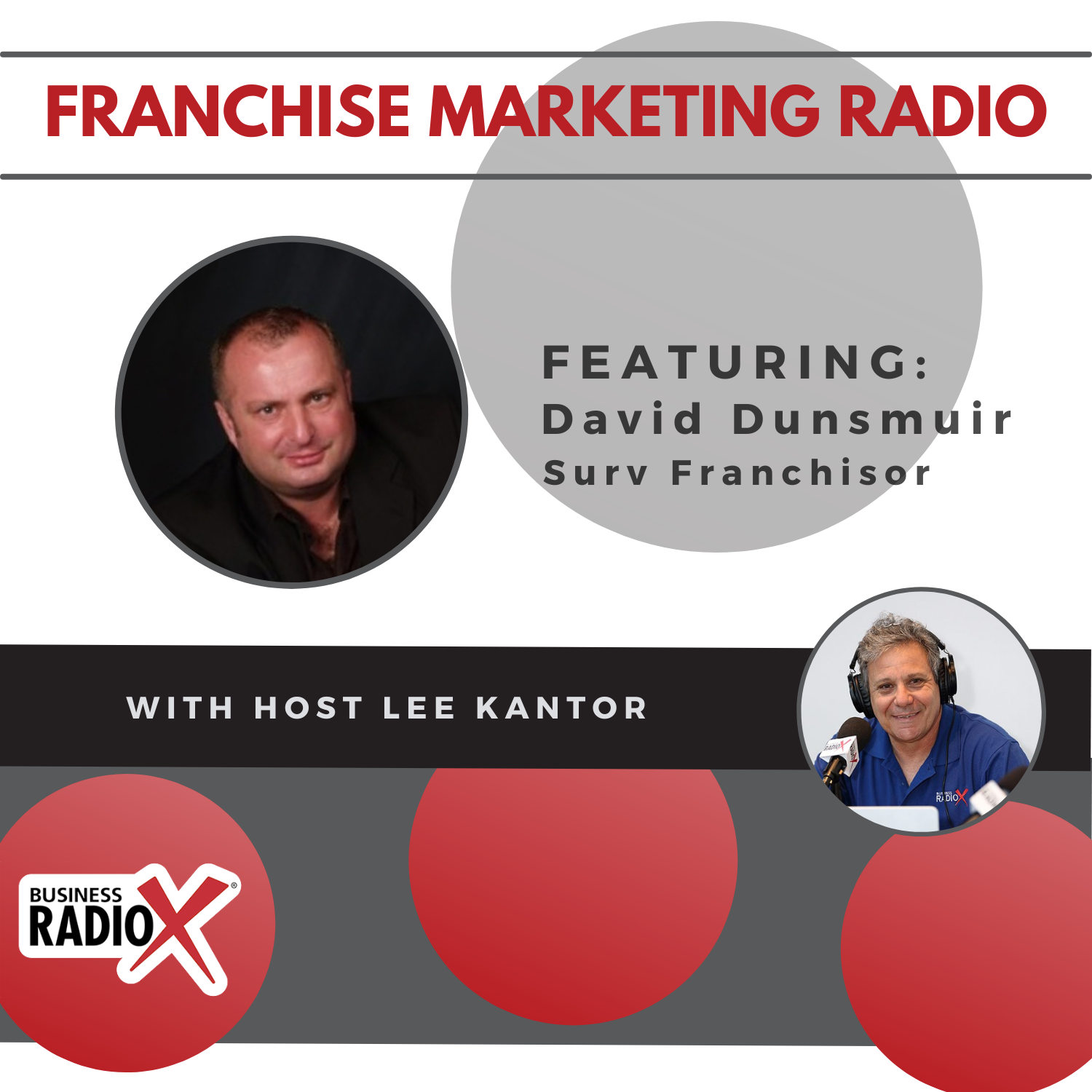

In this episode of Franchise Marketing Radio, Lee Kantor interviews David Dunsmuir, president of Surv Franchisor, an emerging home maintenance franchise focused on helping homeowners manage everyday repairs and upkeep. David shares the brand’s origins, its customer-first philosophy, and how structured training, quality assurance, and a five-step customer journey help franchisees build lasting relationships and recurring revenue. He also discusses ideal franchisee qualities, referral-driven growth, and the growing demand for aging-in-place home modifications that help seniors live safely and independently. Through community engagement and a proven service model, Surv offers entrepreneurs an opportunity to build a business centered on trust, customer satisfaction, and meaningful local impact.

 What sets David Dunsmuir apart is something podcast hosts in the franchise and entrepreneurship space, event planners, and media do not often hear. He has lived every side of this industry, and his authenticity drives him to talk openly about all of it. Not just the success, but what success requires.
This is the concept that will run through every pitch, every talk, and every media opportunity. There is no shortage of franchise executives willing to talk about success. He talks about the whole picture. The systems that work, the mistakes, and what it takes to build a company or franchisee that succeeds.
As a Certified Aging-in-Place Specialist (CAP) credentialed by the National Association of Home Builders, he brings expertise few executives in home services can match. It’s one piece of a career spent working with homeowners at every life stage.
He understands what older adults need from their homes and what that means for the contractors and franchise operators serving that growing market.
Connect with David on LinkedIn.
What You’ll Learn In This Episode
- Building a Customer-First Franchise: Creating a service model centered on customer satisfaction, trust, and repeat business.
- Identifying the Ideal Franchisee: Prioritizing leadership, community engagement, accountability, and a service-oriented mindset.
- Creating Consistent Service Quality: Using background checks, employee training, performance metrics, and customer feedback to deliver reliable experiences.
- Generating Referrals Through Relationships: Developing a customer referral system that encourages repeat projects, positive reviews, and word-of-mouth growth.
- Building Recurring Revenue: Using whole-home assessments and annual maintenance plans to establish ongoing customer relationships.
- Growing Through Community Engagement: Building local partnerships and meaningful connections that generate new business opportunities.
- Meeting the Needs of an Aging Population: Providing home maintenance and safety modifications that support seniors who want to age in place.
- Scaling a Home Services Franchise: Leveraging structured training, operational support, and established systems to help franchisees grow their businesses.
 This transcript is machine transcribed by Sonix.
TRANSCRIPT
Intro: Coming to you live from the Business RadioX studio. It’s Franchise Marketing Radio.
Lee Kantor: Lee Kantor here for another episode of Franchise Marketing Radio, and this is going to be a good one today on the show. We have the president with Surv Franchisor, David Dunsmuir. Welcome.
David Dunsmuir: Hey. Thank you. Good morning.
Lee Kantor: Well, I am excited to learn about your franchise. Tell us about Surv, how You serving folks.
David Dunsmuir: Survis an emerging brand, relatively new into the franchising space. We are a home maintenance company focusing on serving our customers. When I say home maintenance, all those activities that you do as a do it yourselfer we do for you. If you want to spend your Saturdays golfing or or taking your significant other out for the day. We’re more than happy to come and do a lot of those chores around the house. So it’s home maintenance, handyman activities around the home. We’re based in Cincinnati, and as I said, we’re we’re an emerging brand with lots of white space ahead of us. So it’s a very exciting time in surf.
Lee Kantor: So what was the genesis of the idea? How did this initially like, what’s the origin story?
David Dunsmuir: Yeah, yeah, it’s a great it’s a great story. There’s a gentleman in Rhode Island, Newport, Rhode Island by the name of Pat Brown, who’s the founder, Pat, to work his way through college, started ringing on doorbells and, uh, doing odd jobs to help the community and, um, obviously pay his way through college. And as he realized that he was, he was doing pretty well. And, uh, he ended up coming out of college debt free. He realized he was on to something, so he formalized it into a company. Um, he, at the time, he called it rent sons. And, um, yeah, that was the genesis. And it was just purely about serving the customer. He focused in on the aging in place and the senior side of the demographic. And it was just really everything helping, decluttering, moving furniture, all the activities that as they age, part of the populace needed help with. And he’s about four years into this business and he decided he’s going to start franchising. And he had a couple of franchises opened and he realized, you know what, I need some help. And he partnered up with our Cornerstone Franchising, which is the parent company of Surv. And they partnered up and brought in some, uh, experience. I, myself and the rest of the team that we’ve built around this organization and we’re off to the races. So then we, you know, built it to scale, um, operationalized it. It’s very well capitalized. Cornerstone has brought in significant amount of capitalization resources and other entities under the cornerstone umbrella that sister companies First Light Homecare, for example, who focus in on the aging in place. And so yes, a cornerstone owns Surv. We’re well capitalized, but we still have that community focused energy towards taking care of the customers in their home.
Lee Kantor: Now, what makes an ideal franchisee? Is it someone that is coming from the aging in place environment like this was founded in and around, or is it somebody who has an existing, uh, is it somebody who’s like a handyman to begin with? And then they start, you know, partnering with a brand or is this or anybody could do it as long as they hire the right folks to do the actual work.
David Dunsmuir: Yeah, yeah. So, um, we’re looking for, um, owner operators primarily, uh, we’re looking for folks that are just great leaders. Anybody with any kind of background can be a success at Surv. Um, part of the beauty beauty of joining an organization like Surv as a franchisee is because of the cornerstone Connection. Um, we have built out such a robust training and coaching and operational structure that, you know, um, we’ve got engineers who have joined us and have never swung a hammer in their life and they’re out fixing, um, customers homes. It obviously common sense will tell you if you’re, if you’re, if you’ve got a handyman background or a strong DIY background, you’re going to get a head start because you’ve already got a semblance of how to use all the tools, but it’s a two wheel, um, structure. It’s a front of house is the sales and marketing in the back of house, if you will, is what we call production operations. And that’s the, that’s the, uh, getting the jobs done, uh, the handyman esque, um, activities. But yeah, we’re looking for, um, we’re looking for folks that are just really community, community based and focused in on, um, you know, really serving the customers. And I think one of the differentiators of Surv from our competitors is just our dedication and focus on taking care of the customer. Um, we built the model and we built designed the model based around, uh, our initial visit to the home is what we call an assessment whole home assessment. And that does get specialized depending on, on, on the customer’s needs and wants. So if they’re an aging in place client customer, then we’d have a, have a slightly different A segment. But that assessment creates enough information for us to create an annual plan, um, where we can go back 4 to 6 times a year. Um, and so there’s a recurring revenue opportunity here, uh, based on the structure and organization. So, but owner operator, great leadership, community engaged. Um, that’s what we’re looking for now.
Lee Kantor: Anyone who’s had a home for any length of time has dealt with kind of independent contractor handyman over the years. Um, how do you kind of, um, protect the end user from a bad experience. How do you. Everybody has a horror story that’s ever owned a home for any length of time.
David Dunsmuir: Indeed. Um, yeah. Just on a side note, uh, quickly, I’ve been in the home improvement space my entire career, 30 odd years in many capacities. And those horror stories have been circulating around this industry long before I ever joined it. So, um, well aware of that, uh, perception and in many cases, reality. Um, so first off, we, we all have our, um, technicians enter our home, salespeople and technicians enter a consumer’s home are all background checked or W-2 background check the license, the license where appropriate, bonded and insured. And so they go through a vetting process to make sure that we’ve got the right type of person. Um, they’re trained to meet to a certain level of expectations of performance. And we train very specifically, not just on the technical skills, i.e. how to swing a hammer. I mean, a little bit facetious, but it’s that side of it, the technical side, but what we call soft skills. And it’s how to engage with the client, the customer, how to, how to, uh, where to park the car, which, believe it or not, is one of the biggest complaints from a consumer, right? The parking, the van on my driveway all the way through to how to enter the house, uh, put the booties on that level of service that you know, you’d ideally want if you is how we’ve crafted this. And then in addition to, um, the spot checking, um, on the back to the customer where the Google reviews are monitored on a daily, weekly basis to make sure that we’re taking care of the customer. And so there’s a lot of training, um, that goes into this because you’re right. Um, it just takes one problem to derail a relationship with a customer. And, um, you know, I had a boss years ago that always told me, you know, a customer complaint is not like fine wine. It doesn’t get better with age. And so you got to get in there and fix these things as soon as they happen. But the goal is to prevent them from ever happening in the first place.
Lee Kantor: So does um, Surv have a standard? Like is there an expectation from a customer standpoint, the customer is going to, you know, will make it right? Is there some guarantee or that’s part of the Surv way of doing business? Or is this just like, hey, you know, we did a good job. And then if the customer disagrees, then it’s like, well, you know, how do you handle that kind of, uh, yeah, because a lot of this is subjective. You know, you, if you, you know, the light switch might work, but if it’s on crooked, that’s not, you know, we’re not high fiving at the end of the day for that.
David Dunsmuir: Exactly. So, um, very much so. So every customer is surveyed after the job. Big as big, as small as the job is. Every customer is surveyed. Our business model is based on repeat work. So if we do something that just does not meet the customer satisfaction, even if it is subjective, we’re going to get back out there and keep working at it until we get it right. And that’s our guarantee. We’re not going to walk away until you’re satisfied with the work that we’ve done. And we want repeat business and we want referrals. And so you’re not going to get that if you have a dissatisfied customer. So yes, we have we have a guarantee around quality of work. And um, we’re committed to it.
Lee Kantor: So you’re offering the end consumer that peace of mind. If they’re, if they’re going to choose Surv, then they’re going to be taken care of.
David Dunsmuir: Very well said, sir. Yep.
Lee Kantor: Well, that right there is a big differentiator because it’s the Wild West out there. And a lot of people, you know, they think they’re hiring somebody good. And then, you know, all of a sudden the person finds another job that pays a dollar more, and there they leave him high and dry.
David Dunsmuir: Oh, very much so, yeah. Turnover in this industry is the key to success in this. This space is, is the ability to hire and retain the best quality technicians and salespeople. Um, and so it starts upstream with the right hiring practices, right hiring processes. And we do a lot of teaching training, um, in that regard, so that we’re selecting the best possible people. Um, obviously with co-employment laws, we don’t do the hiring obviously, but, uh, we teach our franchisees very, um, consistently on what to look for and we use, um, psychological checks. As I mentioned earlier, we do background checks. And so, um, there’s a lot of emphasis put on hiring the right person, but you’re right. Um, you know, the business business can go sideways very quickly if you don’t have the right people with the right accountability and the the right training in place and and also the right follow up in communication. The customers customers isn’t just if the light switch is on slightly crooked, it’s also it’s the whole experience. So it starts off with the whole system we’ve designed that Surv. Um, and it’s what I call the customer journey. We call the customer journey. And there’s five components to that. And each component, each pillar of the customer journey has a very robust training and metrics assigned to them. Metrics can tell you if you’re having a good performance or not, obviously. And so it’s taken very seriously because of exactly what you said. Lee. Um, the, it’s the Wild West in many ways. And that’s how we stand out.
Lee Kantor: Now, I’m sure as part of those, uh, the pillars of your customer journey, the last one or towards the end is a referral. Um, for, for future work for that, for that franchisee. Can you share a little bit about what systems you have in place that help a franchisee generate those word of mouth referrals? Because a lot of folks talk about it and say we rely on it, but they don’t really put the time and effort into creating a system that helps generate those word of mouth referrals that a lot of franchisees, you know, think they’re going to rely on to grow their franchise.
David Dunsmuir: Yeah. So, um, the first pillar, let me start at the front for a few seconds here, if you don’t mind. The first pillar is so sorry. The overwrite overreaching philosophy that we have is how do you convert a complete stranger into a company advocate? And that’s the five steps. There’s five steps to take them from stranger to advocate. So the first one is how do you convince a stranger to become a lead? And the primary way to do that is through network marketing and also referrals, which jumps to number five as you mentioned. And so we have a couple of things we do in referrals to repeat repeat customers and referrals. One is when a job is complete, we follow up to make sure that the customer is satisfied. They’re going to give us a five star Google review. Two we already know, because of the assessment that they have other projects needed in their home. So we’re already we’re already trying to schedule and working with the customer to schedule the next project. And then in regards to referrals, we’ll ask the customer if you have neighbors, friends, family that you can refer us to, we will do a project for you for free.
David Dunsmuir: And there is a list of projects that we will do for that referring customer for free, and we’ll encompass that in the next bigger project. And obviously this financial, um, common sense that plays into that. And the franchisees are going to be conscientious of not, you know, doing a $900 power wash project for free. But, um, and that’s working. It’s working very well. The customers, you know, we give them, it’s almost like a coupon, for lack of a better term. They get a free work which encourages them to, to have us back in the home again. And the business model continues. And then the new customer, the referrer, the referral, um, we’re going to get over there and do a free in-home assessment for them and list out all the projects they’re looking to get done. And as, and it builds momentum and they’re happy. Uh, if you look online, we’ve got 4.9 Google reviews. Customers are happy and they’re referring us to friends, family and neighbors.
Lee Kantor: And then so the system just kind of kind of, um, it’s like a flywheel.
David Dunsmuir: Correct. You got it. It’s uh, yeah, gains momentum and just keeps on tracking And, um, you know, it takes energy to get it started, but once it gets started, it picks up momentum. And, um, you, you really do see the franchisees after about three to 4 or 5 months after they’ve started, they, you can really see the revenue starting to really pick up because of that flywheel momentum. You’ve mentioned Lee.
Lee Kantor: Now, is there a story you can share about a successful franchisee, maybe one that, uh, you know, made a mark in your mind that you remembered maybe someone that is overachieved or has really made an impact in their community or surprised you in some way.
David Dunsmuir: Um, I’ve got several. Um, yeah. Um, great question. I would, I would, I would say there was a, the young man that joined us down in Florida, um, back in the new year and um, very energetic, very high energy and, you know, at the, at, through the training and An onboarding. Um very attentive, great pupil if you will. And he um went out to his community and he realized down in Florida he had numerous and I would be lying if I told you how many, but he had numerous, um, um, retirement facilities, uh, places around town and he went out and just started ringing on doorbells and, and bringing, uh, donuts and coffee into the facilities and meeting with the maintenance manager and just started connecting with them. And he, he ended up endearing himself not just to the, uh, maintenance managers and the managers of these facilities, but he’d get in there and spend his afternoons with some of the retirees, the folks in retirement homes. And it turned into a fantastic business. And he’s picking up a lot of the work in these facilities. Um, as a vendor, um, while he’s in there engaging with the, uh, the clients, if you will. And, um, it’s just a beautiful, it’s a fantastic business opportunity. But along the same way, he, he, he’s, I don’t know how many friends he’s made, but it’s just a great story that he’s, he’s, um, connected with so many folks down there and what’s happened from that, uh, the momentum I mentioned, the friends and family of the folks in the homes are now inviting him into their homes to do projects. Um, because of the quality of work and relationship that he developed at the end of the day. We’re in the people business and it’s all about people interacting with people. And, um, you know, he exemplified that probably better than anyone.
Lee Kantor: And especially targeting that market, you’re not only are you making an impact in the community, but you’re making, you’re creating peace of mind for the family members of the senior that is making them safer. And it could prevent some injuries because that’s where the danger is in a lot of this stuff, the. The home falls in disrepair and then all of a sudden a small problem becomes a big problem or it becomes a health care problem.
David Dunsmuir: You got it. I mean, the average home in the United States now is 42 years old. Uh, the fastest growing population in the United States is the over 65. Aging in place has become a a number one priority for the for the seniors. They don’t want to go to homes. And there’s not enough inventory of homes in the United States for this populace. So helping create an environment for the seniors so they can age in place is critical. And it starts with, um, starts before they really get to over 60. It starts with helping declutter the house. It helps with color. Contrasting falls in bathrooms are one of the primary, um, issues as you age. And a lot of that has to do with color contrasts. And so the toilet is white, the floor is maybe gray and the walls are maybe gray or white. As you get older and you and you isolate, the quality decreases. It all blends together and you don’t see the toilet. And so you fall. And so it’s just simple things like changing the color of the wall to make the toilet stand out, or putting a different colored toilet seat on to make those stand out. It’s small fixes like that with some grab bars that prevent falls, which then create a better environment for the the senior to live in.
Lee Kantor: Now, are you finding that your franchisees are already kind of owners of a different complimentary franchise, and then they’re adding this to their portfolio? Or are these kind of first time franchisees like, do you have kind of that ideal franchisee profile yet?
David Dunsmuir: Um, have both. Probably 50/50 split right now on brand new franchises that are coming into the network. And then the other half is obviously folks that have been in franchising with other entities that are bringing this in as a complementary business. In some cases, they’re in the bathroom remodeling space. And this they see opportunities throughout the house. And so Surv then helps them take on other projects. In other cases, we’ve got folks that are in the home care space that are looking to take care of the home as well as the client. And so, yes, I would say if you are, we can work with either one. I would say that if you’ve got history in franchising, you do get a, I would say a head start, but it’s by no means a prerequisite by any means. Um, very excited to bring anybody that is willing to work and partner with us, who’s willing to take care of their customers and take care of the community into the network.
Lee Kantor: Now, are you looking for kind of onesies or are you looking for kind of empire builders?
David Dunsmuir: Um, happy to do both. Um, um, always an opportunity for onesies, but yes, if folks want to come in and buy a multi-pack happy to work with them. Um, there is some nuances in this industry that’s a little bit different than others. Um, in regards to just learning how to take care of customers because of the things you’ve already mentioned earlier in the show. Lee um, but yeah, happy to get multi, multi, um, pack empire builders onto the team. And like I say, if it really comes down to the personality, attitude, grittiness of the candidate and franchisee, and if they’re happy with one location, um, we’re happy to have them.
Lee Kantor: Uh, it must be such a rewarding work. I mean, the work that you’re doing is so important, and, um, finding the right fit people is critical. If somebody wants to learn more about the opportunity, is there a website? What’s the best way to connect with you or the team?
David Dunsmuir: Yeah. www.wesurv.com.
Lee Kantor: Right? So you spell Surv SURV. That’s the best way to find you anywhere, right?
David Dunsmuir: Correct. Yep. Our email website is wesurv.
Lee Kantor: Good stuff, well, David, thank you so much for sharing your story today. You’re doing such important work and we appreciate you.
David Dunsmuir: I appreciate the time, my friend, and good to, uh, interact with you today. Thank you very much.
Lee Kantor: All right. This Lee Kantor, we’ll see you all next time on Franchise Marketing Radio.