

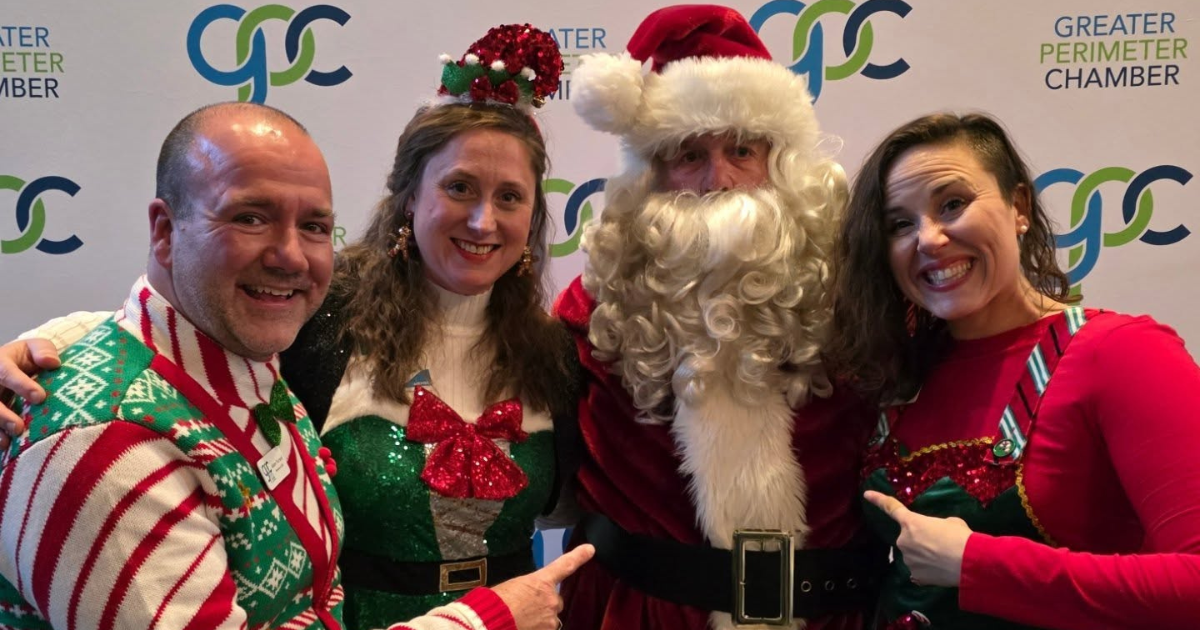
This episode of Greater Perimeter Business Radio features host Lee Kantor interviewing local business leaders and professionals at the 2025 Greater Perimeter Chamber Holiday Open House. The episode emphasizes the value of networking, collaboration, and community engagement among Greater Perimeter businesses, showcasing how these organizations support wellness, education, and professional growth in the area.
 Deveney Whitley, Waterwalk Hotel
 Vic McCarty, Hemophilia of Georgia
 Alex Coleman, Energy Works ATL
 Andre Albritton, Networking Only ATL
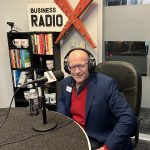 Don Farrey, Don The Money Man
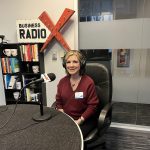 Juliette Colón, Focal Point
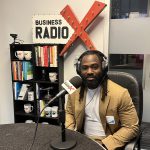 Carlos Barrow, Vino Venue
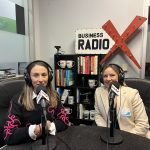 Abby Johnson & Leslie Mack, Harmony Nutrition
Episode Highlights
- Community engagement and involvement in local businesses
- Business services and development within the Greater Perimeter area
- Health awareness and wellness initiatives
- Networking opportunities for professionals and organizations
- Unique offerings of local businesses, such as extended stay accommodations and holistic wellness services
- Support for individuals with specific health conditions, including bleeding disorders
- Financial coaching and management for small and medium-sized businesses
- Executive coaching and personal development for entrepreneurs
- Educational approaches to nutrition and health management
- The role of local chambers of commerce in fostering business connections and community growth
 This transcript is machine transcribed by Sonix.
TRANSCRIPT
Intro: Broadcasting live from the Greater Perimeter. It’s time for Greater Perimeter Business Radio. Now, here’s your host.
Lee Kantor: Lee Kantor here. So excited to be broadcasting live at the GPC Holiday Open House. Our first guest today is Deveney Whitley and he is with the Waterwalk Hotel. Welcome, Deveney.
Deveney Whitley: Thank you. Thank you for having me.
Lee Kantor: Well, I’m excited to learn what you’re up. Can you tell us about the Waterwalk Hotel?
Deveney Whitley: Waterwalk by Wyndham Atlanta is a upscale extended stay hotel here in the Greater Perimeter Chamber area. And, um, you know, we try to get a lot of corporate business in-house. We just, you know, try to do a little bit different.
Lee Kantor: So what’s your background? Have you always been in the hotel business?
Deveney Whitley: Well, you know what? It’s funny. I did, uh, my my background began in, um, in law, and, um, I decided not to pursue that, um, avenue anymore after university and I decided, hey, you know what I like? I like people I love serving, so why not?
Lee Kantor: So what was it like to transition into the hotel business?
Deveney Whitley: It was not a difficult transition because my love for people and my, um, my love for service really just supersede, you know, it’s just my personality is who I am. And, um, it just started and, you know, ten years later, here I am.
Lee Kantor: Wow. Ten years. Yes, sir. And as always with the Wyndham. Or have you worked with other hotels?
Deveney Whitley: I’ve worked across several brands and pretty much every, um, you know, position there is from a houseman to a front desk officer manager. And now, you know, we’re running our own property, so.
Lee Kantor: So you’re you’re part of the management team running the hotel.
Deveney Whitley: I am the general manager in charge of.
Lee Kantor: Oh, wow. So what are some kind of. What’s a day in the life look like for you?
Deveney Whitley: Well, you know what a day in the life is always just, um, putting a smile on every guest’s face. It’s not always perfect. Um, but just, you know, just creating that experience and leaving them with that memorable moment and, you know, always leaving them with something to come back and looking forward to with our water brand here in Atlanta.
Lee Kantor: Now, is that something that’s part of the culture where they encourage you to create that memorable moment?
Deveney Whitley: It is a part of Waterwalk’s culture, right? We try to be different. We try to stand up. We try to always, you know, find a way to say yes.
Lee Kantor: Mhm. So how do you kind of, uh, inspire and coach your team to, to have that kind of mindset in order to serve the customer.
Deveney Whitley: Well it starts from the very beginning. You know, the moment they get hired they are um introduced to our culture. And we have a yes culture here at Waterwalk. And we just always try to find a way to, you know, appease our guests and enhance the experience and, you know, continuously provide an exceptional level of service for every guest that comes through our door.
Lee Kantor: Now, do you work a lot with kind of corporations, with their HR team that maybe they have visitors, people coming in, like, how do you attract the business people to your hotel?
Deveney Whitley: 100%. Um, Waterwalk is, uh, is a very diverse module. It’s not a select. It’s an upscale extended stay. And our ideal audience and guest mix is mostly corporate, right? So that’s the traveling nurses and doctors. Um, that’s the corporate people that are relocating to the Atlanta metropolitan area. We try to provide a home away from home, right from our well furnished to our full kitchen. And not only that, smart washers and dryers in every single unit. Can you imagine that?
Lee Kantor: So they they don’t have to go to a laundromat. They don’t have to deal with anything. They can take care of their own business.
Deveney Whitley: You don’t have to put a coin in the machine. You just simply scan and tap your phone and wash your your clothes just like that.
Lee Kantor: Wow. So it sometimes it’s better than their home.
Deveney Whitley: It’s better than their home. You know, we try to be modern. We try to be, um, you know, you know, a little bit better, right? They get everything fully provided by us. Even the detergents in the room, we replenish, you know, the toilet papers, the hand towels we replenish for their entire stay.
Lee Kantor: Now, um, why was it important for you to become part of the chamber?
Deveney Whitley: It was very important to become a part of the chamber because, um, I was brought into this business with understanding the importance of community. And the chamber is just that. Right. Um, I was, you know, I became a member of the chamber of the chamber a year ago. Right? And one year forward. It has just been simply amazing. Right. Um, with Adam being the president, um, page being in charge of the, you know, marketing aspect, I was able to open a lot of doors and sit with a lot of, you know, business owners and managers alike and share ideas and business, right? We have grown so much, and it’s just been an excellent pleasure for me to literally be here and be a part of this movement.
Lee Kantor: Now, if somebody wants to learn more about the Waterwalk, what’s the website? What’s the best way to connect with you?
Deveney Whitley: Please just type in Waterwalk by Wyndham Atlanta and, you know, look us up. You know, give us a call. We’ll happily, you know, give you a tour, tell you more about our product and our property, you know, and just feel free to come on down. It’s always open to, you know, anyone looking for that upscale extended stay experience?
Lee Kantor: Well, thank you so much for sharing your story today. You’re doing such important work and we appreciate you. We appreciate.
Deveney Whitley: You too. Thank you for having me. Have a good one.
Lee Kantor: And we’re back. Next up on the show we have Vic McCarty. He is with Hemophilia of Georgia. Welcome, Vic.
Vic McCarty: Thank you. Thank you for having me.
Lee Kantor: Well, for folks who aren’t familiar, tell us a little bit about Hemophilia of Georgia. How are you serving folks?
Vic McCarty: Um, so we are an organization that serves the entire state of Georgia, border to border and what we call cradle to death. So we serve all ages, children and adults who have a bleeding disorder. So in a layman’s term, easy to understand is your blood does not clot properly. So you’re missing a protein in your blood. So we’ve been in business 53 years, were formed in 1973. Um, and so again, we serve the entire state of Georgia. We kind of have three, um, parts of our organization. We are hemophilia treatment center, which means we provide access to care to folks not only in Georgia, but in about eight states and serve 28 hemophilia treatment centers around the region. Um, in North Carolina, South Carolina, Alabama, Tennessee, Kentucky, Mississippi, Florida. I think I got everybody in Tennessee. Um, and then we also have a pharmacy program. So folks who have inherited blood clotting disorder, um, need to infuse themselves with what we call a factor concentrate product. And that basically replaces that protein in the blood that they’re missing that helps them clot. And then lastly, we are a 501 nonprofit. So we do fundraising events and corporate engagement and stuff for folks to support our programs and our services that we provide.
Lee Kantor: So how many people are afflicted with this?
Vic McCarty: So there’s about 45,000 across the country, and there’s about roughly 2000 in the state of Georgia.
Lee Kantor: So it’s not a super common or is that is that a lot compared to other ailments?
Vic McCarty: It’s actually not a lot. And it’s not very common at all. It’s a very rare genetic inherited linked disorder. Um, you don’t die from hemophilia. You might die from complications of hemophilia. So it’s what we call a manageable illness so you can treat it and care for it. But again, it’s not a terminal. Hemophilia is not an illness that you can die from.
Lee Kantor: Is it something that you get? Uh, it’s recognized that you have it early in your life, and then you’re dealing with it, managing it the rest of your life? Or does it come on at any age?
Vic McCarty: Yep. That’s correct. So, um, typically for our little guys when they are born and and part of the birthing process, um, they’re diagnosed, um, with hemophilia, um, at a very early age, just because a lot of our, our guys go through, um, the, the circumcision. I hate to get kind of graphic, but but that’s how it’s detected. Um, because they don’t stop bleeding. Um, and then, um, our girls, a lot of times we’re both sexes and both genders, um, there’s some easy bruising and prolonged bruising and that kind of stuff.
Lee Kantor: Those are clues.
Vic McCarty: Yeah, those are clues. And then our women, our little girls and our young adults when they start their cycles, of course, that’s when it can be detected. And then sometimes our, our adult women are carriers and they don’t even know it. So sometimes our women are carriers and don’t know it. And then when they start having children and childbirth, then it’s detected and then a woman becomes a carrier, right.
Lee Kantor: And then, um, so is most of your work treating the folks or is it kind of evangelizing and trying to fundraise around it or a mixture.
Vic McCarty: Yeah, it’s it’s a mixture. And a lot of our work is providing educational resources for our folks because as you can imagine, a woman who’s a carer that doesn’t realize it then has a child who has hemophilia or.
Lee Kantor: They.
Vic McCarty: Feel bad. Imagine what kind of shock that is because you’re like, what am I? What? So a lot of our programing is around providing educational resources, helping people understand what it means to live with bleeding disorder. Then we are advocates and leaders in treatment and care. And across those regions that I talked about. Um, and then we do some fundraising as a nonprofit, 501 three. We do some fundraising and help support some of the things that we do. Um, the, the things that we raise money for currently are scholarship, research and then global impact. And those are kind of our three focus areas and our buckets of what we do to raise dollars from a fundraising perspective.
Lee Kantor: So, um, what’s your role in the organization?
Vic McCarty: So I’m the chief community engagement officer. Um, so I manage all of the fundraising and corporate stakeholder engagement. Um, I manage all of the communications and, uh, website, anything, print collateral, brand integrity, all that. And then I manage the team that provides all those educational programs that we provide to families. And those may be family nights. They may be teen retreat, our family camp program, our camp 1:00 program, which is our summer camp we’ve been doing for over 30 years. That falls under my umbrella, too. So I’m community facing, right? Um, and my role is really to educate and promote and create awareness in throughout Georgia. Really. And so I’m, I’m kind of all over the place all the time.
Lee Kantor: So what is, um, your background? Have you always been involved in association leadership?
Vic McCarty: I have, um, I’ve been doing nonprofit work for 25 years and fundraising most of those most of that time. Um, I’ve always been in a mission oriented service delivery, give back kind of career. Um, and so it’s really kind of, I think it’s all I ever really know and have done.
Lee Kantor: So any advice for the other association leaders out there when it comes to this type of, uh, Proving community engagement. Are there some do’s and don’ts that you recommend other folks think about?
Vic McCarty: Yeah, I think for us, what has been successful for us is really having the heartfelt mission heart right and being able to tell your story and impact of your story. Because when you’re able to tell your story about how you affect people in your community and what you do for your community, I think that’s how people rally around you and will support you and come to come to the table.
Lee Kantor: And then, uh, what do you need more of? How can we help you?
Vic McCarty: I mean, we’re we of course, we always need funding for the things that we do. Um, and again, and some of those buckets that I talked about in some of those areas of focus areas, we are always looking for volunteers. Um, we have many programs that need volunteers, particularly our camp program in the summer. It’s the full second full week in June this summer, and we camp with we partner with Camp Twin Lakes over at the Jago site in Winder. And so we’re always needing volunteers. We need volunteers to come in and help us with some office stuff, preparing for some tasks that we do. Um, so it’s really volunteers and donations. And then, you know, we’re always looking for people that are cheerleaders, cheerleaders and stakeholders and can tell our story throughout the community and make sure people understand who we are as an organization.
Lee Kantor: Now, why was it important for you to become part of the chamber?
Vic McCarty: Um, for me, it’s just developing our again, it goes back to the promotion, awareness of who we are and making sure people understand that we have a presence in Georgia. You know, we’ve been in business for 53 years, and I run across people on a daily basis that either don’t know who we are or don’t even know that an organization like ours existed. Um, and so for me, it’s the networking and the community engagement. Part of my role is to be part of the chamber, um, particularly, you know, the Greater Perimeter Chamber where we can network with people. We can get people to understand who we are as an organization. We’re just up the road off Roswell Road. So we’re we’re part of, you know, the Sandy Springs community and perimeter community. Um, and so it’s really just an opportunity for us to tell our story and make sure people know who we are.
Lee Kantor: And if somebody wants to learn more, what’s a website? What’s the best way to connect?
Vic McCarty: So the best way to reach us is our website is Hogwarts. So hemophilia Georgia, but just abbreviate Hogwarts. Um, and then our phone number, you can call um and basically ask any questions that you need to. But it’s (770) 518-8272.
Lee Kantor: Well, well, Vic, thank you so much for sharing your story. You’re doing such important work and we appreciate you.
Vic McCarty: Absolutely. Thank you for having me.
Lee Kantor: And we’re back. Next up we have Alex Coleman who is with Energy Works ATL. Welcome, Alex.
Alex Coleman: Thank you very much Lee.
Lee Kantor: Well, I’m excited to learn, uh, what you’re up to tell us about Energy Works ATL how you serving folks.
Alex Coleman: So we are a holistic family center in Sandy Springs. And what that means is we look at the person as a whole, body, mind, spirit and community, and we create a safe space for people to come and give their wellness a different try. What that means is massage therapy is not a luxury. It’s a therapy, and it addresses everything that your body needs, not only physically but also emotionally. Um, we have a psychology on staff that manages all the mental health parts. So if someone needs to talk to someone, we have that at the same place. We do a lot of events that teach mindfulness, that teach people skills to how better deal with stress. Stress is big now and it comes from my story. I didn’t know how to process stress. I was in corporate America for 25 years and it nearly killed me. And what killed me was my inability to process stress. And that’s what we created at Energy Works Seattle, an environment where people can come and learn how to deal and process with that stress that is Every day, every hour, every minute of our lives.
Lee Kantor: So is this your company?
Alex Coleman: It is my company.
Lee Kantor: So what was it like kind of beginning and starting this from coming from a corporate background? That must have been scary. A little bit, right?
Alex Coleman: It was very scary. It was leaving everything that I knew. 25 year career for something that I loved. And I had no idea how to do it. Just the passion to do it right. And I, um, as I share with you, stress nearly killed me. Um, 2017, I was 185 pounds and my entire body hurt. Walking hurt. Sitting hurt. Moving hurt. And I did what I do. When you hurt, you go to the doctor. And they were giving me prescriptions to address the symptoms. So I was taking 13 prescriptions on a regular basis, with a handful more as needed, with multiple diagnoses and my body was shutting down. It was just yelling at me that I needed to make changes, and I didn’t know what it was. I didn’t know how to listen to my body. So what we do is that reconnection between my mind and body so that people can understand what is going on and process what is going on, and not just keep carrying it.
Lee Kantor: And is there any advice you can give our listener right now? Is there something they can do right now as they’re listening to become more mindful or to become less stressed? Is there a breathing exercise or something you could share?
Speaker6: That is what I was going to say.
Alex Coleman: Just start with a nice deep breath. We do shallow breathing day in and day out. When I say take a nice deep breath in is strengthen your back and when you breathe in, allow your abdomen to expand. Feel your lungs as much as you can. When you think you cannot get anymore, try to get a little bit more. Hold the breath for four seconds and then just let it out slowly through your mouth. When you breathe mindfully for two minutes, your brain doesn’t have any other alternative than regulate. So if you’re having a hard day, if you’re dealing with anxiety, if you’re having a panic attack, just put a timer and start breathing deeply. That’s that’s the tool that we all have handy every day of our lives.
Lee Kantor: Now, why was it important for you to become part of the chamber bringing awareness?
Alex Coleman: So it’s not just a massage place. It’s not a mental health place. We’re not a clinic. We are a safe space where we try to educate people how to take care of their lives, how to take care of their wellness, how to be able to translate this very busy life that we live on a more calm manner so that it doesn’t affect you, and you can be full and recharged for the people that matters to you. Because what we do is we give out all day long. And so there is nothing else to give. And then when there is nothing else to give, you are so depleted. The only thing you want to do is lie down in bed and go to sleep. And you’re not even giving your body what it needs. You need movement. You need. You need breathwork. You need to be able to listen to your body. So meditation is very important. When I started meditating, I couldn’t stay focused more than 2 or 3 minutes and I hated it. And I started with just YouTube meditations and got in the habit of doing guided meditations to a point that I was able to do it completely, but it took me few months, several months until I felt comfortable going through a full meditation. And it’s just like when you it’s like that room that you have in your house, that it’s where you put everything that you don’t want on site. And when you open the door, everything is still there. That’s meditation. It’s going through that room and emptying it and saying, okay, I’m opening space for new things to come and allow all that energy to flow.
Lee Kantor: So if somebody wants to learn more, is there a website? Is there a way to connect with you?
Alex Coleman: So our website is Energy Works. Com. You can follow us on social media. We are on Instagram and YouTube. And just take time for yourself. Just give yourself that treat of wellness.
Lee Kantor: Well thank you so much for sharing your story. You’re doing such important work and we appreciate you.
Alex Coleman: Thank you very much, Lee.
Lee Kantor: And we’re back at the GPC Holiday Open House. So excited to be talking to my next guest, Andre Albritton with Networking only ATL. Welcome, Andre.
Andre Albritton: Hey, Lee, thanks for having me on the show.
Lee Kantor: Well, I’m excited to learn what you’re up to. Uh, tell us about networking only ATL.
Andre Albritton: Yeah. So networking only ATL is a brand I started probably like late March. And essentially what I do is I send out a Sunday newsletter. It’s for free, it’s for business and creative professionals, and on any given week it’s about good 60 to 80 events listed for everyone. So that includes Chamber of Commerce events like the Greater Perimeter ones. It include general networking, industry focused seminars, conferences, expo summits, all the fun jazz of being a professional in the city.
Lee Kantor: So you’re the place to go to know about all the events.
Andre Albritton: I’m hoping to be. Yeah.
Lee Kantor: So how’d you get this idea?
Andre Albritton: So, in all honesty, I have a bad habit. So my other job is I’m an independent adjuster. So, like, those guys who, like, walk on roofs for claims for insurance companies. But this year, first year since 2015, we haven’t had any hurricanes. So I’ve been a little bit bored. So I kind of started because I tend to get bored. And when I get bored, I’ll start a brand, grow it because, you know, being an entrepreneur or entrepreneur, to be more specific, it’s just kind of nice to create something and see it grow, see you help people. And that’s really why I created this one. And essentially like in Atlanta, you can go to an event, it says networking, but you find out it’s a big party. It’s like I’m not sure how to networking this thing at all, hence the name networking only.
Lee Kantor: So, um, do you have any advice for folks out there on ways to network? Are there good ways, bad ways? Are there some things that you recommend people doing to get the most out of a networking event?
Andre Albritton: You know, I’ll say two major things. One, keep going to the event. I think that’s the a big misconception. People feel like if they go to the event, they will get this million dollar business deal the first night and then go walk out like a millionaire. Doesn’t work like that at all. So always keep going to the events, learn what people want, learn how to help people. So always lead with value at all times. And even if you guys don’t do business, is really okay because I always tell people when you go to these events, you probably won’t be doing business with the person you meet, but they might know someone. So at all times always still bring out your value. And then the second tip I mentioned is kind of how I research my events for the newsletter. So for example, if an event says it starts at 9 p.m., it’s probably a party. So I say, hey, research the events, see who the group is, see who’s on the board, see if there’s anyone there that you actually want to talk to, and see if that’s an event for you. So just do a little bit more prior research before you go and click the button say I’m going to go to this event.
Lee Kantor: Right. So it’s a good idea to do research before attending any event, just to kind of get the lay of the land and see if there’s anybody there that’s worth kind of meeting.
Andre Albritton: Yeah. Yeah, exactly. Because, you know, we have a lot of events and this is Atlanta is a busy city. Business is everywhere. But just because you go to an event might not be the event for you. So another one might be. So it takes a little bit of time to explore and research.
Lee Kantor: So how did you land on joining this chamber? What were they doing that attracted you to them?
Andre Albritton: I guess since I have a little bit of a cheat sheet. So I’m a little data nerd. So when I sent out the newsletter, I’m looking at the clicks. This chamber tends to get the most clicks out of all the chambers. So that stuck out to me automatically. And I’ll say with page handling the social media side. That helped a lot too. And most importantly, it’s a warm, welcoming community. So I think that’s what really did it for me because it was pretty inviting. They want to see you network. And I’ve been to a few groups. It’s like you go to the event and you might be kind of by yourself a little bit. And sometimes the board will come and see you, chat with you, introduce you to someone. Sometimes they won’t. For the Greater Perimeter side, they’ve been really great about that and making sure they put focus on their members.
Lee Kantor: Now, um, when you’re at this event. So we’re here at the holiday party. Is this an appropriate place to network, or is this a place that where you say, you know what, I’m just here to have a good time and, you know, end of the year kind of thing.
Andre Albritton: For me, it’s going to be both. But no, that’s a good point you bring up because, you know, it’s holiday party season. And I would say if I didn’t know anyone, it’d be a little bit hard for me to network because, you know, I feel like when people come to these events, it’s like the end of the year, let your hair hang down. You know, my hair’s not hanging down, but, you know, it’s like they want to have fun. So it’s like, okay, might not be the best time if I’m new. If I was brand new, I probably wouldn’t come out to it. But if I was, you know, some people. Yeah, I’m definitely coming out because I have a chance to talk to people. We have some good food with my Christmas sweater. Yeah, it’s just a good time.
Lee Kantor: So what do you need more of? How can we help you?
Andre Albritton: The best way to help me is just share the newsletter with someone. Um, so like I said, the newsletter is for free. Anyone can sign up, and it’s a good 80 to 100 events for a weekly email list at this point. And I’m also on the website. I have the conferences and summits all listed up for 2026.
Lee Kantor: And then, uh, the website. What is the coordinates? Are you on socials as well? So give us whatever kind of the best way to connect.
Andre Albritton: Uh, best way to connect is on Instagram. Um, tag handle is networking only ATL or visit the website at w-w-w only ATL.
Lee Kantor: Com good stuff. Well Andre, thank you so much for sharing your story. You’re doing such important work and we appreciate you.
Andre Albritton: I appreciate you, Lee. Thank you.
Lee Kantor: Back at the GPC Holiday Open House. So excited to be talking to my next guest Don the Money Man Farrey. Welcome, Don.
Don Farrey: Hi. Thank you for having me.
Lee Kantor: Well, I’m excited to be talking to a financial coach. That is information everybody needs. Uh, tell me a little bit about your practice.
Don Farrey: Well, I started earlier this year, and it’s a fractional chief financial officer, uh, business. And I provide, uh, you know, high level advice to small to medium sized businesses, try to help them understand where their money is going. How come they don’t have as much sales in the bank that they wish that they did? Uh, try to help them reduce expenses, uh, grow sales through sort of out of the box marketing ideas and also, uh, explain their financials in terms that they can really understand now.
Lee Kantor: So you’re a CPA though, correct. But you’re focused primarily on business owners. Correct. And then were you was that always your practice or is this kind of, uh, a an extension of what you had been doing?
Don Farrey: Well, it’s an extension of my experience working 30 plus years in real estate development, property management and construction, as well as being a controller of other businesses. And I’ve had my own companies as well, so I understand the need to market and get your name out there and think in ways that you can do things inexpensively, but still, you know, retain clients and gain clients.
Lee Kantor: So so you have kind of the been there, done that background as well as the, uh, kind of the CPA credentials so that, you know, kind of the nuts and bolts of that side as well. Yes. But you’re not interested in doing my taxes. You’re more interested in consulting with me about growing my business.
Don Farrey: Well, one of the things that happened with my clients is that they want me to do their taxes.
Lee Kantor: So is that a necessary evil or you don’t want to do or you’re stuck doing now?
Don Farrey: It’s not really. You know, there are people that are expert in taxes. You know, I can get people through taxes and certainly consult with people. If I come across a situation that’s really hard for me to, to, uh, get through.
Lee Kantor: Right. But the value you’re providing to most of your clients nowadays is kind of this financial coaching. So you can help them kind of get their act together so that the tax part, you wouldn’t mind if somebody else did that part.
Don Farrey: Correct. Yeah. In fact, I’ve got one fellow that’s, you know, just started in business, uh, knows his business really well, but doesn’t understand, you know, financials at all. And so I’m helping him with budgeting and understanding what his financials tell him and how much he can afford to do things. And then I met with a new client today that’s got four very successful businesses, but he wants those rolled up into sort of an overall view of what’s going on. What’s my cash flow, you know, how am I doing percentage wise with compared to other businesses.
Lee Kantor: Now, are you a good resource for the person that wants to exit their business and is thinking, okay, in 5 to 10 years I’d like to exit, but maybe I should get my financial house in order and work with an expert that can really, you know, make me look as attractive as possible down the road.
Don Farrey: Yes, I’ve actually done that with several businesses that I’ve been exposed to, you know, in the past. So the the best part or the most important part is to get finances in order. Very clean, very understandable, everything in the right place so that when they go to present to potential buyers, the buyers can’t find anything wrong to try to reduce the price on them.
Lee Kantor: So what’s some advice for that business owner looking to exit? Are there some do’s and don’ts that you would recommend? You know, like a year before you’re about to sell?
Don Farrey: Uh, yes. Don’t put put personal expenses in your business expenses. And make sure that.
Lee Kantor: Does that happen. More like you were laughing about it. But is that something that happens more times than you think?
Don Farrey: Yeah, it happens frequently. Sometimes people intermix, you know, their personal expenses with their business expenses, and then that makes it tough for the CPA, who’s doing their taxes at the end of the year to pull those out and get their taxes done. So it ends up costing the person in the end having mixed expenses in their in their financials. So it’s just better if they, you know, have a separate bank account for the business, keep it clean, separate credit card for the business. If they, they, uh, need a credit card for the business or a debit card. And then that way, you know, the only thing that the CPA gets to do their taxes is clean, you know, clean information. What I see a lot, though, is that many businesses, you know, hire a bookkeeper and the bookkeeper puts things where they think they should be. But, you know, I’ll often see things that are like refunds posted to income and they shouldn’t be and loan, you know, proceeds, you know, book to income when they should be a liability. So there’s just things like that that happen frequently.
Lee Kantor: Now, um, if you were starting a business from scratch, what would be the first thing you did from an accounting standpoint to make sure that you’re off in the right way?
Don Farrey: Well, get yourself set up to where you limit your liability. So an LLC of some kind is highly recommended. Uh, you don’t want to have exposure to being sued. If you’re out and about and have an accident or something, or one of your employees is involved in something where you could be sued. So you want to protect your personal assets. So you want to have the right structure for your business. And then, like I mentioned earlier, separate bank accounts, separate credit cards and then conduct business. You know, uh, bring in new sales, market yourself, network and that type of thing.
Lee Kantor: Now, why was it important for you to become part of the chamber?
Don Farrey: Uh. Well, I was looking at it as a way to, uh, grow my business, meet people, have resources. If I came across somebody who needed something, uh, I’ve sent referrals to people that, uh, I know that I don’t do business with, um, but because I think that’s just sort of part of what a good person should do. And so if I can help another person’s business, I’ll try what I can to make that happen.
Lee Kantor: Now for you, um, do you have kind of a sweet spot or an industry that is a good, uh, referral for you? Is there a type of client that you’re looking to have more of?
Don Farrey: Well, interestingly enough, real estate would be a great real estate oriented client. Would be great because that’s like.
Lee Kantor: A realtor, somebody that’s.
Don Farrey: Know more so of a property management or development company. Because I’ve got so much experience in that area. But interestingly enough, um, my one of my clients is a tire center, and I worked at a tire center in college, so I had experience. There you go. Knowing how to change tires and oil and all that.
Lee Kantor: You could relate to that.
Don Farrey: And then, uh, another client of mine already owned, uh, promotional products company said, well, what do you know about promotional products? I said, I buy them.
Lee Kantor: Yeah, I’ve used them. I have a pen.
Don Farrey: And then the fellow that I met with today, he, you know, he has an oil and gas distribution business. And my dad did that. Oh, wow. When I was a kid. So I had experience with that as well. So so it’s amazing how much your younger life.
Lee Kantor: Right.
Don Farrey: That helps you in your older life.
Lee Kantor: You never know.
Don Farrey: No you don’t.
Lee Kantor: Um, so if somebody wants to learn more and have a more substantive conversation with you, what is the website? What’s the best way to connect?
Don Farrey: Uh, my website is down the Moneyman comm. Or they can email me at Don at Moneyman comm.
Lee Kantor: Good stuff. Well, thank you so much for sharing your story, doing such important work, and we appreciate you.
Don Farrey: Thank you very much.
Lee Kantor: And we’re back at the GPC Holiday Open House. So excited to be talking to my next guest, Juliette Colón with Focal Point. Welcome.
Juliette Colón: Thank you.
Lee Kantor: Well, uh, for folks who aren’t familiar with Focal Point, tell us a little bit about how you’re serving folks.
Juliette Colón: Focal Point was started about 21 years ago, co-founded by Brian Tracy. He’s a well-known sales and management guru. He’s written over 70 books, and he has a proven methodology. And I know that because I listened to him many years ago and doubled my income by following his training.
Lee Kantor: There you go. And then so with your background always in executive coaching.
Juliette Colón: Throughout my career I have been the one training, coaching, mentoring, developing. So it looks like I have a kind of a knack for that now.
Lee Kantor: Um, when did you realize that you were good at it? Did something happen that you were able to help someone get to a new level or, somebody who are mentoring, you know, said, hey, great job. Thank you so much. Like, when did you kind of believe that you could pull this off?
Juliette Colón: Pretty early on, even before I started a career, I worked in retail. I was an assistant manager, and I was all of a sudden just telling people, you can do this. You know, what do you want from your career and helping people get promoted? So that was pretty quick. And I just have that desire to help and be of service. And I think that comes from my parents now.
Lee Kantor: Um, being part of focal point, focal points, a franchise. Was that a difficult decision to say, okay, I’m going to own my own business?
Juliette Colón: No, not at all. Um, and it’s because I worked for corporate America 21 years sales leadership, management. It’s where I really cut my teeth. Then I had my own business for ten years. I managed two, actually. I owned and managed two salon suites locations, and I mentored and coached my hairstylist beauty professional clients. Then I sold the business in January, didn’t know what I was going to do, and looked at different franchises. When I heard Brian Tracy was involved, it was a no brainer, right?
Lee Kantor: And then so when you joined Focal Point and was, is it something that when you’re part of a franchise like that, that you just can show up and say, I’m with focal Point and people hire you, or you still have to do some of the selling.
Juliette Colón: You absolutely have to let you have to find out what they who they are, what they need, and see if what you have can be of benefit to them. Because we really don’t sell. People either want coaching or don’t. It’s not something like, I’m going to go shopping for a coach.
Lee Kantor: Now, is there kind of a any symptoms or signals that a person in their own life is having, where maybe a coach is the right move for them? Like, are there some clues for an individual to know when, hey, maybe I should call a coach because some people I would imagine coaching is out there and people know it exists, but they don’t think that it exists for them. Maybe.
Juliette Colón: Personally, I think you’re completely correct. Um, for an example, a small business owner, they feel like the business owns them. They’re working 70 hour weeks. They don’t feel like they can take a day off or take a vacation. I was there, I understand that, um, so I can help them clarify their goals. We facilitate and help them with a strategic plan, help execute, and then we deliver accelerated, tangible results. Because at the end of the day, we have to deliver results. We even have a guarantee.
Lee Kantor: Oh, wow. So then is is there a kind of a niche that you work in because your career has been, uh, so broad, or do you have a sweet spot on the type of people that you like to work with?
Juliette Colón: I think because of my last ten years as a small business owner, I have a sweet spot in my heart for small business owners. Um, it’s. I was a solopreneur. You feel very alone and sometimes isolated, and I didn’t have people that I knew at my level that were business owners. So I think I can really help and impact them in a very positive way.
Lee Kantor: And is there kind of a early point of entry, like what’s the the first way people start working with you?
Juliette Colón: Um, there’s many different ways. I mean, for example, I do workshops, so they might come to a workshop and then, you know, talk to me a little bit more about what they are thinking they might need assistance with. Um, um, just meeting people. You know, we have conversations if they’re interested in further conversation. I had a great conversation this morning with a financial advisor who has a couple of other things going, and he wants to meet me and his partner because he has a new side gig. It’s a new business, and he wants me to help them.
Lee Kantor: And then are you a good, uh, as part of the service, kind of an accountability partner to help hold people accountable to maybe some of the things that they’d like to do but just never get around to.
Juliette Colón: Thank you for saying that, because that is a huge part. I’m working with a husband wife photography team and they are thanking me for the accountability. I’ve helped them. They say almost forced them to grow. So things are going well.
Lee Kantor: I’m sure things are going well. The best way to connect with Juliette is through her website, juliette.com, or by emailing her at Jay at. Juliette, thank you so much for sharing your story today.
Lee Kantor: And we’re back at the GPC Holiday Open House. So excited to be talking to my next guest Carlos Barrow with Vino Venue. Welcome.
Carlos Barrow: Thank you for having me.
Lee Kantor: Well, I’m excited to learn what you’re up to. Tell us about Vino Venue.
Carlos Barrow: So Vino Venue is just a really cool place. We do everything related to wine. We are wine retail store. We’re a wine bar, so you can come and grab a drink, get something to eat, hang out and then buy any of the many, many bottles of wine that we have in there. And then we have another bucket where we do events and classes. So we do cooking classes, wine classes, private events, kind of corporate events, corporate retreats. You know, we do cooking competitions, team building, that type of thing.
Lee Kantor: So so what’s your background? How’d you get involved in this line of work?
Carlos Barrow: So it was quite by accident, actually. I just moved to Atlanta from LA and I was looking for a wine bar. I have a wine bar in every city, and I searched one place and it didn’t quite work out. And then I found vino venue on Google, and I went and the owner, Emily Mandika, she was just so welcoming to me and my wife, and we had an amazing time. And I went back there every day for like two months. And we just kept talking. And one day she was like, you know, I need somebody to help me manage this place. And I was like, that’s great, because I need a place to manage. So the rest is history.
Lee Kantor: So you in other places you’ve lived, you’ve found kind of your place.
Carlos Barrow: I’ve always had a place. Uh, I’m in hospitality. I’ve been in hospitality for the last 16 years I worked in fine dining and resorts, mostly, um, but so the opportunity to get into a side of things I hadn’t really experienced before, meaning wine was just like, it’s too compelling to pass up.
Lee Kantor: So now when you when you take on kind of, um, an opportunity like this one here in Atlanta, how what are you looking forward to elevate kind of the experience to get it to the way you would like it to be in your mind?
Carlos Barrow: I think for us, it’s it’s about opening the community of wine to everyone. Like wine is not just for a certain type of people or certain economic status. It’s so amazing. Um, and it’s not just drinking. It’s it’s something you do with the community. And that’s what we’re really seeking to do. And that’s why we have the educational classes. Uh, we do certifications in wine. It’s really to get anybody interested, like access.
Lee Kantor: So what’s the typical kind of entry point for someone to enter into this world? Because obviously for you it made a mark, right? Like there was something happened and it clicked. And you’re like, I really like this. I want to immerse myself in this community. How do you kind of bring in a new person into the community?
Carlos Barrow: I think it starts with curiosity. Um, you just taste this. Do you like it? And let’s figure out why. And then, if you like this, how about we try something else over here? And, you know, you just discover things through experience. Um, so I think that’s the best way.
Lee Kantor: Because wine is one of those things where there is so much nuance. And it’s not like a wine isn’t a wine that’s a wine. It’s not like you buy a Coca Cola that tastes the same every time. Right there, every bottle, every region, every. There’s so much kind of subtle differences. And the more you get into it, the more you kind of appreciate that the individuality of each of the wines. How does. So curiosity is the entry point you think?
Carlos Barrow: Curiosity is the entry point. And also so we have these little machines, we call them enigmatic machines. And basically you can put a bunch of different wines in there. You give you a little card, you preload it with money and you know, you get to taste a bunch of different wines. Um, and what’s cool about that is we have these little kind of info cards above each wine, so it’ll say where it’s from, you know, the type of wine it is and the type of flavors you should smell or taste.
Carlos Barrow: And when people go around like, you know, you bring your date or you have your friends, you can just see them, like discovering they like, taste it. And I’m like, oh yeah, I kind of taste the peach or the pear. You know, they they kind of discover how wine works, like as they go. And it’s really cool to see.
Lee Kantor: So then the experience kind of unlocks different things because they can really quickly understand some of the subtlety and maybe pick up some of those subtle things that if someone was just drinking glass after glass, they wouldn’t really be able to kind of appreciate.
Carlos Barrow: And then they come to a tasting or they come to one of our wine classes and you get to learn more and more, and then your appreciation grows, and then they come and say, well, now I have a wine, Carlos. I love Gamay, that grape from France.
Lee Kantor: And then you start saying, okay, maybe I like this aspect of it. Is there another wine that has similar aspects? And then you can taste that and you’re like, okay, this type of thing is my is the one I’m looking for. And that way I can seek that out.
Carlos Barrow: Yeah. And I’ve met so many people that way. But I do want to say equally, I have met people that came in and said, I’m going to a family dinner or gathering and I need a wine, and they like reds. You know what I mean? Right.
Lee Kantor: But reds is, you know, that’s.
Carlos Barrow: So you find that entry point and then you say, well try this. And they’ve I’ve had people come back and say, everybody loved that wine, right. And again, that’s now that.
Lee Kantor: Becomes my go to. And then that’s the one I bring.
Carlos Barrow: Yeah. And it’s it’s equally cool right.
Lee Kantor: It must be so rewarding to have that light bulb go off that aha of oh I, I get it now why people are so obsessed by this.
Carlos Barrow: Yep. And I think it’s working so well because now we’re entering into catering. Mhm. So we can go offsite you know bring food. We can also bring wine. And now we can do tastings for you at your office or at your home. You know like depending on the event. Um, and that’s just like another way for us to, to reach the community where if you can’t come to us, we’ll come to you, and you can have these same experiences.
Lee Kantor: And and these are elevated experiences. These aren’t just kind of run of the mill that if you went to a liquor store, they’d give you a bottle of wine. Right.
Carlos Barrow: Well, you know, we have we have a little flair. Every person that works for us has to be level one certified, and that means they have a level of knowledge that they can answer any of the basic questions. And what that does is it makes it makes the guest comfortable. Right. Well, let me ask them. Let me ask you this. Oh, you’re just a server. But you still know this much about wine, right? It makes them feel comfortable and it elevates the experience without without having to do a lot of extra stuff around it. You know what I mean?
Lee Kantor: Now, do you work with restaurants or people that are waitstaff, um, to teach them kind of the basics or some of the kind of go to, um, you know, just basic information about wine, you know, for the people that are curious that say, you know what? This is going to help my career if I do a deep dive in this and I get level one, two, three certified. That’s good for my wallet.
Carlos Barrow: It that is so true and is something that we definitely offer to all of our staff, like, hey, because we are Emily, our owner, you know, she’s level four certified. Normally you go up to three. She went the extra mile, got certified overachiever. Exactly. Uh, and what she does is she does this wonderful thing where she offers everyone that works for her the opportunity to take each certification. Um, she’ll give them the materials for free. They come and they study, and.
Lee Kantor: That’s a huge perk. I mean, that’s I mean, that can impact your livelihood.
Carlos Barrow: Well, yeah, because they help us. And when they come to work, we want to help.
Lee Kantor: Everybody wins.
Carlos Barrow: Right, exactly. And then they can go on afterwards and do so much more of their careers. Mhm. Um I think it helps everybody. And it’s a wonderful opportunity that she’s offering to everyone.
Lee Kantor: Now why was it important for you to become part of the chamber community.
Carlos Barrow: So the chamber is so amazing because it I think it just takes all of the businesses in a community and it brings us together. Uh, so not only can people that are searching for us find us in this one place, we can also find each other and we can work together. And it just creates such a robust community and so many connections and opportunities for collaboration. Um, I think you can’t get any better than that.
Lee Kantor: So if somebody wants to learn more about vino venue, where what’s the website? What’s the best way to connect?
Carlos Barrow: Find us at com. Uh, we are just off Shamley Dunwoody. Dunwoody road, um, in the same place as the Kroger. So there’s plenty of free parking. Um, but. Yeah. Com or email me at Carlos. Com. I’ll answer any questions. Come have a glass of wine with me.
Lee Kantor: All right. Carlos. Well, thank you so much for sharing your story, doing such important work. And we appreciate you.
Carlos Barrow: Thank you. I appreciate you for having me.
Lee Kantor: And we’re back at the GPB Holiday Open House. So excited to be talking to my next guests, Abby Johnson and Leslie Mack with Harmony nutrition. Welcome.
Abby Johnson: Thank you for having us.
Lee Kantor: Well, for folks who aren’t familiar, tell us a little bit about Harmony nutrition. How you serving folks?
Abby Johnson: Yeah, absolutely. So Harmony nutrition is a nutrition practice. Um, we are a group of registered dietitians, and our tagline is A body and Harmony performs at its best. So we try to help people achieve their best optimal health through food, through the belief that food truly is medicine. And we have 12 different specialties under our roof. So everything from autoimmune conditions, weight management, pediatrics, eating disorders. So, um, whatever someone’s coming in for, we try to match them with the specialist that can help them. And um.
Leslie Mack: And I’ll add on a little bit to that. Um, we do cover all age groups. So anywhere from babies up till seniors. Um, and we are also a network with most major insurance companies. So it is an affordable and accessible option for most and fully covered in most insurance plans. Um, and we just opened our new location in Sandy Springs, and we have a new opening, grand opening coming up next week. And we also have an office location in Alpharetta and do virtual appointments as well.
Lee Kantor: So what is the, um, signal or symptom that someone is having where they’re like, you know what, maybe a nutrition expert is the one I should be contacting, not, you know, googling this.
Leslie Mack: Excellent question. That is a good question.
Abby Johnson: So I would say that there’s some obvious ones out there, but there’s also some less obvious ones. I think oftentimes when people think of a dietician, they’re like, oh, you know, you help people lose weight, which which is a thing that we do. But there are things that can also be tied to nutrition that I think a lot of times people don’t make that connection. So things like, um, migraines, eczema, um Bloating GI issues that haven’t been resolved through through medical management. So those things can all be at least helped, um, through through nutrition. So there’s not one single symptom. I would say it’s a variety of things. Anything else that comes to mind for you, Leslie?
Leslie Mack: Um, I think what makes a dietitian unique is that we are able to kind of be very individualized and, um, integrative with our approach. Um, and so we really listen to kind of all the levels or layers of, of nutrition needs and address those individually. Um, I think the other very cool thing is we have time to kind of work on more of the how to execute, right? Like, how do we put this in action? Not just here’s the recommendation. And I think that’s what’s also very helpful for our clients and patients.
Lee Kantor: Now I’m very pro nutrition. And what you’re doing I think is super important. And I don’t think people understand or appreciate it enough because I have a big bias for you and what you’re all doing.
Abby Johnson: Well thank you.
Lee Kantor: We have I have a relative and he told me he’s like, I take an antacid every day.
Abby Johnson: Mhm.
Lee Kantor: And in my head I’m like, that doesn’t sound like a good idea that something is wrong.
Abby Johnson: Yes.
Lee Kantor: And I don’t think and, and I wasn’t educated enough now that I am to think, oh you should probably. Why don’t you call a nutritionist? Like that wasn’t my go to thinking. Yeah, but somebody who has a symptom like that, or a behavior like that is somebody that maybe should contact you. Absolutely.
Abby Johnson: Yep. Yeah.
Leslie Mack: Um, I think sometimes, um, we get a lot of things to treat the symptom instead of fix the root cause. And, uh, as dietitians, I think we really work to kind of rebuild food relationship and food practices and lifestyle habits to reduce some of those symptoms, like reflux or something that presents instead of just saying, here, let’s add a medication.
Lee Kantor: Right. And especially when there are, you know, quote unquote, medications like an antacid where they can buy a barrel full like a Costco. And then that seems like normal. Like, oh, I’ll just get this. And my problem solved. Correct. But you’re never solving the problem.
Leslie Mack: Correct. And maybe making it worse over time. Yes. Yeah. Yep.
Lee Kantor: So do you spend most of your time kind of educating? Is that kind of the mode you’re in in a lot of the times, is just explaining how your relationship with food can contribute to a lot of things that maybe are not thrilled about.
Leslie Mack: Yes.
Abby Johnson: Yeah. We spend a lot of time on education, but we we also spend a lot of time, I think, making connections between symptoms or things that patients may not often pick up on. So when we do our initial appointment, it takes an hour and 15 minutes because it takes a long time to learn someone’s whole story. So you have to know, okay, you might have a symptom that resembles acid reflux, but let’s go back to the beginning of when did this start? What else was happening at the time that it started. Um, what is your diet consisting of like? So, you know, there could be a stressful event that triggered GI issues. And that’s also when our migraines started. So you have to kind.
Lee Kantor: Of be a detective.
Abby Johnson: You do a food detective is a perfect way of explaining what we do, but it’s listening to people’s story and then understanding how food may play a role in some of the things that they’re experiencing. So it’s a little bit of both storytelling, education, making connections, all of those things.
Lee Kantor: Now, do you do any testing to like kind of see if there’s any food sensitivity issues that, you know, I’ve been eating this all my life and maybe I shouldn’t be, because maybe that’s a trigger for things that are not great for me.
Abby Johnson: Yeah. So we offer a lot of different types of functional testing. So we have food sensitivity testing. We have gut testing. We do micronutrient testing. Um, so there’s a lot of different things that we offer. I think that what sets us apart from some Uh, other maybe forms of, um, you know, integrative practice is we really try to listen to the whole story first and make sure that that level of testing is actually necessary because none of that stuff is covered by insurance. So if I can easily identify, like, hey, I think this food might be triggering your problem, let’s try eliminating this first. I will do that. Um, the testing is a nice tool that we keep in our pocket, but, you know, hey, if this plan that I had didn’t work, then our plan B would be to let’s go to some additional testing and try to find out what’s triggering you, um, and whatnot. So we have all different layers of how to practice.
Lee Kantor: So now why’d you become part of the chamber community?
Leslie Mack: Great question. Um, I think, uh.
Lee Kantor: One of you made the other.
Leslie Mack: I think it was a joint decision. Um, but I think coming into a new area and kind of I think the connectivity is something that we really value, um, not just for obviously business growth, but I think learning about the community you’re in and how you can play a role in that, and how we can connect with other small business owners to us was really attractive and something that I think is, is beneficial.
Lee Kantor: So if somebody wants to connect with you, what’s the website? What’s the best way to get Ahold of you?
Leslie Mack: Yep. Um. Harmony nutrition ATL. Com. Um, and you can see kind of all of our, um, teams on their areas of specialty, you can also book appointments in there. And then we can also do it over the phone as well.
Abby Johnson: And our Facebook and Instagram is also Harmony nutrition ATL as well. Good.
Leslie Mack: Shout out to the socials.
Lee Kantor: Well thank you so much for sharing your story. You’re both doing such important work and we appreciate you.
Leslie Mack: Thank you.
Lee Kantor: And that’s a wrap for the 2025 GPC Holiday Open House. This is Lee Kantor. We will see you all next time on Greater Perimeter. Business RadioX.














