

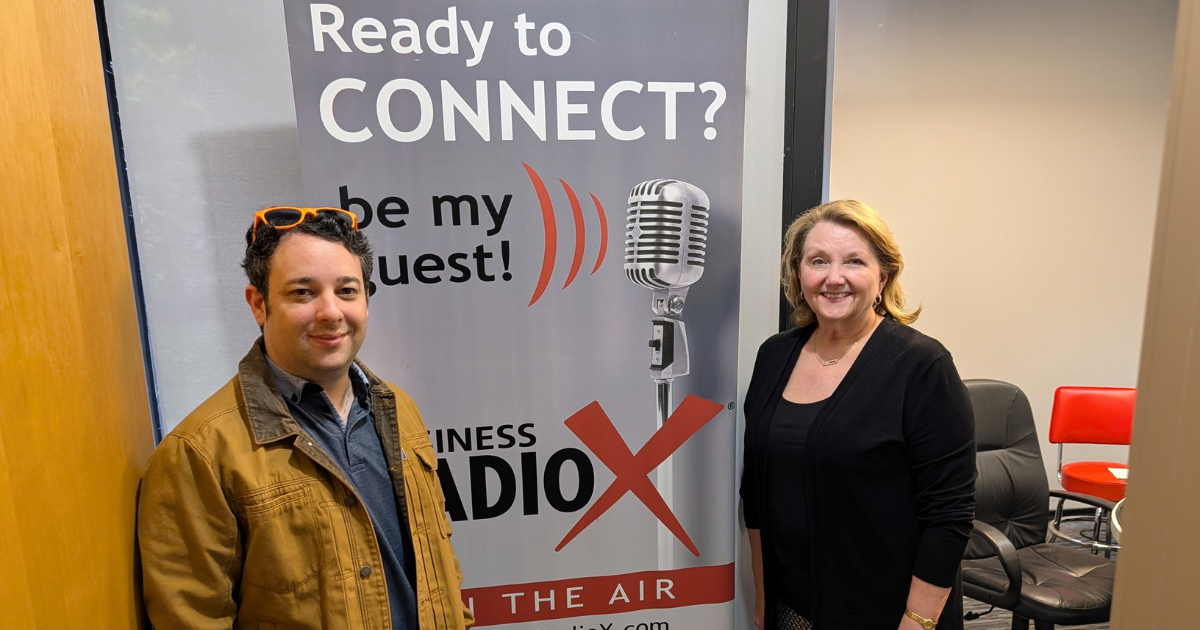

In just seven months, Women on the Cap Table grew to more than 60 members and made its first six-figure investment—in a Kentucky-based AI company. Founder Jane McCracken joins Adam Marx to explain how the group helps women invest with greater confidence, why angel investing still comes down to backing people rather than algorithms, and how AI can speed up diligence without replacing human judgment. They also explore what makes Atlanta unusually accessible to entrepreneurs and investors—and why its startup community and Fortune 500 companies have more to gain by working together.
 Jane McCracken is co-founder of Women on the Cap Table (WCT), a collaborative network for women to learn about, invest in, and support high-growth companies that deliver strong returns and meaningful market impact.
WCT focuses on Southeast-based technology and tech-enabled companies raising seed and Series A rounds. The network targets 2–4 investments annually and has the capacity to deploy over $1 million in capital. Jane brings more than 25 years of angel investing and entrepreneurial experience.
She is a serial founder who has built and led companies in health tech, software, and e-commerce, raising over $100 million in capital and achieving successful exits via IPO and acquisition. She currently serves as Chief Growth Officer at Corps Team, where she helps companies scale by building high-performing teams.
Jane also serves on the boards of Edinburgh Worldwide Investment Trust plc, Tern plc, Oncolens, and Radyus R&D.
Episode Highlights
- Building a community to help high-net-worth women learn about and participate in angel investing.
- Educating investors, evaluating startups, and conducting due diligence.
- The importance of relationship building and networking for founders, investors, and businesses.
- Developing strong storytelling skills to communicate effectively and build lasting connections.
- Using AI as a tool for efficiency while protecting confidential information and preserving human judgment.
- Balancing technology with creativity, emotional intelligence, and other distinctly human skills.
- Atlanta’s strengths as a place to build and grow businesses, including its talent, affordability, and international access.
- The value of connection and collaboration across Atlanta’s startup communities and larger corporations.
- Supporting inclusive investment opportunities for founders of all genders and across technology sectors.
About Your Host
 Adam Marx is a networking & leadership consultant, speaker, startup advisor, journalist & the founder of The Zero to One Networker.
Formerly the founder & CEO of music-tech startup Glipple, Inc., and as a writer appearing in Crunchbase News, Startup Grind, Mattermark, & others, Adam draws on more than a decade of experiences in the music & startup tech industries to teach others how to cultivate powerful relationships using strategies of patience, consistency, authenticity, & value creation.
As a networking consultant and speaker, Adam has worked with numerous organizations, including Georgia State University, TechStars Atlanta, the Atlanta Tech Village, ATDC (through Georgia Tech), & Startup Showdown, where he’s advised & mentored founders on how to develop magnetic dialogues & long-term relationships.
Adam’s talks include those given at Georgia Tech and Georgia State University, with a keynote at Emory University’s The Hatchery and as a featured speaker for Atlanta Tech Week 2024.
In addition to advising & consulting, Adam sits on the steering committee for InnovATL, cohosts LinkedIn Local ATL, emceed the 2022 Vermont SHRM State Conference, and was a workshop speaker at South by Southwest (SXSW) 2025.
He is currently working on his forthcoming book.
Connect with Adam on LinkedIn and Instagram and follow Zero to One Networker on LinkedIn and Instagram.
 This transcript is machine transcribed by Sonix.
TRANSCRIPT
Intro: Broadcasting live from the Greater Perimeter. It’s time for Greater Perimeter Business Radio. Now, here’s your host.
Lee Kantor: Today’s episode is brought to you by 0 to 1 networker, helping founders, funders, and operators build the strategic relationships and access that move business forward. For more information, go to 0 to 1, networker.com. And here’s your host, Adam Marx.
Adam Marx: Thanks, Lee. I’m so excited to be back. We took a couple months off. It was a busy, crazy summer, but we’re returning with an exceptional guest, Jane McCracken, who’s a good friend of mine. And like I said, your resume speaks for itself and it’s so long, we don’t have time to go through everything. Just just go ahead and introduce yourself because I’m so excited to get into this.
Jane McCracken: Uh, well, Adam, thank you so much for having me. And I have had a hodgepodge of a career that has been an incredibly wonderful ride and a wonderful experience. And I almost like to think of myself as a Jane of all trades rather than a jack of all trades. I’m gonna be a chain of all trades. I’ve had some wonderful entrepreneurial career experiences. I was able to get into angel investing early on. I’ve had the opportunity to live outside the United States and see what that’s all about, as well as spend a great deal of time right here in the lovely Atlanta, Georgia. Right now, I’m focused really on three things. I do have a day job and I love what I do. I am helping companies get the right people in the right places at the right time. So it is about recruiting. It is about understanding a company’s culture so that you get the right people on your team and build a high performing team. I also spent time serving on boards and doing advising and mentoring work. And then finally, seven months ago, we started women on the cap table. And it’s a community of high net worth women who want to learn about and invest in exciting, fast growth companies that will have an impact in their markets and give our investors a return.
Adam Marx: I mean, it only seems appropriate to have you as the guest today because we had Karen Cope as a guest a couple of months ago, and she elaborated a little bit about women on the cap table, and I would love to learn more about it, because I think that it’s grown in the time that she was able to come on as a guest, and I’m seeing more and more content around it. Can you, for people who may not have heard that episode, kind of remind those listeners kind of what the thesis is and what that whole kind of organization is about.
Jane McCracken: We decided that there were a lot of women in the greater Atlanta community who were interested in angel investing, but for some reason they weren’t participating in it. And even when you went to some of the more established angel groups, there were very few women in the room. So what we decided to create was a community platform, an environment that was, I guess, female friendly. I’m not saying that the other ones weren’t, but this one is especially. And we are building a community of like minded women. It is women who want to learn about this particular asset class. It’s an alternative investment asset class. It’s very interesting. It’s not for the faint of heart. Uh, it does require understanding. We are trying to help our members. We’re about 60 members strong now. We’re just over 60 members. Um, we’re trying to help them become more intentional and more confident investors. So one of our cornerstones is education. We meet monthly, we have educational content. And then we either feature a real world case study of a company that’s received angel backing. And we’ve let people understand the journey of the company and how far they’ve come thanks to that early investment capital. Or we actually have companies pitch an investment opportunity for us. So in the seven months we’ve just completed our first investment, we’re very proud. It’s a six figure investment in a Kentucky based AI software company. Uh, the company is called narratives. Um, we’ve had five companies pitch to us now, so we’ve completed one investment deal. We have two companies in our diligence process. And then next month, we are also one of the members of the investment syndicate for the startup showcase at Venture Atlanta. So our members, probably by the end of the year, will we will have done about three deals.
Adam Marx: I mean, that’s that’s great because it’s what you said six, seven months old. I mean, we’re like, we’re under a year and you were already looking at three deals and, and that that kind of backs up really nicely into the, the undercurrent of what this show is about, which is around network building, long term relationship development, dialog development. And I, you know, I want to. You’ve had such a broad set of experiences in the startup space, in the corporate space, and now with women on the cap table, certainly with the investment focus, how do you see network building, relationship building as being a key, cornerstone, key cornerstone, redundant, but a cornerstone in these different processes, particularly as it pertains to looking at deals, identifying opportunities, cultivating those conversations and relationships. How does that work out?
Jane McCracken: In general, I think networking and relationship building is a life skill and everyone needs to get comfortable with it. Um, there are some people that are naturally comfortable with meeting new people and there are other people that that’s a learned skill, but it is a necessary life skill because if you’re going to succeed in life, particularly in business, in your career, and especially if you’re going to be an entrepreneur, it is a constantly about relationship building and you build relationships through networking.
Adam Marx: I mean, I think that sometimes it can be very easy for founders or entrepreneurs to focus on the things that we hear very, very often about, which are still important. Understanding how to get your, your pitch down really well, how to, how to know your metrics, product development, hiring. These are all critical portions of the entrepreneurial journey. But I think that the networking also undergirds how founders need to think about talking to investors, approaching investors, approaching potential, Uh, talent. You know, you mentioned recruiting and you mentioned the right time factor. I mean, sometimes it’s about maintaining relationships until it is a fit to welcome that person into your company for, for whatever reason.
Jane McCracken: Well, if you think about lots of things in business, it’s a process. And relationship building is also a process. And relationship building is almost in every single business process that you undertake as an entrepreneur, whether it’s product development, filling that pipeline of customers, hiring, raising money, all of it is about building relationships. Nothing should be transactional.
Adam Marx: I’m going to go back to that. Nothing should be transactional because that that that’s a mic drop moment. But I think that the one of the things that’s hard for founders, particularly people who, who don’t necessarily see themselves as like, uh, extroverted personalities, you know, is that the nature of relationship building is almost inherently inverse to everything else. As a startup founder, it’s not quick. It’s not like tighten that flywheel as much as you possibly can. It sometimes is meandering. It sometimes feels somewhat, um, uh, irrational in moments, almost serendipitous in moments. And like, so as a founder, it’s like you want to be able to collect as much data as you can and tighten that flywheel and improve that product and do it as quickly as possible. Sometimes relationships aren’t like that. And I think that it’s, it’s necessary to just articulate to founders, this is going to feel a little bit different than the get it out the door quick. And I just think it’s a necessary thing to just sit, sit and and marinate over.
Jane McCracken: I totally agree with you. It’s not a get it out the door quick. But if you think about when you are selling your product, most products take a while to sell. And the more that you invest in the process, embrace the process, learn from the process, improve through the process, the more successful you’re going to be. Um, and again, it’s about continuing that relationship. It’s not a transaction. It’s not one time. It’s following up, it’s giving back. It’s paying it forward. All of the things we hear about this is all in it. And the other thing, I think that’s a really great skill if you’re going to be good at building relationships is being a storyteller. You have to really practice what your story is. 10s how you introduce yourself, how you leave an important tidbit for someone to remember. How you remember the exact same tidbit the person you just met shared with you. And what you may be able to build a relationship around based upon those two facts you shared with each other.
Adam Marx: And it may take a series of conversations with a whole slew of people to figure out this little thing works, this little thing, maybe not so much, and kind of figure out what is the best way to compile the best image of yourself and the best image of your story, the best narrative. You know, I being an entrepreneur, I’m always curious about how people on the other side of the table, in this case, investors, how do they think about network building? Because a lot of times we talk about entrepreneurs gaining access. Access to capital. Access to different kinds of funding opportunities. But how do investors think about that? Because you spend an awful lot of time on that side of the table, certainly with women on the cap table. Being an investor focused initiative.
Jane McCracken: I think you really when your relationship building is an investor, you’re you’re maybe going after three paths you want to meet certainly deal flow. The entrepreneurs that are building companies that are interesting to you, interesting to your investors. If you if you’re a fund in interesting to your investment thesis. The other thing you need to build relationships with are partners. So it could be other investment firms, it could be accelerators, incubators, universities, chambers of commerce, etc.. And then the other thing you’ve got to do is build Relationships with people that are going to continue to teach you. I mean, everybody’s got AI on their mind. Everybody should be learning about AI, how to apply it, what could be dangerous about it since that’s been in the news lately. Um, but as an investor, you also have to have a love of lifelong learning and want to learn about the next thing. Um, so I think those three areas are where investors are building relationships.
Adam Marx: It’s, it’s interesting you brought up the AI thing. I mean, it’s maybe it’s kind of inevitable because it’s part of every conversation right now. I think one of the additionally, one of the things that’s really important when we’re talking about AI is to also talk about the limitations of it today. And I, I see consistently there are two dialogs kind of going on right now, and one of them is, you know, the AI dialog about is it going to be replacing things? And is it going to be I mean, it’s changing workflows. It’s changing all this kind of stuff. And that’s, that is taking a lot of the attention. But there’s also another dialog happening, like in Education Week, uh, HR magazine, Business Insider, Inc. where there’s dialog around what we used to call them people skills. Now they call them SEL social and emotional learning skills. So like Inter-industry collaboration, communication skills and how companies, large companies like, um, Delta and Southwest and Goldman Sachs are also in, in addition to looking at AI and how that’s going to benefit their workflows, looking at those kinds of skills because they are so invaluable. And I think that it’s necessary to, to just talk about like, AI can do a ton of stuff right now. I still don’t think you should outsource your entire customer service to AI because we’re just not there yet.
Jane McCracken: I totally agree. I don’t want to live in a world without H. I human intelligence.
Adam Marx: That’s brilliant. I’m going to steal that.
Jane McCracken: Um, I think we all need to embrace AI as a tool that can create benefit for us, but not replace anything. I can’t, I can use AI to help me understand something to help me comprehend it. I shouldn’t rely exclusively on it, and I shouldn’t rely on my own intelligence to go out and get additional information, then just rely on what the chatbot tells me.
Adam Marx: Well, and it has, you know, because chatbots and AI are are trained on patterns and algorithms and, and sometimes the especially the entrepreneurial journey. But life in general is like bizarre, like it doesn’t follow a certain kind of pattern. It just kind of happens. And, you know, AI can’t really assess that very well because it doesn’t fit into their, into the mode of the reasoning.
Jane McCracken: I don’t want to lose basic creativity because AI learns and everything starts to become samey and a little bit vanilla. And if we don’t bring the human back into it, that the creativity is going to become blah.
Adam Marx: Well, and you know, and there’s, there’s a big conversation going on in like the literary community, you know, when you submit writing to any number of publications, magazines, etc. A lot of them have statements now about AI and all the statements are are various in nature. Some won’t accept any sort of thing, some. Well, if you say, well, I used it for spell check, you know, they’ll accept it. But the, the interesting almost upside down thing that’s going on now is like poetry is a great example because poetry is about kind of different syntax, and it doesn’t look like a prose piece. And you have people who have spent writers who’ve spent decades developing their craft and honing their craft and AI, the AI detection tools that a lot of these publications are using, which are, you know, inaccurate, maybe on the best of days, they are incorrectly flagging these writers with the assumption of, well, it must be AI because it’s so well written. But this person may have taken 20 years to develop that craft and creativity. So it’s almost kind of like an upside down, bizarre, Kafkaesque joke.
Jane McCracken: I agree. I mean, one of the things I promised myself this year was to, to take a little time out for myself. And I am enjoying a drawing class and it is so amazing the skills I’m building through basic drawing skills. It’s forcing me to look at objects in a different way. And again, I’m not sure AI does that. I worry that it just kind of starts to be too much of the same thing and doesn’t introduce a new idea.
Adam Marx: So, so then let’s talk about like AI with regard to like investing. I’m sure that must be some sort of a conversational topic.
Jane McCracken: Absolutely.
Adam Marx: So can you elaborate a little bit on that vis a vis like how it looks from the investing standpoint, what what investors are using it for or avoiding using AI for? Um, and, and kind of just elaborate on that.
Jane McCracken: I think three things, um, when you’re looking at an investment opportunity, companies share an incredible amount of confidential information. And if you’re going to use AI tools, you have to be very, very careful when you are going to introduce confidential information. And that’s something investors are being very careful about. But if you think of AI as a tool for efficiency, it can be very, very helpful. Um, and I think one can use AI to get through data faster, But I don’t want AI replacing an investment decision. Investing is really about investing in people, especially angel investing. You’re investing so early in a business’s life, you’re really backing the founders. And if you’re letting AI make that decision, they aren’t factoring in the grit, the resilience that the, the, um, personality traits of the founders. It can factor in their resume, but it doesn’t factor in their humanity.
Adam Marx: Well, and this reminds me, I can’t remember if it was Business Insider or Inc. There was an article that came out. It was like November of last year, right before the holiday time. And it was an interview with a handful of Goldman Sachs partners about AI and just kind of that as a factor. And, and, uh, the gist of the article was, yeah, we’re not anti AI. We are using it, exploring it as an organization, but for, for what you just articulated, getting through data as quickly as we can, kind of using it as a blunt force tool to cut the time in that respect. But what they’re looking for when they hire people, new associates, you know, relationship building skills, because Goldman Sachs, their mentality, I must, I must imagine is this is like a 20 year relationship. We want to take you from initial investment to acquisition or IPO. That could be 15, 20 years. We’re in business together. We want to be in business together. That’s not an AI thing. That’s a human capital thing.
Jane McCracken: Absolutely. And again, I think there are great benefits from AI as a tool, but it shouldn’t relate. We, uh, it shouldn’t replace humanity, human decisions.
Adam Marx: Mhm.
Jane McCracken: Uh, it, it just shouldn’t.
Adam Marx: Well, you know, one of the things that I did want to want to touch on because you’ve had such a long career here in the Atlanta community, you know, through your experiences at Atdc and kind of we were just talking before the show how you’ve seen the, the growth of like the upper perimeter area kind of evolve. You know, what are some things that you’re seeing now that make you excited for and bullish on the Atlanta community?
Jane McCracken: I want Atlanta to be a wonderful place for people to build a business, whether it is a Main Street business, whether it’s a consumer oriented business, whether it’s B2B, whether it’s technology, I, I think we do have an incredibly business friendly metro area. We also have an incredibly large in terms of geography metro area. And it’s allowed some wonderful communities to build up and provide resources to entrepreneurs on a very localized basis. But I don’t want to lose the connective tissue of the entire metro area itself. I think as long none of these communities should work in isolation, they should work in partnership with each other because everybody has so much to give, and a lot of really good exchange can happen between these communities that are popping up around the area.
Adam Marx: Well, well, we kind of talked a little bit about the the isolation factor before we started recording of, of entrepreneurship. And I think that that’s it keys into what you just said because like this stuff is hard. If it was easy, everybody would go and do it and, you know, make a $3 million exit or have a $3 million exit and, and everything would be great. But like this, this is tough. And so community as a major, a major factor of a city, a, you know, kind of a, a guiding North star, I think is it’s much more important than just being kind of like an, oh, yes, we have this too, like an afterthought, like it should be a, a, a real point of pride. And I think that Atlanta has that kind of in in spades. And it’s really kind of wonderful. I’m curious because I know you do a lot of a lot of work internationally and you have or you have a lot of connections internationally. So like if you are working with a company that expresses interest in like opening an office in the states or in the southeast or in Atlanta, what do you usually talk about with regard to like what Atlanta can provide?
Jane McCracken: Well, I definitely try to sell Atlanta because if you think about it, Atlanta from a time zone difference. Um, I do most of my international work in Europe. So Atlanta is 5 or 6 hours, uh, time zone wise, the same as New York, the same as Boston, the same as D.C.. But the cost of living in Atlanta is a lot less than those communities.
Adam Marx: Oh, yes.
Jane McCracken: We have this wonderful airport that allows everybody who’s coming from the other side of the Atlantic to get here very quickly, very comfortably, and then jump on another plane if they need to get to other parts of the United States. So the airport is a big selling factor. The talent that we have here and the friendliness that we have here, the fact how wonderful a community it is to live and raise a family. Um, having lived abroad for 20 years. Atlanta is not top of mind as a tourist destination for most people from outside the United States. Yeah. Um, if they’re doing a great a tour of the Greater South, it’ll be amongst the many cities, but it’s certainly not the first destination that foreigners are coming to. But it is a wonderful place to live, to really have a great lifestyle and to raise a family.
Adam Marx: Do you find in your conversations with your kind of European contacts that there is More interest when people begin to learn a little, a little bit about the city, like is maybe for people who are less familiar, once they kind of see what we have. Does do you think that we can we’re able to compete with like, you know, the New York’s, the Boston’s, uh, Texas. I mean, these are also places. Miami. Yeah. These are also places that where like, like you said, cost of living rent. You know, those are major factors.
Jane McCracken: Absolutely. I was recently talking with a software company who is looking to open up a US operation on the East Coast because of the time zone factor. And they are considering Boston, New York, Atlanta and Miami. And I said, what you need to do is build out a matrix, figure out the exact factors you’re looking for, and then compare each city because I think Atlanta is going to come out on top, even though it probably was number four in that list of cities for you to think of.
Adam Marx: Mhm.
Jane McCracken: We have everybody says this about Atlanta. We aren’t very good at bragging about ourselves and marketing ourselves as this great place that we are. I don’t know what it is, but, you know, Miami has a cool factor and Boston has an intellectual factor. And New York is New York, New York.
Adam Marx: It’s like but, you know, and, and, and.
Jane McCracken: But Atlanta influences everything, don’t we?
Adam Marx: Well, well, Atlanta has and people have heard me say this ad nauseam at this point. I think Atlanta has an open factor, which we were kind of talking about. Like, you can get in the room with some of the like, top decision makers in startups and tech here. And like some of those rooms are, are a little bit more expensive depending on the conference and the year, the party, the part of the year. But other times you can go down to Atlanta Tech Village for like their Startup village series, and it doesn’t cost you anything. Well, it costs $7 to park, okay, but it doesn’t cost you anything beyond that initial little parking investment. And you can end up in a room with some of the serious decision makers who are sought after voices in this city. And that that I think is a very special factor because it means people coming in from from outside the city can actually meet these people, talk to these people, develop relationships and rapports with these people. That is a huge selling point.
Jane McCracken: Absolutely. Just last Friday, a week ago, I was at Atlanta Tech Village doing some mentoring office hours. I met a gentleman who was visiting Atlanta from the West Coast, and he just couldn’t believe how accessible and easy to become a part of the greater startup community. It was in Atlanta, and he, I was introducing him around to various people. He was then going to join the Chowdown for lunch, and he just couldn’t believe all the people he was meeting. I mentioned some of the other parts of Atlanta and communities that he may want to go visit for his particular, the technology he was building, but he was just amazed at how accessible, how friendly, how easy it was to navigate what we have here as compared to his experience in Northern California.
Adam Marx: Well, and my my experience in San Francisco Limited, though it was a number of years ago, is that it felt very much like one had to kind of fit in a certain box. You know, at the time it was you have to write code. You got to be hard. Tech engineer and, and maybe it’s changed. Hopefully it feels a little. Bit more, um, a little bit more open to people who kind of are not necessarily the tech side of a company, but maybe doing copy editing or maybe doing sales or maybe doing, you know, legal, whatever it takes to build an actual organization. Um, but I love that Atlanta has such a wide range of those voices, often in the same rooms. It’s, it’s very rare actually, that I go to an event and it is like 98% engineers. Like I see people from legal and I see people from like the medical side of the industry who are looking to get into entrepreneurship and people from higher ed and academia. Like that’s a wonderful thing that we have, which we should brag about more often than we do.
Jane McCracken: I agree with you. I mean, um, it is a friendly city. It is a intellectually, culturally, uh, emotionally diverse city. You know, you can, there’s a little bit of everything for, for whoever you are and whatever you enjoy and whatever kind of business that you’re building. And I think our residents are very welcoming and very accessible. You know, they aren’t sitting on the top of the the hill looking down on everyone else. They’re actually in the mix.
Adam Marx: Well, and the, the amazing thing about that, and we may have to start wrapping soon. But the amazing thing about that is I think people from outside Atlanta forget just how many like fortune 500 companies we have here, like Atlanta is, is putting real time and, and sweat into building out a reputation for itself as a, as a startup hub. Um, but we are also heavily populated by large corporate presences. I think most people probably know Coke. Most people know chick fil A. Um, Home Depot.
Jane McCracken: Delta Airlines.
Adam Marx: Delta Air Lines.
Jane McCracken: You can keep going. Those are amazing.
Adam Marx: Those are like not the old guard, but the probably the most well-known brands. Um, but even like here in Sandy Springs, we have, you know, inspired brands is like here it’s as opposed to being like in midtown or in downtown.
Jane McCracken: Well, you got ups, you’ve got, uh, Mercedes, North America. It is an amazing city. We do have incredibly large companies here. Um, two things about that. I love how good corporate citizens all of those large companies are. They are excellent corporate citizens. They invest in the community. They invest time. They’re very supportive. The other thing I love, I feel being active in the startup community, that our voice is often equally heard to when the big companies are talking to. It’s not one or the other. And if you think about other startup hubs, for example, Austin, you know, the startup scene there is very dominant because they don’t have the large corporate scene that we do. Um, I’m not sure if, for example, in a Los Angeles or in a Chicago, do their startup communities have an equal voice to the fortune 500? I think it also helps make Atlanta unique.
Adam Marx: Yeah, I can’t I can’t speak to LA or to Chicago, but I definitely love seeing like a great example would be, um, fintech. Atlanta’s like run it by the buyers events where as a startup doing, you know, X amount of, of, of traction, X amount of revenue, whatever the, the standard is, you’re in a room with people who are representing those large companies like UPS like Delta pitching your product, and then the kind of schmoozy cocktail party, you know, afterwards is, yes, there are people representing the corporates. There are also a lot of startup people who can just talk to those people and be kind of on an equal level, get to know them. Maybe they have a product that is applicable that, you know, it’s just, it’s a wonderful it goes back to the accessibility thing.
Jane McCracken: That’s right.
Adam Marx: Um, we, we need to start wrapping up because, uh, you’re so busy, you have all these prior engagements. So I was lucky to to get on your calendar, but for, um, for all the people out there who want to support what you’re doing now, um, where can they go contact you or support your current initiatives.
Jane McCracken: Please visit women cap table.com. So that’s our women on the cap table URL. Um, you can reach me through LinkedIn. My name’s Jane McCracken, and I’d love to tell you more about what we’re building. We’d love to have more women on the cap table. Uh, and if you’ve got an investment you want us to consider, you can easily apply through our website.
Adam Marx: And, and one thing I’m going to add is a little quick addendum because I made very, very I made sure to ask Karen this last time. Um, how can those of us who are not women on the cap table support that. Can we come to events? Can we share it? I mean, I want to make sure that of, of other people out there realize they can also be supportive, even if they’re not, you know, a woman writing a check.
Jane McCracken: We welcome, um, the gentleman to join us at our meetings to, um, we do not exclusively invest in only female founders. So we invest in founders of all genders and in a wide variety of technology areas. So, um, we’d love to see you at our meetings. We’d love to invest in your companies.
Adam Marx: Well, on that note, uh, I want to thank you for coming out today. And this was so much fun.
Jane McCracken: Yes, it was, it was great. Thank you for having me.















