
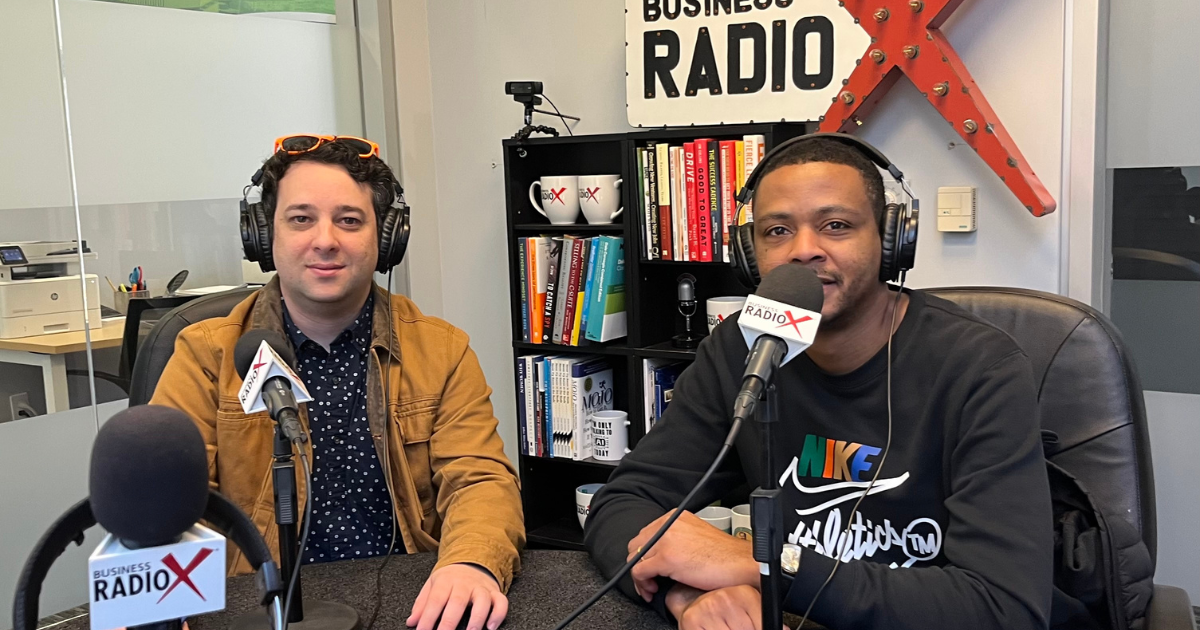
On this episode of Greater Perimeter Business Radio, hosts Lee Kantor and Adam Marx interview Avoilan Bingham, General Manager at Drive Capital and President of Atlanta Tech Week. The discussion explores Atlanta’s tech ecosystem, the importance of authentic networking, and the impact of AI on startups and venture capital. Avoilan shares insights on building community-driven events, the value of in-person connections, and the evolving skills needed for success in an AI-driven world, emphasizing that strong relationships and adaptability are key for founders and tech leaders in today’s rapidly changing landscape.
 An Atlanta native and ecosystem builder, Avoilan Bingham is the Atlanta Seed General Manager at Drive Capital where he leads early-stage investing for Atlanta & the Southeast. Avoilan also serves as the President for Atlanta Tech Week, a week-long celebration of Atlanta’s emerging tech ecosystem. Avoilan has spent his professional career as an operator and ecosystem leader coaching, advising and supporting high-growth teams across numerous sales and tech organizations and is focused on rethinking the way we create, engage and develop business solutions in an increasingly digitized world.
Avoilan has held numerous leadership positions throughout his career including Managing Partner at Atlanta based Venture Firm Vertical404, Director of Partnerships for music tech company MyMyMusic where he led corporate partnerships, outreach and growth strategy and was Head of Sales for the digital event SaaS (Software as a Service) platform, The Labz.
A Founding 100 Member and Stakeholder at The Russell Center for Innovation and Entrepreneurship (RICE) and Foundation Member at The Gathering Spot Atlanta, Avoilan is actively involved in community and social initiatives for the betterment of Metro Atlanta.
Avoilan holds a B.S. in Sports Management from Guilford College (NC) and lives in the Metro Atlanta area with his wife and their children.
Connect with Avoilan on LinkedIn.
Episode Highlights
- The Atlanta tech ecosystem and its growth dynamics.
- The importance of networking and community building for startups.
- The role of Atlanta Tech Week in fostering community-driven tech events.
- The significance of in-person connections in the age of AI.
- Insights into Drive Capital’s investment strategies and focus areas.
- The critical factors venture capitalists consider when evaluating startups.
- The evolving nature of networking and relationship-building in a post-pandemic world.
- The balance between quantity and quality in professional networking.
- The impact of AI on traditional job roles and the need for interpersonal skills.
- The future of work in an AI-augmented environment and the importance of adaptability.
About Your Host
 Adam Marx is a networking & leadership consultant, speaker, startup advisor, journalist & the founder of The Zero to One Networker.
Formerly the founder & CEO of music-tech startup Glipple, Inc., and as a writer appearing in Crunchbase News, Startup Grind, Mattermark, & others, Adam draws on more than a decade of experiences in the music & startup tech industries to teach others how to cultivate powerful relationships using strategies of patience, consistency, authenticity, & value creation.
As a networking consultant and speaker, Adam has worked with numerous organizations, including Georgia State University, TechStars Atlanta, the Atlanta Tech Village, ATDC (through Georgia Tech), & Startup Showdown, where he’s advised & mentored founders on how to develop magnetic dialogues & long-term relationships.
Adam’s talks include those given at Georgia Tech and Georgia State University, with a keynote at Emory University’s The Hatchery and as a featured speaker for Atlanta Tech Week 2024.
In addition to advising & consulting, Adam sits on the steering committee for InnovATL, cohosts LinkedIn Local ATL, emceed the 2022 Vermont SHRM State Conference, and was a workshop speaker at South by Southwest (SXSW) 2025.
He is currently working on his forthcoming book.
Connect with Adam on LinkedIn and Instagram and follow Zero to One Networker on LinkedIn and Instagram.
 This transcript is machine transcribed by Sonix.
TRANSCRIPT
Intro: Broadcasting live from the Greater Perimeter. It’s time for Greater Perimeter Business Radio. Now here’s your host.
Lee Kantor: Lee Kantor here with Adam Marx another episode of Greater Perimeter Business Radio, and this episode is brought to you by 0 to 1 networker helping founders, funders and operators build the strategic relationships and access that move businesses forward. For more information, go to 0 to 1 Networker. What a great show you got today!
Adam Marx: Yeah, I’m excited for this one because it’s it’s been a long time coming and I’m so excited. In fact, we’re just going to jump in, uh, and I, you know, I have Avoilan Bingham here with me today, and I’ll let him introduce his multi-hyphenate job title, as it were.
Avoilan Bingham: Absolutely. Uh, Adam, thank you for having me. Yeah. Avoilan Bingham, general manager and investor, would drive capital where I lead our early stage investment practice for Atlanta and the southeast. Also president of Atlanta Tech Week, Atlanta Tech Week this year, August 9th through the 14th all across Atlanta. So more details at Atlanta. And in addition to that, community director of AI tinkerers, where we have a monthly meetups with the best builders, technical builders in Atlanta. So product people, developers, engineers, founders, investors, people who are leveraging large language models and generative AI to build the future of technology. And we have the pleasure of hosting them at the Biltmore. Shout out to the Biltmore Innovation Center, and we host them on a monthly basis, talking about kind of all things tech, presenting all the new and crazy things that are happening in the world of AI and technology and, you know, super excited to be a part of those organizations and really excited to be here today.
Adam Marx: Now, this is like, how do I follow that? You know, it’s there’s so much good material there, and so much of it is overlaid with great relationships and building networks. I mean, let’s start let’s start with Atlanta Tech Week, right? Because I’ve had the pleasure and the honor of speaking at Tech Week for like the last two years, since since the inception, there’s always, I think sometimes a perception when there’s the word tech in the title or startups in the title, that it’s always going to be heavily technical and, you know, relationship building and network building sometimes can get swallowed up or somewhat outshined by sales marketing, those kinds of very important go to market strategies. But the network building component is something that you and I have had a very consistent dialog about for quite a while. And let’s talk about how that has informed Tech Week in the past till now, and how it’s going to inform it this year.
Avoilan Bingham: Yeah for sure. Yeah. Tech week I think when we think about community, when we think about relationships, when we think about networking, those are all really, you know, core to how we’ve been able to scale it. I’ve been with Tech Week. Now this is my we completed my second year last June. This will be my third year this upcoming August. When we think about the growth, it’s been through relationships. It’s been through knowing people like you like a text or a phone call or, you know, lunch, like, hey, like I need you, you know, I want to hear your perspective. And it’s been that just continued kind of growth through those relationships and networking from potential partners, speakers, potential partners to help with programing. It also has led to how we think about Tech Week, where we host Tech Week. Right. So there are relationships across the metro Atlanta area. You know, it’s not just tech week in downtown. It’s tech week. You know around the perimeter. It’s tech week in Peachtree Corners, it’s Tech Week, downtown and Midtown and Buckhead and all these really fantastic places. But that doesn’t happen without the relationships to drive that support, to drive that engagement.
Avoilan Bingham: And so as we’ve continued to grow Tech Week, we really see Tech Week as the platform to build on top of right and the platform. What I mean by that is we create and enable the opportunity for people to, you know, create experiences, create events. It’s not just our team hosting a bunch of events. Our team actually hosts a small fraction of the events that happened during tech week. A lot of people maybe don’t realize that, but the majority of the events that are happening are either existing programs. They’re community driven programing where people see, hey, I have an idea for an event. It maybe is not the most technical event, but it is adjacent to technology or given the current landscape, we’re all using technology in some way. So how do we think about applying that in a way that’s community focused and community led. And that’s really what’s kind of led to our success. And a lot of that, again, has been through that networking, uh, you know, aspect to help build community in that way.
Adam Marx: I mean, I think that I think the community is just a great word. Uh, but it’s also a buzzword. It’s also, you know, everyone wants to have community, um, and, uh, invest in community, and I’m all for that. But I think that we need to really understand that community and snap and it’s quick, you know, and startups and tech, we’re often talking about getting that that flywheel and getting that, uh, product market cycle as tight as you possibly can. And what’s been very successful in, you know, our dialog and I’ve seen this also, I assume, with, with Tech Week as well, and is taking the time to look for what is the right activation, what’s the right opportunity that makes sense for all the people at the table. So everyone comes away feeling like they’re winning. Because I think a lot of times people can get confused. You know, network building can sometimes feel like, well, if I help someone get a job or get an internship or have an opportunity, then I’m now losing something. When in reality this isn’t the NBA finals where someone’s going home unhappy. There are ways for us to figure out how we all can can find success and come away from that table as as winners.
Avoilan Bingham: Yeah. No. Absolutely no. You hit it right on the head. I think relationships are not a, you know, zero to, you know, zero sum game. Right. Like I think about those relationships as being able to to power not just you but the team around you, the community around you, the network of people around you. Um, it’s been important for us in our journey, um, with Tech Week and how we’ve been able to grow, um, you know, having a community of people that support us. And so as we think about what those relationships mean, particularly if we kind of shift the conversation to startups, you know, I work with a lot of early stage startups, invest in a lot of early stage startups, and it’s all local. It’s all relationship based, right? And it’s about who you know, who in your community that, you know, there’s a problem that they need a solution to solve. At this stage, it’s all about selling local. And so that’s a big a big focus when you think about like how do you scale and grow. Its with the community. We’ve seen that in the companies that we’ve invested in have also been a beneficiary of that as well.
Adam Marx: Well, you know let’s, let’s let’s jump on to that. Let’s talk about let’s talk about drive capital and your experience in venture capital. You know, in the venture capital landscape. Um, because I don’t know if our listeners may know, drive capital is based out of the Midwest, right. Um, and you can talk a little bit about that, but what I really want to start to cover is, uh, in the start up game, finding access to venture capital is often seen in a very kind of binary way. You get your pitch and then you pitch, and you either get the money or get the deal or you don’t. You move on. And from what I’ve seen, knowing a lot of people in venture capital, a lot of people in different kinds of financing, it’s much more long term because you may be just not where where they are, where that firm is. You may be a little too early, but there’s a way to grow that dialog. Or maybe you’re just not in what the industry that they the vertical that they’re in, but there’s an opportunity for them to possibly make introductions or keep an eye and help you out. So let’s talk about what you would say to startups regarding building relationships and maintaining those relationships, even when it’s not money right now in the bank?
Avoilan Bingham: Yeah for sure. I’ll give a little bit of insight on drive and then happy to to answer that. So a little bit about our firm Drive Capital, established in 2013, uh, based out of Columbus, Ohio. Uh, we are one of the largest venture capital firms in between the coasts. So we think of our kind of geographical footprint as far west as the Rocky Mountains, to as far northeast as the Hudson River Bay. So think like Toronto. Uh, when we think about the cities that we’re in, uh, I manage our Atlanta office, but we have office presence in Toronto, Chicago, Austin, Texas, and Boulder, Colorado. Uh, when we think about like, what we’re investing in, we’re investing in, you know, founders, phenomenal founders who are building the future of technology. Right? So thinking about companies that can become unicorns can become billion dollar valuated type of companies. How do we find and evaluate those companies in our geography and invest in them? And so these are companies that are leveraging AI today. Uh, these have been companies that have been in spaces like robotics, B2B, SaaS, fintech, healthcare, future of work. Um, and so like we’ve invested in that next generation of, of companies over the course of the last ten plus years. So, uh, really excited the work that we do, the companies that we see. And I’ve been with drive now since 2022, so have seen a lot, uh, shift. Uh, for context, I started with drive three weeks after I started ChatGPT three drop to the masses.
Adam Marx: I remember that.
Avoilan Bingham: That was just kind of like a blank moment, you know, for, uh, not only for our industry, but really for the world, you know, and we’ve seen just what that has looked like even in the course of, what, now, three and a half, not even four years. It’s upended almost every aspect of our lives. Right? So when we think about, like the advice to give to founders, a lot of it goes back to building something people actually need. Uh, not that they might like or maybe helpful or is cool, but is solving a critical pain point a critical problem in their business that the pain is so acute they’re willing to pay you to solve it, right? They’re paying you. You’re the Tylenol to solve the headache of whatever business problem that they have.
Adam Marx: Yeah. I mean, well, let’s let’s dig into the AI thing right now because especially in the tech space and, and around the network building space, you know, AI is like the new thing. And I actually just gave a talk recently, uh, a few weeks ago at, at evolve here in Atlanta. Evolve 2026. And it was around building and scaling networks against the backdrop of the age of AI. And I think that one, one of the things that can so often become misinterpreted is, you know, not being, you know, don’t be anti AI, but recognizing AI has limitations. And I think anyone who’s ever been on like LinkedIn or you know, we get I get all kinds of my email inboxes of war zone. And so I will find myself very consistently saying to founders, yes, look at how AI can help your workflow, but please don’t outsource every single relationship or every single potential relationship or dialog to AI. It is very, very clear when people do that and it is like an unforced error there. Especially when we’re talking about the dialog with people like yourself, potential venture capitalists who like deals don’t happen day one. There’s due diligence. There’s all kinds of figuring out what what are the details look like? What is the timeline look like? That takes time. And I think it’s really important for founders to understand that AI is this new shiny thing. It is not going to solve access and networking for you. You still have to put in some effort there to get in front of those people who are the people with the resources?
Avoilan Bingham: Yeah, I mean, AI man, it’s, uh, for me is is, as I talked about from my experience with drive, is really kind of shaped and colored, the type of investments that we’ve made across stages as a firm. Uh, when I think about, you know, the role AI has obviously leading a group by the name of AI tinkerer. So kind of deeply involved in the space. It is a transformational technology and the likes that many of us have never seen before. Uh, when we think about these technological shifts that have occurred over the course of the last, let’s just say, 30 years, you’ve got cloud computing, you’ve got mobile, you have the internet, you have these different instances where there’s been a technological shift that unlocks what’s possible. When we think about what we can build and what we have access to. And I think there’s no greater and really no more exciting time than right now. You can build almost anything that you want via a prompt, right to Claude to ChatGPT.
Adam Marx: Even other ones like base 44. Yeah, I mean, that’s crazy.
Avoilan Bingham: Yeah. And there’s. So there’s no better time to be a builder. I think anthropic has this commercial where there’s no worse time to be a problem in the history of humanity.
Adam Marx: That’s a great commercial.
Avoilan Bingham: Because of what you can build. But I think to your point, I think there’s also on the flip side of that, there’s no better time to build in person. There’s no better time to build in person. There’s no better time to seek out and build meaningful in real life relationships with people. Yeah, because to your point, we’re getting to a point where you don’t know if something is AI or not, and that’s whether it’s an email, whether it’s a DM, whether it’s a call, a phone call that you might receive. It’s getting harder and harder. Whether it’s video that you or, you know, content that you may engage with. It’s to the point now where it’s almost indistinguishable if you’re unless you’re like very, very like closely watching, you can easily be, uh, you know, manipulated into thinking something is real that’s artificial, or is an AI generated piece of content. So what you know is real is a conversation in person, which you know is real, is having a coffee with someone you know is real, is having lunch. Yeah, having a conversation with someone. So I think when you think about the value of in person, particularly for startups, as you start thinking about go to market, there’s no better presence than being in person talking about your value add, why your product is differentiated and who you are and what your brand represents. I think that’s a stronger, um, a stronger value prop than we’ve seen in the last several years. When you think about in-person versus, you know, kind of this age of being an AI.
Adam Marx: Yeah. Well, it’s I often think about it as kind of like this balance. It’s oftentimes presented as how many people do I know, how many investors, how many other potential co-founders, how many customers, how many people do I know? Kind of in any given network, a city or an industry. But I think a much more interesting question is how many people know me and knowing one’s brand and and just continuing to show up. I mean, I will often get now people say, oh, I know you. You’re you’re everywhere, you’re here and here and here. And it’s like, well, no, I can’t actually be everywhere at one time because, you know, I have a life and have to sleep at some point. But creating the perception of ubiquity is actually very doable. And so when you are in an ecosystem, especially now with this AI factor, I think it’s even more important. Like like you said, to double down on I know this is a real conversation with a real person who has real things of value. It’s not just a script that’s that’s, you know, behind the curtain. And I think it’s that I think that we’re we’re at the at the moment where Founders really need to understand that in order to not just get access, not just the introduction factory to potential funding or pitch opportunities or whatever that may be, but to scale and maintain those dialogs over time. We don’t spend enough time talking about that secret sauce. It will require a lot more focus and attention. Devoted to this is not necessarily the product development portion. It’s not necessarily the hiring portion. It’s the hey, we’re still on this radar portion. We’re still in this orbit portion. And that’s really critical to staying in front of the people who are running those conferences who have access to those funds.
Avoilan Bingham: Yeah. No. Absolutely. Absolutely. Yeah. It’s a it’s a big opportunity. Um, you know, and when I think about, you know, again, this dichotomy really this, this pendulum swing where if we go back, what, 2026? We go back six years ago and you had Covid and everything, you know, had to be digital and we had to stay in the house because we couldn’t go out for fear we were going to get sick to where we are now. And yes, it’s this AI component that has colored or is shaping every part of our lives. But that in-person connection is never, I think, been more powerful, particularly when you’re thinking about building a business, when you’re thinking about the types of partnerships and relationships that you want, you want something that’s in person. I think one of the things I would credit even our firm at drive, we’re big on in person, we’re big on in-person, even during the pandemic, where a moment like this to be in a room with someone, when you’re in a room that’s access, that’s, um, you know, the ability to close a deal, that’s the ability to take a relationship potentially to the next level when you’re in the room. Um, you know, like, I think going back to even, like, Teddy Roosevelt, the man in the arena, like. Yeah, that kind of thought process around, like owning a space and being the person to really own. You know, and kind of own that area.
Avoilan Bingham: I think it’s something that’s really powerful and it’s just as powerful now. I think, if not more so just because of what’s happening with AI. And the opportunity to to build in person is something that’s really, really, really valuable. And I’ll give you another example. Um, with AI tinkerers, we’re doing a hackathon. Um, and so this hackathon is about this platform called Open Claw. And so for folks who’ve been kind of paying attention to it, it’s really like this hyper autonomous agent that’s able to act on your behalf. And these agents can swarm, create multiple agents to do all types of things for you, whether it’s building platforms, whether it’s, uh, you know, executing tasks on your behalf. It has gotten to the point where they’re as good as like an actual team of people doing this on your, you know, for you. So we’re doing a hackathon to let people just create. What type of automations can you create? You know, using this platform. But what makes it so special is that it’s not just something you would do online. It’s, you know, it’s a hackathon, it’s in person. And so we got people coming out of the woodwork like, hey, can I get in? You know, can I get on the list? Can I be there? And it’s like, we’ll see. It’s not necessarily going to we’re not going to have the space to accommodate everybody. As much as it’s a.
Adam Marx: Good problem to.
Avoilan Bingham: Have, you know. But it’s one of those things where you’re seeing like man, like there’s just there’s just this desire for people to be in person and build with each other. And I think you’ve even seen that with how some of the top ecosystems in the country, you know, have been able to grow and expand. People want to be around other smart people. They want to be around other people, and they want to be in places that kind of foster that community.
Adam Marx: Well, let’s I mean, you mentioned you referenced drive and the drive philosophy a few few minutes ago. Let’s talk about that. I mean, what in your opinion, because you’ve been in the VC world for a while. I mean, since since I’ve known you, I think. And what do you think that venture capital firms that startups need to know, that venture capital firms. What kind of trends are they looking for within the context of when they’re looking to invest? You know, we hear about okay, I want a good product, product market fit, you know, a good team or whatever. Let’s take that to what are they looking for in terms of how to assess startups abilities, to build those networks, to cultivate those networks? Let’s take it away from the technical product portion right now and talk about are those firms, especially in the age of AI, looking for that factor? Not just a good internal team, but the ability for those teams to grow that that community. You know, it could be a customer base, but it could be a community of partners, Colleagues, um, local leadership, you know, whatever it may be. Is that a factor now that venture capital firms are really starting to look at in terms of a startup’s ability to grow?
Avoilan Bingham: Yeah, I’d say it always comes. I mean, I think the, the one and one a is, is team, uh, and market size. So do we have a team, do we have the right jockey? Are we betting on the right horse, um, that we believe could build $1 billion, billion dollar company? Like, I think that’s always kind of at the forefront. One a or one kind of depending on the market is how big is the market? You know, like healthcare as an example, you know, multi-trillion dollar market in North America, you could build a company that doesn’t capture .01 percent of that and still get $1 billion company, right? So those are always kind of like the two biggest focuses as you start to drill down. I think one of the things or themes that I heard from what you said and the question was kind of like, go to market and like, how do you think about approaching that? And there is an in-person, real life element of how do you capture and find people? What is your distribution channel to find your audience of potential buyers, of potential customers? How do you cultivate that? Within that? How do you sell? So we take the technical and the AI stuff out. Part of your job as a founder? To me, you’ve got to know how to sell. And that’s not just sell as a customer, that’s also sell because you got to hire people who need to also be as bought in to what you’re building, but you also need to be able to sell to investors, and you need to be able to sell to people and partners that are in that sphere of people you’re trying to get in contact with.
Avoilan Bingham: So that is a critical element and is a differentiator, right? Because there’s a lot of me too products out there, particularly with AI. It’s hard to differentiate a lot of times. So the the differentiation is going to come from, Yes. The technical, you know, technical or selling ability of that team. But then it also is going to come back to your ability to build relationships with people, durable relationships that get you an audience of your customers or potential customers in a way that your competitor can’t. And that becomes, in and of itself, a level of defensibility that allows you and potentially your business to capture market share. And so as I think about that, like, I’m certainly looking for those characteristics in the founders that we back up because I can give a really smart person, you know, half $1 million and they can go build something really cool, maybe even build something really useful that people will buy. But if they don’t have those other skills, people call them soft skills, but they’re tremendously valuable.
Adam Marx: It’s a misnomer.
Avoilan Bingham: Yeah, yeah.
Adam Marx: It’s a misnomer.
Avoilan Bingham: If you don’t have those, you’re going to be on the outside looking in. You know, as others know how to build those relationships.
Adam Marx: Well, it’s interesting because, you know, part of the part of what I referenced in the talk that I gave at evolve is if you look and I’ve posted a little bit about this, like, you know, on my LinkedIn and social networks, like if you look at some of the other stories that are coming out that came out last year, we’re still the beginning of 2026, but in 2025. And like from, you know, February, March, beginning of the year, all the way to like November, December near Christmas time. Stories from like Education week talking about like what are the big companies like Apple Microsoft, Delta. What are they looking for. Network building skills and relationship cultivation skills and what we what they’re calling SEL skills social and emotional learning. And then there was an article, I think, from Business Insider, I believe uh, in November of, of 25. So just a couple of months ago and it was a kind of an interview with some Goldman Sachs partners. And what are they looking for? Relationship cultivation skills because they’re looking at AI as a tool that can help fill in the gaps, fill in the blanks in a lot of the busy work, and allow for more time for their their team members to really spend focused energy on building those relationships, cultivating those dialogs with their customers, potential customers because they’re looking at something. We want a relationship of 20 years. And so these very large, well-known companies are literally saying AI is great, but also these quote soft skills like that’s what’s really in demand right now. And so when we talk about startups and tech, it’s not just, hey, I have a great product, you may have a great product. Are you showing up for the community? Are you showing up to to build the conversations that could lead to great partnerships down the road.
Avoilan Bingham: Yeah. No, I think it’s a really interesting point. And I’ll take it a step further. I think if I read between the lines on those comments, we are in a time where and there was a post on X about, um, the name escapes me, but really about just kind of like this shift that we’re seeing with technology. Um, and as we think about this shift where the AI is getting to the point where it can write its own software and code for itself, it doesn’t need a person. Like there was a report this week where Spotify said, like its top developers haven’t written code since December, which is like unfathomable to think.
Adam Marx: They edit the code now.
Avoilan Bingham: Yeah. They’re so yeah, as we think about like the skills that you need, like we’re in a place where you’re not going to see the same type of development work happening because they’re just going to let the AI do it, and you’ll have a human in the loop to a certain degree, but you’ll be able to reduce that workforce. If you look at what’s happening in technology at the enterprise level. They are lowering their headcount of human headcount because that CapEx is now going into I need to have a better, you know, more. We need to put more money into training. We need to put more money into compute upskilling. Yeah. Well, I’m saying they’re taking that they’re taking the money that they would have put into people and putting it into building the technology. So it’s not about upskilling in that instance. What I’m saying though, is there is going to be this there’s a future that is coming and is at our doorstep today, where if we’re not investing into these other skills, outside of technical skills, you’re going to replatform millions of people. It’s already happening. So a lot of white collar jobs, right? Jobs that at one point seemed untouchable because you had to have a level of education and certification, those white collar jobs in finance and in health and in, And, you know, legal.
Avoilan Bingham: Those jobs are going to be replaced and are going to be AI focused first. So it’s not so much about upskilling, but it is about what are the the I know we call them soft skills, but what are those skills that cannot be automated, those skills that cannot become AI ified. Right. And thinking about how to build those skills. Because in the future those are going to be extremely important, right? There is there’s going to be this intersection of AI and the physical world via automation that’s going to happen. But there’s some things AI is just not going to be able to do, and there are new jobs that are going to emerge. How do we position that workforce to take advantage of these new opportunities that are coming? And as we’re seeing the AI get better and better and faster and more intelligent and able to discern and do more the need and the opportunity to invest into this next generation of skills and in person relationship building is one of those skills that we need to spend a lot more time in, you know, supporting and investing in.
Adam Marx: Well, you know. But before we start to wrap up, I, I think that there’s something in that that’s really important because so a good friend of mine is, is, you know, an engineer and, and she said exactly what you mentioned that since, you know, AI has come out like they they’re team members, you know, they use Claude and she spends more of her time basically acting as an editor and going through that code and also needing to have the communication skills to go back to her team and say, this is it’s not exactly what we were looking for. There’s a context here, or there’s a nuance here that the AI missed, and we need to kind of kind of figure out how to maneuver it correctly so that what we’re building is actually what we’re looking for. And understanding that nuance and understanding that context is going to become even more important. So you know how to navigate management, how to navigate different personalities. These are relationship building skills and network building skills where you want to have a lot of different kinds of people in your network. You want to have the hard tech people. You want to have the local leadership people. You want to have the, uh, the legal people and the healthcare people like you want to have an understanding of how to make oneself or one’s company the conduit between different communities. And that will, when as it’s powered through AI, will help really fuel that network building capacity. Mhm. Um, I mean, I think that’s I think we should possibly leave it off there because we gotta, we gotta get you back on the show and have something more to talk about.
Speaker5: Yeah. Yeah. There’s, there’s always, always.
Avoilan Bingham: Plenty to talk about. Um, I’ll just kind of leave by. And again, thanks for for having me. Adam. Um, it’s been great to kind of watch your journey and your growth and, you know, your brand that you’ve built, which is really been so intentionally focused on network and community, which has just been awesome to see. So kudos to you and everything that you’ve been doing. Thank you. Um, and yeah, man, I’m always happy to talk. Uh, whether it’s drive, whether it’s AI tinkerers, whether it’s Atlanta Tech Week August 9th through the 14th, uh, we’ve got some really exciting things that are happening throughout the course of this year. So we look at tech week is not just a week. Uh, we really look at it as really the platform to build on top of. And, you know, the programing that we do reflects that. Uh, really with the focus on how do we build in Atlanta and make Atlanta the best place for builders to convene? Uh, and so we’re really excited about that mission, the work that we do, uh, you know, and it’s a labor of love to do it, but excited about it and yeah, happy to to continue to to speak about it. And I appreciate you having me on.
Adam Marx: Yeah. Well we’re going to have to get something going during during tech week. We’ll talk about that off the air. Yeah. Um, but for everyone who is less familiar with Drive or Tech Week, you know, where can they go and support you and then go and support these different initiatives?
Avoilan Bingham: Yeah. For sure. Um, you can find me on almost every social media platform. Uh, Avoilan Bingham. So av o I l a n last name. Bingham. Uh, I’m typically most active on LinkedIn, but you can find me on X. You can find me on IG there as well. Um, and yeah, you know, share a lot of comments, a lot of content. Um, we’ve got more on the way, but those are the best ways to get in contact with me.
Adam Marx: All right, well, we’ll do that.
Speaker6: Awesome. All right.
Lee Kantor: All right. This is Lee Kantor for Adam Marx. We’ll see you all next time on Greater Perimeter Business Radio.














