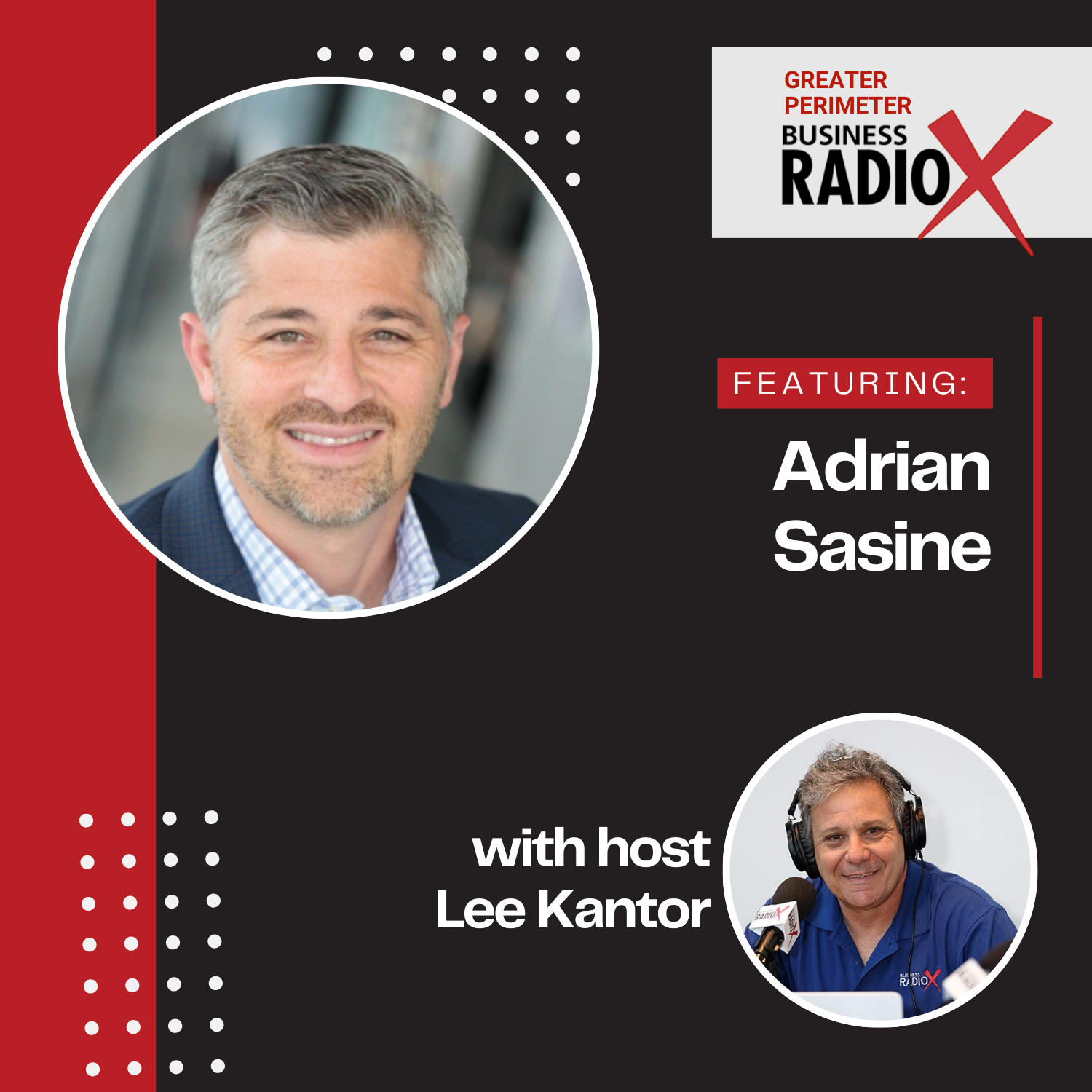

In this episode of Greater Perimeter Business Radio, Lee Kantor talks with Adrian Sasine, co-founder and CEO of Nolodex. Adrian explains how Nolodex transforms business networking by providing a digital platform for intentional, trackable, and monetized referrals within communities like chambers of commerce and alumni groups. The discussion covers how the platform standardizes referral processes, embeds payment systems for referral fees, and helps organizations generate new revenue streams while strengthening member engagement.

 Adrian Sasine is the Cofounder and CEO of Nolodex, a sales intelligence and relationship management platform that centralizes people, companies, and business deals into a single, actionable system.
A seasoned entrepreneur with a background in marketing, Adrian has successfully built, scaled, and exited multiple businesses. Prior to going into entrepreneurship, he held leadership roles at a Fortune 500 company, and got his undergraduate degree at The University of Georgia and his MBA at Georgia State.
Throughout his career, Adrian has leveraged the power of networking and partnerships to fuel business success, fostering innovation and meaningful connections in every venture he undertakes.
Connect with Adrian on LinkedIn.
Episode Highlights
- Overview of Nolodex as a software platform for business referrals.
- The role of Nolodex in facilitating intentional and trackable referrals within communities.
- Comparison of Nolodex to traditional networking methods and its advantages.
- Explanation of Nolodex’s features, including a digital rolodex and embedded payment system for referral fees.
- Benefits of Nolodex for chambers of commerce and other community organizations.
- The importance of transparency and documentation in the referral process.
- Examples of how Nolodex can enhance engagement in various community settings, such as schools and fraternities.
- Discussion on the potential for increased revenue and engagement through structured networking.
- The significance of fostering genuine relationships within business communities.
 This transcript is machine transcribed by Sonix
TRANSCRIPT
Intro: Broadcasting live from the Greater Perimeter. It’s time for Greater Perimeter Business Radio. Now here’s your host.
Lee Kantor: Lee Kantor here another episode of Greater Perimeter Business Radio. And this is going to be a good one. Today on the show we have the co-founder and CEO with Nolodex, Adrian Sasine. Welcome.
Adrian Sasine: Thanks, Lee. Really appreciate it.
Lee Kantor: Well, I’m excited to learn what you’re up to. Tell us a little bit about Nolodex how you serving folks are.
Adrian Sasine: So yeah, I mean, Nolodex is a software, but really, more than anything, it’s a behavior change. You know, we’re trying to get more people working with more people. A lot of what you’re doing here on your show. Right? So, uh, you know, we’re bringing business to like, inside of communities, and we do it through referrals. And, uh, Nolodex is a software that allows you to, you know, find the people. So you have this kind of active Directory to search for people. You can then send referrals back and forth. And then our big differentiator is you can actually make payments right. So we have an embedded payment platform where, you know, essentially if somebody if I send somebody a nice piece of business and for them that’s an easy sell and they could pay me a reward, a referral fee, and it’s all done through the platform. So it it really tracks things nicely. It allows communication on deals and, you know, it standardizes the process. Right? Because it used to be that like you’d throw somebody a referral and you have no idea what happens. Maybe they remember, maybe they buy you a steak dinner. You have no idea. You know, where we’ve now standardized it. Right? It’s communicated. You know, people there’s that awkwardness is gone. Right? It’s not like, hey, Lee, I threw you this, you know, big deal. And maybe I’ll get something. Maybe I’m not. Like, it’s all kind of standardized and contracted through the system. So that behavior of monetization and intentionality kind of brings everybody together. And we’ve seen it work, and now we have a bunch of communities that are doing it.
Lee Kantor: So what’s it like? Is it in a physical and human to human interaction, like at a location like I was part of a group called B’nai or Powercor, where we would meet at a coffee place and we would share leads. Is it like that?
Adrian Sasine: It’s similar to that. I mean, in other words, you know, our core target is, uh, chambers of commerce, co-working spaces. You know, we work with some alumni associations, fraternity associations, a lot of networking groups. We actually run our own networking group of, uh, we have, uh, you know, it actually started with us running our own networking group. We’ve got 550 people all over the country, but actually a handful of them are actually all over the world. And we couldn’t find a software that was specifically for passing referrals and tracking them and communicating. So we built one. And, you know, we started with the MVP and then we were like, hey, it’d be really cool if this handled all the money stuff also. And so we built that and then we were like, okay, well, you know what? We’ve had a lot of other organizations that are like, can I use that? So yeah, I mean, the back of the world, the, you know, the other networking groups, we actually have several, uh, franchise networking groups that use the platform, uh, as their, you know, technology kind of to take in because you can charge memberships, you can do all the regular community management stuff. But then, like I said, it’s very specialized for referrals and embedded payments. So so that’s where they all start using it as well.
Lee Kantor: So like let’s play out one of the scenarios like what is a group that’s using it and how their members are kind of benefiting from it. Like what is kind of the nuts and bolts?
Adrian Sasine: Let’s just say you’re let’s say you’re in your local and I don’t like to use other people’s brand names, but let’s, you know, so we own, you know, we, we own a group called The Connective. That’s our networking group. Okay. Can you and I or you and I are in the connective. Okay. And, uh, I know somebody that, um, you know, wants to to buy a Business RadioX, right? Like, wants to, you know, to license, uh, your brand. Right. And let’s just say that you’re willing to pay a 10% referral fee on that. Okay, here I am. I’m. I’m at dinner with this person, and I’m like, you know, they’re like, I want to start a podcast. And I’m like, oh, you should talk to Lee, right? Let me actually set up this warm introduction person to person. I’ve already done the due diligence of saying this is what Lee does. Do you actually want to meet him? He’s like, yeah, this is great. I send you the referral. Uh, you close the business, you’ve been paid by the customer. Uh, and now you’re like, yeah, Adrian, that was great. Um, you know, here’s a referral fee and let’s just say you pay a 10% referral fee. And so you just literally put it through the platform and all of that is handled through the platform. So again, we’ve kind of standardized the process. Um, we’ve taken out the awkward moments. We’ve taken out the need for, you know, everybody to draft agreements. Like I remember when I used to run my, my small business before this, I would meet somebody and they’d be like, I’m going to be the perfect partner for you, and I’m going to refer you all the time.
Adrian Sasine: And I mean, on several occasions, we even spent money, like drafting an agreement, and then nothing happens of it like so. It’s just a waste of time and money and you don’t need any of that, right? All of that is handled in one place through the platform, and it’s very community driven, right? They’re all private communities. So if Lee, if you and I are in this private community, like we’re in there because we have something in common and, you know, we’re building our tribe of people that become our ambassadors. So you now have a bunch of people that are out selling for you because they’re like, hey, I get a little piece of the pie. Um, and so we’ve seen that behavior change where people are like, yes, I want to meet more people, and I want to, you know, even if it’s not something that I do when I’m talking to somebody else, I’m actively listening and saying, oh, who do I know that I can refer to this person? So it’s a win for everybody, right? I get a piece of it. You get a piece of it because you got another piece of business. And the person that needed the work loved it because instead of, you know, scouring the internet and asking Facebook and getting 100 responses, he’s talking to one person that is bringing him to the door of somebody that can do what he needs.
Lee Kantor: And then when you started this out. And so you started from forming this own community. Uh, the connective. Is that what, that birth?
Adrian Sasine: Yeah. My partner, my partner, Joe, he, uh, this was even pre-COVID. Uh, he started in Hoboken, new Jersey, and they were like you were saying, right? They would meet at a diner every Monday morning and, and, you know, talk and refer each other. And, uh, the Covid hit, it went online. Um, so they really, you know, became virtually based. Uh, and then that’s when I met him. There were like 37 people at the time. Uh, and I thought this was really cool because the people that I met were very intentional. Right? So. So, you know, first of all, they were high quality, high level people, which was great. Um, but every networking group has their core competence, right? So for example, BNI primarily service related and does really well in that local service related area, like there really is a great group. Uh, we wanted something a little more business to business, you know, high end, um, you know, you can sell anywhere. So the groups are different, but the the intentionality is the same, and that’s that. It’s finally a two way street, right? It’s you don’t have the person that’s giving and giving, and all of a sudden they burn out because they’re like, I never got anything back. Right now, if you’re a giver, that’s awesome. You’re going to get you’re going to get something back.
Lee Kantor: So now how does it work, like with a chamber of commerce? Because the Chamber of Commerce is a you know, that’s their intention. They try to build communities. Is this something a chamber of commerce could just build into how they go about being a chamber of commerce, that this is kind of chamber.
Adrian Sasine: Chamber of Commerce is our core ICP. Right. So there are two things that chambers love about it, right? So one is, um, it’s how do people meet between the breakfast meetings. Right. So it’s bringing you know, I’ve now, you know, maybe I met Lee at the meeting and maybe I didn’t, you know, maybe he and I were not at the same meeting. Or maybe I don’t really go to the meetings. So it’s really that it builds that better directory for them to, to use and really kind of get people talking and engaging between the meetings. Um, the other thing that that we’re hearing from, from them is that it’s non-news revenue, right? So, you know, as a community owner, you get to set how it works, uh, how the money splits. Uh, and as a community, you can take a piece of that money. So now they’re built on the success of their members. And so they’re loving that non-Jews revenue because they’re like looking at it and like, these guys are already referring each other. They’re already. But they have no oversight over. They don’t know how many referrals are going, and they don’t know how much business is really being done. And they can’t really say that, you know, because of of their members that, you know, business rose 10%. We give them that ability to really say, okay, wait a minute. Now, one member is helping another member. We can see that data for the first time, and we get a piece of their success, which is a win for everybody.
Lee Kantor: So now how would it be implemented at a chamber like so? They just say, okay, Adrian, I’m in. Um, and then you become kind of their member software, or you just integrate with their current member software member software?
Adrian Sasine: I mean, if they want to run, I mean, we can handle, you know, all of the, the payment integration, like we can do all of that. Uh, not everybody uses us for that, you know? And that’s fine. Like, you know, we’re not trying to replace the CRM. Uh, we’re not necessarily trying to replace their other software. So if they want to keep running, uh, membership fees through their other software, that’s fine. Um, they just, you know, layer this on top. And essentially we set them up as a community. Uh, we can, you know, we can set somebody up in a matter of hours, much different than some of the other other softwares that, you know, charge a really expensive setup fee and take four weeks. I mean, I could I could have, you know, the Business RadioX community could be up and running by this afternoon. Um, and then as far as you know, it’s a link that sends out to all your members. They all essentially onboard into your community and set up their profiles. And, you know, essentially now you have a way to search for people. And, you know, I can I can look in, you know, show me people in radio, show me people in podcasts, show me people that have this certification. Um, I can find those people because sometimes you know them, right? So again, like, if, you know, if you and I met today and I happened to be at dinner tonight and somebody says podcasts, you know, obviously you’re going to come into my mind, but maybe we haven’t met. Maybe I’m at dinner tonight and somebody like, who? Do you know that’s a good web designer? And I’m like, you know what? I bet I have one in my community. Let me look. So we give you that ability.
Lee Kantor: So now I just want to get I want to really understand it from the chamber point of view, because we have a lot of relationships with chambers of commerce around the country. Um, so I’m a chamber of commerce, and like you said, I have my own member system. Your Nolodex is going to integrate with my current system.
Adrian Sasine: No, it doesn’t integrate. It just runs. It just runs, you know, separately.
Lee Kantor: Separately to it.
Adrian Sasine: So essentially you can keep your payment system. You can keep your existing system. You would just, you know, send an email to everybody that says, hey, you know, we’re now using NOAA. We’re setting up our community. So that specifically right this the pass referrals and exchange business. Um, it’ll allow us to track it. It will allow us to incentivize each other to do it. Um, so like I said, you can use it as your everything software, but you don’t have to.
Lee Kantor: So it’s running in parallel to whatever my system is. And then so my members have to now become part of this software experience. Right?
Adrian Sasine: Yeah. I mean, they can.
Lee Kantor: They have.
Adrian Sasine: Depends on the chamber. Right. Some chambers require it and some are. It’s an opt in. So yeah you can.
Lee Kantor: And then do the members pay a fee to be part of this or is that something the chamber pays for?
Adrian Sasine: We monetize in three ways right. So we monetize. We charge the chamber a very small monthly subscription fee, uh, for it turns out to be about a third of what they’re charging paying towards other like, uh, community management softwares. Uh, we then charge every user $20 once a year, right? So we call it our Costco model. Like if you want to come in and shop. You essentially have to have your Costco card. And so we it’s $20 once a year. And that allows you know and through that we take you through KYC verification. Making sure that you’re allowed to pay people. We handle all the 1099, you know, all the transaction fees, all that kind of stuff.
Lee Kantor: So then they they have to opt in and pay once a year to be part of this community. And then once they’re part of it, they set up their own profile, they set up their own kind of information about their business and what referral fee they’ll pay or whatever. There.
Adrian Sasine: Absolutely. Yeah. We don’t dictate. We bring, you know, we like to say that we bring technology and community together. You know, I don’t know, uh, you know, we’ll go Business RadioX I don’t know, your cost of goods sold. I don’t know your profit margin. I don’t know if you.
Lee Kantor: And you don’t care. That’s not important, right?
Adrian Sasine: Right, I don’t care. So, uh, we. Yeah, the the system is super flexible, even even for people that can’t pay referral fees, right? There are some industries that legally can’t pay them. And so the the system is flexible enough to to know before I even send a referral, like, oh, this guy’s a lawyer. He can’t really pay a referral fee. Um, and then also like, hey, you know what? I don’t ever there are some people that don’t ever want to receive referral fees. Um, so the system is flexible enough to handle all of that on a case by case basis. And contractually, yeah, the referral fee is totally based on what you want to do, and it’s between you and the person that sends it to you, your community owner. Even myself as the technology owner, we have no part of it.
Lee Kantor: So now I’m the chamber member. I say I’m in. I fill out my profile, I say this is my referral fee. So now I’m going about my business and now I find somebody like, hey, you should meet Bob. Yeah. Um, now this person, do they now have to pay $20 to be part of this thing? Like, or can I make a referral without them being part of that community?
Adrian Sasine: No, no. So you can only refer to people in your community right now. Now, the person that you’re referring doesn’t need to be a member, right? So only the person you know that is making the referral and the person that’s receiving the referral. Um, but the third party, like the one that needs the services, they don’t need to be in there. So, yeah. No, it’s. You and I are in the chamber together. Um, and, you know, again, you’re you’re on the radio podcast business, and I happen to talk to somebody that needs that. They’re not in the, you know, let’s just say their name is James. James is not in Nolodex. He’s not in the chamber. You know, I’m just sending you his information and and more than likely also sending an email between the two of you saying, hey, here’s a warm introduction, James. You know, James needs this. Lee does this. You guys should meet. Uh, and then Nolodex is essentially what creates the, the the tracking and the contractual, um, you know, relationship between you and I.
Lee Kantor: But the way that people get paid is because it stays within the community. So the community who’s referring to other people within the community, that’s kind of a closed loop in the sense that that’s where the referrals will be tracked. They’ll be paid. Everything comes from within that.
Adrian Sasine: Yep. 100%. Yeah. It’s really you know, we’re trying to help communities support each other more engagement specifically around business, right. Like, I mean, we’re not trying to recreate Facebook, right? We’re not trying to help you post more stuff. Uh, you know, we’re trying to help you get more business deals. And, um, you know, what we’ve seen and we’ve had $11 million go through our platform of of closed deals, like we’ve actually, you know, closed deals. And, you know, most of them are, uh, you know, one, you know, I’d say about 50% are one time deals where it’s like, you know what? Yeah, I built this one thing for them. And here’s a referral fee. And, uh, we’ve had, you know, the other 50% retainer base where it’s like, hey. Yep. You introduced me to this agency, and I hired them. And, you know, they’re, you know, it’s $5,000 a month and they’re paying referral fee on that. And again, everybody dictates their own terms, right? So we have some people that pay 25% in perpetuity, and we have some people that pay 3% on the first transaction only makes no difference to us.
Lee Kantor: And then so like if I’m like, say I’m a web designer in the chamber, somebody hires me to make a website and it’s $5,000. I send them the invoice through Nolodex.
Adrian Sasine: No, no, no, you handle your you handle all your billing. Again, I don’t I don’t need to get involved in your business. Don’t want to get involved in your business. You would you’re going to. So I’m going to send you that referral. You’re going to accept it. You’re going to call that client. You’re going to do the business. You’re going to get paid however you normally get paid from the client. I don’t have anything to do with that. Right? You and I can toss notes back and forth. You can be like, Adrian, can you follow up with that client for me or, you know, help me close the deal? Um, but you then go do the business. You handle it like you would normally do any business. And, um, you know, then afterwards, you know, you’re going to be like, okay, Adrian. Yeah. That was awesome. I appreciate the referral. I’d love to get more of them. You know, here’s and again, let’s just say you pay a 10% referral fee. Yep. You know, here’s my 10% payment. Um, you know, 500 bucks if, you know, on a $5,000 deal and boom, you know, the system takes the money and moves the money, right? And then the community, the chamber gets to decide how much the referrer gets. Right. So the chamber, uh, you know, most chambers are going to take probably 10% as a kind of, you know, listen, we helped you guys bring to come together. We’re going to use this for scholarships or for events. Uh, so again, that non-Jews revenue that we were talking about, where they can now through the success of their members supporting each other, they’re now building a little kitty of, okay, here’s some money. Um, you know, that we can use to to support our members even more.
Lee Kantor: So this kind of documents. Okay, because of these two chamber chamber members, a $5,000 deal happened, a $500 referral happened, and a $50, um, you know, fee to the chamber for kind of making that happen.
Adrian Sasine: Yep. Yep. And it’s all it can be tracked. It can be looked at, you know, it becomes business, right? Where it’s like I said, I use the word standardized a lot, but it’s, um, it’s data that they don’t have right now, right? Where they can really say that. Okay, well, Adrian helped Lee, and then Adrian helps, you know, somebody else, and, um. Yeah. And, you know, how much was that business that they helped in? And. Wow, Lee closed the $5,000 deal. That’s awesome. Um, so, yeah, it gives them oversight on stuff that they’ve never seen before.
Lee Kantor: So is there a story you can share about a community that’s using Nolvadex? Um, that maybe got a result that surprised them even?
Adrian Sasine: Well, yeah. I mean, so there’s, uh, there’s one community called network lead Exchange. They’re they’re a franchise business. Um, and they’re growing really nicely. Um, you know, they’ve got, um, I don’t want to use exact numbers because, you know.
Lee Kantor: Right. Don’t use exact numbers.
Adrian Sasine: Yeah, yeah. So but but yeah, I mean, they’re, they’re a franchise business. You essentially pay them their franchise fee. You then, you know, they give you everything you need the processes the our are software to set up your groups, to charge your members, um, to essentially become cash flow positive and build a business out of this. And so so they’re growing really nicely. Uh, like I said, we’ve got fraternities that, that, that admittedly don’t do very well on alumni engagement. Right. They kind of say, well, listen, our focus is obviously on the bringing, uh, you know, people into the, the fraternities and helping them through college. And then afterwards, it’s kind of a nice to have, um, you know, even college, you know, like, I mean, sure. Am I in a, you know, I went to Georgia. Am I in a networking group in Georgia? Like, yeah, I might be on the LinkedIn thing, but like, am I really looking through my community and trying to use that to grow my business? No, not very much. And that’s what we’re trying to do. You know, I know again, going back to when I ran my own business, like if you were to look around, you’re surrounded by so much business and community around you. But in today’s world, nobody really utilizes it. Right? Everybody’s kind of gone online. And so, you know, um, you know, even like private schools, right? Like take a private school, like, you’ve got a bunch of kids. Maybe I know what my friends parents do, but, you know, my kid’s parents do, but, like, maybe I don’t. And so, again, this gives the ability to say, hey, you know what? You know, Sharon owns a car dealership. I’m about to buy a car. You know, maybe I buy it through Sharon, and the school gets a little piece of it, you know, because that’s how I found Sharon. So those kind of communities that want to bring that together is, is, you know, they’re the ones finding success.
Lee Kantor: Right? And then this way they can document it. They can steward that back to, uh, the community. Everybody kind of wins in this by just keeping track of things that are already happening.
Adrian Sasine: Yeah, yeah, I mean it honestly, it’s in everything wins. I mean, it’s funny, there was, you know, years ago there was something called Amazon Smile. Right? Which is kind of this passive income kind of thing. Now they, they took it away. But but where that same thing right. Where you know, where your community for some people, you know, they want to build the community. For some people, they already have the community. Right. And so we we step in there and kind of formalize the process, give you that that structure and that backbone to look at it from a business perspective. Again, like, you know, there are you know, everybody’s got like, you know, I’m in my you know, my kids went to private school and sure. Am I in the dad’s group. Okay. Great. And our referrals sometimes shared in there. Yeah absolutely. But but I have no idea what happens if it. Even if I suggest somebody’s name. I’m not getting a piece of it. And I don’t even know if they ended up doing business or not. If I want to turn that into a place that’s actually a warm introduction where I’m actually like putting these two people together, Nolodex is far better at that.
Lee Kantor: And then so you mentioned kind of ideal client profile chambers of commerce, but you also mentioned alumni groups. You mentioned, you know, it sounds like Tas. It sounds like anything.
Adrian Sasine: Any ideal, you know, our ideal one is ones that are already networking, right? So like I don’t have to teach them networking. I don’t have to worry about that. Like chambers, you’re already networking, even coworking spaces. You’re already networking, right? Networking groups, obviously you’re already networking. It’s the purpose of why you’re there. So those are our ideal because one, they’re already existing right there. Larger groups. Uh, two you know, there’s no there’s no real education there other than using the software. The networking is already going on. Um, we love working with alumni associations and schools and fraternities. However, there is a little more education on that side. Um, so it’s a it’s a longer ramp up time because you’ve got to not only bring people into the, into the environment, but but if you’re a fraternity that’s never been, you know, having your alumni network, you’re now trying to teach them how to do it. And so, like, you know, with with a couple of our friends, we actually run, uh, networking events virtually for them. Um, you know, where once a month, we’ll invite all the alumni and we’ll run networking events and, um, you know, bring people together online and let them start building those relationships. Because, again, this all comes down to relationships, right? Like, yes, we have a technology. Yes, we standardize the process. Um, you know, yes. You know, we’ve we’ve monetized an environment, but it still comes down to people working with people, people supporting people. And that’s the basis of what we do.
Lee Kantor: Right. And then for those other organizations that maybe aren’t networking, you know, by design, by you educating them, you’re unlocking a bunch of revenue that is sitting there that no one’s tapping into.
Adrian Sasine: Correct. Yeah. Yeah. I mean, it’s it’s forgotten revenue. It’s or money left on the table. We say a lot. Um, but yeah, I mean, and, you know, and the revenue is only the one bonus of it, right. Like there is, you know, if you going back to the fraternities, like, again, like, you know, if I’m a member of fraternity and I’ve got a bunch of other people that are looking to send me business, I’m now going to stay more involved with that fraternity. I’m probably going to make a donation as well. Right. So so you know the gains there are far more than, you know, just the business development. It’s it’s building a long term community.
Lee Kantor: Right. You’re you become more sticky because you’re becoming more valuable.
Adrian Sasine: Yeah, totally.
Lee Kantor: So if somebody wants to learn more, um, about Nolodex or connect with you or somebody on the team, what’s the website? What’s the best way to connect?
Adrian Sasine: Yeah. Uh, you know, Nolodex comm or, you know, w-w-w dot com. Uh, you can find me on LinkedIn. Adrian Sasseen. Um, or, you know, my email address is adrian@Nolodex.com. Love to. You know, I’d love to talk to to people about networking and, uh, you know, even if they’re not, uh, starting a community or, you know, they’re a member of the community, just have questions. Uh, you know, again, we’ve built, you know, we’ve got all kinds of training videos. And, you know, we just love helping people. Right? We were both my partner and I, you know, we’ve owned several small businesses. Um, and like I said, at the end of the day, you’re so you’re so the average person is in 4 or 5 communities and, and if you just kind of look around, there’s so much business around you. The problem is the environment with the the way that we’re, you know, hey, buy everything on Amazon and, you know, social media and it’s gone away from that world. And so we’re just trying to bring it back a little bit and have a, a local community that’s, you know, not not necessarily local geographically, but, but people that have a common something and, you know, support each other and that’s, that’s really what we’re trying to do.
Lee Kantor: Good stuff. Well, Adrian, thank you so much for sharing your story today. You’re doing such important work and we appreciate you.
Adrian Sasine: Thank you, thank you. This was a lot of fun. I really appreciate it.
Lee Kantor: All right. This is Lee Kantor. We’ll see you all next time on Greater Perimeter Business Radio.














