
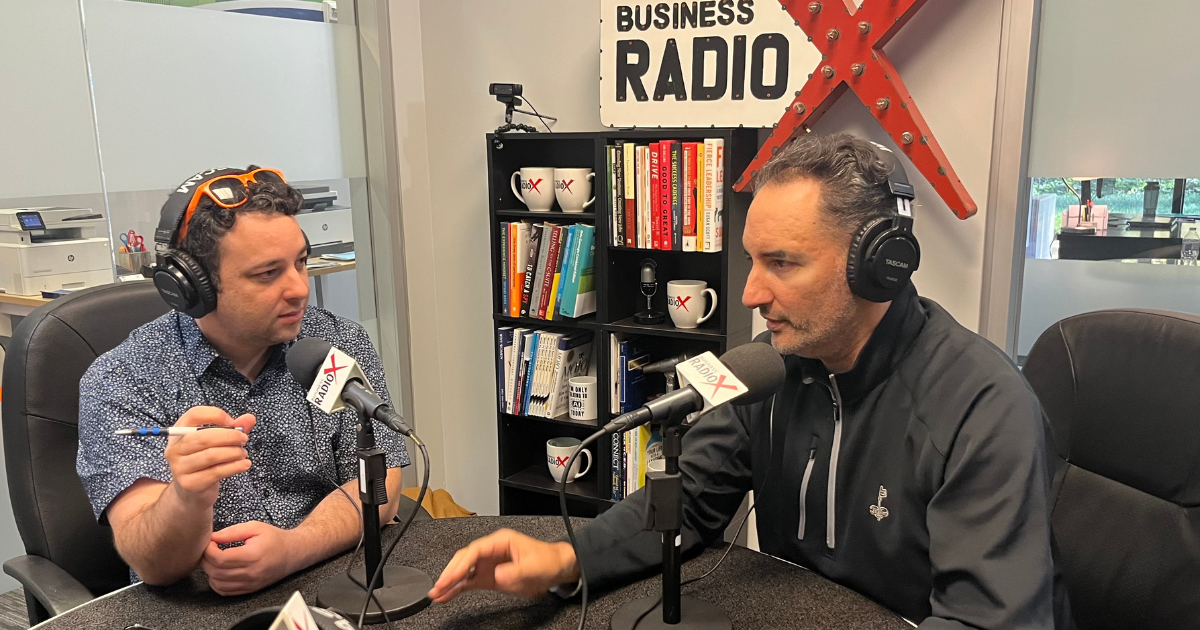
Some of Chris Moreno’s biggest wins came from turning down business: when a customer wanted Luxor’s product in a market the company couldn’t yet support, he told them to use a competitor rather than risk breaking their trust. On this episode of Greater Perimeter Business Radio, Chris joins Adam Marx to explain why distribution and customer relationships can matter more than a VC check—and why real-estate tech can mean contracts worth millions and commitments lasting decades. He also shares how clear founder updates can unlock help, why he asks for specifics before making introductions, and what Atlanta’s startup ecosystem needs to keep building talent and companies locally.
 Chris Moreno is a seasoned entrepreneur, advisor, investor, and proud dad of three. With more than 20 years of experience at the intersection of proptech, real estate, and enterprise operations, Chris has scaled and sold three companies and raised more than $500 million for startups and real estate ventures. His investment portfolio includes 800 multifamily units, 20 venture capital funds, and more than 30 companies.
Chris is known for partnering with founders and operators to help build high performing teams, differentiated products, and scalable go-to-market systems. He currently serves as a Senior Advisor to RETTC, supporting initiatives that bring technology innovation into real estate capital markets and operations. Chris has always been fascinated by architecture, construction, and the inner workings of buildings. He has worked with both B2B and B2C companies across the housing and logistics landscape.
At On Deck, he launched the PropTech and Logistics Investing vertical with several breakout companies. At Drop Locker and Laundry Locker, he helped expand dry cleaning locker solutions into more than 80 cities, partnering with companies such as Tide Cleaners (Procter and Gamble), PressBox, DashLocker, and others. 
He is active in several industry organizations including the National Apartment Association (NAA), National Multifamily Housing Council (NMHC), Urban Land Institute (ULI), and the National Association of Hispanic Real Estate Professionals (NAHREP). Chris also serves on the Chastain Park Conservancy Board in Atlanta.
Widely recognized as “Mr. PropTech,” Chris is the co-host of The Multifamily Hangout podcast, where he interviews developers, investors, operators, and founders shaping the future of the built world.
Connect with Chris on LinkedIn and Facebook.
Episode Highlights
- Communicating clearly when seeking jobs, customers, funding, or other support
- Helping founders by removing obstacles rather than offering generic advice
- The value of customer traction and distribution alongside—or ahead of—venture capital
- Atlanta’s talent, business community, and potential to attract and retain companies
- Challenges of investing in startups and connecting founders with local capital
- Selling technology to real estate businesses, including long sales cycles, implementation, and trust
- Applying AI, robotics, and other technologies to real estate and physical industries
- Learning from mistakes, staying focused on customer problems, and building transparently
- Supporting local institutions, events, and the broader entrepreneurial ecosystem
About Your Host
 Adam Marx is a networking & leadership consultant, speaker, startup advisor, journalist & the founder of The Zero to One Networker.
Formerly the founder & CEO of music-tech startup Glipple, Inc., and as a writer appearing in Crunchbase News, Startup Grind, Mattermark, & others, Adam draws on more than a decade of experiences in the music & startup tech industries to teach others how to cultivate powerful relationships using strategies of patience, consistency, authenticity, & value creation.
As a networking consultant and speaker, Adam has worked with numerous organizations, including Georgia State University, TechStars Atlanta, the Atlanta Tech Village, ATDC (through Georgia Tech), & Startup Showdown, where he’s advised & mentored founders on how to develop magnetic dialogues & long-term relationships.
Adam’s talks include those given at Georgia Tech and Georgia State University, with a keynote at Emory University’s The Hatchery and as a featured speaker for Atlanta Tech Week 2024.
In addition to advising & consulting, Adam sits on the steering committee for InnovATL, cohosts LinkedIn Local ATL, emceed the 2022 Vermont SHRM State Conference, and was a workshop speaker at South by Southwest (SXSW) 2025.
He is currently working on his forthcoming book.
Connect with Adam on LinkedIn and Instagram and follow Zero to One Networker on LinkedIn and Instagram.
 This transcript is machine transcribed by Sonix.
TRANSCRIPT
Intro: Broadcasting live from the Greater Perimeter. It’s time for Greater Perimeter Business Radio. Now, here’s your host.
Lee Kantor: Today’s episode is brought to you by Zero to One Networker, helping founders, funders, and operators build the strategic relationships and access that move business forward. For more information, go to zerotoonenetworker.com. Welcome, Adam Marx.
Adam Marx: Thanks for that great introduction, Lee. It’s it’s good to be back. And I’m super excited for my guest today because we’ve been we’ve been trying to make this schedule happen for, for a little while. So I’m going to let him introduce myself. Chris Moreno, Mr. PropTech, good friend of mine. It’s great to have you on the show, Chris.
Chris Moreno: Thanks, Adam. A long time listener. First time.
Adam Marx: First time caller. Yeah.
Chris Moreno: First time attendee We’re doing it live and I love that being here IRL. But you are you know, I got to say, one of the things I really admire about you. People say I’m a good connector. I think you’re amazing. You know, watching you out and about, you’ve created such a brand and connecting people in real life online, here in Atlanta and in other cities, and you really push yourself. I noticed to be a little out there and it’s inspiring because it’s hard. It’s hard. It’s not easy to do that. So.
Adam Marx: No. And you know, I mean, the thing about it is like, I, I think that there’s also perceptions of what sometimes we think networking should be versus what, you know, really great networking is. And I know that, you know, I think about people like you who are out there also hosting dinners, hosting events, and bringing a totally different, I mean, like, you know, you gave me props, but man, like you are, you are your LinkedIn is blowing up. I’m seeing your content all over And, and, you know, I, I do want to talk about let’s jump into the prop tech thing because that’s, you know, that’s just one facet of like what you do, but it’s, it’s how a lot of people around Atlanta, you know, me and Ali Merritt, like how we kind of think about you and, you know, I’d love to hear more about that as being part of your background and how you kind of built that out and how that overlays with how you think about network building, relationship building. Because, you know, when people think about, you know, prop tech and real estate, you know, relationship building is such a core part of it, but it may not be the first thing people think of.
Chris Moreno: Yeah. So I think what I’ll start with is the most important thing for me is finding people that you trust and that you can actually disagree with or have different, you know, perception viewpoints on and you can go to with the challenges you have in your life. So whether it’s a personal or professional or even something you’re curious about, and those are the people you go to to ask off the record.
Adam Marx: Yeah, there are a lot of conversations that happen off the record.
Chris Moreno: Yeah. Like this morning I had a great I won’t say with who, but I had someone who was in town. I met with three people this morning who were in town. And it’s funny how that works. Meeting them over at a TV or meeting them somewhere in Buckhead and grabbing a coffee. And whether it’s 30 minutes or an hour and you’re going deep on life’s problems and challenges, you know, and everyone’s got them. We never know what someone else is going through and someone always has a there’s something I learned is someone else always has it harder than you. And so being there when people are going through those difficult decisions, I think one of the things I’ve learned, Adam, is that no matter how smart someone is, we’re all missing something in that discussion. So, for example, when you talk about me, I know a lot about real estate Technology. Physical AI. That world of hardware. Why? Because I’ve done it. The 10,000 hour rule. No, I’ve done like 100,000 hours of these, and I’ve. And I always tell people this. I think they see the accolades or whatnot. You see, you know, funny enough, the, the posts, like you said on social media that blow up are usually the ones that are successful or like, oh, this, you know, congratulations.
Chris Moreno: I actually write a lot about the mistakes I make. I don’t try to call out other people’s. I try to call out my own mistakes and what I learned from those. And for me, it’s a lot about other people who have helped me be successful. So I don’t try to say like, I’ll give you an example with Luxor drop locker and, you know, laundry locker, all of those businesses were successful in spite of me. And I found great partners who we worked with, right. With with Orrick. I joined Orrick at Laundry Locker. Then we built Drop Locker and we built Luxor. And then we found teams to distribute our products. We hit so many challenges through the years working with Amazon, working against Amazon, working with other companies out there. You know, we worked with Home Depot. Phenomenal partner. We worked with Greystar and a lot of these great organizations. But that going through the challenges is how I became who I am today, and that’s why I’m successful. I don’t think you’re ever born with anything. People go, oh, you’re born with real estate, you’re born with this. But a lot of it is because of other people who take time to mentor you, teach you.
Chris Moreno: So the reason I’m, I’m, you know, people say I’m good at networking. I’m better at connecting the right people for the right things. Yeah. And I think that’s what a great connector is, is in networking is about is not just connecting people saying, here’s why I think you should connect and why I’m told they make really good connections. As I say, hey, I think you could connect because of this, but maybe it is not a good one. But you tell me afterwards your conversation, how did that go? And what I love is when someone tells me that wasn’t good and here’s why. Aw, that was effing amazing. And this morning I had this conversation with someone who not only is going to cut a check into a company, they’re going to be a customer of that founder, and they’re also going to probably join their board. I think people hoard their networks. I think what happens is, is that people say, I want a job, or I want to be introduced to all the companies that can do X, Y, and Z instead of naming. They don’t they don’t say, you need to be very clear on what your ICP.
Adam Marx: That’s a really, really good clarification.
Chris Moreno: So if you’re looking, I’ll give you. The easiest one is when you’re looking for a job. So right now, a lot of people are looking for to change 80% of people that are looking for a job right now actually have a job, maybe 90% in my network, only 10% don’t. And they’re very vocal of like, I’m looking for my next chapter. I go, what is it? And they can’t clearly identify the value they’re looking to deliver or the company they want to work for in my network. And like good example. So what I’ve done is I look for is like, find the things that people have a hard time with or hate doing and then solve. That’s a great business, right? That’s that’s what I look for is like problems that are heavy lifts hard. Everyone agrees it’s a tough space, but nobody wants to go after it. Those are phenomenal world. So a good example in the job world with AI, it’s actually becoming harder. And the job. So whether it’s you’re looking for a job, you are a founder, you are a VC investor, the process of sales, the process of introductions, the process of raising capital, the process of hiring, they’re all the same.
Chris Moreno: There are marketing and sales, go to market strategy, follow up, process oriented hiring. Great talent is the same as raising capital is the same as finding a great customer. Great talent requires quick follow up requires like someone who you want to hire, already has a job, or doesn’t want to work for somebody else. So someone going to anthropic right now, or to OpenAI, or to Facebook or to Google can go do their own damn company. They may even have enough money. And that’s not why they’re going. And so the mistake is, is I don’t need to offer you more money. I need to figure out why you’re passionate about working with me. Is the culture great or not? When you’re seeing people leave these companies? Yeah. It’s because when you’re hearing the stories, it’s around pretty much a couple things like trust. It’s around their social world of their family, the people around them, what they’re working on, gratification. I think a lot about, you know, a good difference between like Atlanta and some other cities like Boston.
Adam Marx: Mhm.
Chris Moreno: Is people say, oh my gosh, there’s so much. The talent is in Boston. I go, you’re right. But why I would build my company in Atlanta is there’s great talent and engineers who want to join a company or be a co-founder. Sometimes I see the people in Boston, they want to be the CEO or the founder. They may not want to join another company. There’s nothing wrong with that. And also there’s different you know, I actually love the idea of Atlanta is a good example is like, I was shocked of how great. Like people had told me negative things about Atlanta before I moved here. We in California.
Adam Marx: A better job.
Chris Moreno: And.
Adam Marx: Pr.
Chris Moreno: And one of the things about to your point is, like Atlanta, people told me that, you know, three things like they said, humidity and weather. They said, um, traffic and they said crime. And I can’t tell you all three of those have been way better the crime. Oh my gosh, I’m sorry, but like phenomenal crime, like, you know, the technology. I, I, my dad was a firefighter and police officer, first responder for 30 plus years in California, but I feel very safe here. Number two, you know, crime can happen anywhere but number two, humidity. Come on. Three months of the year, nine months of the year. This is a great place to live. We’re north enough where we don’t get the hurricanes and the storms. We’re east enough. We don’t get tornadoes, and then we’re south enough. We don’t get the horrible weather storms. But, um, you know, and then of course, traffic, like, gosh, there’s like 3 to 4 ways to get around this town. And so if you live in the right place, You’re. I’m kind to my neighbor drivers. I’m let people in. I use my blinker, I drive safe like. And I stop for pedestrians. I almost got hit this morning.
Chris Moreno: But that’s the thing, I think. Adam, what I’m trying to get to is like that these little things, I think in how you live your life and you think about different things is similar to using your network. Um, when I say like, sorry, connecting the dots in my network is like, I think about both parties. So if I think about someone who needs something like a founder, I just got asked by a big fund here that we all know for introductions to some family office. And I said, I pushed back and I said, you know, you’re a VC and you’re looking for these intros. I need to be more clear of why and who and who is and who isn’t and why and like, tell me the story. And then, oh, we’re looking for great founders. Awesome. Who isn’t looking for great founders? Tell me more about who is and who isn’t and why, because it’s, it’s a big waste of my time and a waste of their time. If I say, oh, I met this founder and they’re like, oh, sorry, too late. They’re over. We’re only investing up to $20 million.
Adam Marx: As a VC ever said, hey, look, we’re looking only for mediocre founders. Like.
Chris Moreno: Well, and I think it’s such a, you know, the mistake that many VC. So I was in VC, I used to work with Eric Thornburg and David Booth at On deck.
Adam Marx: And Eric, I know Eric from, uh, Product Hunt, right? Yeah.
Chris Moreno: So Eric was at Product Hunt. Andreas Klinger was at product.
Adam Marx: Yeah.
Chris Moreno: Oh, um, what.
Adam Marx: A blast from the past.
Chris Moreno: Yeah. And and, um, uh, and I, the Ryan Hoover. Yeah. Was the founder of product. So Ryan, Ryan, Ryan connected me to actually to a few companies that have invested in, um, Ryan just moved from to New York City. Um, Ryan.
Adam Marx: He does weekend fund now.
Chris Moreno: Correct. And so, um, he’s, he’s phenomenal. A very smart guy. Had his fingers on the pulse and again, very similar, like I learned from Eric Thornburg. One of the great things is to experiment a lot to, to question things. Why, why is this being done the way it is? And then the mistake that most people make with founders and I made this mistake brutally is the the experts should not be giving advice to founders. Experts should be unblocking founders and helping them where they need the help. So give you an example. I get phenomenal updates. The best founders I found overcommunicate and are very clear about where they need help and where they don’t. And the best founders in the world. This is this is totally legit. I get emails from about 7 or 8 founders every single Sunday. And I mean, every single Sunday. They send me a 2 to 3, sometimes a five minute read. I don’t read it all. If it’s 2 to 3 minutes, I can read it all. But if it’s 5 to 10 minutes, I’m not going to read it all. But they are very clear about what they need help with and what they don’t. And those are some of the best founders building some of the best businesses, even in real estate. The people who are overcommunicating, I have some people in real estate who are asking for money right now and are in trouble, but yet they are not communicating about the good and the bad up front. They’re they’re waiting till the last moment. And these are people, by the way, who have the capital, who have the networks, yet they’re not thinking about setting themselves up for success. So I think about network. I think as helping as a give and take, but always give first. So I try to give, give, give, and then, you know.
Adam Marx: Yeah, something comes back. I mean, I, you know, it’s funny because you just reminded me of a story and I think it, it’s a really good example of like, we, we talk about experts and like founders and understanding networks and people and communities. Sometimes you don’t think of yourself as being an expert. You know, it can be just like, well, I, I exist in this community, but I wouldn’t consider myself an expert. And I just had this, this memory. I actually was out in San Francisco, um, when Product Hunt was acquired by AngelList. So I was at that the acquisition party. And, and it was, you know, a lot of fun to meet. I actually had known a lot of the product people because I used to hang out on product hunting networks that way, you know, especially at an event that’s going on because they, they were just acquired for. It was like 20 million or something like that. It was it was um. It just made me think about how networks build out when you’re not necessarily pitching. They build out when you’re not necessarily asking for something. It’s just people sharing their experiences from their respective locales.
Speaker 5: Yeah.
Chris Moreno: So I think one of the biggest things if I, if I think about that is you hit on is like, there’s location and then there’s network, and then there’s specificity of what somebody needs and why you’re making an intro. And so I think the best intro is a good example is Ashish Thakkar is really good at this. And so I like to speak to specifics. And so whenever I tell stories, I always say, let’s, let’s use real examples. So Ashish with the, um, Atlanta CEO Council, um, has made phenomenal introductions and helpful, been very helpful to early stage startups and to people in the ecosystem. And one such example is like a founder who needed some help. So I said, absolutely, I’ll sit down with this founder and have coffee and, you know, kind of work through that with that founder and support them and what they’re building. But really, before making a bunch of intros, the founder, I was like, where what’s blocking you back to the discussion, like on deck and then so people need to be unblocked to build. People need to be unblocked to raise money, uh, VCs to be able to invest. Nowadays, movement is happening fast. Faces used to have the control to say, I’m going to use time as my lever, right? To work with a founder. Now they’re not being able to do that. I’m seeing companies, some companies raise twice in a year, get term sheets without being asked.
Chris Moreno: Um, so VCs are kind of, you know, it’s a tough time for VCs, funny enough, but founders who can build faster than ever need to find the great, whether you say experts or people knowledgeable in certain things. I don’t consider myself an expert on purpose because, um, I am still learning and I’m trying to be curious and I don’t know, a lot of stuff out there. I try to find people who are building and very, very focused and I love it’s funny, people will ask me, say, you know, in real estate, when are we going to have fewer founders, fewer companies? I need less, I need to cut the number of vendors I have. And I say, actually, funny enough, the incumbents are somewhat, you know, in need of these startups. They need to go acquire them for talent. They need to go acquire them for knowledge. They need to integrate with them, in my opinion, right. More connectivity because the, the old days of not being able to access your own data is going away. And one of the such things that’s important is you’re seeing things, you know, if you can’t get into your data, you’re like, well, let’s see if we can reverse engineer that and some real estate firms crazy enough, you know, we talked about this before we hopped on is like, they’re actually getting into tech and they’re building some of their own things, whether that’s in the marketing field, whether that’s in, you know, um, media and PR, right? Creating their own content, whether they should or should not be.
Chris Moreno: Um, you know, you’re seeing people build their own dashboards, uh, internally or externally, but people, you want the best tech and what is the best tech mean? Well, the best tech doesn’t always get implemented. It’s about distribution. So I think a lot about distribution. That’s really important of a technology product. It’s trust around somebody else using it. Because in real estate, one of the hardest parts, Allen Adam, is that if no one else is using your product, there are certain people who are willing to be a guinea pig. Like Ali will tell you they love being a guinea pig and they will try certain things. Um, but number two, it has to have great responsiveness and follow up because it’s going to break. Everything breaks. So whether the, you know, the robotic dogs here in Atlanta, right? Those might break and fail? And that’s okay, as long as they’re upfront about it. Um, you know, in some companies like Luxor, we would start in San Francisco and we only service people. So when someone wanted our product in Chicago, we didn’t go there. We said, sorry, we’re not going to service you yet.
Chris Moreno: Go with our competitor until we can come there. We’ll be there in a year because we needed to figure everything out, because we can’t sell you a product that isn’t going to work, especially if you’re if you are a large real estate firm with billions on the line. If it doesn’t work and I make you look bad, you will never work with me again. So I’d rather turn the business down and be open and upfront with you today about what I can and cannot do, and then work with you in six months or a year. And so we lost a lot of business in the early days of our business, because we were very clear with people about what we could and could not do. We even had people who created their own businesses, like in the laundry business. We worked with people like Vijay Patel in Chicago. We worked with Thai Drycleaning. We worked with Stephen Moore in Atlanta and ran the back in their business. But then we had people in Brazil and Portugal and other countries who are like, well, you work with us or in China, we’re like, sorry, we can’t build for those countries yet. And they would go and build their own. So I would rather tell people where I can work with them or where I can help them, where I can’t, because I only have so much time, and I can only really help people in the worlds that I know.
Chris Moreno: So like health tech. Yeah. Catherine O’Dea. Yeah. And at great at health tech. I’m very curious. I think health tech is very important, but I’m not going to be able to help a health tech founder with my network unless they are looking to get into enterprise and real estate oriented companies. So if they want to provide health care or health technology to millions or tens of millions of people living in apartment buildings, great or at offices, great. But I’m not going to be able to help with the health tech side of it, of getting into, you know, HMOs and things like that. But like engage. Scott Lupano. Yeah, he’s a great example. Like engage has a great program with their building what they’ve been doing. I think we need more programs like engage. You think about Y Combinator in the Bay area. Yeah. And Y Combinator. What they do is they help with customers. They help with funding, they help with network. They help with the expertise and finding employees. So I think the same thing with engage is like those kinds of programs we need to support more. But Atlanta, to your point, Adam, specifically Atlanta, what I’ve realized is people say sometimes they have to go. And I was talking with Allison, uh, Eamon or Eamon.
Adam Marx: Uh, Eamon.
Chris Moreno: Eamon.
Adam Marx: Yeah.
Chris Moreno: With, um, with, um, you know, venture Atlanta and Allison and her team do amazing work here in Atlanta. But one of the things we talked about on my podcast with her is that, which I listen, a lot of people have to leave. Yeah, thanks. Um, and that’s the Infinite Niches podcast. So one of the challenges is people have to leave Atlanta to go raise capital. And you and I were just with Adam Wexler, who sold his company for $4 billion plus. And he’s funny enough, 50% of investors were here in Atlanta. 50% were not. And it was awesome, he said, because each of them got $1 million and up. Some got $10 million, 20 million and up and up and up. But we need more people who have. There’s so much capital here in Atlanta, but many of them are very risk averse. And I think there’s a mistake that in venture investing and in startups is you have money. I have a great idea. Let’s go together. But there isn’t clarity around the specificity of, hey, you have $1 billion real estate fund. You don’t have to invest 10 million, 100 million, 200 million into a startup like you do a real estate project, you can invest ten grand, you can invest 50 grand, 100 grand, 200 grand, 300 grand, and you can have a it’s completely different asset class. Now for some people, they don’t want to touch it, but I’ll tell you who does. Their kids, their kids, their partners, their tech team is like, wait a second, we can go invest. And a good example is like, look at Home Depot, look at Delta Airlines, look at Cox Enterprises and the amount of money they’re putting into funds and startups.
Adam Marx: And there’s a bunch of examples. There’s a bunch of examples like that. And but I, you know, you mentioned Y Combinator and like, and I want to, Uh, you know, I kind of want to, um, take to task something that, that I’ve seen, you know, because we have a lot of wonderful programs and various cohorts around the city, some through the tech hubs and some through the university system and, and some that, like a lot of our, like tech founders may not be aware of, like through the Better Business Bureau, you know, these kind of quasi governmental organizations. And, you know, I think that Y Combinator is an example of like the from people I know who have gone through that program, they are the first people to articulate that. Like, yeah, like we get some money, right? But they give away, I don’t know, six, seven, 8%, like whatever it is now. Um, and that’s pretty standard. But what they will double down on, at least in the conversations I’ve had is it’s, it’s the network, it’s understanding how to grow the network. And I think that one of the areas that we, we could do a better job of in Atlanta that might, might help the ecosystem feel more connected, feel more cohesive, and keep people here and keep people building companies here. And hiring here is helping founders understand the difference between like pitching a product, you know, pitching your metrics and understanding how that diff that differs from building out networks.
Adam Marx: Because part of it is VCs, part of it is customers. Part of it is also collaborators. Part of it is also people who will support you like understanding that building out those networks is as critical and core of a skill as all the other important stuff that we do talk about in these programs, you know, pitching, hiring, um, product development, scaling teams, all that kind of stuff. And I think that that’s one of the things that, um, you know, I just, I see, you know, especially because Atlanta is a lot of the people here are remarkably accessible, you know, through various various, um, uh, events like you don’t need to go to Venture Atlanta to talk to SIG Moseley. You can go to an Emory Demo day because sig shows up at a lot of the Emory stuff. And so just understanding, if you show up there, don’t ask him for money immediately understand he’s there to see the demos and start to build a rapport. Um, you know, we’re, we’re kind of getting kind of close on time now, but, um, you know, I wanted to throw it to you for, for kind of last minute thoughts and, and, um, you know, you have a whole bunch of people that you want to shout out and, and, uh, want to be respectful of that because there’s so many people who’ve helped both of us.
Chris Moreno: No, I think it’s, um, no, not so much about sharing, but I just like to do is share stories out about, um, you know, to your point, I think you make a great point about the focus. I’ve learned that most founders make a mistake on and I made this too was worrying so much about who our investors were. Great product, great messaging. Guess what? Customers solve everything. Yeah. So if you have customers who are willing to buy your product, you will have a great business. And getting distribution. Getting people to pay you is better than a VC check. Now, if you’re building a hardware, physical AI, robotics, drones, real estate, it is really cost heavy and also very policy driven.
Adam Marx: Yeah.
Chris Moreno: And so that’s what I love to focus on is where there are great challenges and great barriers. There is great opportunity. It can just tend to take longer. But the contract sizes, I’m not we weren’t dealing with 29.992999. You know, even five like our contracts were pretty much all 500,000, a million, 5 million, 10 million. I won’t say which ones were which, but the end of the day, you can sign $20 million contracts in real estate. You can, you know, as a, as a, as a company. Um, these are massive contracts. Government contracts can be much larger, especially if you’re in hardware. And so you’re also people don’t want to sign a customer is not looking to, you know, whereas like, if I sign up for Slack or I sign them for bill.com or, you know, a lot of these things, of course I’m looking for long term, but I can sign it up easy on the website. If I don’t like it, I can switch, you know, you’re getting hit up by these credit card companies. They’re easy to sign up and do away with in software. You don’t have that in physical AI and hardware. You’re buying a product they’re coming and installing at your property. And you might be signing a five, ten, 20 year contract. When you’re installing internet, you’re installing fiber, you’re installing devices. That’s a ten year contract when you’re installing EV charging, when you’re installing parking devices, access control.
Chris Moreno: These are incredibly long contracts that may actually nowadays very little up front. They might have thousands, hundreds of thousands of dollars upfront per property. They might have zero. They might even be paying you. But data centers moving into properties like robotics. And by the way, they’re saving properties money. So I look a lot at why do properties, why do customers make decisions? It’s very different across the board from CapEx, OpEx. You know, some people may understand that may not. But these are real estate terms is that NOI is more important. So cost savings this is a mistake I made a mistake on is they don’t care about all the products and the benefits and the features and all they care about. How can you help me right now, especially if you’re a publicly traded REIT? How can you help me this quarter? How can you help me this month? Yeah, like why, if I if I have nowadays, the harder thing with AI is that you used to have 50 to 100 suppliers hitting you up. And we, we now invest in real estate. And I serve on a couple boards that own real estate. And I’m hit up all the time by these companies trying to hit you up for services. It’s now thousands.
Chris Moreno: And there’s companies not even in proptech were hitting you up or construction tech. They’re hitting you up for services and financial things, lawyer accounting, you name it. Every single sector insurance. And the hard part is, is breaking through to what is the incentive for me to work with this company? What is the trust value? Is this person going to be around that’s hitting me up in five years, seven years, ten years, because I don’t want to keep switching. The switching cost is on your staff and your team and implementation. It’s actually not the upfront transition that sometimes is actually pretty easy. It’s the what’s the reporting look like? What does it look like for your teams in the field? You know, how is it going to impact your residence or your tenants in an office building? Right. Are there any, any office building or property? So that’s I think that’s the beauty of real estate. It’s incredibly hard. And I think many people look at it and say, oh, we can come and disrupt it. Real estate doesn’t want to be disrupted. Real estate wants consistency. And that’s why understanding like Airbnb, we just had the co-founder, Nathan, uh, with Brian Chesky come speak at our event in Vegas. And he said, here’s how we messed up real estate. We came in telling them, we’re going to come in and just do it our own way.
Chris Moreno: And he’s like, wow, did we mess that up? And he was phenomenal. And got to got to spend some time with Nathan. Great guy. That’s how they made Airbnb started partnering with the properties built is another great example. Built is now a $1,011 billion company. I just met with him up in New York. And they’ve they’ve realized we’re going to partner with these owners. We’re going to ask them what we need to do and what we’re getting right and what we’re getting wrong. So I look for companies, Adam, who are trying to actually understand what’s going right and what’s going wrong, and then focus on that. Don’t try to, you know, boil the ocean, find one fish and go and work with them and work it in, work it out, and then earn trust and be great at it and be open about what we do not do versus what we do. And that’s what I love. So I look for people who, you know, I don’t need a million. I don’t, I don’t worry about followers, I you know, I’d like you to talk about social media. I don’t I don’t worry. I go, why I go in person, I want to have five great meetings and I want to go meet people who I already am friends with, people I trust, the problems they’re working on.
Chris Moreno: And then they say, wow, how can I help you? And it’s usually what who’s an interesting founder building in hardware, physical AI building something really interesting that other people don’t believe in. It looks like a toy or a gimmick, and it’s actually going to be something interesting. And I’ll shout out daily Ervin. I look for the weirdos daily. Ervin taught me, uh, when he was working for, um, Paul Allen and, and Cercano ventures and, and he said, you got to look for the weirdos. And he goes, Chris, the best compliment you can give a founder is that they’re a weirdo. Because if they’re a weirdo, they’re obsessed about something. They’re just so nailed into that thing and they are just trying to solve problems and they are focused on problems. They’re not trying to look for, you know, to be the smartest or not looking to brag. They are truly trying to solve that problem for their customers and then eventually get people to pay them. And if you can do that, everyone’s going to want to be along for the ride. And the founders I’m finding that are getting unsolicited term sheets are so dialed in to their world, they are so looking for advice and they are so clear in their communication. That is what I love that.
Adam Marx: I mean, that’s, that’s, I’m not even gonna try and follow that because that’s, that’s a great button on, on the episode. What I do want to make sure of is for the people who are listening, who are interested in the proptech or you’re investing, where can they find you? Where can they go support in infinite niches, you know, how can they go support what you’re doing?
Speaker 5: Yeah, no, I appreciate it.
Chris Moreno: And I’m trying to so my podcast, Infinite Niches, I love to bring on the smartest people in real estate technology capital. Um, and so like we had Donnie Beamer on recently, uh, from the city who was just absolutely admire what he and the city are trying to do, support and attract great talent to the city. You know, I’m from California, so I relocated here and I’m trying to attract. So I think those are the people on Infinite Niches podcast on YouTube and on LinkedIn. Um, I think another, another thing that’s important to me, um, is the events is like, I love to bring in people who are trying to connect the dots like the smartest CEOs, capital allocators, etc., but also people who are in between or looking at their next chapter. So I want to help support people who are thinking about what to do next, building companies and supporting them, whether it’s talent, capital, um, customers. Um, but really, I focus on really any kind of commercial real estate, housing development, construction, but even, you know, one of the worlds that I learned from Eric Thornburg, you know, the longest standing institutions in the world, you know what? Those are longest standing institutions, not governments, universities.
Speaker 5: I was.
Adam Marx: Gonna say schools.
Chris Moreno: Schools and universities. So if you think about.
Speaker 5: Schools.
Chris Moreno: Morehouse, you think about Georgia Tech, you know, uh, Kennesaw State, the endowments these schools have and the technical knowledge, the technical spaces and their ability. Um, you know, I just I think Ali just had me speak to Mercer’s board recently and it’s amazing the network effects they have and these organizations, the brilliance they have of their professors and their school, that is one of the most powerful things. So I think that’s what I love is getting more involved with Emory University and UGA and Kennesaw, and Norman Rado is involved, and you see that at the airport. But even the airport, one of the most incredible businesses like you think about it, if you can sign a contract and you’re a founder with the airport, you’re getting in with the city of Atlanta, you know, you’re doing whether it’s parking, you’re doing the, the food stations, whatever it is. But these are massive institutions. I think many people overlook is all the things we do in our daily lives. So anyways, that’s what I love to solve is those kinds of problems. And if someone’s doing that, that’s really who I look to help in my life. Um, and yeah, get through these challenges together. But I think, you know, um, also if people, what I love is people like Atlanta Tech Village. Yeah. So back to that. That’s our commonality. That’s where we met is that people like Atlanta Tech Village who are providing the epicenters for greatness to come to meet and then move on. And what I love is, is their, their ROI, like David Cummings, David Lightburn, that team have given me so much in terms of support, friendship, paying it forward. They inspire me every day.
Speaker 5: To go through.
Chris Moreno: What they do to go do the same and recruit. So I’m indebted to people like John Birdsong, who’s building in south downtown. I have to go down there and invite people to see it and show it off. I that is my duty to go do and attract people to fill those spaces because that is this is our community. And so, um, you know, I think about things where I, I have work to do. I gotta, you know, afford for my family and my kids. And that’s, that’s priority number one. But number two is also my do good in my community. Support thy neighbor, right. Whether they. I see, but I want to support those organizations, whether they are in Atlanta or abroad, but help them build, whether it’s their first office being in Atlanta, or maybe they’re based in Toronto or New York, and they need to have a second office. Maybe they’re going to build a plant like Audi is right now. How do we get more, more companies helping Audi and selling to Audi as customers or supporting them as they move their offices and their factories here? That’s what I’m excited about.
Adam Marx: So I mean that we’re going to talk more about that off, off, off the air. But thank you for coming coming by and.
Chris Moreno: Thank you for having.
Adam Marx: Me. And this there was so much in this. We gotta do it again.
Chris Moreno: We’ll do it again. I appreciate you and and for supporting me, but let’s, uh, let’s go help more people build. Let’s attract more people to Atlanta and the ecosystem. And I think this is the greatest place in the world to have a family.
Adam Marx: Let’s let’s do it.
Chris Moreno: It’s great. Thank you so much, Adam. Appreciate you, my man.