

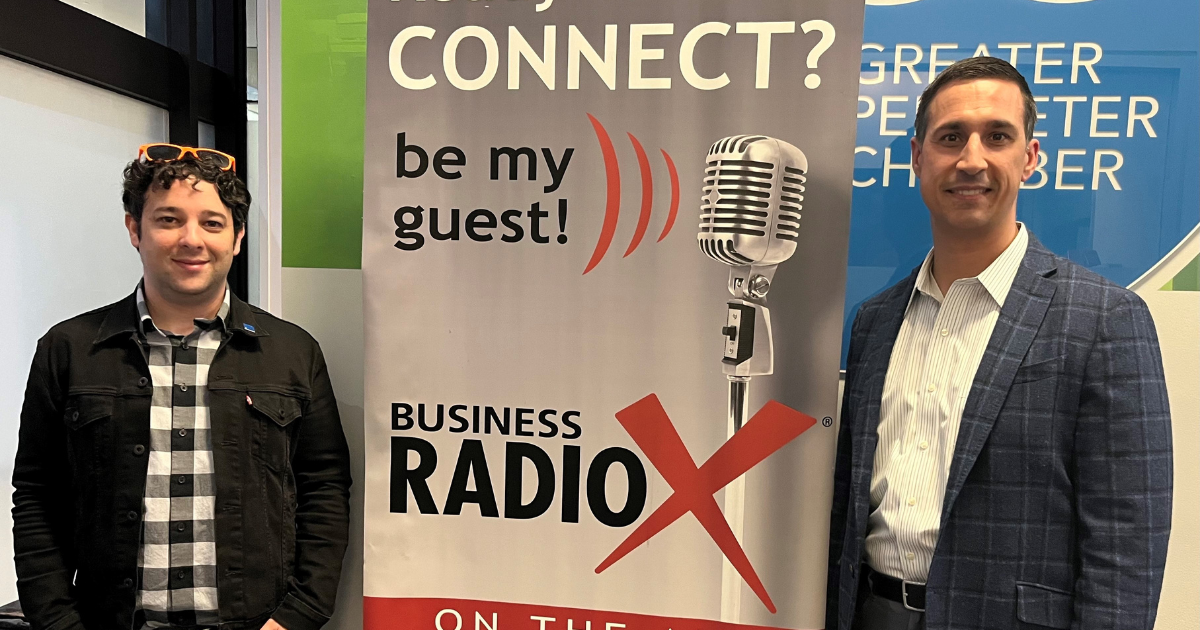
On this episode of Greater Perimeter Business Radio, Lee Kantor and Adam Marx sit down with Adam Thompson, an IP attorney at Bradley Arant, to explore the critical—but often overlooked—role of intellectual property strategy in early-stage companies. Thompson breaks down how startups should think about trademarks, patents, branding, risk mitigation, and long-term legal planning, and highlights why early conversations with IP counsel can prevent costly mistakes as companies grow. His practical guidance helps founders understand where to invest, what to protect, and how to position their business for funding and long-term success.

 Adam Thompson is a partner in Bradley Arant Boult Cummings Intellectual Property Practice Group, where he combines a deep knowledge of IP law with a strategic, business-oriented approach to protecting clients’ intellectual property rights.
Adam delivers tailored IP solutions that support his clients’ business objectives, whether they are launching new products, expanding into new markets, or defending against IP challenges.
His practice covers cutting-edge technologies that span a wide range of industries, including robotics, artificial intelligence, computing, gaming, and cleantech. Having started his career as an embedded software engineer in the gaming industry, Adam has a unique understanding of technology.
He has developed embedded devices and holds 11 patents as an inventor. Adam also has significant IP licensing experience in monetizing patents, trademarks, and copyrights.
Connect with Adam on LinkedIn.
Episode Highlights
- IP strategy must align with business reality — Early-stage companies often can’t afford to address every legal issue at once; focusing on the most critical risks and delaying non-urgent expenses is essential.
- Patents vary in value depending on the industry — Software patents may not dramatically increase valuation, but patents in hardware, medical devices, and mechanical products can strongly influence investor interest.
- Trademarks are a foundational branding element — Founders should clear trademark availability early to avoid painful and expensive rebranding after building market recognition.
- Founders must understand when something is patentable — The best question isn’t “Has anyone done this before?” but “What problem did I uniquely solve?”
- Ongoing legal and strategic maintenance is key — Thompson emphasizes regular, proactive touchpoints between founders and legal advisors to stay ahead of issues without unnecessary costs.
About Your Host
 Adam Marx is a networking & leadership consultant, speaker, startup advisor, journalist & the founder of The Zero to One Networker.
Formerly the founder & CEO of music-tech startup Glipple, Inc., and as a writer appearing in Crunchbase News, Startup Grind, Mattermark, & others, Adam draws on more than a decade of experiences in the music & startup tech industries to teach others how to cultivate powerful relationships using strategies of patience, consistency, authenticity, & value creation.
As a networking consultant and speaker, Adam has worked with numerous organizations, including Georgia State University, TechStars Atlanta, the Atlanta Tech Village, ATDC (through Georgia Tech), & Startup Showdown, where he’s advised & mentored founders on how to develop magnetic dialogues & long-term relationships.
Adam’s talks include those given at Georgia Tech and Georgia State University, with a keynote at Emory University’s The Hatchery and as a featured speaker for Atlanta Tech Week 2024. 
In addition to advising & consulting, Adam sits on the steering committee for InnovATL, cohosts LinkedIn Local ATL, emceed the 2022 Vermont SHRM State Conference, and was a workshop speaker at South by Southwest (SXSW) 2025.
He is currently working on his forthcoming book.
Connect with Adam on LinkedIn and Instagram and follow Zero to One Networker on LinkedIn and Instagram.
 This transcript is machine transcribed by Sonix.
TRANSCRIPT
Intro: Broadcasting live from the Greater Perimeter. It’s time for Greater Perimeter Business Radio. Now here’s your host.
Lee Kantor: Lee Kantor here with Adam Marx another episode of Greater Perimeter Business Radio. And this is going to be a good one. But before we get started, it’s important to recognize our sponsor 0 to 1 networker helping founders, funders and operators build the strategic relationships and access that moves business forward. For more information, go to 0 to 1 networker.com. Adam, welcome.
Adam Marx: Well, thanks for having me back. This is super exciting and we’re going to have a great show today. So I’m going to just jump in and introduce our guest.
Lee Kantor: Who do you got today?
Adam Marx: Uh, my good friend Adam Thompson, who, uh, works for Bradley Arant. And, he’s going to talk to us about IP law vis a vis startups and businesses, and we’re going to get into it in just just a minute. You want to say hi?
Adam Thompson: Hi, Adam. Thank you for having me on your show. I really appreciate it. And I’m looking forward to talking about startups and technology.
Adam Marx: Well, you know, let’s let’s just jump right in. If you want to tell some of the, the listeners about your background and kind of how the work that you do, uh, really integrates into the startup community and how we can start to, to get into that dialog.
Adam Thompson: Yeah. Thank you for that. Um, I work closely with early stage, high growth tech companies through various stages of fundraising, um, as they grow and help them with their intellectual property needs, whether that’s a trademark, a patent application or a copyright. We also help with a variety of other things like corporate formation, employee benefits, uh, privacy. Things like that. And just address contracts and their needs as they grow, and try to make sure we take a business first approach to, you know, it’s not always appropriate to spend and solve every problem all the time. And so we try to make sure that we handle the critical issues in the early stages and provide them with strategies to grow so that they can be protected later when it when funding is more available.
Adam Marx: Yeah. That’s great. I mean, one of the things that, uh, I don’t think is included in a lot of the conversation when you’re starting a company is how to ascertain how much of your investment or your budget should really go towards, uh, the legal side, and particularly with IP, if someone’s creating new IP, whether it’s software or hardware, how do startups understand kind of how much of that, that limited budget that they have should really be devoted to, to this kind of, uh, you know, consideration.
Adam Thompson: Yeah. In an ideal world, when you get to your series A or series B, you really want to have all your legal issues handled and buttoned up so that when you go into due diligence, there’s no, like, major issues to address. But what ends up happening is these companies have limited funding and limited ability to to deal with those issues early on. And there’s a couple thorny issues that come up later that I think if you focus on those early, um, like, for example, a shareholder agreement where everybody agrees how we’re going to divide the company is infinitely easier to deal with when there’s no money yet, when there’s not sales and records, and the stock’s not worth millions of dollars. Right. Yeah.
Adam Marx: Well so so let’s talk about that series A series B you know, how does this IP question mark really start to affect valuation and all those kinds of calculations that startups end up moving into.
Adam Thompson: It really depends on the industry that you’re in. Software patents tend not to drastically increase your valuation or change your valuation, whereas mechanical and hardware and some other technology areas, medical devices especially have major impacts on valuations later on. But venture capital funds really like to see a patent filed or patent issued on things that you’re generating revenue from, which is sometimes hard to deal with because you don’t necessarily know when you first release your product, what pivots might happen in the future. And so you’re you’re in this world where you don’t want to patent every idea you have, but you do want to patent the thing that eventually generates revenue. And then on the flip side of that, once you start selling the product, you lose the ability to file for a patent. So it’s a difficult question to answer early on.
Adam Marx: That’s that’s really interesting that first that you lose the ability to to file on that patent. I mean, that’s something that certainly the layperson, I don’t think would, would really understand or recognize or certainly not know ahead of the of the curve. But, you know, it’s interesting that, you know, you bring up this concept of it’s kind of it’s a seesaw. It’s it’s hard to know. Um, do you file on these patents right now or, you know, are you going to go through pivots in the future? And I think that that really, um, starts to bleed into it’s really important to have these dialogs with patent attorneys before you’re in the patent process, just to kind of start that conversation, just to open yourself to those dialogs and have those people in your network to kind of help guide you before you get to the basic, uh, you know, the paperwork where you’re where you’re actually paying for time and paying for legal advice and things like that.
Adam Thompson: No, I think that’s a good point. And you want to make sure that whoever you use for for patents or tradeMarx has an understanding that we don’t need to file on everything. We don’t. We need to be very conscious of the business. And then again, there’s a lot of strategies for delaying costs in the process and getting the most coverage early on without spending a lot of money and understanding how to do that and giving you time to budget is is really important as as you go on.
Adam Marx: Yeah. I mean, I know that startups love the idea of delaying cost. And it’s, I mean, that that that term itself could be the title of like any new startup podcast. Um, but I think that there’s, there’s a, you know, you and I were having a brief conversation, um, a little while ago, and it really, uh, hit in my head something that I don’t hear very much about. And that’s really thinking about IP and patent vis a vis branding, because when I think about patents, I’m thinking about hardware. I’m thinking about something that’s a physical device, um, or something. Something very patentable. Kind of like a maybe a secret recipe. Like the Coca-Cola recipe is a patented recipe. So how do people who are building brands, you know, think about going through this IP process when it’s you kind of almost don’t know what your brand is going to be until you have it.
Adam Thompson: Well, first, I’m going to address the Coca-Cola comment because it’s interesting. Coca-cola is not a patented formula. No patents only live for 20 years, and Coca-Cola wants protection indefinitely. So they went with the trade secret approach instead. Where we keep everything confidential, we make sure that it’s a need to know only access to it, and we don’t disclose it. And if it does get disclosed accidentally, we can kind of put the genie back in the bottle, if you will. Right.
Adam Marx: Oh, that’s that’s so interesting. That might that might be one of my biggest misconceptions about Coca-Cola, you know. So that’s interesting.
Adam Thompson: But on the on the branding side, um, when you’re trying to build a brand, I think tradeMarx are a bigger issue that comes up, and you want to make sure that there aren’t other Marx that are in your field before you start going to market. A trademark protects the ability for you to take a word, phrase, logo, or some slogan and mark it as something that you want to use in commerce in a specific set of goods and services that you’re offering to customers. It doesn’t have meaning, it doesn’t have value yet. And then you build goodwill in the community through your reputation and actions in the world, and then you get exclusive rights to it in that field. So would someone buy a shoe if it didn’t say Nike on the side of it? Um, maybe not. Maybe they would. But there’s a lot of value in having Nike branding on it, and Nike didn’t mean anything until the shoe company made it mean something. Right? So if you’re going to go with a brand, you want to make sure that you clear the mark first. That’s a big one, because when we clear we’re not just looking for an identical name on the field, we’re looking for translations into foreign languages. We’re looking for phonic equivalents. We’re looking for variations that might be confusingly similar. And we’re trying to make sure that this mark doesn’t exist in the goods and services that you’re going to be offering, because if you get two years down the road and build reputation in the brand and then find out somebody has better rights to it than you do and you can’t use it anymore, it’s really painful to a business early on.
Adam Marx: Yeah, that’s that’s definitely something you don’t want to do. We might have to talk after this. You know, it’s it’s it’s interesting because, uh, I don’t know how many of, of the people who are listening who may be familiar with my work or are unfamiliar with it, know that I started my my career in the music industry, and I was in the music industry for well over a decade, 12, 13 years or so. And, you know, artists are not taught to go out and talk to IP lawyers, kind of like how startups don’t really think about it until there’s an issue. And it reminds me so much of the having to change a name when you’ve put in all this time to building this, uh, we call it a following, but is effectively a business is effectively a brand.
Adam Thompson: Um, yeah, that’s a good point. And even if you didn’t clear the mark before, you used it and built the reputation, unlike patent law in the trademark field, you can always file later and claim back to your data first use in commerce. So it is possible to go back. It just gets really expensive if people have filed intervening Marx, because going and canceling those Marx and fighting that battle is a costly expense.
Adam Marx: So let’s let’s bring it back to, to startups. And we kind of touched on it just a little bit before. But a software patentable I mean, we we you and I talked about that and being in the tech space certainly here in Atlanta, I think that’s just like a real good basic question to just hit.
Adam Thompson: Yeah, I would say the majority of patents that we file are on software and they it is patentable. The the problem is that the novelty has to be in the software improvement as opposed to I’m taking the business that I’ve always done and I’m putting it in an application or I’m writing it in software. So if you’re doing something that improves the functioning of a computing device, improves memory usage, has algorithms that are interesting or is just software focused invention, then it’s it’s definitely patentable. And it’s it’s something that happens every day. If you’re taking, for example, a management business of a real estate practice and you’re just putting all the records into software and managing it via your software app instead, then patentability gets a little more challenging and is difficult to to protect.
Adam Marx: So how does a founder presume, presumably understand or kind of ascertain once they have a patentable idea? You know, it’s especially when you’re talking about software.
Adam Thompson: Yeah. Great question. When I was a software engineer, I filed for a bunch of different patents. I think I have 11 or 12 now, and and I remember meeting with a vice president of our company, and he’s a co-inventor with me, and he kind of guided me through the process. And it was really hard to think what is novel. Like, no one has ever done this before. Seems like an insurmountable standard to try to overcome. And I think it’s the wrong question. The right question is what problem did I solve? And if you find the problem that is the seed of your invention. So if you’re going out and solving problems with your business that other people aren’t solving in the marketplace, then you likely have something that’s patentable, patentable from that. And it’s really the source of the novelty. And the steps that you do to solve that problem are going to be what’s patentable.
Adam Marx: Wow. That’s that’s okay. So it has much more to do. There’s a lot to unpack there. Um, one of the things that you and I had discussed before, um, and I’m going to hop back to the to the trademark thing just for a moment. You had mentioned something called trademark squatting. Right. We had talked about that. Can you explain to the people listening kind of what that term is and how that can be a complicated consideration in this whole conversation?
Adam Thompson: Yes, of course. The when you file a trademark, the the trademark office doesn’t want to see people registering Marx that they’re not using in commerce for the goods and services that they’re filing for. Now, you don’t need to have already used the trademark for the goods and services that you’re filing, that you’re using in commerce or planning to use in commerce. So you can file what’s called an intent to use mark, which gives you the ability to protect for around three and a half years, the mark in protection. You have to continue to extend. And then at some point during that three and a half year window, you have to establish use of the mark in commerce under the entity that actually filed for it. And the goal of that, that requirement is they don’t want somebody going and filing for 100. TradeMarx similar to the people who register a large number of domains, and they then sell them on the marketplace when they have good value to them. They don’t want that happening on the trademark side as well. So when you file for a trademark, you have to establish that use before you can transfer the ownership of the mark to a different company. And there’s there’s a few minor exceptions to that.
Adam Thompson: If you’re selling the entire business to somebody and you haven’t established yet, but generally you want to make sure that whoever, whatever entity that you’re filing in is the entity that will be doing the business, has to do interstate commerce with the mark. And sometimes we see people will file in a first entity, and then they’ll later change the entity, not by like converting it to a C corp, but by filing a new company. And they want to just move all the Marx over, or they file it in their own name, and then they’re not going to run the business in their own name. So they’re not really establishing use. And unfortunately, the trademark office isn’t going to pick up on this. They’re not going to care that you transferred ownership, although the assignment may may cause it to happen at the trademark office level, they’ll let you continue to pay fees and continue to prosecute the application and have it and register it. But as soon as you try to assert it against somebody, they’re going to find that you assign the mark to someone else and you didn’t establish use first. And they’re going to know that the mark is abandoned.
Adam Marx: Interesting. So so let me let me ask a question here. Let’s pretend that my name is Smith and I’m doing consulting. There’s a zillion Smiths out there, and probably a bunch of them are doing consulting. So how does someone who has a more common name doing a more common job, Smith Construction or Smith Medical? How do they how do they go about registering a trademark accurately and navigating this process?
Adam Thompson: There’s a lot of case law on this. It’s a really interesting point. You generally have a right to use your name when you’re doing business in a service, and protecting a name for a service is a little more complicated, especially if it’s a common name. There are examples. There was one where where a family had a last name for their business, they had registered a trademark, and a follow up family member split off and started their own equal business or same business, and they were allowed to kind of run their business with their name because it is their name, right? You have a right to use your name.
Adam Marx: So a lot of the conversation up until now has been about what founders and business leaders should do to try to avoid some of this mishegoss, as my grandmother would say. But what happens once you’re the cat’s kind of already out of the bag, and you’ve been trying to do business for 2 or 3 years, and you are kind of in a situation where maybe you talked to an attorney and find out you actually don’t have the, uh, the legal. Go ahead. Right. You know, even though the founder may have checked the website domains and they own the domains and all this kind of stuff. Um, that’s not the same as having the right for the patent or having the right for the IP. Then what does the founder do? How do you kind of get out of that without it becoming a situation where you hopefully don’t have to redo your entire brand? And a lot of these founders also don’t have, you know, an unlimited budget. So how does someone navigate that?
Adam Thompson: This is one of my least favorite thing conversations that I have to have with founders. Unfortunately, the trademark office is gonna make the whoever has the earliest mark have the rights to the mark. And oftentimes we have to either recommend that they rebrand and file a new mark and clear it. Another example of this that happens a lot is marketing departments will come up with at a midsize company, brands that they think they really want to go to market with and to tell them, no, you can’t do this because it’s a high risk mark is often a problem because they get bought into it, right? And they don’t like to hear it. And I try to be a a business first and helpful attorney to get them to where they need to be. Um, you can use the mark in commerce understanding. You might get a cease and desist letter from whoever holds the mark. Um, and some people will do that and not file uh. If you get bigger, eventually you’ll have to rebrand, uh, and just hope that you’re not going to have a cease and desist letter show up. Um, but it is a risky place to be. And you really want to get a mark that you own exclusively, and no one’s going to be able to come in and stop you from from using it in commerce.
Adam Marx: So if you’re a founder or a, you know, a business person, in your experience, do you find that there are, uh, companies that find that there’s more success trying to trademark, let’s say, a visual logo or a visual cue rather than a set of words. You know, kind of like a an idea that maybe a marketing slogan, um, or like a hashtag or something like that. How do you find those founders, those business leaders, um, seeing the most success in something that is uniquely them?
Adam Thompson: The best protection you can get is a wordmark, which is just having the word, and it covers any stylization, any usage. And if somebody has the wordmark and you stylize it into a logo, you’re not going to be able to register the logo. However, if somebody has a logo mark and you stylize and do a different logo and you’re using the same term and they don’t have the wordmark, then the logo mark will be much easier to register. So it is a little bit easier to register a logo mark, but in most cases the wordmark is the focus first. And because the wordmark is the focus first, Um, it generally doesn’t matter if your mark’s not cleared, it’s not going to get through. Um, if you have a logo that that has a different word on it than somebody else’s logo, but it looks the same and they’re in the same goods and services, then the logo mark isn’t going to be available to go forward either.
Adam Marx: So what if someone’s in, uh, just an industry that is totally different and we’re talking about words and Marx in the same general industry, right? So in branding or in marketing as opposed to dentistry, uh, something like that. Is that a correct assessment that we’re, that we’re talking about, um, getting into trouble when these words are in the same lane.
Adam Thompson: The rest of the trademark protection.
Adam Marx: I mean, it’s funny because I’m now like, thinking I’m like, listing in my head all the like the single terms. Remember, there was like a, there was like a, a a time when, like, single word, um, tech names were like the thing, whether it was for the company or for the product coming out. It was kind of like the early 2000. Uh, the garage rock revival was the the and it was the White Stripes and the vines and the hives and the strokes and and it’s the same kind of deal where I’m thinking about all these companies that are putting out, um, single term, very basic things. And we use the word doorbell. But like, I bet you I could go out on Google and find a company or a product that just calls itself doorbell.
Adam Thompson: Well, with generic Marx. While you cannot register a trademark because we don’t want to stop other people from saying that they have a doorbell, right? You can certainly sell a product under a generic name. There’s no, um, the point is that you can do that, right? Right. No one else can stop you from using the generic name in commerce.
Adam Marx: So it’s it’s not necessarily that that you can’t go out and do it. You just won’t be able to tell people, tell other people they can’t go out and do it.
Adam Thompson: Exactly.
Adam Marx: And that’s a pretty fine line for for founders and people who are not in the the legal space day to day. Sometimes I think there’s this, you know, legalese is scary for for people who are not steeped in it. And I think it’s really important to underscore for those founders, like there’s no one stopping you from doing that. Um, but you can’t go out and stop someone else from doing that.
Adam Thompson: So that means your biggest competitor can make the same product with the same name and capitalize on your reputation in the marketplace.
Adam Marx: Yeah. And, you know, it’s I that’s something I think founders should, should kind of be aware of is like it’s building a brand from scratch is exceedingly difficult. And doing something that, um, doing something that kind of tips your hat to something else or someone else may be a little easier on the on the front end, but I mean, you may pay for it on on the back end, either through a a legal issue or just through losing marketing and losing conversion?
Adam Thompson: Yeah, and marketing departments often want to use names that are very descriptive because it conveys immediately to the consumer some positive property about their good or some value, um, that, that they’re in this field and it’s the hardest area to get trademark protection. So it’s always like smaller companies don’t want to use fanciful names because consumers won’t know what it is until they do research and they don’t have as much exposure to the product. So it’s a balancing act of figuring out how far we can push the name into the descriptiveness space and still get the value of protection if that’s the goal. Marketing, or can we really build distinction and reputation in a brand in the marketplace that doesn’t say what it is on its face.
Adam Marx: So I’m going to push a little further. The question we had touched on a moment ago about if someone’s already past that, kind of threshold. And they have a brand that they’ve been working with growing to a certain extent. Let’s call it a couple years. Um, and let’s say that they do need to change for some for whatever reason. How do they go about doing that the best? I mean, do they invest money now in kind of a new marketing campaign and, and try and, and go that route and just say, you know, coming in 2026, we’re going to be this is going to be our new brand and kind of spend 3 to 4 months putting in money and budget there. Or is there an alternative, uh, strategy that is equally recommended, if not more recommended from your point of view?
Adam Thompson: Yeah. First, I would clear the mark that you want to change to and get an application filed as soon as possible. I think that is a low cost move. Filing for trademark is not very expensive. Trademark searches are not very expensive relative to a marketing budget. To go change your brand, you could even file a mark that you may change to later and wait for it to register before rebranding. But then once you do rebrand, obviously I think marketing the new brand and getting people to be aware of it is is really important.
Adam Marx: I’m going to ask kind of a very social media question, is it worth trying to patent a particular hashtag?
Adam Thompson: You can’t patent a hashtag.
Adam Marx: Oh, you can’t patent a hashtag. So it’s not worth it then.
Adam Thompson: That’s not so. A patent is going to cover an invention. It’s going to cover the underlying idea of something. And there’s not really an idea in the hashtag itself. A trademark could be filed on a hashtag if you wanted to, I would imagine. Um, but the name needs to be used in commerce, and it needs to be unique in the space that you’re using it in. And it wouldn’t stop people from using the hashtag. It would stop people from doing commerce with the mark of the hashtag in the field that you’re using it under your goods and services. So it’s you can’t stop somebody from from tweeting a hashtag. You can’t stop somebody from using it in social media. You can stop them from using the hashtag name to sell a good that competes with your good.
Adam Marx: Okay. So they can’t sell a t shirt that has my hashtag on it.
Adam Thompson: If you register in t shirts.
Adam Marx: Right in in t shirts. Right. Okay. Yeah.
Adam Thompson: Um, apparel.
Adam Marx: Apparel. Yeah. Uh, do you have any good stories? I mean, you have the the whole, uh, attorney client privilege, but what are some of your best stories in terms of maybe strategies that you’ve seen where founders have, um, navigated this process or just kind of interesting stories that you are able to share that may, you know, help our listeners?
Adam Thompson: Yeah. I had a founder in the mechanical space, uh, decide that patent protection was very important to his product, but he wanted to get patents granted very quickly, and he ended up filing for ten patents originally with a with a shared document specification, we were able to get ten different inventions out for this person. Go through the process of getting them all registered. Every one of them was eventually granted, and we were able to figure out what the best avenue through the patent office was, and then file a bunch of continuing applications to keep one of the family members alive. I think in a course of maybe we filed all of almost all of them track one, which is a prioritized examination that gets you much faster results in the patent office. And within two years he was able to get 20 something patents granted. It was a really quick space after we had filed the original ten because it was a mechanical space, he was able to raise 1.6 million off of just the patent filings without a product ready yet, and then continued to to do more raises and is running the business now. And it was really cool to see how the business was almost launched on the back of of IP and his ingenuity and all the inventions that he was able to come up with and then, you know, to see him create the product and sell the product and see it succeed in the marketplace was was really exciting.
Adam Marx: That’s great because I think often the concept around navigating patents, tradeMarx is really daunting for a lot of people. It kind of gets thrown into that mental box of like, you know, paperwork, legal paperwork, and particularly in the startup industry, it’s, uh, a lot of what, you know, putting your, your, um, MVP together, your, your minimum viable product and getting that kind of demo in front of potential investors as being the launching point into a funding round, particularly a seed funding round. And it’s great to hear a story where it’s someone went kind of the alternative route and went and did that, that patent work and that was their launching point into The the funding and the budget that then took their product to the marketplace and successfully so.
Adam Thompson: No, it was really fun to work with. I will caveat this was a serial entrepreneur who’s done it before, and that’s helpful. Funds do love to see people involved in a startup that have done it before have successfully launched.
Adam Marx: Yeah. So you know, Lee, do you have any, you know, things to add here?
Lee Kantor: Yeah. Um, I’d like to know, Adam, um, if you are a startup, how what advice would you give a startup on on how much to invest like today? Is there low hanging fruit they could be doing when it comes to IP that can at least get them started on the right track, so that maybe it protects them a little bit down the road. Because you mentioned some things, uh, regarding if, uh, you don’t do certain things that’s going to bite you later, is there some low hanging fruit they can be doing kind of proactively without investing in hiring an expert like yourself just to get going? Or is it, is it something that, hey, this is something you this is a must do is invest in IP protection?
Adam Thompson: Yeah. I think that when you when I, when I first encounter early stage startups, the most common entry point is we have to figure out what the likelihood of the business generating revenue off the product that they’re developing is, and when that first sale or disclosure is going to happen, um, provisional patent protection can get you some stamp at the patent office to give you one year to continue building. If your product’s three years out from disclosure, one year is not going to help. So you got to be time sensitive as to when you do it. And then, um, when we convert, another strategy that we often use to lower cost is we’ll take instead of filing five patent applications, we’ll write five patents together into one large application, file it at the patent office, and it will give us the ability to, um, continue those applications 2 or 3 years down the road. There’s there’s a practice called continuation filing, where you can file a second patent later and get the earlier priority date. And it gives you one filing fee at filing instead of five. It lets you respond to one set of office actions and prosecute the patent application one time instead of five times in parallel. It lets you file foreign after a year, and then you can delay that another two and a half years total from the original filing date. And so if you’re interested in a filing, although that can get really expensive very quickly, um, if you think your revenue is going to be growing in in the next 2 to 3 years, you can get a lot of protection today without the cost for 2 to 3 years down the road, or maybe even delay it five, six, seven, ten years.
Adam Thompson: If you continue to file and daisy chain the applications and work through, um, another thing that we often do with early stage companies is we spend a little bit of time brainstorming what they think the future of the industry is going to be. You don’t have to implement a product in order to patent it, although it doesn’t obviously make sense to patent a bunch of things that you’re not going to do. But if you take what you are going to do and then, for example, I often ask the question, if I gave you $2 million in R&D, what would you build? Right. What would you build next? Well, let’s start adding in a percentage of the patent application. Maybe it’s 20% of what we’re drafting dreams as to where we think we’re going to go. And then a patent is not a one time shot of like we filed and we’re done. You have the ability to kind of use hindsight years later to look back at the disclosure that we filed and say, well, these three concepts ended up not being very valuable in the marketplace. So we don’t want to waste money trying to pursue them in a patent application. But this concept ended up being what we did and it ended up making a lot of money. Let’s go after that with a continuing application, and we can retroactively kind of get patent protection on something that was filed years earlier, as long as we describe it and enable it and put all the detail in, in the application. And it’s a lot less expensive to write details in a patent application than it is to build software that works. So it’s it’s, uh, you know, easy, easier thing to do now.
Lee Kantor: That’s where somebody with your kind of unique background, somebody that has software, uh, creation background coupled with legal background gives you maybe an edge when you’re working with your clients because you can kind of anticipate some of these things and see some of these things and connect some dots that maybe the client really doesn’t understand, like you do.
Adam Thompson: Yeah. And that’s probably my favorite part of the job is just to talk to different founders about things they’re doing, talk about their business plan, talk about where they’re going to go, and just kind of brainstorm with them where this may lead and give them some ideas, and then they give me ideas and just kind of have that great dialog.
Adam Marx: Yeah. You know, I think that that’s also part of the dialog you and I usually have around building one’s network and having people who are Conduits to other industries in that network. I mean, you yourself are a conduit through which, uh, tech or or, um, startup oriented business leaders maybe may start to understand the legal world and vice versa, through how your colleagues in the legal world can understand the, the tech underlying a lot of this, uh, patent work. And, I mean, I think that it is, you know, it points to how long a process this conversation can be. It’s not just, hey, let’s go file a patent and then be done. You want to maintain those people in your orbit, in your network, to do exactly what you just mentioned, that maybe you look back and say this was less successful. We’re not going to put money there, but this is going to be more successful or has been successful. We’re going to really start to to pour fuel on that, that fire.
Adam Thompson: I think that’s exactly right. It’s one of the reasons why I really am value your relationship in the market and my relationship with you. I I think that networking is super important. Um, founders need to build products and they don’t have time to go to networking events multiple nights a week and meet all these connections. Having people like you or even me, that could introduce them to people who can get them R&D tax credits or deal with their accounting issues or deal with their commercial real estate needs as they grow from needing one small office to a group of offices. Or, you know, there’s a variety of issues. And knowing people in the market that deal specifically in this field, they know all the other players and are able to make those introductions. And it’s really helpful for the founder to have maybe their IP attorney or their networking, uh, trainer, give them the contacts to all the other people who they need so they don’t have to go find them all. And if you make sure that there are people that are trustworthy, that you’ve met before, that you’ve referred clients to before, that you’ve introduced to before and had good success out of, I think you, um, can really add value to a company that’s beyond just doing the service that you offer.
Adam Marx: Well, you know, and I want to kind of add something there because one word that really comes to mind very consistently for me is maintenance. So what what I’m hearing from you is maintaining a legal strategy and kind of a North Star on on what’s working for your company and what may not be working so well and, and navigating based on those factors. And so having someone in in the legal chair who’s helping maintain that trajectory. And for me, talking to a lot of people and going out and network building and community building and doing relationship cultivation, there is, I think, also very much, um, a need to underscore how important maintenance is in that because it’s not just the introduction factory. That’s almost the easiest part. It’s the continued dialog over time that allows people like yourself to come in and say, you know, we can work with this. We can kind of look back and see how to make this better for the company long term. Um, how to navigate this particular strategy so that it is ultimately beneficial for the organization moving forward.
Adam Thompson: Yeah, it’s a great timing on that too, because one of the things that I do in my practice is and my other partners do as well, is when January hits, and then periodically throughout the year when it’s appropriate on a client by client basis, we send emails to clients and try to get non-billable meetings on the calendar just to have a conversation, just to have dialog, because, you know, it’s amazing what legal issues founders are just not wanting to deal with now. And you can have that dialog of like, no, that’s a safe one to wait on. It’s not that important to deal with now. We can we can deal with that in a year or two when revenue is higher or no. I really think we need to deal with this now. It’s really important. It’s not expensive to deal with. Maybe it is or you know, what are the risks and just have that dialog and that conversation with them because they don’t necessarily want to incur a bunch of fees by calling you and scheduling meetings. But if you can proactively get ahead of their legal issues, I think it’s really helpful to them. And they like having that availability and not get charged every single time they talk to you.
Adam Marx: Well, it’s it’s maintaining access to the the conversation. Maintaining access to the dialog is is a lot different than, you know, getting into the weeds of now okay. We’re doing billable hours and and that becomes necessary at a at a certain point obviously. But maintaining just a general cordial, mutually beneficial relationship and cadence is absolutely critical. And I mean, I love hearing that, um, particularly in an area that is daunting for a lot of people. You know, IP law is daunting for a lot of people. Certainly it is for me, um, that there’s a recognition that, you know, let’s just let’s get a call time on the calendar and just touch base and see where things are and see how we can move things in a positive direction.
Adam Thompson: No, I think that’s exactly right. This is a relationship business, and if you’re only doing contact with people when they have some emergency come up that they surface to you, I don’t think you’re going to really serve their needs as necessary and you’re not going to build that relationship.
Adam Marx: Yeah.
Lee Kantor: Well, um, if somebody wants to learn more, have more substantive conversation with you or somebody on the team, what is the website? What’s the best way to connect?
Adam Thompson: So I’m available on Bradley. Com um alternatively AJ Thompson at Bradley Comm. I’m also available on LinkedIn with my name and I’d welcome a conversation.
Lee Kantor: Well, thank you so much for sharing your story today. You’re doing such important work and we appreciate you.
Adam Thompson: Thank you. Thank you for having me.
Lee Kantor: All right. This is Lee Kantor for Adam Marx. We will see you all next time on Greater Perimeter Business Radio.














