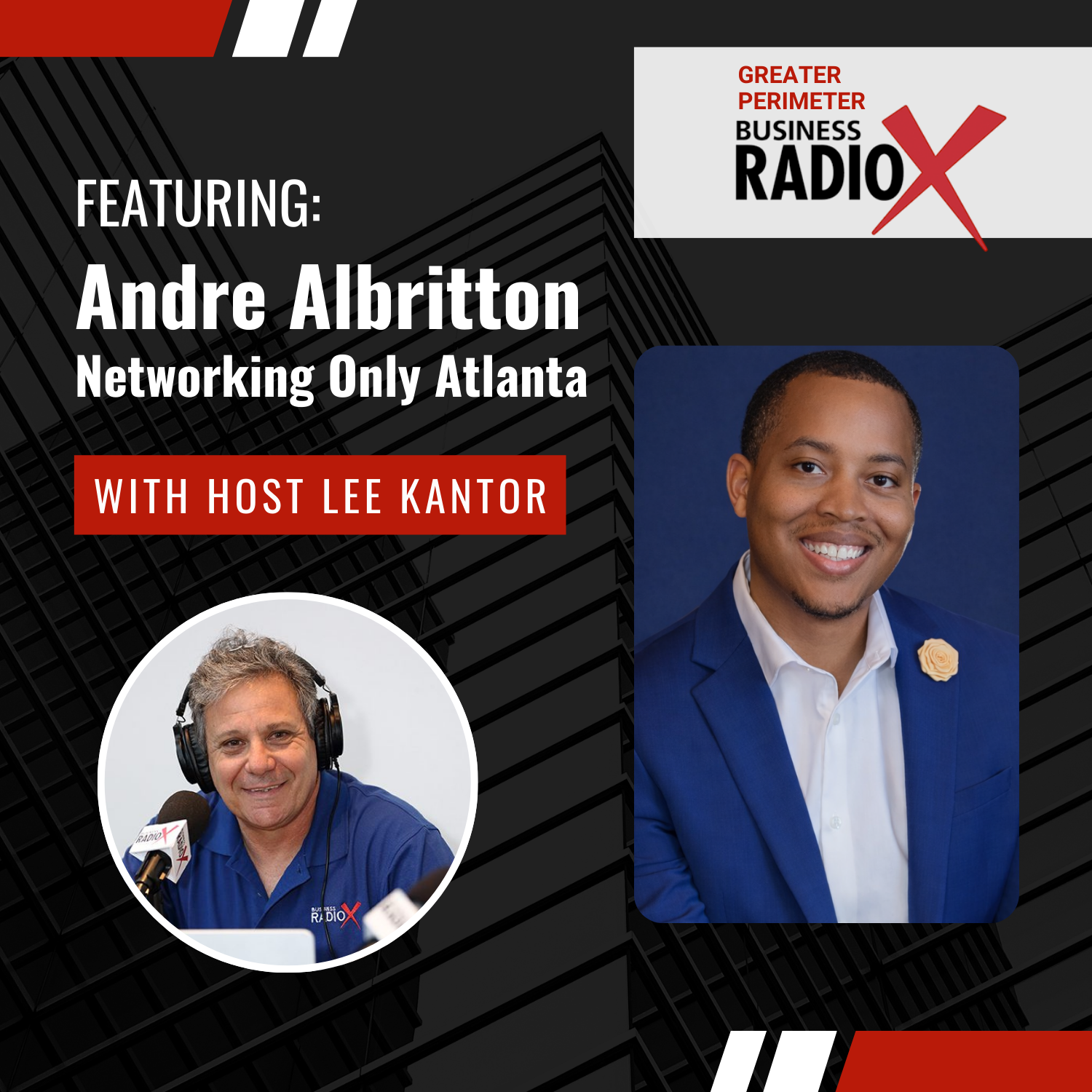

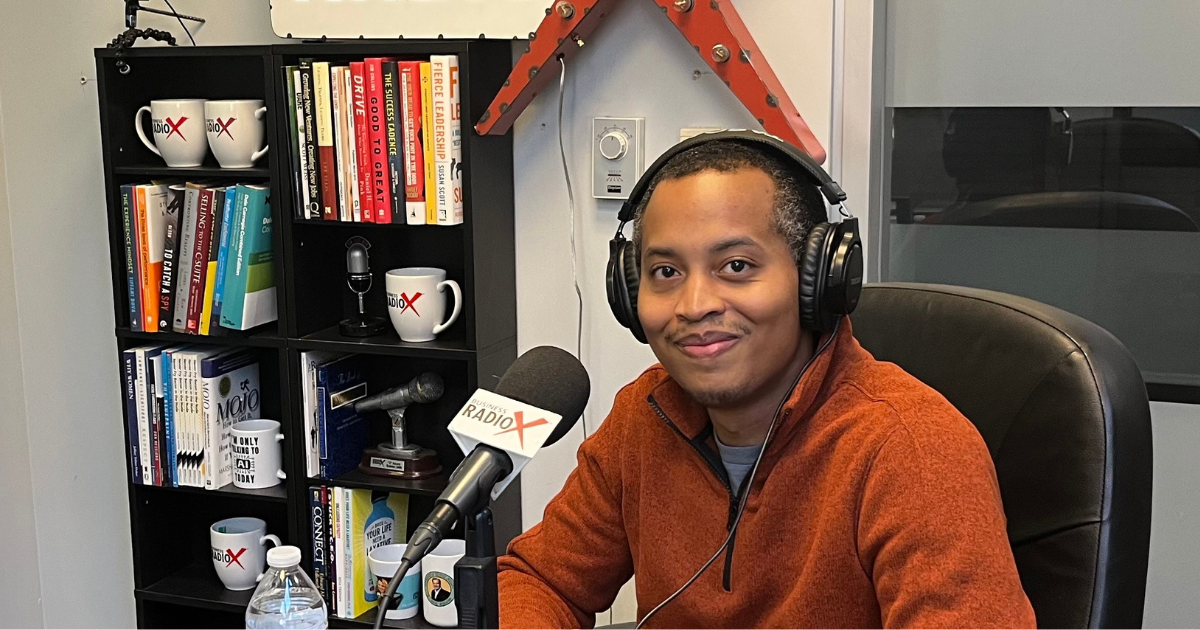
In this episode of Greater Perimeter Business Radio, Lee Kantor interviews Andre Albritton, General Manager of Networking Only Atlanta. Andre shares how his platform helps Atlanta professionals discover and navigate over 120 weekly networking events via a curated newsletter. The discussion covers tips for effective networking, the importance of intentional connections, and strategies for both newcomers and seasoned networkers. Andre also explains the platform’s growth, its use of Substack for subscriptions, and his vision for expanding across Georgia, all while emphasizing the value of community and relationship-building in Atlanta’s dynamic business scene.
 Andre Albritton is a serial entrepreneur and community builder focused on content, connection, and city-level impact.
He’s the founder of Networking Only Atlanta, a fast-growing platform that helps business and creative professionals navigate Atlanta’s networking landscape through a weekly newsletter, curated events, and strategic partnerships. His work centers on helping people be more intentional about where they show up, who they meet, and how they turn conversations into real opportunities.
Andre has a background spanning insurance, marketing, and community engagement, and has previously served in leadership roles with the Urban League of Greater Atlanta Young Professionals. 
Outside of work, he’s a student of history, a supporter of small businesses, an anime enthusiast, and someone who genuinely enjoys being outdoors and exploring Atlanta. His approach to networking is practical, people-first, and grounded in the belief that the right room can change your trajectory faster than any résumé tweak.
Connect with Andre on LinkedIn and follow Networking Only Atlanta on Facebook.
Episode Highlights
- Overview of Networking Only Atlanta and its purpose in simplifying networking event discovery.
- Description of the weekly newsletter featuring over 120 business and creative professional events.
- Discussion on the challenges of finding quality networking events and the importance of intentional networking.
- Strategies for newcomers and seasoned networkers to effectively engage at events.
- Insights on the significance of following up after networking events to build relationships.
- Advice on understanding local networking culture and adjusting approaches accordingly.
- Common networking mistakes and how to avoid them for better professional image.
- The role of event costs in networking and the misconception that higher fees guarantee better connections.
- Exploration of the potential for expanding Networking Only Atlanta beyond the local area.
- Emphasis on the importance of community engagement and subscriber growth for the platform’s success.
 This transcript is machine transcribed by Sonix.
TRANSCRIPT
Intro: Broadcasting live from the Greater Perimeter. It’s time for Greater Perimeter Business Radio. Now, here’s your host.
Lee Kantor: Lee Kantor here another episode of Greater Perimeter Business Radio. And this is going to be a good one. Today on the show we have the general manager with Networking Only Atlanta, Andre Albritton. Welcome.
Andre Albritton: Hey, Lee, thanks for having me back, man. It’s good to see you.
Lee Kantor: Well, it’s great seeing you. For folks who aren’t familiar, can you share a little bit about networking only? How are you serving folks?
Andre Albritton: Yeah. So overall, Lee, how this platform shows people is essentially I sent out a newsletter every Sunday and it has about maybe 120 plus events for business and creative professionals. Typical events would be like general networking, chamber of commerce, events, seminars, workshops, conferences, summits.
Lee Kantor: Yeah. There’s a lot going on. Right?
Andre Albritton: Yeah, exactly. So, you know, I just try and focus, like from Riverdale all the way up to Alpharetta, and then I’ll go past that.
Lee Kantor: Yeah, because it can go forever. So what was the genesis of the idea? What got you going with this?
Andre Albritton: So in all honestly, it’s never a good story, but it’s the story. So this is my fifth business. And for me, I like owning businesses. I treated somewhat of a hobby most of the time. And for this one, quite frankly, I was just bored last year. So I’m an independent adjuster for those big insurance claims. And the last one I worked was in North Carolina, February 2025. And after that, that was kind of it. So I had a lot of time on my hand. And, you know, I’ve been in Atlanta since 2012. And one thing I’ve noticed is that sometimes you go to an event, it says networking, but the moment you get inside, it’s like loud music, hookahs in the air. There’s no name tags, right? It’s just like, ah, I fell for another Atlanta trap again.
Lee Kantor: And it’s hard for folks out there because there are so many choices. It’s hard to know what are the right things to go to and invest your time, energy, and especially in Atlanta traffic. You know, that’s you got to choose wisely.
Andre Albritton: Agreed. You really do. And I try to make it as easy as possible for people. So from what I learned is most people don’t get the list. They spent maybe 30 minutes to an hour and they kind of plan it out for the whole month.
Lee Kantor: Oh, really? So they’re trying to get ahead. But sometimes these things just pop up like a week or even shorter sometimes.
Andre Albritton: Yeah, they do. So like the newsletter. You’ll have the new events added in there. So I think some people probably still come back. But like I would say, they get the majority of the cake and then once they come back for like other other events, it’s like the icing on top.
Lee Kantor: Now, are you finding I’m sure you’re finding this, that there’s so much kind of niche networking, like there’s some that are just tech, you know, tech kind of events or there’s some that are more general business. Like, do you kind of segment them for different kind of topics or areas of interest?
Andre Albritton: Yeah I do. And you’re right, there’s definitely a lot of niche focused ones. And I kind of like those events the best because it tells you what you should expect. But yeah, so on the list, if I’m going in order from memory, it’ll start with general networking events. Then I’ll move to Chamber of Commerce events. Then I’ll go to industry professional events, then charities and galas, then the breakfast and the luncheons and dinners. Then I go to seminars and workshops. So I try to segment for everyone. That’s in the sense of, hey, if I want to do a workshop, I want to learn more. There’s an area for that. If I want to get more connected with the chambers, there’s an area for that. If I want to do like some general networking, there’s an area for that as well.
Lee Kantor: And then it even gets even more narrow than that. Right. Like you can have I mean, I’ve seen women medical like, you know, there’s like super niches within niches.
Andre Albritton: Yeah. I’m not getting that niche yet.
Lee Kantor: But it just that’s why it’s overwhelming for most people. They don’t even know where to begin. So I guess, do they? Do most people start at the chamber? Is that kind of a good starting point for if you were recommending someone to get into networking for the first time.
Andre Albritton: You know, for the first time, I’d say the general networking events are just fine, because with that, you’re going to meet a lot of different people from a lot of different fields, and you can then say, okay, this general specific audience is okay for me, like maybe for a realtor, that might be good for them, but maybe find out through the networking side, just say, hey, I want more serious people. I do tend to find them in the chambers as well because these are more established businesses. They pay the actual fee to be a part of this club. So it’s like, okay, now I’m more prepared for serious networking. Then it’s like, okay, the chamber events make sense. The lunches and dinners that make sense. Yeah. For just starting out, I think just general networking is just fine. Just to get used to it, see the land, see how you feel about it, and see how you move throughout the networking process.
Lee Kantor: Now, are there, um, free events on your list or are they all do you have to pay to go to, uh, some of these events? Like, how do you do you share that information?
Andre Albritton: Not yet. Maybe one day. But, um, you know, right now information. That’s when people have to do their own homework, right? Kind of like, is this event for you? But yeah, eventually I probably will do those or at least have like a little parentheses that says free, right. But you know, for now.
Lee Kantor: But right now there’s I mean, there’s quite a few that you have to pay. Right? That’s not unusual in today’s world, is it?
Andre Albritton: No, not at all. And there’s always like that conception. It might be a misconception, honestly, that the more you pay.
Lee Kantor: The better. Yeah.
Andre Albritton: So for me personally, I’ve seen it work both ways. I think if you’re just intentional about your networking, you’re actually meeting with people after the networking event. You’re doing everything you should do. You’ll get value from the free events and you get value from the paid events. But yeah, to be in Atlanta network, it does cost.
Lee Kantor: Well, whether you’re paying for the event or a drink or a food or whatever at the event. Right.
Andre Albritton: Yeah. And, um, you know, funny enough, last year I did a lot of networking events, so I cut back on my drinking. Cut back on the eating out, too, because.
Lee Kantor: You know, you save some money, I’m sure.
Andre Albritton: Yeah. So it’s only mocktails from now on. Hopefully.
Lee Kantor: Now. Um, is there a strategies you would recommend someone who has never done this before? Like how would you go about kind of walking into a room with a bunch of people you don’t know? Is there some do’s and don’ts you’ve picked up over the years?
Andre Albritton: Yeah for sure. And you know, you always have to be cognitive of where you are. So I say this for like the out of towners, let’s say you’re from New York City. If you come to an event in Atlanta, you might want to be a little bit more cordial, a little bit nicer, because, you know, the South, we like to chit chat before we talk about business. Right? New York City, that’s like straight to the business side, right? And another tip I’ll give is for introverts. And I use this quite often. Like anytime I go to a new event, I’ll find someone who’s just kind of by themselves. I’ll talk to them first and like, leave at that moment. When you’re talking to someone at a networking event, it’s like that little pause after the conversation. So right when that happens, I say, hey, do you want to join another conversation with me? I now have a best friend for the whole event, and we’ll just go from this group to that group to that group.
Lee Kantor: And then, um, do you find that there are people from out of town that maybe are here for a conference or maybe a work thing that they go explore networking? And that sounds like an interesting strategy I haven’t heard before.
Andre Albritton: Yeah, I think they do. I’ve definitely seen it often. So I, I go to a lot of conferences because of my business.
Lee Kantor: Right.
Andre Albritton: But when I do, I really I’ll invite people out to say, hey, there’s another event going down this way. You want to come with me? Yeah. And like most of the times I say, yeah, I’m in Atlanta. I came to network. I came to learn. They try to get as much as they possibly can. So I see it pretty frequently.
Lee Kantor: And then for the person, that’s the kind of maybe have been in business for a while and is good at networking, is there a different way to kind of attack these events? Are you trying to? Is there any kind of maybe pre homework you do ahead of time to see who’s there to see. Okay I’m going to meet Bob. That’s who I’m really interested in meeting and I’m not you know it’s great there’s 100 people here. But I really want to get to know Bob.
Andre Albritton: Excellent question. And yes, I personally do. So before I go to an event. If I don’t know about it, I’m going to the Instagram page. I’m going to the Facebook page because I want to see the culture or people in suits, or can I just dress down right? And then I won’t go to the the board on the website and I’ll say, okay, who do I really want to meet in my business? I like to meet the membership chairs. And then just to make sure I’m just introducing the event coordinators just so they can keep sending me the events if they want. Sure. So yeah, I definitely do my homework. I think everyone should because like if you have a goal and you know what you’re looking for in a networking event, networking in Atlanta, it gets a lot easier. It’s kind of like dating. If you don’t know what type of person you want to date.
Lee Kantor: It’s going to be hard. You can have a lot of misses.
Andre Albritton: Exactly. But you know, once you got it, got it down a little bit better, you get better data experience.
Lee Kantor: And your your hit rate goes up. Yep. Now, um, we talked a lot of what to do. There’s some things you recommend not doing. Are there some don’ts that you see that maybe kind of people new to this just make? Or maybe people who aren’t good at it are making?
Andre Albritton: Uh, so one big don’t is know your tolerance when it comes to liquor. I’ve seen it happen. Like, um, someone will come in, they’ll like pretty nice, pretty gentle. And then maybe after two drinks, it’s like a whole nother.
Lee Kantor: A little more aggressive.
Andre Albritton: Just a little bit. So that’s definitely one. And I mentioned this a little bit but selling first because and again it’s probably another misconception. But from my experience. And you let me know yours. But when I go to a networking event, most of the times the people you talk to that’s not really going to be your client. They tend to kind of give the word about you later on. Once you build that consistency and you become relatable to them, right? But, you know, a lot of times I go to the networking events and people will just try to sell me. I think the main major culprits usually are like the life insurance people. I’m also for life insurance every single time. Unfortunately, it kind of sounds like the same. So I always say that too, in the sense I understand how you sound to other people. Try it out on your friends and say, hey, how would this make you feel at a networking event? Because, you know, at the end of the day, people want to know what you do. But I don’t think anyone really likes to be sold to at the end of the day.
Lee Kantor: Right. It’s not like people are handing credit cards to people and buying stuff at the end of a networking event.
Andre Albritton: Yeah, exactly.
Lee Kantor: Like, you have to have kind of a longer term kind of view of relationship building. It’s not transactional. If you’re I would think attacking this as a transaction, you’re not going to be a very good networker.
Andre Albritton: You won’t make it long.
Lee Kantor: And people will be like, avoid that guy because he’s trying to sell everybody everything.
Andre Albritton: And that’s another thing too, even though Atlanta has like all these people moving inside, even though the city’s full. Atlanta is a small city, like we’ll probably all two degrees away from each other. It’s like if one person does this at an event, people will remember that the next time because it is a small professional city now.
Lee Kantor: Okay, let’s play out a scenario. You’re at an event, you meet like do you have a target? Like, okay, at the end of the day, you know, there’s 100 people here I want to meet five. Do I want to meet 25? Like, is there a target in your head? Is there a ratio? Like, what’s a good amount of people to interact with at a given event? Or is it just like you just kind of take it as it comes?
Andre Albritton: It always depends on the business. So like, my business is pretty different because that’s because the people that are likely going to be my clients are the ones who are at the networking events. So for me, it’s all about the numbers game. I try to make as many relationships as I can to provide that value, which is always key. But then I say, okay, well, after I met someone, it’s like, okay, you guys want to join another conversation with me, right? Let’s go.
Lee Kantor: So then you go there. But are you are you trying to go okay. Like, how do you decide if that was a good event for you.
Andre Albritton: For me, I was based off of how many people I shook hands with and how many people I felt actually listened to me in the sense they were curious about what I do. So if I go to the event, it’s like maybe four people, which actually did happen.
Lee Kantor: Four people at the whole event.
Andre Albritton: At the whole event. And let me tell you.
Lee Kantor: Maybe that was good, right? If two of them are turned into clients, that’s a win, right?
Andre Albritton: It was. And like, in a sense, we got a chance to build relationships deeper, right.
Lee Kantor: Because that’s a lot of time together.
Andre Albritton: Exactly. So no, like one guy, he told me about the LinkedIn newsletters. I had no idea about it. I might have found out about it maybe one day, but I found out from him that day. Right? And I put that on the website. So now I got a LinkedIn newsletter. It’s like even those, like the small events almost think about what actually take away from it. And you know, I’ll be honest with those free food. That’s a plus.
Lee Kantor: Now. Um, after event, is there a strategy like okay, so you go to an event, you meet. Whatever. 222 however many people you meet, is there a strategy of following up that you recommend?
Andre Albritton: Yes and no. Again, always depends on what business you’re in because like for some businesses you might be saying, hey, this needs to be more relationship based. So that might be in the sense, oh, I’m going to check in on them periodically. Uh, but my personal one is why wouldn’t I get home? Probably within about 48 hours. I’m going to send them some type of email, and it’s usually I’ll remember them in the sense of like, hey, I remember what we talked about. I remember if we just talked briefly, I would love to learn more. And I always try to provide value inside the email and more importantly, which everyone I think should be doing is I try to set up a coffee date where we can just have a chance, just chit chat. Even if even if it’s on the phone. Let’s chit chat. Just talk.
Lee Kantor: Uh, so you’re trying to kind of accelerate the relationship if it’s somebody worth pursuing?
Andre Albritton: Yeah, definitely.
Lee Kantor: But you’re not having coffee with everybody or you go broke.
Andre Albritton: Yeah, exactly. Um, so no, it’s definitely about being intentional and always goes back down to like, what are your goals for the business? So if someone is someone I really need to know, like they have an organization, they have events. I want to do my best to get some type of coffee with them or meet up with them.
Lee Kantor: Now, you mentioned earlier that you’re a serial entrepreneur, that you’ve started several businesses. Can you talk to the person out there that maybe is in a corporate job? Like you’re like, you have a day job. Job, right? And that’s not only this networking thing. Can you talk about how, um, how to do that, how to kind of launch a new business from a place of, okay, this is my day job, job, but I really want to see if this thing can take off. How do you kind of, you know, test it to see if there’s any traction. And then if you start getting traction, how to kind of lean into it a bit.
Andre Albritton: Yeah. So I’ll use my past business actually. So before this I was a financial influencer by accident. It was not planned in any way, but I was working at State Farm. And like I said, when I get bored, I tend to start a business. So with this one, I was just posting financial topics online and I can see the traction from my followers at that point. So like my personal account, that became the business account. Eventually I had to make my own personal account. But the business side, I can see the traction in the sense like people are interested, they’re commenting. There’s some engagement. Same for the networking. Only side to where I can see that engagement. So okay, this has legs to run. And ultimately, you know, you’re gonna have to sacrifice. You won’t be able to go out as much because you got work to do. Right. So some of you money’s gonna go missing because you gotta support the business, right? You know, at the end of the day, it’s just really sacrifice. But someone’s just kind of new trying to figure out what it might look like. I always just say, get started. Like, my favorite quote about entrepreneurship is entrepreneurship is jumping off a cliff, building your wings along the way.
Lee Kantor: So when you’re saying traction, like, how are you defining traction? Is it I post something and one person gives me a thumbs up. Is that traction or is traction that oh, that one post got, you know, 500 impressions or 1000 impressions?
Andre Albritton: Definitely that one. So, you know, if someone says like 2 to 3 people and that’s like consistent. And I tried it out for maybe 3 to 5 months and I tried different ways to market, I’m just gonna assume, hey, maybe the need is just not there right now. So I thought I’d never can. Only Atlanta if the need wasn’t there back in March. And like, I tried up until June and there’s still no major tractions just like maybe a few likes, a few followers, a few views of the website. I call it a day. So hey, maybe this isn’t as good idea as it was inside of my head, right?
Lee Kantor: But what was so? Was there a number that you were like, okay, this is real? Or did you start asking for money? And people were like, hey, I’ll pay you. So then you’re like, that’s a good signal that if someone’s willing to pay, then it that’s that’s traction by itself.
Andre Albritton: Yeah, you’re definitely right. That’s like the key traction I would love to have more of. But I think the major one that did it for me, at least with this brand, was people wanted to learn more about it.
Lee Kantor: So they were saying, hey, what else you got? Or is there, is there any like here in Decatur? Or they were asking you like for things like that so that you knew that there was interest, but maybe they weren’t being served by what you had, but they were interested. If you were near them.
Andre Albritton: You know, the major interest I would say is when I was going to the networking events, people would see the list and I don’t post myself online. I’d be shy sometimes, right? But when they found out I host the list, they said, oh wow, I use that list all the time. It’s amazing. So I said, that’s been the biggest traction. You know, my theory about Atlanta is if you have a big enough audience, the money will come alongside one way or the other, right? Like this city, someone’s going to try and give you some money for some promotion.
Lee Kantor: So now you’re the way that it works is they subscribe and then it’s delivered every week via email. Is that how the business works?
Andre Albritton: Yeah. So the platform I use now is called Substack and there’s two versions. So there’s a free version. That’s why general networking and the chamber events. Right? So I have that for those people just because I if you’re still new to it, you’re probably not going to the charities or the galas. You’re probably not going to the dinners or the luncheons yet for the paid version. Then that’s for the full list. And I’m also on the list. There’s like the summits, the conferences and the Expos, kind of like more people want to be a little bit more niche. And then again, I probably need to charge more for it. But right now the subscription is $50 for the whole year. And then they’ll get the newsletter every Sunday. And if you want to go on the website, there’s a lot of other resources. So I post some business loans, grants, programs, nearby conferences because like there’s some good ones in Savannah. There’s some good ones in North Carolina.
Lee Kantor: And then is your vision of this is to, um, kind of put these newsletters all over the country. Is that how you see this growing?
Andre Albritton: Maybe one day I tried doing Miami networking only, but it was too tough to like to.
Lee Kantor: Do it remotely. Yeah. It’s hard.
Andre Albritton: And also there’s a culture to it. It’s like being in Atlanta. I’ve been here since 2012.
Lee Kantor: Right. So, you know, you got the lay of the land here, you know, where all the good stuff is.
Andre Albritton: Yeah. So I know the good organizations and more importantly, I know the major red flags. Right. If an event starts, it starts at six and ends at one. That’s a party, right?
Lee Kantor: That’s not a networking event.
Andre Albritton: But.
Lee Kantor: There’s not a lot of networking at one 1:00 in the morning.
Andre Albritton: Yeah. It can’t be. So no, I mean, the major goal honestly, and this is ideally speaking, but one of two things might happen. One, if the state of Georgia ever wants to buy me out and manage it themselves for like, the small businesses and promote their own events, I’m all game for that, right? Two would be just to do networking only Georgia and just have that name change so I can cover Savannah, Valdosta, Macon, Blue Ridge. Georgia’s a big city.
Lee Kantor: A big state, right? And there’s other pockets outside of Atlanta.
Andre Albritton: Yeah, exactly.
Lee Kantor: Now, um, so what do you need more of? Are you just trying to get more people on the list so that they can learn about the different networking events out there.
Andre Albritton: Ultimately, yes. So my major goal these days is I got this one link to the Substack, and that’s all on one platform. Explains everything makes my job a lot easier, right? So I when I talk to event organizers, I do a trade off. I say, hey, I’m more than willing to advertise your event, my newsletter. You send this link to your members who go to the event. After that. I feel pretty paid right there.
Lee Kantor: Right?
Andre Albritton: But, you know, ultimately just getting people to the list because, you know, the value speaks for itself. And again, it’s a small city. People talk in Atlanta.
Lee Kantor: Now. Can you share why you chose Substack as a platform rather than all these other kind of platforms that are out there?
Andre Albritton: Yeah. Very good question. Substack made it easier and it made it more of a community vibe. So I can put on these notes, kind of like Twitter. I can do a chat on there. I can do groups, I can do different segments of the newsletter. And, you know, AI is pretty big. It’s the big word of the this you ain’t last year? Sure, but I can see AI really taking my job in a sense, because it keeps getting better. So I was like, I have to get ahead of it and create a community. And also put in my own opinion for the event, say, hey, these events are pretty good. I will check these out. So yeah.
Lee Kantor: It allowed you to kind of personalize it and create humanity around it, not just kind of a computer generated list.
Andre Albritton: Yeah, that’s a very good way to put it. And also it did make my job easier. So I I’m not good at selling. I always like for the park to sell itself. So now on the list, like I said, there’s two versions. So go from the general networking to the chamber and then there’s a paywall. So if someone wants to try it, they can for like free seven three days or just pay the $50 for the year. So I don’t have to worry about selling anymore, like the value is just.
Lee Kantor: Built in and then and they can just stay for free forever for the general list. They don’t have to pay anything unless they want the more kind of robust list.
Andre Albritton: Yep. You got it. And you know, also with the free versions, I have this section on the site now called the Knowledge Desk. So I have industry leaders kind of just writing about AI topics, wellness and networking tips. So I’m looking to grow that out as well.
Lee Kantor: And if somebody wants to connect and learn more what’s the best way to do that.
Andre Albritton: Best way you can Google me. Um, just Google networking. Only Atlanta. It should pop up. I paid good money for it. Uh, you can also find me on Instagram under the same name. And of course the website is WWE.
Lee Kantor: Com and that’ll get them to the Substack.
Andre Albritton: Yep. Correct.
Lee Kantor: Good stuff. Well, thank you so much for sharing your story today. You’re doing such important work and we appreciate you.
Andre Albritton: I appreciate you, Lee. You’re doing more important work than me. I love you.
Lee Kantor: I don’t know about that. Well, thank you again for sharing your story. This is Lee Kantor. We’ll see you all next time on Greater Perimeter Business Radio.














