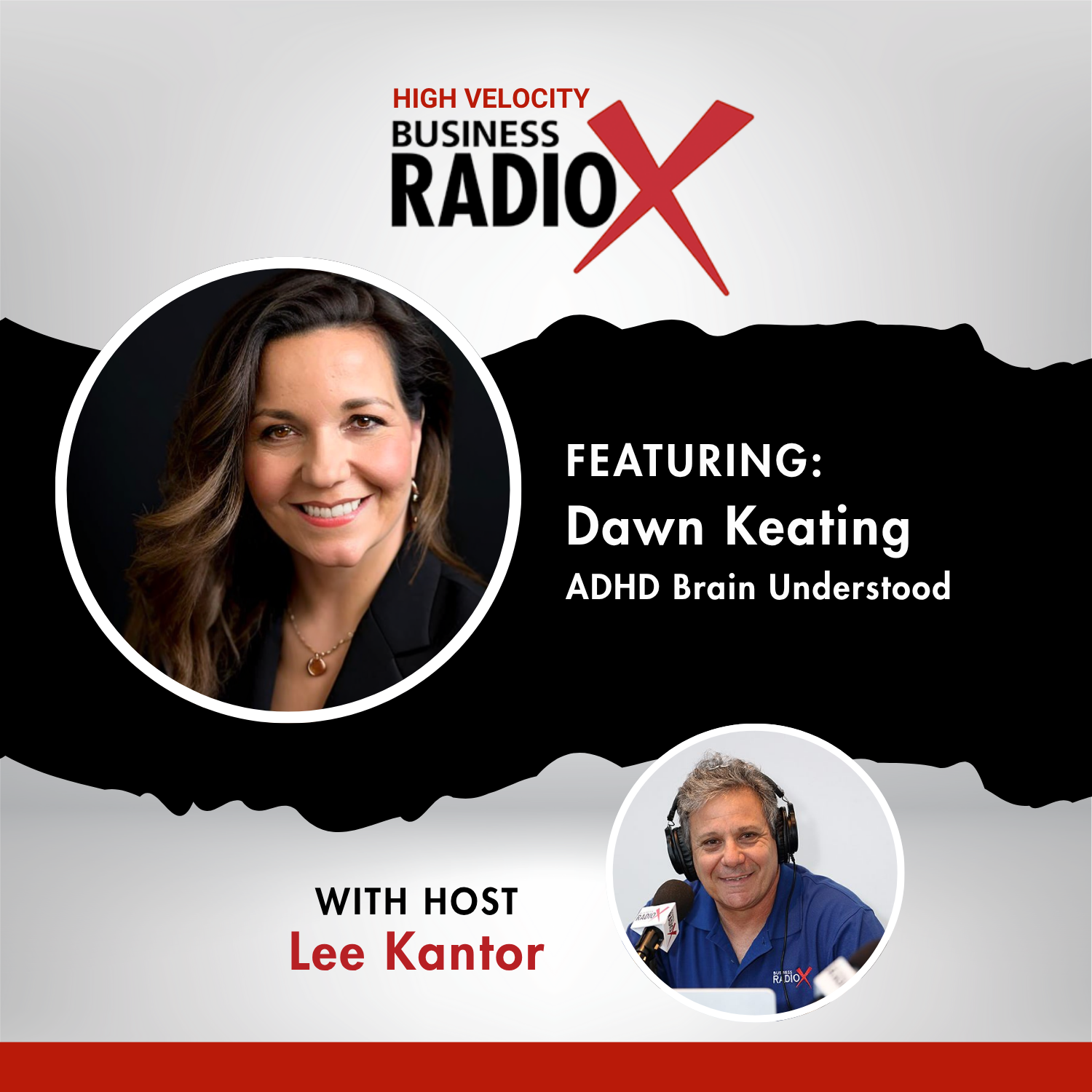

In this episode Lee Kantor talks with Dawn Keating of ADHD Brain Understood about the complexities of ADHD, especially in adults and women. Dawn discusses her personalized coaching approach, the importance of accurate diagnosis, and how ADHD can be reframed as a strength. They explore the differences between therapy and coaching, challenges with executive functioning, and practical strategies for managing ADHD. Dawn also shares advice for those considering support and highlights the value of self-awareness and seeking help without waiting for the “perfect” time.
 Dawn Keating, Owner of ADHD Brain Understood.
She is the coach you call when you’re done white-knuckling your way through life with ADHD and are so over the burnout, overwhelm and 57-open tabs opened up on your computer.
She works with smart, driven women who know they’re capable of more, but can’t seem to get out of their own way.
Connect with Dawn on LinkedIn and Facebook.
What You’ll Learn In This Episode
- The hidden toll and costs of unmanaged ADHD
- Why successful women with ADHD are often the most burned out
- Do you really need a diagnosis?
- What Dawn wishes more people understood about living with ADHD
 This transcript is machine transcribed by Sonix.
TRANSCRIPT
Intro: Broadcasting live from the Business RadioX studios in Atlanta, Georgia. It’s time for High Velocity Radio.
Lee Kantor: Lee Kantor hear another episode of High Velocity Radio in. This is going to be a good one. Today on the show we have Dawn Keating, who is with ADHD Brain understood. Welcome.
Speaker3: Hi, Lee. How are you?
Lee Kantor: I am doing well. So excited to be talking to you about this important topic. Tell us about your practice. How you serving folks?
Speaker3: Well, I am serving folks in a whole bunch of different ways. I see a variety of clients that are entrepreneurs, that are healthcare professionals. And so I say that my coaching practice is kind of a one size fits none, because if you’ve met somebody with ADHD, you’ve met someone with ADHD. We all show up differently. And we all have different needs and really what we’re looking for. So it’s kind of it’s designed to kind of meet the, you know, individual where they’re at.
Lee Kantor: About how many people have ADHD.
Speaker3: Well, they say that about, you know, that some of the numbers are changing, you know. And, you know, I would say maybe between like eight and 10%. And so the one thing that I’m noticing, though, is that more and more people are getting diagnosed. And that’s really that group of us women that got missed or didn’t present as the typical, you know, nine year old boy we think of when we think of ADHD, you know, jumping on the furniture. And so now we’re starting to come out and say, hey, wait a minute. Right. Or in my case, I got misdiagnosed and didn’t really even get my, you know, official diagnosis to 48.
Lee Kantor: Now, you mentioned that for women that maybe they are not even being diagnosed or they’re being diagnosed. Way later than a lot of children, when I’m sure that’s when they typically check this. Right. As a kid, the kids, you know, having a difficult time in elementary school. And then they say, we better test them. Is that the normal?
Speaker3: Yeah. Or it might be that the teacher, right, is saying, hey, this you know, Johnny is being disruptive in my class. Right. And so something is going on with Johnny maybe not thinking that, you know, Johnny is a kinesthetic learner. Maybe Johnny is going to learn better with movement, right? And so normally, you know, when it’s picked up early, it’s normally because it’s been an unexpected behavior or something that it just didn’t check off the box. Right. If everybody else can do it and Johnny can’t, there must be something wrong with Johnny. And for girls, right. Lots of times we’ve been raised to be polite. Right. Don’t speak unless you’re spoken to. You know, sit quietly. You know, we’re kind of people pleasers, and we’re kind of quiet. And so for a lot of those reasons, it can also be missed. Right. Is, you know, for example, you know, at one point it got brought to my parents said, wow, you know, Dawn has some real anger issues, right? And I was doing the best I could to keep it together at school. And the reason that the anger issues came out was because she, my teacher, had said, hey, you know, she’s always ripping up her papers and getting frustrated. And it was my brownie leader who said, no, dawn just needs a pair of left handed scissors. Right. And so sometimes, you know, we have these boxes that we have to check off. And guess what? Li. Once I got left handed scissors, there was no more ripping up paper. Right. And so sometimes I think of being the left handed person in a right handed person’s world. Just like being ADHD person in a neurotypical world.
Lee Kantor: Now, for folks who are getting diagnosed later, are they getting diagnosed by like kind of in through official channels? Or are they like taking kind of BuzzFeed tests to say if I have ADHD or not?
Speaker3: Yeah, that’s a great that’s a great question. You know, there was a lot of that going on for a while where you could kind of go online and, you know, fill this out and get this diagnosis. And the the clients that I work with are doing, um, they’re not really doing that. Buzzfeed. The you know, what’s in now, they’re really seeing the psychologist or their doctor and, you know, taking the channels to really get this official diagnosis. You know, some of my clients might say that they didn’t do the two day neural psych eval, but they’ve they’ve done the questionnaires. They’ve done the maybe the piece involvement from a spouse or a coworker. And they’re taking those channels, you know, and, you know, that’s it’s tricky because sometimes people, you know are wondering even at this point, like, does it does it matter? Right. And so I am seeing though that more people, um, are getting, you know, diagnosed later in life or are coming to me and saying, hey, you know what, Don? I don’t know if it’s ADHD, but there’s something going on here. Right. Um, and so again, do you have to have the ADHD diagnosis to know, hey, I’m struggling here.
Lee Kantor: And what are. As as you age, you obviously learn different coping techniques and different ways to navigate the world that you wouldn’t as a child. Um, what are how is it presenting itself, as, you know, a 30 or 40 year old, uh, where they say, were they individuals? Like, this is something. It’s not nothing. Um, I should get checked out. Like, what are some of the symptoms or signs that this might be ADHD related?
Speaker3: Yeah. Well, it what what I’m hearing from the people that, you know, that I worked with and what I even noticed myself is it’s, you know, this executive executive function, which is the day to day operations that we do right just to manage our day to day living. When we start adding more executive functioning to our plate is when it gets harder, right? And so let’s say that, you know, I’m, you know, in school or maybe I’m in high school and, you know, I’ve missed a couple assignments and, you know, um, I’ve done a few little things right, like skipping class. I’ve missed some assignments. My my room is messy. Right? I got maybe a couple speeding tickets. Right. And now I’m in college. Right. And now there’s there’s such a bigger load. Right. Or I’m in my graduate program. And now I’ve really got to use this executive functioning for planning my day, organizing my calendar. Right. Getting started on these tasks. Right. I also see it a lot when there’s that change of life, say, and for me is where I notice it is when I had kids. So not only am I just responsible for myself, but I’m also responsible for these these little people, right? Planning their day, organizing the doctor’s appointments. It’s not just about me anymore. And so I see that a lot when there’s, you know, maybe this big change of life event, right? Um, you know, running your own company, right, is different than working for somebody, right? Um, you know, and so normally it’s kind of when we got that, we’re really tapping into that executive function and some of the tools or strategies that we used before, you know, some of them may still work, but then all of a sudden they’re not working anymore and we can’t figure out why. And that’s why.
Lee Kantor: So now when the person is, you know, they go through the process, they’re diagnosed, they’re not diagnosed, but they they realize that this could be ADHD. How are they deciding between kind of a therapist or a coach? Because obviously they’re similar, but they’re really different in a lot of ways.
Speaker3: Yeah. Well, and that’s a great question. A lot of my clients that I work with actually also have a therapist with them. Right. So therapy will work on, you know, the traumas or childhood or, you know, if sometimes if there’s something that they feel needs to be, you know, fixed. Right. Where coaching really? My coaching is very strength based. Right. We don’t really talk about anything from the past unless it’s something like. All right, well, how is that, you know, showing up in our day to day, right? How we’re not going to spend our time there. Right. I know that my clients are are capable. They’re resourceful. Right. They know the answers. They just need to figure out how is my ADHD showing up or what is it getting? What is it that’s actually getting in the way? And how do I build those, you know, strategies or tools that I need to really excel. And so it really is, you know, if you think about even, you know, in school, right, if you had a coach, right? Your coach, you know, maybe helped you, you know, run a little faster, right. How to shoot those hoops, how to train. And that’s really more so what coaching is, is helping you really be the best version of yourself. And, you know, helping you kind of get uncomfortable so that you can do the growth, right. And so I say, you know, um, are we, you know, a partnership? Yes. Am I going to cheer you on? Yes. But am I going to just cheer you on and not help you grow? No. Right. And so the relationships are different. Um, but a lot of my clients have a therapist, um, as well.
Lee Kantor: Now, as part of your work as a coach. Um, is teaching the individual to, uh, look at their ADHD. Not necessarily as a detriment, but maybe as a superpower and how to kind of wring out the most from that.
Speaker3: Absolutely. And ADHD is not a detriment. You know, I think the, the and I should say it like this is that if you don’t understand your ADHD, right? Or, you know, you’re so focused on trying to become something that you’re not or someone that you’re not, yeah, it can be a detriment, right? And so the the piece that really is enlightening and freeing is when you understand that, hey, it’s, it’s just a different brain wiring and you know that there’s other ways that I can do these things, you know, and some people hate the word superpower because, you know, you know, ADHD can definitely be a challenge, right? But you know, and so but there are superpowers. There are they’re great gifts. Right? We’re the ones that think outside the box. We’re the ones that come up with the answers. Right? We’re the ones that are creative. Right. A lot of us are the entrepreneurs or the self starters. Right? And so, you know, looking at, hey, there are a lot of benefits, um, you know, and a lot of, you know, really amazing things we can do. But we first got to understand it and be willing to kind of learn to work with it.
Lee Kantor: Now, you mentioned earlier that, uh, some of the people you work with tend to be entrepreneurs or healthcare. How did kind of those two groups get? How did you get attracted to those two groups? They seem a little disparate. They’re not necessarily, you know, two in a row that I would think of.
Speaker3: Yeah. Well, you know what, Lee? It’s actually funny that you say that because it’s entrepreneurs and health care professionals that I get. And then the other group I get are men that are usually in their late 40s or 50s. So I don’t know how I get one of the three. Um, but I think the healthcare professionals, I get them. Um, because before this I worked at a major medical, um, you know, hospital for 23 years, and I did nuclear medicine. And so I have a lot of training in neuroscience. And I think that, you know, I have that love of learning. And I think that that group of health care professionals, um, kind of can relate to that. And the piece of how can you look so successful on the outside, but on the inside feel like you’re barely keeping up? Right. You know, I had a woman, a client of mine, and she said, you know, Don, um, she worked in the ER, and she said, I am saving. I’m saving lives. Like I am triaging what needs to be happened. But inside I’m falling apart, you know? And so I think that I resonate with them. And then I think that piece of the entrepreneur of, you know, we’ve got these great ideas and we’re creative. And sometimes, you know, we want to do it our way. Right. Um, and that thinking outside the box and, you know, this was my own entrepreneurship, right, is leading from the medical field to start up my own business. So I think it’s a combination of those two. And as for the gentleman, I think maybe they figure, you know, I’m a wife, I have a husband, and she must know how to help me with, you know, leaving the towel on the floor or forgetting to get the milk, whatever it is, I don’t know. Um, and so that’s pretty much how I, um, I think I kind of resonate with that with those three.
Lee Kantor: Now, when you’re working with your clients, um, are they coming to you after something kind of bad has happened, or are they being proactive and like, I want to get a handle on this, like, what is usually the trigger that gets them reaching out to you? Or are they getting referred by a therapist? Like like how what’s your path to a new client? Because it seems like this is an interesting challenge for these folks to, to to get help or get at least, um, people to listen to them, to see what it is that their issue is. But so how do you kind of go about getting that client?
Speaker3: Yeah. So, um, it’s a little bit of combination. I do get some of my clients, um, as referrals from psychiatrists or psychologists. Um, I just had a conversation with a psychologist, um, who knows about ADHD, and she said, but you know what, Don? I, I can help other people, but I’m really drowning myself, right? And I’m feeling that I’m a fraud, right? And that I’ll be found out and and so sometimes it might be that piece of, you know, just sheer exhaustion, right. This front of if I work harder, if I plan better, if I’m more organized right, or I steal time from somewhere to get more time, I’ll be better. I can outrun this ADHD. And then that’s the myth, right? It’s like you’re not going to outrun the ADHD. And at that point, sometimes it’s just that sheer exhaustion, right? Sometimes it’s that piece of, you know, they’re playing small, right? Like, you know, I, I’m, you know, I missed this promotion or, you know, um, people maybe aren’t finding me as a team player or I’ve let my team down or, you know, I’ve got a lot on the line. I’m running this group. Right? And if I can’t manage my time and our goals, then we’re not going to make it. And so it’s a little bit about, I think, realizing like, first of all, does it have to be this difficult. Right. And sometimes it’s like, you know, I’ve done everything I can and now I need to ask for some help. And I think that especially with women. Right. We you know, we’re, you know, we’re we’re people pleasers, right? We’re you know, we’re managing our household. We’re managing our team. You know, there’s no sandwich years where we’re managing our own young kids and then elderly parents, right? And it’s like there’s just too much that they feel like, you know, I just. I just can’t do it. Right. And it’s costing them, you know, relationships. It’s costing them time with their family or bringing their work home. And now they’re like, hey, you know what? I’m I’m always in ketchup mode. And that just gets exhausting.
Lee Kantor: Now, in health care specifically, there’s such a crisis of burnout. I would imagine that if you can help somebody solve this problem, you’d be making a big difference for a health care system or individual that’s in health care, because it is a tough time for those folks nowadays.
Speaker3: Yeah. And, you know, I was, you know, in health care still during Covid. And I remember just just the stress with that and, you know, just the shortage and you didn’t really know what you were walking into. You know. And what I see is that the, the clients that I work with, they love what they’re doing. They’re so dedicated to patient care and helping. Right. But, you know, it’s the piece of, um, managing their schedule. Right. Or say they’re, you know, doing research, right. You know, um, allotting the time to get that done or charging at the end of the day. Right. The seeing the patients and the crisis, that’s the excitement. That’s what gets them interested and motivated. But at the end of the day, now they’ve got charting, right. And they’ve got these pieces that they’ve got to check in with. Right. And then there is more of that burnout because then sometimes they’ve got to bring it home. Right. So there is not that time to relax or unwind with your family or just do the things that you want to do, because now you’re bringing that home with you. Right. And that doesn’t help with the burnout or recharging.
Lee Kantor: Now, is there any kind of tip or advice you can share for someone that’s listening that maybe hasn’t been officially diagnosed for ADHD, but they have some of the characteristics you describe that they might be, um, suffering from it. Is there some action they can take right now to either relieve some of the suffering, or at least kind of manage it a little better?
Speaker3: Well, I would say this is that, you know, it’s it’s not about, you know, getting the diagnosis. It’s not about having an excuse, but it’s about having that explanation. And so sometimes when clients, you know, to say, hey, I’m going to get this diagnosis, um, you know, it doesn’t mean it’s for medication or whatever, but it might be of a little bit of that piece of, aha! I knew it wasn’t. It wasn’t me. I knew something else was going on. Right. And then maybe learning. Okay. Well, what what is it or what are the areas that I really need to, you know, kind of learn about or dive into. Right. I think now. Um, and so I think that there’s that piece of just that validation of I knew something was going on. Right. But then again, it can also help you, you know. Okay, now where do I go from here? And as for the people who maybe decide, you know, I don’t want to do medication or I don’t really want the diagnosis. I would say, you know, one of the a tip that I could give would say, you know, be, you know, take a few minutes every morning right before the chaos starts and really say, what’s my priority? Right. What’s draining me? What is my intention for today? Because we’re in this world of just this autopilot and this go go go go. And, you know, sometimes, you know, I’ve, I’ve met with some, you know, potential clients and they’ll say, all right, once I get my, my life together and I get more time than I’m going to be ready to dive in.
Speaker3: Right. But here’s the thing. This is when you need it. Now. When you don’t have the time, right? It’s like saying, I’m going to get my teeth. You know, I’m gonna start brushing and flossing before I go to the dentist and get that cleaning. No, you need to get to the dentist now. Right. And so there’s that piece of, you know, when I get it together a little bit more, you know, maybe then I will reach out or, you know. Um, and I don’t know if some of that is just that mentality of, hey, you know, in today’s world, right? We can do it, all right? We can run a business, we can run a family. We can take care of, you know, our aging parents, you know, we have a clean house, we’re making homemade meals, and we’re getting in our exercise every day. And so they feel that this is something that they should be able to do, you know. Um, but really, at that point when you’re struggling, it’s like, now is the time, you know, even if it starts with, you know, getting really clear on your day of what’s really important to me today. Right? Because it all feels important to us with ADHD, right?
Lee Kantor: And especially when you have that hustle culture where everybody is, is just kind of bragging about how they’re getting it all done, when in reality they probably aren’t getting it all done. And if they are, it’s probably not done well and just giving them grace and space, um, you know, just to find their routine or path that’s going to help them grow and be the person they want to be. I’m sure your coaching is just invaluable when it comes to just giving them kind of a place to share, because it can get overwhelming.
Speaker3: It can. And, you know, lots of times just having that safe space to really process something and to have that reflective partner really can just, you know, create so many ahas or, you know, giving you the space to really think this out because we’re always so busy, right? It’s always that hustle or we’re having a conversation with somebody and they answer the question, and we didn’t really get to process what we were even thinking. Right. And so I do feel that that’s just that space of like that safe space of, okay, what’s really important here and, you know, time to really deep dive. And that’s also where the personal growth and development comes from. You know, um, I think that’s when we get a chance to see and learn a little bit more about ourselves.
Lee Kantor: Now, when you’re coaching, is it primarily one on one? Is a group is a virtual like what? How do you coach?
Speaker3: Yeah. So, um, right. I’m, I’m, I’m going to start groups. Just not yet. I’m waiting for the summer. Um, even though summer are supposed to be relaxing and chilling, I feel like this is like the busy version of December. And so, um, I will be starting that more in fall, but right now, my, um, coaching is one on one, um, predominantly virtual because I never know where anybody is coming from. I only see two clients that are local in person and, um, yeah, it’s, you know, and, um, and it’s funny because one of the clients that I work with, you know, was afraid to drive in the snow. So even though there’s no snow, we still work in person. Right? Because I guess snow can be scary if you’re from California. And so, yeah, it’s it’s predominantly just online.
Lee Kantor: And if somebody wants to learn more, have a more substantive conversation with you to see if it’s a good fit. What is the website? What’s the best way to connect?
Speaker3: Yeah, the best way to connect is to reach me through my email address, which is Don at ADHD brain understood.com.
Lee Kantor: And that’s the website right ADHD brain understood.com. They can go there and they there’s information a blog. There’s ways to kind of learn a little bit about you there right.
Speaker3: Yeah there is so yeah ADHD brain understood is my website. My email is Don at ADHD. Brain understood and I did create a little bit of a like a clarity kickstart guide. Um, right. Because you know, ADHD is, you know, people say it’s about the focus, right? But, you know, it’s about the regulation, right, of our focus, of our attention. And so I did create a little kickstart that might help some of the audience kind of see where it is that they’re struggling with this ADHD and around this executive functioning. Um, and so that’s on there as well.
Lee Kantor: Good stuff. Well, Don, thank you so much for sharing your story today, doing such important work. And we appreciate you.
Speaker3: Thank you. And thank you so much for having me.
Lee Kantor: All right. This is Lee Kantor. We’ll see you all next time on High Velocity Radio.














