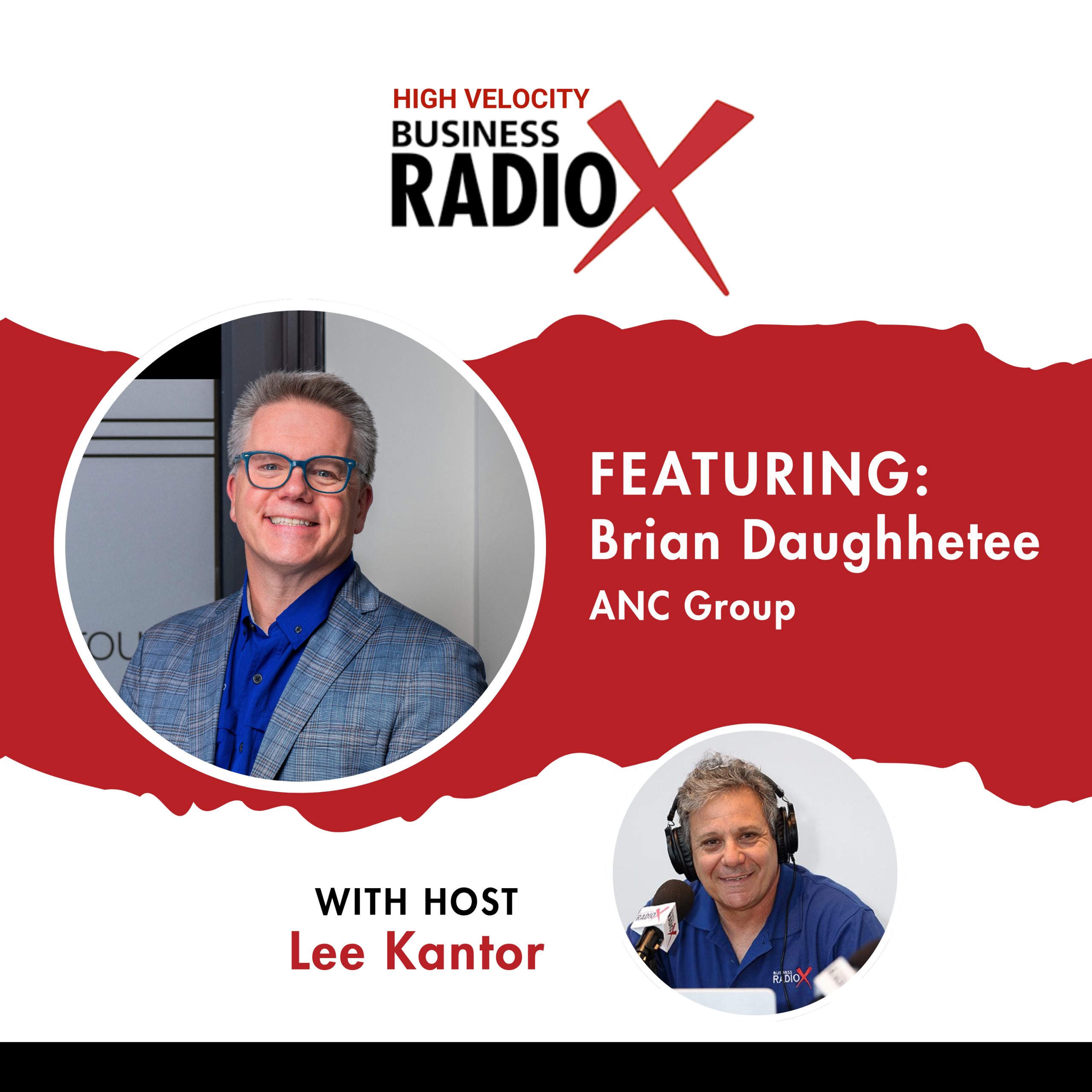

In this episode of High Velocity Radio, Lee Kantor interviews Brian Daughhetee, President of ANC Group, about helping businesses use technology, cybersecurity, and AI to operate more securely and efficiently. Brian shares how ANC Group evolved from serving school systems to supporting businesses across industries, emphasizing a partnership-first approach that focuses on understanding each client’s goals, risks, and challenges. He also explains how businesses can assess cybersecurity vulnerabilities, right-size their technology investments, and strategically adopt AI to improve efficiency and profitability without losing the human element.

 Brian Daughhetee leads ANC Group Inc., a technology services firm specializing in managed IT and cybersecurity solutions for K-12 schools, legal practices, manufacturing companies and educational institutions across South Carolina.
Under his leadership, the company has earned recognition as the state’s No.2 Best Place to Work and top-ranked IT employer, while also being named to the SC 50 Fastest Growing Companies list.
His technology career began unexpectedly at Washington’s Cispus Learning Center, where he served as Ropes Course Director before teaching himself computer network management. “The best advice I ever received was to ‘play to your strengths and hire for your weaknesses,’” he said.
His civic involvement includes serving as a Mauldin city councilman from 2001 to 2005 and chairing the Mauldin Cultural Center Board. He holds a bachelor’s degree in education from Towson State University and a master’s degree in managerial sciences from Indiana Wesleyan University.
Connect with Brian on LinkedIn.
What You’ll Learn In This Episode
- Building a technology partnership instead of simply selling IT services
- Moving from cybersecurity crisis response to proactive risk management
- Using vulnerability assessments to identify and prioritize security gaps
- Right-sizing cybersecurity solutions based on business needs and budget
- Adopting AI strategically to improve efficiency and profitability
- Protecting company data while employees use AI tools
- Using AI agents to automate repetitive tasks while keeping humans in the loop
- Helping employees focus on higher-value, human-centered work
- Reviewing technology tools regularly to eliminate unnecessary expenses
- Recognizing when business owners have become the bottleneck in their own growth
- Using technology and efficiency to create capacity for sustainable business growth
 This transcript is machine transcribed by Sonix.
TRANSCRIPT
Intro: Broadcasting live from the Business RadioX Studios in Atlanta, Georgia. It’s time for High Velocity Radio.
Lee Kantor: Lee Kantor here another episode of High Velocity Radio and this is going to be a good one. But before we get started, it’s important to recognize our sponsor, Business RadioX. If you’re a business coach or consultant who’s tired of being a best kept secret, set up a call with Stone Payton at brookstone.com to unlock your perpetual prospect pipeline. Today on the show, we have the president with ANC Group. Brian Daughhetee. Welcome.
Brian Daughhetee: Thank you Lee. I appreciate you having me.
Lee Kantor: Well, I’m excited to learn what you’re up to. Tell us about ANC Group, how you serving folks.
Brian Daughhetee: So ANC group started company back in 99. We initially started out as a company that was focused on IT service delivery for primarily schools. I used to be a teacher before I jumped to the other side of the fence into technology, and we’ve kind of grown and evolved since then. We’re still very much involved with school systems, but we also do a lot in the private sector as well law firms, manufacturing, finance businesses and such.
Lee Kantor: So now when you started out in the schools, what was kind of the deliverable to the schools? What were what problem were you solving for them?
Brian Daughhetee: Oh, this was boots on the ground. This was this was before we even really had super reliable internet and stuff. So we were going on site installing new hardware and just trying to get like kids connected. So, you know, they were really making the transition from traditional paper and pencil models to the beginnings of, okay, how can we leverage this technology to teach kids and improve student outcomes?
Lee Kantor: And then how did the business evolve when you expanded into other areas, other industries.
Brian Daughhetee: You know, every one thing. And this has been a core tenet of ANC group since the day I started the company. In my prior in my prior role, I was technology director at a school district. And when we worked with other technology companies, the kind of repeating pattern that we saw was they wanted to come in and sell us something and then leave. And when I started ANC group, the, my mindset was, we’re going to make a company that comes in and partners with the school districts, and we just carried that over into the private sector. So, you know, when I work with a client, I want to know the client. How did tell me how you got your business started? What’s the stuff that drives your business? What makes you proud of your business? What scares you to death about your business? And we really get to know our clients. Um, and we are, we position ourselves and are seen as a partner to our clients rather than just someone else who’s selling us stuff.
Lee Kantor: Now, does when you’re selling it to a client, especially to if you’re focusing in on now, like kind of smaller organizations, it sounds like a big word that covers a lot of ground, but does it, does it? Like what particularly is there? Does something happen that is prompting them to call you? Like, is there like a, a breach of some kind? Or they got some ransomware or something crashed, like some something in an individual activity happened, but that it can handle that in a hundred other things.
Brian Daughhetee: Yeah. And it you’re right, it encompasses a great big globe of terms and technologies. Uh, so, you know, we consider, I guess I consider traditional it being computers, servers, you know, keeping the network connectivity. So users can get to the internet and do their jobs. Um, but then, you know, you mentioned breaches and stuff that really gets into cybersecurity, which is where we’ve really made a move probably in the last eight or 5 or 8 years into really focusing on cyber security as well. We still do all the core IT stuff, but cyber security, that’s where you’re talking about. Is there a breach? Is somebody, you know, did they click on a spam link? You know, that’s that’s the bad area. And that’s definitely that in AI are probably the two fastest growing sectors where we’re seeing phone calls come in and saying, hey, we need help now.
Lee Kantor: Because, you know, as we were discussing that, it is so broad in terms of the things you could be doing to help the client. I would imagine that the client doesn’t know all the stuff. You know, that they think it’s a couple of things and, you know, it’s a lot of things. So how do you kind of expand their understanding of what you could possibly deliver. So they make sure that you are serving your partner in a way that is giving them all the value you could deliver, rather than just solving the triaging. One thing they think they need you for sure.
Brian Daughhetee: Now, you know, and that really does come back to what I was talking about earlier, is kind of why we’re founded and what I think about us as really our core mission, which is to help our clients businesses succeed, help them move the ball forward. Um, you use the word triage. Sometimes when we’re brought in, it is triage. I mean, the building’s on fire. Uh, we have to, you know, we have to get in, put out the fire, and just save the business in some ways. And then from there, we start building a plan to move forward. So that comes back to getting to know the business. What do they want to see happen with their business? Are they are they looking for big growth year? Are they looking to just survive or is it a maintain. And hey, let’s, let’s keep growing at a nice 15%. Uh, and then from there we look at what ah, I guess the, the targeted risks or the low hanging fruit things we can go after that to me is an IT professional and a cybersecurity professional. I look at that and go, man, that’s a big glaring hole. And if I was a hacker, that’d be the first place I’d look, you know? So we usually start there at the at the easy stuff. Um, some stuff, you know, is expensive. So a client may very well need it, but it’s expensive. So we work with them on budgeting to help plan for that. And then there’s other things, you know, I mean, a small business of, say, 15, 20 employees does not necessarily need the same security or solutions that a Home Depot or a target does. So we try to right size our solutions as well.
Lee Kantor: Now, when you’re coming into like I would imagine some of the times, your initial interaction with a client is to fix a problem that something bad happened or something troubling happened. And they’re like, Brian, uh, this happened and please make it go away. Is that accurate? Is that accurate? Like that’s a point of entry before.
Brian Daughhetee: Yeah. And unfortunately, uh, you, you, I’m sure you’ve heard the phrase an ounce of prevention is worth a pound of cure. So especially with a cybersecurity incident. So if, if someone’s managed to breach the network, if they’ve stolen data or they’ve locked you out of your stuff, it’s a lot harder to I mean, once the damage is done, the damage is done. At that point, we’re, you know, we’re cleaning up the ashes and we’re building a new building. A lot of the times, um, if we can get in there early and, and this is and sometimes it’s a scare. So, uh, we’ll get a phone call like, oh my gosh, my admin assistant, she got this, she got this email. It looked like it was from me. And she clicked on the link and something happened. But it wasn’t something bad, you know, it was it it just kind of, but it popped it into their heads like, this is this could have potentially been really, really bad. Yeah.
Lee Kantor: So like I, I caught those near misses. To me, near misses are, are the best thing because a near miss it missed. So that’s a good thing. But a near miss is a warning sign that I better do something because next time it may not miss next time.
Brian Daughhetee: Yeah. Next time they’re gonna, they’re gonna improve their aim and they’re, they’re going to get in. And so hopefully we get brought in, you know, when the near miss happens or even before that, it doesn’t always happen. Um, you know, so in kind of the worst case scenario, you go in, everybody’s locked out of your systems, then it’s like, okay, let’s, let’s see what stuff you had in place. Did you have backups in place? You know, are there things that we can use to kind of rebuild your network? But like those near misses, those are great because that raised the level of awareness for the business owner and said, okay, this could have ended my business. This could have been very bad. They pull us in and say, you know, I’m like, let’s like take a law firm, for example. You know, lawyers are really good at lawyering. They’re not necessarily tech people or cybersecurity people. And, and I, I’m terrible at, I would never want to be a lawyer. So, you know, bring us in, let us do the stuff we’re good at. And we’ll start by getting a baseline assessment. Let’s see where you are. You know, what do you have in place already? What’s good. And then we look at like, here are all the gaps.
Brian Daughhetee: There might be 15, 16 different areas that we look at. And hey, you know what? Three of them are rock solid in, you know, so those are green. You got a few categories that are yellow, but you got all this sea of red here. So we then we start looking at it and saying, where’s the biggest risk if something happened today? When when your admin assistant clicked on that link, how bad could it have been? And we start targeting there, you know, like what’s going to get the biggest bang for the buck? And it really is it does come down to a dollar spend at some point. Tools cost money. People cost money. And so our job is to, you know, balance what they need with what they can afford. And then in the areas where it might be like, you know, this would be really nice to have, but you can’t afford it right now. Then then we have a discussion with them on more of a professional services space. Hey, let’s take a look at your cyber insurance policy. Maybe we can get that. Maybe we can get the cyber insurance policy to cover that gap up until you can afford to roll out a better solution.
Lee Kantor: Now, do you see your services primarily in the through the lens of this is insurance to protect you from something bad that can happen? Or is it possible to expand your services into an area where we can not only protect you, but we can also help you grow?
Brian Daughhetee: Absolutely. Yeah. And that’s and that’s really where I like to be. Um, the reality of the situation is, is a lot of times people call, it’s like you don’t take your car to the mechanic if it’s running great. You know, you, it’s like you go there to get that noise diagnosed. And for us, a lot of times the conversation starts with a negative event, if you will. Uh, I hate fear based selling. Uh, you know, I just, I just, I’ve never espoused for that. So we really work as, as consultants in an educative consulting is what we do. I want to educate you on the tools that are out there. And some of that is so at least you have an understanding of why we’re recommending some of these tools. And some of the tools are recommended for a cybersecurity and protect you thing. But like you said, some of them are efficiency things. Uh, you know, we’re seeing a lot of talk and a lot of movement and adoption of AI in the industries, and it makes total sense. It’s a labor saver. Um, it’s an efficiency increaser. Uh, there is some risk that comes with it, but it’s manageable risk, you know, uh, you don’t want to just turn everything on and start using it without some thought behind it. But if you put a little bit of thought in it, it really can improve efficiency and profitability for a company.
Lee Kantor: Now regarding AI is some of the scope of the work you do. Could you help an organization like say, because within AI, obviously AI is another one of those terms that covers a lot of ground in two letters. You know, like it covers a lot of ground in two letters. So AI does the same thing. Um, can you help an organization like move from a situation where they’re like, okay, I’m going to be all in with ChatGPT and I’m going to do ChatGPT, but in reality, maybe they’re better served by having kind of a private LM for their organization. Is that something that you can help an organization with to, to help turn AI into a more protected tool rather than kind of a broad, um, open, open to the public tool?
Brian Daughhetee: Yeah, yeah. You know, it’s funny, a lot of our AI discussions start with a business owner calling me and saying, we want AI. I’m like, okay, what do you want to do with it? I don’t know, I just know we want AI. And so again, it comes back to, all right, let’s see, what do you want to do with it? And AI? It really can do a lot of amazing things. Um, but what we encourage, you know, we encourage companies and owners to take a look at first, whether you’ve approved AI or not. I guarantee you your employees are already using AI. So at the very least, we need to see what they’re doing with it. And are they doing it in a secure manner? So you want to make sure they’re not, you know, they’re not using the free version of a cloud or a ChatGPT and uploading all your financial data, because that’s out in the world that’s not protected. So first, we want to get you in and kind of a protective status. Uh, we want to limit access to non-approved AI models or agents.
Brian Daughhetee: Uh, then it’s a function of, okay, what’s the stuff that you do in your business over and over and over again that requires human intervention. That is an easy, repeatable process. That’s, that’s a lot of the low hanging fruit. Once you get beyond, hey, chat, make this email look better. You know, everybody does that. Uh, but you know what? Then it’s like, okay, what are we doing? And spending a lot of time on these repetitive tasks. Could we assign one or more AI agents to tackle this for us? And, you know, and this isn’t about getting rid of employees. It’s about letting your letting your employees focus on stuff and really use their brains. You know, letting them, letting them apply themselves. So you’re getting the most out of your existing employees. Will it eventually make it so you don’t have to hire more employees? Throw body at problems? Most likely, yeah. But it’s also going to expose new opportunities and new job roles for hiring an employee that you may not have even thought about a year ago.
Lee Kantor: And it’s one of those things where, um, like you said, the, a lot of business owners don’t really understand the nuance of AI. Like to them, it’s just, oh, AI is a thing, but there’s a different AI for your accounting department than your, you know, your sales department to your IT department. Like all those things are different animals and. Yeah, absolutely. And that’s where having an expert to kind of help you and walk you through specific activities you could be doing within each team is extremely useful and can increase the productivity of the organization.
Brian Daughhetee: Exactly. Exactly. Yeah. If you can take a look at, you know, if you can take a look at the stuff that is bogging down your employees. You know, I hate the word mindless, but it’s, it’s apropos in some cases. But, you know, if you’re just, if you’re just reentering the same data over and over and again, filling out the same form over and over again, that is a perfect thing to hand to an agent, you know, an AI agent like, hey, I need you to do this. You still want a human to review the work, but you’re talking about a three minute review of a document versus 30 minutes of entering in all that data, right?
Lee Kantor: You want the human to do human things and not do kind of tedious mechanical things.
Brian Daughhetee: Exactly, exactly. You know, we don’t, don’t, don’t hire a human to be a machine.
Lee Kantor: Right. And that’s where I think a big disconnect in this whole industry is that they’re not understanding that the object is to, to allow the human to do more human stuff like get unlock their humanity, not make them a better typist. Like that’s not the objective, you know.
Brian Daughhetee: Type.
Lee Kantor: Faster, right? Like that’s not solving the problem. You know, that’s not helping us grow to next quarter, you know, so like, when and how do you help them do that? Like, how are you kind of educating them? Because a lot of people don’t understand that they think it’s just going to replace the person, oh, I got an AI here. Now I don’t need this accountant anymore. Like it doesn’t work like that.
Brian Daughhetee: Yeah. You know, and I always say, you know, it’s and even your big companies. So you look at some of the, the large enterprises that man, they, they dove 100% into the AI pool. And, you know, they just allocated these huge AI budgets and turned their staff loose with them. They’re now you’re now seeing them reel back the AI budgets and go, okay, maybe we should have a little focus and direction about how we’re using the AI, because we threw all this money at AI, and it certainly did a lot of things, but it did. Did it necessarily improve anything? Are we a better company? Are we a more profitable company? Are we better serving our mission? Are we treating our humans any better? Um, and so we’re seeing a lot this happen at the enterprise level. You know, your, your, your big companies, they’re, they’re pausing and going, you know what? We, we are a company ultimately of people, not of agents. And so for us, when we go in with a client, uh, that’s why we start at the beginning. I tell, tell me what got you fired up to start this business. Tell me your business’s purpose in life. And, and you know what’s going to make you Mr. business owner or Mrs. business owner feel like you’re successful. Feel like your company is thriving and successful. And most most folks that we talk to, they care about their people. They want their people to improve and develop. Because in this, in the economy that we’re in and the work climate that we’re in, if an employee doesn’t feel valued, if they don’t feel like they’re moving forward, if they’re like, oh, gosh, I’m doing the same job that I was doing three years ago, and it looks like I’m going to be doing it three years from now. They’re gonna leave. And, you know, they want growth. And AI has an opportunity to allow people to growth because you’re getting them away from the, the very rote, boring tasks and allowing them to engage their brains and grow and challenge them. And challenge is good people. People need challenges.
Lee Kantor: Now, this is to me an important area where having an expert by your side, a Sherpa, to kind of guide you through this is is critical. And are you finding that your partners are kind of leaning into you to kind of help educate them and guide them in their organizations to maximize the returns of AI? Because like you mentioned, AI is one of those things. If you turn that thing on, that price is going to go up pretty quickly, especially at the enterprise level. If they don’t know what they’re doing, that bill is going to is not a that’s not a set it and forget it Bill. That’s a bill that increases with the amount of use you use.
Brian Daughhetee: So yeah, exactly.
Lee Kantor: It can turn a small licensing fee into a big licensing fee in a blink of an eye. If you are doing this incorrectly.
Brian Daughhetee: Yeah. What do you mean? We spent $10,000 on tokens. I don’t know.
Lee Kantor: That’s not what I bought. It says it’s $100 a month. Like, how did it get to 10,000?
Brian Daughhetee: Exactly, exactly. Yeah. We do. We do a lot of that. And that’s why, you know, again, we want everything to be measured. We we want people to be intentional about how they use it, how they use cyber security and how they use AI. Um, don’t just throw money at a problem, you know, be very targeted with it. And we also, you know, when companies work with us, one of the things we do is first, when we come on board, you know, we’re going to get in, you know, if the building’s on fire, we’re going to put the fire out. But really, once we’re in and we’re rolling on a regular cadence, we’re going to review what you’re currently using. Hey, you know what you’re paying for all these tools. Um, at least once a year, we should sit down and go one. Do we even still need this tool? Do we even use it anymore? Does anybody in the organization even use it to maybe one of the other tools that we like better added functionality that covers another tool. We’re actually going through this process. We kind of clean house every fall, review all, all of our tools, want to make sure the stuff that we’re using is still an industry leader, you know, especially around the security frame. And we just identified two tools that we said, you know, we use the heck out of this last year, but that those feature sets are now in other tools that we like. So we’re kind of paying for stuff we don’t use anymore. So we ended up saving about $10,000 just by dropping one tool. And we do that for our clients every day.
Lee Kantor: Right? Because you can immediately see what they’re using and what they’re not using. Like, yes, you know, and you couple that with what they’re paying for, then it all makes sense to go, hey, maybe you should, you know, double down on this and get rid of these.
Brian Daughhetee: Yeah. You know, and another thing that’s that a lot of people go, uh, a lot of people like to do it themselves and I get all that. But you know, like with cybersecurity and, um, AI, you can do that to a point. But like, if you really want some of these advanced cybersecurity tools, you know, sassy Siem having a 24 over seven SoC, you don’t have the staff, you know. First you got to buy the tool, then you have all the staffing that’s involved. You know, so that I think is where a company like A and C group really shines is we can give somebody, you know, enterprise level security on a budget that’s palatable for a 15 user business. And because we have economy of scales, we’re doing it for hundreds of different clients. And by doing that, you know, we’ve, we own those tools no matter what. We have experts on the team. And we rightsize what we do for you. So it’s something that makes sense and is affordable for your business, right?
Lee Kantor: And you’re seeing this stuff every day through a variety of clients where the do it Yourselfer is reading a blog post that says, oh, maybe I should do that. Like, like their information, the amount of information they’re getting is random where you’re, this is what you’re living in at 24 over seven. So I’d rather have an expert watching my back than me. Hope I run into a blog post that’s going to save the day.
Brian Daughhetee: Right. And then on top of that, you know, whether that’s personal, you know, if they’re an attorney or an architect, they’re not doing the stuff that really pays them to be in business. You know, they’re worrying about cyber security. Uh, you know, and, uh, it’s, it’s definitely a balancing act. And I get it, you know, new clients, you know, new businesses, when they start out the owner, they wear all the hats. And we understand that I did the same thing when I started a NC group. Um, but at a certain point, you become the bottleneck and it’s like, wow, you are actually in your own company’s way. And sometimes we have to have that conversation with a client and help them understand. It’s like, hey, it’s a good thing that you’re this bottleneck because it means you’ve grown, it means you’ve got more capacity, you’ve got more demand than you have capacity to deliver. And we can absolutely solve a capacity problem through efficiencies.
Lee Kantor: Now, is there a story you can share that maybe illustrates the impact you can make in an organization. Don’t name the company, but maybe share the challenge they came to you with and how you were able to help them. Kind of maybe, you know, get to a place that they didn’t even consider when they first started working with you.
Brian Daughhetee: Oh, yeah. Absolutely. Yeah, we had it kind of dovetails into what we were just talking about. We had a client who, um, they, they were the, the, the owner was doing it all. He was an attorney. Um, and, you know, he was like, oh no, I, I set up our first server, I installed our first wireless network. I, I installed our first, you know, he did all the firsts. And then at a certain point, he’s now having to like reschedule meetings with clients to keep his network up and running. And, you know, they were, they were in a, they were in growth mode. And he just said, you know, he said, I’m, I’m stuck, you know, I’m the IT guy. And he didn’t want to let go of it because he enjoyed doing that. But, you know, once we were able to let him say, okay, we’re going to trust ANC group. And we started small, it’s like, give us your biggest time suck. You know, what’s the thing that is consuming the most amount of your time? And it was, it was, frankly, it was just keeping the server up and running because they had an old server and managing it. And, and they, they’d grown to probably 20, 25 employees. So it was, it was, it was a demand. And if it went down, it really impacted productivity. So we came in, I said, let us let us just manage your servers and your users computers. You know, let’s not even talk cybersecurity at this point. Let’s just let’s us keep the lights on. And we did that. And all of a sudden he was like, wow, my blood pressure’s gone down. Uh, I’m selling more stuff. I’ve got more billable time in front of my clients. And that’s when the light bulb went on for him. And he was then he was kind of like he was then driving the charge. Like, what else can you do for us? And, you know, now we we do everything for them. We are their entire IT department for them. We are their entire cybersecurity department for them.
Lee Kantor: And then, but not only, I think a challenge, like you mentioned, is there’s a sense of pride and identity of I did this, so I don’t want to stop doing this because then I’m not the guy who does this, you know, like, but, but I’m, I was hired to be the guy that runs the company, not the to be this brilliant i.t side hustle guy.
Brian Daughhetee: Yeah, exactly. Exactly. And, you know, shoot, 20 years ago, I mean, 20 years ago, you really just had to keep the PCs and the servers up. And if you had antivirus and a firewall in place, you were good. It was like you said it was set and forget it. You know, we I know it’s in place. We’re good. Um, it’s just too nuanced right now. It’s, it requires constant attention. And so when we work with clients, uh, you know, and again, in the case of this gentleman that I was talking about earlier, Once he realized that he could operate in the area, that he’s just really good at being an attorney. Um, he had fun in the job more. He was kind of getting burnt out before that. I mean, it revitalized him. And then he just saw his revenue, revenue and profitability for his company increase. And that’s the big thing, you know. Yeah. We can get more work in. But are you are you being more profitable with the work? Um, and, you know, we, we help our customers do that.
Lee Kantor: Now, is there any piece of advice you could share for somebody who maybe is going through those kind of growing pains is their low hanging fruit that they can kind of handle themselves right before they hire you? Or is this something that requires them to, you know, kind of make that big decision to, okay, let me bring on, uh, Brian Doughty.
Brian Daughhetee: Yeah, sure. I think an easy place to start, um, is, you know, we, we offer what we call level one vulnerability assessment. You don’t know what you don’t know. Right. And a lot of people still have that mindset of, oh, I got a firewall, I got antivirus, I’m good. What we do for, you know, a very, very small fee, we come in and we do a full vulnerability scan of the network, and we find all the big holes and all the little holes, and you’ll get a full report. And whether you decide to ultimately engage with us or not, you’re going to get a report that outlines, hey, here are all the gaps and concerns that we see. Um, here’s the priority. And we recommend that when people do it decisions or cybersecurity decisions that it is, it is driven by risk and priority, not by, oh, this is easy to do. Uh, and yet there are, there’s some things that are easy to do, but they don’t move the needle, you know, so we want to do things that, that move the needle. And so the client’s going to get this report, whether they engage with us or not, they still get the report and they can go, oh, I could do some of this. And then they go do it, and then they come and they check the boxes. Well, great. Those are done. Ooh, all these other things. I can’t do those. Now I can go back to a NC group and say, hey, can you help us with these things? Absolutely. We love to do that.
Lee Kantor: So it’s kind of an assessment and a roadmap.
Brian Daughhetee: Yeah. Yeah. And it’s and it’s, you know, we like to think we can know it all and kind of, you know, with, with AI and AI and the internet, we can be experts for a really, really short amount of time and feel like we know it all. But in reality, we don’t. And it’s impossible. So bring someone in who can at least look at things and see where your gaps are, and then you can make smart decisions from there. You’re not just guessing now.
Lee Kantor: Um, if somebody like you mentioned the industry, you start in education and now you mentioned, uh, attorneys multiple times. Are those kind of the same main areas that you’re working in right now? Or is like, who’s the ideal client for you?
Brian Daughhetee: So an ideal client for us. So school systems are definitely still, we are heavily involved with school systems. Um, but, you know, and, and they are, they are kind of their own animal too. Uh, one of the reasons we did so well is because I had been a teacher, I understood the culture and the dynamic there, but it was a very easy shift to get over and working with businesses because, because we’re human focused and not sales or money focused, if you will. Um, people connect with that. People appreciate with that. So our ideal client, you know, I would say if you’ve got between 10 and 200 users even, and we, and we certainly have customers that are much bigger than that, but 10 to 200 users, you have no IT staff, or maybe you have one IT person that’s doing a specific specific task for you. Um, but you feel like, like your gut’s just telling you you’re missing something. Give us a call. Let’s at least do that initial vulnerability assessment and you can see where you stand. Uh, you know, our, our smallest customers, like I said, are, you know, in that ten user ballpark, but our largest customers are in the thousands. So we really, we scale appropriately based on what clients need.
Lee Kantor: And then like you do, you do a lot of work with like those small to midsize attorney firms or personal, um, professional service firms like, because those seem like they would all have kind of similar needs because they’re doing different things, but similar things.
Brian Daughhetee: Right, right. Yeah. So, so kind of our, our com, our big verticals, law firms, uh, financial planners, CPAs, those firms, we do a lot with manufacturing as well. Um, so, you know, factories, automated machines. Of product delivery, things like that. You know, those are those are some verticals that were very, very solid in as well. Um.
Lee Kantor: Now what about healthcare? Are you involved in that? Because that has different layers of compliance and security.
Brian Daughhetee: It does. We, uh, we don’t have a lot of healthcare clients. Um, because because of HIPAA and, and we do provide compliance as well. So, you know, if, if someone came to us and said, hey, we wanted to be soc2 certified, uh, you know, those are certainly areas that we can help. But, but do you agree health insurance is such a detailed, specific vertical. It’s not one that I would say that we’re experts at. We can certainly help in some areas, but I also I also know when I’m getting outside of our strengths. And a lot of times if that happens, we will pull in a partner that say, hey, I know these guys, these guys specialize in healthcare. Let’s get them at the table and part of the conversation, right?
Lee Kantor: And that stays true to the cultural DNA of your organization is everybody do what they do. You know, we’re this is our superpower. So let’s stay in this lane.
Brian Daughhetee: Exactly.
Lee Kantor: So if somebody wants to learn more, have a more substantive conversation with you or somebody on the team, what is the website? What’s the best way to connect?
Brian Daughhetee: Uh, come visit us at ancgroup.com. You can reach out to us through there. It’s got the phone number on there. It’s got an email. Um, if you’re in the Greenville area, you may drive by and see us just pull in and say hi at the building.
Lee Kantor: Uh, Brian, thank you so much for sharing your story today. You’re doing such important work and we appreciate you.
Brian Daughhetee: Lee. Thanks so much. I really appreciate the opportunity to be on your show.
Lee Kantor: All right. This is Lee Kantor. We’ll see you all next time on High Velocity Radio.















