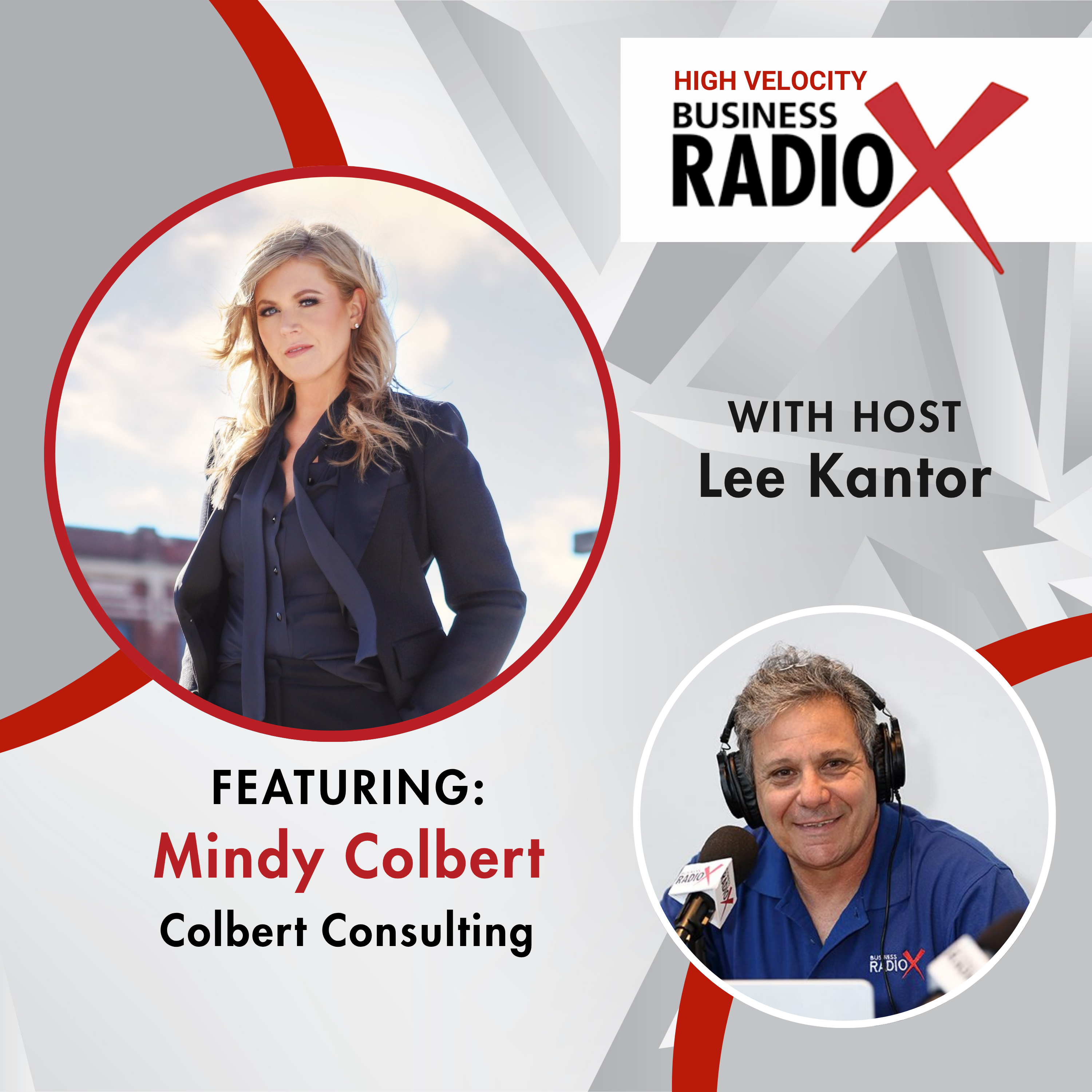


 Mindy Colbert, Political Strategist and Senior Political Advisor is the Founder and CEO of Colbert Consulting, an Indiana-based firm specializing in fundraising, strategic government connections and business and political advisory services.
With over a decade of experience in the industry, she has earned a reputation as a powerhouse in political fundraising and strategic networking, having set fund raising records and worked on two presidential campaigns. Her expertise lies in forging vital relationships for her clients, enabling them to achieve what would typically take years in a fraction of the time.
Her journey into the political sphere was inspired by her upbringing in rural Indiana, where her father, a farmer, served as a county commissioner. A graduate of DePauw University with a degree in English writing, she has leveraged her storytelling abilities to excel in the competitive world of political fundraising and strategy.
Her career highlights include serving as a senior political advisor and fundraiser for Indiana’s Governor Eric Holcomb during his two terms, earning the highest honor a governor can bestow, the Sagamore of the Wabash and being recognized as one of Indianapolis’ Best and Brightest.
Under her leadership, Colbert Consulting has become a trusted resource for clients navigating the political landscape. She is a graduate of the Women’s Campaign School at Yale University and a graduate of the American Enterprise Institute Leadership Network. Mindy’s approach is rooted in authenticity and relationship-building, ensuring her clients connect with key donors, government officials and influential stakeholders.
She also plays a pivotal role in shaping community initiatives, including her advisory work with Purdue University on the development of its Indianapolis campus. Her memberships in organizations like the Republican Governor’s Association National Finance Committee and the NAWBO Indianapolis Chapter reflect her commitment to creating impactful opportunities for individuals and businesses alike.
She is one of the nation’s leading experts in the art of political fundraising, guiding businesses in building strong organizational foundations and helping individuals navigate the complexities of political engagement. Her life is grounded in the values of family, faith and community. A leader from a young age and a 4-H champion, Mindy served as an active member in Indiana 4-H.
A proud mother of two, she balances her career with nurturing the next generation, instilling in her children the same resilience and sense of purpose that has shaped her own path. Mindy enjoys traveling with her family to other countries to show her children the world.
Connect with Mindy on LinkedIn.
What You’ll Learn in This Episode
- Why it’s important for business owners to understand what’s going on in the political landscape
- What can business owners do to increase awareness of the government
- How to build a non-profit from the ground up- “from idea to impact”
 This transcript is machine transcribed by Sonix.
TRANSCRIPT
Intro: Broadcasting live from the Business RadioX studios in Atlanta, Georgia. It’s time for High Velocity Radio.
Lee Kantor: Lee Kantor here. Another episode of High Velocity Radio, and this is going to be a good one. Today on the show, we have Mindy Colbert, and she is a Political Strategist, Senior Political Advisor, Founder and CEO of Colbert Consulting. Welcome.
Speaker3: Thank you so much for having me.
Lee Kantor: Well, I’m so excited to learn what you’re up to. Tell us about Colbert Consulting. How you serving folks?
Speaker3: Yeah, we are a consulting business that specializes in fundraising, business strategy, also speaking and coaching. And we do political fundraising as well as advising businesses on how to get plugged into the political world and form a strategic giving plan so that they can become more visible for their initiatives.
Lee Kantor: So what’s your backstory? How’d you get involved in this line of work?
Speaker3: Yeah, well, I think that my background and my upbringing had a huge impact on how I ended up in the political world and being an entrepreneur. My dad is a corn and soybean farmer in rural central Indiana, and so I grew up watching him run the family business and very much be an entrepreneur in his own right. Very much a self-starter. And then he also ran for and was elected as county commissioner, served multiple terms there. And so I helped him on the campaign trail. This was when I was in grade school. So I helped him on the campaign trail. I went to meetings with him and really saw firsthand how the political environment worked and what public service looked like. And so I decided I wanted to be involved in politics somehow. Plan to go to law school and ended up turning that down to to start a job for the Indiana Chamber of Commerce, fundraising for their political action committee, which is what we call a PAC. And it turns out I had some skills that just really resonated with fundraising. And so a few years later, I kept getting inbound calls saying, would you fundraise for us? Would you fundraise for my campaign or organization? So I definitely saw there was a need in the marketplace and a void I could fill. So I decided to go ahead and start my own business in 2012. I started out part time and went full time in 2014, and haven’t looked back since. I’ve had the privilege of working on some presidential campaigns, congressional campaigns, and most recently was a senior political advisor and political fundraiser for Governor Eric Holcomb of Indiana. And when he served two terms, and at the end of his term, I was at a crossroads with my business thinking, do I continue doing what I’ve done all these years working on multiple campaigns, or do I expand? And so I ended up expanding into advising companies on on how to get engaged in the political world. And like I said, how to give strategically so that they could have their initiatives more visible.
Lee Kantor: So do you mind sharing a little bit about the why business leaders should invest kind of in the political ecosystem? Is there some like because most business people I know, at least they just are trying to run a business like the political stuff is kind of either background noise or things they’re trying to ignore on purpose. Why is it important for them to maybe lean into it a little bit?
Speaker3: Yeah. You know, it’s funny you say that because you’re absolutely right. I mean, 77% of Americans avoid talking about politics because they view it as divisive. And and so I think it’s important for us to unpack kind of what I mean, in the context of politics in this case. And so I see politics as the vehicle and the destination is, is government and legislation. And so usually the divisive piece, uh, tends to be the, the, the legislation. Right. What, what comes out of the process. And so, um, I always tell business owners, if you if you’ve waited until someone gets elected to office to then voice your opinion of, of how things are going to affect your industry or your own personal values as, as a business owner, um, you’ve arguably waited too late. And so it’s crucial to getting involved in, in the election of, of those people, um, so that you can get aligned early and understand early where that person’s coming from and also be able to voice your opinion. And, um, I always tell my clients, you know, politics, uh, it affects your business. It can actually grow your business. And it is a business itself. Many campaigns function just like a start up business. And so, um, those are three key reasons why you should want to get involved.
Lee Kantor: And for the a business leader who maybe has never gotten involved, is there some low hanging fruit? Is there kind of a way to ease into that world?
Speaker3: Yeah, absolutely. I mean, there’s a point of entry, um, no matter what your budget is. But. But I always tell folks, the first step is to find where you align. Um, Ronald Reagan once said, if someone agrees with you 80% of the time, that person is a friend, an ally, not a 20% traitor. And so, um, it’s going to be very hard to find anyone that you agree with 100% of the time. So I always advise folks to find where they align 80% of the time. Um, and then and then, um, go from there.
Lee Kantor: So what about like, if one, uh, party is kind of the, the majority today, you know, but it fluctuates over the years. Like, do you jump from party to party? Like what’s the kind of the ongoing strategy when it comes to, you know, choosing the right folks to kind of back?
Speaker3: Yeah, I mean, that’s that is, um, going to be based off of the entrepreneur and what their comfort level is. Um, I always say to folks who, who, who say to me, well, I’m not sure I want to give to so-and-so, um, Because I’m afraid of how it will affect my business. And I tell those folks, well, you aren’t afraid to promote your business, correct? And they’re like, no, absolutely not. I promote my business all the time. Well, um, your personal values align with your business, correct? And almost always our personal values are aligned with our business. And so I say to them, if you’re not afraid to align your personal values with your business, then why are you afraid to align your personal values with the democratic process that you know will ultimately affect your business? And so while this is not a one size fits all, um, type of a type of approach, it’s it’s very, um, sitting down and learning what is important to the business owner, what their objectives are, and then analyzing the climate in which in which their business resides. Um, there are some, some key points that that will be the guiding star regardless.
Lee Kantor: So once you kind of understand your true north, it’s you can kind of match up with the appropriate folks.
Speaker3: Yeah, 100%. And you know, like I said, the the politics affects your business. It grows your business. And it is a business. So to unpack that a little bit further, it affects your business because regardless of what your own, um, personal values are, who you may align with, more legislation that comes out of the political process by vis a vis, um, those elected into office, whether it’s regulation around the product you produce, whether it’s regulation around the service you provide, or maybe it’s even a change in tax climate, um, in which your business, um, um, conducts business. So regardless, it’s going to affect your business in, in some way, shape or form. And, um, then, you know, it can grow your business, which oftentimes people say, okay, well, how how could it grow my business? How is that possible? But what I say to them is, um, when you engage in the political process and you attend fundraisers because let’s face it, fundraising is the lifeblood of every campaign, and pretty much every campaign will have a gazillion fundraisers that you can attend, um, from large to small. And and so no matter what your budget is, you can be involved in that process. And what’s so great about that is, um, you will run into people there from all different verticals, all different industries, and I don’t really know of any other conference or or atmosphere where you can get access like that to, um, high level individuals from all different industries. And so these are all going to be like minded people who are vision driven, who are focused on collaboration and big ideas. And so no matter what vertical you’re in, um, it’s a great crowd to be a part of, um, to further your own business interests.
Lee Kantor: Now, you talk about fundraising and you’re talking specifically here around the campaign, uh, financing and things like that. Do you do work with associations and organizations that need to fundraise, like chambers of commerce. You mentioned that was an early part or part of your early career?
Speaker3: Yes, absolutely. And and so I’ve done virtually every type of organizational fundraising out there, every different category, political and nonprofit. And so, um, what’s really neat is there are some major differences between political fundraising and regular nonprofit fundraising. Um, but then there’s a lot of similarities. And so some of those differences are, um, I like to use the phrase runway, um, in political fundraising. The runway is very short. Um, you want to build capital very rapidly. Usually a campaign starts 12 to 18 months out from election day. And so you want to, um, raise a lot of capital quickly just so you can spend it down, because you have to spend your money to get your candidate’s message out and to get people to the polls. So you’re raising to deplete it. Then in the nonprofit world, usually that runway is much longer. You have a capital campaign and you are, um, building to a solicitation, and there’s a lot more leading up to it. And then once you are able to secure the gift, then, um, you’re also building coffers and you’re building for, for a much longer period of time. Uh, unlike a campaign where you want to deplete everything. So, um, those are some main differences, but but also the similarities around how to ask and, and, um, all of that are very much the same in both worlds.
Lee Kantor: Now, when we do a lot of work with associations like chambers of commerce and a variety of different associations. So this is um, maybe this is tangential to what you do, but from my understanding of like chambers of commerce, for example, they have advocacy is an important component. And there’s a political element to what they’re doing is the deliverable to their members. But the members that benefit maybe from the advocacy are these are the, you know, the the more enterprise level, larger organizations, the smaller kind of mom and pops that are part of a chamber of commerce, uh, the deliverable from the chamber standpoint back to them might be a little different than to the enterprise. Do you help kind of those kind of groups, uh, form a value proposition for each kind of, um, constituent?
Speaker3: Yeah. I mean, I do think that that what you’re referring to about the legislation that’s passed, I do think it benefits everyone or maybe not benefit, but impacts everyone, um, equally. And I think too, um, if you’re a smaller shop with, with maybe a smaller budget and you’re participating in the Chamber of Commerce, but but you want to participate in your own way as well. Um, there are various points of entry where, where you can make a direct connection with the campaign. It doesn’t necessarily have to be, um, through through the chamber or like, uh, entity. Um, you could walk door to door with the campaign and the candidate. You could make phone calls. You can volunteer. Um, being a part of that campaign apparatus is so important because, um, not only are you helping further that that candidate’s journey, but also, um, when when a candidate is, is looking to be briefed on a certain subject, um, nobody’s going to be an expert in everything, right? It’s just just impossible. And so if they’re doing debate prep or they’re, um, getting ready to do, um, an interview on a certain certain issue, then then they’ll probably want to be briefed, uh, in depth on a certain subject. And so when they’re looking for experts in a certain industry, um, they’re going to look first at the people that have helped their campaign, either financially or volunteering, because those are the people they know want to support them, want them to win, and they’re going to want to collaborate with those experts of industry to get their talking points and understand the issues at an even deeper level. And so, um, take for example, your, your, your mom and pop store example by getting in at the ground level of a campaign. Um, I’m sure small business issues will probably, depending on the, the, the type of race that’s, that’s at hand will come up. And so you’re, you’re in a prime position to, um, be called upon as an expert to say this is how this environment is affecting my business. This is what is working. Well, this is what we could really use some help on.
Lee Kantor: So you get kind of a seat at the table.
Speaker3: Absolutely.
Lee Kantor: So now, if you were to give advice for a nonprofit that maybe is building from kind of ground zero, how do you go from idea to impact?
Speaker3: Two different things. One, I think there are so many well-intended nonprofits out there. Um, I see it all the time and, and a lot of them are, are cash strapped. They are, I’m barely holding on because raising capital is difficult. There’s a lot of entities out there, and there’s a lot of breakthrough that needs to happen to get your message out. So first and foremost, if you’re looking at starting another nonprofit, um, I would look at who’s already in the space that aligns with you and look at where you can join ideas and join forces because, um, most likely someone that’s that’s already doing that, um, is is going to appreciate the collaboration rather than everybody trying to row in the same direction. Um, but but in different boats, so to speak. So, um, I think first of all, look at who else out there is, is aligning with what you want to do and already exist. And then secondly, um, what I found in my experience and, and this has been through, uh, the fundraising lane, but has really come together, um, on all different nonprofits. And that is authentic relationships. Um, part of why I have enjoyed the fundraising lane so much, and so many people come up to me and say, well, how did you get involved in that? Right. Um. The thought of asking for money for a living. Just. I think that sounds awful. And and to me, um, it’s all about hearing people’s story and, um, to to go back to my college days, I was an English writing major, and, um, my favorite type of writing that I did was profile work.
Speaker3: And profile work is where you sit down and you interview someone and you listen to their story and listen to their background. And I just really enjoyed that. And so, um, it really clicked with me one day of of why I enjoy the fundraising lane. Because, um, that’s what it’s been. I’ve been able to sit down with, with, with CEOs and thought leaders around the country and just hear their story of how they got to where they are. And, um, when you take out that transactional piece, when you take out that cold call mentality or sales mentality, and it’s just understanding why people are involved in the industry they’re in and how they got there, and make it much more about authentic relationships. It’s a lot easier, um, and more enjoyable to to get them on board for the common cause. And so I think when you’re putting a nonprofit together, it’s much the same. It don’t think about it as going out trying to sell something. Think of it as going out, trying to understand the void in the marketplace of of the nonprofit world and, and what people care about. And then they’re automatically going to come on board with you.
Lee Kantor: Is there a story you can share, maybe where a client came to you with help, or they needed help and and you helped them get to a new level? Uh, using the strategies and experiences you have, obviously don’t name the organization, but maybe share what their problem was and how you were able to help them.
Speaker3: Yeah. So there was, um, a company who, um, they, they did ambulance work and they, um, were dealing with some issues. Um, in in Texas. And so, um, they basically needed a way to, um, to flag some issues that were happening down there. And, um, there just wasn’t a good way for them to flag it. I mean, it could go through all the normal channels, but a lot of times those are sent to emails that that nobody ever sees. And so what happened was, um, I took the issue and I happened to know this is where the, the, the fundraising in connection world is, is so great because the world becomes very small. And, um, so it turns out that that person knew someone who knew someone in Texas. And so, um, we were able to connect the dots very quickly and, and get this person, um, connected to the folks in Texas that they need to get connected to. And as a result, many, many people were able to get their their health needs addressed that they weren’t getting addressed before.
Lee Kantor: So by being able to connect the dots and, and kind of tap into your network, they were able to benefit from your network directly because it accelerated the relationship building that they were able to do.
Speaker3: Yes. Yeah. And I mean, a lot of times this is about, um, you know, impacting the greater good, right? And, you know, I even remember, um, a long time ago when, um, uh, runways were shut down in, in, in Puerto Rico because of Hurricane Maria. And so, um, I remember getting a phone call of, um, you know, someone who just wanted to help. Right. And and we knew we want to get insulin there. There are people there that, that need their medications. And so, um, just being a part of a project to help get people medicine that they needed, um, that’s where, again, the world becomes very small. And, um, being a part of this network of, of highly influential individuals, um, there are a lot of needs out there that are being, um, served that maybe government can’t get to quickly enough. And so private industry steps in to to fill that void. And, um, it’s been really neat to see.
Lee Kantor: So who is your ideal client? What’s the ideal client profile look for you?
Speaker3: Yeah. So, um, it really spans, um, anyone from a startup business who doesn’t have any type of political apparatus, but they are looking to get involved all the way up to, um, very large businesses who, um, maybe have certain efforts, but they don’t necessarily have a strategic giving plan in place. They just kind of, um, go where the wind takes them. So, um, either type of company that in that regard and then also, um, specifically those who are looking to, um, have a bigger, bigger impact in Indiana. That’s definitely my sweet spot. But also, um, those, um, who might be looking for more visibility nationwide. And so, um, again, it’s not a one size fits all, but we can hop on a phone call and go through what kind of your, um, um, initiatives are and what you would like to accomplish and, um, can figure out if it does fit that kind of national profile, um, or is more individually state organized.
Lee Kantor: And if somebody wants to learn more, have a more substantive, uh, conversation with you or somebody on your team, what’s the website? What’s the best way to connect?
Speaker3: Yeah, absolutely. It’s Colbert Hyphen consulting.com. And go to the contact us section and fill that out.
Lee Kantor: And it’s Colbert Hyphen consulting.com. Correct. Well, Mindy, thank you so much for sharing your story today. You’re doing such important work and we appreciate you.
Speaker3: Thank you for having me, Lee.
Lee Kantor: All right. This is Lee Kantor. We’ll see you all next time on High Velocity Radio.














