
In this episode of High Velocity Radio, Lee interviews Daniel Cubillo, author of The Creative Mastermind Mind. Daniel shares insights from his four decades in entertainment, discussing the challenges and opportunities facing today’s content creators. The conversation covers the importance of self-reinvention, embracing technology like AI, focusing on niche audiences, and strategic planning. Daniel offers practical advice on pitching projects, understanding buyers, and building creative teams, emphasizing adaptability and unique value. The episode provides actionable guidance for creators navigating the rapidly evolving media landscape and highlights Daniel’s book as a resource for success.
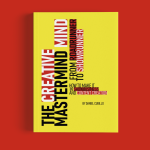
 Daniel Cubillo is a creative architect trusted by the world’s most influential media companies. Over the past decades, he has developed and produced content for platforms that define global entertainment—including NBCUniversal, Discovery, MTV, Facebook Watch, Netflix, Snapchat or The Zeus Network.
His unique ability to design storytelling systems that perform across broadcast, cable, streaming, and social platforms has positioned him at the convergence of legacy media power and the emerging creator economy.
The Creative Mastermind Mind is a field guide for creators, storytellers, and entertainment professionals navigating the chaotic modern content landscape. The book distills his experience developing, producing, and running over a thousand hours of television and digital content — from global reality formats to groundbreaking interactive shows.
Blending insider lessons with raw honesty, he explores what it really takes to survive and evolve in show business: mastering creative reinvention, understanding the dynamics, and building resilience in a world where algorithms and egos compete for attention. Part mentorship, part insider’s guide. The Creative Mastermind offers practical frameworks, real life situations analysis, and a timeless roadmap for those determined to create meaning — and make a living — through storytelling.
Connect with Daniel on LinkedIn.
What You’ll Learn In This Episode
- Challenges and opportunities in the entertainment industry for content creators.
- The impact of technology and audience fragmentation on traditional media.
- The necessity of self-reinvention for success in a changing landscape.
- The democratization of content creation and its implications for standing out.
- Strategies for identifying and serving niche audiences.
- The role of technology, particularly AI, in shaping future content formats.
- The importance of building a creative team and mastering essential elements of production.
- Practical steps for turning project ideas into tangible outcomes.
- Understanding the buyer’s perspective and tailoring pitches accordingly.
- The enduring demand for creative talent and the need for high-quality content.
 This transcript is machine transcribed by Sonix.
TRANSCRIPT
Intro: Broadcasting live from the Business RadioX studios in Atlanta, Georgia. It’s time for High Velocity Radio.
Lee Kantor: Lee Kantor here. Another episode of High Velocity Radio, and this is going to be a good one. Today on the show, we have the author of the book, The Creative Mastermind. From Road Runner to Showrunner: How to Make It in Show Business and Content Creation, Daniel Cubillo. Welcome.
Daniel Cubillo: Hello. Thank you very much. Thank you for having me here. And I’m going to correct you because, like, you probably got one of the first press releases, The Creative Mastermind Mind, and that redundancy is on purpose. And by the way, you pronounce my last name almost perfect, like people used to say, Cubillo. And it’s Cubillo. Thank you.
Lee Kantor: Well, I’m sorry about not saying the title correctly. The Creative Mastermind Mind. So tell us about that. What is the kind of the mission of the book? What were you trying to accomplish by writing a book like this? Well.
Daniel Cubillo: I’m a storyteller. I’m in the entertainment industry. I’ve been here since I have consciousness. I mean, since I was 14 or so. And we’ve gone through a few crises or major changes from technology to, uh, content to external external factors like crisis, financial crisis. And and I saw I’ve been eyewitnesses. I witnessed how those changes gave us the opportunity to reinvent ourselves. Mandatory is not an opportunity. It’s like it’s by the credits. It’s mandatory. And then after practicing self-reinvention content reinvention, production reinvention. Again and again and again and the and the current times. I thought, man, this is kind of crazy. Like how anyone starting right now or changing are going to make their living as creators with the current landscape, like the landscape nowadays, is hard. It’s really hard. So I try to put to analyze what I did during these four decades of career to to transform those mandatory changes into opportunities. What I did in two sense what I did in front of the mirror, me personally, and what I did in relationship to in relation to the to the career. And after analyzing them, I asked myself, why not to write a book about this? So that’s exactly the book about this is how to actually navigate and make your living as creator in any circumstance as possible.
Lee Kantor: So now can you share a little bit, maybe about where we’re at today for folks who aren’t following kind of where we’re at? Do you mind sharing maybe the past and what has been kind of the big changes in your mind and where we’re at today? So we can once we know where we’re at now, we can come up with a plan on how to best leverage where we’re at.
Daniel Cubillo: We are like the traditional entertainment business. The traditional television business had the same death as the music and the time or the newspapers, the printed newspapers in their time. You know, for some reason, television, we thought that we wouldn’t go through gone through that and we did. And and the circumstances. I mean, the lack of audience is notorious. I mean, it’s kind of sad. Nowadays, a morning show with 60,000, 60,000 viewers. Only 60,000 viewers in this country that morning show would survive with those numbers. That was like. That wasn’t that way in the past, you know? So it’s not only that the audience, um, moved towards the smaller screen, the devices towards social media, actually, or the all the opportunities in, in streaming networks, etc.. It’s like the business tried to sustain the lie to themselves and to the rest of the world for 15 years, and now we are paying the consequences. And um, and it grow in a, in a kind of crazy way. I mean, maybe made those made that made some sense in those times. But, um. No. The television industry as the newspapers, as the as the labels, the traditional record labels, we all did the same. We ignored the changes, we didn’t adapt and we die.
Lee Kantor: So now, as you’re mentioning, the audience is fragmented. Um, and part of it is because there’s less and less, um, kind of gatekeepers. Now, anybody can produce content, whereas before you needed permission or you couldn’t afford to, you know, film something or make a TV show, and now anybody on their phone can create content and publish it on YouTube or on a streamer somewhere. So how do you stand out? How do you kind of, um, get enough traction or escape velocity to make your content get noticed?
Daniel Cubillo: Well, um.
Daniel Cubillo: You’re right, I call it the democracy of the digital world. You know, everyone can produce and everyone can broadcast. That is great. And that has had amazing results for some people and has changed the landscape completely. Um, as you said, the audience is fragmented. I think any consideration about making it must go through, uh, picking the right niche for your content? That’s one. We are living in a world that is going to be more and more and more niche based, community based. And, um, I mean, actually we are transitioning to that already. So I would say think about your niche, not think that much about the like. Another thing is like what you have to say to that niche. Are you adding any value to that niche? Are you giving them what. Those are the basic considerations. And then like any other thing, um, making it as a content creator or putting your idea on a screen is a matter of two things what you do in front of the mirror, what you do internally, how you think, how you proceed, how you act. And, uh, just for you. And then the other side is like how you approach the path, how you decide the path and approach the path. And what are the considerations that you need to to really think about. I think that’s the that’s the key for those that are picking the, the, the self or the the journey of the creator, independent creator.
Daniel Cubillo: Uh, if you are a writer, you’re a director. You want to put together a movie, you want to put together a series that’s like a completely different scenario. Um, now is it has been always complicated. I’m coming from a country that it had only five outlets, and maybe there was like 2000 providers and five clients that that’s that was the reality. A couple of like 15, 20 years ago in Spain. Um, probably now it’s even worse because some merges and some fusions and all those things that happen in the, in the, in the roof of the companies, in the penthouse of the companies, you know, made it worse. So now it’s a problem. It’s a problem of, um, visibility. It doesn’t matter how good you are, how good is your shit? Like, if you don’t have the visibility and as you said, lay out big changes, uh, consolidations, like company acquiring companies. All all of this is like falling down piece by piece, and now it’s going fast. There’s a lot of people, very creative people, trying to do their thing, to sell their series, to sell their script to, to put something on a screen. And it became probably, I don’t know, 4 or 5 times more complicated than it was in the past. And so it’s, it’s, it’s it’s hard times.
Daniel Cubillo: It is hard times. But I think there are some light and it depends on how you proceed. You know, uh, there are opportunities. At the same time, people are audiences are consuming more content than any time in the past. And there’s real need for good content. I think in the social media, it is happening already. There’s going to be like like like two leaves, you know, the premium league, like well produced content and the and the creator basic creator um league, which is just my own resources. Where where probably the more natural the best, you know, um, there are there’s I think I think also technology is going to bring us amazing opportunities. I give an example in the book about this is like I did Fear Factor. I shall run Fear Factor. Uh, 20 years ago. It was the very first time that that show was produced in Spain. Well, actually there was like 5 or 6 countries producing Fear Factor in a production hub in Buenos Aires. In Argentina. Um, USA is the only country that produced their own fear factor. Um, because of the budgets, of course, the rest of the countries, we will share a production half and we would do the same challenge in the morning. It was Mexico. Then in the evening was Spain, and the next day it was Russia. I don’t know. Whatever. So.
Lee Kantor: So. But is that how creators should be thinking, like globally? Should they be thinking about? I have to appeal to a global audience, whether that’s me as creating content that can be translated into these different languages? Or is it because you mentioned a niche and a niche?
Daniel Cubillo: Yeah. Uh, yeah, exactly.
Daniel Cubillo: I get I get my track. I got my path again. Thank you. Yeah. The thing is that the. The the possibilities of creating a worldwide format are really, really, really low. But, but and as we are witnessing and networks and platforms are repeating and repeating all formats with a little bit of a revamp and that’s all. So what is new when we are going to have something new? Let me go back to the fear factor. 20 years ago when I did Fear Factor, I asked the producer, can we measure the fear? Can we somehow connect these people with with sensors and measure their fears during the challenges? And we did it. And we did it with, with wires, you know, and we ended up just adding, uh, an information on the screen about their level of fear. It wasn’t serious, but it was a test. Nowadays with technology, with AI, with the technology we have around. Can you imagine just in the in the world of the game shows or the or the talent shows being able to measure real time? You know, I think there’s an incredible Opportunity. If we start thinking about how to add layers of of artificial intelligence related technology to the format or creating formats out of that, you know, I think that for me, that’s one of the keys of the future.
Daniel Cubillo: There’s a lot to do. Like, another thing that I did for a couple of years was this, um, interactive. Quiz show. It was interactive comedy quiz show for Facebook Watch. And in that show I’m on, like, there was a lot of humor. There was this amazing lady, uh, hosting, and we made ten questions. And people from their phones in Facebook, if they would answer the ten questions right, they would get a fraction of the money. And we did that twice a day for a year plus. And so interaction. And that was a huge success. And like like we got like like 7 million followers in three months. And why? Because we added to the quiz show and the and the comedy, the interaction element. So if you if you start talking about things that we can already do with the current technology, I think the, the, the landscape of the formats is going to evolve big as soon as people start thinking about it.
Lee Kantor: Because right now there’s, um, some people in the, in the creative space are not only they’re not even kind of neutral about AI, they’re negative about it, and they feel it’s a threat to their creativity and it’s going to replace them at some point. So you’re it sounds like you’re saying that you can lean into it and leverage what it can do to make your creativity, um, more robust.
Daniel Cubillo: Look, um.
Daniel Cubillo: I was I was in the early 90s. I was shooting wedding videos and editing wedding videos, and the technological revolution came, and I kind of, like, lean on it, as you said. I embraced it. And I spent a year plus researching and fighting until I got some digital video board that allowed me to give more and better and in less time that any major production company in my region. So it was like a, it was a it was a year and a half effort, but it was worth it. And then a few months later, I had my I commissioned my first show to NatGeo, a travel show, because I did an amazing pilot, you know, because I had resources, digital resources that that not even the major the powerhouses had. So, yeah, technology is here to embrace it. It’s not to avoid it. It is true. It’s going to take some. It’s gonna it’s gonna do a lot of heavy lifting, storytelling work like really fast. And without humans. That is the negative part. There’s people that if they don’t evolve, they will lose. That’s clear. But at the same time, there’s no other way. You know, like like every, every technological revolution is about embracing it. It’s not about rejecting it.
Lee Kantor: So your advice would be to embrace kind of the new technology, experiment with it, use it to the best of your ability, and be as good of be as good with it as possible, because that’s going to make you that much more attractive. Team member uh, if you’re joining forces with another entity or you’re creating your own kind of creative art.
Daniel Cubillo: Exactly.
Daniel Cubillo: And I think there’s an amazing opportunity, but, um. I also think that people, most of the people, most of the professionals in the, in the industry are not having like the, the, the right attitude because there’s, there’s two things. It’s the things you can use technology, artificial intelligence, to improve or create new storytelling or new formats. And there’s the other thing is like how how artificial intelligence is applied in inside the business, how it’s going to change the business. Both things need time, passion, energy, curiosity and and and yeah, and research and you know, like create, create try to create with those things like get into them and let’s see what your creative mind is, is, is, is uh, discovering I think the opportunity is there. And I’ve seen I have very close friends like I did my my little experiments with AI, of course. Um, apply to production, to video production of photo production. Um, I have a friend that that is like, did the same thing one month ago during Christmas that we all did every big technological, technological change. You see that during Christmas, like a family was having fun. He was in front of the machine trying to create something. The result like, ah, understanding the client is so freaking happy he is. He is guaranteed 1 to 2 years of of continuing with this client. And it’s a big client, a multinational. And it’s one of those things that if you don’t sit down and you don’t explore and you don’t risk and you don’t put your your energy there, you’re not going to make it. So what is that simple.
Lee Kantor: Right. So you you can’t kind of dream about it. You got to start doing some stuff, right? You have to produce you.
Daniel Cubillo: Exactly. That’s, that’s there’s a lot of that in the, in the book, you know, I call it I call it the process of dream making. This, this, this dream making. We all, we are all in getting into. We have a dream and let’s make the dream possible. There’s a moment where you have to start the making. The dream would would fly with you. You just put your energy on the making, making, making, making, making. And the dream part will fly along. I will get you places. But. But there’s no dream making without the making part.
Lee Kantor: Yeah. Otherwise it’s just a dream. It’s not real yet.
Daniel Cubillo: No, it’s not real. And what I try to do in the book is give, give a guidance, give a little path about the making in those both, um, sides in front of the mirror with yourself if you want. If you really want to be a mastermind mind, this is the path, the internal one. And then this is the path career wise. And yeah, that is that is what I try to do. I hope I hope people will get it.
Lee Kantor: Now in your, uh, in your career path, you you’ve done a lot of things and you’ve accomplished a lot of things. How do you kind of go about building that perfect team? Because it does take a lot of different people with a different skill sets in order to make something special.
Daniel Cubillo: Absolutely, absolutely. Well, um. This is Daniel’s theory, okay? For an audio visual solo career, you need four elements. You know, you need audio, you need video. You need a story to put it together. And I’m saying it the fourth verse, the first, and then you need money or you need the ability to to make money with it. Those are the four ingredients, the four elements of of any creative career, in my opinion, whoever you are to your, to your, uh, team must complement those four elements. So if you’re an amazing director, an amazing writer, but you don’t know how to communicate, you cannot tell the story to anyone and make money with that. You need someone. And what I would recommend is whoever you hire or you get into business with, that person, should at least master two of the four elements. As a creator, as an audiovisual creator, I think anyone should master. Two. If you just don’t master two, it’s going to be difficult. And then you have to complement those four elements with the people in your team.
Lee Kantor: And then when when you have a project idea like say you have an idea for a project, what are kind of the the main what would be your kind of your priority steps to do in order to make something in your head turn out something real? Like how do you do you build a pilot for it? Do you go and try to build the whole thing? Do you try to find investors? Do you try to bootstrap like what to you would be the path of taking a concept you have and making it, like you said, becoming a maker and not just a dreamer.
Daniel Cubillo: Um, what I consider making the moment you start doing things, it’s like like the other is like making it to a screen. But the making in the dream making part starts With, with the first idea and the first note and the first thought, like, um, it depends on what is your your creation. Uh, if you aspire to sell a TV show or a movie or a concept, yes. You have to sit down and and write it and write a pitch and find a path to, to for someone to read the basics of the pitch or have the, the 32nd speech, the elevator pitch and get an agent. And then if the agent is going to talk to it’s going to distribute it for, for to um, outlets or production companies. That is the traditional the traditional path. It doesn’t matter if your if your pitch or your pilot is going to a major studio or a marketing firm that are ready to invest in content, it doesn’t matter. It’s the same process, you know, in my case, it starts always in a whiteboard on the on the wall. And then then hundreds of notes here and there. And then one day, when I’ve been thinking about that and taking notes on the wall for, for a while, I sit in front of the wall and I create the first structure for the beach. Let’s put it that way. Once the structure for the beach is done. Um. It depends. It depends of the on the path, and the path depends on the product. And uh, so but I would say I can either finish the beach or start writing a pilot, or I can consider producing a pilot, depending if it’s unscripted and or it’s easy or at least, uh, show real. Oh my God. Sorry about this.
Lee Kantor: Now, when you’re when you’re coming up with. I would imagine that it differs depending on the scope of the project. But is it? I guess if you have enough experience or have done enough, accomplished enough, then you can maybe sell an idea just on an idea. But for most people, I would imagine they need some sort of proof of concept a little bit. Right? You have to produce something that someone can see so they know kind of what they’re investing in.
Daniel Cubillo: Yeah, absolutely. Absolutely. Selling ideas is more and more and more has been more and more and more complicated. Um, I don’t I still we still do it. I’m selling things just in paper without without pilot or without, uh, not not pilot, not even written, you know, like not not sure. Not shot. For sure not produce bad ideas. That’s the most challenging part. That is the most challenging part. As you said, if you have something physical, if you have, if you have a production, if you have created something, it’s going to be easier. But now creating something is like really easy. You can produce an amazing pilot just using the artificial intelligence tools properly, and and you can have real faces on it, and you can have that time period that you are dreaming or that science fiction, uh, environment that you have created like that is doable. Maybe you can just build a two minutes so real about your story. Like I think now with the current tools, there’s no other way like and and even though doing that and doing it in an amazing way. Then you have to go through all the filters, as I said before.
Daniel Cubillo: Um, the problem now is exposition. You know, there are less buyers and way more sellers. We are all trying to sell our ideas. So picking the path is a journey, like analyzing the path you’re going to take is a journey. In my case, I would recommend now to do the whole strategy first on, on, on a whiteboard, you know, in every state and looking for different, uh, avenues, options depending on the results. But if you don’t have the whole picture, clearly if you don’t know where you are going, where is your niche? Who are the key elements or the key people in that niche? What are the key elements to to make it in that niche? If you don’t have all of that clear, you cannot start the pitch or the script. You know, like I think nowadays that is basic. You need the root path or different plants for root paths that that is going to be that is like the show rundown that is alive, that is going to change. But you need to think about the whole picture before starting doing anything.
Lee Kantor: Now, how important is it to understand what who the buyer is and who what the buyer wants? Like if your objective is to get something on Netflix, there would be a different strategy than if you were trying to get Pepsi to kind of, uh, you know, use your idea in their storytelling.
Daniel Cubillo: Yeah, absolutely. And you’re right and you’re right and you’re not. The is totally different in the way those two clients think an approach. But what what you are going to pitch is not that different. You have to adapt the way you pitch depending on each one of those clients. But you need to be probably to have to reach that same level of, of, um, amazingness in the pitch for either Netflix or or Pepsi. And Netflix is a is a hard one. It’s really hard. There are some there are some outlets that will consider ideas without having all the talent attached. That is something that Netflix wasn’t doing, uh, last time I pitched there, you know, like you needed to have the whole talent attached even before considering at least I’m talking about unscripted projects. Um, the thing is, the difference, the real difference is who is in front of you? Who is on the other side of the table? What are they looking for? What are they considering the idea or the or the or? The show could be the same, you know. And what when what you are going to tell them in regards to the show is going to be pretty much the same. You have to adapt the, the, the pitch for one or the other, but there’s no such a big difference. The difference is the Pepsi executive. Is generating their own deity, which is selling more Pepsi bottles, and the Netflix executive is generating his deity or her deity, which is getting more subscribers. And time and time spent on the on the screen. Yeah. Adapt the message.
Lee Kantor: And and the. The point, though, is if you were if you’re an aspiring content creator, there is may be different opportunities today than there was five years ago, ten years ago, 20 years ago. But there’s there’s probably more opportunities, but just maybe not in you got to look in different places to be the investor or the funder of your creative dream.
Daniel Cubillo: Well, um, the reality of what I’m experiencing now, I don’t know the reality. I don’t know the numbers. I’m not into that right now. When I’m experiencing, experiencing is that there’s more no traditional possibilities of investment in storytelling that used to be in the past. So in the past, it was either a a network or a or a production company or, or a media funding or it was just the traditional doors, you know? Now, if you have the right idea and you have the right resources and you’re creating something that is like. That brings something else is adding value. You can go and ask for money anywhere and you’re gonna get it. But what is what you’re bringing new? What is the the, the the added value to your idea that there’s no nowhere else? If you have that now, it’s a good time to knock at the door, at some other doors, not the traditional outlets.
Lee Kantor: And it seems like there’s always going to be a need for creative people. Like there’s going to always be a need for content creators. Um, because that that’s a, it’s a skill that people want more of. People want more stories. People want more compelling stories. They want more entertainment. Their people are hungry for that.
Daniel Cubillo: I think I think, yeah, content is going to continue growing. The interest is going to be there. I think there’s going to be some kind of curation, curation process, you know, and, and people would start decorating what they are watching and trying to find those things that are quality, uh, visual quality, audio quality and content quality and from their needs. And they are adding value or they are. Yeah. People are going to to move audiences are going to move towards that. And um, you know, if, if, if the big outlets, they are offering us the same thing again and again and again, pretty much in the same outlet, you know, there’s no major differences. We are still producing. We’re going to watch Fear Factor again. You know, there are no, there’s nothing new. There’s nothing new, uh, or very little new. The opportunity is there. You create that value, that layer of value. It could be content, it could be interaction, it could be whatever. It is better if it’s interaction and content all together, you know, you add value, you’re going to have opportunities. You’re going to find, uh, finance, I’m sure.
Lee Kantor: So if somebody wants to get Ahold of the book, the creative mastermind mind, uh, where can they go to find it?
Daniel Cubillo: Well, um, there’s a website. I mean, it’s in Amazon. It’s in a Spotify, it’s an Apple. It’s everywhere. There’s audio versions. It’s not my voice. It’s not me who is? It’s a narrator. And he did a great job. Uh, so. And the audio is out there in every platform. Uh, there’s a paperback version and a hardcover version. You can find it in Barnes and Noble and Amazon. I mean, all the regular outlets. And there’s also a website, uh, which is the mastermind. Com.
Lee Kantor: Good stuff. Well, uh, Daniel, thank you so much for sharing your story today. You’re doing such important work, and we appreciate you.
Daniel Cubillo: Do you think so? Thank you. I’m not sure.
Lee Kantor: Well, I think that that it’s important for somebody that’s been there and done that, that’s willing to share what they’ve learned with others. I think that you’re giving people a gift. Thank you.
Daniel Cubillo: Thank you very much. Thank you for your time. And thank you for your space.
Lee Kantor: All right. This is Lee Kantor. We’ll see you all next time on High Velocity Radio.














