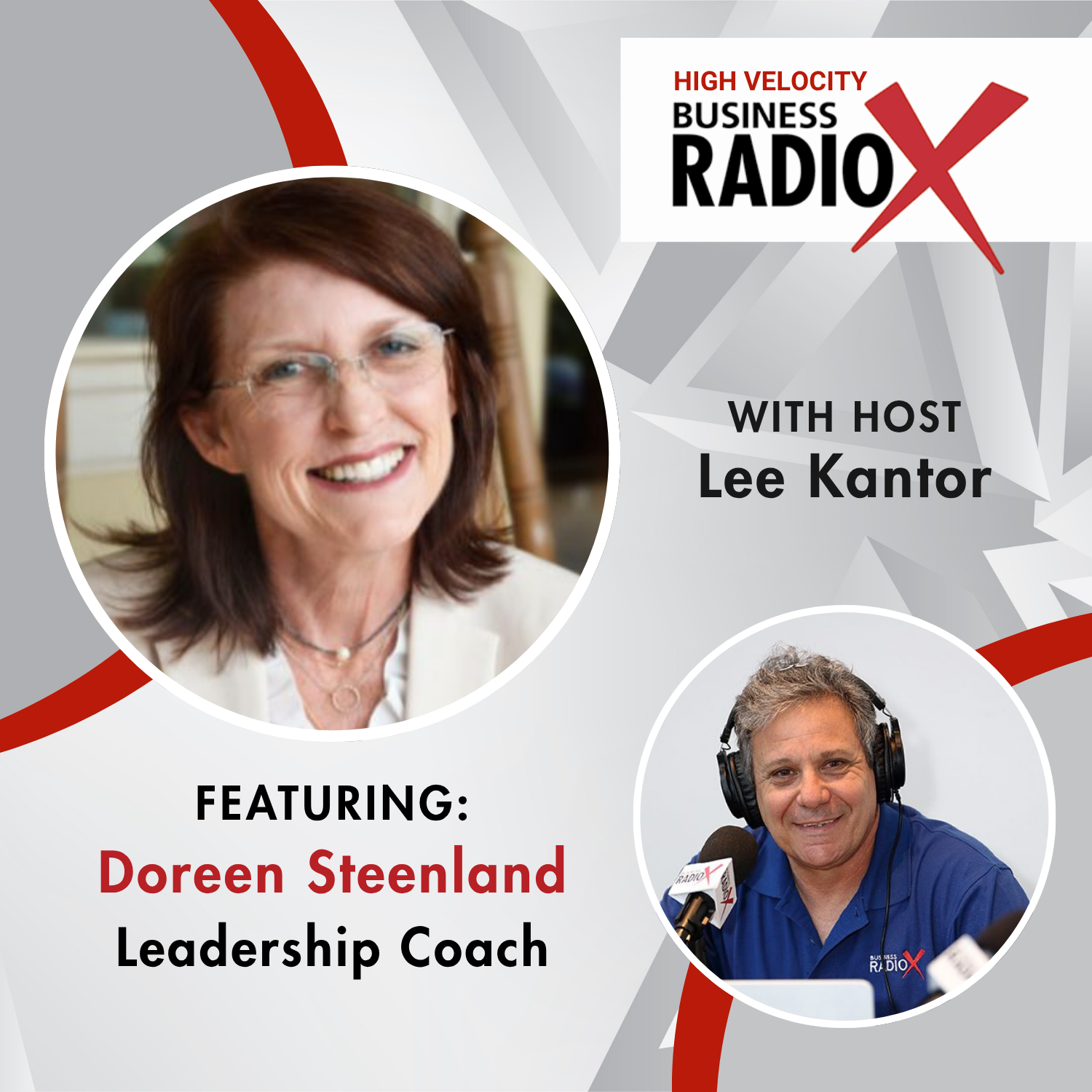

In this episode of High Velocity Radio, Lee Kantor interviews Doreen Steenland, a reset and work-life integration expert. Drawing from her experience as an ICU and trauma nurse, Doreen discusses the severe impact of burnout among healthcare professionals, costing the industry $300 billion annually. She introduces her Micro-Shift Reset System—practical, quick stress management techniques designed for busy healthcare workers. Doreen emphasizes the importance of small, actionable changes over traditional self-care approaches and shares success stories from her coaching.

Doreen Steenland, RN, PCC, Reset Specialist, Micro‑Shift Reset System™ Creator, Leadership Coach for Healthcare Pros, Executive Presence at Doreen Steenland Coaching & Facilitation.
She help healthcare leaders break the burnout cycle and reset their nervous system—on command—whenever overwhelm strikes. No fluff. No bubble baths. Just brain-based, body-led micro-shifts that work in real life (yes, even mid-shift chaos).
After 35+ years as an RN, she have seen how survival mode steals their energy, their joy, and their presence. She created the Micro‑Shift Reset System™ to change that—one tiny reset at a time.
—Reclaim your calm.
—Lead with clarity.
—Have energy left for what matters most.
Because stress isn’t the enemy—staying stuck in it is.
Connect with Doreen on LinkedIn and Facebook.
What You’ll Learn In This Episode
- Why is burnout prevention in healthcare workers so important
- Why is burnout so prevalent in healthcare
- Why do traditional stress management programs fail to deliver permanent transformation
- What makes Micro-Shift Reset System™ different from all the other burnout prevention programs
 This transcript is machine transcribed by Sonix.
TRANSCRIPT
Intro: Broadcasting live from the Business RadioX studios in Atlanta, Georgia. It’s time for High Velocity Radio.
Lee Kantor: Lee Kantor hear another episode of High Velocity Radio and this is going to be a good one. Today on the show, we have Doreen SteenLand, who is a reset and work life integration expert with Doreen Steenland Coaching and Facilitation. Welcome.
Doreen Steenland: Thank you. Thanks so much for having me. I’m really glad to be here.
Lee Kantor: Well, I am excited to learn what you’re up to. Tell us about your practice. How are you serving folks?
Doreen Steenland: Yeah. So I help healthcare stop the $300 billion bleeding due to stress related retention and absenteeism costs.
Lee Kantor: So what exactly does that mean? What? How do they kind of quantify that as a $300 billion issue.
Doreen Steenland: Yeah. So annually, hospitals and health care systems are losing this kind of money to stress related retention and absenteeism costs. Medical professionals are running on empty, and they are fleeing the field faster than we can train their replacements. So this is a real problem. And if you’ve ever if you’ve been to the hospital lately, any hospital, you’ll know that medicine is kind of running on bare bones. Now, if you’ve ever tried to get a doctor’s appointment recently, you see that you’re now waiting 6 to 8 months for appointments as a new patient. This is a problem. This is a problem of supply and demand, and it’s a problem of having enough professionals who don’t feel burnt out staying in the system.
Lee Kantor: So is this kind of a new problem, or is this problem being kind of creeping upward over the years?
Doreen Steenland: Now, this problem has been around for a while, but post Covid we definitely saw an increase and hospitals have been trying to navigate this burnout problem. Let’s face it, nurses right now in in 2025 report 69% burnout rate and 62% of those nurses are under the age of 25. That is our replacements. So I see this as a major problem. And physicians are still at about a 49% national average of burnout. These are big numbers, considering we’ve been working at this for the last five years to the last decade.
Lee Kantor: So what’s your backstory? How did you get involved in this line of work?
Doreen Steenland: Yeah. So I I’m one of, uh, 12 family members in my house in medicine, and I know what the halls of the hospitals are like. I was an ICU nurse, trauma nurse, and also a nurse leader. And I’ve lived the burnout, and I’ve felt it. I felt the detachment. I felt the cynical, um, attitude that comes with it being short fuzed. And it wasn’t because I wasn’t smart or capable. It was because I was stuck in these survival tendencies and these survival tendencies when mental, physical and emotional fatigue chronically deplete the energy reserves. So burnout is a real thing. And I’ve seen with all of my family members how they have to kind of several of them have to crawl up a bed after their their shifts for the week to recover because they are, um, just not bouncing back. And it’s not because they’re not smart, it’s not their fault. It’s because they’re stuck in survival tendencies. And I saw this as a huge problem. Um, and also there there’s obviously organizational issues with the hospital organization. This is not it’s not their fault. It’s not all on them. We’re short staffed. And that that specifically really weighs on a health care providers because they really care. They want to do the best for their patients. And they went into medicine to help others, and they’re feeling frustrated because they’re not able to give the care and the attention that they want to give to their patients.
Lee Kantor: Patience. Now, is there any relief coming with the advent of AI and robotics and some of these kind of machine learning and artificial intelligence tools that are at least a lot of people are talking about how they’re going to replace a lot of jobs. Is that where some of the relief is going to come from?
Doreen Steenland: Yeah. So I don’t see I really taking the place at the bedside where I do see AI intervening is in some of the mundane work that’s required in order to make meet insurance company regulations. I could see AI being, um, active in, um, assisting physicians and nurses with taking client histories and and tracking the notes and, and working in those ways. But but I can’t see them see AI directly involved in patient care.
Lee Kantor: Now, what is being done? Um, kind of in the boots, on the ground level when it comes to stress management right now. How? What are they doing to kind of alleviate some of this suffering?
Doreen Steenland: Well, there’s there’s two different approaches. There’s there’s, um, you know, education obviously. But what I’m seeing is that these professionals can recite the education and education without application is really short lived. Right. If if you’ve ever read a book, you know that reading the book is not going to create the transformation, you need to actually be able to apply it in real life settings. So there’s lots of education, there’s lots of coaching available. Excuse me for one minute. And um, there’s lots of, um, effort right now being put on the upstream efforts to reduce burnout by by taking a more systematic approach. And I would see what I offer health care, a more upstream approach to burnout prevention because it is, um, trying to tackle it before the burnout arrives.
Lee Kantor: Now, is this approach something you developed yourself from kind of being involved in health care for so long, or is there some, some other person’s kind of modality that you’re, uh, facilitating and implementing?
Doreen Steenland: Yeah. So I created the micro shift reset system. And this system actually walks health care workers through small daily, uh, incremental changes that they can apply right in the middle of their daily workflow. So being part of medicine and having so many family members in medicine. I know what the workflow is like in the hospital. I know that it’s unrealistic to have, um. Our medical professionals sit down for 30 minutes and meditate. That is not realistic in in the fast paced, uh, environment that they’re in. With the long 12 hour shifts, plus sometimes that they’re working. It’s unrealistic to expect them to do very, um, long activities. So this this process has been created to meet them right where they’re at, at the bedside, uh, to give them small little things that they could do to re-energize themselves and refill their tank in the middle of their day.
Lee Kantor: So these kind of, I guess, micro shifts, you call them?
Doreen Steenland: Yes.
Lee Kantor: Now, was this something that you just said, hey, no one’s going to sit down for 30 minutes in the middle of their day. How can I make this kind of the smallest, easiest, um, activity to implement? Is that what you were thinking? And just. You just started kind of testing it?
Doreen Steenland: Yes, exactly. So here here’s the thing. I’ve, I’ve been in coaching for the last decade, and this population will not deny that they need help. Um, they might not admit it to the staff. They might not admit it to the hospital. But they know inside that something’s wrong. And over and over and over again I’d hear clients say, but I don’t have time for blah, blah, blah, for coaching for this, for that. The other thing, and so their mindset right now is they are in a time warp almost. They don’t think they have time. So in order to start the process There needs to be small incremental steps and small wins that they could say this is doable. This is really doable. It doesn’t require a spa day. It doesn’t require a vacation. It doesn’t require a bubble bath where I sit still for an hour. It doesn’t require a 30 minute meditation. These are small, incremental steps that they could build into their actual workflow, that empower them to experience more of an inner peace, and that translates into money for the hospital.
Lee Kantor: Now, what was kind of the first reset that you came up with? You know, at the beginning of this.
Doreen Steenland: Yeah, I think I think always breathwork is something that everybody is really familiar with. Um, just even right now, Lee, if you just take a deep breath and inhale through your nose and exhale for longer than, um, than you normally do. So if you don’t mind, just humor me and do this with me. Sure. Take a deep breath in through your nose and exhale for a count to six. One. Two. Three. Four. Five. Six. Now do that a few times. We’re going to repeat that process. And I want to I want you to tell me what you notice in your body.
Lee Kantor: Well, the first thing I notice is my mind kind of quiets and I feel a sense of calm.
Doreen Steenland: Yeah. Yeah. And see, this is just one simple little micro shift there. There are hundreds of them that professionals and even people who sit behind desks and deal with client complaints all day can implement so that they can regain composure and regrown themselves. They’re all based in neuroscience. They all have to do with regulating the the inner world, regulating your nervous system so that you could show up as your best self.
Lee Kantor: Now, why do you think that? I mean, breathwork, I’ve heard about it. I’ve done some of it over the years. Why is it something that is just not, um, practice and known by more people? It seems so fundamental.
Doreen Steenland: Yeah, it is fundamental. And here’s the thing. Whenever we’re faced with stress, if you if you pay attention to what’s happening in your body, most of us hold our breath or breathe very shallow, or we brace ourselves for impact. That is just the way your body was designed to keep you safe. And when when professionals start to notice that they’re walking around, they’re they’re bracing a lot. They’re holding their breath a lot. They’re not really taking that deep breath. The sigh is actually your brain and body resetting your nervous system on command. That’s what it does. That’s what it was created to do. And it connects the body and the brain together. Yeah.
Lee Kantor: Now, you mentioned that this is obviously a multi-billion dollar product problem that’s affecting health care systems, big and small, all over the place. Um, are they kind of open to having conversations with you, the leadership, or is this something that they feel like this is just impossible to, to kind of deal with, even though that making even a small change would be a big deal in most, um, system health care systems, I would imagine.
Doreen Steenland: I think that the the statistics show that this is a viable space to invest in your employees for. Um, not only, um, preventing burnout and retaining your, your. Your good help, but it’s also for patient satisfaction surveys when your doctor is short or your nurse is short, stressed out, and doesn’t have time for you. How does that impact your experience in a hospital system?
Lee Kantor: Yeah, it’s not going to look good in the on those, uh, surveys.
Doreen Steenland: No. Absolutely not. So this this is a money making investment for health care facilities, for professionals, for hospitals to invest this for their employees. Now, many, um, many hospitals right now have employee assistance Programs because they are invested in providing for their employees. But the truth is that only 10% of employees actually engage in those programs, and those are the 10% that are already in in a bad state, right? Because nobody goes for help until they have to. Nobody calls the doctor unless they have to. Nobody really just seeks to say they put it off. They say, okay, I’ll deal with this tomorrow. Tomorrow will be better. We’ll have more staff. We’ll, you know, figure things out. Health care professionals were trained to self abandon to put everyone else above themselves. This was part of our training in school. This is how we were were taught. So to have them be able to notice themselves in the middle of all of this is is a huge shift.
Lee Kantor: Now, are your clients individual practitioners, or are you trying to talk to the kind of leadership of these, um, health care systems?
Doreen Steenland: Right. Yeah, I’d love to, to, um, have conversations like my ideal client is to have conversations with health care systems to get this in for all client onboarding, new nurse and physician onboarding. I’d love to see this in nursing and medical schools. I’d love to see this, um, given to every employee as a benefit so that they can have tools at their fingertips that they could do right at the bedside. They don’t need to take a break to do these tools. These are things they could do right in the middle of of handing out medications, doing procedures, talking with a patient at the bedside. They’re super practical. And that’s that’s the bottom line here. This is not a death by slide. Um, program. This is microlearning. And the statistics on microlearning right now are off the charts. Microlearning is the hottest new thing. It works because it increases retention by 80%. It increases engagement of people in the educational program by 50%. And the completion rates are quadrupled versus traditional learning methods. Traditionally, you know, we’re very scientific people in medicine. We have lots of statistics. We have lots of slides, we have lots of journal information which are all valuable. They’re all research based, and they’re all super important. But that doesn’t really tell them. All right. Everybody knows we have a burnout problem, but it doesn’t tell them how to fix it in the middle of their day. That’s what makes my product unique.
Lee Kantor: Is there any story you can share where you’ve implemented this, and either on an individual basis or a system basis, where there has been a noticeable change, where they were able to get to new levels and maybe kind of alleviate some of this burnout pain.
Doreen Steenland: Yeah. So here’s the thing I’ve had I’ve tested this extensively with individuals, and I have had report after report of, um, having increased job satisfaction again, of being stuck in traffic and having remembered one of these micro shifts and being able to control the anxiety that was bubbling, bubbling up inside of them. I’ve had, um, testimonies of people being able to speak, um, put their voice out there and ask for what they need. Because they’ve suddenly realized that. That they. It’s okay to have needs. It’s okay to to need space. It’s okay to take five minutes for a breath. It’s okay. To care for themselves so I can go on and on with testimonies about that. But, you know, I believe that this product can help the hospitals improve their numbers dramatically, dramatically.
Lee Kantor: So if somebody wants to learn more, have a more substantive conversation to discuss how to implement this type of facilitation, is there a website? What’s the best way to connect with you?
Doreen Steenland: Yes. Uh, Doreen. Com is my website, And, um, yeah, you can connect with me on LinkedIn. You can connect with me on Facebook. I’m I’m all over the internet, and I would love to have a conversation with you about how you can really, um, on a boots on the ground way impact your staff for for the good.
Lee Kantor: And that’s about d o r e e n s t e n land. Com.
Doreen Steenland: Correct. Correct.
Lee Kantor: Well, Doreen, thank you so much for sharing your story today. Doing such important work. And we appreciate you.
Doreen Steenland: Thank you for having me. Lee, I really, really appreciate it.
Lee Kantor: All right. This is Lee Kantor. We’ll see you all next time on High Velocity Radio.














