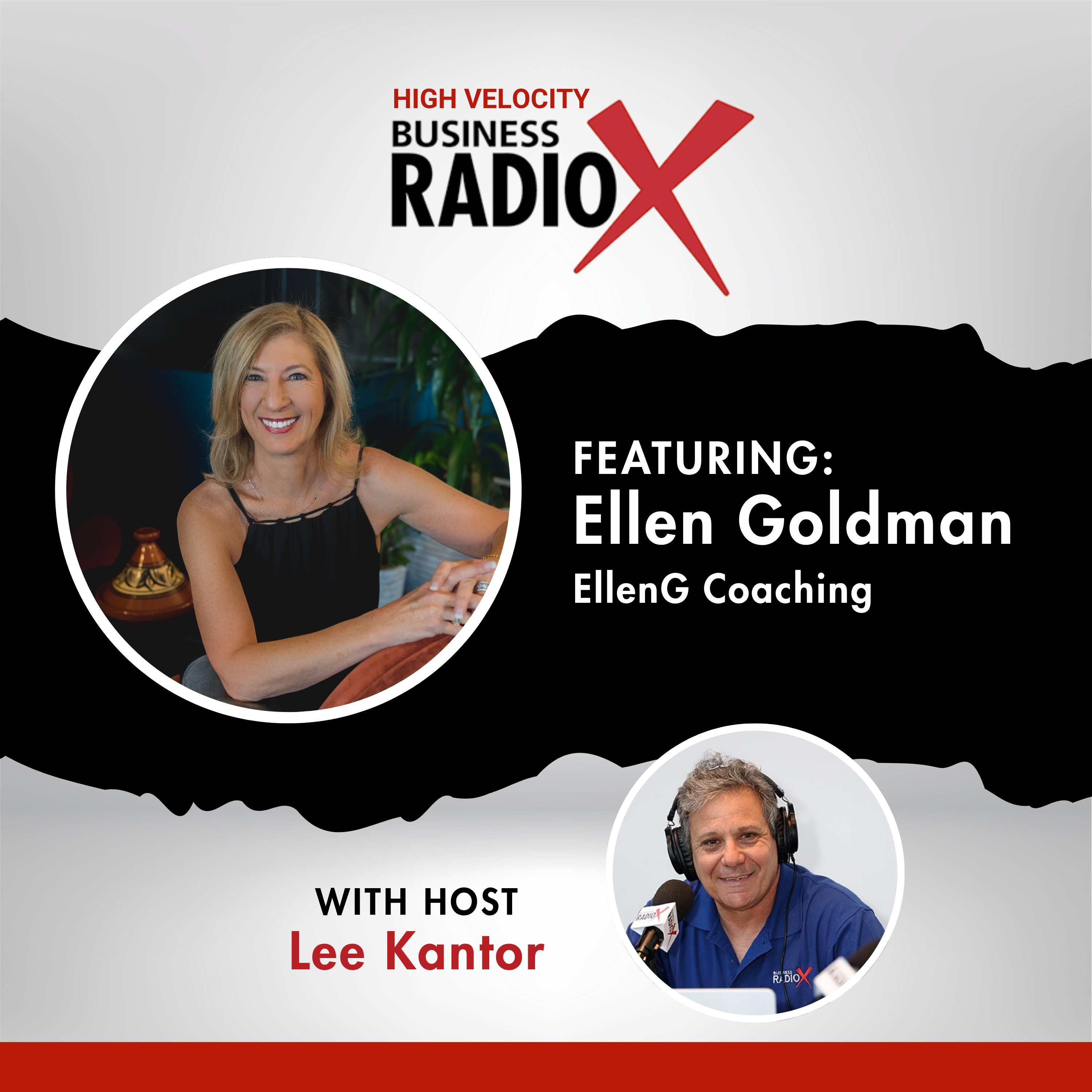


 EllenG Coaching was created by Ellen Goldman to provide coaching and training to professionals and entrepreneurs who are worried about their health and happiness due to exhaustion, burnout, weight issues and other health challenges.
Her mission is to help business professionals get self-care back on their daily “to-do” list. Through her motivational talks, coaching programs, and online courses, she shows clients how to integrate health into their busy lifestyles with simple, small steps that lead to massive change, resulting in higher energy, improved focus, increased productivity and overall happiness.
With over 30 years of experience in and fitness industries working as a personal trainer and certified wellness coach, and as a business owner, wife, and mom, she knows first-hand that you do not need to sacrifice your health and happiness to have a successful career.
She is a National Board Certified Health & Wellbeing Coach, ICF PCC, and author of Mastering the Inner Game of Weight Loss: An Easy-to-Follow Guide to Permanent Weight Loss Without Going on a Diet.
Connect with Ellen on LinkedIn and Facebook.
What You’ll Learn in This Episode
- Why it’s so difficult for business professionals and entrepreneurs to keep self-care on their daily to-do list
- Some simple daily habits to incorporate into the busy days that will lead to greater energy and productivity
- The key to creating life-work harmony
- Why it’s so hard to stay motivated and consistent with healthy habits, and what can be done to increase motivation
 This transcript is machine transcribed by Sonix.
TRANSCRIPT
Intro: Broadcasting live from the Business RadioX studios in Atlanta, Georgia. It’s time for High Velocity Radio.
Lee Kantor: Lee Kantor here. Another episode of High Velocity Radio, and this is going to be a good one. Today on the show we have Ellen Goldman. She is with EllenG Coaching and we are here to talk about personal health leading to business wealth. Welcome, Ellen.
Ellen Goldman: Hi. How are you?
Lee Kantor: I am doing well. I am so excited to be talking to you about this topic. But before we get too far into things, tell us a little bit about your practice. How are you serving folks at LNG coaching?
Ellen Goldman: Oh, absolutely. Well, first, thank you so much for inviting me to be on today and chat about what I feel incredibly passionate about. So by training, I’m a national Board certified health coach. And of course, health is a wide term that includes holistically, you know, both mental and our wellbeing and our physical health. And how I found my niche or my road that brought me to this very strong belief that personal health can lead to business. Wealth is actually when I first started networking my own company, and I came into this field at a very early stage where coaching was not a very well known industry, you know, executive business coaching, a little bit, a little bit of life coaching was being thrown out there, but nobody really understood what it was. And suddenly here were these health coaches and nobody really knew what it was. And I needed to go out and educate people about a service that can really help them lead a better life, both the ability to thrive, not just professionally, but personally and find the balance between the two. And so I started going to lots of networking meetings, meeting wonderful, smart, creative entrepreneurs and business professionals, people that were growing their businesses. And as they began to know me and feel comfortable with me, they would start to chat and I would start to hear things like, I’ve gained 25 pounds since I started my business.
Ellen Goldman: I exist on 4 to 5 hours of sleep a night. I’m never home. My kids don’t recognize me anymore. And there was just this lightbulb that went off for me that it was like, that’s kind of not the way we’re supposed to be living. Work is incredibly important. We all need to be working not just for financial reasons, but also to fulfill, you know, a sense of purpose. But that should not be our only purpose, and it shouldn’t define our Are days so completely that we neglect ourselves. And one of the first things that gets neglected is self-care. And as a business professional, especially if you’re an entrepreneurial business where you are the what I call the CEO, the you’re the everything person, you know, you do everything. It all depends on you. If you fall apart, that business will fall apart. And so it doesn’t matter how many great systems you have, if you do not have the energy to manage them and do what needs to be done to keep the business growing and thriving, you’re going to fall apart. And that means the business is going to fall apart. And so it was just really important for me to get the message out there that taking care of yourself actually is one of the most important things that you can do to thrive professionally.
Lee Kantor: Now, how does this message really sink in with that? Um, you know, this hustle culture and grind culture that it’s supposed to be 24 over seven and people brag about how they haven’t slept and they brag about how they sleep at the office. And and it seems like it’s almost a cult of sacrifice that they’re, they, they’re thinking that this is what it takes to be successful nowadays. And then you’re telling them, hey, maybe you ought to pump the brakes a little and pause and think about your health when in their minds they might think that they’re slacking if they, you know, go work out or sleep an extra couple hours. Like, how does how do you kind of communicate that message to people? It seems obvious when you say it, but when you’re in the midst of that kind of mindset, and especially if you’re surrounded with other kind of startup founders and they’re all competing with each other. Who can sleep at their office the longest? You know. How do you. How do you get that message through to them?
Ellen Goldman: It’s such a great question. It really begins with a mind set shift. Um, you’re absolutely right. You know, intellectually, it sounds good. But emotionally, making that change is so difficult. I mean, I do think that that is what, you know, coaching in general, no matter what phase of coaching you’re in. Coaching is the psychology of behavioral change. There’s no lacking in education around what we need to do to take good care of ourselves. People know my family is important, and yeah, I should be spending more time with them. And yeah, I know my health is important, but I’ll take care of it once the business is on its way and growing. And you know, but that waiting until is really a problem. So it begins with getting people in touch with what they really want for their future selves and what their values are. So we do a lot of visioning. You know, one of my favorite exercises that I love to do with people and, you know, I’ll do this just for fun when I meet people who ask me exactly the question that you just asked me, I’ll say, you know, take a moment and just sort of, kind of have some fun and play with me and visualize yourself, you know, 40 years from now, you know, and you’re retired and you’re sitting out there on the rocking chair, you know, and maybe your grandkids are sitting out there and looking at you and say, you know, tell me about your life. Was it good? Was it happy? What’s the answer you want to be able to give them? Do you want to be well enough to be out there playing with them? So sometimes it’s it’s like getting them towards this.
Ellen Goldman: If growing the business is towards making my life a better in the future. Being financially stable. Giving to my family. You know, how do I want to look back? It’s almost reverse engineering, which is a huge part of coaching as well because it’s again, it’s not that we don’t know what we’re supposed to be doing, but we don’t know how to change and we are competing with others. Sometimes it means sort of going the other road. I remember many years ago, um, I used to do a talk called Taming the Daily Frenzy, and it’s really based on brain research that sometimes is what connects with, um, business professionals who tend to be pretty, uh, you know, intellectual is to actually show them the research around how the brain was not designed to exist on 4 or 5 hours of sleep. The brain was not Is designed to multitask and how it becomes more efficient when it’s well rested, when it’s working with the proper habits, when nutrition and hydration are backing up brain function. And so when you can show people science evidence based research that shows that when you are feeling well, when you are healthy, when you are well rested, when you are eating well and taking breaks to get oxygen flowing through the body and the brain, that efficiency goes up, errors come down. You actually begin to be able to do more in a shorter period of time. It starts to make sense. Sense enough to say, well, let’s start experimenting. Let’s see what happens now.
Lee Kantor: Is it health and wellness in general it is kind of a long. You got to have a long timeline. This isn’t something that. Oh, I slept good last night. Now? Yeah. Everything is great. Like. Or, you know, I ate well yesterday. Oh, I lost 10 pounds. Like, it doesn’t work that simple, right? Like it’s something you got to kind of be invested in the long run. And it makes perfect sense to lead with all that kind of data and scientific research that says it is so. Because I think a lot of the folks that you’re trying to reach really believe in that stuff. So if, if that, that would resonate. Uh, to me, that’s a great starting place. Is there things that you do once they kind of intellectually go, okay, I’m going to buy in what you’re saying. And I love the way that you framed it in terms of let’s do an experiment. Are there some kind of simple, low hanging fruit things you lead with in order to kind of slowly ease them into this more, uh, mindful and healthy lifestyle?
Ellen Goldman: Absolutely. So I really believe that I am in the business of helping people change their lifestyle habits and be able to easily fit them into the lifestyle that they’re currently leading in the lifestyle they want. So there’s there’s kind of two sides of the coin. One of these is this future vision, you know, really getting in touch with what it is that we’re working towards. What is it that you want in the future? You know, what is it you know, that you want ten years from now? What is it you want 40 years from now? That visioning is a big part of it. But you also, we are a quick fix society. Everybody’s looking for that quick fix. So we’ve got to kind of show people that little changes can actually lead to really big, big changes in the future. So things like getting in the habit of keeping a water bottle on your desk. People don’t realize that fatigue dehydration masks itself as fatigue. Sometimes you’re feeling so tired and you’re dehydrated. You need to be sipping water all day. That’s such an easy thing for somebody to grasp and just do. And they’re like, huh? I do feel different. You know, our bodies were not designed to stay in one place for hours on end. So little things like setting a timer for 50 minutes and when that timer goes up, actually getting up, walking around a little, doing a few minutes of it doesn’t take long. 2 or 3 minutes of movement increases. Brain flow to the brain, increases brain flow to the body. You shut that down. You feel better doing this consistently. Suddenly you notice, gosh, I’m not aching so much at the end of the day anymore.
Ellen Goldman: But that doesn’t hurt. Well, that’s because you didn’t spend eight straight hours in a chair. And, you know, it’s little things versus I can’t tell somebody who’s existing on four hours of sleep at night. Okay, I want you to start sleeping eight hours. Like, I, I don’t think that’s happening. But can we begin to experiment? Let’s squeeze out 4.5 hours. Let’s kind of stick with that for a little while. How are you feeling? Is it changing your day a little bit? No, I don’t even really notice it. Okay, let’s let’s start inching to five hours and you take it over time. One of the. I think sleep is so essential. And again, this goes back to showing people and sharing the research with them. No matter what you want, no matter what your goals are, whether it’s stress relief, whether it’s weight loss, whether it’s getting fit, or whether it’s just being more engaged and present for your family. Just kind of what your ultimate goal is when you are not sleeping. Your emotional limbic brain is lit up all the time. It’s almost like in crisis and you can’t think straightly, so you don’t react appropriately and you won’t have the stamina to work on other goals if you can’t think straight. Sleep is a foundation to start with. But again, those little habits, you know, getting up, moving, drinking water, taking a ten minute lunch break. I speak to so many people who go, you know, hours and hours and hours without fuel in their body messes with the brain. You know, the brain is what we’re using to work.
Lee Kantor: Now, what is kind of the trigger that gets people to even, um, open their eyes to, hey, I better make a change, because a lot of folks, um, you know, it sounds like a good idea, and I’ll get to it when I get to it, but is there something that usually is a trigger? When it comes to working with you? Is it is it lead with maybe weight or does it lead with a health crisis? Is there something that happen in their life where they’re like, I better contact Ellen?
Ellen Goldman: Yeah. Yeah. Often? Yes. Unfortunately, some of it is the scary wake up call. You know, the yearly checkup at the doctor where the doctor says that your blood pressure is high and your cholesterol is high, and gives you a prescription for a whole bunch of pills. And, you know, early middle age individuals. I was like, oh, my God, I don’t want to be living on pills. You know, maybe you get the pre-diabetic, um, diagnosis. You know, those things are unfortunately the fear based. But it sometimes is a start. Others quite often it is weight that that is a big draw. I early on started because I come out of the fitness industry, and weight loss was a huge part of my practice. You know, they find me because of that, because they’re just uncomfortable, you know, carrying around 20, 25 pounds. And whether it’s the spouse or the doctor or even their kids saying you got to take some weight off, you know, that is the driver, but they don’t even recognize that weight loss is, again, holistic. It’s not just about what you put in your mouth and how you feed your, you know, how you move and exercise. Stress is a huge calling point where people begin to feel like the stress is unmanageable. And it’s scary that, you know, they’re they’re just worried that they can’t focus anymore because they feel so much stress. The hamstring call, what I mean by I mean the, um, the hamster. Sorry. Suddenly waking up that feeling like I’m a hamster on a wheel that will not stop. And this is not fun. I don’t like the way I’m living. I can’t, I can’t do this anymore. But I don’t even know how to get off. Those are the types of calls that will draw somebody to say, I got to try something different. And so coaching is a really unique option to help people make behavioral change that they may feel very highly motivated to do. But despite that motivation, they’re still struggling to make a significant enough change that it actually changes the way they feel when they open their eyes in the morning.
Lee Kantor: Now, when you’re working with your clients, is there you mentioned earlier about coaching and how coaching, you know, might have started more in a business or professional athletes space. And now it’s kind of evolving and it’s changing. And there’s a variety of different coaches for a variety of different things. Is there, um, are people like, proud? Hey, I got a coach, and I’m working on these things. Or is it something that, like, you’re, like, a best kept secret? Like they don’t want other people to know that. Hey, I got a coach, and that’s why I have more energy.
Ellen Goldman: Yeah, that’s actually, to some degree, very true. There still is. It’s not as bad as it used to be. Um, but sort of that same feeling of, you know, most people don’t go around and advertise that, hey, I’m working with a therapist. That must mean there’s something wrong with you. It kind of became this when it’s coaching suddenly became an understandable career. Uh, people were a little when it came to private coaching, not the coaches that are now in corporations who literally recognize the importance of the health aspect, companies bringing in not just executive coaches to help people, um, deal with the many aspects of business relationships with their coworkers being leaders, things like that, that they have to actually hold hands with the health coach because it is the foundation of how we show up every single day. So yeah, there’s definitely a little bit of like, I don’t really want people to know about this because they think that it’s shameful to ask for help. Shameful to say, I don’t, I don’t, I don’t have it all together. However, it starts to shift a little bit in the same way that personal training did. You know where it’s like, hey, I’m taking great care of myself. So I’ve invested in myself by hiring a coach to help me be my best me to to show up in my full potential. So I think it depends on, um, for the individual where they sit with their own kind of self-confidence and self-esteem Around how they’re going to, whether they will share or they won’t share.
Lee Kantor: Now, I would think that this is a place where. Organizations and companies can really help. If they make it a benefit or a perk, then it becomes a status. You know that I have a coach. You know that I’m worthy of a coach, that they can really, you know, help with the shift of of eliminating some of the shame when it comes to working on yourself and improving, uh, kind of some of these issues that you’re talking about.
Ellen Goldman: Yeah. Yeah. So early on, um, I had several clients who were able to use their, you know, EAP to actually get some coverage for coaching. Um, we are definitely seeing so, so without going too much into the history of health coaching in particular and how it has grown, um, in 2017, I believe, uh, I’m pretty sure that was the first year The National Board certification for health coaches became available. I have seen a huge shift since there is this board certification to companies being interested in bringing on coaches because they recognize it as a, um, a, you know, industry standard. Coaching started out with people thinking it’s this like, you know, woo woo thing you do that isn’t based on science, but the best coaches who’ve had the best education, it is based on science, you know, it is based on physical science. It is based on positive psychology. And so the corporations themselves are feeling more comfortable. You know, I’m I’m in private practice. I’m at the end of my career. So I’m not that involved in what’s available out there. But when I first became a coach, there were no jobs. There was only the entrepreneurial route. But now it’s shifted because companies are out there looking to bring coaches on to help their employees thrive. Companies are recognizing that a happy, healthy employee is actually a better employee, you know? Um, so but they’re all when you look at those ads, they want National Board certified coaches. They want people that have the education behind them.
Lee Kantor: Now, if you were.
Ellen Goldman: Giving, that’s a great.
Lee Kantor: Thing. Yeah, I do too. I think that um, and like you said, that it’s it’s trickling down to, uh, everybody in the organization. It’s not just for the top, uh, C-suite. It’s not just. It’s not kind of remedial to fix, Bob. You’re you’re trying to you’re showing that coaching is a benefit for every employee, and everybody should have access to it, if you can afford that. But what advice would you give an organization if they want to change the culture into a coaching culture and, and incorporate, you know, a coach as part of the benefit package or, or the services they’re providing their people. Is there some do’s and don’ts you’ve learned on how to kind of integrate coaching into a workplace?
Ellen Goldman: Yeah. So I think it begins with that C-suite. It has to begin with the people at the top embracing this idea that we can accept a culture in our company where we do value health, where we do value personal life. You know, years ago, it would be like, you know, you were supposed to show up to the door and leave your personal life outside. You know, you didn’t talk about any problems. You didn’t talk about your family, maybe at lunch with your colleagues, but no. You know, don’t be emotional on the job. But people are starting to recognize that’s unrealistic. You know, we are a whole person all day long. We can’t just do that. And trying to do that impacts the way that we work. So it’s got to begin with the culture that that C-suite has to adopt, that culture that it’s okay that we believe this is a benefit. It doesn’t mean there’s something wrong with you. It’s not going to impact me. But the other part of it is it is imperative that that company recognizes, and I and I had personal experience in a wonderful opportunity that I had with just a very early on, smart CEO who recognized this and found me and had me come in and create a program for his employees.
Ellen Goldman: And I had to sit with him and explain to him that I’m going to hear a whole bunch of stuff. Some of it might be things that they don’t want you to know. They’ve got to be able to trust in me that behind that door, that coaching door, you know, the work door closes, the coaching door opens. Everything they say is totally within confidence there. You know, I can’t share that information with the C-suite. I remember when I was working with this company, I was the first one to know when women found out they were pregnant. I knew who was thinking about leaving. I knew who was struggling with depression, even though they were supposed to be their top salespeople. I found out this stuff, but they had to feel secure enough in me that the that the work they did was confidential, but I wasn’t sharing that. And I think that both sides of the coin have to understand that both the C-suite managers, etc., and the employee. So I think that’s a very important part. But it’s also one of the most beautiful things about coaching, whether it’s Coaching, you know, in this arena, whether it’s when I’m working with a weight loss client, you know, I’m beginning because I’ve been around for a while.
Ellen Goldman: Some of my followers, they’re getting towards retirement now, rethinking their life and getting a little concerned about what’s the next chapter. I didn’t plan it, but I’m finding occasionally I’m doing a little of transition work, you know, life changing, retirement planning type of work with some of my clients. But the underlying thread, no matter why somebody goes to a coach that I think is the gift of coaching, is finding yourself in this incredibly safe space where you can get all those crazy thoughts out of your head that, you know, you think if anybody heard you say that, they would think you’re nuts. You can actually get them out in a place where there is absolutely no judgment. There is that safety net support. And last but not least, the accountability that comes when you make a decision that I’m going to work towards this, that somebody’s going to keep you accountable, but they’re also not going to judge you if you’re struggling. I think that is the gift of coaching. We, not many of us, have that space in our lives where we can talk about some of the things and our struggles or our fears in that safety place where somebody who’s not emotionally attached to you and will never judge you.
Lee Kantor: Right. It’s a safe place for support and accountability. So you’re getting kind of the best of both worlds. You’re getting that sounding board, but you’re also getting kind of a person that’s going to say, well, you said you want to do this. Did you do this? And, you know, holding them accountable for that. And if they didn’t do that, then you go, well, why didn’t you do that? You know, like.
Ellen Goldman: Yeah, but but the way the. Why didn’t you do that? It’s funny that you phrased it that way. And I’m not picking on you at all because people don’t realize that Y is a very defensive word. People, why didn’t you do that? And they’re like, oh, like a versus. Okay, let’s explore the challenges that showed up this week that stood in the way of you following through with your intentions. It’s a really different way to say, oh, I didn’t do this because I chose to, you know, stay late after work and work on this project rather than head to the gym. You know, and talking about what was going on in your mind and what’s your, again, the long term goals that you’re working towards. Are they still important to you? How can you work around this? You know, if this shows up again, you know, going to the gym feels really important. But also finishing the project feels really. Maybe I should be going to the gym before I go to work. This after work plan is just falling apart. Okay, let’s experiment with that. So it is this trial and error without ever feeling like you. There’s no. You’re a good boy today. You were a bad boy today. Never. Like, what did you learn? Training people to be reflective around their behaviors. Understand what the drivers were. Because when you understand and you become reflective around your behavior, you become way more proactive than reactive.
Lee Kantor: Now, at this stage in your career, do you have kind of an ideal client? Is it an individual or do you work with organizations more? What is kind of the ideal client for you?
Ellen Goldman: So mostly, most of the work that I am doing right now is 1 to 1 in personal. You know, coaching clients that come to me. I also it’s I do work for the company that I trained with, mentoring new coaches who are going through the certification process. They need to work with mentor coaches before they can sit for their oral exams. Um, so interestingly, from that work, I have found a lot of health care professionals that are exploring the entrepreneurial journey and we do a lot of work around. Is that really the best nest path for you? And if it is, how are you going to go out and get your first clients? So that’s kind of on the professional end. The other side of it is when when I somebody reaches out to me, the first thing that I offer them is a what I call a strategy session, where we get on the zoom or phone or FaceTime, whatever they want, and we really explore. And this is a no strings attached meeting. We explore. Why are they reaching out for coach? What is it that they are looking to accomplish? And it is just as important for me to determine is this a good fit for me as it is for them to determine? Am I a good fit for them? And my clients range in gender.
Ellen Goldman: They range in age. They range in where they are in their professional life. But typically most of them are pretty driven professionals working. Or again, I’m starting to see this getting ready to think about retirement and what’s my next chapter going to be. But it’s diverse. It’s more important that we connect and vital to the people that I work with. I believe that physical health and wellbeing and mental health and wellbeing is the baseline that we have to begin with for any change that you want in life, and so they have to be grasping that. Yeah, I kind of think that’s right feeling I’m not a business coach, You know, if somebody was to call me and say, you know, I need to figure out, you know, how to grow in my career. Probably not me being the best coach for them. And I’m going to be honest and tell them that because, you know, what do I want? At the end of the day, it’s not just to keep bringing in clients, it’s the clients to go out and rave about the work that we do together. It has to be a good match.
Lee Kantor: So if somebody wants to learn more, connect with you. What is the website? What is the best way to connect?
Ellen Goldman: So the website is WW. Coaching.com. They can reach me via email at ellen@lng.com. Um, and um yeah. Like let’s have a conversation. I love my strategy sessions because it helps me learn more and more about what it is that people need out there where they’re struggling. And I love meeting people. Social connection is a huge part of who we are as individuals, and so there is nothing to be lost from a conversation and maybe a lot to be gained if you recognize that. You know, my passion getting people to thrive both professionally and personally. Wake up in the morning and be excited about the day ahead.
Lee Kantor: Well, Ellen, thank you so much for sharing your story today. You’re doing such important work and we appreciate you.
Ellen Goldman: Oh, thank you so much for inviting me on. I love chatting and talking and, uh, I hope that this resonates with your audience.
Lee Kantor: All right. This is Lee Kantor. We’ll see you all next time on High Velocity Radio.














